
 英语
英语 俄语
俄语Content
- 1 1. Overview of the Pectin Extraction Turnkey Project
- 2 2. Process Flow and Functional Role of Each System
- 2.1 2.1 Raw Material Cleaning
- 2.2 2.2 Crushing and Size Reduction
- 2.3 2.3 Extraction and Concentration
- 2.4 2.4 Filtration and Centrifugal Separation
- 2.5 2.5 Blending and Intermediate Conditioning
- 2.6 2.6 Chromatography and Purification
- 2.7 2.7 Further Concentration and Distillation
- 2.8 2.8 Drying and Final Crushing
- 3 3. Utility and Auxiliary Systems
- 4 4. Capacity Planning and Production Flexibility
- 5 5. Advantages of the Integrated Solution
- 6 6. Manufacturing Capability and Engineering Strengths
- 7 7. Manufacturing Quality and Process Reliability
- 8 8. Comparison with Less Integrated Equipment Solutions
- 9 9. Application Areas and Customer Value
- 10 10. Project Implementation from Design to Production
- 11 11. Operational and Maintenance Considerations
- 12 12. Sustainability and Resource Efficiency
- 13 13. Why Select a Professional Turnkey Manufacturer?
- 14 14. Recommended Information for a Project Inquiry
- 15 15. Questions and Answers
- 15.1 Q1: What is included in the 3T pectin extraction turnkey project?
- 15.2 Q2: Does the listed capacity represent finished pectin output?
- 15.3 Q3: Why are both extraction and concentration systems included?
- 15.4 Q4: What is the purpose of the chromatography system?
- 15.5 Q5: Why is a CIP system important?
- 15.6 Q6: Can the line process different plant materials?
- 15.7 Q7: What are the advantages of vacuum-assisted processing?
- 15.8 Q8: Does the manufacturer provide installation and commissioning?
- 15.9 Q9: What manufacturing equipment does the company use?
- 15.10 Q10: Can the project include pilot-scale testing?
- 15.11 Q11: What site utilities are required?
- 15.12 Q12: How should customers choose the correct capacity?
- 15.13 Q13: Is the system suitable for food and pharmaceutical applications?
- 15.14 Q14: What information is needed for a quotation?
- 16 16. Conclusion
- 17 References
- 18 Product: 3T Pectin Extraction Product Line Equipment Turnkey Project
Pectin is a valuable hydrocolloid used throughout the food, beverage, pharmaceutical, nutraceutical, and biotechnology industries. It contributes gelling, thickening, stabilizing, emulsifying, and texture-modifying properties to a wide range of products. As demand for clean-label ingredients and plant-derived functional materials continues to grow, manufacturers require extraction systems that can transform suitable biomass into consistent, safe, and commercially valuable pectin.
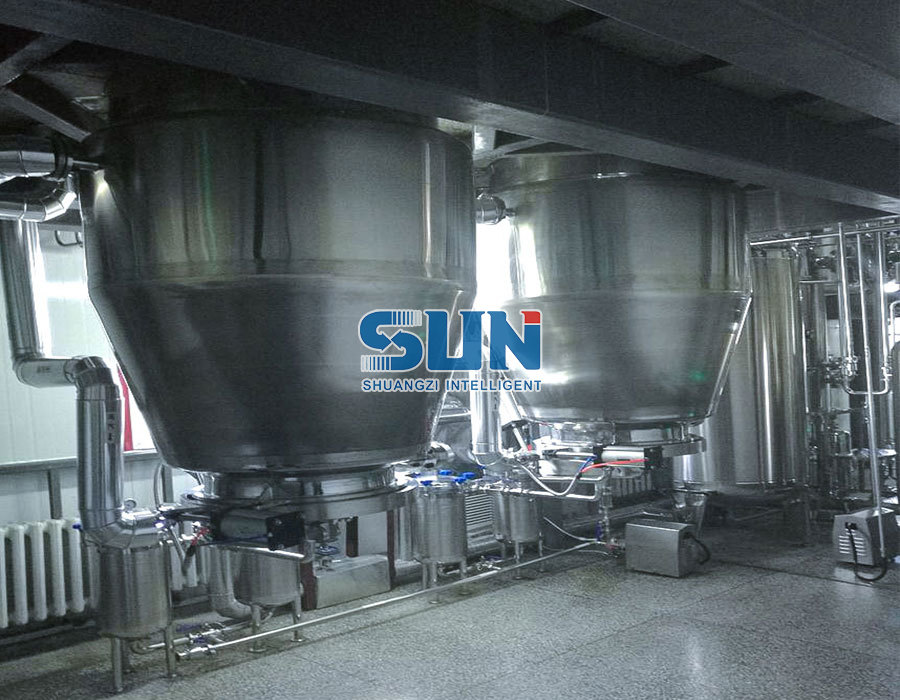
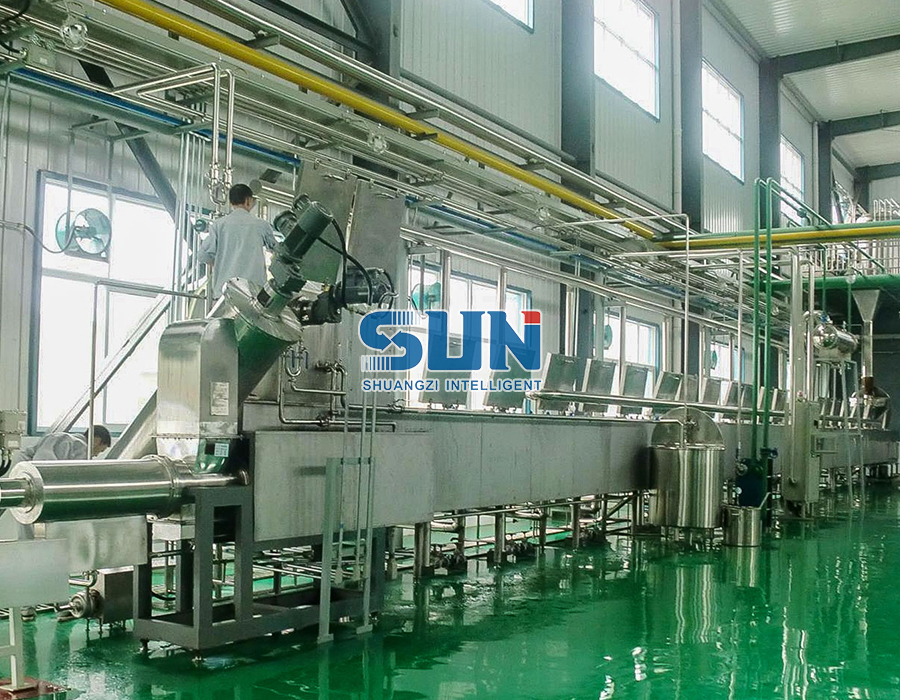
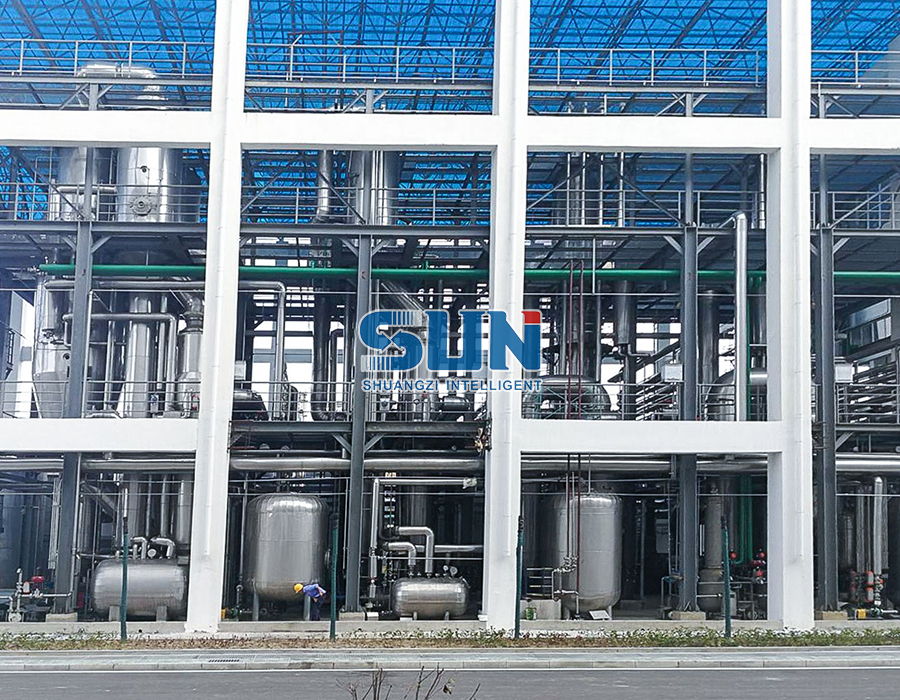
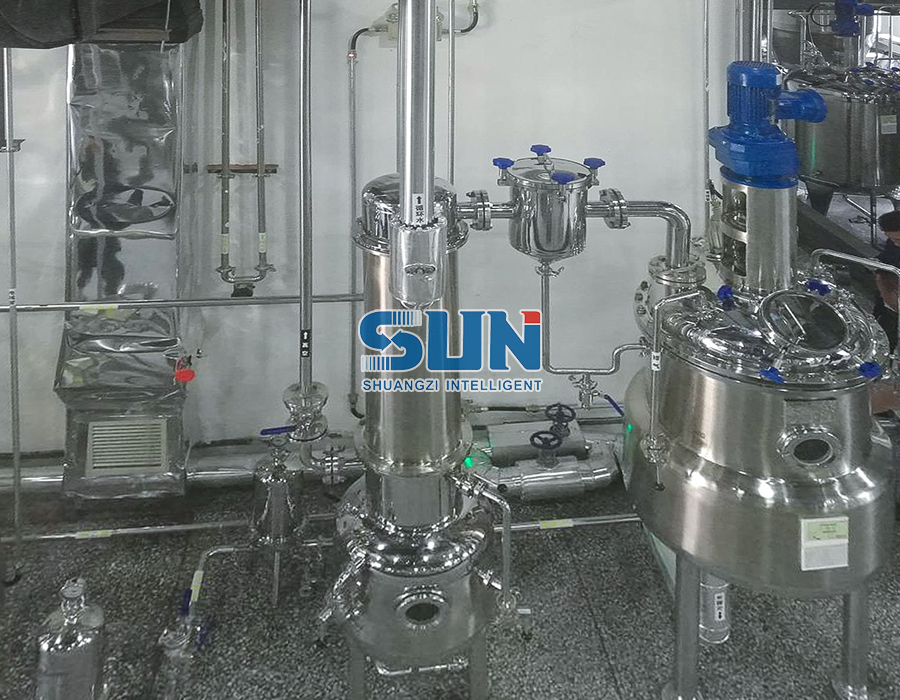
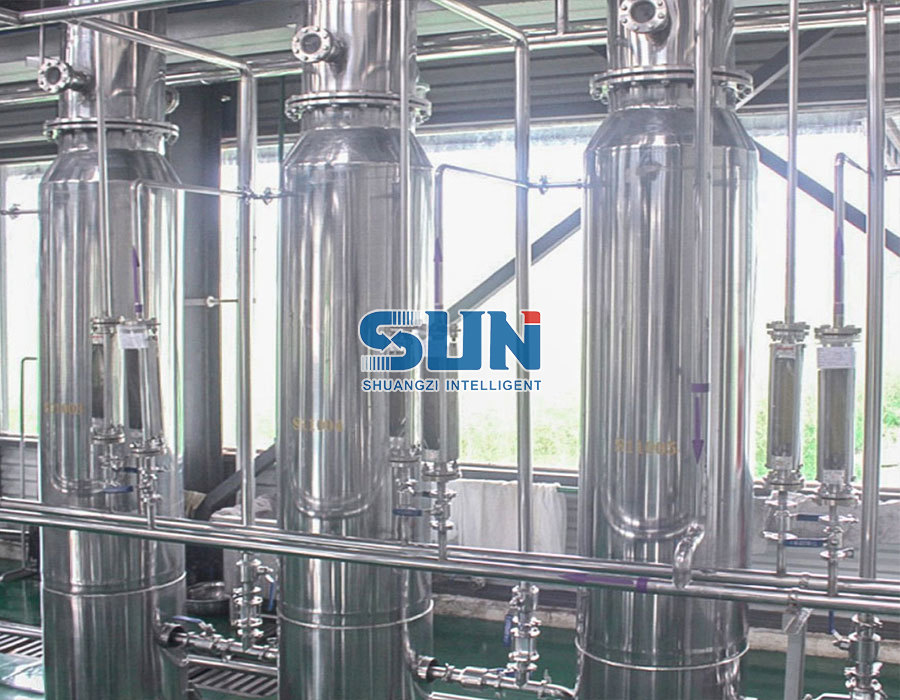
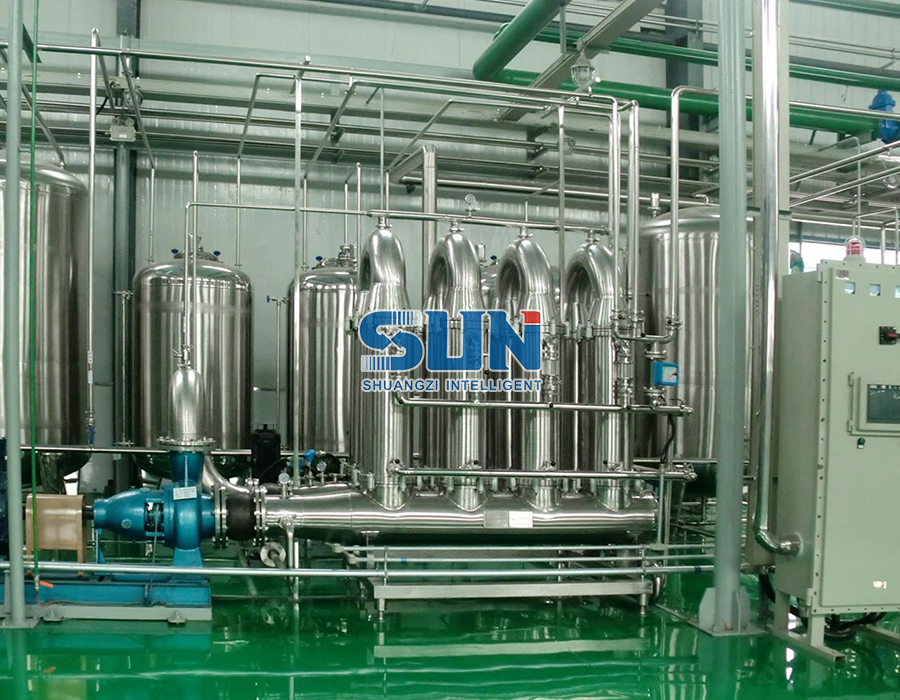
The 3T pectin extraction product line equipment turnkey project is designed as an integrated industrial solution for pectin production. Rather than supplying one isolated machine, the project combines process equipment, utility systems, automation interfaces, cleaning facilities, separation technologies, drying equipment, and engineering services into a coordinated production line. This approach allows users to obtain a complete and logically connected system for receiving biomass, extracting target components, concentrating process liquids, separating impurities, drying finished material, and preparing the line for repeated production cycles.
The equipment concept is suitable for projects that require process integration, flexible capacity planning, hygienic construction, and professional installation support. It is especially relevant for manufacturers processing plant-based raw materials and seeking a turnkey solution supported by process technology, equipment fabrication, system integration, commissioning, and technical service.
1. Overview of the Pectin Extraction Turnkey Project
A pectin production line must manage several different process conditions. Raw plant material may contain water, insoluble fibers, pigments, sugars, proteins, minerals, waxes, and other compounds that need to be removed or controlled. The target pectin fraction must be extracted under appropriate conditions, separated from unwanted solids and liquids, concentrated without unnecessary degradation, and converted into a stable finished product.
The supplied project includes multiple sets of systems that can be divided into batches and loaded into cabinets. This modular arrangement supports organized transportation, site installation, and connection of process units. It also helps simplify project management when the line contains many vessels, pumps, pipelines, valves, instruments, electrical cabinets, and auxiliary systems.
The principal systems included in the project are:
• Cleaning system.
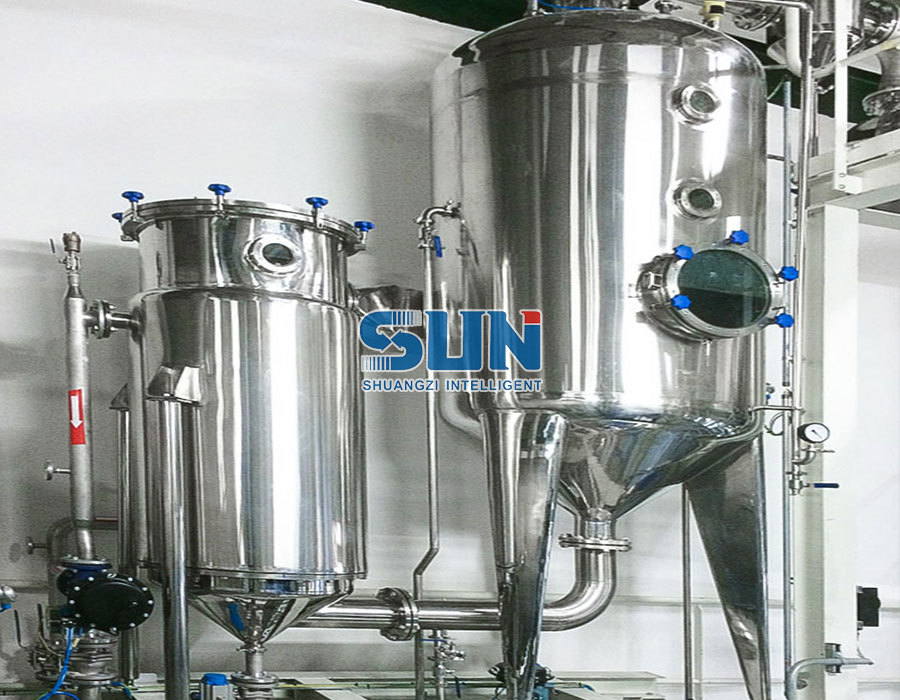
• Extraction and concentration system.
• Filtration system.
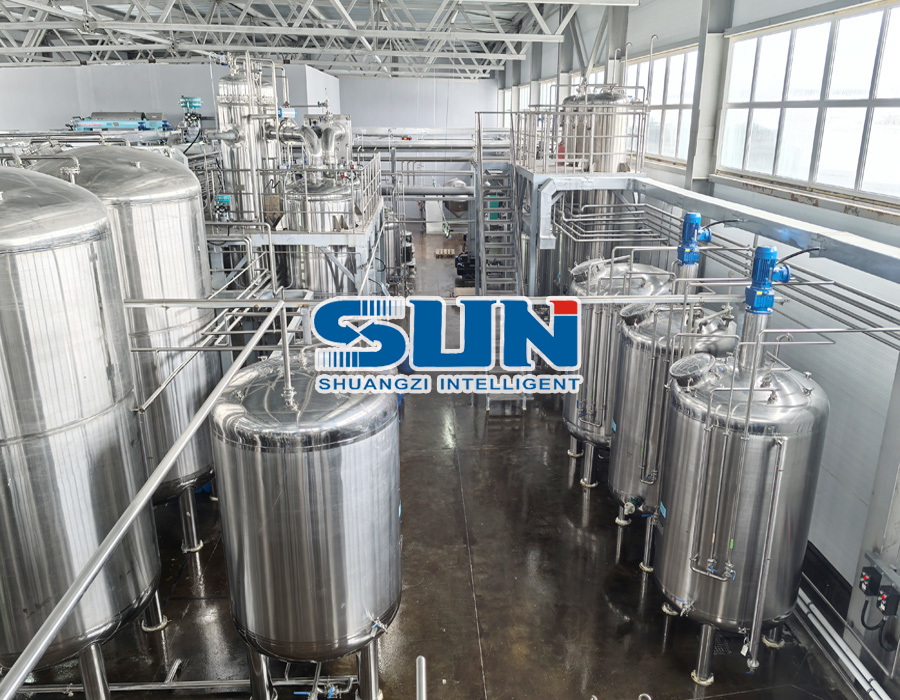
• Blending system.
• Chromatography system.
• Additional concentration system.
• Extraction system.
• Centrifugal system.
• Crushing system.
• Additional cleaning system.
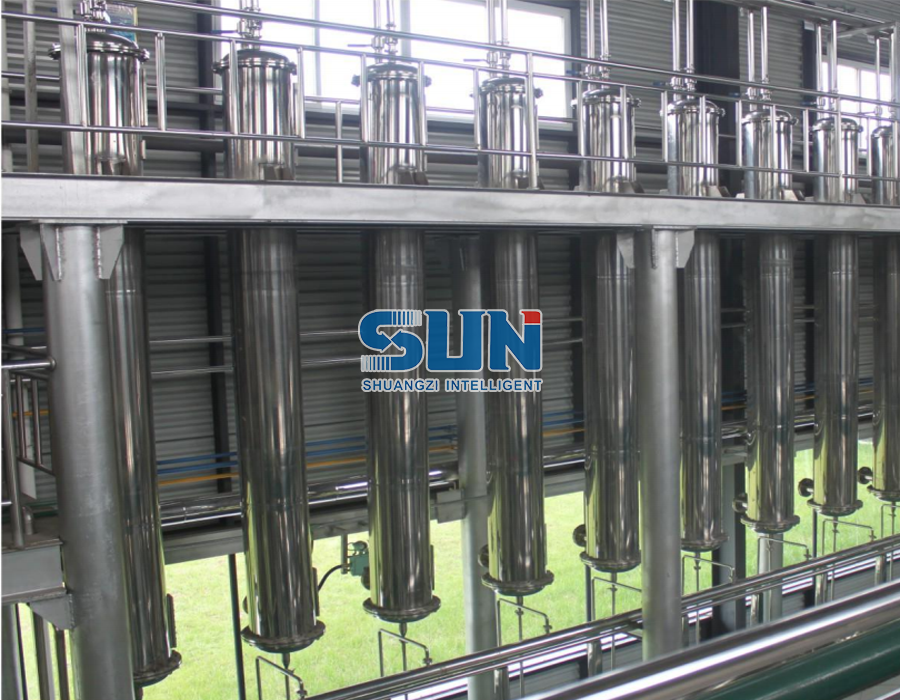
• Drying system.
• Additional crushing system for final size adjustment.
• Vacuum system.
• Purified water system.
• Hot water system.
• Air compressor unit system.
• Cooling water system.
• CIP cleaning system.
• Distillation system.
This combination reflects the complexity of an industrial pectin process. It is not limited to extraction alone. It covers the supporting operations that influence product quality, plant hygiene, energy management, operational stability, and ease of maintenance.
The designation “3T” identifies the project configuration requested for the product line. Actual operating capacity, raw material properties, extraction yield, product specifications, and operating schedule must be confirmed during detailed process design. The available capacity range listed for the equipment extends from 500 kg/h to 10,000 kg/h of biomass, providing a basis for selecting a suitable production scale.
3T Pectin Extraction Product Line Equipment Turnkey Project
2. Process Flow and Functional Role of Each System
2.1 Raw Material Cleaning
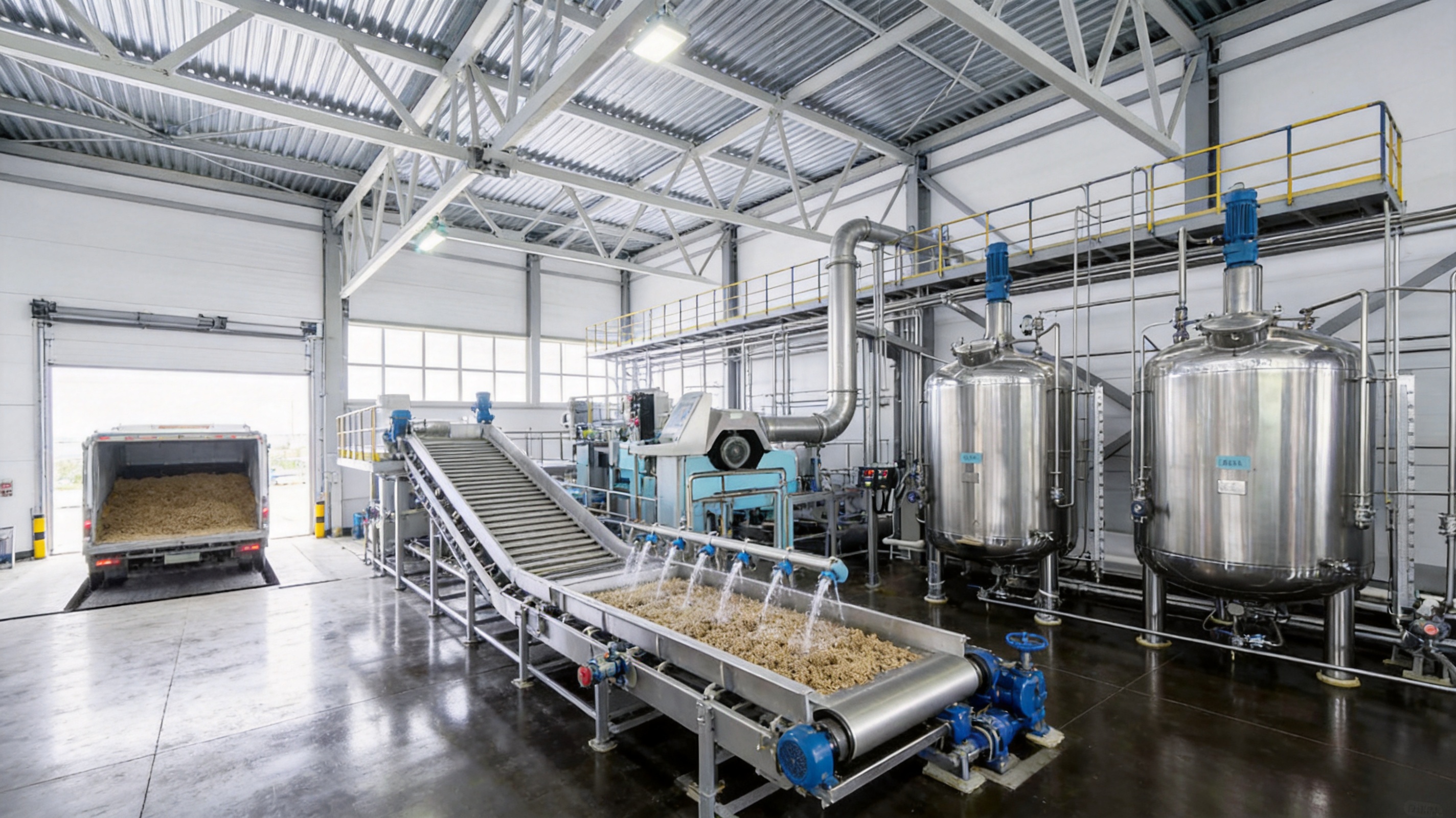
The cleaning system is the first important stage in a pectin extraction line. Incoming biomass can contain soil, stones, leaves, foreign particles, surface contaminants, and material that is unsuitable for processing. Effective cleaning reduces the impurity load entering downstream equipment and helps protect pumps, heat exchangers, extraction vessels, filtration equipment, and centrifugal machines.
Cleaning may be configured according to the type and condition of the raw material. The system can be organized around washing, rinsing, screening, conveying, and drainage operations. The exact arrangement depends on whether the feedstock is fresh, dried, sliced, crushed, or supplied as a by-product from another plant process.
A well-designed cleaning stage improves process reliability in several ways. It reduces the risk of blockages, lowers contamination potential, supports more stable extraction conditions, and helps produce a cleaner intermediate liquid. It can also reduce the frequency of manual intervention and improve the service life of downstream equipment.
2.2 Crushing and Size Reduction
Crushing equipment prepares biomass for extraction by reducing particle size and increasing the accessible surface area. Uniform size reduction can improve contact between the raw material and extraction medium. It may also promote more consistent residence time, heat transfer, and mass transfer inside the extraction system.
The line includes crushing operations at different points in the process. Initial crushing may be used before extraction, while a later crushing stage can be used for final product size adjustment after drying. Separating these duties allows the equipment to be selected for the physical properties of the material at each stage.
For raw biomass, the crushing system must accommodate moisture content, fiber structure, hardness, and feed consistency. For dried pectin or a pectin-containing intermediate, the final crushing system must support the required particle size and powder handling characteristics while avoiding unnecessary heat generation or product damage.
2.3 Extraction and Concentration
Extraction is the central operation in pectin production. The extraction and concentration system is designed to bring the prepared biomass into contact with a suitable process medium under controlled conditions. Temperature, time, liquid-to-solid ratio, agitation, acidity, and solids loading can all influence extraction performance.
The extraction equipment must provide sufficient mixing and heating while limiting local overheating. A properly arranged vessel system helps maintain consistent process conditions throughout the batch or continuous operating cycle. It also supports the controlled transfer of material to subsequent filtration and separation stages.
After extraction, the liquid phase may contain dissolved pectin together with soluble sugars, acids, minerals, color bodies, and fine suspended solids. Concentration reduces liquid volume and increases the concentration of the desired material. The concentration system can improve the efficiency of later purification, drying, and storage operations.
Vacuum-assisted concentration is particularly valuable when the process requires lower-temperature evaporation. By reducing the boiling point, a vacuum system may help limit thermal exposure and support the preservation of product characteristics. It can also reduce oxidation and provide more controlled evaporation conditions when compared with uncontrolled atmospheric heating.
2.4 Filtration and Centrifugal Separation
Filtration and centrifugal systems are used to remove insoluble solids and clarify process streams. The choice and sequence of separation equipment depend on feed viscosity, solids concentration, particle size, and required clarity.
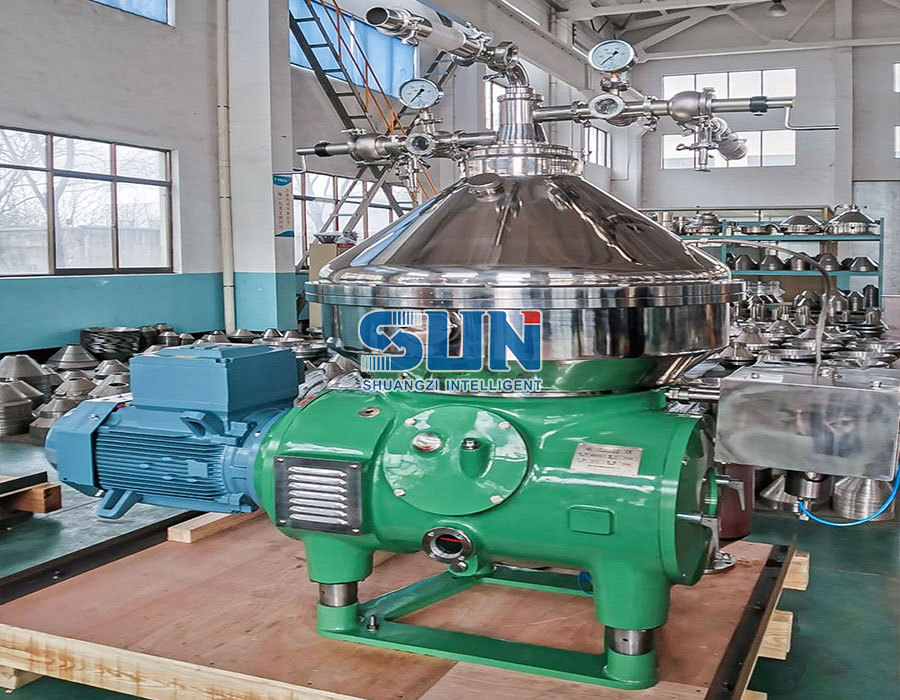
Filtration can protect downstream equipment by removing coarse and fine suspended matter. It can also improve the performance of concentration and purification stages. Centrifugal separation provides an additional method for removing solids or separating phases when gravity settling is too slow or insufficiently effective.
Combining filtration with centrifugal separation gives the process designer more flexibility. Different streams may require different separation methods, and a staged arrangement can reduce the burden placed on any individual machine. This can contribute to more stable operation and lower maintenance requirements.
2.5 Blending and Intermediate Conditioning
The blending system provides controlled mixing of process materials, intermediate products, additives, or process liquids. Uniform blending is essential when the line requires consistent composition before purification, concentration, drying, or final packaging.
Blending vessels should provide appropriate agitation without causing excessive foaming or unnecessary shear. The design should also support complete drainage and effective cleaning. Where process liquids are sensitive to contamination, enclosed transfer and hygienic pipeline connections are especially important.
2.6 Chromatography and Purification
The chromatography system provides a more selective purification option for applications that require improved separation of target components from closely related substances. It may be used to refine a process stream, remove selected impurities, or improve the consistency of the final product.
Chromatography is one of the features that distinguishes a comprehensive pectin project from a basic extraction installation. A basic line may extract and dry a crude material, while an integrated line can incorporate additional purification and process control functions. This expands the range of product specifications that the plant may be able to address, subject to raw material quality and detailed process validation.
The chromatography stage must be designed around the chemical characteristics of the process liquid, resin or separation medium, flow rate, pressure, cleaning method, and regeneration requirements. Integration with purified water, concentration, storage, and CIP systems is important for maintaining repeatable operation.
2.7 Further Concentration and Distillation
Additional concentration may be required after clarification or purification. At this point, the liquid composition and viscosity can differ significantly from the initial extraction liquor. The concentration system must therefore be selected according to the characteristics of the intermediate stream rather than relying on a single generic evaporation arrangement.
The distillation system can support recovery, purification, solvent management, or the treatment of selected process liquids, depending on the final process design. Including distillation as part of the overall project demonstrates that the line is planned as a complete process platform rather than a group of unrelated machines.
2.8 Drying and Final Crushing
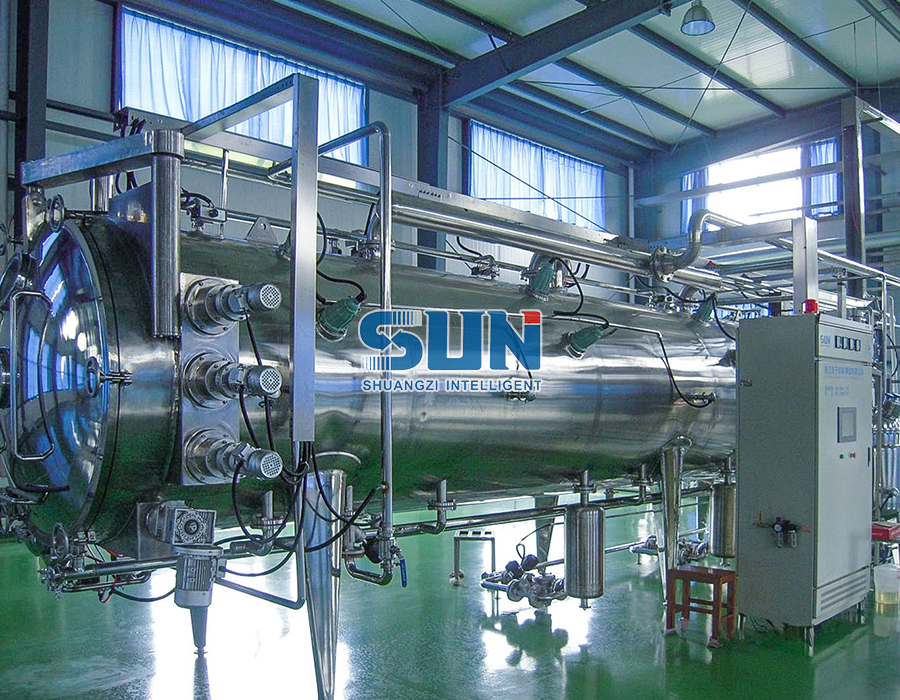
Drying converts the concentrated pectin-containing material into a stable product suitable for handling, storage, and further formulation. The drying system must be matched to feed viscosity, moisture content, thermal sensitivity, desired powder properties, and required production capacity.
Vacuum low-temperature drying is one of the mature product areas associated with the manufacturer’s technical portfolio. This type of drying can be beneficial when the process requires reduced thermal stress. It may help control color, aroma, solubility, and other quality attributes, although the final performance depends on the feed material, operating parameters, and product specification.
After drying, crushing or milling can be used to achieve a more consistent particle size. A controlled final size improves dosing, blending, packaging, dispersion, and customer handling. It also helps create a more uniform appearance and product behavior.
3. Utility and Auxiliary Systems
A production line cannot operate reliably without properly designed utilities. The project includes several utility systems that support the main process and reduce dependence on improvised site arrangements.
3.1 Purified Water System
Purified water is important for extraction, rinsing, preparation of process solutions, equipment cleaning, and selected purification steps. The water quality requirement depends on the product specification and applicable regulatory expectations. A dedicated purified water system helps improve consistency and reduces the risk of introducing unwanted minerals or microorganisms into sensitive process areas.
3.2 Hot Water System
The hot water system supplies controlled thermal energy for extraction, cleaning, blending, and other operations. Centralizing hot water generation and distribution can simplify temperature management and reduce the need for numerous independent heating arrangements.
3.3 Cooling Water System
Cooling water may be required for condensation, product conditioning, equipment temperature control, vacuum operation, and utility heat exchange. A dedicated cooling water system helps stabilize process conditions and supports continuous operation during high-throughput production.
3.4 Vacuum System
The vacuum system supports low-temperature evaporation, vacuum drying, degassing, and other operations that benefit from reduced pressure. Its capacity must be evaluated according to the number of connected vessels, vapor load, condenser performance, operating pressure, and expected production schedule.
3.5 Air Compressor Unit
Compressed air can supply pneumatic valves, actuators, instruments, control devices, and cleaning functions. A reliable air compressor unit helps maintain stable automated operation. Air quality, pressure, moisture control, and filtration must be considered during detailed engineering.
3.6 CIP Cleaning System
Clean-in-place, or CIP, technology is essential for a hygienic process line. The CIP system circulates cleaning solutions through vessels, pipelines, pumps, heat exchangers, and other components without requiring complete disassembly of the equipment.
An effective CIP design improves cleaning repeatability, reduces manual labor, shortens changeover time, and supports sanitary production. It also helps lower the risk of cross-contamination between batches. The cleaning sequence may include pre-rinsing, alkaline cleaning, intermediate rinsing, acidic cleaning, final rinsing, and sanitization, depending on the process requirements.
Drainability, spray device coverage, flow velocity, temperature, chemical concentration, and cleaning time all influence CIP performance. These factors should be confirmed through commissioning and, where required, documented validation procedures.
4. Capacity Planning and Production Flexibility
The supplied capacity information provides several operational capacity options based on biomass throughput:
| Nominal Capacity Category | Operational Capacity of Biomass |
|---|---|
| 500 | 500 kg/h |
| 1,000 | 1,000 kg/h |
| 2,000 | 2,000 kg/h |
| 3,000 | 3,000 kg/h |
| 4,000 | 4,000 kg/h |
| 5,000 | 5,000 kg/h |
| 6,000 | 6,000 kg/h |
| 8,000 | 8,000 kg/h |
| 10,000 | 10,000 kg/h |
These figures should be understood as biomass handling capacities rather than guaranteed pectin output. Final pectin yield depends on the type of raw material, moisture content, pectin concentration, extraction conditions, purification losses, operating hours, and product specification.
The broad capacity range is useful for customers at different stages of development. A pilot or emerging producer may require a smaller system for market testing and process development. A larger ingredient manufacturer may need several thousand kilograms per hour of biomass throughput. Modular design can allow project planning to reflect current needs while considering future expansion.
Capacity selection should also consider peak production, seasonal raw material availability, storage capacity, operating shifts, utility availability, labor organization, and expected maintenance periods. A line that is technically capable of high throughput may not be economically optimized if the raw material supply is irregular or if utilities are undersized.
5. Advantages of the Integrated Solution
5.1 Complete Process Integration
The most important advantage of the project is its integrated structure. Customers receive a coordinated solution containing process equipment and auxiliary systems rather than having to combine unrelated equipment from multiple suppliers. This can reduce interface risks between extraction, separation, concentration, drying, cleaning, and utility systems.
When different suppliers provide individual machines, problems may arise concerning connection dimensions, control signals, pressure ratings, material compatibility, transfer capacity, and operating logic. An integrated project reduces these risks by addressing the line as one engineering system.
5.2 Better Hygienic Control
Pectin and other plant-derived ingredients can be affected by residue accumulation, microbial growth, foreign matter, and inadequate cleaning. The inclusion of purified water, CIP cleaning, hygienic vessels, filtration, and controlled transfer systems supports a cleaner production environment.
Hygienic design also improves operational efficiency. Equipment that is easy to drain, inspect, clean, and maintain generally creates fewer interruptions than equipment that requires extensive manual dismantling after every batch.
5.3 Flexible Process Configuration
The line contains multiple systems that can be arranged according to the raw material and target product. Extraction, filtration, chromatography, concentration, distillation, drying, and crushing provide a broad process framework. This flexibility may enable the plant to process different feedstocks or manufacture different grades, subject to process validation and equipment suitability.
5.4 Controlled Thermal Processing
Hot water, cooling water, vacuum, concentration, and drying systems work together to provide more controlled thermal management. This is important because excessive temperature or long residence time may negatively affect certain natural products.
The ability to use vacuum conditions, controlled heating, and staged concentration can help the process designer balance energy consumption, product quality, and throughput. The correct configuration depends on the physical and chemical properties of the raw material and product.
5.5 Improved Project Coordination
A turnkey project provides a clear engineering responsibility for process design, equipment design, manufacture, matching purchase, installation, line debugging, and system integration. This can simplify communication for the customer and make it easier to coordinate construction, utilities, factory layout, operator training, and commissioning.
Turnkey responsibility does not eliminate the need for customer participation. Site conditions, building dimensions, local regulations, raw material data, product standards, and utility parameters must still be confirmed. However, it provides a structured framework for coordinating these requirements.
5.6 Modular Transportation and Installation
Dividing multiple equipment sets into batches and loading them into cabinets creates a practical logistics strategy. Modular packaging can support identification, shipment planning, site receiving, and installation sequencing. It may also reduce confusion when a project includes numerous small components, valves, instruments, electrical parts, and pipelines.
Clear labeling and documentation are important to obtain the full benefit of modular shipment. Equipment tags, piping lists, electrical drawings, packing lists, installation instructions, and commissioning records help the site team assemble the project correctly.
6. Manufacturing Capability and Engineering Strengths
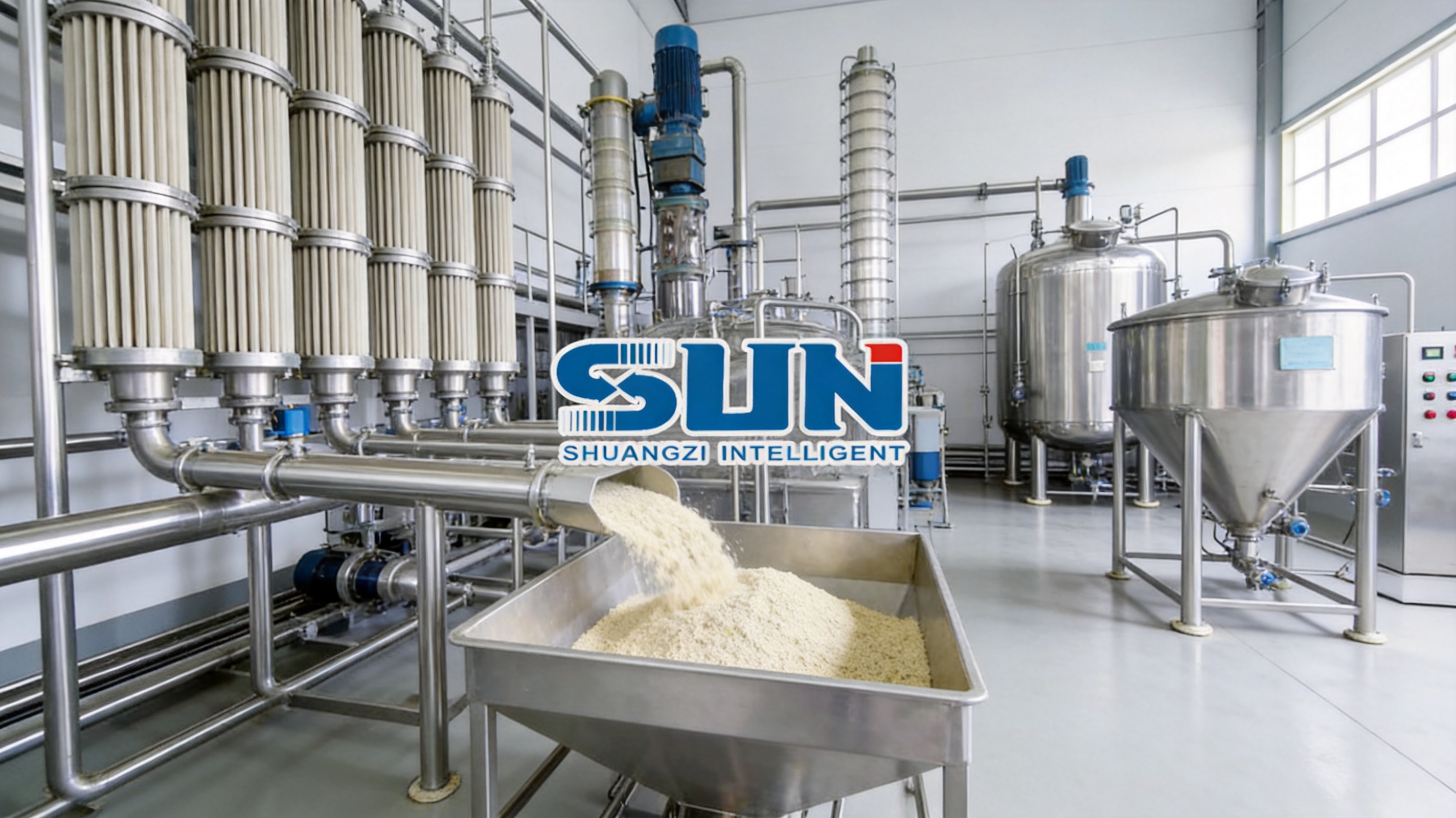
Zhejiang Shuangzi Intelligent Equipment Co., Ltd. is presented as a professional biology and medical equipment enterprise with EPC and EPCM capability. Its activities cover process technology, automation engineering design, equipment manufacture, matching purchase, installation, and equipment system integration.
The company serves fields including plant extraction, biological fermentation, pharmaceutical engineering, natural food, energy conservation, and environmental protection. This range is relevant to pectin production because the process combines several disciplines: food and natural product processing, hygienic equipment fabrication, liquid-solid separation, concentration, drying, utilities, automation, and plant engineering.
6.1 Experience in Process Equipment
The company was founded in 2007 and has developed mature products in vacuum low-temperature drying, fermentation systems, evaporation and concentration, extraction, separation, crystallization, filtration, and process vessels. These equipment categories correspond closely with the requirements of an integrated pectin line.
Experience across several process technologies can be advantageous when a project requires more than one unit operation. For example, extraction performance cannot be considered separately from filtration capacity, concentration behavior, drying load, and CIP requirements. A supplier with experience in connected process systems is better positioned to identify such relationships during engineering.
6.2 Production Facility and Technical Resources
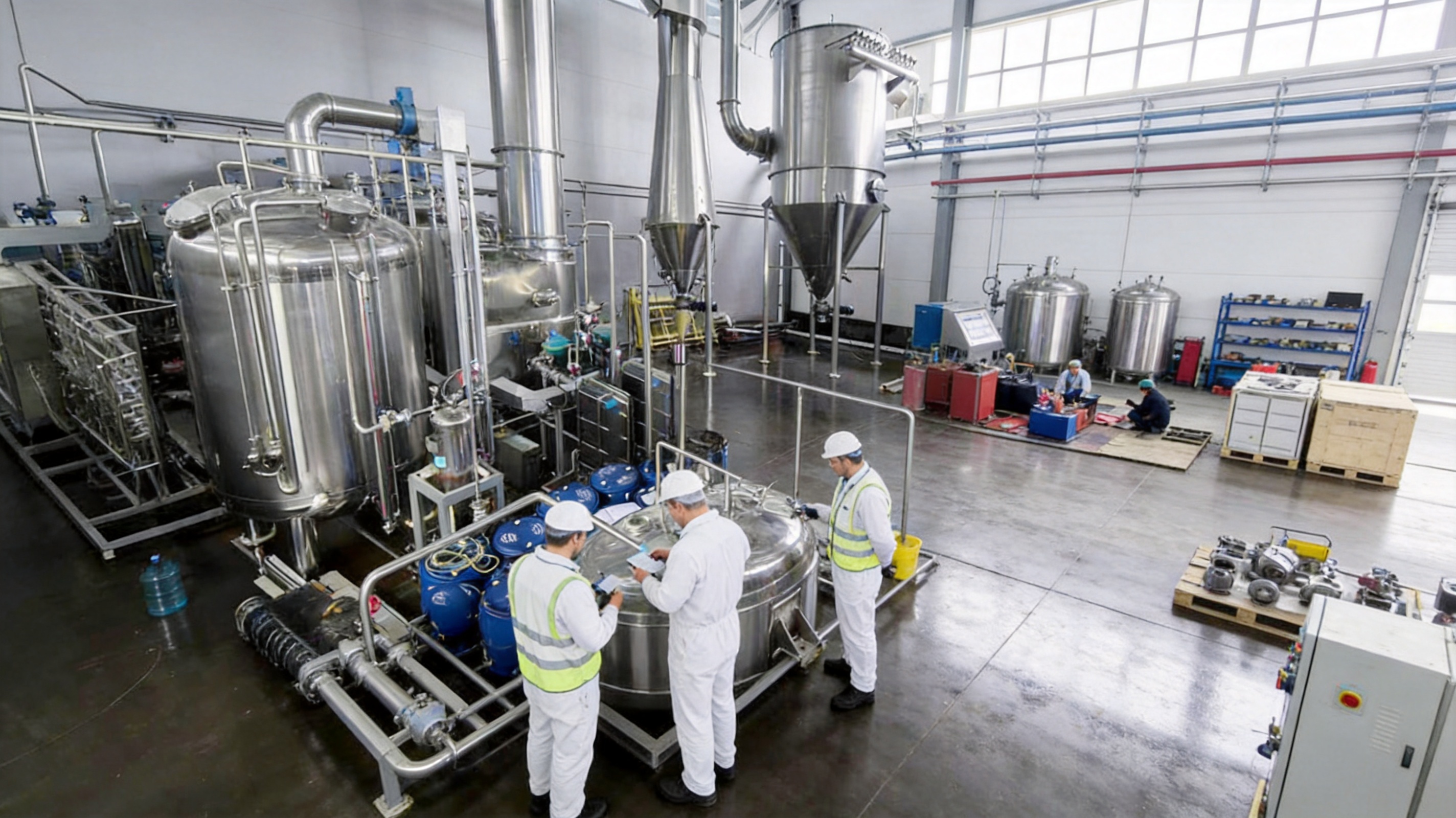
The company covers a floor area of approximately 16,706 square meters and a structural area of approximately 17,800 square meters. This provides a substantial base for equipment fabrication, assembly, testing, engineering coordination, and project preparation.
The manufacturing facility includes advanced welding and finishing equipment, including plasma argon arc welding machines, plasma cutting machines, and CAM CNC machining centers. These resources support the fabrication of stainless-steel vessels, process components, frames, pipelines, and other equipment used in hygienic industries.
Plasma argon arc welding is valuable for stainless-steel process equipment because weld quality, surface condition, penetration, and cleanliness affect both mechanical performance and hygienic operation. Consistent welding procedures can help reduce crevices, irregular surfaces, and corrosion risks in product-contact areas.
Plasma cutting and CNC machining improve dimensional accuracy and repeatability. Accurate fabrication is important when vessels, covers, agitators, piping connections, heat exchangers, pumps, and instruments must be assembled into a coordinated system. Better dimensional control can reduce installation adjustments and help maintain equipment alignment.
6.3 Research and Development Orientation
The company focuses on research and development in vacuum low-temperature drying, fermentation, extraction, concentration, and separation. These areas are directly relevant to pectin production and other natural product processes.
Research and development capability is particularly important when customers require customized process conditions. Raw materials differ in moisture, fiber structure, pectin content, viscosity, and impurity profile. A standard machine may not provide the best result for every feedstock. Process development, pilot testing, and engineering adaptation can help create a more suitable configuration.
The company also operates a pilot production workshop and an R&D platform intended to support automation and GMP-related requirements. Pilot facilities can help users investigate extraction parameters, concentration behavior, separation performance, drying conditions, and cleaning procedures before full-scale production.
6.4 Engineering and Commissioning Services
The company can provide engineering, process design, equipment design, installation, line debugging, and turnkey project services. These services are valuable because the success of a pectin line depends on more than equipment delivery.
Process design defines the sequence and conditions of production. Equipment design converts those requirements into vessels, pumps, filters, dryers, pipelines, and control elements. Installation connects the equipment with plant utilities and building infrastructure. Debugging confirms that the systems operate together. Commissioning and operator training help the customer move from construction to routine production.
System integration includes the coordination of process instruments, control cabinets, pneumatic components, sensors, pumps, valves, and operating procedures. A well-integrated control concept can improve repeatability, reduce operator error, and make it easier to monitor temperatures, pressures, flows, levels, and cleaning cycles.
7. Manufacturing Quality and Process Reliability
Equipment quality in a pectin line is determined by materials, welding, surface finish, structural design, component selection, assembly accuracy, testing, and documentation. Each factor influences long-term reliability.
7.1 Product-Contact Materials
Product-contact materials must be selected according to the process medium, temperature, acidity, cleaning chemicals, pressure, and hygienic requirements. Stainless-steel construction is commonly used in food, pharmaceutical, and natural product equipment because it can provide corrosion resistance, cleanability, and a smooth surface when correctly specified and finished.
Material selection should be confirmed during detailed design. Different parts of a plant may have different requirements, particularly when acidic extraction liquids, hot water, cleaning chemicals, or concentrated streams are present.
7.2 Welding and Surface Treatment
Welded vessels and pipelines require careful control of joint preparation, welding procedure, heat input, shielding gas, penetration, and post-weld finishing. The objective is to create strong, clean, and inspectable joints that do not retain product residue.
Surface treatment may include grinding, polishing, passivation, or other finishing procedures according to the equipment specification. Smooth surfaces support cleaning and reduce the possibility of material accumulation.
7.3 Equipment Testing
Testing should cover mechanical integrity, pressure resistance where applicable, pump rotation, valve function, instrument signals, control logic, heating and cooling performance, vacuum performance, and CIP circulation. Factory inspection before shipment can identify issues earlier than site commissioning.
For a project containing many subsystems, testing documentation is especially useful. It creates a record of equipment status and provides the installation team with a reference for site acceptance and start-up activities.
7.4 Automation and Operating Consistency
Automation can help regulate extraction temperature, concentration conditions, liquid transfer, tank levels, vacuum pressure, drying parameters, and cleaning sequences. The appropriate degree of automation depends on the customer’s production model, labor availability, technical standards, and budget.
Automation is not a replacement for process knowledge. Instead, it provides a reliable method for applying defined operating conditions. When recipes, alarms, interlocks, and data records are properly configured, operators can achieve greater batch-to-batch consistency.
8. Comparison with Less Integrated Equipment Solutions
Customers evaluating a pectin project may compare a complete turnkey line with a collection of individual machines. The lower initial price of separate equipment can appear attractive, but the total project cost may increase when engineering interfaces, utility connections, controls, installation, and commissioning are considered.
A less integrated solution may create several risks:
• Different machines may use incompatible control systems.
• Transfer pipelines may be incorrectly sized for the actual flow or viscosity.
• Utility consumption may exceed the capacity of the site.
• Cleaning procedures may not cover every product-contact component.
• Filters, centrifuges, evaporators, and dryers may have mismatched capacities.
• Responsibility for performance may be divided among several suppliers.
• Installation and commissioning may take longer because the system lacks a unified design.
The integrated project addresses these issues by considering process flow, equipment configuration, utility supply, cleaning, automation, and installation as connected elements. This is a major advantage for customers that do not want to manage numerous independent equipment vendors.
The integrated design also supports future technical discussions. If the customer later needs to modify capacity, add a purification stage, improve drying, or change the raw material, the original process documentation provides a better basis for evaluating the change.
9. Application Areas and Customer Value
The pectin line can serve natural food ingredient manufacturers, plant extraction companies, pharmaceutical and nutraceutical producers, agricultural processing enterprises, and investors developing new bio-based products.
Potential applications for extracted pectin include fruit preparations, jams, jellies, confectionery, dairy products, beverages, nutrition products, pharmaceutical formulations, and controlled-release systems. The precise application depends on the functional properties and purity of the finished pectin.
For food manufacturers, the line can support the production of a plant-derived hydrocolloid with gelling and stabilizing functions. For pharmaceutical and nutraceutical producers, greater attention may be required for purification, documentation, cleaning validation, and controlled environmental conditions. For agricultural processors, the line may create added value from suitable plant-processing residues or underused biomass.
The project can also be relevant to companies that want to establish a broader natural product platform. Since the manufacturer has experience in extraction, concentration, separation, fermentation, drying, and crystallization equipment, the engineering approach may be adapted to related plant-based products, subject to a separate technical evaluation.
10. Project Implementation from Design to Production
10.1 Preliminary Technical Assessment
The project should begin with collection of raw material and product information. Important data include the biomass type, moisture content, particle size, seasonal availability, expected throughput, pectin content, target purity, finished moisture, particle size, packaging method, and required operating schedule.
Utility information is equally important. The engineering team should review available electrical power, steam or hot water resources, cooling water, purified water, compressed air, drainage, wastewater treatment, building height, floor loading, ventilation, and environmental conditions.
10.2 Process Design
Process design converts the customer’s objectives into a flow diagram and equipment list. It defines how raw materials move through cleaning, crushing, extraction, filtration, centrifugation, blending, chromatography, concentration, drying, and final size reduction.
The design should also define material balances, heat balances, residence times, tank volumes, pump duties, filter areas, vacuum loads, drying loads, and cleaning cycles. These calculations help ensure that each unit is correctly matched to the overall production rate.
10.3 Equipment Design and Fabrication
After process parameters are established, the equipment can be designed and fabricated. This stage includes vessel sizing, agitator selection, nozzle arrangement, jacket or heat exchanger design, pump selection, pipeline routing, valve selection, instrumentation, control cabinet design, and structural support.
Fabrication should be conducted according to documented procedures. Welding, polishing, dimensional inspection, pressure testing, electrical assembly, and component verification contribute to the final quality of the line.
10.4 Factory Assembly and Inspection
Where practical, equipment and subsystems can be preassembled at the manufacturing facility. Preassembly helps confirm piping routes, equipment interfaces, cabinet connections, and operating accessibility before shipment.
Factory inspection can include visual examination, dimensional checks, functional testing, instrument verification, electrical continuity testing, and review of documentation. The inspection scope should be agreed upon with the customer during the project planning stage.
10.5 Shipment and Site Installation
The project equipment is divided into batches and loaded into cabinets for transportation. At the customer’s facility, installation follows the equipment layout, piping and instrumentation diagrams, electrical drawings, foundation requirements, and utility connection plans.
Site installation requires coordination between the equipment supplier, civil contractor, electrical contractor, utility contractor, and customer operations team. Proper sequencing is important. Equipment should be positioned and aligned before permanent piping and electrical connections are completed.
10.6 Commissioning and Line Debugging
Commissioning normally progresses from individual equipment checks to water trials and then process trials. Pumps, valves, instruments, heating, cooling, vacuum, compressed air, and CIP functions should be confirmed before introducing production material.
Line debugging verifies that the systems operate together. It may include checking extraction temperature, filtration performance, centrifuge operation, concentration, drying, powder discharge, control signals, alarms, and cleaning cycles.
Process trials should use representative raw materials whenever possible. This helps reveal the actual behavior of the feedstock, including viscosity changes, solids loading, foam formation, filtration resistance, evaporation behavior, and drying characteristics.
11. Operational and Maintenance Considerations
Reliable production depends on disciplined operation and preventive maintenance. Operators should be trained in raw material preparation, equipment start-up, process parameter control, transfer procedures, emergency shutdown, CIP operation, and product handling.
Maintenance planning should include pumps, seals, valves, filters, centrifuges, agitators, vacuum equipment, heating surfaces, instruments, compressors, and dryers. Wear parts and consumables should be identified in advance to reduce downtime.
Filters and separation equipment require particular attention because solids accumulation can reduce flow and increase pressure. Vacuum systems require inspection of seals, condensers, piping, and pumps. Drying equipment should be monitored for product buildup, temperature uniformity, and discharge performance.
CIP performance should be reviewed regularly. Changes in product composition, operating temperature, cleaning chemical concentration, or production schedule can influence cleaning results. Records of cleaning cycles, inspections, and corrective actions help support consistent operation.
12. Sustainability and Resource Efficiency
Plant extraction projects can contribute to resource efficiency by converting agricultural materials or processing by-products into useful ingredients. However, the environmental performance of the factory depends on water consumption, thermal energy, electricity, wastewater, solid residues, and cleaning chemicals.
Heat recovery may be considered between hot and cool process streams. Concentration systems can be designed to reduce unnecessary evaporation load, while vacuum drying may support controlled thermal processing. Water reuse should be evaluated carefully, especially where hygienic or product-quality requirements restrict reuse options.
Solid residues from cleaning, extraction, and filtration may be evaluated for secondary applications, animal feed suitability, composting, energy recovery, or responsible disposal. Wastewater treatment requirements depend on organic load, acidity, suspended solids, cleaning chemicals, and local regulations.
An integrated engineering approach helps identify these opportunities earlier. Utility systems, process equipment, cleaning systems, and wastewater arrangements can be considered together rather than treated as separate issues after the plant has been built.
13. Why Select a Professional Turnkey Manufacturer?
A pectin extraction project involves technical decisions that influence product quality and investment performance for many years. Selecting a professional turnkey manufacturer can provide several practical benefits.
First, the customer gains access to a coordinated process solution rather than a machine-only quotation. Second, the manufacturer can adapt the design to the raw material and target product. Third, equipment manufacturing and system integration are managed within a defined project structure. Fourth, installation and debugging support can help shorten the path from delivery to production.
Zhejiang Shuangzi Intelligent Equipment Co., Ltd. combines process technology, equipment fabrication, matching procurement, installation, automation engineering, and system integration. Its work in plant extraction, fermentation, pharmaceutical engineering, natural food, and related fields provides a technical foundation for complex production lines.
The company’s manufacturing resources, including plasma argon arc welding, plasma cutting, and CAM CNC machining equipment, support the fabrication of process systems requiring accuracy, clean surfaces, and reliable assembly. Its pilot workshop and R&D platform provide additional support for process development and scale-up.
For customers seeking a complete pectin production facility, these capabilities can reduce the technical burden of coordinating multiple vendors. They can also create a clearer route for discussing capacity, raw materials, product standards, utility requirements, automation, and future expansion.
14. Recommended Information for a Project Inquiry
Customers preparing a technical inquiry should provide as much information as possible. The following data can help the engineering team prepare a more accurate proposal:
• Type and origin of the plant biomass.
• Fresh or dried raw material condition.
• Moisture content and approximate pectin content.
• Required biomass throughput.
• Desired pectin purity and functional properties.
• Finished product moisture and particle size.
• Expected operating hours per day and days per year.
• Available hot water, cooling water, purified water, electricity, and compressed air.
• Factory building dimensions and available installation area.
• Local electrical standards and regulatory requirements.
• Preferred level of automation.
• Packaging, storage, and material-handling requirements.
• Wastewater and solid-residue treatment arrangements.
• Requirements for pilot testing, validation, documentation, or operator training.
With this information, the project team can evaluate the appropriate process sequence, equipment size, utility load, automation configuration, and installation plan. It can also clarify which systems are included in the turnkey scope and which site services must be supplied by the customer.
15. Questions and Answers
Q1: What is included in the 3T pectin extraction turnkey project?
The project includes cleaning, crushing, extraction, concentration, filtration, blending, chromatography, centrifugal separation, drying, vacuum, purified water, hot water, cooling water, compressed air, CIP cleaning, and distillation systems. The final scope is confirmed through detailed engineering and the customer’s process requirements.
Q2: Does the listed capacity represent finished pectin output?
No. The listed figures represent operational biomass capacity, ranging from 500 kg/h to 10,000 kg/h. Finished pectin output depends on raw material composition, extraction yield, purification losses, moisture, and product specifications.
Q3: Why are both extraction and concentration systems included?
Extraction transfers the target components from the biomass into a process liquid. Concentration then removes part of the liquid and increases the concentration of the desired material. Multiple concentration stages may be used because the composition and viscosity of the process stream change during production.
Q4: What is the purpose of the chromatography system?
Chromatography provides a selective purification step. It may help separate target components from certain impurities and improve product consistency. Its exact function depends on the raw material, process chemistry, separation medium, and required product grade.
Q5: Why is a CIP system important?
CIP enables vessels, pipelines, pumps, filters, and other product-contact equipment to be cleaned by circulating cleaning solutions. It improves cleaning repeatability, reduces manual dismantling, supports hygienic production, and can shorten changeover time.
Q6: Can the line process different plant materials?
The line may be adapted to different plant materials, but compatibility must be evaluated. Raw materials differ in moisture, fiber structure, pectin content, acidity, solids loading, and impurity profile. Process trials and detailed engineering are recommended before confirming a multi-material configuration.
Q7: What are the advantages of vacuum-assisted processing?
Vacuum conditions can reduce the boiling temperature during concentration or drying. This may help limit thermal exposure and support better control of certain product characteristics. The actual benefit depends on operating conditions and the sensitivity of the material.
Q8: Does the manufacturer provide installation and commissioning?
The company can provide engineering, process design, equipment design, installation, line debugging, and turnkey project services. The exact extent of site support should be defined in the commercial and technical contract.
Q9: What manufacturing equipment does the company use?
The company has introduced plasma argon arc welding machines, plasma cutting machines, CAM CNC machining centers, and other advanced welding and finishing equipment. These resources support the fabrication and finishing of process equipment and components.
Q10: Can the project include pilot-scale testing?
The company has a pilot production workshop and an R&D platform for process development. Pilot testing can be discussed when the customer needs to verify extraction, filtration, concentration, purification, drying, or cleaning conditions before full-scale investment.
Q11: What site utilities are required?
Typical requirements include electrical power, purified water, hot water, cooling water, compressed air, drainage, and wastewater treatment. The exact consumption and connection specifications depend on capacity, process conditions, automation, and local site conditions.
Q12: How should customers choose the correct capacity?
Capacity should be selected based on raw material availability, expected operating schedule, product demand, factory space, utility capacity, storage, labor, and future expansion. A detailed material balance and utility calculation should be completed before final equipment sizing.
Q13: Is the system suitable for food and pharmaceutical applications?
The equipment concept is relevant to natural food, pharmaceutical engineering, nutraceutical, and plant extraction applications. The final suitability depends on materials, hygienic design, documentation, validation, environmental controls, and the regulations applicable to the customer’s product and market.
Q14: What information is needed for a quotation?
The manufacturer will typically need raw material information, biomass throughput, target product quality, operating schedule, utility conditions, factory layout, automation expectations, and installation requirements. Representative samples may also be useful for process evaluation.
16. Conclusion
The 3T pectin extraction product line equipment turnkey project is a comprehensive solution for manufacturers seeking an integrated route from plant biomass to finished pectin. Its process scope includes cleaning, size reduction, extraction, filtration, centrifugation, blending, chromatography, concentration, distillation, drying, final crushing, utilities, and CIP cleaning.
The project’s main advantages are process integration, modular shipment, capacity flexibility, hygienic support systems, controlled thermal processing, and turnkey engineering responsibility. These features can help customers reduce coordination risks and establish a more reliable production platform than a collection of unrelated machines.
Zhejiang Shuangzi Intelligent Equipment Co., Ltd. strengthens the project with experience in plant extraction, fermentation, pharmaceutical engineering, natural food processing, vacuum low-temperature drying, evaporation, concentration, separation, filtration, and process system integration. Its manufacturing facility, advanced welding and machining resources, pilot workshop, R&D platform, and engineering services support the development of customized production lines.
Before implementation, each project should be confirmed through raw material analysis, process design, material and energy balances, utility assessment, equipment sizing, factory layout, automation planning, commissioning procedures, and product validation. With these factors properly addressed, an integrated pectin extraction line can provide a practical foundation for producing value-added plant ingredients at industrial scale.
References
1. General principles of food process engineering, including extraction, filtration, evaporation, drying, and hygienic equipment design.
2. Technical literature concerning pectin chemistry, plant cell-wall polysaccharides, gelling behavior, and industrial applications.
3. Engineering practices for stainless-steel process vessels, sanitary piping, process pumps, and clean-in-place systems.
4. Principles of vacuum evaporation and low-temperature drying for heat-sensitive natural products.
5. General guidance on food, pharmaceutical, and natural product manufacturing systems, process validation, and equipment commissioning.
6. Product and company information supplied for the 3T pectin extraction product line equipment turnkey project.