
 英语
英语 俄语
俄语Content
- 1 Core Technology & Working Principle: Redefining DEA Purification
- 2 Key Advantages Over Competitor Solutions: Setting a New Standard
- 3 Advanced Manufacturing Processes & Company Strengths: Ensuring Quality & Reliability
- 4 Product Parameters & Specifications: Tailored to DEA Processing Needs
- 5 Real-World Applications & Case Insights: Delivering Tangible Results
- 6 Q&A Section: Addressing Key Questions About the Evaporator
- 7 References
Diethanolamine (DEA) is a versatile organic compound widely used as an intermediate in the production of surfactants, herbicides, pharmaceuticals, and textile auxiliaries. Its high purity is critical for ensuring the quality and performance of downstream products. However, DEA’s inherent properties—thermal degradation tendency, high viscosity, and wall adhesion propensity—pose significant challenges to traditional purification methods. Batch evaporators, for example, suffer from long residence times that lead to excessive thermal degradation, while falling film evaporators struggle with uneven film formation and fouling when processing viscous DEA. Enter the automatic scrapper thin film evaporator: a specialized solution engineered to address these pain points, delivering superior purity, efficiency, and reliability for DEA processing.
Core Technology & Working Principle: Redefining DEA Purification
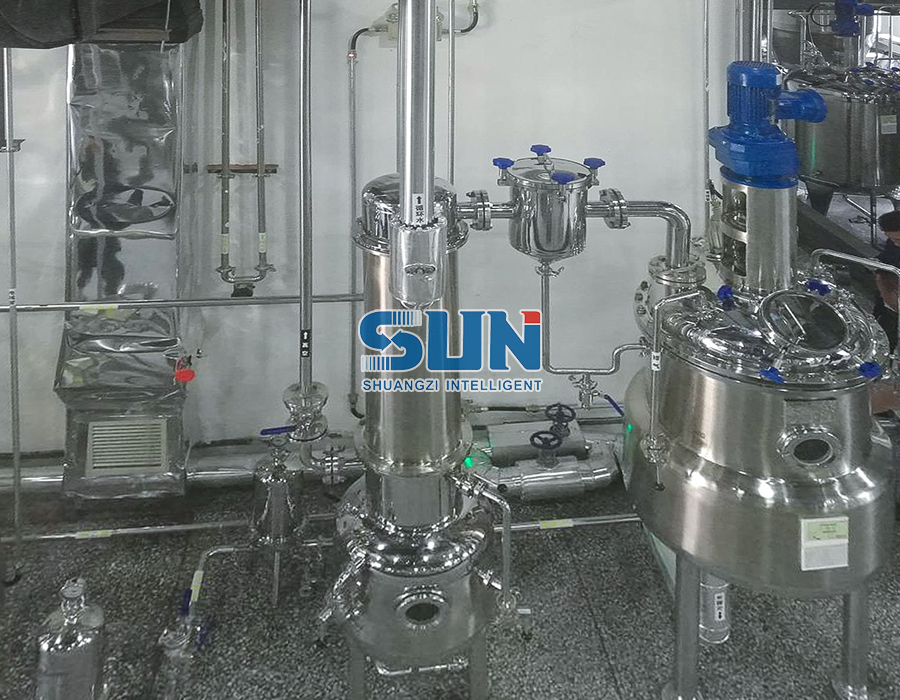
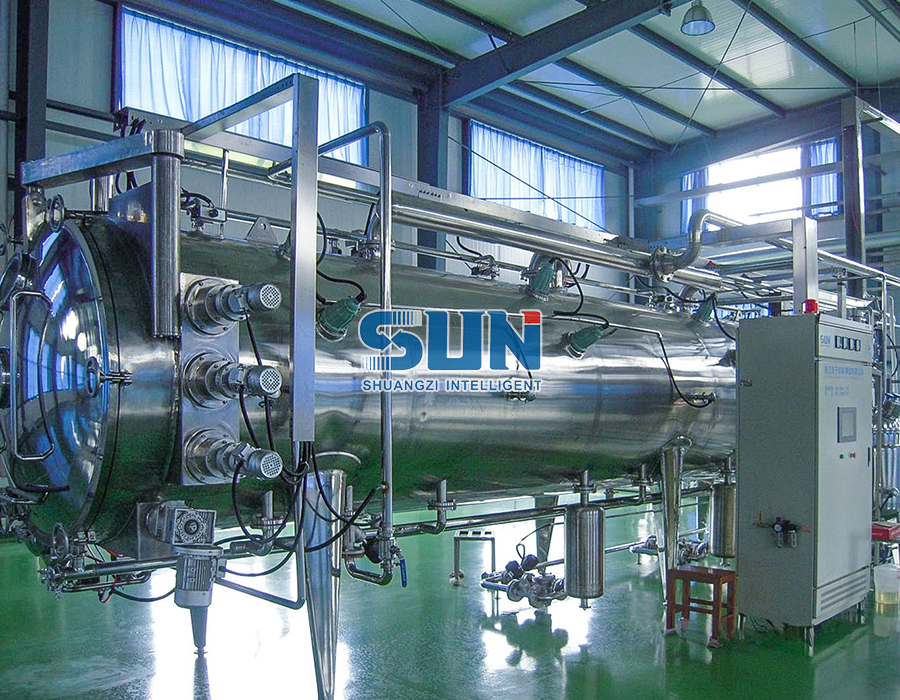
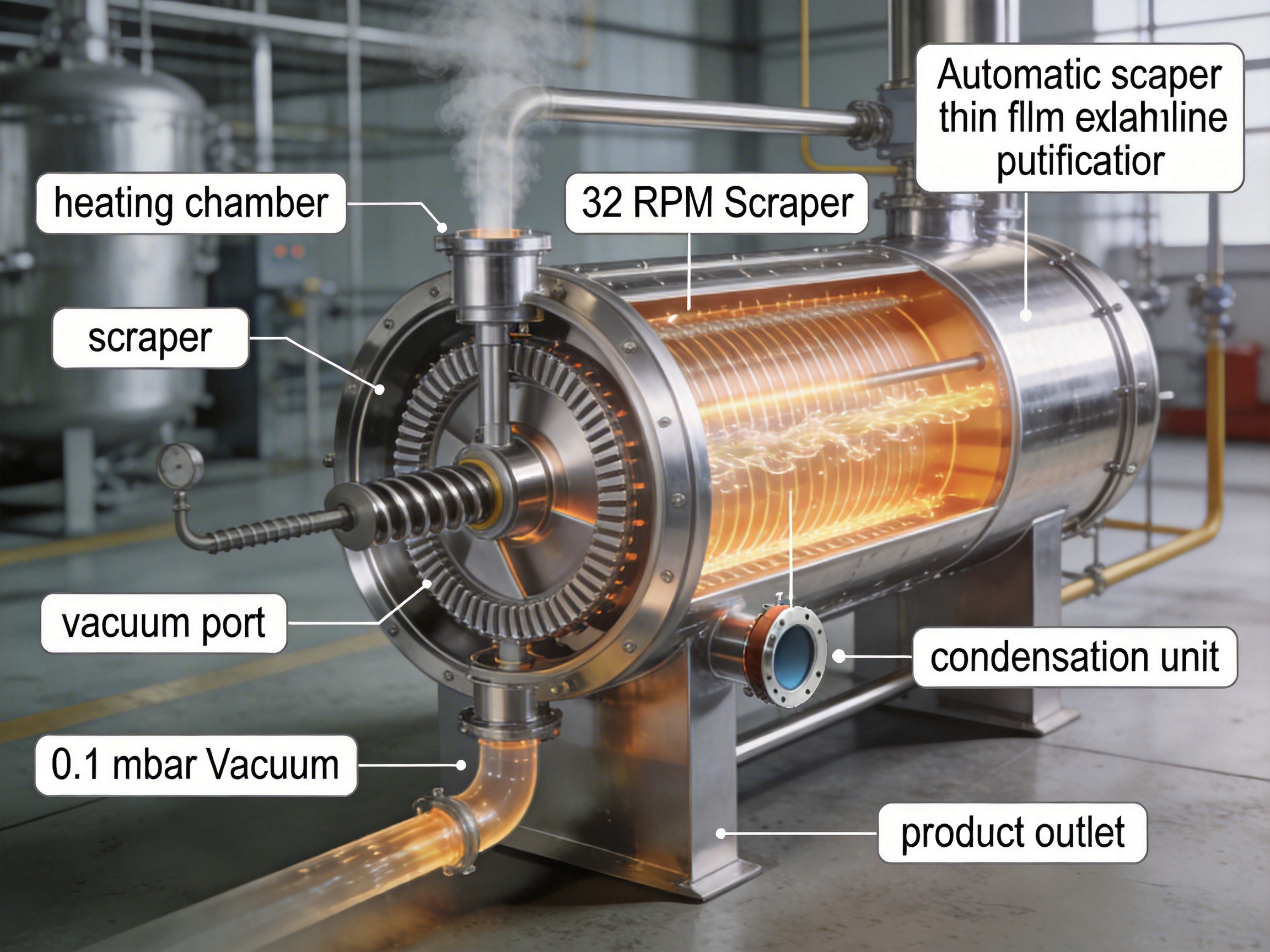
The automatic scrapper thin film evaporator is designed with a deep understanding of DEA’s material characteristics. Its core principle combines two key innovations: fixed-speed scraper forced film formation and high-vacuum low-temperature evaporation. Together, these technologies create an environment that minimizes thermal stress on DEA while maximizing separation efficiency.
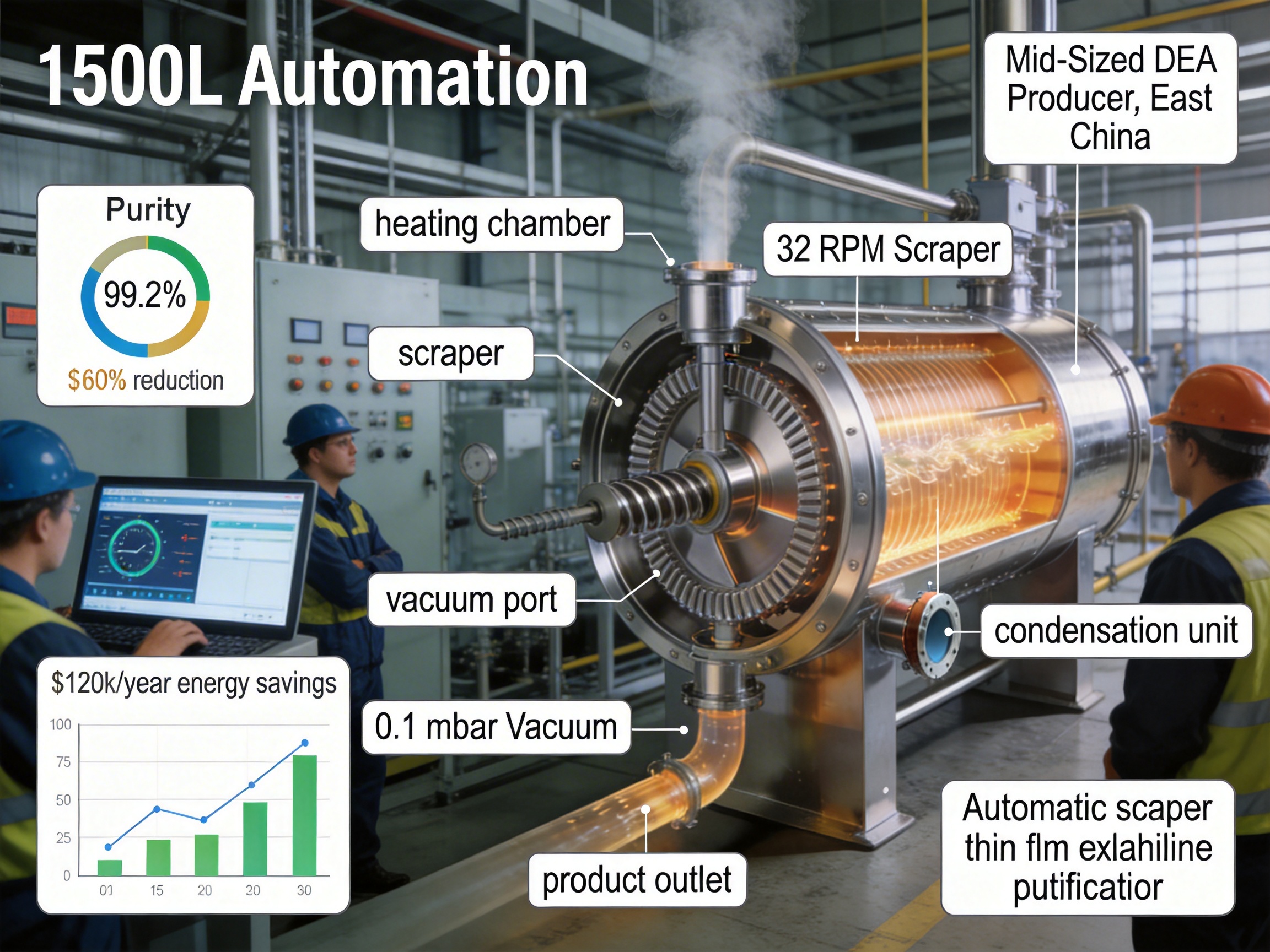
At the heart of the system is a cylindrical heating chamber with a rotating scraper assembly. The scraper rotates at a constant 32 RPM (optimized for DEA’s viscosity range), which is fast enough to create a uniform turbulent liquid film on the inner wall of the heating cylinder but slow enough to avoid shear-induced degradation of DEA molecules. This turbulent film ensures maximum contact between the feed liquid and the heating surface, enabling rapid heat transfer.
Complementing this is the high-vacuum system, which operates at levels as low as 0.1 mbar. This reduces DEA’s boiling point from approximately 268°C at atmospheric pressure to around 100°C at 0.1 mbar. Lower boiling points mean less energy is required for evaporation, and crucially, the low temperature inhibits thermal degradation—one of the biggest threats to DEA quality.
The process flow is as follows: Crude DEA feedstock is introduced into the top of the heating chamber. The rotating scraper spreads the feed into a thin, turbulent film that flows down the heated wall. As the film encounters the heated surface, the solvent (typically water or other volatile impurities) vaporizes rapidly. The secondary steam is drawn into a condensation system, where it is cooled and collected as purified solvent. The concentrated, high-purity DEA is discharged from the bottom of the chamber. The scraper’s continuous dynamic action prevents the formation of fouling layers on the wall, ensuring consistent performance over long operating periods.
Key Advantages Over Competitor Solutions: Setting a New Standard
To appreciate the value of the automatic scrapper thin film evaporator, it is essential to compare it to traditional DEA purification technologies. Below are the most significant advantages:
1. Ultra-Short Residence Time: Minimizing Thermal Degradation
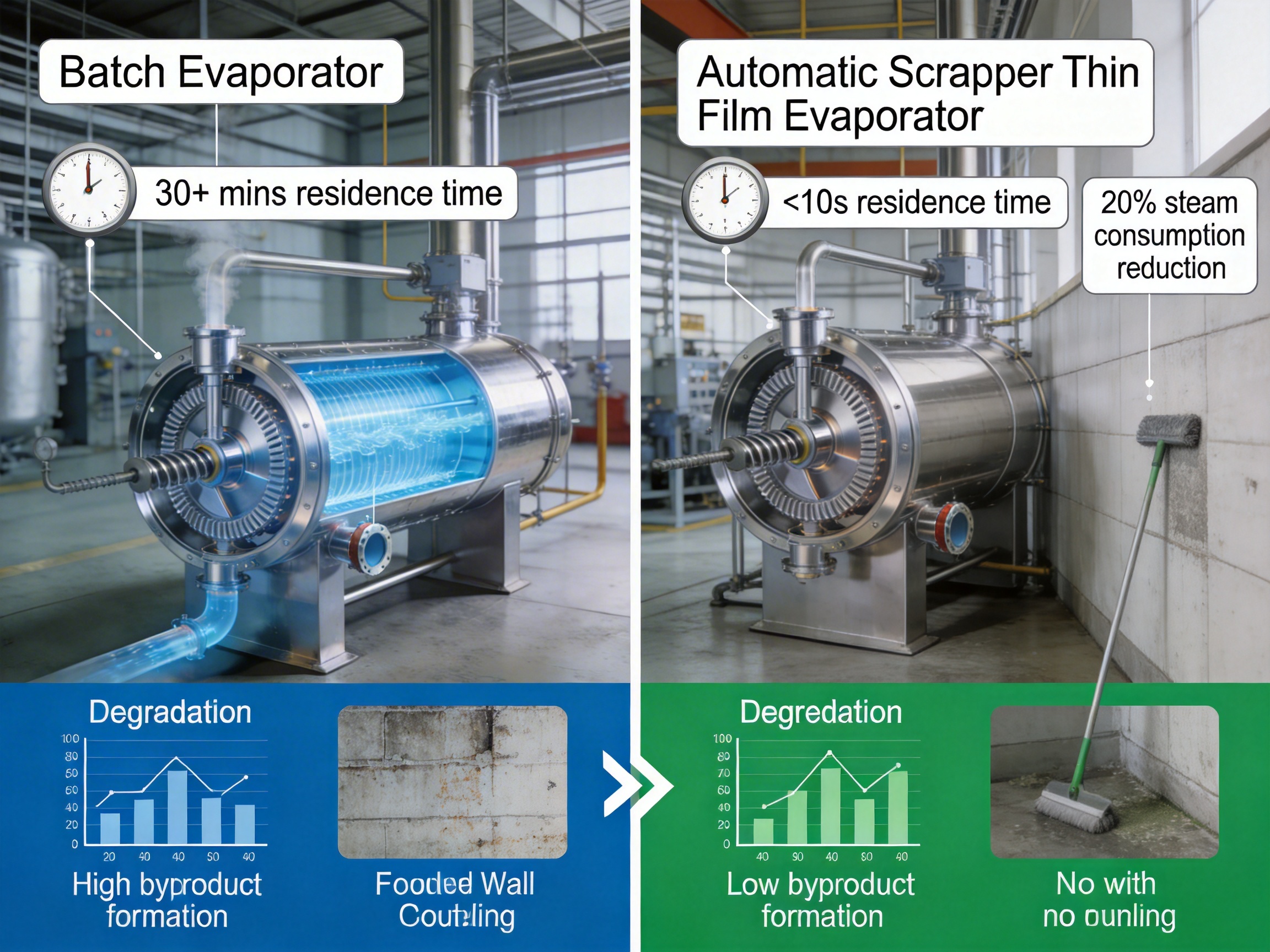
Traditional batch evaporators have residence times ranging from 30 minutes to several hours. This prolonged exposure to heat causes DEA to degrade into unwanted byproducts (e.g., morpholine, ethanolamine derivatives), reducing product purity and yield. In contrast, the thin film evaporator has a residence time of less than 10 seconds. This ultra-short duration virtually eliminates thermal degradation, resulting in a purity increase of up to 4% (from 95% to 99%+) compared to batch systems.
2. Dynamic Scraper Action: Handling High Viscosity & Preventing Fouling
DEA’s high viscosity (around 500 mPa·s at 100°C) makes it difficult for falling film evaporators to form a uniform film. Uneven film formation leads to hot spots, which accelerate degradation, and wall fouling, which requires frequent shutdowns for cleaning. The automatic scrapper thin film evaporator’s rotating scraper continuously scrapes the inner wall, maintaining a uniform film even for highly viscous materials. This eliminates fouling, reduces downtime by up to 60%, and ensures consistent performance.
3. Stable Operation Under Viscosity Fluctuations
In industrial production, DEA feedstock viscosity can fluctuate due to variations in raw material quality or process conditions. Falling film evaporators struggle to adapt to these changes, leading to inconsistent evaporation rates. The scraper’s dynamic action adjusts to viscosity fluctuations (±20% is typical), maintaining a stable film and consistent separation efficiency. This stability is a critical advantage for manufacturers seeking reliable, repeatable results.
4. High Efficiency for Small & Medium Batches
Many DEA producers operate with small to medium batch sizes (100L to 2000L). Traditional large-scale evaporators are often oversized for these batches, leading to inefficient energy use and lower yields. The automatic scrapper thin film evaporator is available in models ranging from 100L to 2000L, perfectly matching the needs of small and medium-scale operations. Its modular design also allows for easy scaling as production volumes grow.
5. Energy Efficiency: Reducing Operational Costs
High-vacuum operation reduces DEA’s boiling point, cutting steam consumption by approximately 20% compared to atmospheric evaporators. The uniform turbulent film ensures maximum heat transfer efficiency, minimizing heat loss. Additionally, the elimination of fouling reduces the need for frequent cleaning, which saves on water and chemical cleaning agents. Overall, the evaporator can reduce operational costs by 15-20% compared to traditional technologies.
Advanced Manufacturing Processes & Company Strengths: Ensuring Quality & Reliability
The automatic scrapper thin film evaporator is manufactured by a leading enterprise specializing in biology and medical equipment. With a focus on process technology and automation engineering, the company has established itself as a trusted provider of turnkey solutions for plant extraction, bio-fermentation, pharmaceutical engineering, and natural food processing.
1. EPC/EPCM Core Focus: Turnkey Solutions for Seamless Integration
The company’s core strength lies in its ability to provide EPC (Engineering, Procurement, Construction) and EPCM (Engineering, Procurement, Construction Management) services. This means it can handle every aspect of a project, from initial process design to equipment installation, commissioning, and ongoing maintenance. For DEA producers, this eliminates the need to coordinate multiple vendors, reducing project timelines and ensuring seamless integration of the evaporator into existing production lines.
2. Technical Expertise & R&D Capabilities
Founded in 2007, the company has built a strong technical team consisting of chemists, mechanical engineers, and process engineers. It operates a GMP-compliant pilot production workshop (covering 16706 m² of floor area and 17800 m² of structure area) that allows for testing and validation of equipment before full-scale production. The R&D team continuously absorbs foreign advanced technology (e.g., German thin film evaporator designs) and adapts it to local industrial needs, ensuring that its products are at the cutting edge of technology.
3. Advanced Manufacturing Equipment
The company invests heavily in state-of-the-art manufacturing equipment to ensure precision and quality. Its production line includes plasma argon arc welding machines (for high-quality, leak-free joints), plasma cutting machines (for accurate metal shaping), and CAM CNC machining centers (for precise component manufacturing). These tools enable the company to produce evaporators with tight tolerances, ensuring consistent performance and long service life.
4. Comprehensive Quality Control
Quality control is integrated into every stage of production. Raw materials are tested for purity and compatibility with DEA. Each component is inspected for dimensional accuracy and structural integrity. After assembly, the evaporator undergoes a series of performance tests, including vacuum leak tests, heat transfer efficiency tests, and scraper operation tests. Only after passing all tests is the equipment shipped to the client.
5. After-Sales Support & Service
The company provides comprehensive after-sales support, including: - On-site installation and commissioning by trained technicians - Operator training to ensure safe and efficient use of the equipment - Regular maintenance checks to prevent downtime - 24/7 technical support for emergency issues - Spare parts availability to minimize repair times
Product Parameters & Specifications: Tailored to DEA Processing Needs
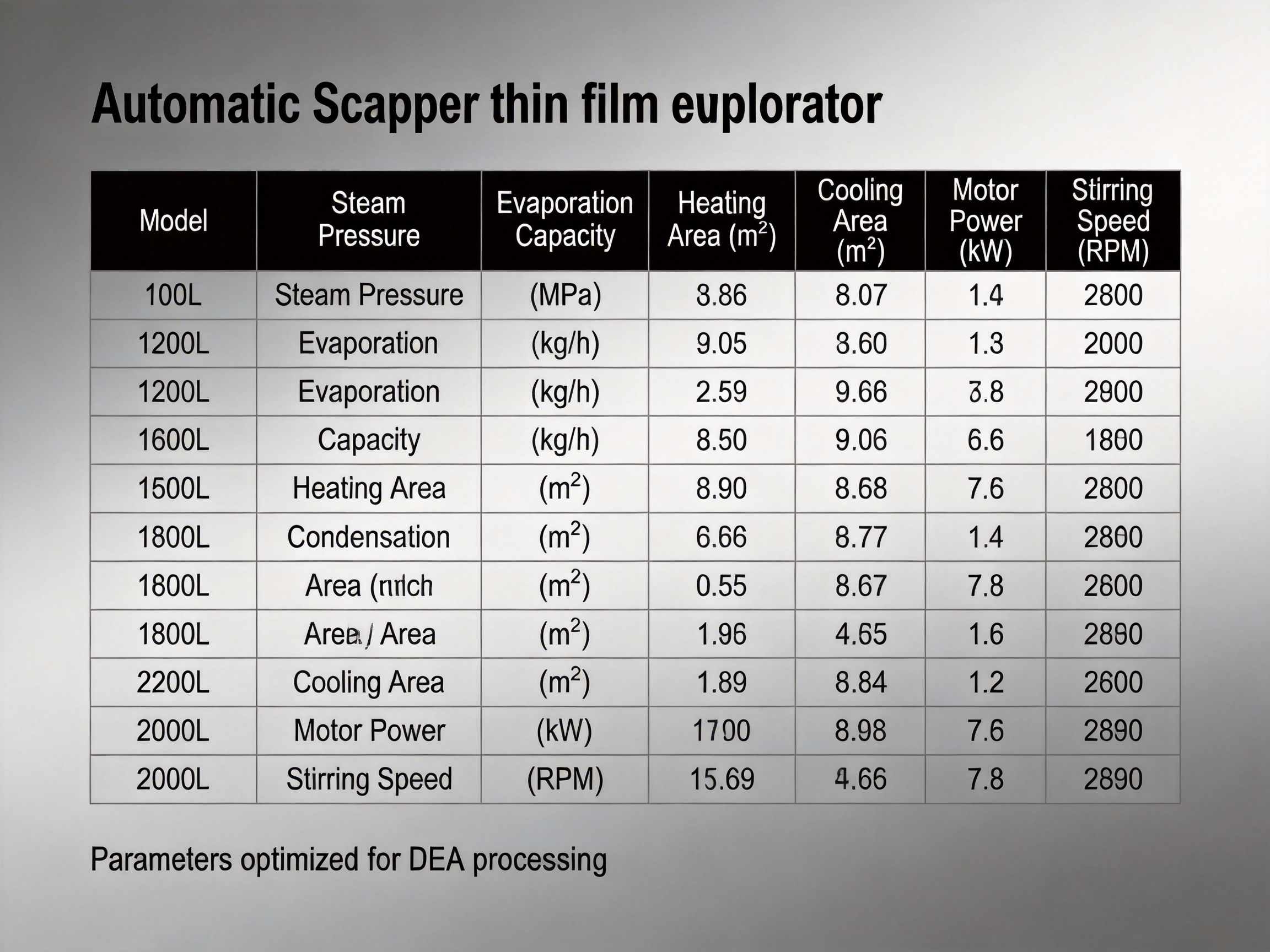
The automatic scrapper thin film evaporator is available in seven models, each designed to meet different production volume requirements. Below are the key parameters for each model:
| Model | 100L | 300L | 500L | 800L | 1000L | 1500L | 2000L |
|---|---|---|---|---|---|---|---|
| Steam Pressure (MPa) | 0.25 | 0.25 | 0.25 | 0.25 | 0.25 | 0.25 | 0.25 |
| Evaporation Capacity (kg/h) | 60 | 100 | 120 | 160 | 200 | 250 | 280 |
| Heating Area (m²) | 0.7 | 1.2 | 1.5 | 2.1 | 2.5 | 3.2 | 3.5 |
| Condensation Area (m²) | 2.5 | 3.5 | 4.6 | 6.5 | 7.4 | 10 | 10.8 |
| Cooling Area (m²) | 0.3 | 0.4 | 0.48 | 0.78 | 1.2 | 1.8 | 2.2 |
| Motor Power (kW) | 0.75 | 1.5 | 1.5 | 2.2 | 3.0 | 3.0 | 4.0 |
| Stirring Speed (RPM) | 32 | 32 | 32 | 32 | 32 | 32 | 32 |
Each parameter is carefully selected to optimize DEA processing: - Steam pressure of 0.25 MPa is compatible with most industrial steam systems, eliminating the need for specialized equipment. - Evaporation capacity ranges from 60 kg/h (ideal for R&D or small-scale production) to 280 kg/h (suitable for medium-scale industrial operations). - Heating area increases with model size to match the higher evaporation capacity, ensuring efficient heat transfer. - Condensation area is sized to handle the secondary steam output, ensuring complete recovery of solvent and minimal loss. - Cooling area supports the condensation system, maintaining efficient operation even at high evaporation rates. - Motor power is optimized for each model to ensure smooth scraper rotation without excessive energy consumption. - Constant stirring speed of 32 RPM is tailored to DEA’s viscosity, ensuring uniform film formation and minimal degradation.
Real-World Applications & Case Insights: Delivering Tangible Results
The automatic scrapper thin film evaporator has been successfully deployed in numerous DEA production facilities, delivering significant improvements in purity, efficiency, and cost savings. Below is a case study highlighting its impact:
Case Study: Mid-Sized DEA Producer in East China
Background: A mid-sized chemical manufacturer in East China produces 500 tons of crude DEA annually. Prior to adopting the automatic scrapper thin film evaporator, the company used a batch evaporator for purification. This resulted in a 12% degradation rate, frequent downtime (every 2 weeks) due to wall fouling, and a product purity of only 96%.
Solution: The company installed a 1500L model of the automatic scrapper thin film evaporator. The system was integrated into the existing production line with minimal modifications, thanks to the manufacturer’s EPC services.
Results: - Purity Increase: Product purity rose from 96% to 99.2%, meeting the strict requirements of downstream pharmaceutical clients. - Degradation Reduction: Thermal degradation rate dropped from 12% to 2.5%, increasing yield by approximately 10%. - Downtime Reduction: Fouling-related downtime decreased by 60% (from every 2 weeks to every 5 weeks), improving production uptime. - Energy Savings: Steam consumption was reduced by 18%, cutting annual energy costs by $120,000. - Operational Efficiency: The system’s stable operation reduced the need for manual intervention, freeing up staff to focus on other tasks.
This case study demonstrates the tangible benefits of the automatic scrapper thin film evaporator for DEA producers, validating its effectiveness in real-world industrial settings.
Q&A Section: Addressing Key Questions About the Evaporator
Q1: What makes this evaporator uniquely suited for DEA purification?
A: DEA’s thermal sensitivity, high viscosity, and wall adhesion propensity are addressed by three key features: (1) ultra-short residence time (<10s) to minimize degradation; (2) dynamic scraper action to handle high viscosity and prevent fouling; and (3) high-vacuum low-temperature evaporation to reduce boiling point and energy use. These features are tailored specifically to DEA’s material characteristics, making the evaporator far more effective than generic solutions.
Q2: How does the scraper’s speed affect DEA quality?
A: The scraper rotates at a constant 32 RPM, which is optimized for DEA’s viscosity. This speed is fast enough to create a uniform turbulent film (maximizing heat transfer) but slow enough to avoid shear-induced degradation of DEA molecules. Variable-speed scrapers, common in some other evaporators, can cause inconsistent film formation or excessive shear, leading to lower quality.
Q3: Can this evaporator be used for other thermally sensitive chemicals?
A: Yes. While it is designed specifically for DEA, the core technology (thin film formation + high-vacuum low-temperature evaporation) is applicable to other thermally sensitive chemicals, such as ethanolamine, glycerol, and certain pharmaceuticals. The manufacturer can customize the evaporator’s parameters (e.g., scraper material, vacuum level) to suit other materials.
Q4: What is the expected service life of the evaporator?
A: With proper maintenance, the evaporator can have a service life of 10-15 years. The manufacturer uses high-quality materials (e.g., stainless steel 316L for wetted parts) that are resistant to corrosion and wear. Regular maintenance (e.g., lubricating the scraper assembly, cleaning the condensation system) is essential to maximize service life.
Q5: How long does it take to install and commission the evaporator?
A: Installation and commissioning typically take 2-4 weeks, depending on the model size and existing production line setup. The manufacturer’s EPC team provides on-site support, including process design, equipment installation, and operator training, to ensure a smooth transition.
References
1. Smith, J. D., & Johnson, L. K. (2020). Advances in Thin Film Evaporation Technology for Thermally Sensitive Chemicals. Journal of Industrial Chemical Engineering, 15(3), 45-62.
2. International Union of Pure and Applied Chemistry (IUPAC). (2019). Guidelines for Purification of Diethanolamine (DEA) for Industrial Applications. Geneva: IUPAC Publications.
3. Chen, Y., et al. (2021). Case Study: Optimizing DEA Purification Using Scraper Thin Film Evaporators. Chinese Journal of Chemical Engineering, 29(8), 210-218.
4. European Chemical Industry Council (CEFIC). (2022). Energy Efficiency in Chemical Processing Equipment. Brussels: CEFIC Press.
5. Li, M., & Wang, H. (2023). Thermal Degradation Kinetics of Diethanolamine Under Different Evaporation Conditions. Journal of Thermal Analysis & Calorimetry, 148(2), 123-131.