
 英语
英语 俄语
俄语Content
- 1 1. Product Overview
- 2 2. Core Working Principle
- 3 3. Main Product Structure
- 4 4. Technical Parameters
- 5 5. Key Performance Advantages
- 6 6. Competitive Advantages Compared with Common Alternatives
- 7 7. Application in Plant Extraction Projects
- 8 8. Application in Bio-Fermentation Projects
- 9 9. Application in Western Medicine Synthesis
- 10 10. Application in Food Production
- 11 11. Application in Chemical Industry
- 12 12. Application in Environmental Protection
- 13 13. Application in Energy Industry
- 14 14. Manufacturing Strengths Behind the Equipment
- 15 15. EPC and Turnkey Project Capability
- 16 16. Quality Considerations in Evaporator Selection
- 17 17. Operating Benefits for Production Managers
- 18 18. Why the External Circulation Design Matters
- 19 19. Integration with Upstream and Downstream Processes
- 20 20. Maintenance and Long-Term Reliability
- 21 21. Q&A Section
- 21.1 Q1: What is the main function of the External Circulation Evaporator?
- 21.2 Q2: Which industries can use this evaporator?
- 21.3 Q3: Why is vacuum operation important?
- 21.4 Q4: What is the typical concentration ratio?
- 21.5 Q5: What evaporation capacities are available?
- 21.6 Q6: Can the equipment recover solvents?
- 21.7 Q7: Is the equipment suitable for food materials?
- 21.8 Q8: What advantages does it have over open concentration tanks?
- 21.9 Q9: Why is the company’s manufacturing capability important?
- 21.10 Q10: Can the evaporator be supplied as part of a turnkey project?
- 22 22. Conclusion
- 23 References
In modern pharmaceutical, food, chemical, environmental, and energy-related processing, evaporation and concentration are among the most important unit operations. A liquid mixture often contains valuable active ingredients, solvents, water, aromas, or organic components that must be separated, recovered, concentrated, or purified under controlled conditions. The External Circulation Evaporator is designed for these needs, offering fast evaporation, stable vacuum operation, sealed processing, reliable solvent recovery, and easy cleaning for industrial production environments.
This article introduces the structure, working principle, technical parameters, application fields, operational advantages, and manufacturing strengths behind the External Circulation Evaporator. It also explains why this equipment is especially valuable for plant extraction, bio-fermentation, Western medicine synthesis, food production, turnkey engineering projects, environmental treatment, and solvent recovery processes.
1. Product Overview
The External Circulation Evaporator is a concentration machine widely used in industries that require liquid concentration, solvent recovery, thermal separation, and purification. Its main purpose is to evaporate volatile components from a liquid mixture and separate them from the concentrated product. In many processes, the volatile component may be water, ethanol, organic solvent, or another recoverable liquid. The remaining material becomes more concentrated, easier to store, easier to transport, or more suitable for downstream processing.
The equipment operates based on the principle of distillation and heat transfer. A liquid mixture enters the evaporator system and is heated in a dedicated heater. Under vacuum conditions, the boiling point of the liquid is reduced, allowing evaporation to occur at relatively low temperatures. The generated vapor then moves into the condenser or heat exchange section, where it is cooled and converted back into liquid. This recovered condensate can be collected, reused, or discharged according to process requirements.
Unlike simple open concentration tanks or traditional batch heating equipment, the External Circulation Evaporator supports a more controlled and efficient circulation mode. The liquid circulates externally between the heater and separator, improving heat transfer, accelerating evaporation, and helping maintain product quality. This external circulation structure is particularly useful for materials that require gentle handling, stable concentration, and low contamination risk.
The equipment is suitable for concentrating traditional Chinese medicine extracts, Western medicine intermediates, biological fermentation liquids, food liquids, organic solvents, chemical solutions, spice extracts, dyes, wastewater streams, and crude oil recovery-related materials. Its fully sealed operating state helps protect product purity, reduce pollution, and maintain strong natural flavor or medicinal characteristics in sensitive materials.
2. Core Working Principle
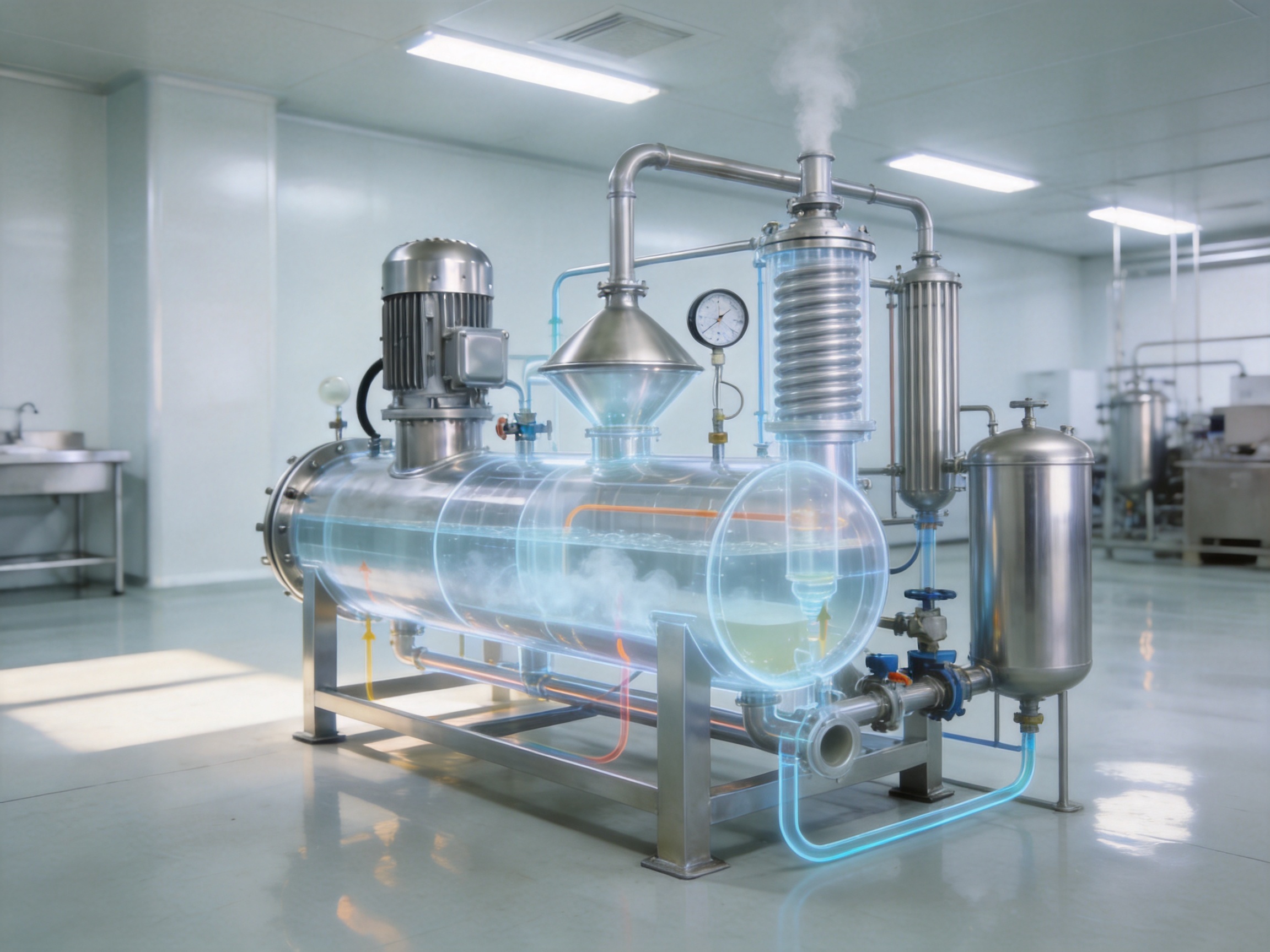
The working principle of the External Circulation Evaporator is based on vacuum evaporation, external circulation heating, vapor-liquid separation, condensation, and recovery. The feed liquid first enters the system and is guided into the heating section. Steam or another heating medium transfers heat through the heat exchange surface. Because the system operates under vacuum, the material can boil and evaporate at a lower temperature than it would under atmospheric pressure.
When evaporation begins, volatile components turn into vapor. The vapor and liquid mixture then moves into the separator. In the separator, vapor is separated from the concentrated liquid. The vapor continues into the condenser, where cooling water or another cooling medium removes heat from the vapor. As the vapor cools, it condenses into liquid droplets and is collected or returned according to process design.
The concentrated liquid can be discharged when the required concentration ratio is reached. In many applications, the External Circulation Evaporator can reach a concentration ratio of approximately 1.2 to 1.3, depending on material characteristics, process parameters, and operating conditions. The external circulation design helps improve evaporation speed and supports smooth operation, even for liquid materials that are prone to unstable heating behavior.
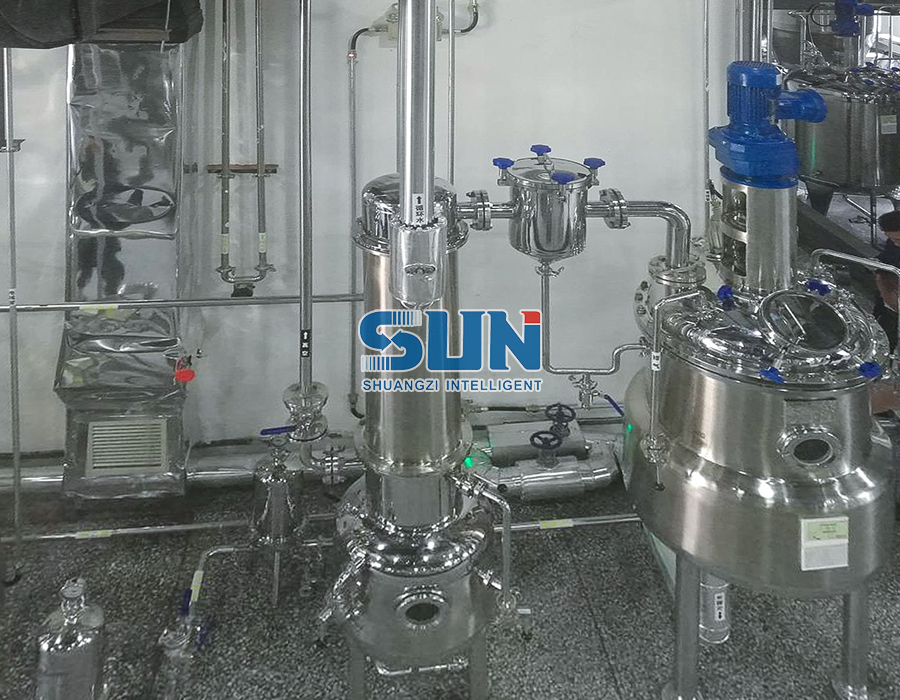
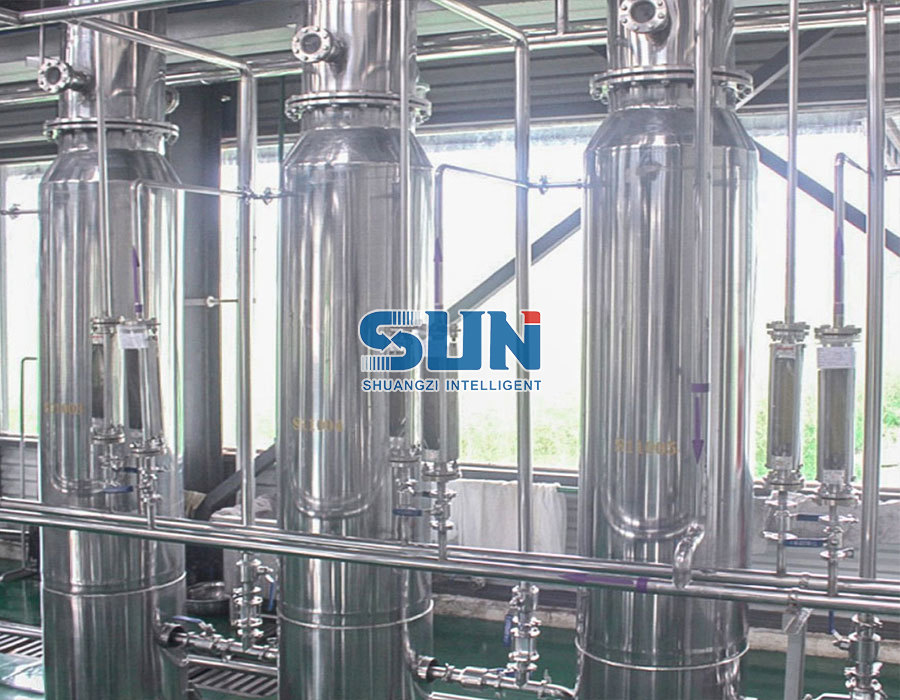
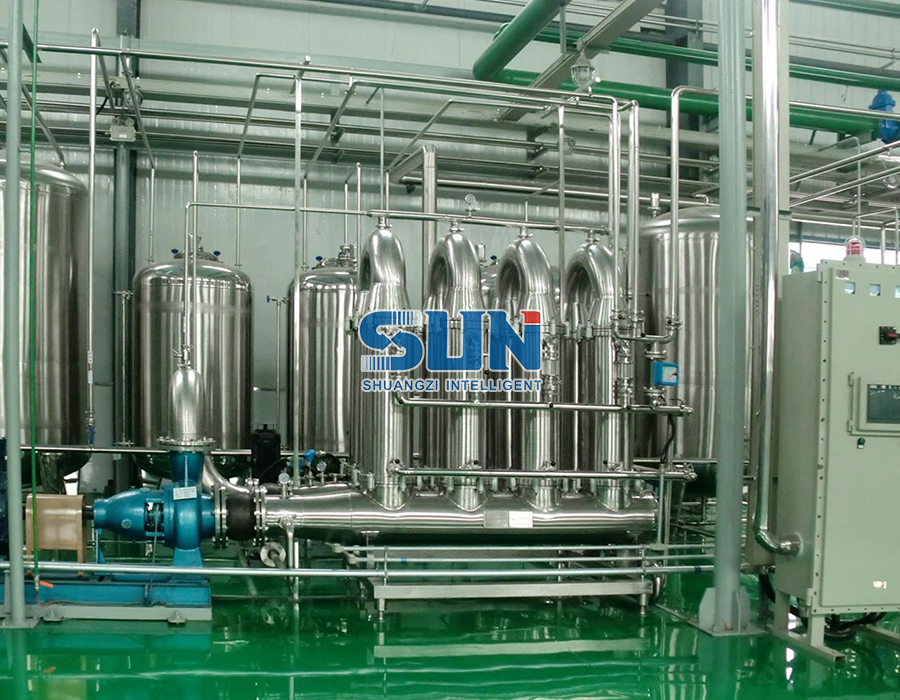
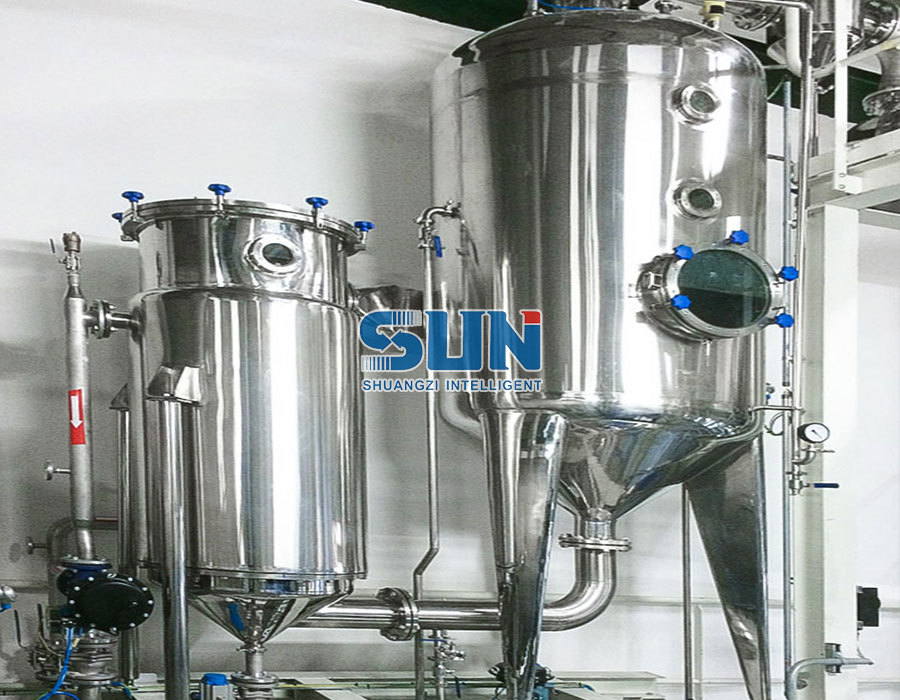
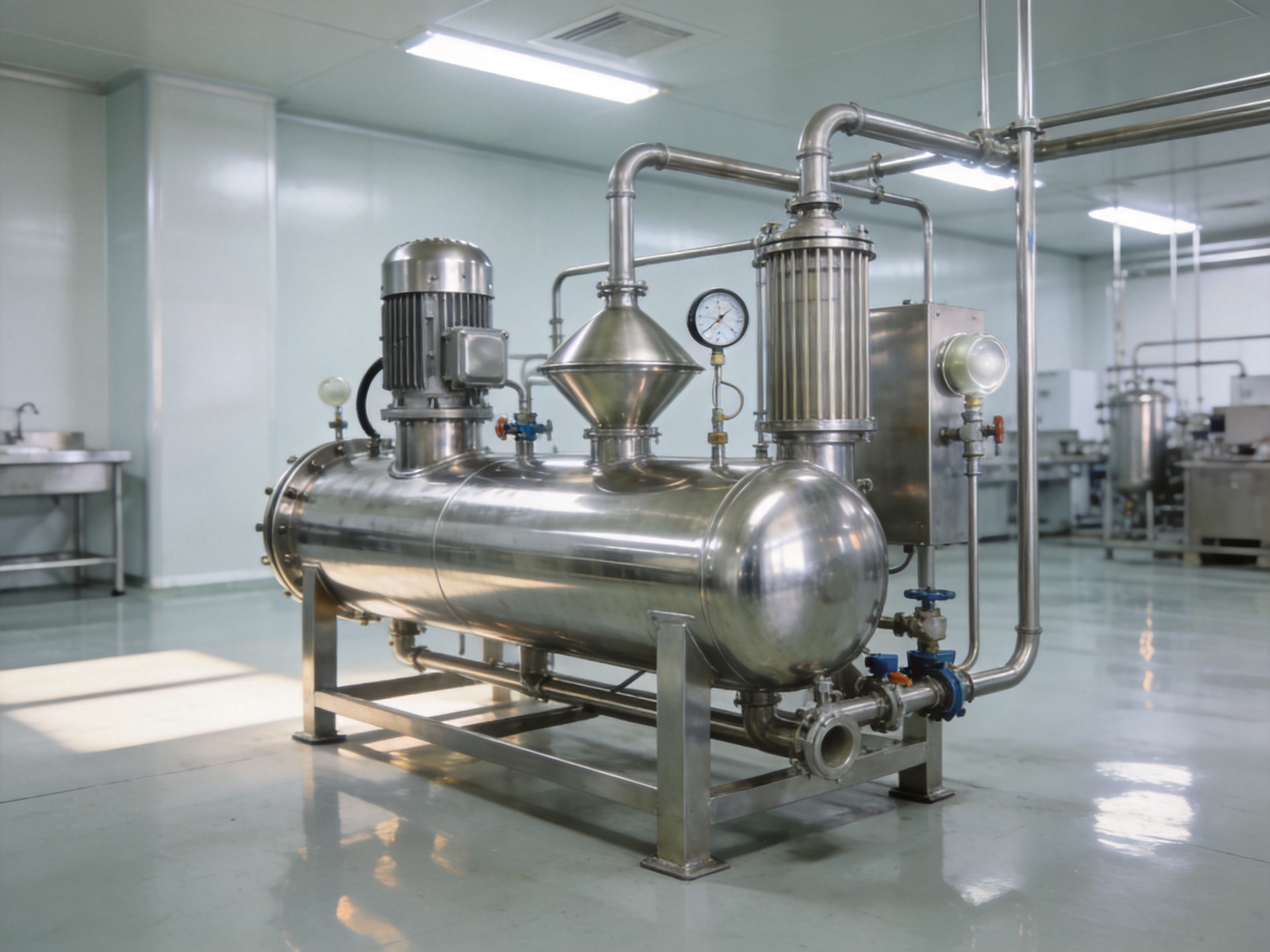
The system usually includes a heater, heat exchanger, condenser, reflux device, separator, and associated pipelines, valves, instruments, and control components. Each section performs a specific role in ensuring effective evaporation and reliable concentration. The heater and heat exchanger provide thermal energy; the separator manages vapor-liquid separation; the condenser and reflux device support cooling and recovery; and the discharge system removes the concentrated liquid.
3. Main Product Structure
The External Circulation Evaporator is not a single vessel but an integrated evaporation and concentration system. Its performance depends on the coordination of multiple components. The design is intended to ensure reliable heat transfer, stable vapor-liquid separation, efficient condensation, low pollution risk, and easy maintenance.
3.1 Heater
The heater is one of the most important parts of the evaporator. It transfers heat from steam or another heating source to the liquid material. In external circulation evaporation, liquid continuously passes through the heater, absorbs heat, and then enters the separator for evaporation. A well-designed heater improves evaporation rate, reduces energy waste, and helps avoid excessive local overheating.
3.2 Heat Exchanger
The heat exchanger supports thermal transfer and may be used in different parts of the process, depending on the system configuration. It helps vaporize volatile components and may also assist with preheating, cooling, or energy recovery. In high-quality evaporation systems, heat exchange efficiency directly influences production capacity and operating cost.
3.3 Condenser
The condenser cools vapor generated during evaporation. After vapor enters the condenser, heat is removed and the vapor becomes liquid condensate. This process allows solvent recovery, reduces vapor emission, and supports environmental protection. In pharmaceutical and food applications, condensation quality is also important for process hygiene and material control.
3.4 Reflux Device
The reflux device helps manage condensed liquid and may return certain condensed components to the evaporator when process conditions require it. This contributes to separation stability and can improve recovery performance in selected applications.
3.5 Separator
The separator separates vapor from liquid. Efficient separation prevents liquid droplets from being carried into the vapor pipeline and helps protect the condenser. It also ensures that concentrated liquid remains in the correct process path. Good separator design improves product yield, operating stability, and cleanliness.
3.6 Vacuum and Control Components
The vacuum system maintains reduced pressure inside the evaporator. With a vacuum degree around 0.08 MPa, the evaporator can support low-temperature evaporation, which is essential for heat-sensitive materials. Instruments and control components monitor pressure, temperature, flow, and operational status. In automated production lines, these controls help ensure consistent batches and reduce operator workload.
4. Technical Parameters
The External Circulation Evaporator is available in several capacity models to meet different production scales. The following table summarizes the main available configurations based on the provided product data.
Items |
DJN-500 |
DJN-1000 |
DJN-1500 |
DJN-2000 |
Evaporation Capacity |
500 kg/h |
1000 kg/h |
1500 kg/h |
2000 kg/h |
Steam Pressure |
Less than 0.09 MPa |
Less than 0.09 MPa |
Less than 0.09 MPa |
Less than 0.09 MPa |
Vacuum Degree |
0.08 MPa |
0.08 MPa |
0.08 MPa |
0.08 MPa |
Concentration Ratio |
1.2 to 1.3 |
1.2 to 1.3 |
1.2 to 1.3 |
1.2 to 1.3 |
Approximate Dimensions |
2000 x 1000 x 3000 mm |
2200 x 1200 x 3300 mm |
2500 x 1300 x 3500 mm |
4600 x 2350 x 5100 mm |
These models allow users to select the appropriate capacity according to production scale, feed characteristics, evaporation target, plant layout, and investment plan. The DJN-500 is suitable for smaller production lines, pilot-scale applications, or moderate daily output. The DJN-1000 and DJN-1500 models serve medium-capacity production. The DJN-2000 model is designed for higher evaporation demand and larger industrial processes.
5. Key Performance Advantages
The External Circulation Evaporator offers several advantages over many conventional concentration systems. These advantages are especially important for manufacturers that require stable quality, efficient evaporation, solvent recovery, low contamination risk, and easier cleaning.
5.1 Fast Evaporation Speed
The external circulation structure improves the movement of liquid through the heating area. By circulating the material outside the main separator, the system increases contact between the liquid and heating surface. This helps raise evaporation efficiency and shortens concentration time. Compared with static heating tanks or low-efficiency concentration vessels, the External Circulation Evaporator provides a more active and effective heat transfer process.
5.2 Operation Under Vacuum
Vacuum evaporation reduces the boiling point of the solvent. This is a major advantage for heat-sensitive products such as botanical extracts, pharmaceutical solutions, aroma-rich food liquids, fermentation broths, and biological materials. Lower evaporation temperatures help preserve active ingredients, reduce thermal degradation, and improve final product quality.
5.3 Fully Sealed Concentration
The liquid material is concentrated in a sealed state. This helps prevent contamination from external air, dust, microorganisms, or workshop impurities. It also reduces solvent vapor leakage and improves operator safety. For pharmaceutical and food producers, sealed processing is a major advantage because it supports hygiene, product consistency, and regulatory expectations.
5.4 No Foam Concentration Characteristics
Foaming can reduce evaporation efficiency, cause material loss, contaminate downstream condensers, and create cleaning challenges. The External Circulation Evaporator is designed to support stable concentration with reduced foam problems. This is valuable for plant extracts, protein-containing liquids, fermentation products, and food materials that may otherwise generate foam during boiling.
5.5 Solvent Recovery and Environmental Benefits
In many chemical, pharmaceutical, and food processes, solvents are valuable and should be recovered. The condenser and reflux structure make it possible to collect evaporated solvent after condensation. Solvent recovery reduces raw material cost, lowers emissions, and supports environmental compliance. Compared with systems that release vapor or require separate recovery units, an integrated evaporator can simplify process design.
5.6 Strong Product Flavor and Low Pollution
For traditional medicine and food liquids, preserving natural flavor, aroma, and characteristic components is important. Because the equipment operates in a sealed and vacuum state, the concentrated liquid can maintain a strong medicinal or natural flavor while reducing oxidation and contamination risk. This helps producers improve the sensory and functional quality of their final products.
5.7 Easy Cleaning
Cleaning is a practical concern for any production plant. Residues from extracts, syrups, fermentation broths, or chemical mixtures can attach to internal surfaces and reduce efficiency. The External Circulation Evaporator is designed with cleaning convenience in mind. Easy cleaning reduces downtime, lowers labor intensity, improves batch changeover efficiency, and supports sanitary production.
6. Competitive Advantages Compared with Common Alternatives
Industrial users often compare external circulation evaporators with open concentration tanks, jacketed kettles, falling film evaporators, forced circulation evaporators, or basic single-effect evaporators. Each technology has its place, but the External Circulation Evaporator offers a balanced combination of simplicity, efficiency, sealed operation, and practical adaptability.
6.1 Compared with Open Concentration Tanks
Open tanks are simple, but they usually have high energy consumption, slow concentration speed, greater contamination risk, and poor solvent recovery. Because vapor is released into the surrounding environment or handled with limited control, open systems may waste solvent and create odor or safety problems. The External Circulation Evaporator provides sealed vacuum concentration and condensation recovery, making it more suitable for modern pharmaceutical, food, and chemical production.
6.2 Compared with Simple Jacketed Kettles
Jacketed kettles are common for heating and mixing, but evaporation efficiency can be limited by the heat transfer area and liquid depth. Some materials may overheat near the wall while remaining insufficiently concentrated elsewhere. External circulation improves heat exchange and movement, supporting more uniform evaporation and better control.
6.3 Compared with Generic Evaporators Without Process Integration
Some evaporators are sold as standalone machines without full consideration of process requirements, installation, automation, solvent recovery, cleaning, and downstream integration. The External Circulation Evaporator offered by Zhejiang Shuangzi Intelligent Equipment Co., Ltd. is supported by engineering, process design, equipment design, installation, line debugging, system integration, and turnkey project services. This means users can receive not only a machine but a process solution.
6.4 Compared with Oversized Complex Systems
Some evaporation technologies are highly complex and expensive, especially when designed for very large continuous production. For many medium-scale pharmaceutical, food, and extraction plants, such systems may be unnecessary. The External Circulation Evaporator provides practical capacity options, manageable structure, and strong industrial usability without forcing users into excessive investment.
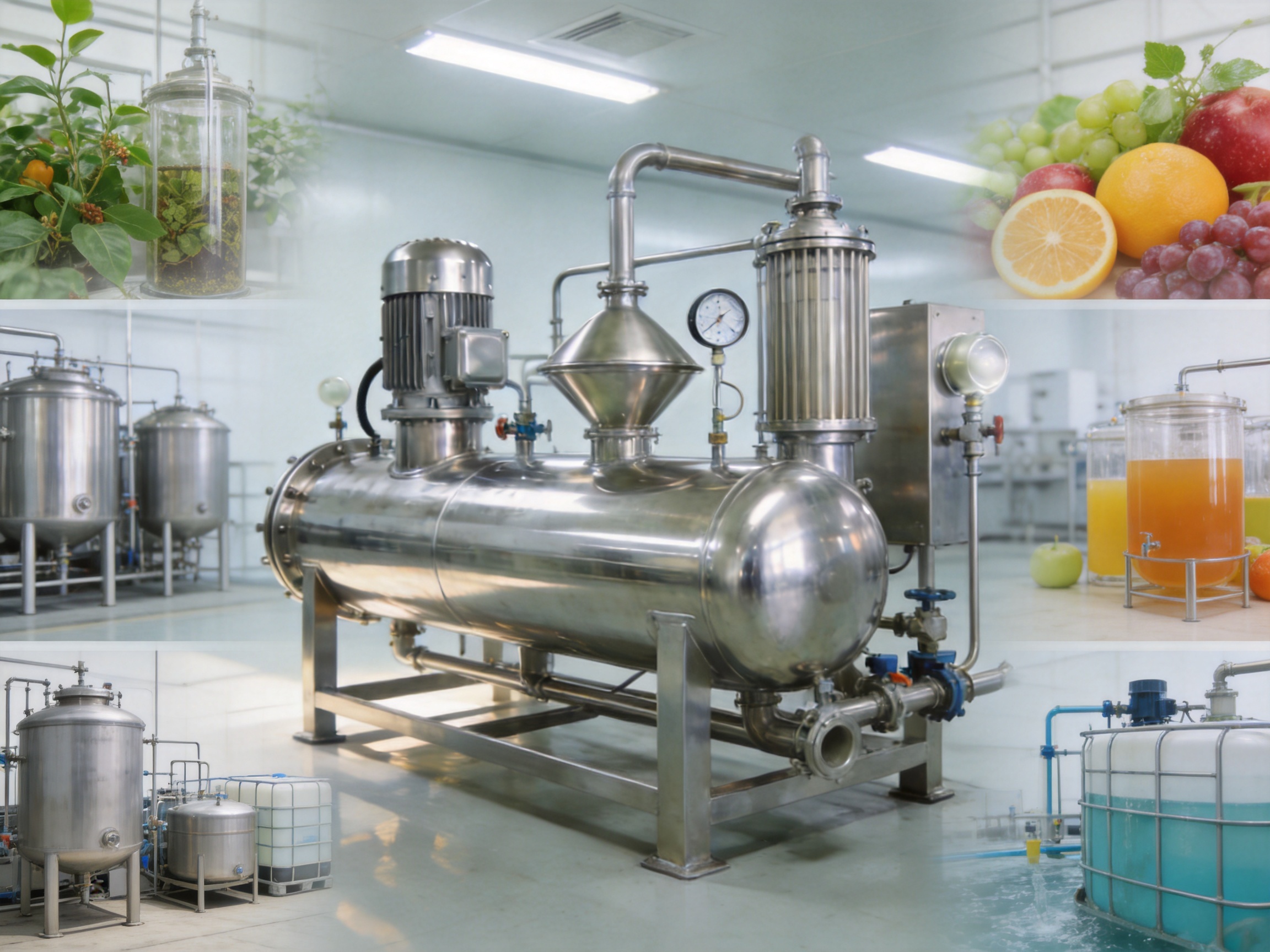
7. Application in Plant Extraction Projects
Plant extraction is one of the most important fields for the External Circulation Evaporator. In botanical processing, raw plant materials are extracted with water, ethanol, or other solvents to obtain active components. After extraction and filtration, the liquid extract usually contains a large amount of solvent. Concentration is required before drying, formulation, precipitation, purification, or packaging.
Traditional Chinese medicine extracts, herbal extracts, natural pigments, plant polysaccharides, flavonoid-rich liquids, essential component extracts, and natural health product intermediates can all benefit from controlled vacuum concentration. Many plant-derived substances are sensitive to heat and oxidation. Vacuum operation reduces thermal stress, while sealed processing reduces exposure to air.
The External Circulation Evaporator also supports solvent recovery in plant extraction. Ethanol is frequently used as an extraction solvent. Recovering ethanol through condensation reduces operating cost and improves plant safety. The recovered solvent can be reused after appropriate quality control, helping build a more economical and sustainable extraction line.
For companies developing turnkey plant extraction projects, evaporation is a central step between extraction and drying. A well-designed evaporation system improves the entire process flow. Zhejiang Shuangzi Intelligent Equipment Co., Ltd. has experience in plant extraction, evaporation, precipitation separation, extraction, fermentation, and vacuum low-temperature drying, allowing the evaporator to be matched with upstream and downstream equipment in a complete production line.
8. Application in Bio-Fermentation Projects
Bio-fermentation processes produce liquids that may contain enzymes, metabolites, nutrients, proteins, organic acids, or pharmaceutical intermediates. After fermentation, the broth often needs separation, purification, concentration, or solvent recovery. The External Circulation Evaporator can be used in selected fermentation-related processes where concentration is required and material properties are compatible with evaporation.
Vacuum concentration is valuable because many biological materials cannot tolerate excessive heat. Lower-temperature evaporation helps protect active components and reduces the risk of degradation. Sealed operation also helps prevent contamination during processing, which is especially important when handling bio-based or pharmaceutical materials.
In fermentation engineering, evaporation may be combined with filtration, crystallization, extraction, or drying. The company’s broader product portfolio includes fermentation system equipment, filtration equipment, separation equipment, crystallization equipment, extraction equipment, and vacuum low-temperature drying equipment. This makes it possible to design a process route that connects fermentation to final product processing in a coordinated way.
9. Application in Western Medicine Synthesis
Western medicine synthesis often involves organic solvents, reaction solutions, intermediates, mother liquor, and purification steps. Concentration and solvent recovery are essential for improving yield, reducing waste, and preparing materials for crystallization or drying. The External Circulation Evaporator is useful in pharmaceutical engineering when process conditions require controlled evaporation under vacuum.
Pharmaceutical production demands clean equipment, stable operation, traceable process conditions, and reliable material separation. The sealed structure of the External Circulation Evaporator reduces external contamination and vapor leakage. Condensation and reflux components support recovery of valuable solvents. Vacuum operation reduces boiling temperature and helps protect sensitive intermediates.
For pharmaceutical manufacturers, equipment selection is not only about evaporation capacity. It is also about engineering design, material compatibility, cleaning convenience, installation quality, automation, and compliance-oriented production concepts. Zhejiang Shuangzi Intelligent Equipment Co., Ltd. focuses on process technology, automation engineering design, equipment manufacturing, matching purchase, installation, and equipment system integration, making it a suitable partner for pharmaceutical process projects.
10. Application in Food Production
Food production requires evaporation equipment that can preserve flavor, aroma, color, and nutritional components while meeting hygienic expectations. The External Circulation Evaporator can be used for solvent recovery and concentration in the production of fruit juice, cheese, milk, and other food-related materials. It can also support natural food processing where vacuum concentration is preferred.
In fruit juice concentration, excessive heat may damage flavor and color. Vacuum evaporation allows concentration at lower temperatures, helping preserve sensory quality. In dairy-related processing, controlled heating and clean design are important to reduce fouling and maintain product consistency. In natural food extraction, sealed concentration protects materials from contamination and oxidation.
Food producers also benefit from easy cleaning. Batch changes, flavor changes, and allergen management all depend on practical cleaning procedures. Equipment that is difficult to clean can create production delays and quality risks. The External Circulation Evaporator’s cleanable structure helps improve production efficiency and supports hygienic operation.
11. Application in Chemical Industry
The chemical industry uses evaporation for solvent recovery, product concentration, purification, and waste reduction. The External Circulation Evaporator can be applied in the production of chemical drugs, spices, dyes, alcohol recovery, and other organic solvent processes. Its condensation system helps capture evaporated volatile components, allowing reuse or controlled handling.
Chemical production often involves materials with different boiling points, viscosity, corrosiveness, and thermal stability. Proper equipment design must consider these properties. External circulation supports strong heat exchange and stable evaporation. Vacuum operation can lower boiling points and reduce thermal decomposition. The system can be configured according to specific process requirements, including material contact surfaces, sealing methods, instrumentation, and capacity.
Compared with uncontrolled evaporation or outdated recovery methods, a sealed evaporator improves safety and environmental management. It reduces solvent release, improves workshop conditions, and helps companies comply with stricter environmental expectations.
12. Application in Environmental Protection
Environmental protection processes increasingly rely on concentration technologies to reduce wastewater volume, recover useful components, and control organic pollutants. The External Circulation Evaporator can be used to treat organic pollution in wastewater or exhaust gas-related recovery processes, reducing environmental impact and supporting resource reuse.
For wastewater containing organic solvents or volatile components, evaporation and condensation may help separate recoverable substances from water or concentrate pollutants for further treatment. This reduces the total volume requiring disposal and can lower treatment cost. In some plants, recovered solvents can be reused, improving resource efficiency.
Environmental treatment equipment must be reliable because inconsistent operation can cause compliance issues. The External Circulation Evaporator’s sealed and controlled operating mode provides a more professional solution than open evaporation or uncontrolled heating methods.
13. Application in Energy Industry
In the energy industry, evaporation and separation can be used in the purification and recovery of crude oil-related materials during oilfield extraction. The External Circulation Evaporator can support selected recovery and purification processes where volatile components need to be separated from liquid mixtures.
Energy-related fluids may require robust processing equipment, stable heat transfer, and reliable separation. External circulation evaporation can help concentrate or recover target components depending on the feed properties. The ability to operate under vacuum and recover condensate makes the equipment useful in processes where temperature control and material recovery are important.
14. Manufacturing Strengths Behind the Equipment
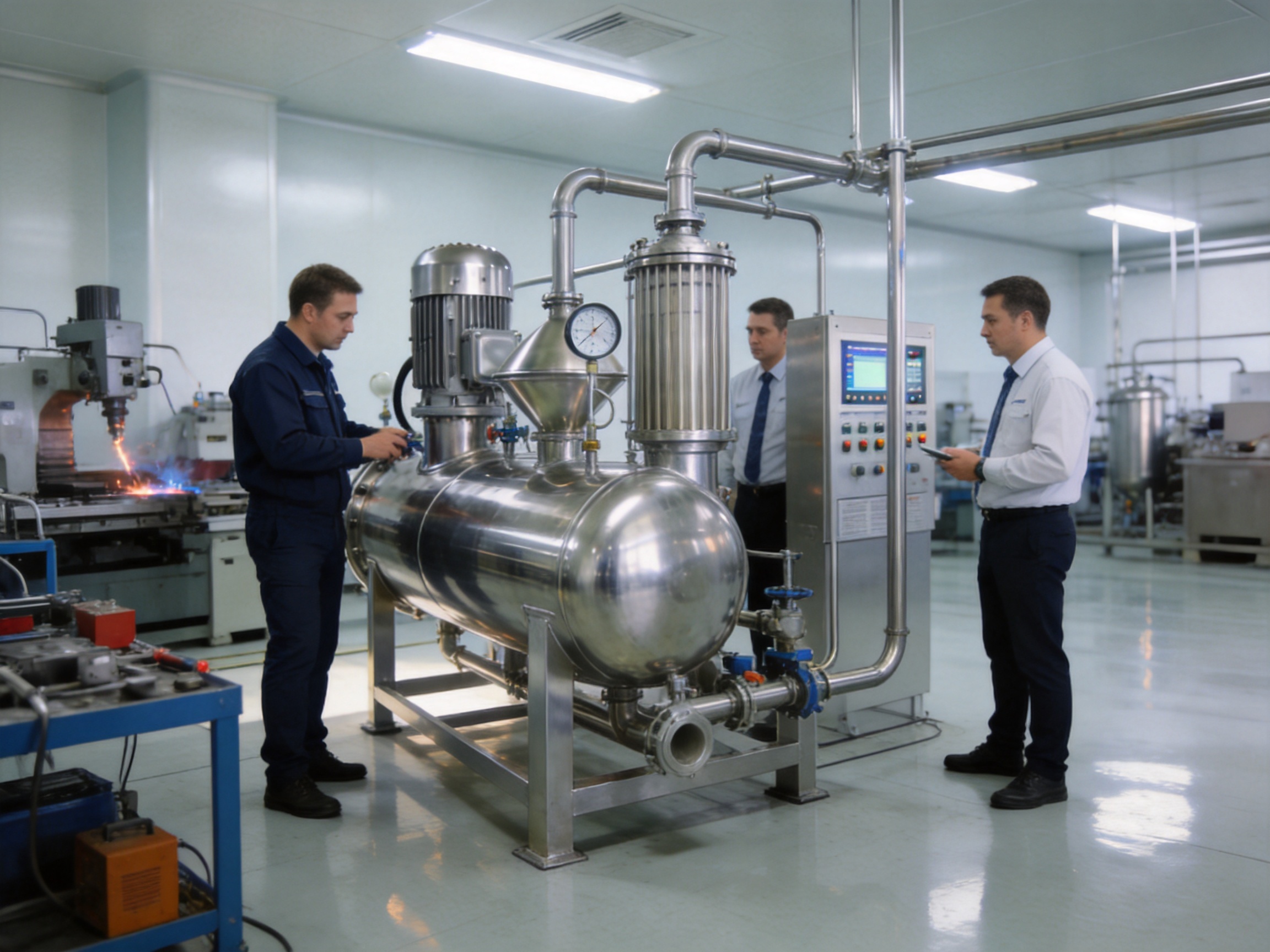
High-quality evaporation equipment depends not only on design but also on manufacturing capability. Zhejiang Shuangzi Intelligent Equipment Co., Ltd. is a professional biology and medical equipment enterprise focusing on EPC and EPCM services. The company specializes in process technology, automation engineering design, equipment manufacturing, matching purchase, installation, equipment system integration, and complete project delivery in fields such as plant extraction, biological fermentation, pharmaceutical engineering, natural food, energy conservation, and environmental protection.
Founded in 2007, the company has developed a strong technical foundation and practical production experience. It covers a floor area of 16,706 square meters and a structure area of 17,800 square meters. This production base supports equipment manufacturing, research and development, pilot testing, process verification, and project implementation.
The company’s mature product categories include vacuum low-temperature drying equipment, complete fermentation system equipment, evaporation and concentration equipment, extraction equipment, separation and extraction systems, crystallization equipment, filtration equipment, containers, and related process equipment. This broad manufacturing scope is important because evaporation is rarely an isolated step. It is usually connected with extraction, fermentation, filtration, precipitation, crystallization, drying, storage, or packaging. A supplier with broad process capability can design equipment that fits the full production line.
14.1 Advanced Welding and Finishing Equipment
The company has introduced advanced welding and finishing equipment, including plasma argon arc welding machines, plasma cutting machines, CAM CNC machining centers, and other advanced equipment. These manufacturing tools help improve precision, weld quality, component consistency, and surface finishing. For evaporation equipment used in pharmaceutical, food, and bioengineering applications, manufacturing accuracy and clean internal surfaces are essential.
High-quality welding reduces leakage risk, improves structural strength, and supports long service life. CNC machining improves dimensional precision and component matching. Plasma cutting improves efficiency and consistency during fabrication. Together, these manufacturing capabilities help create stable and professional equipment suitable for demanding industrial use.
14.2 Process Design and Automation Engineering
The company focuses not only on hardware production but also on process technology and automation engineering design. This is a critical advantage. An evaporator must be matched with feed conditions, solvent type, concentration target, heating source, cooling source, vacuum system, control requirements, plant layout, and cleaning method. Poor process design can reduce evaporation capacity, increase energy consumption, create product quality variation, or cause cleaning difficulties.
Automation engineering can improve stability and reduce manual errors. Instruments can monitor temperature, vacuum degree, steam pressure, liquid level, and discharge timing. Automated or semi-automated control improves batch repeatability and helps operators maintain the correct process window. For high-value pharmaceutical and food products, consistency is a major competitive advantage.
14.3 Pilot Workshop and Research Platform
The company has a full set of production lines with a pilot production workshop and an R&D platform designed around automation and GMP-related requirements. The platform includes processes such as vacuum low-temperature drying, plant extraction, evaporation, precipitation separation, extraction, and fermentation. This is valuable for customers conducting pilot research, scale-up studies, or process verification.
Before investing in full-scale equipment, users often need to test material behavior, evaporation rate, foaming tendency, cleaning difficulty, concentration target, and solvent recovery performance. A pilot platform makes these studies more practical and reduces project risk. It also helps optimize equipment selection and process parameters.
15. EPC and Turnkey Project Capability
Many customers need more than a single concentration machine. They require a complete production line with process design, equipment selection, installation, commissioning, and production support. Zhejiang Shuangzi Intelligent Equipment Co., Ltd. provides EPC and EPCM-centered services, meaning it can support engineering, procurement, construction, management, and equipment integration for full projects.
For a plant extraction project, the company can combine extraction tanks, filtration systems, evaporation and concentration equipment, solvent recovery units, drying equipment, and storage vessels. For a bio-fermentation project, it can integrate fermentation tanks, sterilization systems, filtration equipment, concentration equipment, separation systems, and automation controls. For a Western medicine synthesis project, it can provide process equipment that supports solvent handling, concentration, crystallization, filtration, and drying. For a food project, it can design hygienic production lines with concentration, extraction, and drying steps.
This turnkey capability is a major advantage over suppliers that only sell standalone machines. When multiple devices come from different sources without integrated engineering, problems may occur in piping layout, control logic, utility matching, cleaning design, and capacity balance. A system integration supplier can reduce these risks and deliver a smoother project.
16. Quality Considerations in Evaporator Selection
Choosing an External Circulation Evaporator requires careful evaluation of process and quality requirements. The following points are important for users planning a purchase or project design.
16.1 Material Characteristics
Material viscosity, foaming tendency, heat sensitivity, solid content, corrosiveness, and solvent type must be understood. These properties affect heating surface design, circulation method, vacuum level, temperature setting, cleaning method, and material of construction.
16.2 Capacity and Production Schedule
The evaporation capacity should match daily production demand. A unit that is too small will create bottlenecks, while an oversized unit may increase investment and utility cost. The DJN series models provide capacity options from 500 kg/h to 2000 kg/h.
16.3 Utility Conditions
Steam pressure, cooling water availability, vacuum source, electrical supply, and plant layout all influence equipment performance. The listed steam pressure requirement of less than 0.09 MPa supports low-pressure operation, while the vacuum degree of 0.08 MPa supports low-temperature evaporation.
16.4 Cleaning and Maintenance
Users should consider how frequently the equipment will be cleaned, what residues may form, and whether different products will be processed in the same line. Easy cleaning reduces downtime and quality risk.
16.5 Solvent Recovery Target
If solvent recovery is a priority, condenser capacity, cooling efficiency, collection method, and reflux design should be evaluated carefully. Efficient recovery can significantly reduce long-term operating cost.
17. Operating Benefits for Production Managers
Production managers value equipment that improves output, reduces risk, and simplifies daily operation. The External Circulation Evaporator provides several practical benefits at the plant management level.
First, the fast evaporation rate helps improve production efficiency. Shorter concentration time can increase batch throughput and reduce waiting time for downstream drying, crystallization, or packaging.
Second, sealed operation helps protect operators and the workshop environment. Reduced vapor leakage improves safety and comfort, especially when handling alcohol or organic solvents.
Third, the equipment supports stable product quality. Vacuum evaporation and controlled heating reduce the risk of overheating and degradation. This is important for medicinal extracts, food flavors, and sensitive pharmaceutical intermediates.
Fourth, solvent recovery reduces material cost and supports sustainability goals. Recovered solvent can often be reused after proper quality confirmation, lowering the total consumption of fresh solvent.
Fifth, easy cleaning and maintainable structure reduce downtime. This helps plants meet production schedules and respond faster to product changeovers.
18. Why the External Circulation Design Matters
The phrase “external circulation” refers to the way the liquid circulates outside the main evaporation separator and passes through the heater. This design creates a dynamic flow path, improving heat transfer and separation stability. It is different from simple internal heating or static evaporation, where liquid movement may be limited.
External circulation can reduce the risk of uneven heating because the liquid continuously moves through the heating section. This is valuable for materials that may become more viscous as they concentrate. It also helps maintain evaporation speed because fresh liquid is constantly exposed to the heating surface.
In many industrial processes, consistent circulation is the difference between a stable production run and a problematic batch. Poor circulation can cause local overheating, fouling, foaming, and inconsistent concentration. A well-designed external circulation evaporator supports smoother operation and better final product quality.
19. Integration with Upstream and Downstream Processes
An evaporator is usually part of a larger process. In plant extraction, it follows extraction and filtration and precedes drying or formulation. In fermentation, it may follow separation and precede purification or drying. In pharmaceutical synthesis, it may follow reaction and solvent exchange and precede crystallization. In food processing, it may follow juice extraction or milk preparation and precede packaging or drying.
Because of this, process integration is critical. Flow rates must match. Pipe diameters must be appropriate. Control systems must communicate. Cleaning procedures must be coordinated. Utility systems must support all equipment without pressure or temperature instability.
Zhejiang Shuangzi Intelligent Equipment Co., Ltd. has strengths in equipment system integration, installation, line debugging, and turnkey projects. This makes the company well positioned to provide an External Circulation Evaporator as part of a complete production solution rather than an isolated machine.
20. Maintenance and Long-Term Reliability
Long-term reliability depends on correct operation, appropriate cleaning, scheduled inspection, and high-quality manufacturing. Operators should monitor vacuum degree, steam pressure, feed rate, concentration state, condensate flow, and equipment cleanliness. Sudden changes in pressure, temperature, or flow may indicate fouling, blockage, leakage, or utility instability.
Routine maintenance may include checking seals, valves, instruments, vacuum components, condenser performance, and heating surfaces. Cleaning should be performed according to material characteristics and production requirements. If sticky or high-solid materials are processed, cleaning intervals may need to be shorter.
The company’s manufacturing equipment and engineering experience help support long service life. Precision machining, reliable welding, and proper assembly reduce failure risks. When combined with correct operation, the External Circulation Evaporator can provide dependable concentration performance for many industrial applications.
21. Q&A Section
Q1: What is the main function of the External Circulation Evaporator?
The main function is to concentrate liquid mixtures by evaporating volatile components such as water or solvent. The vapor is then condensed and recovered, while the remaining liquid becomes more concentrated.
Q2: Which industries can use this evaporator?
It can be used in pharmaceutical production, traditional medicine extraction, Western medicine synthesis, food production, chemical manufacturing, environmental protection, solvent recovery, and selected energy industry processes.
Q3: Why is vacuum operation important?
Vacuum operation lowers the boiling point of the liquid, allowing evaporation at lower temperatures. This helps protect heat-sensitive materials, preserve flavor or active ingredients, and reduce thermal degradation.
Q4: What is the typical concentration ratio?
The listed concentration ratio is approximately 1.2 to 1.3. Actual performance may depend on material type, feed concentration, viscosity, evaporation conditions, and process design.
Q5: What evaporation capacities are available?
The available models include 500 kg/h, 1000 kg/h, 1500 kg/h, and 2000 kg/h evaporation capacity, corresponding to DJN-500, DJN-1000, DJN-1500, and DJN-2000 models.
Q6: Can the equipment recover solvents?
Yes. The condenser and reflux system can condense evaporated volatile components into liquid, allowing solvent recovery and helping reduce waste and operating cost.
Q7: Is the equipment suitable for food materials?
Yes. It can be used in food production applications such as fruit juice, cheese, milk, and natural food processing, especially where controlled vacuum concentration and solvent recovery are required.
Q8: What advantages does it have over open concentration tanks?
Compared with open tanks, it offers sealed operation, vacuum evaporation, faster concentration, better solvent recovery, lower contamination risk, and improved environmental control.
Q9: Why is the company’s manufacturing capability important?
Manufacturing capability affects weld quality, dimensional precision, cleaning performance, equipment stability, and service life. Advanced welding, plasma cutting, CNC machining, and process design experience help produce more reliable equipment.
Q10: Can the evaporator be supplied as part of a turnkey project?
Yes. Zhejiang Shuangzi Intelligent Equipment Co., Ltd. provides engineering, process design, equipment design, installation, line debugging, system integration, and turnkey project services for plant extraction, fermentation, pharmaceutical, food, and environmental projects.
22. Conclusion
The External Circulation Evaporator is a practical and efficient concentration machine for modern industrial processing. It combines vacuum evaporation, external circulation heating, vapor-liquid separation, condensation recovery, sealed operation, and easy cleaning. These features make it suitable for plant extraction, bio-fermentation, Western medicine synthesis, food production, chemical processing, environmental treatment, and energy-related purification or recovery applications.
Its main advantages include fast evaporation speed, concentration ratio around 1.2 to 1.3, low-pressure steam operation, vacuum concentration, reduced foaming, solvent recovery, low contamination risk, strong preservation of medicinal or natural flavor, and convenient cleaning. Compared with open tanks, simple heating kettles, and non-integrated evaporator systems, it offers better process control and stronger production value.
The strength of the equipment is further supported by the capabilities of Zhejiang Shuangzi Intelligent Equipment Co., Ltd. The company’s experience in EPC and EPCM projects, process technology, automation engineering, equipment manufacturing, installation, system integration, pilot production, and GMP-oriented R&D platforms makes it more than an equipment supplier. It is a project partner capable of helping customers build efficient, integrated, and reliable production lines.
For manufacturers seeking stable concentration, solvent recovery, clean operation, and scalable production performance, the External Circulation Evaporator provides a balanced solution with strong practical value and wide industrial adaptability.
References
1. McCabe, W. L., Smith, J. C., and Harriott, P. Unit Operations of Chemical Engineering. McGraw-Hill Education.
2. Perry, R. H., and Green, D. W. Perry’s Chemical Engineers’ Handbook. McGraw-Hill Education.
3. Geankoplis, C. J. Transport Processes and Separation Process Principles. Prentice Hall.
4. Fellows, P. J. Food Processing Technology: Principles and Practice. Woodhead Publishing.
5. Towler, G., and Sinnott, R. Chemical Engineering Design: Principles, Practice and Economics of Plant and Process Design. Butterworth-Heinemann.
6. Aulton, M. E., and Taylor, K. M. G. Aulton’s Pharmaceutics: The Design and Manufacture of Medicines. Elsevier.