
 英语
英语 俄语
俄语Content
- 1 1. The Role of UHT Tubular Sterilization in Modern Processing
- 2 2. Product Construction and Operating Principle
- 3 3. Main Advantages of the Tubular Sterilizer
- 3.1 3.1 Wide Product Adaptability
- 3.2 3.2 Strong Performance with Fibers and Particles
- 3.3 3.3 High Heat-Transfer Coefficient
- 3.4 3.4 Reduced Scaling and Longer Continuous Operation
- 3.5 3.5 High Thermal Energy Recovery
- 3.6 3.6 Hygienic Flow Path
- 3.7 3.7 Continuous Production Capability
- 3.8 3.8 Compact and Scalable Capacity Range
- 4 4. Comparison with Alternative Sterilization Approaches
- 5 5. Applications in the Beverage Industry
- 6 6. Applications in Dairy Processing
- 7 7. Applications in Plant Extracts and Herbal Liquids
- 8 8. Applications in Chemical and Related Industries
- 9 9. Manufacturing Strengths and Engineering Capability
- 10 10. Installation, Commissioning, and Turnkey Project Services
- 11 11. Cleaning, Maintenance, and Operational Reliability
- 12 12. Selecting the Correct Model
- 13 13. Quality, Safety, and Process Validation
- 14 14. Sustainability and Resource Efficiency
- 15 15. Recommended Project Development Process
- 16 16. Frequently Asked Questions
- 16.1 Q1: What products can be processed in the tubular sterilizer?
- 16.2 Q2: Can the system handle fibers and particles?
- 16.3 Q3: What capacity options are available?
- 16.4 Q4: How does the system reduce energy consumption?
- 16.5 Q5: Is the equipment fully automatic?
- 16.6 Q6: Does the sterilizer require frequent cleaning?
- 16.7 Q7: Can the sterilizer be integrated into a complete production line?
- 16.8 Q8: What information is needed to prepare a technical proposal?
- 16.9 Q9: Is pilot testing recommended?
- 16.10 Q10: What services can the manufacturer provide?
- 17 17. Conclusion
- 18 References
- 19 Product: Full Automatic UHT Tubular Sterilizer for Fruit Juice/Beverage/Dairy Products
Modern food and beverage manufacturers require sterilization systems that can deliver reliable microbial control, stable product quality, high production efficiency, and economical operation. These requirements become more demanding when the product contains fibers, suspended particles, concentrated solids, or ingredients with a relatively high viscosity. A sterilizer designed only for low-viscosity liquids may experience rapid fouling, unstable flow, frequent cleaning, or reduced heat-transfer performance when processing these materials.
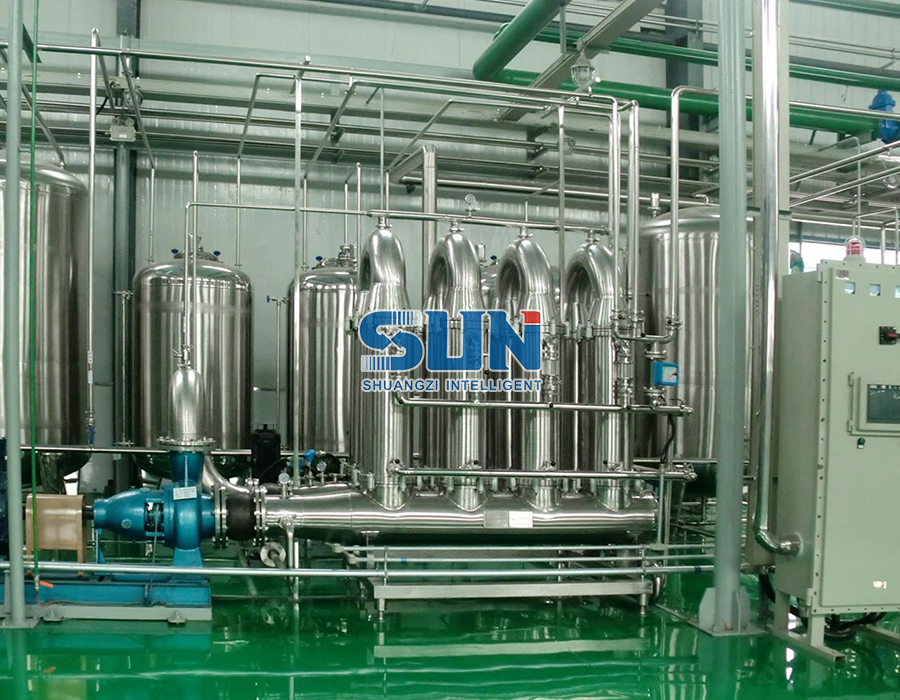
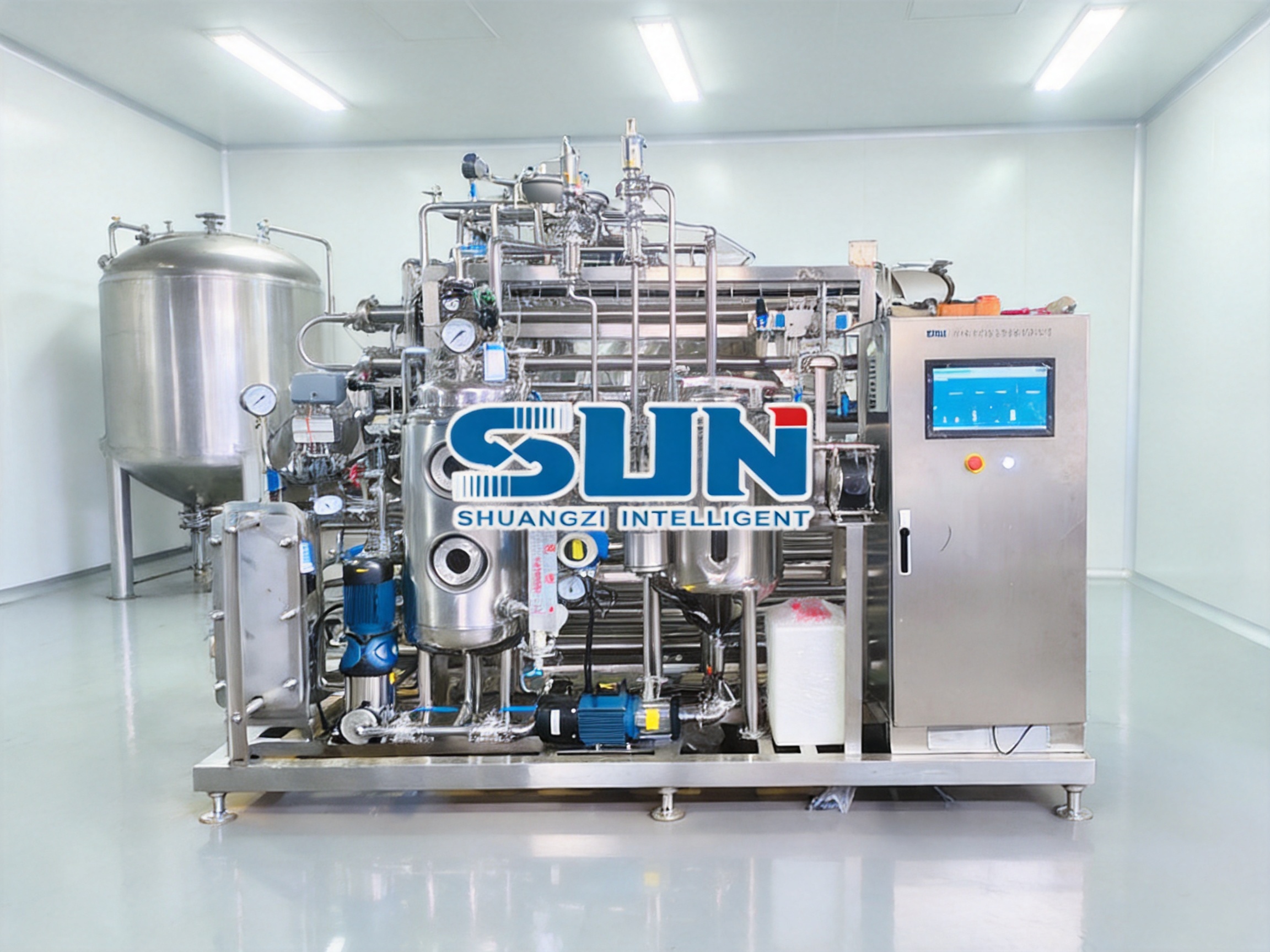
The full automatic UHT tubular sterilizer is designed to address these challenges. It is suitable for milk, fruit juice, tea beverages, concentrated drinks, Chinese herbal extracts, and other liquid or semi-liquid products that require controlled heating, holding, and cooling. The system combines a material storage tank, superheated water tank, pumps, tubular heat exchanger, steam inlet system, valves, induction switches, control cabinet, and PLC-based automation. Together, these components create an integrated processing unit for continuous sterilization and cooling.
With a capacity range from 0.3 to 5.0 tonnes per hour, the equipment can serve pilot-scale production, developing food enterprises, and large industrial processing lines. Its tubular heat-transfer structure provides strong adaptability to products containing fibers and particles, while its turbulent flow pattern supports efficient heat exchange and helps reduce the formation of deposits. The system also incorporates heat recovery, automatic control, and hygienic product handling to help manufacturers improve productivity and operating consistency.
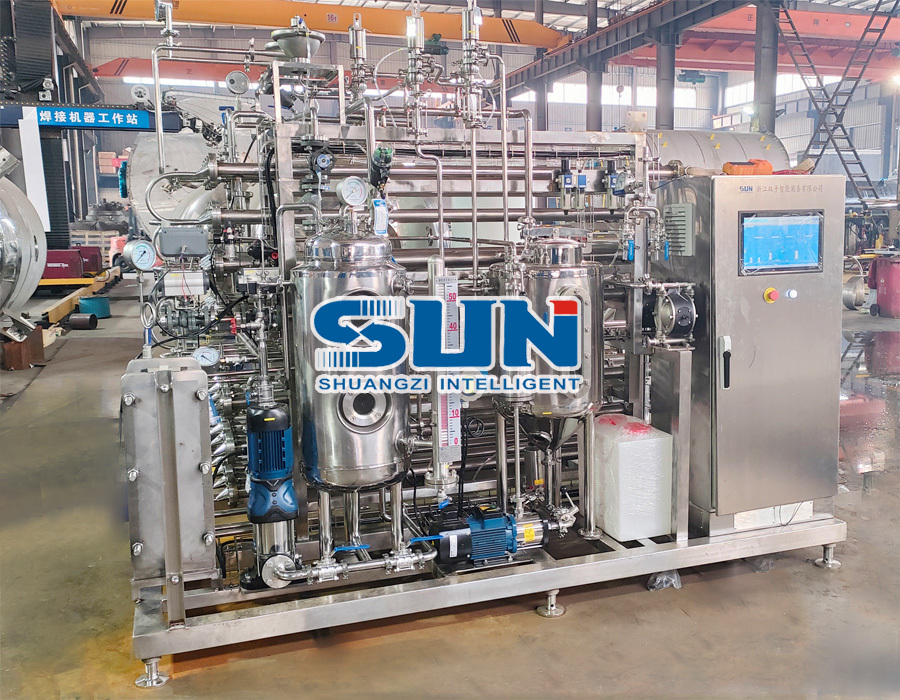
Full Automatic UHT Tubular Sterilizer for Fruit Juice/Beverage/Dairy Products
1. The Role of UHT Tubular Sterilization in Modern Processing
Ultra-high-temperature processing, commonly called UHT processing, uses carefully controlled heat treatment to reduce or eliminate harmful microorganisms and spoilage organisms in liquid products. The product is heated to a specified temperature, held for a controlled period, and then cooled to a suitable filling or downstream processing temperature. The exact temperature and holding time depend on the product formulation, target shelf life, packaging method, regulatory requirements, and desired quality characteristics.
UHT treatment is widely used when manufacturers want to produce shelf-stable or extended-shelf-life products. It is especially important for products that cannot rely solely on refrigeration during storage and distribution. Milk, plant-based beverages, fruit drinks, tea beverages, nutritional liquids, liquid food ingredients, and certain botanical extracts can all require a carefully engineered thermal process.
A successful UHT system must do more than simply raise the product temperature. It must provide uniform heating, stable residence time, accurate temperature control, reliable cooling, hygienic construction, and repeatable operation. If the heating process is uneven, some parts of the product may receive insufficient treatment while other parts may be exposed to excessive heat. Under-processing can create a food safety risk, whereas over-processing may damage color, flavor, aroma, texture, or nutritional value.
The tubular sterilizer is therefore designed as a complete process system rather than an isolated heat exchanger. The storage tank provides a stable product supply, the pump establishes controlled circulation, the tubular heat exchanger transfers thermal energy, the steam system supplies heating energy, the cooling stage reduces the product temperature, and the PLC control system coordinates the complete sequence. This integrated design helps operators manage the sterilization process with greater precision.
2. Product Construction and Operating Principle
2.1 Material Storage and Feeding
The material storage tank receives the product before sterilization and provides a controlled supply to the process pump. Depending on the formulation, the tank may be used to maintain a consistent feed condition, reduce interruptions, and support stable flow through the heat exchanger. A consistent feed rate is important because the residence time inside the sterilization section is related to the product flow rate and the internal volume of the tubular system.
For fruit juice, concentrated beverage, dairy material, or botanical extract, the storage stage can also help operators organize the production sequence. The equipment can be incorporated into a larger process line that includes blending, filtration, evaporation, extraction, concentration, homogenization, filling, or aseptic packaging. The exact configuration can be adapted to the product characteristics and the overall factory layout.
2.2 Pumping and Controlled Circulation
The process pump moves the product through the system at a controlled rate. Stable pumping is essential for maintaining predictable heating and holding conditions. A properly selected pump must be compatible with the product viscosity, solids content, temperature, pressure, and hygienic requirements.
The system can process products across a wide viscosity range. This is a significant advantage when one production facility manufactures several product categories. A line may process relatively thin tea beverages during one production run and then handle a more concentrated fruit or herbal product during another. The tubular sterilizer is intended to provide the flexibility needed for such changing conditions, subject to confirmation of the specific formulation and process parameters.
2.3 Tubular Heat Exchanger
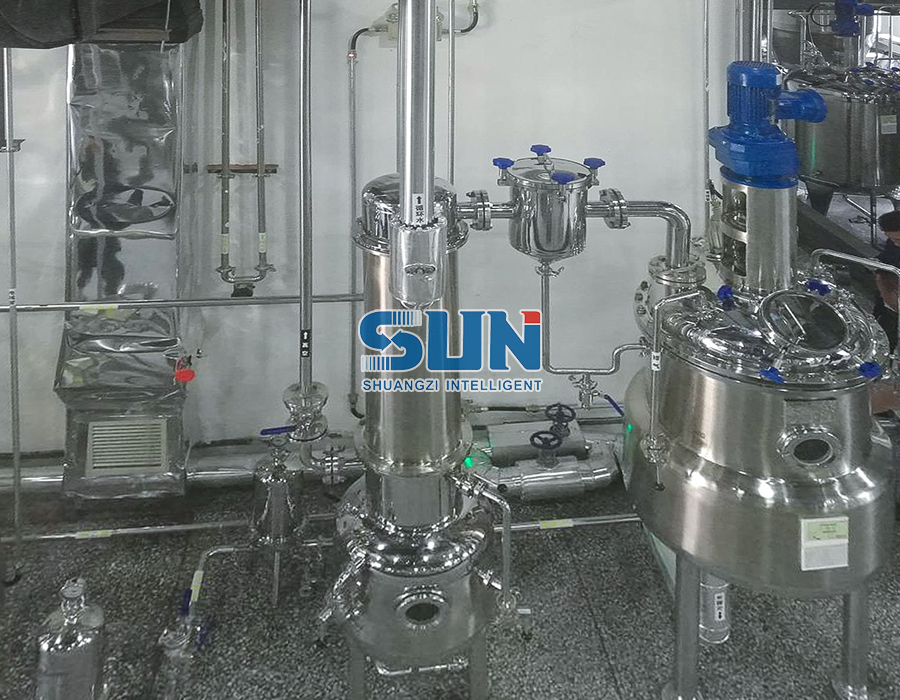
The tubular heat exchanger is the core component of the sterilization system. Product flows through dedicated tubes while the heating or cooling medium flows through a separate heat-transfer path. The two media exchange heat without direct contact. This arrangement allows the product to be heated and cooled efficiently while maintaining separation between the product stream and the utility stream.
In the heating section, steam transfers energy to the heat-transfer medium, which then heats the product. In the cooling section, the product temperature is reduced before the material leaves the system. The tubular structure is suitable for products that may contain fibers, particles, or concentrated components that could be difficult to process in narrow or complex flow passages.
The design promotes turbulent flow. Turbulence improves mixing within the flowing product and increases the heat-transfer coefficient. More effective heat transfer can reduce the time and energy required to reach the target temperature. Turbulent flow may also reduce the tendency of some products to settle or form localized hot spots, although every formulation requires process validation.
2.4 Steam Intake and Heating System
The steam intake system supplies the thermal energy required for heating. Steam consumption depends on the product flow rate, initial temperature, target sterilization temperature, heat recovery performance, steam pressure, product properties, and operating conditions. The equipment specifications list steam consumption from approximately 25 kilograms per hour for the 0.3-tonne-per-hour model to approximately 400 kilograms per hour for the 5.0-tonne-per-hour model.
A stable steam supply supports stable thermal performance. The steam system should be connected to an appropriate plant utility network and installed with suitable regulation, condensate management, safety protection, and isolation components. During project engineering, the steam pressure, utility quality, drainage arrangement, and local installation standards should be reviewed carefully.
2.5 Cooling and Heat Recovery
After sterilization, the product must be cooled to a temperature appropriate for filling, storage, or the next processing stage. Rapid and controlled cooling helps protect product quality and improves the efficiency of the line. The system is designed to recover more than 90 percent of the heat energy after the material has been heated, according to the supplied product information.
Heat recovery is valuable for two reasons. First, it reduces the amount of fresh energy required during continuous operation. Second, it can decrease the thermal load placed on the plant utility system. When the heated product transfers energy to incoming product through a regenerative section, the incoming material is preheated before final heating, while the sterilized material is partially cooled before the final cooling stage. The result is a more efficient thermal cycle.
2.6 PLC Control and Automatic Operation
The PLC control system coordinates the main operating functions of the sterilizer. Automatic control can be used to manage pump operation, valve sequencing, temperature monitoring, steam admission, heating and cooling stages, product diversion, and operating alarms. The control cabinet provides an organized interface for operating personnel and supports repeatable production conditions.
Automation reduces dependence on manual intervention. Operators can monitor key process values and respond to alarms through the control interface. Automatic sequencing also helps reduce the risk of incorrect valve operation or inconsistent production settings during startup, normal operation, changeover, and shutdown.
Before commercial production, the actual sterilization program must be established and verified according to the product, process requirements, and applicable regulations. The PLC provides the control platform, but the final parameters must be determined through process development, thermal validation, and quality assurance procedures.
3. Main Advantages of the Tubular Sterilizer
3.1 Wide Product Adaptability
One of the most important advantages of the tubular design is its ability to handle a broad range of liquid products. The equipment is suitable for milk, juice, tea beverages, concentrated materials, Chinese herbal extracts, and other formulations. It can also adapt to products containing fibers and particles when the product characteristics fall within the confirmed design range.
This flexibility is useful for manufacturers that operate multiple product lines or plan to expand their product portfolio. A single processing platform may support fruit beverages, dairy products, botanical liquids, and functional drinks, reducing the need to install separate sterilizers for every product family.
Product adaptability can also support seasonal production. A beverage plant may process mango or berry juice during one period and switch to tea-based or dairy-based products at another time. A well-configured tubular sterilizer can help the factory use its production assets more efficiently across different campaigns.
3.2 Strong Performance with Fibers and Particles
Many fruit juices and natural extracts contain pulp, fibers, suspended particles, or insoluble components. These materials can create challenges for certain heat-transfer systems. Narrow passages, sharp internal transitions, or poorly selected flow conditions can increase the risk of blockage, sedimentation, or uneven heating.
The tubular sterilizer is designed to provide a more suitable flow path for these products. Its tubular heat exchanger can be configured for concentrated materials and products with suspended components. The actual maximum particle size, fiber length, viscosity range, and solids concentration must be confirmed during technical design, but the basic design concept offers a practical advantage over equipment intended only for clear, low-viscosity liquids.
3.3 High Heat-Transfer Coefficient
The product and heat-transfer medium operate in turbulent flow conditions inside the heat-exchange system. Turbulence helps improve the movement of heat from the heating medium to the product. It can also help create a more uniform temperature distribution across the flowing material.
High heat-transfer efficiency supports a compact and productive system. When the required thermal energy can be transferred efficiently, the equipment can reach the target temperature more rapidly and maintain the process with less unnecessary thermal exposure. This may help protect product flavor, color, and nutritional characteristics, although the final quality result depends on the specific formulation and validated process.
3.4 Reduced Scaling and Longer Continuous Operation
Fouling is a common concern in thermal processing. Sugars, proteins, minerals, botanical compounds, and other product components may adhere to heated surfaces. Over time, these deposits reduce heat-transfer efficiency, increase pressure drop, and create more demanding cleaning requirements.
The tubular design promotes turbulent flow and is described as having a self-cleaning effect during material flow. The product information also emphasizes the absence of product contact points and sanitary dead angles inside the tube. These features help reduce the likelihood of product accumulation and scaling when compared with less suitable internal geometries.
Lower fouling can extend the continuous working time between cleaning cycles. Longer production runs can improve equipment utilization, reduce downtime, and support more stable production planning. Nevertheless, the cleaning schedule must always be established according to the product formulation, thermal load, operating time, and hygienic requirements.
3.5 High Thermal Energy Recovery
The equipment is designed to recover more than 90 percent of the heat energy after the material is heated. This regenerative performance can significantly reduce the fresh steam requirement compared with a system that heats and cools the product independently without effective energy recovery.
Energy recovery has both economic and environmental benefits. Lower steam consumption may reduce fuel use, utility costs, boiler loading, and greenhouse gas emissions associated with thermal energy generation. For plants operating continuously or at high capacity, even a moderate improvement in energy efficiency can produce substantial annual savings.
3.6 Hygienic Flow Path
Food, dairy, beverage, and botanical products require hygienic equipment design. The tubular sterilizer is described as having no product contact points inside the tube and no sanitary dead angles. A smooth, continuous flow path reduces areas where product can remain trapped between production cycles.
Hygienic construction also supports cleaning and maintenance. When the internal path is easier to drain and clean, operators can reduce the risk of residue accumulation and cross-contamination between batches. Hygienic design should be considered together with appropriate materials, weld quality, surface finishing, seals, valves, cleaning procedures, and installation practices.
3.7 Continuous Production Capability
Unlike batch sterilization equipment, a continuous tubular system is designed to process product steadily through the heating, holding, and cooling stages. Continuous processing is well suited to commercial beverage and dairy operations where stable throughput and consistent product quality are essential.
Continuous operation can reduce the frequency of manual loading and unloading, shorten production interruptions, and make it easier to connect sterilization to downstream filling or packaging equipment. It can also support more accurate production planning because the nominal capacity is defined in tonnes per hour.
3.8 Compact and Scalable Capacity Range
The available models cover capacities from 0.3 to 5.0 tonnes per hour. Smaller models can support pilot production, product development, research applications, and small commercial operations. Larger models are suitable for factories requiring higher throughput.
This range allows a manufacturer to select equipment based on current demand while considering future expansion. A company can begin with a smaller system for market development and later introduce a higher-capacity model or additional processing line as sales increase.
| Model | Capacity (t/h) | Heat Exchange Area (m²) | Power Consumption (kW) | Steam Consumption (kg/h) | Overall Dimension (mm) | Weight (kg) |
|---|---|---|---|---|---|---|
| SUN-UHT-0.3 | 0.3 | 4 | 2.0 | 25 | 2500 × 1200 × 1800 | 500 |
| SUN-UHT-0.5 | 0.5 | 5 | 2.5 | 40 | 2800 × 1500 × 2000 | 900 |
| SUN-UHT-1.0 | 1.0 | 10 | 4.0 | 80 | 3000 × 1800 × 2300 | 1200 |
| SUN-UHT-1.5 | 1.5 | 15 | 4.0 | 120 | 3500 × 1800 × 2300 | 1600 |
| SUN-UHT-2.0 | 2.0 | 20 | 5.5 | 160 | 3500 × 1800 × 2300 | 2000 |
| SUN-UHT-3.0 | 3.0 | 30 | 6.0 | 240 | 3500 × 1800 × 2500 | 2600 |
| SUN-UHT-4.0 | 4.0 | 40 | 7.0 | 320 | 3500 × 2000 × 2800 | 3000 |
| SUN-UHT-5.0 | 5.0 | 50 | 8.0 | 400 | 3500 × 2200 × 3000 | 3800 |
The values in the table are reference specifications. Actual operating conditions may vary according to product viscosity, solids content, inlet temperature, sterilization temperature, cooling-water conditions, steam pressure, and the selected control strategy. Technical confirmation should be completed before equipment selection and installation.
4. Comparison with Alternative Sterilization Approaches
4.1 Tubular Systems Compared with Plate Heat Exchangers
Plate heat exchangers are widely used for clear, low-viscosity products and can provide efficient heat transfer in suitable applications. However, products with fibers, particles, high viscosity, or a higher tendency to foul may require a different flow path. Tubular heat exchangers generally offer larger and more continuous passages, making them more suitable for difficult products when correctly designed.
The choice between plate and tubular technology should be based on the complete product profile. A clear milk or beverage may be suitable for several types of systems, while a viscous fruit concentrate or fiber-containing extract may benefit from a tubular arrangement. The tubular sterilizer offers manufacturers greater flexibility where product composition changes frequently.
4.2 Tubular Systems Compared with Batch Sterilization
Batch sterilization can be useful for small quantities, special formulations, and products that require long holding periods. However, batch systems may require more manual handling and may not deliver the same continuous throughput as a tubular line. Product heating and cooling can also take longer because the entire batch must be brought to temperature and then cooled.
A continuous UHT tubular system is better suited to regular commercial production. It can feed a packaging line, operate at a defined hourly capacity, and reduce the number of production interruptions. The system also supports more consistent exposure conditions when the flow rate and temperature are properly controlled.
4.3 Tubular Systems Compared with Direct Steam Injection
Direct steam injection introduces culinary steam directly into the product. This approach can provide very rapid heating, but it may require additional measures to remove the condensed water and restore the desired product concentration. The steam quality must also be carefully managed.
An indirect tubular heat exchanger keeps the heating medium separate from the product. This can simplify product composition control and provide a clear separation between process utilities and the product stream. For many concentrated materials, juices, dairy liquids, and botanical extracts, indirect tubular heating offers a practical combination of control, flexibility, and hygienic operation.
4.4 Reduced Total Cost of Operation
Equipment cost is only one part of the investment decision. Manufacturers should also consider steam consumption, electricity use, cleaning time, maintenance, production downtime, product losses, labor requirements, and expected service life. The tubular sterilizer is designed to provide value through efficient heat recovery, continuous production, reduced scaling, and automatic operation.
When a system can run for longer periods before cleaning and can recover a high percentage of thermal energy, the plant may achieve a lower cost per tonne of finished product. The actual result depends on operating hours, local utility prices, product formulation, cleaning procedures, and line integration, but these design characteristics support a favorable long-term cost structure.
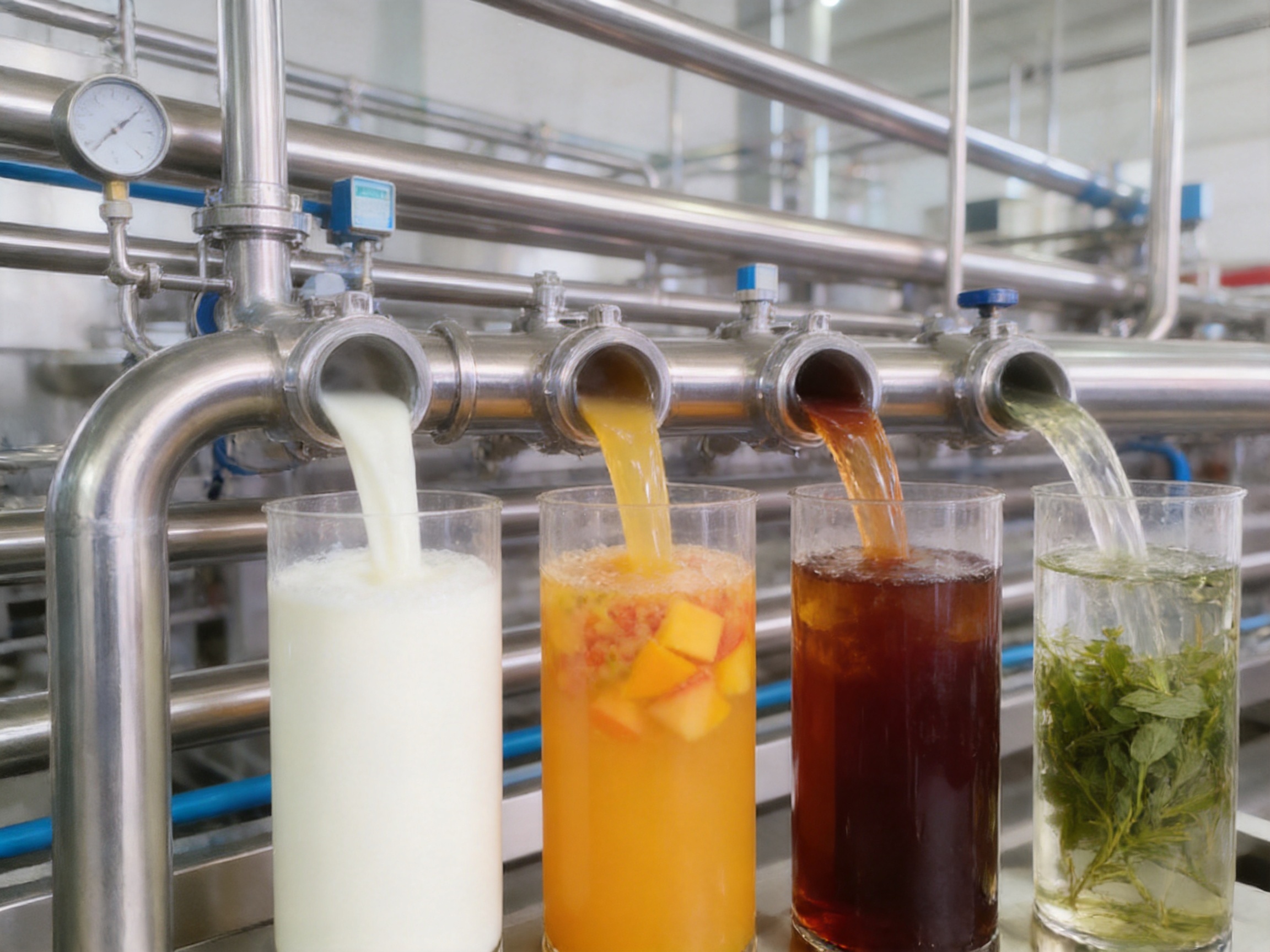
5. Applications in the Beverage Industry
Fruit juice is one of the principal application areas for a tubular sterilizer. Juice products may contain pulp, natural fibers, suspended solids, sugar, acids, and flavor compounds. The sterilization process must reduce microbial contamination while preserving the sensory characteristics that consumers expect.
The system can be used for orange juice, mango juice, apple juice, berry beverages, tropical fruit drinks, mixed fruit beverages, and concentrated juice products, subject to process verification. Its tubular flow path is particularly useful when the formulation contains fibers or small particles that may create challenges for other heat-transfer arrangements.
Tea beverages are another important application. Ready-to-drink tea products may include tea extract, sugar, flavor components, mineral content, or functional ingredients. Thermal treatment must be sufficiently effective while minimizing excessive exposure that could alter aroma or color. A controlled tubular heating and cooling process can help manufacturers establish repeatable conditions.
The equipment can also be integrated into carbonated or non-carbonated beverage lines, although the specific sterilization method and process sequence depend on the product and packaging format. For carbonated products, pressure, gas retention, and filling conditions require special consideration during system design.
6. Applications in Dairy Processing
Dairy products are highly sensitive to microbial growth and require carefully managed thermal processing. The tubular sterilizer can be used for milk and selected liquid dairy products, including drinking milk, dairy beverages, yogurt bases, and other formulations when the process design is appropriate.
Milk processing requires accurate temperature control because excessive heating may affect flavor, protein behavior, color, and nutritional properties. The equipment’s automatic control system helps operators maintain stable processing conditions and coordinate the heating, holding, and cooling stages.
For yogurt production, the sterilization stage may be positioned before inoculation and fermentation. The product must be cooled to the appropriate inoculation temperature after thermal treatment. In this type of line, the sterilizer can form part of a larger process that includes ingredient blending, homogenization, fermentation tanks, cooling, and filling.
For liquid dairy drinks containing fruit, cocoa, cereal, or functional ingredients, the tubular design can provide flexibility for products with higher viscosity or suspended components. The final equipment configuration should account for protein stability, particle size, shear sensitivity, formulation chemistry, and cleaning requirements.
7. Applications in Plant Extracts and Herbal Liquids
Plant extracts and Chinese herbal liquids often contain complex mixtures of natural compounds. They may vary in viscosity, solids content, acidity, color, and thermal sensitivity. Some extracts also contain suspended particles or components that can deposit on heated surfaces.
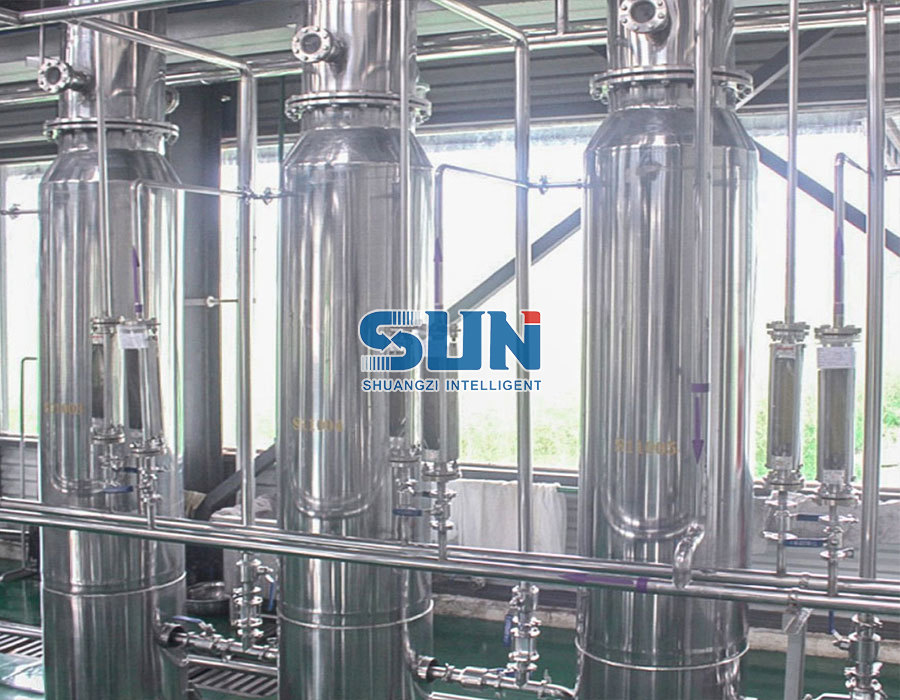
The tubular sterilizer is suitable for sterilization and cooling of various concentrated materials, including selected botanical extracts. Its turbulent flow, continuous tube structure, and heat recovery system can help manufacturers process these materials efficiently. The equipment may be installed after extraction, filtration, separation, evaporation, or concentration, depending on the process design.
In a plant extraction project, the sterilizer may operate as one unit in a larger production system. Raw materials can first be extracted with water or another approved process medium, followed by filtration and concentration. The resulting liquid can then be thermally treated before filling or further formulation.
Because botanical products can vary significantly, process development is important. The manufacturer should evaluate viscosity at operating temperature, suspended solids, expected fouling behavior, target microbial reduction, thermal stability, and cleaning chemistry. These factors help determine the appropriate heat-exchange area, pump specification, control program, and production sequence.
8. Applications in Chemical and Related Industries
The tubular sterilizer can also be applied in selected chemical and biotechnology-related processes where controlled heating and cooling are required. The supplied application information includes chemical processing, such as microorganism control or catalyst-related treatment in certain organic synthesis processes.
In chemical applications, the primary objective may not be food sterilization. Instead, the system may be used to improve purity, control biological contamination, stabilize an intermediate, or provide a defined thermal treatment. Material compatibility becomes particularly important in these applications. The product chemistry, solvent properties, corrosion potential, pressure, and temperature limits must be reviewed before construction materials and seals are selected.
The same engineering principles remain relevant: controlled residence time, uniform heat transfer, efficient cooling, automatic sequencing, and safe separation between process material and heating medium. The system can be adapted to specialized process requirements through project engineering and control customization.
9. Manufacturing Strengths and Engineering Capability
9.1 Integrated EPC and EPCM Support
Zhejiang Shuangzi Intelligent Equipment Co., Ltd. is presented as a professional biology and medical equipment enterprise that takes EPC and EPCM services as a core capability. Its activities include process technology design, automation engineering design, equipment manufacturing, matching procurement, installation, commissioning, and system integration.
This integrated approach is valuable because a sterilizer rarely operates as an independent machine. It must connect with upstream storage, blending, extraction, concentration, filtration, or homogenization equipment and downstream filling, packaging, fermentation, or storage systems. A supplier that understands the complete process can help reduce interface problems during project implementation.
EPC and EPCM support can also simplify communication. Instead of coordinating several unrelated suppliers for process design, equipment fabrication, control integration, installation, and commissioning, the customer can work with one engineering partner for a larger part of the project scope. This can improve responsibility allocation and support more efficient project scheduling.
9.2 Experience in Process Industries
The company was founded in 2007 and has developed experience in plant extraction, biological fermentation, pharmaceutical engineering, natural food processing, energy conservation, and environmental protection. These sectors require careful attention to hygienic design, process control, material compatibility, documentation, and reliable operation.
The company’s mature product range includes vacuum low-temperature drying equipment, fermentation systems, evaporation and concentration equipment, extraction equipment, separation systems, crystallization equipment, filtration equipment, and process containers. This broad portfolio provides a useful technical foundation for designing complete production lines around the UHT tubular sterilizer.
Experience across extraction, fermentation, concentration, separation, and drying is particularly relevant to manufacturers that produce more than one type of product. A facility may require a complete line for herbal extracts, a fermentation system for biological products, or a concentration and sterilization section for natural beverages. The ability to combine these technologies supports more comprehensive project solutions.
9.3 Pilot Production and Research Facilities
The company maintains a pilot production workshop and research and development platform designed to support automation and GMP-related requirements. Pilot-scale facilities are important because they allow product developers to evaluate process conditions before investing in full-scale equipment.
During pilot work, engineers and product specialists can study heating behavior, viscosity changes, fouling tendency, residence time, cooling requirements, and product quality. The findings can be used to support scale-up and help select the appropriate equipment model. This is especially useful for new beverages, botanical extracts, fermentation liquids, and concentrated products whose behavior cannot be predicted solely from laboratory measurements.
Pilot testing can also reduce commercial risk. A manufacturer can identify potential problems with pumpability, heat sensitivity, particle handling, or cleaning before the production line is built. The resulting data can guide the design of the heat-exchange area, process control strategy, and utility requirements.
9.4 Advanced Welding and Finishing Equipment
The company has introduced advanced welding and finishing equipment, including plasma argon arc welding machines, plasma cutting machines, and CAM CNC machining centers. These manufacturing resources support accurate fabrication of tanks, tubes, frames, piping assemblies, and other process components.
In hygienic process equipment, weld quality and surface finishing are essential. Poorly formed welds, rough surfaces, inconsistent penetration, or difficult-to-clean transitions may increase the risk of residue accumulation and complicate sanitation. Controlled welding and precision machining help improve dimensional consistency and support the production of smooth, reliable process surfaces.
Plasma welding and argon protection can contribute to clean, controlled weld formation when performed according to qualified procedures. CNC machining supports accurate fabrication of components that must fit together precisely. These capabilities help the manufacturer produce equipment with consistent assembly quality and reliable operating performance.
9.5 Automation and System Integration
Automation is not limited to the PLC inside the sterilizer. A complete project may require communication between the sterilizer, pumps, tanks, valves, filling equipment, cleaning system, and plant monitoring platform. The company’s focus on automation engineering and system integration supports this broader requirement.
Integrated control can help synchronize production steps, monitor process values, manage alarms, record operating data, and reduce manual errors. It can also support recipe management when the same line processes different products. The level of automation can be selected according to the customer’s production scale, regulatory requirements, labor strategy, and future expansion plans.
10. Installation, Commissioning, and Turnkey Project Services
Successful installation requires more than placing the equipment on the factory floor. The plant must provide suitable foundations, access space, steam, water, electricity, drainage, ventilation, product piping, cleaning connections, and safe operator access. The sterilizer should be positioned so that routine inspection, maintenance, cleaning, and component replacement can be performed efficiently.
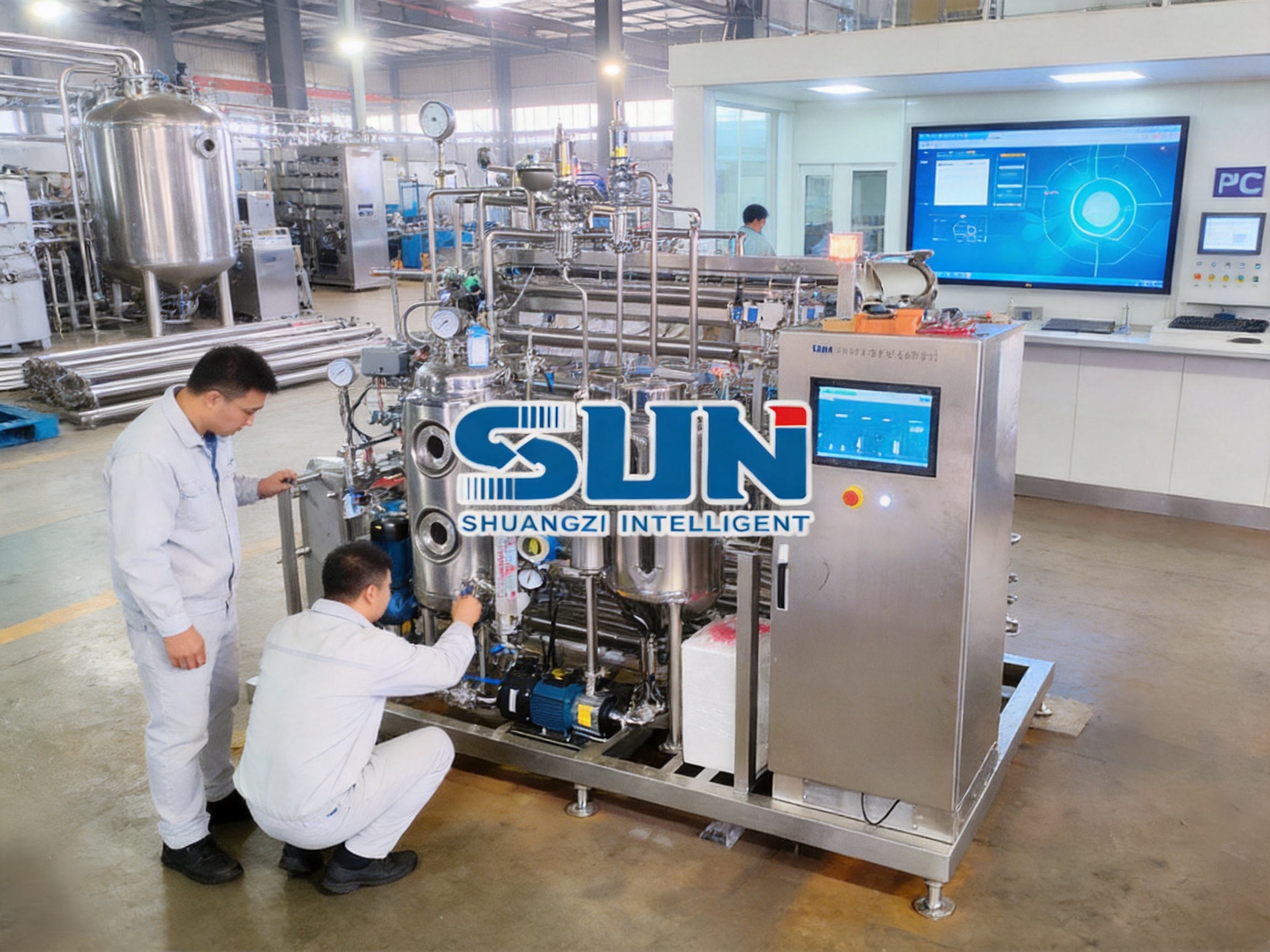
The company can provide installation, line debugging, and system commissioning services. During commissioning, the equipment may be checked for mechanical integrity, utility connections, pump performance, valve action, temperature response, control logic, alarms, and emergency functions. Water trials or product simulations can be used before commercial production begins.
Turnkey project support is useful for customers developing a new plant or expanding an existing facility. A turnkey scope may include process design, equipment selection, fabrication, auxiliary equipment procurement, piping, automation, installation, commissioning, operator training, and production support. The exact scope should be defined in the technical and commercial agreement.
For a new beverage or extract facility, the sterilizer may be integrated with raw material handling, extraction, filtration, concentration, blending, storage, filling, and packaging. For a fermentation project, it may connect to fermentation tanks, separation equipment, concentration units, and downstream drying or formulation systems. This process-line perspective helps ensure that capacity and control logic are consistent across the plant.
11. Cleaning, Maintenance, and Operational Reliability
Hygienic processing equipment must be cleaned consistently. A cleaning program may include pre-rinsing, alkaline cleaning, intermediate rinsing, acid cleaning, final rinsing, and sanitation, depending on the product and the facility’s validated procedures. The exact cleaning agents, temperatures, concentrations, flow rates, and contact times must be determined by the process owner.
The tubular sterilizer’s continuous flow path and reduced dead-angle design can support effective cleaning. Turbulent circulation during cleaning can help remove product residues from the internal surfaces. However, cleaning performance depends on correct flow velocity, chemical concentration, temperature, time, drainage, and system configuration.
Routine maintenance should include inspection of pumps, valves, seals, temperature sensors, pressure instruments, electrical connections, control components, steam system parts, and heat-exchanger surfaces. Operators should monitor unusual pressure increases, reduced heating performance, unstable temperatures, leakage, excessive vibration, or changes in product flow.
Preventive maintenance is generally more effective than waiting for a failure. Scheduled inspection can identify worn seals, instrument drift, valve problems, or reduced heat-transfer performance before they cause an unplanned shutdown. Maintenance records should be retained as part of the plant’s quality and equipment management system.
12. Selecting the Correct Model
The model should be selected according to the required production capacity, product characteristics, utility availability, and future expansion plan. Capacity alone is not sufficient. A product with high viscosity or significant suspended solids may require a different configuration from a clear beverage with similar hourly throughput.
Important selection factors include inlet temperature, target sterilization temperature, product viscosity, particle size, fiber content, solids concentration, acidity, thermal sensitivity, required cooling temperature, steam pressure, cooling-water temperature, cleaning procedure, and downstream filling conditions.
The heat-exchange area is another important consideration. The listed models range from 4 square meters for the 0.3-tonne-per-hour model to 50 square meters for the 5.0-tonne-per-hour model. A larger heat-transfer area generally provides greater thermal capacity, but the appropriate size depends on the complete heat balance and process design.
Power consumption should also be considered. Listed power requirements range from 2.0 kilowatts to 8.0 kilowatts across the model series. Steam consumption increases with capacity, from approximately 25 kilograms per hour to 400 kilograms per hour. These values help with preliminary utility planning, but final consumption should be confirmed using the actual process conditions.
Available factory space and transportation access must be evaluated as well. The listed overall dimensions range from approximately 2500 × 1200 × 1800 millimeters to 3500 × 2200 × 3000 millimeters. The equipment weight ranges from approximately 500 kilograms to 3800 kilograms. Floor loading, lifting capacity, doorway dimensions, and maintenance clearance should be checked before delivery.
13. Quality, Safety, and Process Validation
Thermal processing equipment must be designed and operated with product safety as a priority. The sterilization process should be validated for the specific product and packaging system. Validation may involve temperature mapping, residence-time studies, microbial testing, instrument calibration, and review of operating records.
Safety measures should address steam pressure, hot surfaces, pressurized product lines, electrical systems, moving pump components, chemical cleaning solutions, and emergency shutdown conditions. Operators should receive training in startup, normal operation, product changeover, cleaning, fault response, and safe maintenance.
Control instruments should be calibrated according to the facility’s quality system. Temperature sensors, pressure gauges, flow instruments, and other critical devices should be checked at defined intervals. Automatic control can improve consistency, but accurate instruments and properly maintained control components remain essential.
For dairy, beverage, pharmaceutical, botanical, or chemical applications, applicable national and international standards should be identified during project planning. Material certificates, welding documentation, surface-finish records, pressure tests, factory acceptance tests, and commissioning records may be required depending on the project scope.
14. Sustainability and Resource Efficiency
Industrial processors are under increasing pressure to reduce energy consumption, water use, waste, and emissions. The tubular sterilizer supports these objectives through regenerative heat recovery and efficient continuous processing.
Recovering more than 90 percent of the heat energy after product heating can reduce the demand for fresh steam. Lower steam demand may reduce fuel consumption at the boiler plant and decrease the associated environmental impact. It can also reduce operating expenses, particularly in facilities with long daily production schedules.
Longer continuous operation can improve resource efficiency by reducing the number of startup and shutdown cycles. Each production interruption may involve product losses, water use, cleaning chemicals, and energy consumption. By reducing unnecessary interruptions, the factory can improve the amount of saleable product produced per unit of resource.
Efficient equipment selection should also consider product recovery at the end of a run, drainability, cleaning-water recovery, and integration with the plant’s wastewater treatment system. These factors can be addressed during detailed process design and turnkey engineering.
15. Recommended Project Development Process
15.1 Product Information Collection
The project should begin with a detailed review of the product. The customer should provide information about composition, viscosity, solids content, fiber or particle content, acidity, thermal sensitivity, target shelf life, packaging type, and required output.
15.2 Laboratory and Pilot Evaluation
Pilot testing can help determine the product’s heating behavior, fouling tendency, pump requirements, and cooling performance. It can also support the development of a suitable sterilization schedule and cleaning procedure.
15.3 Process and Utility Design
Engineers should calculate the required heat load, steam demand, cooling load, electrical power, product flow, and residence time. The system layout should be coordinated with tanks, pumps, piping, filling equipment, cleaning systems, and operator access.
15.4 Equipment Fabrication and Inspection
After design approval, the equipment can be fabricated using suitable welding, cutting, machining, finishing, and assembly procedures. Factory inspections can verify dimensions, component quality, weld appearance, pressure integrity, control functions, and documentation.
15.5 Installation and Commissioning
On-site installation should be followed by utility testing, dry-run testing, water circulation, control verification, and product trials. Operators should be trained before routine production begins.
15.6 Validation and Continuous Improvement
After commissioning, the process should be validated under normal and challenging operating conditions. Production data can then be reviewed to optimize energy use, cleaning intervals, product quality, and overall equipment effectiveness.
16. Frequently Asked Questions
Q1: What products can be processed in the tubular sterilizer?
The system is designed for milk, fruit juice, tea beverages, concentrated materials, Chinese herbal extracts, and other liquid or semi-liquid products. It can also be considered for selected chemical and biotechnology applications. Product compatibility must be confirmed according to viscosity, solids content, particle size, thermal sensitivity, and required process conditions.
Q2: Can the system handle fibers and particles?
Yes. The tubular design is intended to adapt to products containing fibers and particles. The allowable particle size and concentration depend on the selected configuration, pump, tube dimensions, and product properties. A technical review or pilot test is recommended for products with large particles or unusually high solids content.
Q3: What capacity options are available?
The listed capacity range is 0.3 to 5.0 tonnes per hour. Models include 0.3, 0.5, 1.0, 1.5, 2.0, 3.0, 4.0, and 5.0 tonnes per hour. The correct model should be selected based on product characteristics and required operating conditions rather than nominal capacity alone.
Q4: How does the system reduce energy consumption?
The system uses regenerative heat recovery. According to the supplied specifications, more than 90 percent of the heat energy can be recovered after the material is heated. The exact energy-saving result depends on the product inlet temperature, target temperature, steam pressure, cooling conditions, and operating schedule.
Q5: Is the equipment fully automatic?
The equipment includes a PLC control system, control cabinet, valves, pumps, and induction switches for automated process management. The automation level can be configured according to the project requirements. Operators are still required to supervise the process, respond to alarms, perform cleaning, and maintain the equipment.
Q6: Does the sterilizer require frequent cleaning?
All hygienic thermal-processing systems require regular cleaning. The tubular structure, turbulent flow, continuous product path, and reduced sanitary dead angles are designed to reduce scaling and extend continuous operating time. The actual cleaning frequency depends on the product formulation, operating temperature, production duration, and validated sanitation program.
Q7: Can the sterilizer be integrated into a complete production line?
Yes. It can be integrated with storage tanks, extraction systems, filtration units, evaporators, concentration equipment, fermentation systems, filling machines, packaging lines, and cleaning systems. The supplier can support process design, equipment matching, installation, debugging, and system integration as part of a broader project.
Q8: What information is needed to prepare a technical proposal?
Useful information includes product name, composition, hourly capacity, inlet temperature, target sterilization temperature, required outlet temperature, viscosity, particle or fiber characteristics, packaging method, available steam pressure, cooling-water conditions, electrical standard, factory layout, and cleaning requirements.
Q9: Is pilot testing recommended?
Pilot testing is recommended for new products, high-viscosity materials, botanical extracts, products with particles, and formulations with uncertain fouling behavior. Pilot work can help confirm heat-transfer performance, pumpability, product quality, cleaning requirements, and scale-up conditions.
Q10: What services can the manufacturer provide?
The manufacturer can provide process technology and automation engineering design, equipment manufacturing, matching procurement, installation, system integration, line debugging, and turnkey project support. The company also maintains production and research capabilities for extraction, fermentation, evaporation, separation, drying, filtration, and related process technologies.
17. Conclusion
The full automatic UHT tubular sterilizer is a flexible and efficient solution for the continuous sterilization and cooling of fruit juice, beverages, dairy products, concentrated materials, herbal extracts, and selected industrial liquids. Its principal strengths include wide viscosity adaptability, suitability for products with fibers and particles, efficient turbulent-flow heat transfer, reduced scaling tendency, hygienic internal construction, automatic PLC control, continuous production, and high thermal energy recovery.
The equipment is available in a broad capacity range, allowing manufacturers to select a model for pilot production, small-scale commercial processing, or high-throughput industrial operations. Its tubular configuration provides an important alternative to systems that are best suited only to clear, low-viscosity liquids.
The manufacturer’s broader engineering capabilities further strengthen the value of the equipment. With experience in plant extraction, biological fermentation, pharmaceutical engineering, natural food processing, energy conservation, and environmental protection, the company can support projects that require more than a single machine. Its EPC and EPCM approach, pilot production resources, automation expertise, welding and machining capabilities, installation services, commissioning support, and turnkey project experience can help customers develop complete and integrated processing facilities.
For the best result, the sterilizer should be selected through a detailed review of the product, capacity, thermal process, utilities, cleaning program, packaging system, and future expansion plan. When properly engineered, installed, validated, and maintained, the tubular UHT system can become a reliable core unit for safe, efficient, and consistent liquid-product manufacturing.
References
1. General principles of ultra-high-temperature processing for liquid foods and beverages.
2. Hygienic design principles for food, dairy, pharmaceutical, and biotechnology process equipment.
3. Engineering practices for tubular heat exchangers and regenerative thermal processing systems.
4. Process validation principles for thermal sterilization and microbial control.
5. Good manufacturing practice guidance for hygienic production facilities.
6. Industrial energy-efficiency practices for steam systems and heat recovery.
7. Technical information supplied for the full automatic UHT tubular sterilizer product series.
8. Technical information supplied for Zhejiang Shuangzi Intelligent Equipment Co., Ltd. and its process-engineering capabilities.