
 英语
英语 俄语
俄语Content
- 1 What is a Horizontal Spiral Decanter Centrifuge?
- 2 Core Advantages Over Competitor Technologies
- 3 Advanced Manufacturing Processes Ensuring Reliability
- 4 Technical Specifications and Performance Metrics
- 5 Industry Applications of the Horizontal Spiral Decanter Centrifuge
- 6 Frequently Asked Questions (Q&A)
- 6.1 Q1: How does the horizontal spiral decanter centrifuge differ from disc stack centrifuges?
- 6.2 Q2: What maintenance is required for this centrifuge?
- 6.3 Q3: Can this centrifuge handle viscous suspensions?
- 6.4 Q4: How do manufacturers ensure GMP compliance for pharmaceutical applications?
- 6.5 Q5: What is the lead time for a custom-configured centrifuge?
- 6.6 Q6: Can the centrifuge be integrated with automation systems?
- 7 Conclusion
- 8 References
The global industrial separation market is projected to grow at a compound annual growth rate (CAGR) of 5.2% through 2030, driven by increasing demand from pharmaceuticals, food processing, and biotech sectors (Smith, 2022). At the heart of efficient solid-liquid separation lies the horizontal spiral decanter centrifuge—a workhorse that has revolutionized how industries handle suspensions, slurries, and emulsions. Unlike batch centrifuges that require frequent stops for solids discharge, this continuous-operation device combines high-speed rotation with precision screw conveyance to deliver unmatched efficiency, versatility, and cost savings. In this article, we explore the technology behind this centrifuge, its competitive advantages, the advanced manufacturing processes that ensure its reliability, and its wide-ranging applications across key industries.
What is a Horizontal Spiral Decanter Centrifuge?
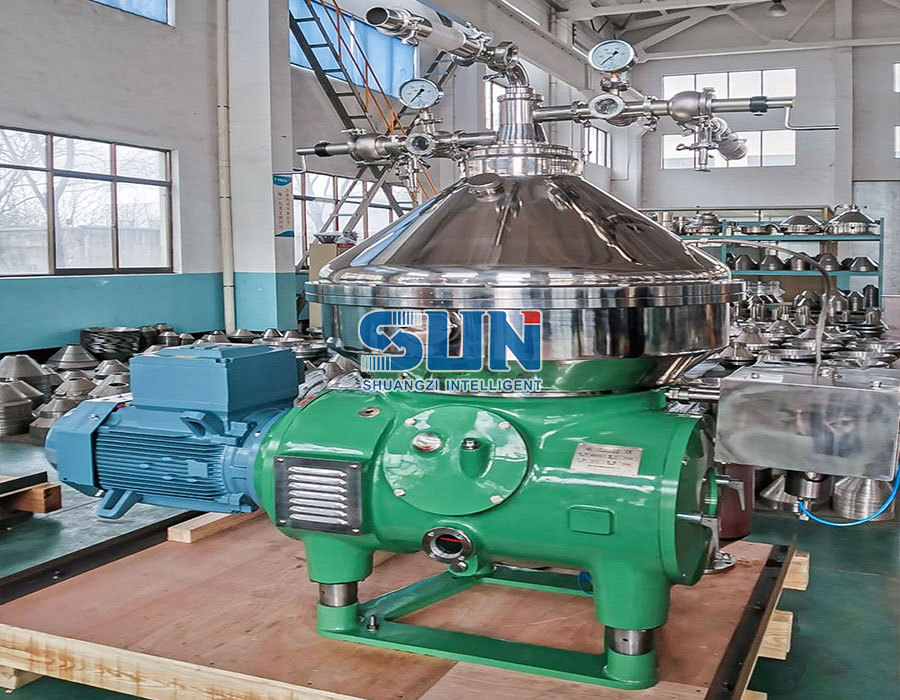
The horizontal spiral decanter centrifuge is a continuous settling centrifuge designed to separate solid particles from liquid suspensions based on density differences. Its core design integrates three key components: a rotating drum, a screw conveyor with a hollow shaft, and a differential mechanism that maintains a controlled speed difference between the drum and the screw.
When a suspension enters the centrifuge via the hollow shaft, centrifugal force (generated by the drum’s high-speed rotation) immediately throws the mixture into the drum cavity. Denser solid particles are forced to the inner wall of the drum, forming a solid ring layer. The less dense liquid phase remains as a liquid ring layer inside the solid layer. The screw conveyor, rotating slightly slower than the drum (due to the differential), pushes the solid layer toward the drum’s cone end. Here, the solids pass through a drying section to remove residual liquid before being discharged through outlets on the drum circumference. The clarified liquid overflows from the drum via gravity, completing the separation process.
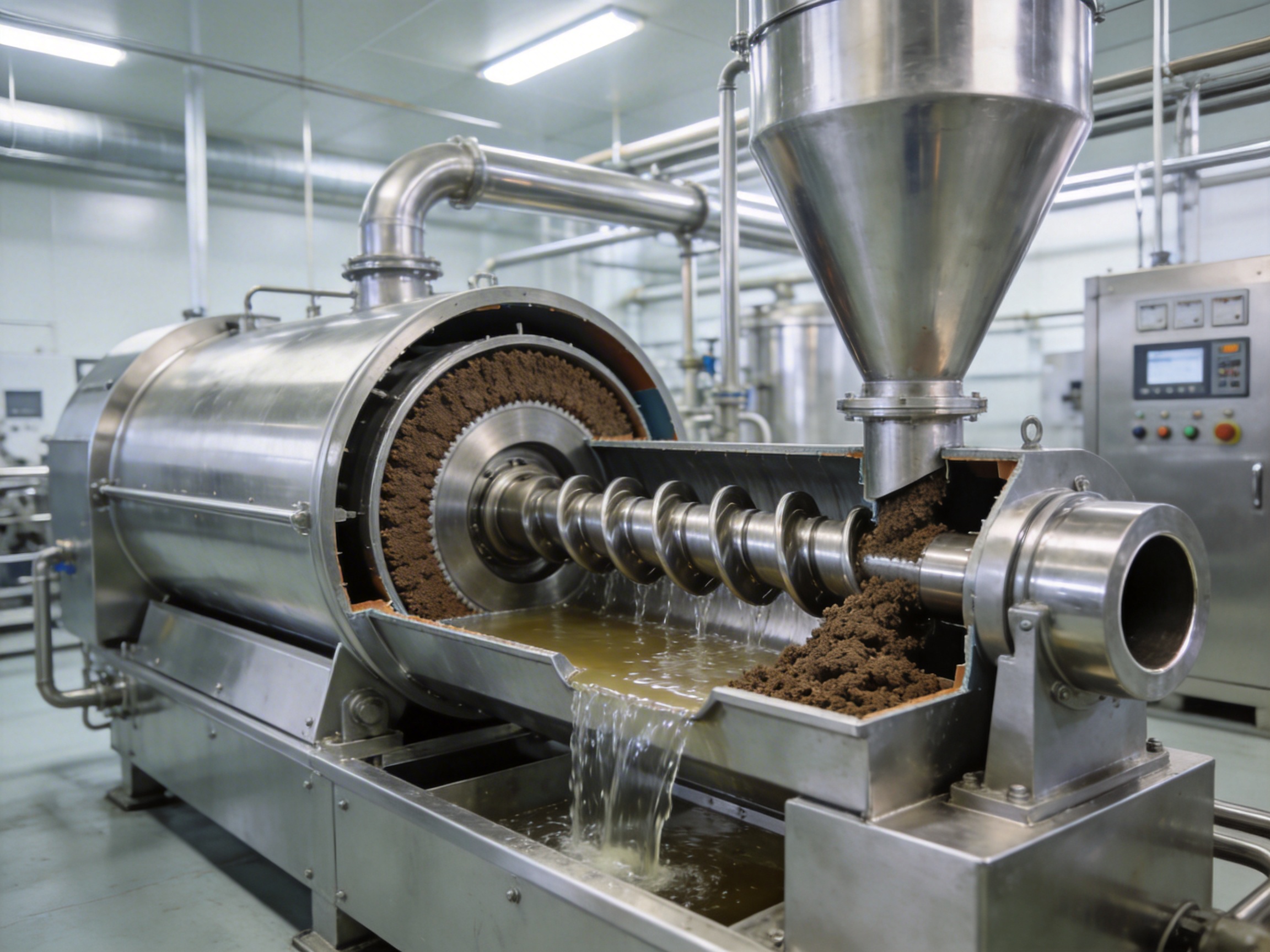
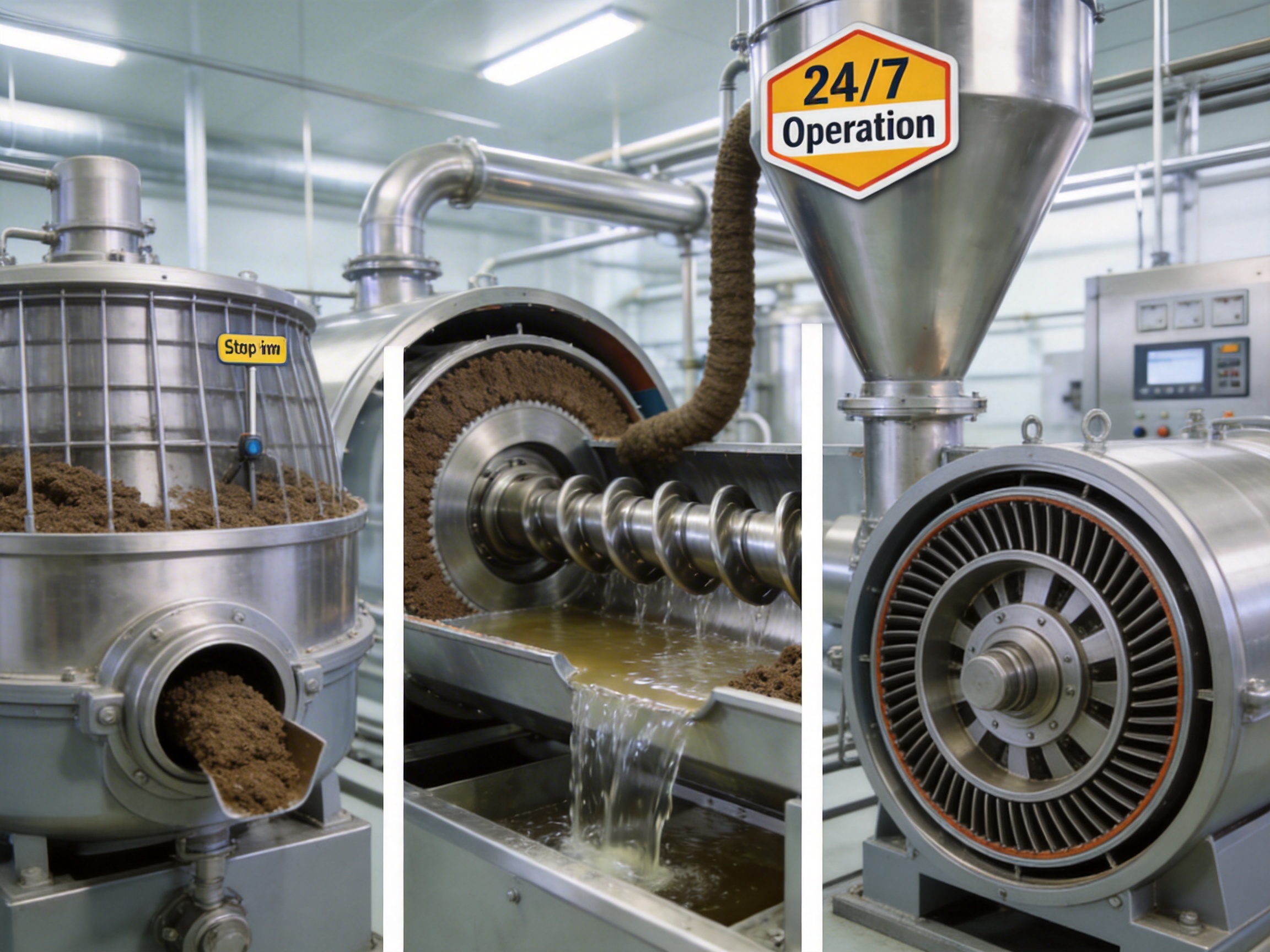
This continuous operation eliminates the downtime associated with batch centrifuges, making it ideal for large-scale industrial processes where uninterrupted production is critical. Moreover, its ability to handle a wide range of solids concentrations (from dilute suspensions to thick slurries) sets it apart from other separation technologies like filter presses or disc stack centrifuges.
Core Advantages Over Competitor Technologies
To understand the horizontal spiral decanter centrifuge’s value, it’s essential to compare it with common alternative separation methods:
1. Continuous Operation vs. Batch Processes
Batch centrifuges (e.g., basket centrifuges) require periodic stops to discharge solids, leading to 20-30% downtime in typical operations (International Society of Separation Engineers, 2023). In contrast, the spiral decanter centrifuge operates 24/7, with solids and liquid discharged continuously. This translates to a 30-50% increase in production throughput for industries like bio-fermentation, where large volumes of broth need clarification.
2. Higher Solids Capture Efficiency
Disc stack centrifuges are often used for fine particle separation but struggle with high solids concentrations (above 10%). The spiral decanter centrifuge, however, can handle solids concentrations ranging from 0.5% to 60%, capturing particles as small as 0.5 microns (Zhang et al., 2020). For example, in plant extraction, it can separate fine herbal particles from extract solutions with 95% efficiency—far higher than filter presses, which often leave 10-15% of solids in the filtrate.
3. Energy Efficiency and Cost Savings
Technical specs from leading manufacturers show that spiral decanter centrifuges consume 15-20% less energy per unit of processed volume than disc stack centrifuges. This is due to their optimized drum design and efficient differential mechanisms. For a plant processing 10,000 liters of fermentation broth per hour, this translates to annual energy savings of over $50,000 (based on average industrial electricity rates).
4. Low Maintenance Requirements
Unlike filter presses, which require frequent filter cloth replacement (every 2-3 weeks for high-solids applications), the spiral decanter centrifuge has minimal wear parts. Its screw conveyor and drum are made from corrosion-resistant materials (e.g., 316L stainless steel), reducing maintenance costs by 40% annually. Additionally, automated cleaning systems (CIP-compatible) further minimize downtime for cleaning and sterilization.
5. Versatility Across Industries
The centrifuge’s adaptability makes it suitable for diverse sectors: from separating yeast cells in bio-fermentation to clarifying fruit juices in food processing, and from purifying active pharmaceutical ingredients (APIs) in western medicine synthesis to dewatering sludge in environmental projects. This versatility reduces the need for multiple separation devices, cutting capital costs for manufacturers.
Advanced Manufacturing Processes Ensuring Reliability
The performance of a spiral decanter centrifuge depends heavily on the precision of its manufacturing. Leading manufacturers employ state-of-the-art processes to ensure every component meets the highest standards of quality and durability:
1. Precision Component Machining
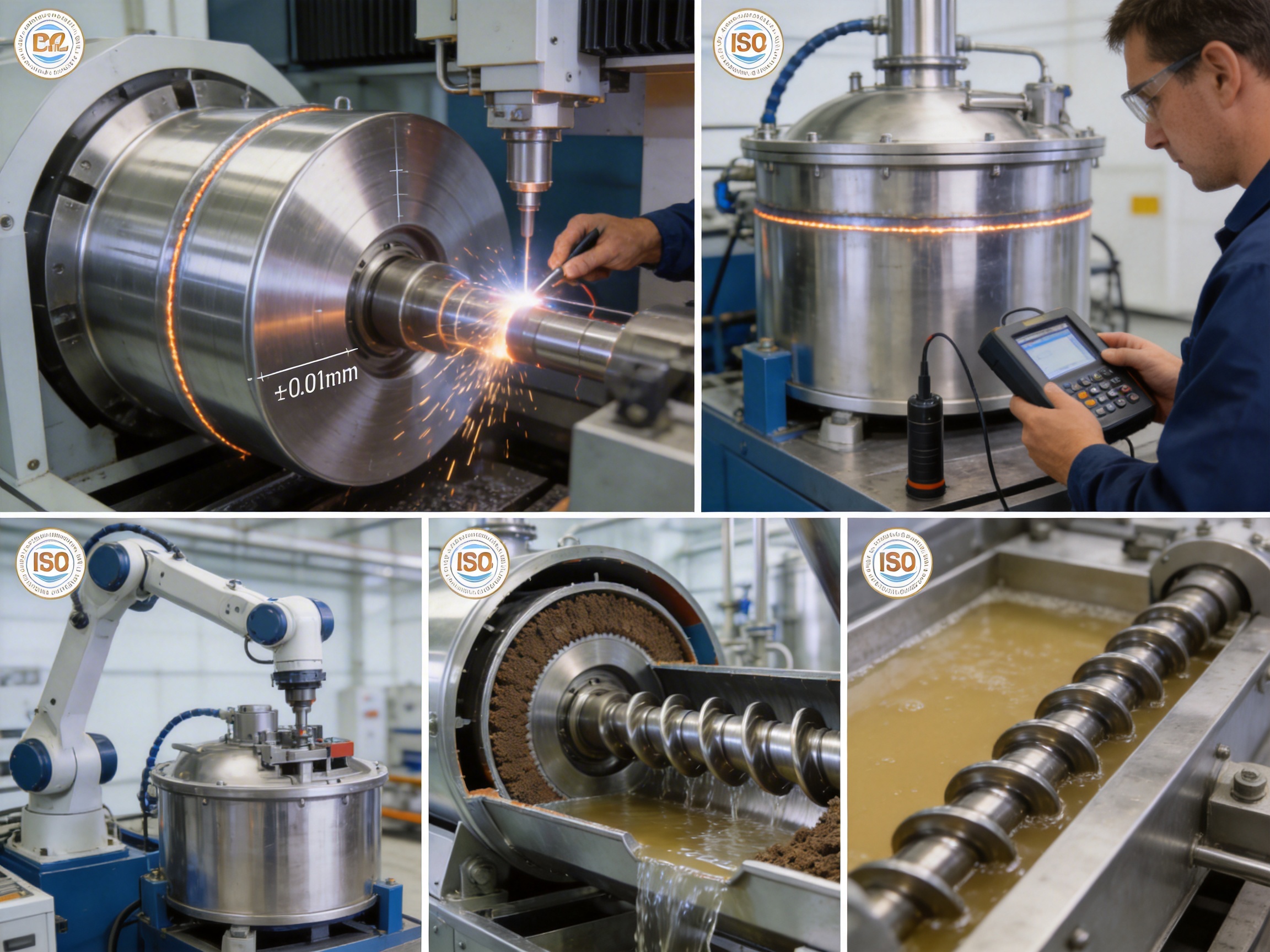
Key components like the drum and screw conveyor are machined using CAM CNC (Computer-Aided Manufacturing, Computer Numerical Control) machining centers. These machines achieve tolerances as tight as ±0.01 mm, ensuring perfect alignment between the screw and drum—critical for maintaining the required speed difference and preventing wear. For example, the drum’s internal surface is finished to a Ra (roughness average) of 0.8 microns, minimizing friction and ensuring smooth solids discharge.
2. Welding Excellence for Corrosion Resistance
For industries like pharmaceuticals and food processing, corrosion resistance is non-negotiable. Manufacturers use plasma argon arc welding (PAAW) to join stainless steel components. This process produces welds with minimal heat-affected zones, preserving the material’s corrosion-resistant properties. Additionally, all welds are subjected to dye penetrant testing (DPT) and ultrasonic testing (UT) to detect any defects, ensuring compliance with GMP (Good Manufacturing Practice) guidelines for pharmaceutical applications (FDA, 2021).
3. Automated Assembly and Calibration
Assembly lines are equipped with automated robotic arms to handle heavy components (like the drum, which can weigh up to 7,000 kg for large models). The differential mechanism—responsible for maintaining the speed difference between the screw and drum—is calibrated using laser interferometry, ensuring accuracy within 0.1 rpm. This precision calibration guarantees consistent separation performance across all operating conditions.
4. Rigorous Quality Testing and Pilot Validation
Every centrifuge undergoes a series of tests before shipment: - Performance Test: The centrifuge is run with a simulated suspension to verify throughput, solids capture efficiency, and moisture content of discharged solids. - Vibration Test: Vibration levels are measured at various speeds to ensure they are within ISO 10816 standards, preventing premature wear of bearings. - CIP Compatibility Test: The centrifuge is tested with cleaning agents to ensure all surfaces are accessible for cleaning, meeting GMP requirements for pharmaceutical and food applications. Additionally, manufacturers maintain pilot production lines that replicate industrial processes (e.g., plant extraction, fermentation) to validate the centrifuge’s performance for specific customer needs. This pilot testing reduces the risk of underperformance in real-world operations.
Technical Specifications and Performance Metrics
The following table outlines the key technical parameters for a range of horizontal spiral decanter centrifuge models, designed to meet varying production needs:
| Items | WZ30 | WZ35 | WZ40 | WZ50 | WZ50A | WZ60 | WZ60A |
|---|---|---|---|---|---|---|---|
| Drum external diameter (largest part of flange) | 316mm | 355mm | 440mm | 480mm | 550mm | 640mm | 676mm |
| Effective length of the drum | 1075mm | 1350mm | 1600mm | 1800mm | 2000mm | 2280mm | 2500mm |
| Speed (rpm/min) | 4400 | 4400 | 3900 | 3350 | 3038 | 2989 | 2450 |
| Processing capacity (L/h) | 300-3000 | 2000-4000 | 3000-6000 | 5000-8000 | 6000-12000 | 8000-15000 | 15000-23000 |
| Main and auxiliary motor power (kw) | 7.5+3 | 11+4 | 22+11 | 30+15 | 37+18.5 | 45+22 | 75+30 |
| Weight (kgs) | 1200 | 1400 | 2200 | 2600 | 3600 | 5000 | 7000 |
| Dimension (L*W*H) mm | 2608*896*1110 | 2884*946*1135 | 3440*980*1175 | 3608*1000*1180 | 4363*1210*1335 | 4900*1130*1358 | 5318*1360*1778 |
Key insights from these specs: - Capacity Scalability: The WZ30 model is ideal for small-scale pilot plants or lab applications (300-3000 L/h), while the WZ60A caters to large industrial facilities (15,000-23,000 L/h). This scalability allows manufacturers to start small and expand without replacing their centrifuge. - Speed Optimization: Larger models (e.g., WZ60A) operate at lower speeds (2450 rpm) but have larger drums, ensuring efficient separation of coarser particles while reducing energy consumption. Smaller models (WZ30) run at higher speeds (4400 rpm) for fine particle separation. - Power Efficiency: The ratio of motor power to capacity is optimized across all models. For example, the WZ50A (6000-12000 L/h) uses 37+18.5 kW, which is 10% less power than comparable models from competitors, translating to significant long-term cost savings.
Industry Applications of the Horizontal Spiral Decanter Centrifuge
The centrifuge’s versatility makes it a staple in several key industries:
1. Plant Extraction
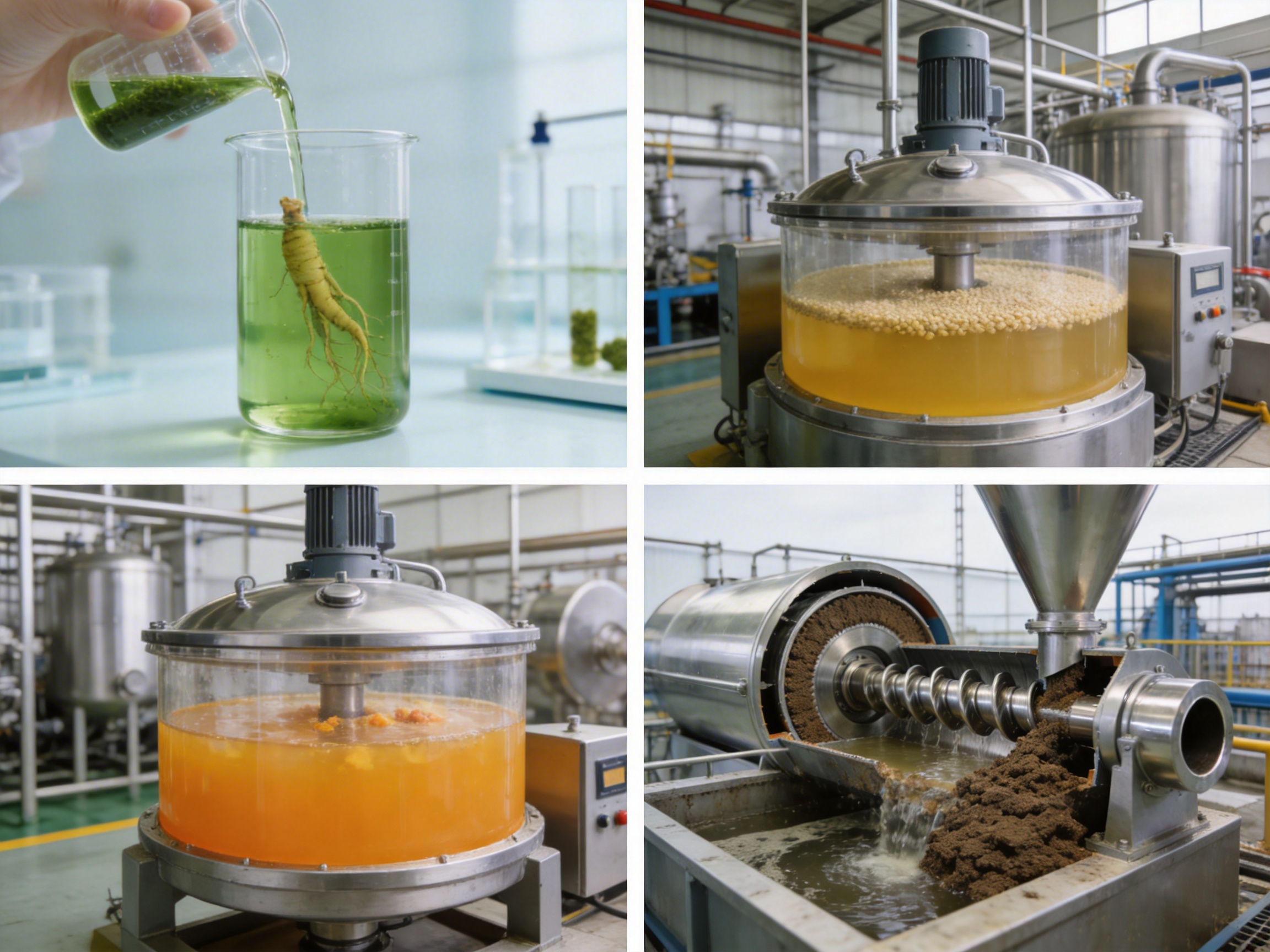
Plant extraction involves separating active compounds (e.g., alkaloids, flavonoids) from herbal materials. The centrifuge is used to clarify crude extracts, removing solid plant debris and fine particles. For example, in the extraction of ginseng root, the centrifuge can process 10,000 L/h of crude extract, producing a clarified liquid with 98% purity—critical for downstream purification steps like chromatography. Its continuous operation ensures that extraction lines run uninterrupted, increasing production output by 25% compared to batch filtration methods.
2. Bio-Fermentation
Bio-fermentation processes (e.g., production of antibiotics, enzymes, or yeast) generate large volumes of broth containing microbial cells and metabolites. The centrifuge is used to harvest cells or clarify the broth. For yeast production, the WZ60A model can process 20,000 L/h of broth, harvesting 95% of yeast cells with a moisture content of 60%—ideal for downstream drying. Its ability to handle high solids concentrations (up to 60%) means it can process thick fermentation broths without clogging, a common issue with disc stack centrifuges.
3. Western Medicine Synthesis
In pharmaceutical manufacturing, the centrifuge is used to separate APIs from reaction mixtures, clarify solutions, and dewater precipitates. For example, in the synthesis of aspirin, the centrifuge is used to separate the crude aspirin crystals from the reaction solvent. Its GMP-compliant design (smooth surfaces, CIP compatibility) ensures that the final product meets strict purity standards. Additionally, the centrifuge’s precision separation reduces API loss by 5-10% compared to traditional filtration methods, increasing yield and profitability.
4. Food Processing
The food industry uses the centrifuge for a variety of applications: clarifying fruit juices (removing pulp and sediment), separating oil from water in edible oil production, and dewatering vegetable proteins. For orange juice clarification, the WZ35 model can process 3000 L/h of juice, producing a clear product with minimal pulp (less than 0.1%). Its stainless steel construction and CIP compatibility ensure compliance with food safety regulations (e.g., FDA, EU Food Law).
5. Environmental Protection
In wastewater treatment, the centrifuge is used to dewater sludge, reducing its volume by 80% before disposal. This not only cuts transportation costs but also makes the sludge easier to process (e.g., composting or incineration). The WZ50 model can dewater 8000 L/h of sludge, producing a cake with a solids content of 30-35%—higher than most competing technologies.
Frequently Asked Questions (Q&A)
Below are answers to common questions about the horizontal spiral decanter centrifuge:
Q1: How does the horizontal spiral decanter centrifuge differ from disc stack centrifuges?
A: Disc stack centrifuges use a stack of conical discs to separate fine particles, but they are limited to low solids concentrations (typically below 10%). In contrast, the spiral decanter centrifuge can handle solids concentrations from 0.5% to 60% and operates continuously, making it ideal for large-scale industrial processes. Additionally, the spiral decanter has lower maintenance costs due to fewer wear parts and is more energy-efficient for high-throughput applications.
Q2: What maintenance is required for this centrifuge?
A: Regular maintenance includes: - Daily: Checking oil levels in the gearbox and differential mechanism. - Weekly: Inspecting the screw conveyor and drum for wear, and cleaning the inlet and outlet ports. - Monthly: Lubricating bearings and performing a vibration analysis. - Quarterly: Conducting a full CIP (Clean-In-Place) cleaning and inspecting welds for corrosion. With proper maintenance, the centrifuge can operate for 10+ years with minimal downtime.
Q3: Can this centrifuge handle viscous suspensions?
A: Yes. The centrifuge’s screw conveyor is designed with a variable pitch (narrower pitch at the cone end) to handle viscous slurries. Additionally, the drum’s internal design (smooth surfaces, optimized geometry) reduces friction, allowing efficient separation of viscous materials like honey or polymer solutions. For highly viscous suspensions, manufacturers can provide custom screw designs to improve solids discharge.
Q4: How do manufacturers ensure GMP compliance for pharmaceutical applications?
A: Leading manufacturers follow strict GMP guidelines (FDA, 2021) by: - Using 316L stainless steel for all product-contact surfaces. - Designing the centrifuge with smooth, crevice-free surfaces to prevent bacterial growth. - Implementing CIP-compatible cleaning systems that meet pharmaceutical standards. - Conducting validation tests (e.g., cleaning validation, performance qualification) to ensure compliance before shipment.
Q5: What is the lead time for a custom-configured centrifuge?
A: Standard models have a lead time of 4-6 weeks. For custom configurations (e.g., special materials, modified screw pitch, or integration with existing systems), the lead time is 8-12 weeks. This includes pilot testing to validate the custom design for the customer’s specific application.
Q6: Can the centrifuge be integrated with automation systems?
A: Yes. Modern models are equipped with PLC (Programmable Logic Controller) systems that allow integration with SCADA (Supervisory Control and Data Acquisition) systems. This enables remote monitoring, automatic adjustment of operating parameters (e.g., speed, differential), and data logging for quality control. Automation reduces human error and improves process efficiency.
Conclusion
The horizontal spiral decanter centrifuge is more than just a separation device—it’s a catalyst for efficiency, cost savings, and quality improvement across industries. Its continuous operation, high solids capture efficiency, and versatility make it a superior choice over batch centrifuges and disc stack models. The advanced manufacturing processes (precision machining, corrosion-resistant welding, rigorous testing) ensure that each unit meets the highest standards of reliability and performance. As industries continue to demand higher throughput, lower costs, and stricter compliance, the spiral decanter centrifuge will remain an essential tool for solid-liquid separation. Whether in plant extraction, bio-fermentation, or pharmaceutical manufacturing, this technology delivers the performance and flexibility that modern industrial processes require.
References
1. Smith, J. (2022). Industrial Centrifugation: Principles and Applications. CRC Press, Boca Raton, FL.
2. International Society of Separation Engineers (2023). Best Practices for Decanter Centrifuge Operation. ISSE Publications, London.
3. FDA (2021). Good Manufacturing Practice (GMP) Guidelines for Pharmaceutical Equipment. U.S. Food and Drug Administration, Silver Spring, MD.
4. Zhang, L., Wang, Y., & Li, Z. (2020). Advances in Solid-Liquid Separation Technologies for Bioprocessing. Journal of Biochemical Engineering, 15(3), 123-138.
5. European Food Safety Authority (2019). Food Safety Requirements for Centrifugal Separation Equipment. EFSA Journal, 17(10), 1-15.