
 英语
英语 俄语
俄语Content
- 1 Product Overview and Core Operating Principle
- 2 Why High-Viscosity Paste Drying Requires Specialized Equipment
- 3 Key Technical Advantages Over Competing Drying Technologies
- 3.1 Lower Drying Temperature for Better Active Ingredient Retention
- 3.2 Continuous Production Instead of Batch Limitation
- 3.3 Uniform Moisture Control
- 3.4 Reduced Oxidation and Aroma Loss
- 3.5 Better Performance with Sticky and Agglomerating Materials
- 3.6 High Degree of Automation
- 3.7 Hygienic Stainless-Steel Construction
- 4 Representative Technical Specifications
- 5 Applications in Plant Extraction and Natural Ingredients
- 6 Applications in Traditional Herbal and Pharmaceutical Processing
- 7 Applications in Food, Health Food, Flavors, and Fragrances
- 8 Applications in Bio-Fermentation and Biopharmaceutical Projects
- 9 Advanced Manufacturing Strengths Behind the Dryer
- 10 Engineering Integration and Turnkey Project Capability
- 11 Detailed Process Benefits for End Users
- 12 Comparison with Common Drying Alternatives
- 13 Design Elements That Improve Reliability
- 14 Automation, Monitoring, and Control
- 15 Cleaning and Hygienic Operation
- 16 Model Selection Considerations
- 17 Quality Value for High-End Natural Products
- 18 Manufacturing Experience Across Related Process Equipment
- 19 Energy and Efficiency Considerations
- 20 Installation, Commissioning, and Operator Training
- 21 Long-Term Maintenance and Reliability
- 22 Why This Dryer Is a Strong Choice for Industrial Producers
- 23 Frequently Asked Questions
- 23.1 What materials are most suitable for this low temperature vacuum belt dryer?
- 23.2 Why is vacuum drying better for heat-sensitive products?
- 23.3 How does the continuous belt design improve production efficiency?
- 23.4 Can the equipment handle sticky paste materials?
- 23.5 What final moisture content can be achieved?
- 23.6 How is the dryer different from spray drying?
- 23.7 How is the dryer different from tray drying?
- 23.8 What heating method is used?
- 23.9 Is the equipment suitable for GMP-oriented production?
- 23.10 Can the dryer be integrated into a complete extraction or fermentation line?
- 23.11 Why is pilot testing recommended?
- 23.12 What utilities are typically required?
- 23.13 What makes the manufacturer competitive?
- 24 Conclusion
- 25 References
- 26 Product: Low Temperature Vacuum Belt Dryer for High Viscosity Paste Drying
Low temperature vacuum belt drying is one of the most effective industrial drying solutions for heat-sensitive, high-viscosity, and easily agglomerated materials. For manufacturers of natural plant extracts, traditional herbal extracts, fruit and vegetable concentrates, health food ingredients, flavors, fragrances, bioactive compounds, and pharmaceutical intermediates, drying is not merely a moisture-removal step. It is a critical process that determines color, aroma, solubility, active ingredient retention, finished moisture uniformity, production continuity, and final product value.
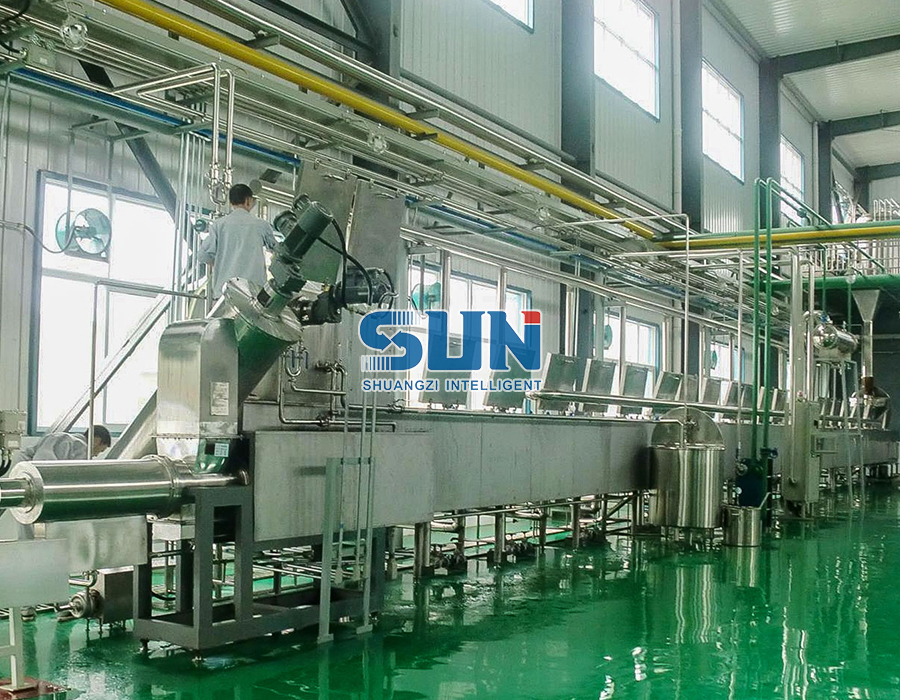
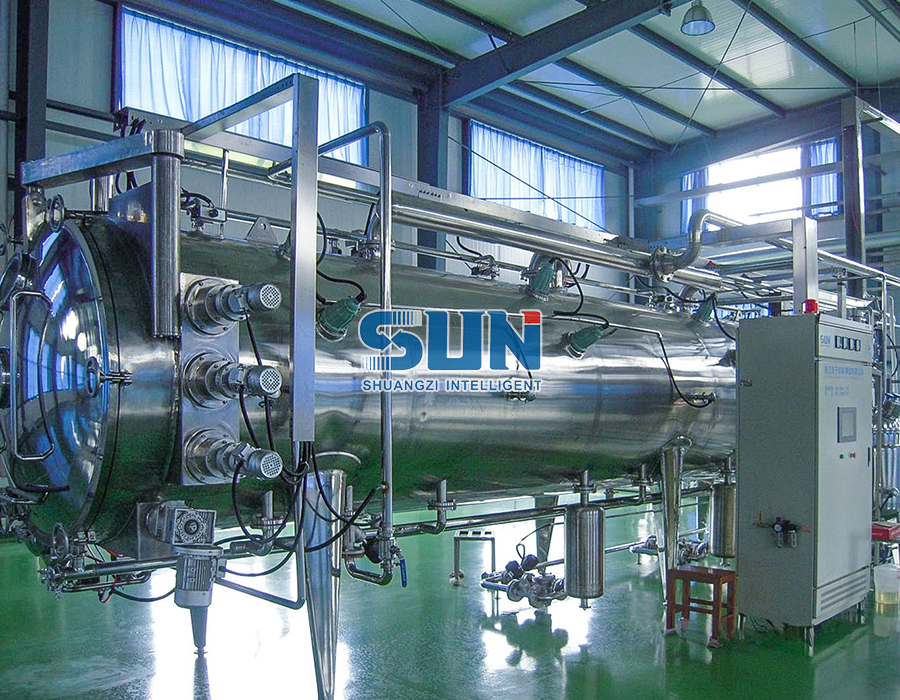
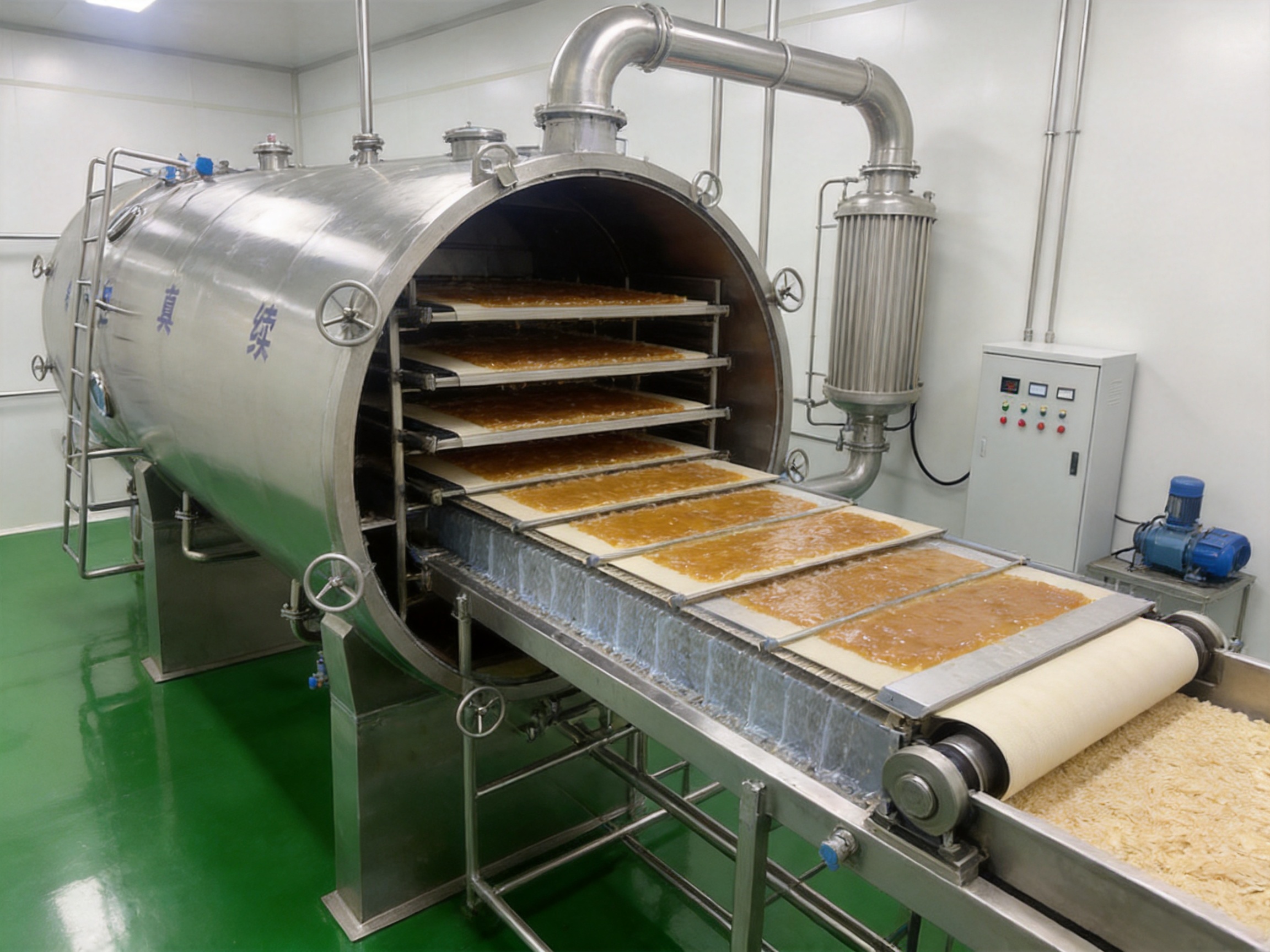
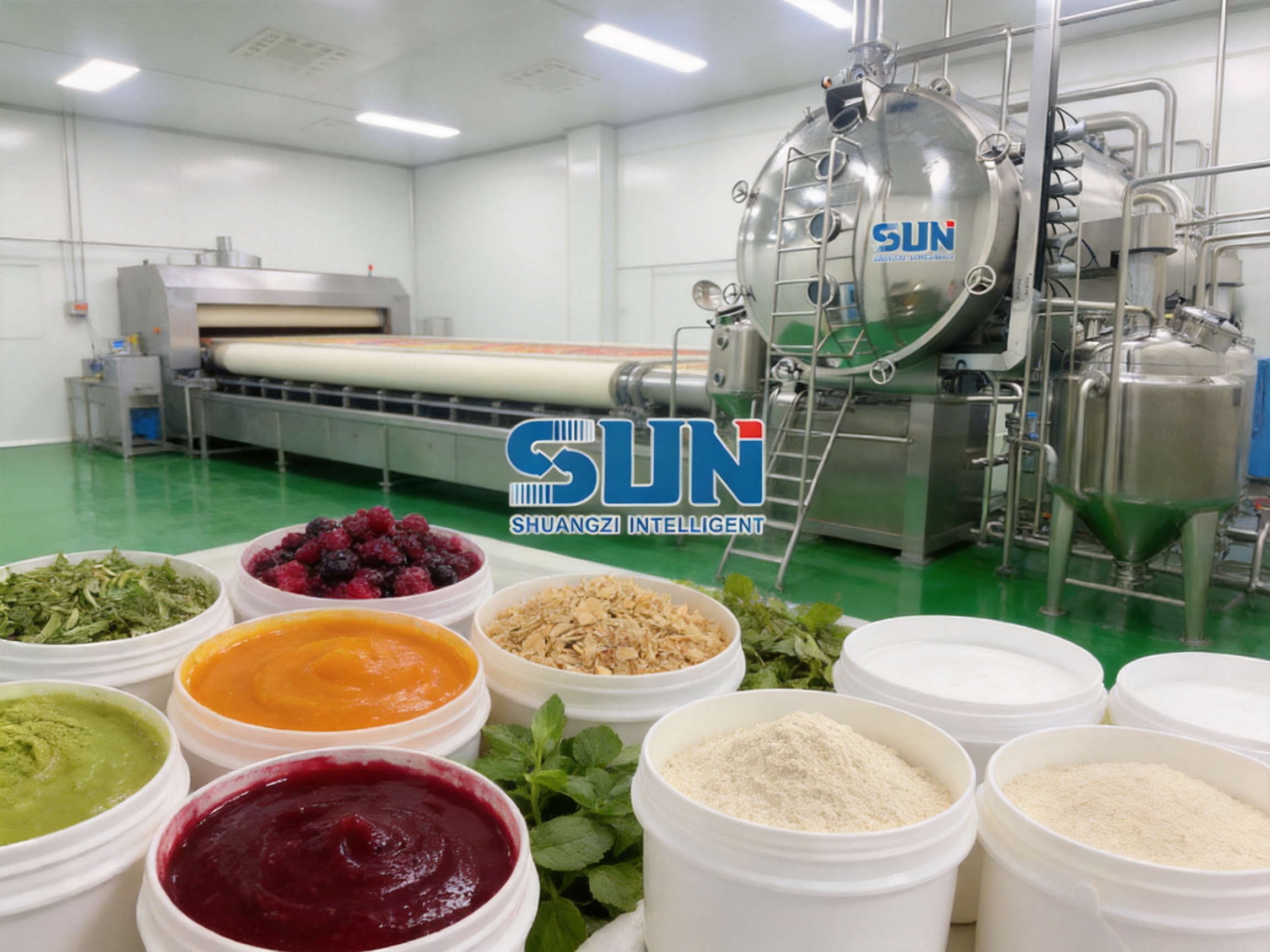
The Low Temperature Vacuum Belt Dryer for High-Viscosity Paste Drying is designed as a continuous contact-type low-temperature drying system. Constructed from 304 stainless steel and built around a fully sealed vacuum chamber, it combines vacuum dehydration, multi-layer belt conveying, controlled heating, integrated cooling, automatic continuous feeding, and automatic discharge. In operation, raw material is evenly distributed onto internal drying belts, transported across heating plates, dehydrated under vacuum, cooled before discharge, and separated from the belt as dried cake or flakes during the return stroke.
This equipment is especially suitable for feedstock that cannot be efficiently handled by spray drying, hot-air drying, tray drying, or conventional vacuum ovens. Many high-value extracts and concentrates are sticky, viscous, thermolabile, prone to oxidation, or likely to form lumps during fast moisture removal. Under a vacuum environment, the boiling point of water is reduced, allowing dehydration at lower temperatures. This helps protect the original color, fragrance, taste, and active ingredients of sensitive materials while maintaining stable final moisture.
Compared with batch vacuum drying and other traditional systems, continuous vacuum belt drying provides higher automation, better material consistency, shorter processing cycles, reduced labor dependence, and improved production hygiene. For large-scale manufacturers, these advantages translate into more stable product quality, improved operating efficiency, and a stronger foundation for standardized industrial production.
Low Temperature Vacuum Belt Dryer for High Viscosity Paste Drying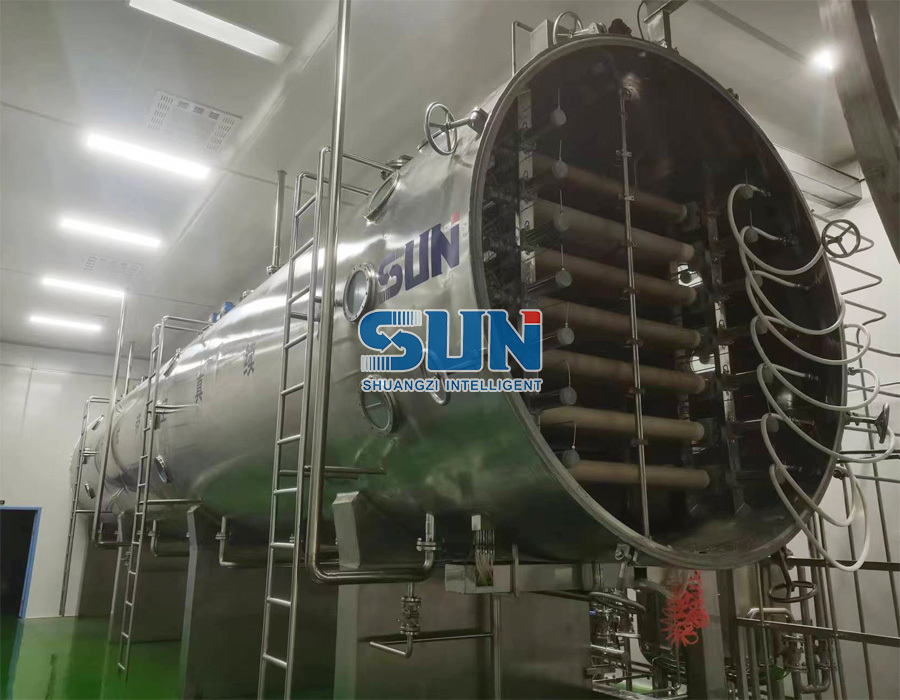
Product Overview and Core Operating Principle
The dryer is built as a vacuum low-temperature automatic continuous drying unit. Its main structure includes a vacuum chamber, multi-layer drying belts, feeding and spreading system, heating plates, cooling plates, belt drive system, vacuum system, condenser, automatic discharge mechanism, cleaning interface, control cabinet, and auxiliary utilities. The product-contact parts are manufactured from 304 stainless steel, which is widely used in food, biological, pharmaceutical, and natural extract industries because of its corrosion resistance, cleanability, and structural reliability.
The drying process begins when liquid, paste, or concentrated extract is fed into the sealed vacuum chamber through a controlled feeding system. The material is distributed evenly over the belt surface. As the belt moves at an adjustable speed, the material passes across multiple heating sections. Heat is transferred mainly by contact from the heating plates to the belt and then to the material layer. Because the chamber is under vacuum, moisture evaporates at a lower temperature than under atmospheric pressure.
The evaporated moisture is removed through the vacuum system and condensed by the condenser. After the material reaches the target moisture level, it enters a cooling section. Cooling stabilizes the dried product, improves discharge behavior, and helps prevent caking caused by residual heat. During the return stroke of the belt, the dried cake naturally peels off or is assisted by the discharge mechanism. This enables continuous feeding and continuous discharge, which is a major improvement over batch drying processes.
Depending on the specific model and process configuration, the equipment can operate in a vacuum range commonly around 900 to 4000 Pa, while certain industrial specifications may operate within ranges such as 1240 to 5400 Pa. Drying temperatures can be adjusted according to material sensitivity, commonly within 20℃ to 80℃ for low-temperature processing, while the heating medium control temperature may be set higher, such as 40℃ to 125℃, to maintain efficient heat transfer through the system.
The system is particularly valuable for materials with feed moisture content below approximately 40% and target finished moisture below approximately 4%, although actual performance depends on raw material composition, viscosity, solids content, sugar content, heat sensitivity, layer thickness, belt speed, vacuum level, and heat transfer conditions.
Why High-Viscosity Paste Drying Requires Specialized Equipment
High-viscosity paste drying is challenging because the material does not behave like a free-flowing liquid or dry powder. It may be sticky, elastic, syrup-like, gelatinous, or prone to forming a dense skin during heating. If moisture is removed too quickly from the surface, the outer layer may harden while inner moisture remains trapped. If the temperature is too high, active ingredients may degrade, volatile aromas may be lost, and color may darken. If the material is handled in a batch tray dryer, drying time can be long and product uniformity can vary significantly from tray to tray.
Spray drying is often unsuitable for concentrated extracts and pastes that have high sugar content, high viscosity, poor atomization properties, or strong wall-sticking behavior. Even when spray drying is technically possible, it may require large amounts of carrier agents, such as maltodextrin or other excipients, which can dilute active content and change the product label. High inlet temperatures in spray drying may also affect thermolabile components.
Freeze drying provides excellent quality for some products, but it is expensive, energy-intensive, slow, and usually better suited for premium small-batch products rather than high-throughput paste drying. Traditional vacuum ovens protect heat-sensitive materials better than atmospheric hot-air dryers, but they are batch-based, labor-intensive, and often inconsistent across loading thicknesses. Cleaning and material handling can also be inefficient.
The Low Temperature Vacuum Belt Dryer addresses these limitations by combining low-temperature vacuum drying with continuous belt movement and controlled contact heat transfer. The material can be spread into a relatively uniform layer, heated gently, dehydrated progressively, cooled, and discharged continuously. This creates a more balanced solution for quality, throughput, energy use, automation, and industrial scalability.
Key Technical Advantages Over Competing Drying Technologies
The dryer offers several advantages over competing systems because it is designed specifically for thermolabile, high-viscosity, and easily agglomerated materials. These advantages are not based on a single component, but on the integration of vacuum, controlled temperature, multi-layer belt structure, automatic feeding, automatic discharge, and hygienic stainless-steel manufacturing.
Lower Drying Temperature for Better Active Ingredient Retention
Under vacuum, water evaporates at a lower temperature. This allows the material to be dried without exposure to harsh thermal conditions. For plant extracts, herbal extracts, biological materials, flavors, and natural food concentrates, low-temperature drying helps reduce degradation of heat-sensitive compounds. Pigments, aromas, essential flavor notes, phenolic compounds, glycosides, peptides, enzymes, vitamins, and other bioactive ingredients may be better preserved when compared with high-temperature hot-air drying or aggressive spray drying conditions.
Continuous Production Instead of Batch Limitation
Batch dryers require loading, drying, unloading, cleaning, and waiting periods. These operations increase labor demand and create quality differences between batches. A continuous vacuum belt dryer supports uninterrupted material flow. Once process parameters are stabilized, feed, drying, cooling, and discharge can proceed automatically. This is especially important for factories that operate extraction, concentration, and drying lines as integrated processes. Continuous drying reduces bottlenecks and makes downstream milling, blending, sieving, or packaging easier to schedule.
Uniform Moisture Control
Uniform moisture content is essential for product stability, shelf life, grinding performance, and packaging. Unevenly dried materials may cake, ferment, degrade, or fail quality standards. In this dryer, layer thickness, belt speed, heating section temperature, vacuum level, and residence time can be controlled. The multi-layer design provides extended drying path within a compact equipment footprint. As the material progresses through heating and cooling sections, moisture is gradually removed, helping produce stable finished water content.
Reduced Oxidation and Aroma Loss
The sealed vacuum chamber reduces oxygen exposure during drying. This is beneficial for materials that oxidize easily, such as botanical extracts, fruit concentrates, natural pigments, aroma components, and functional food ingredients. Lower oxygen levels and lower temperatures help preserve the original sensory characteristics of the raw material. For products where natural color and fragrance are central selling points, this is a major competitive advantage.
Better Performance with Sticky and Agglomerating Materials
Sticky pastes often adhere to trays, walls, spray dryer chambers, or fluidized bed surfaces. The vacuum belt dryer is designed for controlled spreading and belt-based conveyance. Dried cake automatically separates from the belt during return, reducing manual scraping and improving operational continuity. The cooling section also improves product release because material becomes more stable and less tacky before discharge.
High Degree of Automation
Automatic continuous feeding, belt speed control, temperature control, vacuum control, condensation, cooling, and discharge reduce dependence on manual operation. Automation improves consistency and supports modern GMP-oriented production management. Operators can monitor and adjust process conditions rather than repeatedly handling hot trays or manually transferring semi-dried material.
Hygienic Stainless-Steel Construction
The full 304 stainless-steel construction provides corrosion resistance, cleanability, and compatibility with food, pharmaceutical, and biological production environments. A fully sealed vacuum chamber reduces contamination risk and supports more controlled manufacturing. For high-value extracts and functional ingredients, hygienic design is not optional; it is essential for product safety and regulatory confidence.
Representative Technical Specifications
The equipment is available in multiple specifications to match different evaporation capacities, belt layers, heating areas, and production requirements. The following table summarizes representative models and parameters for vacuum low-temperature automatic continuous drying of liquid or paste materials.
| Parameter | Model 6-80 | Model 6-100 | Model 7-130 | Model 8-180 | Model 9-200 | Model 10-230 |
| Total heat transfer area | 88.5 m² | 101.6 m² | 131.8 m² | 184 m² | 207 m² | 230 m² |
| Effective heating area | 70 m² | 87 m² | 104.7 m² | 142.8 m² | 160 m² | 178.5 m² |
| Effective cooling area | 9.9 m² | 13.3 m² | 15.6 m² | 25.2 m² | 28.4 m² | 31.5 m² |
| Water evaporation capacity | 60-90 kg/h | 80-110 kg/h | 90-135 kg/h | 130-180 kg/h | 150-210 kg/h | 180-230 kg/h |
| Belt width | 1200 mm | 1200 mm | 1365 mm | 1365 mm | 1365 mm | 1365 mm |
| Belt layers | 6 | 6 | 7 | 8 | 9 | 10 |
| Heating and cooling sections | 4 heating + 1 cooling | 4 heating + 1 cooling | 4 heating + 1 cooling | 5 heating + 1 cooling | 5 heating + 1 cooling | 5 heating + 1 cooling |
| Heating form | Superheated water | Superheated water | Superheated water | Superheated water | Superheated water | Superheated water |
| Belt speed | 100-1500 mm/min | 100-1500 mm/min | 100-1500 mm/min | 100-1500 mm/min | 100-1500 mm/min | 100-1500 mm/min |
| Typical feed moisture | Below 40% | Below 40% | Below 40% | Below 40% | Below 40% | Below 40% |
| Typical product moisture | Below 4% | Below 4% | Below 4% | Below 4% | Below 4% | Below 4% |
| Cleaning pressure | 0.6 MPa | 0.6 MPa | 0.6 MPa | 0.6 MPa | 0.6 MPa | 0.6 MPa |
| Compressed air | 0.7 MPa | 0.7 MPa | 0.7 MPa | 0.7 MPa | 0.7 MPa | 0.7 MPa |
Actual model selection should be based on material characteristics, feed solids, target moisture, expected evaporation load, viscosity, sugar content, required production hours, utility availability, cleaning requirements, and factory layout. Pilot testing is recommended for new materials or materials with strong stickiness, foaming, heat sensitivity, or unusual drying behavior.
Applications in Plant Extraction and Natural Ingredients
Plant extraction is one of the most important application areas for this dryer. After extraction, filtration, concentration, and purification, botanical materials often become viscous concentrates. These concentrates may contain polysaccharides, sugars, pigments, polyphenols, saponins, alkaloids, flavonoids, and other active components. Many of these substances are sensitive to temperature, oxygen, and prolonged processing time.
In traditional drying methods, color darkening, aroma loss, reduced solubility, and active ingredient degradation may occur. The vacuum belt dryer is designed to minimize these risks. By drying at low temperature under vacuum, it supports the production of natural extract powders or flakes with improved sensory and functional quality. It is suitable for herbal extracts, tea extracts, mushroom extracts, fruit extracts, spice extracts, and other natural ingredient products.
The continuous nature of the dryer is also well matched with upstream extraction and concentration systems. A factory can concentrate extract to a target solids level and then feed the paste into the dryer continuously. This reduces holding time, lowers contamination risk, and improves process efficiency. For manufacturers that produce standardized extracts, the ability to maintain consistent moisture and product quality is an important commercial advantage.
Applications in Traditional Herbal and Pharmaceutical Processing
Traditional herbal extracts and pharmaceutical intermediates often require careful drying to protect therapeutic or functional components. In these industries, product consistency is closely linked to process control. A batch dryer may produce variations caused by loading thickness, operator practice, tray position, and uneven heat distribution. A continuous vacuum belt dryer helps reduce these variables by controlling residence time, heat transfer area, vacuum level, and feeding rate.
The low-temperature vacuum environment is particularly useful for extracts that contain volatile components or heat-sensitive active compounds. The sealed chamber reduces exposure to external air, helping protect the material from contamination and oxidation. The stainless-steel structure supports hygienic operation and cleaning. When integrated into a GMP-oriented production line, the dryer can contribute to more standardized pharmaceutical and health product manufacturing.
For pharmaceutical engineering projects, the dryer can be supplied as part of a wider system that includes extraction tanks, evaporation and concentration units, separation equipment, filtration equipment, storage vessels, automation, utility systems, and process piping. This integrated approach reduces coordination problems and improves the reliability of the entire production line.
Applications in Food, Health Food, Flavors, and Fragrances
Food ingredients and health food materials often require drying methods that preserve natural taste, nutrition, and appearance. Fruit and vegetable concentrates, for example, may contain sugars, organic acids, pigments, vitamins, and aromatic compounds. Drying these materials at high temperature can cause browning, caramelization, flavor loss, and reduced nutritional value. Vacuum belt drying helps maintain product quality by lowering the required drying temperature and limiting oxygen exposure.
In flavors and fragrances, volatile aroma compounds are extremely valuable. High-temperature drying can remove or alter these compounds, reducing product quality. Low-temperature vacuum drying helps retain aroma characteristics more effectively. The controlled process is also suitable for concentrated sauces, natural sweeteners, fermented food concentrates, nutritional pastes, and functional food materials.
Because the dryer can produce dried cake or flakes that are easier to mill, it supports downstream powder production. After drying, the product can be crushed, sieved, blended, granulated, or packaged according to customer requirements. Compared with drying methods that produce sticky lumps or overburned surfaces, vacuum belt drying can improve the efficiency of downstream processing.
Applications in Bio-Fermentation and Biopharmaceutical Projects
Bio-fermentation products can be highly sensitive. Fermented broths, enzyme concentrates, probiotic-related materials, peptide solutions, and bioactive extracts may require mild processing to preserve functionality. Although not every biological material is suitable for belt drying, many concentrated fermentation products benefit from vacuum low-temperature dehydration, especially when the goal is to reduce moisture without harsh thermal exposure.
The company behind this equipment has experience in biological fermentation system equipment and process integration. This is important because drying is rarely an isolated operation. In bio-fermentation projects, upstream fermentation, sterilization, separation, concentration, purification, and downstream drying must be considered as a complete process chain. A dryer manufacturer with understanding of fermentation and automation can design better interfaces between equipment, utilities, and control systems.
For biopharmaceutical and biological engineering projects, the ability to provide engineering design, equipment design, installation, line debugging, and system integration is a strong advantage. It helps customers reduce project risk, shorten commissioning time, and achieve more predictable performance.
Advanced Manufacturing Strengths Behind the Dryer
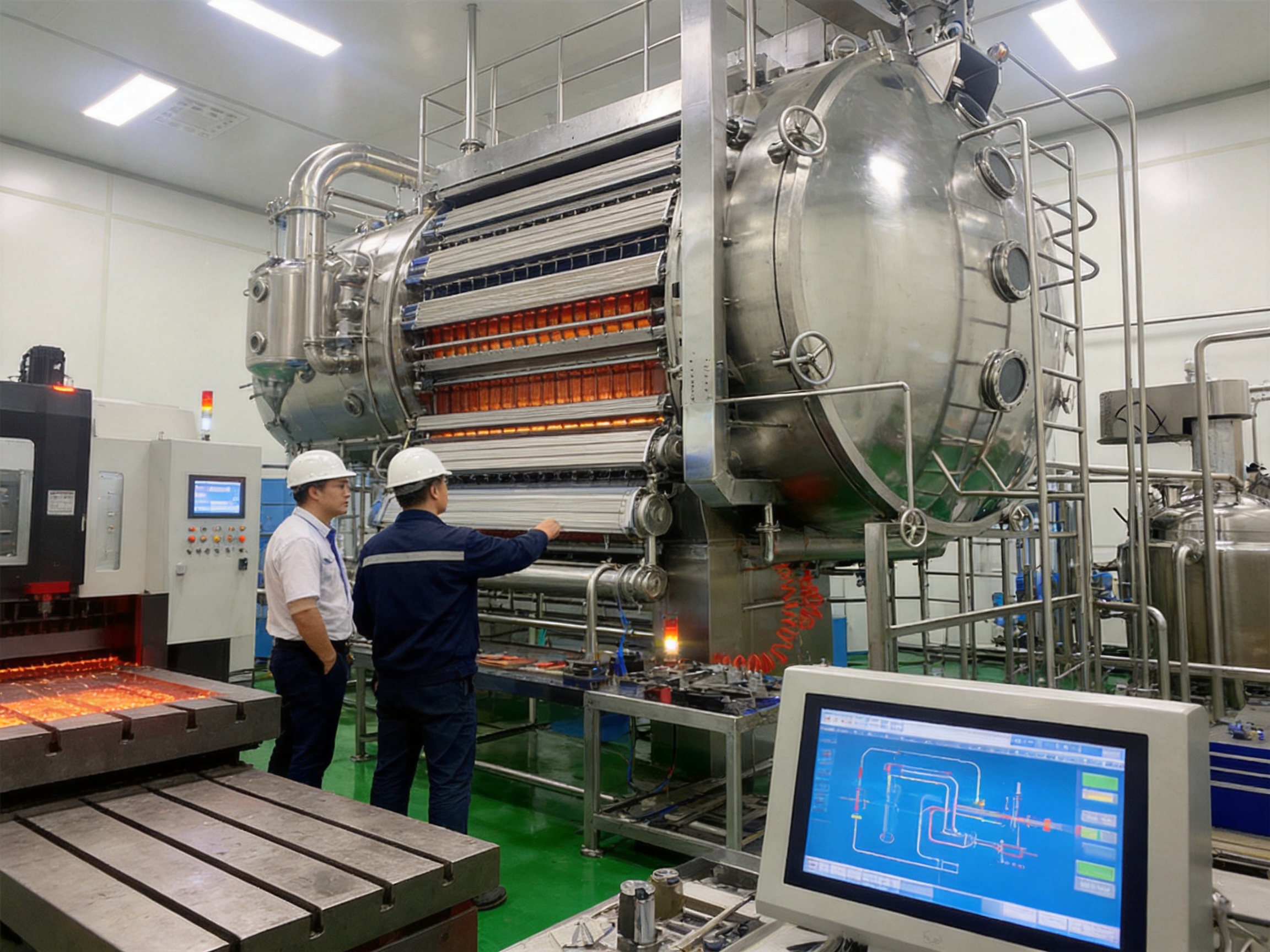
The performance of a vacuum belt dryer depends not only on process design but also on manufacturing quality. A sealed vacuum chamber must withstand continuous operation under vacuum conditions. Belt alignment must remain stable. Heating and cooling plates must provide uniform heat transfer. Stainless-steel surfaces must be properly fabricated and finished. Welding quality, machining accuracy, assembly precision, and control integration all affect equipment reliability.
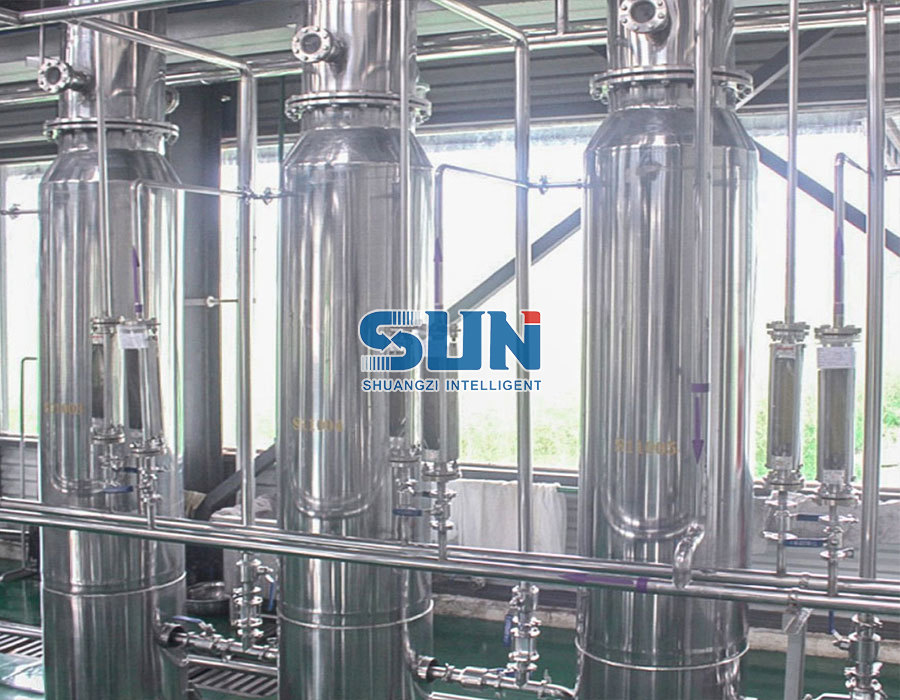
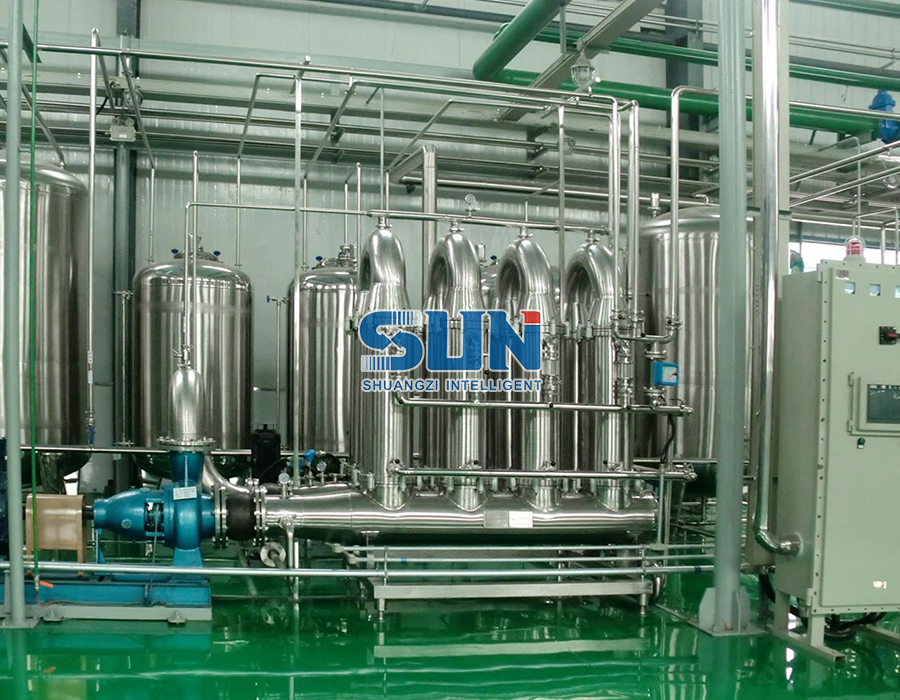
Zhejiang Shuangzi Intelligent Equipment Co., Ltd. is a professional biology and medical equipment enterprise with a focus on EPC and EPCM services. The company works in process technology, automation engineering design, equipment manufacturing, matching purchase, installation, equipment system integration, and turnkey project delivery. Its business fields include plant extraction, biological fermentation, pharmaceutical engineering, natural food, energy conservation, and environmental protection.
Founded in 2007, the company has developed mature product lines in vacuum low-temperature drying, complete fermentation systems, evaporation and concentration equipment, extraction equipment, separation equipment, crystallization equipment, filtration equipment, containers, and related process units. This broad manufacturing background strengthens the dryer offering because customers often need a complete production process rather than a single machine.
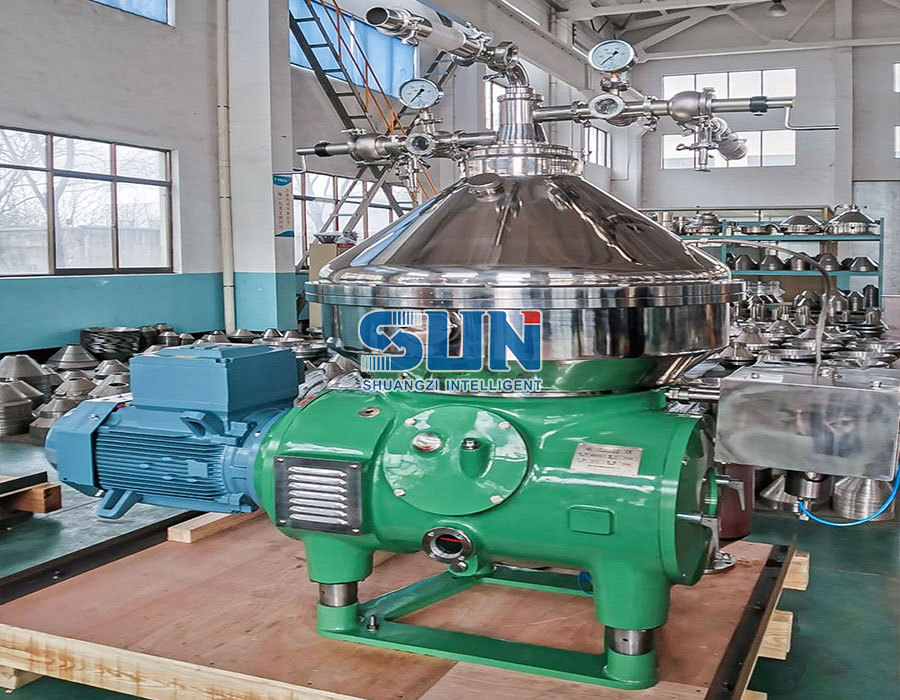
The company covers a floor area of 16,706 m² and a structural area of 17,800 m². Its manufacturing capabilities include advanced welding and finishing equipment such as plasma argon arc welding machines, plasma cutting machines, and CAM CNC machining centers. These facilities support accurate fabrication, stable structural quality, improved weld consistency, and more reliable assembly of large stainless-steel equipment.
Precision Stainless-Steel Fabrication
Stainless-steel fabrication quality is critical for vacuum drying equipment. Poor welding can cause leakage, contamination risk, deformation, and cleaning problems. By using advanced welding equipment and experienced fabrication procedures, the manufacturer can build large vacuum chambers, heating plates, piping, support frames, and product-contact surfaces with greater reliability. Good fabrication practices also improve equipment appearance, cleanability, and service life.
Advanced Cutting and Machining
Plasma cutting and CAM CNC machining help ensure that components are produced with consistent dimensions. This is important for belt alignment, sealing interfaces, mechanical assemblies, support structures, and auxiliary systems. In continuous belt equipment, small alignment errors may cause belt deviation, uneven wear, or unstable operation. Precision manufacturing reduces these risks.
Process-Oriented Engineering
The company is not only an equipment manufacturer; it also focuses on process technology. This is important because drying performance depends on material properties and upstream preparation. A paste with unsuitable solids content, excessive foaming, or poor spreading behavior may not dry efficiently. Process-oriented engineering helps customers optimize concentration level, feeding method, layer thickness, drying temperature, belt speed, vacuum level, and downstream handling.
Pilot Production and R&D Platform
The company has pilot production workshop capabilities and an R&D platform aligned with automation and GMP requirements. Pilot testing is valuable for customers because it reduces uncertainty before purchasing full-scale equipment. During testing, engineers can evaluate drying curves, product release behavior, final moisture, color retention, aroma retention, cake structure, energy demand, and cleaning requirements. This data can guide industrial model selection and process parameter design.
Engineering Integration and Turnkey Project Capability
A major advantage of the manufacturer is its ability to provide not only equipment but also engineering services. Many customers in plant extraction, fermentation, pharmaceutical, and food processing require complete production lines. A dryer must connect with concentration systems, storage tanks, feeding pumps, vacuum systems, condensers, cooling water systems, steam or hot water systems, compressed air systems, cleaning systems, control systems, and packaging operations.
When different suppliers provide separate pieces of equipment, interface problems can arise. Pipe sizes may not match. Control logic may be incomplete. Utility demand may be underestimated. Feeding consistency may be unstable. Cleaning procedures may be inconvenient. Commissioning may be delayed because no single party fully understands the whole line. A turnkey project provider reduces these risks by designing the complete system from the process perspective.
The company can provide engineering design, process design, equipment design, installation, line debugging, and turnkey project services. This is especially valuable for new factories, expansion projects, and customers entering natural extract or fermentation-based manufacturing for the first time. Integrated engineering can improve project schedule control, equipment compatibility, and long-term operating stability.
Detailed Process Benefits for End Users
For plant extract and food ingredient manufacturers, the most visible benefit is product quality. Finished materials dried under vacuum at low temperature can retain more natural color and aroma compared with high-temperature drying. The product is less likely to burn, darken, or lose volatile notes. This helps manufacturers create premium powders, granules, or flakes for health food, beverages, dietary supplements, and natural ingredients.
For pharmaceutical and biological users, process control and hygiene are equally important. The sealed stainless-steel chamber reduces external contamination risk. Automatic operation reduces manual handling. Stable drying conditions support repeatability. The cooling section improves product handling before discharge. These characteristics support higher manufacturing standards.
For factory managers, continuous operation improves productivity. Instead of waiting for batch cycles, material can move through the dryer steadily. Labor can be shifted from repetitive loading and unloading to monitoring and quality control. Production scheduling becomes more predictable. The equipment can be matched with upstream evaporators and downstream milling systems to create a continuous or semi-continuous line.
For financial decision-makers, the dryer can reduce hidden costs associated with product loss, rework, inconsistent batches, high labor demand, and quality complaints. Although advanced vacuum belt dryers require significant capital investment, they can create long-term value by improving yield, protecting active ingredients, reducing batch variability, and supporting premium product positioning.
Comparison with Common Drying Alternatives
Compared with spray drying, vacuum belt drying is better suited for high-viscosity materials that are difficult to atomize or likely to stick to the spray chamber. It can also reduce the need for carrier agents, which helps maintain higher active ingredient concentration. Spray drying may still be suitable for low-viscosity liquids and very high throughput powders, but it is not always the best choice for heat-sensitive extracts and sticky concentrates.
Compared with tray drying, the vacuum belt dryer provides continuous operation, more uniform residence time, reduced manual handling, better process control, and improved productivity. Tray drying is simple and may be economical for small batches, but it is difficult to scale while maintaining consistent quality. Labor intensity is also much higher.
Compared with vacuum ovens, the vacuum belt dryer is more automated and better suited for industrial-scale continuous production. Vacuum ovens can protect heat-sensitive products but remain batch-based. Loading thickness and position can cause uneven drying. Continuous belt drying provides a more controlled and repeatable process.
Compared with freeze drying, vacuum belt drying generally offers faster throughput and lower operating cost for suitable materials. Freeze drying is valuable for extremely sensitive products requiring porous structure and maximum preservation, but it is expensive and slow. For many extracts and concentrates, vacuum belt drying provides a practical balance between quality and industrial efficiency.
Compared with hot-air belt drying, vacuum belt drying provides lower oxygen exposure and lower drying temperature. Hot-air systems may be suitable for robust materials, but they can degrade color, aroma, and active compounds in sensitive products. Vacuum drying is often the better choice when product value depends on natural quality retention.
Design Elements That Improve Reliability
The fully sealed vacuum chamber is central to the system. Maintaining stable vacuum ensures efficient moisture evaporation at low temperatures. Reliable sealing also prevents external air leakage, which could reduce drying efficiency and increase oxidation risk. The chamber must be strong, precisely fabricated, and properly assembled.
The multi-layer belt system increases effective drying area within a manageable footprint. More belt layers allow longer residence time and larger heat transfer area without excessive floor space. Belt speed can be adjusted from slow to fast depending on material drying characteristics. Sticky materials may require slower movement and carefully controlled layer thickness, while easier-drying products may allow higher throughput.
Heating plates provide contact heat transfer. Superheated water heating helps create stable and controllable thermal conditions. Because the system uses controlled heating sections, operators can adjust temperature profiles according to product requirements. A sensitive product may need gentle heating at the beginning and moderate heating later, while another material may benefit from a stronger initial evaporation stage.
The cooling section is more important than it may appear. If a dried material exits while still hot, it may absorb moisture, cake, deform, or stick during discharge. Cooling helps stabilize the product before separation from the belt. This improves discharge efficiency and downstream handling.
The condenser and vacuum system remove evaporated moisture. Proper condenser area and cooling water capacity are necessary for stable operation. If condensation is insufficient, vacuum stability may suffer. The representative specifications include condenser areas from approximately 42 m² to 110 m² and cooling water consumption values matched to evaporation capacity.
Automation, Monitoring, and Control
Modern industrial drying requires more than mechanical operation. It requires monitoring and control of key parameters such as feed rate, belt speed, heating temperature, cooling temperature, vacuum degree, condenser performance, discharge behavior, and cleaning conditions. Automation reduces operator error and improves repeatability.
In a vacuum belt dryer, residence time is controlled primarily through belt speed and drying path length. Moisture removal is influenced by heating temperature, vacuum level, material thickness, and feed solids content. A well-designed control system allows operators to adjust these variables and establish standard recipes for different products. Recipe-based operation is useful for companies processing multiple extracts or food ingredients.
Automatic continuous feeding is essential for uniform drying. If feed is uneven, some areas may overdry while others remain wet. A controlled feeding and spreading system helps maintain consistent layer thickness. Stable layer thickness improves heat transfer and moisture uniformity.
Control integration also supports safety and maintenance. Vacuum systems, heating systems, cooling systems, compressed air, cleaning pressure, and belt drive mechanisms must operate in coordination. Proper alarms and interlocks can help protect equipment and product. In GMP-oriented facilities, process records and parameter monitoring can support documentation and quality assurance.
Cleaning and Hygienic Operation
Cleaning is a critical issue when drying sticky extracts and pastes. Residues can affect the next batch, create contamination risk, reduce heat transfer, or cause odor carryover. The equipment is designed with cleaning pressure requirements, typically around 0.6 MPa, and compressed air requirements around 0.7 MPa. Cleaning procedures should be validated according to material type, regulatory requirements, and production schedule.
304 stainless steel helps cleaning because it resists corrosion and provides a suitable hygienic surface. However, cleaning performance also depends on weld finish, dead-corner reduction, access design, drainage, and operating discipline. The manufacturer’s stainless-steel fabrication and finishing capabilities support the creation of cleaner, more durable equipment surfaces.
For multi-product facilities, cleaning planning should be part of project design. Engineers should consider product changeover frequency, allergen or active ingredient concerns, residue solubility, cleaning agents, water supply, wastewater handling, and drying after cleaning. A process-oriented supplier can help design cleaning procedures that match production reality.
Model Selection Considerations
Selecting the correct dryer model requires a practical understanding of both material properties and production targets. The first factor is evaporation load. If feed moisture is high or production volume is large, a larger heat transfer area and higher evaporation capacity are required. The representative models cover water evaporation capacities from approximately 60 kg/h to 230 kg/h, depending on configuration and operating conditions.
The second factor is material viscosity and spreadability. Some pastes can be distributed easily into thin layers, while others require specialized feeding design. High sugar content, gum content, protein content, or resin-like behavior can affect belt adhesion and drying rate. Testing helps determine ideal feed solids and layer thickness.
The third factor is heat sensitivity. A product that degrades above a low temperature may require lower heating temperature, slower belt speed, and longer residence time. This may reduce throughput compared with less sensitive products. The dryer’s adjustable temperature and vacuum conditions provide flexibility, but the process must be optimized for each material.
The fourth factor is final product form. Some customers want flakes, some want brittle cake for milling, and others want powder after crushing. Cooling and discharge behavior should be tested to ensure that the dried product can be handled efficiently.
The fifth factor is utility availability. Steam, hot water, cooling water, power, compressed air, and vacuum capacity must be matched to the dryer. For larger models, cooling water consumption and installed power are significant engineering considerations. The equipment should be selected as part of the whole factory utility plan.
Quality Value for High-End Natural Products
In the natural extract and health food markets, consumers and industrial buyers increasingly value clean labels, natural color, strong aroma, high active content, and consistent quality. Drying technology directly affects all of these characteristics. If a botanical extract is overheated, it may lose its distinctive color and smell. If a fruit concentrate is dried poorly, it may become dark, sticky, or difficult to dissolve. If a functional ingredient has uneven moisture, shelf stability may suffer.
The low-temperature vacuum belt dryer helps manufacturers protect the value created in upstream extraction and concentration. It is inefficient to invest in high-quality raw materials and careful extraction only to damage the product during drying. Gentle drying preserves more of the raw material’s natural identity and supports premium market positioning.
Because the dryer is suitable for continuous production, it also supports consistent quality across large volumes. This is important for ingredient suppliers serving beverage, nutrition, pharmaceutical, and food brands that require repeatable specifications. Stable moisture, color, and performance help build customer trust.
Manufacturing Experience Across Related Process Equipment
A dryer supplier with experience in extraction, evaporation, fermentation, filtration, separation, crystallization, and containers can better understand the full production chain. This is a significant strength of Zhejiang Shuangzi Intelligent Equipment Co., Ltd. The company’s mature product portfolio allows it to design drying equipment with upstream and downstream integration in mind.
For example, in a plant extraction line, raw herbs may be extracted, filtered, concentrated, precipitated, separated, and dried. The solids content after concentration affects dryer capacity. The filtration quality affects paste smoothness and belt spreading. The drying output affects milling and packaging. If these steps are designed separately without coordination, performance may suffer. Integrated engineering helps the entire line operate as a system.
In a fermentation line, broth treatment, sterilization, separation, concentration, and drying must also be coordinated. Biological materials may require special handling. The company’s experience in fermentation equipment and automation engineering helps customers develop more practical and reliable solutions.
Energy and Efficiency Considerations
Drying is an energy-intensive process because water evaporation requires substantial heat. The efficiency of a dryer depends on heat transfer, vacuum stability, residence time, condenser performance, insulation, and process control. Contact drying through heating plates can be efficient because heat is transferred directly to the material through the belt rather than relying only on hot air. Vacuum operation lowers boiling temperature, supporting low-temperature processing.
However, energy performance must be evaluated based on the complete process. Feed solids content has a major influence. If upstream concentration can remove water efficiently before drying, the dryer load is reduced. This is why integration with evaporation and concentration equipment is important. A complete process design can balance evaporation, drying, product quality, and energy cost.
Superheated water heating provides stable thermal control, which can improve drying consistency. Stable belt speed and uniform material distribution prevent local overdrying and reduce waste. Automatic operation helps maintain optimized parameters over long production periods.
Installation, Commissioning, and Operator Training
Large vacuum belt dryers require careful installation. The main body can weigh tens of tons depending on model, and auxiliary components such as condensers, vacuum systems, piping, pumps, control cabinets, and utility connections must be positioned correctly. Foundation design, equipment access, maintenance space, and lifting plans should be considered early in the project.
Commissioning includes mechanical inspection, vacuum testing, heating and cooling system verification, belt tracking adjustment, feeding system calibration, control testing, cleaning verification, and material trial runs. During material trials, process parameters are adjusted to achieve target moisture and product quality. Operators should be trained in start-up, shutdown, feeding adjustment, belt speed control, temperature control, vacuum operation, cleaning, troubleshooting, and safety procedures.
The manufacturer’s ability to provide installation and line debugging services is valuable because it helps bridge the gap between equipment delivery and stable production. Many drying problems are not caused by the machine alone but by the interaction between material, utilities, controls, and operator practice. Experienced commissioning support shortens the learning curve.
Long-Term Maintenance and Reliability
Continuous equipment must be maintained to preserve performance. Important maintenance areas include belt condition, belt tracking, seals, vacuum system performance, condenser cleanliness, heating and cooling circulation, feeding equipment, discharge mechanism, sensors, valves, and control components. Regular inspection helps prevent unplanned shutdowns.
Because the equipment operates under vacuum, sealing components are especially important. Air leakage can reduce drying efficiency, increase oxidation, and destabilize operation. Condenser performance should also be monitored because poor condensation can overload the vacuum system. Heating plates and cooling plates should be kept clean to maintain heat transfer.
Stainless-steel construction supports long service life, but good operating practice remains essential. Abrasive materials, corrosive cleaning agents, and improper mechanical handling can shorten equipment life. Maintenance plans should be developed based on production intensity and material characteristics.
Why This Dryer Is a Strong Choice for Industrial Producers
The Low Temperature Vacuum Belt Dryer for High-Viscosity Paste Drying is a strong choice for industrial producers because it addresses the core conflict in drying high-value materials: the need to remove moisture efficiently without damaging product quality. It provides a controlled low-temperature vacuum environment, continuous contact drying, automatic feeding and discharge, multi-layer drying capacity, stainless-steel hygienic construction, and flexible process adjustment.
Its advantages over many competing dryers include better suitability for sticky pastes, lower temperature operation than hot-air systems, greater automation than tray or vacuum oven drying, lower operating cost than freeze drying for many suitable products, and better preservation of active ingredients and sensory quality than aggressive high-temperature methods. These advantages are particularly important for natural extracts, traditional herbal extracts, fruit and vegetable concentrates, flavors, fragrances, health food ingredients, and biological materials.
The company’s manufacturing and engineering strengths further increase the value of the equipment. Advanced stainless-steel fabrication, plasma argon arc welding, plasma cutting, CAM CNC machining, pilot testing capability, process engineering, automation design, installation, commissioning, and turnkey project delivery help customers move from concept to stable production. For companies building modern extraction, fermentation, pharmaceutical, or food ingredient lines, this combination of equipment and engineering support is often more valuable than purchasing a standalone dryer.
Frequently Asked Questions
What materials are most suitable for this low temperature vacuum belt dryer?
The dryer is suitable for heat-sensitive, high-viscosity, sticky, and easily agglomerated materials, especially natural plant extracts, traditional herbal extracts, fruit and vegetable concentrates, flavors, fragrances, health food ingredients, and selected biological or pharmaceutical intermediates. It is particularly useful when spray drying is difficult because of high viscosity or wall sticking.
Why is vacuum drying better for heat-sensitive products?
Vacuum reduces the boiling point of water, allowing moisture to evaporate at lower temperatures. This helps protect color, aroma, active ingredients, and nutritional or functional components that may degrade under high-temperature atmospheric drying.
How does the continuous belt design improve production efficiency?
The continuous belt design allows automatic feeding, progressive drying, cooling, and discharge. This reduces manual loading and unloading, shortens production interruption, improves consistency, and supports large-scale industrial operation.
Can the equipment handle sticky paste materials?
Yes. The dryer is specially engineered for high-viscosity pastes and materials that may agglomerate. The feeding system spreads material onto the belt, and the dried cake separates during belt return. The cooling section helps stabilize the product before discharge.
What final moisture content can be achieved?
Representative specifications indicate that product moisture below 4% can be achieved for suitable materials and operating conditions. Actual final moisture depends on feed moisture, solids composition, layer thickness, belt speed, vacuum level, temperature, and residence time.
How is the dryer different from spray drying?
Spray drying requires atomization and often uses high inlet temperatures. It may not work well for very viscous or sticky concentrates. Vacuum belt drying handles paste materials more effectively and can reduce thermal damage. It may also reduce the need for carrier agents.
How is the dryer different from tray drying?
Tray drying is batch-based and labor-intensive. It often produces uneven moisture because of differences in tray loading and airflow. The vacuum belt dryer is continuous, more automated, and provides better control of residence time, temperature, and product uniformity.
What heating method is used?
Representative models use superheated water as the heating form. This provides stable and controllable heat transfer through heating plates. The equipment also includes cooling sections to stabilize dried material before discharge.
Is the equipment suitable for GMP-oriented production?
The dryer uses 304 stainless-steel construction and a sealed vacuum chamber, which support hygienic production. The manufacturer also has pilot production and R&D platform capabilities aligned with automation and GMP requirements. Final GMP compliance depends on complete project design, documentation, validation, and operating procedures.
Can the dryer be integrated into a complete extraction or fermentation line?
Yes. The manufacturer provides engineering design, process design, equipment design, installation, line debugging, equipment system integration, and turnkey project services. The dryer can be integrated with extraction, evaporation, concentration, filtration, separation, fermentation, and downstream processing equipment.
Why is pilot testing recommended?
Pilot testing helps determine drying temperature, vacuum level, belt speed, layer thickness, product release behavior, final moisture, color retention, and throughput. This is especially important for new materials, sticky extracts, high-sugar concentrates, or highly heat-sensitive products.
What utilities are typically required?
The system typically requires heating utilities such as steam or superheated water support, cooling water, power, compressed air, vacuum equipment, and cleaning water. Utility demand depends on model size, evaporation capacity, and process conditions.
What makes the manufacturer competitive?
The manufacturer combines equipment production with process engineering, automation design, pilot testing, advanced stainless-steel fabrication, CNC machining, installation, commissioning, and turnkey project capability. Its experience in plant extraction, biological fermentation, pharmaceutical engineering, and natural food processing allows it to support complete production solutions rather than only supplying a single machine.
Conclusion
Drying high-viscosity paste materials is one of the most demanding steps in natural extract, pharmaceutical, food, flavor, fragrance, and biological production. The process must remove water efficiently while protecting sensitive compounds and maintaining stable product quality. The Low Temperature Vacuum Belt Dryer for High-Viscosity Paste Drying provides an industrial solution to this challenge through vacuum low-temperature dehydration, continuous multi-layer belt transport, controlled contact heating, integrated cooling, automatic feeding, and automatic discharge.
Its value is especially clear for materials that cannot be processed effectively by spray drying, conventional tray drying, or high-temperature hot-air systems. By preserving color, fragrance, and active ingredients while supporting continuous production, it helps manufacturers improve product quality and production efficiency at the same time.
Supported by a manufacturer with strong engineering, automation, stainless-steel fabrication, pilot testing, and turnkey project capabilities, the dryer is more than a standalone machine. It is a key process unit for modern industrial production lines in plant extraction, bio-fermentation, pharmaceutical engineering, natural food, health products, and related high-value material processing.
References
Masters, K. Spray Drying Handbook. Longman Scientific and Technical.
Mujumdar, A. S. Handbook of Industrial Drying. CRC Press.
Ratti, C. Advances in Food Dehydration. CRC Press.
Fellows, P. J. Food Processing Technology: Principles and Practice. Woodhead Publishing.
McCabe, W. L., Smith, J. C., and Harriott, P. Unit Operations of Chemical Engineering. McGraw-Hill Education.
Toledo, R. T. Fundamentals of Food Process Engineering. Springer.
European Hygienic Engineering and Design Group. Hygienic Design Principles for Food Processing Equipment.
International Society for Pharmaceutical Engineering. Good Practice Guide: Process Validation and Manufacturing Equipment.