
 英语
 俄语
Content
- 1 What Is an MVR Evaporator?
- 2 How the MVR Evaporation Process Works
- 3 Primary Advantages of MVR Technology
- 4 Comparison with Conventional Evaporators
- 5 Application Areas
- 6 Engineering and Manufacturing Strengths
- 7 Important Design Considerations
- 8 Installation, Commissioning, and Service
- 9 Why Select an Integrated Equipment Manufacturer?
- 10 Economic Evaluation of an MVR Project
- 11 Best Practices for Long-Term Performance
- 12 Frequently Asked Questions
- 12.1 What does MVR mean?
- 12.2 How does an MVR evaporator save energy?
- 12.3 Does an MVR evaporator eliminate steam consumption completely?
- 12.4 Why does an MVR system use electricity?
- 12.5 Can MVR equipment treat high-salt wastewater?
- 12.6 Can an MVR evaporator operate under vacuum?
- 12.7 What factors influence the final equipment configuration?
- 12.8 Is pilot testing necessary?
- 12.9 What industries can use MVR evaporators?
- 12.10 Can the equipment be supplied as part of a turnkey project?
- 12.11 How should a customer begin an MVR project?
- 13 Conclusion
- 14 References
- 15 Product: MVR Evaporator
Modern industrial production increasingly depends on reliable evaporation and concentration systems. In chemical processing, food manufacturing, pharmaceutical production, seawater desalination, and environmental protection, large volumes of liquid must be concentrated, separated, or reduced before reuse, discharge, crystallization, or further processing. The challenge is that conventional evaporation can consume substantial amounts of steam, cooling water, and electrical power. Operating costs may become especially high when the feed contains salts, organic matter, corrosive compounds, or heat-sensitive components.
The MVR evaporator, also known as a Mechanical Vapor Recompression evaporator, is designed to address these challenges through the recovery and reuse of secondary vapor. Instead of allowing vapor generated during evaporation to leave the system as wasted energy, the MVR process compresses that vapor, increases its pressure and temperature, and returns it to the heating chamber as a usable heat source. This closed-loop energy approach significantly reduces the demand for fresh steam compared with traditional single-effect and multi-effect evaporation systems.
For industrial users, the value of an MVR evaporator extends beyond energy savings. The system can reduce the need for external steam, lower the load on cooling systems, simplify utility planning, and support continuous operation in facilities where space or steam capacity is limited. When properly designed around the characteristics of the feed liquid, an MVR evaporator can also provide stable concentration performance, improved process control, and flexible application across different industries.
What Is an MVR Evaporator?
MVR stands for Mechanical Vapor Recompression. The core principle is simple: vapor produced by the evaporation process is compressed mechanically and reused as heating vapor. A compressor raises the pressure and temperature of the low-temperature secondary vapor. The compressed vapor then enters the heating chamber, where it supplies the heat required to keep the process liquid boiling. As the heating vapor releases its latent heat, it condenses into water or condensate.
In a conventional evaporator, the vapor generated from the boiling liquid may be sent to a condenser or used in another effect. In an MVR system, the vapor is treated as a valuable energy source. The compressor recovers its latent heat and makes it available again within the same evaporation cycle. This reduces the amount of fresh steam required to maintain operation.
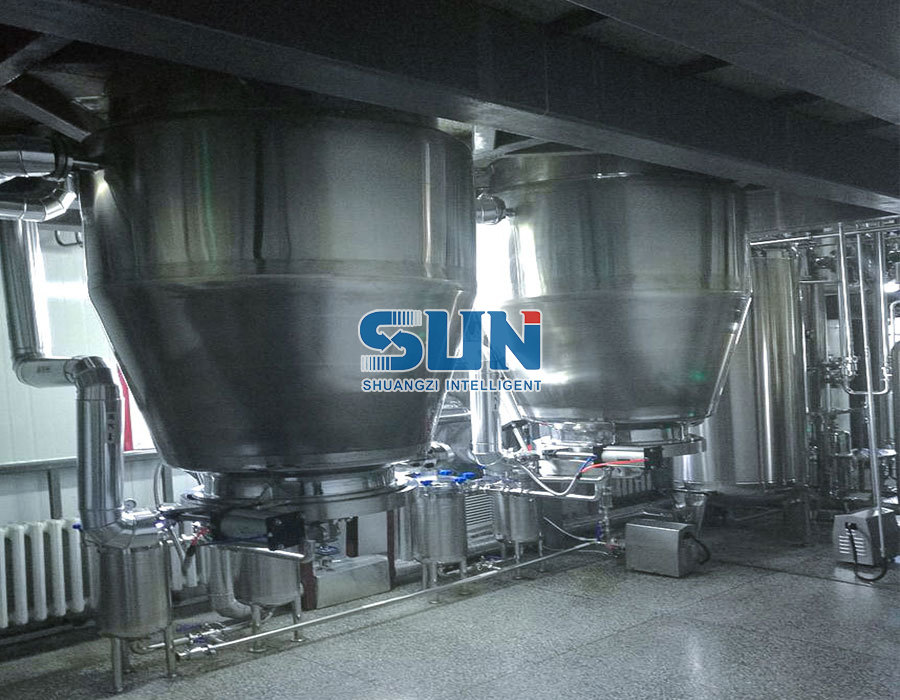
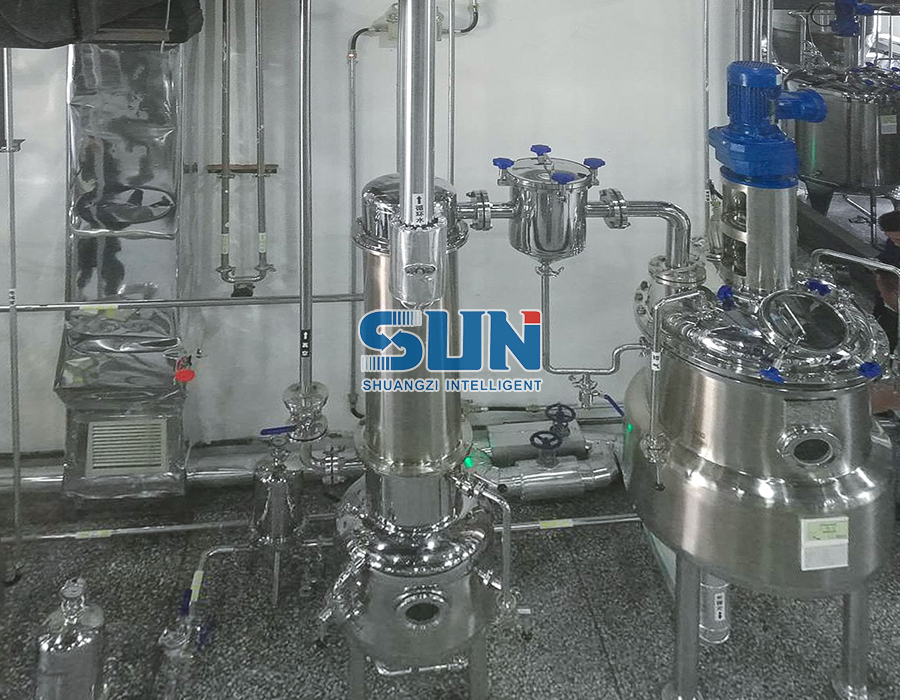
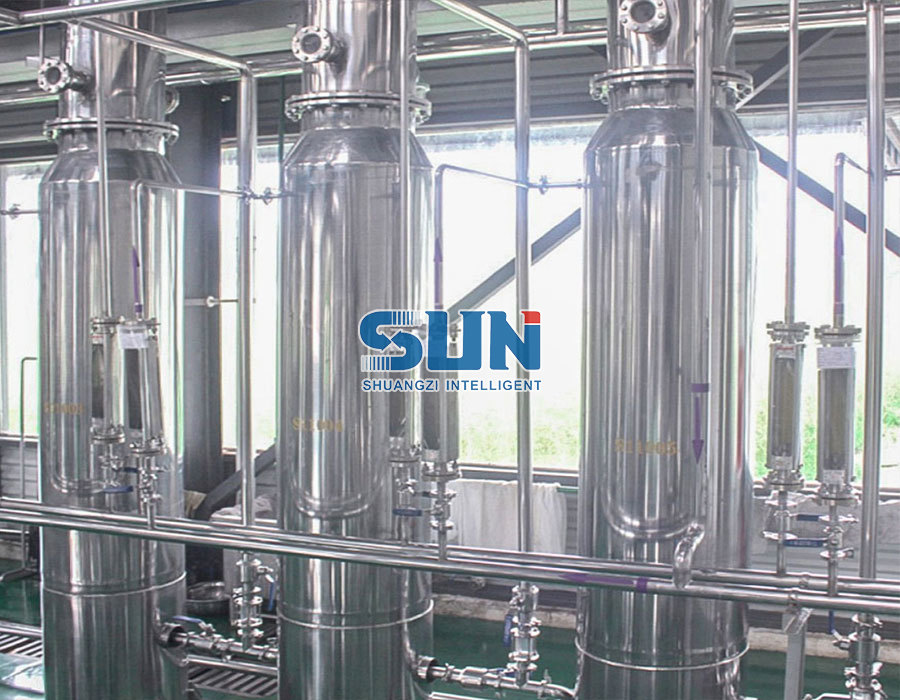
The system normally includes an evaporation chamber, a heating chamber, a vapor compressor, circulation or feed pumps, a vapor-liquid separator, condensate handling equipment, instrumentation, and a control system. Depending on the application, the evaporator may also be integrated with preheaters, crystallizers, forced-circulation loops, cleaning systems, vacuum equipment, or downstream treatment units.
The process can be operated under vacuum or near-vacuum conditions when the material must be evaporated at a lower temperature. Lower-temperature operation is particularly important for heat-sensitive products, pharmaceutical liquids, biological materials, certain food ingredients, and wastewater streams containing volatile or temperature-sensitive compounds.
How the MVR Evaporation Process Works
Feed Preparation
The feed liquid enters the system after preliminary treatment appropriate to its composition. Depending on the application, this may include filtration, pH adjustment, preheating, removal of suspended solids, oil separation, or chemical conditioning. Proper feed preparation protects heat-transfer surfaces and helps maintain stable circulation.
Heating and Boiling
The liquid is introduced into the evaporator heating system. Heat is transferred through the heat-transfer surface, causing part of the liquid to evaporate. The remaining liquid becomes progressively more concentrated as water or another volatile component is removed.
Vapor Separation
The generated vapor and concentrated liquid are separated in a vapor-liquid separator. Effective separation is essential because entrained droplets can reduce product recovery, contaminate condensate, and place additional stress on the compressor. Separator design must therefore reflect the feed properties, vapor velocity, operating pressure, and required condensate quality.
Mechanical Vapor Compression
The separated secondary vapor is directed to the mechanical compressor. The compressor increases the vapor pressure, temperature, and enthalpy. The resulting compressed vapor contains sufficient usable heat to act as the heating medium for the next evaporation cycle.
Heat Recovery and Condensation
The compressed vapor enters the heating chamber and transfers latent heat to the circulating feed liquid. During this process, the compressed vapor condenses. The condensate can be collected, monitored, and potentially reused, depending on its quality and the requirements of the production process.
Continuous Concentration
The concentrated liquid is discharged when it reaches the specified solids content, density, salt concentration, or product specification. In wastewater applications, the concentrate may be sent to crystallization, solid-liquid separation, further treatment, or controlled disposal. The evaporator can be configured for continuous, batch-assisted, or hybrid operation according to the process requirements.
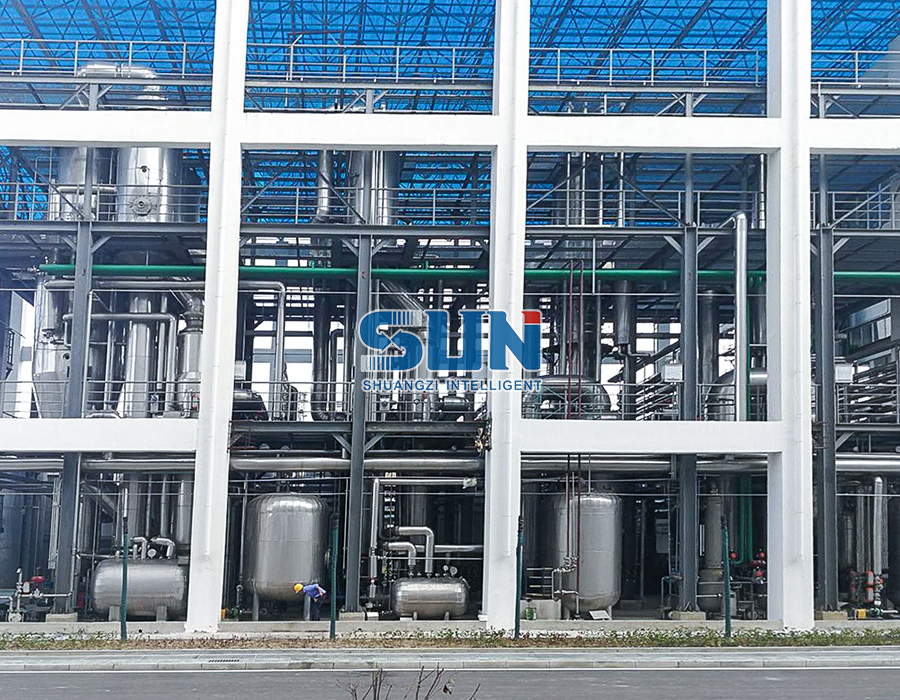
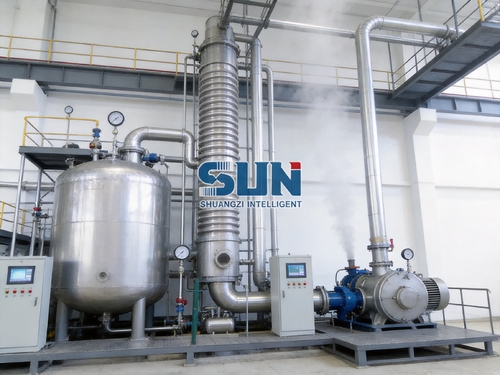
MVR Evaporator
Primary Advantages of MVR Technology
Reduced Fresh Steam Consumption
The most important advantage of MVR technology is its ability to reuse the latent heat contained in secondary vapor. Traditional evaporation systems depend heavily on fresh steam to provide process heat. Once the vapor leaves the system, much of its energy is lost unless it is used in a later effect. The MVR compressor recovers this energy internally, allowing the system to operate with a much smaller supply of external steam.
The supplied technical comparison indicates that an MVR evaporator may require approximately 0.02 tons of steam per hour for each 1,000 kilograms per hour of evaporation capacity, while a single-effect evaporator may require approximately 1.1 tons, a double-effect evaporator approximately 0.55 tons, and a three-effect evaporator approximately 0.4 tons under the stated comparison conditions. Actual consumption depends on evaporation temperature, feed concentration, boiling-point elevation, vapor losses, compressor selection, and operating conditions, but the comparison demonstrates the potential of internal vapor reuse.
Lower Overall Thermal Cost
Fresh steam production can be expensive because it requires boiler fuel, water treatment, boiler maintenance, distribution infrastructure, and condensate management. By reducing steam demand, an MVR evaporator can reduce the thermal portion of operating costs. The technology is especially attractive where steam prices are high or where a facility has limited boiler capacity.
Although the compressor introduces an electrical load, the total energy balance may remain favorable because electricity is used to upgrade and reuse vapor that would otherwise be discarded. The supplied comparison lists approximately 30 kilowatts of electrical consumption and a total operating cost of about RMB 25.4 for the MVR example, compared with higher total costs for the listed single-effect, double-effect, and three-effect alternatives. The exact financial result should always be confirmed through a site-specific feasibility study.
Compact Utility Requirements
A conventional evaporation plant may require a large steam supply, extensive cooling equipment, and substantial floor space for multiple effects. An MVR system can reduce the need for external steam and, in suitable applications, reduce the scale of associated utility systems. This can be valuable when a factory is expanding within an existing building or when the available space is restricted.
Stable Continuous Operation
Because the MVR system continuously recycles vapor, it can support a stable evaporation cycle when the feed rate and operating conditions remain consistent. Automated controls can regulate feed flow, liquid level, compressor operation, pressure, temperature, concentration, and condensate discharge. Stable operation helps improve product consistency and can reduce the frequency of manual adjustments.
Lower-Temperature Evaporation
Vacuum operation lowers the boiling temperature of the liquid. This can protect heat-sensitive materials and reduce thermal degradation. It is also helpful when the treatment objective involves concentrating wastewater without exposing the feed to unnecessarily high temperatures.
Lower-temperature evaporation may be particularly valuable in pharmaceutical, biological, food, and natural-product applications. The suitability of the operating temperature depends on the product composition, viscosity, boiling-point elevation, fouling tendency, and required final concentration.
Improved Heat Utilization
The MVR principle makes better use of the energy already present in the process. Instead of treating secondary vapor as waste, the system returns its latent heat to the heating cycle. This can improve the effective thermal efficiency of the evaporation plant and support energy-conservation objectives.
Suitability for Challenging Wastewater
MVR evaporators are suitable for many high-salt and high-concentration wastewater applications. They can be designed for streams containing sodium chloride, sodium sulfate, zinc chloride, and other dissolved substances. They may also be applied to chemical pharmaceutical wastewater, electroplating wastewater, acid-pickling wastewater, coating wastewater, and other industrial liquids.
Feed-specific engineering is essential. High concentrations can produce scaling, crystallization, corrosion, viscosity increases, or foaming. A properly selected circulation method, heat-transfer material, separator, cleaning strategy, and operating temperature can help address these conditions.
Comparison with Conventional Evaporators
Evaporation technology should be selected based on the total process requirement rather than the purchase price of a single item. Steam availability, electrical tariffs, wastewater characteristics, operating hours, maintenance resources, floor space, and final treatment requirements all influence the most suitable system.
| Evaporation System | Illustrative Steam Consumption | Illustrative Electrical Consumption | Illustrative Total Cost | General Characteristics |
|---|---|---|---|---|
| Single-effect evaporator | 1.1 tons | 3 kW | RMB 222.1 | Simple configuration but high fresh-steam demand |
| Double-effect evaporator | 0.55 tons | 3 kW | RMB 112.1 | Improved steam economy with multiple effects |
| Three-effect evaporator | 0.4 tons | 3 kW | RMB 90.1 | Lower steam consumption but greater system complexity |
| MVR evaporator | 0.02 tons | 30 kW | RMB 25.4 | High vapor reuse and low fresh-steam demand |
The figures in this table are based on the supplied comparison and should be treated as illustrative rather than universal guarantees. Actual performance depends on evaporation capacity, feed composition, boiling temperature, compressor efficiency, heat-transfer area, concentration ratio, fouling behavior, and local energy prices.
MVR Compared with Single-Effect Evaporation
Single-effect systems are mechanically straightforward and may be suitable for small installations or applications with inexpensive steam. However, they generally consume more fresh steam because the vapor generated in the process is not repeatedly reused. For plants operating many hours per year, the resulting thermal cost can be significant.
MVR systems require a compressor and more advanced controls, but their reduced steam demand can provide a strong operating-cost advantage. The higher electrical requirement must be evaluated against the local cost of electricity and steam. Where electricity is reasonably priced and steam is expensive or limited, MVR technology can be particularly attractive.
MVR Compared with Multi-Effect Evaporation
Multi-effect evaporation reduces steam consumption by using vapor from one effect to heat the next. This is an effective and established method, but it may require several evaporation bodies, additional piping, more instruments, and a larger installation area. As the number of effects increases, the system can become more complex to operate and maintain.
An MVR evaporator uses mechanical energy to raise the quality of the vapor and return it to the heating chamber. This can achieve a high level of steam economy with a more compact process arrangement. In suitable circumstances, the energy economy of MVR operation may be comparable to a much larger number of theoretical evaporation effects.
MVR Compared with Cooling and Condensation
Some conventional systems condense secondary vapor using cooling water or chilled water. This approach removes heat from the process but does not necessarily recover it for reuse. MVR technology redirects the vapor energy back into the evaporation cycle, reducing the demand for cooling and improving energy utilization.
For plants where chilled-water capacity is insufficient, or where low-temperature evaporation would otherwise require significant cooling investment, MVR can provide an alternative process arrangement. The final choice should consider the temperature range, vapor composition, condenser requirements, and heat recovery possibilities.
Application Areas
High-Salt Wastewater
High-salt wastewater is one of the most important application areas for MVR evaporation. Industrial streams may contain dissolved chloride, sulfate, nitrate, or mixed salts that are difficult to remove through biological treatment. Evaporation can reduce liquid volume and produce a concentrated stream for crystallization or further separation.
High-salt systems require careful consideration of solubility curves, salt precipitation, heat-transfer fouling, and corrosion. The system may be configured as a forced-circulation evaporator, a falling-film evaporator, or another arrangement selected according to the feed properties.
Chemical and Pharmaceutical Wastewater
Chemical and pharmaceutical manufacturing can generate wastewater with high dissolved-solids content, residual solvents, acids, alkalis, and organic compounds. MVR evaporation can be used as a concentration or volume-reduction stage before additional treatment. Where the process liquid is heat-sensitive, vacuum evaporation can help reduce the operating temperature.
Material selection and vapor treatment are important in these applications. The equipment designer must evaluate chemical compatibility, volatile components, potential foaming, condensate quality, and the requirements for cleaning and containment.
Electroplating Wastewater
Electroplating wastewater may contain dissolved metals, salts, acids, and process additives. MVR evaporation can help concentrate the wastewater and reduce the volume requiring final disposal. In some process layouts, evaporation is combined with upstream precipitation, filtration, or metal recovery.
The design must account for corrosive chemistry and possible deposits on heat-transfer surfaces. Stainless steel grades, special alloys, protective measures, and cleaning procedures should be selected according to the actual feed analysis.
Acid-Pickling Wastewater
Acid-pickling operations can produce wastewater containing acidic compounds, dissolved metals, and high salt concentrations. An MVR evaporator can serve as a concentration stage within a broader treatment system. The evaporator may be integrated with neutralization, solid-liquid separation, or recovery processes.
Acid resistance, safe pressure management, appropriate seals, and reliable instrumentation are essential. A detailed chemical assessment should be completed before final equipment selection.
Sodium Sulfate and Sodium Chloride Wastewater
Wastewater containing sodium sulfate or sodium chloride may be concentrated through evaporation and, where appropriate, sent to crystallization. The relationship between temperature, concentration, and solubility affects whether the system produces a liquid concentrate, a slurry, or solid crystals.
Crystallizing systems require additional attention to circulation, crystal growth, slurry handling, discharge design, and cleaning access. The equipment configuration should be determined through laboratory testing or pilot-scale evaluation when the feed behavior is uncertain.
Coating and Zinc Chloride Wastewater
Coating processes may generate wastewater containing pigments, binders, salts, and other chemical constituents. Zinc chloride wastewater can present both concentration and corrosion challenges. An MVR evaporator may reduce wastewater volume and support downstream recovery or disposal strategies.
The treatment objective should be clearly defined before design begins. Depending on the application, the goal may be water recovery, volume reduction, salt concentration, separation of valuable materials, or preparation for crystallization.
Food and Natural-Product Processing
Evaporation is widely used in food processing and the concentration of natural extracts. MVR equipment can reduce thermal energy use during the removal of water from extracts, solutions, or process liquids. Vacuum operation may help preserve quality when the material is sensitive to heat or oxidation.
Food and natural-product applications require attention to hygienic construction, cleanability, product recovery, residence time, and the prevention of cross-contamination. The system design should be matched to viscosity, foaming tendency, solids content, and the required final concentration.
Engineering and Manufacturing Strengths
Process-Oriented Equipment Design
An evaporator is not simply a collection of tanks, pipes, and pumps. Its performance depends on the relationship between the feed characteristics, heat-transfer conditions, vapor separation, circulation, compression, and control strategy. A process-oriented manufacturer evaluates the entire operating cycle instead of selecting components independently.
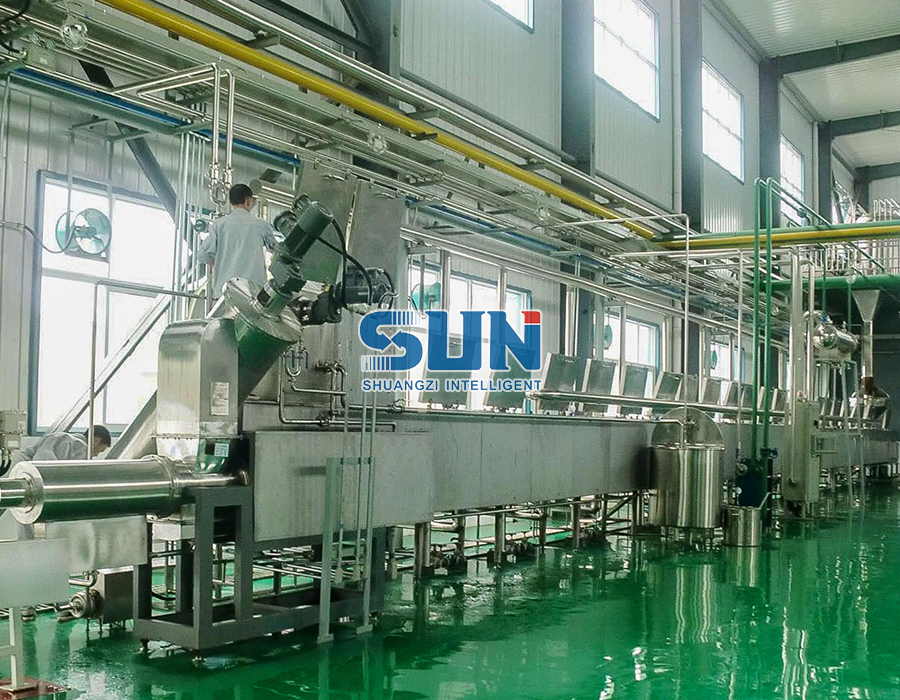
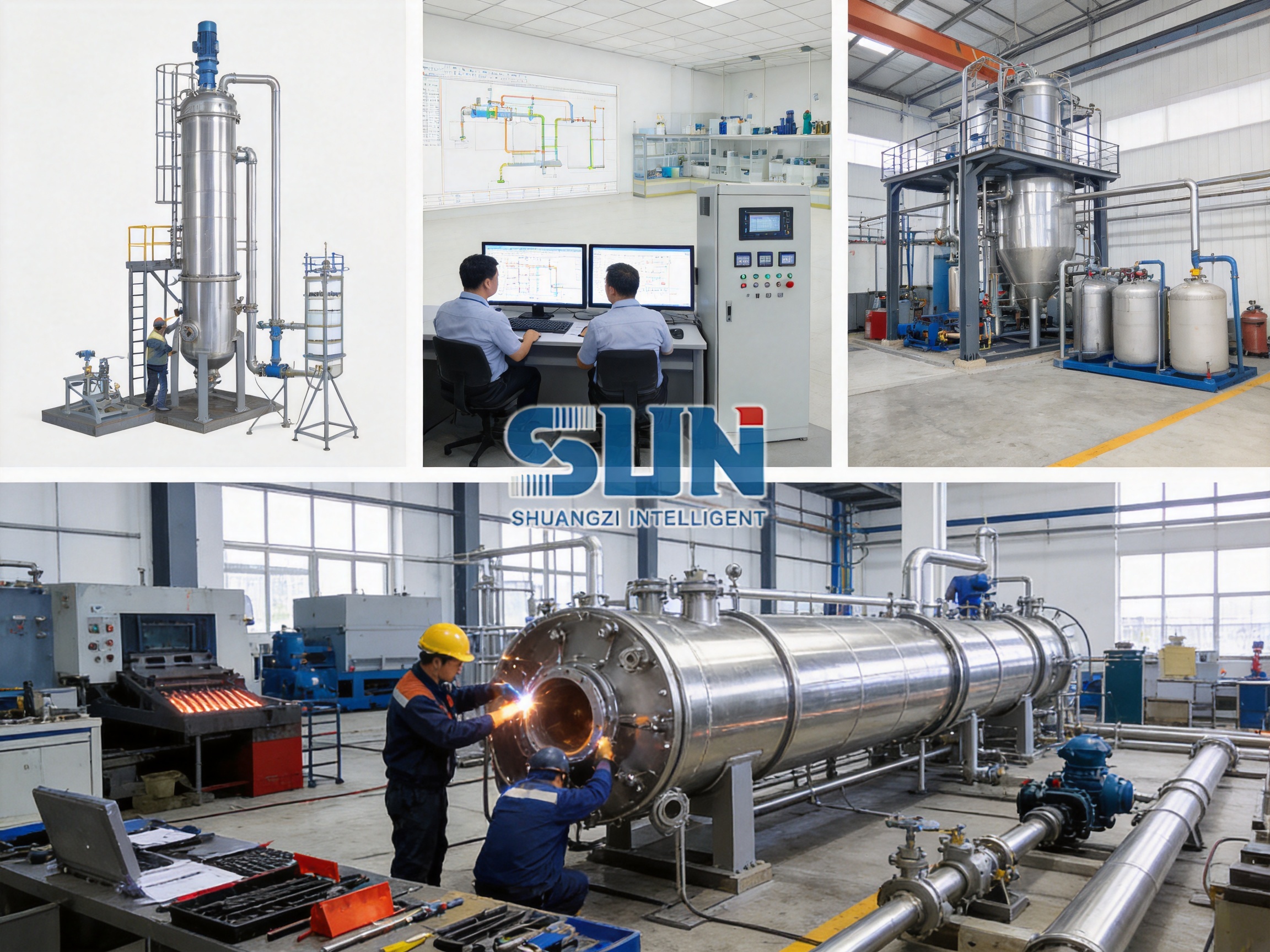
Zhejiang Shuangzi Intelligent Equipment Co., Ltd. provides process technology and automation engineering design, equipment manufacturing, matching procurement, installation, and equipment system integration. This integrated capability allows the MVR evaporator to be considered as part of a complete production or wastewater-treatment line.
Experience Across Multiple Process Fields
The company works across plant extraction, biological fermentation, pharmaceutical engineering, natural food, energy conservation, and environmental protection. This range of experience is useful because evaporation requirements vary substantially from one sector to another. A wastewater application may prioritize corrosion resistance and salt handling, while a food application may prioritize hygiene, product quality, and cleaning efficiency.
Experience with extraction, fermentation, separation, crystallization, filtration, drying, and concentration equipment also supports the design of connected process systems. For customers, this can reduce the need to coordinate multiple independent suppliers for upstream and downstream equipment.
Manufacturing Facilities and Technical Resources
The company was founded in 2007 and has an existing floor area of approximately 16,706 square meters and a structure area of approximately 17,800 square meters. These facilities support equipment fabrication, assembly, testing, and engineering activities.
The manufacturing resources include advanced welding and finishing equipment, plasma argon arc welding machines, plasma cutting machines, and CAM CNC machining centers. These resources can support accurate fabrication, clean weld preparation, controlled cutting, and consistent finishing of process equipment.
Manufacturing quality is particularly important for evaporators because heat-transfer performance, pressure integrity, cleanability, and resistance to corrosion depend on fabrication accuracy. Weld quality, surface finish, dimensional control, and the proper treatment of process-contact surfaces all influence equipment service life.
Pilot Production and Research Capability
The company maintains pilot production workshop and research and development capabilities aligned with automation and GMP-related requirements. Pilot testing can be valuable for difficult evaporation applications because laboratory data alone may not fully predict industrial behavior.
Pilot-scale evaluation may examine evaporation rate, heat-transfer coefficient, foaming, scaling, viscosity changes, vapor entrainment, condensate quality, crystallization behavior, and cleaning requirements. The results can then support the selection of the final evaporator type, operating temperature, circulation method, compressor capacity, and heat-transfer area.
Turnkey Project Capability
Customers often need more than an individual evaporator. They may require process design, utility planning, equipment layout, piping, automation, installation, commissioning, and operator training. A turnkey project provider can coordinate these activities as one engineering program.
The company can provide engineering and process design, equipment design, installation, line debugging, and equipment system integration. This approach can improve coordination between the evaporator and related equipment such as storage tanks, pumps, filtration systems, crystallizers, condensate systems, and control platforms.
Automation and Control Integration
Automation is essential for MVR operation because compressor performance, evaporation pressure, liquid level, feed flow, temperature, and concentration must be coordinated. A control system can monitor key process variables and adjust operating conditions to maintain stable production.
Depending on the project, the control architecture may include automatic startup and shutdown sequences, alarm management, interlocks, compressor protection, high-level protection, low-flow protection, temperature control, pressure control, and data recording. Proper automation reduces manual intervention and supports consistent operation.
Important Design Considerations
Feed Composition
The feed analysis is the foundation of MVR evaporator design. Important data include total dissolved solids, suspended solids, pH, density, viscosity, boiling-point elevation, corrosive components, volatile substances, foaming tendency, and expected changes during concentration.
Incomplete feed information can lead to undersized heat-transfer surfaces, inappropriate material selection, compressor instability, unexpected scaling, or difficulty achieving the required final concentration. Representative samples and operating data should therefore be provided during the engineering stage.
Evaporation Capacity
Capacity is generally expressed as the mass of water or volatile component evaporated per hour. The required capacity should reflect average production, peak production, future expansion, operating schedule, and planned maintenance. Oversizing may increase capital cost and reduce efficiency at low load, while undersizing can create production bottlenecks.
Heat-Transfer Surface
The heat-transfer area must be selected according to the feed properties and desired temperature difference. High-viscosity liquids and fouling feeds may require greater surface area or a different evaporator configuration. The design must also consider cleaning access and the possibility of reduced heat-transfer performance over time.
Compressor Selection
The compressor is the central energy-conversion component of an MVR system. Its selection depends on vapor flow, pressure lift, temperature range, material compatibility, operating stability, and required turndown. The compressor should be protected against liquid carryover and operated within its appropriate performance range.
Compressor efficiency has a direct effect on electricity consumption. A reliable design therefore combines appropriate compressor sizing with effective vapor separation, stable pressure control, and proper system layout.
Materials of Construction
Materials must be selected according to pH, chloride concentration, sulfate concentration, temperature, pressure, abrasive solids, and cleaning chemicals. Stainless steel may be suitable for some applications, while more corrosion-resistant alloys or specialized materials may be needed for aggressive feeds.
Material selection should cover not only the main evaporator body but also heat-transfer tubes, pumps, valves, seals, piping, instruments, and condensate-contact components.
Fouling and Cleaning
Fouling reduces heat-transfer efficiency and can increase energy consumption. It may result from salt precipitation, organic deposits, suspended solids, chemical reactions, or thermal degradation. The evaporator should therefore be designed with an appropriate circulation velocity, temperature profile, drainage arrangement, and cleaning strategy.
Cleaning may involve water flushing, chemical cleaning, mechanical methods, or a combination of approaches. The selected method must be compatible with the equipment materials and the process residues.
Condensate Quality
The quality of condensate depends on the feed composition, vapor separation performance, volatility of contaminants, and operating conditions. If the condensate is intended for reuse, its quality requirements must be established at the start of the project. Additional polishing, filtration, or treatment may be necessary.
Safety and Environmental Protection
Safety design should address pressure, vacuum, hot surfaces, rotating machinery, chemical exposure, vapor emissions, and electrical protection. Appropriate relief devices, interlocks, alarms, guards, ventilation, and operating procedures should be incorporated into the project.
Environmental performance depends on the complete treatment system. An MVR evaporator can reduce wastewater volume, but concentrated residues still require appropriate recovery, crystallization, storage, disposal, or further treatment.
Installation, Commissioning, and Service
Successful MVR operation depends on more than factory fabrication. Installation quality affects piping resistance, vapor flow, pump performance, instrumentation accuracy, and compressor reliability. The equipment should be installed according to approved drawings, utility requirements, foundation conditions, and safety procedures.
Commissioning normally includes inspection of mechanical connections, electrical wiring, instrumentation, valve orientation, pump rotation, pressure testing, vacuum testing, cleaning, and control-system verification. The system may then be started with water or another suitable commissioning medium before process liquid is introduced.
During trial operation, operating data should be recorded. Typical information includes feed rate, evaporation rate, steam consumption, electrical consumption, inlet and outlet temperatures, operating pressure, compressor load, condensate quality, concentrate density, and cleaning frequency. These data provide a basis for confirming performance and optimizing the operating program.
Operator training is also important. Personnel should understand startup and shutdown sequences, compressor protection, alarm response, concentration control, sampling procedures, cleaning, emergency response, and routine maintenance. A well-trained operating team can protect equipment and maintain more consistent process results.
Why Select an Integrated Equipment Manufacturer?
Purchasing an MVR evaporator from an integrated manufacturer can provide several practical advantages. First, process design and equipment design are developed together. Second, the manufacturer can coordinate auxiliary equipment and system interfaces. Third, installation and commissioning responsibilities can be more clearly defined. Fourth, technical communication is simplified because the customer works with one engineering partner for the main process package.
An integrated supplier can also adapt the equipment to different sectors. Plant extraction, fermentation, pharmaceutical production, food processing, and wastewater treatment may require different combinations of evaporation, separation, filtration, crystallization, drying, and storage. A supplier with capabilities in these areas can help create a more coherent process line.
Zhejiang Shuangzi Intelligent Equipment Co., Ltd. positions its EPC and EPCM capabilities around process technology, automation engineering, manufacturing, equipment procurement, installation, and system integration. This broad service model is intended for customers seeking complete engineering support rather than a standalone machine.
Economic Evaluation of an MVR Project
A proper economic evaluation should compare both capital expenditure and operating expenditure. The analysis should include the MVR evaporator, compressor, pumps, controls, piping, installation, utilities, civil works, maintenance, cleaning, replacement parts, and downstream treatment equipment.
Operating-cost savings may come from lower steam consumption, reduced cooling-water use, lower wastewater-disposal volume, recovered condensate, and improved process integration. Additional electrical consumption must be included in the calculation. The result depends strongly on the local price ratio between electricity and steam.
Annual operating hours are another major factor. An MVR system operating continuously for most of the year may achieve a faster return on investment than a system used only occasionally. Feed variability, production interruptions, cleaning downtime, and seasonal operation should also be included in the financial model.
A site-specific feasibility study should establish the following information:
Required evaporation capacity and operating schedule.
Feed composition, temperature, flow rate, and concentration.
Target concentrate concentration or crystallization condition.
Required condensate quality and possible reuse.
Available steam pressure and steam cost.
Electricity price and available electrical capacity.
Cooling-water or chilled-water availability.
Available installation area and building height.
Expected fouling rate and cleaning method.
Corrosion and material-selection requirements.
Downstream treatment, recovery, or disposal requirements.
Best Practices for Long-Term Performance
Stable feed conditions help the MVR evaporator operate efficiently. Sudden changes in solids content, pH, flow rate, or temperature can affect compressor load and heat-transfer performance. Where feed variability is unavoidable, buffer tanks and automatic control strategies can help moderate process fluctuations.
Routine monitoring should include pressure, temperature, flow, liquid level, compressor current, vibration, condensate quality, and concentrate density. Trends are often more valuable than individual readings because they can reveal gradual fouling, pump wear, seal failure, or changes in feed composition.
Preventive maintenance should cover the compressor, pumps, valves, instruments, heat-transfer surfaces, separators, seals, and control cabinet. Cleaning should be scheduled according to actual operating data rather than a fixed calendar alone. Excessive cleaning can increase downtime, while insufficient cleaning can reduce capacity and increase energy consumption.
Spare parts planning should reflect the criticality of the equipment and the availability of replacement components. Maintaining suitable seals, gaskets, instrument components, pump parts, and compressor-related consumables can reduce unexpected downtime.
Frequently Asked Questions
What does MVR mean?
MVR means Mechanical Vapor Recompression. It describes a process in which secondary vapor generated during evaporation is compressed mechanically and reused as heating vapor.
How does an MVR evaporator save energy?
The system recovers the latent heat in secondary vapor. A compressor raises the vapor pressure and temperature, allowing the vapor to return to the heating chamber. This reduces the requirement for fresh external steam.
Does an MVR evaporator eliminate steam consumption completely?
Not necessarily. MVR systems normally require some external steam during startup, changing operating conditions, or periods of insufficient vapor generation. The actual amount depends on the process design, operating temperature, heat losses, and feed conditions.
Why does an MVR system use electricity?
The compressor requires electrical power to increase the pressure and temperature of the secondary vapor. The economic advantage comes from replacing a larger amount of fresh steam with a smaller amount of electrical energy used for vapor recompression.
Can MVR equipment treat high-salt wastewater?
Yes. MVR evaporators can be designed for high-salt wastewater containing substances such as sodium chloride and sodium sulfate. The design must address scaling, crystallization, corrosion, viscosity, and concentrate handling.
Can an MVR evaporator operate under vacuum?
Yes. Vacuum operation can lower the boiling temperature and may be suitable for heat-sensitive products, pharmaceutical liquids, food materials, and selected wastewater streams.
What factors influence the final equipment configuration?
Important factors include feed composition, evaporation capacity, target concentration, boiling-point elevation, fouling tendency, corrosion potential, required operating temperature, vapor flow, condensate quality, and available utilities.
Is pilot testing necessary?
Pilot testing is strongly recommended for difficult or unfamiliar feeds. It can provide information about evaporation rate, fouling, foaming, crystallization, condensate quality, and cleaning requirements before full-scale construction.
What industries can use MVR evaporators?
Applications include chemical processing, pharmaceutical production, food processing, plant extraction, biological fermentation, seawater desalination, electroplating, acid pickling, coating production, and industrial wastewater treatment.
Can the equipment be supplied as part of a turnkey project?
Yes. An integrated project may include process design, equipment design, manufacturing, matching procurement, installation, commissioning, automation, system integration, and technical support.
How should a customer begin an MVR project?
The customer should provide representative feed samples and operating information, including flow rate, concentration, temperature, pH, chemical composition, desired evaporation capacity, final concentration, available utilities, and installation constraints. This information supports process selection and a reliable technical proposal.
Conclusion
The MVR evaporator is an advanced concentration solution based on the recovery and reuse of secondary vapor. By mechanically compressing vapor and returning it to the heating chamber, the system can significantly reduce fresh-steam demand and improve the utilization of process energy. Its advantages are particularly relevant to facilities facing high steam costs, limited boiler capacity, restricted floor space, insufficient cooling capacity, or demanding wastewater-concentration requirements.
Compared with single-effect evaporation, MVR technology can reduce thermal consumption. Compared with multi-effect evaporation, it can offer a compact process arrangement with high vapor reuse. Compared with systems that simply condense and discard secondary vapor, it can recover more of the energy already generated by the process.
Performance depends on correct engineering. Feed analysis, compressor selection, heat-transfer design, material compatibility, separator efficiency, automation, cleaning, and downstream treatment must all be considered. The manufacturer’s ability to provide process design, fabrication, pilot testing, installation, commissioning, and system integration can make a major difference to long-term results.
With experience in extraction, fermentation, pharmaceutical engineering, natural food, environmental protection, concentration, separation, crystallization, filtration, and drying systems, Zhejiang Shuangzi Intelligent Equipment Co., Ltd. offers an integrated engineering approach for customers requiring MVR evaporation technology and related process equipment. Its manufacturing facilities, welding and CNC resources, pilot capabilities, automation focus, and turnkey project services support the development of customized evaporation solutions for industrial production and wastewater treatment.
References
1. Perry’s Chemical Engineers’ Handbook, sections covering evaporation, heat transfer, vapor-liquid separation, and process equipment selection.
2. McCabe, W. L., Smith, J. C., and Harriott, P. Unit Operations of Chemical Engineering, discussion of evaporation systems and heat-transfer operations.
3. Geankoplis, C. J. Transport Processes and Separation Process Principles, sections on evaporation, condensation, and material balances.
4. Process engineering principles for mechanical vapor recompression, energy recovery, and industrial concentration systems.
5. Manufacturer-supplied technical information for MVR evaporator applications, operating comparisons, engineering services, and equipment manufacturing capabilities.
6. General design practices for industrial wastewater evaporation, crystallization, corrosion control, cleaning, automation, and condensate management.