
 英语
英语 俄语
俄语Content
- 1 1. Understanding Membrane Separation Equipment
- 2 2. Main Process Principle
- 3 3. Product Structure and Core Components
- 4 4. Advantages of the Cross-Flow Ceramic Membrane Configuration
- 5 5. Applications in Plant Extraction
- 6 6. Food and Fermentation Industry Applications
- 7 7. Biological and Pharmaceutical Applications
- 8 8. Environmental and Other Industrial Applications
- 9 9. Manufacturing Strengths and Engineering Capabilities
- 10 10. Comparison with Conventional Filtration Approaches
- 11 11. Process Design Considerations
- 12 12. Automation and Operational Control
- 13 13. Installation, Commissioning, and Technical Service
- 14 14. Why Choose an Engineering-Oriented Manufacturer?
- 15 15. Typical Project Workflow
- 16 16. Frequently Asked Questions
- 16.1 Q1: What is the main function of this membrane separation equipment?
- 16.2 Q2: What are the main components of the system?
- 16.3 Q3: How does the circulation loop help filtration?
- 16.4 Q4: Can the equipment be used for plant extracts?
- 16.5 Q5: Can it be used in fermentation processing?
- 16.6 Q6: Can the membrane system process food products?
- 16.7 Q7: Is the equipment suitable for pharmaceutical applications?
- 16.8 Q8: Can the equipment be used for wastewater?
- 16.9 Q9: How is the membrane system cleaned?
- 16.10 Q10: Does the company provide only the membrane equipment?
- 16.11 Q11: Can the equipment be customized?
- 16.12 Q12: What information should a customer provide for a quotation?
- 17 17. Conclusion
- 18 References
- 19 Product: Plant Extraction Supporting Membrane Separation Equipment
Membrane separation equipment has become an important process technology for modern plant extraction, food production, fermentation, pharmaceutical processing, biological manufacturing, and environmental protection. By using a membrane as a selective separation medium, the equipment allows specific components of a liquid or gas mixture to pass through while retaining other components. With an appropriate driving force and controlled operating conditions, the system can support clarification, purification, concentration, degerming, decolorization, recycling, and wastewater treatment.
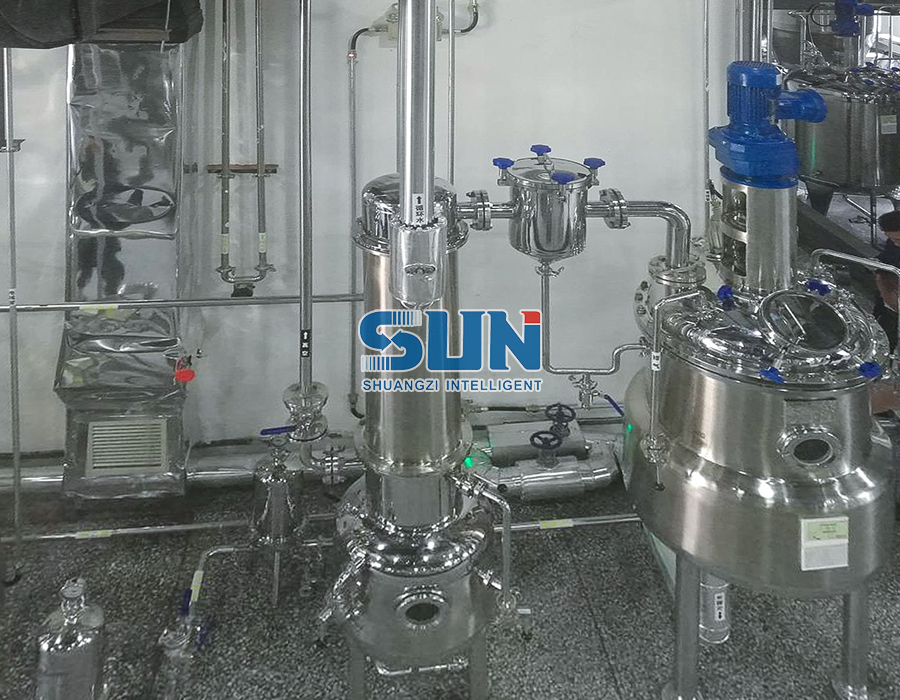
The Plant Extraction Supporting Membrane Separation Equipment described in this article is designed as an integrated membrane filtration system. It combines a membrane module, feeding pump, circulating pump, raw-material or circulation tank, process piping, and related operating components. The equipment is intended to provide stable cross-flow filtration and efficient separation for materials that require careful handling, controlled concentration, and reliable product recovery.
Unlike a basic filtration device that simply retains suspended solids on a filter surface, membrane separation equipment can be selected and operated according to the molecular, colloidal, particulate, or microbiological characteristics of the process stream. This makes it suitable for many applications in which conventional filtration alone may not provide the required product quality, throughput, or process flexibility.
Zhejiang Shuangzi Intelligent Equipment Co., Ltd. provides this type of equipment as part of its wider process-engineering capabilities. The company focuses on process technology, automation engineering design, equipment manufacture, matching procurement, installation, system integration, commissioning, and turnkey project services. Its experience covers plant extraction, biological fermentation, pharmaceutical engineering, natural food processing, energy conservation, and environmental protection.
1. Understanding Membrane Separation Equipment
Membrane separation is a selective transport process. The membrane is positioned between a feed side and a permeate side. A driving force, such as pressure difference, causes selected components of the feed to pass through the membrane. Components that cannot pass through remain in the concentrate stream. The two resulting streams are generally called filtrate or permeate and concentrate or retentate.
The separation effect depends on the interaction between the membrane and the process material. Important factors include particle size, molecular size, solubility, viscosity, surface properties, temperature, pressure, membrane material, membrane pore structure, and the chemical compatibility of the feed. In plant extraction and biological processing, these factors can vary significantly from one batch to another, so an equipment system must be designed with adequate circulation, cleaning, control, and operating flexibility.
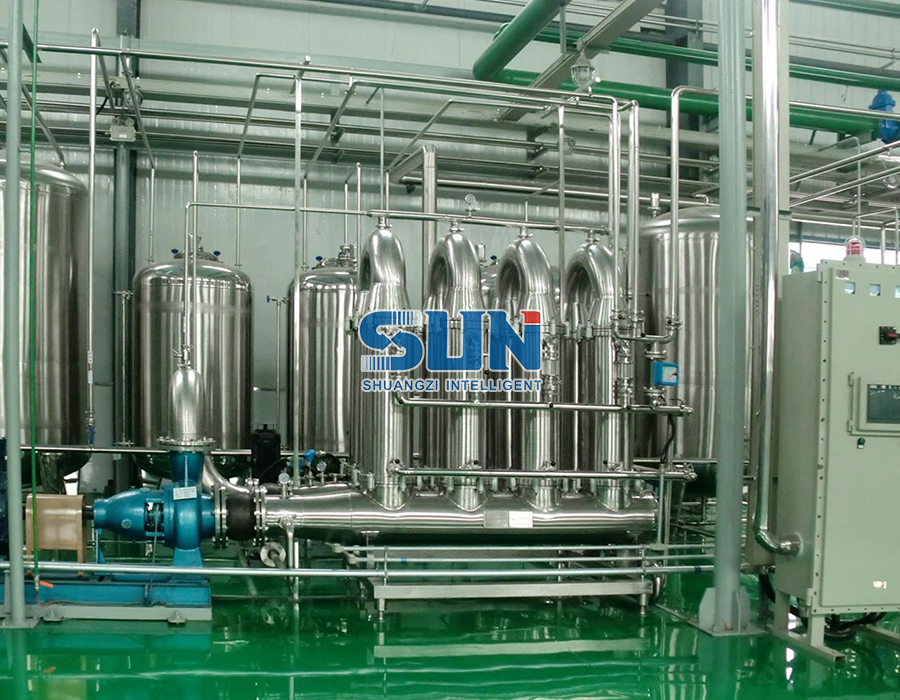
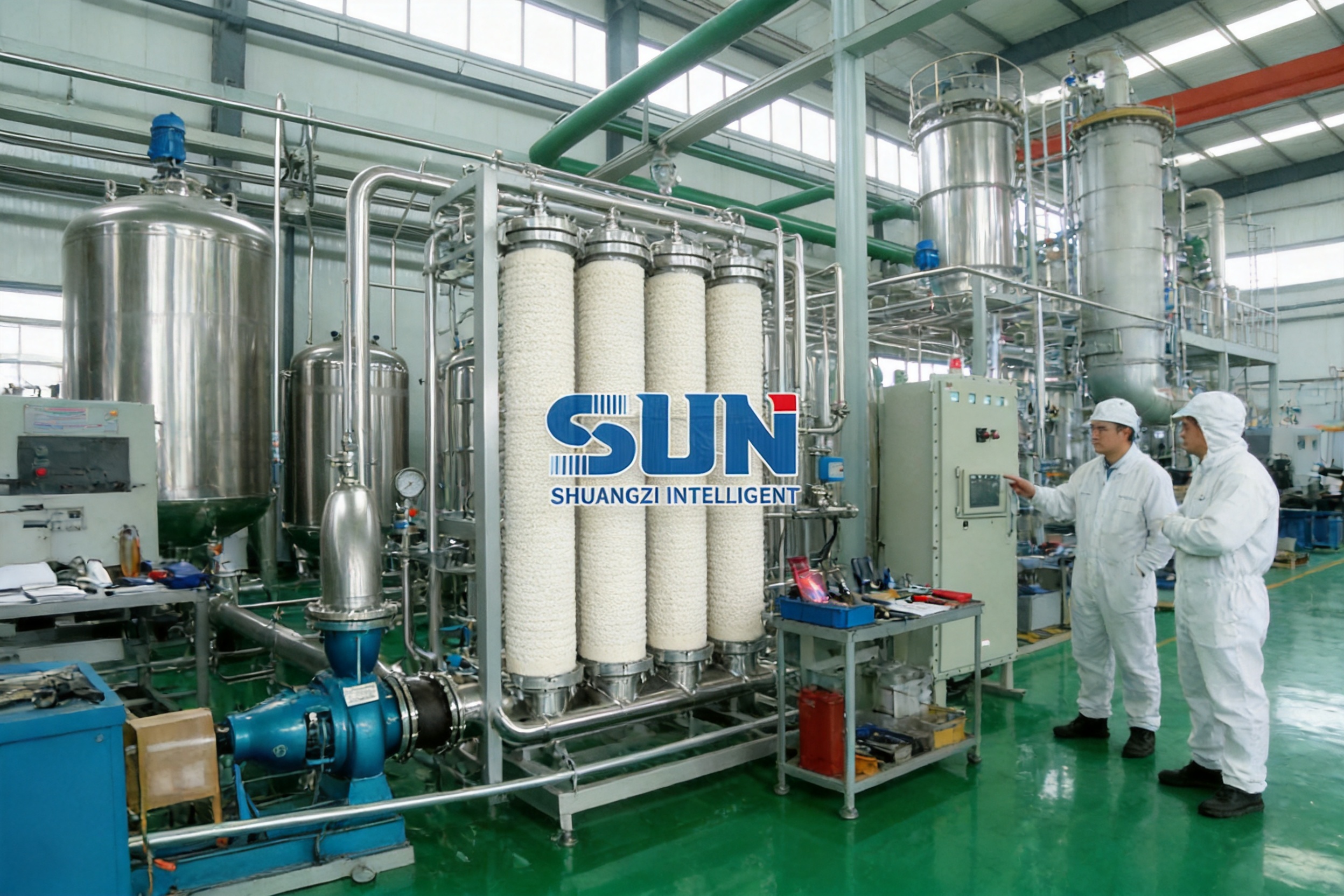
The equipment presented here uses membrane modules with a circulation loop. The feeding pump transfers liquid from the circulation tank to the membrane system, while the circulating pump helps maintain liquid velocity along the membrane surface. The controlled flow reduces the accumulation of retained material at the membrane interface and supports more consistent filtration performance.
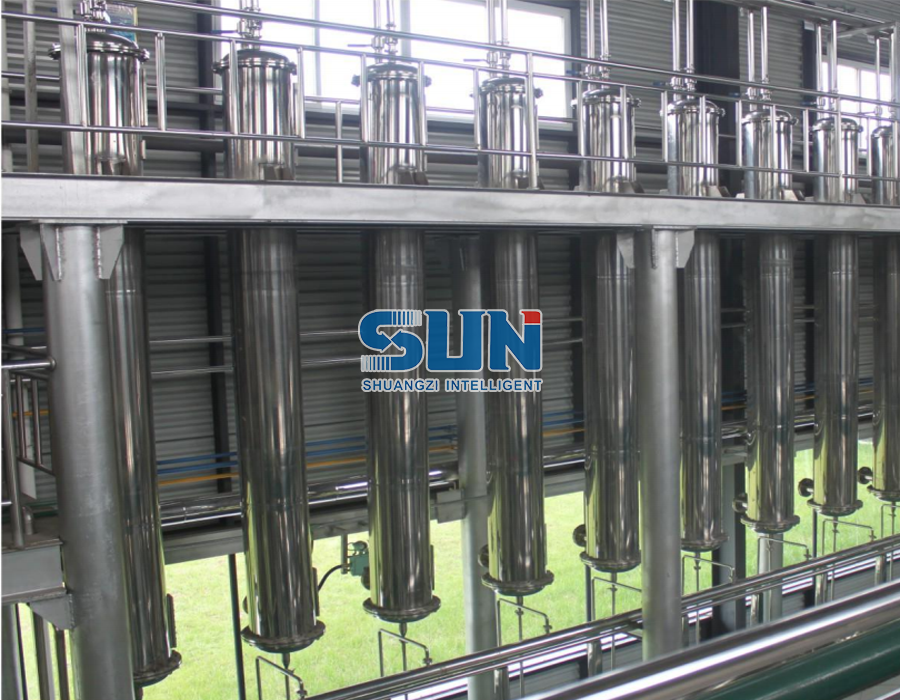
The system is composed of eight unit components arranged in four and two channeling configurations, with each membrane unit containing 19 membrane tubes. This modular structure provides a practical foundation for industrial process expansion, maintenance, and adaptation to different feed volumes. The number of membrane units and the operating arrangement can be considered during project design according to the characteristics of the material and the required processing capacity.
2. Main Process Principle
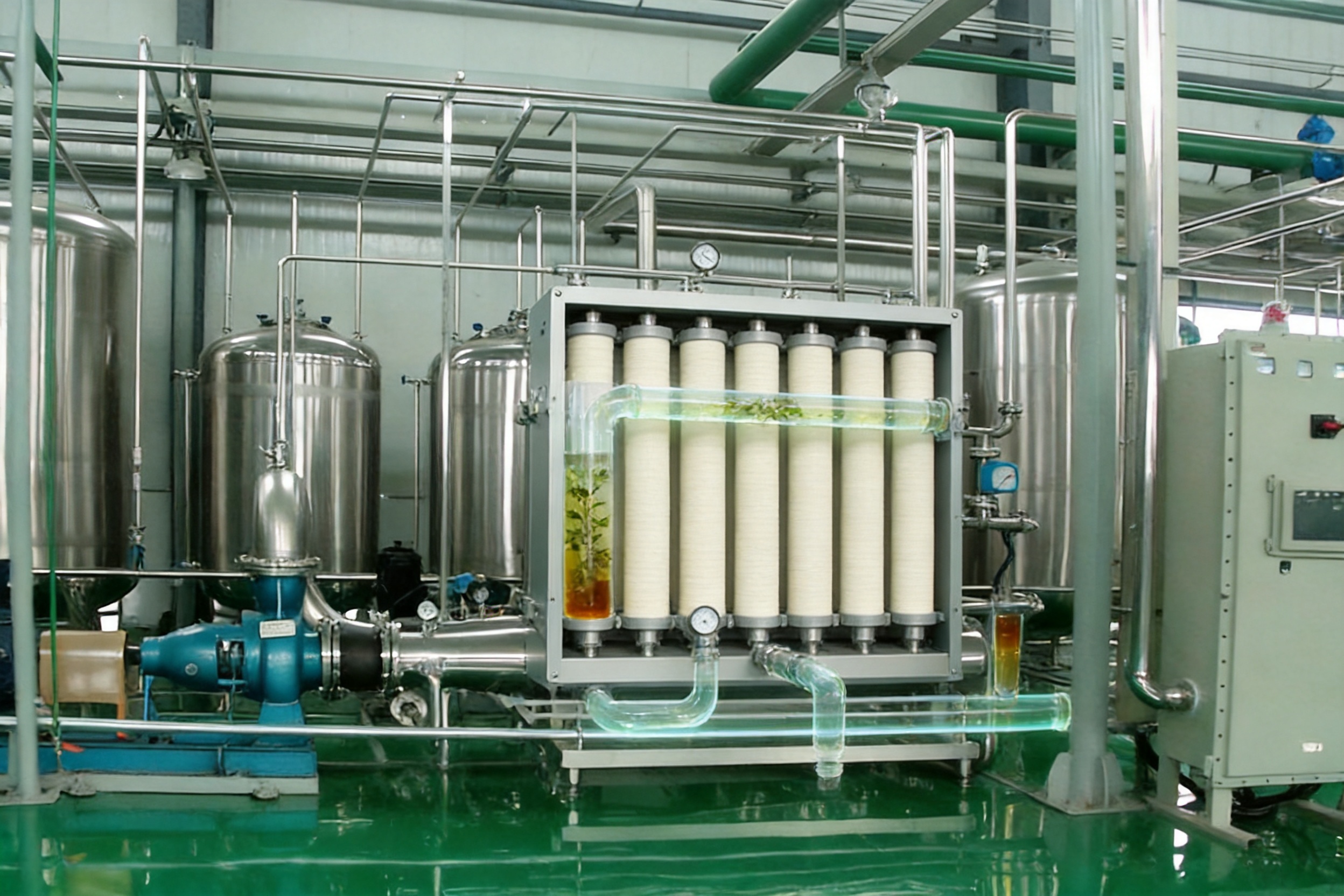
During normal filtration, the raw material is introduced into the circulation tank. The feed pump sends the liquid toward the ceramic membrane. As the material passes through the membrane module, the fraction capable of passing through the membrane is collected as filtrate. The retained fraction returns to the circulation tank or is discharged as concentrate, depending on the process objective.
The basic filtration route can be represented as follows:
Circulation tank → Feed pump → Ceramic membrane → Filtrate
The concentrate stream returns through the circulation loop or is collected separately:
Circulation tank → Feed pump → Ceramic membrane → Concentrate → Circulation tank
This circulation arrangement is especially useful for materials containing suspended particles, colloids, pigments, biological solids, or other retained substances. Instead of allowing the retained material to remain stationary at the membrane surface, the system maintains movement through the membrane tubes. This supports a more stable cross-flow condition and can help reduce rapid fouling compared with a static filtration arrangement.
During cleaning, the system can circulate an appropriate cleaning solution through the circulation tank, feed pump, and membrane module. The cleaning route may be used to remove residual product, deposited solids, color bodies, organic matter, and other contaminants. The exact cleaning agent, temperature, concentration, circulation time, and rinsing procedure should be determined according to the membrane material and the chemical characteristics of the process stream.
The cleaning route can be represented as follows:
Circulation tank → Feed pump → Ceramic membrane → Cleaning or osmotic solution
After cleaning, the solution can be circulated, drained, or recovered according to the selected cleaning procedure. Proper cleaning is essential because membrane performance depends not only on the initial membrane specification but also on the long-term condition of the membrane surface and flow channels.
3. Product Structure and Core Components
3.1 Membrane Module
The membrane module is the central separation component. It contains the membrane tubes through which the feed material flows. The module provides the active surface required for filtration and separates the feed channel from the filtrate channel.
The use of ceramic membrane tubes is particularly suitable for many demanding industrial applications. Ceramic membranes are commonly selected when the process requires resistance to repeated cleaning, mechanical durability, and compatibility with challenging feed materials. They can be considered for plant extracts, fermentation broths, food liquids, biological preparations, and wastewater streams containing particles or oily substances.
The module design must balance membrane area, flow velocity, pressure, temperature, viscosity, and solids loading. A properly configured module allows the process liquid to pass through the membrane surface with controlled turbulence while maintaining reasonable energy consumption and avoiding excessive shear where sensitive products are involved.
3.2 Feeding Pump
The feeding pump transfers liquid from the circulation tank into the membrane filtration line. It provides the flow needed to initiate the separation process and supports the required pressure conditions at the membrane inlet.
Pump selection is important because the feed may contain particles, suspended solids, plant fibers, pigments, biological materials, or viscous compounds. The pump must be compatible with the physical properties of the feed and with the intended cleaning process. Its operating range should also support process adjustment during start-up, concentration, rinsing, and shutdown.
3.3 Circulating Pump
The circulating pump maintains the velocity of the liquid across the membrane surface. This is a major function in cross-flow membrane separation. The circulating pump helps return the concentrate to the circulation tank or to the membrane inlet, depending on the selected process configuration.
Maintaining suitable membrane-surface velocity can support stable filtration, reduce the accumulation of retained solids, and improve the utilization of membrane area. The circulating pump also enables controlled concentration, because the retained material can be repeatedly passed through the membrane until the desired concentration or separation result is achieved.
3.4 Circulation Tank
The circulation tank receives the raw material, holds the concentrate during circulation, and can serve as the reservoir for cleaning solutions. It should be designed to support complete drainage, convenient inspection, efficient mixing where necessary, and compatibility with the process material.
For food, pharmaceutical, and biological applications, tank design is closely connected with sanitation, cleaning, material compatibility, and product recovery. For environmental applications, the tank may be designed around continuous operation, solids handling, oil separation, and wastewater characteristics.
3.5 Piping and Process Connections
Process piping connects the tank, pumps, membrane module, filtrate outlet, concentrate outlet, and cleaning circuit. The arrangement should reduce unnecessary dead zones, provide convenient drainage, and allow operators to isolate individual components during maintenance.
A well-planned piping system also makes it easier to switch between filtration, concentration, rinsing, and cleaning. This is a practical advantage in multi-product facilities, pilot plants, and turnkey production lines where equipment must support different process steps.
4. Advantages of the Cross-Flow Ceramic Membrane Configuration
The equipment offers several advantages compared with simple dead-end filtration or less integrated separation arrangements. These advantages arise from the combination of ceramic membrane tubes, controlled circulation, modular construction, and process-system integration.
4.1 Selective Separation
Membrane filtration is based on selective passage through the membrane. This allows the system to remove or retain selected fractions instead of relying only on gravity settling or coarse mechanical screening. The result can be improved clarification, purification, concentration, or particle removal.
In a plant extraction process, the membrane can assist in separating extract solids, colloidal matter, or unwanted suspended substances from a target liquid phase. In a fermentation process, it can support the separation and purification of fermentation products. In food processing, it can improve the clarity and microbial quality of beverages, sauces, and other liquid products.
4.2 Cross-Flow Operation
Cross-flow operation keeps the feed moving along the membrane surface rather than forcing all suspended matter directly into the membrane. This can reduce the rate at which a thick filter cake forms and may help extend the usable filtration period between cleaning cycles.
The actual performance depends on material properties and operating conditions, but the circulation design provides a more controlled approach than a simple static filter. It is particularly useful for feeds with fine particles, biological solids, activated carbon, pigments, or other materials that can quickly block a conventional filter.
4.3 Ceramic Membrane Durability
Ceramic membranes are known for their mechanical strength and suitability for repeated industrial use. In demanding production environments, the ability to perform regular cleaning and maintain a stable membrane structure is an important consideration.
For applications involving repeated batches, color-containing liquids, fermentation broths, and wastewater, membrane durability can contribute to more predictable operation. It can also reduce the need for frequent replacement when compared with fragile filtration media that are not designed for intensive cleaning or long-term process circulation.
4.4 Modular Expansion
The system uses multiple membrane units, with each unit containing 19 membrane tubes. This modular approach supports equipment planning according to the required processing volume and separation duty. Modules can be arranged into a suitable flow configuration, and the system can be adapted for pilot, intermediate, or industrial applications through engineering design.
Modularity is also helpful for maintenance. A process designer may consider isolating sections, arranging parallel flow paths, or providing operating flexibility for different feed materials. The final arrangement depends on capacity, viscosity, solids content, target concentration, and product-quality requirements.
4.5 Integrated Filtration and Cleaning
The equipment is designed around a complete circulation concept rather than a standalone membrane housing. The circulation tank, pumps, membrane module, filtrate line, concentrate line, and cleaning route work together as a process unit.
This integrated design can simplify process management. Operators can transfer the material, circulate it through the membrane, collect filtrate, return concentrate, and carry out cleaning using the same basic equipment. Such integration is valuable where production continuity, repeatability, and equipment utilization are important.
4.6 Broad Application Range
Many competing filtration systems are optimized for one narrow industry or one specific feed type. The membrane equipment described here is intended for several sectors, including plant extraction, food and fermentation, biological and pharmaceutical production, and environmental treatment.
The broad application range does not mean that one standard configuration is suitable for every material. Instead, it means that the basic system platform can be engineered and matched to different process requirements. Material testing, membrane selection, flow design, cleaning studies, and capacity calculations remain necessary for each project.
Plant Extraction Supporting Membrane Separation Equipment
5. Applications in Plant Extraction
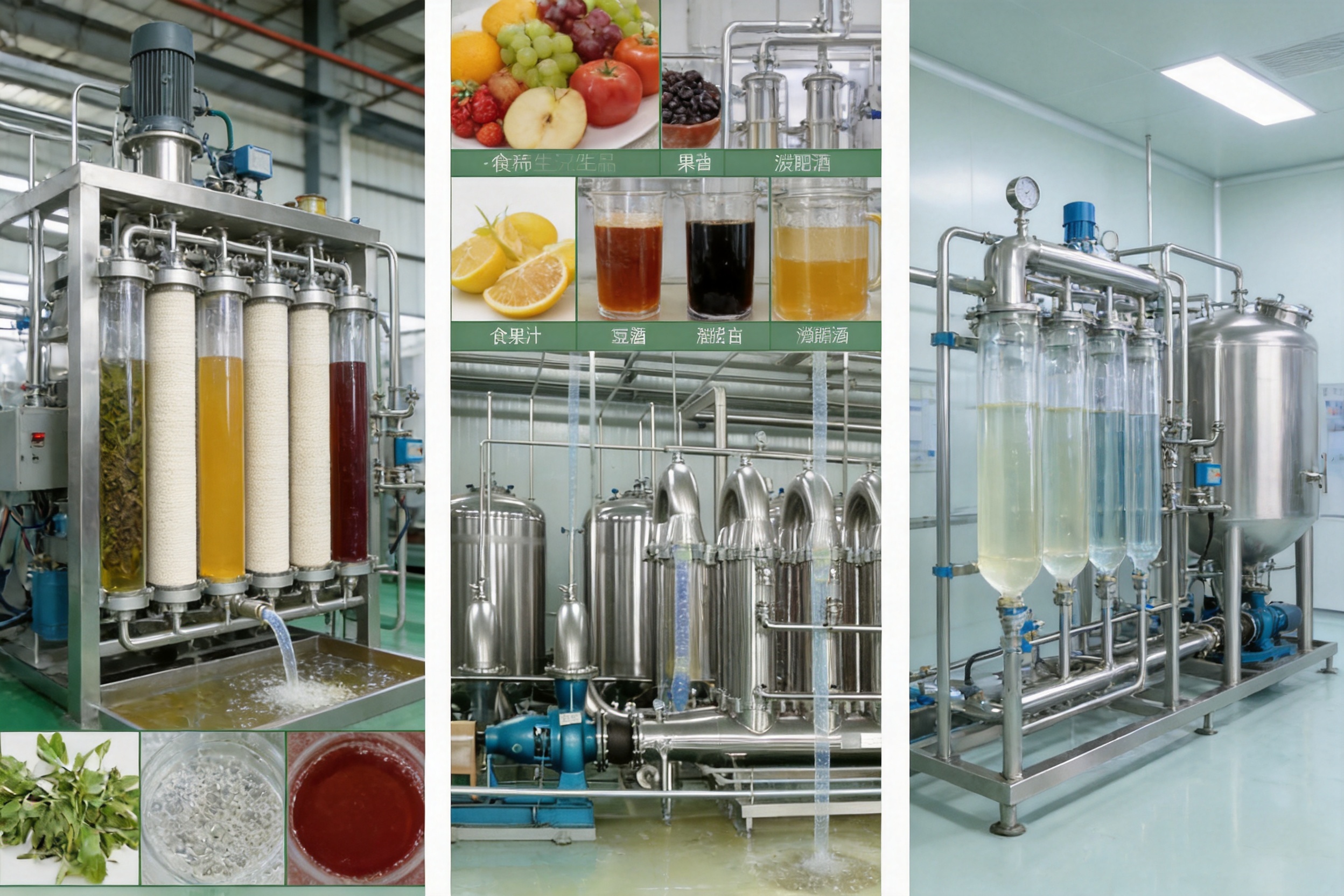
Plant extraction processes frequently produce liquids containing suspended plant particles, colloids, pigments, macromolecules, and fine insoluble substances. These components may affect product clarity, downstream concentration, evaporation efficiency, color, stability, and storage performance.
Membrane separation equipment can be installed after extraction to clarify the liquid before subsequent processing. It can also be used before evaporation, crystallization, drying, or formulation. By removing selected suspended or colloidal substances in advance, the membrane step may help protect downstream equipment and improve the consistency of later operations.
In natural pigment production, membrane filtration can support the separation and clarification of pigment-containing liquids. Pigment systems can be challenging because color bodies may be highly concentrated and may attach to suspended particles or activated carbon. The circulation and cleaning design provides a basis for handling such materials, subject to process trials and membrane compatibility evaluation.
For traditional Chinese medicine oral liquids and other botanical preparations, clarification and filtration are important for appearance, stability, and product consistency. The membrane system can be considered for removing suspended particles and supporting the purification of the liquid phase. The final membrane specification must be selected according to the extract composition and the required product characteristics.
5.1 Support for Downstream Concentration
Plant extracts are often concentrated by evaporation. If the feed contains excessive suspended solids or colloidal matter, the evaporation system may experience fouling, reduced heat-transfer performance, or difficult cleaning. Installing membrane separation before evaporation can help condition the feed.
The membrane system may also perform a concentration function itself by removing part of the liquid as filtrate while retaining selected components in the concentrate. This can be useful when the retained compounds are the target product or when the process needs to reduce the liquid volume before another concentration step.
5.2 Product Recovery and Process Yield
In many extraction operations, valuable materials can be present in fine particles or in a liquid stream that would otherwise be discarded. A membrane separation step may provide an opportunity to recover useful fractions or clarify a stream for reuse.
Actual recovery depends on the membrane selection, feed composition, operating pressure, circulation velocity, and cleaning approach. Process trials are therefore important before final equipment sizing. The equipment platform supports this development process because it can be used in pilot and production-oriented engineering work.
6. Food and Fermentation Industry Applications
6.1 Mineral Water Clarification
Membrane filtration can be used as part of a mineral water clarification process. The objective may include removing suspended particles and improving visual clarity while preserving the desired dissolved mineral composition. The appropriate membrane configuration depends on the source-water quality and the required treatment sequence.
6.2 Soy Sauce and Vinegar Degerming
Soy sauce and vinegar may contain suspended materials, microorganisms, colloids, color components, and other substances that influence appearance and stability. Membrane filtration can support degerming, purification, and clarification after fermentation or aging.
The system's circulation design is useful for fermented liquid products because the feed may contain fine particles and complex organic components. Careful control of temperature, flow, pressure, and cleaning is necessary to protect the product and maintain consistent operation.
6.3 Fruit Juice, Beverage, and Alcohol Clarification
Fruit juice and beverage processing often requires the removal of pulp, suspended solids, haze-forming substances, or microorganisms. Membrane separation can be integrated into a clarification and filtration line to improve liquid quality before filling, concentration, blending, or further processing.
Alcoholic beverages and fermentation-derived liquids may also benefit from selective filtration. The equipment can support the removal of unwanted suspended materials while allowing the desired liquid phase to pass through the membrane. The final process must be designed to manage alcohol compatibility, volatile components, temperature, and hygienic requirements.
6.4 Fermentation Product Separation
Fermentation broths can contain microbial cells, proteins, nutrients, residual substrates, metabolites, and fine solids. Separating the fermentation product from the biomass and suspended material is often a key step in downstream processing.
Membrane equipment can be used for clarification, cell retention, product recovery, or pre-purification. The cross-flow arrangement helps manage the solids load and supports continuous or batch circulation. Depending on the target product, the membrane stage may be followed by evaporation, chromatography, crystallization, drying, or another purification operation.
6.5 Activated Carbon Recovery and Sugar Refining
Activated carbon may be used for decolorization in food, fermentation, and pharmaceutical processes. After treatment, the carbon must be separated from the liquid. Membrane filtration can support activated carbon retention and liquid clarification, allowing the process stream to be handled more efficiently.
In sugar refining, membrane separation may assist in removing suspended carbon, colloidal substances, and other impurities. The system must be designed for the viscosity and solids content of the sugar solution, as well as the required cleaning and sanitation procedure.
7. Biological and Pharmaceutical Applications
Biological and pharmaceutical products often require controlled processing, repeatable cleaning, and careful separation of target materials from impurities. Membrane filtration is widely considered a useful unit operation because it can perform clarification and concentration without necessarily requiring a phase change.
7.1 Chinese Patent Medicine Oral Liquid
Chinese patent medicine oral liquids may contain herbal extracts, soluble compounds, suspended particles, colloids, and fine insoluble materials. The membrane system can support clarification and filtration after extraction and before filling or further formulation.
The equipment can be integrated with extraction tanks, concentration equipment, storage tanks, filling systems, and cleaning facilities. When used in a pharmaceutical or health-product environment, the complete process must be evaluated for material compatibility, sanitary design, cleaning validation, and the applicable production requirements.
7.2 Biological Product Purification
Biological products can be sensitive to temperature, shear, pH, and chemical exposure. Membrane separation provides a potentially gentle approach for removing suspended material or concentrating a product stream, depending on the selected membrane and operating conditions.
The equipment may be placed after fermentation, cell culture, extraction, or an initial solid-liquid separation step. It can also serve as a pre-treatment unit before more specialized purification operations. The suitability of the membrane must be demonstrated through testing with the actual product, because biological materials can interact strongly with membrane surfaces.
7.3 Air Sterilization and Dust Removal
The described application coverage also includes air sterilization and dust-removal separation. Air filtration requires a configuration designed specifically for gas flow, particulate capture, pressure drop, and sterilization requirements. The general membrane separation principle remains relevant, but the equipment arrangement, membrane material, sealing, and operating controls must be adapted to the gas stream.
7.4 Decolorization and Activated Carbon Filtration
In pharmaceutical and biological processing, activated carbon may be used to remove color or certain impurities. Following treatment, the liquid must be separated from the carbon. A membrane system can support the retention of activated carbon and provide a clearer liquid stream for subsequent processing.
This application illustrates one of the main strengths of an integrated membrane platform: it can be connected to upstream treatment and downstream purification without requiring a completely separate filtration concept for every step.
8. Environmental and Other Industrial Applications
8.1 Oily Wastewater Treatment
Oily wastewater can contain free oil, emulsified oil, suspended particles, detergents, and other contaminants. Membrane filtration may be used as part of a treatment process to separate oil-containing fractions from the aqueous phase.
Successful operation depends on pretreatment, oil concentration, emulsion stability, temperature, viscosity, and membrane compatibility. The circulation loop can help manage the feed and maintain movement across the membrane surface. Additional treatment stages may be required depending on the discharge or reuse objective.
8.2 Wastewater Containing Particles
Wastewater with suspended particles may be generated by food processing, extraction, fermentation, chemical operations, and other industrial activities. Membrane separation can provide clarification and support the recovery or reuse of treated water.
The equipment may be integrated with settling, screening, chemical treatment, activated carbon, biological treatment, or other environmental systems. Its role should be defined through a complete water-quality assessment and a process design that considers solids loading and cleaning frequency.
8.3 Oilfield Reinjection Water
Oilfield reinjection water must meet quality requirements related to suspended solids, oil content, and other contaminants that could affect injection equipment or underground formations. Membrane separation can be considered as one treatment stage for clarification and particle removal.
The required equipment configuration depends on the source water, oil content, salinity, pressure, temperature, and reinjection specifications. The modular system concept can support engineering adaptation to different field conditions.
8.4 High-Temperature Gas Dust Removal
High-temperature gas streams containing dust require specialized materials and thermal design. Membrane-based separation can support dust removal where the membrane and module are suitable for the temperature and chemical environment.
For this type of application, attention must be given to thermal expansion, gas velocity, pressure loss, sealing, material strength, and cleaning or dust-discharge procedures. The equipment should be designed as an application-specific system rather than treated as a direct copy of a liquid filtration line.
9. Manufacturing Strengths and Engineering Capabilities
The performance of membrane separation equipment depends heavily on manufacturing quality and process-engineering competence. A membrane module alone does not create a complete solution. Reliable equipment requires accurate fabrication, sound piping, suitable pumps, appropriate tank design, careful assembly, and commissioning based on the real process conditions.
Zhejiang Shuangzi Intelligent Equipment Co., Ltd. was founded in 2007 and has developed capabilities in process equipment and engineering integration. The company covers a floor area of approximately 16,706 square meters and has a structure area of approximately 17,800 square meters. Its facilities include production resources, a pilot production workshop, and a research and development platform intended to support automation and GMP-related process requirements.
9.1 Process Technology as the Starting Point
A major advantage of an engineering-led manufacturer is the ability to begin with the process rather than with a standard equipment list. Membrane separation must be matched to the feed material, desired product, flow rate, separation target, temperature, cleaning procedure, and downstream equipment.
The company focuses on process technology and automation engineering design. This enables the membrane equipment to be considered together with extraction, fermentation, evaporation, concentration, crystallization, drying, filtration, storage, and filling operations.
9.2 Equipment Manufacturing
Manufacturing quality influences the service life, sanitary performance, pressure stability, and maintainability of the equipment. The company has introduced advanced welding and finishing equipment, including plasma argon arc welding machines, plasma cutting machines, and CAM CNC machining centers.
These manufacturing resources can support accurate fabrication of tanks, piping components, structural parts, and other equipment elements. Plasma argon arc welding is particularly relevant to process equipment because controlled welding and surface finishing are important for reducing contamination risks, improving cleanability, and obtaining consistent product-contact surfaces.
9.3 Pilot Testing and Scale-Up Support
Membrane performance cannot always be predicted reliably from general product descriptions. Actual feed materials may contain complex combinations of solids, oils, proteins, pigments, salts, polysaccharides, and microorganisms. Pilot testing can therefore be valuable for assessing flux, concentration behavior, cleaning response, and product recovery.
The company's pilot production workshop and research and development platform provide a basis for process trials and equipment development. Pilot work can help determine whether membrane separation is suitable, identify appropriate operating conditions, and support the transition from laboratory research to commercial production.
9.4 System Integration
System integration is one of the most important differences between purchasing an isolated membrane device and implementing a complete production solution. The equipment may need to communicate with upstream extraction or fermentation systems and downstream concentration, drying, crystallization, or filling systems.
The company can provide equipment matching, installation, line debugging, and equipment system integration. This approach may reduce coordination difficulties among different suppliers and help ensure that pumps, tanks, membrane modules, controls, piping, and process steps are designed to function as one line.
9.5 Turnkey Project Capability
For customers developing a new production line, membrane separation may be only one part of a larger project. A turnkey project approach can include process design, equipment design, manufacture, installation, commissioning, and production-line integration.
This is particularly valuable in plant extraction, fermentation, pharmaceutical engineering, food processing, and environmental projects, where multiple unit operations must be connected. A manufacturer with experience in extraction, evaporation, fermentation, filtration, separation, and drying can evaluate the membrane unit in the context of the entire process rather than as an independent machine.
10. Comparison with Conventional Filtration Approaches
Membrane separation equipment should be selected according to process requirements, not simply because it is more advanced than another filter. However, several engineering characteristics distinguish this system from basic screen filters, simple cartridge filters, and static filtration devices.
| Evaluation factor | Basic static filtration | Plant extraction supporting membrane equipment |
|---|---|---|
| Separation method | Primarily mechanical retention on a filter surface | Selective passage through membrane tubes under a controlled driving force |
| Flow arrangement | Often dead-end or batch-through operation | Circulation and cross-flow operation with feed and concentrate management |
| Handling of fine particles | May experience rapid cake formation or blockage | Designed to maintain velocity across the membrane surface |
| Process functions | Usually focused on one filtration step | Can support clarification, purification, concentration, degerming, and recycling |
| Cleaning concept | May require filter-media replacement or manual cleaning | Includes a circulation route for cleaning or osmotic solution |
| System integration | Often purchased as an individual component | Can be integrated with tanks, pumps, extraction, fermentation, evaporation, and other process units |
| Application range | Often limited by filter-media strength and feed characteristics | Suitable for selected food, fermentation, biological, pharmaceutical, extraction, and wastewater duties |
| Expansion potential | May require a completely new filter for higher capacity | Modular membrane-unit arrangement supports engineering adaptation |
The comparison does not imply that membrane equipment replaces every conventional filter. Coarse screens, settling tanks, bag filters, cartridge filters, and other technologies may be useful as pretreatment or polishing stages. In a well-designed production line, membrane filtration can work together with these technologies to achieve a balanced combination of capacity, product quality, cost, and maintainability.
11. Process Design Considerations
11.1 Feed Characteristics
Before selecting the membrane system, the feed should be analyzed for suspended solids, particle-size distribution, viscosity, temperature, pH, oil content, dissolved solids, color, proteins, sugars, microorganisms, and chemical compatibility. The feed composition affects membrane selection, pump sizing, cleaning requirements, and expected filtration performance.
11.2 Required Separation Result
The customer should define whether the main objective is clarification, degerming, concentration, activated carbon removal, pigment purification, wastewater treatment, or another function. A system designed for high-clarity filtrate may be different from one designed to retain a valuable fermentation product in the concentrate.
11.3 Flow Rate and Working Volume
Capacity calculations should consider the feed volume, batch size, processing time, recirculation rate, membrane area, filtrate flow, concentrate volume, and cleaning time. A system that appears adequate based only on feed-tank volume may not meet the required production schedule if the membrane area or circulation capacity is insufficient.
11.4 Temperature Management
Temperature influences viscosity, membrane flux, product stability, microbial control, and cleaning effectiveness. Plant extracts and biological products may be heat-sensitive, while some cleaning procedures require elevated temperatures. The equipment should therefore be incorporated into a process design with appropriate temperature control.
11.5 Concentration Control
As filtration proceeds, the concentrate becomes more concentrated. Viscosity may increase, retained solids may accumulate, and the filtration rate may change. The process should include a suitable method for monitoring concentration and deciding when to discharge, dilute, transfer, or stop circulation.
11.6 Cleaning and Maintenance
Cleaning should be treated as part of the process design from the beginning. A suitable cleaning procedure may include product recovery, pre-rinsing, alkaline or acidic cleaning, circulation, intermediate rinsing, sanitization where applicable, and final rinsing.
The cleaning solution should be selected according to the contaminants and membrane material. Organic deposits, proteins, oils, pigments, mineral scale, and activated carbon may require different cleaning strategies. Operators should follow documented procedures and verify that residual cleaning chemicals are removed before production resumes.
12. Automation and Operational Control
Automation can improve repeatability by controlling pump operation, valve sequencing, circulation time, pressure, temperature, tank level, filtrate collection, concentrate discharge, and cleaning steps. The appropriate level of automation depends on the application, production scale, and customer requirements.
For a research or pilot system, manual adjustment may be useful because engineers need flexibility during process development. For a commercial production line, automated recipes and interlocks can help standardize operating procedures and reduce operator error.
Important control functions may include protection against dry running, high tank level, abnormal pressure, insufficient flow, pump overload, and incorrect valve position. Data recording can also assist with batch comparison, maintenance planning, troubleshooting, and process optimization.
The company’s focus on automation engineering design allows the membrane system to be developed as part of an automated production line. It can be matched with other equipment and process controls so that filtration does not become an isolated manual operation within an otherwise integrated factory.
13. Installation, Commissioning, and Technical Service
Correct installation is essential for membrane filtration performance. The equipment should be positioned to permit safe operation, convenient inspection, effective drainage, and access to pumps, valves, membrane modules, and tanks. Piping should be connected according to the designed flow direction, and all process connections should be checked before operation.
Commissioning generally includes water testing, pump rotation verification, leak inspection, valve and instrument checks, flow confirmation, pressure adjustment, cleaning-circuit verification, and process-material trials. During initial operation, the system should be observed for changes in flow, filtrate quality, concentrate behavior, vibration, temperature, and membrane fouling.
The company can provide installation, line debugging, and system-integration services. These services are valuable when the membrane unit forms part of a broader extraction, fermentation, food, pharmaceutical, or environmental project. Technical support can help connect the equipment to the customer's production conditions and reduce the risk of incompatibility between individual machines.
14. Why Choose an Engineering-Oriented Manufacturer?
Membrane filtration performance depends on more than membrane area. A supplier must understand how the system interacts with extraction, fermentation, concentration, drying, crystallization, and wastewater treatment. An engineering-oriented manufacturer can evaluate the complete process and identify where membrane filtration creates the greatest benefit.
Zhejiang Shuangzi Intelligent Equipment Co., Ltd. has a product portfolio that includes vacuum low-temperature drying equipment, fermentation systems, evaporation and concentration equipment, extraction equipment, separation and crystallization equipment, filtration equipment, and process containers. This wider capability allows the company to support projects in which membrane separation is one of several connected unit operations.
The company also provides engineering, process design, equipment design, installation, line debugging, and turnkey project services. This integrated capability can be advantageous for customers that prefer one technical partner for process development and equipment implementation.
Its manufacturing resources, pilot workshop, research and development platform, and experience in plant extraction, biological fermentation, pharmaceutical engineering, natural food, and environmental protection form a practical foundation for customized equipment projects.
15. Typical Project Workflow
15.1 Initial Technical Discussion
The project begins with a review of the feed material, production objective, current process, required capacity, target product quality, and available utilities. Samples and laboratory data can improve the accuracy of the initial assessment.
15.2 Process Evaluation
Engineers determine whether membrane filtration is best used for clarification, concentration, degerming, purification, carbon recovery, wastewater treatment, or a combination of functions. Pretreatment and downstream operations are also considered.
15.3 Pilot or Laboratory Verification
Where feed behavior is uncertain, pilot testing can be used to examine flux, fouling, concentration, cleaning, and product recovery. The results provide a technical basis for membrane selection and capacity calculations.
15.4 Equipment Design
The system is designed around membrane-unit quantity, tube configuration, tank volume, pump specifications, piping, valves, instruments, cleaning arrangements, and the required degree of automation. The design can also include connection points for upstream and downstream equipment.
15.5 Fabrication and Inspection
Equipment is manufactured using appropriate welding, cutting, machining, finishing, assembly, and inspection procedures. Process-contact components should be checked for surface condition, cleanliness, dimensional accuracy, and leak tightness.
15.6 Installation and Commissioning
After delivery, the equipment is installed and connected to utilities and adjacent process units. Commissioning confirms that the equipment operates according to the intended process sequence and that operators understand filtration, concentration, cleaning, and maintenance procedures.
15.7 Production Optimization
After start-up, operating data can be reviewed to optimize circulation velocity, pressure, filtration time, cleaning intervals, product recovery, energy use, and batch consistency. This stage is particularly important when the process material varies seasonally or when the equipment is used for multiple products.
16. Frequently Asked Questions
Q1: What is the main function of this membrane separation equipment?
The main function is to separate selected components of a raw-material mixture through a membrane under a controlled driving force. Depending on the membrane and operating conditions, the equipment can support clarification, purification, concentration, degerming, decolorization, activated carbon separation, and wastewater treatment.
Q2: What are the main components of the system?
The main components include a membrane module, feeding pump, circulating pump, circulation or raw-material tank, process piping, filtrate outlet, concentrate outlet, and cleaning route. The system uses ceramic membrane tubes and is arranged as a circulation-based membrane filtration unit.
Q3: How does the circulation loop help filtration?
The circulation loop maintains liquid movement across the membrane surface. This cross-flow condition can reduce the rapid accumulation of retained solids and support more stable filtration than a static dead-end arrangement. It also allows concentrate to be circulated and progressively concentrated.
Q4: Can the equipment be used for plant extracts?
Yes. It can support clarification and filtration of plant extracts, Chinese patent medicine oral liquids, natural pigment streams, and other botanical liquids. The final membrane and operating parameters should be selected after evaluating the actual extract composition.
Q5: Can it be used in fermentation processing?
Yes. The equipment can be considered for fermentation product separation and purification, cell or solids removal, and preparation of fermentation liquids for downstream operations. Pilot testing is recommended because fermentation broths may contain high levels of biological solids and viscous components.
Q6: Can the membrane system process food products?
It can be used for selected food and beverage applications, including mineral water clarification, soy sauce and vinegar degerming or purification, fruit juice and beverage clarification, alcohol filtration, activated carbon recovery, and sugar refining. Hygienic design and product-specific testing are essential.
Q7: Is the equipment suitable for pharmaceutical applications?
It can support clarification and filtration in biological and pharmaceutical processes, including Chinese patent medicine oral liquids, biological product purification, and activated carbon separation. The complete installation must be designed and operated according to the applicable product, sanitary, validation, and quality requirements.
Q8: Can the equipment be used for wastewater?
Yes. The application coverage includes oily wastewater treatment and wastewater containing particles. The system can also be considered for oilfield reinjection water treatment. Pretreatment, membrane compatibility, solids loading, and the required treated-water quality must be evaluated for each project.
Q9: How is the membrane system cleaned?
Cleaning solution is placed in the circulation tank and circulated through the feed pump and ceramic membrane. The cleaning procedure may include rinsing and circulation with an appropriate chemical solution. The exact cleaning agents and conditions depend on the feed contaminants and membrane material.
Q10: Does the company provide only the membrane equipment?
The company provides more than individual equipment. Its services include process technology, automation engineering design, equipment manufacture, matching procurement, installation, line debugging, system integration, and turnkey project services. This enables the membrane unit to be connected with extraction, fermentation, evaporation, concentration, drying, filtration, and other process equipment.
Q11: Can the equipment be customized?
Equipment design can be developed according to the feed material, capacity, separation objective, tank volume, membrane area, cleaning requirements, automation level, and connection with other production units. Technical evaluation and, where necessary, pilot testing should precede final customization.
Q12: What information should a customer provide for a quotation?
Useful information includes feed composition, batch size or hourly flow rate, temperature, viscosity, suspended-solids content, target filtrate quality, target concentrate quality, operating hours, cleaning requirements, available utilities, installation conditions, and the desired level of automation. Samples and existing process data are also helpful.
17. Conclusion
Plant Extraction Supporting Membrane Separation Equipment provides a flexible platform for selective filtration, clarification, purification, concentration, degerming, decolorization, activated carbon recovery, and wastewater treatment. Its core design combines ceramic membrane tubes with a feeding pump, circulating pump, circulation tank, and integrated filtration and cleaning routes.
The system is suited to a wide range of industries, including plant extraction, food processing, fermentation, biological production, pharmaceutical engineering, and environmental protection. The cross-flow circulation arrangement, modular membrane-unit structure, and ceramic membrane configuration provide practical advantages for handling complex liquid streams and repeated industrial operation.
Its value is further strengthened when it is supplied as part of a complete engineering solution. Zhejiang Shuangzi Intelligent Equipment Co., Ltd. combines process-technology development, equipment manufacturing, pilot testing, automation design, system integration, installation, commissioning, and turnkey project capability. Its manufacturing resources include plasma argon arc welding machines, plasma cutting machines, CAM CNC machining centers, and other equipment supporting process-equipment production.
For customers seeking to improve extract clarification, fermentation-product separation, beverage filtration, pharmaceutical liquid purification, activated carbon recovery, or industrial wastewater treatment, membrane separation can serve as an important unit operation. The best results are achieved when membrane selection, pump design, circulation conditions, cleaning procedures, automation, and downstream processing are considered together from the beginning of the project.
References
1. General principles of membrane separation and cross-flow filtration in industrial process engineering.
2. Industrial applications of ceramic membranes in food, fermentation, biological, pharmaceutical, and environmental processing.
3. Process design considerations for clarification, concentration, degerming, and activated carbon separation.
4. Good engineering practices for hygienic process equipment, cleaning circuits, and production-line integration.
5. Technical information supplied for Plant Extraction Supporting Membrane Separation Equipment by Zhejiang Shuangzi Intelligent Equipment Co., Ltd.