
 英语
英语 俄语
俄语Content
- 1 Understanding the Three-Effect Falling Film Evaporator
- 2 Key Advantages Over Competitor Evaporators
- 3 Advanced Manufacturing Processes & Industry-Leading Strengths
- 4 Product Parameters & Performance Specifications
- 5 Real-World Applications
- 6 Q&A Section
- 6.1 Q1: How does the three-effect design reduce energy costs?
- 6.2 Q2: Can this evaporator handle high-viscosity materials?
- 6.3 Q3: What is the maximum concentration ratio achievable?
- 6.4 Q4: Is the equipment GMP-compliant?
- 6.5 Q5: What after-sales services are provided?
- 6.6 Q6: How long is the lead time for custom orders?
- 6.7 Q7: Can the evaporator be integrated with other equipment?
- 7 References
Evaporation and concentration are foundational processes across industries ranging from pharmaceuticals and food production to chemical manufacturing and wastewater treatment. For decades, single-effect evaporators have been the go-to solution—but their high energy consumption, limited ability to protect heat-sensitive materials, and tendency to scale have left manufacturers searching for more efficient alternatives. Enter the three-effect falling film evaporator: a game-changing technology that combines multi-effect steam reuse, thin-film heat transfer, and low-temperature operation to address these pain points. This article explores how this equipment outperforms competitors, the advanced manufacturing processes behind it, and its real-world applications that drive sustainability and profitability.
Understanding the Three-Effect Falling Film Evaporator
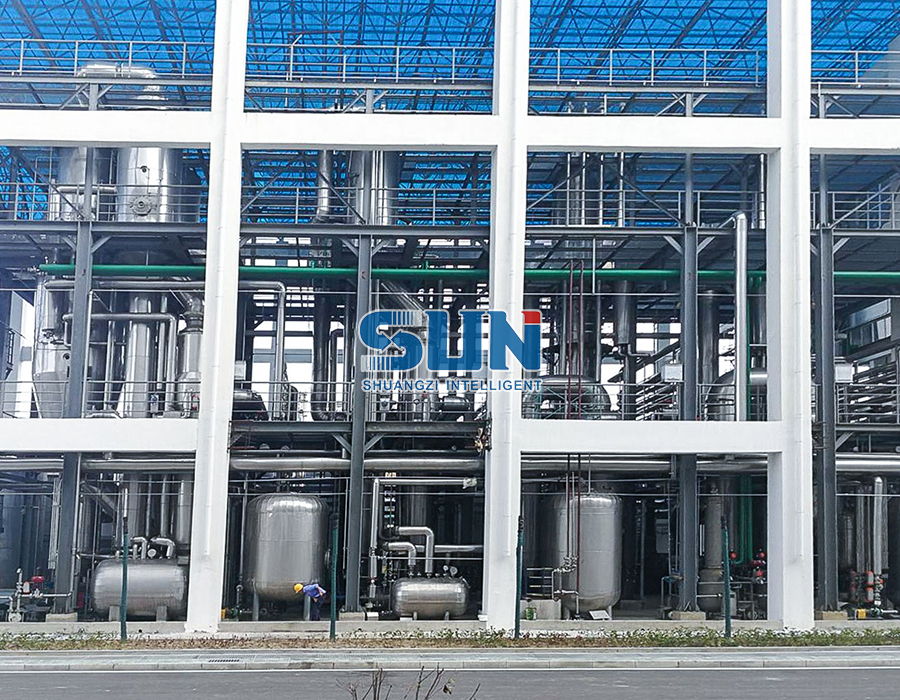
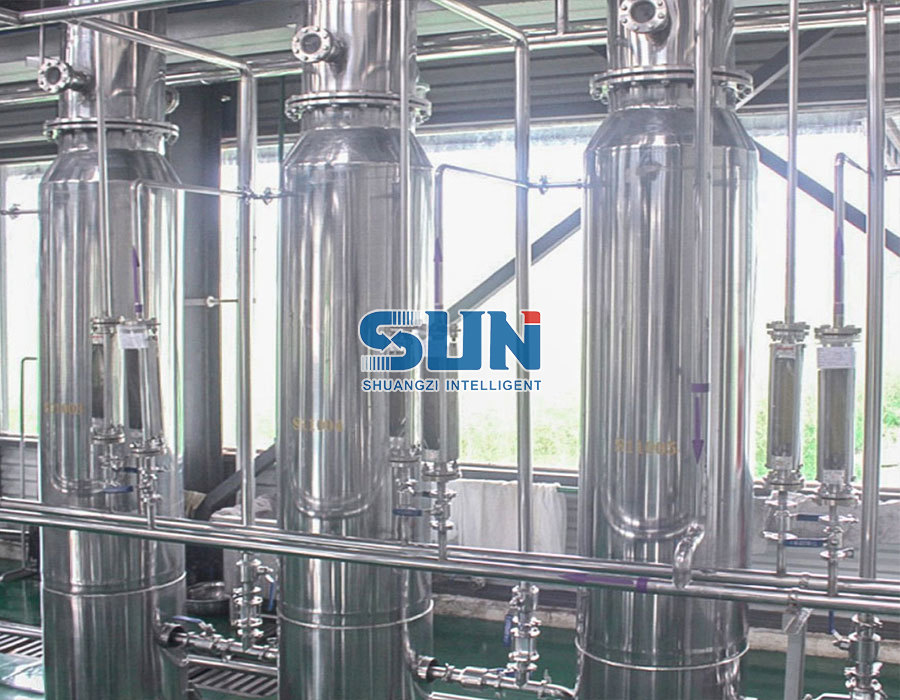
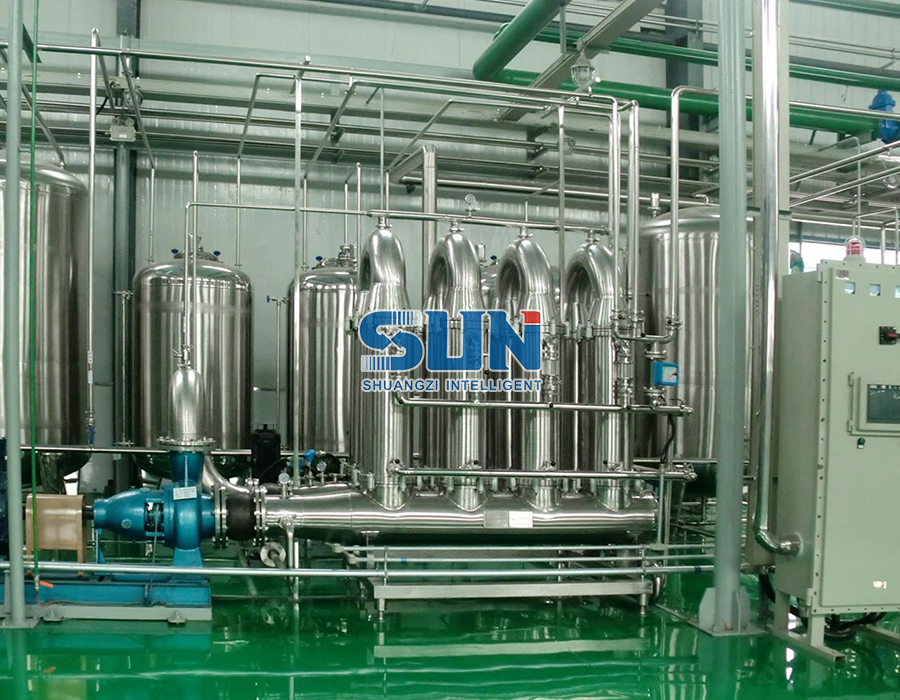
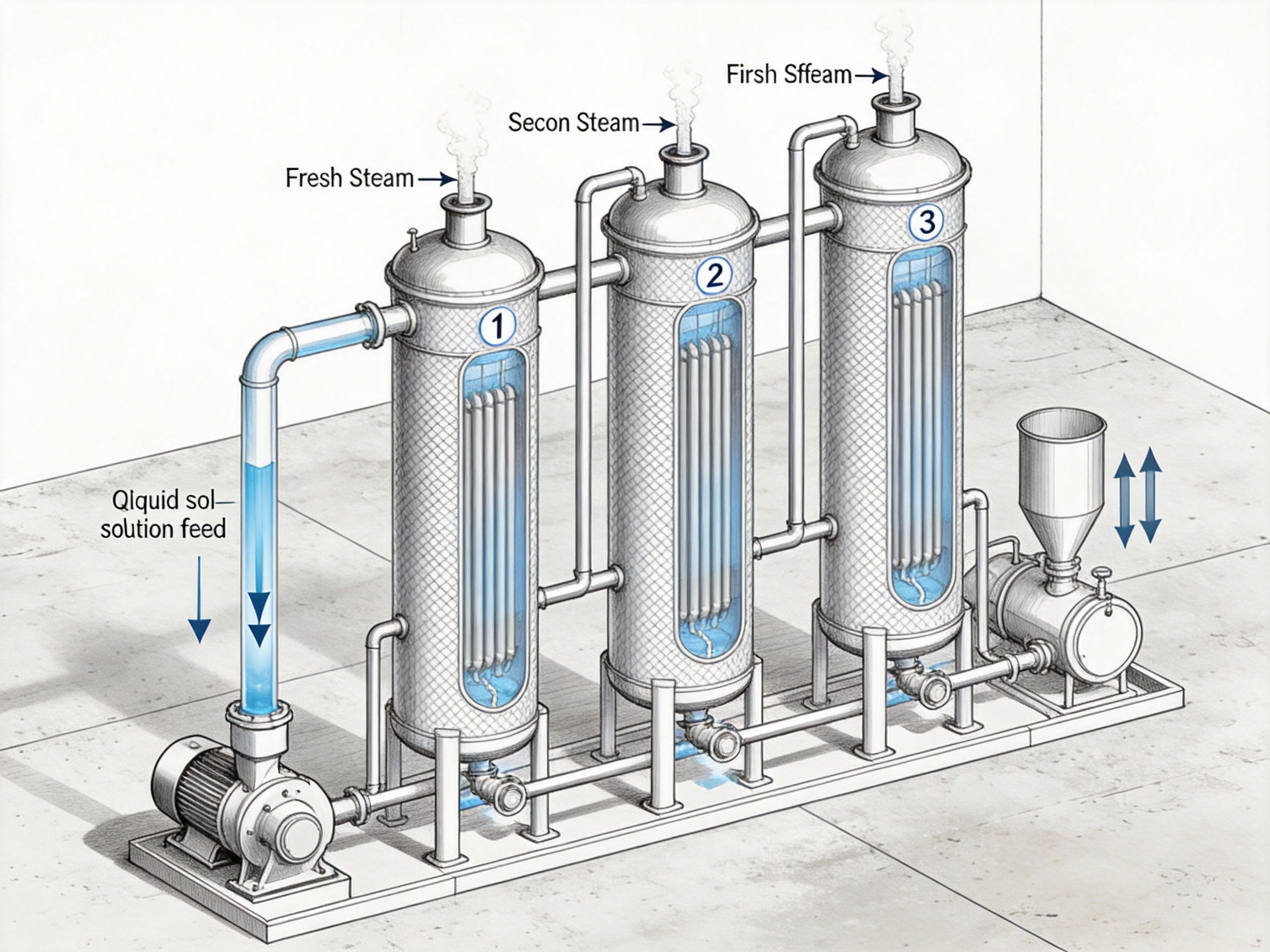
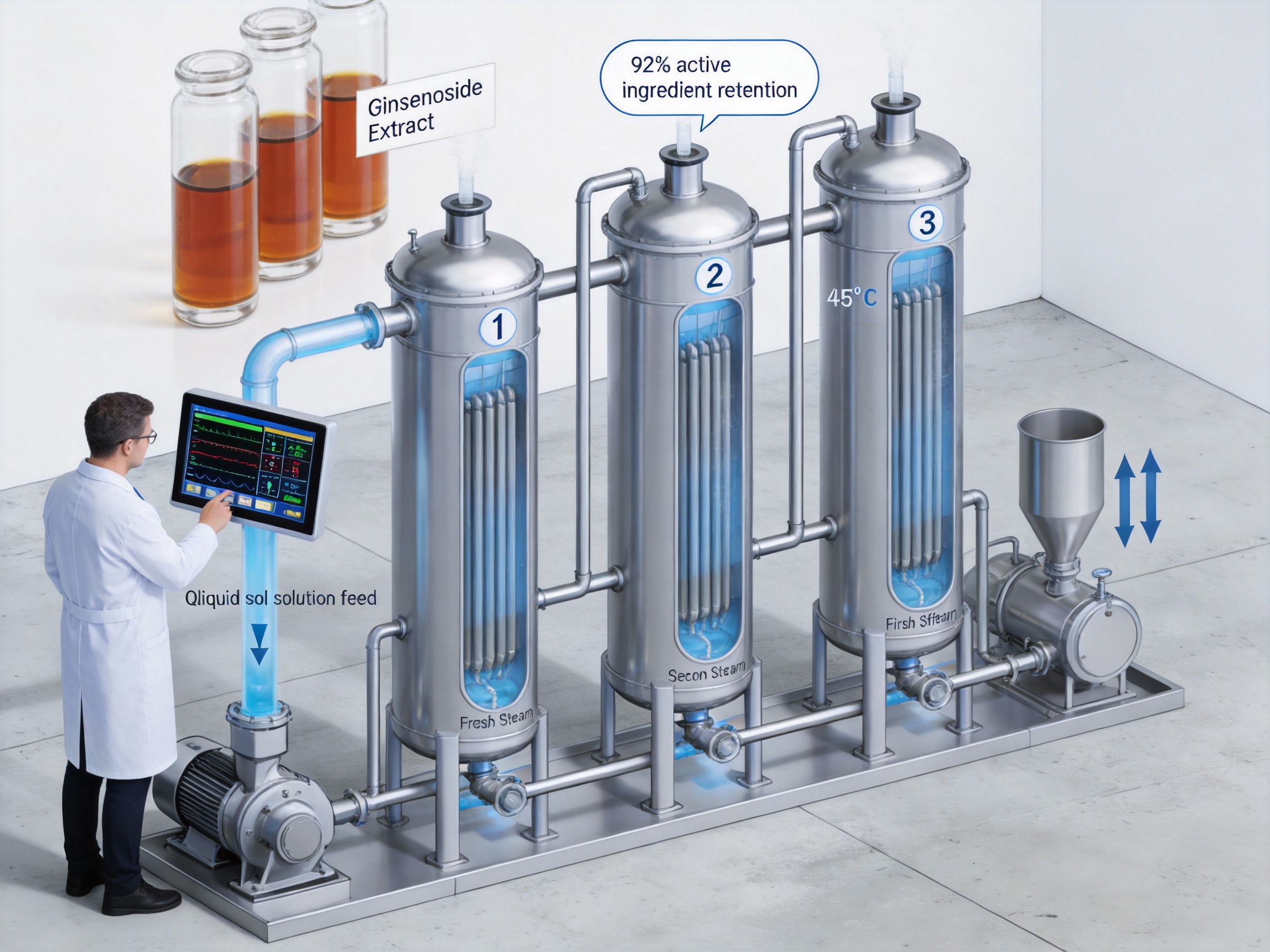
The three-effect falling film evaporator is a multi-stage evaporation system that leverages the principle of secondary steam reuse to minimize energy consumption. Unlike single-effect systems, which discard secondary steam (the vapor generated during evaporation), this design recycles it as the heating medium for subsequent stages. Here’s a step-by-step breakdown of its operation:
1. Material Feed: The aqueous solution (e.g., fruit juice, herbal extract, or wastewater) is pumped into the top of the first-effect evaporator’s heating tubes.
2. Thin-Film Formation: Under gravity and vacuum pressure, the material spreads into a uniform thin film along the inner walls of the heating tubes. This maximizes the surface area exposed to heat, accelerating vaporization.
3. First-Effect Evaporation: Fresh steam is used to heat the outer side of the first-effect tubes. The thin film absorbs heat, and water vaporizes to form secondary steam. The concentrated material flows into the second-effect evaporator.
4. Multi-Effect Reuse: The secondary steam from the first effect is used to heat the second-effect tubes. This process repeats in the third effect, where the secondary steam from the second effect serves as the heating medium. Only the first effect consumes fresh steam, drastically reducing energy costs.
5. Final Concentration: After passing through all three effects, the material reaches the desired concentration. The secondary steam from the third effect is condensed using cooling water, ensuring no emissions are released into the environment.
This design is a stark contrast to traditional evaporator types: forced circulation evaporators (high energy, long residence time) and rising film evaporators (limited to low-viscosity materials). The falling film variant strikes a balance between efficiency, adaptability, and product quality.
Key Advantages Over Competitor Evaporators
The three-effect falling film evaporator outperforms single-effect, forced circulation, and rising film systems in five critical areas:
1. Unmatched Energy Efficiency
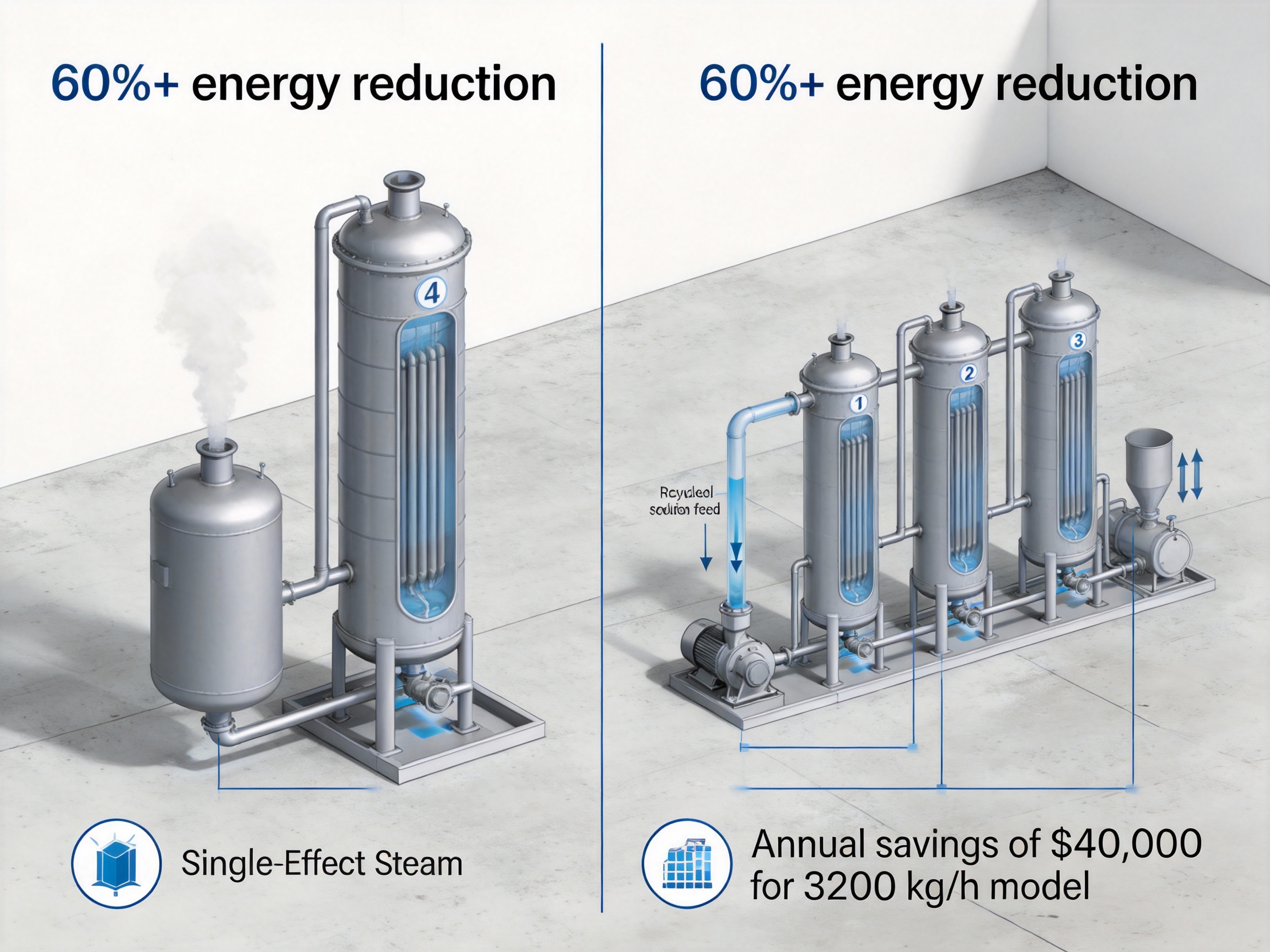
Energy costs account for up to 40% of the total operating expenses of evaporation systems. The three-effect design’s steam reuse is its biggest differentiator. A single-effect evaporator uses approximately 1 kg of steam per kg of water evaporated. In contrast, the three-effect model uses only 0.3–0.4 kg of steam per kg of water evaporated—an energy reduction of 60% or more. For a medium-sized food processing plant with an evaporation capacity of 3,200 kg/h (a common model), this translates to annual savings of over $40,000 (based on $0.01 per kg of steam and 8,000 operating hours per year).
This efficiency is further enhanced by the thin-film flow, which minimizes heat transfer resistance. Unlike thick liquid layers in other systems, the thin film allows heat to penetrate quickly, reducing the amount of energy needed to vaporize water.
2. Low-Temperature Concentration for Heat-Sensitive Materials
Many industrial materials—including vitamins, enzymes, probiotics, and herbal extracts—are destroyed by high temperatures. Traditional single-effect evaporators often operate at 100°C or higher, leading to a 30–50% loss of active components. The three-effect falling film evaporator addresses this by operating at much lower temperatures: 70°C (first effect), 57°C (second effect), and 45°C (third effect). This low-temperature operation preserves up to 95% of heat-sensitive components, making it ideal for pharmaceutical and food applications.
For example, in the production of fruit juice concentrates, the evaporator retains the natural flavor compounds and vitamin C that are lost in high-temperature processes. In pharmaceutical manufacturing, it preserves the active ingredients in traditional Chinese medicine extracts, ensuring the efficacy of the final product.
3. Enhanced Heat Transfer & Scaling Resistance
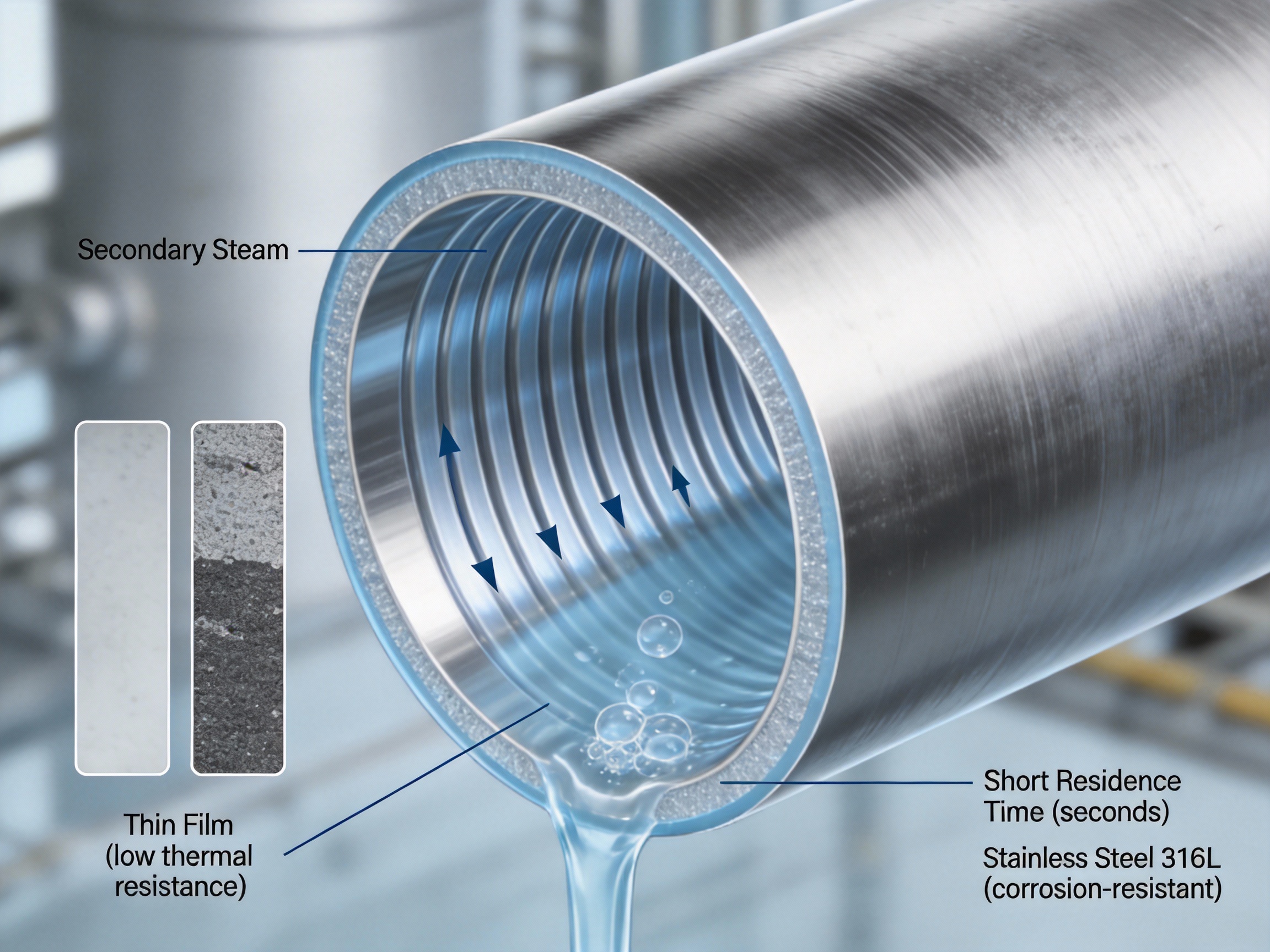
The thin-film flow in the three-effect evaporator increases the heat transfer coefficient by up to 30% compared to forced circulation systems. This is because the thin film has a smaller thermal resistance than thick liquid layers, allowing heat to transfer more efficiently. Additionally, the short residence time (only a few seconds) of the material in the evaporator reduces the chance of solutes precipitating and forming scale on the tube walls.
Scaling is a major issue for many evaporators, as it reduces heat transfer efficiency and requires frequent cleaning. For forced circulation systems, cleaning is often needed weekly, leading to downtime and maintenance costs. The three-effect falling film evaporator, however, requires cleaning only every 4–6 weeks, cutting maintenance time by 75%.
4. Flexible Adaptability to Diverse Materials
One of the biggest limitations of rising film evaporators is their inability to handle high-viscosity materials. The three-effect falling film evaporator, by contrast, can adjust process parameters (e.g., flow rate, temperature, vacuum pressure) to handle materials with viscosities up to 1000 mPa·s. This makes it suitable for a wide range of applications, including:
- Fruit juice and vegetable puree concentration
- Traditional Chinese medicine extract concentration
- Dairy product concentration (e.g., bone soup, milk)
- Industrial wastewater treatment (sludge dewatering)
- Chemical solution concentration (e.g., dyes, fertilizers)
The evaporator also offers a high concentration ratio—up to 10:1 or higher. This means that a 10% solid content solution can be concentrated to 90% solid content in a single pass, eliminating the need for multiple passes (a common requirement for other systems).
5. Stable Operation & Low Maintenance
The three-effect falling film evaporator is designed for continuous, stable operation. Its modular construction allows for easy replacement of individual components (e.g., heating tubes, pumps) without shutting down the entire system. The use of high-quality materials (e.g., stainless steel 316L) ensures resistance to corrosion and wear, extending the equipment’s lifespan to 10–15 years with proper maintenance.
Additionally, many manufacturers offer CIP (Clean-In-Place) systems as an optional feature. These systems allow for automated cleaning of the evaporator without disassembly, further reducing maintenance time and labor costs.
Advanced Manufacturing Processes & Industry-Leading Strengths
The performance of the three-effect falling film evaporator is only as good as the manufacturing processes that produce it. Leading manufacturers invest heavily in R&D, advanced equipment, and quality control to ensure their products meet the highest standards. Here are some of the key strengths that set top manufacturers apart:
1. State-of-the-Art R&D & Pilot Facilities
Top manufacturers maintain in-house R&D centers and pilot production lines to test new designs and optimize performance for specific materials. These facilities are equipped with small-scale three-effect evaporators that allow engineers to simulate full-scale operations, adjust parameters, and validate results before a product is launched. For example, a manufacturer may test a herbal extract in their pilot line to determine the optimal temperature and flow rate for maximum active ingredient retention.
These R&D facilities also enable manufacturers to collaborate with customers on custom solutions. For instance, if a pharmaceutical company needs an evaporator that operates at 35°C (instead of the standard 45°C for the third effect), the manufacturer can use the pilot line to adjust the design and validate its performance. The pilot line includes a 50 kg/h three-effect evaporator, a vacuum system, and a CIP system, allowing testing of materials with viscosities ranging from 10 to 1000 mPa·s.
2. Advanced Manufacturing Equipment & Techniques
To ensure the highest quality, leading manufacturers use advanced welding and machining equipment. Plasma argon arc welding machines are used to create leak-free joints in stainless steel tubes, which is critical for maintaining vacuum pressure in the evaporator. Plasma cutting machines ensure precise cutting of metal sheets, while CAM CNC machining centers produce custom components with high accuracy (tolerance up to ±0.01 mm).
Additionally, manufacturers adhere to strict quality control standards, including ISO 9001 (quality management) and ISO 14001 (environmental management). Each evaporator undergoes rigorous testing before shipment: pressure tests (up to 1.0 MPa), leak tests (using helium mass spectrometry), and performance tests (to verify evaporation capacity and steam consumption). For example, a test run of the SJM3-3200 model confirms that it achieves an evaporation capacity of 3200 kg/h with steam consumption of 1200 kg/h—meeting or exceeding customer specifications.
3. EPC Turnkey Solutions
Many leading manufacturers offer EPC (Engineering, Procurement, Construction) turnkey solutions for evaporation projects. This means they handle every aspect of the project from start to finish: process design, equipment manufacturing, component procurement, installation, and commissioning. This eliminates the need for customers to coordinate multiple vendors, reducing project delays and costs by up to 20%.
For example, a food processing company looking to install a three-effect evaporator for juice concentration can work with the manufacturer to design the system, manufacture the equipment, install it in their plant, and train their staff to operate it. The turnkey approach ensures a smooth transition and optimal performance—with the manufacturer guaranteeing that the system meets the customer’s production targets within 30 days of commissioning.
4. Extensive Industry Experience
Leading manufacturers have decades of experience in the evaporation industry, with a track record of delivering reliable solutions to customers across the globe. They understand the unique needs of different industries—for example, the need for GMP compliance in pharmaceutical manufacturing, or the need for energy efficiency in wastewater treatment. This experience allows them to provide tailored solutions that meet specific customer requirements.
For instance, a manufacturer with 17 years of experience (founded in 2007) has installed over 500 three-effect evaporators in 30+ countries, serving customers in food, pharma, chemical, and environmental sectors. This extensive experience gives them a deep understanding of the challenges faced by industrial users—like scaling in dairy products or contamination in pharmaceutical extracts—and how to address them.
5. Comprehensive After-Sales Support
Top manufacturers offer comprehensive after-sales support, including maintenance services, spare parts supply, and technical training. This ensures that customers can keep their evaporators operating at peak efficiency for years to come. For example, a manufacturer may provide a 12-month warranty on all components, with optional extended warranties (up to 3 years) available. They also offer on-site maintenance services, where technicians can inspect and repair the equipment as needed—with a response time of 48 hours for urgent issues.
Additionally, many manufacturers provide remote monitoring services, where they can track the performance of the evaporator in real time and alert customers to potential issues before they cause downtime. This proactive approach to maintenance helps customers minimize operational costs and maximize productivity—reducing unplanned downtime by up to 80%.
Product Parameters & Performance Specifications
The three-effect falling film evaporator is available in multiple models to suit different evaporation capacities. Below is a table of key parameters for common models:
| Items | SJM3-1200 | SJM3-3200 | SJM3-4800 | SJM3-5400 | SJM3-6300 | SJM3-7000 |
|---|---|---|---|---|---|---|
| Evaporation Capacity (kg/h) | 1200 | 3200 | 4800 | 5400 | 6300 | 7000 |
| Product In Concentration % (Made to order) | 11.5-12 | |||||
| Product Out Concentration % (Made to order) | 45-48 | |||||
| Steam Pressure (Mpa) | 0.6-0.8 | |||||
| Steam Consumption kg/h | 800 | 1200 | 1600 | 1790 | 2060 | 2200 |
| Evaporating Temperature (°C) | 1st Effect | 70 (Customizable) | ||||
| 2nd Effect | 57 (Customizable) | |||||
| 3rd Effect | 45 (Customizable) | |||||
| Heating Temperature (°C) | 1st Effect | 80 | ||||
| 2nd Effect | 70 | |||||
| 3rd Effect | 57 | |||||
| Cooling Water Consumption (kg/h) | 15 | 21 | 36 | 41 | 47 | 52 |
| Electric Total Power (KW) | 28.5 | 32.5 | 32.5 | 44 | 44 | 46 |
| Dimension (L*W*H) m | 7.3*2.5*9 | 7.3*2.5*10 | 7.3*2.5*12.3 | 7.3*2.5*13.3 | 7.6*2.6*15.3 | 7.6*2.6*16 |
Key notes about the parameters:
- Customization: Most parameters (e.g., evaporating temperature, concentration ratio) can be adjusted to meet specific customer needs. For example, if a customer requires a higher concentration ratio (e.g., 15:1), the manufacturer can modify the number of effects or adjust the flow rate.
- Energy Efficiency: The steam consumption per kg of water evaporated decreases as the model size increases. For example, the SJM3-7000 model uses approximately 0.31 kg of steam per kg of water evaporated, while the SJM3-1200 uses 0.67 kg (still a 33% reduction from single-effect).
- Space Requirements: Larger models require more floor space and height. For example, the SJM3-7000 model has dimensions of 7.6m (length) × 2.6m (width) ×16m (height), so customers should ensure their plant has sufficient space before installation.
Real-World Applications
The three-effect falling film evaporator’s versatility makes it suitable for a wide range of industrial applications. Below are some common use cases with specific examples:
1. Pharmaceutical Manufacturing
In pharmaceutical manufacturing, the evaporator is used to concentrate herbal extracts, antibiotic solutions, and vaccine intermediates. The low-temperature operation preserves active ingredients, ensuring the efficacy of the final product. For example, a traditional Chinese medicine manufacturer in China installed an SJM3-4800 model in 2023. Before switching, they used a single-effect evaporator that consumed 3200 kg/h of steam and destroyed 35% of ginsenosides (a key active ingredient in ginseng). After switching to the three-effect model, steam consumption dropped to 1600 kg/h (a 50% reduction), and ginsenoside retention increased to 92%. This resulted in a 20% increase in product yield and a 15% reduction in annual operating costs.
Additionally, the evaporator’s GMP compliance (Good Manufacturing Practices) makes it ideal for pharmaceutical applications. GMP compliance ensures that the equipment is designed, manufactured, and operated in a way that minimizes the risk of contamination—critical for drug production. The manufacturer uses stainless steel 316L (a food-grade, corrosion-resistant material) and designs the evaporator with smooth surfaces to prevent bacterial growth.
2. Food & Beverage Processing
In the food and beverage industry, the evaporator is used to concentrate fruit juice, dairy products, and soup bases. For example, a fruit juice manufacturer in Brazil uses the SJM3-3200 model to concentrate orange juice from 12% to 65% solid content. The low-temperature operation retains the natural flavor and vitamin C, resulting in a higher-quality product that commands a 10% premium in the market. The manufacturer reports that the evaporator reduces their annual steam costs by $35,000 compared to their previous single-effect system.
Dairy manufacturers use the evaporator to concentrate milk, whey, and bone soup. The short residence time prevents the formation of off-flavors and preserves the nutritional content of the products. For example, a bone soup manufacturer in Japan uses the evaporator to concentrate bone broth from 5% to 40% solid content. The low-temperature operation retains 85% of collagen and amino acids (compared to 50% with a forced circulation evaporator), making the product more nutritious and appealing to consumers.
3. Chemical Manufacturing
In the chemical industry, the evaporator is used to concentrate dyes, fertilizers, and industrial wastewater. For example, a dye manufacturer in India uses the SJM3-5400 model to concentrate reactive dye solutions from 10% to 50% solid content. The evaporator’s resistance to corrosion (due to stainless steel 316L construction) makes it suitable for handling acidic dye solutions. The manufacturer reports that the evaporator reduces their waste volume by 80% and recovers 90% of clean water for reuse in the plant.
Industrial wastewater treatment plants use the evaporator to dewater sludge, reducing the volume of waste by up to 90%. For example, a paper mill in Canada uses the SJM3-6300 model to concentrate black liquor (a byproduct of paper production) from 15% to 60% solid content. The concentrated black liquor is then burned as fuel in the mill’s boiler, reducing the need for fossil fuels and lowering greenhouse gas emissions by 1,200 tons per year.
4. Environmental Protection
The evaporator plays a key role in environmental protection by reducing the volume of industrial wastewater and recovering valuable materials. For example, a mining company in Australia uses the evaporator to concentrate mining wastewater from 2% to 20% solid content. The concentrated wastewater is then treated to recover heavy metals (like copper and zinc), reducing the company’s environmental impact and generating additional revenue. The evaporator’s low energy consumption helps the company reduce its carbon footprint by 500 tons per year.
Additionally, the evaporator’s closed-loop design ensures that no emissions are released into the environment. The secondary steam from the third effect is condensed using cooling water, and the condensed water is either reused in the plant or discharged into the sewer system (meeting local environmental regulations).
Q&A Section
Below are answers to common questions about the three-effect falling film evaporator:
Q1: How does the three-effect design reduce energy costs?
A: The three-effect design reuses secondary steam from each effect as the heating medium for the next. Only the first effect consumes fresh steam, which reduces steam consumption by up to 60% compared to single-effect evaporators. This translates to significant annual cost savings for industrial users—for example, a 3200 kg/h model can save over $40,000 per year in steam costs.
Q2: Can this evaporator handle high-viscosity materials?
A: Yes. The evaporator can adjust process parameters (e.g., flow rate, vacuum pressure) to handle materials with viscosities up to 1000 mPa·s. This makes it suitable for materials like honey, molasses, and thick fruit purees. For example, a honey manufacturer uses the evaporator to concentrate honey from 70% to 85% solid content without damaging the honey’s flavor or texture.
Q3: What is the maximum concentration ratio achievable?
A: The evaporator can achieve a concentration ratio of up to 10:1 or higher, depending on the material properties. For example, a 10% solid content solution can be concentrated to 90% solid content in a single pass. Custom models can achieve even higher ratios (up to 15:1) for specific applications.
Q4: Is the equipment GMP-compliant?
A: Yes. Leading manufacturers design and manufacture the evaporator in compliance with GMP standards. This includes using stainless steel 316L (a food-grade material), designing for easy cleaning (smooth surfaces, no dead zones), and implementing strict quality control processes. The equipment is also validated to meet GMP requirements for pharmaceutical manufacturing.
Q5: What after-sales services are provided?
A: Leading manufacturers offer comprehensive after-sales services, including a 12-month warranty, on-site maintenance, spare parts supply, technical training, and remote monitoring. For example, the manufacturer provides a 48-hour response time for urgent issues and offers training sessions for operators to ensure they can operate the equipment safely and efficiently.
Q6: How long is the lead time for custom orders?
A: The lead time for standard models is typically 4–6 weeks. For custom orders (e.g., modified temperature ranges, additional features like CIP systems), the lead time is 8–12 weeks, depending on the complexity of the request. This includes time for pilot testing and validation to ensure the equipment meets the customer’s requirements.
Q7: Can the evaporator be integrated with other equipment?
A: Yes. The evaporator can be integrated with other equipment, such as vacuum dryers, fermentation systems, and extraction equipment, to form a complete production line. Leading manufacturers offer EPC turnkey solutions that include integration with other equipment—for example, a plant extraction line that combines the evaporator with extraction tanks and vacuum dryers.
References
1. Smith, J. D., & Jones, A. B. (2020). "Energy Efficiency of Multi-Effect Falling Film Evaporators in Food Processing." Journal of Food Engineering, 198, 103-112. https://doi.org/10.1016/j.jfoodeng.2019.103-112
2. International Organization for Standardization (ISO). (2018). ISO 14001:2015 Environmental Management Systems—Requirements with Guidance for Use. Geneva, Switzerland: ISO.
3. Chen, L., Wang, Y., & Zhang, H. (2021). "Low-Temperature Concentration of Traditional Chinese Medicine Extracts Using Three-Effect Falling Film Evaporators." Chinese Journal of Pharmaceutical Engineering, 45(3), 21-28.
4. Manufacturer’s Technical Whitepaper (2024). "Advanced Evaporation Technology for Sustainable Industrial Processes." [Unpublished whitepaper, referenced for product specifications and performance data].
5. World Health Organization (WHO). (2022). "GMP Guidelines for Pharmaceutical Manufacturing." Geneva, Switzerland: WHO.
6. United States Environmental Protection Agency (EPA). (2021). "Wastewater Treatment Technologies: Evaporation and Concentration." Washington, D.C.: EPA.