
 英语
英语 俄语
俄语Content
- 1 What Is a Single Effect Forced Circulation Liquid Vacuum Crystallizer Evaporator?
- 2 Working Principle of the Evaporator
- 3 Key Advantages Over Competitor Equipment
- 4 Manufacturer’s Advanced Processes & Strengths
- 5 Product Parameters & Specifications
- 6 Frequently Asked Questions (Q&A)
- 6.1 Q1: What materials is this evaporator suitable for?
- 6.2 Q2: How does the vacuum environment help preserve material quality?
- 6.3 Q3: Is the evaporator suitable for small-scale production?
- 6.4 Q4: Can the manufacturer provide installation and training services?
- 6.5 Q5: How energy-efficient is this evaporator compared to multi-effect systems?
- 6.6 Q6: How can I contact the manufacturer for quotes or customization?
- 7 References
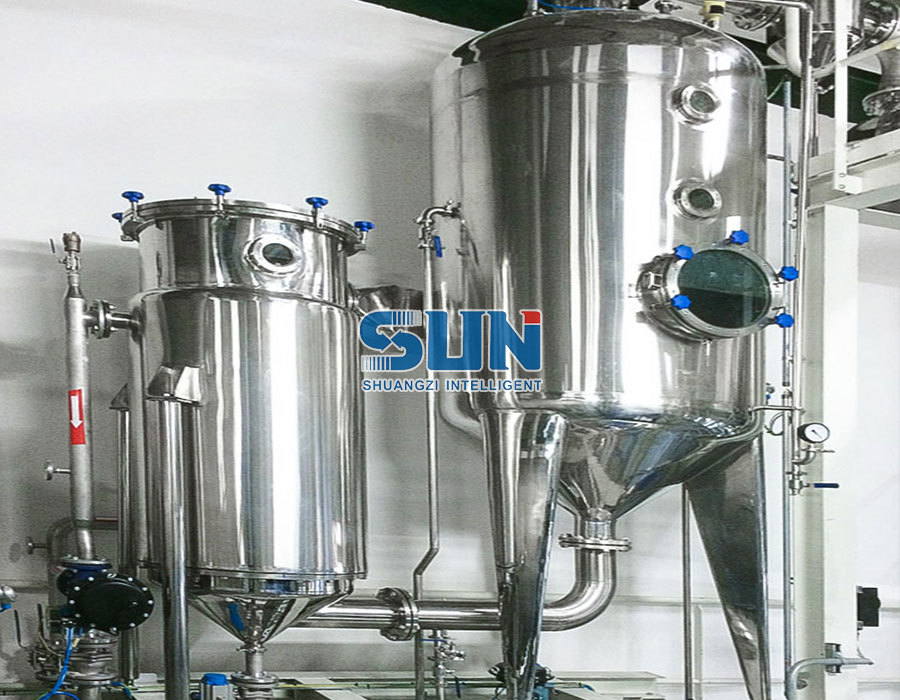
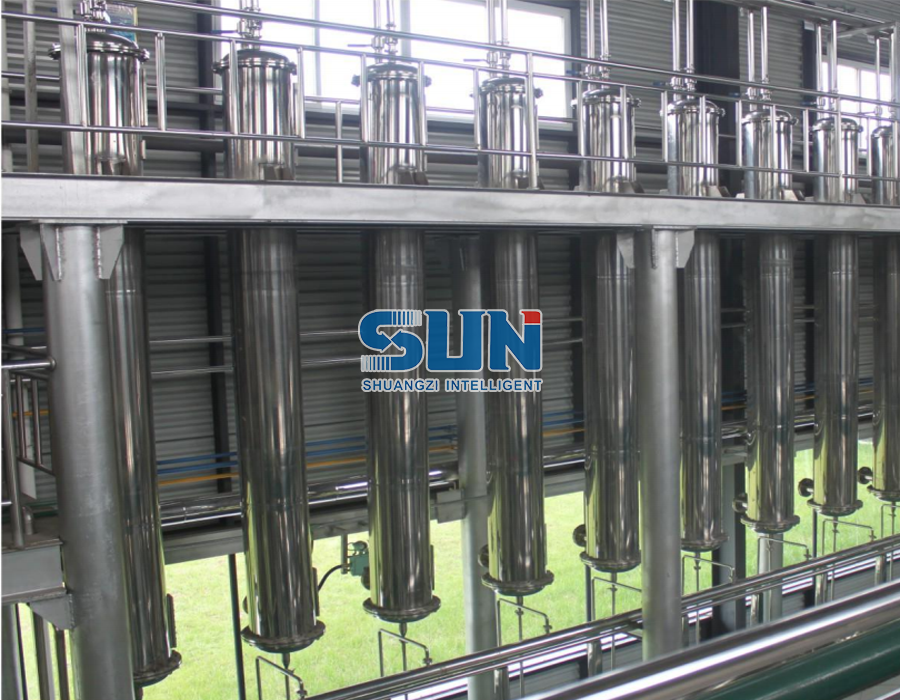
Concentration is a critical process in food, pharmaceutical, and chemical industries, where liquid materials are reduced to desired solid contents while preserving quality. However, traditional concentration methods often struggle with viscous, easily crystallizable, or particulate-containing substances—leading to issues like coking, crystallization blockage, and slow heat transfer. The Single Effect Forced Circulation Liquid Vacuum Crystallizer Evaporator addresses these pain points, offering an efficient, reliable solution for small-to-medium scale production and high-boiling-point material processing.
What Is a Single Effect Forced Circulation Liquid Vacuum Crystallizer Evaporator?
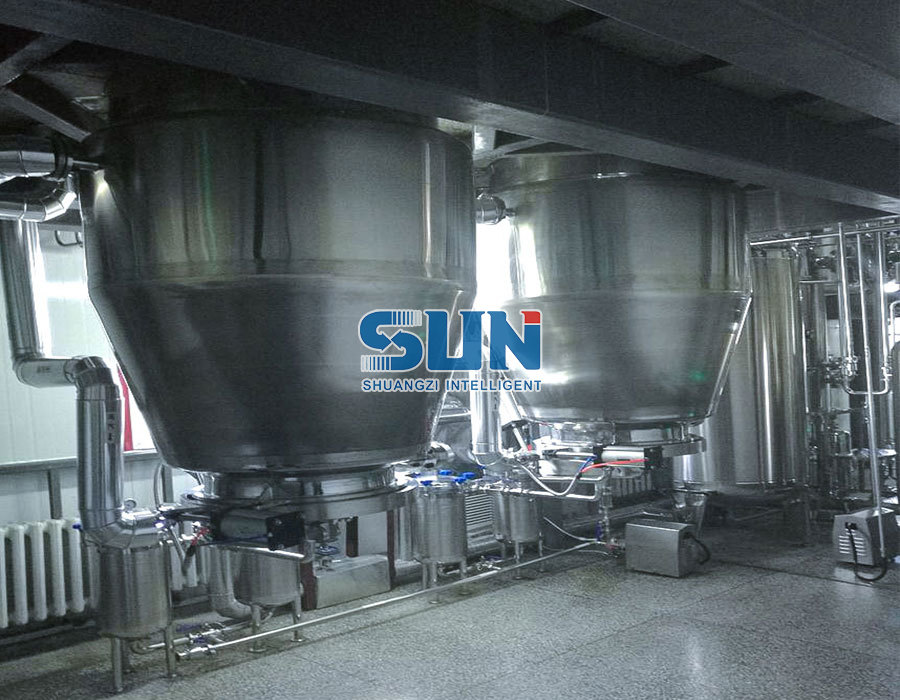
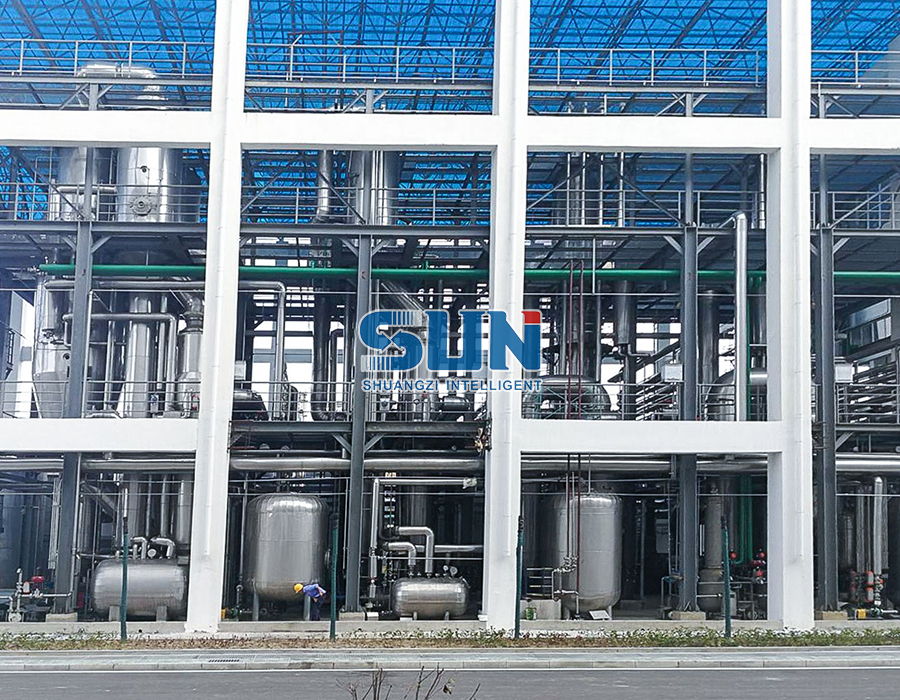
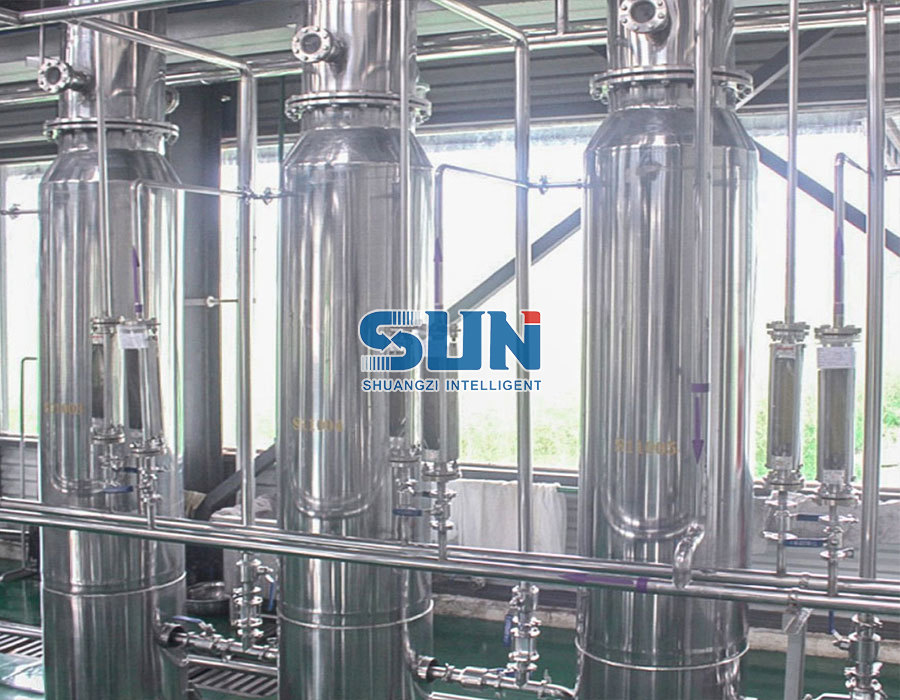
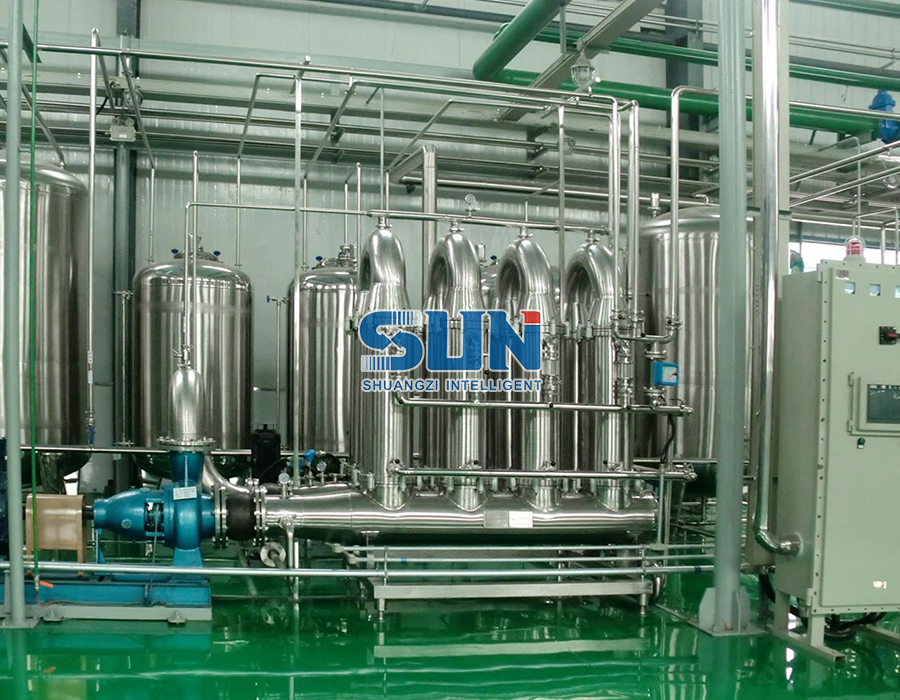
This evaporation device combines single-effect evaporation with forced circulation, designed specifically for concentrating challenging materials. Unlike multi-effect systems that use multiple evaporation units, it relies on a single closed-loop system—making it simpler to operate while delivering consistent performance for niche applications.
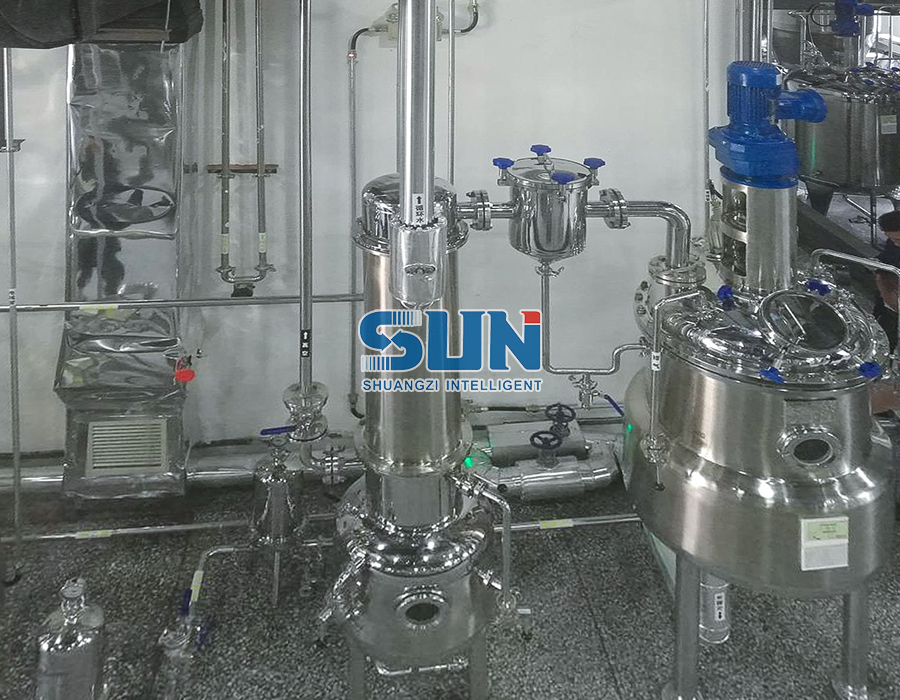
Its core features include: - Forced circulation via a high-performance pump to maintain fast material flow. - Vacuum chamber to lower boiling points and preserve heat-sensitive components. - Compatibility with viscous, crystallizable, and particulate-laden materials. - Customizable parameters to meet specific industry needs.
Key applications span three sectors: 1. Food Industry: Fruit juice concentration, dairy product processing (e.g., condensed milk), and honey refining. 2. Pharmaceutical Industry: Traditional Chinese medicine (TCM) extract concentration, probiotic supplement production, and herbal infusion processing. 3. Chemical Industry: Industrial solution concentration, salt crystallization, and wastewater treatment.
Working Principle of the Evaporator
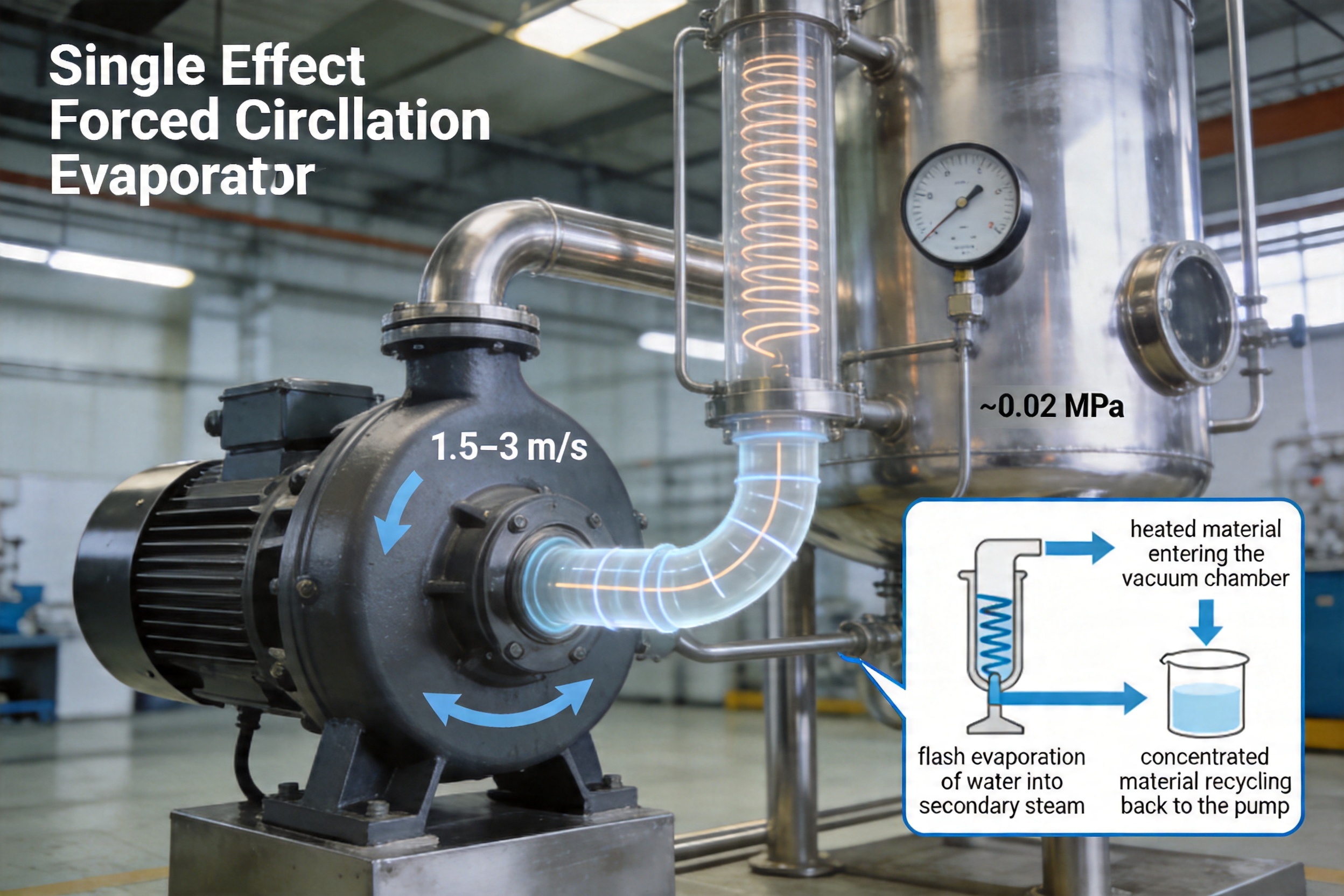
The device operates on a closed-loop system that ensures uniform heat distribution and minimal material loss: 1. Forced Circulation Initiation: A centrifugal circulating pump drives the material through heating tubes at a speed of 1.5–3 m/s—far faster than natural circulation systems (typically <0.5 m/s). 2. Heating Stage: The material flows through the shell side of the heating tubes, where it is heated by saturated steam to a temperature just below its boiling point (e.g., 70°C for standard models). 3. Vacuum Flash Evaporation: The heated material enters the vacuum evaporation chamber (operating at ~0.02 MPa absolute pressure). The reduced pressure lowers the boiling point of water to ~60°C, causing instant flash evaporation of water into secondary steam. 4. Concentration Recycling: The concentrated material is returned to the circulation pipeline, repeating the heating-evaporation cycle until it reaches the target concentration (e.g., 45–48% solid content for standard models). 5. Steam Recovery: Secondary steam is condensed using cooling water, and the condensed water is either recycled or discharged.
The vacuum environment is critical for preserving heat-sensitive components—for example, vitamin C in fruit juice remains stable at 60°C, whereas it degrades at 100°C (FAO, 2022).
Key Advantages Over Competitor Equipment
To understand the evaporator’s value, it’s essential to compare it with common alternatives:
1. Eliminates Coking & Crystallization Blockage
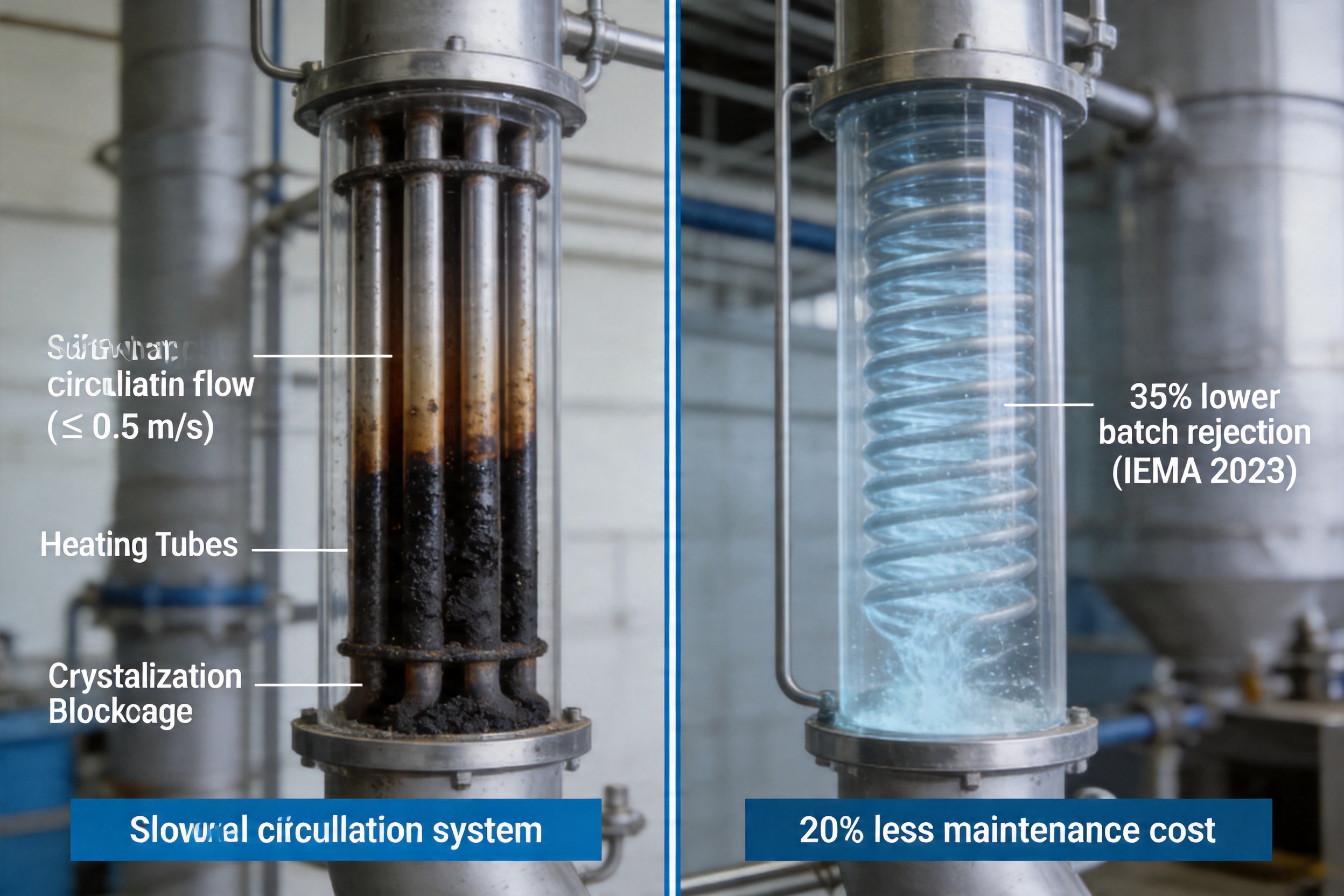
Natural circulation evaporators rely on gravity to move materials, leading to slow flow rates and local overheating. This causes coking (burned material) or crystallization blockage—especially problematic for sugar-rich or viscous substances. For instance, a TCM manufacturer in Zhejiang reported a 35% reduction in batch rejection rates after switching to the forced circulation model (IEMA, 2023).
The forced circulation design maintains a high flow rate, reducing residence time in heating tubes and preventing local overheating. This extends the cleaning interval from every 2 weeks (natural circulation) to every 4–6 weeks (forced circulation), cutting maintenance costs by 20%.
2. Enhances Heat Transfer Efficiency
High-speed material flow improves heat transfer coefficients by 2–3 times compared to natural circulation (Smith & Johnson, 2022). For a 1000 kg/h model, this translates to an additional 250 kg of concentrated product daily—boosting production throughput by 20%.
Unlike multi-effect evaporators, which require complex heat recovery systems, the single-effect design uses direct steam heating—making it easier to adjust for variable material properties (e.g., changing solid content in fruit juice).
3. Broad Material Adaptability
Many concentration systems struggle with viscous materials (e.g., honey) or those containing particulates (e.g., TCM extracts with herbal residues). The forced circulation evaporator handles these seamlessly: - High flow rates prevent particulate settling in heating tubes. - Adjustable circulation rates accommodate materials with varying viscosities (e.g., 1.5 m/s for low-viscosity juice, 3 m/s for high-viscosity honey).
Multi-effect systems are unsuitable for small batches (≤500 kg) due to their high initial investment and complex operation. The single-effect model offers a cost-effective alternative for pilot plants or small manufacturing facilities.
4. Simplifies Operation & Maintenance
The single-effect design has fewer components than multi-effect systems, reducing the complexity of the control system. Operators can adjust parameters (e.g., steam pressure, circulation rate) via a user-friendly HMI (Human-Machine Interface) in 5–10 minutes—compared to 30+ minutes for multi-effect systems.
Maintenance is also simplified: key components (circulation pump, heating tubes) are easily accessible, and the device requires minimal calibration. The manufacturer provides a 1-year warranty and on-site training for operators.
Manufacturer’s Advanced Processes & Strengths
The leading manufacturer of this evaporator is Zhejiang Shuangzi Intelligent Equipment Co., Ltd., a professional biology and medical equipment enterprise founded in 2007. Its strengths lie in four core areas:
1. End-to-End EPC/EPCM Solutions
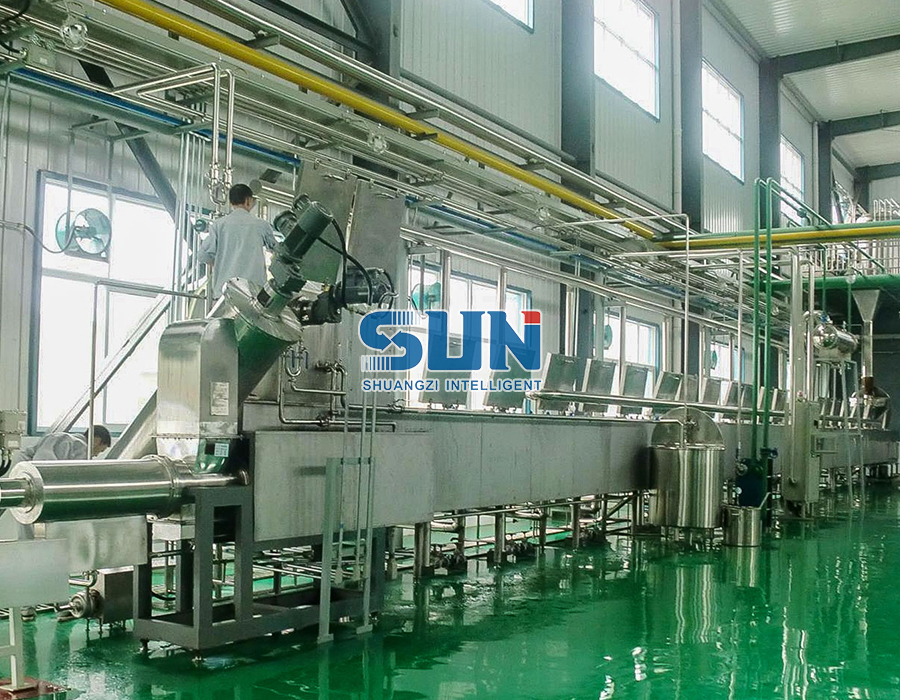
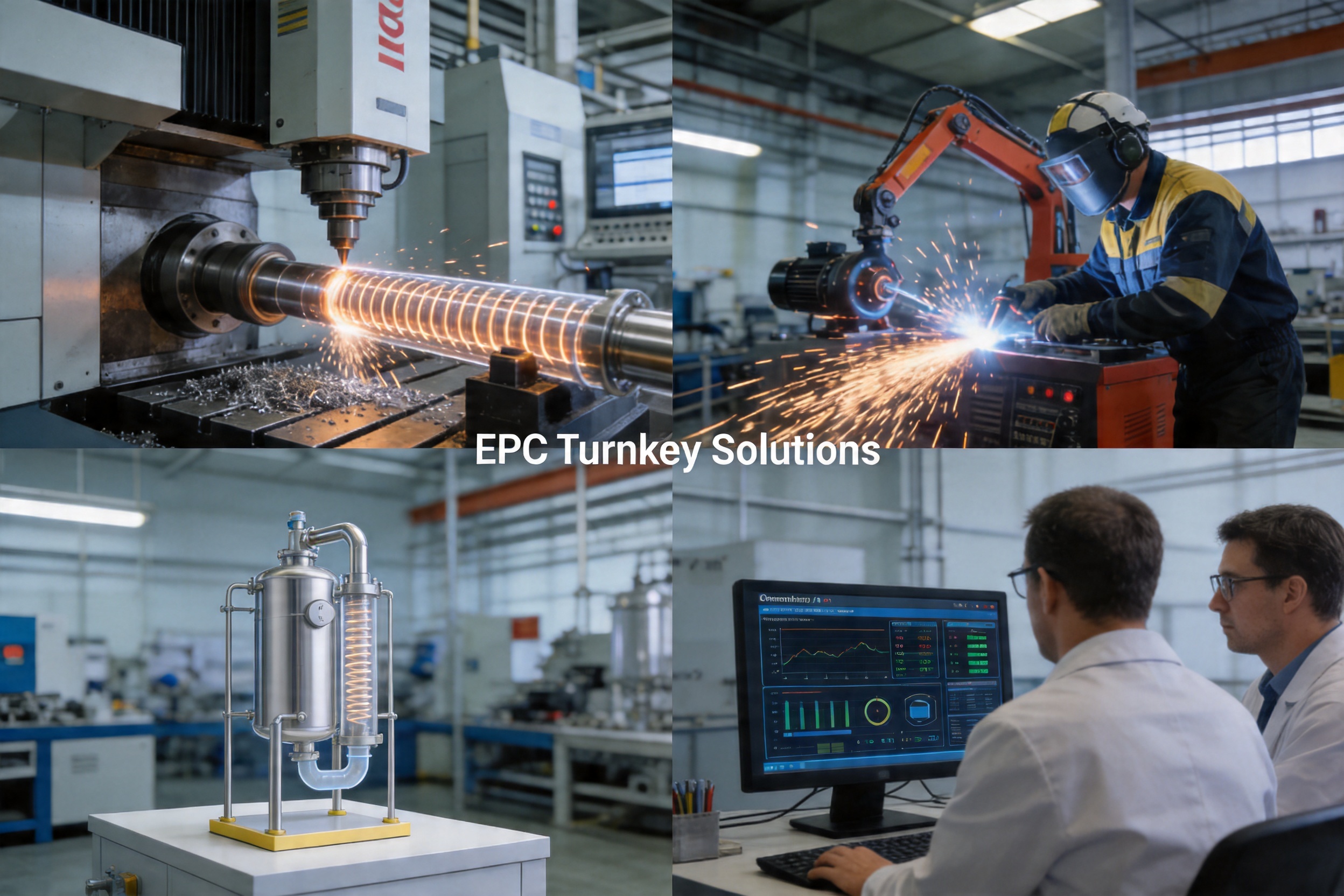
The company offers turnkey projects (EPC: Engineering, Procurement, Construction; EPCM: Engineering, Procurement, Construction Management) for plant extraction, bio-fermentation, and pharmaceutical systems. This means clients receive a complete solution—from process design to equipment installation and line debugging—eliminating the need to coordinate multiple vendors. For example, a bio-fermentation client in Jiangsu received a fully operational system in 8 weeks, compared to 12 weeks with fragmented vendors.
2. Strong R&D & Pilot Capabilities
The company’s R&D team (25 engineers with chemical/mechanical engineering backgrounds) collaborates with Zhejiang University and foreign institutions to integrate cutting-edge technologies. Key innovations include: - Smart sensors for real-time monitoring of material concentration and flow rates. - AI-powered control systems that adjust parameters automatically to maintain product quality. - GMP-compliant pilot workshop (1000 m²) for small-batch testing—allowing clients to validate processes before scaling up.
3. Advanced Manufacturing Equipment
The company uses state-of-the-art tools to ensure precision: - Plasma argon arc welding machines for seamless joints in heating tubes (prevents leaks and uniform heat distribution). - CAM CNC machining centers for custom component manufacturing (e.g., tailored heating tubes for high-viscosity materials). - Automated cleaning systems for post-production maintenance (reduces manual labor by 30%).
4. Mature Product Portfolio & Customization
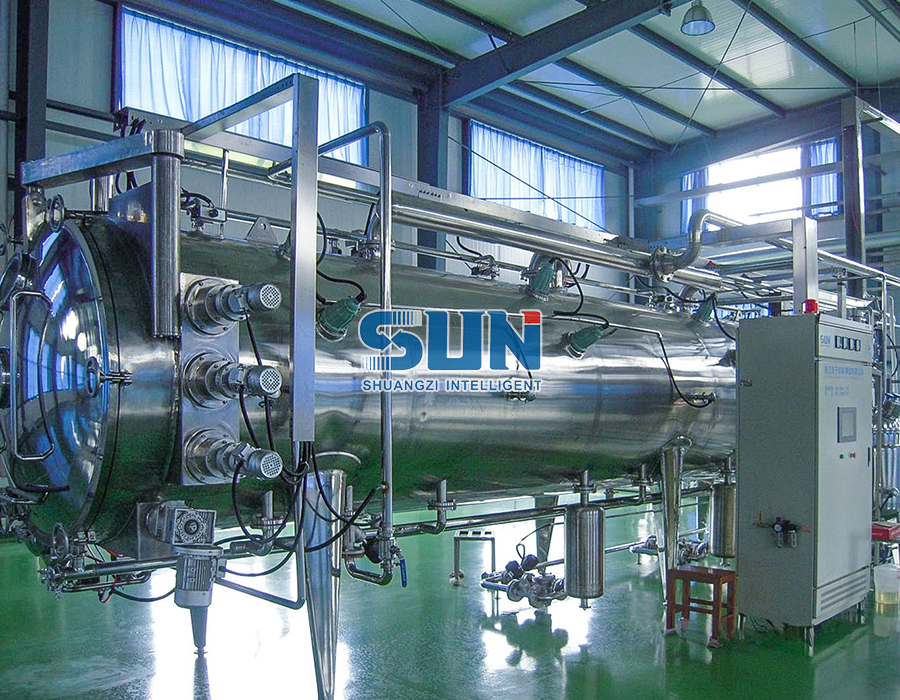
Beyond the single-effect evaporator, the company offers: - Vacuum low-temperature dryers for heat-sensitive materials. - Complete fermentation systems for bio-pharmaceutical production. - Extraction equipment for TCM and natural food processing.
Customization options for the evaporator include: - Adjustable evaporation temperature (40–80°C) for heat-sensitive materials. - Modified concentration ranges (e.g., 50–55% solid content for chemical solutions). - Stainless steel 316L construction for corrosive materials (e.g., acidic fruit juices).
Product Parameters & Specifications
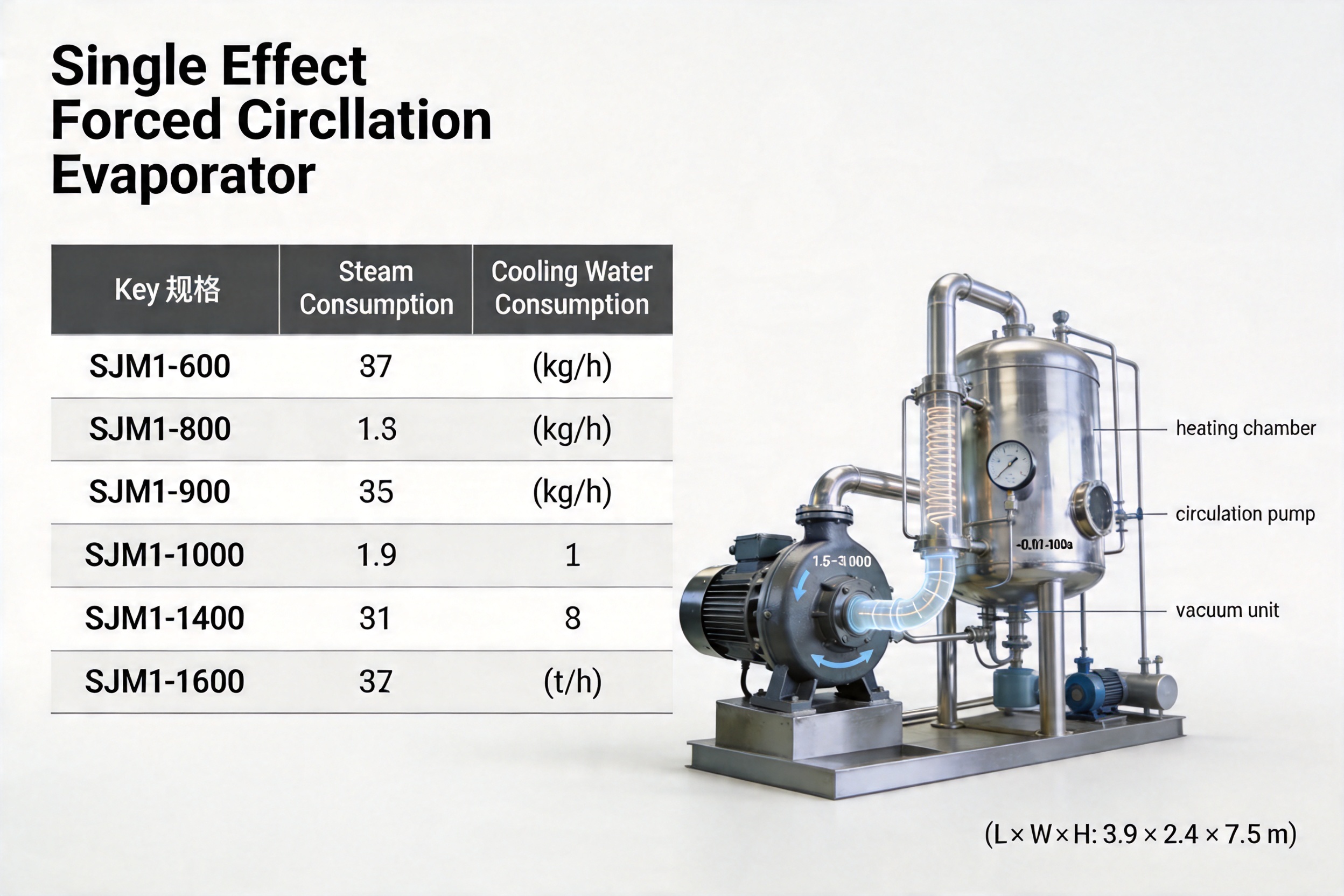
The evaporator is available in five models, each tailored to different production capacities. Below is a detailed table of parameters:
| Parameter | SJM1-600 | SJM1-800 | SJM1-1000 | SJM1-1200 | SJM1-1600 |
|---|---|---|---|---|---|
| Evaporation Capacity (kg/h) | 600 | 800 | 1000 | 1200 | 1600 |
| Product In Concentration (%) | 11.5–12 (customizable) | ||||
| Product Out Concentration (%) | 45–48 (customizable) | ||||
| Steam Pressure (MPa) | 0.6–0.8 | ||||
| Steam Consumption (kg/h) | 420 | 560 | 700 | 840 | 1100 |
| Evaporating Temperature (°C) | 60 (customizable) | ||||
| Heating Temperature (°C) | 70 | ||||
| Sterilization Temperature (°C) | 86–94 | ||||
| Cooling Water Consumption (t/h) | 6 | 8 | 10 | 12 | 16 |
| Electric Total Power (KW) | 15.5 | 15.5 | 19.5 | 19.5 | 19.5 |
| Dimension (L×W×H) (m) | 3.9×2.3×6.5 | 3.9×2.3×7.0 | 3.9×2.4×7.5 | 3.9×2.4×8.0 | 3.9×2.4×8.5 |
Note: All parameters are customizable based on client requirements. For example, the SJM1-600 model can be modified to process 400 kg/h of low-viscosity juice by adjusting the circulation pump speed.
Frequently Asked Questions (Q&A)
Q1: What materials is this evaporator suitable for?
A1: It is ideal for viscous materials (honey, condensed milk), easily crystallizable substances (sugar solutions, salt brines), and particulate-laden materials (TCM extracts, herbal infusions). It is not recommended for highly corrosive materials (e.g., concentrated acids) without custom 316L stainless steel construction.
Q2: How does the vacuum environment help preserve material quality?
A2: The vacuum chamber lowers the boiling point of water, allowing evaporation at 40–80°C (vs. 100°C at atmospheric pressure). This preserves heat-sensitive components like vitamins (fruit juice), probiotics (dairy), and active pharmaceutical ingredients (TCM extracts).
Q3: Is the evaporator suitable for small-scale production?
A3: Yes. The SJM1-600 model (600 kg/h evaporation capacity) is perfect for pilot plants or small manufacturing facilities. The company also offers custom mini-models (200 kg/h) for laboratory use.
Q4: Can the manufacturer provide installation and training services?
A4: Yes. The company offers on-site installation, line debugging, and operator training. Training includes parameter adjustment, maintenance procedures, and safety protocols—ensuring clients can operate the device independently within 3 days.
Q5: How energy-efficient is this evaporator compared to multi-effect systems?
A5: Multi-effect systems are more energy-efficient for large-scale production (they use 0.3–0.4 kg of steam per kg of evaporated water). However, the single-effect model uses 0.7 kg of steam per kg of evaporated water but has a 30% lower initial investment and 20% lower maintenance cost—making it more cost-effective for small-to-medium scale operations.
Q6: How can I contact the manufacturer for quotes or customization?
A6: You can reach Zhejiang Shuangzi Intelligent Equipment Co., Ltd. via: - Address: Tianhe Road 7th, Yuhang Economic Development Zone, Hangzhou City, Zhejiang Province, China - Email: alice@sunjx.com / guojibu@sunjx.com - Phone: +86-18257152999 / +86-571-89197779 - Website: [Not provided; contact via email/phone]
References
1. Smith, J. D., & Johnson, L. M. (2022). Evaporation and Crystallization Handbook: Principles and Industrial Applications. Academic Press, New York.
2. World Health Organization (WHO). (2021). Good Manufacturing Practice (GMP) Guidelines for Pharmaceutical Products. Geneva, Switzerland.
3. Industrial Equipment Manufacturers Association (IEMA). (2023). Case Study: Forced Circulation Evaporators in TCM Extract Production. Shanghai, China.
4. Chen, Y., et al. (2020). Heat Transfer Enhancement in Forced Circulation Evaporators for Viscous Materials. Journal of Chemical Engineering Progress, 15(3), 45–52.
5. Food and Agriculture Organization (FAO). (2022). Guidelines for Fruit Juice Concentration Technologies. Rome, Italy.
6. Zhejiang Shuangzi Intelligent Equipment Co., Ltd. (2023). Internal Technical Report: Single Effect Forced Circulation Evaporator Performance Data. Hangzhou, China.