
 英语
英语 俄语
俄语Content
- 1 1. The Role of Low-Temperature Vacuum Drying in Modern Processing
- 2 2. Product Construction and Operating Principle
- 3 3. Product Quality and Physical Characteristics
- 4 4. Main Advantages Over Conventional Drying Equipment
- 5 5. Technical Specifications and Model Range
- 6 6. Application Areas
- 7 7. Engineering, Manufacturing, and Project Delivery Strengths
- 8 8. Process Design Considerations
- 9 9. Installation, Commissioning, and Maintenance
- 10 10. How to Select the Correct Model
- 11 11. Sustainability and Resource Efficiency
- 12 12. Frequently Asked Questions
- 12.1 Q1: What materials are suitable for a vacuum low-temperature crawler belt dryer?
- 12.2 Q2: Can the dryer process heat-sensitive materials?
- 12.3 Q3: Does the machine operate continuously?
- 12.4 Q4: How long does drying take?
- 12.5 Q5: What final moisture can be achieved?
- 12.6 Q6: Can the dried material be used for tableting or capsule filling?
- 12.7 Q7: Is the equipment suitable for spray-drying alternatives?
- 12.8 Q8: How does it compare with freeze drying?
- 12.9 Q9: Does the dryer include automatic cleaning?
- 12.10 Q10: What utilities are required?
- 12.11 Q11: Can the manufacturer provide a complete production line?
- 12.12 Q12: Why is pilot testing important?
- 13 13. Conclusion
- 14 References
- 15 Product: Full Automatic Vacuum Low-temperature Crawler Belt Dryer
Modern pharmaceutical, botanical extraction, food, and biotechnology manufacturers increasingly need drying systems that combine low thermal impact, high throughput, hygienic operation, and reliable batch consistency. Traditional vacuum ovens can provide gentle drying but often operate in batches and require considerable manual handling. Spray dryers offer continuous production, yet they may be unsuitable for high-viscosity, high-fat, high-sugar, or otherwise difficult-to-atomize materials. Freeze dryers preserve many sensitive product characteristics, but their energy consumption, capital cost, and processing time can be substantial.
The full automatic vacuum low-temperature crawler belt dryer is designed to address these limitations through a continuous, enclosed, and automated drying process. It transfers materials through a high-vacuum chamber on a multilayer crawler belt, allowing moisture removal at controlled temperatures. The equipment can integrate feeding, vacuum drying, cooling, discharge, crushing, granulation, cleaning, and process control into one production line. This configuration is particularly suitable for materials whose active ingredients, color, aroma, solubility, or structure may be affected by conventional high-temperature drying.
Manufactured by Zhejiang Shuangzi Intelligent Equipment Co., Ltd., the system is intended for demanding applications in plant extraction, biological fermentation, pharmaceutical engineering, natural food processing, and related industries. Its design reflects the company’s broader capabilities in process engineering, equipment manufacturing, automation, installation, commissioning, and turnkey project delivery.
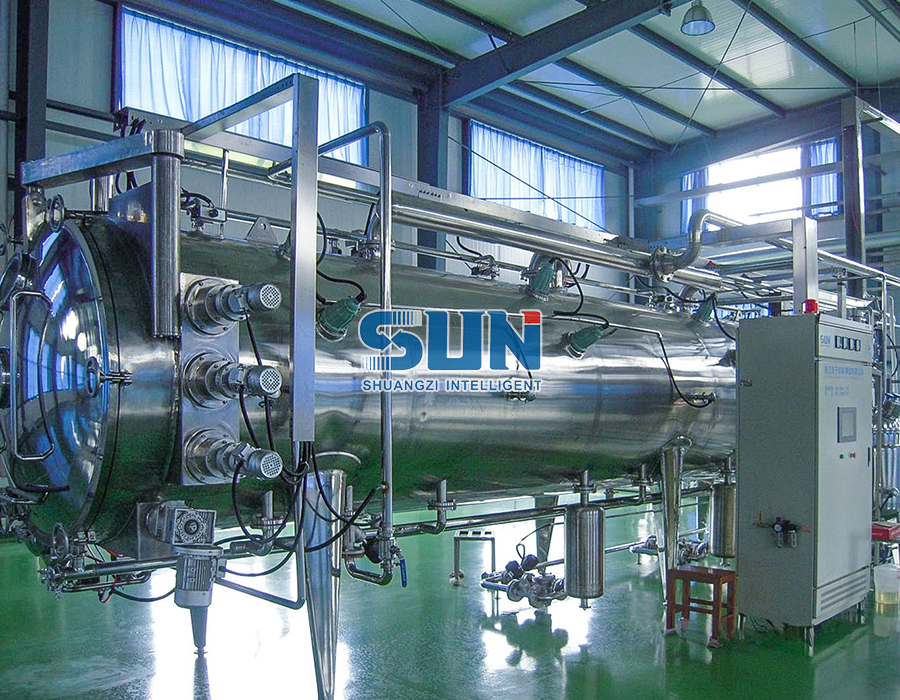
Full Automatic Vacuum Low-temperature Crawler Belt Dryer
1. The Role of Low-Temperature Vacuum Drying in Modern Processing
Drying is often one of the most important and technically sensitive stages in a production process. Removing water improves storage stability, reduces the risk of microbial growth, lowers transportation costs, and creates a product form suitable for milling, blending, tableting, encapsulation, or instant dissolution. However, drying can also change a product’s physical and chemical properties.
Many botanical extracts, pharmaceutical intermediates, fermentation products, enzymes, vitamins, natural colors, flavor compounds, and food ingredients are sensitive to heat, oxygen, shear, or prolonged exposure to the environment. Excessive temperature can cause discoloration, oxidation, loss of volatile components, degradation of active substances, or unwanted reactions between sugars, proteins, and other components.
Vacuum drying lowers the boiling point of water. At reduced pressure, moisture can evaporate at a lower product temperature than would be required at atmospheric pressure. This makes it possible to remove water while limiting thermal stress. The crawler belt configuration adds continuous movement and a large effective heat-transfer area, helping transform a traditionally static vacuum operation into a dynamic production process.
The result is a system that aims to combine the product protection associated with vacuum low-temperature drying with the productivity and automation associated with continuous industrial equipment.
1.1 Why conventional batch vacuum ovens can be limiting
Vacuum ovens are widely used because they are comparatively simple and can provide controlled drying conditions. Nevertheless, they generally require loading and unloading between batches. Operators may need to distribute material manually, monitor the drying process, remove the dried material, clean the chamber, and prepare the system for the next cycle.
This batch arrangement can create several production challenges:
1. Intermittent output and longer nonproductive intervals.
2. Higher labor requirements for loading, unloading, and material handling.
3. Potential variation between batches caused by differences in layer thickness, loading quantity, or drying time.
4. Greater exposure of the product to the surrounding environment during transfer.
5. Difficulty scaling production without adding more chambers and more manual operations.
The full automatic vacuum crawler belt dryer addresses these issues by continuously conveying the material through multiple drying layers. The system is designed to feed and discharge under vacuum conditions, reducing the need to repeatedly open the main chamber.
1.2 Comparison with spray drying
Spray drying is an effective technology for many low- to medium-viscosity liquids. It atomizes the feed into droplets and dries them rapidly in a hot gas stream. However, some products are difficult to atomize or may require high inlet temperatures. High-viscosity extracts, concentrated liquids, products containing significant fat, and high-sugar formulations can create operating problems such as nozzle blockage, poor atomization, wall sticking, powder agglomeration, and reduced recovery.
A vacuum crawler belt dryer does not depend on fine atomization. The feed is distributed as a layer on the belt, where heat and vacuum drive moisture removal. This makes the equipment a useful alternative for materials that are unsuitable for stable spray-drying operation. It can also be considered as a downstream drying system for concentrated extracts or as an alternative process when the desired product structure differs from the spherical powder typically produced by spray drying.
1.3 Comparison with freeze drying
Freeze drying is recognized for its ability to preserve delicate structures and heat-sensitive constituents. However, it normally requires freezing, primary drying by sublimation, and secondary drying. These stages can require long processing times, significant refrigeration and vacuum energy, and high investment in equipment and facilities.
The vacuum low-temperature crawler belt dryer operates without relying on the complete freeze-drying cycle. Under suitable process conditions, it can continuously produce dry material in approximately 30 to 60 minutes, depending on the product, feed characteristics, layer thickness, temperature, vacuum level, and target moisture content. The supplied technical information indicates that operating and production costs may be substantially lower than those associated with freeze drying. Actual savings depend on the specific formulation, utilities, labor model, and plant configuration, so final performance should be confirmed through pilot testing and process validation.
2. Product Construction and Operating Principle
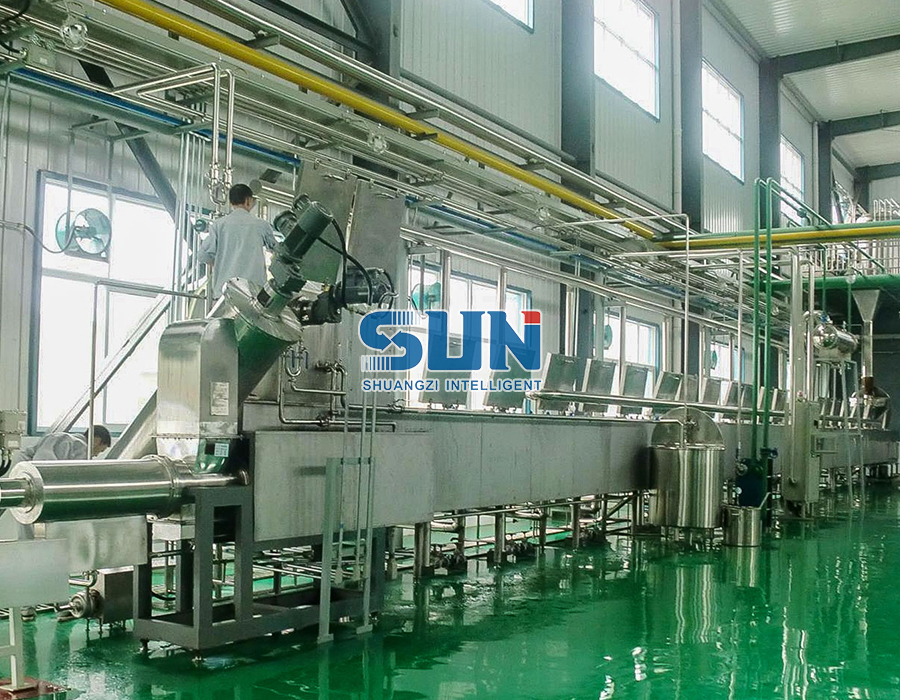
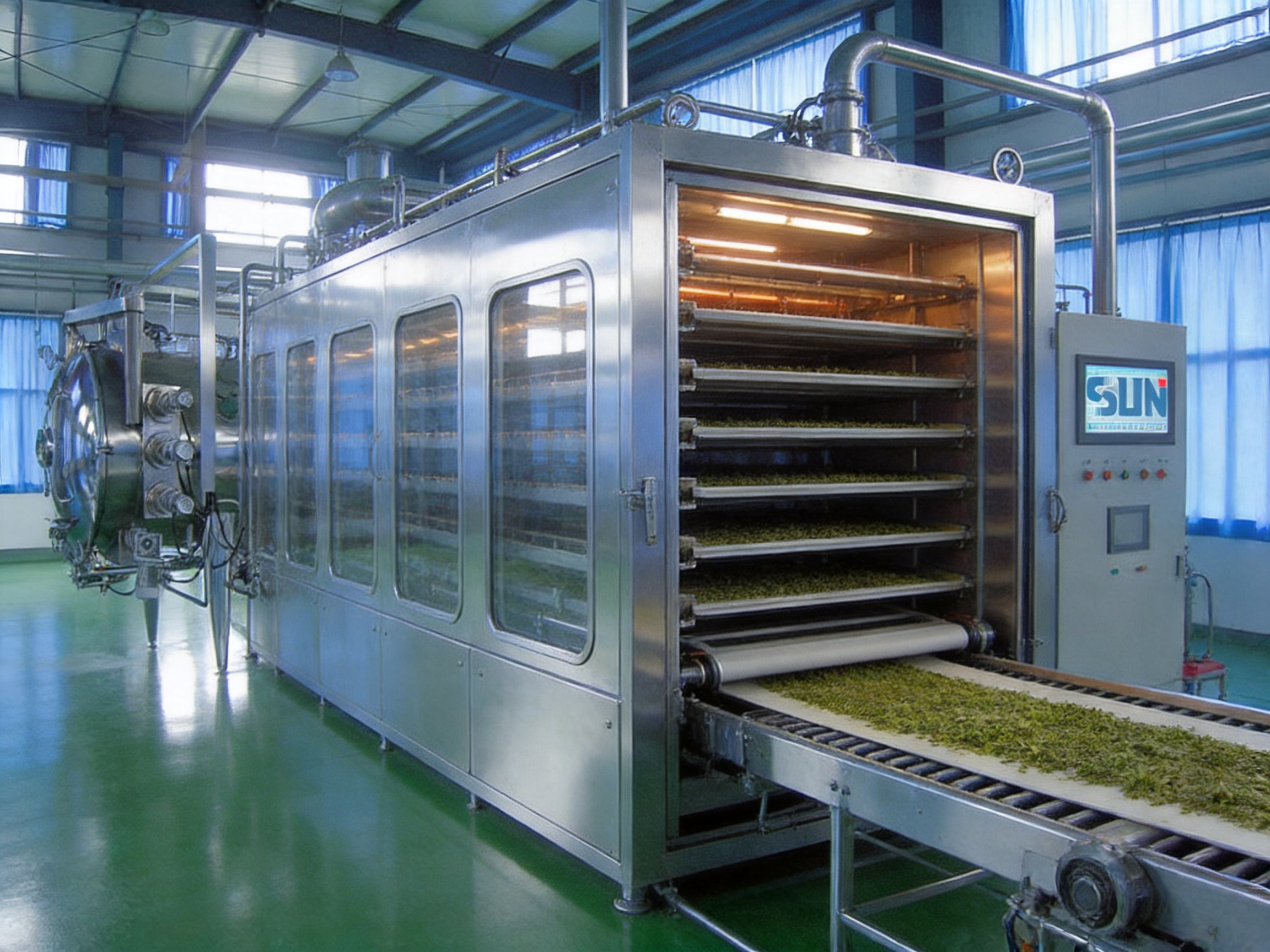
The equipment consists of an enclosed vacuum drying chamber, a multilayer crawler belt conveying system, heating sections, a cooling section, vacuum and condensation systems, feeding and discharge mechanisms, control instrumentation, and cleaning equipment. Depending on the project, it can also be connected to crushing, granulation, powder handling, packaging, and central plant utilities.
2.1 Enclosed vacuum chamber
The drying chamber provides a controlled environment with reduced pressure. Enclosure limits contact between the material and the outside atmosphere, supporting hygienic production and reducing the risk of contamination during drying. Vacuum operation also promotes moisture evaporation at relatively low product temperatures.
The chamber is divided into several process sections. The larger models may include five heating sections and one cooling section, while smaller configurations generally include four heating sections and one cooling section. Separate sections allow the process conditions to be adjusted according to the changing moisture content of the material as it moves through the machine.
2.2 Multilayer crawler belt
The crawler belt creates a long effective drying path within a compact footprint. Instead of requiring a single extremely long chamber, the belt travels through several layers. Material is introduced onto the upper or designated feeding layer and moves progressively through the heating and cooling zones.
Belt speed can be adjusted within the stated range of approximately 100 to 1,500 millimeters per minute. This adjustment gives operators a method for controlling residence time. A slower belt speed generally provides longer exposure, while a higher speed may be used for materials with lower moisture loads or faster drying characteristics.
The belt width varies by model. The listed configurations include belt widths of approximately 1,200 millimeters and 1,365 millimeters, with six to ten belt layers. The combination of width, number of layers, effective heating area, and belt speed determines the practical production capacity.
2.3 Heating and cooling sections
The supplied equipment range uses superheated water as the heating medium. Superheated water provides controlled and relatively uniform heat transfer while avoiding direct contact between steam and the product. The heating control temperature is listed at approximately 40 to 125 degrees Celsius for the standard models, although the broader product description identifies a possible drying-temperature adjustment range of approximately 25 to 150 degrees Celsius depending on process requirements and configuration.
Temperature selection should be based on the material’s thermal stability, viscosity, solids content, desired residual moisture, and quality attributes. The actual product temperature may differ from the utility or jacket temperature, particularly during the early stage of drying when evaporative cooling is strong.
After passing through the heating sections, the material enters the cooling section. Cooling helps stabilize the dried product before discharge, crushing, granulation, or packaging. It may also reduce the risk of condensation or caking during subsequent handling.
2.4 Vacuum and condensation system
As moisture evaporates, the vapor must be continuously removed from the chamber. The condensation system captures the evaporated water and helps maintain the required vacuum level. The listed vacuum degree ranges are approximately 1,240 to 4,800 pascals for some models and approximately 1,480 to 5,400 pascals for larger models.
Stable vacuum control is essential. Excessive pressure may slow evaporation, while an unsuitable pressure profile may cause foaming, bubbling, splashing, or excessive product expansion. The optimum pressure depends on the formulation and should be established during process development.
2.5 Feeding and discharge under vacuum
One of the system’s most significant engineering features is its ability to support continuous feeding and discharge while the main drying chamber remains under vacuum. This solves a major challenge associated with continuous vacuum processing. If material could only be added or removed after breaking the vacuum, the process would lose much of its productivity and energy advantage.
Controlled feeding helps produce a consistent layer on the belt. Layer thickness is a key process variable because it influences heat penetration, moisture migration, drying time, and the final physical structure of the product. The discharge system is designed to transfer dried material to downstream equipment while limiting manual intervention.
2.6 Integrated crushing and granulation
The product description states that drying, crushing, and granulation can be completed under vacuum. These operations may be integrated into the complete production line or configured as connected stages, depending on the material and customer requirements.
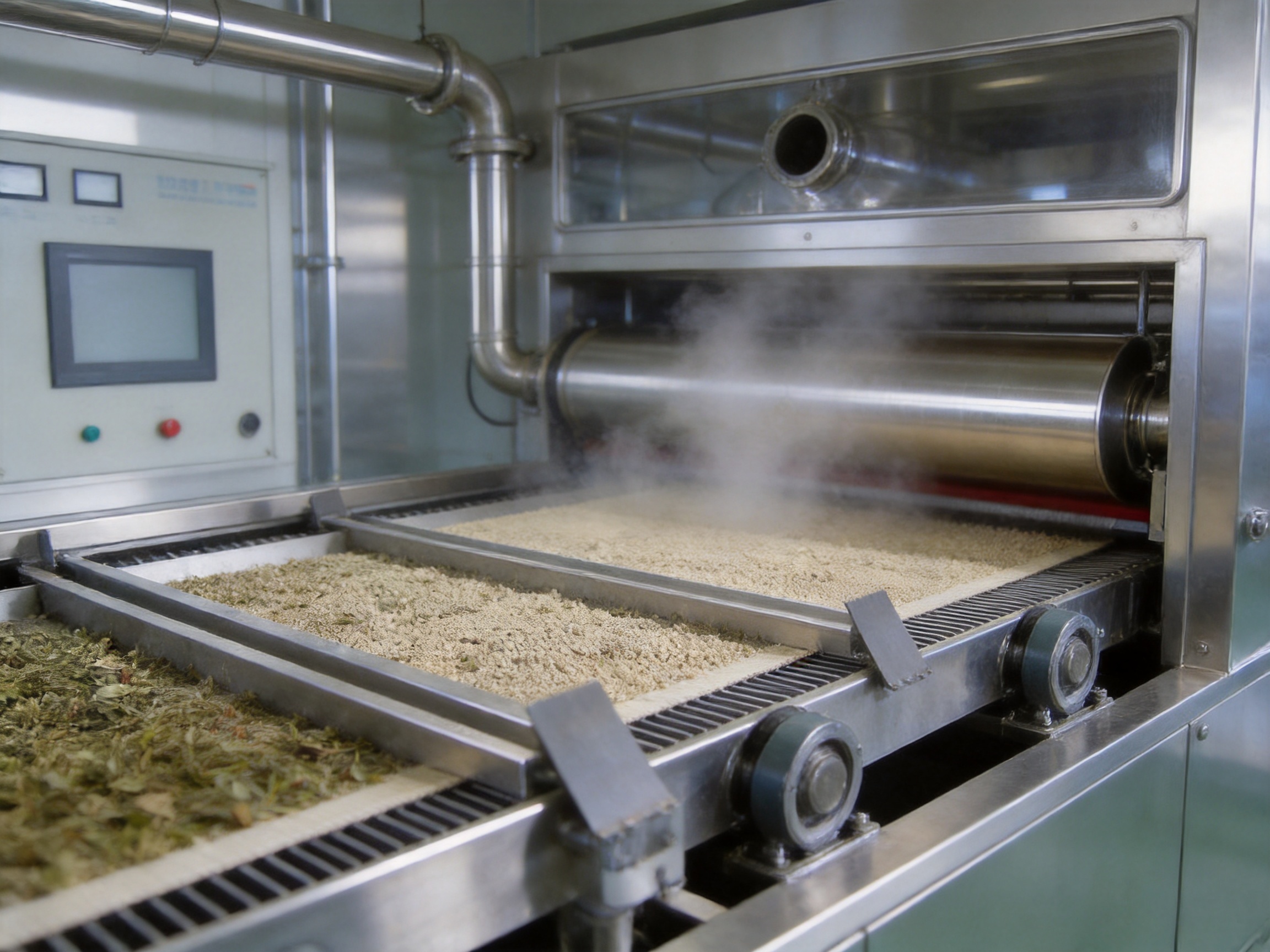
After drying, the product is described as porous and loose. When crushed to the required particle diameter, it may have good flowability and can be suitable for direct tableting or capsule filling, subject to formulation development and pharmaceutical validation. The internal microporous structure can also support rapid wetting and dissolution, which is valuable for instant food products, soluble extracts, and certain pharmaceutical or nutraceutical formulations.
3. Product Quality and Physical Characteristics
Drying technology should be evaluated not only by water-removal capacity but also by the quality of the final product. A low final moisture value is important, but it is not sufficient by itself. Particle structure, color, aroma, density, solubility, flowability, active-ingredient retention, and batch consistency may be equally important.
3.1 Porous and loose product structure
The controlled low-temperature vacuum environment can promote the formation of a porous and loose structure. As moisture leaves the material, the product may develop internal voids. The final structure depends on the feed formulation, solids concentration, viscosity, gas content, belt loading, pressure profile, and temperature program.
A porous structure can offer several advantages:
1. Lower bulk density and easier milling.
2. Improved rehydration and wetting.
3. Rapid dissolution in water or other compatible liquids.
4. Better suitability for powder blending and downstream formulation.
5. Potentially improved handling after controlled granulation.
These benefits should be verified for every product because different materials respond differently to vacuum drying.
3.2 Crystallization effects
The supplied information indicates that slow drying for approximately 30 to 60 minutes can provide a certain degree of crystallization in some dried granules. Crystallization behavior depends on the composition of the feed, especially the presence of sugars, salts, organic acids, and other crystallizable substances. The process may be adjusted to achieve a desired balance between amorphous and crystalline phases.
Controlled crystallization can influence powder flow, hygroscopicity, compactability, dissolution, and storage stability. However, crystallization is not universally desirable. Some active ingredients or extracts may need to remain amorphous or require a specific solid-state form. For this reason, differential scanning calorimetry, X-ray diffraction, microscopy, moisture sorption testing, and other appropriate analytical methods may be used during development.
3.3 Moisture control
The listed product moisture target is below approximately 4 percent, while the listed feed moisture content is below approximately 40 percent. These values provide a reference for the equipment range rather than a guarantee for every material. Actual performance depends on the composition and rheology of the feed, initial solids content, desired residence time, and operating conditions.
For pharmaceutical, food, and botanical products, moisture should be measured using a validated analytical method. Loss-on-drying, Karl Fischer titration, near-infrared analysis, or another suitable method may be selected according to the product matrix.
3.4 Batch consistency
Continuous conveying, automated temperature control, controlled feeding, and stable vacuum operation can help reduce variation between production runs. The system may also support recipe management and data recording when integrated with an appropriate control platform.
Consistency depends on more than machine design. Feed preparation, upstream concentration, solids uniformity, filtration, storage time before drying, belt loading, and downstream packaging all affect the finished product. A complete process design should therefore consider the entire line rather than treating the dryer as an isolated unit.
4. Main Advantages Over Conventional Drying Equipment
4.1 Continuous production
The dryer is designed for continuous operation rather than isolated batch cycles. Continuous production can improve equipment utilization and simplify production planning. It may also reduce the time spent waiting for chamber unloading, manual transfer, and reloading.
The listed equipment models provide water evaporation capacities from approximately 60 to 230 kilograms per hour, depending on configuration. These figures should be treated as design references because actual evaporation capacity varies with the feed material and process conditions.
4.2 Lower-temperature processing
Vacuum operation enables moisture removal at lower product temperatures than atmospheric drying. This is especially important for thermosensitive materials, natural products, and formulations where color, aroma, or biological activity must be protected.
The system allows the heating temperature to be adjusted according to the process requirements. A carefully designed temperature profile can begin gently and increase or decrease as the material changes from a concentrated liquid to a dried solid.
4.3 Suitability for difficult materials
High-viscosity, high-fat, and high-sugar materials often create challenges for spray dryers and other conventional systems. They may be difficult to atomize, may stick to hot surfaces, or may form unstable powders. The crawler belt design uses a supported layer rather than relying on atomization, making it suitable for a broader range of feed properties.
Potential applications include concentrated plant extracts, fermentation broths after suitable pretreatment, pharmaceutical intermediates, nutraceutical concentrates, natural food ingredients, syrups, viscous solutions, and selected solid or semi-solid materials.
4.4 Reduced operator requirements
The equipment is intended to provide a high level of automation, including automatic feeding, conveying, temperature control, vacuum management, discharge, and cleaning. The product information indicates that the system can substantially reduce labor requirements, with a stated operating requirement of approximately two additional operators in the relevant production arrangement.
Actual staffing depends on the degree of automation, shift organization, safety procedures, material handling system, quality-control requirements, and local regulations. Even so, replacing repeated manual loading and unloading with controlled conveying can reduce labor intensity and improve operational repeatability.
4.5 Lower operating costs than alternative technologies
The supplied information states that production and operating costs may be approximately one-third of those associated with vacuum ovens and spray drying, and approximately one-sixth of those associated with freeze drying. These comparisons are indicative rather than universal. They may reflect a combination of energy consumption, labor, throughput, drying time, and equipment utilization.
A customer should request a project-specific utility and cost evaluation. Important variables include steam or hot-water consumption, cooling-water consumption, electrical power, vacuum-pump operation, cleaning cycles, maintenance, yield, product recovery, and the cost of upstream and downstream equipment.
4.6 Short processing time
The standard product description indicates a drying time of approximately 30 to 60 minutes and continuous dry-powder production. A stated dry-powder yield of up to approximately 99 percent is also provided. These values depend on the feed and should be validated through trials.
Short residence time can reduce the period during which a product is exposed to heat and vacuum. It can also improve production scheduling and reduce work-in-process inventory. However, achieving a short cycle while maintaining product quality requires proper control of feed thickness, vacuum, heating, belt speed, and vapor removal.
4.7 Hygienic design and automatic cleaning
Online automatic cleaning is identified as a major feature, with the system designed to support GMP requirements. Hygienic design may include suitable material selection, accessible inspection points, controlled drainage, minimized dead zones, smooth product-contact surfaces, and validated cleaning procedures.
Cleaning pressure is listed at approximately 0.6 MPa, while compressed-air pressure is listed at approximately 0.7 MPa. These values describe utility requirements for the listed configurations. Cleaning validation must be based on the actual product, soil characteristics, detergent, temperature, contact time, rinse quality, and sampling method.
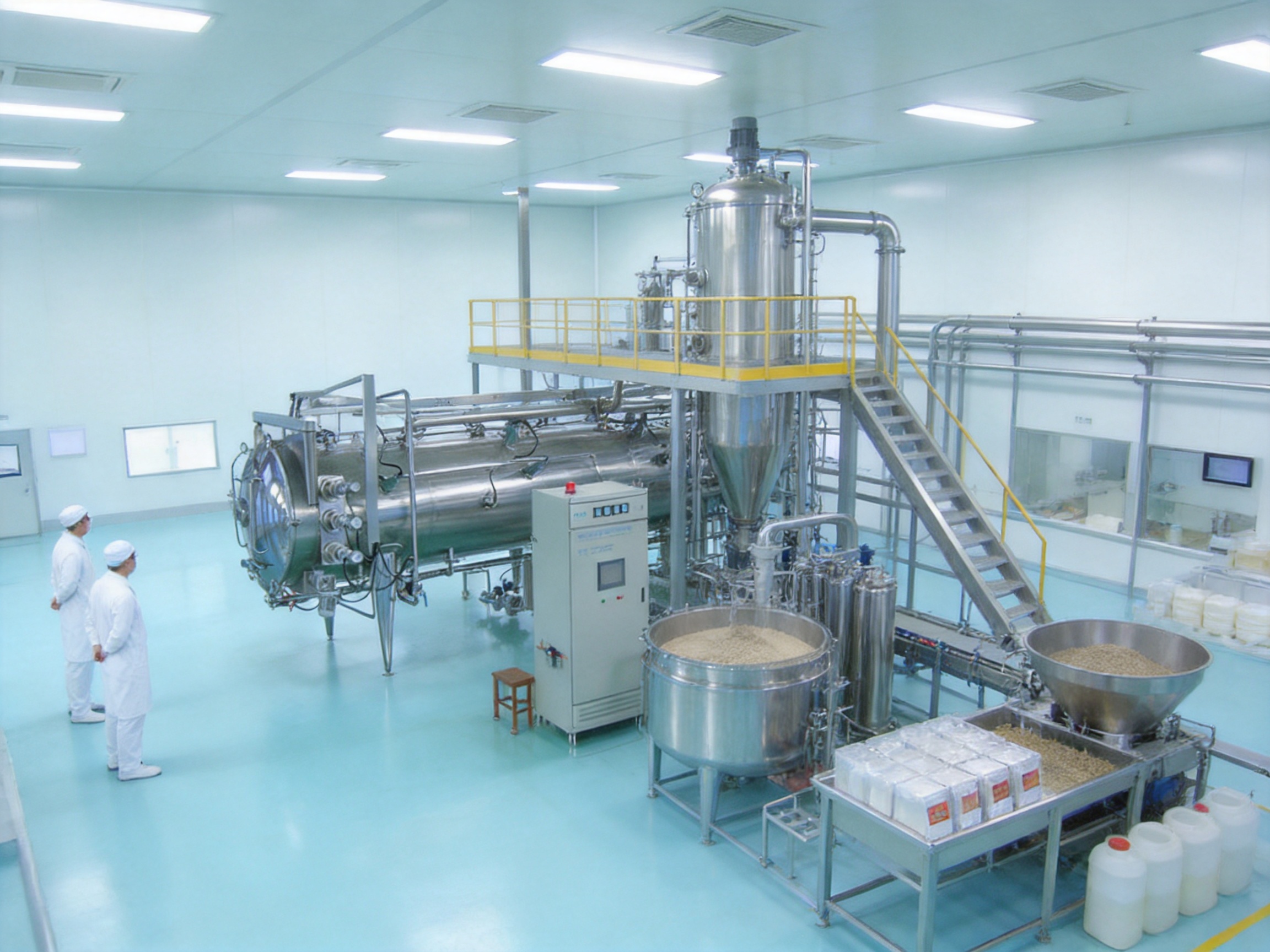
5. Technical Specifications and Model Range
The equipment is available in multiple configurations. The following table summarizes the principal parameters supplied for the full automatic vacuum low-temperature crawler belt dryer range. Minor specification changes may be made during engineering design to reflect the material, plant layout, local utility conditions, and customer requirements.
| Parameter | Model 1 | Model 2 | Model 3 | Model 4 | Model 5 | Model 6 | Model 7 |
|---|---|---|---|---|---|---|---|
| Total heat-transfer area, m² | 88.5 | 101.6 | 131.8 | 161 | 184 | 207 | 230 |
| Effective heating area, m² | 70 | 87 | 104.7 | 116 | 142.8 | 160 | 178.5 |
| Effective cooling area, m² | 9.9 | 13.3 | 15.6 | 17.8 | 25.2 | 28.4 | 31.5 |
| Condensing area, m² | 42 | 50 | 60 | 70 | 85 | 95 | 110 |
| Water evaporation, kg/h | 60–90 | 80–110 | 90–135 | 110–150 | 130–180 | 150–210 | 140–230 |
| Belt width, mm | 1,200 | 1,200 | 1,365 | 1,365 | 1,365 | 1,365 | 1,365 |
| Belt layers | 6 | 6 | 7 | 7 | 8 | 9 | 10 |
| Equipment diameter, mm | 2,400 | 2,400 | 2,800 | 2,800 | 3,000 | 3,500 | 3,600 |
| Equipment length, mm | 13,500 | 16,500 | 15,000 | 16,500 | 18,000 | 18,000 | 18,000 |
| Heating and cooling sections | 4 heating + 1 cooling | 4 heating + 1 cooling | 4 heating + 1 cooling | 4 heating + 1 cooling | 5 heating + 1 cooling | 5 heating + 1 cooling | 5 heating + 1 cooling |
| Heating medium | Superheated water | Superheated water | Superheated water | Superheated water | Superheated water | Superheated water | Superheated water |
| Steam consumption, kg/h | 90–135 | 120–165 | 135–200 | 165–225 | 195–270 | 225–315 | 240–345 |
| Heating control temperature, °C | 40–125 | 40–125 | 40–125 | 40–125 | 40–125 | 40–125 | 40–125 |
| Belt speed, mm/min | 100–1,500 | 100–1,500 | 100–1,500 | 100–1,500 | 100–1,500 | 100–1,500 | 100–1,500 |
| Feed moisture content | <40% | <40% | <40% | <40% | <40% | <40% | <40% |
| Product moisture content | <4% | <4% | <4% | <4% | <4% | <4% | <4% |
| Cleaning pressure, MPa | 0.6 | 0.6 | 0.6 | 0.6 | 0.6 | 0.6 | 0.6 |
| Compressed air, MPa | 0.7 | 0.7 | 0.7 | 0.7 | 0.7 | 0.7 | 0.7 |
| Vacuum range, Pa | 1,240–4,800 | 1,240–4,800 | 1,240–4,800 | 1,480–5,400 | 1,480–5,400 | 1,480–5,400 | 1,480–5,400 |
| Total installed power, kW | 68 | 70 | 85 | 90 | 120 | 130 | 110 |
| Cooling-water consumption at approximately 25°C, t/h | 18 | 20 | 23 | 25 | 30 | 35 | 40 |
The model range allows users to select equipment according to evaporation demand, floor space, belt area, utility availability, and future production plans. A larger model is not always the best choice. Material testing should determine the required heat-transfer area and residence time before final selection.
6. Application Areas
6.1 Plant extraction
Plant extracts may contain heat-sensitive active compounds, volatile oils, pigments, sugars, proteins, and other complex components. After extraction and concentration, the resulting liquid may be viscous or sticky. The vacuum crawler belt dryer can provide a controlled route for converting concentrated extracts into a dry, millable, and potentially fast-dissolving product.
Applications may include botanical powders, herbal extracts, natural pigments, functional ingredients, and standardized plant-derived materials. The final process must be selected according to the active ingredients and any regulatory requirements related to identity, potency, residual solvents, microbial limits, and stability.
6.2 Biological fermentation
Fermentation-derived materials can be difficult to dry because they may contain proteins, cells, metabolites, salts, sugars, and residual nutrients. Some biological products also require careful temperature control to preserve activity or functionality.
The system may be used after suitable upstream separation and concentration. Its low-temperature vacuum environment can help limit thermal exposure, while continuous operation can support industrial-scale production. For products containing living organisms or active biological substances, process development must establish whether vacuum, temperature, residence time, and shear are compatible with the required activity.
6.3 Pharmaceutical and nutraceutical processing
Pharmaceutical and nutraceutical materials often require controlled moisture, uniformity, good flowability, and a defined particle-size distribution. A porous dried product may be advantageous for milling, blending, tableting, or capsule filling.
The equipment can be designed around GMP-oriented requirements, including controlled materials of construction, cleaning procedures, documentation, data recording, and validation support. The precise compliance package depends on the project scope and the regulatory jurisdiction in which the equipment will be installed.
6.4 Natural food ingredients
Food products may benefit from rapid dissolution, preservation of natural color, retention of aroma, and improved storage stability. The dryer can be applied to selected fruit concentrates, vegetable extracts, sweetener systems, flavor preparations, and functional food ingredients, particularly when the feed is too viscous or sticky for efficient spray drying.
Food-grade material selection, hygienic construction, allergen control, cleaning verification, and appropriate food-safety documentation should be included in the project design.
6.5 Difficult-to-dry liquids and solids
The equipment is intended to handle a range of liquid and solid materials that are difficult to process using conventional drying technologies. The key factors are the material’s ability to form a stable layer, its response to vacuum, its tendency to stick, and its required final moisture and physical form.
Laboratory or pilot-scale testing is recommended before full-scale manufacture. Testing can establish feed preparation requirements, maximum layer thickness, heating profile, belt speed, vacuum setpoints, discharge behavior, and cleaning conditions.
7. Engineering, Manufacturing, and Project Delivery Strengths
A sophisticated drying machine requires more than a heating chamber and a conveyor. Its performance depends on process engineering, fabrication accuracy, vacuum integrity, automation, hygienic design, utility integration, and commissioning. Zhejiang Shuangzi Intelligent Equipment Co., Ltd. positions the product within an EPC and EPCM-oriented business model, supporting process technology, automation engineering design, equipment manufacture, purchased equipment coordination, installation, system integration, and line commissioning.
7.1 Process technology development
The company focuses on vacuum low-temperature drying, fermentation, extraction, concentration, separation, crystallization, filtration, and related processes. This breadth is valuable because drying performance is closely connected to upstream and downstream operations.
For example, the concentration level before drying affects viscosity and evaporation load. Filtration affects feed uniformity and solids distribution. Crystallization influences product structure. Downstream crushing and packaging determine whether the dried material remains free-flowing and stable. An integrated engineering approach can therefore reduce the risk of designing a dryer that performs well in isolation but poorly within the complete line.
7.2 Manufacturing infrastructure
The company was established in 2007 and operates facilities with a reported floor area of approximately 16,706 square meters and a structural area of approximately 17,800 square meters. It also maintains a pilot production workshop and research and development platform intended to support process testing and automation development.
Pilot facilities are particularly important for difficult drying applications. They allow engineers to test the product before finalizing the full-scale design. The resulting information can be used to select the belt area, heating sections, condensation capacity, vacuum system, cleaning method, and control strategy.
7.3 Advanced fabrication and welding capabilities
The reported manufacturing equipment includes plasma argon-arc welding machines, plasma cutting machines, computer-aided manufacturing equipment, and CNC machining centers. These capabilities support the fabrication of pressure-containing, vacuum-tight, hygienic, and dimensionally controlled equipment.
High-quality welding is important for vacuum equipment because leaks can reduce drying performance, increase energy consumption, and make pressure control unstable. It is also important for hygienic processing because poor welds, crevices, or rough surfaces can retain product residues and complicate cleaning.
Precision cutting and machining help maintain alignment of rotating or conveying components, improve fit-up during assembly, and support repeatable fabrication across different equipment sizes. Inspection, surface finishing, weld-quality control, pressure testing, and vacuum testing should be included in the project quality plan.
7.4 Automation and system integration
The dryer can be incorporated into an automated production line with upstream extraction, filtration, concentration, feeding, and downstream crushing, granulation, conveying, and packaging systems. Automation may include programmable process sequences, temperature regulation, vacuum control, belt-speed adjustment, alarm management, cleaning cycles, and production data recording.
Integration reduces the number of manual transfers and can improve traceability. It also allows the manufacturer to coordinate equipment interfaces, utility requirements, control logic, and safety functions across the line.
7.5 Turnkey project capability
The company offers services covering engineering, process design, equipment design, installation, line debugging, and turnkey project implementation. This can be valuable for customers that need a complete production solution rather than a standalone dryer.
A turnkey project may include:
1. Raw-material and product-process analysis.
2. Pilot testing and process parameter development.
3. Equipment selection and detailed engineering.
4. Utility and facility planning.
5. Manufacture and factory inspection.
6. Transportation and installation support.
7. Control-system integration.
8. Commissioning and operator training.
9. Cleaning, performance, and process documentation.
10. Production ramp-up and technical support.
These services help reduce coordination gaps between multiple suppliers and provide a single engineering interface for the drying line.
8. Process Design Considerations
8.1 Feed properties
Before selecting a model, engineers should understand the feed’s viscosity, solids concentration, density, surface tension, particle content, temperature, foaming behavior, and tendency to stick. The feed should also be evaluated for chemical compatibility with product-contact materials.
A material that is pumpable at the beginning of the process may become highly viscous as water is removed. The feeding device must accommodate this change without creating unstable flow or excessive pressure. In some cases, upstream concentration or formulation adjustment may be necessary.
8.2 Layer thickness and residence time
Layer thickness affects drying efficiency and product structure. A thin layer may dry rapidly but reduce throughput per belt area. A thicker layer may increase capacity but create internal moisture gradients or extend the required residence time.
Belt speed and layer thickness should be optimized together. The aim is to provide sufficient drying while avoiding overheating, excessive shrinkage, surface sealing, or uneven residual moisture.
8.3 Pressure and temperature profile
Vacuum pressure and heating temperature should be controlled as a coordinated profile rather than as independent settings. Early-stage drying may require gentle conditions to manage foaming or splashing. Later-stage drying may require a different balance to remove bound moisture without damaging the product.
Temperature sensors should be located and calibrated appropriately. Depending on the design, operators may monitor heating-medium temperature, chamber temperature, product temperature, condenser conditions, and pressure at multiple points.
8.4 Product recovery
Product recovery depends on the feed’s adhesion characteristics, belt surface, scraper design, discharge arrangement, and dust-control system. Product-contact surfaces should be selected to support efficient release and cleaning.
Fine particles generated during crushing or discharge may require enclosed transfer, dust collection, or inert-gas provisions depending on the product’s properties and applicable safety requirements.
8.5 Cleaning and validation
Automatic online cleaning can reduce manual cleaning time, but it does not remove the need for a documented validation strategy. A suitable program should identify the worst-case product, difficult-to-clean locations, acceptable residue limits, sampling locations, rinse requirements, and inspection methods.
For pharmaceutical and food applications, cleaning procedures should be supported by appropriate records. The system may also be configured with clean-in-place features, spray devices, drainage arrangements, and controlled cleaning recipes.
9. Installation, Commissioning, and Maintenance
Large crawler belt dryers require careful installation because the equipment may be several meters in diameter and up to approximately 18 meters long. The site must provide adequate foundation strength, lifting access, maintenance clearance, utility connections, drainage, ventilation, and safe access platforms.
Commissioning normally includes mechanical inspection, vacuum-leak testing, utility verification, belt alignment, sensor calibration, control-system testing, cleaning-system testing, and dry running. Product trials then establish the operating recipe.
Routine maintenance should include inspection of belt tension and tracking, drive components, seals, vacuum valves, condenser performance, pumps, heating circuits, instrumentation, and safety devices. Preventive maintenance helps protect vacuum stability and reduce unexpected downtime.
Operators should be trained in startup, shutdown, emergency response, vacuum operation, cleaning, product changeover, sampling, and alarm handling. Written operating procedures should define acceptable limits for temperature, pressure, belt speed, feed rate, and final moisture.
10. How to Select the Correct Model
Model selection should begin with the production requirement rather than the equipment dimensions alone. The main questions include:
1. What is the hourly feed rate?
2. What are the initial and target moisture contents?
3. What is the feed temperature and viscosity?
4. Is the material heat-sensitive, oxygen-sensitive, or volatile?
5. What final particle structure and moisture level are required?
6. Is downstream crushing or granulation required?
7. What heating, cooling, vacuum, compressed-air, and electrical utilities are available?
8. What cleaning, validation, and documentation standards apply?
9. What floor space and lifting capacity are available?
10. Is future capacity expansion expected?
Evaporation capacity alone is not enough for final selection. Two products with the same water load may require different belt areas because of different viscosities, thermal sensitivities, layer-forming properties, or target structures. Pilot testing provides the most reliable basis for scale-up.
11. Sustainability and Resource Efficiency
Industrial drying can consume substantial energy because water has a high latent heat of vaporization. The vacuum crawler belt design may improve resource efficiency through continuous production, controlled heating, reduced manual handling, and shorter residence time compared with certain batch processes.
Potential efficiency measures include heat recovery from condensate, insulation of heated surfaces, optimization of vacuum-pump operation, reuse of cooling water, recovery of warm process water, and integration with existing plant utilities. The actual environmental performance should be calculated using the complete system boundary, including upstream concentration and downstream powder handling.
Reducing product loss is also important. High recovery, stable feeding, and enclosed transfer can reduce waste. Automatic cleaning may help reduce the volume of manual cleaning work and improve changeover repeatability when properly designed.
12. Frequently Asked Questions
Q1: What materials are suitable for a vacuum low-temperature crawler belt dryer?
The equipment is suitable for many liquid, semi-solid, and selected solid materials, including concentrated plant extracts, fermentation products, pharmaceutical intermediates, nutraceuticals, natural food ingredients, and difficult-to-dry high-viscosity, high-fat, or high-sugar materials. Suitability depends on feed behavior and should be confirmed through testing.
Q2: Can the dryer process heat-sensitive materials?
Yes. Vacuum operation lowers the boiling point of water and allows moisture removal at controlled low temperatures. The heating profile can be adjusted according to the material’s thermal stability. Product-temperature testing is recommended for sensitive formulations.
Q3: Does the machine operate continuously?
Yes. The crawler belt conveys material through several heating and cooling sections, and the system is designed to support continuous feeding and discharge under vacuum conditions.
Q4: How long does drying take?
The supplied product information indicates an approximate drying time of 30 to 60 minutes. Actual residence time depends on feed moisture, solids content, layer thickness, temperature, vacuum level, belt speed, and the required final moisture content.
Q5: What final moisture can be achieved?
The listed technical parameters identify a product moisture content below approximately 4 percent. The achievable value must be verified for the specific product and validated using an appropriate moisture-analysis method.
Q6: Can the dried material be used for tableting or capsule filling?
The product may develop a porous, loose structure with good flowability after suitable crushing and granulation. It may therefore be suitable for tableting or capsule filling, subject to formulation development, particle-size control, excipient selection, and pharmaceutical validation.
Q7: Is the equipment suitable for spray-drying alternatives?
It can be an alternative for materials that are difficult to atomize or that create sticking and recovery problems in spray dryers. It is especially relevant to high-viscosity, high-fat, and high-sugar feeds. Comparative trials should be conducted before changing an established process.
Q8: How does it compare with freeze drying?
The crawler belt dryer can provide continuous operation and may require less time and lower operating cost than freeze drying for suitable materials. Freeze drying may still be preferred when preservation of a frozen structure or exceptionally delicate product attribute is essential.
Q9: Does the dryer include automatic cleaning?
The product is designed to support online automatic cleaning and GMP-oriented operation. Cleaning performance depends on equipment configuration, product residues, cleaning agents, water quality, and validation procedures.
Q10: What utilities are required?
Typical utilities include heating medium, cooling water, electrical power, vacuum service, compressed air, and cleaning water. The exact requirements vary by model. The listed models have installed power from approximately 68 to 130 kW and cooling-water consumption from approximately 18 to 40 tonnes per hour.
Q11: Can the manufacturer provide a complete production line?
The company provides process engineering, equipment design, manufacturing, installation, commissioning, system integration, and turnkey project services. A complete line may combine extraction, filtration, concentration, drying, crushing, granulation, and packaging equipment.
Q12: Why is pilot testing important?
Pilot testing determines how the material forms a layer, how quickly it dries, whether it sticks, how it responds to vacuum, and what final structure is produced. It also provides data for model selection, utility calculation, process control, and quality validation.
13. Conclusion
The full automatic vacuum low-temperature crawler belt dryer is a continuous drying solution for manufacturers that need gentle processing, controlled moisture removal, and automated operation. Its multilayer belt architecture provides a large effective heating area within a practical footprint, while vacuum processing supports lower-temperature drying of heat-sensitive materials.
Compared with conventional batch vacuum ovens, the system offers continuous feeding, continuous discharge, reduced manual handling, and improved production continuity. Compared with spray drying, it can handle many feeds that are too viscous, sticky, fatty, or sugar-rich for reliable atomization. Compared with freeze drying, it offers a potentially shorter and more economical route for products that do not require a complete frozen-sublimation process.
Its benefits extend beyond the dryer itself. The manufacturer’s process-development capabilities, pilot facilities, fabrication equipment, automation expertise, hygienic engineering, and turnkey project services support the development of complete production systems. For pharmaceutical, plant-extraction, fermentation, and food-processing customers, this integrated approach can simplify project execution and improve the connection between process requirements and equipment design.
Successful implementation depends on correct model selection, material testing, utility planning, hygienic design, process validation, and operator training. When these factors are addressed systematically, the vacuum low-temperature crawler belt dryer can provide a practical route to porous, loose, flowable, and rapidly dissolving dried products while supporting continuous industrial production.
References
1. Supplied technical product information for the full automatic vacuum low-temperature crawler belt dryer.
2. Supplied model-range parameters covering heat-transfer area, evaporation capacity, belt dimensions, vacuum range, utilities, and installed power.
3. General principles of vacuum drying and low-temperature moisture removal in pharmaceutical and food processing.
4. Good Manufacturing Practice principles for hygienic equipment design, cleaning, validation, and process control.
5. General engineering practices for continuous drying, heat transfer, condensation, vacuum systems, and process automation.
6. General technical guidance for pilot testing, scale-up, moisture analysis, powder characterization, and drying-process validation.