
 英语
 俄语
Content
- 1 Why High-Viscosity Extracts Require Specialized Evaporation
- 2 Working Principle of the Vacuum Scraper Evaporator
- 3 Main Technical Features
- 4 Advantages Compared with Conventional Evaporators
- 5 Application in Plant Extraction
- 6 Applications in Pharmaceutical and Food Processing
- 7 Manufacturing and Engineering Strengths
- 8 Design Considerations for Selecting a Model
- 9 Operation, Cleaning, and Maintenance
- 10 Quality, Safety, and Validation
- 11 Typical Process Arrangement
- 12 Frequently Asked Questions
- 12.1 What type of material is best suited to a vacuum scraper evaporator?
- 12.2 How does the scraper improve evaporation?
- 12.3 Why is vacuum used?
- 12.4 Can the machine prevent all fouling and coking?
- 12.5 What are the available model sizes?
- 12.6 What heating medium is specified?
- 12.7 Is the equipment suitable for ethanol or other solvents?
- 12.8 Can the evaporator be integrated into a complete plant extraction line?
- 12.9 How should the correct model be selected?
- 12.10 What information should be supplied for a technical quotation?
- 12.11 Is the equipment appropriate for pharmaceutical production?
- 12.12 What is the importance of the condenser and cooling area?
- 13 Conclusion
- 14 References
- 15 Product: Vacuum Scraper Evaporator for Plant Extract
In plant extraction, pharmaceutical processing, food production, and specialty chemical manufacturing, evaporation is often the point at which a promising process becomes difficult to control. Extracts may become increasingly viscous as solvent is removed. Suspended solids may begin to crystallize. Natural sugars, proteins, resins, pigments, and other heat-sensitive compounds may adhere to heated surfaces, form deposits, or degrade under prolonged exposure to elevated temperatures. Conventional evaporators can perform well with relatively dilute, free-flowing liquids, but they may become less effective when the feed changes into a thick, sticky, heat-sensitive, or crystallization-prone concentrate.
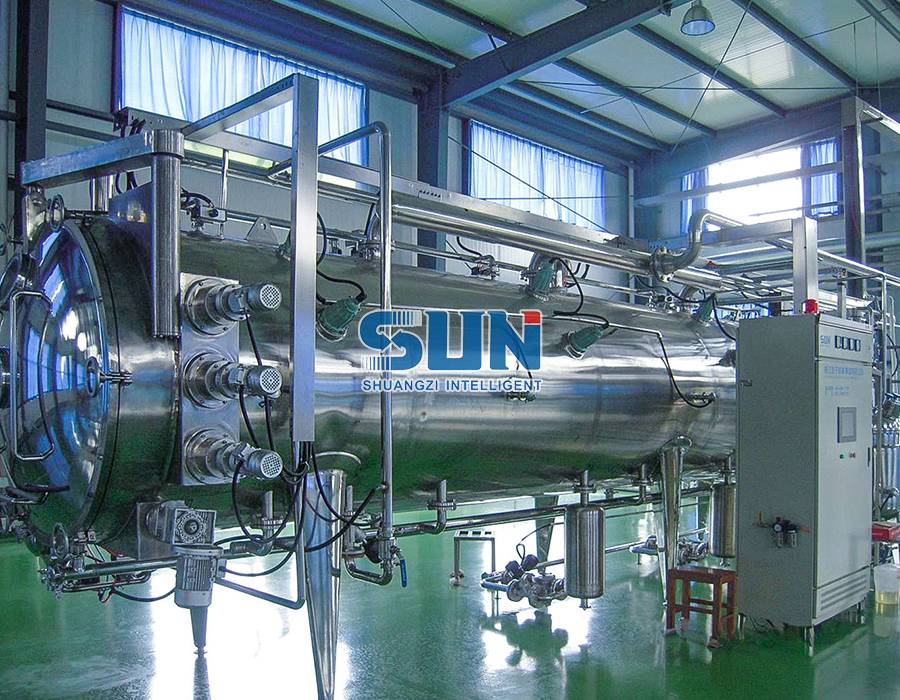
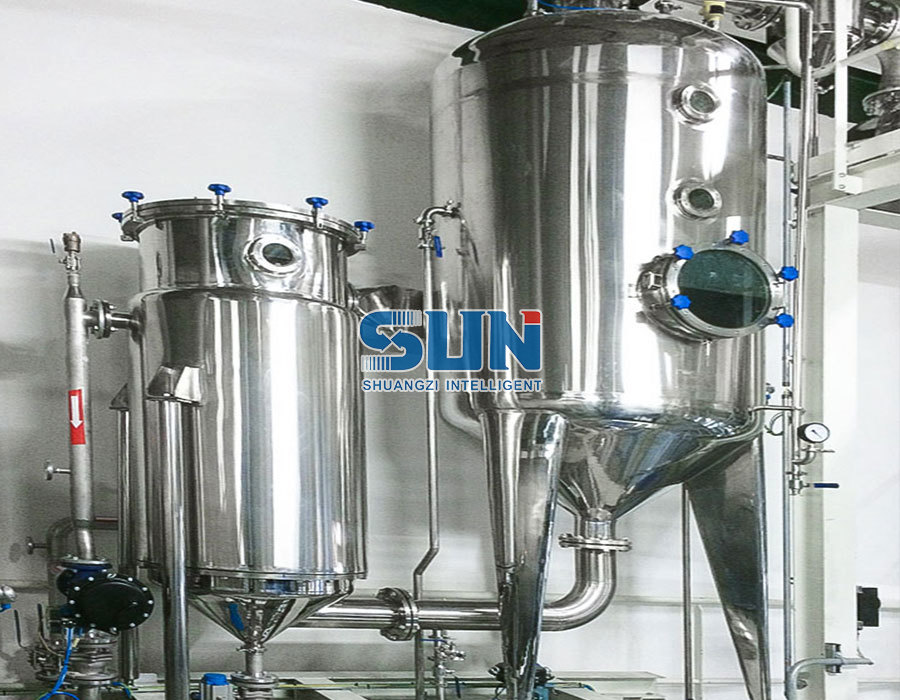
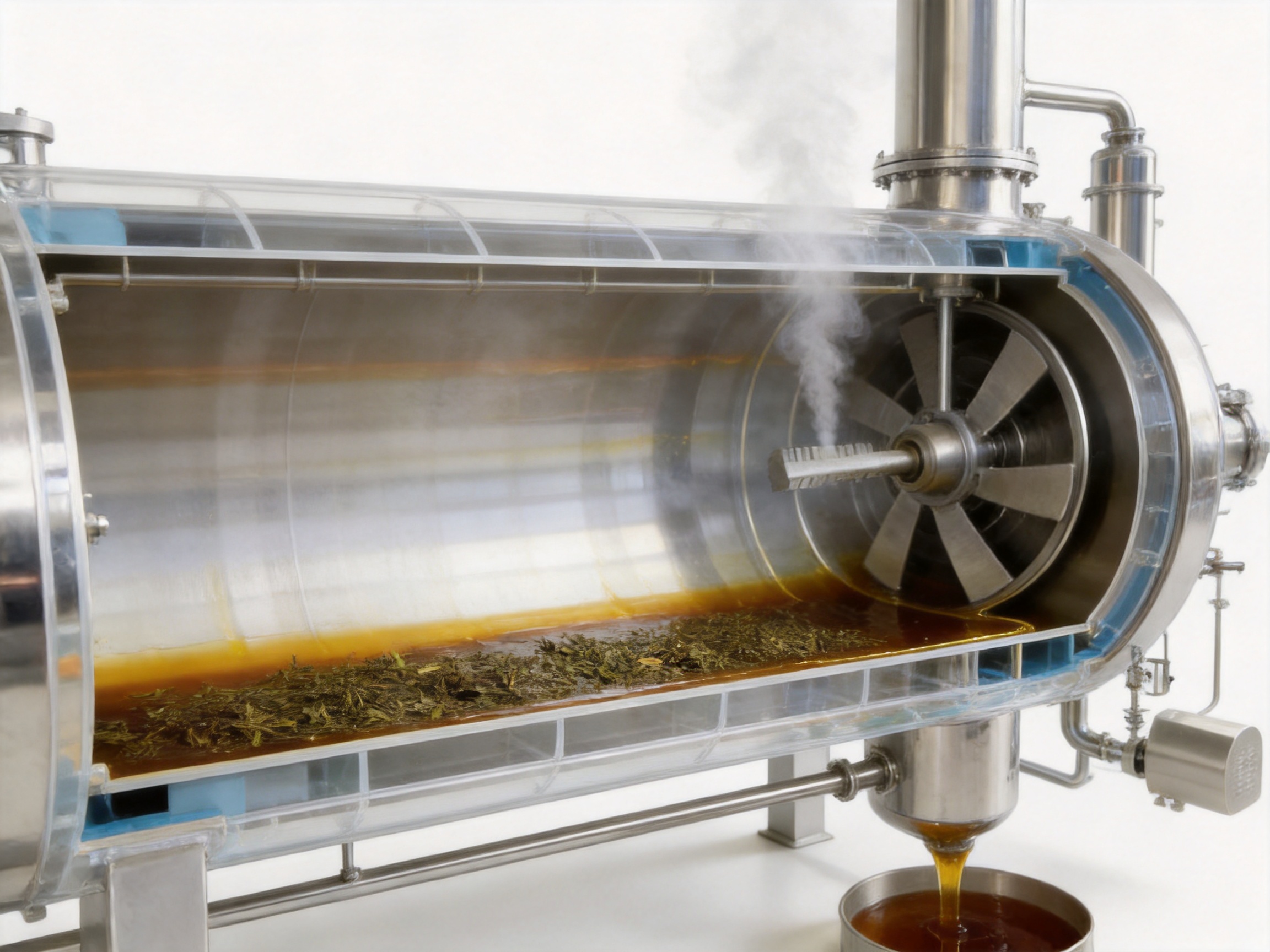
The vacuum scraper evaporator is designed for this demanding operating range. It combines vacuum evaporation with mechanically forced thin-film formation. Inside the heating cylinder, rotating scrapers continuously distribute the material across the heated wall, creating a uniform film and promoting rapid vaporization. At the same time, vacuum operation reduces the boiling temperature of the solvent. The result is a specialized concentration system intended to reduce material retention, wall sticking, coking, localized overheating, and uneven heat transfer.
This equipment is particularly suitable for plant extracts and other products whose physical properties change substantially during concentration. It can be used for traditional herbal extracts, viscous liquid medicines, jam, honey, cream, fruit pulp, high-viscosity resins, adhesives, textile auxiliaries, paste-like raw materials, and other difficult-to-process liquids. Its design also makes it appropriate for continuous production requirements in small and medium batches, pilot production, and specialized industrial lines.
The system described in this article is manufactured by Zhejiang Shuangzi Intelligent Equipment Co., Ltd., a Chinese engineering and equipment enterprise serving plant extraction, biological fermentation, pharmaceutical engineering, natural food, energy conservation, and environmental protection applications. The company combines process technology, automation engineering, equipment fabrication, system integration, installation, commissioning, and turnkey project services. These capabilities are important because an evaporator is rarely an isolated machine: its performance depends on feed preparation, heating, vacuum generation, condensation, cooling, discharge, cleaning, and control integration.
Vacuum Scraper Evaporator for Plant Extract
Why High-Viscosity Extracts Require Specialized Evaporation
Plant extraction processes commonly produce a liquid extract containing water or another solvent, dissolved active compounds, natural pigments, sugars, polysaccharides, proteins, oils, suspended particles, and other plant-derived components. During the early stage of processing, the extract may flow easily. As evaporation proceeds, the solvent percentage decreases and the concentration of solids rises. The liquid may then become substantially more viscous and may no longer behave like a conventional low-viscosity feed.
Higher viscosity affects almost every aspect of evaporation. It can reduce natural circulation, limit contact between the liquid and the heating surface, slow vapor release, and create areas where the material remains stationary. A stationary layer is vulnerable to overheating because the same portion of product may remain close to the hot wall for too long. In products containing sugars, proteins, or resinous compounds, such exposure can result in browning, coking, degradation, or the formation of a difficult-to-remove deposit.
Crystallization creates another challenge. Some concentrated extracts and process liquids contain dissolved substances that begin to crystallize as solvent is removed or temperature changes. Crystals can accumulate on heat-transfer surfaces, restrict flow channels, increase torque requirements, and reduce the effective heating area. If the equipment cannot maintain adequate movement, the process may become unstable and require frequent shutdowns for cleaning.
Heat sensitivity is equally important. Many botanical ingredients, natural colors, flavors, pharmaceutical intermediates, and biological compounds can lose quality when exposed to excessive temperature or extended residence time. A high-temperature process may increase degradation even when the final concentration is technically achieved. For these materials, reducing the boiling point and minimizing exposure time are central to protecting product quality.
A suitable evaporator must therefore do more than supply heat. It must create effective contact between the material and the heating surface, remove vapor quickly, maintain a stable operating condition, limit residence time, and prevent the concentrated product from remaining in dead zones. The vacuum scraper evaporator addresses these requirements through the combined action of vacuum operation and mechanical scraping.
Working Principle of the Vacuum Scraper Evaporator
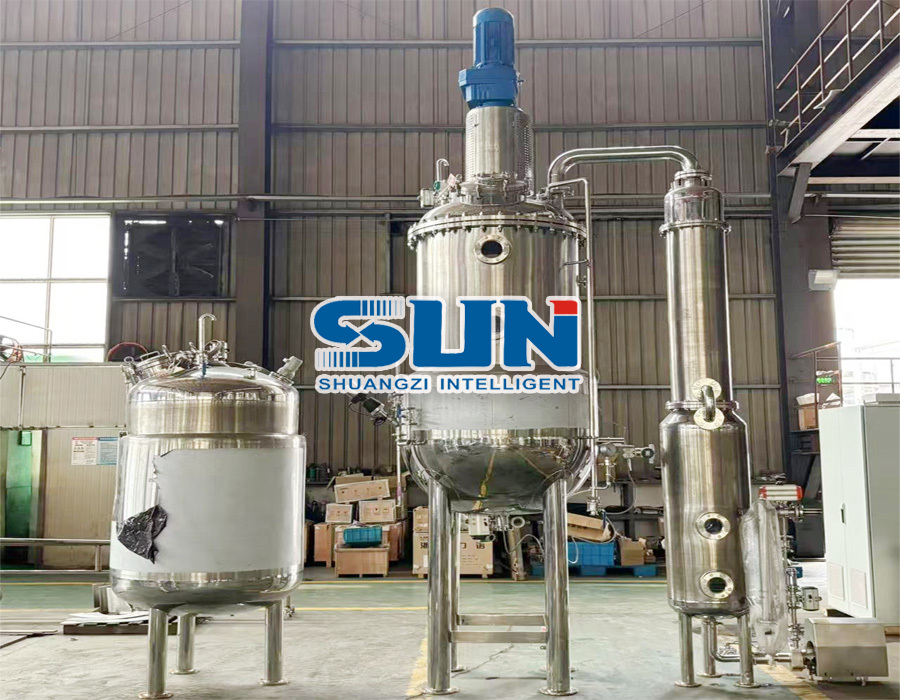
The main process vessel is a heated cylindrical body. Feed material enters the evaporator and is distributed inside the heating chamber. A rotating scraper assembly moves along the inner surface of the cylinder. The scrapers continuously spread the feed into a thin, relatively uniform film while also driving the material along the heated wall.
When the system is placed under vacuum, the boiling point of the solvent is reduced. The material can therefore release solvent vapor at a lower temperature than it would under atmospheric pressure. This operating principle is valuable for heat-sensitive extracts because it can reduce thermal stress. The exact operating temperature depends on vacuum level, product composition, heating medium, desired concentration, and process requirements, so final conditions should be established through application testing and process validation.
The thin film created by the scrapers provides a larger effective contact area between the feed and the heated surface. Because the film is continuously renewed, heat transfer is more uniform than in a vessel where a thick, stationary layer remains against the wall. The solvent vaporizes rapidly and is separated from the concentrated liquid. The secondary steam is directed toward the condensation section, while the concentrated product is collected and discharged from the lower part of the system.
The scraper movement performs several functions simultaneously. It renews the material layer, improves surface contact, promotes mixing, helps move high-viscosity liquid, and reduces the opportunity for the product to remain attached to the wall. By continuously disturbing the boundary layer, the scrapers support more consistent heat exchange throughout the evaporation cycle.
The equipment is not simply a heated tank with an agitator. Its internal scraping mechanism is specifically intended to form and maintain a moving film on the heat-transfer surface. This distinction is important when processing materials that become too viscous for ordinary circulation or standard agitation. Mechanical film formation gives the process a positive method of moving the material through the critical heating zone.
Vacuum-Assisted Low-Temperature Operation
Vacuum operation lowers the pressure above the liquid. At a lower pressure, the solvent reaches its boiling condition at a lower temperature. This can be advantageous for extracts containing volatile aromas, natural colors, active pharmaceutical substances, or other temperature-sensitive components.
Low-temperature evaporation does not mean that the process is automatically suitable for every sensitive material. Product stability depends on temperature, time, oxygen exposure, shear, concentration, pH, and other variables. Nevertheless, the ability to evaporate under reduced pressure gives the processor a valuable tool for reducing thermal load. It also allows the process engineer to select a heating condition that balances evaporation rate with product protection.
Vacuum evaporation can also assist in solvent separation. As the solvent changes into secondary steam, the vapor can be condensed and collected. Depending on the material and the process design, this may support solvent recovery, odor management, and more controlled handling of vapors. The associated condenser, cooling system, vacuum system, and collection equipment should be selected according to the solvent type, vapor load, regulatory requirements, and operating conditions.
Forced Thin-Film Formation
Thin-film formation is central to the evaporator’s performance. A thin layer generally provides a shorter heat-transfer path than a thick stagnant pool. It can also expose more of the material to the heated surface while allowing vapor to escape more efficiently. The scraper assembly maintains this film even as viscosity increases.
In a conventional vessel, a product may circulate weakly when its viscosity rises. The upper portion may move while the layer closest to the wall becomes increasingly concentrated. In a forced-film design, the rotating scrapers physically engage the material at the wall. This helps prevent the formation of a fixed, overheated layer and supports more consistent evaporation across the available heating area.
The supplied equipment specification lists a stirring speed of 32 revolutions per minute for all stated models. This relatively controlled speed is intended to provide continuous material movement without relying solely on high-speed agitation. The appropriate operating speed, however, should be confirmed against the viscosity, solids content, shear sensitivity, crystal content, and discharge requirements of the actual product.
Continuous Wall Renewal
Wall renewal is the repeated replacement of the material film adjacent to the heated surface. This action helps keep the heat-transfer interface active. It can also reduce the accumulation of sticky material and crystals on the wall, although no evaporator can eliminate fouling under all process conditions. Feed composition, temperature, residence time, concentration endpoint, cleaning practices, and operating stability remain important factors.
By minimizing material retention, the scraper mechanism can support shorter effective residence time and more uniform treatment. This is especially useful for products that may darken, lose aroma, degrade, or form insoluble deposits if held in a hot zone for too long.
Main Technical Features
Suitable for High-Viscosity Materials
The equipment is intended for materials that are difficult to process in conventional evaporators because of high viscosity, crystallization tendency, or coking behavior. The mechanical scraper provides a positive movement mechanism after the feed loses the fluidity needed for natural circulation. This expands the practical operating range of the evaporation system.
Applications may include concentrated traditional herbal extracts, viscous liquid medicines, high-solids botanical liquids, jam, honey, cream, fruit pulp, high-viscosity resins, adhesives, textile auxiliaries, daily chemical stock solutions, and paste-like raw materials. Each material should be evaluated individually because viscosity and fouling behavior can vary substantially even among products from the same industry.
Reduced Risk of Coking and Wall Sticking
Localized overheating is often associated with stagnant material layers and poor heat transfer. The rotating scrapers continually move the product along the heated wall, helping to prevent material from remaining in one location. More consistent film formation can reduce the conditions that encourage coking and wall adhesion.
The equipment does not rely on a single point of agitation in the center of the vessel. Instead, the scraper assembly operates directly at the critical heat-transfer interface. This is one of its primary advantages over ordinary stirred tanks used for concentration. A standard agitator may mix the bulk liquid while failing to remove a persistent layer at the wall. A wall-contact scraper is designed specifically to address that problem.
More Uniform Heat Exchange
Uniform material distribution helps make better use of the available heating surface. The specified models provide heating areas from 0.7 to 3.5 square meters. The actual evaporation performance depends on feed properties, vacuum level, heating medium, concentration ratio, and product endpoint, but the combination of heating area and forced film movement provides a clear process basis for handling difficult liquids.
Uniform heat exchange is valuable not only for throughput but also for product consistency. If different portions of the product experience substantially different thermal histories, the final batch may show variation in color, viscosity, active component concentration, or flavor. Continuous scraping helps create a more consistent thermal environment throughout the evaporation process.
Lower Thermal Stress for Sensitive Products
Vacuum operation can lower the boiling temperature and support a lower-temperature concentration process. This is particularly relevant to plant-derived and pharmaceutical materials whose quality may be affected by excessive heat. Lower operating temperature may help protect volatile or heat-sensitive components, subject to validation of the complete formulation and process.
The system can also reduce the time that material remains in the heating zone by promoting rapid vaporization and continuous movement. The combination of lower boiling temperature and shorter exposure can be beneficial when the product is sensitive to thermal history.
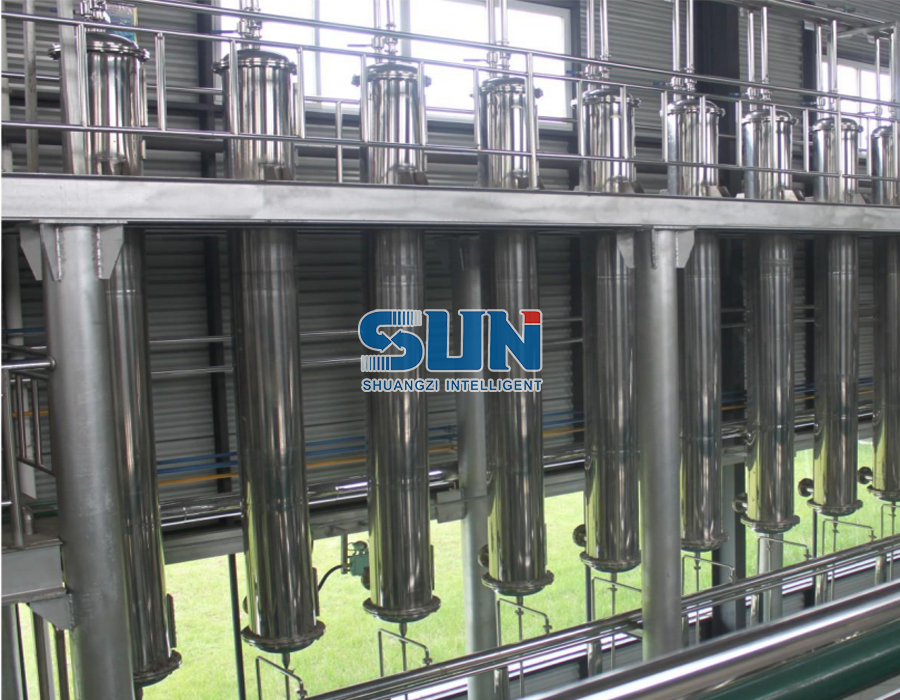
Integrated Condensation and Cooling Capacity
The supplied parameter table includes condensation areas from 2.5 to 10.8 square meters and cooling areas from 0.3 to 2.2 square meters, depending on the model. These sections support the removal and handling of secondary steam after vaporization. Proper condensation is essential for maintaining vacuum stability and preventing vapor from overwhelming the downstream system.
The condenser and cooling section should be matched to the expected vapor load, solvent properties, operating pressure, cooling-water temperature, and required recovery performance. For applications involving alcohols or other recoverable solvents, the system design may also require appropriate explosion protection, electrical classification, ventilation, and solvent-handling measures.
Multiple Capacity Options
The available models range from 100 liters to 2,000 liters. The listed evaporation capacities range from 60 to 280 kilograms per hour. This selection enables the equipment to serve laboratory scale-up support, pilot production, and small-to-medium industrial production requirements.
Nominal vessel volume and evaporation capacity should not be treated as universal production guarantees. Actual capacity can vary with feed concentration, viscosity, boiling characteristics, solids content, desired final moisture, crystallization behavior, and heating conditions. Process trials are recommended before final equipment selection, particularly when the product has a high solids content or a tendency to become paste-like.
| Model | Nominal Volume | Evaporation Capacity | Heating Area | Condensation Area | Cooling Area | Motor Power |
| 100L | 100 liters | 60 kg/h | 0.7 m² | 2.5 m² | 0.3 m² | 0.75 kW |
| 300L | 300 liters | 100 kg/h | 1.2 m² | 3.5 m² | 0.4 m² | 1.5 kW |
| 500L | 500 liters | 120 kg/h | 1.5 m² | 4.6 m² | 0.48 m² | 1.5 kW |
| 800L | 800 liters | 160 kg/h | 2.1 m² | 6.5 m² | 0.78 m² | 2.2 kW |
| 1000L | 1,000 liters | 200 kg/h | 2.5 m² | 7.4 m² | 1.2 m² | 3.0 kW |
| 1500L | 1,500 liters | 250 kg/h | 3.2 m² | 10.0 m² | 1.8 m² | 3.0 kW |
| 2000L | 2,000 liters | 280 kg/h | 3.5 m² | 10.8 m² | 2.2 m² | 4.0 kW |
All listed models use a stated steam pressure of 0.25 MPa and a scraper or stirring speed of 32 revolutions per minute. These figures provide a reference for preliminary planning. Final design may require adjustments based on local utility conditions, product behavior, hygienic requirements, pressure-vessel standards, and the required automation architecture.
Advantages Compared with Conventional Evaporators
Compared with Simple Jacketed Concentration Tanks
A jacketed tank is a practical solution for many low- and medium-viscosity liquids, particularly when batch flexibility is more important than evaporation intensity. However, as the product thickens, the tank may develop poor circulation near the wall. A conventional anchor agitator can improve bulk movement, but it may not create a consistently renewed thin film across the entire heat-transfer surface.
The vacuum scraper evaporator is more specialized. Its scraper assembly operates at the wall, where fouling and overheating commonly begin. It also combines mechanical film formation with vacuum boiling rather than relying only on heating and bulk stirring. For sticky, crystallizing, or coking products, this design can offer more stable concentration and better control of the final stage.
Compared with Falling-Film Evaporators
Falling-film evaporators are highly effective for relatively low-viscosity liquids that can distribute evenly and flow downward as a film. Their performance may become less predictable when the liquid thickens substantially, contains suspended particles, or has a strong tendency to crystallize and foul. Distribution systems and narrow passages may also require careful management when the feed is not free-flowing.
A scraper evaporator actively creates the film through mechanical movement. It does not depend solely on gravity and natural flow to maintain a thin layer. This makes it attractive for high-viscosity extracts and products whose physical properties change during concentration.
Compared with Forced-Circulation Evaporators
Forced-circulation systems use pumps to move liquid through heat exchangers and circulation loops. They can handle a broad range of products, but high-viscosity materials may require considerable pumping power. Crystals or sticky solids may also create challenges in pumps, valves, pipes, and heat exchangers. Recirculation can increase the total time that a product spends in the process system.
The scraper evaporator places the principal film-forming action inside the evaporation chamber. It can reduce dependence on long external circulation routes and may be better suited to materials that become difficult to pump at high concentration. Product-specific evaluation remains necessary, particularly where the feed contains abrasive particles or large crystals.
Compared with Standard Agitated Vacuum Evaporators
A standard vacuum evaporator with an agitator can reduce boiling temperature and provide useful batch concentration. Its limitation may arise when the product forms a thick layer on the wall or when the agitator does not sufficiently renew the heated surface. A dedicated scraper mechanism provides closer control over the wall film and is therefore better aligned with materials that are sticky or prone to deposit formation.
The main competitive advantage is not simply the presence of vacuum. Many evaporators can operate under vacuum. The distinguishing feature is the coordinated use of vacuum, forced thin-film movement, wall scraping, and integrated vapor condensation for difficult high-viscosity materials.
Application in Plant Extraction
Plant extraction facilities commonly use water, ethanol, or other solvents to transfer desired compounds from botanical raw materials into a liquid extract. After filtration or separation, the extract may require concentration before drying, formulation, crystallization, or filling. The concentration step influences the quality and economics of the entire line.
A vacuum scraper evaporator can be positioned after extraction and primary filtration. The feed may first be screened or clarified to remove coarse particles that could interfere with the scraper assembly or discharge system. During evaporation, solvent is removed under vacuum and the product becomes progressively more concentrated. The concentrated extract can then be sent to a vacuum dryer, spray dryer, crystallization unit, blending system, or storage vessel, depending on the process route.
For herbal extracts, the equipment can help manage the increasing viscosity that occurs near the target concentration. It may also reduce the risk of scorching or local overheating compared with an unassisted heated vessel. Product quality should be monitored through parameters such as solids content, viscosity, color, marker compounds, moisture, microbial status, and sensory characteristics where applicable.
In alcohol-based extraction, vapor handling requires special attention. Condensers, vacuum pumps, seals, instrumentation, and electrical components must be selected for the solvent and the applicable safety standards. The system may need suitable grounding, ventilation, pressure protection, and solvent recovery arrangements. These details should be determined during engineering design rather than added after equipment delivery.
Applications in Pharmaceutical and Food Processing
Pharmaceutical and Traditional Herbal Products
Pharmaceutical extracts and liquid medicines often require gentle concentration, hygienic construction, controlled cleaning, and repeatable processing. Vacuum operation can assist with lower-temperature evaporation, while scraper-driven movement can help manage viscosity and reduce product retention.
For regulated production, the equipment configuration should be aligned with the applicable good manufacturing practice requirements. Important considerations may include material certificates, surface finish, weld quality, drainability, cleanability, instrument calibration, data recording, validation documentation, and the traceability of components. The final specification should be determined according to the product, regulatory market, and facility quality system.
Food Products
Jam, honey, fruit pulp, cream, concentrated syrups, and similar foods can become highly viscous as water is removed. Excessive heating may affect color, flavor, texture, or nutritional characteristics. A vacuum scraper evaporator can provide controlled concentration while continuously moving the product across the heated surface.
Food applications also require attention to hygienic design. Product-contact surfaces should be suitable for the formulation and cleaning regime. The system should be designed to minimize dead zones, support effective drainage, and permit inspection and maintenance. Depending on the product, the process may require clean-in-place or manual cleaning procedures, and these should be established through sanitation validation.
Chemical and Daily Chemical Materials
High-viscosity resins, adhesives, textile auxiliaries, stock solutions, paste raw materials, and other specialty chemical products may be difficult to process using equipment intended for dilute liquids. The scraper mechanism can support more reliable wall movement as the product thickens.
Chemical applications often involve solvents, corrosive components, elevated viscosity, or temperature-sensitive formulations. Material selection, sealing, motor configuration, vapor treatment, pressure protection, and control logic must therefore be customized to the chemical compatibility and hazard profile of the process.
Manufacturing and Engineering Strengths
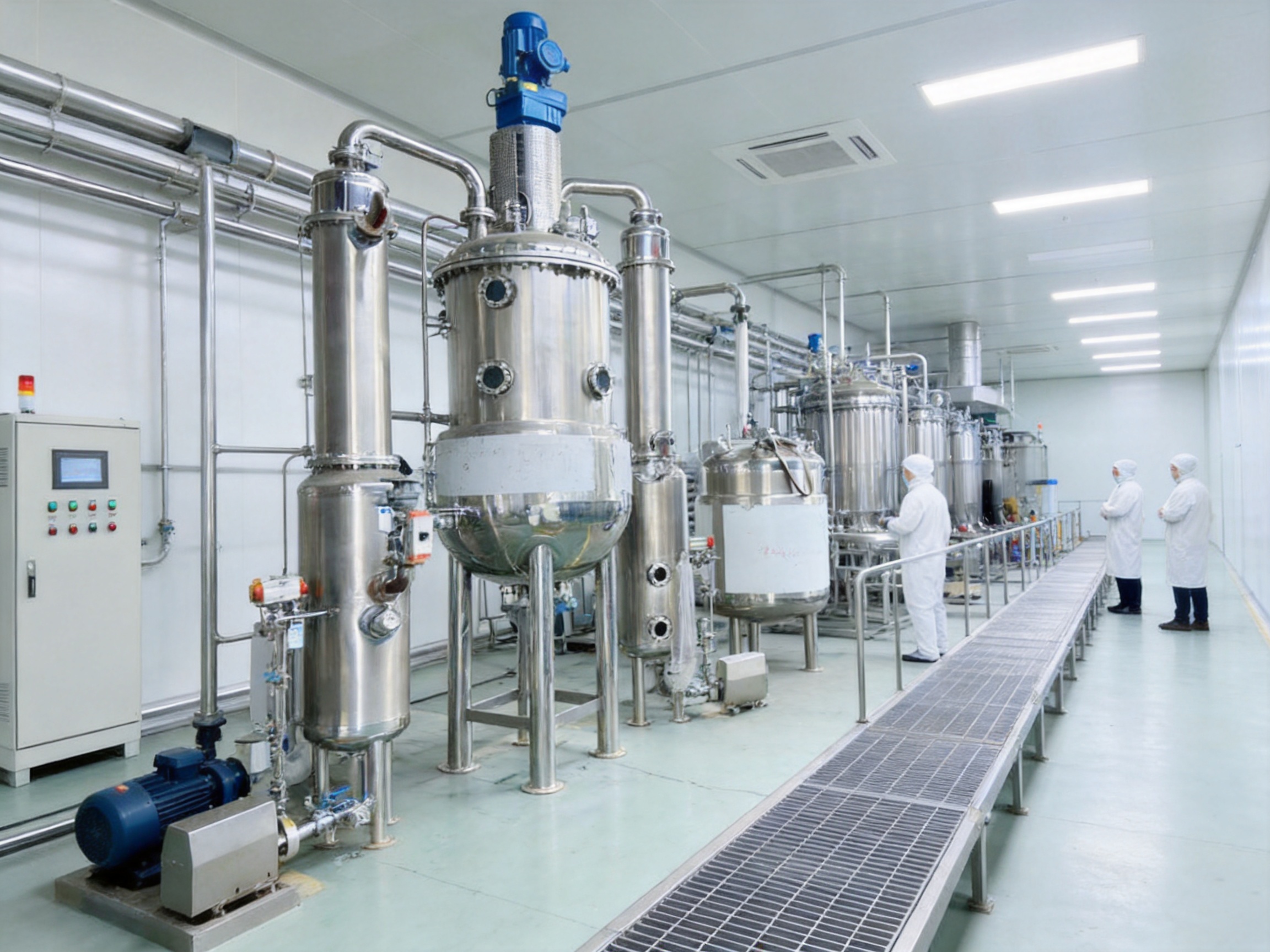
The performance of specialized process equipment depends not only on the concept of the machine but also on the quality of engineering and manufacturing behind it. Zhejiang Shuangzi Intelligent Equipment Co., Ltd. focuses on process technology and automation engineering design, equipment manufacturing, matched purchasing, installation, system integration, and turnkey project delivery. This integrated approach is valuable for customers who need a complete production solution rather than a standalone vessel.
Process Engineering Capability
An evaporator must be selected according to the material being processed. Feed concentration, viscosity curve, solids content, boiling behavior, foaming tendency, crystal formation, heat sensitivity, solvent type, and final concentration all influence the design. A supplier with process engineering capability can evaluate these factors before selecting the vessel size and supporting equipment.
The company’s work covers plant extraction, fermentation, pharmaceutical engineering, natural food, energy conservation, and environmental protection. This cross-industry experience supports the integration of evaporation with extraction, separation, drying, crystallization, filtration, fermentation, and downstream handling systems.
Automation and System Integration
Stable evaporation requires coordinated control of temperature, pressure, feed rate, scraper operation, vapor condensation, cooling, discharge, and safety functions. Automation can help maintain repeatable operating conditions and reduce operator dependence. Depending on the project, the system may include sensors, control valves, vacuum regulation, heating control, level monitoring, alarms, interlocks, and data recording.
System integration is particularly important when the evaporator is connected to an extraction line or a drying line. The feed pump must match the changing viscosity. The condenser must handle the vapor load. The vacuum system must remain stable under the expected conditions. The discharge system must be capable of moving the concentrated product without excessive blockage or shear. An integrated engineering approach can help coordinate these interfaces.
Fabrication Facilities and Production Equipment
The company operates a production base with a stated floor area of approximately 16,706 square meters and a structure area of approximately 17,800 square meters. Its manufacturing resources include advanced welding and finishing equipment, such as plasma argon arc welding machines, plasma cutting machines, and CAM CNC machining centers.
These capabilities are relevant to the fabrication of hygienic and pressure-related process equipment. Controlled welding can contribute to consistent joint quality, while CNC machining supports dimensional accuracy for components that require precise alignment. Plasma cutting and finishing equipment can improve fabrication efficiency and surface preparation. The final quality of a process machine still depends on design review, material control, welding procedures, inspection, assembly, testing, and documentation.
Research and Development Platform
The company maintains a pilot production workshop and research and development platform designed around automation and GMP-related requirements. Pilot capability is particularly valuable for plant extracts and other complex materials because process performance cannot always be predicted from theoretical calculations alone.
Pilot testing can reveal how the product behaves as concentration rises, whether crystals form, how the viscosity changes, what vacuum level is practical, how quickly deposits develop, and how the final discharge performs. The results can then guide the selection of heating area, condensation area, scraper configuration, motor power, controls, and cleaning procedures.
Turnkey Project Support
Some customers require more than an evaporator. They may need extraction vessels, filtration equipment, storage tanks, condensers, vacuum systems, dryers, pumps, piping, electrical controls, and production-line commissioning. The company provides engineering, process design, equipment design, installation, line debugging, and turnkey project services.
A turnkey approach can simplify responsibility for the customer because the process interfaces are coordinated by one engineering partner. It can also reduce the risk that individual machines are selected independently without adequate consideration of flow, pressure, temperature, cleaning, or control compatibility.
Design Considerations for Selecting a Model
Model selection should begin with the material rather than the nominal vessel volume. The most important information includes feed rate, starting solids concentration, target solids concentration, solvent type, viscosity at different stages, density, boiling characteristics, foaming tendency, crystal content, thermal sensitivity, desired batch time, and required production schedule.
The listed evaporation capacities provide a preliminary reference, but capacity is not a fixed value for all products. A thin water-like extract may evaporate at a different rate from a high-solids herbal paste. A product that crystallizes near the endpoint may require a lower operating rate or a different discharge strategy. The selected model should therefore be confirmed through technical discussion and, when necessary, pilot testing.
Heating area is another major consideration. More area can support greater heat transfer, but the effective performance depends on film thickness, material movement, heating-medium temperature, vacuum stability, and fouling behavior. Condensation area must be adequate for the vapor generated under the selected operating condition. Cooling area must be matched to the available cooling medium and the required condensate temperature.
Motor power should be evaluated against viscosity, scraper geometry, starting torque, crystal formation, and operating conditions. A product may be easy to stir at the beginning of the batch but much more demanding near the final concentration. The drive system should be selected with suitable operating margin and protection.
Material of construction should reflect the product chemistry and hygienic requirements. Stainless steel is commonly considered for many food, pharmaceutical, and plant extraction applications, but the precise grade, surface finish, gasket material, weld treatment, and cleaning method should be specified according to the formulation and regulatory requirements.
Installation conditions should also be reviewed. The facility must provide suitable steam or another heating medium, cooling water or an alternative cooling source, electrical power, vacuum connections, drainage, ventilation, access for maintenance, and adequate structural support. If the process uses flammable solvents, the project must include the relevant safety engineering from the beginning.
Operation, Cleaning, and Maintenance
Reliable performance depends on correct operation. Before starting, the operator should verify that the feed system, vacuum system, condenser, cooling system, heating supply, discharge path, instrumentation, and safety devices are ready. The scraper should not be operated outside its specified conditions, and the vessel should not be filled beyond its permitted working level.
Feed should normally be introduced at a controlled rate. A sudden increase in feed may overload the heating surface or condenser, destabilize vacuum, and cause foaming or entrainment. The operating temperature and pressure should be adjusted gradually while monitoring the product and the vapor system.
The final concentration endpoint can be determined through density, refractive index, solids content, viscosity, moisture, or another validated quality parameter. Relying only on time may produce inconsistent results when feed composition changes. Process records should capture relevant operating conditions so that successful batches can be reproduced.
Cleaning requirements depend on the product. Sticky botanical extracts, sugars, proteins, resins, and creams may require prompt cleaning after discharge. If residue is allowed to dry on the heated wall, removal becomes more difficult and may increase downtime. Cleaning procedures should define temperature, detergent, flow, contact time, rinsing, inspection, and sanitization where applicable.
Maintenance should include inspection of scraper components, drive elements, seals, bearings, valves, vacuum lines, condenser surfaces, instruments, and safety devices. Wear on scraper elements can affect film formation and increase wall clearance. Seal leakage can reduce vacuum performance. Condenser fouling can lower vapor-removal efficiency. Preventive maintenance helps identify these issues before they affect product quality or production capacity.
Quality, Safety, and Validation
For pharmaceutical and food applications, quality must be designed into the equipment and the process. Product-contact surfaces should be compatible with the formulation and cleaning agents. Welds and internal surfaces should be inspected according to the project specification. Instruments should be calibrated, and critical operating limits should be documented.
Pressure and vacuum systems require suitable protection. The project should address allowable working pressure, vacuum rating, relief devices, inspection requirements, and applicable standards. Operators should be protected from hot surfaces, moving components, steam, condensate, and chemical exposure.
When flammable solvents are present, risk assessment is essential. The design may require explosion-protected electrical equipment, grounding and bonding, vapor detection, suitable ventilation, controlled solvent recovery, and procedures for preventing ignition. These requirements vary by jurisdiction and process, so they should be reviewed with qualified safety professionals.
Validation may include installation qualification, operational qualification, performance qualification, cleaning validation, and process validation, depending on the industry and intended use. The supplier can support documentation and commissioning, while the end user remains responsible for ensuring that the complete system meets its internal quality and regulatory obligations.
Typical Process Arrangement
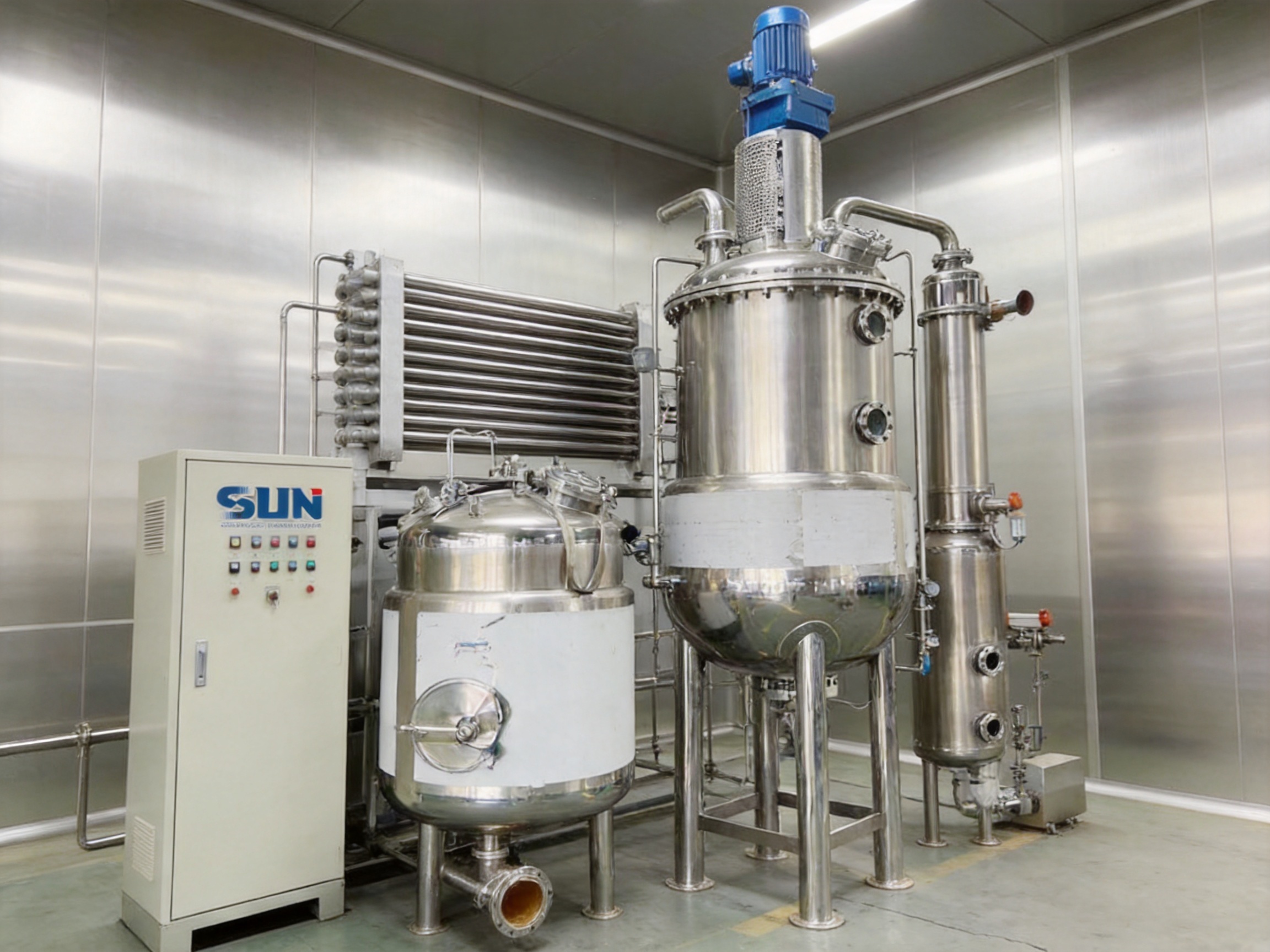
A plant extraction concentration line may begin with extraction vessels, solid-liquid separation, filtration, intermediate storage, and feed transfer. The clarified extract is then sent to the vacuum scraper evaporator. Steam or another heating medium supplies energy to the heating jacket or cylinder. The scraper assembly spreads and moves the product across the heated surface.
Secondary steam passes to the condenser, where it is converted into liquid. The condensate can be collected for disposal, reuse, or solvent recovery, depending on its composition. A cooling section supports the desired condensate temperature and helps maintain the vacuum system. The concentrated product exits through the lower discharge arrangement and proceeds to storage, drying, crystallization, formulation, or filling.
For a complete turnkey line, the control system can coordinate feed, heating, vacuum, scraping, condensation, cooling, and discharge. Alarms and interlocks can help protect the equipment if temperature, pressure, liquid level, motor load, or cooling conditions move outside the permitted range.
Frequently Asked Questions
What type of material is best suited to a vacuum scraper evaporator?
It is best suited to high-viscosity, heat-sensitive, easy-to-crystallize, sticky, or coking materials that are difficult to handle with conventional evaporators. Examples include concentrated plant extracts, viscous liquid medicines, jam, honey, cream, fruit pulp, resins, adhesives, textile auxiliaries, and paste-like raw materials.
How does the scraper improve evaporation?
The rotating scraper continuously forms and renews a thin film of material on the heated wall. This improves contact with the heat-transfer surface, promotes uniform heating, supports rapid vaporization, and reduces the time that material remains stagnant near the wall.
Why is vacuum used?
Vacuum lowers the boiling point of the solvent. This allows evaporation at a lower temperature than atmospheric operation, which can help reduce thermal stress on sensitive extracts and pharmaceutical or food products.
Can the machine prevent all fouling and coking?
No equipment can eliminate fouling under every condition. The scraper is designed to reduce wall retention, local overheating, and deposit formation, but fouling still depends on feed composition, temperature, concentration endpoint, residence time, cleaning, and operation. Application testing and a suitable cleaning program remain important.
What are the available model sizes?
The listed models range from 100 liters to 2,000 liters. Their stated evaporation capacities range from 60 to 280 kilograms per hour. Actual performance should be confirmed against the material properties and required operating conditions.
What heating medium is specified?
The supplied parameters list a steam pressure of 0.25 MPa for all models. The final heating arrangement should be checked against local utility conditions, product requirements, pressure standards, and the complete process design.
Is the equipment suitable for ethanol or other solvents?
It may be suitable when properly designed for the solvent and application. Solvent systems require appropriate condensation, vacuum, sealing, ventilation, grounding, electrical protection, and hazard controls. The solvent type and concentration must be provided during engineering review.
Can the evaporator be integrated into a complete plant extraction line?
Yes. It can be integrated with extraction, filtration, storage, drying, crystallization, separation, and control systems. The manufacturer provides process and automation engineering, equipment fabrication, installation, commissioning, and turnkey project support.
How should the correct model be selected?
Selection should consider feed rate, starting and final concentration, viscosity curve, solids content, heat sensitivity, boiling characteristics, crystal tendency, solvent type, batch time, heating utility, condensation load, and discharge requirements. Pilot testing is recommended for difficult or unfamiliar materials.
What information should be supplied for a technical quotation?
Useful information includes the feed composition, flow rate, temperature, density, solids content, target concentration, viscosity at operating temperatures, solvent, foaming tendency, crystal behavior, product-contact material requirements, available steam and cooling utilities, electrical standards, and required automation or documentation.
Is the equipment appropriate for pharmaceutical production?
It can be considered for pharmaceutical and traditional herbal applications when the design, materials, surface finish, cleanability, documentation, control system, and validation support meet the customer’s requirements. The final configuration should be reviewed against the applicable good manufacturing practice standards.
What is the importance of the condenser and cooling area?
The condenser removes secondary steam and supports stable vacuum operation. The cooling section helps reduce condensate temperature and manage the vapor load. Their required sizes depend on the solvent, evaporation rate, operating pressure, vapor temperature, and cooling-medium conditions.
Conclusion
The vacuum scraper evaporator is a specialized solution for concentration duties in which viscosity, crystallization, coking, wall sticking, and thermal sensitivity make conventional evaporation difficult. Its core technology combines vacuum low-temperature evaporation with scraper-forced thin-film formation. The scraper continuously renews the product layer on the heated wall, promotes uniform heat exchange, supports rapid vaporization, and helps reduce stagnant material and localized overheating.
For plant extraction, this design is relevant to the concentration of traditional herbal extracts, botanical liquids, and other natural products whose properties change significantly during solvent removal. It also offers application potential in pharmaceutical, food, chemical, and daily chemical processing. The available 100-liter to 2,000-liter models provide a range of options for pilot, small-batch, and medium-scale production.
The equipment’s value is strengthened when it is supplied as part of a complete engineering solution. Zhejiang Shuangzi Intelligent Equipment Co., Ltd. combines process design, automation, fabrication, system integration, installation, commissioning, and turnkey project support. Its production facilities, pilot and research platform, welding and CNC capabilities, and experience in extraction, fermentation, evaporation, separation, drying, and pharmaceutical engineering support the development of application-specific systems.
Final performance depends on correct model selection, process testing, utility matching, material compatibility, control design, cleaning, and maintenance. When these factors are addressed systematically, the vacuum scraper evaporator can provide a practical and controllable method for concentrating high-viscosity and heat-sensitive materials while supporting reliable production and consistent product quality.
References
1. Process design principles for vacuum evaporation and solvent separation in industrial applications.
2. Good manufacturing practice guidance for pharmaceutical equipment design, cleaning, validation, and process control.
3. Hygienic equipment design principles for food, botanical extract, and liquid pharmaceutical processing.
4. Heat-transfer engineering references covering thin-film evaporation, forced circulation, and fouling control.
5. Industrial safety guidance for steam systems, vacuum vessels, condensers, and flammable solvent handling.
6. Manufacturer-supplied technical data for vacuum scraper evaporator models from 100 liters to 2,000 liters.