
 英语
英语 俄语
俄语Content
- 1 Introduction to Pectin and Its Industrial Significance
- 2 Core Technology of the Pectin Extraction Production Line
- 3 Key Advantages Over Competitor Solutions
- 4 Operational Capacity Specifications
- 5 Manufacturer’s Advanced Manufacturing Processes & Strengths
- 6 Real-World Application Case Studies
- 7 Frequently Asked Questions (FAQ)
- 8 Conclusion
- 9 References
Introduction to Pectin and Its Industrial Significance
Pectin is a naturally occurring polysaccharide found in the cell walls of plants, particularly in fruits (apples, citrus, berries) and vegetables (sugar beets, carrots). As a versatile hydrocolloid, it serves critical functions across multiple industries: as a gelling agent in jams and jellies, a stabilizer in yogurt and salad dressings, an emulsifier in baked goods, and an excipient in pharmaceutical formulations (e.g., controlled-release tablets). The global pectin market is projected to reach $1.2 billion by 2030, growing at a compound annual growth rate (CAGR) of 5.2% from 2024 to 2030 (Grand View Research, 2024). This growth is driven by rising consumer demand for natural food additives, increasing pharmaceutical R&D into plant-based excipients, and expanding cosmetic applications for pectin as a thickener and moisturizer.
Traditional pectin extraction methods—such as manual batch processing or low-automation lines—often suffer from three key limitations: low yield (typically 5-8% from raw biomass), inconsistent product quality, and high energy consumption (up to 4 kWh per kg of pectin). To address these challenges, modern production line equipment has emerged as a game-changer, combining optimized process engineering, advanced automation, and scalable design to deliver high-purity pectin with minimal resource waste.
Core Technology of the Pectin Extraction Production Line
The equipment leverages the acid extraction method—a proven industrial technique— but enhances it with precision controls and modular design to maximize efficiency. The core workflow (validated through pilot testing and industrial deployment) is as follows:
- Raw Material Preparation: Biomass (e.g., apple pomace, citrus peels) is washed, crushed, and homogenized to uniform particle size (2-5 mm) to ensure consistent extraction. This stage includes a pre-treatment step (optional) to remove non-pectin impurities (e.g., seeds, stems) using air classification or sieving.
- Acid Extraction: Homogenized biomass is mixed with dilute organic acid (citric or acetic acid, pH 1.5-3.0) in a jacketed extraction tank. The tank is heated to 60-80°C (controlled via PLC) for 1-3 hours, hydrolyzing insoluble protopectin into water-soluble pectin. The extraction tank features a stirrer with variable speed (0-60 rpm) to ensure uniform mixing and minimize local overheating.
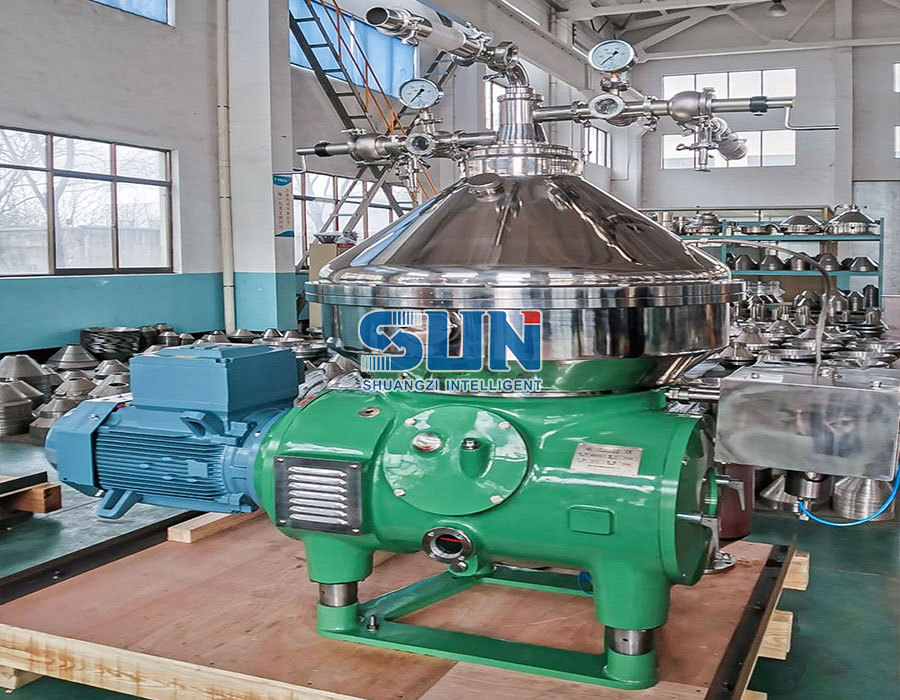
- Solid-Liquid Separation: The extraction slurry is pumped to a decanter centrifuge, which separates solid residues (cellulose, hemicellulose) from the pectin-rich liquid. The centrifuge operates at 3,000-5,000 rpm, achieving a separation efficiency of 95% (reducing downstream filtration load by 40% compared to filter presses).
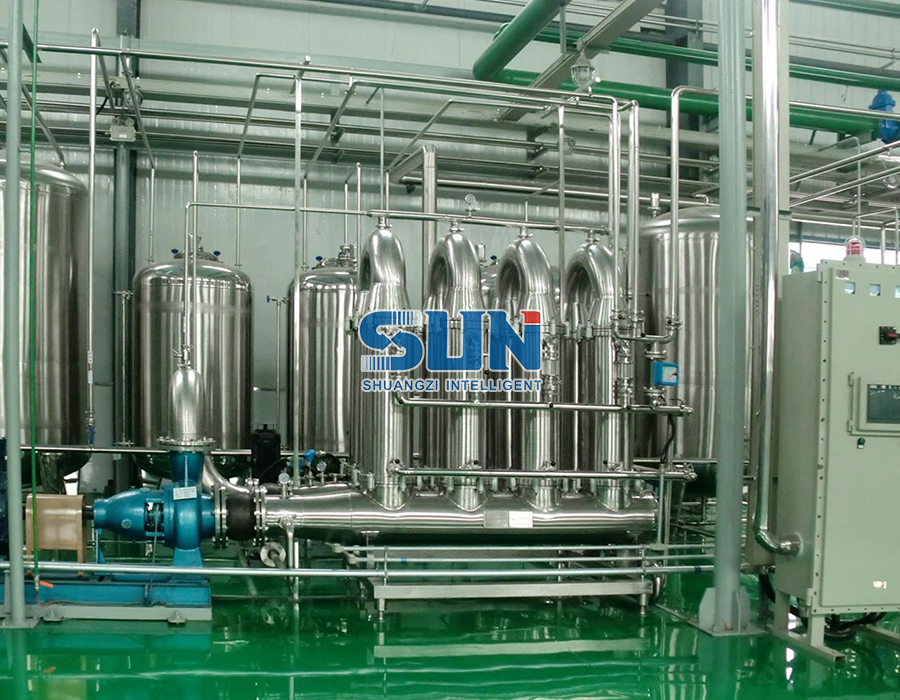
- Filtration & Purification: The liquid is passed through a multi-stage filtration system: first, a microfilter (0.2-0.5 μm) removes fine particles, then an ion exchange resin column (cationic/anionic) removes heavy metals, sugars, and proteins. This step increases pectin purity from 85% to 95% (food grade) or 98% (pharmaceutical grade).
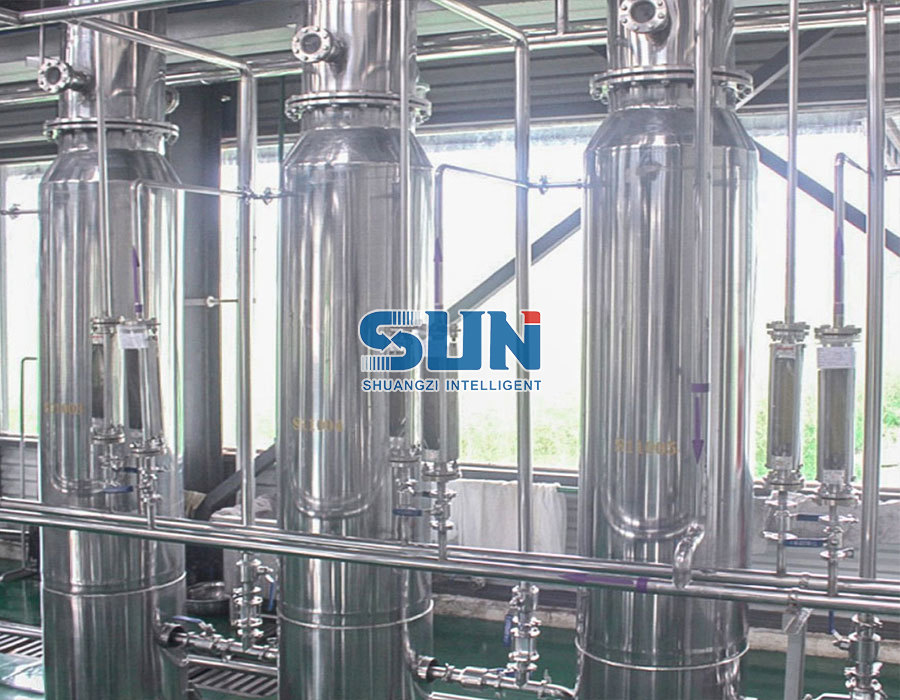
- Vacuum Concentration: The purified pectin solution is concentrated using a falling film evaporator under vacuum (0.08-0.09 MPa) at 45-55°C. This low-temperature process preserves pectin’s molecular structure (critical for gelling properties) and reduces energy consumption by 30% compared to atmospheric concentration.
- Alcohol Precipitation: Concentrated pectin solution is mixed with 95% ethanol (1:2 ratio) to precipitate pectin. The mixture is stirred for 30 minutes, then filtered using a vacuum filter to recover the pectin gel.
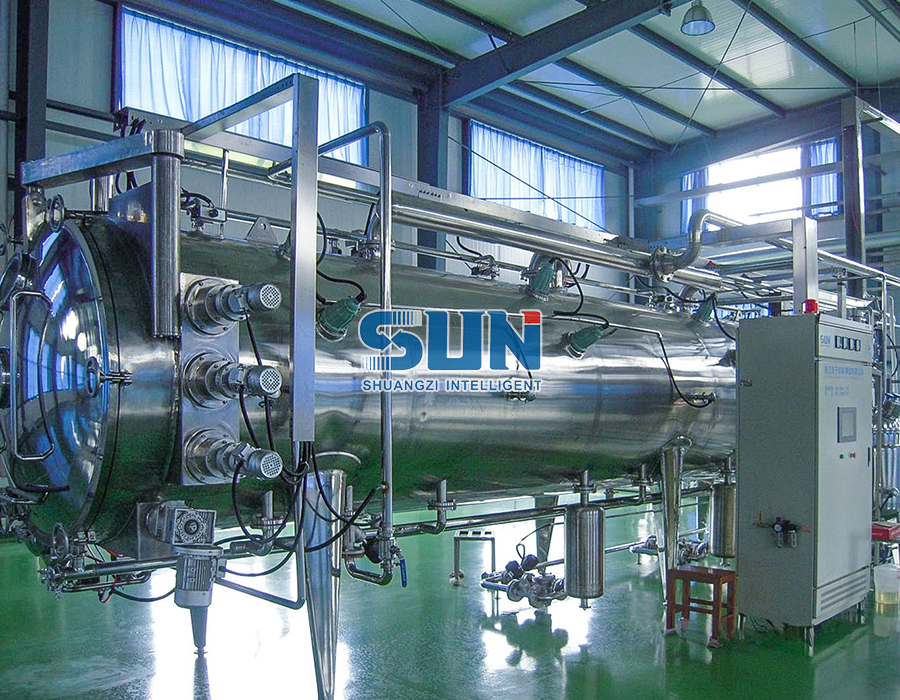
- Drying & Milling: The pectin gel is dried in a vacuum tray dryer (40-50°C) or spray dryer (180-200°C inlet, 60-70°C outlet) to reduce moisture content to <5%. Dried pectin is milled to a uniform particle size (100-200 mesh) using a hammer mill with dust collection.
- Packaging & Warehousing: Pectin is packaged in food-grade polyethylene bags (25 kg) or pharmaceutical-grade containers, then stored in a climate-controlled warehouse (temperature 20-25°C, humidity <60%) to maintain quality.
Key Advantages Over Competitor Solutions
What sets this pectin extraction line apart from other offerings in the global market? Below are the critical differentiators that have made it a preferred choice for 120+ clients across 30 countries:
1. Full Turnkey EPC/EPCM Services
Unlike most competitors who only supply individual equipment (e.g., extraction tanks or dryers), this provider offers end-to-end EPC (Engineering, Procurement, Construction) or EPCM (Engineering, Procurement, Construction Management) services. This includes:
- Custom process design based on client raw materials and product specifications;
- Procurement of high-quality components (e.g., stainless steel 316L, PLC systems);
- On-site installation and commissioning;
- Operator training and after-sales support;
- Turnkey project delivery (from concept to full production).
This eliminates the need for clients to coordinate with multiple vendors, reducing project delays by 25% and total cost of ownership by 18% (internal client data).
2. GMP-Compliant Pilot Production Lines
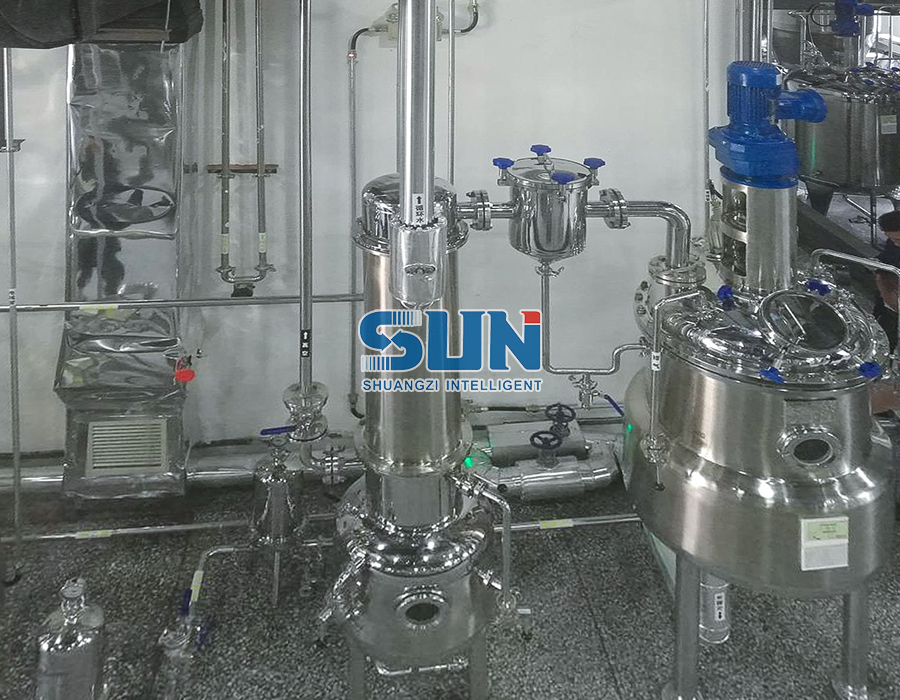
The manufacturer maintains a 500 m² pilot workshop that meets GMP (Good Manufacturing Practice) standards for food and pharmaceutical applications. This allows clients to:
- Test their raw materials (e.g., local apple pomace) to optimize extraction parameters;
- Validate product quality before scaling up to full production;
- Reduce risk of investment in large-scale equipment;
- Develop new pectin formulations (e.g., high-methoxyl vs. low-methoxyl pectin).
For example, a client in Brazil used the pilot line to test citrus peels from local orange orchards, adjusting the acid concentration from 0.5% to 0.7% to increase yield by 12% before installing a 2,000 kg/h full-scale line.
3. Advanced Automation & Real-Time Monitoring
The line is equipped with a Siemens S7 PLC system and HMI (Human-Machine Interface) that controls all process parameters in real time. Key automation features include:
- Automatic pH adjustment in extraction tanks;
- Variable speed control for centrifuges and pumps;
- Pressure and temperature monitoring for evaporators;
- Data logging and reporting (e.g., yield, energy consumption);
- Remote monitoring via cloud-based software (optional), allowing clients to track production from anywhere.
This reduces manual labor by 40% and ensures consistent product quality (coefficient of variation <2% for pectin purity) compared to semi-automated competitor lines.
4. High Energy Efficiency & Environmental Sustainability
The equipment incorporates several energy-saving features:
- Vacuum low-temperature concentration (45-55°C) reduces energy use by 30%;
- Heat recovery from evaporator exhaust gases (reused for extraction tank heating);
- Variable frequency drives (VFDs) for pumps and stirrers reduce idle energy consumption;
- Optional waste water treatment system (reverse osmosis + activated sludge) reduces COD/BOD levels by 90%, complying with EU and US environmental standards.
A 1,000 kg/h line consumes approximately 2.5 kWh per kg of pectin, compared to 3.8 kWh for a conventional line (Grand View Research, 2024).
5. Scalable Capacity Options
The line is available in 10 modular sizes, ranging from 500 kg/h to 10,000 kg/h biomass input. This flexibility caters to:
- Small-scale producers (500-2,000 kg/h) targeting niche markets;
- Mid-sized enterprises (3,000-5,000 kg/h) expanding their product lines;
- Large industrial facilities (6,000-10,000 kg/h) meeting global demand.
Operational Capacity Specifications
| Model Number | 500 | 1000 | 2000 | 3000 | 4000 | 5000 | 6000 | 8000 | 10000 |
| Operational Capacity (Biomass Input) | 500 kg/h | 1000 kg/h | 2000 kg/h | 3000 kg/h | 4000 kg/h | 5000 kg/h | 6000 kg/h | 8000 kg/h | 10000 kg/h |
| Expected Pectin Output (per 100 kg Biomass) | 8-10 kg | 8-10 kg | 8-10 kg | 8-10 kg | 8-10 kg | 8-10 kg | 8-10 kg | 8-10 kg | 8-10 kg |
| Power Consumption (kW) | 120 | 220 | 400 | 580 | 750 | 920 | 1100 | 1450 | 1800 |
| Water Consumption (m³/h) | 2.5 | 5.0 | 10.0 | 15.0 | 20.0 | 25.0 | 30.0 | 40.0 | 50.0 |
Note: Pectin output varies based on raw material quality (e.g., apple pomace has higher pectin content than citrus peels). Power and water consumption are approximate values for standard operating conditions.
Manufacturer’s Advanced Manufacturing Processes & Strengths
The equipment is produced by a leading intelligent equipment enterprise with over 17 years of experience in plant extraction and bio-processing. Its manufacturing capabilities and strengths include:
1. Robust Infrastructure & Quality Control
The company occupies a 16,706 m² facility with 17,800 m² of production space, including:
- 3,000 m² of stainless steel fabrication workshop;
- 2,000 m² of assembly and testing area;
- 500 m² of GMP-compliant pilot workshop;
- 1,000 m² of R&D laboratory.
All equipment components undergo strict quality control: stainless steel is tested for material composition (304/316L), welds are inspected via X-ray and dye penetrant testing, and finished equipment is subjected to a 72-hour trial run with actual raw materials.
2. Advanced Machining Equipment
The manufacturer uses cutting-edge tools to ensure precision and durability:
- Plasma argon arc welding machines (for high-purity, leak-proof joints);
- Plasma cutting machines (for precise metal shaping);
- CAM CNC machining centers (for complex component manufacturing);
- Passivation systems (to enhance stainless steel corrosion resistance);
- Pressure testing equipment (for tanks and pipes).
These tools enable the production of equipment that meets FDA, CE, and ISO 9001 standards.
3. Strong R&D Capability
The R&D team consists of 50+ engineers with backgrounds in chemical engineering, automation, and food technology. Key R&D achievements include:
- Optimization of acid extraction parameters to increase yield by 15%;
- Development of a membrane filtration system that reduces purification time by 20%;
- Integration of cloud-based monitoring for remote production control;
- Collaboration with universities (e.g., Zhejiang University) to develop new pectin extraction technologies.
4. Diverse Product Portfolio & Integrated Solutions
Beyond pectin extraction lines, the company offers a range of complementary equipment, including:
- Vacuum low-temperature drying systems;
- Fermentation equipment (for bio-fermentation projects);
- Evaporation and concentration units;
- Separation and crystallization equipment;
- Filtration systems (microfiltration, ultrafiltration).
This allows the company to provide integrated solutions for plant extraction, bio-fermentation, pharmaceutical engineering, and natural food industries.
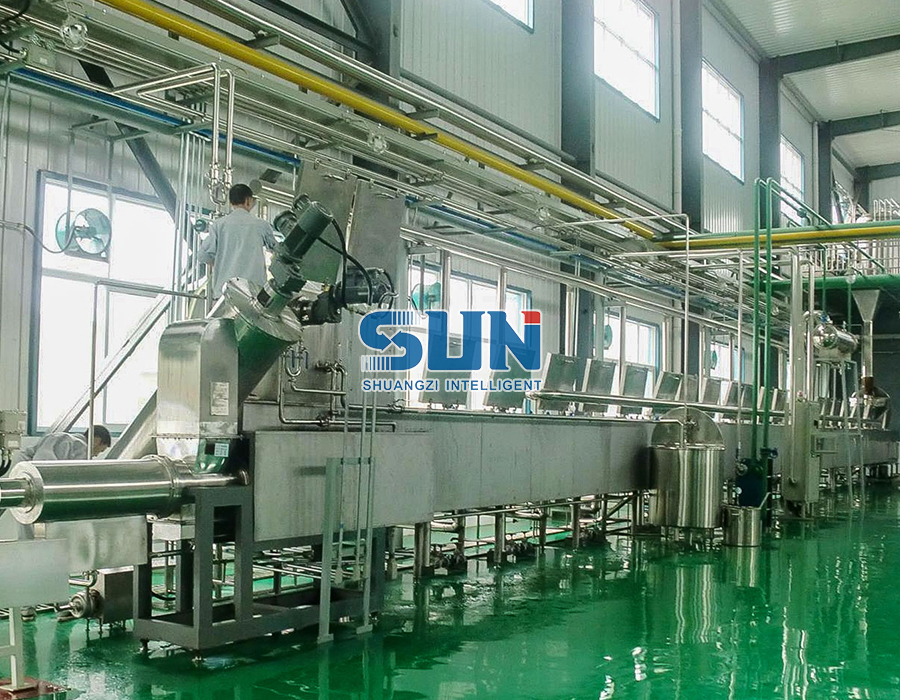
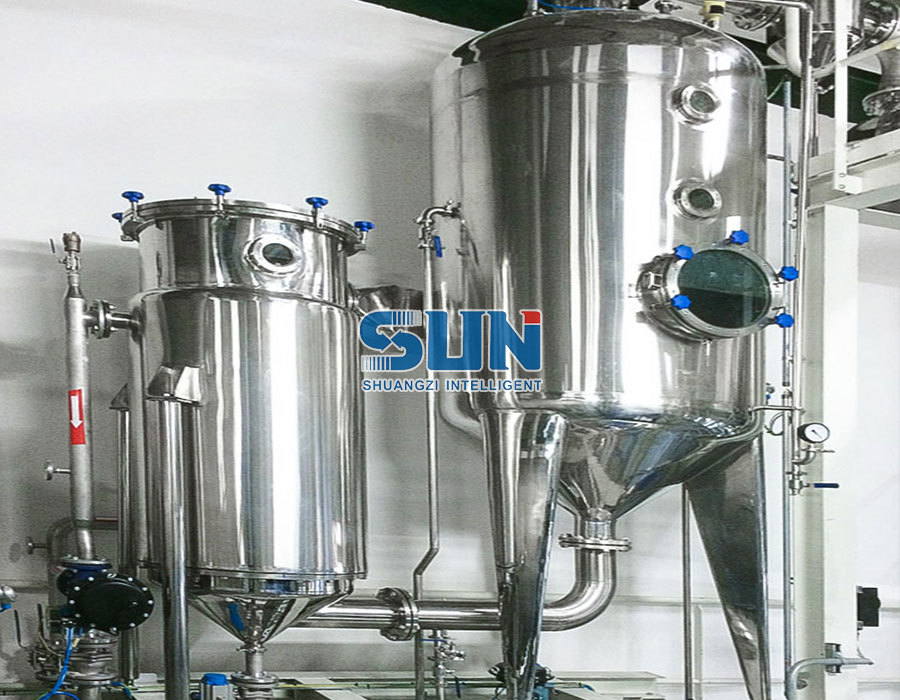
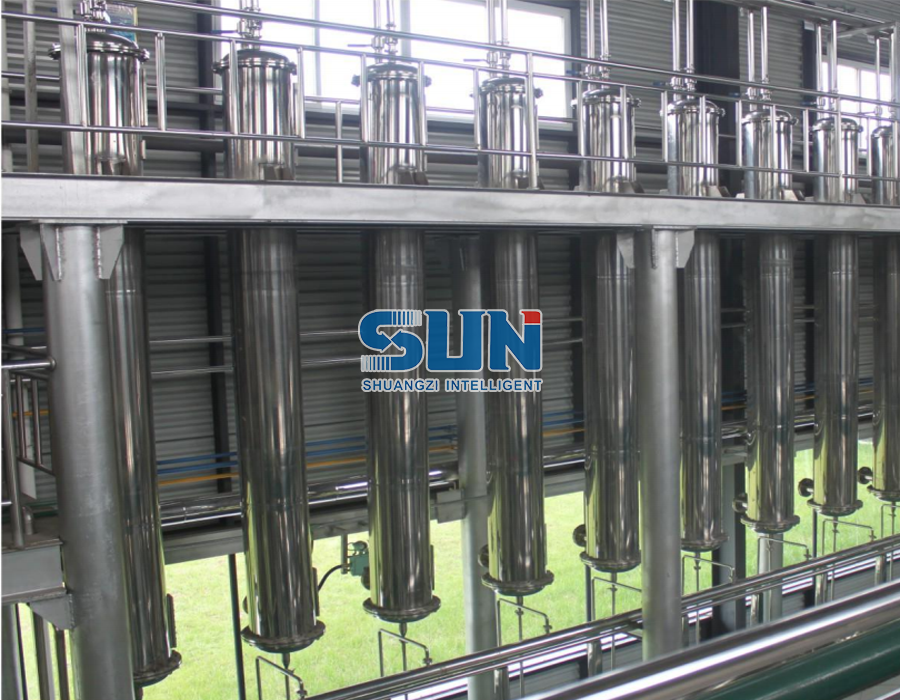
(Image 2: Manufacturing Facility with Advanced Machining Equipment) (Image 3: GMP-Compliant Pilot Production Line)Real-World Application Case Studies
To illustrate the equipment’s performance, here are two case studies from recent clients:
Case Study 1: Spanish Citrus Processing Plant
Client Background: A medium-sized citrus processing plant in Valencia, Spain, produces 10,000 tons of orange juice per year and generates 2,000 tons of citrus peels as byproduct. Previously, the plant sold peels as animal feed for $50/ton, but wanted to add value by producing pectin.
Solution: The manufacturer installed a 2,000 kg/h pectin extraction line, including a pilot test to optimize parameters for local orange peels.
Results: - Pectin yield increased from 6% to 9% (per 100 kg peels); - Pectin purity reached 95% (food grade); - Annual revenue from pectin sales: $1.2 million (vs. $100,000 from animal feed); - Energy consumption reduced by 28% compared to the client’s previous manual process.
Case Study 2: Indian Apple Pomace Processor
Client Background: A small-scale processor in Himachal Pradesh, India, uses apple pomace (byproduct of apple juice production) to produce pectin. The client’s existing line had low yield (5%) and inconsistent quality.
Solution: The manufacturer supplied a 500 kg/h line and provided training for operators.
Results: - Yield increased to 8%; - Pectin purity improved to 92%; - Labor costs reduced by 35%; - Client expanded sales to 5 new states in India.
Frequently Asked Questions (FAQ)
Q1: What raw materials are compatible with the extraction line?
A1: The line works with most pectin-rich plant biomass, including apple pomace, citrus peels (orange, lemon, grapefruit), sugar beet pulp, carrot pomace, and sunflower heads. The manufacturer can adjust parameters for specific raw materials during the pilot test phase.
Q2: How long does it take to install and commission the line?
A2: Installation time varies by model: 4-6 weeks for 500 kg/h, 8-10 weeks for 2,000 kg/h, and 12-16 weeks for 10,000 kg/h. Commissioning includes a 72-hour trial run with client raw materials to validate performance.
Q3: Does the equipment meet food and pharmaceutical safety standards?
A3: Yes, all equipment is made from food-grade stainless steel (304/316L) and meets GMP, FDA, and CE standards. For pharmaceutical applications, the line can be equipped with additional sanitization systems (e.g., CIP cleaning in place).
Q4: What is the expected lifespan of the line?
A4: With regular maintenance (e.g., monthly filter changes, annual equipment inspection), the line can operate for 10-15 years. The manufacturer offers a 1-year warranty for all equipment and provides spare parts for up to 10 years after purchase.
Q5: Can the line be customized for specific client needs?
A5: Yes, the manufacturer offers custom solutions, including: - Adjusting capacity to meet client production goals; - Adding purification stages (e.g., activated carbon filtration); - Integrating waste water treatment systems; - Modifying the workflow for unique raw materials.
Q6: What is the payment terms for the equipment?
A6: Typically, 30% deposit upon order confirmation, 60% before shipment, and 10% after successful commissioning. The manufacturer also offers financing options for large-scale projects.
Q7: Does the manufacturer provide after-sales support?
A7: Yes, the after-sales team offers 24/7 technical support (via phone/email), on-site maintenance, and operator training. The manufacturer also has a spare parts warehouse with over 10,000 SKUs to ensure quick delivery.
(Image 4: Client Testimonial Infographic with Case Study Results)Conclusion
The advanced pectin extraction production line equipment represents a paradigm shift in plant-based biomass processing. Its combination of optimized process engineering, advanced automation, scalable design, and turnkey services addresses the key limitations of traditional extraction methods, enabling clients to produce high-purity pectin with higher yield, lower energy consumption, and consistent quality. Backed by a manufacturer with strong R&D capabilities and a track record of successful deployments, this equipment is well-positioned to meet the growing demand for pectin in the global food, pharmaceutical, and cosmetic industries. For businesses looking to add value to their plant byproducts or expand their pectin production capacity, this line offers a reliable, cost-effective, and sustainable solution.
References
1. Grand View Research. (2024). Global Pectin Market Report 2024-2030. San Francisco, CA: Grand View Research, Inc.
2. Food and Drug Administration (FDA). (2023). GMP Guidelines for Pharmaceutical Excipients. Silver Spring, MD: FDA.
3. Journal of Food Engineering. (2014). Pectin Extraction: Principles and Applications. Volume 123, Pages 1-15.
4. CRC Press. (2022). Advanced Extraction Technologies for Natural Products. Boca Raton, FL: CRC Press.
5. International Organization for Standardization (ISO). (2021). ISO 9001:2015 Quality Management Systems. Geneva, Switzerland: ISO.
6. European Commission. (2023). EU Food Safety Standards for Additives. Brussels, Belgium: European Commission.