
 英语
英语 俄语
俄语Content
- 1 Overview of the Curcumin Extraction Production Line
- 2 Raw-Material Preparation and Pretreatment
- 3 Ethanol Extraction Process
- 4 Solid-Liquid Separation
- 5 Vacuum Concentration and Solvent Recovery
- 6 Purification of Curcumin Extract
- 7 Secondary Concentration and Crystallization
- 8 Filtration, Washing, and Drying
- 9 Equipment Configuration and Main Components
- 10 Production Capacity Options
- 11 Advantages Compared with Basic or Poorly Integrated Systems
- 12 Manufacturing Strengths and Engineering Capability
- 13 GMP-Oriented and Pilot-Scale Applications
- 14 Safety and Environmental Considerations
- 15 Quality Control for Curcumin Production
- 16 Installation, Commissioning, and Technical Service
- 17 Why Select an Integrated Equipment Manufacturer?
- 18 Project Customization Factors
- 19 Recommended Process-Selection Approach
- 20 Maintenance and Long-Term Operation
- 21 Frequently Asked Questions
- 21.1 What raw material is used for curcumin extraction?
- 21.2 Why is ethanol commonly used?
- 21.3 What is the typical extraction temperature?
- 21.4 How long does extraction take?
- 21.5 What is the purpose of vacuum concentration?
- 21.6 Can the ethanol be recovered and reused?
- 21.7 Is the line suitable for crystalline curcumin?
- 21.8 What biomass capacities are available?
- 21.9 Can the equipment be used for other plants?
- 21.10 Does the company provide turnkey service?
- 21.11 Is pilot testing recommended?
- 21.12 What information is needed for a quotation?
- 21.13 What are the company’s main technical strengths?
- 22 Conclusion
- 23 References
- 24 Product: Curcumin Extraction Machine Manufacture
Curcumin is one of the most valuable natural compounds obtained from turmeric rhizomes. It is widely studied and used in pharmaceutical preparations, dietary supplements, health products, functional foods, beverages, cosmetics, and other natural-product applications. As demand for botanical ingredients continues to grow, manufacturers need extraction systems that can deliver stable product quality, efficient solvent recovery, reliable operation, and flexible production capacity.
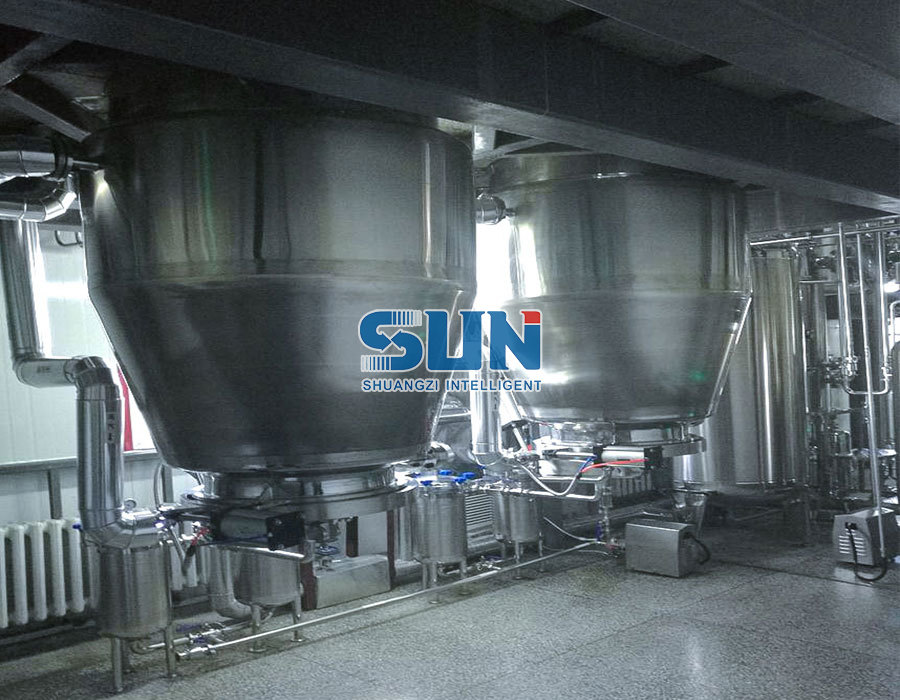
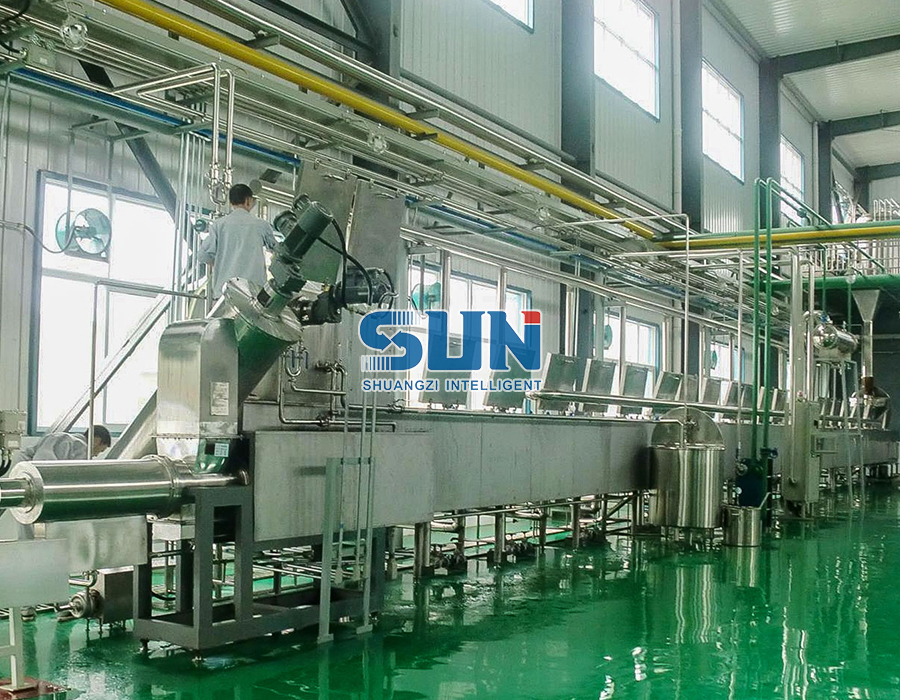
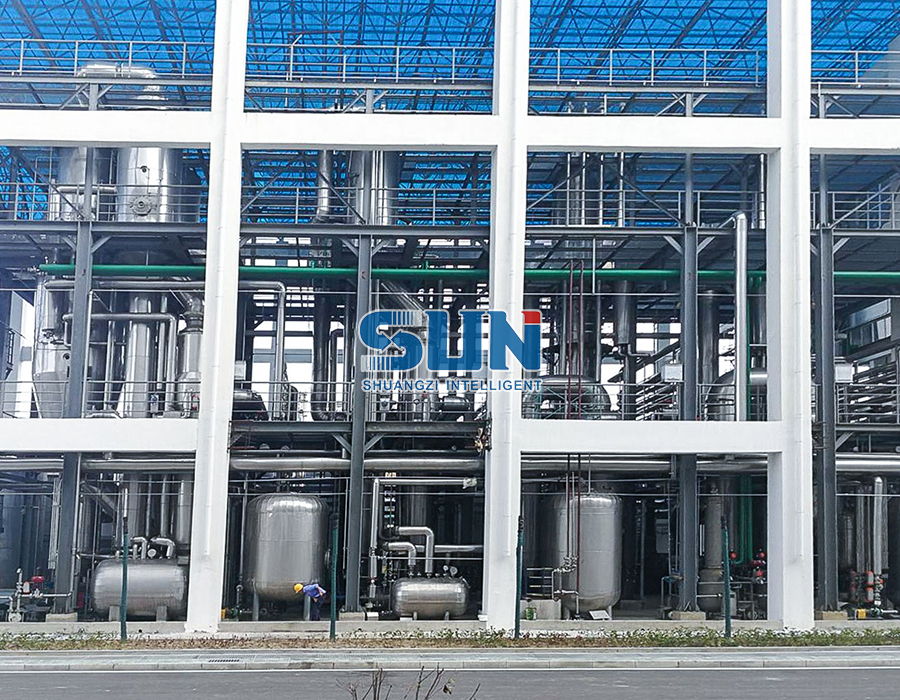
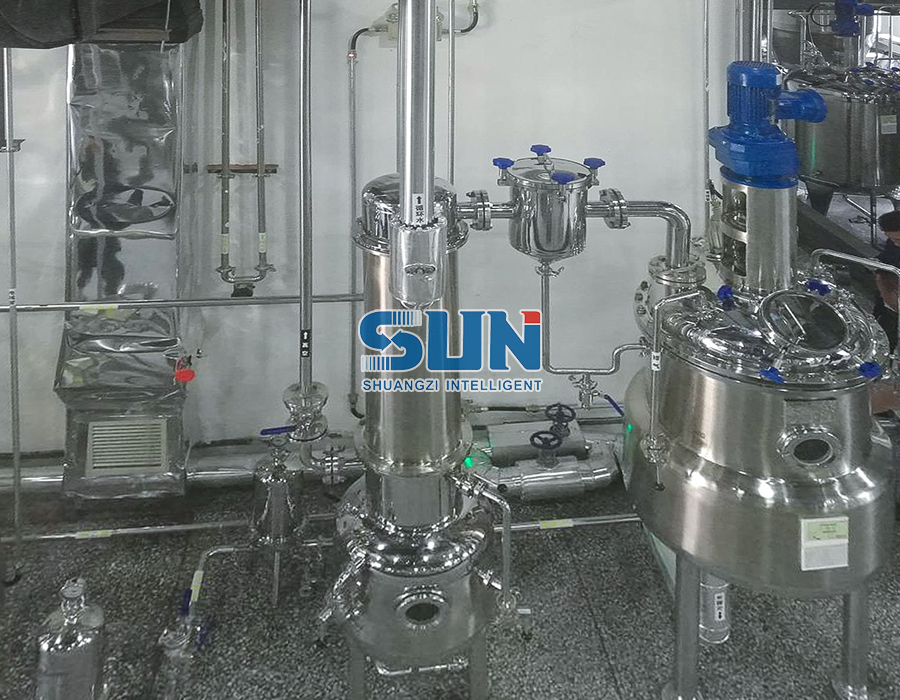
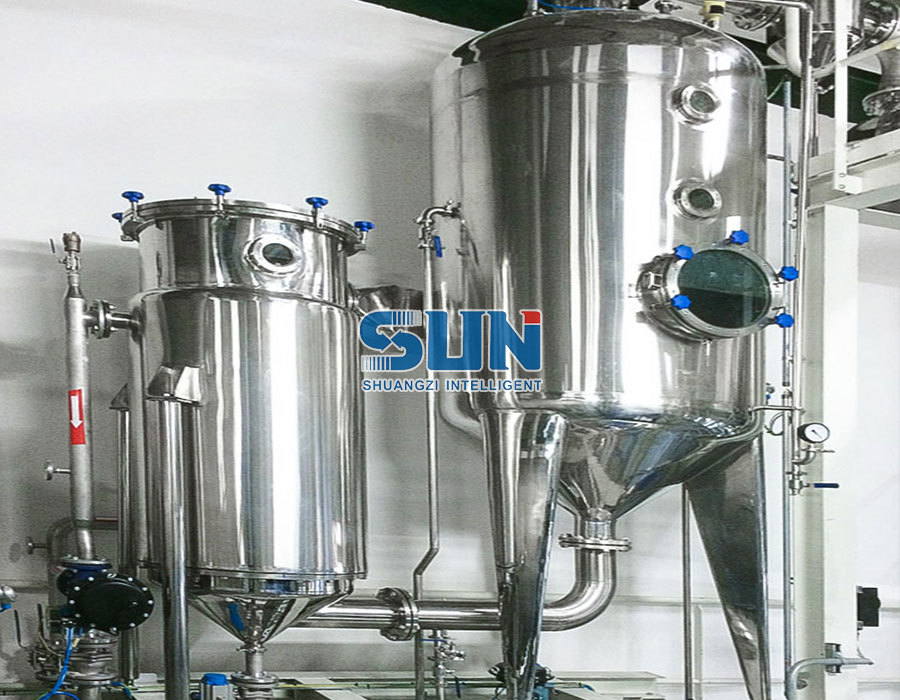
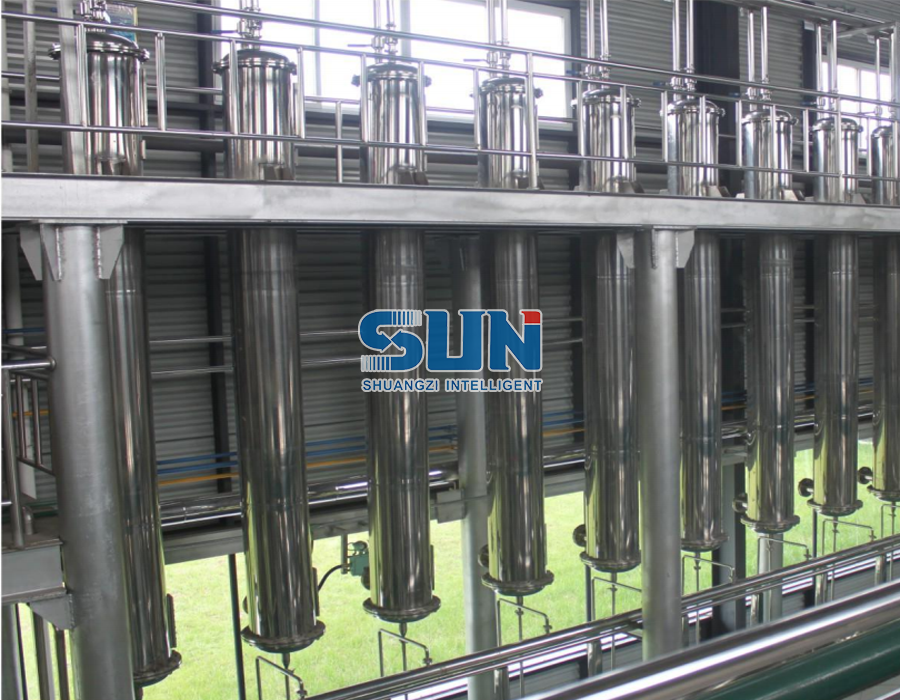
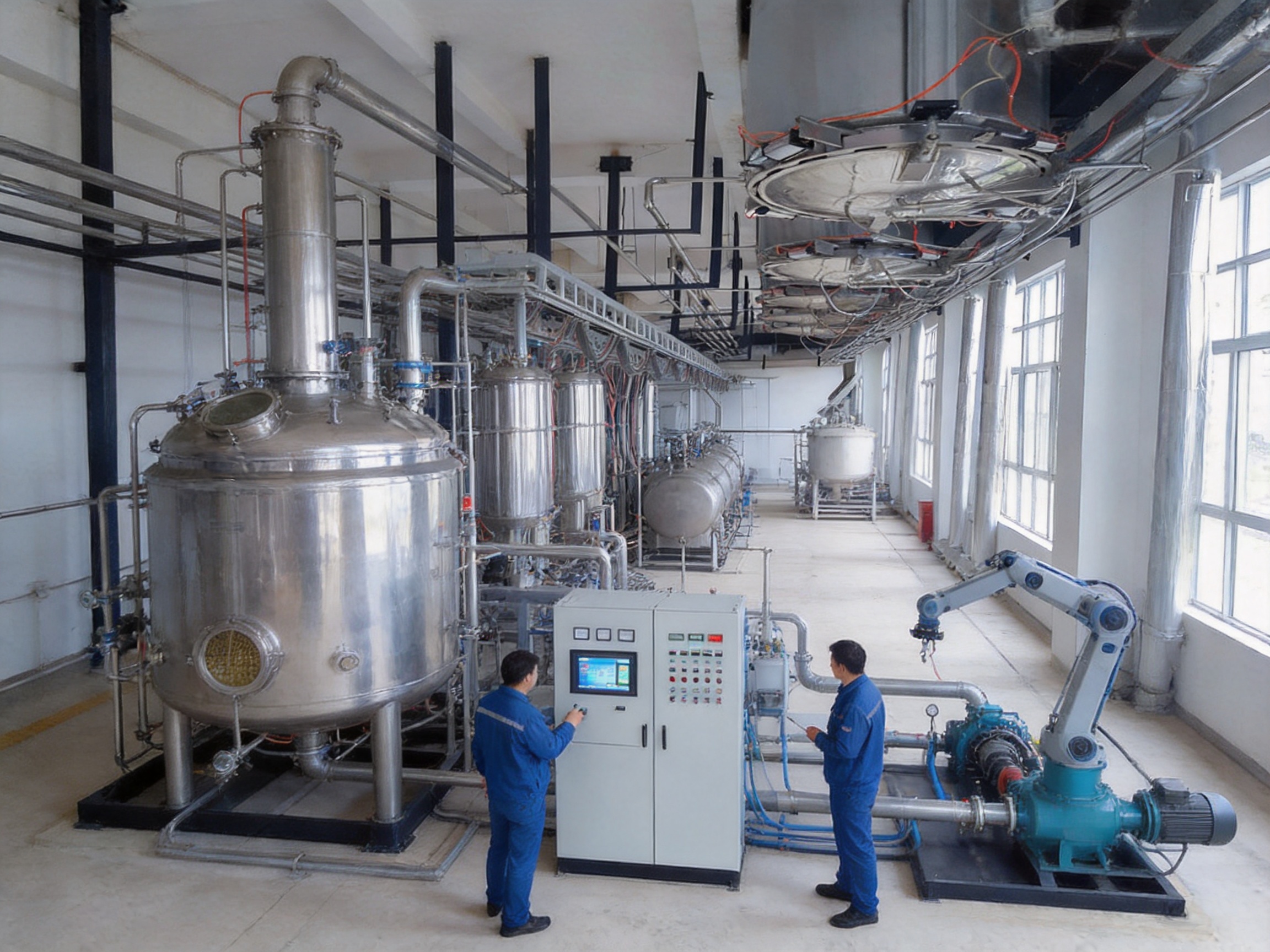
The curcumin extraction machine and complete production line supplied by Zhejiang Shuangzi Intelligent Equipment Co., Ltd. are designed for the continuous or batch processing of turmeric and other plant materials. The equipment integrates raw-material handling, extraction, solid-liquid separation, concentration, purification, crystallization, filtration, drying, and packaging into a coordinated processing system. Depending on the formulation, production target, and quality requirements, the line can be configured for laboratory, pilot, or industrial-scale operation.
This article introduces the curcumin extraction process, the main equipment included in the production line, the advantages of ethanol extraction, the company’s engineering and manufacturing strengths, production-capacity options, quality considerations, and practical questions frequently asked by customers planning a turmeric-processing project.
Curcumin Extraction Machine Manufacture
Overview of the Curcumin Extraction Production Line
Curcumin is naturally present in turmeric rhizomes together with essential oils, starch, fiber, proteins, pigments, minerals, and other plant constituents. The objective of an industrial extraction line is to separate the target curcuminoid compounds from the plant matrix while preserving product quality and controlling operating costs.
Ethanol is frequently selected as the extraction solvent because it can dissolve curcuminoids effectively and is broadly accepted for applications involving food, health products, and pharmaceutical ingredients when the process is properly controlled. A water-ethanol mixture, such as approximately 70% ethanol, can provide a practical balance between extraction performance, solvent cost, and downstream handling. The exact solvent concentration depends on the raw material, desired product specification, regulatory requirements, and process validation results.
A typical production sequence is:
Raw-material cleaning → Loading → Ethanol extraction → Solid-liquid separation → Vacuum concentration → Purification → Secondary concentration → Crystallization → Filtration → Drying → Packaging.
The equipment configuration can be adjusted according to whether the customer intends to produce a crude turmeric extract, a concentrated curcumin extract, a purified curcuminoid product, or crystalline curcumin. The production line may also include solvent storage, solvent-recovery equipment, pumps, valves, control instruments, clean-in-place systems, condensers, vacuum systems, cooling systems, and utility connections.
Raw-Material Preparation and Pretreatment
The quality of the finished curcumin product begins with the quality and preparation of the turmeric rhizomes. Mature, clean, and properly stored turmeric normally provides a more consistent starting material than raw material with excessive moisture, mold, soil contamination, or deterioration.
Cleaning
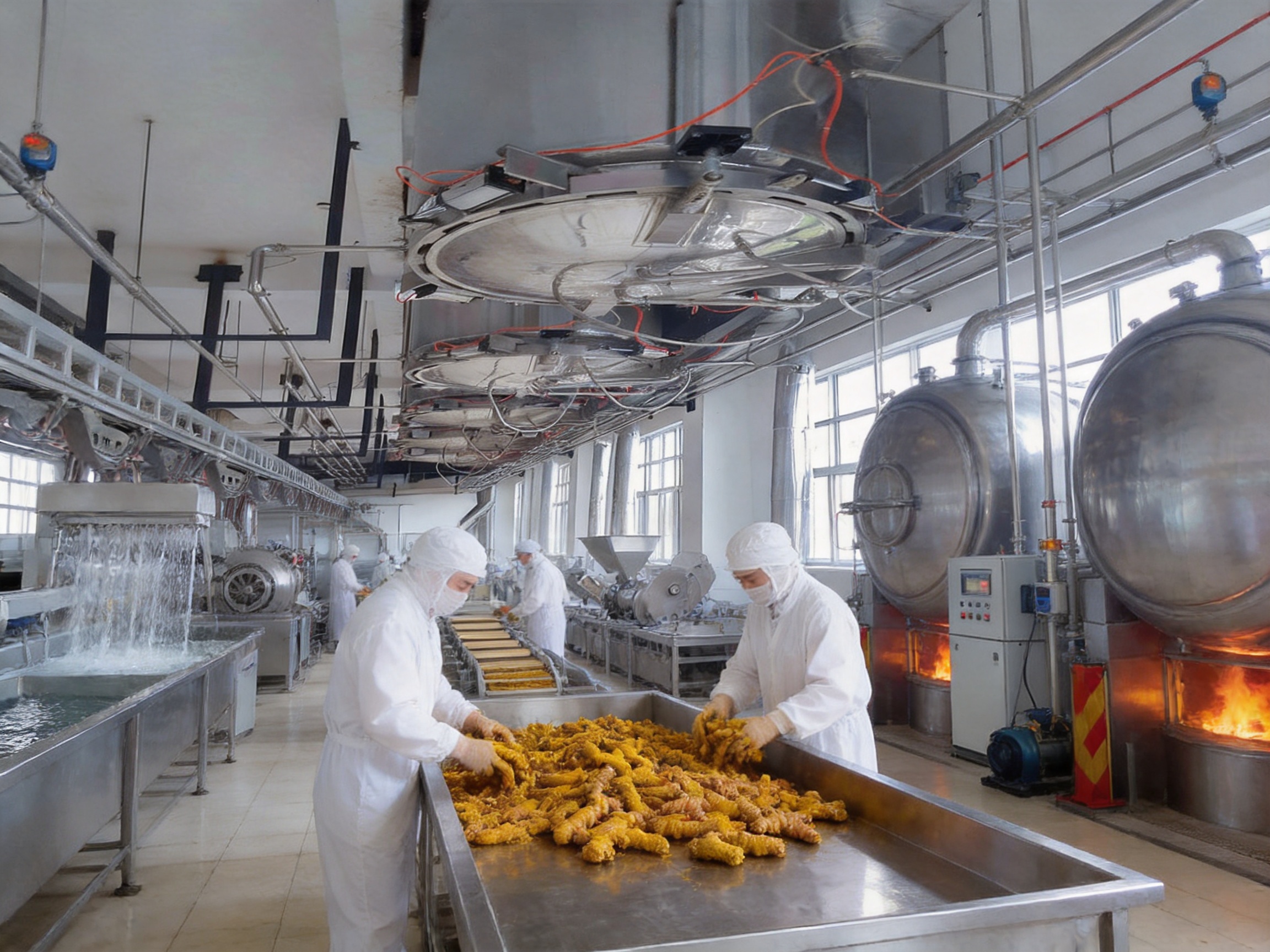
Incoming turmeric rhizomes may contain soil, stones, roots, leaves, dust, and other foreign matter. A suitable cleaning system removes these contaminants before further processing. Depending on the raw-material condition, cleaning may involve dry screening, washing, spray cleaning, brushing, or a combination of methods.
Cleaning equipment should be selected according to the moisture sensitivity of the material and the desired downstream process. If washing is used, the rhizomes may require draining or drying before slicing. The plant layout should provide a clear separation between raw-material receiving areas and later-stage extraction or purification areas.
Slicing, Crushing, or Milling
After cleaning, the turmeric may be sliced into thin pieces or reduced to a suitable particle size. Slicing improves drying and increases the exposed surface area. Milling can provide more rapid solvent penetration, but excessively fine powder may create difficulties during solid-liquid separation, filtration, pumping, and cleaning.
The appropriate particle size depends on the extraction vessel, solvent-to-solid ratio, material moisture, and separation equipment. A well-designed line balances extraction efficiency with practical filtration performance. The objective is not simply to create the finest powder, but to produce a consistent feed that can be extracted and separated reliably.
Moisture and Storage Control
Raw-material moisture influences solvent concentration, extraction yield, storage stability, and energy consumption. If the turmeric is too wet, the actual ethanol concentration in the extraction vessel may be reduced. If it is excessively dry or overheated, the material may become difficult to handle or may experience unnecessary quality loss.
For this reason, raw-material inspection and batch records are important parts of the process. Operators should record the source, condition, moisture, appearance, and approximate curcuminoid content of each batch whenever possible. Proper storage in a clean, dry, ventilated environment also helps maintain consistency before processing.
Ethanol Extraction Process
Prepared turmeric slices or powder are transferred into an extraction vessel. A commonly used starting condition is approximately 70% ethanol, with a solvent-to-raw-material ratio of about 10:1. These figures are process examples rather than universal specifications. Actual conditions should be confirmed through laboratory or pilot trials because turmeric varieties and raw-material conditions can differ substantially.
The extractor is sealed, and the material is contacted with the ethanol solution under controlled temperature and agitation conditions. A typical extraction temperature is approximately 45 to 50 degrees Celsius, while the extraction time may be around four to six hours. The final operating parameters depend on the concentration of curcuminoids in the raw material, the desired recovery, equipment volume, solvent ratio, and process economics.
Controlled Temperature Operation
Moderate-temperature extraction can help balance extraction efficiency and product protection. Excessive temperature may increase energy consumption, intensify solvent evaporation, and create unnecessary stress on heat-sensitive components. A temperature-controlled vessel allows the operator to maintain a repeatable extraction environment.
The extraction system may use a jacket, internal heat-transfer surface, or an external circulation loop. Temperature sensors and automatic control valves can be integrated into the system. A well-designed control system reduces temperature fluctuations and makes batch-to-batch operation easier to reproduce.
Agitation and Contact Efficiency
Agitation promotes contact between the turmeric particles and the ethanol solution. It can help prevent settling, improve solvent distribution, and reduce concentration gradients within the vessel. However, excessive agitation may break the plant material into very fine particles, which can complicate filtration.
Agitator selection should therefore consider the viscosity of the extract, the shape and size of the vessel, the material’s tendency to settle, and the required shear level. The design may use slow-speed paddles, anchor-type agitators, propeller arrangements, or other configurations suited to the process.
Multiple Extraction Stages
Depending on the required yield, one extraction stage may not be sufficient. Multiple extraction stages can improve recovery by contacting the plant residue with fresh or recycled solvent. The number of stages should be determined through process development because additional extraction increases solvent handling, energy demand, and cycle time.
The production line can be designed for flexible batch operation, allowing operators to adjust the number of extraction cycles according to raw-material quality and product specifications. This flexibility is particularly useful when the line processes different turmeric varieties or other botanical materials.
Solid-Liquid Separation
After extraction, the liquid phase contains ethanol, dissolved curcuminoids, essential oils, and other soluble plant components. The solid residue contains exhausted or partially exhausted turmeric fibers and other insoluble matter. Efficient separation is essential because suspended solids can increase the load on evaporators, affect product clarity, and interfere with purification and crystallization.
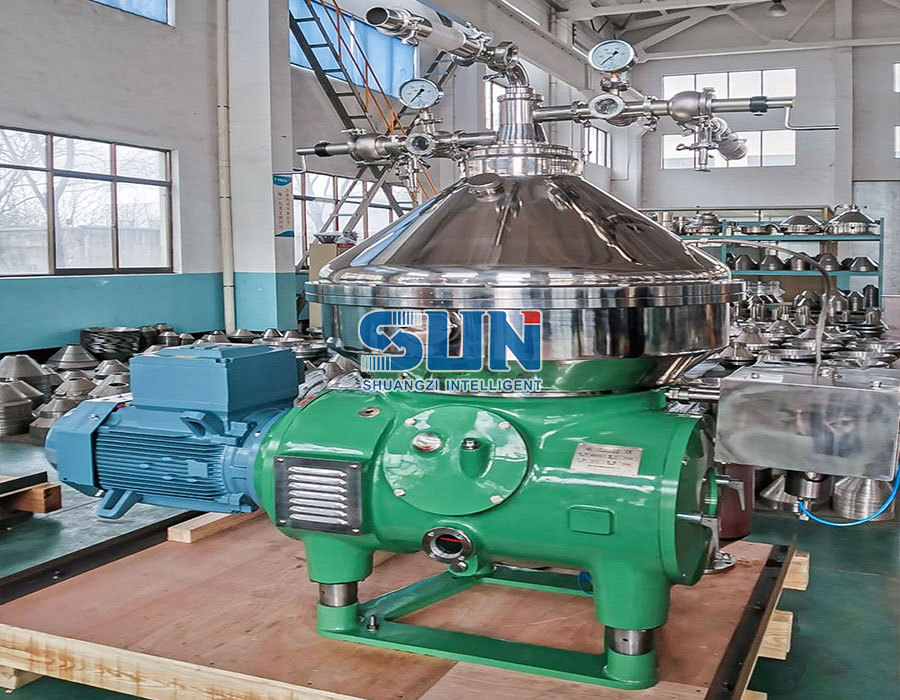
Depending on the process scale and extract characteristics, separation may use a filter, filter press, centrifugal separator, basket filter, or other suitable solid-liquid separation equipment. The choice depends on particle size, solids concentration, flow rate, operating temperature, cleaning requirements, and the desired clarity of the extract.
Filtration Design Considerations
Filtration equipment should provide sufficient area for the expected throughput while maintaining reasonable pressure drop. The system should also permit convenient discharge of the filter cake and allow cleaning or replacement of filter media without excessive downtime.
For food, health-product, and pharmaceutical applications, contact surfaces are commonly selected with hygiene and corrosion resistance in mind. Smooth internal surfaces, sanitary connections, drainability, and cleanable piping can help reduce the risk of residue accumulation and cross-contamination.
Extract Transfer
Extract transfer pumps must be compatible with ethanol-containing liquids and should be selected according to flow rate, pressure, temperature, and viscosity. Pump seals and elastomers require appropriate material selection. The piping arrangement should minimize dead legs and unnecessary hold-up volume, particularly when the system is intended for GMP-oriented production.
Vacuum Concentration and Solvent Recovery
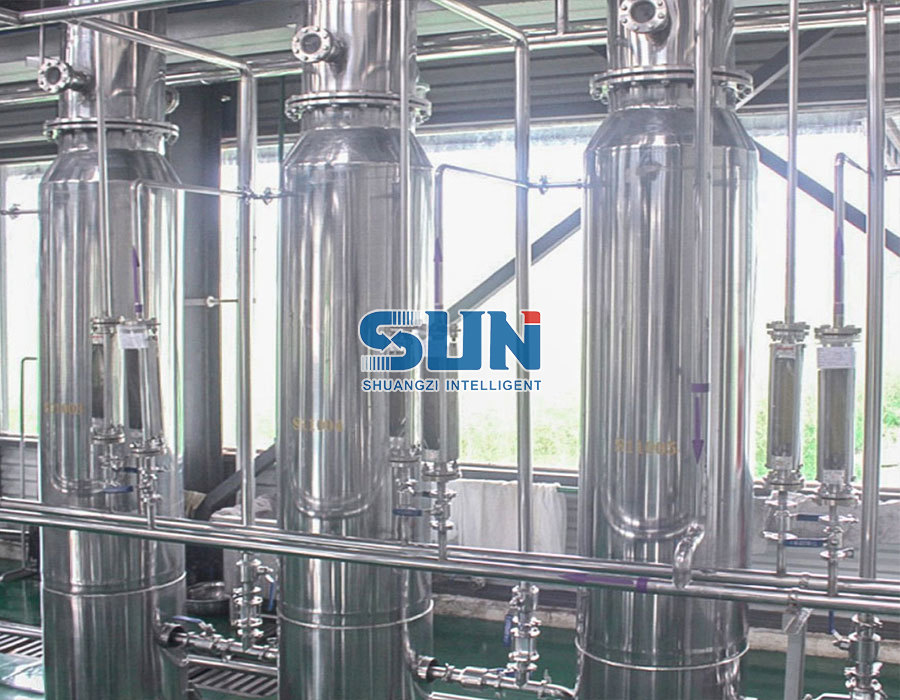
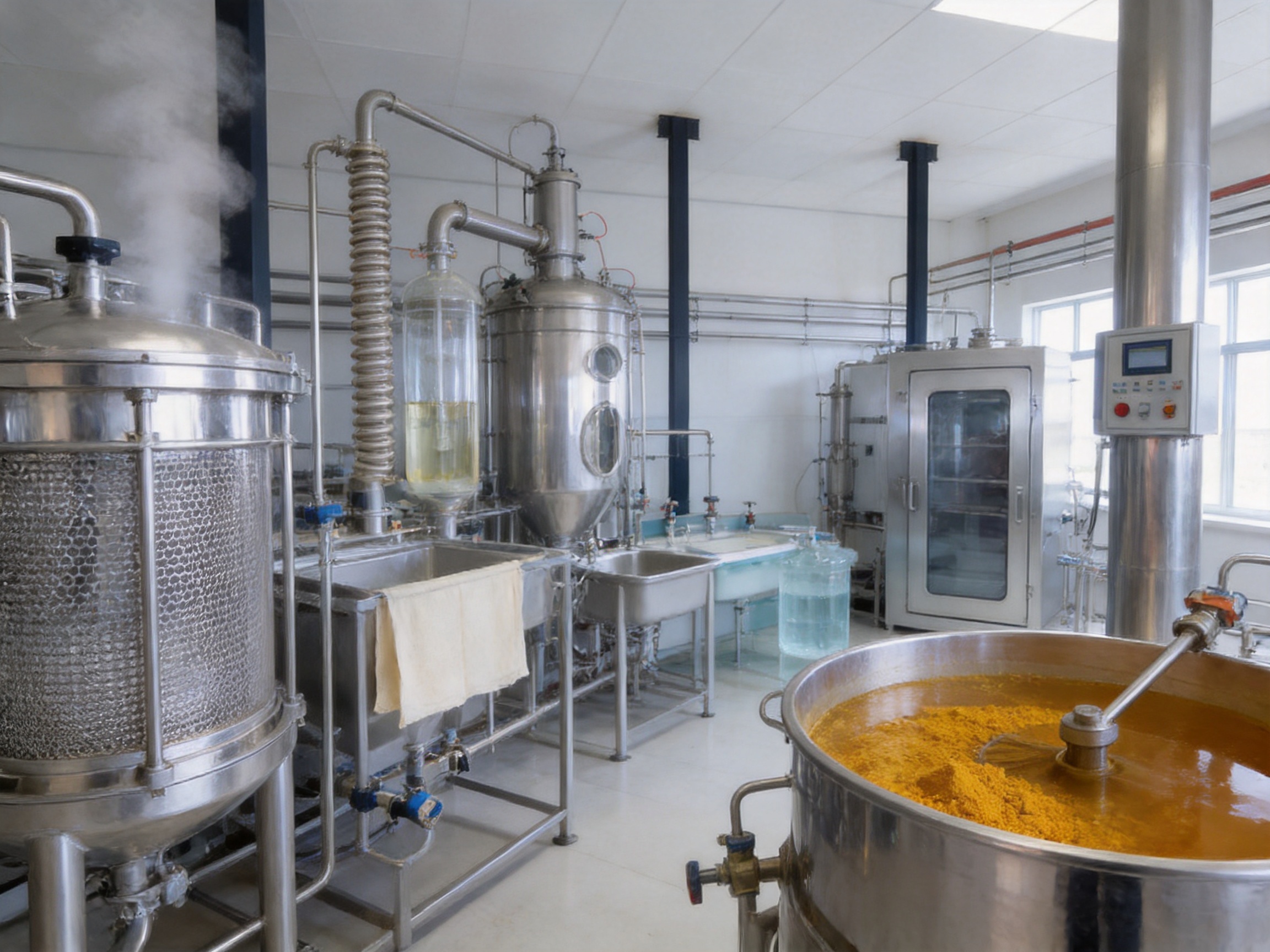
The filtered extract is normally sent to a vacuum evaporator or vacuum concentration system. Concentration removes a substantial portion of the ethanol and water, increasing the concentration of dissolved curcuminoids and reducing the volume that must be handled during purification.
Vacuum operation lowers the boiling temperature of the solvent. This allows concentration at a lower product temperature than would normally be required under atmospheric pressure. A typical process temperature may be controlled around 50 degrees Celsius, although the actual value depends on the vacuum level, feed composition, heat-transfer performance, and product requirements.
Advantages of Vacuum Concentration
Vacuum concentration offers several practical advantages over simple atmospheric evaporation. It can reduce thermal exposure, improve control of the evaporation rate, support solvent recovery, and reduce the risk of uncontrolled boiling. Lower-temperature operation may also help preserve desirable product characteristics.
The evaporator can be configured as a single-effect or multiple-effect system, depending on the production capacity and energy-efficiency target. A multiple-effect arrangement may reduce steam consumption by reusing vapor energy between effects. The most suitable configuration depends on the customer’s utility costs, operating schedule, product concentration, and investment budget.
Solvent Recovery
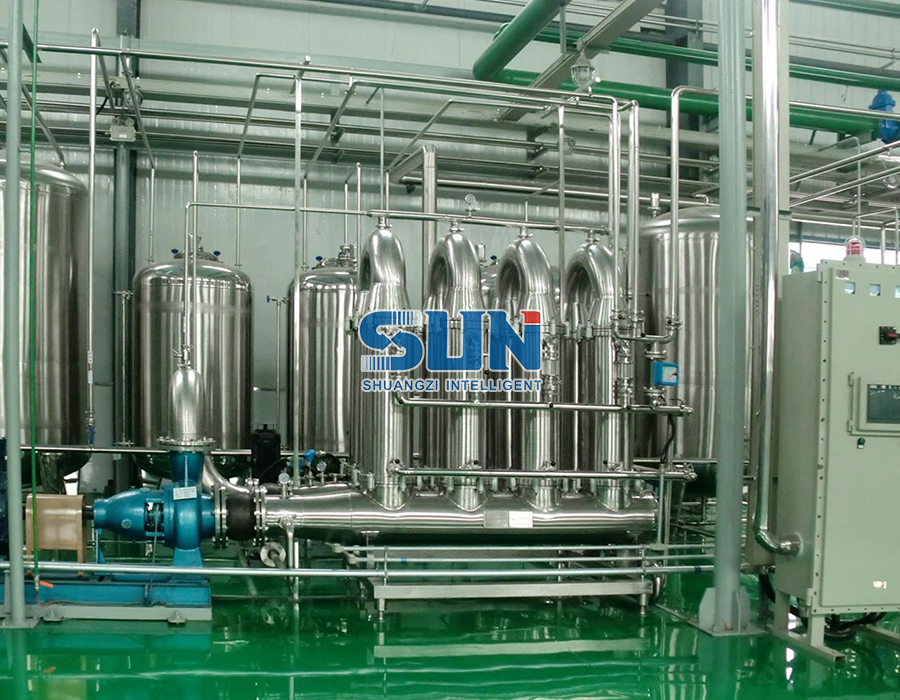
Ethanol recovery is an important part of an industrial curcumin line. Recovered ethanol can potentially be treated and reused, reducing solvent consumption and operating expense. A condenser collects evaporated solvent vapor, while receiving tanks store the recovered liquid for further treatment or reuse.
Solvent recovery must be designed with appropriate explosion-protection, ventilation, grounding, electrical classification, temperature control, and pressure-relief provisions. The final design should comply with the applicable local regulations and the customer’s site safety standards. Operators must also receive training in solvent handling, emergency response, and equipment shutdown procedures.
Purification of Curcumin Extract
Crude turmeric extract contains curcuminoids together with oils, resins, pigments, waxes, sugars, soluble proteins, and other substances. Purification is used to improve the concentration and quality of the target product. The exact purification route depends on the desired product grade and the composition of the crude extract.
One process approach involves adding an appropriate amount of water to the concentrated extract. A starting solvent-to-extract ratio of approximately 1:1 may be evaluated during process development. Water addition changes the solvent environment and can support the separation of certain impurities from the target fraction.
The resulting mixture may undergo repeated solvent exchange, phase separation, filtration, and further concentration. Process engineers select the sequence according to laboratory testing and the required purity. Some applications may require additional adsorption, precipitation, washing, or refining steps.
Water Addition and Phase Behavior
Water addition must be controlled carefully. The final phase behavior depends on ethanol concentration, temperature, extract composition, mixing intensity, and residence time. A controlled addition system allows operators to repeat the operation more accurately than manual charging.
The equipment may include a mixing tank with an agitator, load cells or flowmeters, temperature measurement, and controlled transfer lines. The tank should provide enough working volume for safe mixing without excessive foaming or splashing.
Impurity Removal
Impurity removal can involve the separation of an aqueous layer, filtration of suspended matter, and removal of unwanted compounds before the final concentration step. In some processes, the solid or liquid fraction containing impurities is removed while the curcuminoid-rich fraction is retained for further processing.
Because the composition of turmeric extract varies, purification cannot be designed solely from a standard recipe. Pilot testing is valuable for determining solvent ratios, temperature ranges, residence times, filtration characteristics, and achievable purity. Zhejiang Shuangzi Intelligent Equipment Co., Ltd. provides process and equipment engineering support for this type of scale-up work.
Secondary Concentration and Crystallization
After purification, the product solution may be concentrated again under vacuum. The objective is to reach a suitable concentration for crystallization while avoiding excessive thermal exposure or uncontrolled precipitation.
Crystallization is a key step when the target product is a crystalline curcumin or curcuminoid material. The crystallization conditions influence crystal size, purity, filtration behavior, solvent retention, and drying performance. Important variables include concentration, cooling rate, solvent composition, seeding, agitation, and holding time.
Controlled Crystallization
Controlled cooling can encourage the formation of crystals with more uniform characteristics. Rapid and poorly controlled cooling may generate very fine particles that are difficult to filter and wash. Excessively slow cooling may extend the production cycle without providing a corresponding improvement.
A crystallization vessel may include a jacket for heating and cooling, an agitator designed for gentle suspension, temperature sensors, and controlled charging systems. The vessel can be connected to downstream filtration equipment through sanitary and solvent-compatible piping.
Where process development demonstrates a benefit, seed crystals may be introduced to guide nucleation. The amount and timing of seeding should be validated for the selected raw material and product specification.
Filtration, Washing, and Drying
Once crystallization is complete, the crystal slurry is transferred to a filtration system. The filter separates the solid curcumin crystals from the mother liquor. The cake may then be washed with a suitable liquid to remove residual impurities or adhering mother liquor.
Filtration performance is influenced by crystal size distribution, cake compressibility, viscosity, temperature, and pressure difference. A filtration system with adequate capacity helps prevent production bottlenecks between crystallization and drying.
Drying Technology
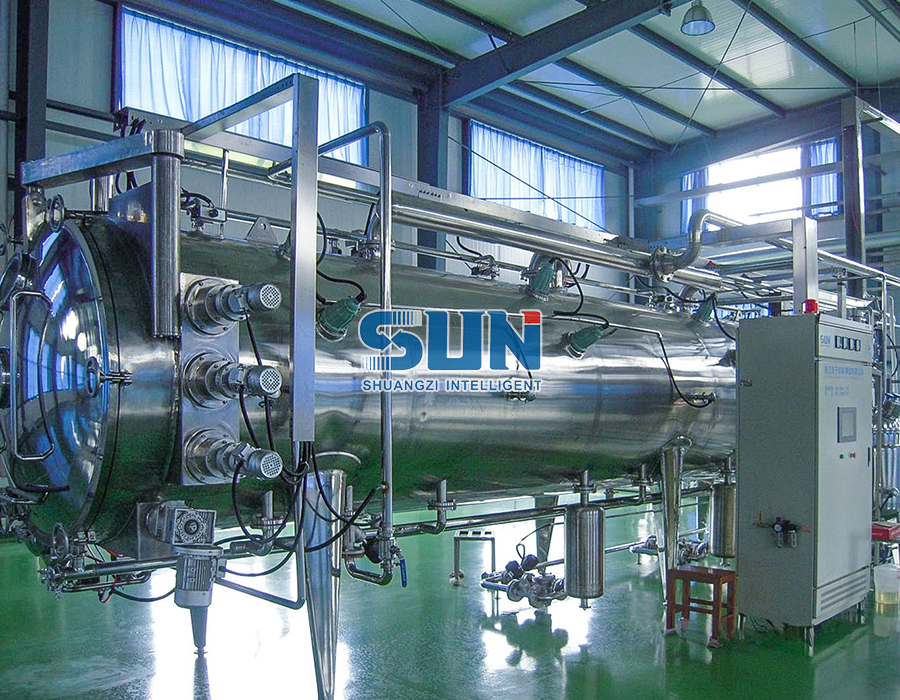
After filtration, the wet crystal cake contains residual solvent and moisture. Drying reduces these residuals to the required level. Vacuum drying is particularly suitable for natural extracts and pharmaceutical or health-product ingredients because it can support lower-temperature operation in a controlled environment.
The company’s mature product range includes vacuum low-temperature drying equipment. Depending on the material properties and capacity, the drying system may be configured with trays, shelves, vacuum vessels, heating surfaces, condensers, vacuum pumps, temperature sensors, and control instruments.
Drying conditions should be established through trials. Important parameters include product loading thickness, shelf temperature, vacuum level, drying time, condenser performance, and endpoint determination. The finished product should be tested for moisture, residual ethanol, appearance, purity, and other relevant specifications.
Powder Handling and Packaging
After drying, the curcumin product may be discharged, screened, milled, blended, or packed according to customer requirements. The packaging system should protect the powder from moisture, light, contamination, and excessive exposure to air.
Packaging materials and formats depend on the intended market. Options may include sealed bags, drums, lined containers, or automated filling systems. For GMP-oriented production, packaging areas should be designed to control dust, maintain cleanliness, and support traceability.
Equipment Configuration and Main Components
A complete curcumin extraction production line is more than a single extractor. It is an integrated system in which each unit operation affects the performance of the next. The following equipment groups are commonly considered during project design.
| Process Section | Typical Equipment | Main Function | Key Design Focus |
|---|---|---|---|
| Raw-material preparation | Cleaner, washer, slicer, crusher, mill, dryer | Prepare turmeric for consistent extraction | Particle size, moisture, hygiene, throughput |
| Extraction | Extraction tank, agitator, heating jacket, solvent charging system | Contact turmeric with ethanol solution | Temperature, residence time, mixing, solvent ratio |
| Solid-liquid separation | Filter, filter press, centrifuge, transfer pump | Remove exhausted plant solids | Clarity, filtration rate, cake discharge, cleanability |
| Concentration | Vacuum evaporator, condenser, receiving tank, vacuum system | Remove solvent and increase extract concentration | Heat transfer, vacuum control, solvent recovery |
| Purification | Mixing tank, separation vessel, filter, dosing system | Remove unwanted extract components | Phase control, temperature, product recovery |
| Crystallization | Crystallizer, cooling and heating system, agitator | Form curcumin crystals | Nucleation, cooling rate, crystal size, residence time |
| Final separation | Vacuum filter, centrifuge, washing system | Separate and wash the crystal cake | Residual mother liquor, yield, filtration capacity |
| Drying | Vacuum low-temperature dryer, condenser, vacuum pump | Reduce moisture and residual solvent | Temperature, vacuum, drying uniformity |
| Automation and utilities | PLC control cabinet, instruments, pumps, valves, CIP system | Coordinate operation and improve repeatability | Safety, data recording, maintenance, integration |
Production Capacity Options
The production line can be planned around different operational biomass capacities. The available capacity figures include 500, 1,000, 2,000, 3,000, 4,000, 5,000, 6,000, 8,000, and 10,000 kilograms per hour. These figures identify the stated operational biomass-handling options and should not be interpreted automatically as the final curcumin-product output.
| Nominal Operational Biomass Capacity | Potential Application | Typical Planning Consideration |
|---|---|---|
| 500 kg/h | Pilot-scale or small commercial production | Flexible batches, limited utility demand, easier product development |
| 1,000 kg/h | Small to medium commercial line | Balanced investment and throughput for growing demand |
| 2,000 kg/h | Medium-scale production | Higher extraction and separation capacity with expanded utilities |
| 3,000 kg/h | Established commercial operation | Process continuity and larger solvent-recovery requirements |
| 4,000 kg/h | Large commercial operation | Greater automation, storage, and material-handling needs |
| 5,000 kg/h | High-volume botanical processing | Integrated production scheduling and utility optimization |
| 6,000 kg/h | Large industrial facility | Multiple vessels or high-capacity equipment may be required |
| 8,000 kg/h | Major industrial production | Advanced automation, solvent recovery, and logistics planning |
| 10,000 kg/h | Very high-throughput facility | Detailed engineering, site planning, safety review, and commissioning |
Actual output depends on the curcuminoid content of the turmeric, raw-material moisture, extraction yield, purification recovery, solvent ratio, cycle time, product specification, and equipment availability. A professional quotation should therefore be based on a process definition rather than on biomass capacity alone.
Advantages Compared with Basic or Poorly Integrated Systems
Many low-cost extraction arrangements consist of separate tanks and manually connected equipment. Such systems may be able to produce an extract, but they can present challenges in consistency, labor demand, solvent loss, cleaning, safety, and future expansion. An integrated curcumin extraction line offers several advantages.
Process Integration
When extraction, filtration, concentration, purification, crystallization, and drying are engineered as one system, the equipment capacities can be matched more effectively. This reduces transfer delays and helps prevent a high-capacity upstream unit from overwhelming a smaller downstream unit.
Integrated engineering also simplifies the arrangement of pumps, tanks, piping, instruments, and control logic. The customer receives a coordinated production solution rather than a collection of unrelated machines.
Improved Temperature and Vacuum Control
Controlled heating and vacuum concentration are important for managing product quality and energy use. Compared with open atmospheric evaporation, a vacuum system can provide more controlled solvent removal at a lower operating temperature. Automated sensors and control loops can further improve repeatability.
Better Solvent Utilization
Ethanol recovery reduces the amount of fresh solvent required and can lower operating costs. A properly designed condenser and receiving system also limits uncontrolled solvent release. This is especially important for larger plants, where solvent losses can become a significant economic and environmental concern.
Flexible Capacity and Configuration
The line can be configured around different biomass capacities and product targets. Customers may select a system for pilot work, commercial production, or a turnkey project that includes process design, equipment manufacture, installation, commissioning, and operator support.
Hygienic and Maintainable Construction
Plant-extraction equipment benefits from smooth, cleanable product-contact surfaces and a layout that allows inspection and maintenance. Proper drainability helps reduce residual material after cleaning. The use of suitable stainless-steel construction and sanitary connections can support applications in food, health products, and pharmaceutical processing, subject to the agreed design standard.
Lower Manual Handling
Automation can reduce repetitive manual operations such as solvent charging, temperature adjustment, transfer, concentration control, and timing. Lower manual intervention can improve operator safety and make batch records more complete. It can also reduce variation caused by differences between operators and shifts.
Scalable Project Development
A customer may begin with laboratory or pilot production and later expand to a larger commercial line. The company’s experience with pilot workshops, research and development platforms, and industrial equipment supports this progression. Early pilot data can be used to refine the process before committing to a major capital project.
Manufacturing Strengths and Engineering Capability
Zhejiang Shuangzi Intelligent Equipment Co., Ltd. is a professional biology and medical equipment enterprise founded in 2007. The company covers a floor area of approximately 16,706 square meters and a structure area of approximately 17,800 square meters. Its work focuses on process technology, automation engineering design, equipment manufacture, auxiliary equipment procurement, installation, commissioning, and equipment-system integration.
The company’s capabilities cover plant extraction, biological fermentation, pharmaceutical engineering, natural food processing, energy conservation, and environmental protection. This broad technical background is relevant to curcumin projects because a botanical extraction plant requires knowledge of several connected disciplines rather than only the manufacture of one extraction tank.
Process and Automation Engineering
Curcumin production involves heat transfer, fluid movement, vacuum operation, solid-liquid separation, crystallization, drying, solvent management, and batch control. The company can support the design of these process sections and integrate them into a complete operating system.
Automation engineering may include instrument selection, control-panel design, PLC programming, valve and pump coordination, temperature control, pressure and vacuum monitoring, alarm management, and recipe-based operation. The level of automation can be adapted to the customer’s budget and requirements.
Equipment Manufacturing
The company manufactures equipment for extraction, evaporation and concentration, separation, crystallization, filtration, vacuum low-temperature drying, fermentation, and related processes. This product range allows several major sections of a curcumin production line to be sourced from one experienced equipment manufacturer.
In-house manufacturing capability can improve communication between process engineers, fabricators, assembly personnel, and commissioning teams. It may also make it easier to coordinate modifications when process conditions change during project development.
Advanced Fabrication and Welding
The company has introduced advanced welding and finishing equipment, including plasma argon arc welding machines, plasma cutting machines, and CAM CNC machining centers. These technologies support accurate fabrication, consistent weld preparation, clean finishing, and improved dimensional control.
High-quality fabrication is important for vacuum vessels, extraction tanks, evaporators, crystallizers, filters, and sanitary piping. Surface finish, weld quality, vessel alignment, nozzle positioning, and pressure integrity all influence the reliability and cleanability of the final system.
Turnkey Project Services
The company can provide engineering, process design, equipment design, installation, line debugging, and turnkey project services. A turnkey approach gives the customer a central technical partner for the main stages of project implementation.
Typical project support may include process-flow development, equipment selection, general arrangement planning, utility estimation, manufacturing, factory inspection, shipment coordination, site installation, commissioning, performance testing, and operator training. The precise scope should be agreed in the technical and commercial documents for each project.
GMP-Oriented and Pilot-Scale Applications
Curcumin may be used in products subject to food, health-product, cosmetic, or pharmaceutical quality requirements. The correct design standard depends on the intended product, local regulations, customer validation procedures, and the final market.
The company has a pilot production workshop and research and development platform designed to support automation and GMP-oriented requirements. Pilot facilities can be valuable for testing raw materials, comparing extraction conditions, evaluating filtration behavior, and determining the performance of evaporation, crystallization, and drying steps.
Process Development Before Full-Scale Investment
Pilot testing can answer practical questions that cannot be resolved reliably through theoretical calculations alone. These questions include:
How much curcuminoid can be recovered under a selected ethanol concentration?
How does particle size affect extraction time and filtration speed?
How much solvent is required for the intended yield?
What concentration is suitable for purification and crystallization?
How quickly do crystals form under different cooling conditions?
Can the wet cake be filtered and washed efficiently?
What vacuum-drying conditions produce the required moisture and residual-solvent levels?
How much ethanol can be recovered and reused?
Data from these tests can support a more accurate equipment specification and reduce the risk of oversizing or undersizing the industrial line.
Documentation and Traceability
A production system intended for regulated applications should support the creation of operating procedures, cleaning procedures, maintenance records, batch records, calibration records, and equipment documentation. Instrument identification and control-system data recording can help improve traceability.
Depending on the project requirements, documentation may include equipment drawings, material certificates, welding records, pressure-test records, electrical diagrams, operating manuals, spare-parts lists, and commissioning reports. The final documentation package should be defined before manufacture begins.
Safety and Environmental Considerations
Because ethanol is flammable, solvent-based curcumin extraction requires careful safety engineering. The extraction area, solvent-storage area, evaporation section, recovery system, and ventilation arrangement should be reviewed by qualified engineers and designed according to applicable laws and standards.
Flammable-Solvent Management
Important considerations include suitable electrical equipment, grounding and bonding, ventilation, leak prevention, pressure control, temperature monitoring, emergency shutdown, fire protection, and safe solvent storage. The plant should also have procedures for solvent transfer, spill response, maintenance, and waste handling.
Open flames and uncontrolled ignition sources must be excluded from areas where flammable vapor may be present. Equipment selection should account for the possibility of vapor release during charging, sampling, maintenance, and abnormal operation.
Wastewater and Solid Residue
Turmeric residue, wash water, spent solvent, and cleaning liquids should be managed according to local environmental requirements. The plant design may include collection tanks, solvent segregation, wastewater pretreatment, and residue dewatering or disposal arrangements.
Solvent recovery and efficient washing can reduce waste generation. Process optimization may also reduce water use, energy use, and the volume of material sent for disposal.
Operator Protection
Operators should be protected from hot surfaces, moving agitators, vacuum conditions, chemical exposure, dust, and solvent vapor. Suitable guarding, insulation, access platforms, warning signs, personal protective equipment, and training are essential parts of a safe production environment.
Quality Control for Curcumin Production
A quality-control program should cover raw materials, in-process liquids, intermediate crystals, dried product, recovered solvent, and cleaning results. The exact analytical methods depend on the customer’s specification and regulatory requirements.
Typical quality considerations may include curcuminoid content, moisture, residual ethanol, appearance, particle size, microbiological quality, heavy metals, pesticide residues, and other contaminants relevant to the intended application.
Process parameters should also be recorded. These may include raw-material weight, solvent concentration, solvent-to-solid ratio, extraction temperature, extraction time, filtration pressure, concentration temperature, vacuum level, crystallization temperature, drying time, and final product weight.
Consistent records allow the manufacturer to compare batches, investigate deviations, improve yields, and demonstrate process control. Automated systems can make it easier to collect and store this information, although written procedures and trained personnel remain necessary.
Installation, Commissioning, and Technical Service
Successful equipment delivery involves more than manufacturing and shipment. Installation must consider building access, floor loading, drainage, ventilation, steam or hot-water supply, cooling water, electricity, compressed air, vacuum connections, solvent storage, and product-flow logistics.
Before installation, the customer and equipment supplier should confirm the site layout, utility conditions, equipment orientation, piping routes, control-panel location, maintenance access, and safety distances. Early coordination can reduce delays during assembly.
Commissioning
Commissioning normally begins with mechanical inspection, electrical checks, instrument verification, water testing, leak testing, and control-system testing. The system can then be operated with appropriate process media before production material is introduced.
During process commissioning, engineers verify heating, cooling, agitation, pumping, filtration, vacuum concentration, solvent condensation, crystallization, drying, and automated sequences. Adjustments may be made to control settings and operating procedures based on actual site conditions.
Training
Operators should receive training in start-up, normal operation, shutdown, cleaning, preventive maintenance, solvent safety, emergency procedures, and basic troubleshooting. Maintenance personnel should understand pump seals, valves, instruments, vacuum equipment, heating systems, filter components, and spare-parts requirements.
Clear training and documentation help the customer achieve stable operation after the commissioning team leaves the site.
Why Select an Integrated Equipment Manufacturer?
Selecting an integrated equipment manufacturer can simplify project management. Instead of coordinating several suppliers with different design standards, the customer can work with one company for process planning, equipment fabrication, automation integration, installation, and commissioning.
This approach can provide better consistency between vessel dimensions, pipe sizes, pump capacities, control logic, and utility requirements. It may also reduce disputes about responsibility when one process section does not perform as expected.
Zhejiang Shuangzi Intelligent Equipment Co., Ltd. combines process development, equipment manufacture, automation engineering, and turnkey project support. Its product range includes the major technologies needed for botanical extraction and downstream processing. The company’s experience in plant extraction, fermentation, pharmaceutical engineering, natural food processing, and environmental systems provides a broad foundation for customized projects.
Compared with a basic equipment-only purchase, an integrated project can offer a clearer path from raw-material testing to final production. It also provides more opportunities to optimize solvent recovery, energy consumption, cleaning procedures, operator workload, and future expansion.
Project Customization Factors
Every curcumin extraction project should be customized according to the customer’s actual requirements. Important information includes the turmeric variety, annual operating days, daily or hourly raw-material input, moisture content, curcuminoid concentration, desired product grade, solvent selection, available utilities, factory dimensions, automation level, and local regulatory requirements.
The customer should also clarify whether the target is a liquid extract, concentrated extract, purified curcuminoid mixture, or crystalline product. These products require different downstream equipment and may have different filtration, crystallization, drying, and packaging needs.
Other factors include whether the plant will process only turmeric or several botanical materials. A multi-product facility may require flexible vessel design, validated cleaning procedures, separate product-contact components, and additional storage tanks.
Energy requirements should be reviewed during the early design stage. Extraction heating, vacuum evaporation, cooling, drying, compressed air, chilled water, and cleaning operations all affect utility consumption. Heat recovery, multiple-effect evaporation, and solvent recycling may improve the project’s operating economics.
Recommended Process-Selection Approach
A reliable project generally follows several stages. First, the raw material and target product are defined. Second, laboratory or pilot tests establish extraction and purification conditions. Third, a process-flow diagram and mass balance are prepared. Fourth, equipment capacities and utility requirements are calculated. Fifth, the line is engineered, manufactured, installed, and commissioned.
This staged approach is more dependable than selecting equipment only by vessel volume or nominal biomass capacity. It allows the customer and supplier to identify bottlenecks before construction and to align product specifications with actual process capability.
For example, the extraction vessel may be adequate for the expected feed rate, but the filter may be too small for the resulting solids load. Similarly, an evaporator may have sufficient heating area, but the condenser or recovered-solvent tank may limit overall operation. Integrated engineering evaluates these relationships together.
Maintenance and Long-Term Operation
Regular maintenance helps protect product quality and reduce unplanned downtime. Operators should inspect pumps, seals, valves, filters, agitators, heating jackets, condensers, vacuum pumps, instruments, and safety devices according to a planned schedule.
Extraction and purification tanks should be cleaned promptly after production to prevent residue drying on internal surfaces. Filters should be inspected for damage and replaced when necessary. Vacuum systems should be checked for leaks because poor vacuum performance can increase concentration time and energy use.
Calibration of temperature, pressure, vacuum, flow, and weighing instruments supports reliable process control. Preventive maintenance records should identify the date, equipment, work performed, spare parts used, and responsible personnel.
When the line processes different botanical materials, cleaning validation or documented cleaning verification may be required. The cleaning method should be compatible with the equipment materials and should remove oils, pigments, solids, and residual solvents without damaging seals or surfaces.
Frequently Asked Questions
What raw material is used for curcumin extraction?
Turmeric rhizomes are the principal raw material. They may be processed as cleaned slices or as a controlled powder. Raw-material quality, moisture, particle size, and curcuminoid content have a direct effect on extraction performance and final product yield.
Why is ethanol commonly used?
Ethanol can dissolve curcuminoids effectively and is widely used in natural-product processing. A water-ethanol mixture, such as approximately 70% ethanol, may be selected as a starting condition. The final concentration must be confirmed through process trials and must meet the customer’s safety and regulatory requirements.
What is the typical extraction temperature?
A typical starting range is approximately 45 to 50 degrees Celsius. The correct temperature depends on raw-material quality, solvent composition, equipment design, extraction time, and product specifications. It should be established through laboratory or pilot testing.
How long does extraction take?
A commonly referenced extraction period is approximately four to six hours. The required time can vary according to particle size, agitation, solvent ratio, temperature, and the number of extraction stages.
What is the purpose of vacuum concentration?
Vacuum concentration removes ethanol and water while increasing the concentration of the extract. It can lower the boiling temperature and reduce unnecessary thermal exposure. The system can also be connected to a condenser for ethanol recovery.
Can the ethanol be recovered and reused?
Yes, a suitable condenser and solvent-recovery arrangement can collect evaporated ethanol. Reuse depends on solvent purity, process requirements, local regulations, and the customer’s quality system. Recovery equipment must be designed with appropriate flammable-solvent safety measures.
Is the line suitable for crystalline curcumin?
The line can be configured with purification, secondary concentration, crystallization, filtration, washing, and vacuum drying sections for crystalline products. The appropriate configuration depends on the desired purity, crystal properties, solvent system, and validated process conditions.
What biomass capacities are available?
Stated operational biomass capacities include 500, 1,000, 2,000, 3,000, 4,000, 5,000, 6,000, 8,000, and 10,000 kilograms per hour. Actual product output depends on raw-material composition, process yield, operating schedule, and product specification.
Can the equipment be used for other plants?
Many extraction systems can be adapted for other botanical materials, but the suitability must be evaluated for each plant. Different materials may require different particle sizes, solvent ratios, temperatures, extraction times, filtration systems, and purification methods.
Does the company provide turnkey service?
Yes. The company can provide process design, equipment design, equipment manufacture, matching procurement, installation, line debugging, system integration, and turnkey project services. The final scope should be defined according to the customer’s technical specification and site conditions.
Is pilot testing recommended?
Pilot testing is recommended when the raw material, product grade, or purification route is new. Pilot work can help determine extraction yield, solvent consumption, filtration behavior, crystallization conditions, drying requirements, and scale-up risks.
What information is needed for a quotation?
Useful information includes the desired biomass capacity, raw-material type and moisture, expected curcuminoid content, target product, purity requirement, preferred solvent, operating hours, factory location, available utilities, automation level, and whether installation and commissioning are required.
What are the company’s main technical strengths?
The company focuses on biology and medical equipment, plant extraction, fermentation, pharmaceutical engineering, natural food processing, evaporation, separation, crystallization, filtration, vacuum drying, automation, and turnkey project integration. It also operates manufacturing facilities with plasma welding, plasma cutting, and CNC machining capabilities.
Conclusion
A modern curcumin extraction machine should provide much more than basic solvent contact. It should support controlled extraction, effective solid-liquid separation, low-temperature concentration, solvent recovery, reliable purification, reproducible crystallization, efficient filtration, and gentle drying. The line should also be safe, cleanable, maintainable, scalable, and suitable for the customer’s intended product grade.
The ethanol-based curcumin production line described here is designed around these requirements. It can process turmeric slices or powder using controlled ethanol extraction, followed by separation, vacuum concentration, purification, crystallization, filtration, drying, and packaging. Available biomass capacities range from 500 to 10,000 kilograms per hour, allowing the system to serve pilot, commercial, and high-throughput industrial applications.
Zhejiang Shuangzi Intelligent Equipment Co., Ltd. brings together process technology, automation engineering, equipment manufacture, installation, commissioning, and turnkey project support. Its experience in plant extraction, biological fermentation, pharmaceutical engineering, natural food processing, vacuum drying, evaporation, separation, and crystallization provides a strong technical basis for customized curcumin projects.
By combining pilot development with integrated engineering and advanced manufacturing, the company can help customers create a production line that is more consistent, efficient, and adaptable than a collection of disconnected machines. The final design should always be confirmed through raw-material testing, process validation, safety review, and detailed engineering based on the customer’s product and site requirements.
References
1. General principles of botanical extraction and solvent selection for natural-product processing.
2. Good Manufacturing Practice principles for equipment design, cleaning, documentation, and process control.
3. Standard engineering practices for vacuum evaporation, condensation, solvent recovery, and heat-transfer systems.
4. General design principles for solid-liquid separation, filtration, crystallization, and vacuum drying.
5. Industrial safety guidance for the storage, transfer, recovery, and handling of flammable ethanol.
6. Process-development methods for turmeric raw-material evaluation, curcuminoid extraction, purification, and crystallization.
7. Technical information provided by Zhejiang Shuangzi Intelligent Equipment Co., Ltd. regarding plant-extraction equipment, biological and medical equipment, automation engineering, manufacturing capability, and turnkey project services.