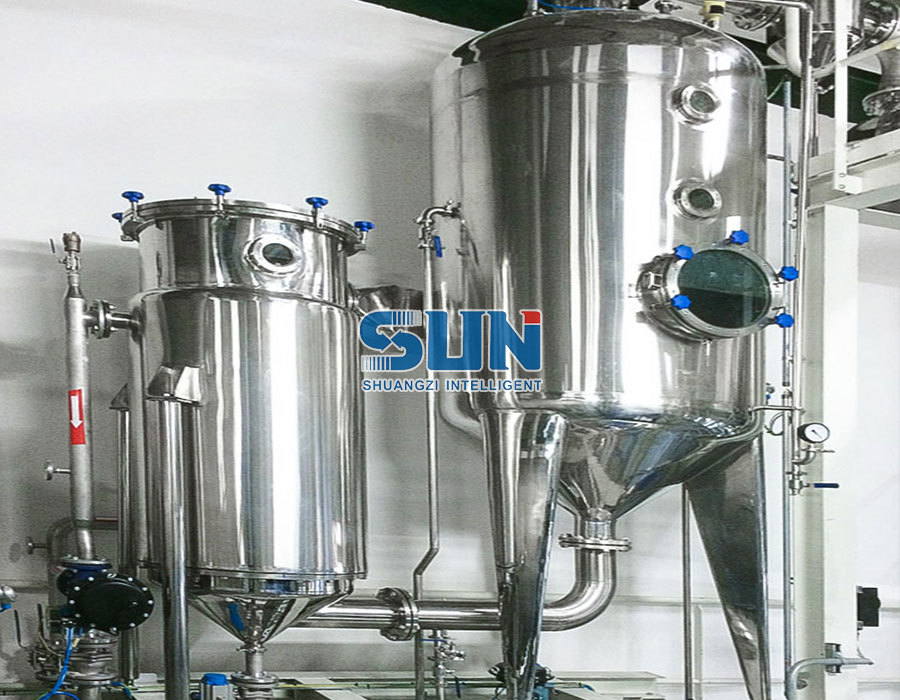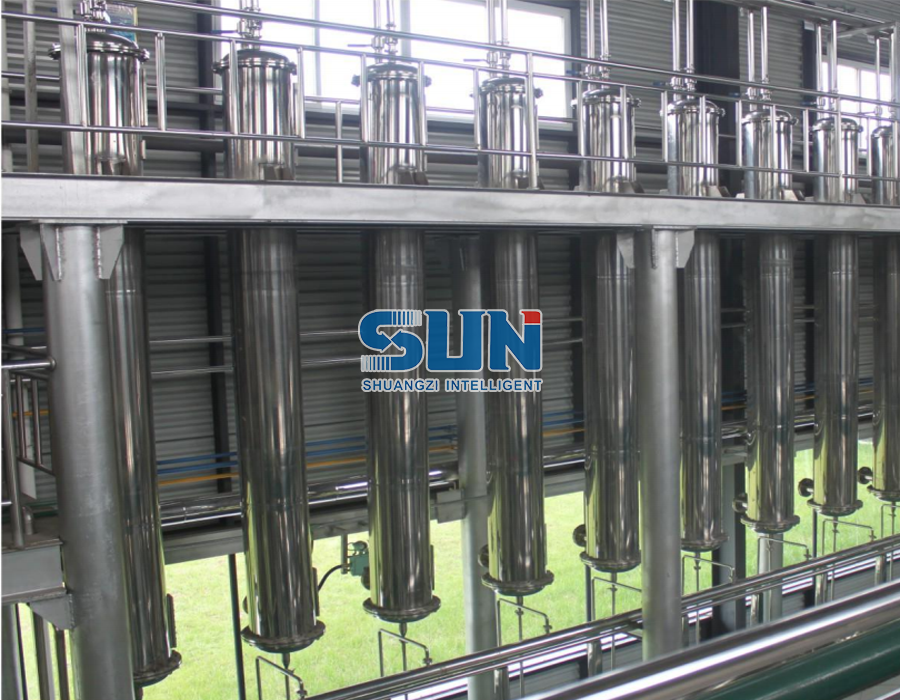

 英语
英语 俄语
俄语Content
- 1 1. The Recovery Challenge in Diethylene Glycol Processing
- 2 2. Product Overview
- 3 3. Working Principle of the Double-Effect System
- 4 4. Why Falling Film Evaporation Is Suitable for Diethylene Glycol
- 5 5. Energy Efficiency Through Two-Effect Heat Reuse
- 6 6. Main Technical Advantages
- 7 7. Performance Parameters and Model Selection
- 8 8. Precision Liquid Distribution and Mist Elimination
- 9 9. Automatic Control and Operating Stability
- 10 10. Hygienic and Chemical-Resistant Manufacturing
- 11 11. Engineering and EPC/EPCM Strengths
- 12 12. Comparison with Conventional Single-Effect Equipment
- 13 13. Installation and Plant Integration
- 14 14. Operation, Cleaning, and Maintenance
- 15 15. Applications Beyond Diethylene Glycol Recovery
- 16 16. Project Customization
- 17 17. Quality Assurance and Factory Testing
- 18 18. Environmental and Economic Benefits
- 19 19. Frequently Asked Questions
- 19.1 Q1: What is the primary purpose of this evaporator?
- 19.2 Q2: Why are two effects used instead of one?
- 19.3 Q3: What is the typical feed and product concentration?
- 19.4 Q4: Does the equipment operate at atmospheric pressure?
- 19.5 Q5: What are the reference evaporation temperatures?
- 19.6 Q6: How does the system prevent glycol loss with the vapor?
- 19.7 Q7: Can the system handle variable waste-liquid composition?
- 19.8 Q8: Is stainless steel suitable for all diethylene glycol waste streams?
- 19.9 Q9: What utilities are required?
- 19.10 Q10: Can the evaporator be supplied as part of a turnkey project?
- 19.11 Q11: What information is needed for a quotation?
- 19.12 Q12: Is pilot testing recommended?
- 19.13 Q13: What is the approximate equipment height?
- 19.14 Q14: How should the recovered glycol be used?
- 20 20. Conclusion
- 21 References
- 22 Product: Double Effect Falling Film Vacuum Evaporator for Diethylene Glycol Waste Liquid Recovery
Recovering valuable solvents from industrial waste streams requires more than simply removing water or increasing concentration. The equipment must provide reliable evaporation, stable heat transfer, low product loss, effective vapor separation, safe operation, and consistent control of the final product quality. For diethylene glycol waste liquid, these requirements are especially important because uncontrolled heating, excessive residence time, oxygen exposure, or entrainment can reduce product purity and increase operating costs.
The double-effect falling film vacuum evaporator presented in this article is designed specifically for the concentration and recovery of diethylene glycol solutions. It combines vacuum evaporation, falling film heat transfer, secondary steam reuse, automatic process control, and stainless-steel construction in one continuous system. The design is suitable for chemical solvent recovery, industrial waste liquid treatment, glycol regeneration, and related concentration projects.
With two evaporation effects operating at different pressure and temperature levels, the system uses vapor generated in the first effect as the heating source for the second effect. This arrangement reduces the amount of fresh steam required compared with a single-effect evaporator. At the same time, vacuum operation allows evaporation at lower temperatures, helping protect diethylene glycol from unnecessary thermal stress and oxidation.
The system is available in several capacity configurations, including models identified as SJM2-800, SJM2-1200, SJM2-1600, SJM2-2000, and SJM2-2500. Depending on the selected configuration, the stated evaporation capacity ranges from approximately 600 to 1,600 kilograms per hour. Final performance depends on feed composition, required outlet concentration, operating conditions, heat-transfer design, and customer-specific process requirements.
1. The Recovery Challenge in Diethylene Glycol Processing
Diethylene glycol is used in a range of industrial applications, including chemical manufacturing, solvent systems, plasticizer production, gas treatment, resins, and other process operations. During production or cleaning operations, diethylene glycol may become diluted with water and contaminated with nonvolatile substances. Discharging this liquid can create disposal costs, while purchasing new glycol increases raw material consumption.
A recovery process can provide two benefits at the same time. First, it can reduce the volume of waste liquid that requires further treatment or disposal. Second, it can recover a concentrated glycol stream that may be reused in the original process or directed to additional purification steps. The effectiveness of this approach depends heavily on the evaporation equipment.
Traditional boiling systems may expose the product to relatively high temperatures for extended periods. Such conditions can cause discoloration, oxidation, fouling, or changes in product characteristics. A poorly designed evaporator can also produce vapor carryover, which results in loss of glycol and contamination of the condensate system.
Another challenge is energy consumption. Evaporation is inherently energy-intensive because a large amount of latent heat is required to convert liquid into vapor. A single-effect evaporator uses heating steam once and then sends the generated vapor to condensation or another downstream process. Much of the available energy is therefore not reused within the evaporator.
The double-effect falling film configuration addresses these limitations by combining efficient heat transfer, short residence time, vacuum operation, and heat recovery. The result is a system designed to improve the economic and technical performance of diethylene glycol waste liquid recovery.
2. Product Overview
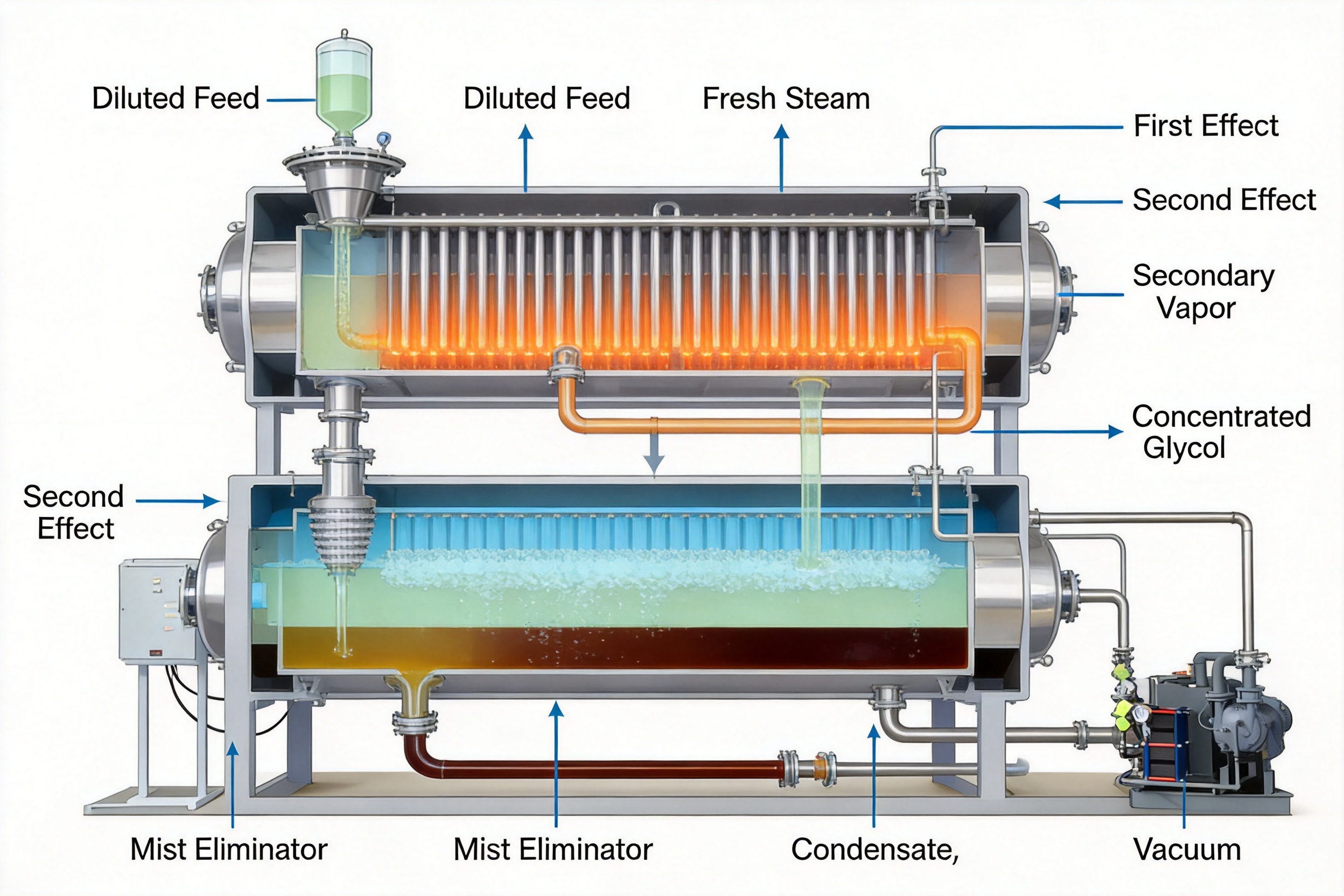
The double-effect falling film vacuum evaporator is a continuous concentration machine for liquid feed streams that require water or another volatile component to be removed. The feed enters the system through a distribution arrangement that spreads the liquid evenly over the internal heating surfaces. The liquid then flows downward as a thin film while heat is transferred through the heating surface.
Because the liquid film is thin, heat transfer is rapid and the product remains in the heating zone for a relatively short period. This is important for diethylene glycol solutions because it reduces unnecessary exposure to high temperature. The process is conducted under vacuum, which lowers the boiling point and allows evaporation at moderate operating temperatures.
The first effect is heated by fresh steam. The vapor generated from the first effect is then used as the heating medium for the second effect. Since the second effect operates at a lower pressure and temperature, the vapor from the first effect can release its latent heat again. This energy reuse is the fundamental reason why a double-effect system can provide better steam economy than a single-effect unit.
After concentration, the product leaves the system at a specified outlet concentration. The supplied parameters indicate a typical feed concentration of approximately 11.5 to 12 percent and an outlet concentration of approximately 45 to 48 percent, with these values made to order according to the customer’s process. Actual concentration targets can be adjusted after reviewing feed analysis, viscosity, impurities, product quality requirements, and downstream use.
The equipment can be supplied as part of a broader engineering package. Such a package may include process design, equipment design, auxiliary equipment selection, automation, installation support, commissioning, line debugging, and system integration. This approach is useful for customers who require more than an isolated evaporator and prefer a coordinated project solution.
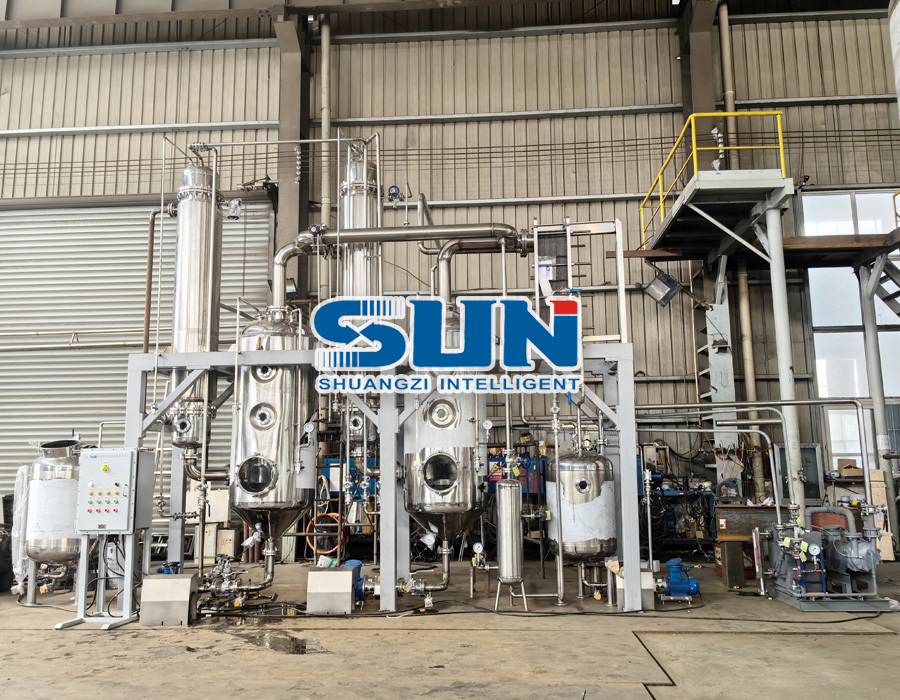
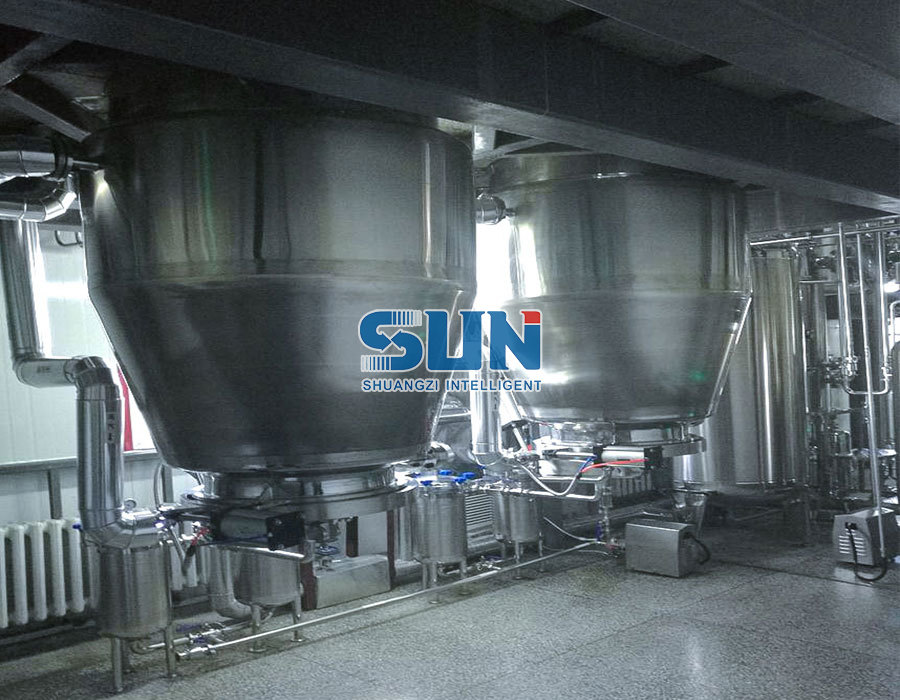
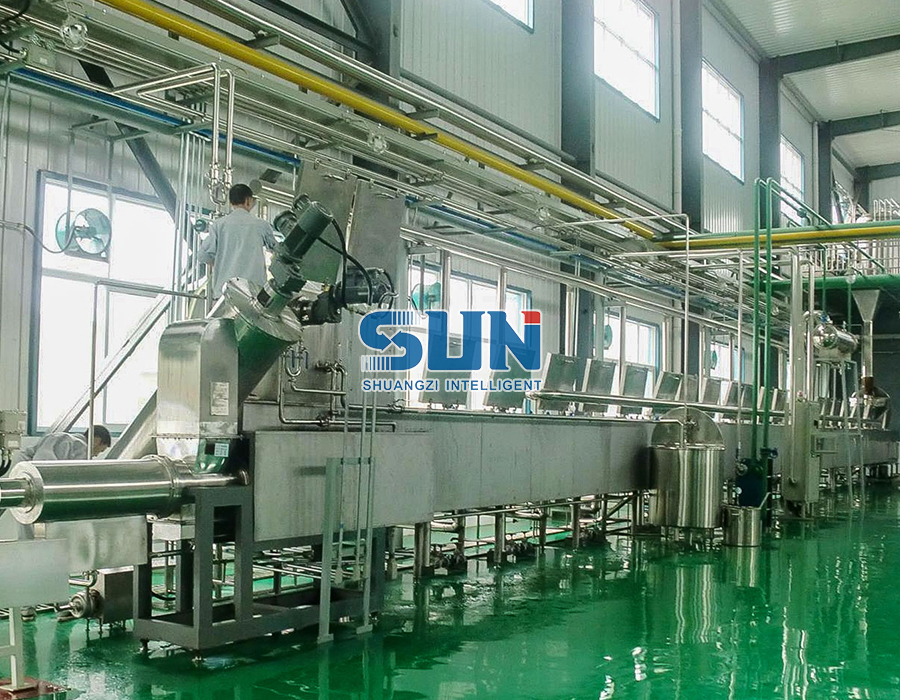
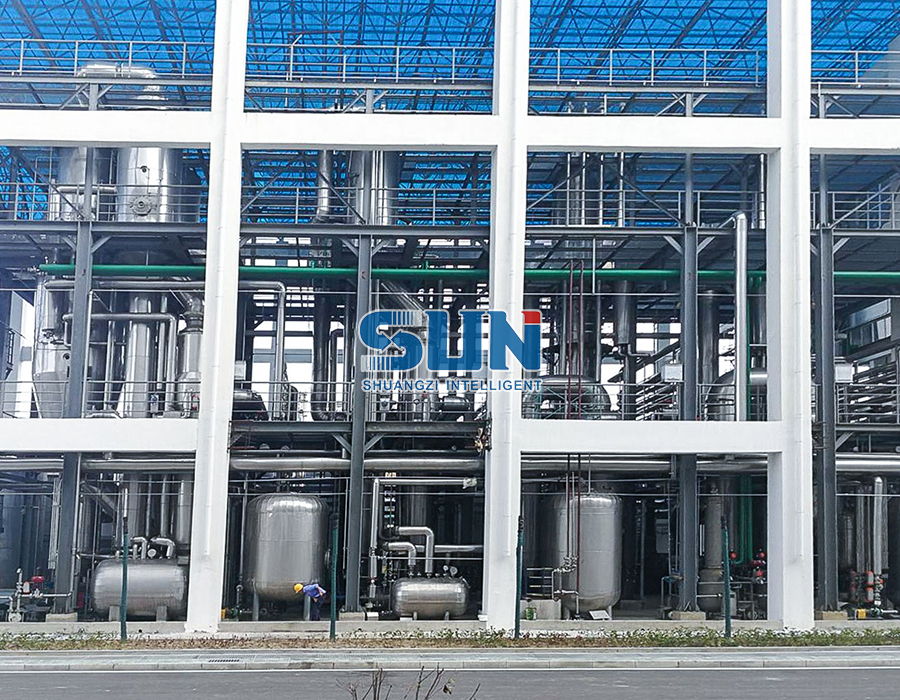
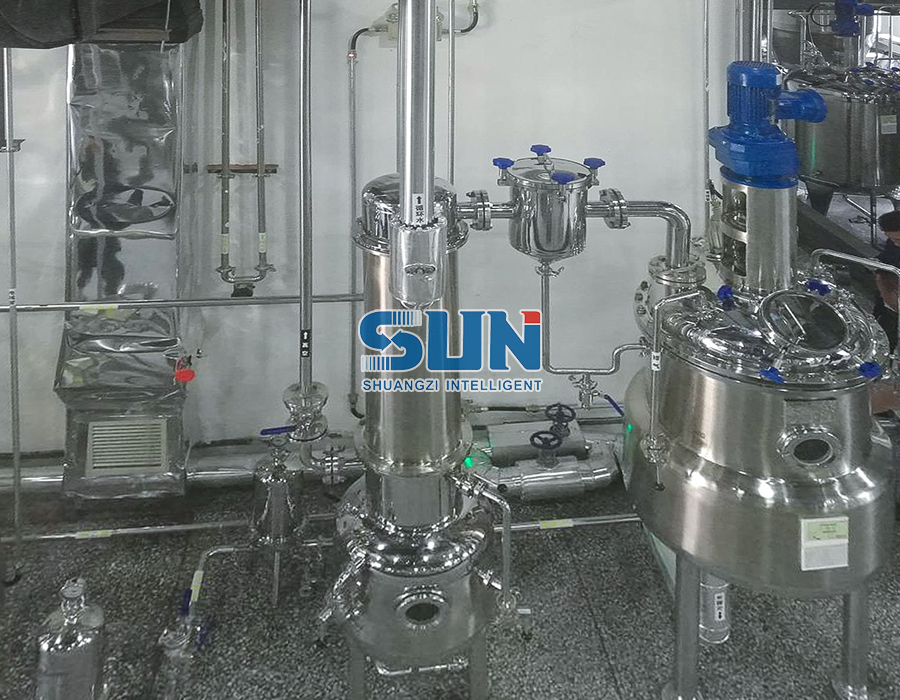
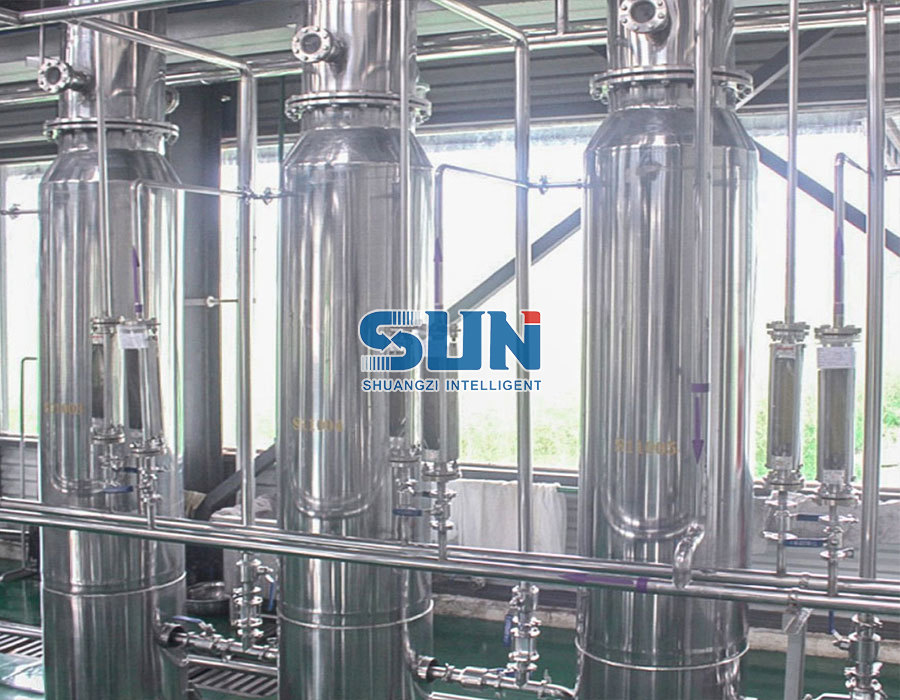
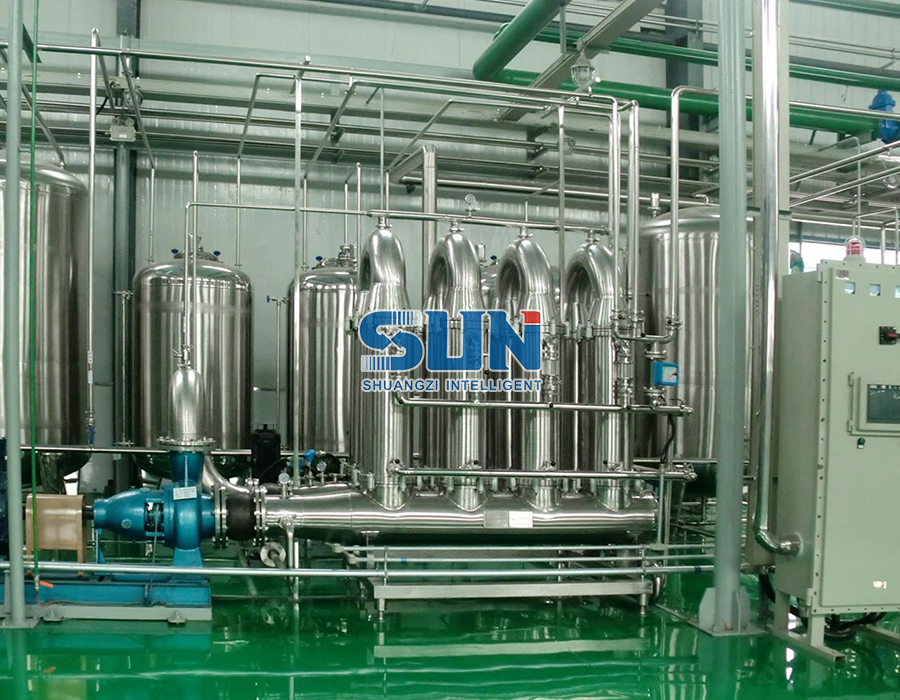
Double Effect Falling Film Vacuum Evaporator for Diethylene Glycol Waste Liquid Recovery
3. Working Principle of the Double-Effect System
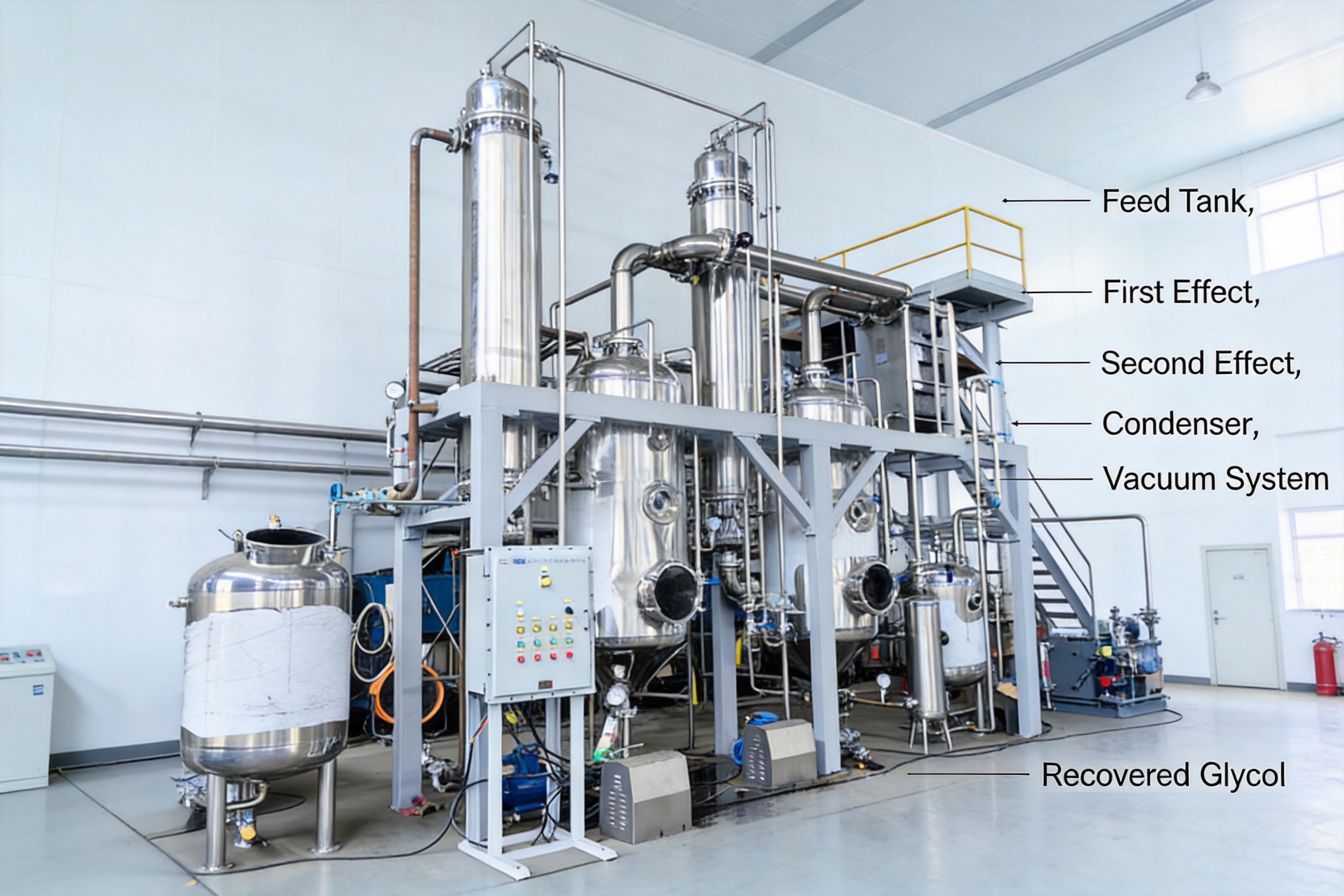
The feed liquid is first collected in a feed tank or balance vessel. A feed pump delivers the liquid to the upper distribution section of the first effect. The liquid distributor is designed to spread the feed uniformly across the heating tubes or heat-transfer surfaces. Uniform distribution is essential because dry zones, overloaded areas, or uneven flow can reduce heat-transfer performance and increase fouling risk.
Once distributed, the liquid descends as a falling film. Heating steam condenses on the opposite side of the heat-transfer surface, transferring energy to the liquid film. Part of the volatile component evaporates under vacuum. The concentrated liquid continues downward and is collected at the bottom of the first effect.
The vapor produced in the first effect is not treated merely as waste vapor. It is routed to the heating side of the second effect. The second effect operates at a lower pressure, so the first-effect vapor can provide the heat needed for further evaporation. This arrangement reduces the fresh steam demand and improves the overall utilization of supplied thermal energy.
In the second effect, the partially concentrated liquid is again distributed over the heating surface and flows downward as a thin film. Additional volatile material is removed under a lower boiling temperature. The final concentrated product is then discharged through a controlled outlet system.
Vapor leaving the second effect passes through a mist eliminator or vapor-liquid separation section. The mist eliminator removes entrained liquid droplets from the vapor stream. This prevents valuable diethylene glycol from being carried into the condenser or vacuum system and helps maintain a cleaner condensate stream.
The vacuum system maintains the required pressure difference across the effects. Depending on the project design, the vacuum system may include condensers, vacuum pumps, liquid ring pumps, ejectors, or other suitable components. Selection is based on vapor load, noncondensable gas content, cooling-water conditions, material compatibility, and the customer’s operating environment.
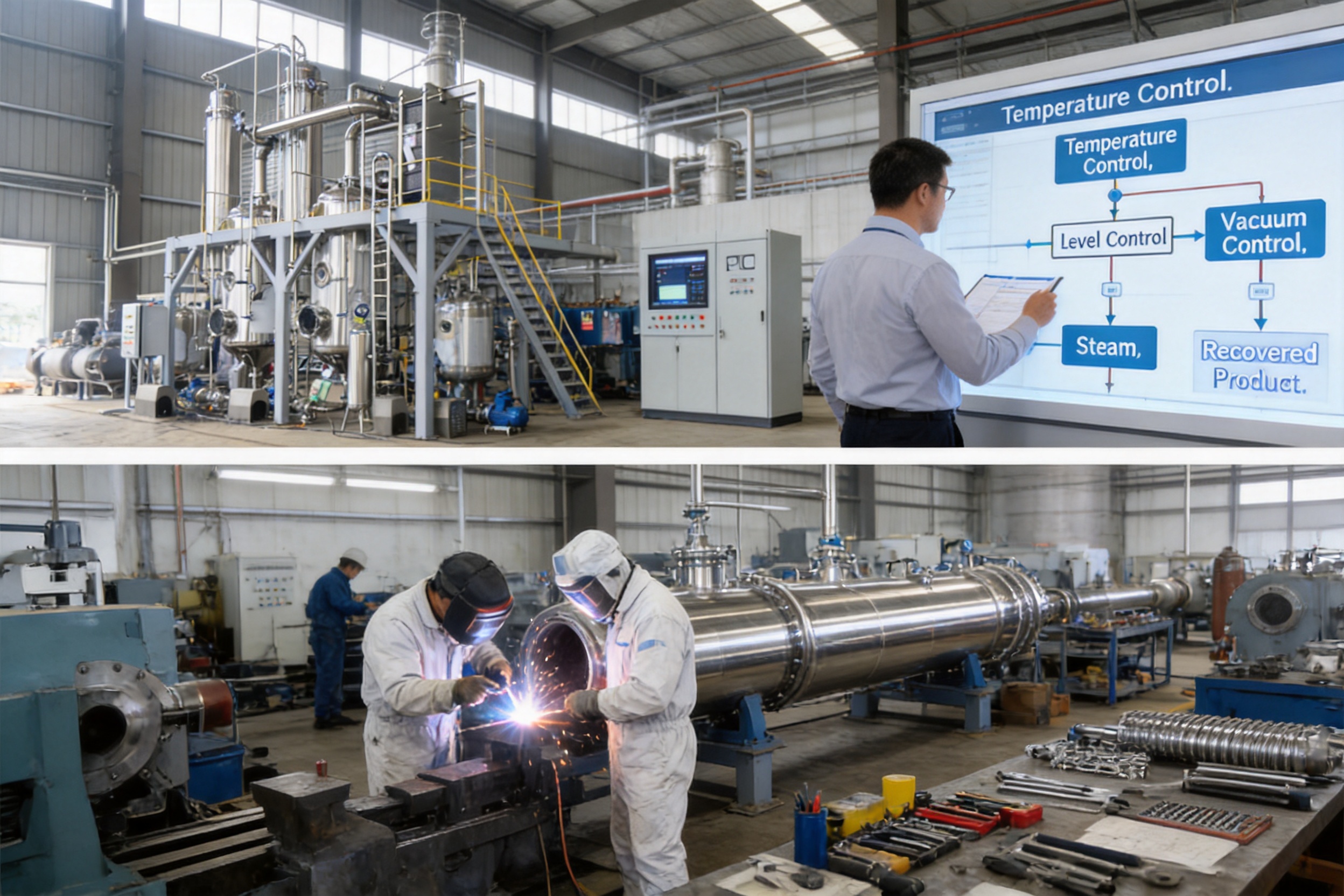
Automatic temperature and level controls help maintain stable operation. Temperature sensors monitor heating and evaporation conditions, while level instruments regulate liquid inventories in the effects and related vessels. Control valves, pumps, and interlocks can be coordinated through a central control system to support continuous and repeatable production.
4. Why Falling Film Evaporation Is Suitable for Diethylene Glycol
Falling film evaporation is well suited to heat-sensitive or quality-sensitive liquid products because the liquid is distributed as a thin film rather than held in a large boiling pool. A thin film offers a short heat-transfer path and a relatively high surface-area-to-volume ratio. This allows efficient evaporation with a lower temperature difference than may be required in some conventional systems.
The short residence time is another significant advantage. In a long-residence-time evaporator, the product may remain exposed to heat even after the desired evaporation has occurred. In a falling film design, the liquid moves continuously through the heating section. This reduces the opportunity for prolonged thermal degradation, oxidation, darkening, or unwanted side reactions.
Vacuum operation further improves the treatment of diethylene glycol solutions. Lower pressure reduces the boiling temperature, allowing the process to remove water or other volatile components under milder thermal conditions. The supplied design information indicates evaporation temperatures of approximately 70 degrees Celsius in the first effect and 45 degrees Celsius in the second effect, although these values can be designed according to customer requirements.
Lower-temperature evaporation can also support better product quality when the recovered glycol must meet a defined appearance, purity, or reuse standard. It is not a substitute for feed pretreatment or final purification, but it provides a gentler concentration stage and can reduce the thermal burden on the overall recovery process.
Falling film operation may also reduce the inventory of product held inside the evaporator. A smaller working volume can make startup, shutdown, cleaning, and product changeover more manageable. It can also reduce the quantity of material exposed to an upset condition if the system is stopped unexpectedly.
5. Energy Efficiency Through Two-Effect Heat Reuse
The principal energy advantage of the system comes from secondary steam reuse. In a single-effect evaporator, fresh steam supplies energy to the product, and the generated vapor is usually condensed after one evaporation cycle. In a double-effect evaporator, the vapor generated in the first effect becomes a useful heating source for the second effect.
This arrangement does not eliminate energy consumption, but it improves the ratio between evaporation capacity and fresh steam consumption. The stated steam pressure range is approximately 0.6 to 0.8 MPa. The listed steam consumption varies by model, with indicative values of 390, 620, 835, 1,020, and 1,150 kilograms per hour for the available configurations.
Actual steam economy depends on many factors. These include feed temperature, feed concentration, outlet concentration, boiling-point elevation, nonvolatile solids, vapor pressure, heat losses, condensate temperature, cooling-water conditions, and the operating stability of the distribution system. For this reason, the listed values should be understood as design reference data rather than a universal guarantee for every feed condition.
Energy savings can also be achieved through heat recovery outside the two effects. For example, hot condensate may be considered for feed preheating, cleaning-water heating, or other suitable plant services. The most appropriate recovery arrangement depends on the customer’s utility network and the quality requirements for each stream.
Compared with an equivalent single-effect machine, a double-effect design generally offers improved steam utilization and lower operating costs where the equipment operates for sufficient annual hours. It may require greater initial investment and a more comprehensive control system, but the lifecycle economics can be favorable for continuous or high-throughput recovery projects.
The system’s energy performance should be evaluated on a complete project basis. A professional evaluation should consider the purchase price, installation, steam consumption, cooling-water use, electrical power, maintenance, downtime, product recovery, waste-disposal reduction, and expected operating hours. This gives the customer a more realistic comparison than equipment price alone.
6. Main Technical Advantages
6.1 Low-Temperature Vacuum Operation
Vacuum operation allows the solution to boil at a lower temperature than it would at atmospheric pressure. This helps protect diethylene glycol from excessive thermal exposure and can improve the quality of the recovered concentrate. The vacuum level is selected according to feed properties, desired capacity, heat-transfer limitations, and the required concentration.
6.2 Short Residence Time
The falling film configuration moves the product continuously through the heating area. Short residence time limits the duration of thermal contact and reduces the risk of product degradation. It also supports responsive process control because the system can react more quickly to changes in feed flow, steam pressure, or vacuum conditions.
6.3 Efficient Heat Transfer
Uniform liquid distribution and thin-film flow create favorable heat-transfer conditions. Efficient heat transfer can reduce the required heating surface for a given duty or provide additional operating flexibility within the available heat-transfer area. The actual design is selected according to fluid viscosity, concentration, fouling tendency, and process load.
6.4 Reduced Entrainment Loss
High-performance mist eliminators help separate entrained droplets from the vapor. This is important when the product has significant economic value or when glycol contamination in condensate must be minimized. Effective vapor-liquid separation also protects downstream condensers, vacuum equipment, and process drains.
6.5 Continuous Automated Operation
Automatic control of temperature, liquid level, flow, and vacuum supports stable production. A properly configured control system can maintain the operating window with limited manual intervention. Alarms and interlocks can be included to respond to low liquid level, high temperature, abnormal pressure, pump failure, or other process deviations.
6.6 Stainless-Steel Construction
Stainless-steel fabrication provides a durable and hygienic process-contact surface for many chemical recovery applications. Material selection must still be confirmed against the exact feed composition, contaminants, temperature, pressure, cleaning agents, and expected service life. The equipment can be configured to meet the customer’s chemical compatibility and fabrication requirements.
6.7 Flexible Concentration Targets
The supplied design allows the feed and product concentrations to be made to order. A typical reference range is 11.5 to 12 percent feed concentration and 45 to 48 percent product concentration. However, a different target may be selected when the recovered glycol is intended for reuse, storage, blending, further purification, or another downstream operation.
6.8 Integrated Project Capability
The evaporator can be incorporated into a complete engineering solution rather than treated as an isolated machine. This may include tanks, pumps, heat exchangers, condensers, vacuum equipment, instruments, control panels, platforms, piping, and supporting utilities. Integrated responsibility can simplify project coordination and reduce the risk of interface problems between different suppliers.
7. Performance Parameters and Model Selection
The following table summarizes the available reference configurations. The model designation and evaporation capacity should be confirmed during technical negotiation because the final equipment selection depends on the customer’s feed and product requirements.
| Parameter | SJM2-800 | SJM2-1200 | SJM2-1600 | SJM2-2000 | SJM2-2500 |
|---|---|---|---|---|---|
| Evaporation capacity, kg/h | 600 | 800 | 1,000 | 1,200 | 1,600 |
| Typical feed concentration, percent | 11.5–12 | 11.5–12 | 11.5–12 | 11.5–12 | 11.5–12 |
| Typical product concentration, percent | 45–48 | 45–48 | 45–48 | 45–48 | 45–48 |
| Steam pressure, MPa | 0.6–0.8 | 0.6–0.8 | 0.6–0.8 | 0.6–0.8 | 0.6–0.8 |
| Indicative steam consumption, kg/h | 390 | 620 | 835 | 1,020 | 1,150 |
| First-effect evaporation temperature, degrees Celsius | 70 | 70 | 70 | 70 | 70 |
| Second-effect evaporation temperature, degrees Celsius | 45 | 45 | 45 | 45 | 45 |
| First-effect heating temperature, degrees Celsius | 80 | 80 | 80 | 80 | 80 |
| Second-effect heating temperature, degrees Celsius | 70 | 70 | 70 | 70 | 70 |
| Cooling-water consumption, tonnes/h | 6 | 9 | 12 | 15 | 18 |
| Total electric power, kW | 18 | 18 | 25.5 | 25.5 | 31.5 |
| Approximate dimensions, L × W × H, m | 4.5 × 2.3 × 7.1 | 4.5 × 2.3 × 7.6 | 4.5 × 2.4 × 8.0 | 4.5 × 2.4 × 8.5 | 4.7 × 2.5 × 8.5 |
The capacity values in the table refer to evaporation capacity rather than necessarily the mass flow of final concentrated product. A complete mass balance is required to determine feed flow, evaporated water or solvent load, concentrate flow, vapor flow, condensate quantity, and any purge or waste stream.
Model selection should begin with a representative feed analysis. Important information includes diethylene glycol concentration, water content, dissolved salts, suspended solids, organic impurities, viscosity, pH, temperature, foaming tendency, and any materials that may crystallize or foul the heating surface.
The required product concentration is equally important. A higher concentration may increase viscosity and reduce the available heat-transfer coefficient. If the final product must be concentrated beyond the reference range, additional effects, a circulation stage, a different evaporator arrangement, or a downstream finishing process may be considered.
Plant utilities must also be reviewed. Steam pressure and quality, cooling-water temperature, cooling-water flow, electrical supply, vacuum discharge, condensate handling, floor loading, equipment height, and maintenance access all affect the final design. The approximate dimensions show that the equipment is vertically oriented and that building height should be checked before installation.
8. Precision Liquid Distribution and Mist Elimination
Liquid distribution is one of the most important design elements in a falling film evaporator. The feed must be spread evenly over the heat-transfer surface so that each tube or channel receives an appropriate flow. Poor distribution can lead to dry areas, local overheating, unstable evaporation, increased fouling, and reduced capacity.
The distributor is selected according to flow rate, viscosity, surface tension, solids content, and the geometry of the heating bundle. During engineering, the distribution system can be reviewed for startup behavior, minimum operating load, maximum operating load, cleaning access, and resistance to blockage.
As the liquid boils, vapor can carry small droplets of concentrated product into the vapor outlet. These droplets are known as entrainment. If not removed, they may cause product loss, contaminate condensate, increase the load on the condenser, or reach the vacuum equipment.
Mist eliminators reduce this risk by forcing the vapor to change direction or pass through a structured separation element. The heavier liquid droplets are captured and returned to the appropriate liquid phase. Correct sizing is important because excessive vapor velocity can cause re-entrainment, while an unnecessarily large separator may increase equipment cost and dimensions.
For diethylene glycol recovery, vapor-liquid separation has direct economic value. Every droplet returned to the product side represents less glycol loss. At the same time, cleaner vapor improves the performance and service life of the downstream condenser and vacuum system.
9. Automatic Control and Operating Stability
A continuous evaporation system must balance feed flow, heating energy, vacuum pressure, liquid level, vapor load, and product discharge. Manual adjustment alone can make this balance difficult, particularly when feed properties change during a production campaign. Automatic controls provide a more consistent operating response.
Temperature control regulates the heating-medium flow or pressure to maintain the desired thermal conditions. Level control manages liquid inventory in the effects and prevents the heating surfaces from becoming inadequately wetted. Flow control can be used for feed, concentrate, condensate, cooling water, and cleaning solutions.
Pressure transmitters and vacuum controls help maintain the intended boiling conditions. If the vacuum level changes, the boiling temperature and evaporation rate may also change. Coordinated control can help prevent unstable operation caused by sudden vapor-load variations or fluctuations in the condenser.
The control system may include a programmable logic controller, human-machine interface, data recording, alarm management, and remote diagnostic capability. The final automation architecture depends on the customer’s standards and the required level of integration with the existing plant control system.
Safety-related interlocks should be considered during design. Examples include high-temperature shutdown, low-level protection, pump protection, abnormal vacuum alarms, steam-pressure limits, condenser high-pressure alarms, and emergency-stop functions. The exact interlock matrix should be developed during detailed engineering and reviewed with the customer.
Stable automation also improves repeatability. When the same feed condition is processed under the same control parameters, the product concentration and utility consumption are more likely to remain consistent. This is particularly useful when the recovered glycol is returned to a controlled production process.
10. Hygienic and Chemical-Resistant Manufacturing
The equipment is fabricated from stainless steel for demanding chemical process applications. Stainless-steel construction supports corrosion resistance, cleanability, mechanical durability, and a suitable surface for product-contact areas. The selected grade, thickness, surface finish, weld treatment, and gasket materials should be confirmed according to the actual diethylene glycol solution and contaminants.
Fabrication quality has a direct effect on equipment reliability. Process vessels and heat-transfer components must be manufactured with accurate dimensions, properly prepared joints, controlled welding, and appropriate inspection. Internal surfaces should be finished in a way that minimizes product retention and makes cleaning practical.
The manufacturer operates an equipment production facility with dedicated manufacturing resources and engineering capabilities. Its production environment includes advanced welding and finishing equipment, plasma argon arc welding machines, plasma cutting machines, and computer-controlled machining equipment. These resources support accurate fabrication and repeatable manufacturing of process equipment.
Plasma argon arc welding can be used where controlled, clean welds are required for stainless-steel process components. Proper shielding and welding procedures help protect the weld area from contamination and oxidation. Weld quality is especially important in vacuum equipment because leaks can reduce evaporation performance and increase the load on the vacuum system.
Computer-aided machining and CNC equipment support dimensional accuracy for flanges, nozzles, support parts, sealing surfaces, and other components. Accurate machining helps improve assembly, alignment, gasket performance, and maintainability.
Finishing operations are also important. Uneven surfaces, weld discoloration, sharp edges, or inaccessible dead zones can make cleaning more difficult. Appropriate polishing, pickling, passivation, inspection, and surface treatment can help maintain the condition of product-contact areas throughout the equipment’s service life.
Manufacturing documentation can be arranged according to the customer’s project requirements. Depending on the scope, documentation may include material certificates, welding records, pressure or leak-test reports, inspection records, equipment drawings, instrument lists, electrical documents, operation manuals, maintenance recommendations, and spare-parts information.
11. Engineering and EPC/EPCM Strengths
Zhejiang Shuangzi Intelligent Equipment Co., Ltd. was established in 2007 and focuses on process technology, automation engineering, equipment manufacturing, procurement coordination, installation, commissioning, and system integration. Its business covers plant extraction, biological fermentation, pharmaceutical engineering, natural food processing, energy conservation, environmental protection, evaporation, concentration, separation, filtration, drying, crystallization, and related process systems.
This broad technical background is valuable for diethylene glycol recovery because the evaporator rarely functions as a completely independent item. A successful system must connect correctly with feed storage, pretreatment, steam supply, condensate collection, cooling water, vacuum equipment, product storage, cleaning systems, and waste handling.
As an EPC or EPCM-oriented supplier, the company can participate in several project stages. These stages may include process route development, preliminary design, equipment selection, detailed engineering, manufacturing, matching purchase, installation guidance, commissioning, operator training, and post-delivery technical support.
An integrated supplier can also help coordinate equipment interfaces. For example, the evaporator capacity must match the upstream waste-liquid generation rate. The condenser must match the vapor load. The vacuum system must handle noncondensable gases. The product pump must handle the final concentrate viscosity. The control system must communicate with the plant’s existing automation platform.
The company’s experience with extraction, fermentation, concentration, separation, and drying equipment supports the design of complete production lines and pilot systems. This is relevant when a customer wants to test the diethylene glycol recovery process at pilot scale before expanding to commercial production.
The manufacturer has a production and research environment that includes pilot-scale process capabilities and an automation platform intended to support development and engineering requirements. Pilot work can help evaluate feed behavior, evaporation rate, concentration limits, fouling, foam formation, condensate quality, and product recovery before final equipment fabrication.
Such testing is especially useful when the waste liquid composition varies or contains unknown impurities. Laboratory data and pilot trials can reduce scale-up risks and provide better information for heat-transfer area, vacuum conditions, material selection, and cleaning strategy.
12. Comparison with Conventional Single-Effect Equipment
The most direct comparison is with a single-effect evaporator. A single-effect unit is often simpler and may require less initial capital. It can be appropriate for small capacities, intermittent operation, or applications where steam is inexpensive and energy efficiency is not the main concern.
However, a single-effect machine generally uses fresh steam for one evaporation stage. The generated vapor is not reused within another effect, so the thermal energy is used less efficiently. For a continuous diethylene glycol recovery project, this can result in higher steam consumption and higher operating costs over time.
The double-effect system requires more equipment and more sophisticated control than a single-effect unit. It includes two evaporation stages, additional vapor and condensate connections, more instrumentation, and a coordinated vacuum and heat-transfer arrangement. This added complexity is balanced by improved energy utilization and the ability to process larger continuous loads efficiently.
Compared with batch boiling equipment, the falling film system provides continuous operation and a shorter product residence time. Batch equipment may be flexible for changing formulas, but it can experience repeated heating and cooling cycles, variable product quality, and greater operator involvement. The falling film design is more suitable where the feed composition and production schedule support continuous operation.
Compared with basic vacuum evaporators without advanced mist elimination, the presented design provides better control of entrainment. This can improve glycol recovery and protect the condensate system. Compared with systems using basic liquid distribution, precision distribution can support more uniform wetting and more stable heat transfer.
Competitor comparisons should always be based on equivalent conditions. A meaningful technical comparison should use the same feed concentration, product concentration, evaporation duty, steam pressure, cooling-water temperature, vacuum level, material standard, automation scope, and operating hours. The lowest purchase price does not necessarily represent the lowest total cost of ownership.
13. Installation and Plant Integration
The evaporator is a vertically arranged process system with significant height. The listed dimensions range from approximately 4.5 meters in length and 2.3 meters in width to approximately 4.7 meters in length and 2.5 meters in width, while the overall height ranges from approximately 7.1 to 8.5 meters. The customer should verify building clearance, lifting access, platform requirements, maintenance space, and foundation loading before final approval.
Installation planning should include the location of feed tanks, concentrate tanks, condensers, pumps, vacuum equipment, steam headers, cooling-water lines, condensate drains, electrical panels, and control cabinets. Safe access platforms and ladders should be provided where operators need to inspect instruments, valves, distributors, separators, or inspection openings.
Steam piping should be designed with appropriate isolation valves, strainers, pressure-reducing devices, condensate drainage, and safety provisions. The steam supply must be sufficiently stable to maintain the required heating duty. Poor-quality or wet steam may reduce heat-transfer performance and cause water hammer or unstable temperature control.
Cooling-water requirements vary by model. The reference data lists cooling-water consumption from approximately 6 to 18 tonnes per hour. The actual requirement depends on vapor load, inlet-water temperature, outlet-water temperature, condenser design, and the amount of noncondensable gas handled by the vacuum system.
Electrical power requirements range from approximately 18 to 31.5 kilowatts in the listed configurations. This total may include pumps, vacuum equipment, control systems, and auxiliary components. The final electrical load must be confirmed from the completed equipment list and selected motor specifications.
Before commissioning, the system should be inspected for correct piping, instrument installation, valve orientation, electrical connections, pump rotation, vacuum tightness, drain routing, and safety interlocks. A water test or suitable non-product commissioning procedure can be used to verify circulation and control functions before introducing diethylene glycol waste liquid.
14. Operation, Cleaning, and Maintenance
Operators should begin with a controlled startup. Utility systems should be checked first, followed by instrumentation, vacuum equipment, cooling water, condensate handling, and feed circulation. The feed rate and steam input should be increased gradually to avoid sudden pressure or temperature changes.
During normal operation, operators should monitor feed flow, feed concentration, product flow, product concentration, effect temperatures, heating pressure, vacuum level, liquid levels, condensate quality, cooling-water flow, and motor loads. Trends are often more useful than isolated readings because gradual changes may indicate fouling, leakage, distribution problems, or utility fluctuations.
Fouling is influenced by feed composition, temperature, concentration, solids, residence time, and surface condition. If the waste liquid contains salts, suspended particles, polymers, or heavy organic materials, pretreatment may be necessary. Screening, filtration, settling, activated-carbon treatment, pH adjustment, or another process step may be considered based on the feed analysis.
Cleaning procedures should be designed around the actual contaminants. The system may require water rinsing, alkaline cleaning, acidic cleaning, solvent-compatible cleaning, or a combination of methods. Cleaning chemicals must be compatible with the stainless-steel grade, gaskets, pumps, instruments, and waste-treatment system.
Regular inspection should include liquid distributors, heat-transfer surfaces, mist eliminators, gaskets, valves, pumps, vacuum seals, instruments, and support structures. Mist eliminators should be checked for blockage or damage. A blocked separator can increase pressure drop and reduce evaporation capacity, while damaged components can increase entrainment.
Preventive maintenance is generally more economical than waiting for a major failure. Recommended maintenance intervals should be determined by operating hours, feed contamination, cleaning frequency, vibration, temperature history, and manufacturer guidance. Spare parts planning should include pump seals, gaskets, instrument components, valve parts, and other wear items.
15. Applications Beyond Diethylene Glycol Recovery
Although the system is designed for diethylene glycol solution concentration and recycling, the underlying technology may be adapted to other industrial liquid treatment duties. Potential applications include solvent concentration, chemical waste reduction, glycol regeneration, process-water removal, and selected liquid streams in pharmaceutical, food, fermentation, and natural-product operations.
Application suitability depends on volatility, viscosity, heat sensitivity, solids content, foaming tendency, corrosion behavior, and the required final concentration. A process review is required before applying the equipment to a new liquid because not every solution is suitable for the same distributor, heat-transfer surface, vacuum level, or cleaning procedure.
In plant extraction operations, evaporation equipment may be used to concentrate extracts before drying, crystallization, or formulation. In fermentation operations, concentration may be integrated with broth treatment or downstream recovery. In pharmaceutical engineering, material compatibility, cleanability, documentation, and process validation may become more important than simple evaporation capacity.
For natural food applications, low-temperature concentration can help preserve desirable product characteristics, although the exact process conditions must be established through product trials. For environmental applications, the system may reduce liquid waste volume and recover a usable fraction, but the remaining concentrate still requires an appropriate treatment or disposal route.
16. Project Customization
A standard model provides a useful starting point, but a successful industrial evaporator is usually customized. The customer’s feed composition and process objectives determine the required heating surface, pump type, distributor design, condenser size, vacuum system, material specification, instrumentation, and automation scope.
Important design questions include the following:
What is the normal, minimum, and maximum feed flow rate?
What are the feed and product concentrations?
What impurities are present in the waste liquid?
Is the feed corrosive, foaming, viscous, or prone to crystallization?
What product purity or reuse standard is required?
What steam pressure and temperature are available?
What cooling-water temperature and flow are available?
What vacuum system is preferred at the installation site?
Is the plant designed for continuous, campaign, or intermittent operation?
What cleaning method and cleaning frequency are required?
Which electrical, automation, pressure-vessel, and documentation standards apply?
Answers to these questions allow the manufacturer to prepare a process calculation and technical proposal. The proposal should include a mass balance, heat balance, equipment list, utility consumption, layout, material information, control philosophy, installation requirements, and expected operating conditions.
17. Quality Assurance and Factory Testing
Factory quality assurance begins with design review and material selection. The manufacturer should confirm that the proposed construction materials are suitable for the chemical environment and that the equipment can withstand the intended vacuum, temperature, pressure, and mechanical loads.
Manufacturing inspections may include dimensional inspection, weld appearance inspection, non-destructive examination where required, pressure testing, vacuum leak testing, surface-finish checks, electrical testing, instrument calibration, and functional verification of control panels.
Factory acceptance testing can be arranged according to the project scope. The customer or an appointed inspection organization may review equipment dimensions, nozzle locations, materials, weld records, instrumentation, control logic, and documentation. A structured factory test helps identify issues before shipment and installation.
Site acceptance testing then confirms that the equipment performs correctly under actual plant conditions. It may include water circulation, vacuum testing, steam admission, condensate verification, automatic control testing, alarm testing, and trial operation with representative feed liquid.
Performance acceptance criteria should be agreed before manufacture. These criteria may cover evaporation capacity, product concentration, steam consumption, cooling-water consumption, electrical power, condensate quality, operating stability, and product recovery. Clear criteria protect both the customer and the equipment supplier by defining how performance will be evaluated.
18. Environmental and Economic Benefits
Recovering diethylene glycol from waste liquid can reduce the volume of material sent to external treatment or disposal. This may lower waste-management costs and reduce the environmental burden associated with transporting and treating liquid waste.
Reuse of recovered glycol can also reduce demand for new raw materials. The economic value depends on recovered product quality, required purification, internal consumption, and the cost of replacement glycol. Even when the recovered material is not suitable for direct reuse, concentration can simplify subsequent treatment by reducing the volume of liquid requiring further processing.
The two-effect configuration improves energy utilization by reusing secondary steam. Lower steam demand can reduce fuel consumption at the utility plant, particularly when the evaporator operates continuously. Vacuum low-temperature operation may also reduce thermal damage and improve the proportion of concentrate that remains suitable for recovery.
Environmental performance should be evaluated comprehensively. The system still consumes steam, cooling water, and electricity, and it produces condensate and concentrated residual material. A complete assessment should therefore consider the entire process, including utility generation, condensate quality, waste-concentrate handling, cleaning chemicals, and the final destination of recovered glycol.
When integrated correctly, the evaporator can support a circular process model. Waste liquid becomes a recoverable resource, energy is reused between effects, and the overall volume of difficult liquid waste is reduced.
19. Frequently Asked Questions
Q1: What is the primary purpose of this evaporator?
The primary purpose is to concentrate and recover diethylene glycol from diluted or waste liquid streams. It removes volatile components, typically water, and produces a more concentrated glycol stream for reuse, further purification, storage, or downstream processing.
Q2: Why are two effects used instead of one?
Two effects allow vapor generated in the first effect to provide heating energy for the second effect. This secondary steam reuse improves energy efficiency and can reduce fresh steam consumption compared with a single-effect evaporator operating under equivalent conditions.
Q3: What is the typical feed and product concentration?
The reference parameters indicate a feed concentration of approximately 11.5 to 12 percent and a product concentration of approximately 45 to 48 percent. These values are made to order and must be confirmed through a process calculation based on the customer’s actual liquid.
Q4: Does the equipment operate at atmospheric pressure?
No. The system is designed for vacuum evaporation. Lower pressure reduces the boiling temperature and supports low-temperature concentration, which is beneficial for reducing thermal stress on the diethylene glycol solution.
Q5: What are the reference evaporation temperatures?
The listed reference temperatures are approximately 70 degrees Celsius for the first effect and 45 degrees Celsius for the second effect. The actual temperatures can be adjusted according to feed properties, required capacity, steam conditions, vacuum level, and product quality requirements.
Q6: How does the system prevent glycol loss with the vapor?
Precision liquid distribution helps maintain stable falling film operation, while mist eliminators remove entrained liquid droplets from the vapor stream. These features reduce the amount of diethylene glycol carried into the condenser and vacuum system.
Q7: Can the system handle variable waste-liquid composition?
It can be designed for a specified range of feed conditions, but significant variation may affect capacity, viscosity, fouling, foaming, and product quality. Feed analysis, pilot testing, pretreatment, or flexible control strategies may be required when composition changes substantially.
Q8: Is stainless steel suitable for all diethylene glycol waste streams?
Stainless steel is suitable for many applications, but the correct grade and construction details must be confirmed against the actual chemical composition. Acids, chlorides, salts, contaminants, cleaning chemicals, and high temperatures may influence material selection.
Q9: What utilities are required?
The main utilities are heating steam, cooling water, electricity, and a suitable vacuum discharge or vacuum system. The listed reference data shows steam pressure of approximately 0.6 to 0.8 MPa, cooling-water consumption of approximately 6 to 18 tonnes per hour, and total electrical power of approximately 18 to 31.5 kilowatts depending on model.
Q10: Can the evaporator be supplied as part of a turnkey project?
Yes. The manufacturer provides engineering-related services that can include process design, equipment design, matching procurement, installation, commissioning, line debugging, and system integration. The exact turnkey scope should be defined in the project contract.
Q11: What information is needed for a quotation?
The supplier normally needs feed flow, feed temperature, feed concentration, product concentration, impurity information, required operating hours, steam conditions, cooling-water conditions, electrical standards, installation location, material requirements, cleaning method, automation expectations, and applicable technical standards.
Q12: Is pilot testing recommended?
Pilot testing is recommended when the feed contains uncertain impurities, has a strong fouling tendency, varies significantly, or must meet a demanding product quality standard. Pilot work can help verify evaporation performance, concentration limits, condensate quality, cleaning requirements, and scale-up assumptions.
Q13: What is the approximate equipment height?
The listed configurations have approximate overall heights ranging from 7.1 to 8.5 meters. The customer should verify available building height, lifting routes, platform access, maintenance clearance, and foundation conditions before finalizing the layout.
Q14: How should the recovered glycol be used?
The recovered glycol may be reused directly only if it meets the quality requirements of the intended process. Otherwise, it may require additional filtration, purification, polishing, blending, or analytical testing. The final use should determine the target concentration and recovery strategy.
20. Conclusion
The double-effect falling film vacuum evaporator provides a specialized solution for diethylene glycol waste liquid recovery. Its combination of low-temperature vacuum operation, short residence time, falling film heat transfer, secondary steam reuse, precision liquid distribution, mist elimination, automatic control, and stainless-steel construction addresses the principal challenges of glycol concentration.
Compared with conventional single-effect or basic batch equipment, the system is designed to improve energy utilization, reduce product exposure to excessive heat, support continuous operation, and limit entrainment losses. The available models cover a range of evaporation capacities, while feed concentration, product concentration, temperatures, materials, automation, and auxiliary equipment can be customized for the project.
The manufacturer’s capabilities extend beyond equipment fabrication. Its experience in extraction, fermentation, pharmaceutical engineering, food processing, environmental protection, evaporation, concentration, separation, drying, and system integration supports complete process solutions. Advanced welding, plasma cutting, CNC machining, finishing, pilot production, and research resources contribute to the development of reliable industrial equipment.
For a successful installation, the evaporator should be selected through a complete process evaluation rather than by capacity alone. Feed analysis, mass balance, heat balance, utility conditions, material compatibility, cleaning requirements, product quality, layout, automation, and waste handling must all be considered.
When these factors are properly coordinated, the double-effect falling film vacuum evaporator can help convert diluted diethylene glycol waste liquid into a more valuable and manageable recovered product while reducing energy use, waste volume, and dependence on fresh raw materials.
References
1. Perry’s Chemical Engineers’ Handbook, sections concerning evaporation, heat transfer, condensation, and process equipment design.
2. McCabe, W. L., Smith, J. C., and Harriott, P. Unit Operations of Chemical Engineering, chapters on evaporation and heat-transfer equipment.
3. Standard engineering practice for falling film evaporator design, liquid distribution, vapor-liquid separation, and vacuum operation.
4. General stainless-steel fabrication and welding practices for chemical process equipment.
5. Industrial guidance on solvent recovery, waste-liquid minimization, condensate management, and energy integration.
6. Manufacturer-provided technical parameters for double-effect falling film vacuum evaporator configurations and related process-engineering services.