
 英语
 俄语
Content
- 1 1. Role of Axial Compression in Preparative Chromatography
- 2 2. Operating Principle of the Dynamic Axial Compression Column
- 3 3. Main Construction and Functional Components
- 4 4. Advantages Compared with Conventional Spring-Powered Columns
- 5 5. Technical Specifications and Model Range
- 6 6. Manufacturing Quality and Engineering Strengths
- 7 7. Applications in Plant Extraction
- 8 8. Applications in Biological Fermentation
- 9 9. Applications in Pharmaceutical Engineering
- 10 10. Applications in Natural Food and Functional Ingredients
- 11 11. Process Integration and Automation
- 12 12. Selection Guidelines for Buyers
- 13 13. Installation, Commissioning, and Operation
- 14 14. Why the Manufacturing Partner Matters
- 15 15. Turnkey Project Support
- 16 16. Quality, Documentation, and Validation Considerations
- 17 17. Environmental and Economic Benefits
- 18 18. Comparison Summary
- 19 19. Frequently Asked Questions
- 19.1 What is a dynamic axial compression column?
- 19.2 How does the hydraulic system improve operation?
- 19.3 What materials are used for the column?
- 19.4 What column diameters are available?
- 19.5 Can the column be used for pharmaceutical products?
- 19.6 What are the benefits of the special piston seal?
- 19.7 Are the sieve plates imported?
- 19.8 What detector options are available?
- 19.9 Can the equipment be supplied as part of a complete project?
- 19.10 How should the working pressure be interpreted?
- 19.11 What information should be provided for a quotation?
- 19.12 How can the column be scaled from pilot to production?
- 20 20. Conclusion
- 21 References
- 22 Product: Axial Compression Column
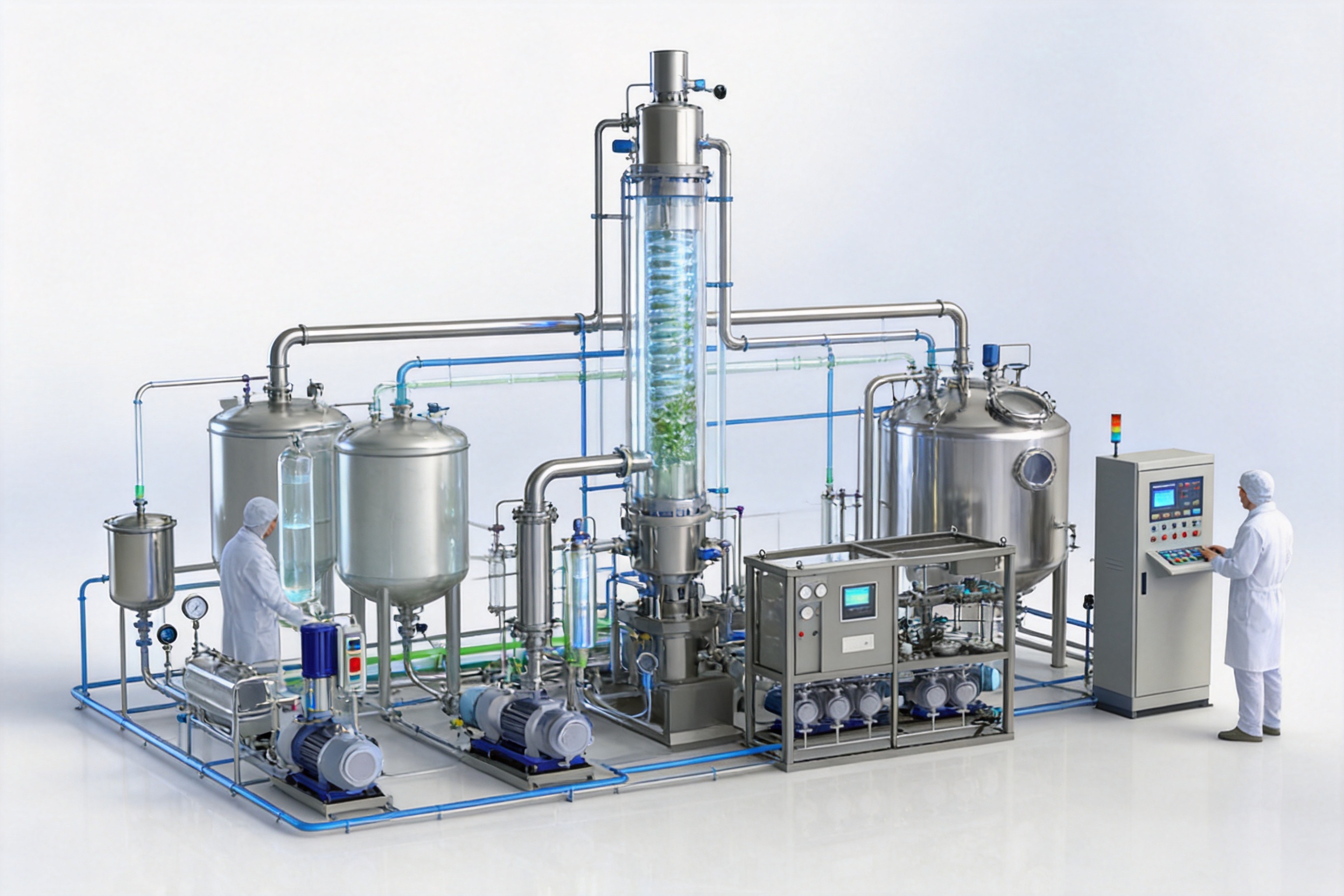
Dynamic axial compression chromatography is an important technology for industrial purification, process development, and the preparation of high-value biological, pharmaceutical, natural, and food-related products. As production scales increase, separation equipment must provide more than a simple column vessel. It must maintain stable packing pressure, support repeatable operation, protect the integrity of the stationary phase, and deliver consistent separation performance from one production cycle to the next.
The Dynamic Axial Compression Column is designed to address these requirements through a hydraulically controlled piston system. Instead of relying primarily on mechanical springs to compress the chromatographic bed, the column uses piston movement to load the packing material, maintain column pressure during operation, and unload the column after processing. This arrangement provides a controlled and stable method for managing the packed bed, particularly in demanding preparative and industrial chromatography applications.
The equipment is manufactured by Zhejiang Shuangzi Intelligent Equipment Co., Ltd., an engineering company specializing in process technology, automation engineering, equipment manufacturing, system integration, and turnkey project delivery. The company serves plant extraction, biological fermentation, pharmaceutical engineering, natural food, energy conservation, and environmental protection applications. Its experience in extraction, concentration, separation, filtration, crystallization, drying, and fermentation equipment provides a broad process foundation for the design and manufacture of preparative separation systems.
This article examines the construction, operating principle, technical benefits, application value, manufacturing strengths, and selection considerations of the Dynamic Axial Compression Column. It also explains how the equipment can be integrated into pilot-scale and production-scale process lines where reliability, hygienic design, and repeatable separation performance are essential.
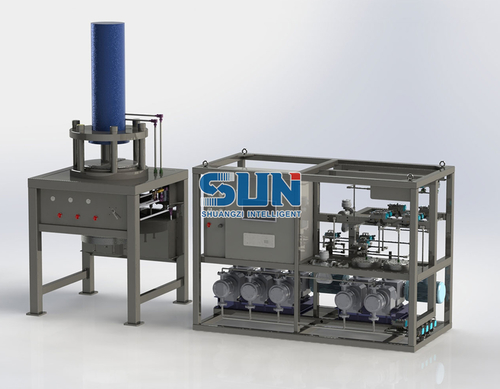
Axial Compression Column
1. Role of Axial Compression in Preparative Chromatography
Chromatographic separation depends heavily on the quality and uniformity of the packed bed. The stationary phase must be distributed evenly throughout the column, and the bed must remain stable while the process liquid passes through it. Voids, channels, uneven compression, or movement of the packing material can reduce separation efficiency and create inconsistent product quality.
In an analytical column, the small diameter and relatively low material volume make bed preparation easier to control. A preparative column, however, may have a much larger diameter and contain a substantial quantity of resin or other packing media. As diameter increases, the risk of uneven packing, settling, channel formation, and pressure variation also increases. The compression method therefore becomes a critical part of equipment performance.
Axial compression applies force along the central axis of the column. A movable piston or compression plate is positioned inside the column tube and adjusted to compact the stationary phase. During operation, the piston helps maintain the required bed condition. After processing, it can be retracted or moved to assist with unloading and preparation for the next cycle.
The Dynamic Axial Compression Column uses a hydraulic power system to control this movement. Hydraulic actuation allows the equipment to generate a stable and uniform compression force. It also enables the operator or control system to adjust piston movement according to the properties of the packing material, the column dimensions, and the requirements of the process.
This operating principle is particularly useful for processes in which the chromatographic medium must be changed, cleaned, regenerated, or repacked regularly. A controlled compression and unloading system can reduce manual intervention and make the preparation of the column more repeatable.
2. Operating Principle of the Dynamic Axial Compression Column
2.1 Loading the Column
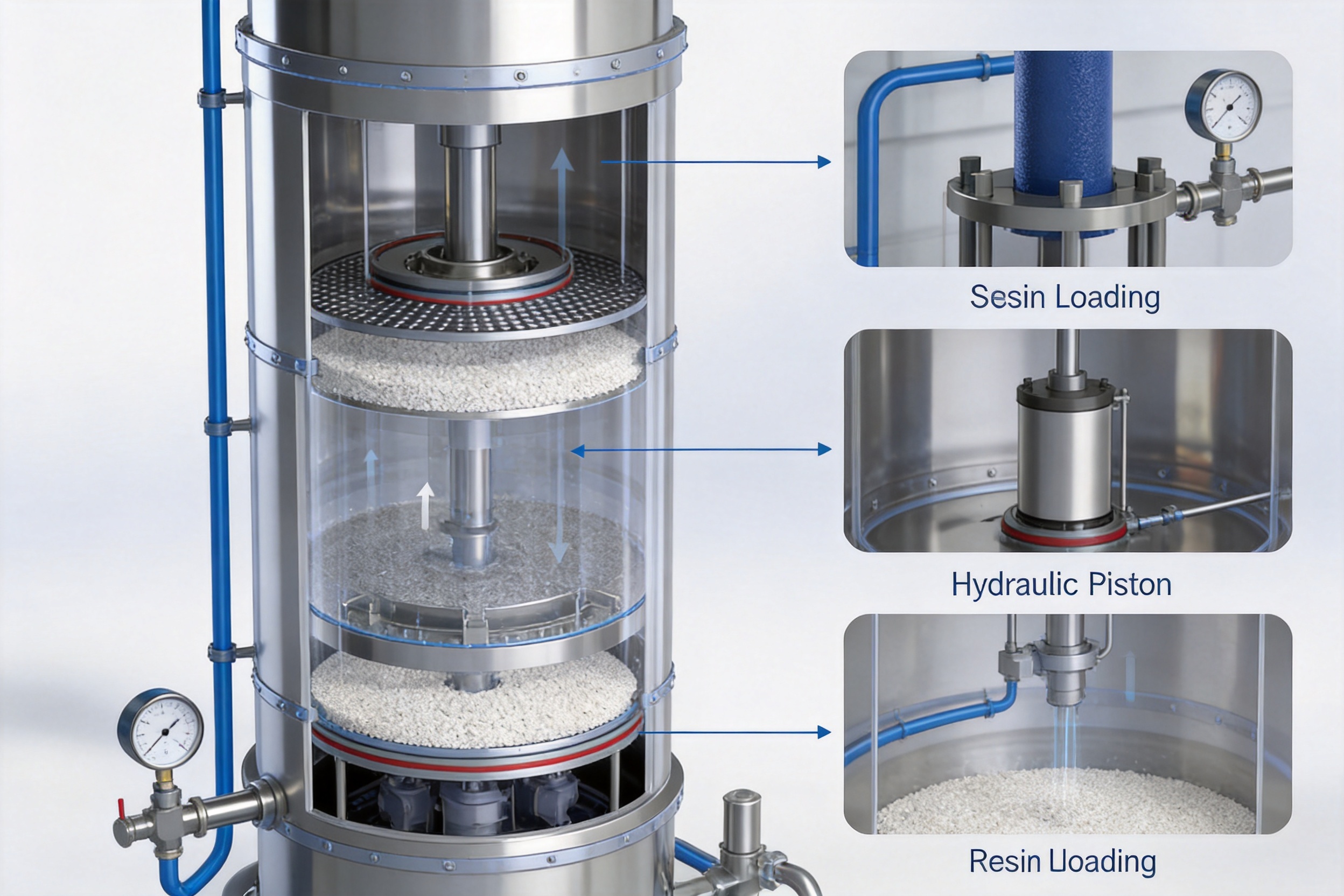
During loading, the chromatographic packing material is introduced into the column tube under controlled process conditions. The piston can be positioned to create the required loading volume and space above the bed. Once the packing material has been introduced, the hydraulic system moves the piston to compress the bed to the specified height and density.
The objective is not simply to apply the highest possible force. The correct compression level depends on the type of resin, particle size distribution, slurry concentration, column diameter, solvent system, and intended flow rate. Excessive compression may increase flow resistance or damage sensitive media, while insufficient compression may allow the bed to settle during operation. Hydraulic control provides a practical method for finding and maintaining the appropriate balance.
2.2 Maintaining Column Pressure
After packing, the piston remains under the control of the pressure-holding system. The system compensates for small changes in the bed, including settling, swelling, or compression caused by fluid flow. This helps keep the packed bed in close contact with the end distribution system and reduces the possibility of gaps forming inside the column.
Stable pressure maintenance is especially valuable during long production runs. If the bed changes position or density during a cycle, the liquid may begin to follow preferential paths. These channels reduce contact between the feed stream and the stationary phase, which can lower resolution and decrease product recovery. A hydraulically maintained piston helps preserve the intended bed structure throughout the process.
2.3 Unloading the Column
At the end of a production cycle, the piston can be moved to assist in removing the packing material. This may shorten the time required for resin replacement and make cleaning or inspection more convenient. The design is therefore suitable not only for separation but also for repeated process preparation and maintenance activities.
Because loading, pressure maintenance, and unloading are linked through piston movement, the system can provide a more integrated workflow than a fixed-bed vessel that requires extensive manual handling. The exact unloading procedure depends on the process medium, the cleaning method, and the site operating procedures.
3. Main Construction and Functional Components
3.1 Column Tube
The column tube is the primary pressure-containing and process-contact component. According to the supplied product information, the column is manufactured from SS316L stainless steel. This material is widely used in pharmaceutical, biological, food, and plant-extraction processing because of its corrosion resistance, cleanability, and suitability for hygienic process environments.
The internal surface of the column tube is processed by truss grinding. This finishing method is intended to improve surface quality and increase the service life of the high-pressure sealing ring. A smooth and carefully finished internal wall helps the piston slide while reducing the risk of premature wear, scratching, or seal damage.
Internal surface quality is important for more than seal life. It also affects cleaning performance and the ability to minimize product retention. A well-finished surface can reduce the number of areas where process residues accumulate, supporting more reliable cleaning and changeover procedures.
3.2 Hydraulic Piston System
The piston is the active element that applies and maintains axial compression. Its movement is generated by a hydraulic cylinder, allowing the system to manage force and position with a high degree of control. Compared with a spring-driven arrangement, hydraulic actuation offers greater flexibility when different packing media or operating conditions must be accommodated.
The hydraulic cylinder is designed and manufactured by Great Wall Hydraulics, identified in the product information as one of the leading hydraulic suppliers in China. The use of a specialized hydraulic component supplier supports the reliability of the actuation system and provides a suitable foundation for stable piston movement.
Hydraulic systems can also be configured for controlled movement rather than abrupt mechanical adjustment. This is useful when working with fragile media, large-diameter columns, or processes where sudden changes in compression could disturb the packed bed.
3.3 High-Pressure Sealing Structure
A specially designed sealing structure is installed around the piston. Its purpose is to allow the piston to slide freely along the inner wall of the column tube while maintaining a high degree of sealing. This is one of the most important design features of a dynamic axial compression system.
The seal must perform under pressure, during movement, and in contact with process fluids or cleaning solutions. It must also tolerate repeated cycles without excessive friction or leakage. The combination of internal surface finishing and dedicated sealing design is intended to support long service life and reliable operation.
Seal selection should always be matched to the process chemistry, temperature range, pressure, cleaning agents, and regulatory requirements of the installation. During project engineering, the end user should confirm elastomer and polymer compatibility for the intended solvent and product system.
3.4 Sieve Plates and Distribution System
The column is equipped with selected imported sieve plates, and import certificates can be provided according to the product information. Sieve plates are essential to the distribution and collection of process liquid. Their design influences pressure drop, flow uniformity, resin retention, and the prevention of packing material migration.
For large preparative columns, the sieve plate is designed to be easy to load and unload. It also provides good sealing performance and compulsory distribution. In practical terms, compulsory distribution means that the liquid is guided through the intended distribution structure rather than being allowed to enter or leave the bed through uncontrolled paths.
Uniform distribution is particularly important in large-diameter columns. Even if a bed is packed correctly, poor fluid distribution at the inlet or outlet can create local high-flow regions. These regions may reduce effective contact time and produce uneven utilization of the packing media. A properly engineered sieve plate and distribution arrangement helps the column use its full cross-sectional area more effectively.
4. Advantages Compared with Conventional Spring-Powered Columns
4.1 More Stable Compression Force
Traditional axial compression columns may rely on mechanical springs to generate compression force. Spring systems can be simple and effective in certain applications, but the force profile may change as the spring is compressed or released. Mechanical components may also require adjustment when the packed-bed height or resin characteristics change.
The Dynamic Axial Compression Column uses a hydraulic pressure-holding system instead. Hydraulic force can be adjusted according to the operating requirement, allowing the column to handle a broader range of bed conditions. This does not eliminate the need for correct process development, but it provides more control during loading and operation.
4.2 Uniform Hydraulic Movement
Hydraulic actuation supports smooth piston movement. A controlled piston can help reduce disturbances during packing and avoid sudden mechanical force changes that may affect the bed. This is useful for sensitive chromatographic media and for columns with large diameters, where a small mechanical imbalance can have a larger impact on the bed.
Uniform movement also helps during unloading. A predictable piston stroke can make the process easier to standardize and may reduce the dependence on manual handling by operators.
4.3 Wider Diameter Range
The product information states that the column can be filled across a diameter range from 50 mm to 1,000 mm, with the listed product models extending to a 1,200 mm column designation. This range makes the technology applicable to laboratory development, pilot production, and larger production-scale separation operations.
A system that covers multiple diameter classes can simplify technology transfer. A process may begin on a small pilot column and later move to a larger vessel while retaining the same basic compression concept. Of course, scale-up must still account for linear velocity, bed height, pressure drop, distribution design, resin behavior, and product loading capacity.
4.4 Preservation of Separation Performance
The product description states that the chromatographic column can maintain a separation effect equivalent to that of the analytical column when properly prepared and operated. This reflects the importance of stable bed compression and uniform liquid distribution. The statement should be understood as a performance objective dependent on appropriate process conditions, packing media, method development, and scale-up control.
By maintaining a consistent bed structure, the column can support repeatable retention behavior and more predictable resolution. This is valuable for purification processes where product purity, recovery, and batch-to-batch consistency must be managed simultaneously.
4.5 Easier Maintenance and Resin Handling
The large-column sieve plate is designed for easier loading and unloading. Together with the movable piston, this can simplify access to the process-contact area and support more efficient maintenance procedures. Reduced handling time can improve equipment availability and may lower the labor burden associated with resin replacement or inspection.
The maintenance strategy should include routine seal inspection, hydraulic system checks, sieve plate inspection, pressure verification, and cleaning validation where required. The precise schedule depends on operating hours, process chemistry, cleaning frequency, and site quality procedures.
5. Technical Specifications and Model Range
The Dynamic Axial Compression Column is available in several SUN model configurations. The table below summarizes the supplied technical information. Values should be confirmed during quotation and project engineering because final specifications may depend on the selected column diameter, pump configuration, process requirements, and applicable design standards.
| Model | Maximum Infusion Pump Flow | Column Designation | Working Pressure |
|---|---|---|---|
| SUN 150/200 | 200 L/h | DAC150-200 | Up to 42 MPa |
| SUN 300 | 300 L/h | DAC150-200 | Up to 25 MPa |
| SUN 400-500 | 500 L/h | DAC400-500 | Up to 20 MPa |
| SUN 600 | 1,200 L/h | DAC600 | Up to 15 MPa |
| SUN 800 | 2,000 L/h | DAC800 | Up to 15 MPa |
| SUN 1000/1100 | 3,000 L/h | DAC1000-1100 | Up to 10 MPa |
| SUN 1200 | 5,000 L/h | DAC1200 | Up to 10 MPa |
The supplied information also identifies SS316L as the material for the equipment. A separate working-pressure entry lists 100 bar and 70 bar values, while the model table presents pressure limits in MPa. These figures may relate to different equipment circuits, design configurations, or operating conditions. The final pressure rating must therefore be confirmed against the approved technical drawing, pressure-vessel documentation, hydraulic design, and process datasheet before operation.
A detector option is listed as 200–400 nm or 190–700 nm. Single-wavelength, dual-wavelength, and four-wavelength configurations are available as optional arrangements. These detection options can support monitoring of ultraviolet-absorbing compounds during chromatographic processing, although the appropriate detector configuration depends on the product, solvent, concentration range, and required analytical method.
6. Manufacturing Quality and Engineering Strengths
6.1 Integrated Process and Equipment Capability
Zhejiang Shuangzi Intelligent Equipment Co., Ltd. operates as a process and equipment engineering enterprise rather than only as a vessel fabricator. Its stated capabilities include process technology design, automation engineering design, equipment manufacture, matched purchasing, installation, commissioning, and system integration.
This integrated approach is valuable for separation projects because a chromatographic column rarely operates as an isolated machine. It may need to connect with feed tanks, pumps, buffer preparation systems, filtration units, detection equipment, cleaning systems, collection vessels, and automation controls. Understanding the complete process helps the equipment supplier select suitable interfaces and coordinate the column with the rest of the production line.
6.2 Experience in Multiple Process Industries
The company serves plant extraction, biological fermentation, pharmaceutical engineering, natural food, energy conservation, and environmental protection fields. Each sector presents different process challenges. Plant extraction may involve complex mixtures, viscous feeds, pigments, and solvent recovery. Biological fermentation may require hygienic design, cell removal, and gentle handling of sensitive materials. Pharmaceutical processing may require traceability, cleanability, validation support, and strict material compatibility.
Experience across these fields can support more informed equipment customization. The column can be considered within the broader requirements of the process, including upstream clarification, downstream concentration, cleaning, product recovery, and waste treatment.
6.3 Pilot Production Workshop and Research Platform
The company states that it has a pilot production workshop and research and development platform designed around automation and GMP-related requirements. A pilot facility is important for separation technology because scale-up cannot always be predicted from theoretical calculations alone. Resin behavior, bed compression, feed viscosity, pressure drop, flow distribution, and product adsorption may change as the column size increases.
Pilot testing allows the process team to evaluate packing procedures, compression levels, flow rates, cleaning methods, and product recovery before committing to full production equipment. It can also help define operating windows and identify potential problems in advance.
6.4 Advanced Fabrication Equipment
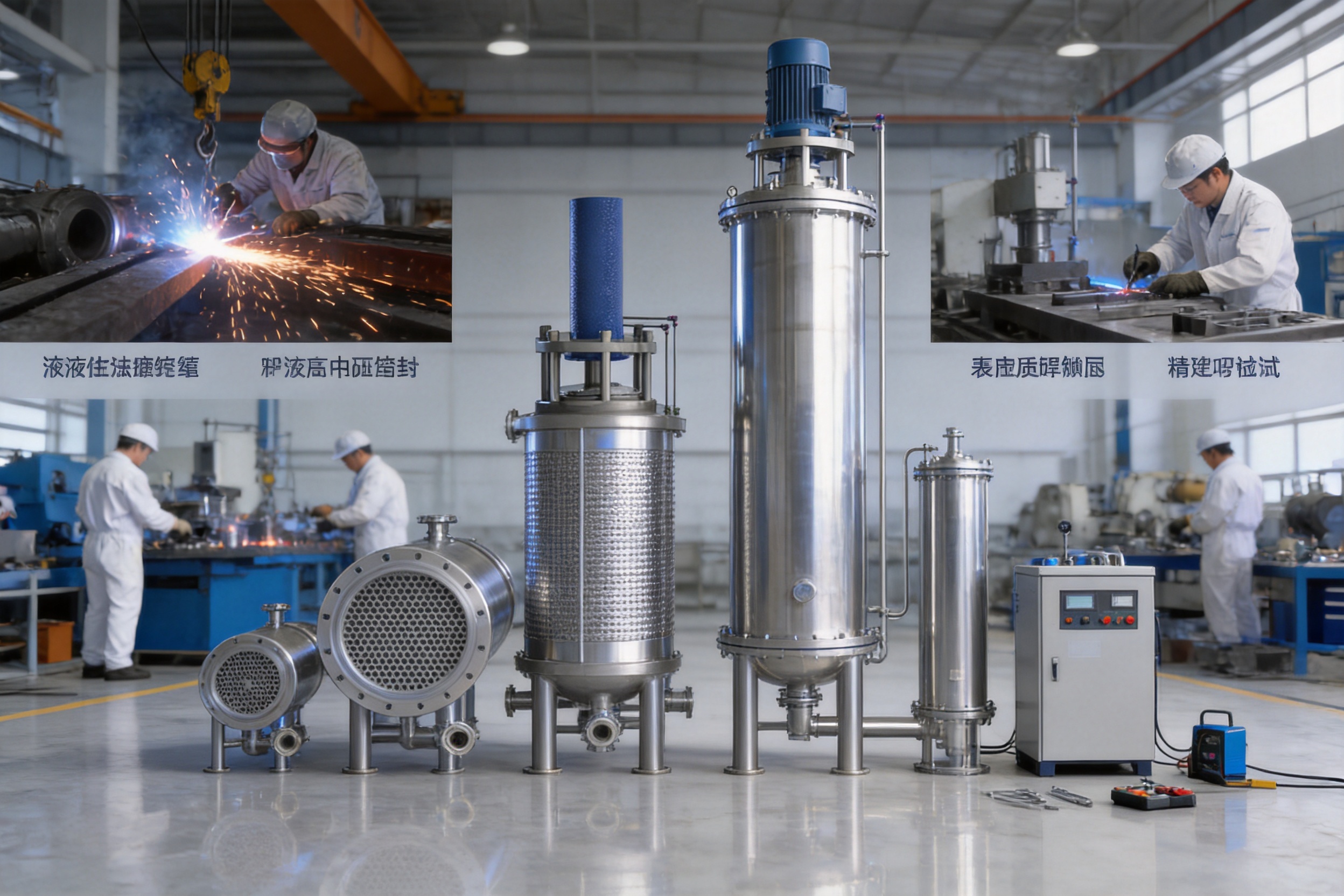
The manufacturing facility has introduced advanced welding and finishing equipment, including plasma argon arc welding machines, plasma cutting machines, and CAM CNC machining centers. These tools can support consistent fabrication of stainless-steel process equipment.
Plasma argon arc welding is commonly used where controlled, clean, and repeatable stainless-steel welds are needed. CNC machining supports accurate production of components such as flanges, sealing surfaces, piston parts, connection interfaces, and distribution components. Plasma cutting and modern finishing equipment can improve dimensional consistency and reduce the variation associated with manual fabrication.
Manufacturing quality depends on more than the presence of advanced machines. It also requires qualified procedures, trained personnel, inspection, documentation, surface treatment, dimensional verification, and appropriate testing. The combination of process knowledge and fabrication capability provides a strong basis for delivering customized separation equipment.
7. Applications in Plant Extraction
Plant extraction processes often produce mixtures containing active compounds, pigments, oils, sugars, proteins, and other natural substances. After extraction, chromatographic separation may be used to enrich a target component, remove impurities, or divide a complex extract into fractions with different functional properties.
The Dynamic Axial Compression Column can support these operations by providing a controlled packed-bed environment. Hydraulic compression is useful when the process uses different resins for different botanical materials or when the column must be repacked between campaigns. The SS316L construction and cleanable internal surfaces are also suitable considerations for applications involving food, nutraceutical, and botanical products.
Potential plant-extraction applications include purification of botanical active ingredients, separation of natural pigments, enrichment of functional compounds, recovery of valuable fractions, and preparation of refined extracts. The exact resin, solvent, flow rate, and cleaning procedure must be selected according to the chemical and regulatory characteristics of the product.
8. Applications in Biological Fermentation
Fermentation processes can generate complex liquid broths containing cells, proteins, metabolites, nutrients, salts, and residual substrates. Chromatography may be used after clarification and filtration to isolate a target biological compound or to remove unwanted components.
In these applications, the column must be integrated carefully with upstream clarification and downstream polishing. Feed streams should normally be conditioned to reduce the risk of blockage, excessive pressure rise, or fouling of the sieve plates. The compression system can help maintain a stable bed during repeated loading and elution cycles, while the distribution system supports more even fluid contact.
For biological products, material compatibility, temperature control, cleaning chemistry, and residence time are especially important. The final system design should include the required sensors, sampling points, valves, transfer lines, and automation functions to protect product quality and process reproducibility.
9. Applications in Pharmaceutical Engineering
Pharmaceutical purification places high demands on equipment design. The column must be manufactured from suitable materials, be cleanable, support documented operation, and integrate with the facility’s quality system. Depending on the application, the equipment may be used for capture, intermediate purification, polishing, impurity removal, or final product preparation.
The Dynamic Axial Compression Column provides a mechanically controlled approach to bed preparation and pressure maintenance. This can help pharmaceutical manufacturers establish repeatable operating procedures for packing and unpacking chromatographic media. The available detector options can also support process monitoring where ultraviolet absorbance is relevant.
For regulated applications, the purchaser should define requirements for surface roughness, weld inspection, passivation, elastomer certificates, material certificates, calibration, software documentation, factory acceptance testing, site acceptance testing, and cleaning validation. These requirements should be included in the user requirement specification before detailed design begins.
10. Applications in Natural Food and Functional Ingredients
Natural food processing increasingly uses advanced separation techniques to improve purity, flavor, color, stability, and functional performance. Chromatographic columns may be applied to natural sweeteners, plant-derived compounds, organic acids, food colorants, and functional ingredients.
The column’s stainless-steel construction, controlled compression, and scalable diameter range can support pilot and production development in this sector. A manufacturer may begin with a smaller column to establish the separation method, then select a larger model once the feed volume and production schedule are defined.
Food applications require careful attention to hygienic design and cleaning. Product-contact materials, seals, gaskets, dead legs, drainage, cleaning agents, and operating temperatures should be reviewed in accordance with the applicable food-processing standards and the user’s internal quality requirements.
11. Process Integration and Automation
A modern separation system should be evaluated as part of a complete process line. The column may connect to an infusion pump, feed tank, buffer tank, fraction collection system, detector, conductivity monitor, pressure transmitter, cleaning system, and control cabinet.
The maximum infusion pump flow values listed for the SUN models provide a starting point for equipment selection. They should not be interpreted as a universal process flow rate. The actual flow depends on bed height, resin characteristics, feed viscosity, product concentration, pressure drop, temperature, and the required residence time.
Automation can be used to coordinate piston position, hydraulic pressure, pump flow, valve sequencing, detector signals, fraction collection, and alarm management. Automated control can reduce operator variability and provide a record of critical process parameters. The appropriate level of automation ranges from local manual control to a fully integrated programmable control system.
During engineering, it is useful to define the operating sequence in detail. A typical sequence may include equipment inspection, column preparation, slurry loading, piston compression, equilibration, sample loading, washing, elution, fraction collection, regeneration, cleaning, storage, and unloading. Each stage may require different flow, pressure, valve, and piston conditions.
12. Selection Guidelines for Buyers
12.1 Define the Process Objective
The first selection step is to define whether the column will be used for laboratory development, pilot production, commercial production, or multiple stages of scale-up. The required diameter and bed volume depend on feed quantity, product loading, cycle time, and the characteristics of the selected packing material.
12.2 Identify the Packing Material
The resin or stationary phase influences compression force, pressure drop, particle stability, chemical compatibility, and cleaning requirements. The purchaser should provide information about particle size, compressibility, recommended bed height, slurry concentration, and maximum allowable pressure.
12.3 Confirm Chemical and Thermal Compatibility
All process-contact materials should be reviewed against the feed, elution solvent, regeneration solution, cleaning agent, and sanitizing solution. This includes the column tube, sieve plates, seals, gaskets, tubing, valves, and detector flow cell. SS316L is widely used, but the complete wetted system must still be checked for compatibility.
12.4 Establish Pressure and Flow Requirements
Pressure should be considered at several levels: column operating pressure, hydraulic pressure, pump discharge pressure, pressure drop through the packed bed, and the design pressure of connected equipment. The supplied model table gives maximum working-pressure values, but the final operating limit should be established from the approved project documentation.
12.5 Consider Cleaning and Maintenance
Buyers should define whether cleaning is manual, semi-automatic, or fully automated. They should also specify whether the column requires cleaning-in-place, sanitization-in-place, steam exposure, chemical storage, or resin replacement between campaigns. These requirements affect the selection of valves, connections, instrumentation, seals, and control functions.
12.6 Plan for Future Expansion
If the process is expected to grow, it may be beneficial to select a configuration that supports technology transfer and future automation. A scalable column platform can reduce the time required to move from pilot production to commercial operation. However, scale-up should be based on validated process parameters rather than column diameter alone.
13. Installation, Commissioning, and Operation
Installation should be performed on a suitable foundation capable of supporting the equipment, connected piping, hydraulic system, and operating loads. The column must be leveled and aligned so that the piston, seals, sieve plates, and distribution components operate correctly.
Before commissioning, all process connections should be inspected for cleanliness, correct orientation, and proper tightening. Hydraulic lines should be checked for leakage, and the pressure-holding system should be tested under controlled conditions. Instruments should be calibrated or verified according to the project quality plan.
Commissioning normally includes dry movement tests, hydraulic pressure tests, water or compatible-fluid circulation, flow-distribution checks, seal inspection, and control-sequence verification. If the equipment is intended for a regulated process, commissioning documentation may include test protocols, recorded results, deviation reports, and approval signatures.
During operation, the user should monitor flow rate, pressure, piston position, hydraulic pressure, detector response, and product fraction behavior. A sudden pressure increase may indicate bed compaction, blockage, precipitation, sieve-plate fouling, or a problem in the downstream system. A change in detector profile may indicate altered feed composition, channeling, resin degradation, or an incorrect operating sequence.
Preventive maintenance should include inspection of the piston seal, hydraulic cylinder, pressure sensors, valves, sieve plates, process connections, and control components. The internal surface should be protected from unnecessary scratching during cleaning or maintenance work.
14. Why the Manufacturing Partner Matters
The performance of a dynamic axial compression column is influenced by the interaction of mechanical design, process engineering, hydraulics, surface finishing, sealing, distribution, and automation. A supplier that understands only one of these areas may not be able to optimize the complete system.
Zhejiang Shuangzi Intelligent Equipment Co., Ltd. combines equipment manufacturing with process engineering and system integration. Its stated product range includes vacuum low-temperature drying systems, fermentation equipment, evaporation and concentration equipment, extraction equipment, separation and crystallization equipment, filtration equipment, and process containers. This portfolio allows the company to consider the column within a wider production process.
The company was founded in 2007 and reports a floor area of 16,706 square meters and a structure area of 17,800 square meters. Its manufacturing resources include specialized welding, cutting, machining, and finishing equipment. These capabilities support the production of customized stainless-steel equipment and the fabrication of components requiring dimensional accuracy and hygienic finishing.
Another important strength is the ability to provide engineering, process design, equipment design, installation, line debugging, and turnkey project services. For customers developing a new extraction, fermentation, pharmaceutical, or food process, this can reduce the need to coordinate multiple unrelated suppliers.
15. Turnkey Project Support
A turnkey project may include process design, equipment selection, utility planning, fabrication, factory testing, delivery, installation, commissioning, operator training, and production-line integration. The exact scope is defined by the contract and user requirements, but an integrated supplier can help maintain consistency between the equipment and the process design.
For a separation project, turnkey support may involve the Dynamic Axial Compression Column together with feed preparation, buffer storage, pumping, filtration, concentration, solvent handling, collection, and cleaning systems. The supplier may also assist with equipment layout, piping connections, control logic, and the coordination of upstream and downstream operations.
Turnkey support is particularly useful for pilot plants and new production facilities. Pilot users often need flexibility because the process is still being developed. An experienced engineering partner can provide a system that supports changing operating conditions while preserving the possibility of later scale-up.
16. Quality, Documentation, and Validation Considerations
Documentation is an important part of industrial equipment delivery. Depending on the application, the documentation package may include material certificates, component certificates, welding records, pressure-test reports, surface-treatment records, dimensional drawings, operating manuals, maintenance instructions, spare-parts lists, and inspection records.
Pharmaceutical and biotechnology customers may require additional documents such as design qualification support, installation qualification protocols, operational qualification protocols, calibration certificates, software descriptions, instrument lists, and change-control records. Food and nutraceutical customers may require food-contact declarations and cleaning-related information.
The customer should specify documentation expectations before fabrication begins. Early agreement helps prevent delays caused by missing certificates or differences between the supplier’s standard package and the customer’s quality system.
17. Environmental and Economic Benefits
Stable separation performance can improve the utilization of chromatographic media and reduce the number of failed or repeated cycles. Better bed control may also help improve product recovery and reduce the amount of feed or solvent consumed per unit of recovered product.
The ability to reload and unload the column efficiently may reduce maintenance downtime. Hydraulic control can support repeatable operation, which may lower the amount of product lost due to inconsistent packing or unexpected channeling. These benefits contribute to the total cost of ownership, although the actual economic result must be evaluated using the specific process data.
In plant extraction, fermentation, and natural food processing, separation equipment may be part of a broader resource-efficiency program. Integration with evaporation, concentration, filtration, solvent recovery, and wastewater-treatment equipment can help reduce waste and improve the overall process balance.
18. Comparison Summary
| Evaluation Area | Dynamic Axial Compression Column | Conventional Spring-Powered Arrangement |
|---|---|---|
| Compression method | Hydraulic piston movement and pressure holding | Mechanical spring force |
| Force adjustment | Can be adjusted according to process conditions | Primarily determined by spring characteristics and mechanical adjustment |
| Piston movement | Controlled hydraulic movement | Mechanical movement or fixed spring response |
| Large-diameter suitability | Designed for a broad range of column diameters | May require greater mechanical adaptation as diameter increases |
| Pressure maintenance | Managed through a hydraulic pressure-holding system | Maintained through spring force and mechanical configuration |
| Unloading | Piston movement can assist with unloading and preparation | May involve more manual intervention, depending on design |
| Customization potential | Suitable for integrated process and automation projects | Often simpler but may offer less control flexibility |
This comparison is a general engineering overview rather than a substitute for a project-specific evaluation. Spring-powered systems may remain appropriate for certain applications, especially where the process is simple and the operating range is narrow. The hydraulic design is most valuable when the user requires adjustable compression, repeatable packing, large-diameter operation, and integration with an automated process line.
19. Frequently Asked Questions
What is a dynamic axial compression column?
A dynamic axial compression column is a preparative chromatography column that uses a movable piston to load the packing material, maintain bed pressure during processing, and assist with unloading. The piston is actuated by a hydraulic system rather than relying only on mechanical springs.
How does the hydraulic system improve operation?
The hydraulic system provides controlled and stable force. It can support smoother piston movement and allow the compression condition to be adjusted for different packing materials, bed heights, and process requirements.
What materials are used for the column?
The supplied product information identifies SS316L stainless steel as the equipment material. The final material specification should include the complete wetted path, including seals, gaskets, sieve plates, valves, and other connected components.
What column diameters are available?
The product information states that the technology supports filling diameters from 50 mm to 1,000 mm, while the listed model range includes column designations up to DAC1200. The final diameter and bed dimensions should be selected according to feed volume, resin capacity, cycle time, and scale-up requirements.
Can the column be used for pharmaceutical products?
It can be considered for pharmaceutical, biological, plant-extraction, nutraceutical, and food-related applications. Pharmaceutical use requires project-specific confirmation of materials, surface finish, seals, documentation, cleaning, validation, and applicable regulatory requirements.
What are the benefits of the special piston seal?
The sealing structure is designed to allow the piston to slide along the inner wall while maintaining a high degree of sealing. The internal grinding process is intended to increase the service life of the high-pressure sealing ring.
Are the sieve plates imported?
The product information states that selected imported sieve plates are used and that import certificates can be provided. Certificate requirements should be confirmed during the purchasing and documentation stages.
What detector options are available?
The listed detector options include 200–400 nm and 190–700 nm ranges. Single-wavelength, dual-wavelength, and four-wavelength configurations are identified as optional choices.
Can the equipment be supplied as part of a complete project?
Yes. The manufacturer states that it can provide process design, equipment design, installation, line debugging, system integration, and turnkey project services. The exact scope should be defined in the project specification and commercial agreement.
How should the working pressure be interpreted?
The supplied technical information lists model-specific maximum working pressures in MPa and also includes values of 100 bar and 70 bar in a separate specification row. Because these values may refer to different circuits or configurations, the approved technical documents should be used to confirm the applicable operating and design pressures.
What information should be provided for a quotation?
The customer should provide the intended application, feed composition, resin type, bed height, column diameter, required flow rate, operating temperature, process pressure, cleaning chemicals, product-contact standards, automation requirements, detector needs, and expected production capacity.
How can the column be scaled from pilot to production?
Scale-up should preserve appropriate process parameters such as linear velocity, bed height, residence time, loading capacity, pressure drop, and flow distribution. Pilot testing is recommended to confirm resin behavior and define the operating window before selecting a larger production model.
20. Conclusion
The Dynamic Axial Compression Column is designed for preparative separation processes that require controlled bed compression, stable pressure maintenance, efficient unloading, and scalable equipment configuration. Its hydraulic piston system provides a more adjustable alternative to traditional spring-powered compression, while the dedicated sealing structure supports piston movement under pressure.
Key design features include SS316L construction, truss-ground internal surfaces, selected imported sieve plates, compulsory distribution, a high-pressure sealing arrangement, and a hydraulic cylinder supplied by a specialized manufacturer. The model range supports applications from pilot-scale development to larger production systems, with maximum infusion pump flow values ranging from 200 L/h to 5,000 L/h in the supplied specifications.
The equipment is suitable for consideration in plant extraction, biological fermentation, pharmaceutical engineering, natural food, and other high-value separation processes. Its greatest value is achieved when it is correctly matched with the resin, process chemistry, pump, distribution system, automation controls, and cleaning strategy.
Zhejiang Shuangzi Intelligent Equipment Co., Ltd. strengthens the product offering through integrated process engineering, stainless-steel equipment manufacturing, automation capabilities, pilot production resources, installation, commissioning, and turnkey project support. This combination enables customers to procure not only a column but also a coordinated separation solution designed around the requirements of the complete process.
For a project evaluation, users should confirm the final column dimensions, working pressure, hydraulic specifications, detector configuration, materials, seals, documentation, automation scope, and validation requirements. With suitable process development and engineering control, the Dynamic Axial Compression Column can provide a reliable foundation for repeatable and efficient industrial chromatography.
References
1. Product specification for Dynamic Axial Compression Column, Zhejiang Shuangzi Intelligent Equipment Co., Ltd.
2. Supplied technical model table for SUN-series axial compression columns, including flow rate, column designation, and working-pressure data.
3. General principles of preparative chromatography column packing, axial compression, flow distribution, and pressure management.
4. General engineering practices for SS316L hygienic process equipment used in pharmaceutical, biotechnology, food, and botanical applications.
5. General guidance on scale-up from laboratory chromatography to pilot and production separation systems.
6. General principles of hydraulic actuation, pressure holding, sealing design, and preventive maintenance for process equipment.