
 英语
英语 俄语
俄语Content
- 1 1. The Role of Vacuum Rectification in Aroma Recovery
- 2 2. Product Description
- 3 3. Main Advantages of the Integrated Configuration
- 4 4. Competitive Advantages Compared with Conventional Laboratory Arrangements
- 5 5. Application Areas
- 6 6. Operating Principle and Process Flow
- 7 7. Important Process Parameters
- 8 8. Design Features for Research and Development
- 9 9. Manufacturing Strengths of the Supplier
- 10 10. Quality, Hygiene, and Maintenance Considerations
- 11 11. Selecting the Equipment for a Specific Application
- 12 12. Use in Process Development and Scale-Up
- 13 13. Sustainability and Resource Efficiency
- 14 14. Recommended Laboratory Workflow
- 15 15. Frequently Asked Questions
- 15.1 Q1: What type of equipment is this?
- 15.2 Q2: Why is vacuum used for natural aroma recovery?
- 15.3 Q3: What raw materials can be processed?
- 15.4 Q4: Can the unit recover essential oils?
- 15.5 Q5: What is the purpose of variable-frequency feeding?
- 15.6 Q6: Is the equipment suitable for food and pharmaceutical research?
- 15.7 Q7: Is this a production machine?
- 15.8 Q8: How does this equipment compare with ordinary laboratory glassware?
- 15.9 Q9: Can it be used for scale-up studies?
- 15.10 Q10: What information should be supplied for a quotation?
- 15.11 Q11: Does the supplier provide installation and commissioning?
- 15.12 Q12: What other equipment can the supplier provide?
- 16 16. Why This Equipment Is Valuable for Modern Aroma Development
- 17 17. Conclusion
- 18 References
- 19 Product: Laboratory Vacuum Rectification Device for Natural Fragrance & Flavor Recovery
Natural fragrances and flavors are increasingly important in food, beverage, cosmetic, pharmaceutical, and biotechnology research. Consumers and formulators are seeking clean-label ingredients, recognizable botanical sources, and authentic sensory profiles. At the same time, many natural aroma compounds are highly volatile, oxidation-sensitive, and vulnerable to thermal degradation. Recovering these compounds therefore requires more than simple heating and condensation. It requires careful control of pressure, temperature, residence time, feeding rate, condensation, and product collection.
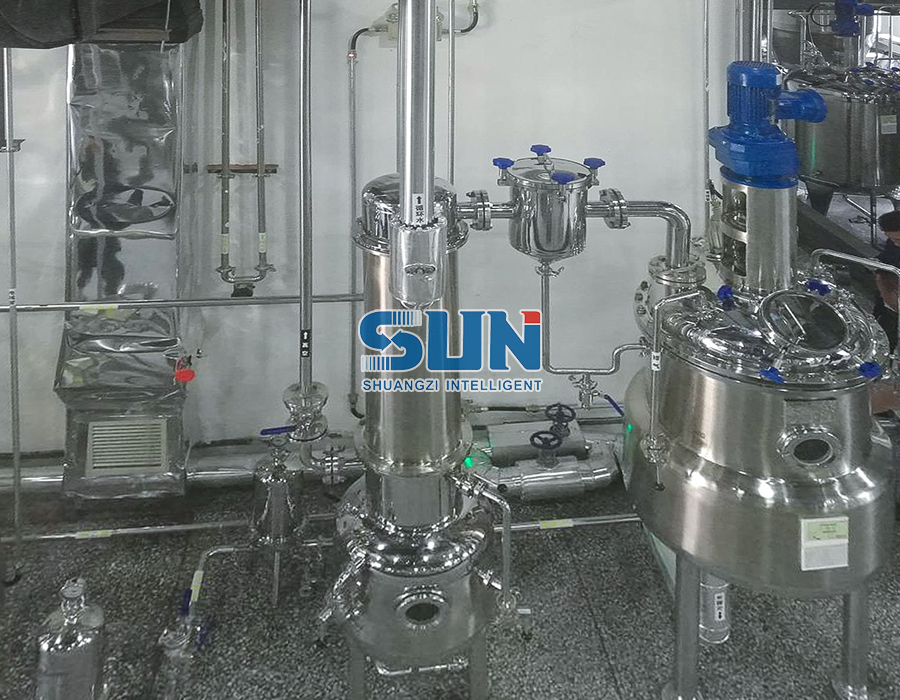
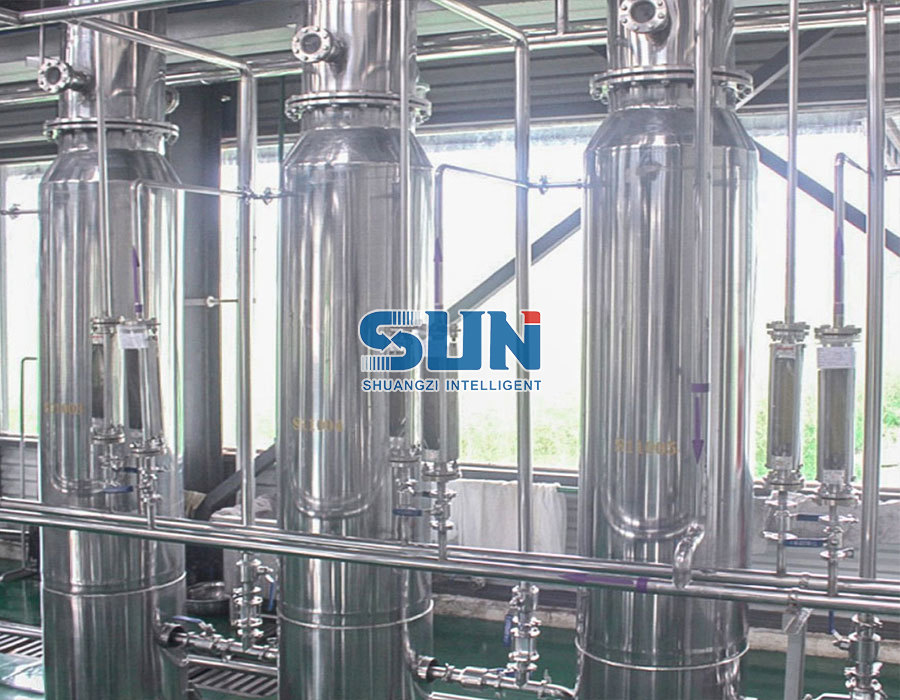
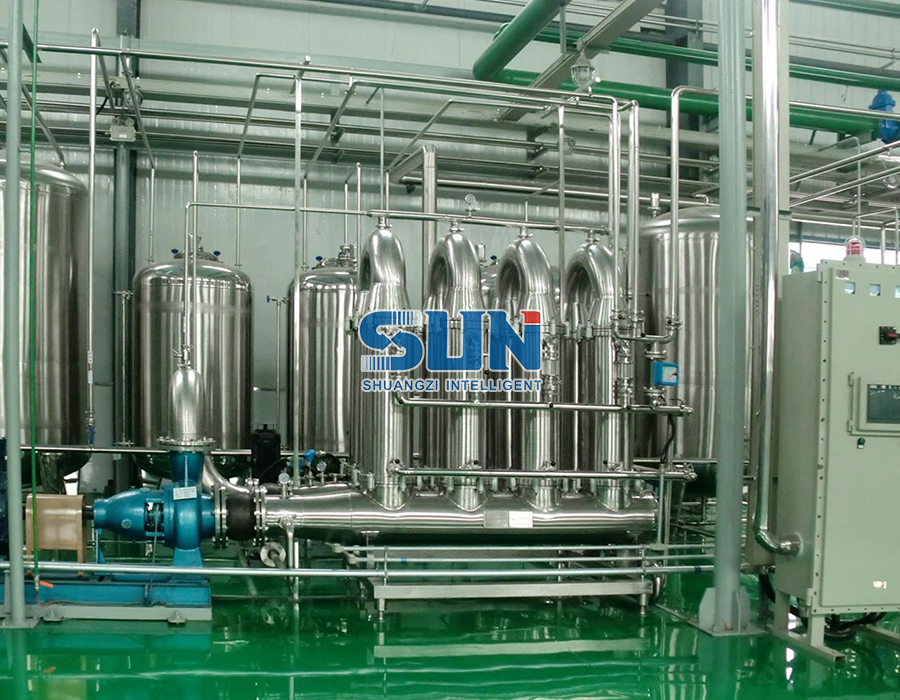
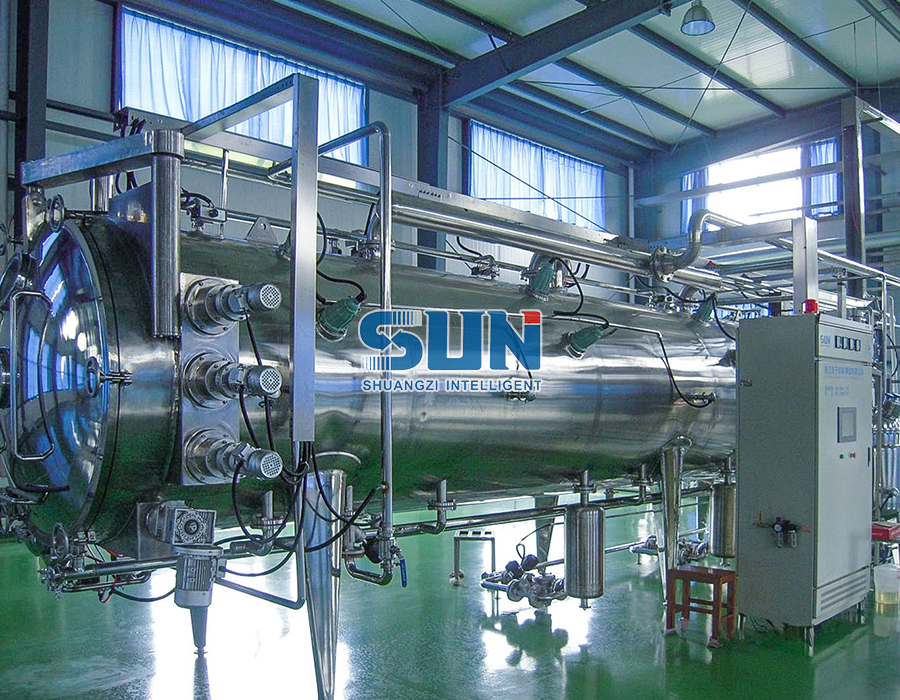
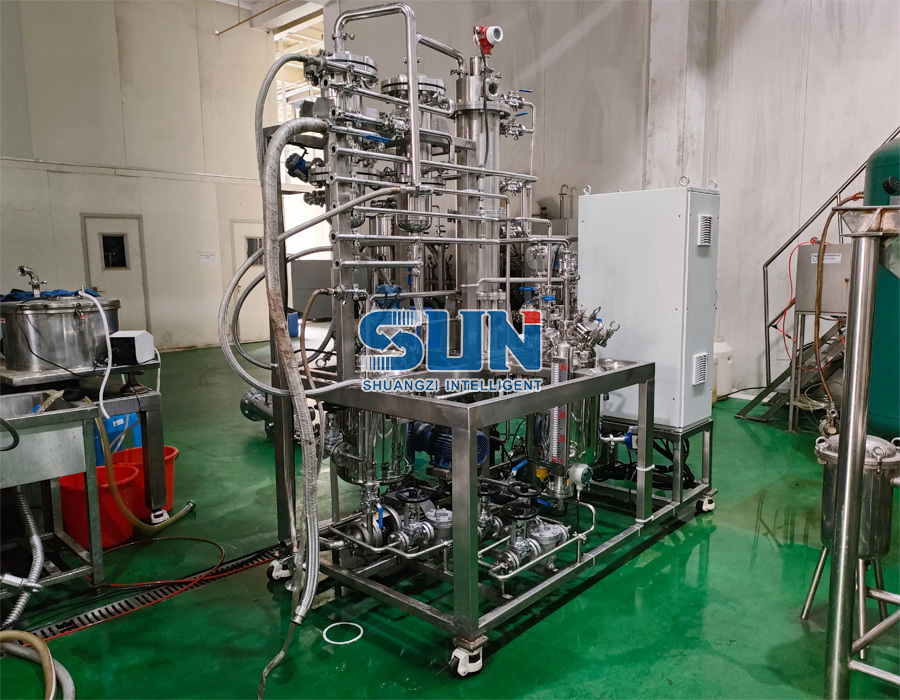
The laboratory vacuum rectification device for natural fragrance and flavor recovery is designed to address these challenges. It combines vacuum rectification, low-temperature distillation, condensation collection, sanitary stainless-steel construction, and variable-frequency feeding control in one compact research-oriented system. The equipment is intended for laboratory development, component analysis, formulation studies, process verification, and small-batch sample preparation.
By operating under negative pressure, the unit can reduce the boiling temperature of volatile components. This helps researchers separate aroma fractions while limiting the heat exposure that may alter delicate natural compounds. The integrated configuration also makes the equipment suitable for laboratories that need a controllable and repeatable platform instead of a collection of disconnected vessels and manually operated accessories.
The system is manufactured and supplied by Zhejiang Shuangzi Intelligent Equipment Co., Ltd., a Chinese engineering and equipment enterprise focused on plant extraction, biological fermentation, pharmaceutical engineering, natural food processing, energy conservation, and environmental protection. The company provides process technology, automation engineering design, equipment manufacturing, system integration, installation, commissioning, and turnkey project services.
Laboratory Vacuum Rectification Device for Natural Fragrance & Flavor Recovery
1. The Role of Vacuum Rectification in Aroma Recovery
Vacuum rectification is a separation technique in which a liquid mixture is heated and vaporized under reduced pressure. Because the boiling point of a substance decreases as pressure falls, volatile compounds can be processed at lower temperatures than would normally be required at atmospheric pressure. The vapor is then condensed and collected in fractions according to the operating conditions and the volatility of the components.
This principle is especially valuable for natural fragrance and flavor materials. Essential oils, fruit aromas, vegetable volatiles, botanical extracts, and other natural sensory compounds often contain constituents with different boiling behaviors. Some of these components may be damaged by prolonged exposure to high temperatures. Others may oxidize, polymerize, or lose their characteristic sensory notes during conventional atmospheric distillation.
A vacuum environment helps create a gentler separation pathway. It does not eliminate the need for process development, because every raw material has a different composition and thermal behavior. However, it gives researchers a practical method for lowering process temperatures and adjusting operating conditions to protect sensitive fractions.
Rectification differs from simple batch distillation because it is intended to improve separation between components with different volatilities. The degree of separation depends on factors such as pressure, temperature, feed rate, column or internal configuration, reflux behavior, condensation efficiency, and the physical properties of the feed. A laboratory unit allows these factors to be studied on a manageable scale before a process is considered for pilot or production application.
2. Product Description
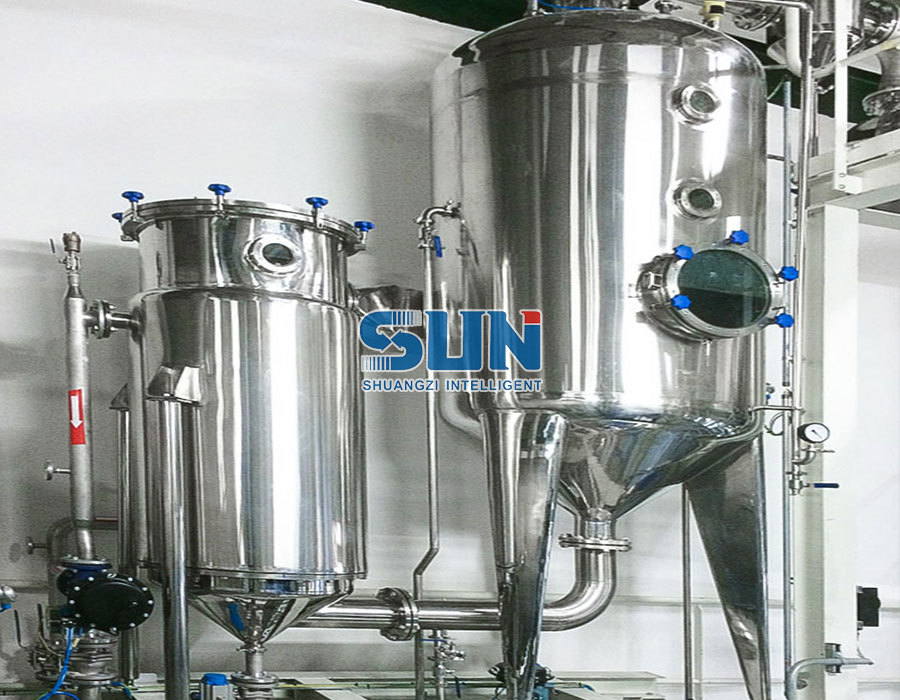
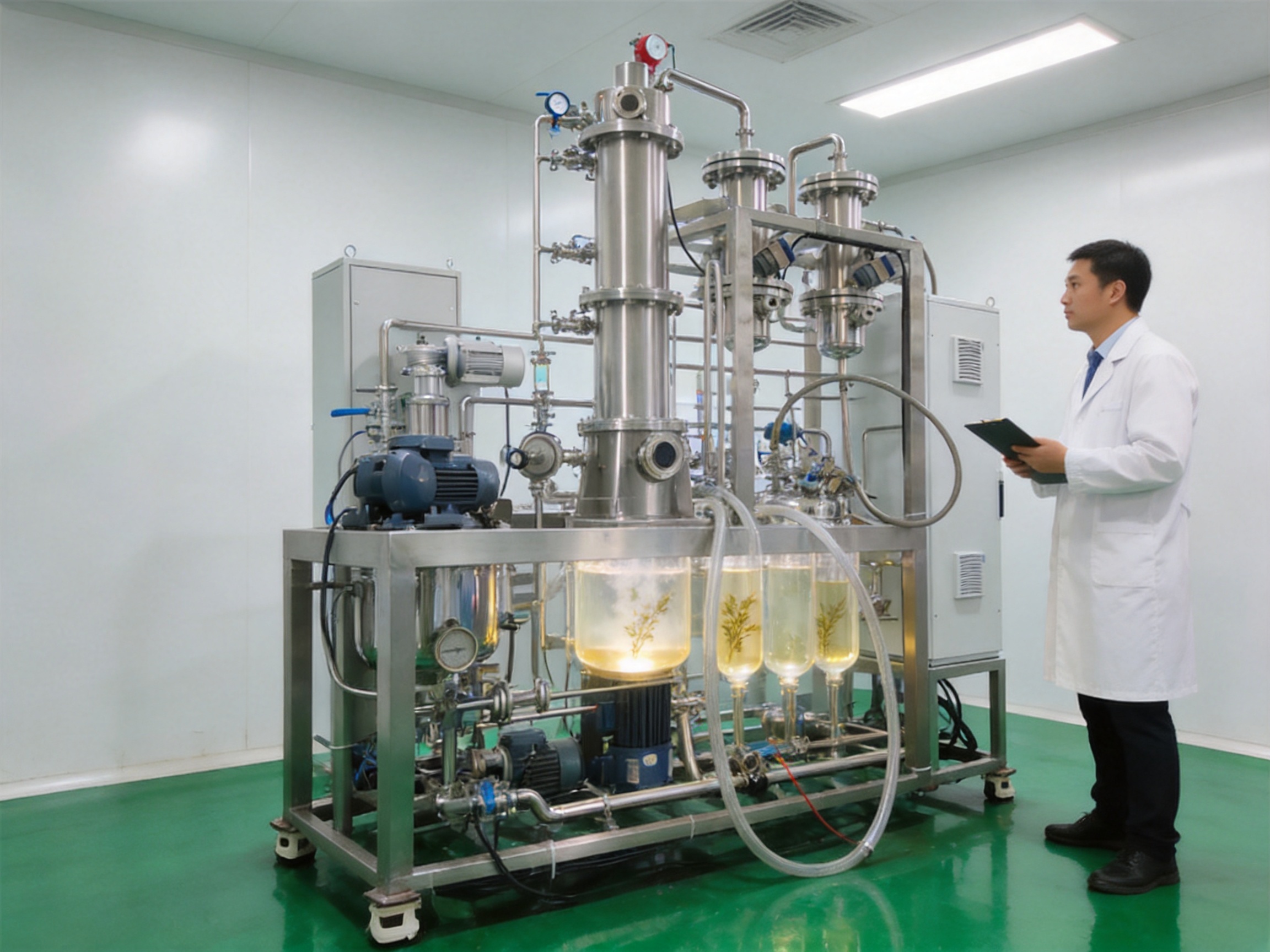
This laboratory unit is a sanitary stainless-steel aroma recovery and rectification device designed for natural fragrance and flavor research. It integrates several key functions into a single process platform:
• Vacuum rectification for reduced-pressure separation.
• Low-temperature distillation for handling heat-sensitive aroma compounds.
• Condensation for vapor recovery.
• Collection of recovered fractions for analysis or further formulation.
• Variable-frequency feeding control for adjustable material delivery.
• Automated or semi-automated control of important operating parameters.
• Stainless-steel construction suitable for hygienic laboratory and pilot environments.
The system can be used with selected fruit, vegetable, botanical, and natural extract feedstocks. It is suitable for research and development work involving natural essential oils, volatile aroma compounds, flavor concentrates, food additives, botanical ingredients, and certain biopharmaceutical process studies.
Its laboratory-scale design provides an intermediate platform between glassware-based experimentation and industrial equipment. Conventional laboratory glassware may be useful for basic observation, but it can become difficult to control when a researcher needs stable feeding, consistent vacuum operation, reliable condensation, hygienic surfaces, and repeatable collection. The integrated device brings these functions together in a more structured and process-oriented arrangement.
3. Main Advantages of the Integrated Configuration
3.1 Reduced Thermal Stress
The principal advantage of the equipment is its use of vacuum-assisted low-temperature distillation. Many natural aroma materials contain compounds that are sensitive to heat. Excessive temperature can produce unwanted changes in color, odor, taste, composition, or overall product quality. Operating under negative pressure helps reduce the temperature required for vaporization and separation.
Lower-temperature processing can be particularly useful for fresh, delicate, or highly volatile materials. The objective is not simply to remove moisture or create a distillate. It is to recover aroma fractions that retain a closer relationship to the original raw material. The ability to adjust vacuum and temperature conditions gives researchers greater flexibility when developing a process for a new botanical or food-derived feedstock.
3.2 Controlled Feeding
The variable-frequency feeding system allows the material feed rate to be adjusted according to process requirements. Feed rate has a direct influence on residence time, vapor generation, separation stability, condenser load, and collection behavior. A fixed or manually adjusted feed arrangement can make it difficult to reproduce an experiment. Variable-frequency control offers a more practical way to establish and repeat suitable operating conditions.
Controlled feeding is also important when the feedstock changes in viscosity, solids content, volatility, or concentration. The operator can coordinate feeding with heating, vacuum, and condensation conditions rather than treating the process as a simple on-and-off operation. This supports more systematic experimentation and makes laboratory data more useful for future scale-up.
3.3 Integrated Condensation and Collection
Once volatile components are vaporized, they must be condensed efficiently and collected without unnecessary loss. The device integrates condensation and collection into the overall process arrangement. This reduces the need for improvised connections and helps create a more organized path from feed material to recovered fraction.
Effective condensation is important for both yield and safety. It limits the amount of vapor reaching the vacuum system, supports stable pressure control, and allows researchers to obtain samples for sensory evaluation, chromatographic analysis, or formulation testing. The collection arrangement can also help separate different fractions when the process is operated in stages or under changing conditions.
3.4 Sanitary Stainless-Steel Construction
The equipment is constructed of sanitary stainless steel. Stainless steel is widely used in food, pharmaceutical, biotechnology, and botanical processing because it offers corrosion resistance, mechanical durability, cleanable surfaces, and compatibility with hygienic design requirements.
Sanitary construction is especially valuable when a laboratory works with natural food ingredients, flavor materials, or pharmaceutical research samples. Smooth and accessible product-contact surfaces can simplify cleaning and reduce the risk of cross-contamination between experiments. Stainless-steel construction also provides greater durability than fragile glass arrangements in laboratories where equipment is used frequently or moved between process areas.
3.5 Adjustable Operating Parameters
Natural aroma recovery is not a one-condition process. Different raw materials may require different combinations of pressure, temperature, feed rate, condensation conditions, collection time, and operating sequence. The equipment is designed with adjustable operating parameters so that researchers can evaluate the effect of these variables.
This flexibility supports experimental design. A laboratory team can compare different vacuum levels, adjust feeding rates, examine the effect of temperature, and collect fractions for analysis. Over time, these tests can help identify a process window that balances recovery, selectivity, sensory quality, and energy consumption.
3.6 High Automation for Repeatable Research
Automation helps reduce the influence of manual operation. When vacuum, feeding, heating, and collection activities are coordinated through a more systematic control arrangement, researchers can record and reproduce experimental conditions more effectively. This is important when comparing raw materials, evaluating process modifications, or preparing samples for quality testing.
Automation also improves convenience. Instead of continuously adjusting several independent devices, the operator can focus more attention on process observation, sampling, and data analysis. The level of automation can be configured according to the application and the project requirements.
4. Competitive Advantages Compared with Conventional Laboratory Arrangements
Laboratory users often begin aroma recovery research with separate flasks, heating devices, condensers, vacuum pumps, tubing, manual valves, and collection vessels. Such arrangements can be appropriate for preliminary academic demonstrations, but they may become limiting when the work requires repeatable feeding and controlled process development.
Compared with a basic glassware setup, the integrated laboratory vacuum rectification device offers several practical advantages. Its process modules are arranged as a coordinated unit rather than as disconnected components. The sanitary stainless-steel body is more suitable for repeated use with food, botanical, and pharmaceutical research materials. Variable-frequency feeding is more consistent than relying solely on manual addition. Integrated condensation and collection simplify vapor handling and fraction recovery. Adjustable parameters provide a stronger basis for structured process optimization.
Compared with an industrial production system, the laboratory unit offers a more accessible scale for research. Industrial equipment may involve larger capacities, more complex installation requirements, and higher material consumption during trials. A laboratory device allows a development team to evaluate the behavior of a new raw material with smaller batches and lower experimental costs.
Compared with a simple evaporator, the system is more focused on the recovery and separation of volatile aroma components. Evaporation may remove solvent or water, but it does not necessarily provide the same process emphasis on controlled rectification and aroma fraction collection. The laboratory device is therefore better suited to applications in which the identity and quality of the volatile fraction are central objectives.
Compared with manually operated distillation equipment, the automated arrangement can help improve repeatability. Manual operation often introduces variation in feed rate, pressure adjustment, collection timing, and heating control. Automation does not replace process knowledge, but it gives researchers more consistent tools for applying that knowledge.
4.1 More Suitable for Sensitive Natural Materials
Natural fragrance and flavor ingredients may lose value if their characteristic volatile profile is changed during processing. The combination of negative pressure and low-temperature operation provides a meaningful advantage for materials that should not be exposed to unnecessary heat.
4.2 Better Process Visibility
A dedicated laboratory unit makes it easier to observe the relationship between operating parameters and product recovery. Researchers can evaluate process behavior in a controlled environment and use the results to guide further development.
4.3 Easier Transition to Pilot Work
Because the equipment reflects a process-engineering approach rather than a purely academic glassware arrangement, it can generate information that is more relevant to pilot and industrial system design. Feed behavior, vacuum response, condensation performance, cleaning procedures, and collection methods can all be considered during early development.
4.4 Hygienic and Durable Equipment Design
The sanitary stainless-steel structure supports applications in industries where cleanliness, durability, and product integrity are important. It also aligns the laboratory process more closely with the hygienic expectations of food, pharmaceutical, and biotechnology facilities.
5. Application Areas
5.1 Natural Essential Oil Research
Essential oils contain mixtures of volatile compounds that contribute to aroma, flavor, and biological activity. The device can be used to investigate the recovery of selected fractions from botanical materials and to prepare samples for formulation or analytical evaluation.
Researchers may use the equipment to compare raw material sources, evaluate pretreatment methods, test different separation conditions, and study how process parameters influence sensory quality. The recovered fractions may be examined through chemical analysis, odor evaluation, stability testing, or compatibility studies.
5.2 Fruit and Vegetable Aroma Recovery
Fruit and vegetable processing can generate aroma-containing streams that are otherwise lost during concentration, heating, or separation. Vacuum recovery can help capture volatile components from selected materials while limiting thermal exposure.
The recovered aroma may be evaluated for use in beverages, flavor systems, natural food additives, sauces, dairy products, nutritional products, or other formulations. Laboratory-scale work helps determine whether a specific raw material produces a useful and stable aroma fraction before larger investment is made.
5.3 Botanical Extract Development
Botanical extracts may contain both volatile and nonvolatile components. The device can support research into the separation of volatile aroma fractions from broader botanical mixtures. This may help improve the design of extraction and concentration processes or create more targeted ingredients for downstream formulation.
Depending on the material and the intended use, the recovered fraction may be used as an aroma ingredient, a reference sample, or an intermediate for additional purification and analysis.
5.4 Food Additive and Flavor Formulation
Flavor developers need reliable samples when evaluating new ingredients. A controlled laboratory recovery system can provide small batches of natural aroma fractions for blending trials, sensory panels, stability studies, and compatibility testing.
Because feeding and operating parameters can be adjusted, the equipment may support the development of different aroma profiles from the same raw material. Researchers can compare early, middle, or later fractions and determine which fraction best meets the formulation objective.
5.5 Biopharmaceutical and Biotechnology Research
The unit is also applicable to selected research activities in biopharmaceutical and biotechnology environments, particularly where volatile compounds or natural materials require controlled separation. Its sanitary construction and process-oriented design make it relevant to laboratories that operate under strict cleanliness and documentation expectations.
Specific suitability depends on the feed composition, solvent system, regulatory requirements, and required level of containment. A technical review should be completed before the equipment is applied to any regulated or specialized process.
5.6 Small-Batch Sample Preparation
Many research programs require only a limited quantity of purified or concentrated aroma material. A laboratory-scale device can prepare samples for instrumental analysis, sensory testing, pilot formulation, customer evaluation, or process comparison without requiring a full production line.
6. Operating Principle and Process Flow
The process begins with preparation of the natural feed material. Depending on the application, the material may be an extract, condensate, botanical solution, fruit-derived liquid, vegetable-derived liquid, or another aroma-containing mixture. Pretreatment may include filtration, dilution, clarification, concentration, or removal of coarse solids.
The prepared feed is introduced into the system using the variable-frequency feeding arrangement. The operator selects a suitable feed rate based on the physical properties of the material and the desired process conditions. A controlled feed can help maintain a stable material load and reduce sudden changes in vapor generation.
The system is then brought to the selected vacuum condition. Under reduced pressure, the volatile components can vaporize at a lower temperature. Heating is applied in a controlled manner, and the vapor moves toward the condensation section.
In the condenser, the vapor is cooled and converted back into liquid form. The condensate is directed to the collection arrangement, where it can be recovered as a sample or separated into fractions according to the process design. Nonvolatile material and heavier residues remain in the appropriate part of the system for later handling.
During operation, the researcher can monitor the relationship between temperature, vacuum, feed rate, condensation, and collection. The exact sequence depends on the feedstock and the process objective. Some experiments may focus on maximum aroma recovery, while others may emphasize fractionation, selectivity, or sensory quality.
After processing, the recovered materials should be labeled and stored according to their chemical and sensory stability requirements. The equipment should then be drained, cleaned, inspected, and prepared for the next experiment.
7. Important Process Parameters
| Parameter | Purpose | Research Consideration |
|---|---|---|
| Vacuum level | Reduces boiling temperature and influences volatility-based separation | Adjust according to feed composition, target fraction, and thermal sensitivity |
| Heating temperature | Provides the energy required for vapor generation | Use the lowest practical temperature that supports stable recovery |
| Feeding rate | Controls material loading and vapor generation | Coordinate with heating, vacuum capacity, and condenser performance |
| Condensation conditions | Recover vapor and limit product loss | Confirm adequate cooling capacity for the selected operating range |
| Collection sequence | Allows recovery of samples or different fractions | Define collection times and labeling procedures before the trial |
| Raw material condition | Affects viscosity, volatility, solids loading, and separation behavior | Record preparation method and composition for every experiment |
| Cleaning procedure | Maintains hygiene and reduces cross-contamination | Use a documented cleaning and inspection routine |
These parameters should not be considered independently. For example, increasing the feed rate may increase vapor generation and place a greater load on the condenser. Changing the vacuum level may alter the boiling behavior and require a corresponding adjustment in heating. A successful process therefore depends on coordinated control rather than on a single optimized setting.
8. Design Features for Research and Development
8.1 Compact Laboratory Scale
The equipment is designed for laboratory and small-batch research rather than full-scale production. This makes it suitable for research departments, pilot laboratories, food technology centers, flavor development teams, botanical ingredient companies, and pharmaceutical process development groups.
A laboratory-scale device reduces the amount of valuable or difficult-to-source material needed for early trials. It also allows researchers to compare a larger number of experimental conditions within a practical period.
8.2 Process Integration
Integrating feeding, vacuum rectification, condensation, and collection into one system reduces the complexity of laboratory setup. Fewer temporary connections can make the process easier to inspect and operate. It also provides a clearer equipment configuration for documenting procedures and training personnel.
8.3 Sanitary Material Selection
Stainless-steel construction supports repeated use and is appropriate for many hygienic process environments. It can also provide better mechanical strength and service life than fragile laboratory assemblies, particularly where the equipment is used regularly.
8.4 Adaptability
The adjustable operating conditions allow the unit to be used for a range of natural materials and research objectives. Rather than being dedicated to one raw material, it can serve as a flexible platform for process screening and development.
8.5 Automation Compatibility
The equipment is designed with a high level of automation. Automation can support process consistency, reduce repetitive manual adjustments, and improve the traceability of experimental conditions. It also provides a foundation for integration with broader laboratory or pilot systems when required.
9. Manufacturing Strengths of the Supplier
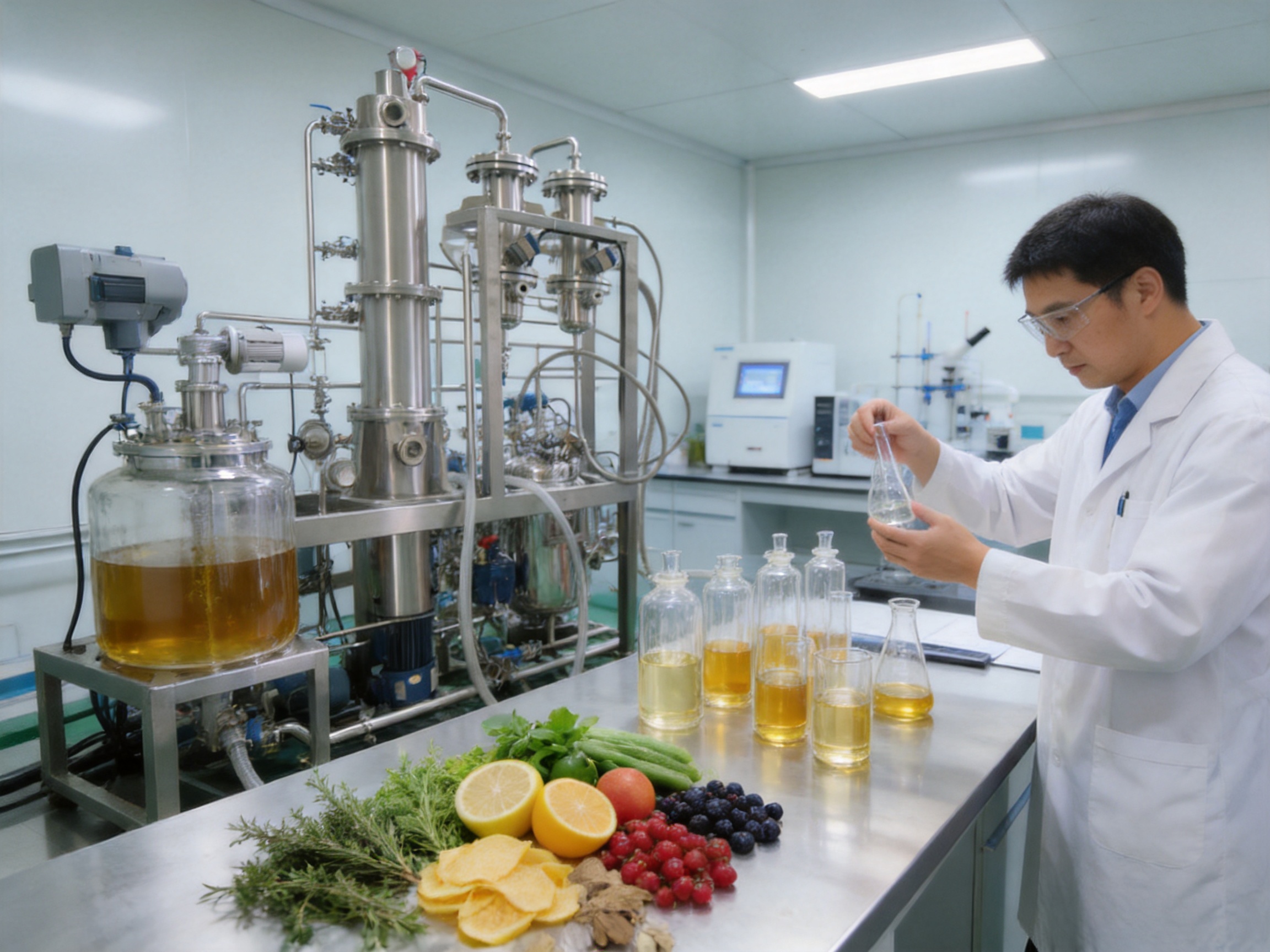
The supplier, Zhejiang Shuangzi Intelligent Equipment Co., Ltd., was founded in 2007 and focuses on process technology and automation engineering for plant extraction, biological fermentation, pharmaceutical engineering, natural food, energy conservation, and environmental protection applications.
The company occupies a floor area of approximately 16,706 square meters and a structure area of approximately 17,800 square meters. Its facilities include production resources, a pilot production workshop, and a research and development platform designed to support automation and GMP-related requirements. This combination allows the company to work across laboratory, pilot, and industrial project stages.
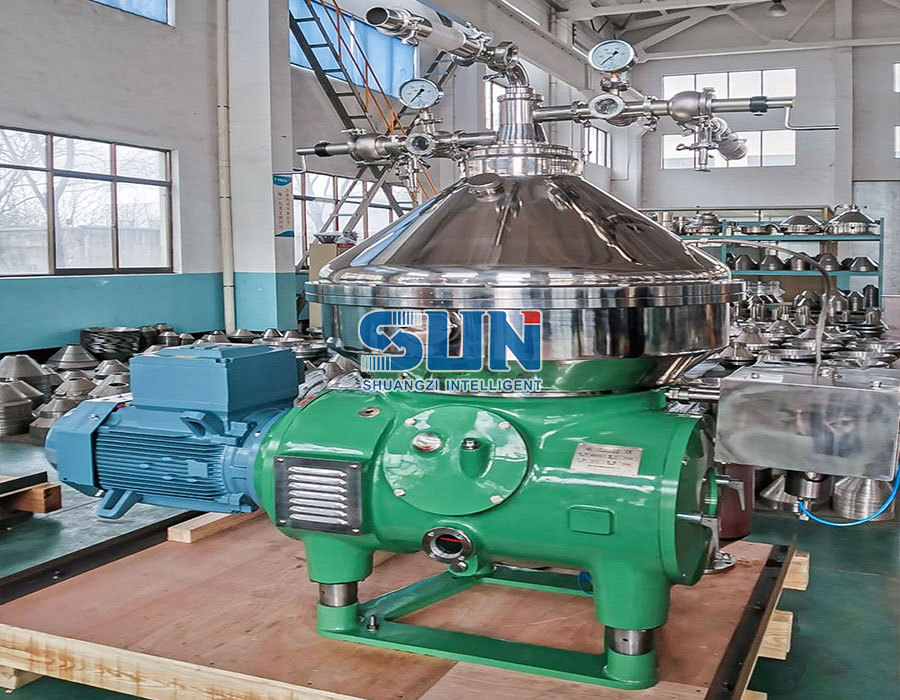
Its manufacturing capabilities include stainless-steel equipment fabrication, process vessel production, extraction equipment, evaporation and concentration systems, separation equipment, crystallization equipment, filtration equipment, and related process systems. This broad product range is relevant to aroma recovery because natural fragrance development often involves several connected operations rather than one isolated machine.
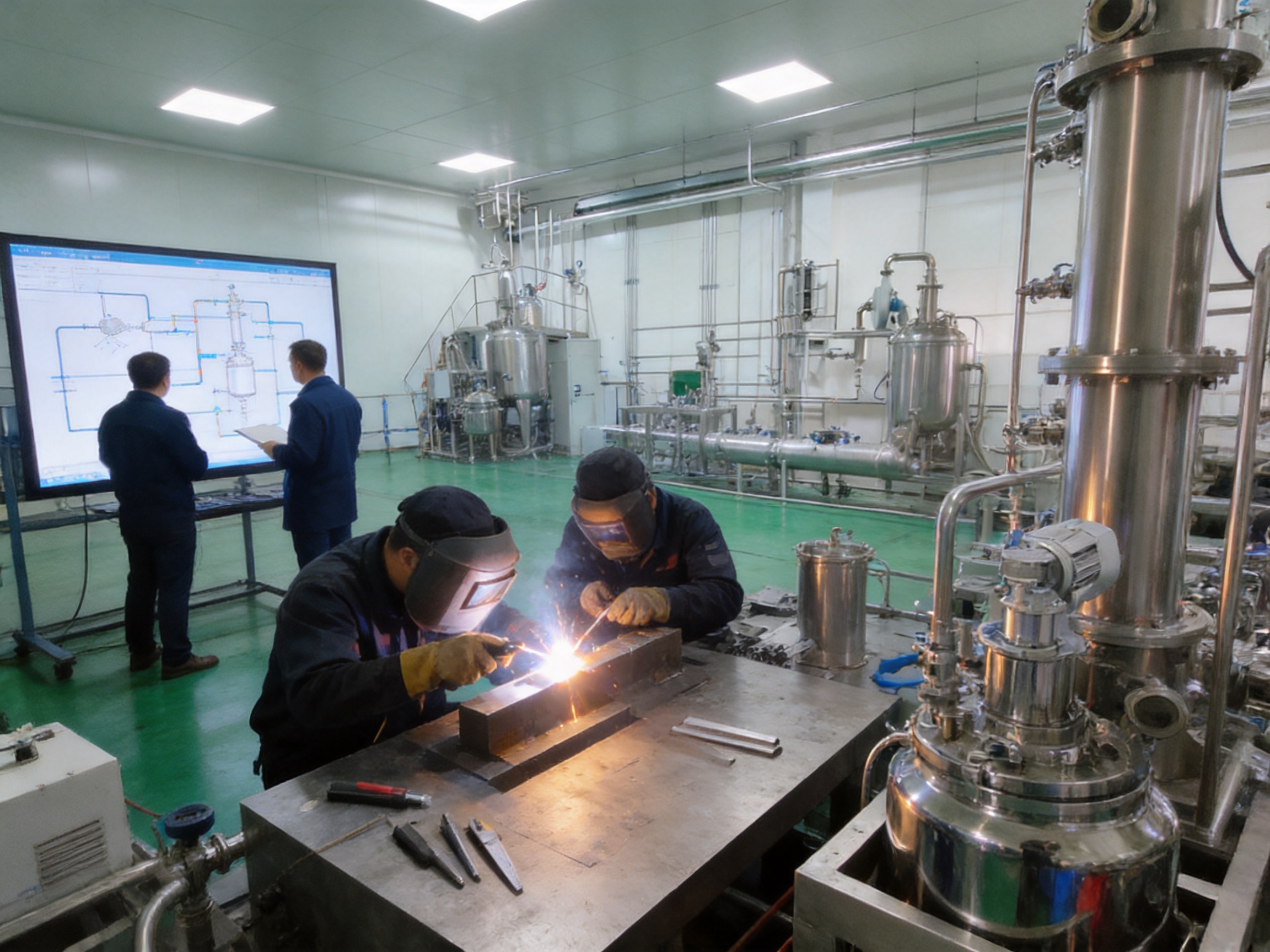
The company has introduced advanced welding and finishing equipment, including plasma argon arc welding machines, plasma cutting machines, and CAM CNC machining centers. These resources support the fabrication of stainless-steel process equipment and can contribute to dimensional consistency, weld quality, surface finishing, and repeatable manufacturing.
For sanitary process equipment, fabrication quality is essential. Internal surfaces, welds, connections, vessel geometry, and finishing affect cleanability and product-contact performance. The use of specialized welding and machining equipment provides a stronger manufacturing foundation than a workshop that relies only on basic manual fabrication.
9.1 Engineering-Led Manufacturing
The company’s approach combines process design, equipment design, manufacturing, purchasing coordination, installation, commissioning, and system integration. This is important for customers who need more than a standard catalog machine. Aroma recovery performance depends on the relationship between raw material properties, vacuum conditions, condensation, feeding, utilities, control systems, and downstream operations.
An engineering-led supplier can review these relationships during project planning. The equipment can be evaluated not only as a vessel or distillation device, but also as part of a complete process route. This can help reduce installation problems and improve the alignment between the equipment and the customer’s research objectives.
9.2 Pilot and R&D Support
The availability of a pilot production workshop and R&D platform allows the supplier to support development work before final equipment delivery. Pilot-scale testing may help confirm feeding behavior, vacuum response, heating requirements, condensation performance, cleaning considerations, and collection methods.
Such support is valuable when the customer is working with a new botanical, an unfamiliar aroma stream, or a formulation that has not yet been tested under vacuum. Practical process information can reduce uncertainty during scale-up.
9.3 System Integration Capability
The supplier can provide equipment system integration and turnkey project services. This may include process design, equipment design, matching purchase, installation, line debugging, and commissioning. For customers developing a complete natural product or biological process, the ability to coordinate several equipment categories through one engineering partner can simplify project management.
Potentially related systems include extraction, evaporation, concentration, separation, filtration, drying, fermentation, and storage equipment. The final configuration should be selected according to the material, capacity, hygiene requirements, and process sequence defined by the customer.
10. Quality, Hygiene, and Maintenance Considerations
Laboratory aroma equipment should be treated as a process system rather than a disposable experiment. Before operation, users should inspect product-contact surfaces, seals, connections, valves, vacuum lines, collection vessels, and heating or cooling utilities. Any residue from a previous trial should be removed before a new material is introduced.
Cleaning procedures should be selected according to the raw material and the construction materials. Natural oils may require an appropriate cleaning agent, while sugar-rich or protein-containing feedstocks may require a different procedure. The cleaning method should be compatible with the equipment and should not damage seals, instruments, or stainless-steel surfaces.
After cleaning, the equipment should be drained and allowed to dry as required. Operators should document cleaning activities, especially when the unit is used for food, pharmaceutical, or regulated research. A written record can help identify any relationship between cleaning history and product quality.
Vacuum operation requires attention to pressure-rated components, hose integrity, vessel condition, and safe release of negative pressure. Condensers and collection vessels should be checked to ensure that they can handle the expected vapor load. Heating systems should be operated within the recommended range, and the process should never be left without appropriate supervision unless the control system and safety provisions have been specifically validated for unattended operation.
Routine maintenance may include inspection of seals, gaskets, valves, pumps, frequency-control components, temperature sensors, pressure sensors, and electrical connections. The exact maintenance schedule should be established according to operating frequency, material characteristics, cleaning practice, and site conditions.
11. Selecting the Equipment for a Specific Application
Before ordering a laboratory vacuum rectification device, the customer should provide information about the intended feedstock and research goals. Important information may include the material name, approximate composition, viscosity, solids content, expected aroma concentration, solvent or water content, thermal sensitivity, desired recovery volume, and target fraction.
The customer should also clarify whether the equipment will be used for essential oil recovery, fruit aroma capture, flavor formulation, botanical research, analytical sample preparation, or another application. The same unit may serve several purposes, but the most appropriate configuration depends on the process objective.
Utility conditions should also be reviewed. These may include electrical supply, heating requirements, cooling-water or chilled-water availability, vacuum requirements, drainage, ventilation, laboratory space, and access for cleaning and maintenance. Early review of these conditions helps ensure that the equipment can be installed and operated effectively.
When the equipment is intended for a regulated environment, the customer should identify documentation, material certification, surface-finish expectations, validation requirements, control-system records, and site acceptance procedures. These requirements should be considered during the design stage rather than after manufacturing is complete.
12. Use in Process Development and Scale-Up
One of the most important benefits of laboratory-scale vacuum rectification is the ability to generate process knowledge before investing in larger equipment. Researchers can evaluate whether the target aroma can be recovered, how much material is needed, how the fraction composition changes during processing, and which operating conditions provide the best balance of quality and recovery.
Scale-up should not be based only on geometric similarity. Vacuum systems, heating surfaces, vapor loads, condenser capacity, residence time, mixing, feed stability, and collection behavior may change significantly as equipment size increases. Laboratory results should therefore be interpreted together with engineering calculations and pilot testing.
The laboratory unit can nonetheless provide valuable information. It can identify promising operating windows, reveal material-handling challenges, indicate whether pretreatment is necessary, and generate samples for chemical and sensory evaluation. These findings can support the design of pilot systems and future production lines.
The supplier’s experience in extraction, evaporation, concentration, separation, filtration, drying, fermentation, and system integration can be useful when the customer’s process extends beyond aroma recovery. A complete project may require several connected stages, and coordinating these stages can improve overall process continuity.
13. Sustainability and Resource Efficiency
Natural aroma recovery can contribute to more efficient use of agricultural and food-processing materials. Valuable volatile components are sometimes lost during juice concentration, botanical extraction, drying, or other thermal operations. Recovering these components may create additional value from existing process streams.
Vacuum processing can also reduce the temperature required for certain separations. Lower operating temperatures may support improved product quality and, depending on the process design, may reduce thermal energy demand. The actual energy performance depends on feed composition, vacuum depth, heating method, condenser design, batch size, insulation, and operating time.
A laboratory device supports sustainability by reducing the quantity of raw material and utilities needed during early experimentation. Researchers can screen process conditions at small scale before moving to pilot or production trials. This can reduce the number of unsuccessful large-scale experiments and help optimize the final process.
Environmental performance should be assessed across the complete system. The use of water, cooling utilities, cleaning agents, solvents, electricity, and raw materials should be monitored. Appropriate recovery, treatment, and disposal procedures should be established for condensates and residues.
14. Recommended Laboratory Workflow
Step 1: Define the Research Objective
Determine whether the goal is maximum aroma recovery, selective fractionation, sensory improvement, analytical sample preparation, process comparison, or formulation development. A clear objective helps determine which parameters should be monitored.
Step 2: Characterize the Feed Material
Record the source, preparation method, moisture content, solids content, viscosity, odor profile, and known chemical characteristics of the feed. This information is essential for comparing experiments.
Step 3: Prepare the Equipment
Inspect the system, verify cleanliness, check connections, confirm utility availability, and ensure that the collection vessels are correctly installed. Confirm that instruments and control components are ready for operation.
Step 4: Establish Initial Conditions
Select conservative starting conditions for vacuum, heating, and feeding. The initial trial should provide information about process behavior without imposing unnecessary thermal or mechanical stress on the material.
Step 5: Operate and Monitor
Observe pressure, temperature, feed behavior, condensate formation, collection rate, and product appearance. Record changes in odor and any signs of foaming, blockage, unstable vacuum, or excessive vapor loading.
Step 6: Collect and Label Fractions
Use a consistent collection sequence. Each fraction should be labeled with the raw material, date, operating conditions, collection time, and operator information.
Step 7: Analyze the Results
Evaluate recovery, composition, sensory properties, stability, and suitability for the intended application. Compare results against the original objective.
Step 8: Clean and Document
Clean the equipment according to the approved procedure and record the maintenance or cleaning activity. Document any operating issue that may affect the next experiment.
15. Frequently Asked Questions
Q1: What type of equipment is this?
It is a laboratory-scale vacuum rectification device designed for recovering and separating volatile aroma and flavor components. It integrates vacuum rectification, low-temperature distillation, condensation, collection, and variable-frequency feeding control.
Q2: Why is vacuum used for natural aroma recovery?
Vacuum lowers the boiling temperature of volatile components. This can reduce thermal exposure and help protect heat-sensitive aroma compounds during distillation and separation.
Q3: What raw materials can be processed?
The equipment is intended for selected fruit, vegetable, botanical, natural food, essential oil, and aroma-containing materials. Final suitability depends on the composition, viscosity, solids content, volatility, and thermal behavior of the specific feedstock.
Q4: Can the unit recover essential oils?
Yes, it is suitable for research into the recovery of natural essential oils and other volatile botanical fractions. The operating conditions should be developed according to the properties of each plant material.
Q5: What is the purpose of variable-frequency feeding?
Variable-frequency feeding allows the operator to adjust the material feed rate. This helps coordinate feed loading with heating, vacuum, vapor generation, condensation, and collection requirements.
Q6: Is the equipment suitable for food and pharmaceutical research?
Its sanitary stainless-steel construction and process-oriented design make it suitable for many food, flavor, botanical, biotechnology, and pharmaceutical research environments. The customer should confirm specific regulatory, material, documentation, and validation requirements before purchase.
Q7: Is this a production machine?
The device is primarily intended for laboratory research, development, component analysis, process verification, and small-batch sample preparation. Larger production requirements may require pilot or industrial equipment designed for the required capacity and regulatory conditions.
Q8: How does this equipment compare with ordinary laboratory glassware?
It provides a more integrated and process-controlled arrangement. Compared with separate glassware, it offers sanitary stainless-steel construction, controlled feeding, integrated condensation and collection, adjustable operating parameters, and a higher level of automation.
Q9: Can it be used for scale-up studies?
Yes. It can provide useful information about feed behavior, vacuum response, heating, condensation, fraction recovery, and process stability. However, scale-up should also include engineering review and, where appropriate, pilot testing.
Q10: What information should be supplied for a quotation?
Customers should provide the feed material, expected batch size, desired recovery target, operating temperature range, expected vacuum conditions, material composition, hygiene requirements, available utilities, control preferences, and intended application.
Q11: Does the supplier provide installation and commissioning?
The company provides engineering services that may include process design, equipment design, matching purchase, installation, line debugging, equipment system integration, and turnkey project support. The exact service scope should be confirmed for each project.
Q12: What other equipment can the supplier provide?
The company’s product and engineering scope includes vacuum low-temperature drying, fermentation systems, evaporation and concentration equipment, extraction systems, separation and crystallization equipment, filtration equipment, containers, and related process systems.
16. Why This Equipment Is Valuable for Modern Aroma Development
Natural fragrance and flavor development requires a balance between product quality, process control, flexibility, and cost. A laboratory system that only heats and condenses may not provide enough control for today’s development requirements. Researchers increasingly need to understand how processing affects volatile composition, sensory performance, stability, and downstream formulation.
The laboratory vacuum rectification device addresses this need through an integrated process design. Its reduced-pressure operation supports lower-temperature separation. Its feeding system provides adjustable material delivery. Its condenser and collection arrangement support recovery of volatile fractions. Its sanitary stainless-steel construction is appropriate for hygienic research environments. Its automation and adjustable parameters make it suitable for repeatable experimentation.
The equipment is also valuable because it connects laboratory research with process engineering. Results generated on the unit can help guide equipment selection, raw material preparation, pilot testing, and production design. When combined with the supplier’s manufacturing, process design, and turnkey capabilities, it becomes part of a broader development pathway rather than an isolated laboratory purchase.
17. Conclusion
The laboratory vacuum rectification device for natural fragrance and flavor recovery is a specialized solution for researchers working with delicate volatile materials. By combining vacuum rectification, low-temperature distillation, controlled feeding, condensation, fraction collection, sanitary stainless-steel construction, and automation, it provides a practical platform for natural aroma development.
Its principal advantage over conventional laboratory arrangements is the integration of critical process functions into one controllable system. This can improve repeatability, reduce thermal stress, simplify operation, and generate more useful information for future scale-up. It is suitable for essential oil research, fruit and vegetable aroma recovery, botanical extraction studies, food additive development, flavor formulation, biopharmaceutical research, and small-batch sample preparation.
The equipment is supported by the manufacturing and engineering strengths of Zhejiang Shuangzi Intelligent Equipment Co., Ltd. The company combines process technology, automation engineering, stainless-steel fabrication, pilot testing, equipment integration, installation, commissioning, and turnkey project services. Its production resources, specialized welding and machining equipment, and experience with extraction, fermentation, evaporation, concentration, separation, filtration, and drying systems provide a strong foundation for customized process solutions.
For laboratories seeking a flexible and hygienic way to study natural aroma recovery, this equipment offers a meaningful bridge between small-scale experimentation and larger process development. Proper application requires careful characterization of the feed material, controlled evaluation of operating parameters, documented cleaning, and engineering consultation. When used within a well-designed research workflow, it can help transform volatile natural compounds into stable, testable, and commercially valuable fragrance and flavor ingredients.
References
1. Perry’s Chemical Engineers’ Handbook, sections concerning distillation, vacuum processing, heat transfer, and condensation.
2. Handbook of Essential Oils: Science, Technology, and Applications, sections concerning essential oil composition, extraction, distillation, and quality evaluation.
3. Principles of Food Chemistry, sections concerning aroma compounds, thermal degradation, oxidation, and food ingredient processing.
4. Good Manufacturing Practice guidance for food, pharmaceutical, and biotechnology processing environments.
5. General engineering principles for sanitary stainless-steel equipment design, hygienic fabrication, cleaning, and process-system integration.