
 英语
英语 俄语
俄语Content
- 1 Understanding the Vacuum Low-Temperature Crawler Belt Dryer: How It Works
- 2 Key Advantages Over Conventional Drying Technologies
- 3 Advanced Manufacturing: Behind the Dryer’s Excellence
- 4 Technical Specifications of the Dryer
- 5 Frequently Asked Questions (Q&A)
- 5.1 Q1: What types of materials can the vacuum crawler belt dryer handle?
- 5.2 Q2: How does the dryer ensure product batch consistency?
- 5.3 Q3: Is the dryer GMP-compliant?
- 5.4 Q4: What are the maintenance requirements for the dryer?
- 5.5 Q5: How does the dryer compare to freeze drying in terms of cost and quality?
- 5.6 Q6: Can the company provide custom solutions for specific production needs?
- 6 Conclusion
- 7 References
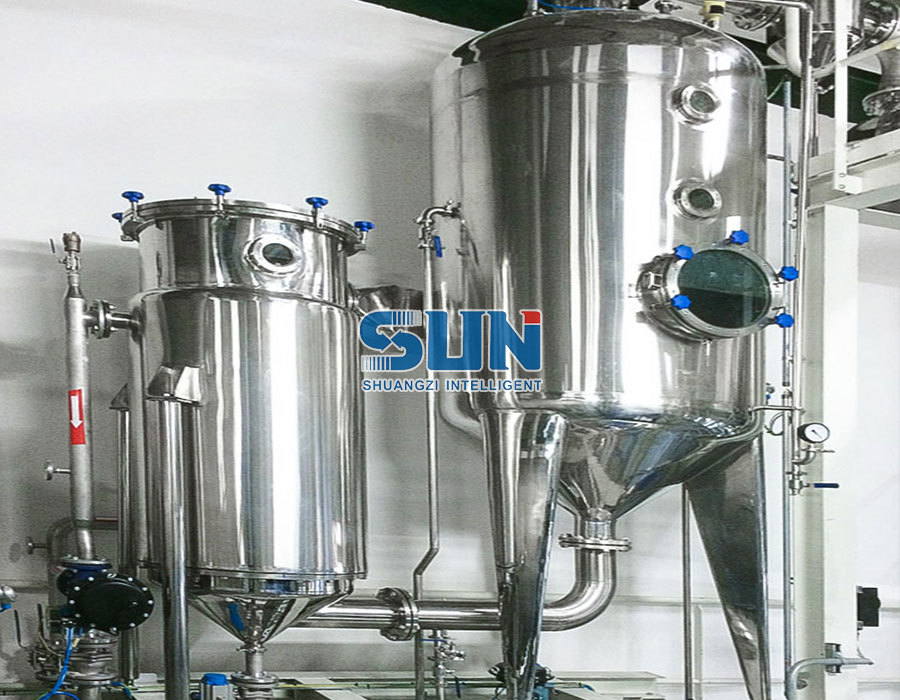
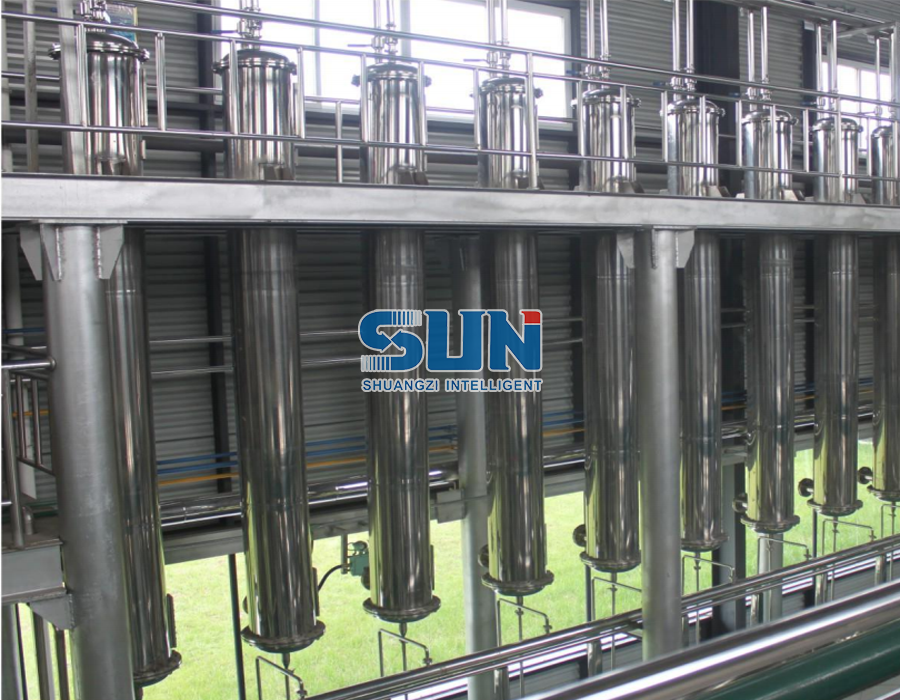
For industries ranging from pharmaceuticals to food processing, drying heat-sensitive materials has long been a critical challenge. Traditional methods like vacuum ovens, spray dryers, and freeze dryers often fall short—either failing to preserve product quality, operating at high costs, or lacking scalability. However, a breakthrough in drying technology is changing the game: the Full Automatic Vacuum Low-Temperature Crawler Belt Dryer. This innovative equipment not only addresses the limitations of conventional drying but also sets new standards for efficiency, cost-effectiveness, and product integrity.
Understanding the Vacuum Low-Temperature Crawler Belt Dryer: How It Works
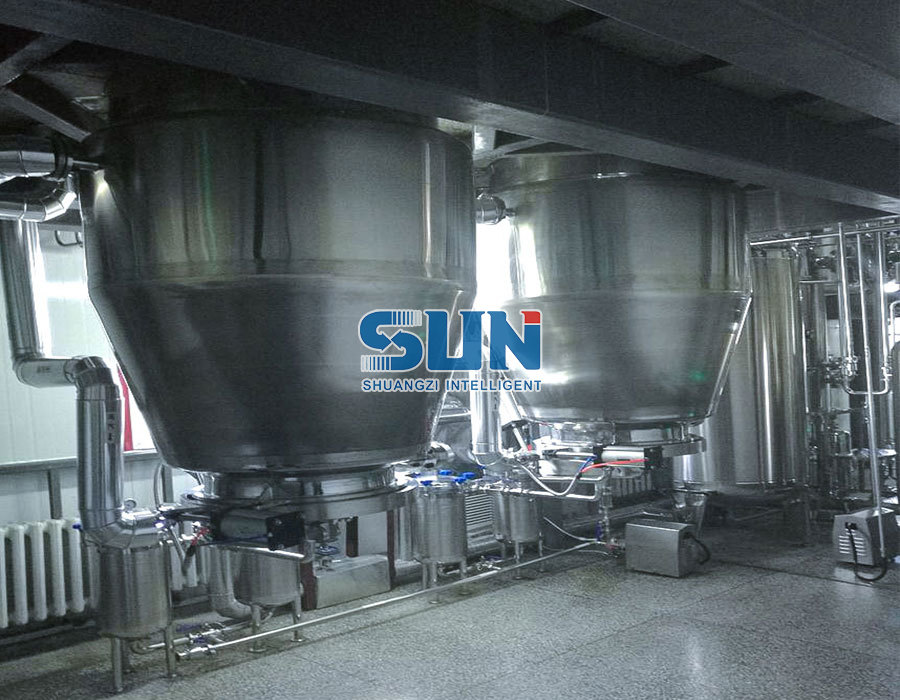
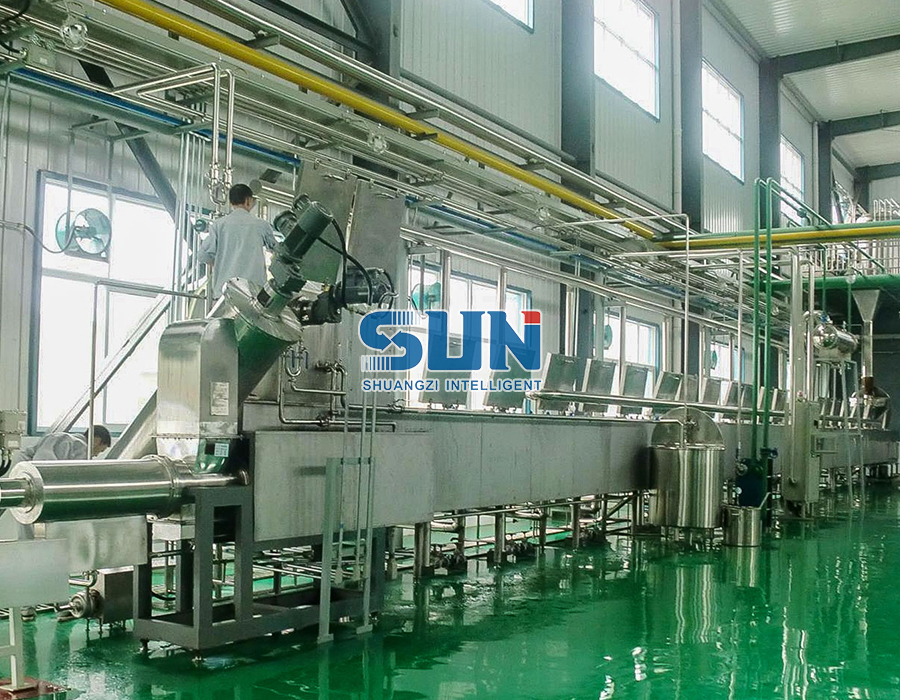
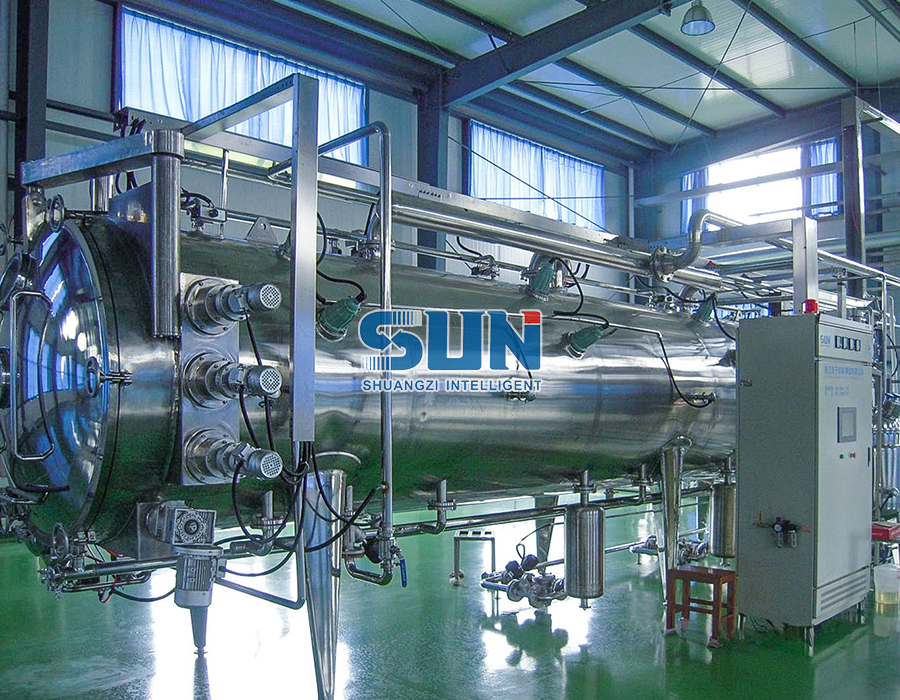
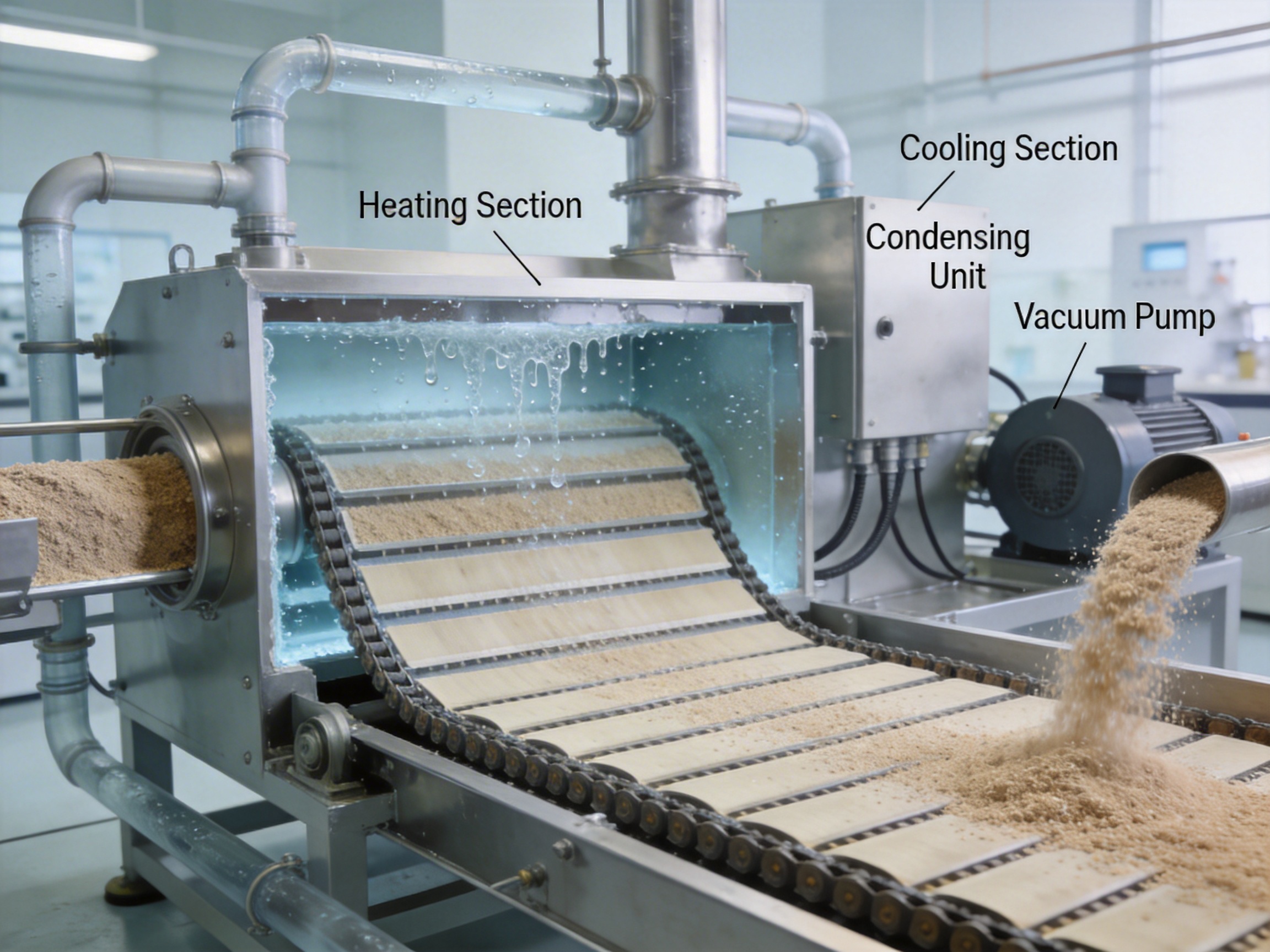
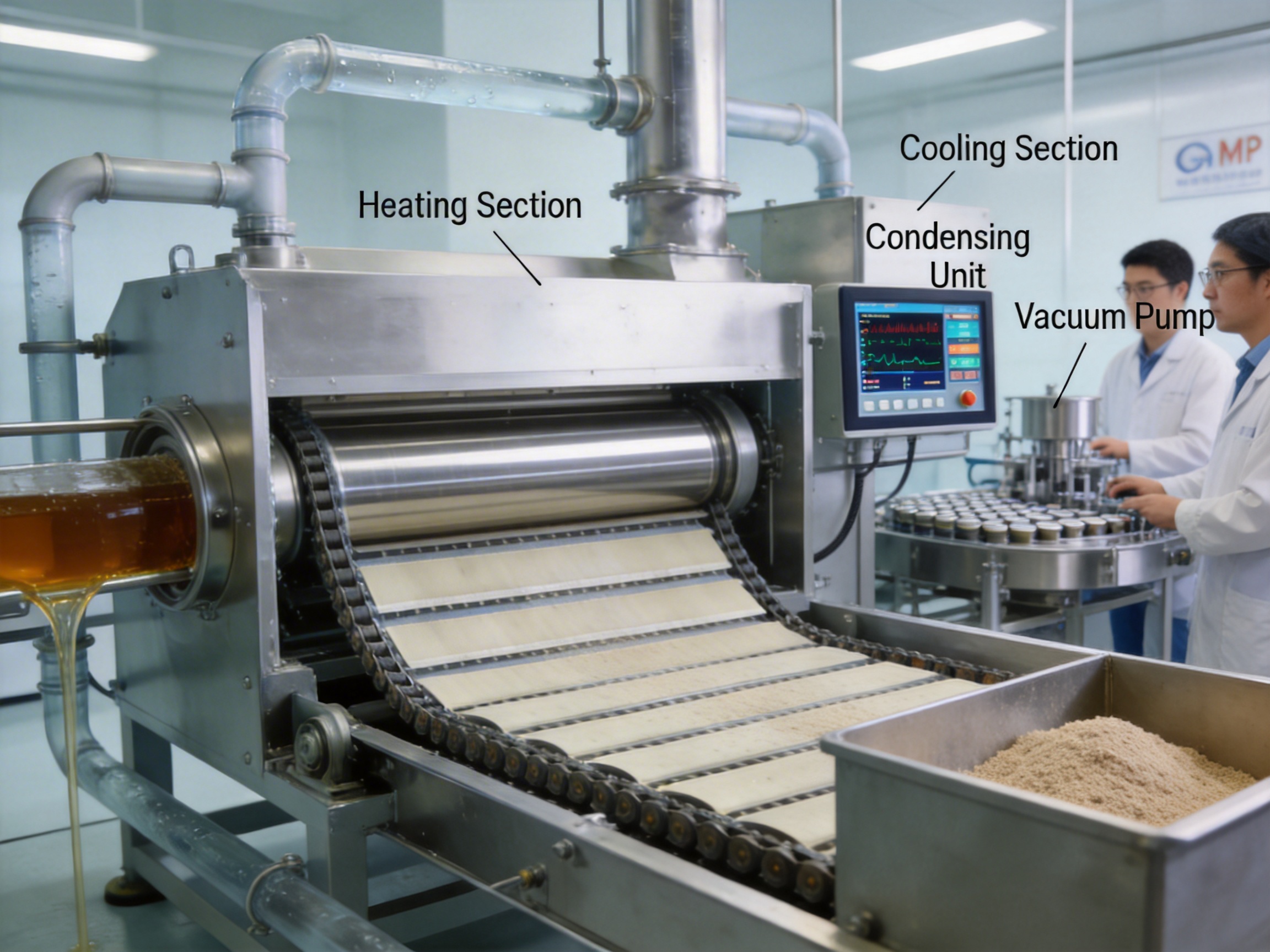
At its core, the Full Automatic Vacuum Low-Temperature Crawler Belt Dryer is designed to dry materials under controlled vacuum conditions at low temperatures, preserving their original properties while ensuring high output. Unlike static drying methods, this machine enables continuous feeding and discharging under vacuum—transforming static processes into dynamic, pipeline-style operations.
The equipment operates as follows: Materials enter a high-vacuum container where they undergo slow drying over 30 to 60 minutes. This low-temperature vacuum environment prevents degradation of heat-sensitive components (like proteins, vitamins, or active pharmaceutical ingredients). The dried product forms a porous, loose structure with micro-pores at the microstructure level, which enhances instant solubility and flowability—critical for downstream processes like tableting or capsule filling.
One of the most significant technical achievements of this dryer is its ability to handle high-viscosity, high-fat, and high-sugar materials—substances that are notoriously difficult to dry using traditional methods. Additionally, it integrates drying, crushing, and granulation into a single vacuum-sealed process, eliminating the need for separate equipment and reducing contamination risks.
Key Advantages Over Conventional Drying Technologies
To appreciate the impact of this dryer, it’s essential to compare it with the most common alternative drying methods:
1. Cost Efficiency
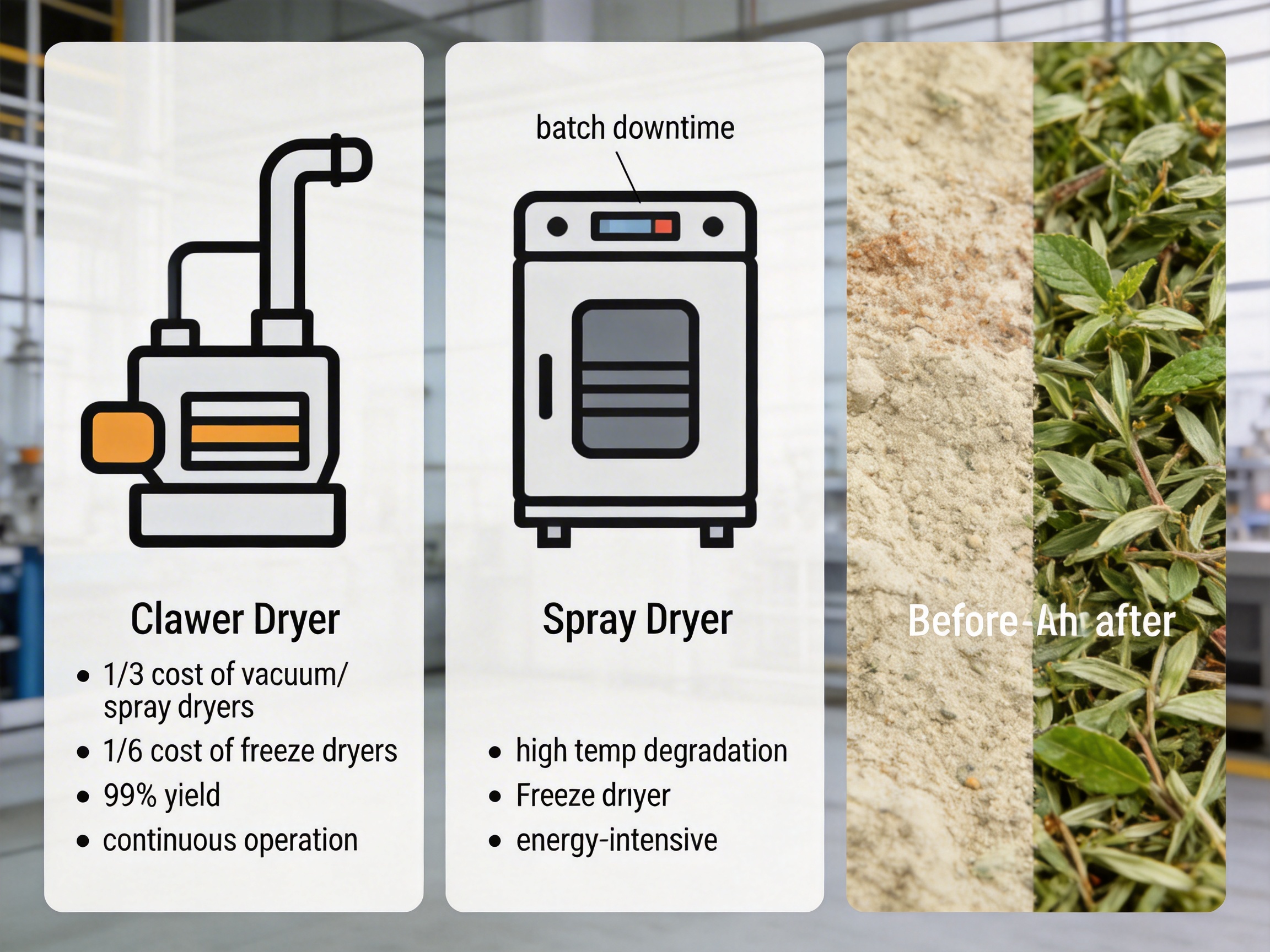
According to equipment data, the Full Automatic Vacuum Low-Temperature Crawler Belt Dryer reduces production and operation costs drastically: it’s 1/3 the cost of vacuum ovens and spray dryers, and 1/6 the cost of freeze dryers. This is due to its continuous operation (eliminating batch-to-batch downtime) and lower energy consumption (vacuum low-temperature requires less heat than high-temperature spray drying or freeze drying’s energy-intensive refrigeration).
2. Product Quality Preservation
Vacuum low-temperature drying ensures that heat-sensitive materials retain their original properties—no discoloration, no loss of active ingredients, and no bacterial growth (a key benefit for pharmaceutical and food products). In contrast, spray drying uses high temperatures (often 150°C or more) which can degrade sensitive compounds, while vacuum ovens are static and may cause uneven drying.
3. Scalability and Continuity
Unlike batch-based vacuum ovens, this dryer operates continuously, significantly increasing output. It can produce dry powder non-stop for 30–60 minutes per cycle with a 99% dry powder yield—far higher than the yields of many conventional methods. This scalability makes it ideal for large-scale industrial production.
4. Labor and Maintenance Savings
The machine requires only two additional operators, reducing labor costs compared to manual or semi-automatic alternatives. It also features online automatic cleaning, which meets GMP (Good Manufacturing Practice) requirements—critical for pharmaceutical and food industries—eliminating the need for time-consuming manual cleaning and reducing cross-contamination risks.
5. Versatility
This dryer can handle a wide range of materials: liquid and solid substances with high viscosity, high fat, or high sugar content. It’s suitable for plant extraction products, bio-fermentation byproducts, food ingredients, and pharmaceutical intermediates—making it a versatile solution for multiple industries.
Advanced Manufacturing: Behind the Dryer’s Excellence
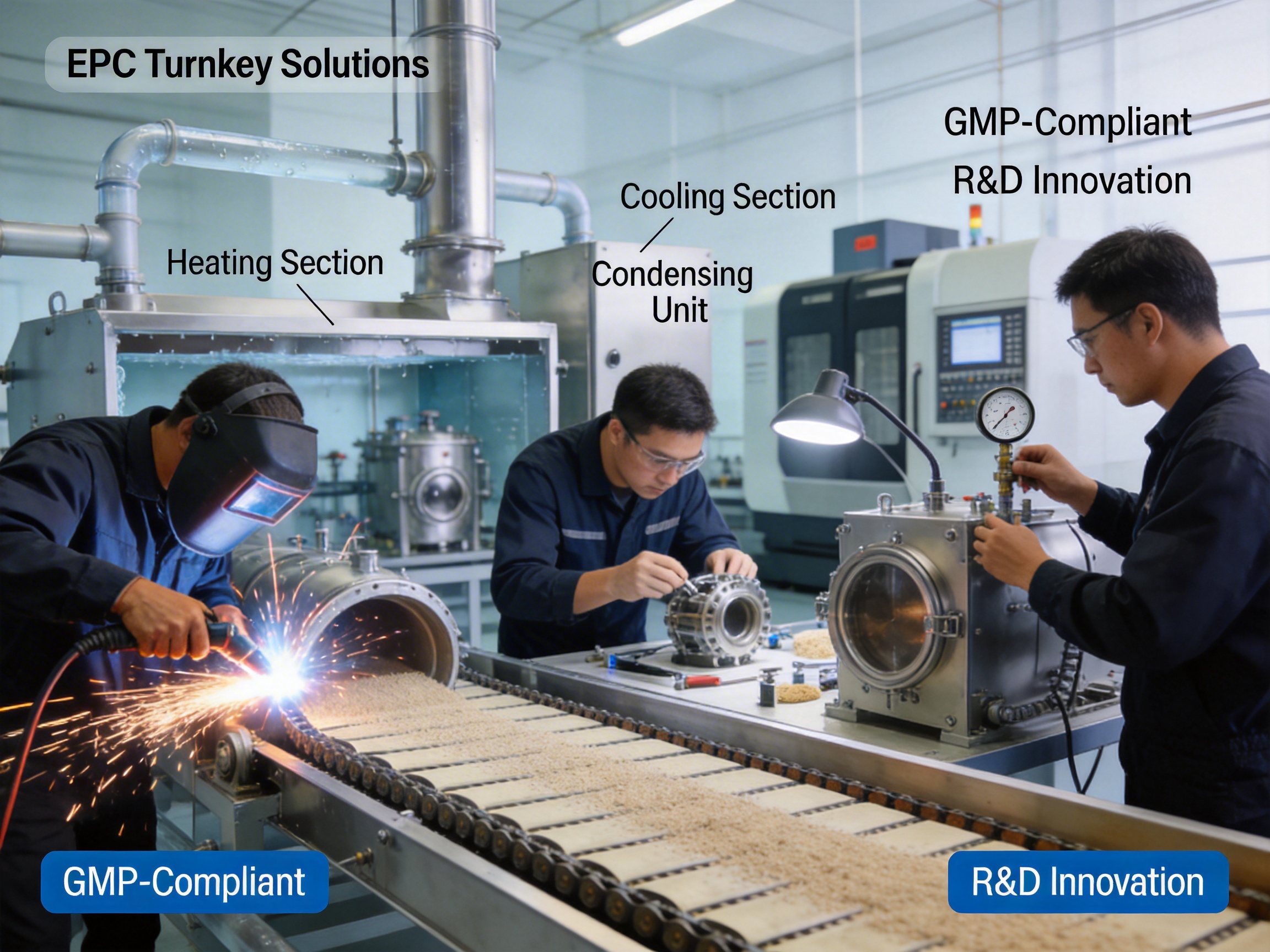
The development and production of this cutting-edge dryer are rooted in a company with decades of expertise in biology and medical equipment. Let’s explore the manufacturing processes and strengths that make this product stand out:
1. EPC/EPCM Core Competence
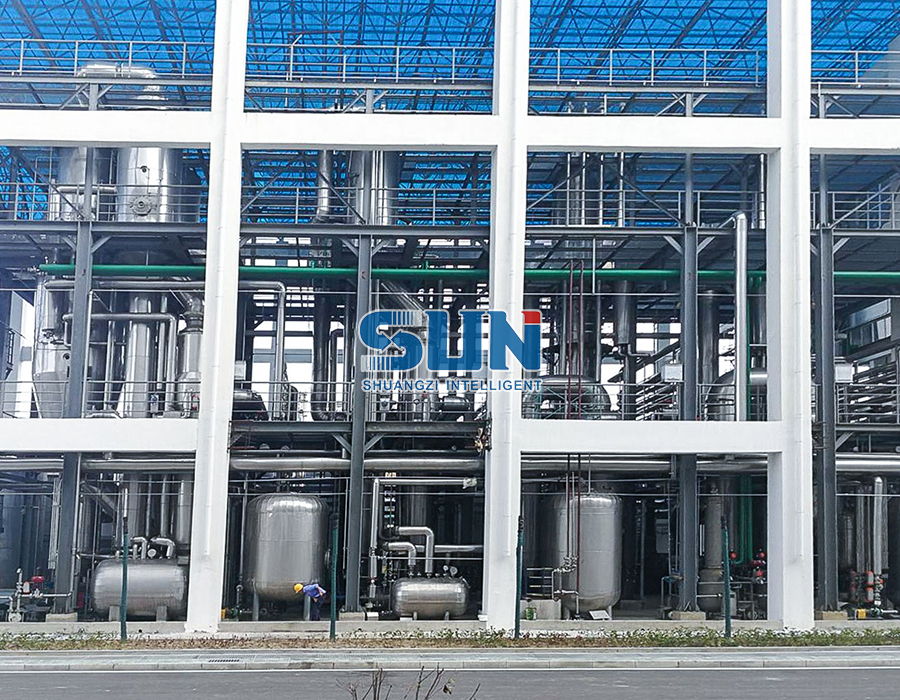
The company specializes in Engineering Procurement Construction (EPC) and Engineering Procurement Construction Management (EPCM) projects. This means it can provide end-to-end solutions—from process design and equipment manufacturing to installation and system integration. For the vacuum crawler belt dryer, this holistic approach ensures that every component is optimized for performance and compatibility.
2. Strong Technical and R&D Capabilities
Founded in 2007, the company has a floor area of 16,706 m² and a structure area of 17,800 m², with a dedicated R&D team focused on vacuum drying, fermentation, extraction, and concentration technologies. It absorbs foreign advanced industry-leading technology and invests heavily in R&D to improve product performance. For example, the continuous feeding/discharging under vacuum feature was a result of years of technical innovation.
3. GMP-Compliant Production Lines
The company has full production lines that meet GMP requirements, including pilot production workshops and R&D platforms. This ensures that the dryer is manufactured under strict quality control standards—critical for industries like pharmaceuticals where compliance is non-negotiable. The pilot lines also allow for testing of new materials and processes before full-scale production.
4. Advanced Manufacturing Equipment
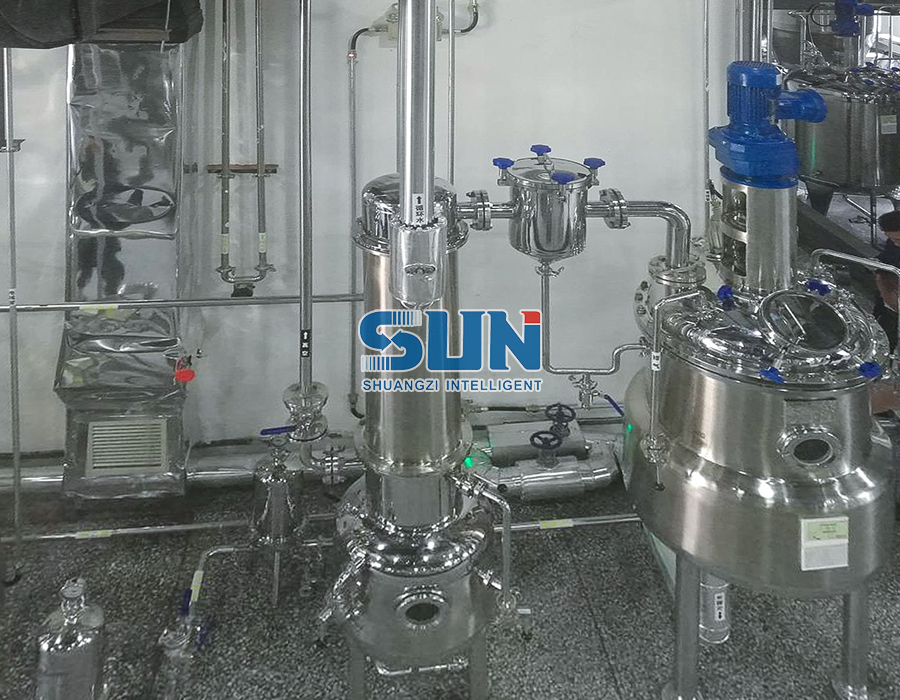
To ensure precision and quality, the company uses state-of-the-art equipment: plasma argon arc welding machines, plasma cutting machines, and CAM CNC machining centers. These tools enable the production of high-precision components that are essential for the dryer’s vacuum seal and continuous operation.
5. Turnkey Project Solutions
Beyond manufacturing the dryer, the company offers turnkey projects. This means it can design the entire production line for clients, including integrating the dryer with other equipment (like extraction, fermentation, or concentration systems). This one-stop service saves clients time and resources, ensuring seamless production.
Technical Specifications of the Dryer
The Full Automatic Vacuum Low-Temperature Crawler Belt Dryer comes in multiple models to suit different production needs. Below is a detailed table of its specifications:
| Basic Parameters | SUNZDG-6-80 | SUNZDG-6-100 | SUNZDG-07-130 | SUNZDG-07-160 | SUNZDG-08-180 | SUNZDG-09-200 | SUNZDG-10-230 |
|---|---|---|---|---|---|---|---|
| Total Heat Transfer Area (m²) | 88.5 | 101.6 | 131.8 | 161 | 184 | 207 | 230 |
| Effective Heating Area (m²) | 70 | 87 | 104.7 | 116 | 142.8 | 160 | 178.5 |
| Effective Cooling Area (m²) | 9.9 | 13.3 | 15.6 | 17.8 | 25.2 | 28.4 | 31.5 |
| Condensing Area (m²) | 42 | 50 | 60 | 70 | 85 | 95 | 110 |
| Water Evaporation (kg/h) | 60-90 | 80-110 | 90-135 | 110-150 | 130-180 | 150-210 | 160-230 |
| Belt Width (mm) | 1200 | 1200 | 1365 | 1365 | 1365 | 1365 | 1365 |
| Belt Layers | 6 | 6 | 7 | 7 | 8 | 9 | 10 |
| Equipment Diameter (mm) | 2400 | 2400 | 2800 | 2800 | 3000 | 3500 | 3600 |
| Equipment Length (mm) | 13500 | 16500 | 15000 | 16500 | 18000 | 18000 | 18000 |
| Heating & Cooling Sections | 4H+1C | 4H+1C | 4H+1C | 4H+1C | 5H+1C | 5H+1C | 5H+1C |
| Heating Form | Superheated Water | Superheated Water | Superheated Water | Superheated Water | Superheated Water | Superheated Water | Superheated Water |
| Steam Consumption (kg/h) | 90-135 | 120-165 | 135-200 | 165-225 | 195-270 | 225-315 | 240-345 |
| Heating Control Temperature (°C) | 40-125 | 40-125 | 40-125 | 40-125 | 40-125 | 40-125 | 40-125 |
| Belt Speed (mm/min) | 100-1500 | 100-1500 | 100-1500 | 100-1500 | 100-1500 | 100-1500 | 100-1500 |
| Feed Water Content (%) | <40 | <40 | <40 | <40 | <40 | <40 | <40 |
| Product Water Content (%) | <4 | <4 | <4 | <4 | <4 | <4 | <4 |
| Cleaning Pressure (MPa) | 0.6 | 0.6 | 0.6 | 0.6 | 0.6 | 0.6 | 0.6 |
| Compressed Air (MPa) | 0.7 | 0.7 | 0.7 | 0.7 | 0.7 | 0.7 | 0.7 |
| Vacuum Degree Range (Pa) | 1240-4800 | 1240-4800 | 1240-4800 | 1480-5400 | 1480-5400 | 1480-5400 | 1480-5400 |
| Total Installed Power (kW) | 68 | 70 | 85 | 90 | 120 | 130 | 110 |
| Cooling Water Consumption (t/h at 25°C) | 18 | 20 | 23 | 25 | 30 | 35 | 40 |
| Total Weight (t) | Main:25.0, Aux:8.0 | Main:32.0, Aux:9.0 | Main:35.0, Aux:10.0 | Main:40.0, Aux:10.0 | Main:45.0, Aux:11.0 | Main:50.0, Aux:12.0 | Main:55.0, Aux:13.0 |
Frequently Asked Questions (Q&A)
Q1: What types of materials can the vacuum crawler belt dryer handle?
A: It’s suitable for a wide range of heat-sensitive materials, including plant extracts, bio-fermentation products, high-viscosity liquids, high-fat foods, high-sugar ingredients, and pharmaceutical intermediates. It can also handle both liquid and solid materials that are difficult to dry with conventional methods.
Q2: How does the dryer ensure product batch consistency?
A: The continuous vacuum drying process with precise temperature and vacuum control ensures uniform drying across all batches. The integrated crushing and granulation steps also maintain consistent particle size and quality, reducing batch-to-batch variations.
Q3: Is the dryer GMP-compliant?
A: Yes. The dryer features online automatic cleaning, which meets GMP requirements for pharmaceutical and food industries. The company’s manufacturing process also adheres to GMP standards, ensuring the equipment is suitable for regulated sectors.
Q4: What are the maintenance requirements for the dryer?
A: The dryer requires minimal maintenance due to its automatic cleaning system. Regular checks of the vacuum seal, belt condition, and heating/cooling systems are recommended. The company provides after-sales support and maintenance services to ensure optimal performance.
Q5: How does the dryer compare to freeze drying in terms of cost and quality?
A: While freeze drying produces high-quality products, it’s extremely expensive (1/6 the cost of the crawler belt dryer). The crawler belt dryer offers comparable quality (preserving heat-sensitive materials) at a fraction of the cost, making it a more economical choice for large-scale production.
Q6: Can the company provide custom solutions for specific production needs?
A: Yes. The company offers custom design services to tailor the dryer’s specifications (like belt width, layers, or heating capacity) to meet clients’ unique production requirements. It also provides turnkey project solutions, integrating the dryer with other equipment in the production line.
Conclusion
The Full Automatic Vacuum Low-Temperature Crawler Belt Dryer represents a significant advancement in drying technology. Its ability to preserve product quality, reduce costs, and scale to industrial production makes it an invaluable tool for industries like pharmaceuticals, food processing, and plant extraction. Backed by a company with strong technical expertise, GMP-compliant manufacturing, and turnkey project capabilities, this dryer is poised to revolutionize how heat-sensitive materials are dried worldwide.
References
1. International Society for Pharmaceutical Engineering (ISPE). (2020). Good Manufacturing Practices (GMP) Guidelines for Pharmaceutical Equipment.
2. Food and Agriculture Organization (FAO). (2019). Drying Technologies for Agricultural and Food Products: A Review.
3. Journal of Food Engineering. (2021). "Vacuum Low-Temperature Drying: A Sustainable Alternative to Conventional Methods for Heat-Sensitive Foods."
4. World Health Organization (WHO). (2018). Guidelines for Quality Control of Pharmaceutical Products.
5. Industrial Equipment News. (2022). "Innovations in Drying Technology: How Crawler Belt Dryers Are Changing the Game."