
 英语
英语 俄语
俄语Content
- 1 1. Why Low-Temperature Vacuum Evaporation Matters
- 2 2. Core Structure and Working Principle
- 3 3. Product Advantages Over Conventional Competitors
- 3.1 3.1 Better Heat Distribution Through Spherical Geometry
- 3.2 3.2 Lower Risk of Wall Adhesion and Coking
- 3.3 3.3 Gentle Processing for Heat-Sensitive Materials
- 3.4 3.4 Integrated Solvent Recovery
- 3.5 3.5 Compact and Practical Design
- 3.6 3.6 Easier Cleaning and Maintenance
- 3.7 3.7 Lower Energy Consumption in Suitable Applications
- 4 4. Comparison with Common Evaporation Alternatives
- 5 5. Applications Across Multiple Industries
- 6 6. Process Flow: From Feed to Concentrate
- 7 7. Material Construction and Hygienic Considerations
- 8 8. Manufacturing Strength Behind the Equipment
- 9 9. Why EPC and Turnkey Capability Benefits Users
- 10 10. Operational Advantages in Daily Production
- 11 11. Competitive Advantages for Buyers
- 12 12. Customization and Project Integration
- 13 13. Quality Control and Reliability Considerations
- 14 14. Cleaning, Maintenance, and Operator-Friendly Design
- 15 15. Energy and Cost Efficiency
- 16 16. Safety and Responsible Operation
- 17 17. Selection Guidelines for Buyers
- 18 18. Frequently Asked Questions
- 18.1 Q1: What is the main purpose of a spherical vacuum evaporator?
- 18.2 Q2: Why is the tank spherical?
- 18.3 Q3: What are the main components of the equipment?
- 18.4 Q4: What materials can be processed?
- 18.5 Q5: Can it recover ethanol?
- 18.6 Q6: How does vacuum operation protect product quality?
- 18.7 Q7: Is this equipment suitable for large continuous production?
- 18.8 Q8: What makes this product competitive?
- 18.9 Q9: Why is 304 stainless steel used?
- 18.10 Q10: What support can the manufacturer provide beyond equipment supply?
- 19 19. Conclusion
- 20 References
- 21 Product: Spherical Vacuum Evaporator
In modern extraction, fermentation, pharmaceutical, natural food, flavor, and fine chemical production, concentration is not simply a step of removing water or solvent. It is a controlled process that determines product quality, flavor retention, active ingredient stability, operating cost, solvent reuse efficiency, and production consistency. A well-designed evaporator must protect heat-sensitive materials, recover valuable solvents, reduce energy consumption, and remain practical for daily cleaning and maintenance. The spherical vacuum evaporator is a classic and highly versatile solution for these needs, especially for medium and small-scale batch concentration and organic solvent recovery.
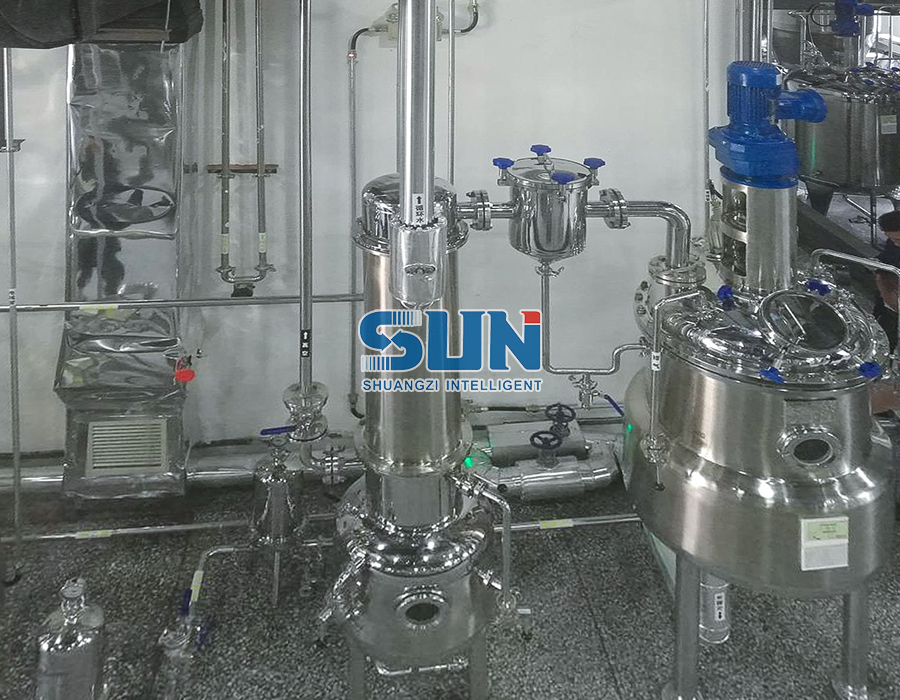
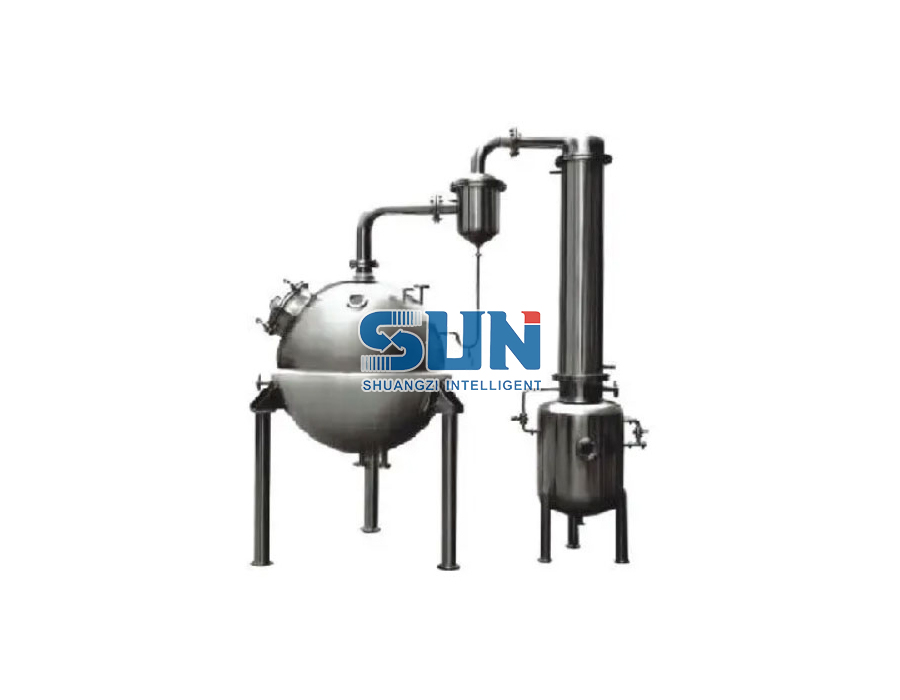
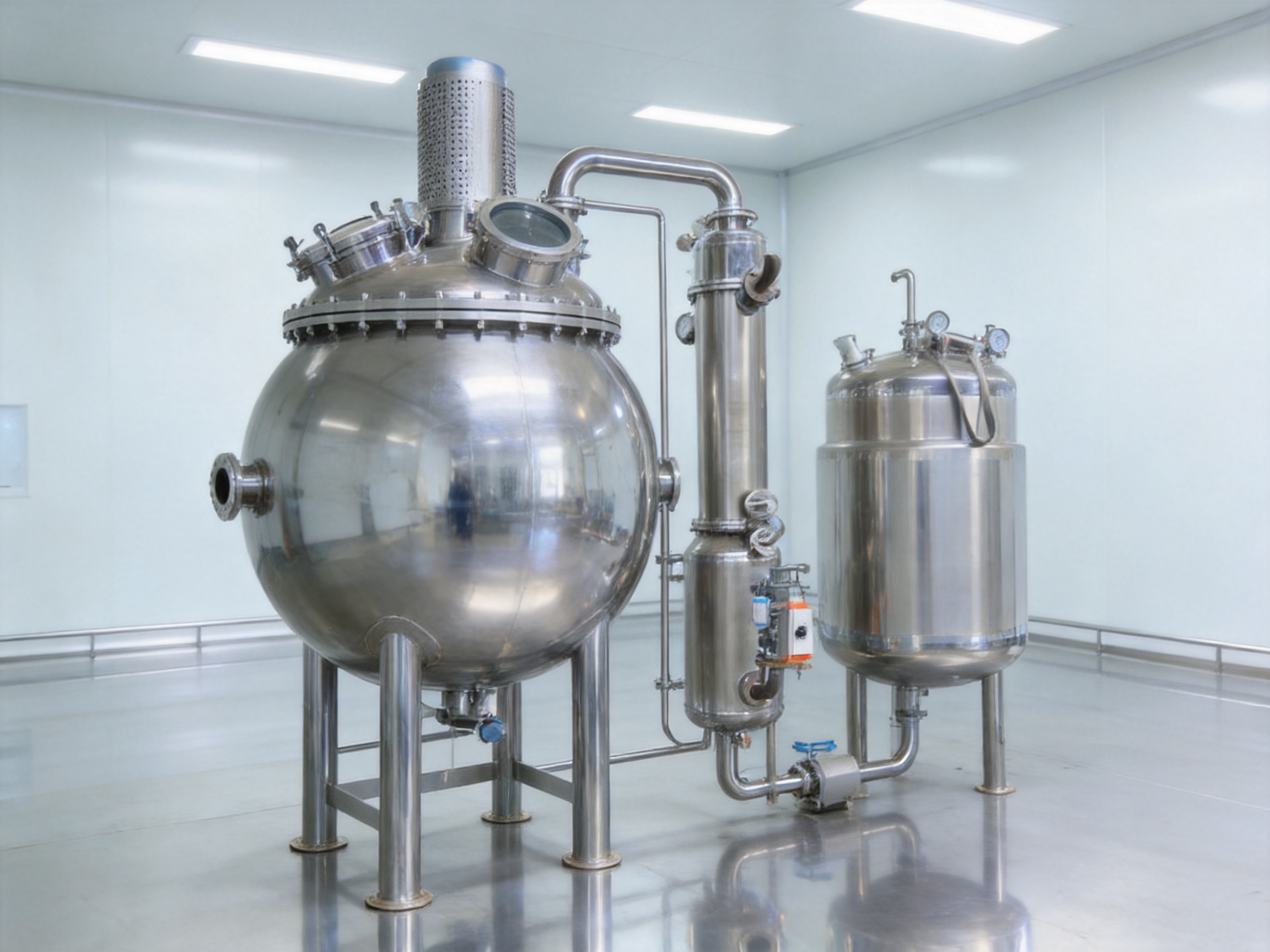
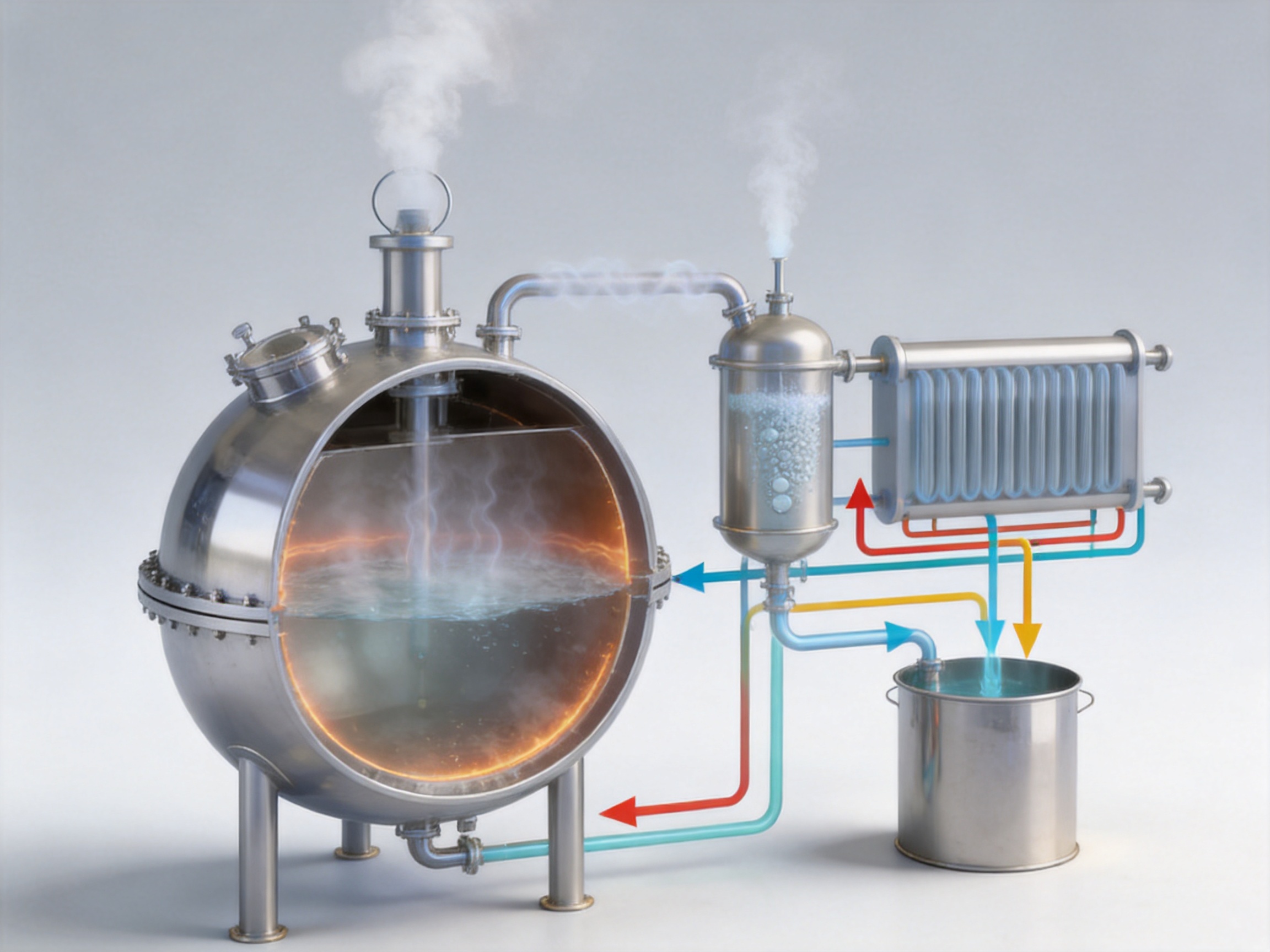
The spherical vacuum evaporator discussed in this article is constructed mainly from 304 stainless steel and consists of four core assemblies: a spherical main tank, condenser, gas-liquid separator, and liquid receiving tank. Steam is introduced into the jacket of the spherical tank to provide indirect heating, while the vacuum environment lowers the boiling point of the liquid. This allows evaporation to occur at relatively low temperatures, protecting materials that may degrade, discolor, lose aroma, or suffer active ingredient loss under atmospheric boiling conditions.
Its spherical inner shell provides a large heating area and supports even liquid circulation during the evaporation process. Compared with many conventional tank-type concentrators, the spherical design helps reduce dead zones, improves heat distribution, and effectively lowers the risk of wall adhesion and material coking. These features make the equipment especially suitable for traditional Chinese medicine extracts, botanical extracts, fruit juice, health food ingredients, natural flavors, ethanol extracts, and other valuable liquid materials that demand gentle processing.
As a general-purpose evaporator, this equipment is widely used for batch liquid concentration and solvent recycling in pharmaceutical, health food, natural flavor, fine chemical, and plant extraction projects. It can be used for concentrating feed liquid, distilling and recovering organic solvents such as ethanol, and reducing production costs through solvent reuse. With compact structure, easy cleaning and maintenance, and comparatively low energy consumption, it is a practical choice for laboratories, pilot plants, medium-scale production workshops, and flexible manufacturing lines.
1. Why Low-Temperature Vacuum Evaporation Matters
Many natural and pharmaceutical materials are sensitive to heat. Plant extracts may contain volatile aromas, glycosides, flavonoids, saponins, polysaccharides, organic acids, pigments, or other compounds that can be altered by prolonged exposure to high temperatures. Fruit juice can lose fresh flavor and natural color. Natural flavors can lose volatile top notes. Fermentation broth fractions can suffer quality changes. Pharmaceutical intermediates and herbal extracts may experience decomposition, oxidation, or unwanted thickening if the concentration process is not properly controlled.
Vacuum evaporation solves this challenge by reducing the pressure inside the evaporator. When pressure decreases, the boiling point of water or organic solvent also decreases. For example, water that normally boils at 100 degrees Celsius under atmospheric pressure can evaporate at a much lower temperature under vacuum. Ethanol and other solvents also vaporize more easily in reduced-pressure conditions. This allows the system to concentrate liquid materials without exposing them to severe heat.
In production, this translates into several practical benefits. The original flavor of the material can be better preserved. Active ingredients can be retained more effectively. The risk of thermal discoloration can be reduced. Foaming and bumping can be managed through proper vacuum and heating control. Solvent recovery becomes more efficient because the evaporated solvent vapor is condensed and collected rather than discharged or wasted. The overall process becomes more economical and environmentally responsible.
The spherical vacuum evaporator is particularly valuable because it combines the benefits of vacuum evaporation with a simple, robust, and easy-to-operate vessel structure. It is not intended to replace every type of evaporator in every production scenario, but it offers a balanced solution where flexibility, gentle operation, batch control, solvent recovery, and reasonable investment cost are important.
2. Core Structure and Working Principle
The equipment is composed of four major functional assemblies: the spherical main tank, condenser, gas-liquid separator, and liquid receiving tank. These components work together to create a controlled evaporation and recovery cycle.
2.1 Spherical Main Tank
The spherical main tank is the primary concentration vessel. It is made from 304 stainless steel, a material widely used in pharmaceutical, food, and chemical processing because of its corrosion resistance, cleanability, mechanical strength, and suitability for hygienic fabrication. The spherical geometry is one of the defining characteristics of the equipment. Unlike flat-bottom or simple cylindrical tanks, the rounded inner surface promotes smoother material circulation and reduces areas where concentrated liquid may stagnate.
Steam is fed into the jacket surrounding the main tank. The heat transfers through the stainless-steel wall and warms the material inside. Under vacuum, the material begins evaporating at reduced temperature. As vapor forms, it moves toward the vapor outlet and into the separation and condensation system.
2.2 Condenser
The condenser cools the vapor generated during evaporation and converts it back into liquid. In water concentration, the condensate is mainly water. In solvent recovery applications, the condensate may include ethanol or other organic solvent. A well-matched condenser is essential for stable vacuum operation, high recovery efficiency, and reduced solvent loss.
The condenser also supports environmental and cost-saving goals. Instead of venting vapor into the atmosphere, the system condenses and collects it. For manufacturers using ethanol extraction or other solvent-based processes, this is especially important because recovered solvent can be reused after appropriate quality checks, helping reduce operating cost and raw material consumption.
2.3 Gas-Liquid Separator
The gas-liquid separator helps separate entrained droplets from vapor. During evaporation, especially when processing foaming or viscous materials, small liquid droplets may be carried upward with vapor. If these droplets enter the condenser directly, they can contaminate the recovered solvent or condensate, reduce product yield, and increase cleaning frequency. The gas-liquid separator improves vapor quality before condensation and supports a more stable process.
2.4 Liquid Receiving Tank
After vapor is condensed, the resulting liquid is collected in the receiving tank. For solvent recovery, this tank stores the recovered solvent for further handling, testing, or reuse. The receiving tank is part of the closed recovery path and contributes to cleaner, safer, and more economical operation.
3. Product Advantages Over Conventional Competitors
The spherical vacuum evaporator has a simple appearance, but its practical value comes from the combination of its geometry, vacuum operation, heat-transfer method, stainless-steel construction, and integrated recovery design. Compared with many conventional concentration devices, it offers several meaningful advantages.
3.1 Better Heat Distribution Through Spherical Geometry
One of the most important advantages is the spherical inner shell. A spherical surface offers a favorable heating area relative to the vessel volume and encourages liquid to circulate naturally along the curved wall. In many straight-sided or flat-bottom vessels, materials can remain in corners or low-flow zones, especially as viscosity increases during concentration. These stagnant zones may overheat, adhere to the wall, or form burnt deposits.
The spherical design reduces these risks by encouraging smoother internal flow and more uniform exposure to the heated surface. This is particularly useful when processing herbal extracts, fruit juice concentrates, syrup-like materials, and plant extract solutions that become thicker as evaporation progresses.
3.2 Lower Risk of Wall Adhesion and Coking
Wall adhesion is a common problem in concentration equipment. Once material begins sticking to the heated wall, it may form a layer that reduces heat-transfer efficiency. As the layer overheats, it can darken, carbonize, or create off-flavors. This is known as coking. Coking not only damages the batch but also increases cleaning time and may shorten equipment service life.
The spherical vacuum evaporator effectively helps prevent wall adhesion and material coking through its rounded inner profile and even liquid circulation. This advantage is especially important for heat-sensitive and high-value products, where product loss can be costly and quality requirements are strict.
3.3 Gentle Processing for Heat-Sensitive Materials
Many competing evaporators can remove solvent, but not all of them do so gently. Atmospheric boiling exposes the product to higher temperatures. Some evaporators with poor heat distribution may create local overheating even if the average temperature is acceptable. The vacuum operation of this spherical evaporator enables low-temperature evaporation, while the spherical shell helps avoid hot spots. Together, these features make it well suited for materials requiring flavor, color, and activity retention.
3.4 Integrated Solvent Recovery
The equipment is not only a concentrator but also a solvent recovery system. Steam-heated vacuum evaporation generates vapor, the condenser liquefies it, and the receiving tank collects it. This integrated configuration allows users to recover ethanol and other organic solvents from extraction or processing operations. For companies using solvent extraction, recovery efficiency can have a direct impact on operating cost, environmental management, and workplace safety.
3.5 Compact and Practical Design
Compared with large continuous evaporation systems, the spherical vacuum evaporator is compact and easier to install in existing workshops. It is suitable for medium and small-scale production where flexibility is more valuable than very high throughput. It can process different batches, different materials, and different formulations without requiring a large continuous line. For pilot workshops and multipurpose production rooms, this flexibility is a major advantage.
3.6 Easier Cleaning and Maintenance
The rounded inner tank, stainless-steel construction, and relatively simple assembly make cleaning and maintenance more convenient. Equipment used for botanical, food, and pharmaceutical applications must be cleaned regularly to avoid cross-contamination, residue buildup, and microbial risk. A cleanable structure saves labor, reduces downtime, and supports better production discipline.
3.7 Lower Energy Consumption in Suitable Applications
Vacuum operation reduces the boiling temperature, which can reduce the thermal burden on the material and support more efficient evaporation under suitable operating conditions. The compact structure and direct steam jacket heating also help avoid unnecessary complexity. For batch concentration and solvent recovery on medium and small scales, the system provides a practical balance between energy use, equipment cost, and process performance.
4. Comparison with Common Evaporation Alternatives
Different evaporation systems serve different purposes. Falling film evaporators, forced circulation evaporators, single-effect concentrators, rotary evaporators, and open boiling kettles all have places in the industry. However, when the task involves medium or small-batch concentration of heat-sensitive liquid with solvent recovery needs, the spherical vacuum evaporator provides a strong combination of simplicity, reliability, and product protection.
| Comparison Item | Spherical Vacuum Evaporator | Common Conventional Alternative | Practical Advantage |
|---|---|---|---|
| Heating profile | Spherical jacket heating with large curved heating area | Flat-bottom or simple cylindrical heating surface | More uniform liquid circulation and reduced local overheating |
| Operating temperature | Low-temperature evaporation under vacuum | Often atmospheric or less stable low-pressure operation | Better protection for flavor, color, and active ingredients |
| Wall adhesion risk | Reduced by spherical inner shell and smoother circulation | Higher in corners, flat bottoms, and stagnant zones | Less coking, easier cleaning, better batch quality |
| Solvent recovery | Integrated condenser and receiving tank | May require separate recovery equipment | Improved process integration and lower solvent cost |
| Batch flexibility | Well suited for medium and small-batch production | Some systems are optimized for one material or continuous operation | Useful for multiproduct workshops and pilot plants |
| Maintenance | Compact structure and easy access for cleaning | May involve complex piping or larger heat-transfer modules | Reduced downtime and easier daily operation |
| Investment balance | Classic general-purpose evaporator | High-capacity systems may require larger investment | Good balance for flexible production and solvent recovery |
5. Applications Across Multiple Industries
The spherical vacuum evaporator is used in industries where liquid concentration and solvent recovery must be performed without sacrificing product value. Its wide applicability comes from its simple batch operation, vacuum capability, stainless-steel contact surfaces, and integrated condensation system.
5.1 Plant Extraction Projects
Plant extraction often involves dilute extracts obtained after water extraction, ethanol extraction, or mixed-solvent extraction. These extracts must be concentrated before drying, formulation, precipitation, purification, or blending. The spherical vacuum evaporator is well suited for concentrating botanical extracts because it supports low-temperature processing and reduces the risk of thermal damage to natural compounds.
Common botanical materials may contain volatile components, pigments, tannins, sugars, and active substances that can be degraded by intense heating. The vacuum environment lowers evaporation temperature, while the spherical tank improves circulation and reduces coking. This is valuable when producing plant extract concentrates for nutraceuticals, natural food ingredients, cosmetics, flavors, or herbal formulations.
5.2 Traditional Chinese Medicine and Herbal Extracts
Traditional Chinese medicine extracts and herbal formulations often require careful concentration after decoction or extraction. Excessive temperature can alter aroma, color, viscosity, and active composition. The spherical vacuum evaporator provides a gentle concentration method that helps retain original material characteristics while reducing liquid volume. It is especially suitable for batch operations where recipes and extraction strengths may vary.
5.3 Pharmaceutical and Health Food Production
In pharmaceutical and health food production, process repeatability, hygiene, and material protection are critical. The use of 304 stainless steel, vacuum concentration, and solvent recovery supports these requirements. The equipment can be used for concentrating extracts, intermediate solutions, or functional ingredient liquids, provided the process is validated according to the user's production standards.
5.4 Fruit Juice and Natural Flavor Processing
Fruit juice concentration must preserve aroma, color, and fresh taste as much as possible. Natural flavor production also requires careful handling because many aroma components are volatile and sensitive. Low-temperature vacuum evaporation helps reduce flavor loss compared with high-temperature open evaporation. The equipment can also recover volatile solvent fractions when used in flavor extraction or solvent-based processes.
5.5 Fine Chemical and Natural Product Processing
Fine chemical production frequently requires solvent removal, concentration of reaction mixtures, and recovery of ethanol or other organic solvents. A compact batch vacuum evaporator can be highly useful for medium or small-scale operations, pilot runs, and multiproduct facilities. Its stainless-steel construction and solvent recovery configuration make it practical for many non-corrosive or moderately demanding liquid-processing tasks.
6. Process Flow: From Feed to Concentrate
The typical working process begins with feeding the liquid material into the spherical main tank. The tank is sealed, and the vacuum system is started to reduce internal pressure. Steam is then introduced into the jacket, gradually warming the material through the stainless-steel wall. Because the internal pressure is lower than atmospheric pressure, the liquid begins to evaporate at a lower temperature.
As evaporation continues, vapor leaves the main tank and passes through the gas-liquid separation section. Entrained droplets are removed as much as possible to protect recovered condensate quality. The vapor then enters the condenser, where cooling water or another cooling medium removes heat and converts vapor into liquid. The recovered liquid flows into the receiving tank. Meanwhile, the feed material in the main tank becomes progressively more concentrated.
The operator controls steam supply, vacuum degree, temperature, and evaporation time according to material characteristics and target concentration. When the batch reaches the required concentration, heating is stopped, vacuum is released according to operating procedure, and the concentrated product is discharged for the next production step.
This process is particularly suitable for batch control because the operator can adjust conditions according to viscosity, foaming behavior, solvent composition, and desired endpoint. Compared with highly automated continuous systems, this type of evaporator offers operational flexibility and is easier to adapt to different materials.
7. Material Construction and Hygienic Considerations
The use of 304 stainless steel is an important feature. 304 stainless steel is widely accepted in many food, pharmaceutical, and chemical processing environments because it offers good corrosion resistance, cleanability, and fabrication quality. For many water-based extracts, ethanol extracts, fruit juice concentrates, and health food liquids, it is a reliable and cost-effective construction material.
Stainless steel also supports smooth internal finishing. Smooth surfaces reduce residue retention and make cleaning easier. In concentration processes, where materials become more viscous over time, cleanability is not optional. If a vessel is difficult to clean, residue may remain on surfaces, causing contamination risk, batch-to-batch inconsistency, and longer downtime.
The spherical inner shell further improves cleaning convenience because it avoids sharp corners where material could accumulate. The equipment's compact structure also allows easier inspection and maintenance compared with more complex systems with multiple heat exchanger bodies and extensive pipe networks. For production teams responsible for frequent batch changes, this can significantly improve operating efficiency.
8. Manufacturing Strength Behind the Equipment
A quality evaporator depends not only on design but also on manufacturing execution. Zhejiang Shuangzi Intelligent Equipment Co., Ltd. is a professional biology and medical equipment enterprise with a business model centered on EPC and EPCM services. The company focuses on process technology, automation engineering design, equipment manufacturing, matching purchase, installation, equipment system integration, and turnkey project delivery. Its service fields include plant extraction, biological fermentation, pharmaceutical engineering, natural food, energy conservation, and environmental protection.
Founded in 2007, the company has developed mature manufacturing capabilities and strong technical experience. It covers a floor area of 16,706 square meters and a structural area of 17,800 square meters, providing the industrial foundation required for equipment manufacturing, assembly, testing, and project support. The company has built product lines around vacuum low-temperature drying, complete fermentation system equipment, evaporation and concentration equipment, extraction equipment, separation equipment, crystallization equipment, filtration equipment, containers, and related systems.
For users, this matters because the spherical vacuum evaporator is often only one part of a larger process. A plant extraction workshop may require extraction tanks, filtration units, concentration systems, precipitation or separation equipment, solvent storage, drying equipment, and process control. A fermentation project may require upstream fermentation, separation, concentration, and drying. A pharmaceutical engineering project may require integrated process design, layout planning, automation, and installation. A supplier with system-level engineering capability can help ensure that the evaporator works smoothly within the entire production line.
8.1 Advanced Welding and Fabrication
Stainless-steel process equipment must be fabricated with high-quality welding and finishing. Poor welding can create hygienic risks, structural weakness, corrosion points, or cleaning difficulties. The company has introduced advanced welding and finishing equipment, including plasma argon arc welding machines, plasma cutting machines, and CAM CNC machining centers. These capabilities support accurate fabrication, stable weld quality, and improved manufacturing consistency.
For equipment such as the spherical vacuum evaporator, fabrication precision affects vacuum tightness, heating jacket reliability, surface finish, component alignment, and long-term service life. The use of advanced welding and machining equipment gives the manufacturer better control over the final product quality compared with workshops that rely only on basic manual fabrication.
8.2 Process Engineering and Automation Capability
The company is not limited to equipment shell manufacturing. It focuses on process technology and automation engineering design. This is important because evaporation performance depends on more than the tank itself. Vacuum configuration, condenser matching, steam supply, cooling water design, solvent recovery layout, control logic, cleaning strategy, and installation details all influence final performance.
When an equipment supplier understands process engineering, it can better match the evaporator to the user's real production conditions. For example, a botanical extraction line using ethanol may require solvent recovery considerations, explosion prevention planning according to local requirements, cooling capacity evaluation, and proper receiving tank arrangement. A fruit juice producer may need temperature control to preserve aroma. A pharmaceutical user may need documentation, hygienic layout, and consistent batch operation. Engineering capability helps translate equipment design into reliable production.
8.3 Pilot Production and Research Platform
The company has production lines with pilot production workshop and research platform capabilities aligned with automation and GMP-oriented requirements. Processes include vacuum low-temperature drying, plant extraction, evaporation, precipitation separation, extraction, and fermentation. This is valuable for customers who need process development before scaling up. A pilot environment allows users and engineers to evaluate process feasibility, optimize parameters, and reduce risk before larger investment.
For the spherical vacuum evaporator, pilot testing can help determine suitable evaporation temperature, vacuum level, batch volume, concentration endpoint, foaming tendency, solvent recovery behavior, and cleaning requirements. Such data can guide equipment selection and process integration.
9. Why EPC and Turnkey Capability Benefits Users
Many equipment buyers focus first on the machine price, but the success of a production line depends on integration. A concentration unit must be connected with upstream feeding, downstream storage, solvent recovery, utilities, controls, cleaning, and safety systems. If these systems are poorly coordinated, users may face bottlenecks, unstable operation, excessive energy use, or difficult maintenance.
An EPC or EPCM-oriented manufacturer can support users from process design through equipment manufacturing, installation, line debugging, and turnkey project delivery. This approach reduces coordination problems because the supplier understands how different pieces of equipment interact. It also makes communication more efficient because users can discuss process goals rather than only buying isolated machines.
For example, in a plant extraction project, the spherical vacuum evaporator may be paired with extraction tanks, storage tanks, filters, solvent recovery equipment, and low-temperature dryers. The engineering team can help determine equipment sequence, pipe routing, utility demand, and control philosophy. In a health food project, the same evaporator may be integrated with mixing, concentration, sterilization, and packaging preparation. In a fine chemical project, solvent recovery and batch flexibility may be the priority. Turnkey capability allows the equipment to be adapted to the entire production purpose.
10. Operational Advantages in Daily Production
Beyond technical specifications, the real value of process equipment is demonstrated in daily operation. Operators need equipment that is understandable, stable, cleanable, and responsive. Maintenance teams need access to key components. Production managers need predictable batch results and reasonable energy use. The spherical vacuum evaporator provides several day-to-day advantages.
10.1 Flexible Batch Processing
The system is well suited for batch operations. Users can process different materials with different concentration targets, provided cleaning and process compatibility are properly managed. This is especially valuable for companies producing multiple herbal extracts, seasonal fruit products, natural flavors, or small-volume specialty chemicals.
10.2 Product Quality Protection
Low-temperature negative-pressure operation helps retain original flavor and active ingredients. This is not simply a marketing point; it affects market value. A natural product that keeps its characteristic aroma, color, and activity is easier to formulate and sell. A concentrate with less burnt residue is easier to process downstream.
10.3 Reduced Solvent Cost
Organic solvents such as ethanol represent a significant cost in extraction processes. The evaporator's integrated condenser and receiving tank allow solvent distillation and recovery during concentration. Recovered solvent can reduce new solvent purchase requirements, subject to quality control and production standards.
10.4 Simpler Maintenance
The compact structure and relatively simple system arrangement make maintenance easier than large or highly complex evaporation lines. Routine inspection, cleaning, gasket checks, valve maintenance, condenser cleaning, and receiving tank management can be performed more efficiently when equipment layout is accessible.
10.5 Good Fit for Medium and Small-Scale Production
Not every factory needs a large continuous evaporator. Many companies require a dependable, general-purpose concentrator for medium or small-scale batches. The spherical vacuum evaporator meets this need by providing vacuum concentration and solvent recovery in a compact, classic configuration.
11. Competitive Advantages for Buyers
When evaluating evaporation equipment, buyers often compare price, material, capacity, recovery function, energy use, cleaning, and supplier reputation. The spherical vacuum evaporator has a strong competitive position because it combines proven mechanical design with process practicality.
First, the spherical structure provides an advantage over basic cylindrical kettles by improving internal circulation and heat distribution. Second, the vacuum operating mode provides a quality advantage over atmospheric concentration. Third, the integrated condenser and receiving tank provide a cost advantage for solvent recovery. Fourth, the compact design provides an installation and maintenance advantage for medium and small-scale users. Fifth, the manufacturer's engineering and fabrication capabilities provide confidence that the equipment can be integrated into larger process systems.
Some competitors may offer lower-cost basic tanks, but such equipment may lack optimized geometry, solvent recovery integration, process support, or manufacturing quality. Other competitors may offer advanced continuous evaporators, but these can be too expensive, too large, or too specialized for flexible batch production. The spherical vacuum evaporator occupies a practical middle ground: it is robust, versatile, cleanable, and suitable for valuable heat-sensitive liquids.
12. Customization and Project Integration
Different users have different process requirements. Material viscosity, solvent type, batch size, target concentration, foaming behavior, cleaning standard, utility supply, and plant layout all influence final equipment configuration. A professional manufacturer can customize the evaporator and related system according to customer needs.
Potential customization considerations may include tank volume, condenser capacity, receiving tank arrangement, vacuum system selection, pipeline configuration, control panel design, temperature monitoring, pressure monitoring, discharge design, cleaning interface, and integration with upstream or downstream equipment. For solvent applications, users may also require safety-oriented design according to relevant local standards and process risk assessment.
The company's broader manufacturing portfolio makes customization easier. Because it produces extraction equipment, concentration equipment, filtration equipment, containers, fermentation systems, crystallization equipment, and low-temperature drying systems, it can design process connections between units rather than treating the evaporator as an isolated machine.
13. Quality Control and Reliability Considerations
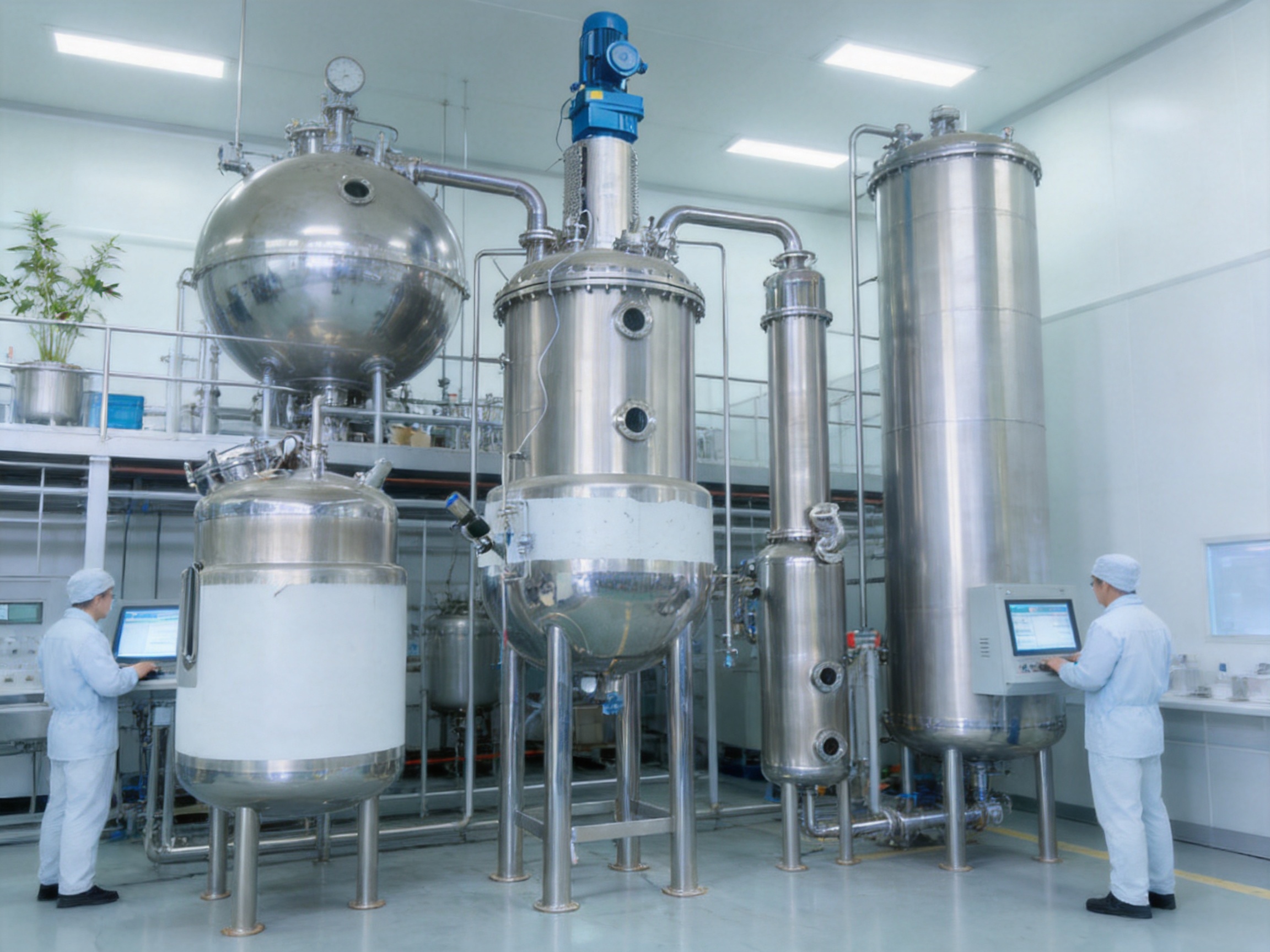
Reliability is essential for evaporation equipment because production interruptions can lead to batch loss, delayed delivery, and additional cleaning. A reliable spherical vacuum evaporator should have strong stainless-steel construction, stable welding, proper vacuum sealing, suitable condenser capacity, and practical control of heating and pressure.
Manufacturing quality begins with material selection. 304 stainless steel must be processed correctly to preserve its corrosion resistance and surface quality. Cutting, forming, welding, polishing, assembly, and testing must be performed with discipline. Vacuum vessels require careful attention to sealing surfaces and joints. Heating jackets must be fabricated to withstand steam service within designed conditions. Condensers must be properly matched to expected vapor load.
The company's use of advanced equipment such as plasma argon arc welding machines, plasma cutting machines, and CAM CNC machining centers supports stable fabrication. Its experience in process engineering and equipment system integration further supports reliable installation and operation. For buyers, these strengths reduce project risk and contribute to long-term value.
14. Cleaning, Maintenance, and Operator-Friendly Design
Cleaning and maintenance are central to the practical value of this equipment. In many extraction and food processes, residue can become sticky as concentration progresses. If cleaning is difficult, production schedules suffer. The spherical tank helps reduce residue collection points, and stainless-steel construction supports hygienic cleaning procedures.
Operators benefit from a straightforward working principle. Feed is added, vacuum is established, steam heating begins, vapor is separated and condensed, condensate is collected, and concentrate is discharged. This simplicity makes operator training easier compared with more complex evaporation systems. Maintenance personnel also benefit from the compact arrangement because components are easier to access and inspect.
Users should still establish proper cleaning protocols based on the specific materials processed. Herbal extracts, sugar-containing liquids, pigment-rich materials, and resinous botanical fractions may require different cleaning methods. Solvent systems require careful safety procedures. The supplier can support equipment design and process planning, but each user should implement procedures suitable for its production environment and regulatory requirements.
15. Energy and Cost Efficiency
Energy consumption and solvent cost are two major operating concerns in concentration processes. The spherical vacuum evaporator addresses both in practical ways. Vacuum evaporation lowers boiling temperature, allowing evaporation under gentler thermal conditions. Steam jacket heating provides direct and stable heat transfer through the tank wall. The compact equipment structure avoids unnecessary complexity in medium and small-scale production.
Solvent recovery is another major cost-saving factor. Ethanol and other organic solvents are commonly used in plant extraction, pharmaceutical processing, natural flavor production, and fine chemical operations. By condensing and collecting evaporated solvent, the system supports recycling and reduces the need for fresh solvent purchases. It also helps reduce waste handling and emissions burden, subject to appropriate process management.
Cost efficiency should be evaluated over the entire equipment life cycle rather than only the purchase price. A slightly cheaper evaporator that causes frequent coking, difficult cleaning, low recovery, or unstable vacuum may cost more over time. A well-built spherical vacuum evaporator can reduce cleaning labor, preserve product value, recover solvent, and provide stable batch operation, creating a stronger total value proposition.
16. Safety and Responsible Operation
Any equipment involving vacuum, steam, and organic solvent recovery must be operated responsibly. Vacuum systems require proper sealing, pressure monitoring, and operational procedures. Steam jackets require suitable pressure control and safety devices according to design and local regulation. Solvent recovery operations require attention to flammability, ventilation, grounding, explosion prevention requirements, and solvent handling rules.
The spherical vacuum evaporator can be integrated into a safer production system when designed, installed, and operated correctly. Engineering support is especially important for solvent processes. Proper condenser sizing, receiving tank arrangement, vacuum pump selection, and control design help reduce vapor loss and improve process stability. Operators should be trained in startup, normal operation, shutdown, cleaning, and emergency response procedures.
17. Selection Guidelines for Buyers
Before purchasing a spherical vacuum evaporator, users should define their process needs clearly. Key questions include: What materials will be concentrated? Are they water-based, ethanol-based, or mixed-solvent extracts? What is the starting volume and target concentration? How viscous will the final product become? Is foaming expected? What temperature limit must be observed to protect product quality? How much solvent must be recovered? What utilities are available, including steam, cooling water, electricity, and vacuum support?
Users should also consider production flexibility. If the workshop produces many different products, cleaning and batch changeover become very important. If solvent recovery is a priority, condenser capacity and receiving tank design should be carefully evaluated. If the evaporator will be part of a complete extraction or fermentation line, process integration should be discussed early with the supplier.
Zhejiang Shuangzi Intelligent Equipment Co., Ltd. can support users with engineering, process design, equipment design, installation, line debugging, and turnkey project services. This allows the evaporator selection to be based on real process goals rather than only equipment dimensions.
18. Frequently Asked Questions
Q1: What is the main purpose of a spherical vacuum evaporator?
A spherical vacuum evaporator is mainly used for low-temperature concentration of liquid materials and recovery of organic solvents. It removes water or solvent from feed liquid under vacuum while helping protect flavor, color, and active ingredients. It is especially useful for botanical extracts, traditional Chinese medicine extracts, fruit juice, natural flavors, health food ingredients, pharmaceutical liquids, and fine chemical materials.
Q2: Why is the tank spherical?
The spherical inner shell provides a large curved heating area and supports more even liquid circulation. This helps reduce stagnant zones, wall adhesion, and material coking. Compared with flat-bottom or simple cylindrical tanks, the spherical structure is more favorable for gentle batch concentration of heat-sensitive or sticky materials.
Q3: What are the main components of the equipment?
The equipment consists of four core assemblies: spherical main tank, condenser, gas-liquid separator, and liquid receiving tank. The main tank performs evaporation, the gas-liquid separator reduces droplet carryover, the condenser liquefies vapor, and the receiving tank collects recovered liquid or solvent.
Q4: What materials can be processed?
The evaporator is suitable for many liquid materials, including traditional Chinese medicine extracts, botanical extracts, fruit juice, health food liquids, natural flavor solutions, ethanol extracts, pharmaceutical intermediates, and fine chemical liquids. Final suitability depends on material characteristics, corrosion behavior, viscosity, solvent type, and required process conditions.
Q5: Can it recover ethanol?
Yes. The evaporator is designed for vacuum concentration and solvent recovery applications. When ethanol-containing liquid is evaporated, ethanol vapor can be condensed and collected in the receiving tank. The recovered ethanol can be reused after appropriate testing and treatment according to the user's production standards.
Q6: How does vacuum operation protect product quality?
Vacuum reduces the boiling point of the liquid, allowing evaporation at lower temperatures. This helps protect heat-sensitive ingredients, volatile aromas, original flavor, color, and active components. It also reduces the risk of thermal degradation compared with atmospheric boiling.
Q7: Is this equipment suitable for large continuous production?
The spherical vacuum evaporator is best suited for batch operation and medium or small-scale concentration and solvent recovery. For very large continuous production, other evaporator types may be considered. However, for flexible batch production, pilot production, multiproduct workshops, and solvent recovery, this equipment is highly practical.
Q8: What makes this product competitive?
Its advantages include low-temperature vacuum operation, spherical inner shell, reduced wall adhesion, solvent recovery capability, compact structure, easy cleaning, easy maintenance, and low energy consumption in suitable applications. In addition, the manufacturer's EPC and EPCM capabilities, advanced fabrication equipment, and process engineering experience support better project integration.
Q9: Why is 304 stainless steel used?
304 stainless steel is widely used in food, pharmaceutical, and chemical equipment because of its corrosion resistance, cleanability, mechanical strength, and suitability for hygienic fabrication. It is a practical and reliable material for many water-based and ethanol-based concentration processes.
Q10: What support can the manufacturer provide beyond equipment supply?
The manufacturer can provide process design, equipment design, manufacturing, matching purchase, installation, system integration, line debugging, and turnkey project services. This is valuable when the evaporator must be integrated into a plant extraction line, fermentation project, pharmaceutical project, food project, or solvent recovery system.
19. Conclusion
The spherical vacuum evaporator is a proven and versatile solution for low-temperature concentration and solvent recovery. Its value lies in a practical combination of gentle vacuum evaporation, spherical tank geometry, stainless-steel construction, integrated condensation, solvent receiving, compact structure, and easy cleaning. For heat-sensitive materials such as traditional Chinese medicine extracts, botanical extracts, fruit juice, natural flavors, health food liquids, and pharmaceutical solutions, it helps preserve original flavor and active ingredients while reducing the risk of wall adhesion and coking.
Compared with many conventional concentration devices, it offers a better balance between product protection, operating flexibility, solvent recovery, maintenance convenience, and investment practicality. Compared with highly specialized large continuous systems, it remains more adaptable for medium and small-scale batch production. Its ability to perform concentration and organic solvent recovery in one compact system makes it especially attractive for companies seeking cost control and quality preservation.
The manufacturing strength behind the equipment further enhances its value. Zhejiang Shuangzi Intelligent Equipment Co., Ltd. brings experience in process technology, automation engineering, equipment manufacturing, installation, system integration, and turnkey project delivery. With advanced welding and machining equipment, pilot production and research capabilities, and a broad portfolio covering extraction, fermentation, concentration, separation, filtration, drying, and container equipment, the company can support customers from single-machine selection to complete process line construction.
For users in plant extraction, pharmaceutical engineering, health food, natural flavor, fine chemical, and related industries, the spherical vacuum evaporator is not merely a vessel with a condenser. It is a compact, efficient, and quality-focused concentration system designed to protect valuable materials, recover solvents, reduce production costs, and fit smoothly into modern processing projects.
References
1. Perry, R. H., and Green, D. W. Perry's Chemical Engineers' Handbook. McGraw-Hill Education.
2. Coulson, J. M., Richardson, J. F., Backhurst, J. R., and Harker, J. H. Coulson and Richardson's Chemical Engineering: Particle Technology and Separation Processes. Butterworth-Heinemann.
3. Mujumdar, A. S. Handbook of Industrial Drying. CRC Press.
4. Fellows, P. J. Food Processing Technology: Principles and Practice. Woodhead Publishing.
5. McCabe, W. L., Smith, J. C., and Harriott, P. Unit Operations of Chemical Engineering. McGraw-Hill Education.
6. Kister, H. Z. Distillation Operation. McGraw-Hill Education.
7. Tiwari, B. K., and Tiwari, U. Handbook of Plant Food Phytochemicals: Sources, Stability and Extraction. Wiley-Blackwell.