
 英语
英语 俄语
俄语Content
- 1 1. Product Overview
- 2 2. Energy-Saving Performance
- 3 3. Falling-Film Heat Transfer and Concentration Efficiency
- 4 4. Gentle Processing for Heat-Sensitive Materials
- 5 5. Comparison with Alternative Evaporation Technologies
- 6 6. Convenience, Maintenance, and Reliability
- 7 7. Reference Technical Parameters
- 8 8. Applications in Different Industries
- 9 9. Manufacturing and Engineering Strengths
- 10 10. Customized Engineering and Turnkey Project Capability
- 11 11. Installation and Commissioning Considerations
- 12 12. Operation and Maintenance Recommendations
- 13 13. Environmental and Economic Benefits
- 14 14. Frequently Asked Questions
- 14.1 Q1: What is the main function of a three-effect falling-film evaporator?
- 14.2 Q2: Why is it called a falling-film evaporator?
- 14.3 Q3: How much steam can the system save?
- 14.4 Q4: Is the equipment suitable for milk?
- 14.5 Q5: Can it process heat-sensitive materials?
- 14.6 Q6: What are the reference operating temperatures?
- 14.7 Q7: How does it compare with a forced-circulation evaporator?
- 14.8 Q8: Is a three-effect system better than a five-effect system?
- 14.9 Q9: What production capacities are available?
- 14.10 Q10: Can the equipment be customized?
- 14.11 Q11: What information is needed for equipment selection?
- 14.12 Q12: Can the supplier provide a complete production line?
- 15 15. Conclusion
- 16 References
- 17 Product: Vacuum Concentration Equipment Three Effect Falling Film Evaporator
Industrial concentration is a critical operation in plant extraction, food processing, dairy production, pharmaceutical manufacturing, biological fermentation, and many other process industries. Removing water from a liquid stream can improve product stability, reduce transportation costs, extend shelf life, and prepare a material for drying, crystallization, formulation, or further synthesis. However, concentration also creates significant technical challenges. Excessive heat can destroy nutrients, aromas, enzymes, proteins, and active pharmaceutical ingredients. Poor circulation can cause fouling and scaling. Inefficient steam use can increase operating costs. Batch operation may also limit production capacity and create inconsistent product quality.
The three-effect falling-film evaporator is designed to address these challenges through continuous, low-temperature, multi-effect evaporation. It combines a falling-film heat-transfer structure with a three-stage steam utilization system. Secondary steam generated in one effect is reused as the heating medium for the next effect, allowing the equipment to achieve a substantial reduction in fresh steam consumption while maintaining high evaporation performance.
For applications such as concentrated milk, plant extracts, pharmaceutical liquids, food ingredients, fermentation broths, and heat-sensitive natural products, this configuration offers a practical balance between energy efficiency, processing quality, equipment complexity, and investment cost. The system is particularly suitable for manufacturers that require stable continuous operation without the higher capital and maintenance burden associated with four-effect or five-effect systems.
Vacuum Concentration Equipment Three Effect Falling Film Evaporator
1. Product Overview
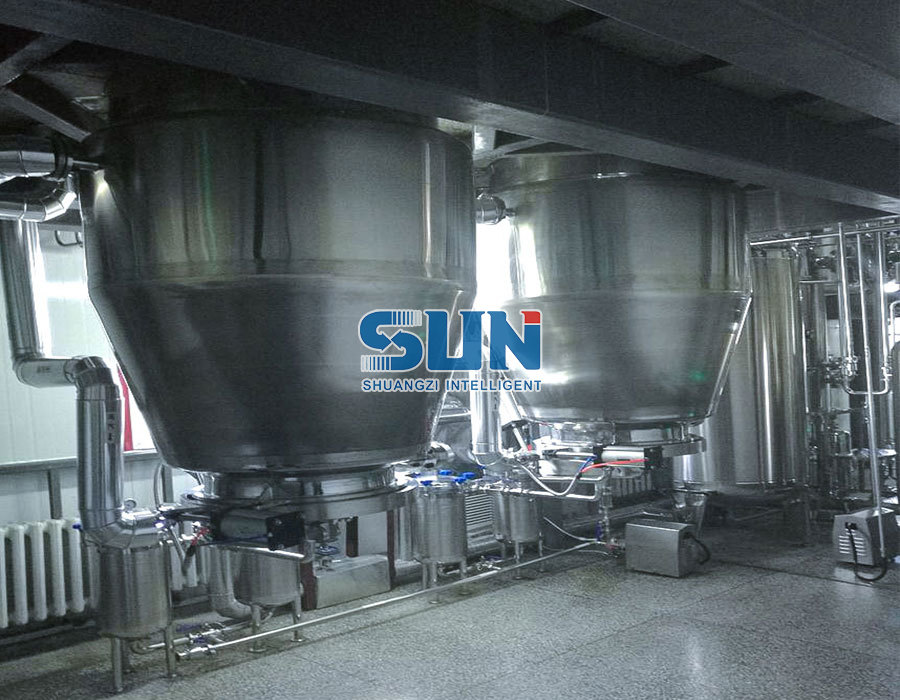
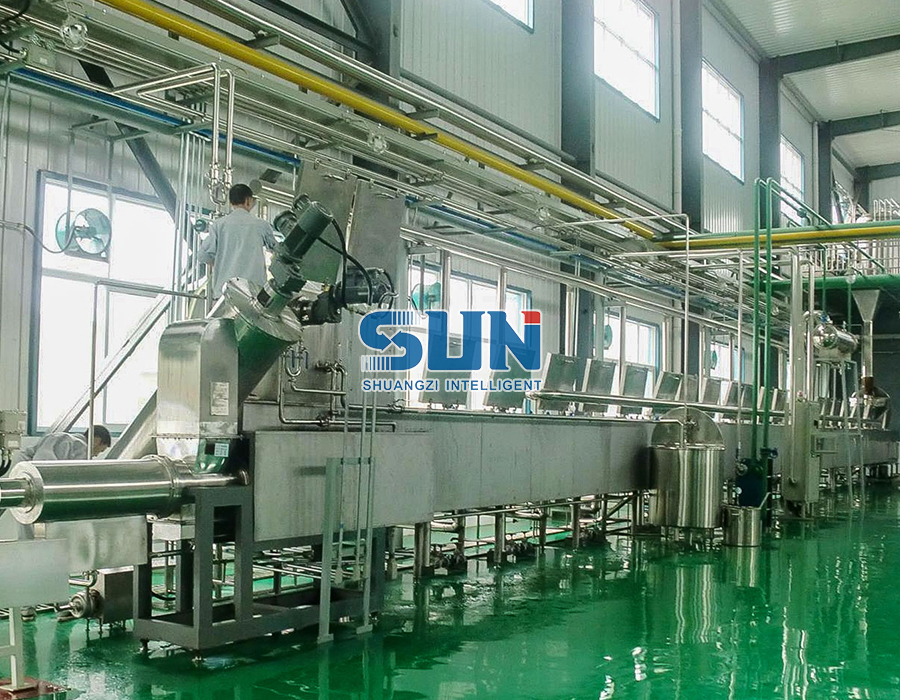
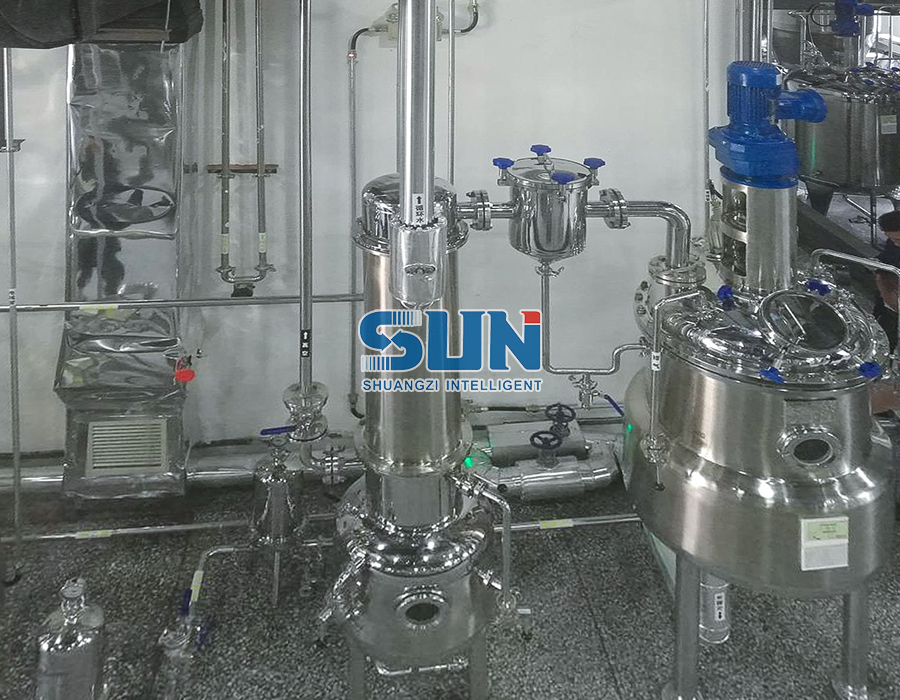
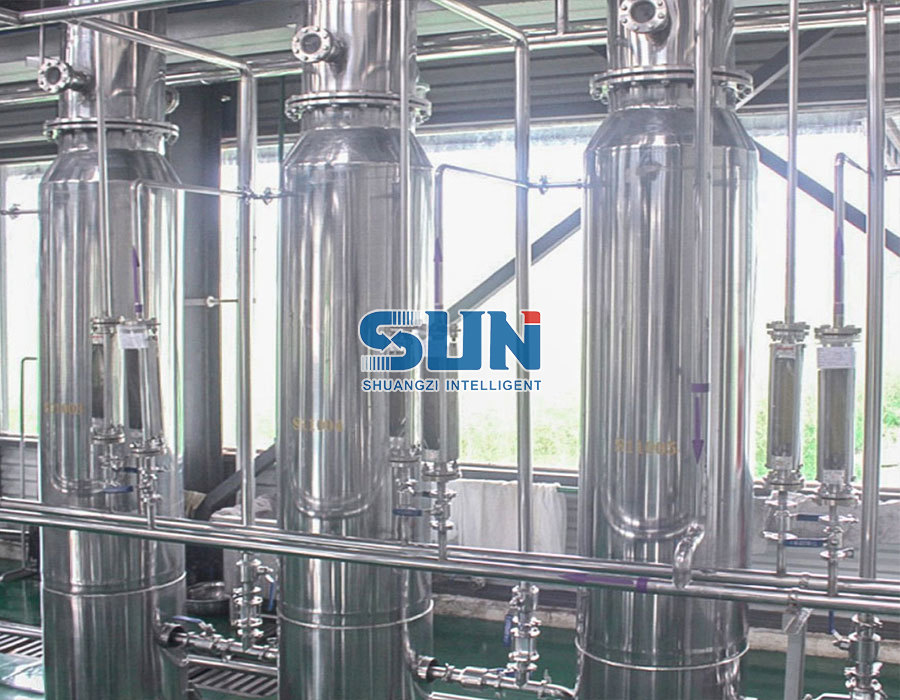
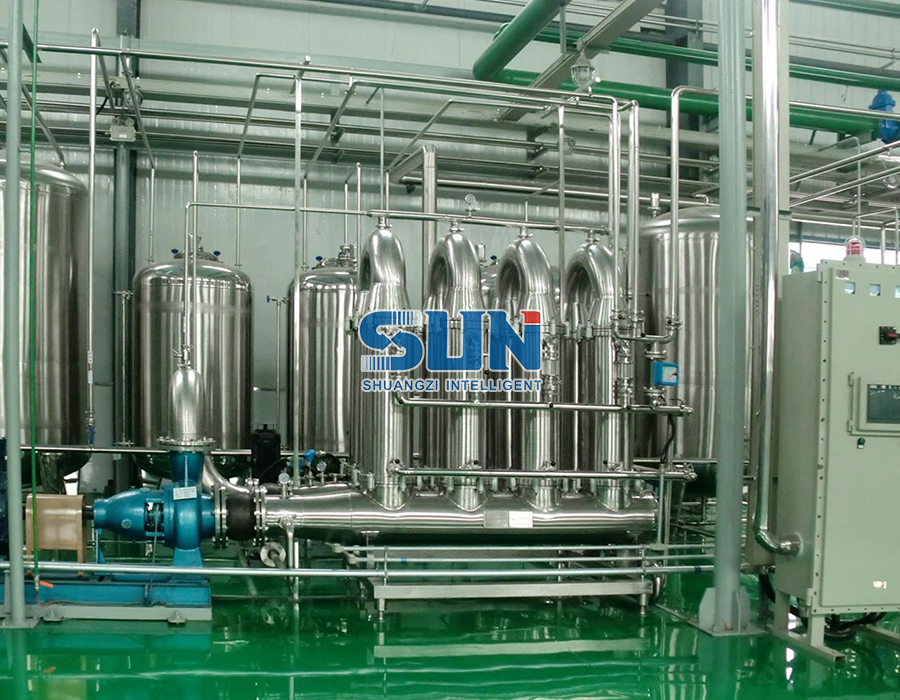
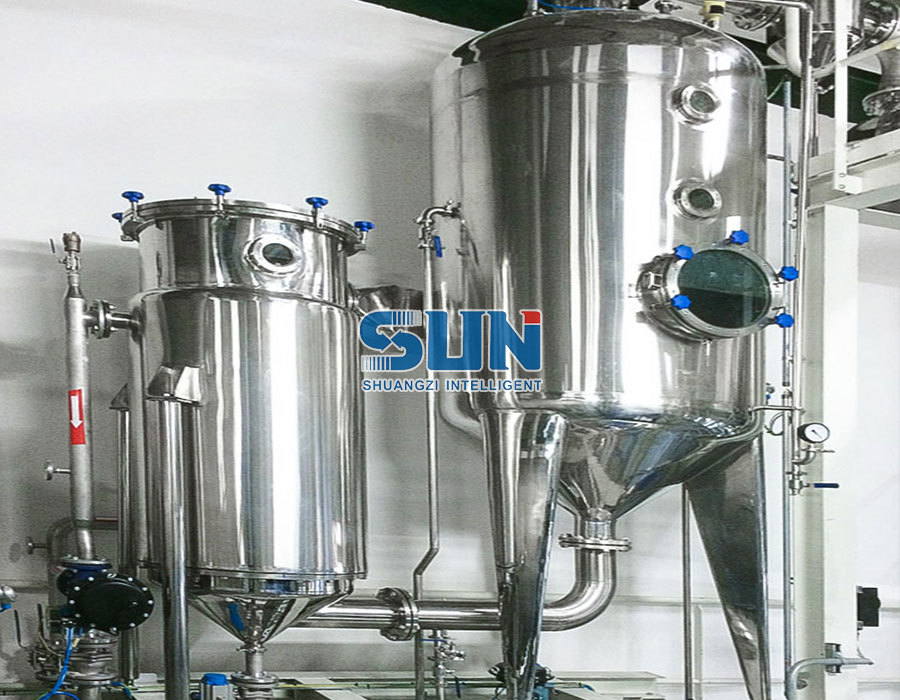
A three-effect falling-film evaporator is a vacuum concentration system consisting of three heating chambers, three evaporation effects, vapor-liquid separators, a condenser, a cooler, delivery pumps, valves, instrumentation, and interconnecting pipelines. Depending on the process design, the system may also include feed preheaters, condensate recovery components, cleaning-in-place connections, control cabinets, vacuum equipment, and product recirculation or discharge assemblies.
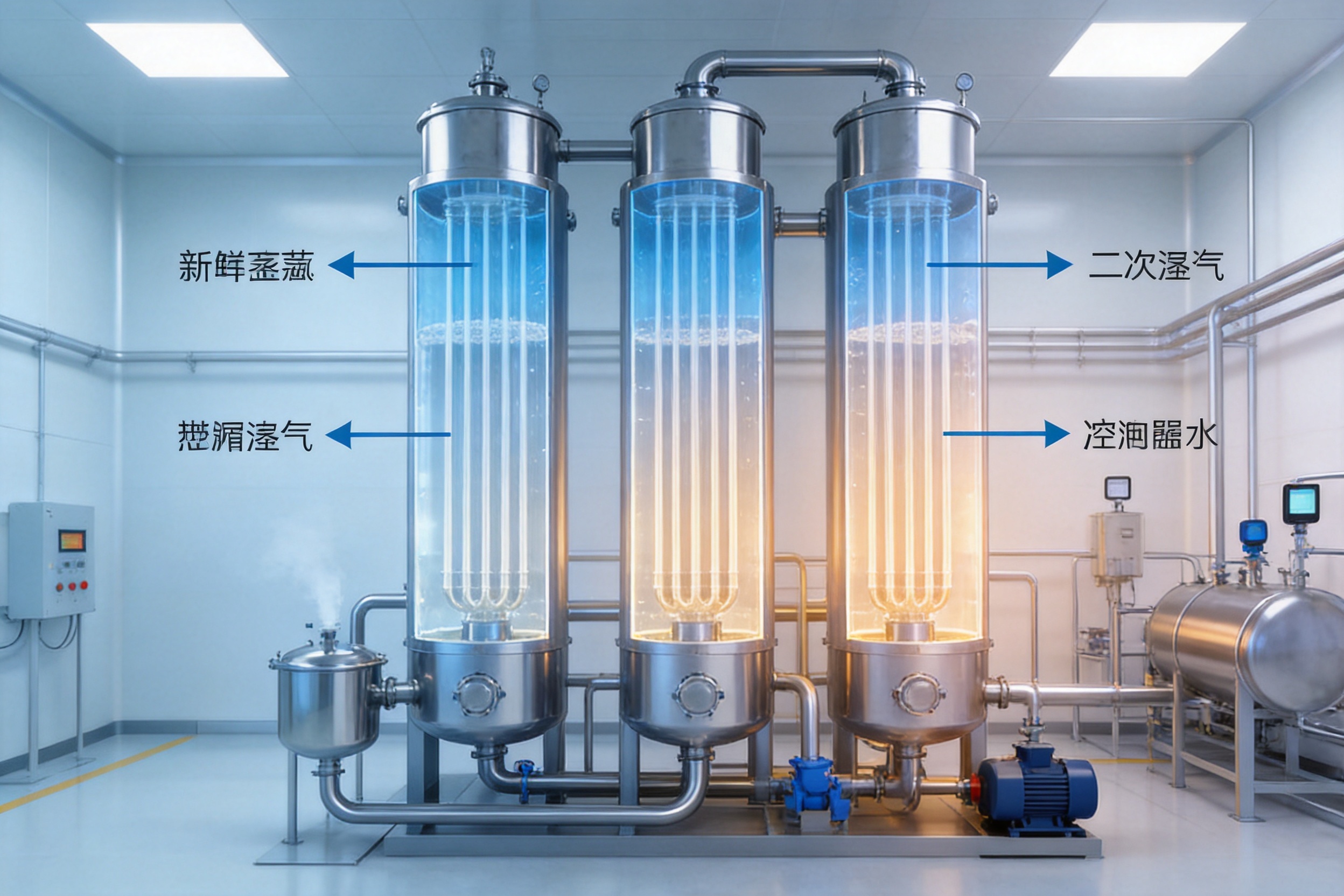
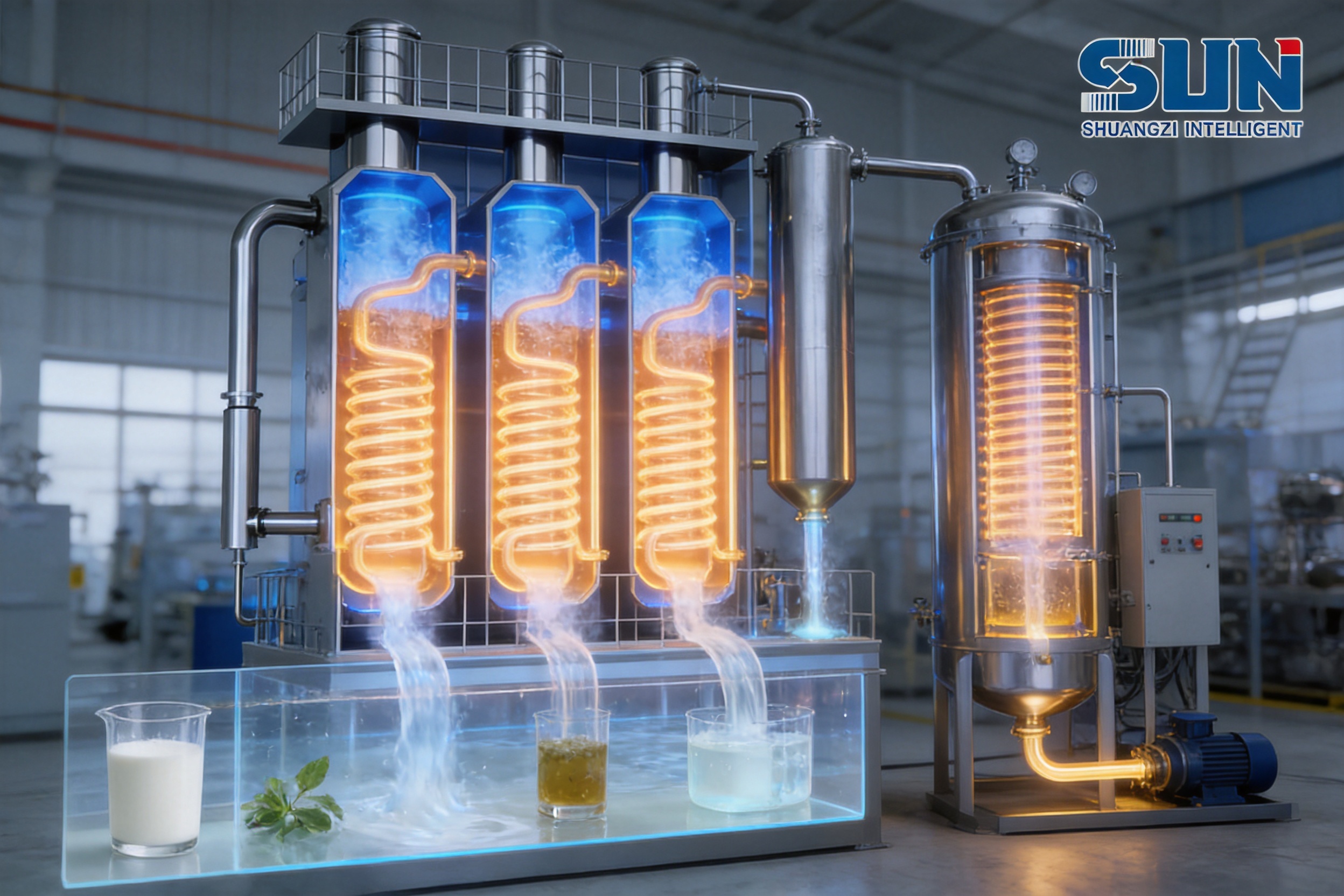
The material enters the system through the feed distribution section. It is evenly distributed across the heating surfaces of the first effect, where it forms a thin film and flows downward under gravity. Heat supplied to the first effect causes part of the water to evaporate. The vapor produced is separated from the concentrated liquid and directed to the heating side of the second effect. The second effect operates at a lower pressure and temperature, allowing the vapor from the first effect to provide useful heat without requiring an equivalent amount of fresh steam.
This process is repeated between the second and third effects. The third effect normally operates at the lowest pressure and temperature in the series. The final vapor is condensed through the condenser and cooler, while the concentrated product is collected and transferred to the next processing stage.
The falling-film principle is important because the liquid does not remain in a large pool for a long period. Instead, it forms a relatively thin, continuously moving film over the heat-transfer surface. This increases the effective heat-transfer rate and reduces the residence time of the product under heat. A shorter residence time is valuable when the material contains heat-sensitive components or when flavor, color, biological activity, or nutritional value must be preserved.
1.1 Main Equipment Components
The three-effect heating chambers provide the heat-transfer surfaces required for the evaporation process. Their size, material, tube arrangement, and heat-transfer area are selected according to feed properties, evaporation capacity, concentration ratio, viscosity, allowable temperature, and hygiene requirements.
The three-effect evaporator bodies establish the temperature and pressure sequence. Each effect is designed to operate under specific process conditions so that the vapor generated in one stage can be used efficiently in the next stage.
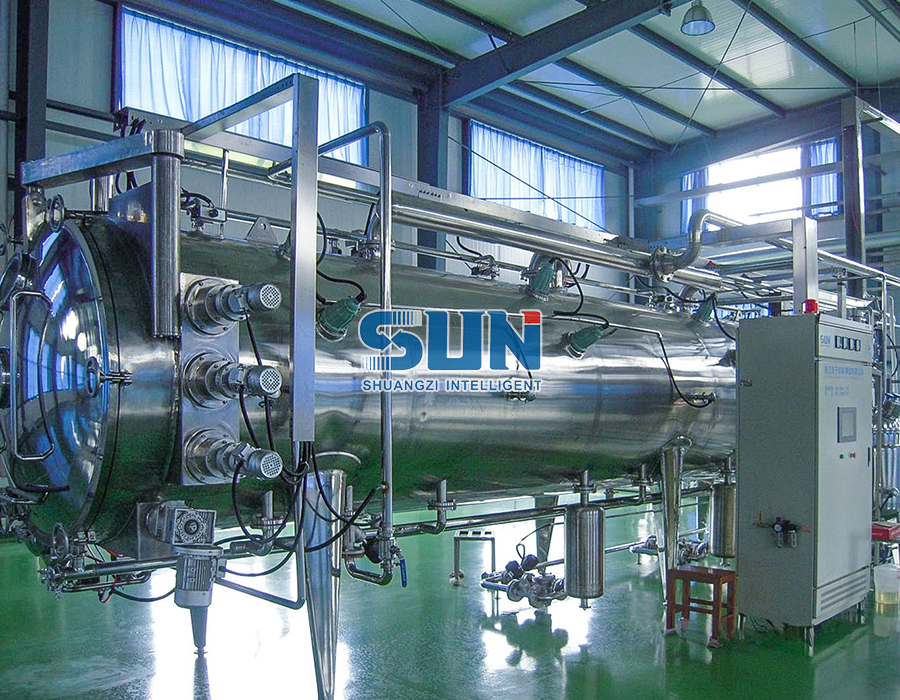
Vapor-liquid separators remove entrained droplets from the vapor stream. Effective separation helps protect downstream condensers and vacuum equipment while reducing product loss. The separator design may be adapted to the foaming tendency, viscosity, solids content, and flow behavior of the process liquid.
The condenser converts the final vapor into condensate. The cooler may reduce the temperature of condensate or product streams before discharge, storage, or further processing. Delivery pumps transport feed, concentrate, condensate, and cleaning solutions through the system.
Pipelines and control components connect the system into a coordinated production unit. Instrumentation can monitor temperature, pressure, flow, liquid level, concentration-related operating conditions, and vacuum status. With suitable automation, the operator can adjust steam input, feed rate, discharge conditions, and vacuum stability from a centralized control interface.
1.2 Typical Process Sequence
The feed liquid is first prepared and filtered according to the requirements of the upstream process. It is then introduced into the evaporator at a controlled flow rate. Proper feed distribution is essential because uneven wetting can create dry areas, localized overheating, and reduced heat-transfer efficiency.
In the first effect, fresh steam supplies the primary heat. The feed liquid flows downward as a film and loses part of its water content. The vapor produced by this evaporation becomes the heating source for the second effect. Because the second effect operates at a lower pressure, its boiling temperature is lower than that of the first effect.
The vapor generated in the second effect is subsequently used to heat the third effect. The pressure and temperature continue to decrease through the series. The final vapor is condensed, and the concentrated product leaves the final effect at the target concentration or is sent to another concentration stage if a higher solids content is required.
This arrangement allows one kilogram of fresh steam to support the evaporation of substantially more than one kilogram of water, subject to feed conditions, heat losses, temperature differences, nonvolatile solids, vapor recompression arrangements, and the detailed process design. In practical operation, a three-effect system can reduce steam consumption to approximately one-third of that associated with a comparable single-effect evaporator.
2. Energy-Saving Performance
Energy consumption is one of the most important factors in the selection of an industrial evaporator. A single-effect system uses fresh steam to evaporate water in one heating stage. The vapor generated is normally condensed and discharged, meaning that much of its latent heat is not reused for product evaporation. Although a single-effect evaporator can be simple and flexible, its steam consumption may be high when processing large quantities of liquid.
The three-effect falling-film evaporator improves thermal efficiency by arranging three evaporation stages in series. Fresh steam heats the first effect. The vapor from the first effect heats the second effect, and vapor from the second effect heats the third effect. The same heat energy is therefore used multiple times before the final vapor is condensed.
Compared with a single-effect falling-film evaporator, the triple-effect configuration can reduce energy consumption to about one-third under comparable operating conditions. The actual result depends on the concentration range, feed temperature, boiling-point elevation, heat-transfer efficiency, product viscosity, vapor losses, condensate recovery, and operating pressure. Nevertheless, the multi-effect principle provides a clear structural advantage for continuous processes with substantial evaporation loads.
Lower steam consumption can directly reduce fuel use and boiler demand. It may also reduce the required capacity of steam-generation equipment, lower the burden on plant utility systems, and improve overall production economics. In facilities where cooling water is metered or limited, the reduced vapor load to the final condenser can also help reduce cooling-water consumption.
The three-effect system is also a practical alternative to higher-effect designs. Four-effect and five-effect systems may deliver additional steam savings, but they typically require more heating chambers, separators, pipelines, control points, structural supports, installation work, and maintenance procedures. The temperature difference available across the system is also divided among more effects, which can increase design sensitivity. For some projects, the additional energy saving does not justify the additional investment and operating complexity.
A three-effect system often provides a strong cost-performance balance. It captures the main benefits of multi-effect evaporation while retaining a relatively manageable configuration. This is especially useful for medium- and large-capacity plants that require reliable operation but must control capital expenditure and maintenance resources.
2.1 Steam Consumption Examples
The listed product range includes models with evaporation capacities from 3,200 kg/h to 7,000 kg/h. The corresponding steam consumption ranges from approximately 1,200 kg/h to 2,200 kg/h, depending on the selected model and process conditions. These figures are reference values for engineering selection and must be confirmed through process calculations based on the actual feed and product requirements.
| Model | Evaporation Capacity | Reference Steam Consumption | Cooling Water Consumption | Total Electric Power |
|---|---|---|---|---|
| SJM3-3200 | 3,200 kg/h | 1,200 kg/h | 21 t/h | 32.5 kW |
| SJM3-4800 | 4,800 kg/h | 1,600 kg/h | 36 t/h | 32.5 kW |
| SJM3-5400 | 5,400 kg/h | 1,790 kg/h | 41 t/h | 44 kW |
| SJM3-6300 | 6,300 kg/h | 2,060 kg/h | 47 t/h | 44 kW |
| SJM3-7000 | 7,000 kg/h | 2,200 kg/h | 52 t/h | 48 kW |
The table demonstrates that the equipment can be configured for different production capacities while retaining the same three-effect operating principle. Selection should not be based on evaporation capacity alone. A process engineer must also consider feed solids, target solids, viscosity, foaming, crystallization tendency, heat sensitivity, available steam pressure, cooling-water temperature, cleaning requirements, and plant layout.
3. Falling-Film Heat Transfer and Concentration Efficiency
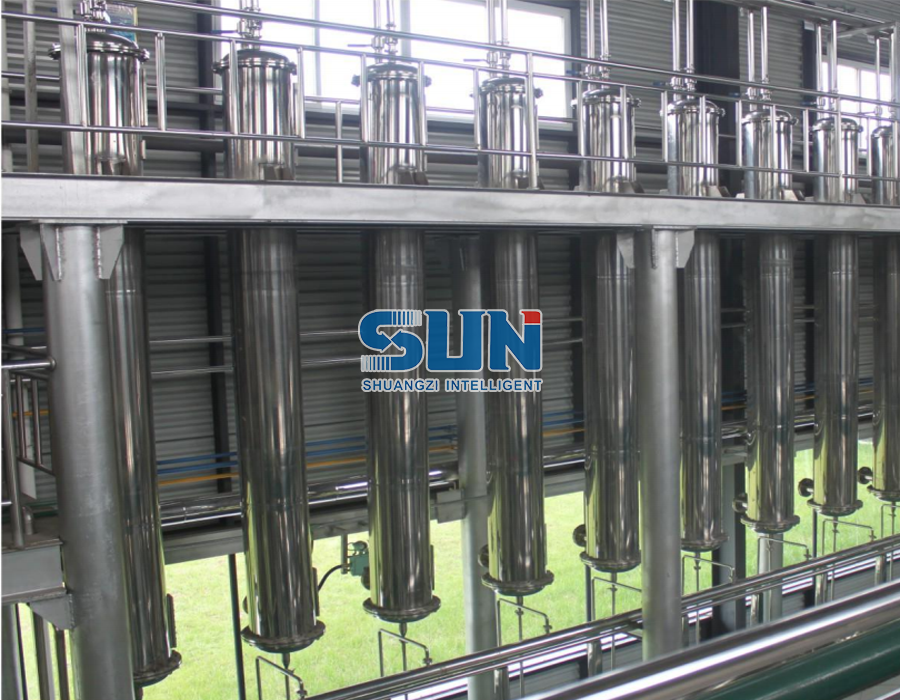
The falling-film structure is a central advantage of this equipment. In a falling-film evaporator, liquid is distributed over the upper portion of vertical heat-transfer tubes or related heating surfaces. Gravity causes the liquid to flow downward as a thin film. As the film moves along the heated surface, water evaporates and the product becomes progressively more concentrated.
A thin film generally offers a shorter heat-transfer path than a deep liquid body. When the film is properly distributed and maintained, the heat-transfer coefficient can be high. The continuous flow also limits the time that the product remains in the heated zone. These characteristics make the design suitable for liquids that must be concentrated efficiently while minimizing thermal exposure.
Film thickness is influenced by feed rate, viscosity, tube dimensions, distribution design, pressure, and product composition. A properly designed distribution system helps maintain uniform wetting. Uniform wetting is important because insufficient liquid flow in a section of the heating surface can result in overheating or deposit formation.
Compared with rising-film systems, falling-film equipment can offer greater control over film behavior and may reduce the tendency for unstable circulation caused by vapor lift. Compared with forced-circulation concentrators, the falling-film design normally requires fewer mechanical circulation components in the product path. This can reduce mechanical wear and simplify maintenance.
The system is particularly appropriate for continuous industrial production. Unlike batch concentration, in which heating and discharge occur in separate cycles, continuous falling-film evaporation can maintain a steady feed and product flow. When the operating parameters are properly controlled, continuous operation can provide more consistent concentration, easier utility management, and improved use of production space.
3.1 Concentration Range
Reference data for the equipment indicates a product inlet concentration of approximately 11.5% to 12% and an outlet concentration of approximately 45% to 48% for the specified application. These values are made to order and should not be treated as universal limits. The achievable concentration depends on the material’s viscosity, boiling-point elevation, solids characteristics, heat-transfer behavior, and final product requirements.
Milk and dairy liquids, for example, require careful control of temperature and residence time to protect protein quality, flavor, and functional performance. Plant extracts may contain sugars, pigments, polysaccharides, oils, or suspended solids that affect viscosity and fouling. Pharmaceutical and biological liquids may require sanitary construction, validated cleaning procedures, and strict control of thermal exposure. Each application therefore requires a tailored process design.
When a very high final concentration is required, the three-effect system may be integrated with a subsequent vacuum concentrator, spray dryer, vacuum dryer, crystallizer, or other downstream unit. The evaporator can serve as the primary water-removal stage, reducing the load on later equipment and improving the overall energy balance of the production line.
4. Gentle Processing for Heat-Sensitive Materials
Many food, pharmaceutical, biological, and natural products cannot tolerate prolonged high-temperature treatment. Heat can cause protein denaturation, vitamin loss, oxidation, browning, aroma loss, enzymatic inactivation, or degradation of active compounds. A concentration system must therefore remove water efficiently while protecting the characteristics that give the product its commercial value.
The three-effect falling-film evaporator supports gentle processing through vacuum operation and a gradual reduction in boiling temperature. Reference operating temperatures are approximately 70 degrees Celsius in the first effect, 57 degrees Celsius in the second effect, and 45 degrees Celsius in the third effect. Heating temperatures are approximately 80 degrees Celsius, 70 degrees Celsius, and 57 degrees Celsius for the corresponding effects. These values can be adjusted according to customer requirements and actual process conditions.
Vacuum operation lowers the boiling point of water. The product can therefore be concentrated at lower temperatures than would be possible at atmospheric pressure. As the material proceeds through the effects, the pressure and boiling temperature decrease. This staged temperature profile is beneficial for materials that become more sensitive as their solids concentration increases.
Lower temperature does not mean that all thermal reactions are eliminated. Product composition, residence time, oxygen exposure, and concentration level continue to influence quality. For this reason, the evaporator should be designed with suitable feed distribution, vapor separation, temperature control, vacuum stability, and cleaning procedures. The equipment provides a favorable processing environment, but final product quality depends on the complete process design and operating discipline.
For milk and other dairy liquids, gentle evaporation can help retain desirable taste and functional characteristics. For plant extracts, it can help reduce the loss of volatile aroma compounds and protect natural color. For pharmaceutical intermediates and biological materials, low-temperature concentration can reduce the risk of damaging active substances. For food ingredients, it can support the retention of nutrients and original flavor.
4.1 Protection of Product Quality
Short residence time is one of the most important quality-related advantages of falling-film evaporation. Because the liquid flows as a film rather than remaining in a large vessel, the product can pass through the heating zone quickly. This reduces the opportunity for unwanted thermal reactions and limits the period during which concentrated solids contact heated surfaces.
Controlled vacuum also helps reduce oxidation in products that are sensitive to air. A well-designed vapor-liquid separator can reduce entrainment and protect the concentrate from being carried into the vapor line. Stable product discharge prevents excessive accumulation in the system and supports consistent concentration.
In applications where hygiene is essential, product-contact surfaces can be manufactured using appropriate stainless-steel materials and finished according to the required sanitary standard. Weld quality, internal surface condition, drainability, inspection access, and cleaning compatibility should all be considered during project design.
5. Comparison with Alternative Evaporation Technologies
5.1 Comparison with Single-Effect Falling-Film Evaporators
A single-effect falling-film evaporator has a simpler thermal arrangement because it contains only one primary evaporation stage. It may be suitable for small production capacities, intermittent operation, or applications where steam cost is not a major concern. It can also require less floor space and a lower initial investment.
However, the single-effect arrangement normally consumes more fresh steam for the same evaporation duty. Its secondary vapor is not reused through additional effects, so the available latent heat is used less efficiently. For continuous production at several thousand kilograms per hour, this difference can have a substantial effect on operating cost.
The three-effect system requires more equipment than a single-effect unit, but its additional components serve a clear thermal purpose. The system reuses secondary vapor and achieves a more favorable balance between capital cost and operating cost. For many industrial applications, the savings in steam and cooling-water consumption can justify the additional equipment.
5.2 Comparison with Four-Effect and Five-Effect Systems
Four-effect and five-effect systems can offer additional energy savings because the secondary vapor is reused through more stages. Nevertheless, each additional effect introduces more heating surfaces, separators, interconnecting pipelines, control loops, supports, instruments, and cleaning requirements.
More effects also divide the available temperature difference into smaller increments. If the process has a significant boiling-point elevation or a narrow allowable temperature range, the design may become more demanding. Higher-effect systems may require a larger installation area and more complex commissioning procedures. Their additional thermal efficiency should therefore be evaluated against the project’s utility prices, production schedule, material sensitivity, maintenance capability, and capital budget.
The three-effect configuration is often selected when the customer seeks meaningful energy savings without excessive system complexity. It can be more economical than a five-effect system for plants with moderate steam prices, limited technical personnel, variable production schedules, or a strong need for straightforward maintenance.
5.3 Comparison with Forced-Circulation Evaporators
Forced-circulation evaporators use pumps to maintain a high liquid circulation rate through the heating surfaces. This arrangement can be useful for viscous liquids, crystallizing materials, or products that require strong circulation to keep solids suspended. However, it also introduces additional pump power consumption, mechanical wear, seals, valves, and maintenance points.
The falling-film design relies primarily on controlled distribution and gravity-driven flow. It does not require the same level of forced stirring or circulation within the heating section. This can reduce mechanical complexity, decrease equipment wear, and lower the risk associated with circulation-pump failure. It may also reduce energy use associated with product recirculation.
Falling-film evaporation is not automatically suitable for every liquid. Extremely viscous materials, liquids with poor wetting behavior, or products that rapidly crystallize may require special design measures or a different evaporation technology. A qualified supplier should evaluate the feed properties before confirming the final equipment configuration.
6. Convenience, Maintenance, and Reliability
Industrial equipment must be judged not only by its theoretical heat-transfer performance but also by its long-term serviceability. A system that is difficult to clean, inspect, repair, or operate can create hidden costs even when its initial energy performance appears attractive.
The falling-film structure eliminates the need for certain forced stirring or internal circulation components. Fewer mechanical components in the product-contact path can reduce wear and simplify troubleshooting. A simpler structure may also make it easier to identify the cause of pressure imbalance, uneven distribution, leakage, or reduced evaporation performance.
Reduced scaling risk is another potential advantage. Because the liquid forms a thin, continuously moving film, the product is less likely to remain stagnant on the heating surface. However, scaling cannot be eliminated entirely. Product composition, concentration, temperature, residence time, feed filtration, and cleaning frequency all influence deposit formation.
Cleaning-in-place capability should be considered from the beginning of the project. The system should provide appropriate connections, spray coverage where applicable, drainage, chemical compatibility, and flow velocity for the intended cleaning program. Cleaning cycles may include water rinsing, alkaline washing, acid cleaning, intermediate rinsing, and sanitization, depending on the product and regulatory requirements.
Inspection and maintenance access are also important. Separators, pumps, valves, instruments, heat-transfer surfaces, gaskets, and condensers should be arranged so that operators can inspect and service them without unnecessary disassembly. Maintenance planning should include spare seals, instruments, pump components, gaskets, and other wear parts.
The three-effect arrangement provides multiple stages but remains relatively straightforward compared with higher-effect systems. This can support a lower failure rate than more complex four-effect and five-effect installations, particularly when the equipment is correctly installed and operated within its design limits.
6.1 Automation and Process Control
Stable evaporation requires coordinated control of feed flow, steam pressure, effect temperatures, vacuum level, liquid levels, concentrate discharge, and condenser performance. Automation can reduce manual adjustments and help maintain consistent production conditions.
Temperature sensors can monitor the heating and evaporating sides of each effect. Pressure transmitters can identify vacuum instability or unexpected pressure differences. Level instruments can prevent flooding or insufficient feed to the heating surfaces. Flow meters can support accurate feed and concentrate control. Control valves can regulate steam admission, cooling-water flow, and vapor routing.
An integrated control system can display operating trends and generate alarms for high temperature, low vacuum, high level, pump failure, insufficient cooling water, or abnormal pressure. Data recording can also support production analysis, maintenance planning, quality review, and process optimization.
The appropriate automation level depends on the customer’s production requirements. A basic system may provide local instruments and manual control. A more advanced system may include a programmable logic controller, human-machine interface, recipe management, automatic startup and shutdown sequences, alarm history, and communication with a plant-wide supervisory control system.
7. Reference Technical Parameters
The following specifications summarize the reference range supplied for the three-effect falling-film evaporator. Final values are subject to process calculations, material testing, customer requirements, and engineering confirmation.
| Parameter | Reference Value |
|---|---|
| Product type | Three-effect falling-film evaporator |
| Reference models | SJM3-3200, SJM3-4800, SJM3-5400, SJM3-6300, SJM3-7000 |
| Evaporation capacity | 3,200 to 7,000 kg/h |
| Product inlet concentration | Approximately 11.5% to 12%, made to order |
| Product outlet concentration | Approximately 45% to 48%, made to order |
| Steam pressure | 0.6 to 0.8 MPa |
| First-effect evaporating temperature | Approximately 70 degrees Celsius |
| Second-effect evaporating temperature | Approximately 57 degrees Celsius |
| Third-effect evaporating temperature | Approximately 45 degrees Celsius |
| First-effect heating temperature | Approximately 80 degrees Celsius |
| Second-effect heating temperature | Approximately 70 degrees Celsius |
| Third-effect heating temperature | Approximately 57 degrees Celsius |
| Cooling-water consumption | Approximately 21 to 52 t/h, depending on model |
| Total electric power | Approximately 32.5 to 48 kW, depending on model |
| Reference dimensions | Approximately 7.3 to 7.6 m long, 2.5 to 2.6 m wide, and 10 to 16 m high |
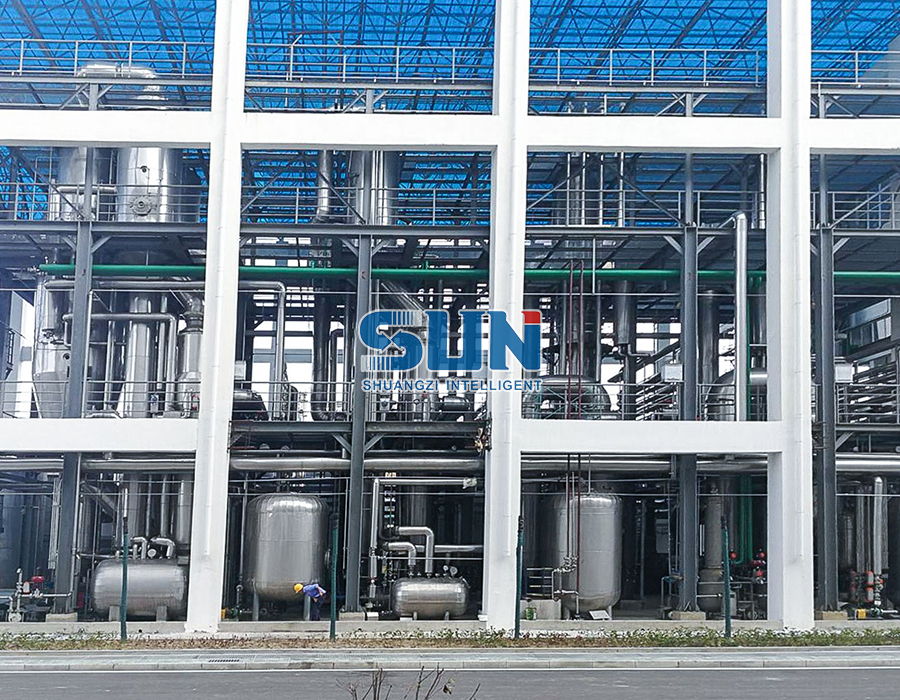
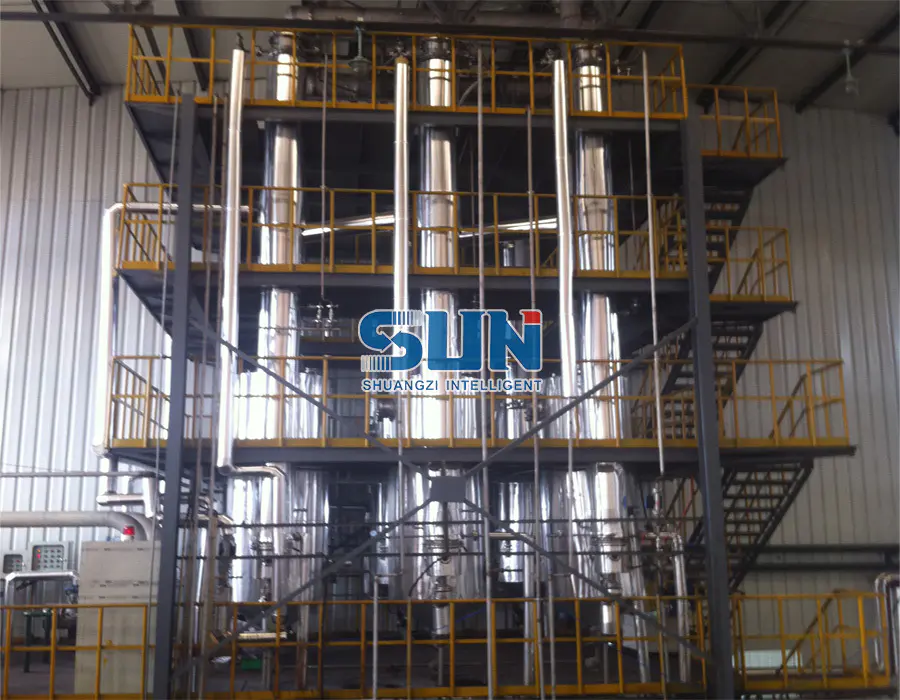
The equipment is vertically arranged in many applications because the falling-film process benefits from gravity-driven flow. The actual dimensions and layout should be determined according to plant height, maintenance access, foundation conditions, utility connections, local safety requirements, and the arrangement of upstream and downstream equipment.
8. Applications in Different Industries
8.1 Dairy and Milk Processing
Milk concentration is one of the important applications for falling-film evaporation. Removing water before drying can reduce the load on a spray dryer and improve overall energy efficiency. The low-temperature, continuous process can help protect milk solids and maintain desirable product characteristics.
The system may be used for concentrated milk, dairy ingredients, whey-related products, and other liquid dairy streams, subject to product-specific design. Sanitary construction, hygienic piping, cleanability, and accurate temperature control are especially important in this sector.
8.2 Plant Extraction
Plant extracts often contain valuable active substances, natural colors, flavors, polysaccharides, sugars, and volatile components. Concentration is commonly required before drying, formulation, or packaging. Vacuum falling-film evaporation can reduce thermal stress compared with open atmospheric boiling.
The correct design depends on the extract’s viscosity, suspended solids, foaming tendency, solvent composition, and sensitivity to oxidation. Feed filtration and suitable separator design may be required to maintain stable operation.
8.3 Pharmaceutical and Biological Products
Pharmaceutical liquids and biological process streams may require controlled concentration before purification, crystallization, drying, or formulation. The use of low-temperature vacuum conditions can help protect heat-sensitive substances. Stainless-steel construction, documentation, cleanability, and process validation may be required according to the application and regulatory environment.
For pharmaceutical projects, the equipment supplier should coordinate with the customer on material certificates, surface finish, welding records, instrument calibration, factory testing, installation qualification, operational qualification, and cleaning procedures when applicable.
8.4 Fermentation Broths
Fermentation liquids may be concentrated to reduce volume before separation, drying, extraction, or downstream purification. Their composition can vary significantly and may include cells, proteins, salts, sugars, and organic acids. The feed properties must therefore be evaluated carefully to avoid excessive fouling or unstable film distribution.
A three-effect evaporator can help lower the thermal and utility burden of downstream processing. Its suitability should be determined through laboratory or pilot testing when the broth has unusual rheological or fouling characteristics.
8.5 Food Ingredients
Liquid food ingredients such as extracts, syrups, flavor bases, and nutritional liquids may benefit from continuous concentration. The evaporator can reduce water content while helping preserve the desired flavor, color, and functional properties. Product-contact materials, hygienic design, and cleaning validation are important for food applications.
9. Manufacturing and Engineering Strengths
The performance of an evaporator depends heavily on the quality of its engineering and manufacturing. A reliable supplier must understand not only the vessel and heat-exchanger design but also the complete process route, utilities, control system, installation environment, and downstream production requirements.
Zhejiang Shuangzi Intelligent Equipment Co., Ltd. operates as a professional biology and medical equipment enterprise with experience in process technology, automation engineering design, equipment manufacturing, matching procurement, installation, and system integration. Its project scope covers plant extraction, biological fermentation, pharmaceutical engineering, natural food processing, energy conservation, and environmental protection.
The company was founded in 2007 and has a production base with a floor area of approximately 16,706 square meters and a structural area of approximately 17,800 square meters. Its production capabilities include equipment manufacturing, pilot-scale production support, research and development, and project implementation.
The company’s product portfolio includes vacuum low-temperature drying equipment, fermentation systems, evaporation and concentration equipment, extraction equipment, separation and crystallization equipment, filtration equipment, process vessels, and related production-line systems. This broad range allows the supplier to consider the evaporator as part of a complete process rather than as an isolated machine.
Its manufacturing resources include plasma argon arc welding machines, plasma cutting equipment, CAM CNC machining centers, and other advanced fabrication tools. These capabilities support accurate preparation, controlled welding, repeatable component production, and improved finishing quality. For sanitary and pharmaceutical applications, controlled welding and surface finishing are essential to reduce contamination risks and support cleaning performance.
The company also maintains a pilot production workshop and research and development platform designed to support automation and GMP-related requirements. Pilot testing can help evaluate evaporation behavior, feed distribution, concentration limits, foaming, scaling, product quality, and cleaning procedures before the full-scale system is manufactured.
10. Customized Engineering and Turnkey Project Capability
Evaporators are rarely identical from one project to another. The same nominal evaporation capacity can require different heat-transfer areas and control strategies depending on whether the feed is milk, a plant extract, a fermentation broth, a pharmaceutical solution, or a food ingredient.
Customization may include the number and arrangement of effects, heat-transfer area, separator volume, material grade, internal finish, feed distribution system, condenser type, vacuum system, pump selection, control architecture, product discharge method, cleaning connections, platform structure, insulation, and overall footprint.
Process conditions can also be adjusted. The operating temperatures listed for the three effects can be designed according to customer requirements. Steam pressure, feed temperature, inlet concentration, final concentration, cooling-water conditions, and allowable residence time all influence the final design.
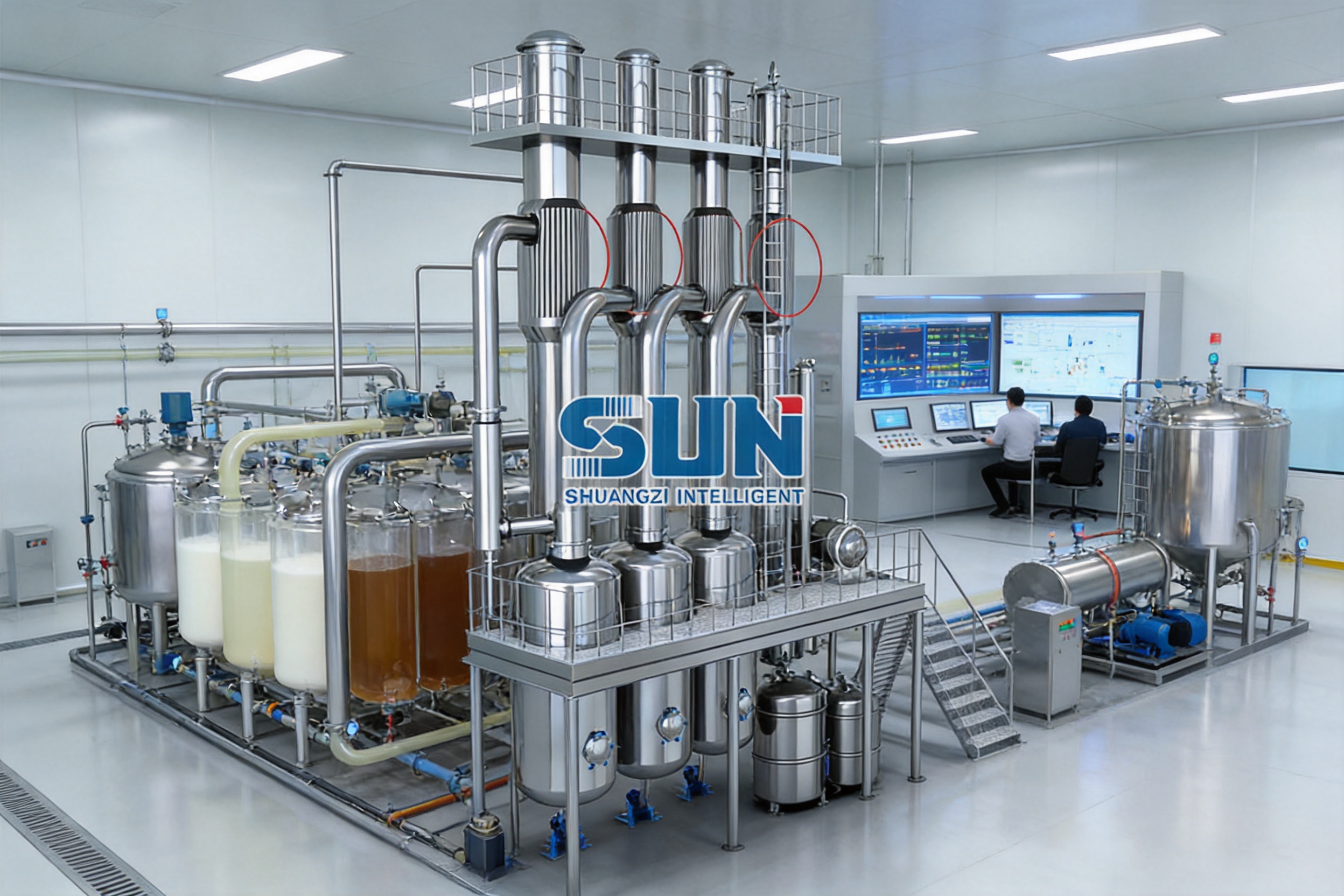
The company can provide engineering services that include process design, equipment design, installation, line debugging, system integration, and turnkey project support. A turnkey approach can simplify project coordination because process equipment, auxiliary systems, piping, automation, installation, and commissioning can be considered within one integrated plan.
For a complete concentration line, the evaporator may be combined with extraction equipment, filtration systems, storage tanks, sterilization units, drying equipment, crystallizers, filling systems, or wastewater treatment components. Integrated design can help prevent mismatches in flow rate, pressure, temperature, material compatibility, and control logic.
Turnkey delivery also requires attention to documentation and training. The supplier may support equipment drawings, utility lists, operating instructions, maintenance manuals, spare-parts lists, commissioning records, and operator training. The precise scope should be confirmed in the project contract and technical specification.
11. Installation and Commissioning Considerations
Before installation, the customer should confirm that the foundation, structural support, building height, access routes, drainage system, steam supply, cooling-water system, electrical supply, compressed air, and vacuum arrangements meet the project requirements. Because some reference models are tall vertical systems, plant height and lifting access must be evaluated early.
Installation should include alignment of vessels, pumps, pipelines, valves, instruments, and support structures. Product pipelines should be arranged to minimize dead legs and promote complete drainage where sanitary operation is required. Steam and condensate lines should include appropriate traps, valves, insulation, and protection against water hammer.
Commissioning normally begins with mechanical inspection and utility verification. The system can then be flushed and cleaned before water testing. Instrument signals, pump rotation, valve operation, vacuum performance, level control, alarm functions, and emergency shutdowns should be checked systematically.
Initial product trials should start at conservative feed rates and moderate operating conditions. Operators can gradually adjust steam pressure, vacuum level, feed distribution, and concentrate discharge while monitoring product quality and equipment stability. Trial data can be used to establish operating recipes and maintenance intervals.
12. Operation and Maintenance Recommendations
Operators should maintain stable feed flow and avoid sudden changes in concentration or viscosity. An unstable feed can cause poor wetting, foaming, surging, or uneven heat transfer. Steam pressure should remain within the design range, and vacuum should be monitored continuously.
Regular inspection should include pumps, mechanical seals, gaskets, valves, instruments, separators, condensers, and heat-transfer surfaces. Unusual vibration, noise, pressure changes, reduced capacity, increased steam consumption, or unstable product concentration may indicate fouling, leakage, blockage, distribution problems, or instrument malfunction.
Cleaning frequency should be based on actual product behavior rather than a generic schedule. A product that contains proteins, minerals, sugars, or plant solids may require more frequent cleaning than a clear aqueous solution. Cleaning chemicals, temperature, circulation velocity, and contact time should be selected according to material compatibility and hygiene requirements.
Preventive maintenance can reduce unexpected downtime. Recommended activities may include checking pump alignment, inspecting seals, calibrating instruments, testing safety devices, cleaning strainers, inspecting welds and joints, verifying valve response, and reviewing historical operating data.
Operators should also record steam consumption, cooling-water consumption, feed rate, product concentration, temperatures, pressures, cleaning cycles, and production hours. Trend analysis can reveal gradual performance deterioration before it becomes a major failure.
13. Environmental and Economic Benefits
Energy-efficient evaporation can reduce the amount of fuel required to produce a given quantity of concentrated product. The three-effect design reuses secondary steam and therefore reduces the need for fresh steam compared with a single-effect system. Lower utility consumption can reduce operating expenses and contribute to a lower environmental impact.
Continuous operation may also improve resource utilization. Stable processing can reduce product losses associated with repeated batch heating and cooling. A shorter residence time may reduce degradation and improve the yield of usable product. The ability to concentrate before drying can lower the energy demand of downstream dryers.
The economic value of the system should be evaluated over its full service life. Initial equipment cost is only one factor. Steam savings, cooling-water use, labor requirements, cleaning costs, maintenance, product yield, downtime, and integration with existing utilities all influence the total cost of ownership.
A three-effect system is often attractive because it avoids the extreme complexity of a higher-effect installation while still providing major energy savings. This balance can be particularly valuable for customers expanding production capacity or modernizing an existing concentration line.
14. Frequently Asked Questions
Q1: What is the main function of a three-effect falling-film evaporator?
Its main function is to remove water from a liquid product and increase the product’s solids concentration. It uses three evaporation stages arranged in series, with secondary vapor from one stage reused to heat the next stage.
Q2: Why is it called a falling-film evaporator?
The liquid is distributed over heated surfaces and flows downward as a thin film under gravity. Water evaporates as the film moves through the heating section. This structure supports high heat transfer and relatively short product residence time.
Q3: How much steam can the system save?
Compared with a comparable single-effect falling-film evaporator, the three-effect system can use approximately one-third as much energy under suitable operating conditions. Actual steam consumption depends on feed concentration, final concentration, temperature, pressure, heat losses, and product properties.
Q4: Is the equipment suitable for milk?
Yes. The reference design includes concentration conditions suitable for milk-related applications, including an inlet concentration of approximately 11.5% to 12% and an outlet concentration of approximately 45% to 48%. Final design values must be confirmed according to the actual dairy product and hygiene requirements.
Q5: Can it process heat-sensitive materials?
It is suitable for many heat-sensitive materials because vacuum operation lowers the boiling temperature and the falling-film structure reduces residence time. The three effects can operate at progressively lower temperatures, helping protect nutrients, active substances, aromas, and flavor.
Q6: What are the reference operating temperatures?
The reference evaporating temperatures are approximately 70 degrees Celsius in the first effect, 57 degrees Celsius in the second effect, and 45 degrees Celsius in the third effect. Heating temperatures are approximately 80 degrees Celsius, 70 degrees Celsius, and 57 degrees Celsius. These values can be modified according to the process.
Q7: How does it compare with a forced-circulation evaporator?
The falling-film system generally requires fewer forced circulation and stirring components in the heating section. This can reduce mechanical wear, pump-related energy consumption, scaling risk, and maintenance requirements. However, forced circulation may be preferable for some highly viscous, crystallizing, or poorly wetting materials.
Q8: Is a three-effect system better than a five-effect system?
Neither configuration is universally better. A five-effect system may provide additional steam savings, but it also involves greater complexity, investment, installation requirements, and maintenance. A three-effect system often provides a strong balance between energy efficiency, capital cost, reliability, and operational simplicity.
Q9: What production capacities are available?
Reference models cover evaporation capacities from approximately 3,200 kg/h to 7,000 kg/h. The available models include SJM3-3200, SJM3-4800, SJM3-5400, SJM3-6300, and SJM3-7000. Final capacity should be confirmed from the actual process duty.
Q10: Can the equipment be customized?
Yes. Customization can cover heat-transfer area, materials, concentration range, operating temperatures, separator design, condenser arrangement, pumps, automation, cleaning system, dimensions, and connection standards. The equipment should be designed from the customer’s feed and product specifications.
Q11: What information is needed for equipment selection?
Important information includes feed flow rate, inlet concentration, target outlet concentration, feed temperature, product viscosity, foaming behavior, solids type, heat sensitivity, allowable residence time, steam pressure, cooling-water conditions, electrical supply, cleaning requirements, and the desired level of automation.
Q12: Can the supplier provide a complete production line?
The supplier can support process design, equipment design, matching procurement, installation, commissioning, automation integration, and turnkey project implementation. The complete scope depends on the project requirements and may include upstream extraction, filtration, concentration, drying, separation, crystallization, storage, and other units.
15. Conclusion
The three-effect falling-film evaporator is a versatile solution for continuous vacuum concentration in food, dairy, pharmaceutical, biological, plant extraction, and fermentation applications. Its core strengths come from the combination of three-effect steam reuse, thin-film heat transfer, low-temperature vacuum operation, continuous processing, and a relatively simple mechanical structure.
Compared with a single-effect evaporator, it can significantly reduce steam and cooling-water consumption. Compared with four-effect and five-effect equipment, it offers a more moderate investment and less complicated operating structure. Compared with forced-circulation concentrators, it can reduce the need for mechanical circulation components and simplify maintenance.
The equipment range supports evaporation capacities from approximately 3,200 kg/h to 7,000 kg/h, with customizable concentration targets and operating conditions. Reference temperatures gradually decrease through the three effects, supporting gentle treatment of heat-sensitive materials. The system can also be integrated with drying, extraction, filtration, separation, crystallization, and other process units.
Zhejiang Shuangzi Intelligent Equipment Co., Ltd. adds value through process engineering, automation design, equipment manufacturing, pilot-scale support, installation, commissioning, and turnkey project services. Its manufacturing resources, research and development capabilities, and experience across biological, pharmaceutical, food, extraction, and environmental applications provide a foundation for customized concentration solutions.
For a successful project, the evaporator should be selected as part of the complete process. Feed properties, product quality, utility conditions, hygiene requirements, cleaning procedures, layout, automation, and future capacity expansion should all be considered. With appropriate engineering and operation, a three-effect falling-film evaporator can provide reliable concentration performance, lower utility consumption, and improved protection of valuable product characteristics.
References
1. Perry’s Chemical Engineers’ Handbook, sections covering evaporation, heat transfer, vapor-liquid separation, and process utility design.
2. McCabe, W. L., Smith, J. C., and Harriott, P. Unit Operations of Chemical Engineering, chapters on evaporation and heat-transfer equipment.
3. Geankoplis, C. J. Transport Processes and Separation Process Principles, discussion of heat transfer, boiling, evaporation, and concentration systems.
4. Walas, S. M. Chemical Process Equipment: Selection and Design, guidance on evaporator selection, process design, and equipment integration.
5. General principles of hygienic equipment design for food, dairy, pharmaceutical, and biological processing systems.
6. Manufacturer-provided technical data for three-effect falling-film evaporator models, including capacity, steam consumption, operating temperatures, power, cooling-water consumption, and dimensions.