
 英语
英语 俄语
俄语Content
- 1 Product Overview and Industrial Positioning
- 2 Why DEA Requires a Dedicated Thin Film Evaporation Solution
- 3 Core Working Principle
- 4 Major Advantages Over Conventional Evaporators
- 4.1 Short Residence Time for Better Product Protection
- 4.2 High Vacuum and Lower Evaporation Temperature
- 4.3 Continuous Wall Renewal and Anti-Fouling Performance
- 4.4 Efficient Heat Transfer with Compact Heating Area
- 4.5 Adaptability to Viscosity Fluctuations
- 4.6 Improved Separation Efficiency
- 4.7 Strong Suitability for Small and Medium Batch Production
- 5 Technical Parameters
- 6 How Each Parameter Supports Process Performance
- 7 Application Scenarios in DEA Refining
- 8 Design Features That Strengthen Competitiveness
- 9 Manufacturing Strengths Behind the Equipment
- 10 Advanced Manufacturing Processes and Quality Considerations
- 11 Automation and Process Control Value
- 12 Operational Benefits for Plant Managers
- 13 Comparison with Common Alternative Technologies
- 14 Installation and System Integration Considerations
- 15 Customization Potential
- 16 Company Strength and Service Capability
- 17 Quality, Safety, and Environmental Contribution
- 18 Q&A Section
- 18.1 What is the main purpose of the automatic scrapper thin film evaporator for DEA?
- 18.2 Why is thin film evaporation suitable for diethanolamine?
- 18.3 How does the scrapper mechanism improve performance?
- 18.4 What advantages does this equipment have over a kettle evaporator?
- 18.5 Can the equipment handle viscosity changes?
- 18.6 What model sizes are available?
- 18.7 What industries can use this evaporator?
- 18.8 Does the equipment support solvent recovery?
- 18.9 Why is the manufacturer’s engineering capability important?
- 18.10 What manufacturing strengths support equipment reliability?
- 19 Conclusion
- 20 References
- 21 Product: Automatic Scrapper Thin Film Evaporator for Diethanolamine(DEA)
In modern chemical processing, diethanolamine, often abbreviated as DEA, is a valuable intermediate used across fine chemicals, gas treatment, detergents, textile auxiliaries, emulsifiers, corrosion inhibitors, and downstream specialty formulations. However, DEA is not always easy to refine. It may show viscosity changes during concentration, it can adhere to heated surfaces, and it may suffer quality loss if exposed to excessive temperature or prolonged residence time. For producers who must purify crude DEA, strip solvents, remove light components, concentrate process liquor, or prepare higher-purity feedstock for subsequent synthesis, evaporation equipment must be carefully selected. A conventional evaporator may provide heating and vapor removal, but it often struggles with thermal sensitivity, wall fouling, local overheating, and inconsistent product quality. The automatic scrapper thin film evaporator for diethanolamine is designed specifically to solve these problems.
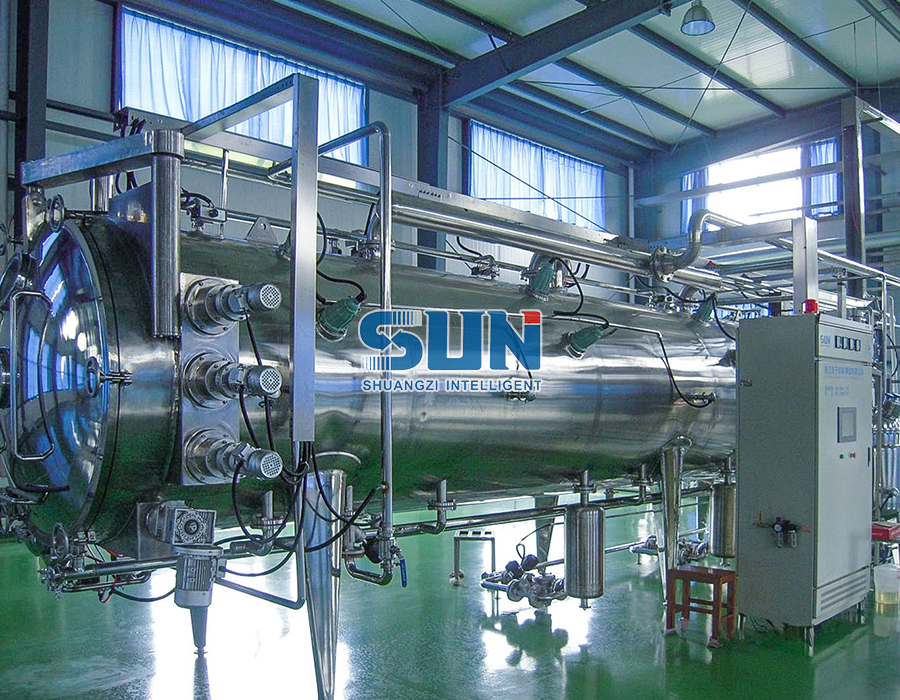
This equipment combines forced thin-film formation, mechanical wall scraping, high-vacuum evaporation, low-temperature operation, fast mass transfer, and short material residence time. It is a concentration machine dedicated to chemical purification and refinement, especially for DEA and similar viscous or heat-sensitive liquids. By spreading the feed into a thin turbulent film on the inner wall of the heating cylinder, the evaporator enables rapid evaporation while keeping the material moving continuously. The rotating scrappers remove liquid from the wall, prevent retention, renew the heat-transfer surface, and reduce the chance of material degradation. The result is a highly efficient evaporation process that supports stable concentration, refined product purity, and dependable industrial operation.
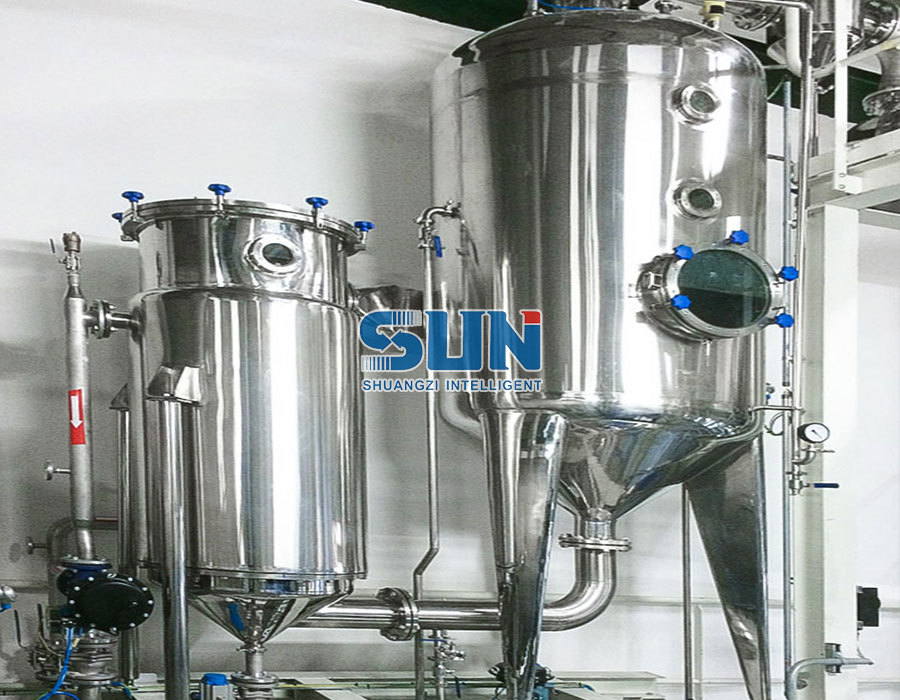
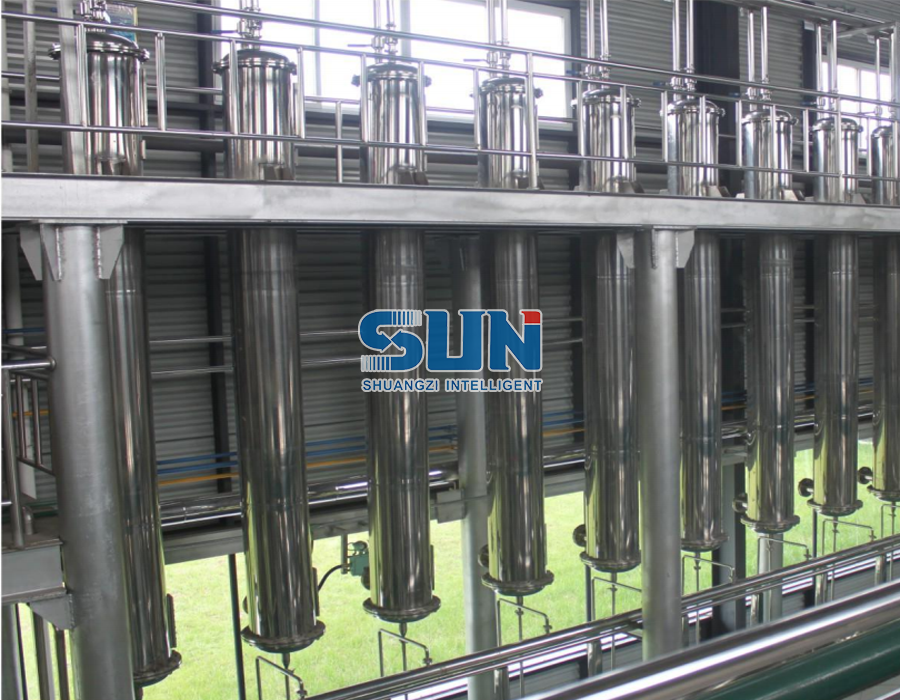
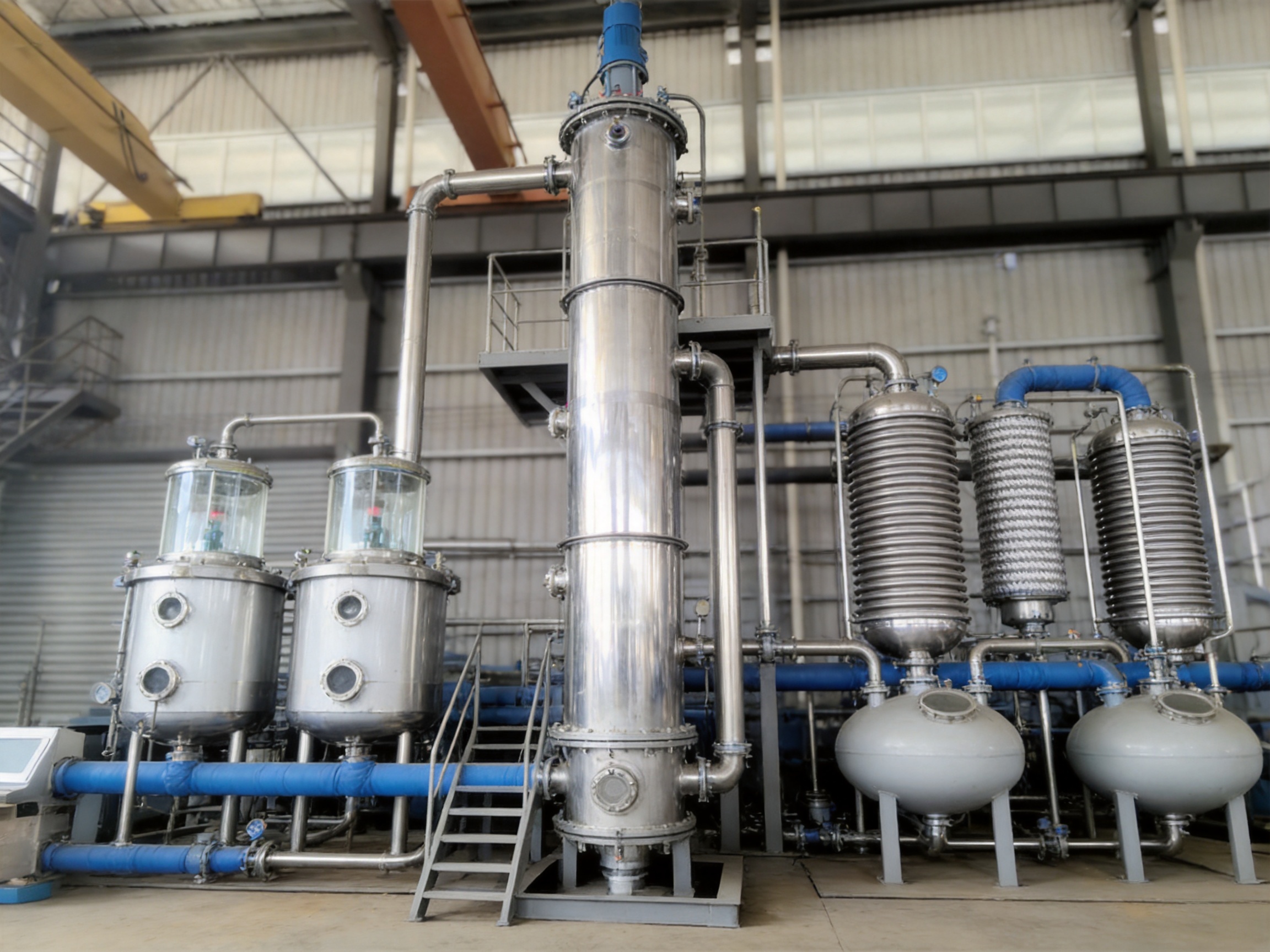
Automatic Scrapper Thin Film Evaporator for Diethanolamine(DEA)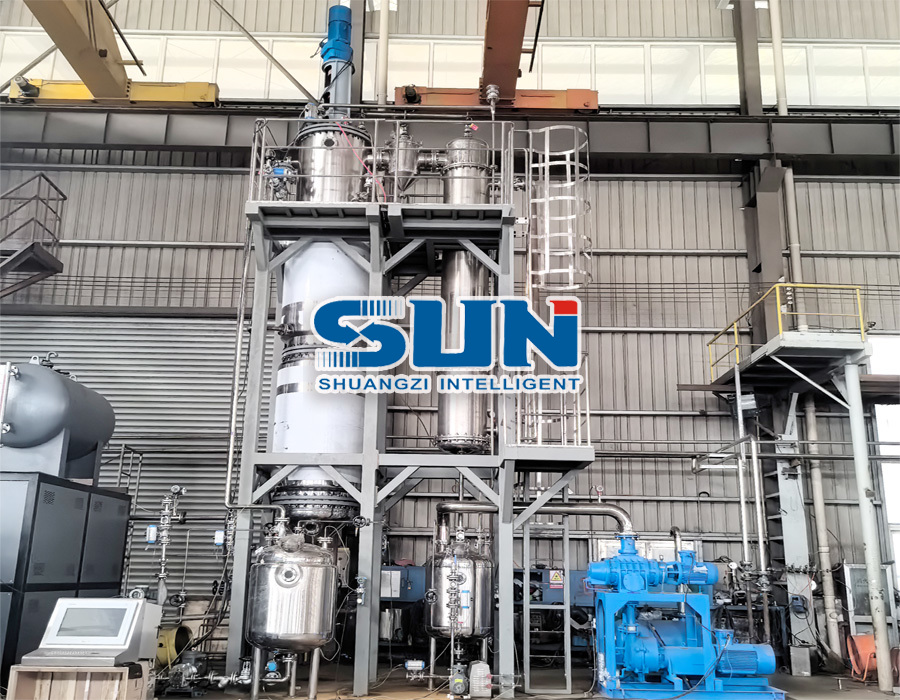
Product Overview and Industrial Positioning
The automatic scrapper thin film evaporator for DEA is a specialized evaporation and concentration system developed for chemical refining applications where material quality, process stability, and heat-transfer efficiency are critical. Its main purpose is to purify, refine, and concentrate diethanolamine under controlled vacuum and temperature conditions. Unlike general-purpose evaporation equipment that may rely on bulk boiling, natural circulation, or long contact time, this evaporator forces the liquid into a thin film using rotating scrappers. The thin film has a large surface area relative to its volume, which allows fast heat exchange and rapid vaporization. This is particularly beneficial when processing DEA because it reduces the time during which the material is exposed to heat.
The equipment is commonly used for the purification of crude DEA, concentration of DEA-containing process streams, removal of residual solvents, recovery of valuable components, and pretreatment of DEA raw materials for downstream fine chemical production. It is also suitable for applications related to daily chemical ingredients, textile auxiliary raw materials, and other chemical intermediates where stable concentration and quality control are required. For small and medium batch production, pilot-to-industrial scale processing, and flexible multi-product workshops, the evaporator provides an effective balance of capacity, controllability, and product protection.
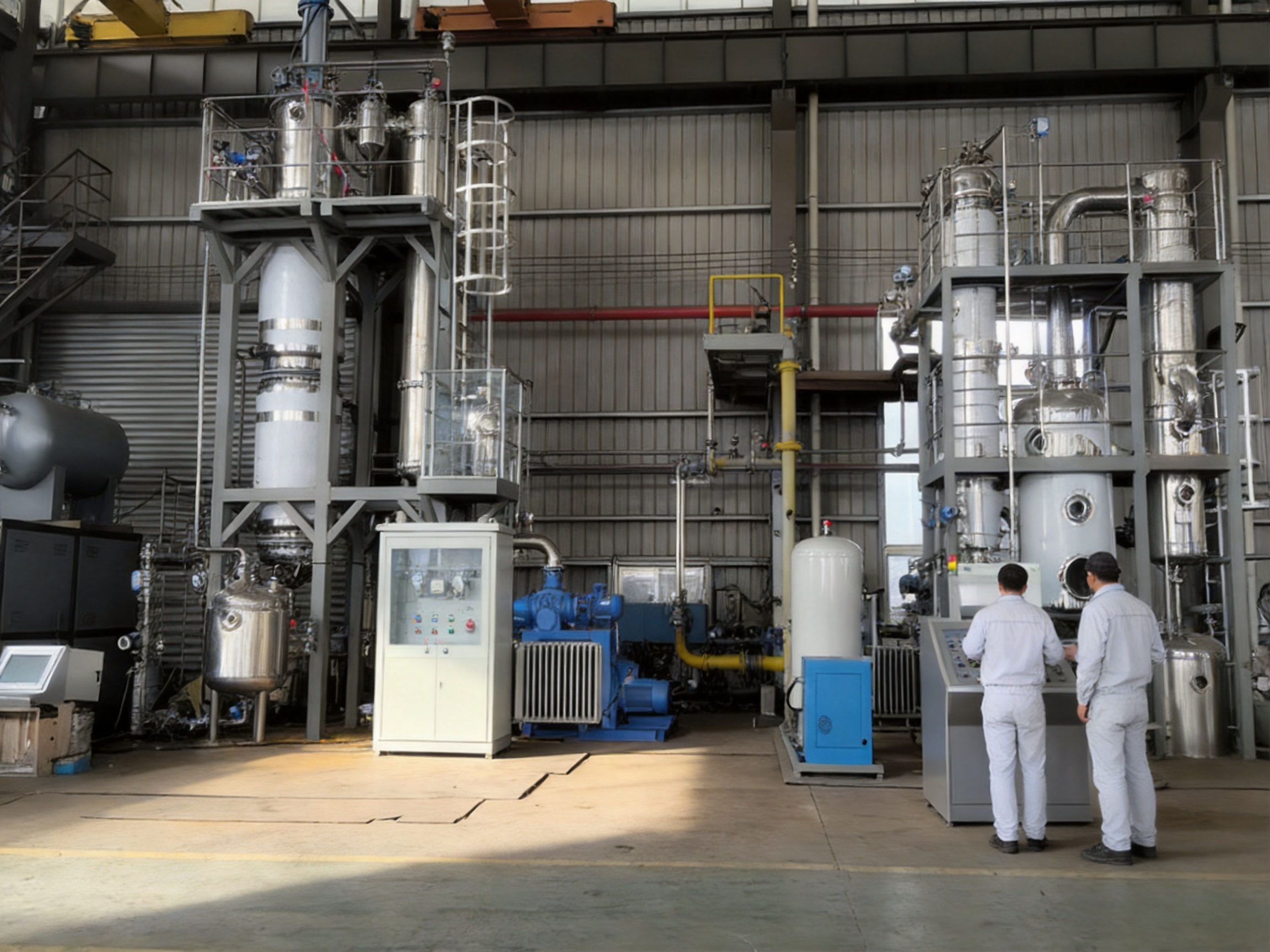
Zhejiang Shuangzi Intelligent Equipment Co., Ltd. supplies this type of equipment as part of its broad range of process systems for plant extraction, biological fermentation, pharmaceutical engineering, natural food processing, energy conservation, environmental protection, and chemical concentration. Founded in 2007 and located in Hangzhou, Zhejiang Province, the company has developed strong capabilities in process technology, automation engineering design, equipment manufacturing, matching purchase, installation, system integration, and turnkey project delivery. These strengths are important because a thin film evaporator is not merely a vessel with a motor; it is a precisely engineered process unit that must integrate heating, vacuum, condensation, sealing, mechanical rotation, discharge, instrumentation, and safety design.
Why DEA Requires a Dedicated Thin Film Evaporation Solution
Diethanolamine has processing characteristics that make it more demanding than many ordinary solvents or low-viscosity liquid mixtures. It can become more viscous as concentration increases, which affects flow behavior and heat transfer. If a thick boundary layer forms on the heating surface, heat-transfer efficiency decreases and local hot spots may appear. DEA also has a tendency to adhere to surfaces, particularly when the process stream contains heavier components, impurities, or polymerizable residues. Wall adhesion can cause fouling, uneven heating, quality variation, cleaning difficulty, and loss of production time.
Thermal sensitivity is another important consideration. Although DEA is widely used in chemical operations, its quality can deteriorate if the process exposes it to excessive temperature for too long. In a conventional evaporator, the liquid may remain in the heated zone for an extended period, particularly when the viscosity increases or circulation becomes inefficient. Such conditions may lead to discoloration, by-product formation, odor changes, and a reduction in downstream usability. For users who aim to obtain high-purity DEA, the evaporation system must not only remove volatile components but also preserve the chemical quality of the target product.
The automatic scrapper thin film evaporator responds to these challenges by combining high vacuum with short residence time. Under high-vacuum operating conditions, the boiling point of DEA-containing feed is significantly reduced. Lower boiling temperature means that evaporation can occur at milder thermal conditions. The scrappers rotate at a set speed and continuously spread the liquid into a uniform film while scraping the heated inner wall. Instead of allowing the material to stay in a thick layer, the equipment keeps the material in a moving, turbulent, renewed state. This creates efficient heat transfer without severe thermal stress.
Core Working Principle
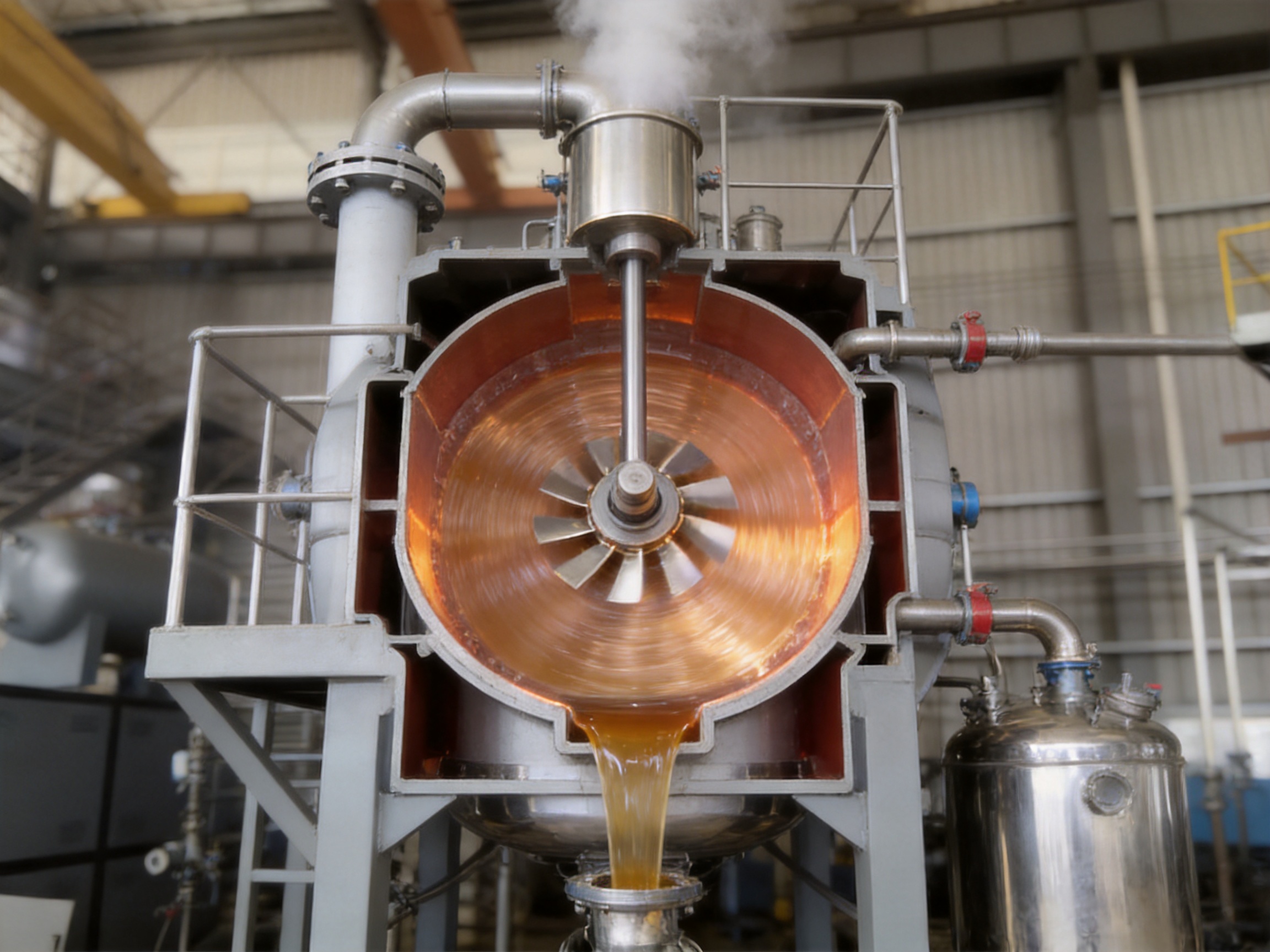
The central working principle of the evaporator is fixed-speed scrapper forced film formation combined with high-vacuum, low-temperature evaporation. The feed liquid enters the upper section of the evaporator and is distributed along the inner wall of the heating cylinder. A rotor equipped with scrappers rotates at a controlled speed. As the scrappers move close to the heated wall, they spread the material into a thin liquid film. The film flows downward along the cylindrical surface while being continuously renewed and agitated.
Steam or another heating medium supplies heat to the jacket or heating surface. Because the liquid film is thin, heat can pass through it quickly. The turbulent film state improves heat-transfer coefficients and accelerates the vaporization of volatile components. Under vacuum, the liquid boils at a lower temperature than it would under atmospheric pressure. Secondary vapor generated during evaporation is separated from the concentrated liquid and sent to the condensation system. The condensed solvent or light fraction is collected, while the concentrated high-purity DEA is discharged from the bottom outlet.
The scrappers perform several essential functions at the same time. They create the thin film, reduce boundary layer resistance, prevent material from sticking to the wall, remove residue before it can overheat, and guide the product downward. The automatic and continuous wall-scraping action is especially valuable for DEA because it prevents local retention. When the material does not remain trapped on the hot surface, degradation risk is greatly reduced. This feature differentiates the equipment from many traditional evaporators used for less sensitive liquids.
Major Advantages Over Conventional Evaporators
Short Residence Time for Better Product Protection
One of the strongest advantages of the automatic scrapper thin film evaporator is its ultra-short residence time. In many conventional evaporation systems, material may stay in the heated zone for several minutes or longer. For heat-sensitive chemical streams, this can be harmful. In a thin film evaporator, the material is distributed as a thin layer and travels quickly along the heating surface. Evaporation occurs rapidly, and the concentrated product is discharged promptly. This reduces exposure to heat and helps maintain the purity, color, odor, and functional quality of DEA.
High Vacuum and Lower Evaporation Temperature
High-vacuum operation reduces the boiling point of the material system. This is a key advantage when processing DEA, because lower operating temperature limits thermal stress. Competitor equipment that cannot maintain stable vacuum or that relies on higher boiling temperatures may require stronger heating and may expose the product to harsher conditions. The automatic scrapper thin film evaporator is designed to coordinate vacuum evaporation with condensation, vapor discharge, sealing, and material flow, supporting stable low-temperature concentration.
Continuous Wall Renewal and Anti-Fouling Performance
Wall adhesion is a major cause of process inefficiency in viscous chemical evaporation. Once deposits form on the heat-transfer surface, thermal resistance rises, energy consumption increases, and product quality may become unstable. The scrapper mechanism continuously removes material from the wall and renews the liquid film. This dynamic action reduces fouling tendency and keeps heat transfer more consistent. Compared with natural circulation or simple jacketed evaporators, the scrapper thin film design is much better suited for sticky, viscous, or concentration-sensitive materials.
Efficient Heat Transfer with Compact Heating Area
Because the liquid film is thin and turbulent, heat transfer is efficient. The equipment can achieve strong evaporation capacity with a relatively compact heating surface. Efficient heat transfer means faster evaporation, shorter batch cycles, and better use of steam energy. For plants with limited installation space, compact design is also valuable. A thin film evaporator can often provide performance that would require a larger conventional evaporator if natural circulation or static heating were used.
Adaptability to Viscosity Fluctuations
During DEA concentration, viscosity may change as the content of light components decreases and the product becomes more concentrated. Some evaporators perform well only within a narrow viscosity range. The automatic scrapper thin film evaporator is more adaptable because the rotor mechanically forces film formation instead of depending entirely on gravity or circulation flow. Even when viscosity increases, the scrappers help maintain liquid distribution and prevent stagnant layers. This improves process reliability and makes the equipment suitable for feed streams with variable composition.
Improved Separation Efficiency
Separation efficiency depends on heat transfer, vapor-liquid separation, vacuum control, condensation capacity, and material residence behavior. The evaporator is designed to support rapid vaporization and effective vapor removal. Secondary vapor is discharged into the condensation system, while concentrated DEA continues downward. The separation path helps reduce entrainment and supports stable collection of solvent and product streams. For DEA refining, this contributes to higher recovery and better final purity.
Strong Suitability for Small and Medium Batch Production
Many DEA refining operations require flexible production rather than extremely large continuous lines. The available models, ranging from 100 L to 2000 L, support different production needs and make it easier for users to select a suitable capacity. The equipment can be applied in small and medium batch chemical refining, pilot-scale verification, process optimization, and commercial production. This modular capacity range is useful for producers who need practical scalability without overinvesting in oversized equipment.
Technical Parameters
The following table summarizes the available models and key technical parameters. Actual selection should be based on feed composition, solvent content, target concentration, viscosity, vacuum level, heating medium, condensation load, and process layout.
| Model | 100 L | 300 L | 500 L | 800 L | 1000 L | 1500 L | 2000 L |
| Steam Pressure | 0.25 MPa | 0.25 MPa | 0.25 MPa | 0.25 MPa | 0.25 MPa | 0.25 MPa | 0.25 MPa |
| Evaporation Capacity | 60 kg/h | 100 kg/h | 120 kg/h | 160 kg/h | 200 kg/h | 250 kg/h | 280 kg/h |
| Heating Area | 0.7 square meters | 1.2 square meters | 1.5 square meters | 2.1 square meters | 2.5 square meters | 3.2 square meters | 3.5 square meters |
| Condensation Area | 2.5 square meters | 3.5 square meters | 4.6 square meters | 6.5 square meters | 7.4 square meters | 10 square meters | 10.8 square meters |
| Cooling Area | 0.3 square meters | 0.4 square meters | 0.48 square meters | 0.78 square meters | 1.2 square meters | 1.8 square meters | 2.2 square meters |
| Motor Power | 0.75 kW | 1.5 kW | 1.5 kW | 2.2 kW | 3.0 kW | 3.0 kW | 4.0 kW |
| Stirring Speed | 32 RPM | 32 RPM | 32 RPM | 32 RPM | 32 RPM | 32 RPM | 32 RPM |
How Each Parameter Supports Process Performance
Steam pressure is listed at 0.25 MPa for all models. This moderate pressure level supports controlled heating and helps match the low-temperature evaporation strategy required for DEA. In chemical refining, excessive heating pressure may raise wall temperature and increase degradation risk. A properly selected heating medium pressure provides enough energy for vaporization while keeping the heat-transfer surface within a safer process window.
Evaporation capacity ranges from 60 kg/h for the 100 L model to 280 kg/h for the 2000 L model. This range allows users to choose equipment based on throughput requirements. A smaller model can be used for pilot batches, specialty chemicals, or limited production campaigns. Larger models can support higher-capacity industrial refining. The gradual capacity increase provides flexibility for process scale-up and plant expansion.
Heating area increases from 0.7 square meters to 3.5 square meters. The heating area directly affects the available heat-transfer surface. Because thin film evaporation improves heat-transfer efficiency, even a relatively compact area can deliver significant performance. However, larger feed rates or higher evaporation loads require more surface area. Correct selection helps avoid under-sizing, unstable evaporation, or excessive residence time.
Condensation area also increases with model size. Condensation is critical because vapor generated from the evaporator must be removed and condensed effectively to maintain vacuum and separation stability. If condensation is insufficient, vapor pressure may rise, vacuum may fluctuate, and evaporation temperature may increase. The integrated condensation area supports stable vapor handling and contributes to continuous operation.
Cooling area supports final condensation, vacuum system protection, and product or solvent recovery. Adequate cooling helps ensure that volatile fractions are collected efficiently rather than carried into the vacuum system. This improves resource recovery, reduces emissions, and protects auxiliary equipment. In modern chemical plants, solvent recovery and emission control are increasingly important for both economic and environmental reasons.
Motor power ranges from 0.75 kW to 4.0 kW. The motor drives the scrapper rotor, and stable mechanical rotation is necessary for uniform film formation. The listed motor power values reflect the mechanical load associated with different equipment sizes. For viscous DEA streams, sufficient torque and reliable rotation are vital. Poor mechanical design can cause uneven scraping, vibration, increased wear, or film instability. A robust drive system supports long-term performance.
The stirring speed is listed as 32 RPM across the range. A fixed and appropriate speed helps ensure consistent film formation and scraping action. In this application, the goal is not violent mixing in a large tank but controlled forced spreading on a heated cylindrical surface. A suitable rotational speed provides a balance between film renewal, mechanical reliability, residence time, and energy consumption.
Application Scenarios in DEA Refining
Purification of Crude DEA
Crude DEA may contain solvents, water, light amines, heavier residues, or process-related impurities depending on the production route and upstream separation conditions. The scrapper thin film evaporator can remove volatile components under vacuum while concentrating the desired DEA fraction. By limiting residence time and preventing wall overheating, it helps maintain target product quality. This is especially valuable for producers supplying downstream users who require consistent raw material properties.
Solvent Stripping in Chemical Production Systems
Many chemical processes require solvent removal before product discharge, storage, or further reaction. Solvent stripping can be difficult when the product phase becomes viscous as solvent content decreases. The automatic scrapper thin film evaporator is well suited to this task because it keeps the material spread as a thin film even as viscosity changes. The secondary vapor enters the condensation system and can be recovered, while the concentrated DEA-containing stream is discharged from the bottom.
Feed Liquid Concentration
Some production systems require concentration of DEA solutions before downstream reaction, blending, or formulation. Concentration must be performed carefully to avoid introducing degradation products. Thin film evaporation provides fast concentration and controlled thermal exposure. It is also useful when the feed composition varies between batches, because the scrapper mechanism helps maintain process consistency.
Raw Material Pretreatment for Downstream Fine Chemicals
DEA is used in multiple downstream products. The quality of the DEA feedstock can influence reaction yield, color, odor, and final product consistency. Pretreating DEA through controlled evaporation can remove undesirable volatiles and prepare a more stable feed. The evaporator therefore contributes not only to separation but also to the reliability of the entire downstream manufacturing chain.
Daily Chemical and Textile Auxiliary Production
In daily chemicals and textile auxiliaries, raw material consistency is essential for product appearance, performance, and customer acceptance. DEA derivatives may be used in surfactants, emulsifiers, softeners, and other specialty formulations. Refining DEA with a controlled thin film evaporator helps manufacturers reduce variability and improve the reliability of intermediate materials.
Design Features That Strengthen Competitiveness
The automatic scrapper thin film evaporator has several design features that give it a competitive position compared with basic evaporation equipment. The most important is the coordinated relationship between mechanical scraping and vacuum evaporation. Some competitors may offer evaporators with heating surfaces but without effective wall renewal. Others may provide agitation but fail to create a uniform thin film. In contrast, this equipment is designed around the process behavior of DEA: it lowers the boiling point, spreads the material, renews the surface, removes vapor quickly, and discharges concentrated product with reduced thermal damage.
Another competitive strength is the ability to process materials with viscosity fluctuations. This is not a minor advantage. In real production, feed streams do not always behave exactly as laboratory samples. Solvent content, impurity profile, temperature, and concentration may change. A process unit that can tolerate these variations reduces downtime and operator intervention. The scrapper thin film structure provides mechanical assistance where purely hydraulic circulation may be unreliable.
The equipment also supports higher product purity by reducing degradation. Product purity is not determined only by separation theory; it is also affected by what happens inside the equipment during heating. If a small amount of material sticks to the wall and decomposes, it may contaminate the entire batch. Continuous scraping reduces this risk. For manufacturers targeting premium chemical quality, this is a meaningful advantage over lower-cost evaporators that may have hidden quality costs.
Energy efficiency is another important factor. Thin film evaporation improves heat-transfer performance, which can reduce unnecessary heating time. Efficient condensation and vacuum stability also help maintain process conditions. Although total energy use depends on the full system configuration, the process principle is inherently favorable for fast evaporation and compact heat transfer.
Manufacturing Strengths Behind the Equipment
A high-performance thin film evaporator requires careful manufacturing. The heating cylinder must have proper geometry and surface finish. The scrapper rotor must be accurately fabricated and aligned. The clearance between scrapper components and the wall must be controlled. The sealing structure must support vacuum operation. Welds must be reliable, especially where the equipment contacts process materials. Zhejiang Shuangzi Intelligent Equipment Co., Ltd. has built its manufacturing capability around these requirements.
The company operates with strong technical power and a production foundation that includes advanced welding and finishing equipment. Plasma argon arc welding machines, plasma cutting machines, and CAM CNC machining centers are used to support accurate fabrication. These manufacturing tools help improve dimensional precision, weld quality, material processing consistency, and equipment appearance. For process equipment, manufacturing accuracy is directly connected to operating stability. A poorly fabricated rotor or heating cylinder can cause uneven film formation, vibration, seal wear, or cleaning difficulty. Advanced machining and welding reduce these risks.
The company also maintains a pilot production workshop and research and development platform aligned with automation and GMP-related requirements. This is valuable for users who need process verification, scale-up support, and integrated engineering. The ability to understand pilot processes such as vacuum low-temperature drying, plant extraction, evaporation, precipitation separation, extraction, and fermentation allows the manufacturer to provide more than isolated hardware. It can support process thinking, system configuration, and practical commissioning.
Because the company works in EPC and EPCM service models, it can provide engineering, process design, equipment design, installation, line debugging, and turnkey projects. For a DEA refining user, this means the evaporator can be integrated with feed tanks, preheaters, vacuum systems, condensers, receiving tanks, control systems, cleaning arrangements, and supporting utilities. Many operational problems occur not because the main machine is inadequate, but because the surrounding system is poorly designed. Integrated project capability helps avoid such issues.
Advanced Manufacturing Processes and Quality Considerations
The production of a scrapper thin film evaporator begins with process requirement analysis. Engineers evaluate the material properties, evaporation objective, target purity, batch size, viscosity range, heating medium, vacuum level, corrosion considerations, and installation environment. This information guides equipment sizing and configuration. For DEA processing, special attention is paid to heat sensitivity, wall adhesion, and solvent removal requirements.
Material preparation is another key step. Process-contact surfaces must be selected to resist corrosion, support cleaning, and maintain product quality. Cutting and forming must preserve dimensional accuracy. Plasma cutting helps prepare metal components efficiently and consistently, while CNC machining supports precision parts such as shafts, flanges, sealing components, and rotor assemblies. Accurate fabrication is essential because the rotating scrapper system must operate smoothly inside the heating cylinder.
Welding quality is particularly important for vacuum chemical equipment. Plasma argon arc welding can create clean and reliable welds when properly applied. Good welding reduces the risk of leakage, contamination traps, and weak points. After welding, components may require inspection, finishing, and dimensional verification. Surface quality inside the evaporator influences fouling behavior and cleaning effectiveness. Smooth, well-finished surfaces reduce residue retention and support stable operation.
Assembly requires careful alignment of the drive, rotor, scrappers, cylinder, seals, discharge connection, and vapor outlet. The scrapper mechanism must rotate without excessive vibration. The clearance and movement pattern must support film formation without damaging the heating surface. Mechanical reliability is vital because the evaporator operates under vacuum and temperature conditions while handling valuable chemical material. A stable rotor system helps maintain continuous scraping and consistent heat transfer.
Quality control can include pressure tests, vacuum leak checks, mechanical rotation tests, dimensional inspections, and functional verification. For integrated systems, instrumentation, control logic, condenser performance, and utility connections may also be checked. The combination of manufacturing precision and process verification gives users greater confidence during installation and commissioning.
Automation and Process Control Value
Modern chemical plants increasingly require equipment that can be integrated into automated production. Automation improves consistency, reduces manual errors, supports data recording, and enhances safety. In DEA evaporation, process variables such as vacuum level, heating temperature, feed rate, rotor operation, condenser temperature, discharge rate, and receiving tank status can affect product quality. A well-designed control system helps maintain stable conditions throughout the batch or continuous run.
Zhejiang Shuangzi Intelligent Equipment Co., Ltd. focuses on automation engineering design and equipment system integration. This background allows the evaporator to be supplied as part of a controlled process line rather than a standalone mechanical unit. Depending on project requirements, the system may be configured with sensors, valves, control cabinets, human-machine interfaces, alarms, interlocks, and data monitoring functions. For users working under quality management systems, automated control and traceability may be highly valuable.
Automation also improves safety. Vacuum evaporation involves heated surfaces, rotating machinery, vapors, condensate collection, and chemical handling. Control logic can help prevent dry running, overheating, abnormal vacuum loss, excessive pressure, motor overload, or cooling failure. While final safety design depends on the specific process and local regulations, integrated control capability provides a strong foundation for safer and more reliable operation.
Operational Benefits for Plant Managers
For plant managers, equipment selection is not based only on technical theory. The machine must help reduce cost, stabilize production, improve quality, and fit plant operations. The automatic scrapper thin film evaporator provides several practical benefits. First, it reduces the likelihood of product degradation, which can lower off-spec batches and reprocessing costs. Second, it reduces fouling and wall adhesion, which can shorten cleaning time and improve equipment availability. Third, it provides fast evaporation, which can improve throughput and reduce batch cycle time.
The model range helps users match investment with actual production needs. A plant can start with a smaller model for specialty production or choose a larger model for higher throughput. Because the manufacturer also provides engineering and turnkey services, future expansion can be planned more systematically. This is important for companies that expect production growth or product diversification.
Another benefit is solvent recovery. Volatile components removed from the DEA stream are condensed and collected rather than simply released. Efficient condensation supports environmental compliance and resource reuse. In many plants, recovered solvent has economic value, and emission reduction supports corporate sustainability goals.
Maintenance is also influenced by design. A machine that resists fouling and uses reliable mechanical components can reduce unplanned downtime. The scrapper action keeps the heating surface cleaner during operation, and the compact structure can simplify inspection compared with larger and more complex evaporator systems. Proper maintenance planning, including seal checks, motor inspection, scrapper condition monitoring, and cleaning, will further extend service life.
Comparison with Common Alternative Technologies
Compared with kettle evaporators, the scrapper thin film evaporator offers much shorter residence time and better wall renewal. A kettle evaporator heats a bulk liquid volume, which may be suitable for simple mixtures but can be risky for heat-sensitive or viscous DEA streams. Bulk heating can lead to temperature gradients and longer exposure. The thin film design avoids these disadvantages by continuously spreading the material and removing concentrated product.
Compared with falling film evaporators, the scrapper thin film evaporator is better for materials that do not naturally form a stable film. Falling film systems depend heavily on liquid distribution and gravity flow. If viscosity rises or wetting becomes uneven, dry spots, fouling, and poor heat transfer may occur. The scrapper system mechanically forces film formation, making it more reliable for DEA and similar materials.
Compared with forced circulation evaporators, the scrapper thin film evaporator can provide lower residence time and less bulk recirculation. Forced circulation systems can handle some fouling materials, but they may require larger pumps, higher circulation volume, and more energy. They may also expose the material repeatedly to heat. Thin film evaporation processes the material quickly in a controlled film, reducing repeated thermal exposure.
Compared with simple wiped film units without strong system integration, this evaporator benefits from the manufacturer’s process engineering and automation capabilities. Equipment performance depends on the complete system, including feed control, vacuum stability, condensation, discharge, and instrumentation. A well-integrated design can outperform a mechanically similar but poorly configured competitor system.
Installation and System Integration Considerations
Successful DEA evaporation requires more than selecting the evaporator body. The feed system should provide stable supply to the distributor. If feed rate fluctuates too much, film thickness and evaporation performance may vary. Preheating may be used to reduce thermal shock and improve evaporation efficiency, depending on the process. The vacuum system must be sized for vapor load and non-condensable gas removal. Condensers must provide enough heat-transfer area and cooling capacity for the expected secondary vapor flow.
Discharge design is also important. Concentrated DEA may be more viscous than the feed and should be removed smoothly from the bottom outlet. Receiving tanks, pumps, or transfer lines must be compatible with the product temperature and viscosity. If the plant operates multiple batches, cleaning and changeover procedures should be considered during layout design.
Utility connections should be planned carefully. Steam supply, condensate return, cooling water, chilled water if required, power supply, compressed air, and control wiring all influence system operation. The manufacturer’s turnkey project capability is helpful because it allows these details to be coordinated from the design stage. Proper installation reduces commissioning time and helps the equipment reach target performance sooner.
Customization Potential
Although the parameter table lists standard models, real projects often require customization. DEA feed streams may differ in solvent composition, impurity level, viscosity, target concentration, and production schedule. Equipment may need special materials, upgraded sealing, different condenser arrangements, additional instrumentation, explosion-proof electrical components, or specific automation interfaces. A manufacturer with engineering depth can evaluate these requirements and adapt the system accordingly.
Customization may also involve process layout. Some users may need a batch system; others may prefer semi-continuous or continuous operation. Some may need integration with upstream synthesis equipment, storage tanks, or downstream refining units. Some may require data recording for quality documentation. The ability to combine equipment manufacturing with process design gives the user a more complete solution.
Company Strength and Service Capability
Zhejiang Shuangzi Intelligent Equipment Co., Ltd. is a professional biology and medical equipment enterprise with broad process equipment experience. Its service scope includes process technology, automation engineering design, equipment manufacture, matching purchase, installation, system integration, and turnkey project delivery. The company’s mature products include vacuum low-temperature drying equipment, complete fermentation system equipment, evaporation and concentration equipment, extraction equipment, separation equipment, crystallization equipment, filtration equipment, containers, and related systems.
This wide product base matters because many industrial users need more than one machine. A chemical or pharmaceutical production line may include extraction, separation, evaporation, concentration, drying, filtration, storage, cleaning, and control systems. A supplier that understands multiple process stages can design interfaces more effectively and reduce compatibility problems. The company’s experience in plant extraction, fermentation, pharmaceutical engineering, natural food, energy conservation, and environmental protection also reflects its ability to address regulated and quality-sensitive industries.
The company was founded in 2007 and has a production site with a floor area of 16706 square meters and a structure area of 17800 square meters. This manufacturing base supports equipment fabrication, assembly, testing, and project execution. With advanced equipment such as plasma argon arc welding machines, plasma cutting machines, and CAM CNC machining centers, the company can support precision manufacturing and reliable delivery. Its R&D platform and pilot workshop also help users who need pilot testing, process development, or scale-up guidance.
Quality, Safety, and Environmental Contribution
The automatic scrapper thin film evaporator contributes to quality by reducing degradation and improving separation stability. It contributes to safety by enabling lower-temperature evaporation under vacuum and by supporting controlled operation. It contributes to environmental performance by recovering volatile components through condensation and reducing unnecessary waste. These three aspects are increasingly important in chemical manufacturing, where product specifications, workplace safety, and emission control are closely connected.
Quality is supported by uniform film formation, continuous scraping, efficient heat transfer, and fast discharge. Safety is supported by engineered mechanical design, vacuum-compatible construction, controlled heating, and automation options. Environmental value is supported by solvent recovery and energy-efficient evaporation. When these factors are combined, the equipment becomes not just a concentration machine but a process improvement tool.
For DEA refiners, the economic impact can include higher product yield, fewer quality deviations, reduced cleaning time, lower solvent loss, improved production scheduling, and more dependable downstream processing. These benefits may outweigh the initial cost difference between a specialized thin film evaporator and a simpler evaporator. In competitive chemical markets, consistent product quality and reliable operation can become decisive advantages.
Q&A Section
What is the main purpose of the automatic scrapper thin film evaporator for DEA?
Its main purpose is to purify, refine, and concentrate diethanolamine by removing volatile components under high-vacuum, low-temperature conditions while protecting DEA from thermal degradation and wall adhesion.
Why is thin film evaporation suitable for diethanolamine?
DEA may be viscous, heat-sensitive, and prone to wall adhesion during concentration. Thin film evaporation creates a thin, moving liquid layer that transfers heat quickly and reduces residence time. This helps prevent overheating, fouling, and product deterioration.
How does the scrapper mechanism improve performance?
The scrappers continuously spread the feed liquid on the heating wall, renew the liquid film, reduce boundary layer resistance, and remove material before it can stick or degrade. This improves heat transfer and maintains stable evaporation.
What advantages does this equipment have over a kettle evaporator?
A kettle evaporator heats a bulk liquid volume and usually has longer residence time. The scrapper thin film evaporator heats a thin moving film, enabling faster evaporation, lower thermal exposure, less fouling, and better product quality for DEA.
Can the equipment handle viscosity changes?
Yes. The mechanical scrapper system forces film formation even when viscosity changes during concentration. This makes the equipment more reliable than systems that depend only on gravity flow or natural circulation.
What model sizes are available?
Available models include 100 L, 300 L, 500 L, 800 L, 1000 L, 1500 L, and 2000 L, with evaporation capacities ranging from 60 kg/h to 280 kg/h.
What industries can use this evaporator?
It is suitable for chemical refining, DEA purification, solvent stripping, fine chemical raw material pretreatment, daily chemical intermediate production, textile auxiliary production, and other applications involving viscous or heat-sensitive liquids.
Does the equipment support solvent recovery?
Yes. Vapor generated during evaporation is discharged to the condensation system, where volatile components can be condensed and collected. This supports solvent recovery and emission reduction.
Why is the manufacturer’s engineering capability important?
Thin film evaporation performance depends on the whole system, including feeding, heating, vacuum, condensation, discharge, automation, and installation. A manufacturer with EPC and EPCM capability can design and integrate the complete process line more effectively.
What manufacturing strengths support equipment reliability?
The manufacturer uses advanced welding, plasma cutting, CNC machining, pilot production capability, automation design, and system integration experience. These strengths help ensure accurate fabrication, stable operation, and dependable project delivery.
Conclusion
The automatic scrapper thin film evaporator for diethanolamine is a specialized concentration machine designed for the practical challenges of DEA refining. By combining fixed-speed scrapper forced film formation with high-vacuum, low-temperature evaporation, it provides rapid heat transfer, short residence time, reduced wall adhesion, and improved product protection. Its design directly addresses the thermal degradation tendency, viscosity fluctuation, and wall fouling problems that can limit conventional evaporators.
For producers of DEA and downstream fine chemicals, this equipment offers clear competitive advantages: higher process stability, better product purity, efficient solvent removal, adaptable capacity, compact heat transfer, and strong suitability for small and medium batch production. When supplied by a manufacturer with advanced machining, welding, automation, pilot testing, and turnkey project capabilities, the evaporator becomes part of a complete and reliable process solution.
Zhejiang Shuangzi Intelligent Equipment Co., Ltd. brings experience in process technology, automation engineering, equipment manufacturing, installation, system integration, and EPC or EPCM project delivery. Its production foundation, R&D platform, pilot workshop, and broad product portfolio allow it to support users from process design to commissioning. For companies seeking high-quality DEA refining and dependable evaporation performance, the automatic scrapper thin film evaporator represents a strong technical and commercial choice.
References
1. Green, D. W., and Southard, M. Z., Perry’s Chemical Engineers’ Handbook, McGraw-Hill Education.
2. McCabe, W. L., Smith, J. C., and Harriott, P., Unit Operations of Chemical Engineering, McGraw-Hill Education.
3. Coulson, J. M., Richardson, J. F., Backhurst, J. R., and Harker, J. H., Coulson and Richardson’s Chemical Engineering, Butterworth-Heinemann.
4. Kister, H. Z., Distillation Design, McGraw-Hill Education.
5. Towler, G., and Sinnott, R., Chemical Engineering Design: Principles, Practice and Economics of Plant and Process Design, Elsevier.
6. Seader, J. D., Henley, E. J., and Roper, D. K., Separation Process Principles, Wiley.
7. Shah, R. K., and Sekulic, D. P., Fundamentals of Heat Exchanger Design, Wiley.