
 英语
英语 俄语
俄语Content
- 1 Product Overview
- 2 Core Applications in Chemical and Pharmaceutical Processing
- 3 Structural Design and Functional Components
- 4 Technical Specifications
- 5 Advantages Over Conventional Competitor Reactors
- 6 Heating, Cooling, and Temperature Control Performance
- 7 Mixing Quality and Agitator Selection
- 8 Material, Hygiene, and Corrosion Resistance
- 9 Manufacturing Strength and Process Capability
- 10 Engineering, Automation, and Turnkey Project Value
- 11 Quality Considerations for Buyers
- 12 Typical Process Workflow Using the Reactor
- 13 Safety and Reliability
- 14 Customization Options
- 15 Why the Reactor Fits Western Medicine Synthesis Projects
- 16 Role in Food, Extraction, and Biological Process Projects
- 17 Maintenance and Lifecycle Value
- 18 Q&A Section
- 18.1 What is the main function of the Chemical Stainless Steel Stirred Tank Reactor?
- 18.2 What capacities are available?
- 18.3 What working pressure does the reactor support?
- 18.4 Which heating methods can be used?
- 18.5 How is cooling achieved?
- 18.6 What agitator types are available?
- 18.7 Why is stainless steel important?
- 18.8 How does this reactor compare with ordinary mixing tanks?
- 18.9 Can the reactor be used in a turnkey project?
- 18.10 What manufacturing strengths support product quality?
- 18.11 Is the reactor suitable for scale-up?
- 18.12 What information should a buyer provide before ordering?
- 19 Conclusion
- 20 References
In modern chemical, pharmaceutical, biological, food, and plant-extraction production, the stirred tank reactor remains one of the most important pieces of process equipment. A well-designed reactor does more than hold materials; it controls heat transfer, mixing intensity, residence time, reaction safety, cleaning performance, and production consistency. The Chemical Stainless Steel Stirred Tank Reactor described here is engineered for demanding industrial applications that require corrosion resistance, stable agitation, hygienic construction, efficient heating and cooling, and flexible customization for different process routes.
This reactor is especially suitable for western medicine synthesis projects, but its design also supports a wide range of processes in petroleum, fine chemicals, pesticides, dyes, rubber, food processing, natural ingredient extraction, bio-fermentation auxiliary operations, and turnkey process systems. It can be used in processes such as vulcanization, nitrification, hydrogenation, alkylation, polymerization, condensation, liquid extraction, gas absorption, mixing, dissolution, crystallization assistance, and heat-transfer-controlled physical transformations.
The value of a stirred tank reactor is determined by much more than its visible stainless steel shell. The real performance comes from the engineering relationship between the vessel body, jacket, agitator, shaft sealing system, heat exchange area, transmission device, internal geometry, surface finish, manufacturing precision, and control philosophy. Zhejiang Shuangzi Intelligent Equipment Co., Ltd. combines equipment manufacturing with process technology, automation engineering, installation support, and system integration, enabling the reactor to serve as both a standalone machine and a core unit within a complete production line.
Product Overview
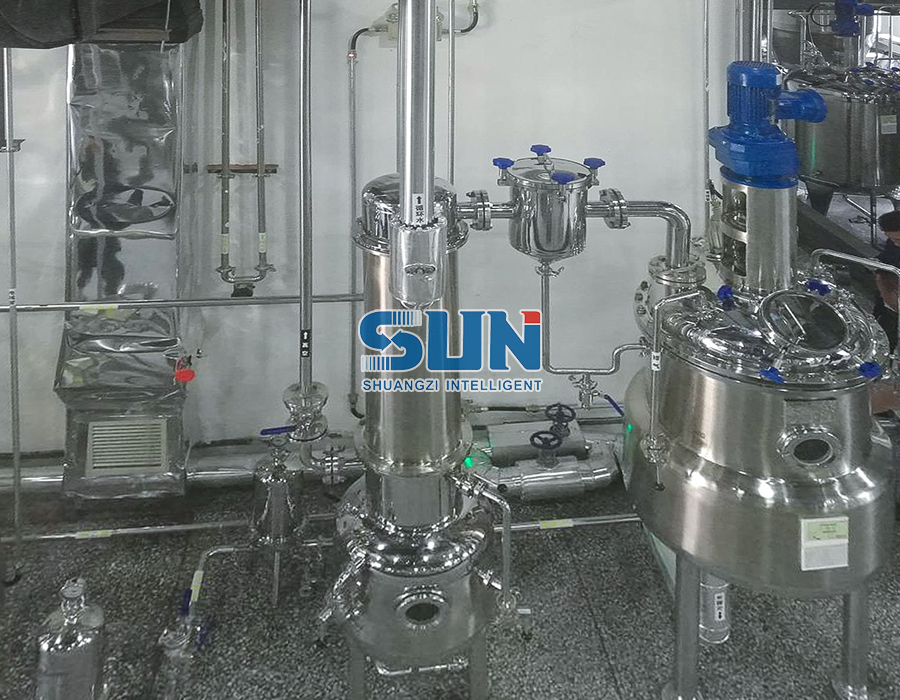
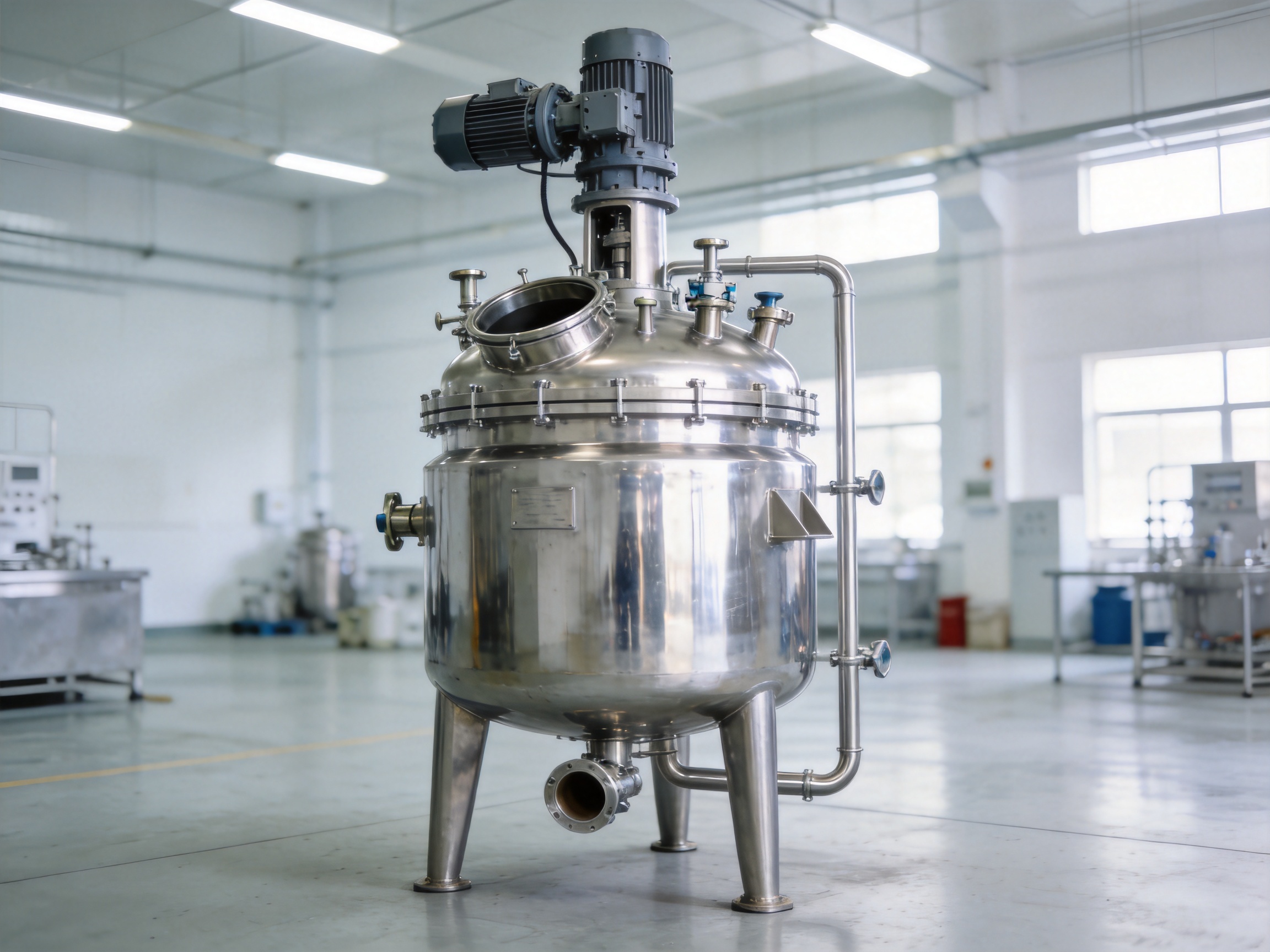
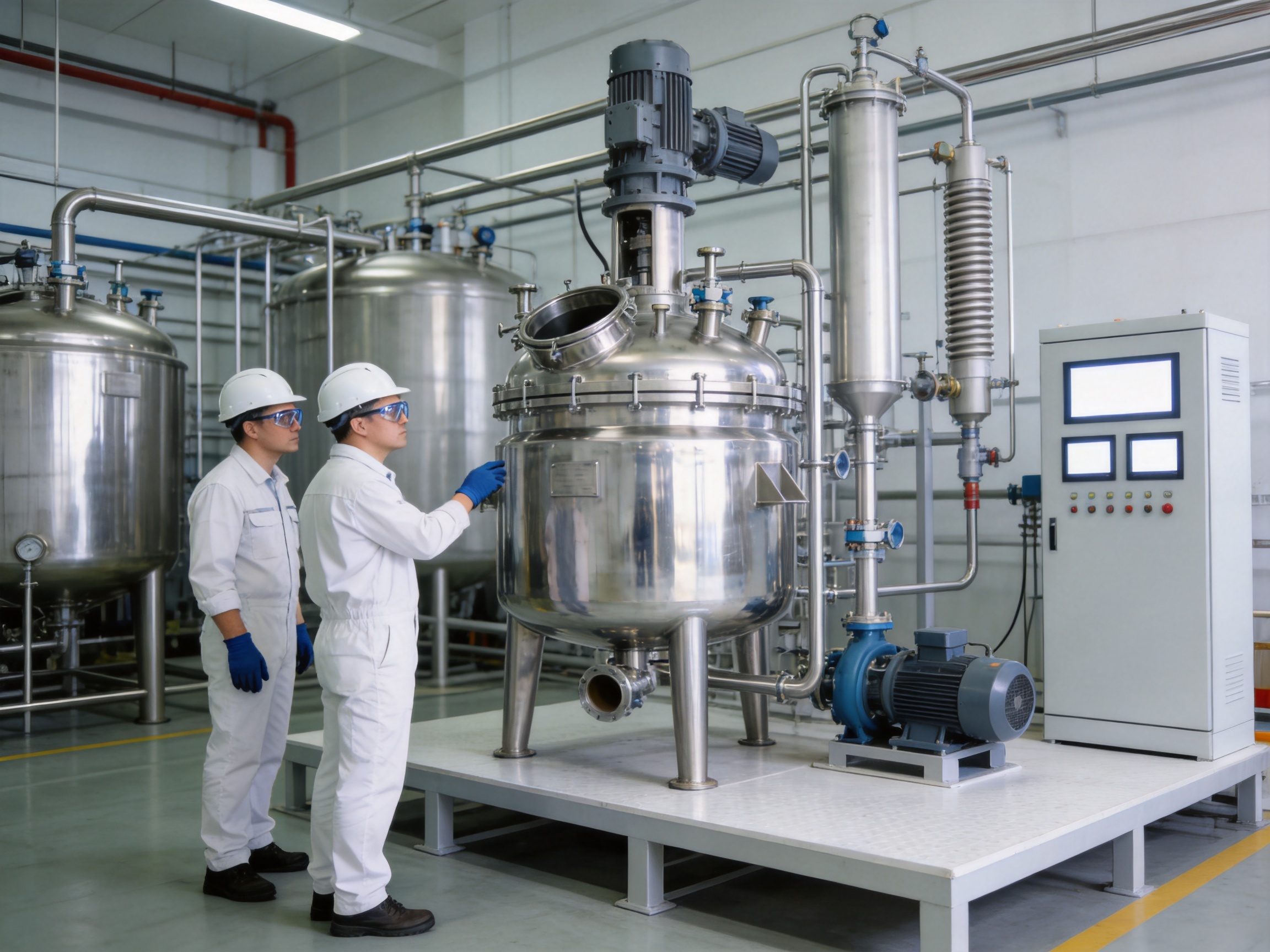
The Chemical Stainless Steel Stirred Tank Reactor is a jacketed stainless steel reactor designed for controlled chemical and physical processing. It is composed of the kettle body, jacket, stirring system, transmission device, shaft sealing device, support structure, and optional internal or external coil arrangements. The equipment is built to achieve sufficient mixing of reactants while supporting heating, cooling, temperature holding, and mass transfer requirements.
The reactor is offered in multiple capacity models, from 300 L to 10,000 L, allowing users to select a suitable size for pilot production, intermediate production, or industrial-scale manufacturing. The inner layer working pressure is designed up to 0.6 MPa, while the jacket layer working pressure is designed up to 0.8 MPa. The agitator speed range of 0–200 r/min provides operational flexibility for different viscosities, reaction kinetics, suspension requirements, and heat transfer needs.
Heating methods can include hot water heating, thermal oil circulation heating, and steam heating. Cooling may be achieved through jacket cooling or an internal coil cooling arrangement, depending on process needs. For operations requiring stronger heat exchange or faster temperature adjustment, an external coil reactor design can also be considered. This flexibility makes the reactor highly practical for processes where temperature directly affects product purity, yield, reaction rate, crystal form, or safety margin.
The reactor’s stainless steel construction provides durability, acid resistance, high temperature resistance, corrosion resistance, hygiene, and reduced environmental contamination risk. These characteristics are particularly important in pharmaceutical synthesis and food-related projects, where material compatibility, cleanability, and process repeatability are essential. Compared with lower-grade equipment, a properly manufactured stainless steel stirred tank offers a longer service life, easier cleaning, better process stability, and more reliable compliance with hygiene-oriented production requirements.
Core Applications in Chemical and Pharmaceutical Processing
The reactor is designed for process environments where uniformity and control are critical. In western medicine synthesis, reaction steps often require precise addition, stable temperature control, efficient mixing, and reliable sealing. Poor mixing can create local concentration differences, side reactions, or temperature hot spots. A stirred tank reactor with an appropriate agitator and heat exchange structure helps reduce these risks by promoting homogeneity throughout the batch.
In nitrification, hydrogenation, alkylation, polymerization, and condensation reactions, the reactor must handle chemical reactivity and thermal effects while keeping materials in steady contact. The mixing system supports the distribution of reactants, catalysts, solvents, gases, or temperature gradients. For gas absorption or gas-liquid reactions, correct agitation helps improve mass transfer between phases. For polymerization or viscous processes, agitator selection becomes especially important to avoid dead zones and maintain a predictable process environment.
The reactor is also useful in liquid extraction processes, where two liquid phases require controlled contact followed by separation. Efficient stirring enhances mass transfer, while controlled speed helps prevent excessive emulsification when the process requires phase disengagement. In crystallization-related operations, agitation can support uniform supersaturation and heat transfer, helping the process develop more consistently. In food and natural product processing, stainless steel hygiene and corrosion resistance contribute to product safety and equipment longevity.
Because the reactor can be integrated into larger turnkey systems, it is suitable for enterprises that need more than a single vessel. It can become part of a complete engineering solution that includes feeding systems, solvent recovery, filtration, concentration, drying, cleaning-in-place arrangements, automation cabinets, pipelines, valves, platforms, and installation services. This system-oriented value is a key advantage for users who want to reduce coordination difficulties among multiple suppliers.
Structural Design and Functional Components
The kettle body forms the main process chamber where raw materials, solvents, catalysts, intermediates, or extracted materials are processed. Stainless steel construction supports cleanliness, strength, and chemical compatibility. The smooth internal surface assists in cleaning and reduces material retention, which is especially useful for batch-to-batch production where residue control matters. The vessel geometry can be designed according to user requirements, operating volume, heating or cooling demand, and mixing needs.
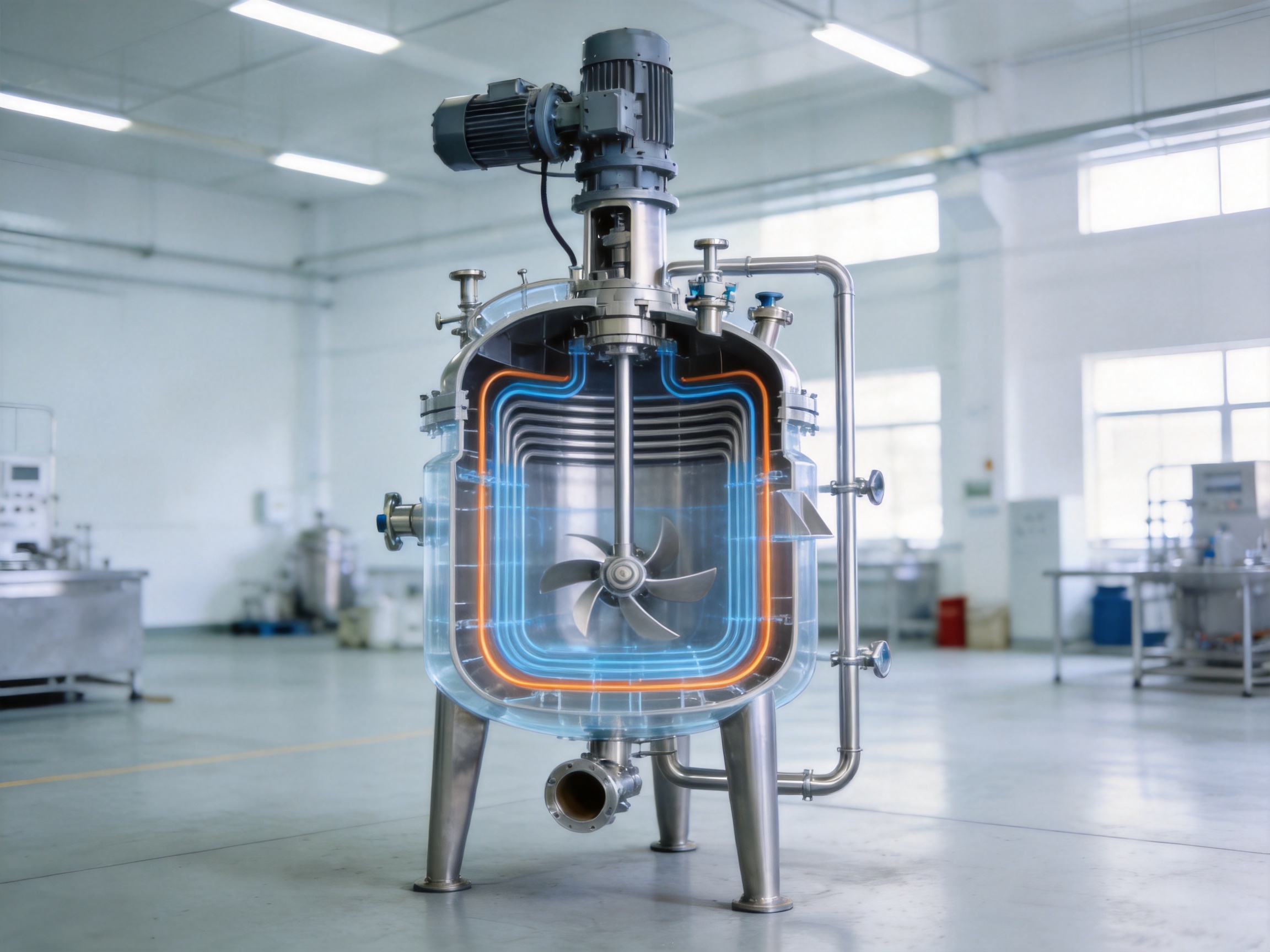
The jacket surrounds the vessel and functions as a heat exchange channel. Depending on the selected heating medium, steam, hot water, or thermal oil may be introduced to the jacket. Cooling media may also be circulated when the process requires temperature reduction or reaction quenching. Jacket design is important because heat transfer affects production time, safety, and product quality. A well-fabricated jacket reduces leakage risk and improves temperature stability.
The stirring system is the core mechanical feature of the reactor. Available mixing forms generally include anchor type, paddle type, turbine type, screw belt type, push type, and frame type. Each agitator has a specific process role. Anchor agitators are useful for higher-viscosity materials and wall-scraping or near-wall movement. Paddle agitators are simple and practical for general mixing. Turbine agitators provide stronger shear and dispersion. Screw belt agitators help move viscous materials vertically. Push type agitators are useful for axial flow, while frame type agitators offer broad contact in larger vessels.
The transmission device provides mechanical power from the motor to the agitator shaft. Motor power varies by model, from 1.1 kW for smaller volumes to 7.5 kW for the 10,000 L model. The transmission system must provide stable torque, smooth speed adjustment, and reliable long-term operation. Stable agitation reduces mechanical vibration, protects shaft seals, and supports consistent mixing performance.
The shaft sealing device is essential for maintaining containment, reducing leakage, and supporting safe operation. In chemical and pharmaceutical applications, sealing reliability affects environmental protection, worker safety, solvent control, and product contamination prevention. Depending on the process, sealing options may be selected to match pressure, temperature, solvent volatility, and hygiene requirements. A properly engineered seal contributes significantly to operational reliability.
The support structure ensures safe installation and stable operation. Reactors may be installed with legs, lugs, platforms, or customized frames depending on plant layout. Structural design must consider operating weight, liquid load, agitator forces, vibration, maintenance access, and pipeline connections. In turnkey projects, layout coordination can be handled together with piping, valves, electrical control, and maintenance pathways.
Technical Specifications
The following table summarizes the standard model range and main parameters. Actual design can be customized according to process requirements, user standards, material characteristics, and project conditions.
Parameter / Model |
LP300 |
LP400 |
LP500 |
LP600 |
LP1000 |
LP2000 |
LP3000 |
LP5000 |
LP10000 |
Capacity |
300 L |
400 L |
500 L |
600 L |
1000 L |
2000 L |
3000 L |
5000 L |
10000 L |
Working Pressure, Inner Layer |
≤0.6 MPa |
≤0.6 MPa |
≤0.6 MPa |
≤0.6 MPa |
≤0.6 MPa |
≤0.6 MPa |
≤0.6 MPa |
≤0.6 MPa |
≤0.6 MPa |
Working Pressure, Jacket Layer |
≤0.8 MPa |
≤0.8 MPa |
≤0.8 MPa |
≤0.8 MPa |
≤0.8 MPa |
≤0.8 MPa |
≤0.8 MPa |
≤0.8 MPa |
≤0.8 MPa |
Motor Power |
1.1 kW |
1.5 kW |
2.2 kW |
2.2 kW |
3 kW |
3 kW |
3 kW |
5.5 kW |
7.5 kW |
Agitator Speed |
0–200 r/min |
0–200 r/min |
0–200 r/min |
0–200 r/min |
0–200 r/min |
0–200 r/min |
0–200 r/min |
0–200 r/min |
0–200 r/min |
Approximate Dimension |
900 × 2200 |
1000 × 2200 |
1150 × 2400 |
1150 × 2500 |
1400 × 2700 |
1580 × 3000 |
1580 × 3300 |
2050 × 4200 |
2500 × 5000 |
Heat Exchange Area |
2 m² |
2.4 m² |
2.7 m² |
3.1 m² |
4.5 m² |
7.5 m² |
7.5 m² |
10.4 m² |
20.2 m² |
The broad capacity range helps users maintain equipment consistency across research, pilot, and production stages. For example, a process can begin in a smaller vessel for trials and then be scaled up to a larger model while preserving the same general design philosophy. This can simplify process transfer, operator training, spare parts planning, and production standardization.
Advantages Over Conventional Competitor Reactors
One major advantage of this reactor is its combination of corrosion resistance and hygienic construction. In many process plants, equipment is selected mainly by price, but low-cost reactors may use inferior surface finishing, less robust welding, weaker polishing, or less reliable sealing. These weaknesses can increase maintenance frequency, contamination risk, and downtime. A high-quality stainless steel reactor improves long-term value by reducing the probability of premature corrosion, residue accumulation, and cleaning difficulty.
Another advantage is flexible thermal management. Some conventional vessels are limited to a basic jacket or a simple heating method. This reactor supports hot water heating, thermal oil circulation heating, steam heating, jacket cooling, internal coil cooling, and optional external coil design. Such flexibility allows the user to select a thermal configuration that matches the process rather than forcing the process to adapt to the machine. For exothermic reactions, heat removal capacity can be crucial. For endothermic or slow-heating processes, efficient heat input can shorten batch time.
The variety of agitator options also gives the reactor a competitive edge. A single universal agitator cannot perform ideally in every process. Low-viscosity mixing, solid suspension, gas dispersion, high-viscosity blending, wall heat transfer, and crystallization support all require different flow patterns. By offering anchor, paddle, turbine, screw belt, push, and frame type mixing forms, the reactor can be configured for the actual process challenge. This customization is a practical advantage over standardized units that provide limited mixing choices.
Pressure capability is another important feature. With an inner layer working pressure of up to 0.6 MPa and a jacket working pressure of up to 0.8 MPa, the reactor supports a broad range of controlled operations. While final design must always match the actual process, these standard ratings are suitable for many industrial reaction and heat transfer applications. The combination of pressure capability, stainless steel fabrication, and engineered sealing makes the reactor more reliable than ordinary atmospheric mixing tanks when processes require controlled containment.
Scale range is equally valuable. Competitors may offer either small laboratory units or very large industrial vessels but lack a coherent model family across multiple capacities. This product range from 300 L to 10,000 L gives users the ability to select right-sized equipment for different production goals. A manufacturer planning staged investment can begin with a mid-size unit and later expand to larger capacity while retaining similar design principles.
System integration support further differentiates the product. Zhejiang Shuangzi Intelligent Equipment Co., Ltd. is not only an equipment manufacturer but also a process engineering and automation integration enterprise. The company’s EPC and EPCM service capability means customers can obtain engineering, process design, equipment design, installation, line debugging, and turnkey project support. This reduces project fragmentation and helps ensure that the reactor works correctly with upstream and downstream equipment.
Heating, Cooling, and Temperature Control Performance
Temperature control is one of the decisive factors in reactor performance. In chemical synthesis, temperature may influence reaction rate, selectivity, impurity formation, solvent behavior, pressure development, and product stability. In extraction or food processing, temperature affects solubility, flavor preservation, active ingredient retention, and microbial safety. Therefore, reactor heating and cooling design must be matched with process expectations.
Hot water heating is suitable for moderate temperature applications requiring gentle and stable heat transfer. It is often used where overheating must be avoided or where product quality depends on controlled warming. Steam heating is suitable for faster heating and higher heat flux, often used in industrial production where batch time is important. Thermal oil circulation heating can support higher temperatures and more uniform heat distribution, especially where steam conditions are not ideal or where precise high-temperature control is required.
Cooling through the jacket can remove heat from the vessel wall and is useful for many batch operations. Internal coil cooling can increase heat exchange surface area and improve cooling performance inside the kettle. For processes with significant exothermic heat or strict temperature profiles, the optional external coil reactor design can be selected to enhance processing capability. The ability to choose among these methods prevents under-designed heat transfer, a common problem in generic equipment.
Heat exchange area increases as the model capacity increases. For example, the LP300 model provides approximately 2 m², while the LP10000 model provides approximately 20.2 m². This scaling supports industrial heat transfer requirements while maintaining a practical design. However, the correct configuration should always be reviewed according to material properties, batch volume, heating medium, cooling medium, target temperature, and reaction heat load.
Mixing Quality and Agitator Selection
Mixing is not simply the motion of a rotating blade. It is the controlled creation of flow patterns inside the vessel to achieve a desired process result. The chosen agitator affects axial circulation, radial flow, shear level, vortex formation, gas entrainment, suspension of solids, and wall heat transfer. In stirred tank reactor design, improper agitator selection can lead to incomplete reaction, poor temperature uniformity, slow dissolution, material buildup, or inconsistent product quality.
Anchor agitators are often selected for higher-viscosity materials or processes where near-wall flow is important. Their large diameter helps move material close to the vessel wall, improving heat transfer between the contents and the jacket. Frame agitators offer similar broad contact and are suitable for certain larger-volume mixing tasks. Paddle agitators are practical for general liquid blending and can be a reliable choice for many moderate-viscosity applications.
Turbine agitators are useful when stronger mixing intensity is needed. They can improve dispersion, suspension, and liquid-liquid contact, making them suitable for processes that benefit from higher shear or more vigorous circulation. Push type agitators create axial flow and are efficient for moving liquid vertically through the vessel, reducing stratification and improving uniformity. Screw belt agitators are particularly useful for viscous materials because they move product along vertical and radial paths rather than relying only on simple rotation.
The adjustable speed range of 0–200 r/min supports process flexibility. During raw material addition, a lower speed may help prevent splashing or excessive foaming. During dissolution or reaction, a higher speed may be required to improve contact. During crystallization or phase separation preparation, controlled low-speed operation may be beneficial. The ability to tune speed to the actual stage of the process is a significant operational advantage.
Material, Hygiene, and Corrosion Resistance
Stainless steel is widely used in chemical and pharmaceutical equipment because it provides a practical balance of strength, corrosion resistance, cleanability, and durability. For processes involving acids, solvents, salts, intermediates, or food ingredients, material selection directly affects equipment life and product safety. A reactor made from appropriate stainless steel can resist many forms of corrosion when matched correctly with the process medium.
Hygienic equipment design is essential for pharmaceutical and food-related operations. Smooth surfaces, quality welds, cleanable internal geometry, and suitable seals help reduce areas where residues can accumulate. This supports cleaning validation and batch consistency. In industries where contamination can cause serious economic loss, hygienic construction is not optional; it is a fundamental requirement.
The reactor’s environmental value also comes from containment and clean operation. Reliable sealing reduces leakage risk. Corrosion resistance reduces the possibility of product contamination and equipment degradation. Efficient processing reduces waste caused by failed batches or inconsistent reactions. When integrated into a well-designed system, the reactor can contribute to cleaner production and safer plant operation.
Manufacturing Strength and Process Capability
Zhejiang Shuangzi Intelligent Equipment Co., Ltd. was founded in 2007 and is located in Hangzhou City, Zhejiang Province, China. The company covers a floor area of 16,706 m² and a building area of 17,800 m². Its business focuses on biology and medical equipment, plant extraction, biological fermentation, pharmaceutical engineering, natural food, energy conservation, and environmental protection. This broad process background supports reactor design because the company understands not only vessels but also complete production systems.
The company’s manufacturing capability includes advanced welding and finishing equipment such as plasma argon arc welding machines, plasma cutting machines, and CAM CNC machining centers. These tools support precision fabrication, stable welding quality, accurate component processing, and improved consistency between units. In pressure-containing and hygienic equipment, manufacturing precision is a key factor that affects safety, sealing, cleanability, and service life.
Advanced welding is especially important for stainless steel reactors. Poor welding can create weak points, corrosion-sensitive zones, internal roughness, or cleaning problems. Plasma argon arc welding can help improve weld quality and surface consistency when properly controlled. Plasma cutting supports accurate material preparation, while CNC machining improves the fit of mechanical components such as flanges, shaft parts, seal seats, and connection interfaces.
The company has mature products in vacuum low-temperature drying, complete fermentation systems, evaporation and concentration equipment, extraction equipment, separation equipment, crystallization systems, filtration equipment, containers, and related process units. This product ecosystem allows the stirred tank reactor to be designed with knowledge of upstream and downstream requirements. For example, a reactor may need to discharge into a filter, connect with a condenser, operate with a vacuum system, receive material from an extraction tank, or send product to a dryer. Integrated experience reduces interface problems.
The company also operates a pilot production workshop and an R&D platform meeting automation and GMP-oriented requirements. This provides valuable support for users developing new products or scaling up processes. Pilot testing can help identify heat transfer limitations, mixing requirements, cleaning needs, and process control parameters before full industrial investment. For customers in pharmaceutical, natural food, and extraction industries, this can reduce technical uncertainty.
Engineering, Automation, and Turnkey Project Value
Many equipment problems are not caused by the reactor alone; they are caused by poor integration. A high-quality reactor may perform below expectations if feeding pipelines are incorrectly designed, heating media are undersized, control valves are inaccurate, discharge height is inconvenient, or cleaning routes are incomplete. The advantage of working with an EPC or EPCM-oriented manufacturer is that the reactor can be planned as part of a complete process solution.
Zhejiang Shuangzi Intelligent Equipment Co., Ltd. can provide engineering, process design, equipment design, installation, line debugging, and turnkey project services. This is particularly valuable for customers building new production lines or upgrading existing facilities. Instead of managing multiple separate suppliers, the user can obtain coordinated support for process equipment, automation, installation, and system integration.
Automation enhances reactor performance by improving repeatability. Temperature control, agitation speed, pressure monitoring, feeding sequence, heating and cooling switching, alarm management, and batch records can all be integrated into a control strategy. For pharmaceutical and food applications, automation can reduce operator error and improve traceability. For chemical production, automation can improve safety by responding quickly to deviations.
Turnkey project capability also supports faster commissioning. When the equipment manufacturer understands the complete process, installation and debugging can be planned more efficiently. The reactor can be aligned with utilities, platforms, electrical systems, cleaning systems, and production flow. This reduces the risk of costly modifications after delivery.
Quality Considerations for Buyers
When selecting a stirred tank reactor, buyers should evaluate more than capacity and price. The first consideration is process compatibility. Materials of construction must match the chemicals, solvents, temperature, pressure, and cleaning agents used in production. The second consideration is mixing performance. The agitator type, motor power, speed range, shaft design, and internal baffles or flow features should match viscosity, density, solid content, and process objectives.
The third consideration is thermal performance. A reactor with insufficient heat exchange area can lengthen batch time or fail to control exothermic reactions. Buyers should compare jacket type, coil options, heating medium, cooling medium, and temperature control strategy. The fourth consideration is cleanability. Internal surface quality, weld finish, dead corner control, drainability, and accessibility all affect cleaning efficiency and contamination risk.
The fifth consideration is manufacturer capability. A reliable manufacturer should have strong design knowledge, fabrication equipment, quality control processes, and after-sales support. Zhejiang Shuangzi Intelligent Equipment Co., Ltd. offers advantages in equipment manufacturing, engineering design, automation, installation, and complete system integration. These capabilities help reduce procurement risk, especially for customers requiring custom reactor bodies or full production lines.
Buyers should also consider future expansion. Selecting a reactor family with multiple capacities can make future scale-up easier. A company that begins with an LP500 or LP1000 model may later require an LP3000 or LP5000 unit as production grows. Maintaining similar design logic across models can reduce training and operational changes.
Typical Process Workflow Using the Reactor
A typical batch process begins with preparation and inspection. Operators confirm that the reactor is clean, valves are in correct positions, utilities are available, instruments are functioning, and safety devices are ready. Raw materials are then charged into the vessel according to the process formula. Agitation may begin at low speed to ensure safe charging and prevent localized concentration.
After charging, the heating or cooling medium is introduced into the jacket or coil system. The control system adjusts temperature toward the process setpoint. As the material reaches reaction temperature, agitation speed may be increased to promote uniform mixing. Additional reactants, catalysts, gases, or solvents may be introduced according to the recipe. Throughout the reaction, temperature, pressure, time, and mixing conditions are monitored.
When the reaction reaches completion, the reactor may be cooled, held, neutralized, crystallized, extracted, or discharged depending on the process. The discharge may go to a filter, separator, extraction system, concentration unit, dryer, storage tank, or downstream reactor. After discharge, the reactor is cleaned and prepared for the next batch. In automated systems, many of these steps can be managed by a programmed sequence to improve consistency.
This workflow shows why reactor design must be practical as well as technically sound. Operators need safe access, clear control, easy cleaning, reliable discharge, and predictable performance. A well-designed stainless steel stirred tank reactor supports both process chemistry and daily production efficiency.
Safety and Reliability
Safety is a major concern in chemical and pharmaceutical reaction equipment. Pressure, temperature, solvent vapor, exothermic reaction heat, mechanical rotation, and chemical exposure must all be managed. The reactor’s pressure-rated inner layer and jacket support controlled operation within specified limits. The sealing system helps contain process materials, while stainless steel construction improves resistance to corrosion-related failures.
Reliable agitation also contributes to safety. In exothermic reactions, inadequate mixing can cause localized overheating. In gas-liquid reactions, poor distribution may reduce conversion or create unstable conditions. In crystallization or suspension processes, solids settling may block discharge or create uneven product quality. By selecting the appropriate agitator and speed, the reactor can support safer and more stable processing.
Temperature control safety depends on suitable heating and cooling design. The ability to use jacket cooling, internal coils, or external coil configurations helps match the thermal demand of the process. A properly designed control system can include alarms, interlocks, and emergency cooling logic. These features are particularly important for processes with narrow operating windows.
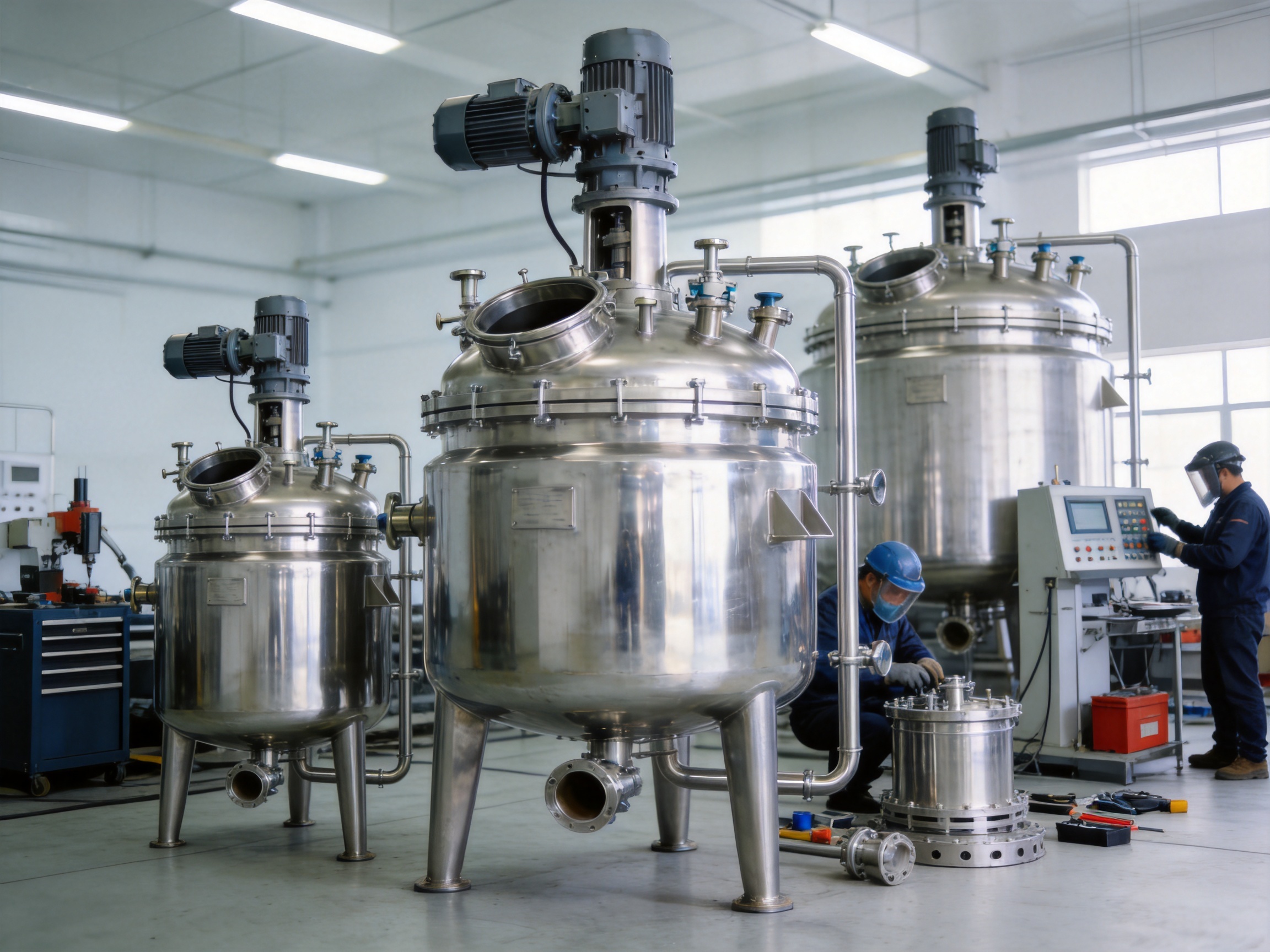
Mechanical reliability depends on quality manufacturing. Accurate machining, strong welding, stable transmission, and proper shaft alignment reduce vibration and wear. This lowers maintenance requirements and helps protect the seal. Over time, these details can create major differences in uptime compared with lower-quality reactors.
Customization Options
Because industrial processes vary widely, the reactor can be customized according to user requirements. Capacity, vessel geometry, agitator type, motor configuration, heating method, cooling method, connection positions, discharge style, sealing arrangement, surface finish, control instruments, and support structure can be adjusted to match the project. This is especially useful for customers with established production processes that cannot be changed easily.
For high-viscosity materials, a screw belt, anchor, or frame agitator may be selected. For rapid dispersion or stronger turbulence, a turbine agitator may be more suitable. For gentle blending, paddle or push type agitation may be sufficient. For processes with strict heat transfer requirements, internal coils or external coils can be considered. For hygiene-focused applications, polishing and cleaning design can be specified.
Customization also extends to system integration. The reactor can be matched with filtration equipment, extraction equipment, evaporation and concentration systems, vacuum low-temperature drying equipment, fermentation systems, separation units, and crystallization equipment. This creates a complete process chain rather than isolated equipment purchases.
Why the Reactor Fits Western Medicine Synthesis Projects
Western medicine synthesis often involves multiple reaction stages, solvent handling, purification steps, intermediate isolation, and strict quality requirements. The Chemical Stainless Steel Stirred Tank Reactor fits these projects because it provides controlled mixing, pressure capability, temperature management, corrosion resistance, and hygienic construction. It can handle physical and chemical transformations while supporting repeatable batch operation.
In pharmaceutical production, equipment quality affects process validation and product reliability. A reactor with stable construction and predictable performance helps reduce variation. The ability to integrate automation and process records further supports consistent production. When the reactor is supplied by a company experienced in pharmaceutical engineering and GMP-oriented platforms, users gain additional confidence in project execution.
The reactor’s scalability also matters in medicine synthesis. Many pharmaceutical processes begin with laboratory studies, move to pilot trials, and then enter industrial production. A model series from 300 L to 10,000 L provides a practical bridge between development and manufacturing. While scale-up always requires engineering review, having a consistent reactor family can simplify the transition.
Role in Food, Extraction, and Biological Process Projects
Although the reactor is categorized for western medicine synthesis, its stainless steel construction and mixing capability also make it useful in food projects, plant extraction projects, and biological process support systems. In food production, hygiene, corrosion resistance, and cleanability are central concerns. The reactor can support mixing, heating, cooling, dissolution, extraction assistance, and ingredient preparation.
In plant extraction, controlled heating and stirring can improve mass transfer between plant materials, solvents, and liquid phases. The reactor can be part of a larger extraction, concentration, separation, and drying process line. In biological fermentation projects, stirred tanks may be used for preparation, sterilization support, blending, media handling, or auxiliary chemical processing, depending on the project configuration.
The company’s experience across plant extraction, fermentation, pharmaceutical engineering, natural food, and environmental protection helps ensure that the reactor can be adapted to different industries. This cross-industry knowledge is useful because many modern projects combine multiple technologies, such as extraction plus concentration, reaction plus filtration, or fermentation plus downstream purification.
Maintenance and Lifecycle Value
Lifecycle value is a key reason to choose a high-quality stainless steel stirred tank reactor. A lower-priced reactor may seem attractive at the purchasing stage but can become expensive if it requires frequent repairs, causes batch losses, consumes more cleaning time, or cannot be integrated into future processes. A well-manufactured reactor offers value through uptime, reliability, cleanability, and adaptability.
Routine maintenance usually includes inspection of seals, bearings, transmission parts, agitator shaft alignment, weld areas, instrument connections, jacket condition, and discharge valves. Operators should also monitor vibration, unusual noise, leakage, temperature response, and agitation performance. Proper cleaning and correct chemical use help preserve stainless steel surfaces and extend service life.
Because the reactor can be customized and integrated with automation, maintenance planning can be improved. Sensors and control systems can help operators detect abnormal conditions early. Standardized model selection can simplify spare parts management. Engineering support from the manufacturer can assist with troubleshooting, upgrades, and process changes.
Q&A Section
What is the main function of the Chemical Stainless Steel Stirred Tank Reactor?
The main function is to provide a controlled vessel for mixing, heating, cooling, and reacting materials. It is used for chemical synthesis, pharmaceutical processing, extraction, gas absorption, liquid-liquid contact, polymerization, condensation, and other processes requiring stable agitation and temperature control.
What capacities are available?
Standard models include 300 L, 400 L, 500 L, 600 L, 1000 L, 2000 L, 3000 L, 5000 L, and 10000 L. Custom capacity and configuration can be discussed according to project requirements.
What working pressure does the reactor support?
The standard inner layer working pressure is up to 0.6 MPa, while the jacket layer working pressure is up to 0.8 MPa. Final pressure design should be confirmed according to actual process conditions and applicable engineering standards.
Which heating methods can be used?
The reactor can be configured for hot water heating, thermal oil circulation heating, or steam heating. The correct heating method depends on the required temperature, heating rate, medium availability, and process sensitivity.
How is cooling achieved?
Cooling can be achieved through the jacket or through internal coil cooling. For processes requiring enhanced heat exchange, an external coil reactor design can also be considered.
What agitator types are available?
Common agitator options include anchor type, paddle type, turbine type, screw belt type, push type, and frame type. The selection depends on viscosity, mixing goal, solid content, phase behavior, and heat transfer requirements.
Why is stainless steel important?
Stainless steel provides corrosion resistance, hygienic performance, durability, and cleanability. These properties are important for pharmaceutical, chemical, food, and extraction applications where contamination control and long service life are required.
How does this reactor compare with ordinary mixing tanks?
Unlike ordinary mixing tanks, this reactor is designed for controlled processing with pressure-rated layers, heating and cooling capability, engineered agitation, shaft sealing, and customizable process features. It is suitable for demanding chemical and pharmaceutical operations rather than simple storage or low-duty blending only.
Can the reactor be used in a turnkey project?
Yes. Zhejiang Shuangzi Intelligent Equipment Co., Ltd. provides engineering, process design, equipment design, installation, line debugging, automation, and turnkey project services. The reactor can be integrated with extraction, concentration, filtration, drying, fermentation, and separation systems.
What manufacturing strengths support product quality?
The company uses advanced equipment such as plasma argon arc welding machines, plasma cutting machines, and CAM CNC machining centers. These capabilities support precise fabrication, high-quality welding, accurate component machining, and reliable stainless steel equipment production.
Is the reactor suitable for scale-up?
Yes. The model range from 300 L to 10,000 L supports pilot, intermediate, and production-scale use. Scale-up should still be reviewed by process engineers to confirm heat transfer, mixing, safety, and control requirements.
What information should a buyer provide before ordering?
A buyer should provide material properties, process temperature, pressure, viscosity, density, corrosiveness, batch volume, reaction type, heating and cooling requirements, cleaning requirements, automation needs, installation layout, and any applicable industry standards.
Conclusion
The Chemical Stainless Steel Stirred Tank Reactor is a versatile and reliable process solution for chemical synthesis, pharmaceutical engineering, food processing, plant extraction, and related industrial applications. Its advantages include stainless steel corrosion resistance, hygienic design, flexible heating and cooling methods, multiple agitator options, pressure-rated construction, scalable model selection, and suitability for both chemical reactions and physical transformations.
Compared with conventional competitor reactors that may offer limited customization, weaker integration support, or basic mixing capability, this reactor provides a stronger combination of process adaptability and manufacturing quality. The availability of jacket cooling, internal coil cooling, external coil design options, steam heating, hot water heating, thermal oil heating, and a broad agitator selection makes it suitable for many demanding production environments.
Zhejiang Shuangzi Intelligent Equipment Co., Ltd. strengthens the product’s value through advanced manufacturing processes, experienced engineering teams, automation capability, pilot production support, and turnkey project services. Its background in plant extraction, biological fermentation, pharmaceutical engineering, natural food, evaporation, concentration, separation, crystallization, filtration, drying, and container manufacturing allows the reactor to be designed as part of a complete process system rather than as an isolated vessel.
For manufacturers seeking dependable reaction equipment, scalable production capability, and professional engineering support, this stainless steel stirred tank reactor provides a practical foundation for efficient, safe, and consistent processing. Its design serves the essential industrial goal of turning raw materials into controlled, repeatable, high-quality products through better mixing, better heat transfer, better fabrication, and better system integration.
References
1. Perry, R. H., and Green, D. W. Perry’s Chemical Engineers’ Handbook. McGraw-Hill Education.
2. Paul, E. L., Atiemo-Obeng, V. A., and Kresta, S. M. Handbook of Industrial Mixing: Science and Practice. Wiley-Interscience.
3. Towler, G., and Sinnott, R. Chemical Engineering Design: Principles, Practice and Economics of Plant and Process Design. Butterworth-Heinemann.
4. McCabe, W. L., Smith, J. C., and Harriott, P. Unit Operations of Chemical Engineering. McGraw-Hill Education.
5. Fogler, H. S. Elements of Chemical Reaction Engineering. Pearson.
6. Seider, W. D., Seader, J. D., Lewin, D. R., and Widagdo, S. Product and Process Design Principles: Synthesis, Analysis, and Evaluation. Wiley.
7. European Hygienic Engineering and Design Group. Hygienic Design Principles for Food and Pharmaceutical Processing Equipment.
8. International Society for Pharmaceutical Engineering. Baseline Guide: Commissioning and Qualification.