
 英语
 俄语
Content
- 1 1. The Role of Continuous Solid-Liquid Separation
- 2 2. Operating Principle of the Horizontal Spiral Decanter
- 3 3. Main Construction and Functional Components
- 4 4. Technical Model Range
- 5 5. Advantages Compared with Conventional Separation Equipment
- 6 6. Application Areas
- 7 7. Manufacturing and Engineering Strengths
- 8 8. Process Design Considerations
- 9 9. Operation, Maintenance, and Reliability
- 10 10. Why Manufacturing Quality Matters
- 11 11. Selection Guide for Different Users
- 12 12. Project Support from Equipment Selection to Commissioning
- 13 13. Frequently Asked Questions
- 13.1 Q1. What is a horizontal spiral decanter centrifuge?
- 13.2 Q2. Can the machine operate continuously for 24 hours?
- 13.3 Q3. What is the function of the differential speed?
- 13.4 Q4. What materials can be processed?
- 13.5 Q5. Which model should a customer choose?
- 13.6 Q6. Are the listed capacities guaranteed for every material?
- 13.7 Q7. Can the centrifuge be integrated into a turnkey project?
- 13.8 Q8. Is the equipment suitable for food or pharmaceutical applications?
- 13.9 Q9. What information is needed for a technical proposal?
- 13.10 Q10. What are the main advantages over batch separation?
- 14 14. Conclusion
- 15 References
- 16 Product: Continuous Solid Liquid Separation Decanter Centrifuge
Industrial processes increasingly require separation equipment that can operate continuously, maintain stable performance, reduce manual intervention, and protect product quality. The horizontal spiral decanter centrifuge is designed to meet these requirements through continuous solid-liquid separation. It provides an efficient method for separating suspended solids from liquids in applications ranging from sludge dewatering and chemical clarification to beverage processing, mineral slurry treatment, plant extraction, biological fermentation, and pharmaceutical production.
Unlike batch filtration or settling systems, a decanter centrifuge performs separation, solids conveying, and solids discharge in one continuous operation. Feed enters the rotating bowl, centrifugal force rapidly separates the heavier solid phase from the liquid phase, and an internal scroll conveyor transports the concentrated solids toward the discharge end. Clarified liquid is removed separately, allowing the equipment to support stable production over extended operating periods.
The equipment described in this article is manufactured and supplied by Zhejiang Shuangzi Intelligent Equipment Co., Ltd., a professional engineering and equipment enterprise based in Hangzhou, Zhejiang Province, China. The company combines process technology, mechanical design, equipment manufacturing, automation engineering, installation, commissioning, and system integration. This combination enables the centrifuge to be considered not only as an individual machine, but also as part of a complete and coordinated production line.
The following discussion explains the working principle, construction, performance advantages, model range, manufacturing strengths, application possibilities, operation considerations, and selection guidelines for this continuous solid-liquid separation decanter centrifuge.
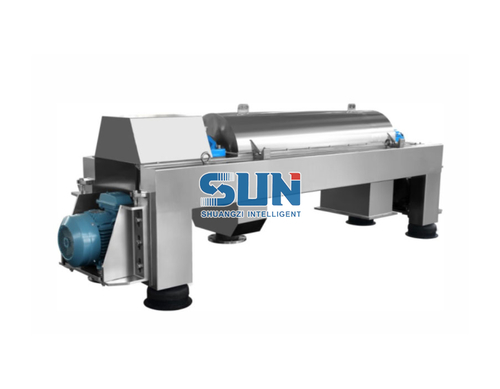
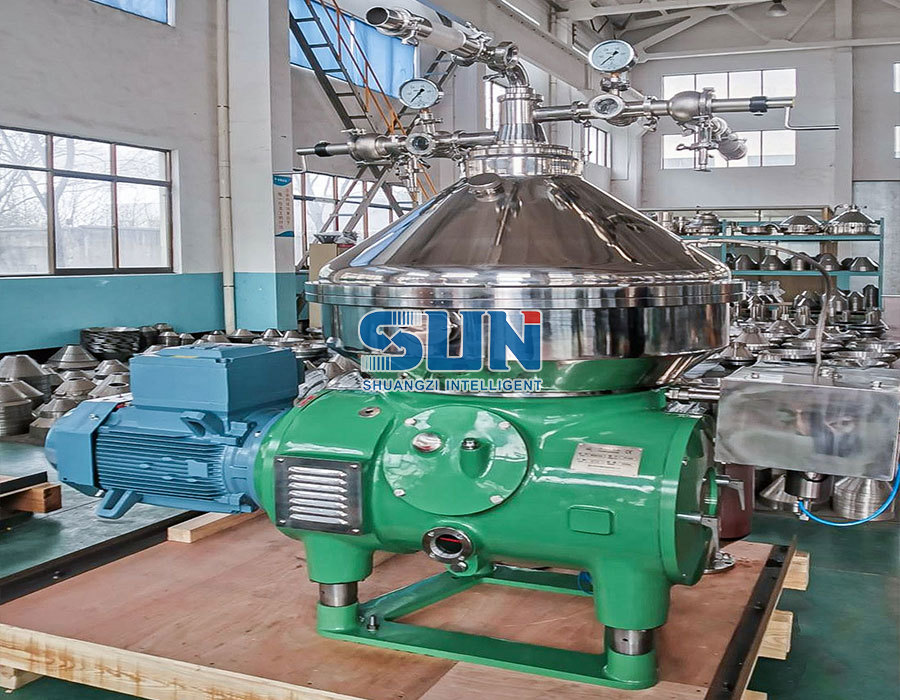
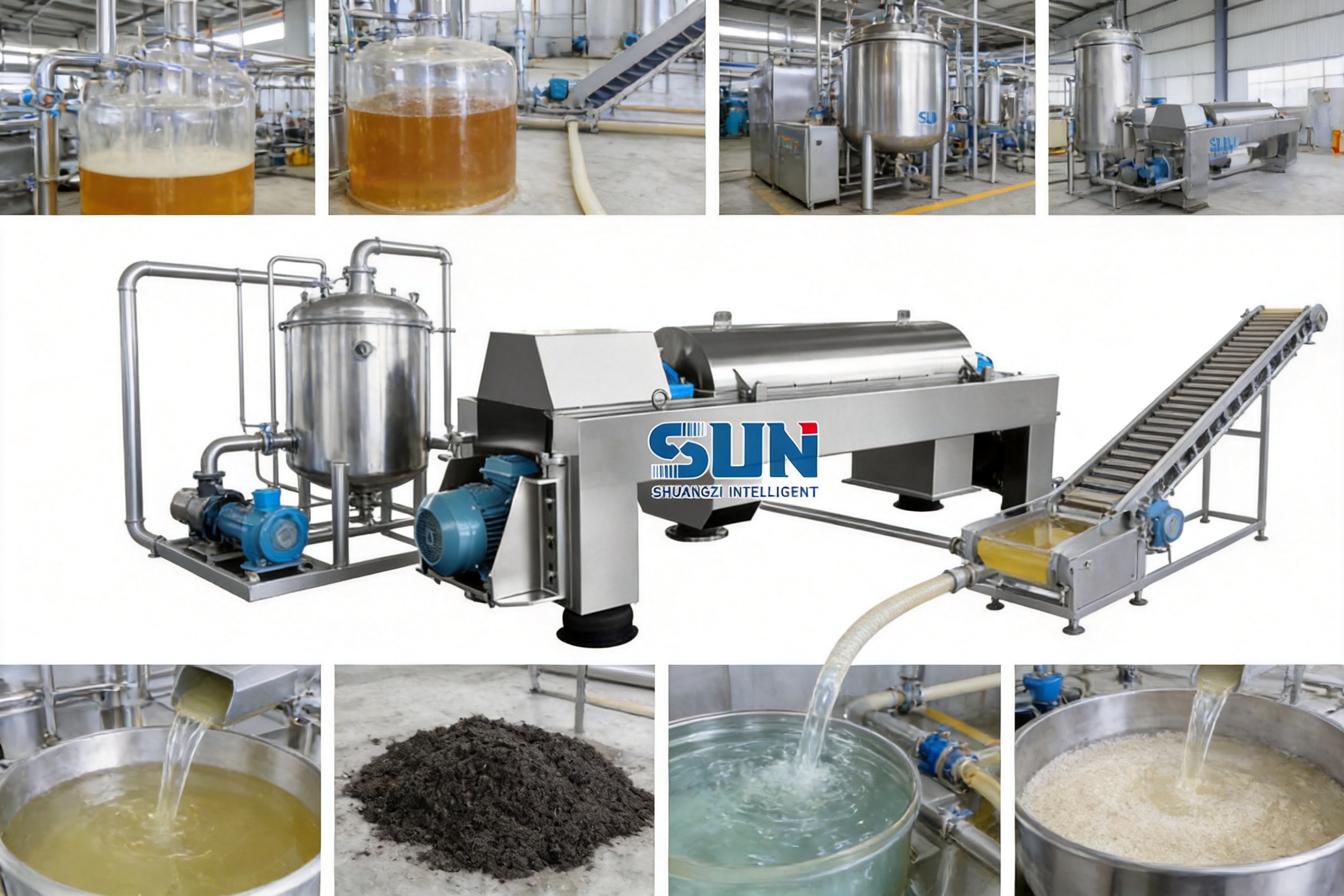
Continuous Solid Liquid Separation Decanter Centrifuge
1. The Role of Continuous Solid-Liquid Separation
Many industrial materials exist as suspensions containing a liquid phase and a dispersed solid phase. The solids may be valuable products, unwanted impurities, biological cells, mineral particles, crystallized materials, plant fibers, or treatment sludge. Before a process can continue, these phases often need to be separated efficiently.
Traditional separation methods include gravity settling, filter presses, vacuum filters, cartridge filters, and batch centrifuges. Each method can be useful in a suitable application, but many facilities require higher throughput, reduced floor space, lower labor requirements, or uninterrupted operation. A horizontal spiral decanter centrifuge addresses these requirements by combining high-speed centrifugal separation with automatic internal solids conveying.
Gravity settling depends on particle size, density difference, residence time, and tank volume. It can require large tanks and may provide inconsistent results when the feed characteristics change. Filtration may produce a clear liquid, but filter media can become blocked and often requires frequent cleaning or replacement. Batch equipment requires repeated filling, separation, emptying, and cleaning cycles, which can interrupt production.
A decanter centrifuge creates a high centrifugal field inside a compact rotating bowl. This accelerates the separation process and allows the machine to treat a continuous feed. Since the scroll removes solids while the bowl continues rotating, the equipment can maintain a steady operating cycle without stopping after each batch.
For industrial users, the practical benefits include more consistent production, reduced handling of wet solids, less dependence on manual labor, improved utilization of plant space, and easier integration with pumps, tanks, conveyors, dryers, evaporators, and automated control systems.
2. Operating Principle of the Horizontal Spiral Decanter
2.1 Feed introduction
The process begins when the suspension is delivered through the machine’s feed system into the rotating bowl. The feed zone is designed to distribute the incoming material into the separation chamber while limiting unnecessary turbulence. Proper feed distribution is important because it helps maintain a stable separation interface and reduces the risk of uneven loading.
As the material enters the bowl, the high rotational speed generates centrifugal acceleration. The exact separation result depends on particle size, solid density, liquid density, viscosity, concentration, temperature, residence time, bowl speed, differential speed, and the design of the internal conveyor. These conditions can be adjusted or selected according to the characteristics of the process material.
2.2 Centrifugal separation
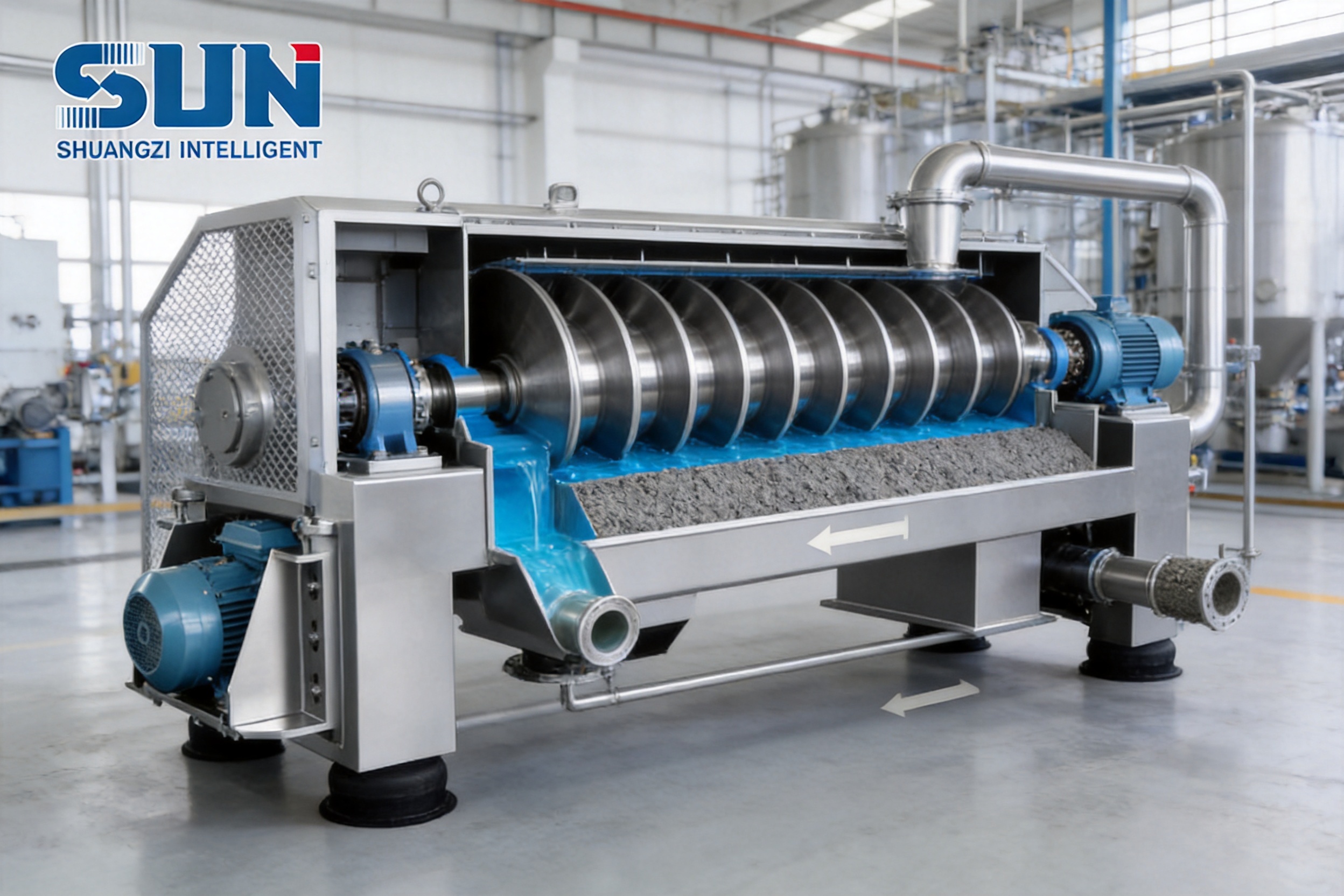
Under centrifugal force, the heavier solid particles move outward toward the inner wall of the bowl. The liquid phase, which has a lower density, forms a layer closer to the rotational axis. This creates two primary zones inside the bowl: an outer solid layer and an inner clarified liquid layer.
The separation process is continuous. Solids accumulate against the bowl wall, while clarified liquid flows toward the liquid discharge end. The bowl geometry, liquid depth, rotational speed, and operating conditions influence the clarity of the liquid and the dryness of the discharged solids.
2.3 Scroll conveying
The scroll conveyor rotates in the same general direction as the bowl but at a slightly different speed. This difference in speed is known as the differential speed. It enables the scroll flights to move the settled solids along the bowl toward the conical section.
The scroll must convey solids at a controlled rate. If the differential speed is too high, solids may leave the machine with excessive moisture. If it is too low, the solid layer may become overloaded, increasing torque and potentially reducing capacity. A suitable operating condition balances solids transport, liquid clarification, cake dryness, energy consumption, and equipment protection.
2.4 Solids discharge
As the scroll moves the solids into the conical section, the material is gradually compacted and transported toward the discharge ports. The conical geometry supports drainage and compression, helping remove additional liquid before the solids leave the bowl.
Automatic discharge reduces the need for manual removal. It also supports continuous production and makes the centrifuge suitable for processes where the feed must be treated for many hours per day. The discharge arrangement can be coordinated with downstream conveyors, containers, dryers, or waste-handling equipment.
2.5 Liquid discharge
The separated liquid is discharged through the liquid outlet after flowing through the inner liquid zone. Depending on the process, this liquid may be a valuable clarified product, a recoverable extract, process water, or a stream sent to a further purification stage.
In plant extraction and food processing, liquid quality can be important for subsequent concentration, crystallization, drying, or formulation. In environmental applications, clarification may be required before water recycling or additional treatment. The decanter centrifuge can therefore function as one stage within a larger process rather than as an isolated piece of equipment.
3. Main Construction and Functional Components
3.1 Rotary bowl
The rotary bowl is the primary separation chamber. It rotates at high speed and generates the centrifugal field needed to separate solids from liquid. Its external diameter and effective length influence the available separation area, internal volume, residence time, and potential processing capacity.
The model range includes bowl external diameters from 316 millimeters to 676 millimeters and effective drum lengths from 1,075 millimeters to 2,500 millimeters. The different dimensions allow users to select a machine according to required throughput, feed characteristics, available installation space, and process objectives.
3.2 Hollow-shaft scroll conveyor
The hollow-shaft scroll conveyor is positioned inside the bowl. Its flights continuously convey the separated solids toward the discharge end. The hollow-shaft arrangement supports a compact internal structure and coordinated material movement.
Scroll design is closely related to solids handling performance. Flight geometry, pitch, conical section design, wear protection, and differential speed all affect conveying behavior. In applications involving abrasive mineral particles or difficult sludge, these factors are particularly important because they influence service life and maintenance requirements.
3.3 Differential assembly
The differential assembly creates the minor speed difference between the bowl and the scroll. This component is essential because the bowl must rotate rapidly for separation, while the scroll must move at a controlled relative speed for solids transport.
A stable differential system helps prevent sudden changes in conveying behavior. It also supports adjustment according to feed concentration and solids loading. In practical operation, the differential speed is one of the principal variables used to balance liquid clarification and cake discharge performance.
3.4 Drive system
The machine uses a main motor and an auxiliary motor. The main motor drives the bowl, while the auxiliary motor supports the scroll and differential operation. The available motor combinations range from 7.5 plus 3 kilowatts for the WZ30 model to 75 plus 30 kilowatts for the WZ60A model.
Motor selection is matched to bowl size, rotational speed, processing capacity, solids loading, and mechanical resistance. Correct drive sizing helps the machine maintain stable operation under changing process conditions while avoiding unnecessary energy consumption.
3.5 Feed and discharge interfaces
Industrial separation equipment must be compatible with the surrounding process. The feed inlet should be connected to a suitable pump or process vessel, while the liquid outlet and solids discharge should be arranged to avoid backpressure and uncontrolled accumulation.
When the centrifuge is integrated into a production line, the company can support equipment matching, process design, installation, line debugging, and system integration. This is especially valuable where the decanter is used together with extraction tanks, fermentation systems, evaporators, dryers, filters, crystallizers, storage vessels, or automated control systems.
4. Technical Model Range
The horizontal spiral decanter centrifuge is available in several models. The differences in bowl diameter, effective length, speed, capacity, motor power, weight, and dimensions allow the equipment to serve both smaller pilot-scale requirements and larger industrial duties.
| Item | WZ30 | WZ35 | WZ40 | WZ50 | WZ50A | WZ60 | WZ60A |
|---|---|---|---|---|---|---|---|
| Drum external diameter | 316 mm | 355 mm | 440 mm | 480 mm | 550 mm | 640 mm | 676 mm |
| Effective drum length | 1,075 mm | 1,350 mm | 1,600 mm | 1,800 mm | 2,000 mm | 2,280 mm | 2,500 mm |
| Speed | 4,400 rpm | 4,400 rpm | 3,900 rpm | 3,350 rpm | 3,038 rpm | 2,989 rpm | 2,450 rpm |
| Processing capacity | 300–3,000 L/h | 2,000–4,000 L/h | 3,000–6,000 L/h | 5,000–8,000 L/h | 6,000–12,000 L/h | 8,000–15,000 L/h | 15,000–23,000 L/h |
| Main and auxiliary motor power | 7.5 + 3 kW | 11 + 4 kW | 22 + 11 kW | 30 + 15 kW | 37 + 18.5 kW | 45 + 22 kW | 75 + 30 kW |
| Weight | 1,200 kg | 1,400 kg | 2,200 kg | 2,600 kg | 3,600 kg | 5,000 kg | 7,000 kg |
| Dimensions, L × W × H | 2,608 × 896 × 1,110 mm | 2,884 × 946 × 1,135 mm | 3,440 × 980 × 1,175 mm | 3,608 × 1,000 × 1,180 mm | 4,363 × 1,210 × 1,335 mm | 4,900 × 1,130 × 1,358 mm | 5,318 × 1,360 × 1,778 mm |
The listed processing capacities are reference ranges rather than universal guarantees. Actual throughput depends on the feed composition and the desired separation result. A dilute suspension with fine particles may behave very differently from a concentrated slurry with large or abrasive particles. For this reason, model selection should be based on process data rather than capacity alone.
Users should consider the hourly flow rate, solids concentration, particle size distribution, density difference, viscosity, temperature, required liquid clarity, target cake dryness, operating hours, cleaning requirements, and available installation area. A technical evaluation can then determine which model and configuration provide a suitable operating margin.
5. Advantages Compared with Conventional Separation Equipment
5.1 Continuous operation
The most important advantage of the decanter centrifuge is its ability to operate continuously. Feed, separation, liquid discharge, and solids discharge occur in an ongoing cycle. This is different from many batch systems that require stopping for unloading or cleaning between cycles.
Continuous operation can improve plant utilization, especially in processes that run around the clock. The equipment is designed for stable 24-hour running when properly installed, operated, and maintained. Continuous discharge also reduces the accumulation of material inside upstream tanks and helps maintain a steady downstream flow.
5.2 Compact separation equipment
A centrifuge can produce rapid separation within a relatively compact machine footprint. Compared with large gravity-settling basins, the decanter requires less space for an equivalent continuous treatment duty in many applications. This can be valuable in existing plants where expansion space is limited.
The compact form also supports modular process design. The centrifuge can be positioned near extraction vessels, fermentation systems, wastewater treatment units, or downstream concentration equipment. Its installation dimensions are clearly defined for each model, helping engineers plan equipment layout, access areas, maintenance clearance, and material handling routes.
5.3 Reduced manual handling
Automatic solids conveying and discharge reduce the need for operators to remove accumulated solids manually. This can improve workplace cleanliness and reduce direct contact with wet sludge, biological residues, chemical suspensions, or other difficult materials.
Reduced manual handling is especially useful where the solids are heavy, unpleasant, potentially hazardous, or produced in large quantities. It also permits operators to focus on process supervision, sampling, cleaning, and preventive maintenance rather than repeated equipment unloading.
5.4 Adaptability to different materials
The decanter principle can be applied to a broad range of feed materials. The equipment may be used for sludge dewatering, chemical liquid clarification, beverage processing, mineral slurry separation, plant extract clarification, fermentation broth treatment, and other industrial duties.
This flexibility comes from the relationship between rotational speed, differential speed, feed rate, liquid level, solids loading, and internal geometry. Although the machine has a consistent operating principle, the process settings can be optimized for different materials and separation goals.
5.5 Integration with automated production
A continuous decanter is suitable for connection to automated process systems. Flow meters, pressure indicators, motor monitoring, torque monitoring, vibration monitoring, temperature sensors, and control logic can be included as required by the project.
Automation can help maintain stable feed conditions, identify overloads, regulate differential speed, coordinate upstream and downstream equipment, and support planned maintenance. The extent of automation depends on the customer’s process requirements, control platform, production standards, and regulatory environment.
5.6 Support for process recovery
In some applications, the separated solid phase is a waste product. In others, it contains valuable material that must be recovered. Plant extraction residues, fermentation cells, mineral particles, and crystallized products may all have economic importance.
By separating the phases continuously and gently relative to some alternative high-shear processes, the decanter can help operators recover useful solids or clarified liquid. The correct operating settings depend on product sensitivity and must be confirmed through testing and engineering evaluation.
6. Application Areas
6.1 Plant extraction
Plant extraction processes often generate mixtures containing extract liquor, insoluble plant fibers, suspended particles, and fine residue. Before evaporation, concentration, crystallization, or drying, these suspended solids may need to be removed.
The decanter centrifuge can provide continuous clarification after extraction. It may be installed downstream of extraction tanks and upstream of concentration equipment. Removing solids at this stage can reduce the load on subsequent filters, evaporators, and heat-transfer surfaces.
Because plant materials vary widely in fiber content, particle size, density, and viscosity, the centrifuge should be selected after reviewing the actual extraction slurry. Seasonal variations and changes in raw material quality should also be considered during process design.
6.2 Biological fermentation
Fermentation processes can produce broths containing microbial cells, suspended nutrients, insoluble compounds, and product-bearing liquid. Depending on the process, the objective may be to recover cells, clarify the broth, or remove unwanted suspended material.
A continuous decanter can be integrated into a fermentation line as a primary solid-liquid separation stage. It may operate before filtration, extraction, concentration, or purification. The machine’s continuous design is compatible with production systems where fermentation vessels are followed by uninterrupted downstream processing.
Biological applications require careful attention to sanitation, cleanability, material compatibility, temperature, and residence time. Equipment configuration should be matched to the applicable hygiene and process standards.
6.3 Pharmaceutical and chemical processing
Pharmaceutical and chemical processes may require clarification of process liquids, separation of precipitated solids, recovery of crystals, or dewatering of reaction residues. A decanter centrifuge can provide an automatic separation stage where the feed contains a sufficient density difference between the solid and liquid phases.
Material selection, sealing, surface finish, cleaning procedure, containment, and documentation are particularly important in regulated industries. The machine should be incorporated into a validated process design where required by the user’s quality system.
6.4 Food and beverage processing
Food and beverage materials can include fruit residues, fermentation solids, beverage sediments, starch particles, vegetable fibers, and other suspended matter. Continuous clarification may improve product appearance, reduce downstream filtration demand, and support efficient processing.
Food applications require appropriate hygienic design, cleanable surfaces, compatible elastomers, and suitable operating procedures. The precise configuration depends on the product, temperature, cleaning chemicals, production scale, and local regulations.
6.5 Environmental protection
Sludge dewatering is one of the most common uses for decanter centrifuges. Municipal, industrial, and process wastewater treatment systems may produce sludge that must be concentrated before transportation, drying, disposal, or further treatment.
Continuous mechanical dewatering can reduce sludge volume and improve handling characteristics. The performance depends on sludge type, polymer conditioning, solids concentration, feed rate, differential speed, and bowl operating conditions. The centrifuge can be connected to sludge pumps, polymer preparation systems, cake conveyors, and filtrate collection systems.
6.6 Mineral and inorganic slurry separation
Mineral slurries may contain dense solids and abrasive particles. A decanter can separate these solids from process water or other liquid phases in suitable applications. Abrasion protection, wear-resistant materials, feed conditioning, and maintenance planning should be considered carefully.
Capacity selection should account for not only liquid flow but also solids mass flow. High-density or abrasive feed may place greater mechanical demands on the conveyor, discharge ports, and drive system than a low-concentration suspension with the same volumetric flow.
7. Manufacturing and Engineering Strengths
7.1 Integrated engineering capability
Zhejiang Shuangzi Intelligent Equipment Co., Ltd. operates as a professional biology and medical equipment enterprise with EPC and EPCM capabilities. Its work covers process technology, automation engineering design, equipment manufacture, matching procurement, installation, and equipment system integration.
This integrated approach is important for separation equipment because performance depends on the relationship between the centrifuge and the rest of the process. A machine may be mechanically sound yet underperform if the feed pump, upstream tank, discharge conveyor, control system, or downstream equipment is poorly matched.
By combining process and equipment expertise, the company can evaluate the complete production sequence. This supports decisions concerning material flow, equipment arrangement, utilities, controls, cleaning, commissioning, and operating procedures.
7.2 Production facilities
The company was founded in 2007 and has an existing floor area of approximately 16,706 square meters, with a structure area of approximately 17,800 square meters. Its facilities include production workshops, a pilot production workshop, and a research and development platform designed to support automated and GMP-oriented requirements.
A production environment with pilot and research capabilities can help bridge the gap between laboratory development and industrial manufacturing. Process behavior can be evaluated on a smaller scale before a larger system is selected, particularly for plant extraction, fermentation, evaporation, precipitation separation, filtration, and drying projects.
7.3 Advanced fabrication equipment
The company has introduced advanced welding and finishing equipment, including plasma argon arc welding machines, plasma cutting machines, and CAM CNC machining centers. These tools support accurate fabrication, controlled welding quality, efficient material preparation, and precision machining of critical components.
Plasma argon arc welding is useful where controlled, clean, and consistent welds are required. Plasma cutting supports accurate preparation of metal parts, while CNC machining helps produce components with controlled dimensions and repeatable geometry. Together, these capabilities contribute to the manufacture of equipment intended for demanding process environments.
7.4 Research and development focus
The company’s research and development activities cover vacuum low-temperature drying, fermentation, extraction, concentration, separation, and related process equipment. This broad technical focus creates an important connection between the decanter centrifuge and the upstream or downstream systems commonly used in the same industries.
For example, a plant extraction project may require extraction vessels, a decanter centrifuge, evaporation equipment, crystallization equipment, and vacuum drying equipment. A fermentation project may require sterilization, fermentation tanks, separation equipment, concentration systems, and cleaning utilities. Experience across these process stages helps support more coherent system design.
7.5 Turnkey project service
The company can provide engineering, process design, equipment design, installation, line debugging, and other services. It can also provide turnkey projects for users seeking a coordinated supplier rather than separate contractors for each machine.
A turnkey approach can simplify project communication and clarify responsibility for interfaces. The supplier can coordinate equipment dimensions, piping connections, electrical requirements, automation logic, installation sequence, commissioning activities, and operator training. The exact scope should be defined in the project contract and technical specification.
8. Process Design Considerations
8.1 Feed characteristics
Before choosing a model, the feed should be characterized as thoroughly as possible. Important data includes total flow rate, solids concentration, particle size, particle density, liquid density, viscosity, temperature, pH, corrosiveness, and the presence of fibrous or sticky material.
Particle size is particularly important. Large, dense particles generally settle more readily than very fine particles. Fine colloidal material may require conditioning, longer residence time, a different separation method, or a combination of technologies.
8.2 Required separation result
Users should define whether the priority is liquid clarity, solids dryness, solids recovery, maximum throughput, low energy use, or a balanced result. These objectives may conflict with one another. For example, increasing capacity may reduce residence time, while increasing solids dryness may require a lower differential speed or a different feed rate.
A clear performance target allows the supplier and user to evaluate the machine more objectively. Typical targets may include liquid suspended-solids concentration, cake solids percentage, recovery rate, flow rate, or acceptable loss of valuable material.
8.3 Capacity margin
It is generally advisable to avoid selecting a machine that operates permanently at its maximum stated capacity. A reasonable operating margin can accommodate variations in feed concentration, seasonal raw materials, process expansion, and changes in product requirements.
The capacity figures provided for the WZ series range from 300–3,000 liters per hour for the WZ30 model to 15,000–23,000 liters per hour for the WZ60A model. These ranges are useful for preliminary selection, but final capacity should be confirmed against actual process data and testing.
8.4 Material compatibility
The material of construction should be selected according to the feed chemistry and cleaning conditions. Acidic, alkaline, saline, solvent-containing, or corrosive feeds may require specific stainless steel grades, surface treatments, seals, gaskets, or wear-resistant components.
Material compatibility should also consider temperature and cleaning chemicals. A material that is suitable for the product may not be suitable for an aggressive cleaning solution, so the complete operating and cleaning cycle must be evaluated.
8.5 Installation and utilities
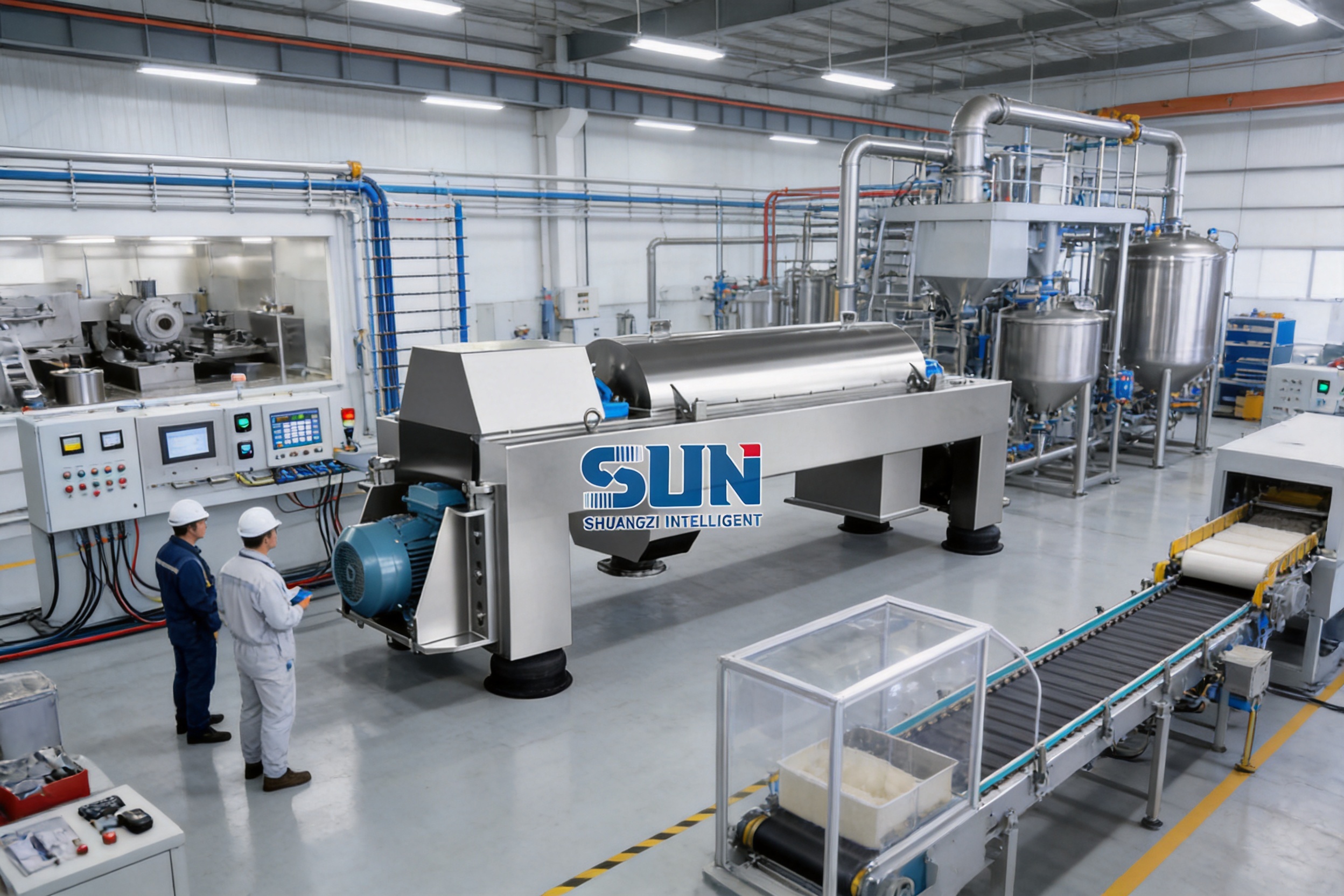
Installation planning should include equipment footprint, lifting access, maintenance space, foundation or support structure, feed piping, liquid discharge piping, solids conveying, electrical power, ventilation, drainage, and cleaning arrangements.
The equipment dimensions range from approximately 2,608 millimeters in length for the WZ30 to approximately 5,318 millimeters for the WZ60A. Weight ranges from approximately 1,200 kilograms to 7,000 kilograms. These values should be included in structural and logistics planning.
9. Operation, Maintenance, and Reliability
9.1 Start-up procedure
Before start-up, operators should verify that the centrifuge is correctly installed, all guards are in place, lubrication requirements have been completed, discharge routes are clear, and connected pumps and valves are ready. The bowl and scroll should be free from unintended obstructions.
The machine should normally be started according to the approved operating procedure. Reaching stable rotational speed before introducing feed can help prevent abnormal loading. Feed should be introduced gradually while operators monitor vibration, motor load, torque, outlet conditions, and liquid clarity.
9.2 Normal operation
During normal operation, the principal variables include feed rate, bowl speed, differential speed, solids concentration, liquid discharge condition, and motor load. Operators should observe trends rather than relying only on individual readings.
A gradual increase in torque may indicate higher solids loading, inadequate solids discharge, changes in feed concentration, or a developing blockage. Increased vibration may indicate imbalance, bearing problems, foreign material, wear, or operating conditions outside the intended range.
9.3 Cleaning
Cleaning requirements vary according to the application. Food, pharmaceutical, and biological processes may require frequent cleaning or validated cleaning cycles. Industrial sludge and mineral applications may place greater emphasis on flushing, wear inspection, and removal of accumulated solids.
Cleaning procedures should follow the equipment design and the process requirements. The user should confirm chemical compatibility, temperature limits, flow direction, drainage, and safe isolation before cleaning. Any cleaning-in-place arrangement should be designed together with the machine and the rest of the process line.
9.4 Preventive maintenance
Preventive maintenance may include inspection of bearings, seals, lubrication systems, motor connections, differential components, wear surfaces, discharge ports, fasteners, guards, and vibration condition. Maintenance intervals should be based on operating hours, feed abrasiveness, speed, load, and manufacturer recommendations.
Wear components may require more frequent inspection when the feed contains sand, mineral particles, metal fragments, or other abrasive solids. Early inspection can prevent secondary damage and unplanned downtime.
9.5 Safety
A decanter centrifuge contains high-speed rotating components and must be operated with suitable guarding, interlocks, emergency stopping arrangements, and trained personnel. Operators should never open access covers while the bowl is rotating or before stored energy has been safely released.
Safety procedures should address electrical isolation, mechanical isolation, hot surfaces, chemical exposure, pressure, confined spaces, lifting, noise, and unexpected discharge. The final installation should comply with the applicable local safety requirements and project standards.
10. Why Manufacturing Quality Matters
High-speed rotating equipment requires precision in fabrication, machining, assembly, and balancing. Small errors in alignment or component geometry can become more significant as rotational speed increases. Manufacturing quality therefore affects not only efficiency but also vibration behavior, service life, operator safety, and maintenance requirements.
Controlled welding and finishing help support structural integrity and suitable surface quality. Accurate CNC machining contributes to correct fits and repeatable dimensions. Proper assembly and inspection help ensure that the bowl, scroll, differential assembly, drive system, and support structure function together as intended.
Manufacturing quality is also important for hygienic and cleanable applications. Smooth and accessible surfaces can reduce product retention and simplify cleaning. In chemical service, proper material selection and fabrication can reduce the risk of corrosion-related failure.
The company’s combination of engineering design, fabrication equipment, pilot production capability, and system integration provides a foundation for producing separation equipment adapted to real process requirements rather than treating every application as identical.
11. Selection Guide for Different Users
11.1 Small pilot or development projects
Research institutes and pilot plants may prioritize flexible operation, compact dimensions, product recovery, and the ability to evaluate different feed materials. The smaller WZ30 or WZ35 models may be considered where the flow rate is within the applicable range.
Pilot testing can generate information about liquid clarification, solids dryness, feed conditioning, differential speed, and material behavior. These results can then support scale-up to a larger production model.
11.2 Medium-scale industrial production
Medium-scale facilities may require a balance between capacity, power consumption, footprint, and continuous operating stability. The WZ40, WZ50, or WZ50A models may be reviewed depending on process flow and solids loading.
At this level, automatic controls, discharge conveying, cleaning arrangements, spare parts planning, and preventive maintenance become increasingly important. The centrifuge should be evaluated as part of the complete production line.
11.3 High-throughput installations
Large plants with high liquid flow or heavy solids loading may require the WZ60 or WZ60A model. The larger bowl dimensions and motor power support higher reference processing capacities, but they also require greater attention to foundation design, lifting, power supply, ventilation, maintenance access, and downstream solids handling.
High-throughput installations may benefit from redundant equipment, parallel units, automated monitoring, or bypass arrangements. These options depend on production continuity requirements and the consequences of planned or unplanned shutdowns.
12. Project Support from Equipment Selection to Commissioning
Successful separation projects require more than delivery of a machine. The feed system, piping, control logic, electrical supply, solids handling, liquid collection, cleaning arrangements, and operator procedures must work together.
The company can support process technology and automation engineering design, equipment manufacture, matching procurement, installation, system integration, and line debugging. This service structure can help reduce interface problems between different suppliers.
During commissioning, the operating team can verify feed distribution, liquid clarity, solids discharge, motor load, differential speed, vibration, and capacity. Initial operating conditions may then be optimized according to actual process results. Documentation and training should be included in the project plan so that local operators understand routine operation, alarm response, shutdown, cleaning, and maintenance.
For complete projects, the centrifuge may be combined with extraction, fermentation, evaporation, concentration, filtration, crystallization, drying, storage, and utility systems. A coordinated engineering approach can improve layout efficiency and provide a more consistent relationship between upstream and downstream process conditions.
13. Frequently Asked Questions
Q1. What is a horizontal spiral decanter centrifuge?
A horizontal spiral decanter centrifuge is a continuous solid-liquid separation machine. It uses a high-speed rotating bowl to separate heavier solids from liquid and an internal scroll conveyor to transport the solids toward an automatic discharge outlet.
Q2. Can the machine operate continuously for 24 hours?
It is designed for stable continuous running and can support long operating periods when correctly selected, installed, operated, and maintained. Actual operating time depends on feed characteristics, maintenance planning, cleaning requirements, and the operating conditions established for the specific process.
Q3. What is the function of the differential speed?
The differential speed is the speed difference between the rotating bowl and the scroll conveyor. It determines how quickly the scroll transports separated solids through the bowl. Adjusting this value can influence solids dryness, liquid clarity, torque, and processing capacity.
Q4. What materials can be processed?
The machine can be used for many industrial suspensions, including sludge, chemical liquids containing solids, beverage materials, plant extraction residues, fermentation broths, mineral slurries, and other solid-liquid mixtures. Suitability must be confirmed by reviewing the actual feed properties.
Q5. Which model should a customer choose?
Model selection depends on flow rate, solids concentration, particle size, density, viscosity, required liquid clarity, target solids dryness, temperature, chemical compatibility, and installation conditions. The WZ30 through WZ60A models provide different dimensions, capacities, speeds, motor powers, and weights for different duties.
Q6. Are the listed capacities guaranteed for every material?
No. The listed capacities are reference ranges. Actual performance varies with feed characteristics and separation objectives. Fine particles, high viscosity, high solids concentration, or difficult settling behavior may reduce practical capacity.
Q7. Can the centrifuge be integrated into a turnkey project?
Yes. The supplier can support process design, equipment design, matching procurement, installation, commissioning, automation engineering, and system integration. The centrifuge can be incorporated into plant extraction, fermentation, pharmaceutical, food, environmental, and other complete process lines.
Q8. Is the equipment suitable for food or pharmaceutical applications?
It may be suitable when configured with appropriate materials, surface finishes, seals, cleaning arrangements, documentation, and controls. The final design must meet the user’s hygiene, regulatory, validation, and process requirements.
Q9. What information is needed for a technical proposal?
Useful information includes feed flow rate, solids concentration, particle size, liquid and solid density, viscosity, temperature, pH, corrosiveness, desired liquid clarity, target cake dryness, operating hours, cleaning method, available space, electrical conditions, and downstream handling arrangements.
Q10. What are the main advantages over batch separation?
The main advantages are continuous feed and discharge, reduced manual handling, compact installation, stable production, automatic solids conveying, suitability for long operating periods, and easier integration with automated process lines.
14. Conclusion
The continuous solid-liquid separation decanter centrifuge provides a practical solution for industrial suspensions that require uninterrupted processing and automatic solids removal. Its horizontal bowl, hollow-shaft scroll conveyor, and differential assembly work together to separate heavy solids, clarify liquid, convey the solid phase, and discharge it continuously.
The WZ30, WZ35, WZ40, WZ50, WZ50A, WZ60, and WZ60A models cover a broad range of reference capacities, bowl sizes, rotational speeds, motor powers, weights, and installation dimensions. This range enables users to consider equipment for pilot production, medium-scale processing, and higher-throughput industrial applications.
Compared with conventional gravity settling, batch centrifugation, or manually serviced filtration systems, the decanter offers continuous operation, compact design, reduced labor requirements, and strong adaptability. It can support sludge dewatering, chemical clarification, beverage processing, mineral slurry separation, plant extraction, biological fermentation, pharmaceutical processing, food production, and environmental protection.
Its value is further strengthened by the supplier’s broader engineering capabilities. Zhejiang Shuangzi Intelligent Equipment Co., Ltd. combines process technology, automation design, equipment manufacture, pilot production, research and development, installation, commissioning, and turnkey project services. Advanced welding, cutting, machining, and finishing equipment support the manufacture of process equipment intended for demanding industrial environments.
For the best result, users should select the centrifuge according to actual feed characteristics and defined separation targets rather than nominal capacity alone. A complete technical evaluation should include testing, model selection, material compatibility, automation, installation, cleaning, maintenance, safety, and downstream integration. When these factors are properly coordinated, the horizontal spiral decanter centrifuge can become a reliable and productive part of a modern continuous process line.
References
1. Zhejiang Shuangzi Intelligent Equipment Co., Ltd. Product information for horizontal spiral decanter centrifuge, including model specifications and application descriptions.
2. Zhejiang Shuangzi Intelligent Equipment Co., Ltd. Corporate information concerning process engineering, equipment manufacturing, system integration, research and development, and turnkey project services.
3. Records of standard industrial centrifuge operating principles, including centrifugal sedimentation, differential scroll conveying, and continuous solids discharge.
4. General engineering guidance for sludge dewatering, chemical clarification, food processing, fermentation separation, plant extraction, and mineral slurry treatment.
5. General maintenance and safety principles for high-speed rotating process equipment.