
 英语
 俄语
Content
- 1 1. Overview of Continuous Decanter Centrifuge Technology
- 2 2. Product Advantages in Industrial Applications
- 3 3. Technical Specifications and Model Selection
- 4 4. Separation Performance and Operating Variables
- 5 5. Applications Across Industrial Sectors
- 6 6. Manufacturing Strengths and Engineering Capability
- 7 7. Advantages Compared with Conventional Separation Equipment
- 8 8. Process Design and Installation Considerations
- 9 9. Quality, Reliability, and Maintenance
- 10 10. Project Support from Equipment Design to Commissioning
- 11 11. How to Select the Appropriate Model
- 12 12. Safety and Environmental Considerations
- 13 13. Frequently Asked Questions
- 13.1 Q1. What does a continuous solid-liquid separation decanter centrifuge do?
- 13.2 Q2. Can the centrifuge operate continuously for 24 hours?
- 13.3 Q3. What industries can use this equipment?
- 13.4 Q4. What is the advantage of the scroll conveyor?
- 13.5 Q5. How should the correct model be selected?
- 13.6 Q6. Does the listed processing capacity apply to every material?
- 13.7 Q7. Can the centrifuge be integrated into a complete production line?
- 13.8 Q8. Is the machine suitable for food or pharmaceutical applications?
- 13.9 Q9. What maintenance does the centrifuge require?
- 13.10 Q10. What information should be provided for a quotation?
- 14 14. Why Choose an Integrated Equipment Manufacturer
- 15 15. Conclusion
- 16 References
- 17 Product: Continuous Solid Liquid Separation Decanter Centrifuge
Industrial processes increasingly require separation equipment that can operate continuously, maintain stable product quality, reduce manual intervention, and adapt to changing feed conditions. The horizontal spiral decanter centrifuge is designed to meet these requirements through continuous centrifugal separation, automatic solids conveying, and dependable mechanical operation.
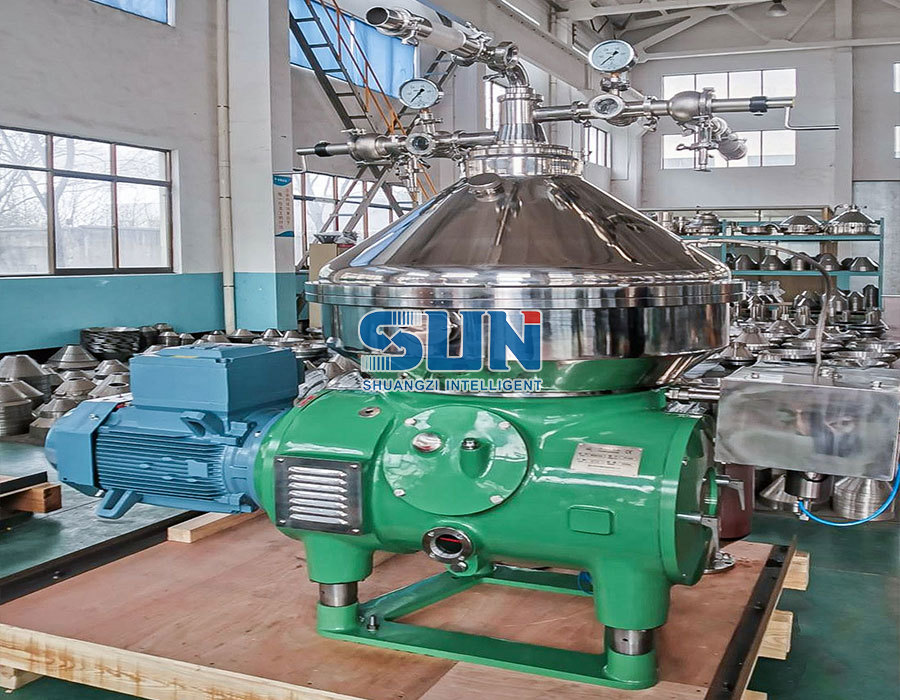
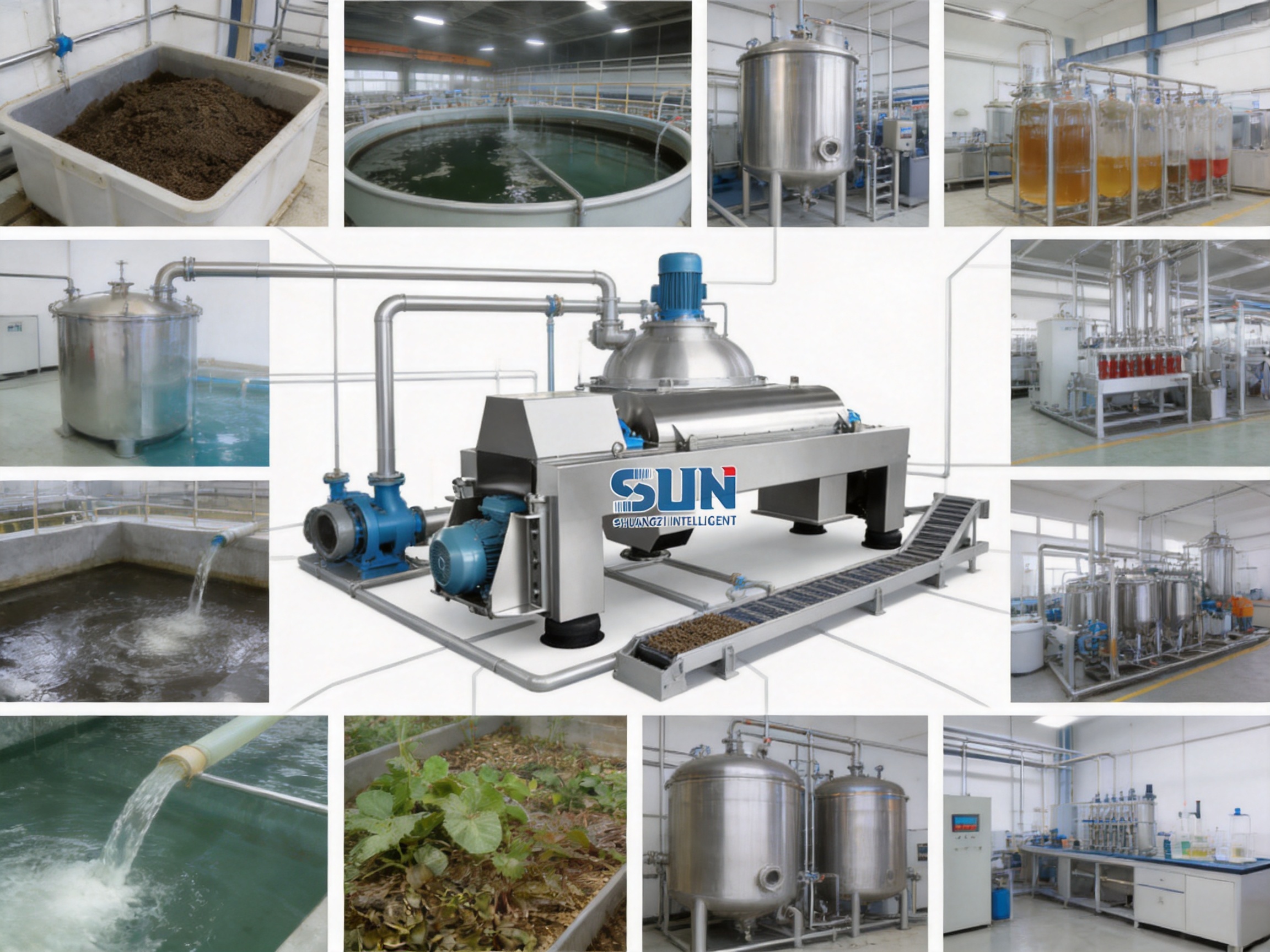
This equipment provides an efficient solution for separating suspended solids from liquids in applications such as sludge dewatering, chemical clarification, beverage processing, mineral slurry treatment, plant extraction, biological fermentation, pharmaceutical production, and environmental protection. Its horizontal configuration combines a rotating bowl, a hollow-shaft scroll conveyor, and a differential speed assembly in one compact machine.
Unlike batch filtration systems, the decanter centrifuge can receive feed, separate phases, convey solids, and discharge clarified liquid without repeated shutdowns. This continuous operating principle can help users improve plant productivity, reduce labor requirements, and maintain a more consistent process flow.
The equipment is manufactured and supplied by Zhejiang Shuangzi Intelligent Equipment Co., Ltd., an engineering-oriented company specializing in process technology, automation engineering, equipment manufacturing, system integration, and turnkey industrial projects. The company serves industries connected with plant extraction, bio-fermentation, pharmaceutical engineering, natural food processing, energy conservation, and environmental protection.
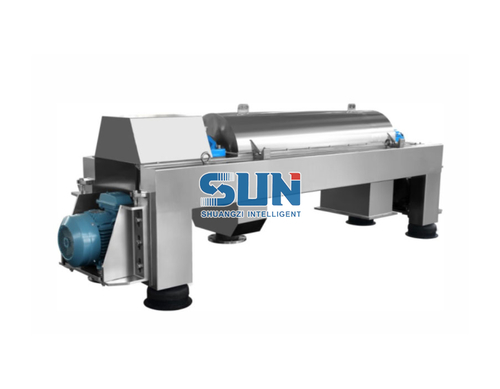
Continuous Solid Liquid Separation Decanter Centrifuge
1. Overview of Continuous Decanter Centrifuge Technology
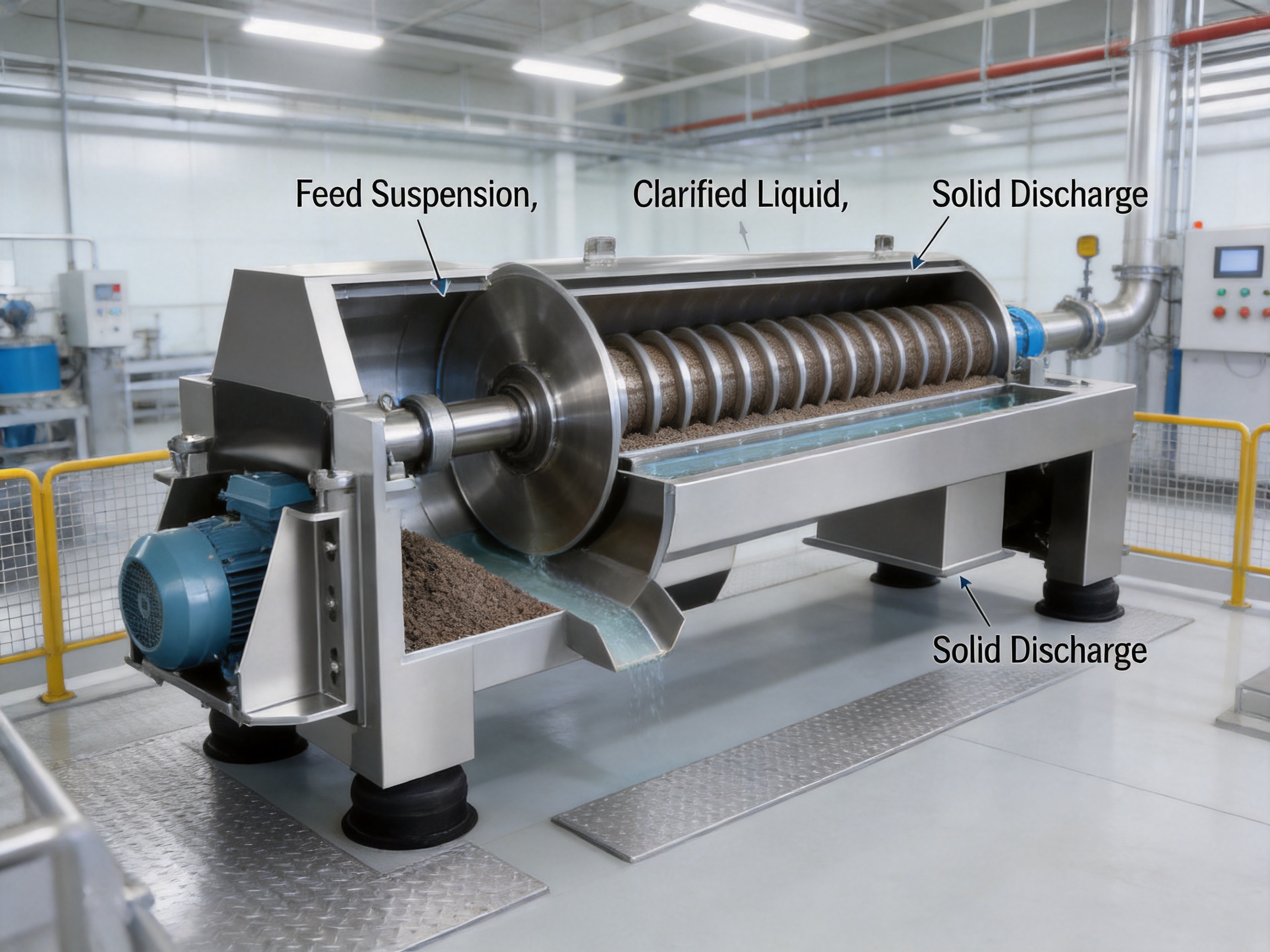
A decanter centrifuge is a mechanical separation machine that uses centrifugal force to separate suspended particles from a liquid phase. During operation, the feed suspension enters the rotating bowl through a stationary or rotating feed tube. The bowl rotates at high speed, generating centrifugal acceleration that is many times greater than gravity.
Under this force, particles with a higher density than the liquid migrate outward toward the internal bowl wall. The clarified liquid remains closer to the central liquid zone. A scroll conveyor rotates in the same general direction as the bowl but at a slightly different speed. This differential speed allows the scroll to move the settled solids continuously toward the conical end of the bowl.
The liquid phase flows toward the opposite outlet and leaves through the liquid discharge area. Depending on the process configuration, liquid depth, differential speed, feed rate, and operating speed can be adjusted to achieve the required clarification or dewatering performance.
The result is a continuous separation process with two primary outputs: a clarified liquid stream and a concentrated solid stream. In some applications, the machine may be configured for three-phase separation when an additional liquid phase is present, although the product described here is primarily intended for solid-liquid separation.
1.1 Main Mechanical Components
The rotating bowl is the main separation chamber. Its diameter, effective length, internal geometry, and operating speed determine the available centrifugal force and settling area. The bowl is designed to withstand continuous high-speed rotation while containing the processed suspension.
The hollow-shaft scroll conveyor is positioned inside the bowl. Its function is to collect settled solids and transport them gradually toward the conical discharge section. Because the scroll operates continuously, solids do not need to be removed manually between cycles.
The differential assembly creates a controlled speed difference between the bowl and the scroll. This difference is essential. If the scroll rotated at exactly the same speed as the bowl, it would not convey the settled solids effectively. If the differential speed were too high, the machine could experience excessive turbulence, increased torque, or reduced cake dryness.
The drive system supplies power to both the main bowl rotation and the auxiliary scroll movement. The listed models use separate main and auxiliary motor ratings, allowing the machine to provide the energy required for high-speed separation and continuous solids discharge.
The conical discharge section assists in moving dewatered or concentrated solids toward the outlet. The conical geometry increases the conveying effect and supports the transition from the cylindrical settling zone to the solids discharge port.
1.2 Continuous Processing Principle
The decanter centrifuge is designed for stable operation over extended periods, including 24-hour production schedules when the machine is correctly selected, installed, operated, and maintained. Feed can be supplied continuously, while liquid and solids are removed at the same time.
This operating principle is particularly valuable in industrial plants where a separation step forms part of a larger production line. Continuous separation reduces the need for intermediate storage tanks, manual cake removal, repeated filter cleaning, or frequent batch interruptions.
Because feed conditions may vary, actual capacity and separation performance depend on solids concentration, particle size, density difference, viscosity, temperature, feed composition, required liquid clarity, desired cake dryness, and selected operating parameters. Equipment selection should therefore be based on process data rather than nominal flow rate alone.
2. Product Advantages in Industrial Applications
The horizontal spiral decanter centrifuge offers several practical advantages compared with many conventional batch separation methods. These advantages relate to continuity, automation, compactness, process flexibility, and reduced dependence on manual operation.
2.1 Continuous Solid Discharge
One of the most important advantages is automatic solids conveying. In a conventional filter press, solids may need to be discharged after each cycle. In a settling tank, accumulated sludge may require periodic pumping or manual cleaning. The decanter centrifuge continuously transports solids from the bowl wall to the discharge outlet.
This reduces production interruptions and allows the centrifuge to function as part of an automated processing line. Continuous discharge is also useful when the incoming suspension contains a steady concentration of solids that would quickly overload a batch system.
2.2 Reduced Manual Intervention
The machine combines separation and solids transport in a single unit. Operators do not normally need to open the equipment during routine production to remove separated solids. This can improve workplace cleanliness, reduce direct contact with process material, and lower labor requirements.
Reduced manual intervention is particularly important in pharmaceutical, food, fermentation, and plant extraction applications, where controlled handling and hygienic production practices are essential.
2.3 High Centrifugal Separation Force
The high rotational speed of the bowl produces a powerful separation environment. The listed models operate at speeds ranging from 2,450 to 4,400 revolutions per minute, depending on model size. High centrifugal force accelerates the settling of suspended particles that may require a long time to settle under gravity.
This makes the centrifuge suitable for fine or slowly settling solids, provided the suspension characteristics are compatible with the selected model and operating conditions. Compared with gravity settling equipment, the centrifuge can provide a much smaller footprint for an equivalent separation duty.
2.4 Compact Process Footprint
Decanter centrifuges are generally compact relative to tanks, clarifiers, or large filter installations with comparable throughput. The horizontal arrangement provides an efficient use of floor space while retaining a long effective bowl length for settling and conveying.
The dimensions of the listed models range from approximately 2,608 millimeters to 5,318 millimeters in length. This allows users to select equipment according to available space, required throughput, and process scale.
2.5 Stable Operation for Long Production Runs
The machine is intended for reliable continuous running. Its bowl, scroll, drive system, and differential assembly are designed as an integrated mechanical system. When supported by correct lubrication, vibration monitoring, routine inspection, and suitable operating parameters, the centrifuge can serve as a dependable part of a long-running production line.
Long operating cycles can improve equipment utilization and reduce the production losses associated with frequent start-stop operation. They can also support plants that operate multiple shifts or maintain continuous production throughout the day.
2.6 Flexible Application Range
The decanter centrifuge can be applied to a wide range of industrial suspensions. Typical applications include municipal and industrial sludge dewatering, chemical liquid clarification, beverage processing, mineral slurry separation, fermentation broth treatment, plant extract processing, and pharmaceutical intermediate separation.
The same basic separation principle can be adapted to different materials by adjusting feed conditions, bowl speed, differential speed, liquid depth, polymer or conditioning treatment, and discharge settings. This flexibility makes the equipment suitable for both dedicated applications and multipurpose processing plants.
3. Technical Specifications and Model Selection
The product range includes seven models identified as WZ30, WZ35, WZ40, WZ50, WZ50A, WZ60, and WZ60A. The models vary in bowl diameter, effective bowl length, rotational speed, processing capacity, motor power, weight, and overall dimensions.
| Item | WZ30 | WZ35 | WZ40 | WZ50 | WZ50A | WZ60 | WZ60A |
| Drum external diameter | 316 mm | 355 mm | 440 mm | 480 mm | 550 mm | 640 mm | 676 mm |
| Effective drum length | 1,075 mm | 1,350 mm | 1,600 mm | 1,800 mm | 2,000 mm | 2,280 mm | 2,500 mm |
| Speed | 4,400 rpm | 4,400 rpm | 3,900 rpm | 3,350 rpm | 3,038 rpm | 2,989 rpm | 2,450 rpm |
| Processing capacity | 300–3,000 L/h | 2,000–4,000 L/h | 3,000–6,000 L/h | 5,000–8,000 L/h | 6,000–12,000 L/h | 8,000–15,000 L/h | 15,000–23,000 L/h |
| Main and auxiliary motor power | 7.5 + 3 kW | 11 + 4 kW | 22 + 11 kW | 30 + 15 kW | 37 + 18.5 kW | 45 + 22 kW | 75 + 30 kW |
| Weight | 1,200 kg | 1,400 kg | 2,200 kg | 2,600 kg | 3,600 kg | 5,000 kg | 7,000 kg |
| Dimensions | 2,608 × 896 × 1,110 mm | 2,884 × 946 × 1,135 mm | 3,440 × 980 × 1,175 mm | 3,608 × 1,000 × 1,180 mm | 4,363 × 1,210 × 1,335 mm | 4,900 × 1,130 × 1,358 mm | 5,318 × 1,360 × 1,778 mm |
3.1 Smaller Models: WZ30 and WZ35
The WZ30 and WZ35 are suitable for lower-capacity industrial duties, pilot production, laboratory-scale process development, and smaller continuous lines. The WZ30 has a listed capacity range of 300 to 3,000 liters per hour, while the WZ35 is listed at 2,000 to 4,000 liters per hour.
These models can be useful when the process requires continuous separation but does not justify the floor space or power consumption of a larger machine. They may also support scale-up studies before a production plant invests in higher-capacity equipment.
3.2 Medium Models: WZ40, WZ50, and WZ50A
The WZ40, WZ50, and WZ50A cover a broad range of medium-scale processing requirements. Their nominal processing capacities range from 3,000 to 12,000 liters per hour, depending on model and operating conditions.
These models may be considered for chemical processing, food and beverage production, fermentation operations, plant extraction lines, and industrial wastewater treatment. The increasing bowl length and diameter provide additional settling and conveying capacity as the required throughput rises.
3.3 Larger Models: WZ60 and WZ60A
The WZ60 and WZ60A are designed for higher flow rates. The WZ60 has a listed capacity of 8,000 to 15,000 liters per hour, while the WZ60A has a listed capacity of 15,000 to 23,000 liters per hour.
These larger machines are appropriate for high-volume sludge treatment, mineral slurry separation, large fermentation processes, and industrial production lines requiring substantial continuous throughput. Their greater weight, motor power, and dimensions must be considered during plant layout, foundation design, transportation, and installation planning.
3.4 Understanding Nominal Capacity
The processing capacities in the table are reference ranges rather than universal guarantees. A low-viscosity suspension with easily settling particles may approach the upper part of a stated range, while a viscous feed containing fine, low-density particles may require a lower feed rate.
Capacity should be evaluated together with the required liquid clarity and solids dryness. Increasing flow may reduce residence time and affect separation performance. Similarly, maximizing cake dryness may require a lower differential speed or a different feed rate. A technically correct selection balances throughput, clarification, solids concentration, energy use, and product quality.
4. Separation Performance and Operating Variables
Decanter centrifuge performance is influenced by several interconnected variables. Understanding these factors allows plant operators to achieve more stable operation and avoid unnecessary wear or energy consumption.
4.1 Bowl Speed
Bowl speed determines the centrifugal acceleration applied to the suspension. Higher speed generally increases the force available for particle migration, which can improve clarification of fine solids. However, higher speed can also increase power consumption, mechanical stress, and sensitivity to abrasive material.
The appropriate speed depends on the material, target separation, machine model, and operating limits. Operators should not exceed the approved design speed or make uncontrolled adjustments.
4.2 Differential Scroll Speed
Differential speed determines how quickly the scroll moves solids through the bowl. A lower differential speed usually provides solids with more residence time and may support higher cake dryness. A higher differential speed can increase solids conveying capacity and reduce the risk of solids accumulation, but it may produce wetter cake or affect liquid clarity.
The correct setting depends on the balance between solids loading, desired dryness, torque, and throughput. Advanced control systems can help operators respond to changing feed conditions.
4.3 Feed Rate
Feed rate affects the residence time and solids loading inside the bowl. Excessive feed can reduce liquid clarity, overload the scroll, increase torque, or cause unstable operation. Insufficient feed may reduce production capacity and operate the machine below its economical range.
Feed should be introduced at a controlled rate, particularly during startup and when processing materials with variable solids concentration.
4.4 Solids Characteristics
Particle size, shape, density, compressibility, and concentration directly influence separation. Dense particles generally settle more readily than low-density organic solids. Fine particles may require conditioning, higher centrifugal force, or a lower throughput.
Abrasive solids such as mineral particles can accelerate wear on the bowl and scroll. In such cases, material selection, protective surfaces, inspection intervals, and spare-parts planning become important elements of the equipment specification.
4.5 Liquid Properties
Liquid viscosity and density affect the movement of both solid and liquid phases. Higher viscosity can slow particle migration and increase the power required for conveying. Temperature may also change viscosity and should be included in process evaluation.
In food, pharmaceutical, and biological applications, the liquid may be sensitive to heat, shear, oxygen exposure, or contamination. The process design should therefore consider temperature control, cleaning methods, material compatibility, and hygienic requirements.
5. Applications Across Industrial Sectors
5.1 Sludge Dewatering
Sludge dewatering is one of the most established applications for decanter centrifuges. The machine separates water from concentrated organic or inorganic solids, reducing sludge volume and simplifying downstream handling.
Continuous operation is valuable for wastewater treatment plants and industrial facilities that generate sludge throughout the day. The separated liquid can be returned for further treatment, while the dewatered solids can be transported, dried, disposed of, or used in a subsequent process, subject to local regulations and material characteristics.
5.2 Chemical Liquid Clarification
Chemical processes often produce suspensions that require removal of precipitated solids, catalyst particles, reaction by-products, or crystallized material. A decanter centrifuge can provide continuous clarification without depending exclusively on large settling tanks.
The equipment selection must account for chemical compatibility, temperature, corrosion risk, particle abrasiveness, and the required degree of liquid clarity. Correct metallurgy, sealing, and cleaning procedures are important for maintaining equipment service life.
5.3 Beverage Processing
In beverage processing, centrifuges may be used to remove suspended particles, yeast, pulp, or other insoluble material. Continuous separation can help maintain a steady product flow and reduce the need for repeated batch filtration.
Food and beverage users typically place strong emphasis on cleanability, hygienic design, product recovery, and prevention of cross-contamination. The process should be designed around the characteristics of the beverage, including viscosity, solids content, temperature, and sensitivity to oxidation or shear.
5.4 Mineral Slurry Separation
Mineral slurries may contain high concentrations of dense and abrasive solids. The decanter centrifuge can continuously separate and concentrate these solids, supporting mineral processing, aggregate treatment, and related industrial operations.
Abrasive feed materials require careful attention to wear protection and maintenance. Operators should monitor vibration, differential torque, discharge behavior, and changes in liquid clarity to identify abnormal conditions at an early stage.
5.5 Plant Extraction
Plant extraction processes often generate mixtures containing liquid extracts, fibrous plant residues, suspended particles, and fine insoluble matter. The decanter centrifuge can help separate the liquid extract from residual solids after extraction or concentration steps.
Continuous separation can improve line integration and reduce the time between extraction and subsequent purification. Process conditions should be selected to protect sensitive botanical compounds and avoid excessive temperature or mechanical stress.
5.6 Biological Fermentation
Fermentation broths may contain microbial cells, proteins, nutrients, residual substrates, and other suspended materials. A decanter centrifuge can support solid-liquid separation after fermentation or during intermediate processing.
Biological applications require close attention to sanitation, clean-in-place procedures, material compatibility, and process containment. The centrifuge can be integrated with fermentation tanks, buffer systems, filtration units, evaporation equipment, or downstream purification systems.
5.7 Pharmaceutical Engineering
Pharmaceutical production may require the separation of crystallized products, process residues, biomass, or suspended solids from liquid intermediates. A continuous decanter centrifuge can provide a mechanically efficient separation stage in suitable applications.
Pharmaceutical projects generally require documented materials, validated cleaning procedures, controlled installation, and appropriate automation. Final configuration should be based on the applicable production standards and the user's validation requirements.
6. Manufacturing Strengths and Engineering Capability
The supplier's capabilities extend beyond the delivery of an individual centrifuge. Zhejiang Shuangzi Intelligent Equipment Co., Ltd. focuses on process technology, automation engineering design, equipment manufacturing, matching equipment procurement, installation, commissioning, and system integration.
This broader capability is important because separation equipment rarely operates as an isolated machine. It normally connects with feed tanks, pumps, pipelines, dosing systems, control panels, sludge transport systems, liquid collection equipment, cleaning systems, and downstream processing units.
6.1 EPC and EPCM-Oriented Project Experience
The company uses EPC and EPCM services as a core engineering approach. This means that project support can cover multiple stages, including process design, equipment selection, manufacturing coordination, installation, commissioning, and system integration.
For customers developing a complete plant rather than purchasing a standalone machine, this approach can simplify communication between process, mechanical, electrical, and automation disciplines. It can also help reduce interface problems between equipment supplied by different vendors.
6.2 Integrated Manufacturing Facilities
The company was founded in 2007 and operates facilities with a floor area of approximately 16,706 square meters and a structure area of approximately 17,800 square meters. These facilities support equipment manufacturing, engineering activities, pilot work, and research and development.
An integrated production environment can improve coordination between design and fabrication. It also provides space for equipment assembly, inspection, testing, process development, and project preparation before shipment to the customer.
6.3 Advanced Welding and Finishing Equipment
The manufacturing operation includes equipment such as plasma argon arc welding machines, plasma cutting machines, and CAM CNC machining centers. These tools support accurate fabrication and finishing of process equipment and components.
Plasma argon arc welding is particularly valuable for stainless-steel process equipment where weld quality, appearance, cleanliness, and material protection are important. Plasma cutting supports accurate preparation of metal components, while CNC machining helps produce repeatable dimensions for mechanical parts and assemblies.
Manufacturing accuracy is important in a high-speed centrifuge. Bowl balance, shaft alignment, component concentricity, bearing installation, and differential assembly accuracy all influence vibration, service life, and operating stability.
6.4 Research and Development Platform
The company maintains research and development activities covering vacuum low-temperature drying, fermentation, extraction, concentration, separation, and related process technologies. This cross-disciplinary experience supports the development of equipment systems rather than isolated mechanical products.
A pilot production workshop and research platform can help users evaluate processes before full-scale implementation. Pilot work may be used to study feed behavior, achievable separation, solids discharge, capacity, and downstream compatibility.
6.5 System Integration Capability
In a complete production line, the centrifuge may be integrated with extraction systems, fermentation vessels, evaporation and concentration equipment, filtration units, crystallization equipment, storage tanks, and automated control systems.
The supplier's experience in these related equipment categories can help create a more coordinated plant design. The objective is to ensure that the centrifuge receives a stable feed, discharges solids effectively, and sends clarified liquid to the correct downstream process without unnecessary manual transfer.
7. Advantages Compared with Conventional Separation Equipment
Different separation technologies are suitable for different duties, so the decanter centrifuge should not be viewed as a universal replacement for every filter or clarifier. Its advantages are most apparent when continuous operation, automatic solids discharge, high throughput, and a compact installation are important.
7.1 Compared with Gravity Settling Tanks
Gravity settling tanks require substantial residence time and floor area. Their performance may vary with temperature, particle size, density, and hydraulic loading. A decanter centrifuge accelerates particle separation through high centrifugal force and can provide a compact alternative for many applications.
The centrifuge also offers more direct control over solids removal. Instead of allowing solids to accumulate for later pumping, the scroll continuously conveys them to the discharge outlet.
7.2 Compared with Batch Filter Presses
Filter presses can produce relatively dry cakes in many applications, but they normally operate in cycles. Filling, pressing, opening, cake discharge, cloth cleaning, and closing all contribute to downtime and labor requirements.
The decanter centrifuge provides continuous feed and discharge. This can be an advantage where a steady process flow is more valuable than maximum cake dryness. The correct choice depends on the specific material, desired moisture content, labor costs, available space, and required automation level.
7.3 Compared with Vacuum Filtration
Vacuum filtration systems can be effective for certain particle sizes and material properties, but they may require filter media, vacuum equipment, periodic cleaning, or media replacement. A decanter centrifuge does not depend on a conventional filter cloth for its primary separation action.
This can simplify continuous operation and reduce media-related consumables. However, the centrifuge still requires scheduled inspection and maintenance of wear components, bearings, seals, drive elements, and internal surfaces.
7.4 Compared with Hydrocyclones
Hydrocyclones are simple and have no moving parts, but they can be sensitive to feed pressure, particle size distribution, and density differences. They may also be less suitable when high solids concentration, precise solids conveying, or adjustable residence time is required.
A decanter centrifuge provides active mechanical conveying and adjustable operating parameters. It may therefore offer greater flexibility for variable or difficult-to-settle suspensions, although power consumption and mechanical maintenance are higher than those of a passive hydrocyclone.
8. Process Design and Installation Considerations
Successful centrifuge operation begins with proper process design. Users should provide information about the feed material, including flow rate, solids concentration, particle size, density, viscosity, temperature, pH, corrosiveness, and the required properties of the liquid and solids outlets.
8.1 Feed System
The feed pump should be selected to provide a stable flow without introducing excessive air or pulsation. Large foreign objects should be removed before the centrifuge enters operation, because they may damage the scroll, bowl, feed tube, or discharge system.
Where chemical conditioning is required, polymer or coagulant dosing should be optimized through testing. Overdosing can increase operating cost and may affect cake handling or liquid quality. Underdosing may produce poor flocculation and reduced separation performance.
8.2 Foundation and Structural Support
The centrifuge is a high-speed rotating machine and should be installed on a suitable foundation designed for its weight, dynamic loads, and operating vibration. Larger models weigh up to 7,000 kilograms before auxiliary systems and structural supports are added.
Foundation design should consider access for maintenance, lifting requirements, drainage, noise control, enclosure arrangement, and the safe routing of feed, liquid, solids, electrical, and cleaning connections.
8.3 Utilities and Controls
Electrical power must be provided according to the selected model's main and auxiliary motor ratings. The WZ30 uses a listed motor arrangement of 7.5 plus 3 kilowatts, while the WZ60A uses 75 plus 30 kilowatts. Actual installed power may also include pumps, dosing units, controls, conveyors, and other auxiliary equipment.
Control functions may include start and stop sequencing, bowl speed management, differential speed control, overload protection, torque monitoring, vibration monitoring, feed control, and alarm handling. The specific automation scope should be confirmed during project design.
8.4 Liquid and Solids Discharge
The clarified liquid outlet should be connected to a properly sized collection or downstream treatment system. The solids discharge area should allow continuous removal without creating backpressure or blockage.
Solids may be transferred by screw conveyor, pump, belt system, container, or other suitable equipment. The discharge arrangement should account for cake consistency, temperature, stickiness, abrasiveness, and required transport distance.
8.5 Cleaning and Hygiene
Applications involving food, pharmaceuticals, fermentation, or plant extracts may require defined cleaning procedures. These can include flushing, rinsing, chemical cleaning, disassembly, inspection, and sanitation.
Cleaning requirements should be identified before manufacture so that the equipment configuration, materials, connections, drainability, access points, and control functions are compatible with the customer's hygienic and validation expectations.
9. Quality, Reliability, and Maintenance
A decanter centrifuge operates under demanding mechanical conditions. Reliability depends not only on the initial design but also on correct installation, operating discipline, preventive maintenance, and timely replacement of wear components.
9.1 Vibration Management
Vibration is a key operating indicator for any high-speed centrifuge. Excessive vibration may be related to imbalance, uneven solids accumulation, bearing wear, misalignment, loose fasteners, foundation problems, or foreign material inside the bowl.
Routine monitoring can help identify developing problems before they result in serious damage. Operators should follow the equipment manufacturer's recommended alarm and shutdown limits.
9.2 Bearing and Drive Inspection
Bearings, couplings, motors, gearboxes, and differential components should be inspected and lubricated according to the maintenance schedule. Unusual noise, temperature rise, oil leakage, or changes in torque may indicate a problem requiring investigation.
Preventive maintenance is generally less costly than emergency repair, particularly when a centrifuge is connected to a continuous production line.
9.3 Wear Protection
The scroll and discharge area are exposed to concentrated solids and may experience wear, especially when processing abrasive mineral slurries. Regular inspection of flights, feed zones, discharge ports, and internal protective surfaces is recommended.
Wear rates depend on solids concentration, particle hardness, operating speed, differential speed, and material characteristics. A spare-parts strategy should be established for critical components.
9.4 Operating Procedures
Startup should normally begin with inspection of utilities, lubrication, guards, discharge systems, and control readiness. The bowl should reach the required operating condition before feed is introduced, and feed should be reduced or stopped before shutdown so that accumulated solids can be cleared safely.
Operators should avoid sudden changes in feed rate, solids concentration, or differential speed. Gradual adjustment provides more stable control and makes it easier to identify the effect of each process change.
10. Project Support from Equipment Design to Commissioning
For industrial customers, equipment supply is only one part of the project. The supplier can support users through process design, equipment design, matching procurement, installation, line debugging, and system integration.
10.1 Process Evaluation
Process evaluation begins with an understanding of the feed and the required outputs. Laboratory or pilot testing may be used to determine whether the selected separation principle is suitable and to establish realistic operating ranges.
Testing can also assist with model selection. A small model may be sufficient for pilot work, while a larger unit may be selected for commercial production after confirming the required separation performance.
10.2 Equipment Configuration
The equipment configuration may include the centrifuge, feed pump, conditioning system, control cabinet, liquid collection system, solids conveyor, structural frame, safety enclosure, and cleaning connections. The appropriate combination depends on the application and site requirements.
For pharmaceutical, food, and biological projects, material grades, surface finishes, sealing systems, cleaning procedures, and documentation should be agreed during the technical specification stage.
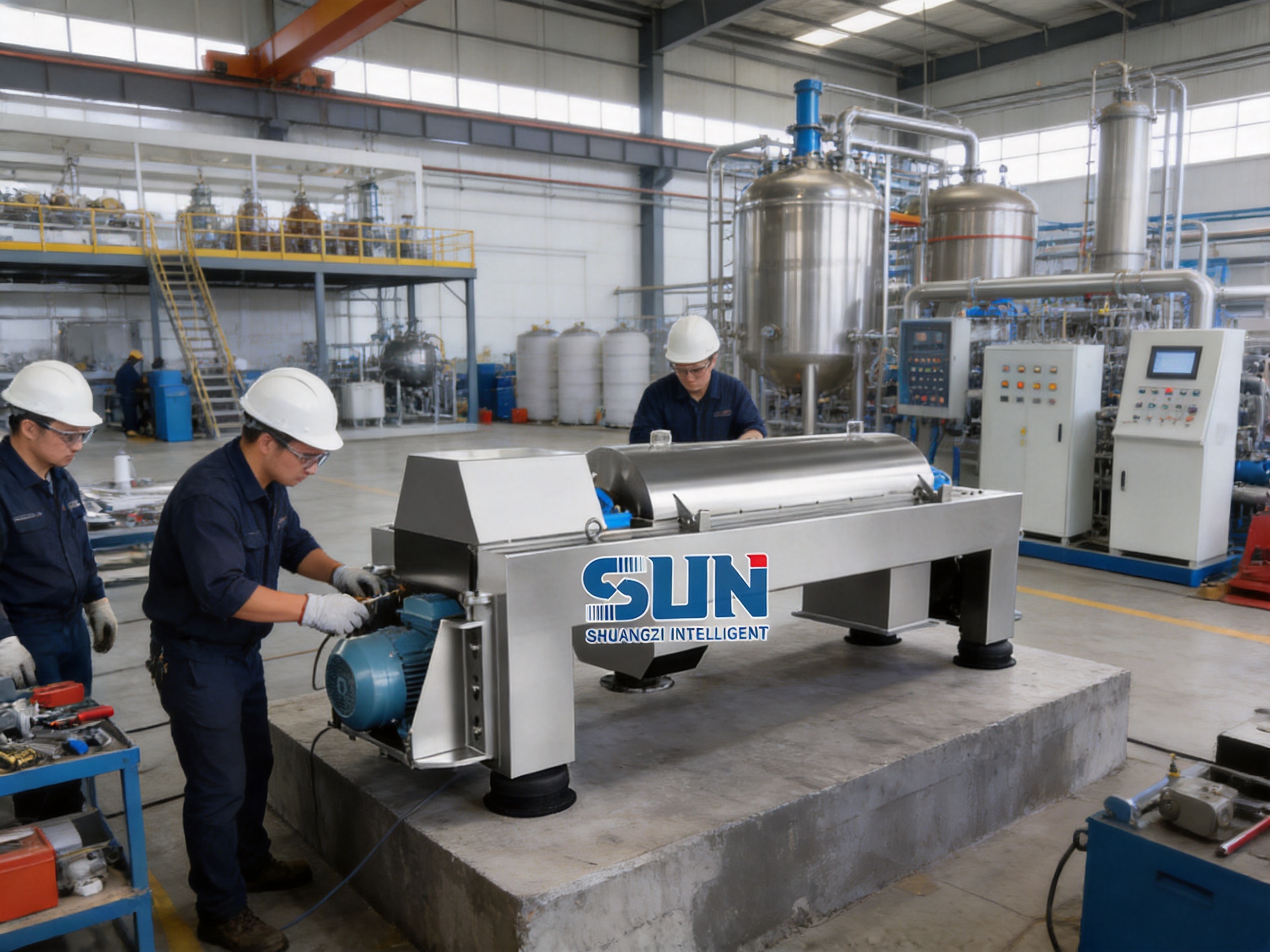
10.3 Installation and Commissioning
Installation includes positioning the machine, connecting utilities, checking alignment, verifying electrical systems, confirming rotation direction, testing protection devices, and inspecting the feed and discharge systems.
Commissioning should proceed from no-load operation to controlled water or process-fluid testing, followed by gradual introduction of actual material. Performance should be evaluated by monitoring liquid clarity, solids dryness, throughput, motor load, torque, temperature, vibration, and discharge behavior.
10.4 Turnkey Project Capability
When the centrifuge is part of a larger plant, turnkey support can simplify project execution. The supplier's experience with extraction systems, fermentation equipment, evaporation and concentration units, filtration systems, crystallization equipment, containers, and related process lines allows the separation stage to be designed as part of a complete production solution.
This integrated approach is especially useful for customers developing plant extraction, biological fermentation, pharmaceutical, natural food, or environmental protection facilities.
11. How to Select the Appropriate Model
Model selection should begin with the required feed flow rate, but capacity alone is not enough. A complete selection review should include the following technical factors.
11.1 Required Throughput
Compare the expected normal and peak flow rates with the listed model ranges. A machine should not be selected solely for the maximum possible capacity if the actual process will operate at a very low load. Conversely, peak production, seasonal variation, and future expansion should be considered when choosing the model.
11.2 Solids Loading
High solids loading may limit capacity even when the liquid flow is within the listed range. The scroll must be able to convey the incoming solids without excessive torque or accumulation.
11.3 Separation Objective
Clarification, thickening, and dewatering may require different operating conditions. A process focused on liquid clarity may use different settings from one focused on maximum solids dryness. The customer should define the primary objective and acceptable ranges for both outlet streams.
11.4 Material Compatibility
Feed chemistry determines the appropriate construction materials, seals, coatings, and cleaning methods. Corrosive or abrasive materials require additional engineering review before the final equipment specification is approved.
11.5 Available Space and Supporting Equipment
Overall dimensions, weight, lifting access, maintenance clearance, foundation design, and discharge arrangements must be included in the layout. The centrifuge should be installed where operators can safely access inspection and maintenance points.
11.6 Automation Requirements
Some users require basic local controls, while others require integration with a plant-wide distributed control system or supervisory control system. The desired level of automation should be established before manufacture so that sensors, control panels, communication interfaces, alarms, and interlocks can be properly coordinated.
12. Safety and Environmental Considerations
High-speed rotating equipment must be operated with appropriate guards, interlocks, emergency stops, and maintenance procedures. The centrifuge should never be opened or serviced while the bowl is rotating or while stored energy remains in the system.
Noise, vibration, process leakage, chemical exposure, and solids discharge should be evaluated during plant design. Suitable ventilation, drainage, protective equipment, containment, and access control may be required depending on the material being processed.
Environmental benefits can result from reduced sludge volume, lower water content in discharged solids, reduced manual handling, and more efficient integration with downstream treatment. Actual environmental performance depends on the complete process, including conditioning chemicals, energy use, liquid treatment, and final solids management.
13. Frequently Asked Questions
Q1. What does a continuous solid-liquid separation decanter centrifuge do?
It separates suspended solids from a liquid by centrifugal force. Dense solids move toward the rotating bowl wall, while clarified liquid forms an inner layer. A scroll conveyor continuously transports the settled solids to the conical discharge outlet.
Q2. Can the centrifuge operate continuously for 24 hours?
The machine is designed for stable continuous running and can support extended production schedules when properly selected, installed, operated, and maintained. Actual operating duration depends on feed properties, maintenance practices, safety systems, and site conditions.
Q3. What industries can use this equipment?
Typical industries include wastewater treatment, chemical processing, mineral processing, beverage production, plant extraction, biological fermentation, pharmaceutical engineering, natural food processing, and environmental protection.
Q4. What is the advantage of the scroll conveyor?
The scroll conveyor continuously moves separated solids through the bowl and toward the discharge section. This avoids the repeated manual removal required by many batch systems and supports uninterrupted production.
Q5. How should the correct model be selected?
Selection should consider feed flow, solids concentration, particle characteristics, viscosity, temperature, required liquid clarity, desired solids dryness, material compatibility, available space, and automation requirements. Pilot testing may be recommended for difficult or high-value applications.
Q6. Does the listed processing capacity apply to every material?
No. The capacity figures are reference ranges. Actual performance depends on the suspension's physical and chemical properties as well as the selected operating conditions. Fine, viscous, abrasive, or highly concentrated feeds may require a lower capacity than a free-settling suspension.
Q7. Can the centrifuge be integrated into a complete production line?
Yes. It can be connected with feed tanks, pumps, dosing systems, fermentation equipment, extraction systems, evaporation units, filtration equipment, crystallization systems, liquid collection units, solids conveyors, and automated controls.
Q8. Is the machine suitable for food or pharmaceutical applications?
It may be suitable when configured with appropriate materials, seals, surface finishes, cleaning provisions, documentation, and automation. The final design should be reviewed against the customer's hygienic, regulatory, and validation requirements.
Q9. What maintenance does the centrifuge require?
Maintenance generally includes inspection and lubrication of bearings and drive components, vibration monitoring, checking fasteners and guards, inspecting wear areas, verifying seals, cleaning internal surfaces, and replacing components according to condition and service intervals.
Q10. What information should be provided for a quotation?
Useful information includes feed flow rate, solids concentration, particle size, liquid and solid densities, viscosity, temperature, pH, corrosiveness, abrasiveness, required liquid clarity, target cake dryness, operating hours, site power supply, and installation conditions.
14. Why Choose an Integrated Equipment Manufacturer
Choosing an equipment supplier with process and manufacturing capabilities can provide advantages over purchasing a machine without engineering support. The centrifuge must perform within the operating conditions of the complete plant, and its success depends on the compatibility of upstream and downstream systems.
An integrated manufacturer can contribute to process selection, equipment sizing, mechanical design, automation planning, installation, commissioning, and troubleshooting. This can reduce the risk of mismatched pumps, insufficient discharge capacity, unsuitable materials, or incomplete control interfaces.
Zhejiang Shuangzi Intelligent Equipment Co., Ltd. combines equipment manufacturing with engineering services in plant extraction, fermentation, pharmaceutical engineering, natural food processing, energy conservation, and environmental protection. Its production facilities, pilot workshop, research and development activities, and experience with complete process lines support both individual equipment orders and turnkey projects.
The company's manufacturing resources include plasma welding, plasma cutting, CNC machining, equipment assembly, and finishing capabilities. These resources are valuable for producing process equipment that must meet dimensional, mechanical, surface, and cleanliness expectations.
For customers evaluating a decanter centrifuge, the most important consideration is not simply the motor power or nominal capacity. The equipment must provide reliable separation, controlled solids discharge, manageable maintenance, compatible construction, and practical integration with the production line. An engineering-led supplier can help address these requirements from the beginning of the project.
15. Conclusion
The continuous solid-liquid separation decanter centrifuge is a practical solution for industrial suspensions that require uninterrupted processing and automatic solids removal. Its horizontal bowl, hollow-shaft scroll conveyor, and differential assembly work together to separate heavy solids from liquid and convey the solids continuously to the discharge section.
With model capacities ranging from 300 to 23,000 liters per hour, the equipment range can address pilot-scale, medium-capacity, and high-volume industrial requirements. The machines support applications in sludge dewatering, chemical clarification, beverage processing, mineral slurry separation, plant extraction, biological fermentation, pharmaceutical engineering, and environmental protection.
Compared with many conventional batch systems, the decanter centrifuge can reduce manual handling, limit process interruptions, conserve floor space, and provide more direct control over continuous separation. Its performance is optimized when the model is selected according to the actual feed properties and when operating conditions are controlled carefully.
The supplier's strength extends from equipment manufacturing to process design, automation, installation, commissioning, system integration, and turnkey project delivery. Advanced welding, cutting, machining, pilot production, research and development, and complete-line engineering provide a foundation for delivering equipment suited to demanding industrial applications.
For companies seeking a dependable continuous separation stage, the decanter centrifuge offers a combination of mechanical efficiency, process flexibility, automatic solids conveying, and integration potential. Proper testing, engineering specification, installation, and maintenance will help users obtain stable performance throughout the equipment's service life.
References
1. Product technical parameter sheet for the WZ-series horizontal spiral decanter centrifuge.
2. General principles of centrifugal solid-liquid separation and sedimentation equipment.
3. Industrial wastewater sludge dewatering and solids concentration practices.
4. Process design considerations for plant extraction and biological fermentation systems.
5. Hygienic equipment design principles for food, biotechnology, and pharmaceutical processing.
6. Preventive maintenance practices for high-speed rotating process machinery.
7. Engineering documentation concerning equipment integration, installation, commissioning, and turnkey process projects.