
 英语
英语 俄语
俄语Content
- 1 1. Overview of Curcumin Extraction
- 2 2. Complete Ethanol Extraction Workflow
- 3 3. Purification and Crystallization
- 4 4. Main Equipment in a Curcumin Extraction Production Line
- 5 5. Advantages of an Integrated Curcumin Extraction Machine
- 6 6. Manufacturing Strengths and Engineering Capabilities
- 7 7. Safety Considerations for Ethanol Extraction
- 8 8. Quality Control from Raw Material to Finished Product
- 9 9. Selecting the Right Curcumin Extraction Machine
- 10 10. Why Choose a Complete Turnkey Solution?
- 11 11. Applications of Curcumin Extraction Equipment
- 12 12. Operational and Economic Benefits
- 13 13. Frequently Asked Questions
- 13.1 Q1: What raw material is used for curcumin extraction?
- 13.2 Q2: Why is ethanol used as the extraction solvent?
- 13.3 Q3: What ethanol concentration is used?
- 13.4 Q4: How long does extraction take?
- 13.5 Q5: What extraction temperature is suitable?
- 13.6 Q6: What is the purpose of vacuum evaporation?
- 13.7 Q7: Is solvent recovery included in the production line?
- 13.8 Q8: What equipment is used for crystal separation?
- 13.9 Q9: Why is vacuum low-temperature drying used?
- 13.10 Q10: What production capacities are available?
- 13.11 Q11: Can the equipment be used for pilot production?
- 13.12 Q12: Can the company provide installation and commissioning?
- 13.13 Q13: How should a customer begin a project inquiry?
- 14 14. Company Capability and Project Support
- 15 15. Conclusion
- 16 References
- 17 Product: Curcumin Extraction Machine Manufacture
Curcumin is a naturally occurring compound obtained primarily from turmeric rhizomes. Because of its distinctive color and broad application potential, it is widely used in pharmaceutical products, health products, nutraceuticals, cosmetics, functional foods, food colorants, and research applications. The commercial production of curcumin requires more than a simple extraction vessel. It requires a coordinated process system capable of handling raw material preparation, solvent extraction, solid-liquid separation, concentration, purification, crystallization, filtration, drying, solvent recovery, and final packaging.
A properly designed curcumin extraction machine and production line can significantly influence product quality, production efficiency, solvent consumption, operating safety, labor requirements, and total manufacturing cost. Zhejiang Shuangzi Intelligent Equipment Co., Ltd. provides plant extraction equipment and complete engineering services for curcumin processing, with capabilities covering process technology, equipment design, fabrication, installation, commissioning, automation, and turnkey project integration.
This article explains the operating principle of an ethanol-based curcumin extraction line, describes the principal equipment, examines the advantages of an integrated production system, and discusses the manufacturing and engineering strengths that support reliable industrial operation. It also provides practical guidance for selecting equipment capacity and designing a suitable process for turmeric-based curcumin production.
1. Overview of Curcumin Extraction
Curcumin is one of the principal bioactive components found in turmeric. Turmeric rhizomes contain curcuminoids together with volatile oils, starch, fiber, proteins, minerals, pigments, moisture, and other plant constituents. The objective of a curcumin extraction process is to transfer the desired curcuminoids from the prepared plant matrix into a suitable solvent while limiting the extraction of unwanted substances.
Ethanol is commonly selected as an extraction solvent because it offers a practical balance of extraction performance, availability, recoverability, and compatibility with many applications. A water-ethanol mixture, such as approximately 70% ethanol, can be used to extract curcuminoids from turmeric material. The precise solvent concentration, temperature, extraction time, number of extraction stages, and solid-to-liquid ratio must be determined according to raw material quality, target yield, desired purity, and final product specifications.
A typical process sequence is:
Raw material cleaning, loading, extraction, solid-liquid separation, concentration, purification, secondary concentration, crystallization, filtration, drying, and packaging.
The process may be adapted for different production scales. Smaller systems may be designed for pilot production, process development, or specialty products, while larger systems can support continuous or semi-continuous industrial operation. A flexible plant should also permit adjustment of extraction time, solvent ratio, temperature, vacuum level, filtration method, and crystallization conditions.
2. Complete Ethanol Extraction Workflow
2.1 Raw Material Preparation
High-quality turmeric rhizomes are the starting point for a stable curcumin process. Raw material inspection normally includes evaluation of identity, moisture, foreign matter, color, odor, microbial condition, pesticide residues, and curcuminoid content. The selected rhizomes should be free from excessive soil, stones, metal fragments, spoiled material, and other contaminants.
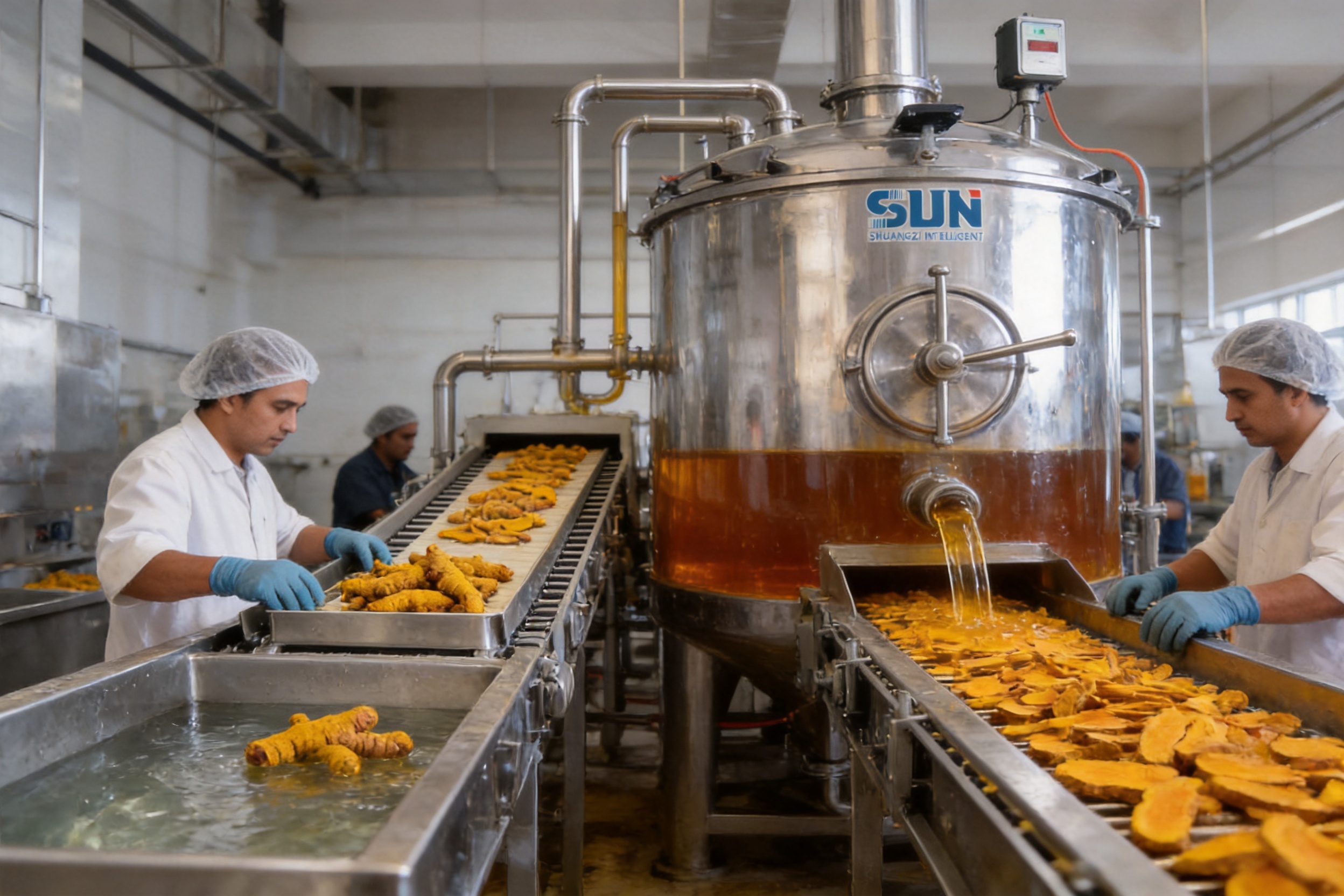
Cleaning equipment removes soil and surface impurities. Depending on the condition of the incoming turmeric, the line may include dry cleaning, washing, screening, magnetic separation, and manual or mechanical sorting. Washing must be controlled carefully because excessive water absorption can increase drying energy and affect the later solvent balance.
After cleaning, the turmeric may be peeled, sliced, or reduced to a suitable particle size. Thin slices improve drying and expose more surface area. Powdering produces a larger contact area during extraction, but an excessively fine powder can create filtration difficulties, increase solvent retention, and cause channeling or compaction in the extractor. The correct particle size should therefore be selected according to the extraction vessel, agitation method, filtration equipment, and target throughput.
2.2 Loading and Solvent Addition
Prepared turmeric slices or powder are transferred into the extraction vessel. The loading system should support accurate weighing, controlled charging, safe operator access, and effective distribution of the material inside the vessel. For an ethanol extraction process, a representative solvent-to-raw-material ratio may be approximately 10:1 by mass or volume basis, depending on the material condition and process design.
The extraction vessel is charged with the selected ethanol-water solvent. The vessel may be equipped with an agitator, heating jacket, temperature sensor, pressure or vacuum instruments, spray devices, liquid circulation connections, and a bottom outlet for discharge. Sealing is important because ethanol is volatile and flammable. Properly designed equipment reduces vapor loss and supports safer solvent handling.
2.3 Extraction at Controlled Temperature
Extraction is commonly performed at a moderate temperature, often around 45 to 50 degrees Celsius for a representative ethanol-based process. The actual operating temperature may vary according to the raw material, solvent concentration, extraction kinetics, and product quality requirements. Moderate-temperature extraction can help balance extraction efficiency with the protection of thermally sensitive components.
An extraction cycle may last approximately four to six hours. During this period, the solvent penetrates the plant matrix and dissolves curcuminoids. Agitation or circulation improves contact between the solvent and the solid material, reduces concentration gradients, and supports more uniform extraction. Some systems use repeated extraction stages to improve recovery from the residual plant solids.
Important process parameters include solvent concentration, liquid-to-solid ratio, temperature, extraction time, agitation intensity, vessel fill level, and the number of extraction cycles. These parameters should be established through laboratory and pilot tests rather than applied as fixed values to every raw material.
2.4 Solid-Liquid Separation
After extraction, the liquid extract must be separated from the spent turmeric solids. This step can be carried out using a filter, filter press, centrifuge, screen, or another suitable solid-liquid separation device. The selection depends on the particle size, fiber content, viscosity, throughput, and desired clarity of the extract.
Efficient separation reduces the amount of curcumin retained in the solid residue and limits the quantity of suspended particles entering downstream evaporators and purification equipment. A well-designed discharge arrangement also helps remove spent plant material quickly, reducing cleaning time and improving production continuity.
In some installations, the extracted plant solids are washed with additional solvent to recover residual curcuminoids. The wash solvent can then be combined with the primary extract. Solvent recovery and residue handling should be considered during the initial design because these operations influence both production cost and environmental performance.
2.5 Vacuum Evaporation and Concentration
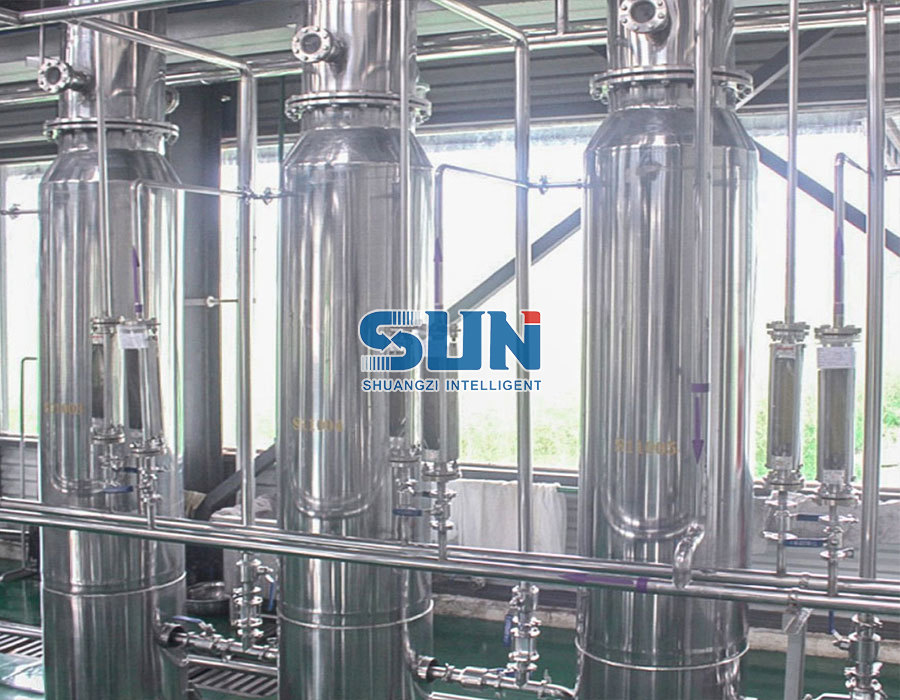
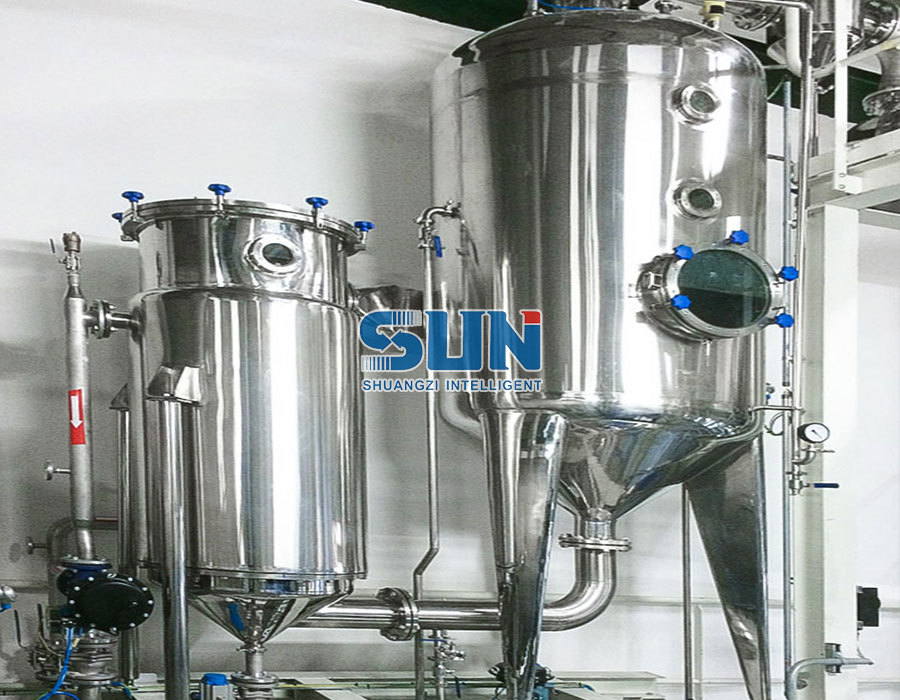
The clarified extract is transferred to an evaporation and concentration system. Vacuum evaporation is often selected because reducing the operating pressure lowers the boiling temperature of the solvent. This allows concentration at a relatively low product temperature and can reduce thermal stress on the extract.
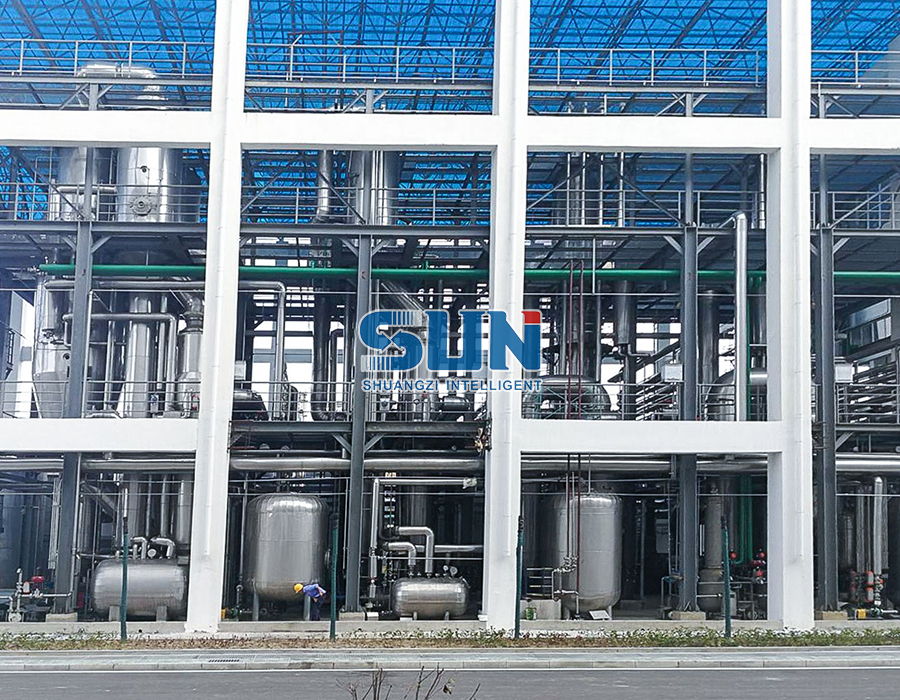
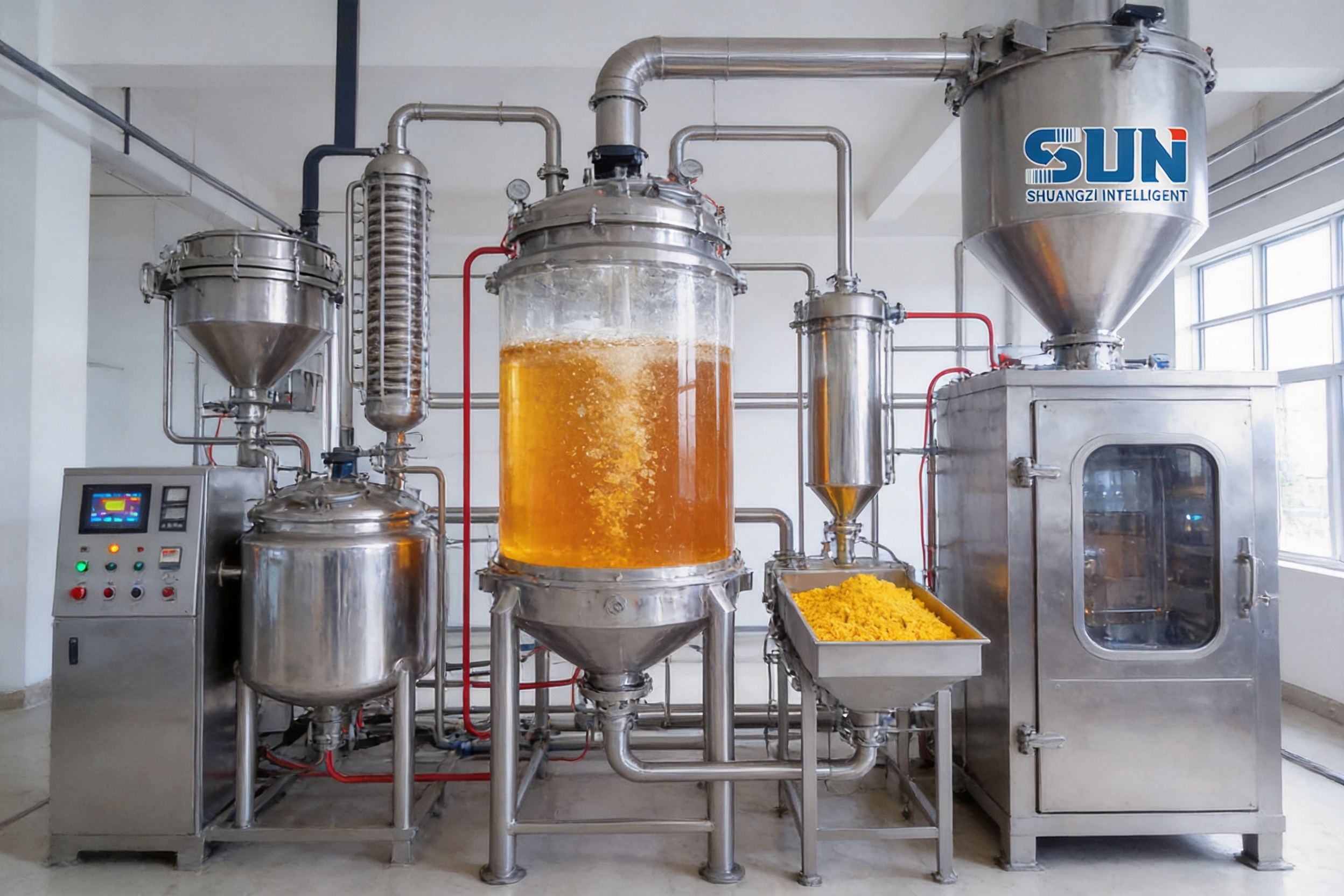
A vacuum evaporator may include a heating chamber, vapor-liquid separator, condenser, vacuum system, feed pump, concentrate discharge system, temperature controls, and solvent collection tank. Depending on the capacity and energy objectives, the system may be configured as a single-effect, double-effect, or multiple-effect evaporator. The appropriate arrangement depends on the available utilities, required evaporation rate, solvent recovery target, and investment budget.
During concentration, ethanol and water are removed from the extract. The recovered solvent can be condensed and collected for reuse after suitable quality verification. Solvent recovery reduces raw material consumption, lowers emissions, and supports safer plant operation. The concentrate is discharged when it reaches the specified solids content, density, viscosity, or process concentration.
Temperature, vacuum level, feed rate, residence time, and heating-medium pressure must be controlled consistently. Excessive heating can darken the extract or affect quality, while insufficient evaporation can increase the load on purification and crystallization equipment.
Curcumin Extraction Machine Manufacture
3. Purification and Crystallization
3.1 Purification Requirements
Crude curcumin extract contains curcuminoids together with oils, pigments, soluble plant compounds, fine solids, residual sugars, waxes, and other substances. Purification separates the desired components from these impurities and improves the color, purity, stability, and suitability of the final product.
The exact purification method depends on the required specification. A process may include dilution, solvent exchange, water washing, precipitation, adsorption, filtration, repeated extraction, or crystallization. The purification design must also consider the desired curcuminoid profile, recovery rate, solvent compatibility, and waste management requirements.
3.2 Water Addition and Solvent Exchange
One representative purification approach is to add a controlled amount of water to the concentrated curcumin extract. A water-to-extract ratio of approximately 1:1 may be used as a starting point for process development, although the actual ratio must be established through testing. Repeated solvent exchange or washing can help separate the desired product from soluble impurities and other extract components.
The addition of water must be gradual and well mixed. Rapid uncontrolled addition can produce local supersaturation, agglomeration, or uneven precipitation. The purification vessel should provide sufficient agitation and may include temperature control, sampling ports, pH or conductivity monitoring, and a bottom discharge outlet.
After purification, the liquid phase is filtered to remove insoluble material. The filtered solution may then be concentrated again under vacuum. This secondary concentration prepares the product for controlled crystallization. The design of the filtration and concentration stages has a direct effect on crystal quality and downstream drying performance.
3.3 Controlled Crystallization
Crystallization is a key step in producing a concentrated curcumin product with a defined purity. The concentrated solution is cooled, diluted, or otherwise adjusted to create supersaturation. Curcumin then forms crystals that can be separated from the mother liquor.
Effective crystallization requires control over temperature reduction, agitation, concentration, residence time, seeding, solvent composition, and cooling rate. Rapid cooling may produce very small crystals that are difficult to filter, while excessively slow cooling can reduce production capacity. A controlled cooling profile generally provides a better balance between crystal size, purity, yield, and filtration speed.
A crystallization vessel may be equipped with a jacket or internal heat-transfer surface, agitator, temperature sensor, sampling port, and controlled discharge system. For larger plants, the crystallization stage may be designed as a batch system, a series of vessels, or a semi-continuous arrangement.
3.4 Filtration of Curcumin Crystals
Once crystallization is complete, the crystal slurry is transferred to a filtration system. Suitable equipment may include a filter press, vacuum filter, nutsche filter, centrifuge, or another solid-liquid separation machine. The selection depends on crystal size, mother liquor viscosity, throughput, washing requirements, and the desired moisture content of the filter cake.
The filtration step may include crystal washing. Washing removes residual mother liquor and surface impurities from the crystal cake. The quantity and composition of the washing solvent should be optimized because excessive washing can reduce yield or increase solvent recovery requirements.
Good filtration equipment should provide uniform cake formation, reliable sealing, easy discharge, convenient cleaning, and safe handling of solvent-containing material. For pharmaceutical or food-related applications, hygienic design and cleanability are especially important.
3.5 Vacuum Low-Temperature Drying
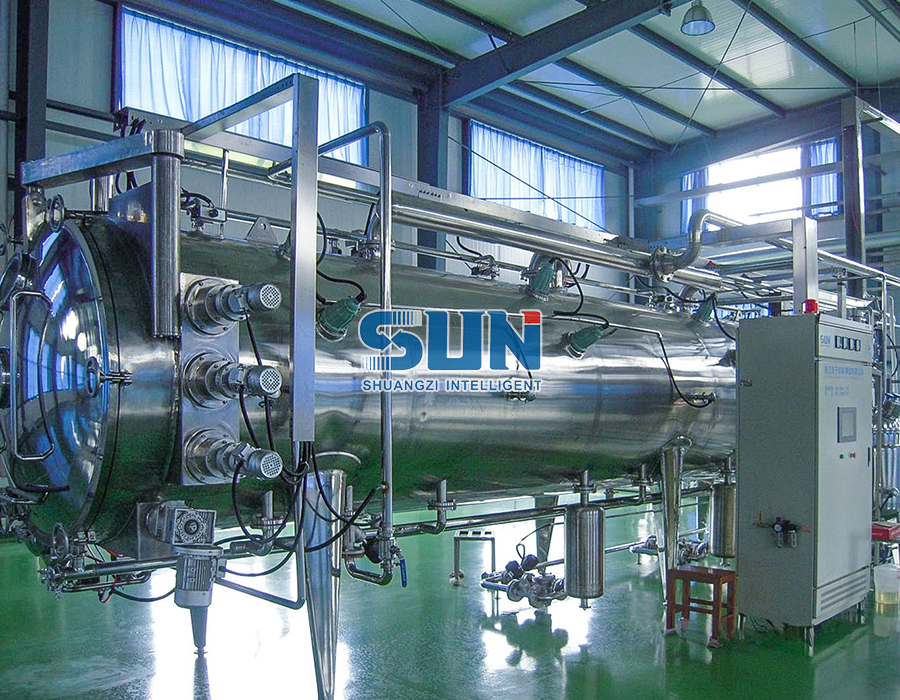
Wet curcumin crystals are dried to achieve the required moisture content and storage stability. Vacuum low-temperature drying is especially useful when the product should be protected from high temperatures or prolonged exposure to air. Under vacuum, moisture and residual solvent can be removed at a lower product temperature.
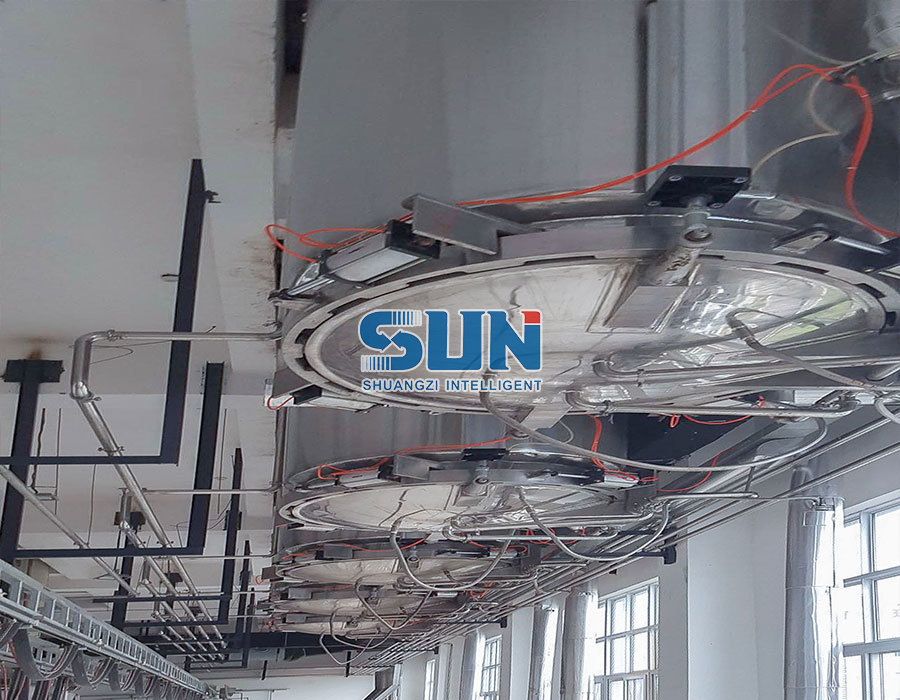
A vacuum dryer may include heated shelves, a drying chamber, vacuum piping, condenser, solvent collection unit, temperature sensors, pressure controls, and a product discharge system. Drying conditions must be selected according to the crystal structure, solvent residue limits, final moisture specification, batch size, and packaging requirements.
Uniform drying is essential. Uneven heat distribution can leave wet areas in the product or over-dry portions of the batch. The equipment should therefore be designed with appropriate heat-transfer surfaces, controlled vacuum operation, and a suitable loading depth. The recovered vapors can be condensed and collected for treatment or reuse.
3.6 Packaging
After drying, the curcumin product may be milled, sieved, blended, tested, and packed. Packaging should protect the product from moisture, light, oxygen, and contamination. The selected packaging material and filling system depend on the product form, customer requirements, storage period, and applicable regulations.
Packaging operations should be carried out in a controlled environment with appropriate dust management and product identification. Batch records should include raw material information, extraction conditions, concentration data, purification parameters, drying conditions, yield, and quality test results.
4. Main Equipment in a Curcumin Extraction Production Line
4.1 Raw Material Handling Equipment
The raw material section may include receiving hoppers, conveyors, cleaning machines, washing units, cutting machines, slicers, pulverizers, storage bins, weighing equipment, and transfer pumps. These machines establish a stable feed to the extraction system and reduce manual handling.
Material handling equipment should be selected according to the physical form of turmeric, the required capacity, the available building layout, and the desired degree of automation. Smooth internal surfaces, accessible inspection points, and effective cleaning arrangements help minimize contamination and material accumulation.
4.2 Extraction Vessels
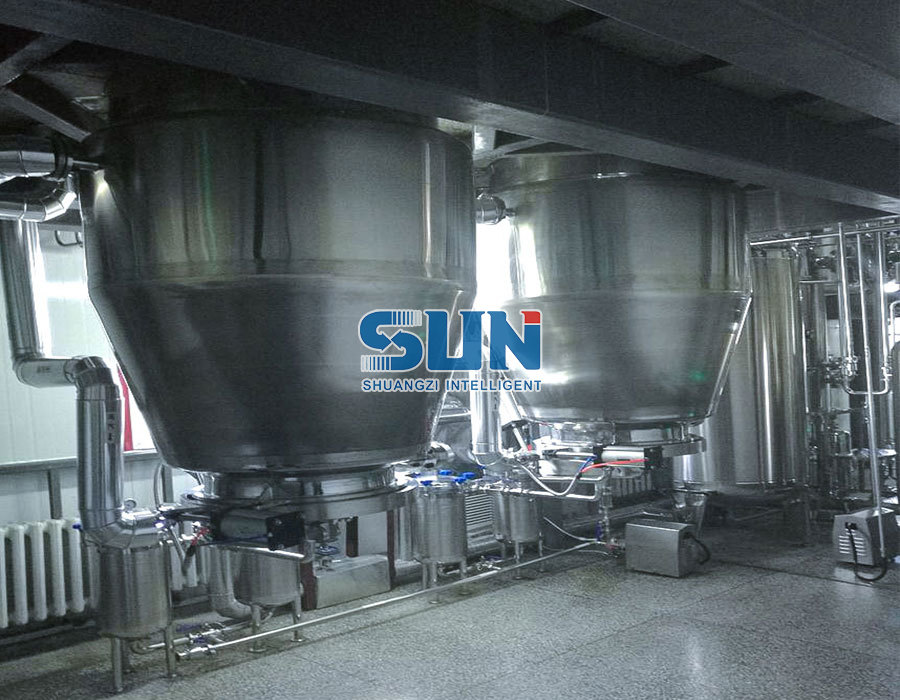
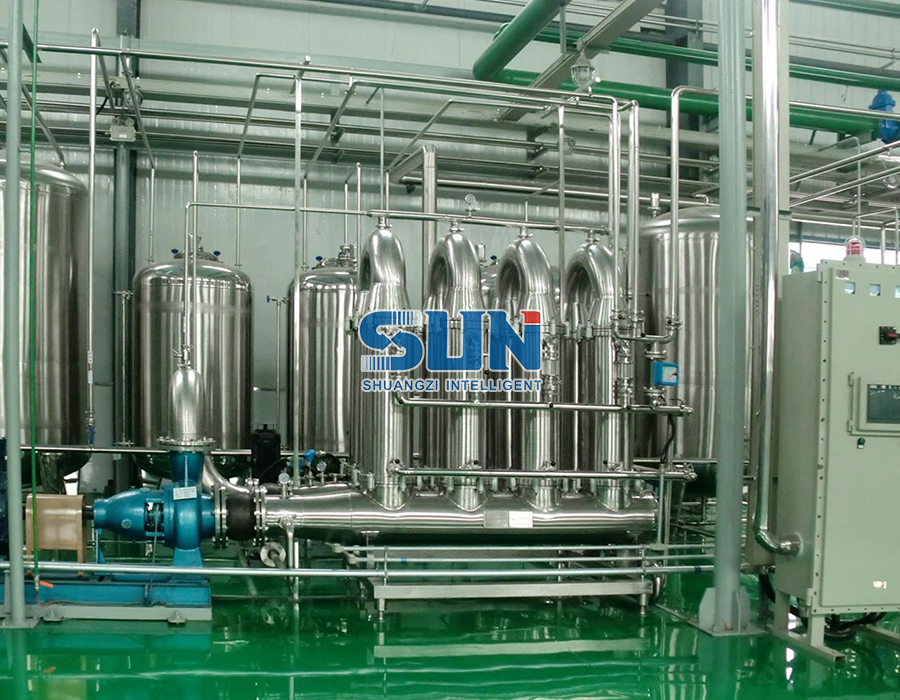
The extractor is the central machine in the first stage of the process. It must provide sufficient working volume, safe solvent containment, effective heat transfer, reliable agitation, and complete discharge. Depending on the process, the vessel may be equipped with a heating jacket, insulation, agitator, spray ball, temperature probe, pressure gauge, sight glass, manway, and bottom outlet.
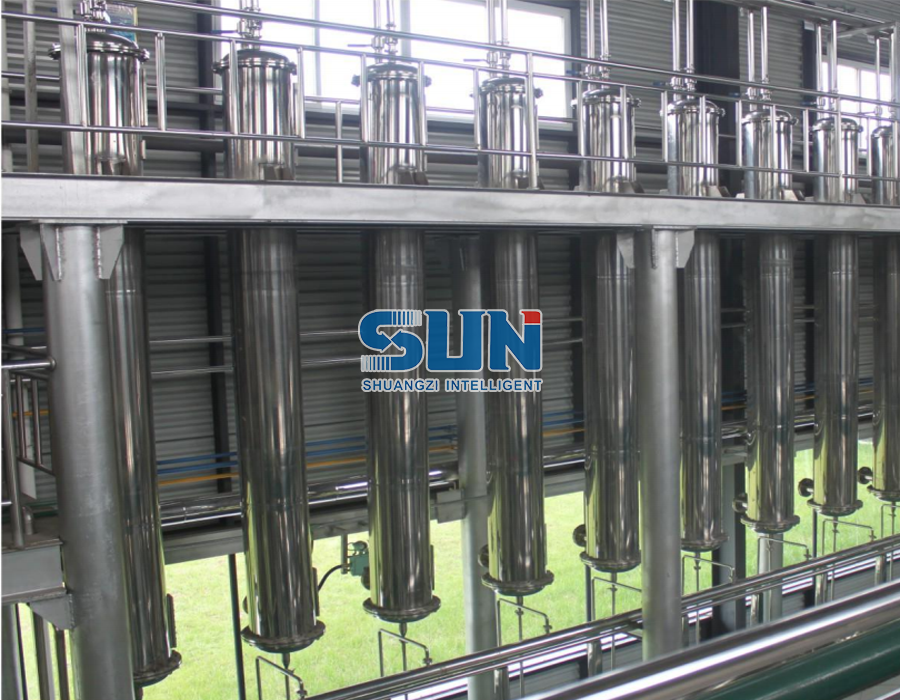
Extraction vessels can be arranged in parallel to increase production capacity or allow one vessel to be cleaned while another is operating. A multi-vessel configuration also supports staged extraction and improves operational flexibility.
4.3 Separation Equipment
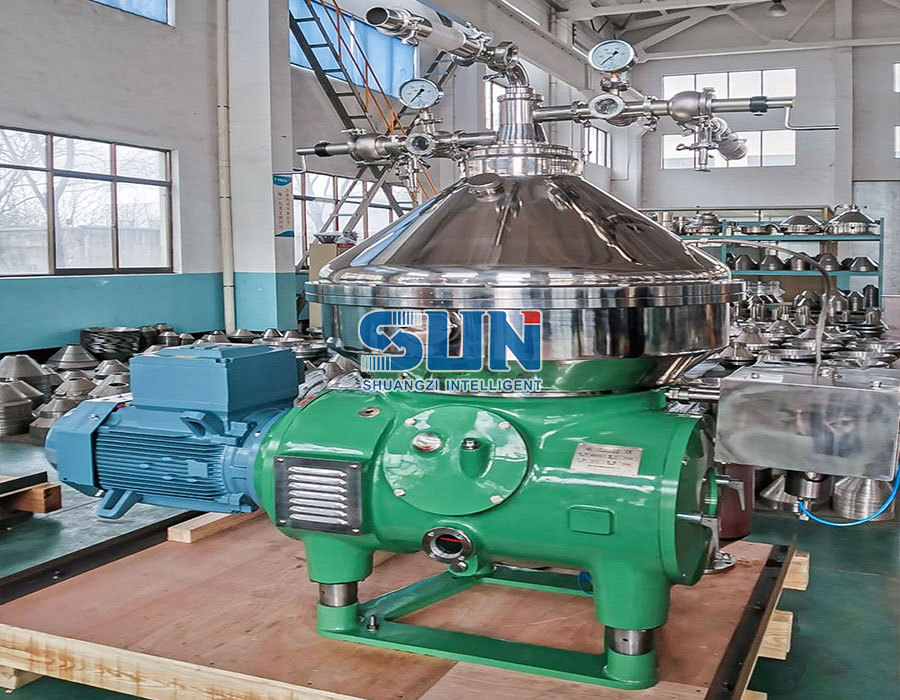
Separation equipment removes extracted plant solids and protects downstream equipment. Filter presses are commonly used where a relatively clear extract and a compact filter cake are required. Centrifuges may be selected for rapid separation, while screens or strainers can be used for coarse pre-separation.
The equipment should be chosen after evaluating the characteristics of the turmeric residue. High fiber content, fine particles, and compressible solids can affect filtration pressure, cycle time, and cake discharge. Pilot testing is valuable before final equipment selection.
4.4 Evaporation Systems
The evaporation system concentrates the extract and recovers ethanol and water. It should provide accurate control of feed rate, heating temperature, vacuum, vapor separation, condensate collection, and concentrate discharge.
Vacuum evaporation is particularly beneficial when the process requires moderate product temperatures. It can improve energy efficiency and support the recovery of valuable solvent. Multiple-effect arrangements may reduce steam consumption when the production scale justifies the additional investment and control complexity.
4.5 Purification and Crystallization Equipment
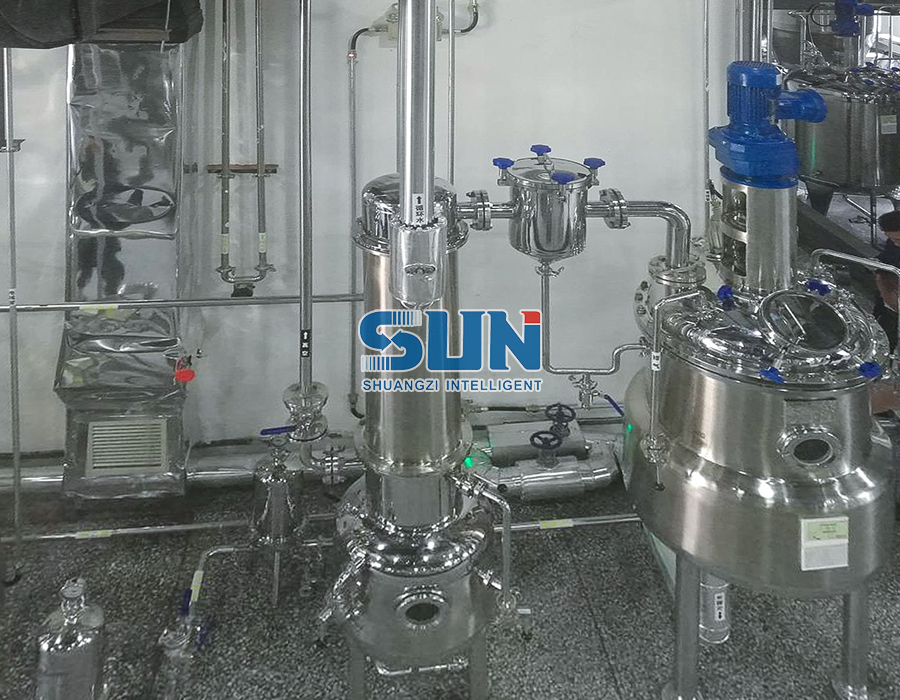
Purification vessels and crystallizers should be designed for effective mixing, controlled temperature changes, safe solvent handling, and easy transfer of slurries. Crystallizers require careful attention to cooling surfaces, agitator design, residence time, and discharge geometry.
When several purification or crystallization stages are needed, the system can be configured with dedicated vessels connected by sanitary piping and automated valves. This arrangement reduces transfer errors and improves process repeatability.
4.6 Filtration and Drying Equipment
Filter presses, vacuum filters, centrifuges, and nutsche filters can be integrated with vacuum dryers. The correct combination depends on product quality, scale, solvent type, cake characteristics, and cleaning requirements.
Vacuum low-temperature dryers are suitable for removing moisture and residual solvent while limiting thermal exposure. They can be designed for batch operation and connected to condensers and vacuum systems for effective vapor capture.
4.7 Tanks, Pumps, and Utility Systems
A complete line also requires solvent storage tanks, extract tanks, concentrate tanks, mother-liquor tanks, condensate receivers, transfer pumps, vacuum systems, cooling systems, heating systems, and cleaning equipment. These supporting units are essential to the reliability of the complete process.
Transfer pumps must be selected according to viscosity, temperature, flow rate, solids content, and solvent compatibility. Piping should be routed to minimize dead legs, unnecessary pressure loss, and difficult-to-clean areas. Drainability and access for inspection are important considerations in hygienic plants.
5. Advantages of an Integrated Curcumin Extraction Machine
5.1 Complete Process Coverage
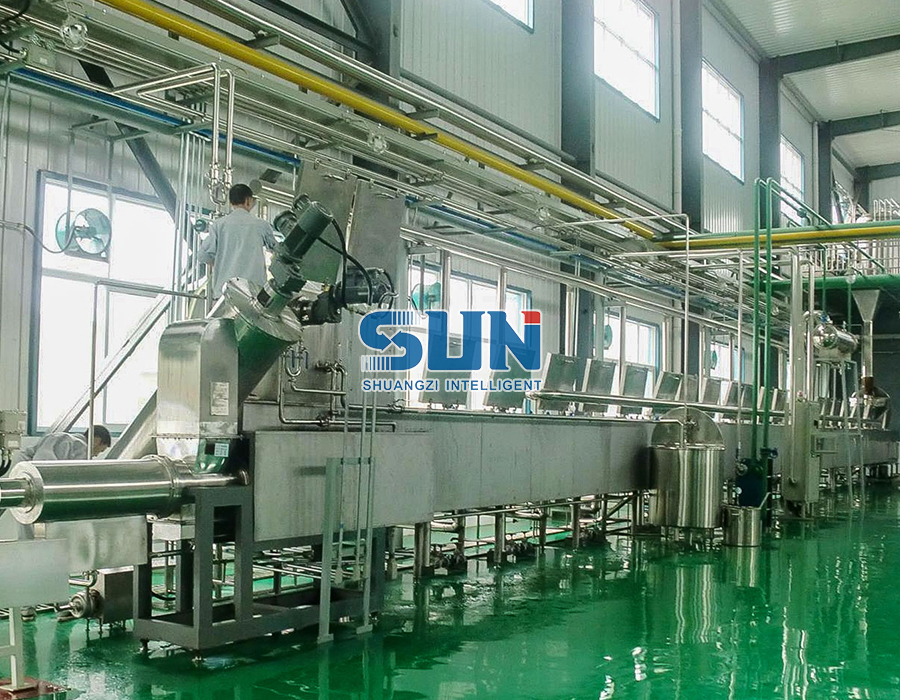
A major advantage of an integrated production line is that the equipment is designed around the complete process rather than as a collection of unrelated machines. Raw material preparation, extraction, separation, concentration, purification, crystallization, filtration, drying, and packaging can be coordinated as one production system.
This approach helps reduce interface problems between equipment supplied by different manufacturers. Vessel outlets, pump capacities, pipe diameters, control signals, heating requirements, and operating sequences can be coordinated during the design stage.
5.2 Improved Process Consistency
Curcumin quality depends on consistent control of extraction and purification conditions. Automated temperature measurement, vacuum control, liquid-level monitoring, timed operation, and recipe-based process management can reduce variation between batches.
Automation also helps operators follow defined procedures. The system can provide alarms for abnormal temperature, pressure, liquid level, vacuum, or pump conditions. Data recording supports traceability and makes it easier to investigate deviations.
5.3 Lower Solvent Consumption
Ethanol is a major operating cost in solvent extraction. An integrated system can improve solvent efficiency through controlled dosing, closed transfer, efficient solid-liquid separation, repeated recovery from residues, and vacuum condensation.
Recovered solvent may be returned to an appropriate stage of the process after quality evaluation. The actual recovery rate depends on equipment configuration, operating conditions, solvent composition, and plant management, but solvent recovery is an important design objective for both economic and environmental reasons.
5.4 Reduced Thermal Damage
Vacuum concentration and vacuum low-temperature drying allow the process to operate at lower product temperatures than many atmospheric alternatives. This can help preserve the desired characteristics of the extract and reduce unnecessary thermal exposure.
Lower-temperature operation may also improve working conditions and reduce energy losses. However, the process must still be validated to ensure that evaporation, crystallization, and drying are sufficiently rapid and effective.
5.5 Hygienic and Cleanable Construction
Equipment for food, health product, and pharmaceutical applications must support hygienic production. Stainless steel construction, smooth internal surfaces, suitable weld finishing, accessible inspection points, drainable piping, and appropriate cleaning procedures help reduce contamination risks.
The equipment configuration can be adapted to the required production standard. Where applicable, clean-in-place systems, spray devices, sanitary valves, controlled drainage, and validated cleaning procedures may be incorporated into the project design.
5.6 Flexible Production Capacity
The listed operational capacities range from 500 kilograms per hour to 10,000 kilograms per hour of biomass. These figures represent potential processing scales and should be interpreted together with raw material moisture, extraction yield, solvent ratio, batch cycle time, equipment utilization, and the definition of operational capacity.
| Nominal Biomass Capacity | Typical Application | Design Consideration |
|---|---|---|
| 500 kg/h | Pilot production, specialty products, and small industrial operations | Compact equipment, flexible batch control, and lower utility demand |
| 1,000 kg/h | Growing commercial production | Balanced investment, moderate automation, and scalable utilities |
| 2,000 kg/h | Medium-scale commercial extraction | Multiple extraction vessels and coordinated separation capacity |
| 3,000 kg/h | Established industrial production | Higher evaporation, filtration, solvent recovery, and storage requirements |
| 4,000 kg/h | Large commercial facility | Integrated material transfer and enhanced process monitoring |
| 5,000 kg/h | High-volume production | Utility planning, automated batching, and continuous operational coordination |
| 6,000 kg/h | Large-scale industrial operation | Parallel equipment trains and robust solvent management |
| 8,000 kg/h | Very large extraction facility | High-capacity separation, evaporation, drying, and storage systems |
| 10,000 kg/h | Major industrial production | Detailed engineering, advanced automation, and comprehensive utility design |
The final line capacity should be confirmed through a technical proposal based on the selected raw material, target curcumin yield, extraction method, solvent concentration, daily operating hours, and final product specification.
5.7 Easier Expansion and Process Development
A modular production line can be expanded by adding extraction vessels, separation units, evaporation capacity, or drying equipment. This can be useful for customers who intend to begin with pilot production and expand after market validation.
The company also maintains pilot production and research platforms that can support process development. Pilot testing helps determine particle size, solvent ratio, extraction temperature, extraction cycles, filtration area, evaporation load, crystallization behavior, and drying time before investment in a full-scale plant.
6. Manufacturing Strengths and Engineering Capabilities
6.1 EPC and EPCM Project Support
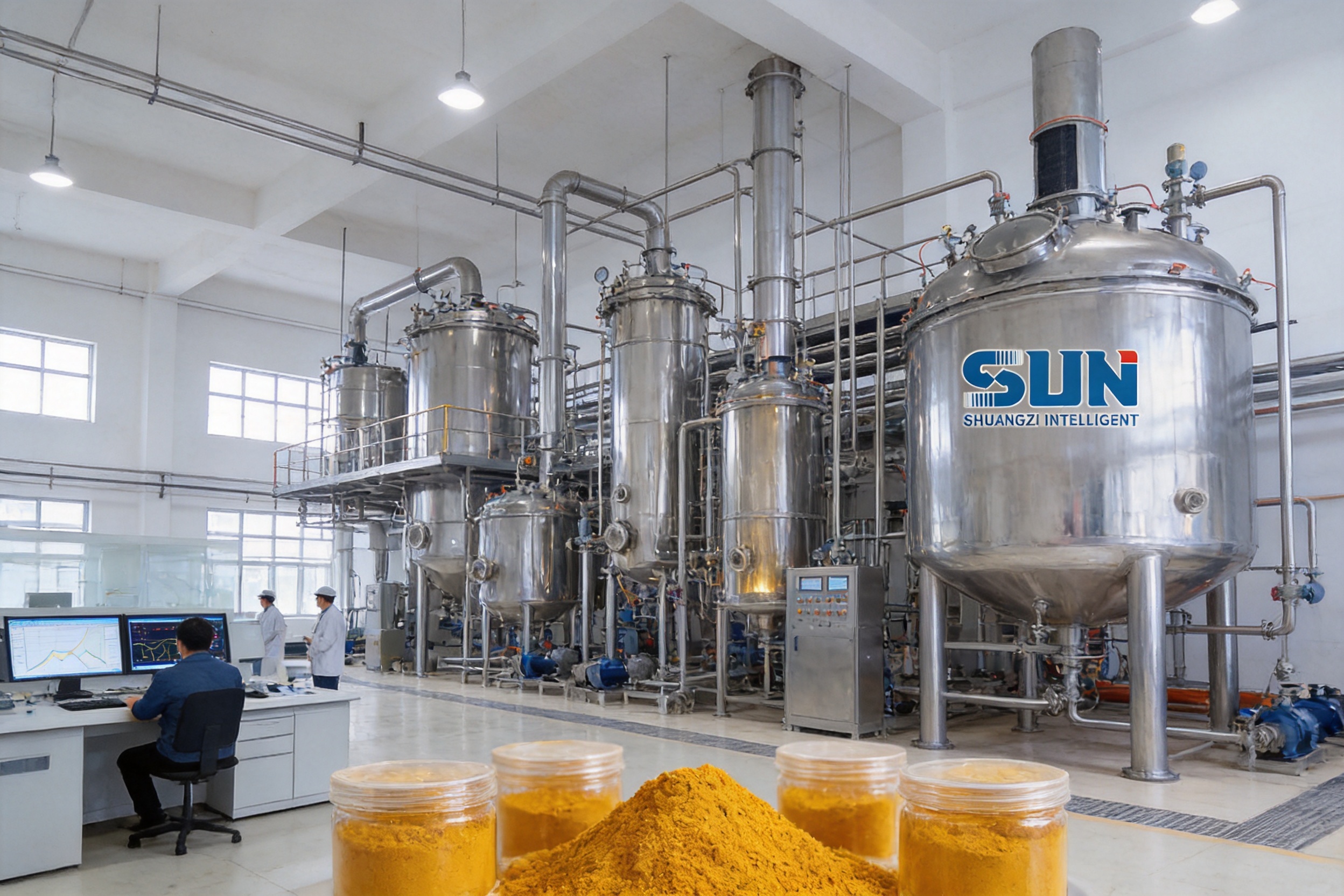
Zhejiang Shuangzi Intelligent Equipment Co., Ltd. operates as a biology and medical equipment enterprise with EPC and EPCM capabilities. Its services cover process technology, automation engineering design, equipment manufacture, supporting equipment procurement, installation, system integration, commissioning, and turnkey project delivery.
This broad capability is valuable for curcumin extraction projects because the process involves several equipment categories and multiple utility systems. A single engineering partner can coordinate the process flow, equipment layout, pipework, electrical control, automation, installation sequence, and commissioning plan.
6.2 Process Technology and Equipment Design
Curcumin extraction is not simply a vessel-sizing exercise. The equipment must reflect the behavior of turmeric solids, ethanol-water mixtures, concentrated extracts, crystal slurries, and wet filter cakes. Process design must also address heat transfer, mass transfer, solvent recovery, filtration, cleaning, safety, and production logistics.
The company focuses on process technology and automation engineering design for plant extraction, biological fermentation, pharmaceutical engineering, natural food, energy conservation, and environmental protection. This cross-disciplinary experience supports the development of complete systems rather than isolated machines.
6.3 In-House Fabrication and Quality Control
The company was founded in 2007 and occupies a floor area of approximately 16,706 square meters, with a structure area of approximately 17,800 square meters. Its manufacturing capabilities include equipment fabrication for extraction, evaporation, concentration, separation, crystallization, filtration, drying, fermentation, and related process operations.
In-house manufacturing can shorten communication channels between process engineers, mechanical designers, fabricators, welders, and commissioning personnel. It also allows the manufacturer to coordinate material selection, vessel fabrication, welding, surface finishing, inspection, pressure testing, assembly, and factory acceptance activities.
The company has introduced advanced welding and finishing equipment, including plasma argon arc welding machines, plasma cutting machines, CAM CNC machining centers, and other advanced production equipment. These tools support accurate fabrication, consistent weld preparation, controlled finishing, and improved dimensional quality.
6.4 Advanced Welding and Surface Finishing
Stainless steel process equipment requires careful welding and surface treatment. Poorly prepared welds, excessive heat input, rough internal surfaces, or difficult-to-clean joints can create hygiene and maintenance problems. Controlled plasma argon arc welding and suitable finishing practices can help produce smoother, more uniform equipment surfaces.
For extraction, concentration, and crystallization equipment, the internal finish is especially important because product residues may adhere to rough or poorly finished areas. Proper finishing also supports cleaning efficiency and helps minimize cross-batch contamination.
6.5 Automation and System Integration
Automation can be applied at several levels. Basic systems may control temperature, liquid level, pump operation, and vacuum. More advanced systems may manage recipe execution, automatic valve sequencing, solvent dosing, batch records, alarm handling, interlocks, and data collection.
The suitable level of automation depends on capacity, labor availability, product requirements, and investment objectives. An experienced system integrator can provide a practical balance between automated control and manual flexibility.
For a curcumin extraction line, automated control may be used to coordinate:
Raw material charging and batch identification.
Solvent dosing and extraction temperature.
Agitation speed and extraction time.
Extract transfer and filtration sequencing.
Evaporator feed rate, vacuum level, and heating conditions.
Purification water addition and mixing.
Crystallization cooling profiles.
Filter operation and cake washing.
Dryer temperature, pressure, and drying time.
Solvent recovery and condensate collection.
Alarm management and production data recording.
6.6 Pilot Production and R&D Support
Pilot production is an important part of developing a reliable curcumin process. Turmeric from different origins, harvest periods, storage conditions, and processing histories can behave differently during extraction and crystallization. Pilot tests allow the process engineer to evaluate these differences before finalizing the industrial line.
The company provides pilot production workshop and research and development platform capabilities designed around automation and GMP-related requirements. These facilities can be used to test extraction conditions, concentration behavior, filtration performance, crystallization parameters, drying requirements, and cleaning procedures.
7. Safety Considerations for Ethanol Extraction
7.1 Flammable Solvent Management
Ethanol is flammable, so the production line must be designed with appropriate controls for vapor containment, ventilation, electrical equipment, grounding, bonding, pressure relief, and emergency response. The precise requirements depend on local regulations, solvent concentration, operating temperature, plant classification, and site conditions.
Closed vessels and piping reduce vapor release. Condensers and solvent receivers help capture vapors generated during evaporation and drying. Pumps, valves, instruments, and electrical components must be selected for compatibility with the operating environment.
7.2 Temperature and Pressure Control
Temperature and pressure sensors should be installed at appropriate points in extraction, evaporation, crystallization, and drying systems. High-temperature and high-pressure alarms can warn operators of abnormal conditions, while interlocks can stop heating or pumping when defined limits are exceeded.
Vacuum systems should be designed to prevent unwanted solvent carryover and to protect pumps and condensers. The system should also provide controlled venting and safe isolation during maintenance.
7.3 Cleaning and Maintenance
Regular cleaning is essential for product quality and equipment reliability. Plant design should provide access to vessel interiors, filters, pumps, valves, condensers, and transfer lines. Cleaning procedures should address product residues, solvent residues, water quality, drying after cleaning, and inspection before the next batch.
Preventive maintenance should include inspection of seals, gaskets, agitators, pumps, vacuum equipment, sensors, heating surfaces, cooling systems, and safety devices. Maintenance records should be retained as part of the plant quality system.
8. Quality Control from Raw Material to Finished Product
Quality control begins with turmeric selection. Raw material testing may include identity, moisture, curcuminoid content, microbial limits, heavy metals, pesticide residues, and foreign matter. Consistent raw materials make it easier to maintain a stable extraction yield.
In-process control may include measurement of solvent concentration, extraction temperature, extraction time, extract volume, density, solids content, color, filtration clarity, concentrate viscosity, crystallization temperature, crystal appearance, filter cake moisture, and drying endpoint.
Finished product testing depends on the intended application. Possible tests include curcuminoid assay, moisture, residual solvent, particle size, color, bulk density, microbial quality, heavy metals, and stability. The equipment should support representative sampling at appropriate stages.
Batch documentation is an important component of a reliable manufacturing operation. Records should identify the raw material batch, equipment used, process conditions, deviations, cleaning status, yield, solvent recovery, and final test results.
9. Selecting the Right Curcumin Extraction Machine
9.1 Define the Raw Material
The customer should specify whether the line will process fresh turmeric, dried rhizomes, slices, coarse powder, or fine powder. Moisture content and particle size affect the extraction load, solvent requirement, filtration behavior, and drying demand.
9.2 Define the Product Specification
The desired product may be a crude extract, concentrated extract, curcuminoid-rich powder, or purified crystalline curcumin. Each product requires a different process arrangement. A higher-purity product generally requires additional purification, crystallization, filtration, washing, and quality-control steps.
9.3 Confirm the Capacity Basis
Capacity should be expressed clearly. Biomass capacity may refer to kilograms per hour of incoming material, dried material, or prepared material. The proposal should also state the expected operating hours per day, batch cycle duration, extraction yield, solvent ratio, and production output.
9.4 Evaluate Utilities
The project should identify available steam or thermal oil, cooling water or chilled water, electricity, compressed air, process water, vacuum requirements, drainage, ventilation, and wastewater treatment. Utility availability has a direct effect on equipment configuration and operating cost.
9.5 Consider Future Expansion
If production is expected to increase, the initial plant layout should reserve space for additional extraction vessels, evaporators, filters, dryers, storage tanks, or packaging equipment. Modular design can reduce the cost and disruption of later expansion.
9.6 Review Installation and Commissioning Services
Turnkey support may include layout design, equipment transportation, installation supervision, piping, electrical connection, control-system integration, water and utility connection, trial operation, operator training, process debugging, and final acceptance. The scope should be confirmed in the technical and commercial agreement.
10. Why Choose a Complete Turnkey Solution?
A turnkey project reduces the burden on the customer to coordinate separate equipment vendors, construction contractors, automation companies, and process consultants. The supplier assumes responsibility for integrating the principal process units and delivering a coordinated production system.
For a curcumin extraction plant, the benefits may include clearer responsibility, shorter communication paths, coordinated documentation, integrated commissioning, and more consistent performance between process stages. The customer can receive assistance from initial process design through equipment manufacture, installation, line debugging, and production start-up.
A turnkey approach is particularly useful when the customer is entering plant extraction for the first time or when the project must meet defined food, health product, pharmaceutical, or GMP-related requirements. It also allows the process design to be adapted to the customer's building, utilities, raw material, workforce, and local regulations.
11. Applications of Curcumin Extraction Equipment
Curcumin extraction systems can serve several industries. In pharmaceutical manufacturing, purified curcuminoids may be used as an active or supporting ingredient subject to applicable quality standards. In the health product sector, curcumin extracts may be formulated into capsules, tablets, powders, beverages, or other products.
Food manufacturers may use turmeric-derived color and functional ingredients in beverages, seasonings, prepared foods, confectionery, and nutritional formulations. Cosmetic manufacturers may also evaluate curcumin or turmeric extracts for selected formulations.
The equipment can be configured for different product forms and operating standards. A food-oriented line may prioritize high throughput and hygienic cleaning, while a pharmaceutical-oriented line may require more extensive documentation, validation support, controlled environments, and stricter material and surface-finish requirements.
12. Operational and Economic Benefits
The economic performance of a curcumin extraction plant depends on raw material cost, extraction yield, product purity, solvent recovery, energy consumption, labor, maintenance, wastewater treatment, packaging, and market price. Equipment design influences many of these factors.
Efficient extraction improves the recovery of curcuminoids from turmeric. Effective separation reduces product loss in plant residue and protects the evaporator. Vacuum concentration reduces the thermal load and supports solvent recovery. Controlled crystallization improves purity and filtration performance. Uniform vacuum drying reduces drying time and helps achieve a stable final product.
Automation can reduce manual interventions and improve repeatability. It can also help operators identify abnormal conditions before they become serious production problems. Although automation requires initial investment, its value may increase as capacity, product requirements, and batch documentation needs become more demanding.
Energy integration is another consideration. Condensed solvent and vapor streams may be managed to recover heat or reduce utility consumption where technically suitable. Multiple-effect evaporation, insulation, heat recovery, and optimized vacuum operation may contribute to improved energy performance.
13. Frequently Asked Questions
Q1: What raw material is used for curcumin extraction?
Turmeric rhizomes are the principal raw material. They may be processed fresh or after drying, and they are commonly cleaned, sliced, or milled before extraction. Raw material moisture, curcuminoid content, particle size, and cleanliness affect the process design.
Q2: Why is ethanol used as the extraction solvent?
Ethanol can dissolve curcuminoids effectively and is suitable for many food, health product, and pharmaceutical-related applications when properly controlled. It can also be recovered through evaporation and condensation. The final solvent concentration should be selected through process testing and regulatory review.
Q3: What ethanol concentration is used?
A representative process may use approximately 70% ethanol. However, the optimal concentration depends on turmeric composition, desired selectivity, extraction temperature, product specification, and purification method. Pilot testing should be completed before fixing the industrial operating parameters.
Q4: How long does extraction take?
A representative extraction cycle may take approximately four to six hours. The actual time depends on particle size, temperature, agitation, solvent ratio, raw material quality, and the required recovery rate.
Q5: What extraction temperature is suitable?
The supplied process description identifies approximately 45 to 50 degrees Celsius as a typical range. The final temperature should be confirmed through laboratory and pilot studies because different raw materials and product specifications may require different conditions.
Q6: What is the purpose of vacuum evaporation?
Vacuum evaporation removes solvent at a lower boiling temperature than atmospheric evaporation. It can help reduce thermal exposure, concentrate the extract efficiently, and recover ethanol and water through condensation.
Q7: Is solvent recovery included in the production line?
A complete line can include condensers, vacuum systems, solvent receivers, and associated piping for solvent recovery. The recovery configuration depends on the process, solvent composition, capacity, local safety requirements, and the customer's operating objectives.
Q8: What equipment is used for crystal separation?
Possible options include filter presses, vacuum filters, centrifuges, and nutsche filters. The correct choice depends on crystal size, slurry viscosity, throughput, washing requirements, and target cake moisture.
Q9: Why is vacuum low-temperature drying used?
Vacuum drying allows moisture and residual solvent to be removed at a lower product temperature. This can help limit thermal exposure and produce a stable dry curcumin product. Drying conditions must be validated according to the product specification.
Q10: What production capacities are available?
The listed operational biomass capacities range from 500 kilograms per hour to 10,000 kilograms per hour. The final capacity must be confirmed according to the raw material form, batch cycle, extraction yield, utility conditions, and required product output.
Q11: Can the equipment be used for pilot production?
Yes. The company provides pilot production workshop and research and development platform capabilities. Pilot equipment can be used to establish extraction, filtration, concentration, crystallization, and drying parameters before scaling up to commercial production.
Q12: Can the company provide installation and commissioning?
The company can provide engineering services including process design, equipment design, manufacture, supporting equipment procurement, installation, line debugging, system integration, and turnkey project support. The exact scope should be defined in the project agreement.
Q13: How should a customer begin a project inquiry?
The customer should provide the raw material type, moisture content, desired capacity, target product, required purity, expected operating hours, available utilities, factory dimensions, local standards, and desired level of automation. These details allow the engineering team to prepare a more accurate process proposal.
14. Company Capability and Project Support
Zhejiang Shuangzi Intelligent Equipment Co., Ltd. is a professional biology and medical equipment enterprise focused on EPC and EPCM services. Its business covers plant extraction, biological fermentation, pharmaceutical engineering, natural food, energy conservation, and environmental protection.
The company manufactures and integrates equipment for vacuum low-temperature drying, fermentation, extraction, evaporation, concentration, separation, crystallization, filtration, and related process operations. It can support customers with process technology, automation engineering design, equipment manufacture, matching equipment procurement, installation, commissioning, and turnkey project delivery.
Its production and research resources include a manufacturing facility, pilot production workshop, and research and development platform. The company has introduced plasma argon arc welding equipment, plasma cutting equipment, CAM CNC machining centers, and other advanced manufacturing tools to support equipment quality and fabrication efficiency.
For curcumin extraction projects, the company can develop a process line according to the customer's raw material, production capacity, purity target, plant conditions, utility supply, automation requirements, and regulatory expectations. Engineering services can extend from initial feasibility and pilot testing to commercial equipment delivery and production start-up.
15. Conclusion
A curcumin extraction machine is most effective when it is designed as part of a complete and coordinated process system. Ethanol extraction requires controlled raw material preparation, secure solvent handling, efficient extraction, reliable solid-liquid separation, low-temperature concentration, purification, crystallization, filtration, drying, solvent recovery, and hygienic packaging.
The advantages of an integrated line include improved process consistency, reduced manual handling, better solvent utilization, lower thermal exposure, flexible capacity, easier cleaning, stronger automation, and more coordinated maintenance. These advantages become increasingly important as production capacity and product quality requirements grow.
Zhejiang Shuangzi Intelligent Equipment Co., Ltd. combines process engineering, equipment manufacturing, automation integration, pilot testing, installation, commissioning, and turnkey project services. Its experience in plant extraction, evaporation, concentration, separation, crystallization, filtration, drying, fermentation, and pharmaceutical-related equipment provides a foundation for developing complete curcumin production solutions.
Customers evaluating a curcumin extraction project should begin with a clear definition of raw material, target product, capacity, purity, utilities, safety requirements, and future expansion plans. With suitable pilot testing and detailed engineering, the resulting production line can provide a reliable platform for efficient, scalable, and quality-focused curcumin manufacturing.
References
1. General principles of plant extraction process design and solvent recovery.
2. Good manufacturing practice principles for food, health product, and pharmaceutical processing equipment.
3. Technical literature concerning turmeric rhizome preparation and curcuminoid extraction.
4. Engineering practices for vacuum evaporation and concentration of heat-sensitive natural extracts.
5. Process engineering guidance for crystallization, filtration, and drying of botanical products.
6. Industrial safety principles for the handling, storage, recovery, and use of ethanol-based solvents.
7. Hygienic equipment design principles for stainless steel food and pharmaceutical process systems.
8. Zhejiang Shuangzi Intelligent Equipment Co., Ltd. product and engineering information for plant extraction, evaporation, concentration, separation, crystallization, filtration, fermentation, and vacuum low-temperature drying systems.