
 英语
英语 俄语
俄语Content
- 1 1. Product Overview and Process Principle
- 2 2. Core Advantages Over Conventional and Competitive Equipment
- 3 3. Materials of Construction: SUS304 and SUS316L
- 4 4. Main Technical Parameters
- 5 5. Application Fields
- 6 6. Customization: A Practical Advantage for Real Production
- 7 7. Advanced Manufacturing Strengths
- 8 8. Engineering Design for Better Performance
- 9 9. Hygiene, Cleaning, and Product Safety
- 10 10. Energy and Utility Considerations
- 11 11. Comparison with Other Concentration Technologies
- 12 12. Installation and Integration
- 13 13. Quality Control and Long-Term Reliability
- 14 14. Value for Pilot Research and Scale-Up
- 15 15. Why This Evaporator Is a Competitive Choice
- 16 16. Practical Selection Guidance
- 17 17. Q&A Section
- 17.1 Q1: What is the main function of a single effect falling film evaporator?
- 17.2 Q2: Why is falling film evaporation suitable for heat-sensitive materials?
- 17.3 Q3: What materials can the evaporator be made from?
- 17.4 Q4: What industries commonly use this equipment?
- 17.5 Q5: How does this evaporator compare with a batch vacuum concentrator?
- 17.6 Q6: Can the outlet concentration be customized?
- 17.7 Q7: What evaporation capacities are available?
- 17.8 Q8: Why is the single-effect design still attractive when multi-effect evaporators can save steam?
- 17.9 Q9: What company strengths support the quality of this equipment?
- 17.10 Q10: Can the evaporator be integrated into a complete production line?
- 18 18. Conclusion
- 19 References
- 20 Product: Customizable SUS304 SUS316L Single Effect Falling Film Evaporator
In modern food processing, pharmaceutical engineering, plant extraction, biological fermentation, and chemical solution treatment, concentration is more than a simple volume-reduction step. It is a decisive process that affects product quality, energy consumption, active ingredient retention, production stability, sanitation, and downstream efficiency. A well-designed evaporator can reduce handling costs, protect sensitive compounds, improve batch consistency, and help manufacturers meet stricter requirements for hygiene, automation, and reproducibility.
The customizable SUS304/SUS316L single effect falling film evaporator is designed for these demanding production environments. It is an efficient liquid concentration system based on the single-effect evaporation principle, with the feed liquid distributed into a thin film along the inner wall of vertical heating tubes. Because the liquid forms a falling film, heat transfer is fast, residence time is short, and the material is exposed to controlled thermal stress for only a limited period. This makes the equipment especially suitable for heat-sensitive materials such as fruit juice, dairy concentrates, traditional botanical extracts, fermentation broth, medicinal liquid extracts, and easily scaling solutions.
Compared with conventional batch concentrators, jacketed kettles, forced circulation units, or less optimized evaporators, the single effect falling film evaporator offers a balanced combination of thermal efficiency, simple operation, hygienic construction, predictable energy use, and customization flexibility. It can be manufactured in SUS304 or SUS316L stainless steel according to process characteristics, corrosion resistance requirements, sanitary standards, and budget priorities. For industries that must balance quality protection with scalable production, this evaporator provides a practical and dependable concentration solution.
Customizable SUS304 SUS316L Single Effect Falling Film Evaporator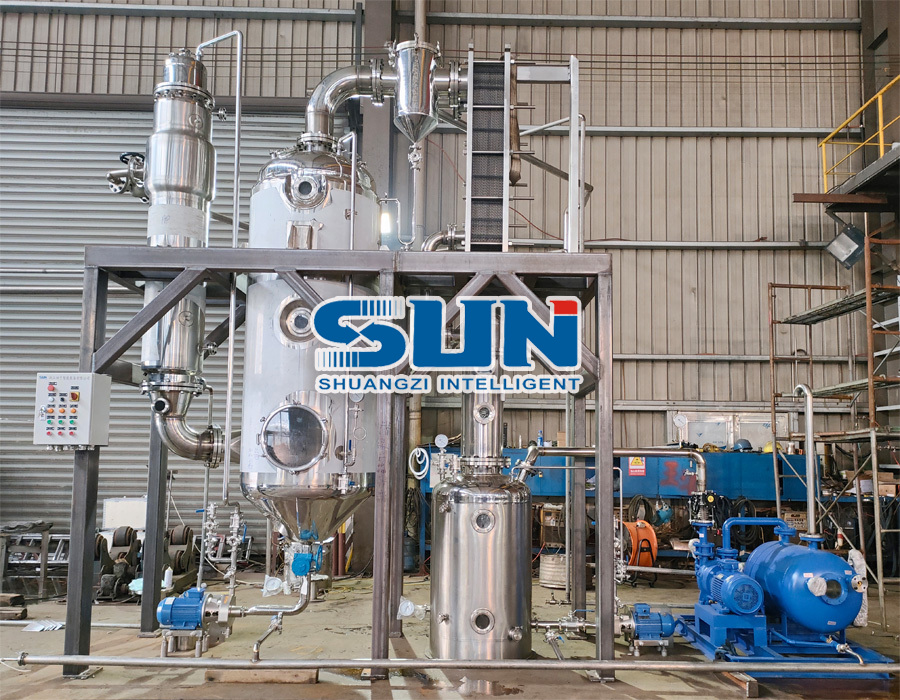
1. Product Overview and Process Principle
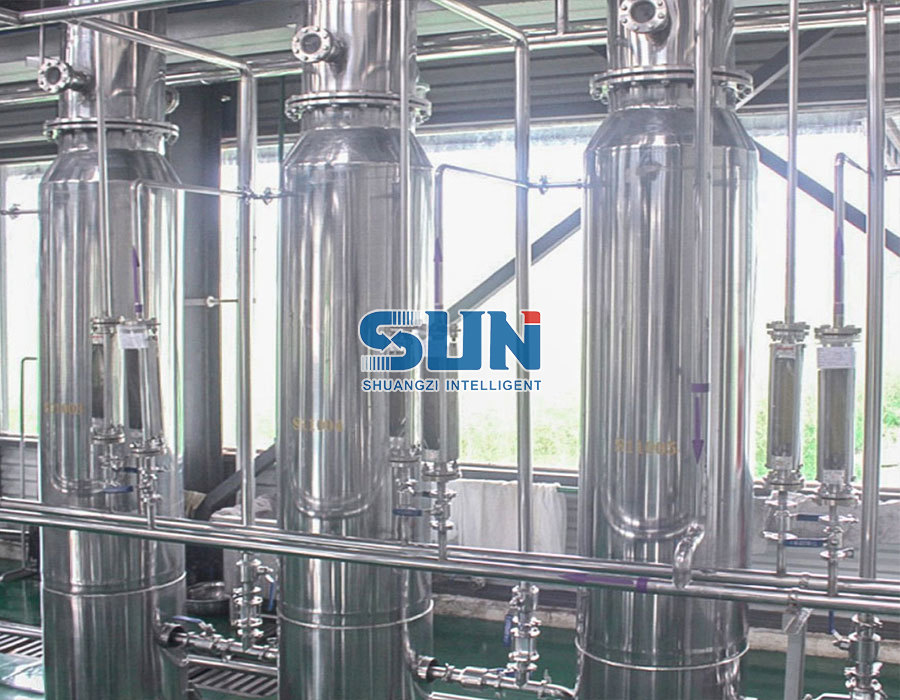
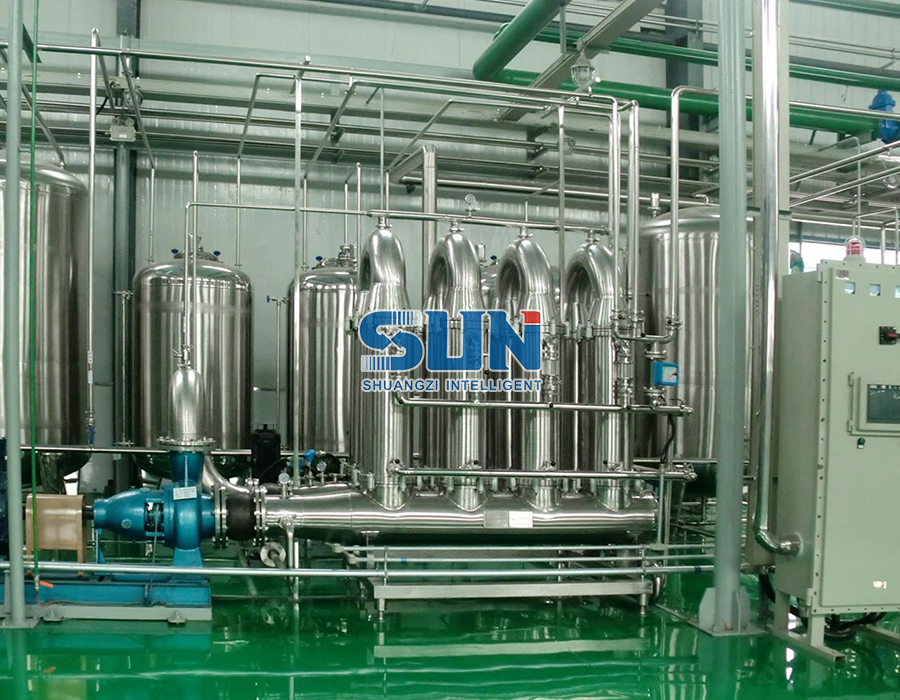
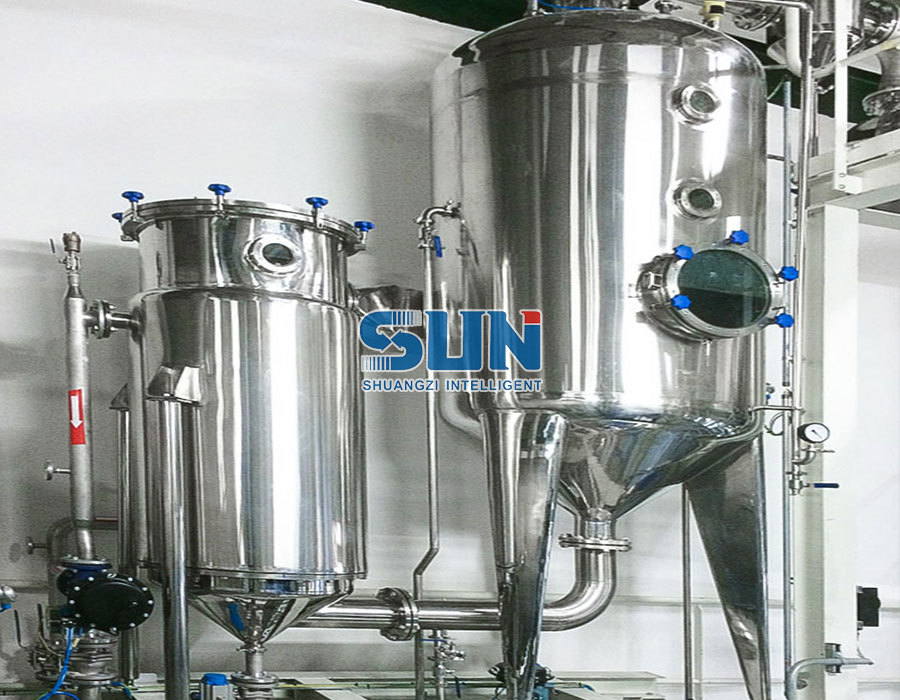
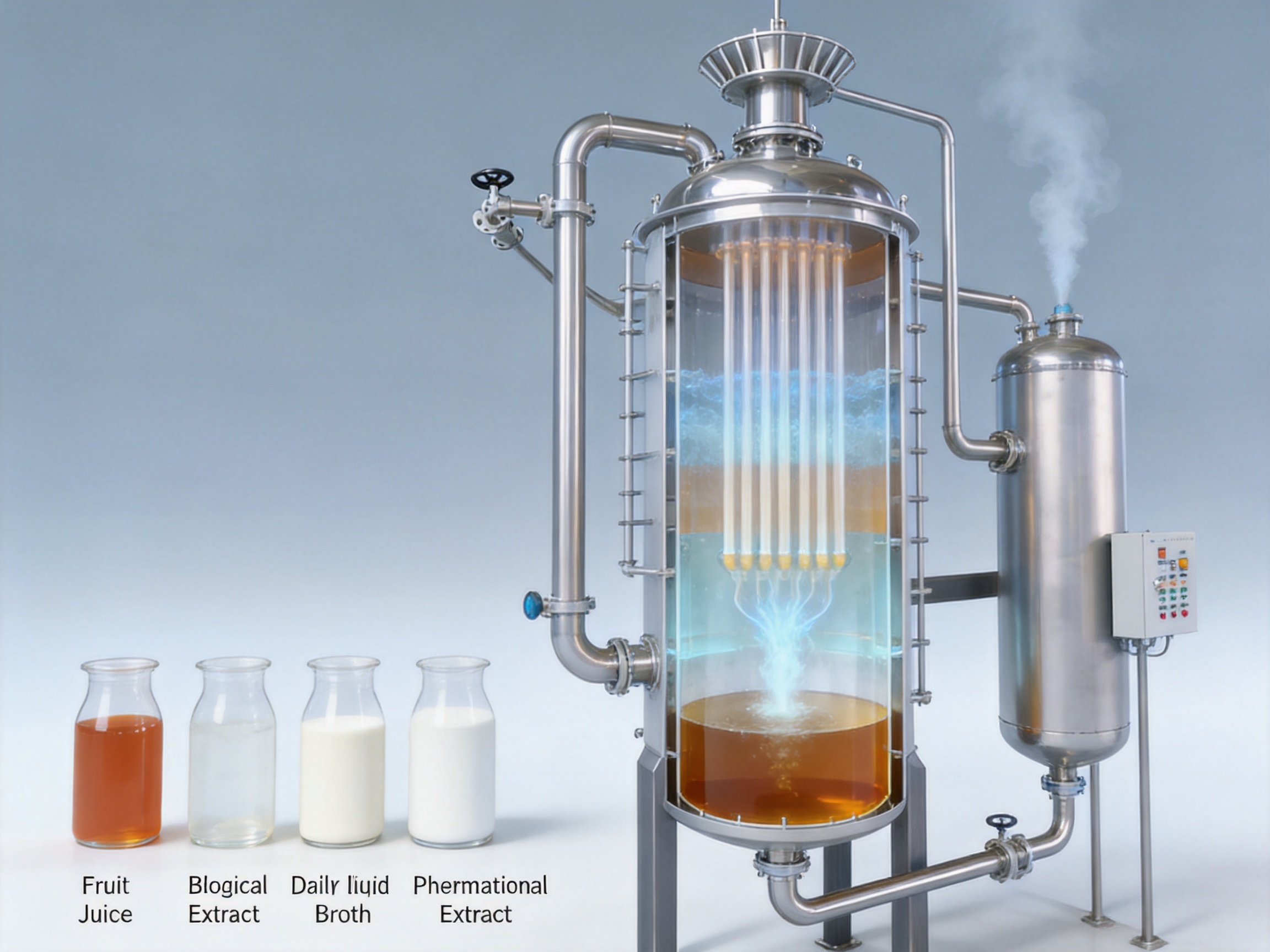
The single effect falling film evaporator is mainly composed of a heater, separator, condenser, distributor, vacuum system, material pump, condensate discharge device, instrumentation, control cabinet, and associated valves and piping. During operation, the feed liquid is delivered to the top of the heater and distributed evenly into the heating tubes by a precision distributor. Instead of filling the tubes, the liquid flows downward as a thin film along the tube wall under the influence of gravity and vapor movement.
Steam is introduced outside the heating tubes. Heat passes through the tube wall and quickly raises the temperature of the liquid film. Under vacuum or reduced pressure conditions, the boiling point of the liquid decreases, allowing evaporation to occur at relatively low temperatures. As vapor is generated, it travels together with the concentrated liquid into the separator, where secondary steam is separated from the liquid phase. The secondary steam is then condensed and discharged, while the concentrated product is collected or circulated depending on the designed concentration target.
This process has a major advantage: the feed liquid does not remain inside the heating zone for a long time. In many applications, the residence time is only several seconds to tens of seconds. This short residence time is particularly important for materials containing volatile aroma compounds, active botanical ingredients, enzymes, vitamins, proteins, polysaccharides, or other heat-sensitive components. The evaporator can therefore help preserve color, flavor, biological activity, and functional value better than many traditional concentration methods.
The term “single effect” means that the system uses one evaporation stage. Compared with multiple-effect systems, a single effect falling film evaporator has a simpler structure, easier operation, lower initial investment, and more convenient cleaning and maintenance. While multi-effect systems may offer additional steam economy for very large continuous operations, a single-effect design is often preferred when flexibility, sanitary performance, moderate capacity, stable control, and heat-sensitive product protection are more important.
2. Core Advantages Over Conventional and Competitive Equipment
A major advantage of the customizable SUS304/SUS316L single effect falling film evaporator is its strong heat transfer performance. Because the feed liquid is spread as a thin film, the contact area between the liquid and the heated tube surface is significantly increased. This improves heat transfer efficiency and allows the system to achieve evaporation rapidly without excessive heating intensity. For manufacturers, better heat transfer means more stable concentration, reduced processing time, and improved product uniformity.
Another advantage is the gentle treatment of sensitive materials. In many traditional concentration vessels, the material may remain in contact with hot surfaces for long periods, leading to thermal degradation, darkening, flavor loss, precipitation, viscosity changes, or active component reduction. In the falling film evaporator, the material passes through the heated zone quickly, reducing the risk of overheating. For products such as fruit juice, herbal extract, dairy liquid, natural food ingredients, and pharmaceutical intermediates, this gentle approach is essential.
The equipment is also suitable for materials that are prone to scaling. Although every evaporator must be designed according to material behavior, falling film evaporation reduces the residence time and avoids excessive local concentration in many conditions. The uniform film distribution helps prevent dry spots, and the vertical tube design supports continuous downward flow. When combined with correct flow control, suitable cleaning procedures, and appropriate material selection, the system can reduce fouling risk compared with less refined evaporator designs.
Compared with open evaporation pans or simple vacuum concentrators, this evaporator provides better hygiene and process control. The closed system limits environmental contamination, reduces odor emission, and helps protect product purity. Stainless steel contact parts, sanitary pipe connections, polished surfaces, and cleanable internal structures support compliance with food, pharmaceutical, and biological production expectations. The evaporator can be integrated into a process line with upstream extraction, filtration, separation, sterilization, and downstream drying, blending, or packaging equipment.
The single-effect configuration also offers practical operational simplicity. Operators can monitor vacuum level, steam pressure, product temperature, feed rate, discharge concentration, condensate status, and cooling water flow without the complexity of multiple interconnected evaporation stages. This simplifies commissioning, training, troubleshooting, and daily operation. For many production sites, this ease of use directly reduces labor pressure and improves operational reliability.
Energy consumption is stable and predictable. The provided models show a clear relationship between evaporation capacity and steam consumption, allowing users to select a unit that matches plant steam supply and production demand. For facilities where production flexibility and product quality are more critical than maximum steam economy, a single-effect falling film evaporator is an intelligent balance between performance and cost.
3. Materials of Construction: SUS304 and SUS316L
Material selection is critical in evaporation equipment because the system contacts heated liquids, steam, condensate, cleaning chemicals, and sometimes acidic, alkaline, salty, or bioactive ingredients. The customizable evaporator can be manufactured in SUS304 or SUS316L stainless steel according to the user’s process conditions.
SUS304 stainless steel is widely used in food, beverage, and general pharmaceutical equipment because it provides good corrosion resistance, formability, weldability, and sanitary performance. It is suitable for many neutral or mildly corrosive materials, including many fruit juices, plant extracts, dairy solutions, sugar solutions, and aqueous intermediates.
SUS316L stainless steel offers enhanced corrosion resistance due to its molybdenum content and low carbon composition. It is often preferred for materials containing chlorides, acidic compounds, fermentation products, pharmaceutical extracts, or cleaning regimes that require stronger chemical resistance. SUS316L is especially valuable in applications where corrosion control, product purity, and long service life are key concerns.
Custom material selection is not simply a matter of cost; it is part of process risk management. Choosing the correct stainless steel grade helps reduce corrosion, contamination risk, maintenance frequency, and unexpected downtime. For users with GMP-oriented workshops or high-value products, the option to choose SUS316L for contact parts can be a decisive advantage over competitors that provide only standard material configurations.
4. Main Technical Parameters
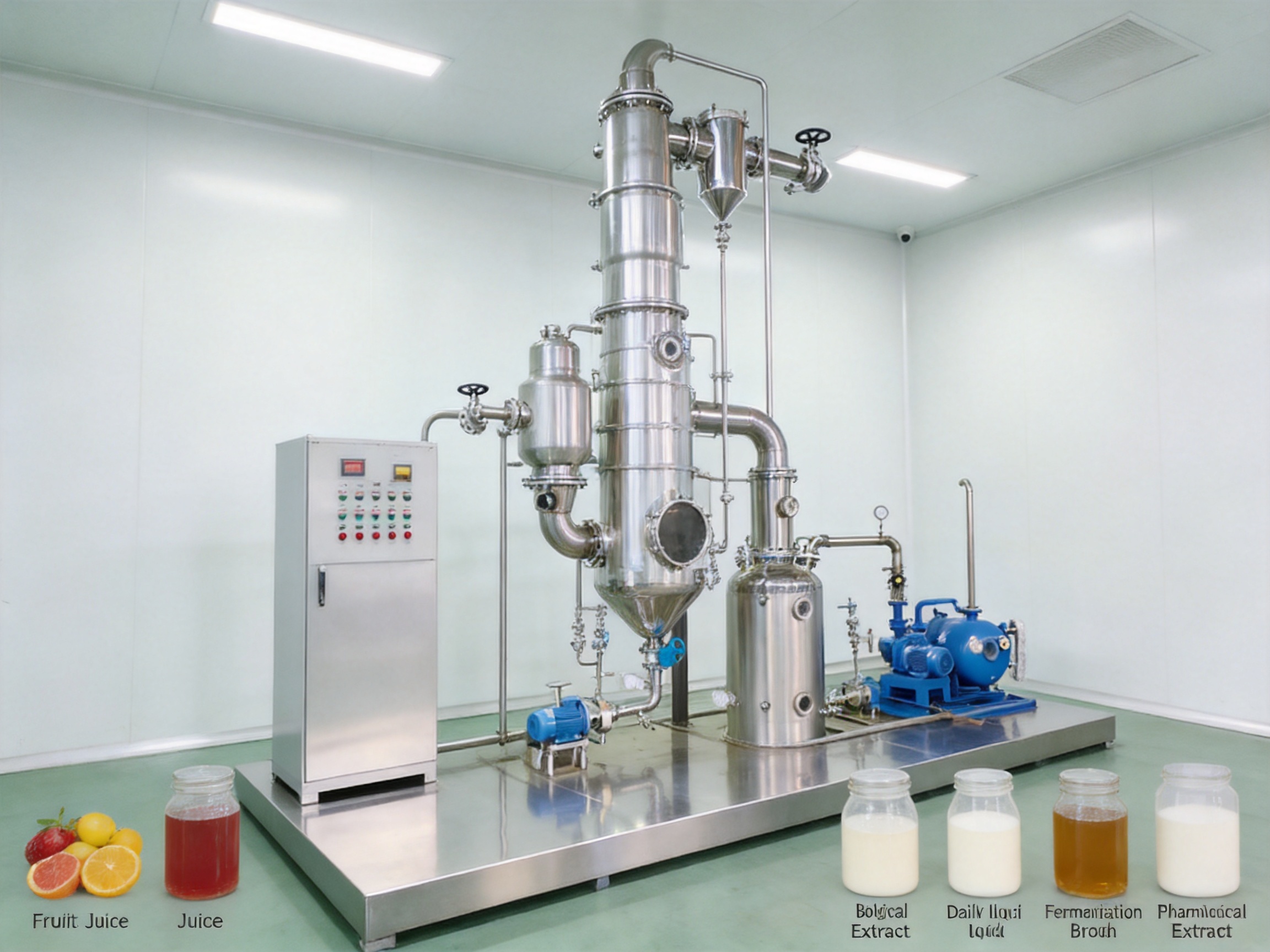
The single effect falling film evaporator is available in multiple models to meet different production capacities. The standard capacity range shown below includes evaporation capacities from 600 kg/h to 1600 kg/h. Parameters such as inlet concentration, outlet concentration, evaporation temperature, sterilization temperature, dimensions, and material configuration can be customized according to process requirements.
Parameter |
SJM1-600 |
SJM1-800 |
SJM1-1000 |
SJM1-1200 |
SJM1-1600 |
Evaporation Capacity |
600 kg/h |
800 kg/h |
1000 kg/h |
1200 kg/h |
1600 kg/h |
Product Inlet Concentration |
11.5% to 12%, made to order |
11.5% to 12%, made to order |
11.5% to 12%, made to order |
11.5% to 12%, made to order |
11.5% to 12%, made to order |
Product Outlet Concentration |
45% to 48%, made to order |
45% to 48%, made to order |
45% to 48%, made to order |
45% to 48%, made to order |
45% to 48%, made to order |
Steam Pressure |
0.6 to 0.8 MPa |
0.6 to 0.8 MPa |
0.6 to 0.8 MPa |
0.6 to 0.8 MPa |
0.6 to 0.8 MPa |
Steam Consumption |
420 kg/h |
560 kg/h |
700 kg/h |
840 kg/h |
1100 kg/h |
Evaporating Temperature |
60 degrees Celsius, customizable |
60 degrees Celsius, customizable |
60 degrees Celsius, customizable |
60 degrees Celsius, customizable |
60 degrees Celsius, customizable |
Heating Temperature |
70 degrees Celsius |
70 degrees Celsius |
70 degrees Celsius |
70 degrees Celsius |
70 degrees Celsius |
Sterilization Temperature |
86 to 94 degrees Celsius |
86 to 94 degrees Celsius |
86 to 94 degrees Celsius |
86 to 94 degrees Celsius |
86 to 94 degrees Celsius |
Cooling Water Consumption |
6 t/h |
8 t/h |
10 t/h |
12 t/h |
16 t/h |
Total Electric Power |
15.5 kW |
15.5 kW |
19.5 kW |
19.5 kW |
19.5 kW |
Approximate Dimension |
3.9 m x 2.3 m x 6.5 m |
3.9 m x 2.3 m x 7 m |
3.9 m x 2.4 m x 7.5 m |
3.9 m x 2.4 m x 8 m |
3.9 m x 2.4 m x 8.5 m |
These specifications demonstrate the product’s scalable design. A smaller unit can serve pilot production, specialty extraction, or moderate-capacity food processing, while larger models can support more intensive industrial concentration needs. The evaporation temperature can be designed according to customer demand, which is important for products that require low-temperature concentration under vacuum.
5. Application Fields
5.1 Plant Extraction and Natural Ingredients
Plant extraction processes often generate dilute extracts that must be concentrated before drying, precipitation, blending, purification, or formulation. These extracts may contain flavonoids, polyphenols, alkaloids, glycosides, essential oils, polysaccharides, pigments, and other sensitive components. Excessive heating may damage these valuable substances or change the sensory profile of the product.
The falling film evaporator is well suited for botanical extract concentration because it provides low-temperature evaporation, short residence time, and continuous operation. It can be used after extraction and filtration to concentrate medicinal plant extract, tea extract, herbal liquid, spice extract, nutraceutical ingredients, and natural food additives. The closed stainless steel system helps protect product cleanliness and reduces exposure to oxygen and environmental contamination.
5.2 Food and Beverage Processing
In food production, concentration is widely used for juice, dairy liquid, syrup, seasoning liquid, plant-based beverage bases, and functional food ingredients. Product color, flavor, aroma, and nutritional value are major concerns. Traditional thermal concentration can cause cooked taste, browning, flavor loss, or protein instability. The falling film evaporator helps reduce these risks through quick heat transfer and controlled evaporation temperature.
For juice concentration, the system can help preserve fresh characteristics better than long-duration open heating. For dairy concentration, it can help manage heat exposure while improving solids content. For natural food ingredients, it supports sanitary processing and stable concentration before spray drying, vacuum drying, freeze drying, blending, or packaging.
5.3 Pharmaceutical and Traditional Medicine Processing
Pharmaceutical and traditional medicine production require strict control over process parameters, cleanliness, material traceability, and active component preservation. Extract concentration is often a critical intermediate step. The customizable SUS304/SUS316L evaporator can be designed for sanitary requirements, with polished internal surfaces, suitable valve selection, controlled temperature, and automation options.
Low-temperature vacuum evaporation can help preserve active compounds in traditional medicine extracts and reduce the risk of degradation. The equipment can also be integrated with extraction tanks, separation equipment, filtration systems, sterilization equipment, and drying systems to form a complete production line.
5.4 Bio-Fermentation Projects
Fermentation broth and biological liquid products can be sensitive to heat, foaming, viscosity changes, and contamination. Depending on the product, concentration may be required before purification, drying, formulation, or waste reduction. A falling film evaporator can be customized to handle suitable fermentation-related liquids with attention to sanitary design, cleaning capability, and temperature control.
For biological fermentation projects, equipment reliability and automation are particularly important. Stable vacuum, accurate feed control, controlled steam supply, and effective separation help reduce process fluctuation. When combined with upstream fermentation systems and downstream purification or drying equipment, the evaporator becomes part of an integrated bioprocessing solution.
5.5 Chemical Solution Treatment and Wastewater Reduction
In chemical engineering, evaporation is often used to recover valuable solutes, reduce wastewater volume, purify process liquids, or prepare solutions for crystallization. The falling film evaporator can be applied to selected chemical solutions where material compatibility and process conditions are appropriate. SUS316L construction can be selected for more corrosive environments.
The system’s efficient heat transfer and simple operation make it attractive for solution purification and volume reduction. For wastewater treatment, evaporation can decrease the amount of liquid requiring disposal or further treatment. Custom design is especially important in chemical applications because viscosity, boiling point elevation, scaling tendency, and corrosion behavior vary widely.
6. Customization: A Practical Advantage for Real Production
One of the strongest selling points of this evaporator is its customization capability. Industrial users rarely have identical feed materials, concentration targets, factory layouts, utilities, cleaning methods, or automation expectations. A standard machine may not achieve optimal performance if it does not match the actual process. Custom design helps bridge the gap between equipment capacity and real production demand.
The product can be customized in terms of evaporation capacity, material grade, inlet and outlet concentration, evaporation temperature, heating area, separator structure, condenser type, vacuum system, control mode, piping layout, pump selection, cleaning configuration, and integration with upstream and downstream equipment. This flexibility allows the evaporator to serve plant extraction projects, bio-fermentation projects, Western medicine synthesis projects, food projects, and turnkey engineering systems.
For customers producing heat-sensitive liquids, the evaporation temperature can be adjusted according to material stability. For higher-corrosion applications, SUS316L can be selected. For factories with limited installation height or special workshop layouts, dimensions and platform arrangements can be engineered to fit the site. For automated production, sensors, control logic, and centralized control interfaces can be included.
Compared with competitors that provide fixed models with limited engineering adaptation, a customizable system reduces compromise. It allows the manufacturer and customer to define the most suitable configuration for product quality, energy efficiency, cleaning convenience, maintenance access, and future expansion. This is especially valuable for enterprises developing new products or scaling up from pilot research to industrial production.
7. Advanced Manufacturing Strengths
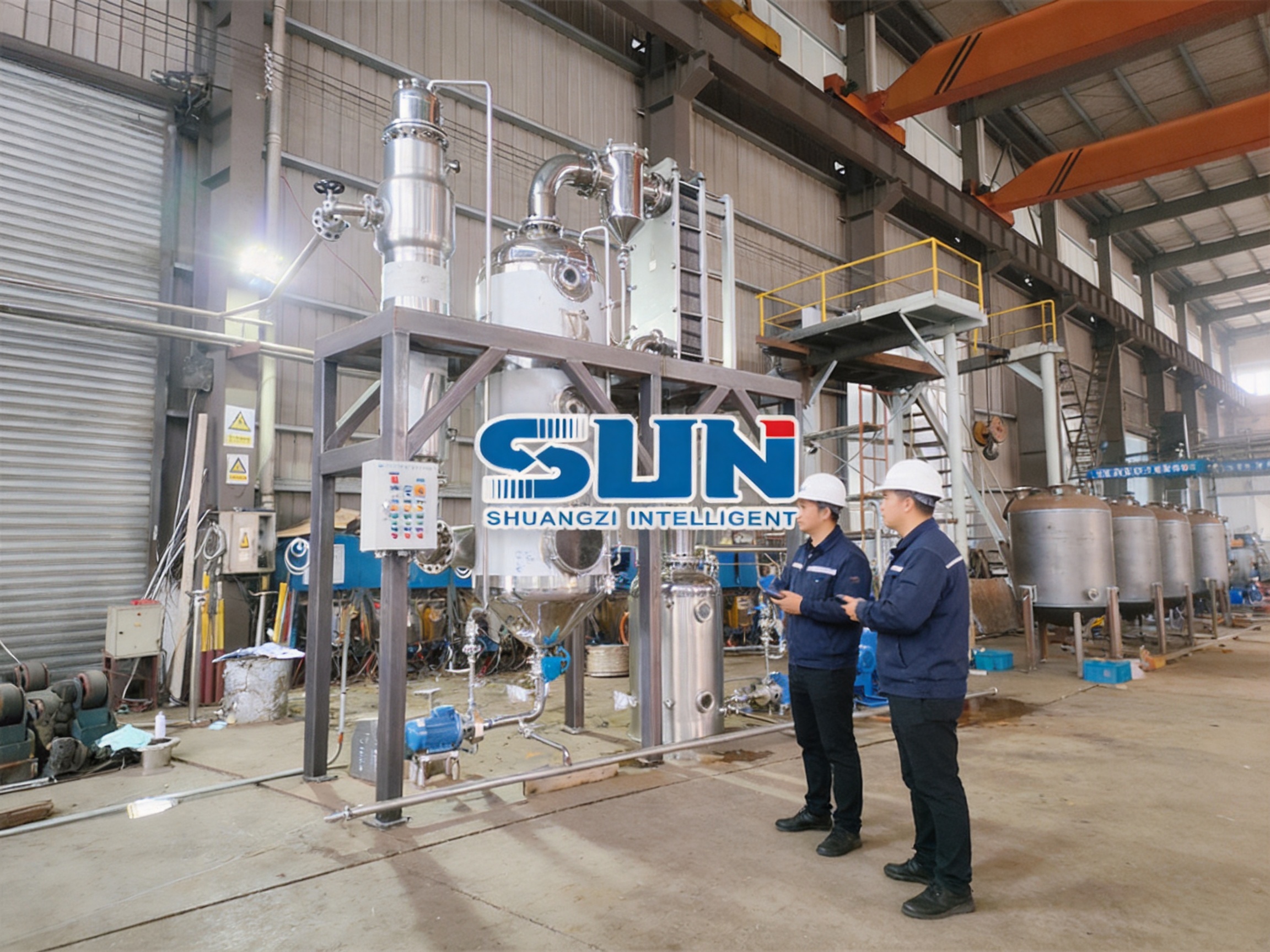
Zhejiang Shuangzi Intelligent Equipment Co., Ltd. is a professional biology and medical equipment enterprise with strong capability in EPC and EPCM project execution. The company focuses on process technology, automation engineering design, equipment manufacturing, matching procurement, installation, equipment system integration, and turnkey projects. Its experience covers plant extraction, biological fermentation, pharmaceutical engineering, natural food, energy conservation, and environmental protection.
The company was founded in 2007 and has developed strong technical power through years of engineering practice. It covers a floor area of 16,706 square meters and a structural area of 17,800 square meters, providing the manufacturing space and technical infrastructure needed for stainless steel process equipment. Its mature product portfolio includes vacuum low-temperature drying equipment, complete fermentation system equipment, evaporation and concentration equipment, extraction equipment, separation equipment, crystallization equipment, filtration equipment, containers, and related process systems.
The company’s manufacturing strength is important because an evaporator’s performance depends not only on its process design but also on fabrication quality. Tube alignment, welding quality, surface finishing, distributor precision, separator design, pressure integrity, and sanitary details all influence operating stability. High-quality manufacturing reduces leakage risk, improves cleanability, supports long service life, and helps protect product quality.
The company has introduced advanced welding and finishing equipment, including plasma argon arc welding machines, plasma cutting machines, CAM CNC machining centers, and other advanced manufacturing equipment. These tools support precision fabrication, consistent stainless steel welding, accurate cutting, and reliable assembly. For stainless steel process equipment, welding quality is especially critical because poor welds may create crevices, contamination points, corrosion risks, or mechanical weakness. Advanced welding capability helps create durable and hygienic equipment.
Automation is another major strength. The company has production lines with a pilot production workshop and research and development platform that meet automation and GMP-oriented requirements. This background enables the company to design equipment not only as standalone machinery but also as part of a controlled production process. For customers, this means the evaporator can be integrated with process control, monitoring, cleaning systems, and production-line logic.
The company’s experience in turnkey projects is a further advantage over suppliers that only sell individual machines. Many users need more than one evaporator; they need a complete process solution. For example, a plant extraction project may require extraction tanks, filtration, concentration, precipitation, separation, drying, solvent recovery, storage tanks, and automation. A food project may require raw material preparation, sterilization, concentration, cooling, filling, and cleaning systems. An EPC or EPCM-capable supplier can evaluate the entire process flow and reduce interface problems between equipment sections.
8. Engineering Design for Better Performance
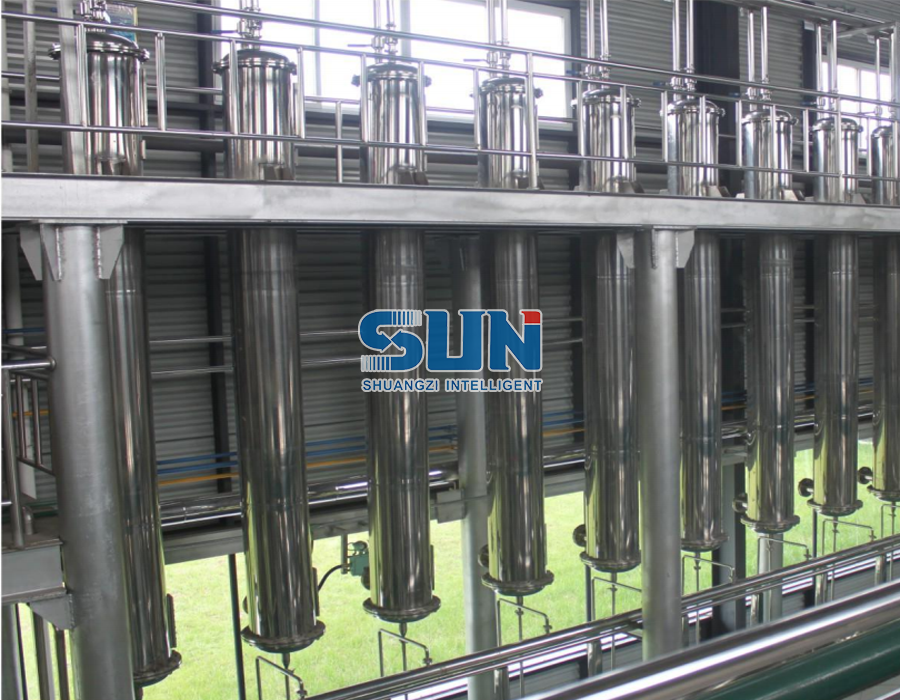
The performance of a falling film evaporator begins with its process design. The distributor must spread liquid evenly into each tube. If distribution is poor, some tubes may receive too little liquid, leading to dry spots, fouling, or reduced heat transfer, while other tubes may be overloaded. A well-designed distributor supports uniform film formation, stable evaporation, and consistent product quality.
The heater must provide enough heat transfer area while maintaining suitable liquid velocity and temperature difference. If the temperature difference is too high, sensitive products may degrade or foul. If it is too low, evaporation capacity may be insufficient. The customizable design allows the heating system to be matched to product characteristics and utility conditions.
The separator is also essential. It must efficiently separate secondary steam from concentrated liquid while minimizing entrainment. Poor separation can carry product droplets into the condenser, leading to product loss, contamination of condensate, or unstable operation. A properly designed separator improves yield and process cleanliness.
The condenser and vacuum system determine the evaporation pressure and temperature. A stable vacuum allows the liquid to evaporate at lower temperature, which is a core benefit for heat-sensitive products. Cooling water consumption must be considered in plant utility planning, and the model data provides guidance for selecting an appropriate unit based on available cooling capacity.
Control design is another performance factor. Steam pressure, feed flow, product temperature, vacuum level, and discharge rate must be coordinated. Automated controls can reduce operator dependence and improve repeatability. For products with strict concentration requirements, the system can be configured with measurement and control instruments to maintain stable outlet concentration.
9. Hygiene, Cleaning, and Product Safety
Food, pharmaceutical, and biological production environments require equipment that is easy to clean and resistant to contamination. The stainless steel construction of the single effect falling film evaporator supports sanitary operation. Depending on project requirements, the system can be designed with smooth internal surfaces, sanitary valves, cleanable pipe routing, suitable gaskets, and cleaning-in-place compatibility.
Cleanability is especially important for materials that contain sugars, proteins, starches, plant fibers, minerals, or concentrated solids. Residues can cause microbial growth, cross-contamination, odor, discoloration, or scaling. A well-designed evaporator reduces dead corners and supports effective cleaning cycles. Cleaning procedures may include water flushing, alkaline cleaning, acid cleaning, hot water circulation, or other validated methods depending on the material and industry.
For pharmaceutical and botanical extract applications, product safety includes not only microbial control but also prevention of metal contamination, corrosion byproducts, and retained residues. Selecting SUS316L for contact parts can improve resistance in more demanding applications. High-quality welding and polishing further support sanitary standards.
The closed evaporation process also helps protect the product from environmental exposure. Unlike open concentration methods, the falling film evaporator operates in an enclosed pathway, reducing contact with air, dust, operators, and external contaminants. This improves production hygiene and supports more consistent product quality.
10. Energy and Utility Considerations
The single effect falling film evaporator uses steam as the primary heating medium. According to the model range, steam pressure is typically 0.6 to 0.8 MPa. Steam consumption increases with evaporation capacity, from approximately 420 kg/h for the 600 kg/h model to approximately 1100 kg/h for the 1600 kg/h model. These values help users estimate boiler load, steam piping requirements, condensate recovery design, and operating cost.
Cooling water is required for condensation of secondary steam. Cooling water consumption ranges from approximately 6 t/h to 16 t/h across the standard models. This should be considered during plant planning, especially in regions where water availability, cooling tower capacity, or wastewater discharge is limited.
Electric power consumption is relatively moderate because the main energy input is steam. Electric power is used for pumps, controls, vacuum equipment, and auxiliary devices. The total electric power listed for the models is approximately 15.5 kW to 19.5 kW, depending on capacity. This makes the system practical for many factories with standard industrial electrical supply.
Although a multi-effect evaporator can reduce steam consumption by reusing secondary vapor, a single-effect design may still be the better choice for specific users. It is simpler, easier to clean, easier to operate, and often more economical to purchase and maintain. For high-value products, small-to-medium production, frequent product changeover, or heat-sensitive materials, the quality and flexibility benefits can outweigh the steam economy advantage of more complex systems.
11. Comparison with Other Concentration Technologies
Compared with batch vacuum concentrators, the falling film evaporator offers shorter residence time and continuous processing capability. Batch concentrators are simple but can expose products to heat for longer periods. They may be suitable for small batches, but they often become inefficient and inconsistent when production scales up. The falling film evaporator provides a more efficient heat transfer mode and better suitability for continuous or semi-continuous production.
Compared with forced circulation evaporators, falling film evaporators may offer gentler processing and lower pumping intensity. Forced circulation systems are useful for highly viscous or crystallizing liquids, but they often require higher circulation flow, more pump energy, and longer residence time. For relatively low-to-medium viscosity heat-sensitive liquids, falling film evaporation is frequently preferred.
Compared with rising film evaporators, falling film systems are generally more suitable for low-temperature evaporation and heat-sensitive products because the liquid distribution and gravity-assisted flow can provide stable film formation at lower temperature differences. Rising film evaporators depend strongly on vapor generation to lift liquid upward, which may not be ideal for all materials.
Compared with open evaporation, the falling film evaporator is far superior in hygiene, energy control, product protection, and process repeatability. Open evaporation may be inexpensive at first, but it often causes aroma loss, contamination risk, high labor input, unstable concentration, and excessive heat damage. For modern factories, closed stainless steel evaporation is a more professional solution.
12. Installation and Integration
The evaporator’s vertical design requires attention to installation height, foundation, maintenance access, utility connections, and process flow direction. The model dimensions range from approximately 6.5 meters to 8.5 meters in height, so workshop layout should be evaluated during project planning. The equipment can be arranged with platforms, ladders, valves, and control access points to support safe operation and maintenance.
Integration with upstream and downstream equipment is one of the company’s strengths. In plant extraction lines, the evaporator can receive filtered extract from extraction and separation systems. In food lines, it can be connected after clarification, sterilization, or preheating steps. In pharmaceutical projects, it can be incorporated into a controlled process sequence with validated cleaning and monitoring procedures.
The company can provide engineering, process design, equipment design, installation, line debugging, and other services. This is valuable because many evaporation problems arise not from the evaporator itself but from mismatched pumps, poor feed pretreatment, insufficient utilities, inadequate cleaning systems, or incorrect control strategy. A supplier with system integration capability can reduce these risks.
Turnkey project capability also benefits customers who are building new production lines or upgrading old facilities. Instead of coordinating multiple unrelated suppliers, the customer can work with an experienced engineering team that understands extraction, fermentation, concentration, drying, filtration, and automation. This reduces communication complexity and improves project execution efficiency.
13. Quality Control and Long-Term Reliability
Long-term reliability is essential for production equipment. An evaporator that frequently fouls, leaks, loses vacuum, or produces unstable concentration can disrupt the entire production line. The customizable single effect falling film evaporator is designed with attention to stainless steel fabrication, heat transfer performance, stable separation, and practical maintenance.
Quality control begins with material selection and continues through cutting, forming, welding, polishing, assembly, inspection, and testing. Advanced plasma cutting and CNC machining support precise component preparation. Plasma argon arc welding supports clean and controlled stainless steel joints. Proper finishing helps improve cleanability and appearance. Pressure and leakage checks help verify equipment integrity before delivery.
Maintenance considerations include access to pumps, valves, instruments, distributors, heating sections, separator components, and cleaning connections. Because the single-effect design is simpler than multi-effect systems, maintenance is generally easier. Fewer stages mean fewer interconnections, fewer control loops, and less operational complexity.
For customers, reliability also depends on correct operation. Operators should maintain suitable feed flow, avoid dry running, control steam pressure, ensure adequate cooling water, monitor vacuum stability, and follow cleaning procedures. The manufacturer’s engineering guidance can help users establish practical operating protocols for specific materials.
14. Value for Pilot Research and Scale-Up
The company has a pilot production workshop and research and development platform with automation and GMP-oriented capabilities. This is particularly important for customers developing new products. Many enterprises begin with laboratory extraction or small pilot batches, but when they scale up, they encounter challenges in heat transfer, concentration time, product stability, cleaning, and reproducibility.
A falling film evaporator can support scale-up because it offers a defined heat transfer mechanism and controllable residence time. By selecting appropriate capacity and customization parameters, users can move from pilot concentration to industrial production with better predictability. The availability of multiple models also supports phased expansion.
For research users, the ability to customize inlet and outlet concentration is valuable. A product may require concentration from 12% solids to 45% solids, but another may need different targets. The evaporator can be engineered according to actual concentration requirements, helping researchers and manufacturers establish an efficient process route.
15. Why This Evaporator Is a Competitive Choice
This evaporator is competitive because it combines process efficiency, sanitary stainless steel construction, customization, and engineering support. It is not merely a standard concentration machine; it is a configurable process unit suitable for multiple industries. Its falling film structure provides high heat transfer efficiency, while its short residence time protects heat-sensitive materials.
The availability of SUS304 and SUS316L construction gives users flexibility between cost-effective food-grade applications and higher-corrosion or pharmaceutical-grade requirements. The capacity range supports different production scales. The simple single-effect design reduces operational complexity while maintaining reliable concentration performance.
Compared with competitors that focus only on machinery supply, the company’s EPC and EPCM capabilities provide broader value. Customers can obtain process design, equipment design, installation, commissioning, system integration, and turnkey project support. This reduces project risk and helps ensure that the evaporator performs properly within the complete production process.
The company’s advanced manufacturing equipment, experienced technical team, pilot platform, and broad product portfolio further strengthen the offering. A falling film evaporator must be precisely designed and carefully manufactured to perform well. The company’s stainless steel fabrication capability, automation experience, and industry knowledge help deliver equipment that meets real production needs.
16. Practical Selection Guidance
When selecting a single effect falling film evaporator, users should first define the feed material characteristics. Important factors include initial solids content, target concentration, viscosity, heat sensitivity, foaming tendency, scaling tendency, acidity, chloride content, particle content, and required sanitary level. These factors determine whether SUS304 or SUS316L is more suitable and whether additional pretreatment or special design features are needed.
Second, users should define production capacity. Evaporation capacity is not the same as feed capacity; it refers to the amount of water or solvent removed per hour. For example, concentrating a liquid from 12% solids to 48% solids requires removal of a significant portion of water. Process calculation should be performed to match the model to the desired production output.
Third, plant utilities should be checked. Steam supply, cooling water, electric power, compressed air, drainage, condensate return, and installation height must be suitable. The model table provides initial utility references, but final design should be confirmed according to actual working conditions.
Fourth, cleaning and maintenance strategy should be considered. If the product fouls easily, cleaning-in-place design, cleaning solution compatibility, and access for inspection become more important. If multiple products are processed in the same line, cross-contamination prevention and cleaning validation may be required.
Finally, users should consider future expansion. A customizable evaporator can be designed with integration interfaces, automation options, and layout planning that support later production upgrades. This makes the investment more adaptable over time.
17. Q&A Section
Q1: What is the main function of a single effect falling film evaporator?
A single effect falling film evaporator concentrates liquid by evaporating water or solvent from the feed material. The liquid forms a thin film inside vertical heating tubes, receives heat from steam outside the tubes, and quickly evaporates under controlled conditions. The concentrated liquid and secondary vapor are then separated.
Q2: Why is falling film evaporation suitable for heat-sensitive materials?
Falling film evaporation is suitable for heat-sensitive materials because the liquid remains in the heating zone for only a short time, usually several seconds to tens of seconds. This reduces thermal damage and helps preserve flavor, color, active ingredients, nutrients, and biological activity.
Q3: What materials can the evaporator be made from?
The evaporator can be manufactured from SUS304 or SUS316L stainless steel. SUS304 is suitable for many general food and process applications, while SUS316L provides stronger corrosion resistance for more demanding pharmaceutical, biological, acidic, or chloride-containing materials.
Q4: What industries commonly use this equipment?
The equipment is widely used in food processing, plant extraction, traditional medicine extraction, pharmaceutical engineering, biological fermentation, chemical solution treatment, wastewater reduction, and natural ingredient production.
Q5: How does this evaporator compare with a batch vacuum concentrator?
Compared with a batch vacuum concentrator, a falling film evaporator usually provides faster heat transfer, shorter residence time, better continuous processing capability, and improved suitability for heat-sensitive products. Batch concentrators may be simpler but often expose products to heat for a longer time.
Q6: Can the outlet concentration be customized?
Yes. The outlet concentration can be made to order according to product requirements. The provided reference range is 45% to 48%, but actual design can be adjusted based on feed characteristics, viscosity, thermal sensitivity, and production goals.
Q7: What evaporation capacities are available?
The listed standard models provide evaporation capacities of 600 kg/h, 800 kg/h, 1000 kg/h, 1200 kg/h, and 1600 kg/h. Other configurations may be designed according to project requirements.
Q8: Why is the single-effect design still attractive when multi-effect evaporators can save steam?
A single-effect design is simpler, easier to operate, easier to clean, and generally lower in initial investment. It is especially attractive for heat-sensitive materials, medium-scale production, frequent product changes, pilot production, and projects where flexibility and product quality are more important than maximum steam economy.
Q9: What company strengths support the quality of this equipment?
The manufacturer has experience in process technology, automation engineering design, equipment manufacturing, installation, system integration, and turnkey projects. It also has advanced welding, cutting, CNC machining, pilot production, and research and development capabilities, which support precise fabrication and reliable process equipment.
Q10: Can the evaporator be integrated into a complete production line?
Yes. The evaporator can be integrated with extraction systems, fermentation systems, filtration equipment, separation equipment, sterilization units, drying systems, storage tanks, and automation controls. This makes it suitable for turnkey projects and complete process engineering solutions.
18. Conclusion
The customizable SUS304/SUS316L single effect falling film evaporator is a strong solution for modern liquid concentration requirements. Its falling film principle delivers efficient heat transfer, short residence time, and gentle processing, making it particularly valuable for heat-sensitive and easily scaling materials. Its applications cover food, plant extraction, traditional medicine, biological fermentation, pharmaceutical engineering, chemical processing, and wastewater reduction.
The equipment’s advantages over many conventional and competitive concentration systems include better thermal efficiency, improved product protection, closed sanitary operation, stable control, lower process complexity, and strong customization flexibility. The availability of SUS304 and SUS316L stainless steel allows users to select the most suitable material for hygiene, corrosion resistance, and budget requirements.
Beyond the machine itself, the manufacturer’s advanced manufacturing processes and engineering strengths add substantial value. With experience in EPC and EPCM services, automation design, equipment manufacturing, installation, commissioning, and turnkey project delivery, the company can support users from process concept to full production operation. Its advanced welding, cutting, CNC machining, pilot production, and research capabilities help ensure that each evaporator is not only built with quality but also matched to real industrial needs.
For manufacturers seeking a reliable, efficient, and customizable concentration machine, this single effect falling film evaporator offers a practical balance of performance, product quality protection, engineering support, and long-term production value.
References
1. Coulson, J. M., Richardson, J. F., Backhurst, J. R., and Harker, J. H. Chemical Engineering, Volume 2: Particle Technology and Separation Processes.
2. McCabe, W. L., Smith, J. C., and Harriott, P. Unit Operations of Chemical Engineering.
3. Fellows, P. J. Food Processing Technology: Principles and Practice.
4. Mujumdar, A. S. Handbook of Industrial Drying.
5. Singh, R. P., and Heldman, D. R. Introduction to Food Engineering.
6. Perry, R. H., and Green, D. W. Perry’s Chemical Engineers’ Handbook.
7. European Hygienic Engineering and Design Group. Hygienic Design Principles for Food and Pharmaceutical Processing Equipment.
8. International Society for Pharmaceutical Engineering. Good Practice Guide: Process Equipment Design and Cleaning Considerations.