
 英语
英语 俄语
俄语Content
- 1 1. The Role of a Distillation Column in Modern Processing
- 2 2. Product Construction and Process Design
- 3 3. Technical Specifications and Capacity Range
- 4 4. Advantages Compared with Basic or Poorly Integrated Alternatives
- 5 5. Application Industries
- 6 6. Manufacturing Strengths and Quality Approach
- 7 7. Automation and Control Options
- 8 8. Environmental and Resource-Efficiency Benefits
- 9 9. Project Engineering and Turnkey Capability
- 10 10. Selecting the Appropriate Model
- 11 11. Operation and Maintenance Principles
- 12 12. Why Process Experience Matters
- 13 13. Technical Information Customers Should Prepare
- 14 14. Frequently Asked Questions
- 14.1 14.1 What materials can be processed in the distillation column?
- 14.2 14.2 Can approximately 30% alcohol be concentrated to 90%–95%?
- 14.3 14.3 Does a higher reflux ratio always improve production?
- 14.4 14.4 Is the equipment continuous or batch-operated?
- 14.5 14.5 What is the advantage of stainless steel packing?
- 14.6 14.6 What heating methods are available?
- 14.7 14.7 How does self-flow reflux work?
- 14.8 14.8 Can the column be automatically controlled?
- 14.9 14.9 What industries use this equipment?
- 14.10 14.10 How should the recovery capacity be interpreted?
- 14.11 14.11 Can the supplier provide a complete production line?
- 14.12 14.12 What information is needed for a quotation?
- 15 15. Conclusion
- 16 References
- 17 Product: Distillation Column Manufacturer
Distillation is one of the most established and widely used separation technologies in industrial processing. It enables manufacturers to separate, purify, recover, and concentrate liquid mixtures according to differences in volatility. In industries where solvents, alcohols, water, botanical extracts, fermentation broths, and other liquid materials must be processed repeatedly, the performance of the distillation system directly influences product quality, operating cost, energy consumption, environmental compliance, and production continuity.
A modern distillation column must do more than provide a tall vessel for vapor-liquid contact. It must deliver stable separation performance, reliable heat transfer, hygienic construction, convenient operation, adaptable capacity, and compatibility with the process requirements of the user. For this reason, the design of the column, packing, condenser, heating circuit, reflux arrangement, control system, and supporting equipment must be considered as one integrated process solution.
The distillation column described in this article is designed for the recovery and concentration of alcohol and other solvents, including methanol and similar liquid materials. It can process dilute alcohol solutions with a concentration of approximately 30% and recover alcohol at a concentration of about 90% to 95%, depending on the feed composition, reflux ratio, operating conditions, and process configuration. The equipment is suitable for pharmaceutical, chemical, food, biological, and related manufacturing environments.
Available configurations include continuous distillation towers and intermittent, or batch, distillation towers. Heating may be provided through an external circulation arrangement or an internal circulation arrangement. The system can use condensation self-flow reflux for straightforward operation and can also be configured for automatic control through a programmable industrial control system. With stainless steel construction in areas that contact the processed solvent, the column is designed to support cleanliness, corrosion resistance, and long-term service.
Distillation Column Manufacturer
1. The Role of a Distillation Column in Modern Processing
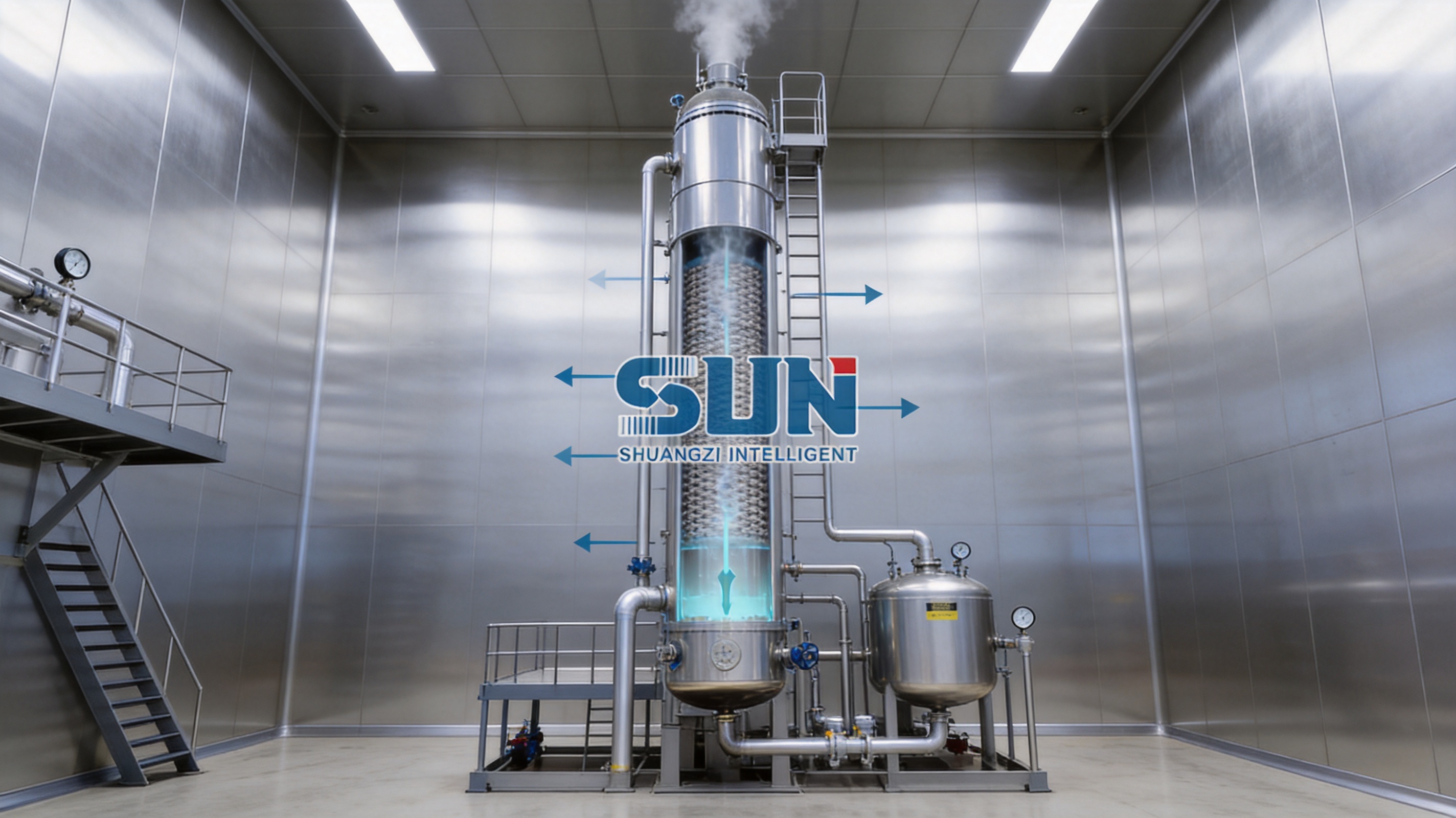
Distillation works by repeatedly bringing liquid and vapor into contact. When a liquid mixture is heated, the more volatile components tend to enter the vapor phase at a higher concentration than the less volatile components. As vapor rises through the column and liquid flows downward, mass transfer takes place across the packing or other internal elements. Repeated vaporization and condensation create a separation effect that is much greater than would be achieved by a single evaporation step.
In a typical solvent recovery process, the feed liquid is introduced into a heating or evaporation section. The generated vapor rises through the packed column, where it meets descending condensate. The vapor becomes enriched in the more volatile component, while the liquid becomes enriched in the less volatile component. At the top of the column, the vapor is condensed. Part of the condensate may be returned to the column as reflux, while the remainder is collected as the recovered product.
The reflux ratio is an important operating parameter. Increasing reflux generally improves separation and allows a higher product concentration. However, a higher reflux ratio also increases internal liquid and vapor traffic, raises the energy requirement, and reduces the amount of finished product that can be withdrawn over a given period. The appropriate balance depends on the desired purity, feed characteristics, capacity target, and energy strategy.
A well-designed column therefore needs to provide sufficient contact area, suitable internal distribution, stable heating, effective condensation, and accurate control of the reflux and product withdrawal rates. These requirements are especially important in pharmaceutical and food applications, where the equipment must also support sanitary operation and prevent contamination.
1.1 Solvent Recovery and Concentration
Solvent recovery is an important part of process economics. Solvents may represent a significant portion of the raw material cost in extraction, synthesis, cleaning, and formulation operations. Recovering and reusing a solvent can reduce purchasing requirements, lower waste disposal costs, and improve the overall sustainability of the plant.
The column is suitable for the distillation of alcohol and other solvents such as methanol, subject to proper process evaluation and safety engineering. A dilute alcohol feed of approximately 30% can be concentrated to approximately 90% to 95% under suitable conditions. Actual results depend on the type of alcohol, the presence of water or dissolved solids, the boiling characteristics of the mixture, the column configuration, and the selected operating parameters.
For users processing botanical extracts, fermentation liquids, pharmaceutical intermediates, or chemical solutions, the recovery step may be integrated with upstream extraction or fermentation and downstream storage, blending, or formulation. This makes the distillation column an important unit operation within a larger production line rather than an isolated piece of equipment.
1.2 Batch and Continuous Distillation
Two principal operating modes are available: intermittent distillation and continuous distillation.
Intermittent or batch distillation is suitable for facilities that process different materials in separate campaigns, operate with variable production schedules, or require flexibility for pilot-scale and multipurpose manufacturing. A batch system can be charged, heated, operated until the desired separation is achieved, and then emptied and prepared for the next batch. This approach is useful when feed composition varies or when production volumes do not justify continuous operation.
Continuous distillation is suitable for stable, repetitive production. Feed enters the system continuously, while product and residual liquid are withdrawn at controlled rates. When properly designed, continuous operation can provide consistent output, stable product quality, and efficient utilization of heating and cooling resources. It is particularly valuable for plants with regular solvent recovery demand and high annual operating hours.
The choice between the two modes depends on the material balance, feed variability, desired production capacity, cleaning requirements, automation level, and future expansion plans. A manufacturer with engineering capability can evaluate these factors and recommend a configuration rather than simply supplying a standard vessel.
2. Product Construction and Process Design
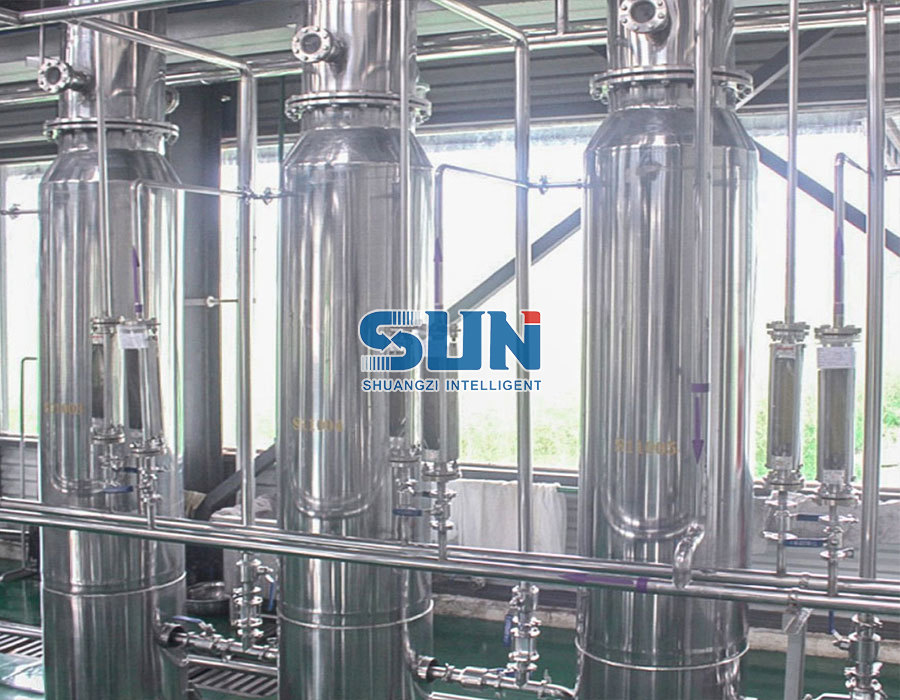
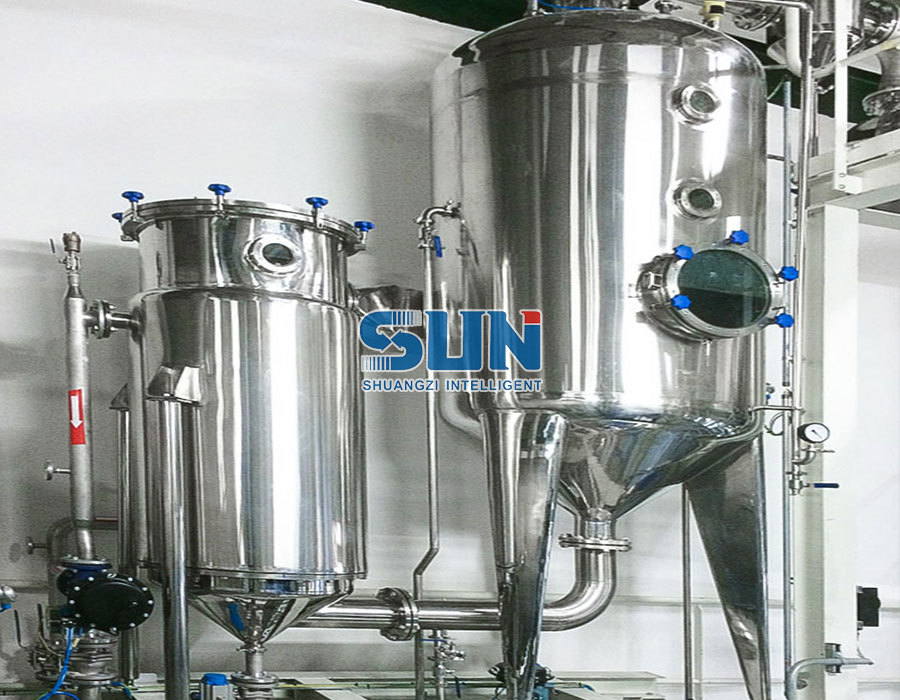
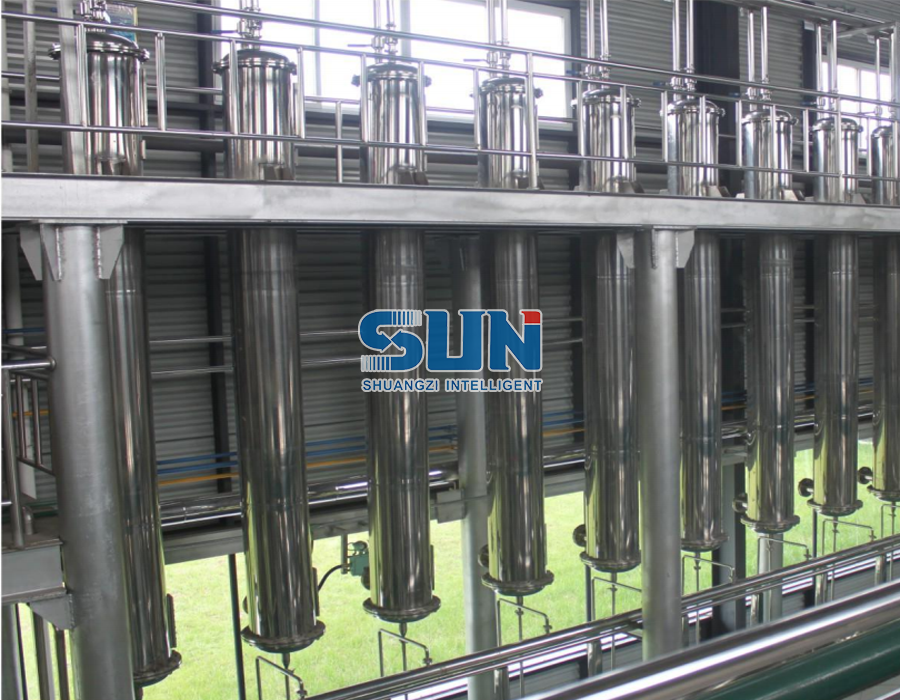
The column uses efficient metal stainless steel packing to create a large surface area for vapor-liquid contact. Packing is a critical component because it influences mass-transfer efficiency, pressure drop, liquid distribution, vapor flow, and the practical height required to achieve the desired separation.
Compared with a simple empty vessel, a packed column promotes repeated contact between the upward-moving vapor and downward-moving liquid. Efficient packing can help improve separation performance within a compact equipment arrangement. Stainless steel packing also offers mechanical strength, corrosion resistance, and suitability for applications where cleanability and material compatibility are important.
The sections that come into contact with the solvent are manufactured from stainless steel. This construction provides several advantages. Stainless steel is resistant to many common process liquids, can be cleaned effectively, and is less likely to introduce contamination into the product than unsuitable or poorly protected materials. The final material specification should always be confirmed against the exact solvent, concentration, temperature, pressure, cleaning chemicals, and operating cycle.
2.1 Heating Arrangements
The distillation tower may use external circulation or internal circulation heating. In an external circulation design, process liquid is circulated through a heating section located outside the main vessel. This arrangement can provide convenient access to the heat-transfer equipment and may simplify inspection, maintenance, and process integration.
In an internal circulation arrangement, the heating function is integrated more directly into the process equipment. This can make the overall system compact and may reduce the length of external process piping. The appropriate design depends on the required heat duty, the properties of the feed, the risk of fouling, the available plant space, and the preferred maintenance strategy.
Heating design must account for more than nominal capacity. A reliable system should consider heat-transfer area, circulation stability, temperature uniformity, vapor generation rate, startup behavior, shutdown procedures, and protection against overheating. When processing flammable solvents, the heating system must also be evaluated as part of the overall hazardous-area and safety design.
2.2 Condensation and Reflux
At the top of the column, vapor is condensed and converted into liquid. The condenser area must be sufficient to handle the vapor load under the specified cooling-water or cooling-medium conditions. Effective condensation is necessary for stable reflux and reliable product collection.
The system adopts a condensation self-flow reflux method. In this arrangement, condensed liquid can return to the column through gravity or natural flow, reducing the dependence on a dedicated reflux pump for the basic reflux function. This can simplify operation and reduce the number of moving parts associated with the reflux circuit.
Self-flow reflux is particularly attractive where straightforward operation, lower maintenance requirements, and simple process observation are priorities. Nevertheless, the layout must provide suitable elevation differences, correctly sized piping, appropriate drainage, and stable hydraulic conditions. For applications requiring a precise or rapidly changing reflux ratio, an automated control configuration can be added.
2.3 Cooling and Heat Exchange
Distillation requires both heating and cooling. Heat is supplied to generate vapor, while cooling is used to condense overhead vapor and control the temperature of associated process streams. The equipment specification therefore includes condensation area, cooling area, and heat-exchange area as separate design parameters.
A properly sized heat-exchange system supports stable operation across the expected range of feed rates. Undersized heat-transfer surfaces can limit capacity, cause unstable temperatures, or prevent the system from reaching the target recovery rate. Oversized equipment may increase the initial investment and physical footprint without providing a proportional benefit. Engineering evaluation is required to match the equipment to the actual solvent load and utility conditions.
3. Technical Specifications and Capacity Range
The product range includes several models designed for different tower volumes, vessel dimensions, heat-transfer areas, and recovery capacities. The available models are identified as JH-200, JH-300, JH-400, JH-500, JH-600, and JH-800. The following table summarizes the principal information provided for the range.
| Item | JH-200 | JH-300 | JH-400 | JH-500 | JH-600 | JH-800 |
|---|---|---|---|---|---|---|
| Tower Volume (L) | 640 | 1,220 | 1,450 | 2,300 | 2,500 | 3,200 |
| High Position Height (mm) | 6,000 | 7,000 | 7,000 | 7,000 | 7,500 | 7,500 |
| High Tank Volume (L) | 300 | 400 | 650 | 800 | 1,000 | 1,500 |
| Condensation Area (m²) | 5 | 9 | 11 | 18 | 25 | 45 |
| Cooling Area (m²) | 1 | 1.5 | 2.2 | 4 | 6 | 8 |
| Heat-Exchange Area (m²) | 3 | 6 | 6.5 | 10 | 15 | 26 |
| Recovery Capacity (kg/h) | 45–50 | 90–100 | 150–160 | 280–300 | 420–440 | 600–620 |
The recovery capacities in the table are indicative values supplied for the product range. Actual capacity may vary with the feed concentration, solvent type, required product purity, reflux ratio, heating medium, cooling-water temperature, operating pressure, and residual material characteristics.
The model range allows users to select equipment according to present production requirements while considering future expansion. Smaller models can support pilot production, laboratory-to-commercial scale-up, specialty processing, or moderate solvent recovery demand. Larger models are intended for higher-throughput production and more demanding continuous or campaign-based operation.
The listed tower heights reflect the vertical space required for the column and associated high-position equipment. Plant designers should also allow space for platforms, access, inspection, piping, maintenance, insulation, ventilation, and safe operator movement. The final layout should be developed according to local building regulations, process safety requirements, and the characteristics of the material being distilled.
4. Advantages Compared with Basic or Poorly Integrated Alternatives
Distillation equipment is available in many forms, from simple stills and evaporators to highly automated separation systems. The main value of this product range lies in the combination of efficient packing, stainless steel solvent-contact construction, multiple operating modes, integrated heat exchange, self-flow reflux, and optional automatic control.
4.1 Efficient Mass Transfer
A basic vessel without effective internal packing may require extended processing time or may produce a lower degree of separation. The use of efficient metal stainless steel packing improves the contact between vapor and liquid. This can support a higher separation efficiency within the available column height and may help achieve a concentrated product with a more practical equipment footprint.
Efficient packing is especially important when the feed contains a significant amount of water or when the desired product concentration is substantially higher than the feed concentration. It can also support solvent recovery in applications where the product must be collected consistently over a long operating period.
4.2 Hygienic and Corrosion-Resistant Construction
The stainless steel process-contact construction provides a stronger foundation for pharmaceutical, food, and biological applications than equipment made from incompatible materials. Properly finished stainless steel surfaces can be cleaned and inspected more easily, while the material offers resistance to many solvents and process conditions.
Compared with painted carbon steel or unsuitable internal materials, stainless steel can reduce the risk of corrosion products entering the process. It also supports a more professional hygienic design when combined with appropriate weld quality, surface finishing, drainage, access, and cleaning procedures.
4.3 Flexible Operating Modes
The availability of both continuous and intermittent configurations gives manufacturers more flexibility than a single-purpose system. A batch configuration can accommodate campaign production and changing feedstocks, while a continuous configuration can support steady industrial throughput.
This flexibility is valuable for companies that process multiple solvent systems or operate across different product lines. It also supports staged investment. A manufacturer may begin with batch or semi-continuous operation and later adopt a more automated continuous arrangement as production volume increases.
4.4 Practical Reflux Operation
Condensation self-flow reflux simplifies the basic reflux circuit. Fewer auxiliary components can mean easier routine operation, reduced maintenance demand, and a more direct visual understanding of the process. When required, an automatic control system can be added to improve repeatability and reduce manual intervention.
The choice between manual, semi-automatic, and automatic operation should be based on the risk profile, production scale, recipe complexity, labor availability, and quality-control requirements. A flexible equipment platform is more useful than a fixed design that cannot be adapted to the customer’s operating model.
4.5 Integrated Engineering Support
Many equipment suppliers provide a vessel or column as a stand-alone product. A process engineering company can provide broader support, including process design, equipment design, matching purchases, installation, system integration, line debugging, and turnkey project services. This integrated capability can reduce coordination problems between separate vendors.
For a distillation project, integration may involve feed tanks, heating systems, condensers, cooling systems, pumps, product receivers, residual-liquid discharge, instrumentation, control cabinets, piping, platforms, insulation, and safety systems. A supplier that understands the complete process can help ensure that these components work together rather than being selected independently.
5. Application Industries
5.1 Pharmaceutical Manufacturing
Pharmaceutical processes frequently use alcohols and other solvents for extraction, synthesis, cleaning, crystallization, and formulation. Recovery of these solvents can improve material utilization and reduce the volume of waste sent for treatment.
The stainless steel construction and controllable operating arrangement are suitable foundations for pharmaceutical projects. However, the final system must be designed around the applicable good manufacturing practice requirements, cleaning validation strategy, documentation needs, material certificates, welding standards, instrument calibration, and process validation plan.
In pharmaceutical production, product purity is not the only consideration. The equipment may also need to support traceability, repeatable batch records, controlled cleaning, closed transfer, segregation of materials, and prevention of cross-contamination. The distillation column can be integrated into a broader pharmaceutical line involving extraction, evaporation, concentration, crystallization, filtration, drying, and solvent storage.
5.2 Chemical Processing
Chemical manufacturers use distillation for solvent recovery, intermediate purification, feedstock conditioning, and separation of reaction mixtures. The exact design depends heavily on the chemical composition, boiling range, corrosivity, toxicity, flammability, and thermal stability of the materials.
The column may be configured for a range of chemical duties, provided that the materials of construction and operating parameters are confirmed in advance. Engineering review should address vapor pressure, heat sensitivity, potential polymerization, foaming, suspended solids, corrosion mechanisms, and the possibility of hazardous decomposition products.
For chemical plants, the ability to select a suitable recovery capacity is important. A properly sized column can help reduce bottlenecks while avoiding unnecessary energy and capital expenditure. The multiple model sizes provide a basis for matching the equipment to the intended production rate.
5.3 Food and Beverage Processing
Food and beverage manufacturers may use alcohol recovery and concentration systems in the production of extracts, flavors, botanical ingredients, specialty beverages, and other products. In these applications, cleanability, material compatibility, odor control, and consistent operation are particularly important.
Stainless steel process-contact surfaces are widely used in food processing because they are durable, cleanable, and resistant to many common processing conditions. The final design should consider food-contact requirements, hygienic welds, drainability, inspection access, cleaning chemicals, and the possibility of residual flavor or aroma compounds.
5.4 Biological and Fermentation Processing
Biological and fermentation processes often generate liquid streams containing alcohol, water, dissolved metabolites, nutrients, and suspended or dissolved organic materials. Distillation may be used to recover alcohol, concentrate volatile components, or prepare a stream for additional downstream treatment.
In a fermentation facility, the distillation column may operate alongside fermenters, sterilization systems, filtration equipment, evaporation units, storage tanks, and wastewater-treatment systems. Process integration is important because the composition and temperature of the feed can change significantly during a fermentation campaign.
5.5 Plant Extraction
Plant extraction frequently uses ethanol, methanol, water, or mixed solvents to transfer active compounds, flavors, pigments, or other target substances from botanical materials into a liquid extract. After extraction, the solvent may need to be recovered before concentration, precipitation, crystallization, drying, or formulation.
A solvent recovery column can reduce solvent consumption and support a more economical extraction process. The system can be designed as part of a complete extraction line, with attention to feed filtration, solids removal, foaming, heat sensitivity, and the protection of valuable botanical compounds.
6. Manufacturing Strengths and Quality Approach
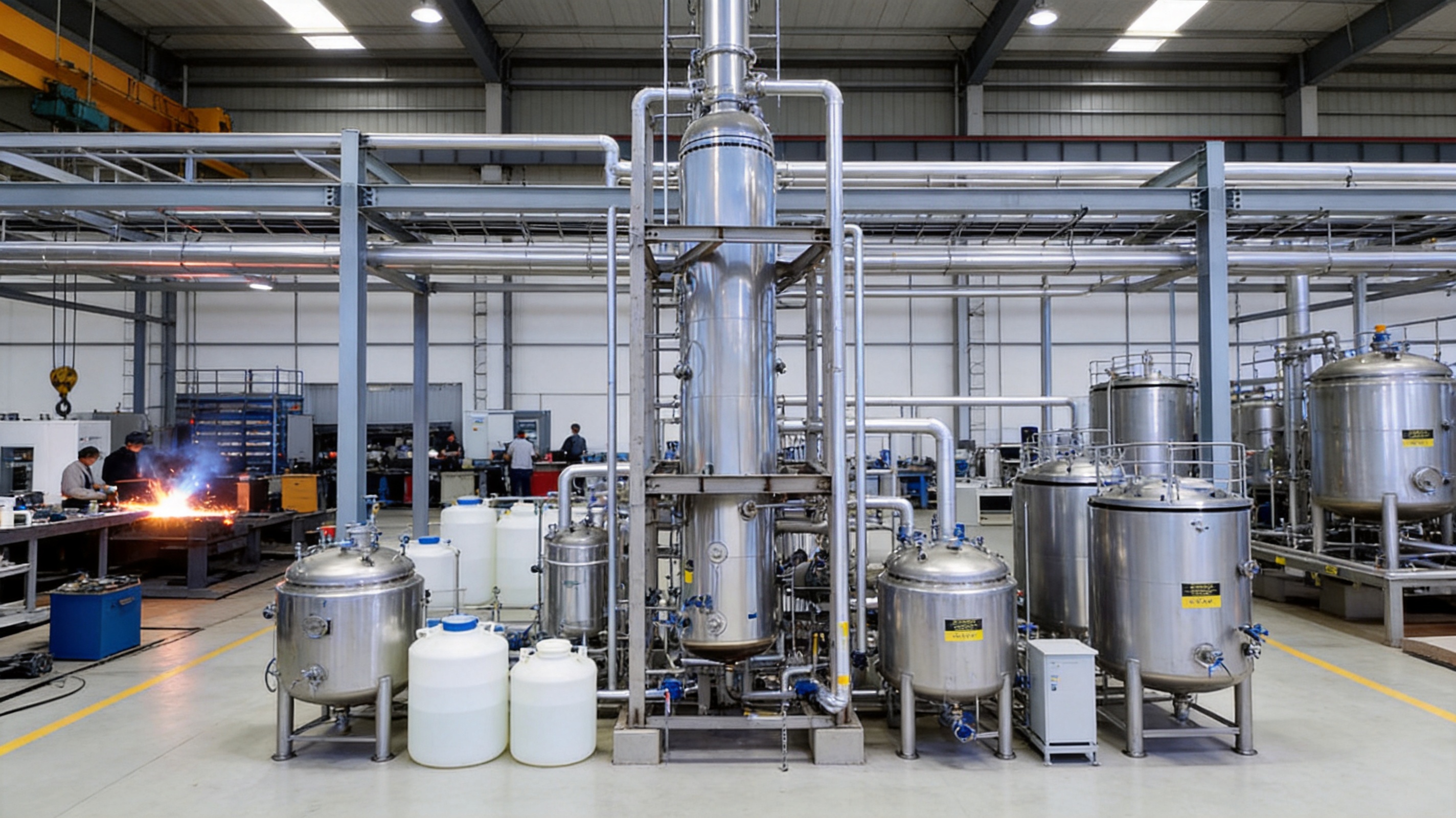
Zhejiang Shuangzi Intelligent Equipment Co., Ltd. operates as a biology and medical equipment enterprise focused on process technology, automation engineering design, equipment manufacturing, matching procurement, installation, system integration, and turnkey project delivery. Its engineering scope includes plant extraction, biological fermentation, pharmaceutical engineering, natural food, energy conservation, and environmental protection.
The company was founded in 2007 and has an operating site with a floor area of approximately 16,706 square meters and a structure area of approximately 17,800 square meters. These facilities support equipment production, engineering coordination, pilot work, and research and development activities.
A significant manufacturing strength is the company’s ability to connect process engineering with equipment fabrication. In a distillation project, this connection helps translate the customer’s production objectives into a practical equipment arrangement. Instead of considering only the column shell, the engineering team can evaluate the complete process, including upstream feed preparation, heating, condensation, cooling, product recovery, residual-liquid discharge, instrumentation, and installation conditions.
6.1 Advanced Welding and Fabrication Equipment
Quality fabrication is essential for stainless steel process equipment. Welding quality influences mechanical integrity, cleanability, corrosion resistance, and the risk of leakage or contamination. The company has introduced advanced welding and finishing equipment, including plasma argon arc welding machines, plasma cutting machines, and computer-aided manufacturing computer numerical control machining centers.
Plasma argon arc welding is suitable for controlled stainless steel fabrication when the process is performed by qualified personnel under appropriate procedures. Stable welding parameters, suitable shielding-gas management, clean preparation, and controlled heat input can help produce consistent joints and reduce defects.
Plasma cutting equipment can support accurate material preparation and improve fabrication efficiency. Accurate cutting contributes to better fit-up, more consistent welding conditions, and improved dimensional control. CNC machining centers can be used to produce precision components and connection parts, supporting repeatability across different equipment assemblies.
Finishing is also important. Process-contact surfaces should be inspected and finished according to the intended application. Smooth and properly treated surfaces are easier to clean and less likely to retain product residue. The exact surface-finish specification should be agreed upon during the technical review.
6.2 Pilot Production and Research Facilities
The company maintains a pilot production workshop and a research and development platform intended to support automation and good manufacturing practice requirements. Pilot capability is valuable because it allows process conditions to be examined before a full-scale production system is finalized.
Distillation performance can be influenced by feed composition, impurities, viscosity, foaming, heat sensitivity, and the desired recovery concentration. Pilot testing can help determine suitable operating temperatures, reflux conditions, feed rates, residence times, condenser duties, and residual-liquid behavior. It can also provide data for scaling from laboratory or pilot production to commercial operation.
For customers developing new botanical extracts, fermentation products, pharmaceutical intermediates, or food ingredients, pilot evaluation can reduce scale-up risk. It provides an opportunity to identify process limitations before the production equipment is installed and commissioned.
6.3 Research and Development Across Multiple Unit Operations
The company’s development activities cover vacuum low-temperature drying, fermentation, extraction, concentration, separation, and related process fields. This breadth is relevant to distillation projects because solvent recovery is frequently one step within a larger process chain.
For example, a plant extraction line may require extraction tanks, solid-liquid separation, solvent recovery, evaporation, concentration, crystallization, filtration, and drying. A fermentation project may require fermenters, sterilization, air handling, separation, evaporation, and wastewater treatment. Understanding the interactions among these operations helps the supplier design a more coherent system.
The company’s mature product areas include vacuum low-temperature drying equipment, fermentation system equipment, evaporation and concentration equipment, extraction equipment, separation and crystallization equipment, filtration equipment, and process containers. This product portfolio supports the development of integrated production lines rather than isolated equipment purchases.
7. Automation and Control Options
Control strategy has a direct effect on product consistency, labor requirements, energy use, and operating safety. The distillation tower can be operated using the condensation self-flow reflux method for simple control. It can also be equipped for PIC automatic control when the process requires more accurate and repeatable operation.
An automatic control system may monitor and regulate temperature, pressure, feed rate, reflux behavior, product withdrawal, heating-medium flow, cooling-medium flow, liquid level, and alarm conditions. The actual instrument list should be developed according to the process hazard analysis and the customer’s automation standard.
Automatic control is especially beneficial when the feed concentration varies or when the target product concentration must remain within a narrow range. It can also support data recording, batch traceability, alarm management, and remote observation. For a smaller or less complex plant, a simpler control arrangement may provide a better balance between investment and operating requirements.
7.1 Process Stability
Stable distillation requires a balanced relationship between feed rate, vapor generation, reflux, condenser duty, and product withdrawal. Sudden changes in any of these variables can cause temperature fluctuations, flooding, weeping, unstable product concentration, or reduced recovery.
A properly selected control system can respond to changes more consistently than manual adjustment alone. It can help maintain the column near its intended operating point and provide protective alarms when temperatures, pressures, or liquid levels move outside the acceptable range.
7.2 Safety Considerations
Alcohols and many other solvents are flammable. Methanol is also toxic, and its vapor must be controlled carefully. A distillation system must therefore be designed with suitable ventilation, leak prevention, grounding and bonding, pressure protection, temperature protection, emergency shutdown provisions, and appropriate electrical equipment.
Safety requirements vary by solvent, location, plant classification, operating pressure, and local regulations. The customer and supplier should jointly review the process safety requirements before final equipment selection. The distillation column should not be treated as a stand-alone item without considering storage tanks, transfer lines, heating utilities, condensate collection, vapor handling, and the surrounding production area.
8. Environmental and Resource-Efficiency Benefits
Solvent recovery can reduce the amount of liquid waste that requires treatment or disposal. It can also reduce the demand for new solvent and support more efficient use of raw materials. These benefits are particularly relevant to extraction, pharmaceutical, chemical, and biological facilities that use solvents in repeated production cycles.
The described operation includes a recovery concentration of approximately 90% to 95% and a stated residual-liquid discharge of no more than 0.19, as provided in the product information. Because the meaning and measurement basis of this residual-liquid value are not further defined in the supplied specification, customers should confirm the exact unit, test method, material basis, and applicable operating conditions during technical discussions.
Environmental performance depends on the complete process, not only the column. Energy consumption is influenced by the feed concentration, reflux ratio, operating pressure, heating-medium temperature, heat recovery, insulation, condenser efficiency, and production schedule. Wastewater and residual streams must also be evaluated according to their composition.
Heat integration may improve efficiency. For example, recovered heat from one process stream may be used to preheat the feed or another utility stream where temperatures and hygienic requirements permit. Insulation of hot surfaces can reduce heat loss and improve operator safety. Proper condenser design can help limit solvent vapor emissions and improve recovery.
9. Project Engineering and Turnkey Capability
For many customers, the main challenge is not purchasing a column but implementing a complete, functional production system. A turnkey or EPC/EPCM-oriented supplier can support the project from process concept through installation and commissioning.
Project services may include process technology selection, material balance development, equipment design, utility estimation, process flow diagrams, general arrangement planning, equipment matching, piping coordination, automation design, fabrication, factory inspection, installation, line debugging, and operator support.
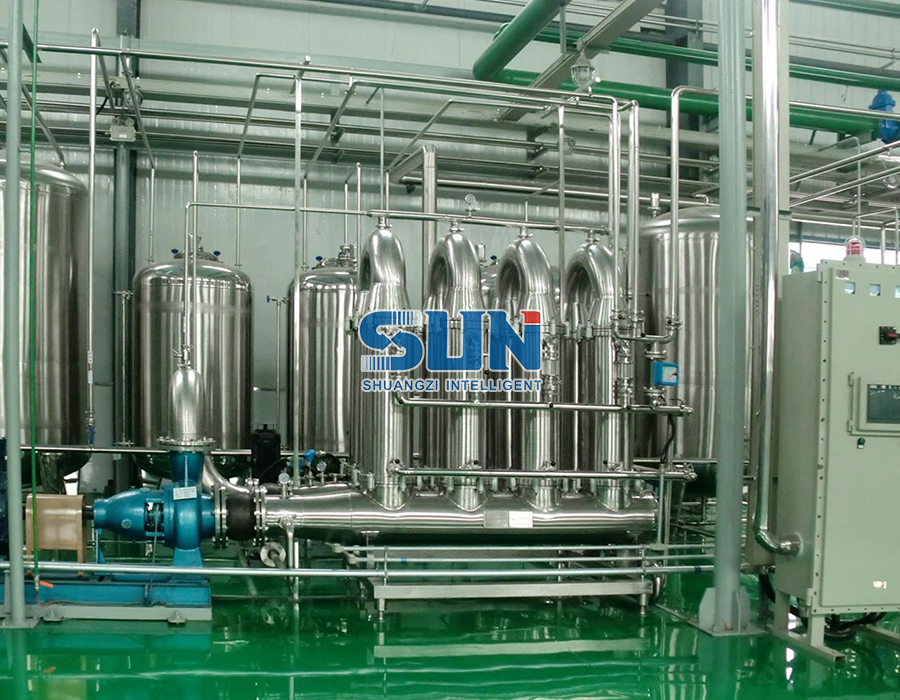
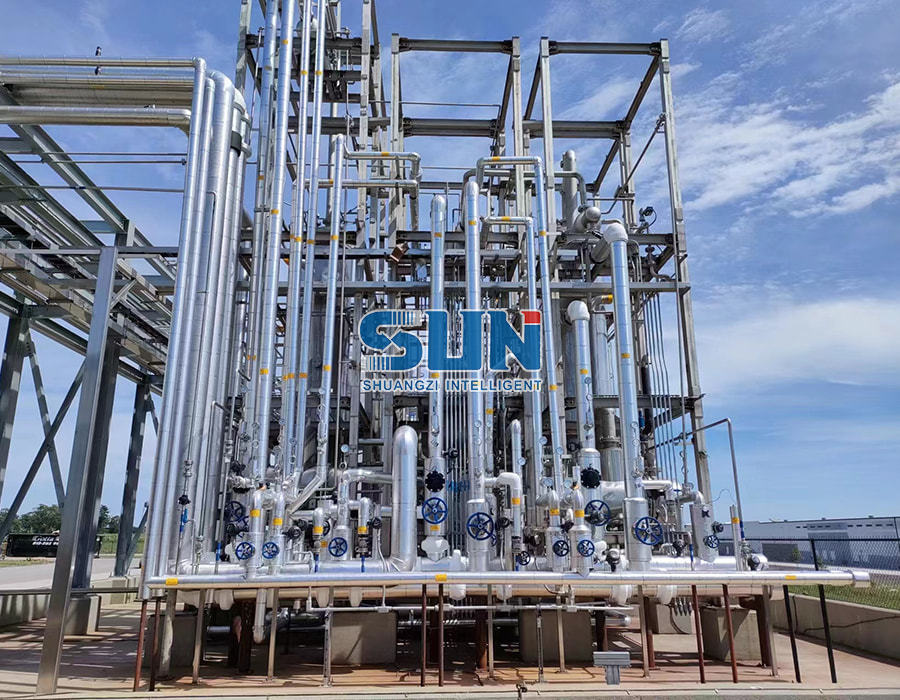
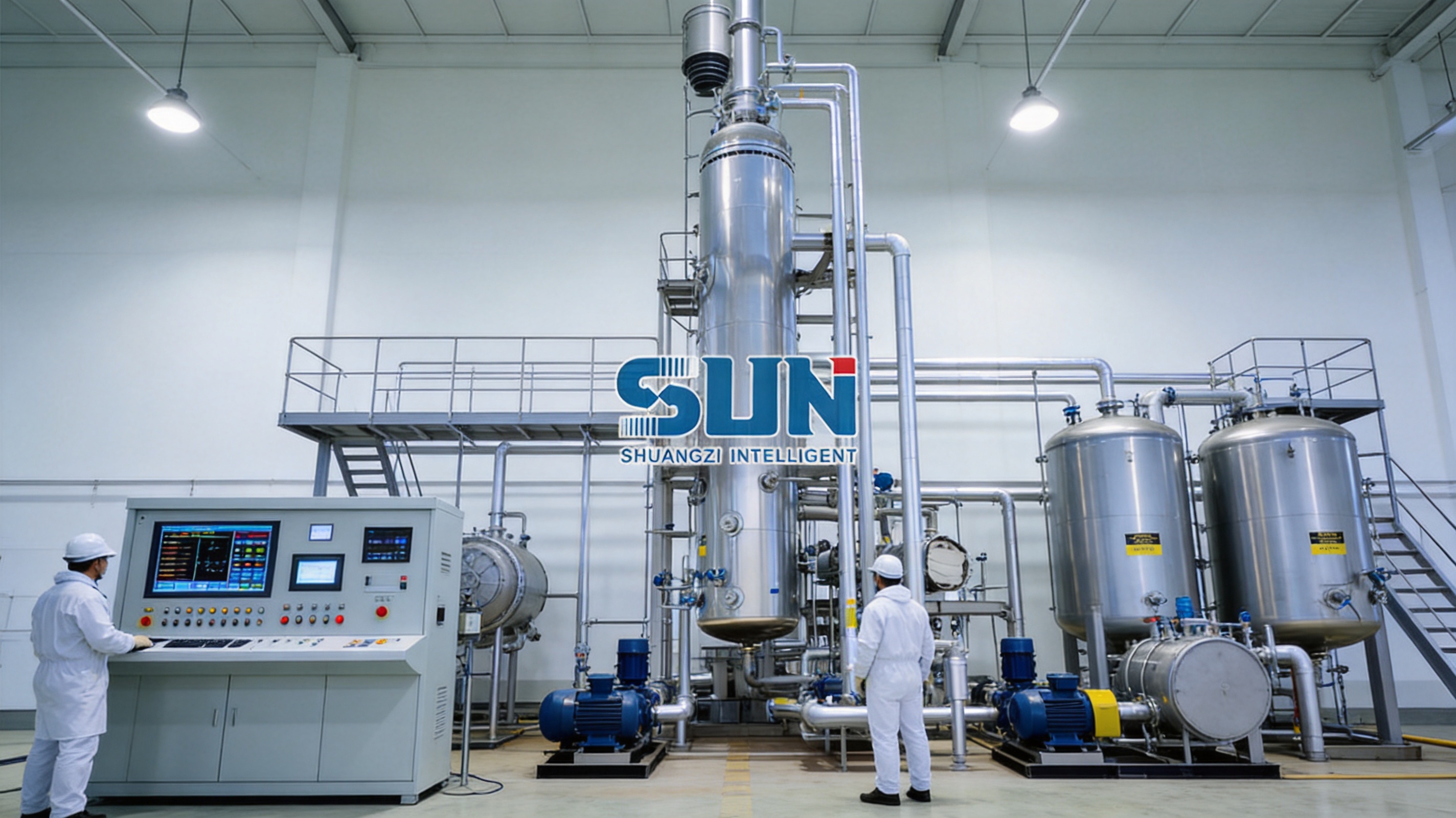
In a complete solvent recovery project, the distillation column may be connected to a feed tank, preheater, reboiler or heating circulation system, packed tower, condenser, cooling system, reflux path, product receiver, residual-liquid receiver, pumps, instruments, control system, and ventilation or vapor-handling equipment. Coordinating these components during the design stage can reduce installation conflicts and improve startup efficiency.
9.1 Installation and Commissioning
Installation quality affects the performance of the completed system. The column must be positioned correctly, supported adequately, connected to the correct utilities, and aligned with the associated tanks and piping. Instrumentation must be calibrated, and the control logic must be tested before production use.
Commissioning typically includes inspection of welds and connections, pressure or leak testing where applicable, flushing, cleaning, instrument verification, utility confirmation, dry runs, water trials, and process trials. Solvent operation should begin only after the required safety checks and operating procedures have been completed.
Line debugging allows the engineering team to observe the interaction of the complete system. It can identify issues such as insufficient cooling flow, unstable feed pumping, unsuitable drain slopes, incorrect valve orientation, control-loop tuning problems, or unexpected foaming. Resolving these matters during commissioning helps establish a more reliable production process.
9.2 Customization
Although standard models provide a useful starting point, distillation projects often require customization. Important design inputs include the solvent type, feed concentration, target product concentration, feed rate, operating mode, required recovery rate, heating medium, cooling medium, operating pressure, available building height, material requirements, cleaning method, automation level, and local compliance standards.
Customization may involve the column diameter, height, packing arrangement, tank volume, condenser area, heat-exchange area, connection standards, platform configuration, instrumentation, insulation, control system, and integration with existing equipment. A technical data sheet should be prepared and approved before manufacturing begins.
10. Selecting the Appropriate Model
Model selection should not be based solely on the nominal recovery-capacity range. The user should first define the feed and product requirements. Key questions include the amount of liquid to be processed per hour or per batch, the initial solvent concentration, the desired final concentration, the composition of nonvolatile components, the allowable residual liquid, and the expected operating schedule.
For a facility with modest or variable production, the JH-200 or JH-300 model may provide an appropriate starting point, depending on the actual process conditions. For medium-scale solvent recovery, the JH-400 or JH-500 models may be considered. Higher-throughput operations may require the JH-600 or JH-800 models.
These model associations are preliminary and should not replace engineering calculations. A column that appears adequate by mass flow may be unsuitable if the feed has a high water content, high viscosity, strong foaming tendency, or a difficult separation. Conversely, a larger model may not deliver the expected result if the condenser, heating system, or cooling utilities are undersized.
The column should be selected as part of a balanced system. Heating duty must match the required vapor load. Condensation area must match the overhead vapor rate. Cooling area must be adequate for the available cooling conditions. Tanks and pumps must be sized to avoid interrupting the column. Control instruments must be located where they can provide meaningful process information.
11. Operation and Maintenance Principles
Reliable operation begins with a documented operating procedure. Operators should understand the startup sequence, feed introduction, heating ramp, reflux establishment, product collection, shutdown sequence, cleaning requirements, and emergency response procedure.
Before startup, the operator should confirm that valves are in the correct positions, tanks have sufficient capacity, cooling is available, instruments are functional, and the system is free from visible leakage. Heating should be introduced gradually to avoid sudden vapor surges and unstable column conditions.
During operation, temperature and pressure should be observed at key locations. Changes in overhead temperature may indicate a change in composition, reflux condition, vapor load, or condenser performance. Changes in differential pressure may indicate packing flooding, blockage, fouling, or excessive vapor flow.
Maintenance should include inspection of gaskets, valves, pumps, instruments, heating surfaces, condenser tubes or plates, liquid distributors, packing supports, and safety devices. The frequency depends on operating hours, solvent characteristics, cleaning chemicals, and the presence of solids or corrosive contaminants.
11.1 Cleaning
Cleaning requirements vary by industry. Pharmaceutical and food applications may require validated cleaning procedures, while chemical plants may use a procedure based on solvent compatibility and residue characteristics. The system should be drained effectively, and dead legs or areas where material can accumulate should be minimized during design.
Cleaning agents must be compatible with the stainless steel grade, gaskets, seals, instruments, and any special internal surfaces. Excessive temperature, aggressive chemicals, or improper concentration can damage components even when the main vessel material is resistant.
11.2 Packing Inspection
The packing provides the primary vapor-liquid contact surface. It should be checked for fouling, deformation, blockage, corrosion, or poor liquid distribution. If packing becomes contaminated, column performance may decline, pressure drop may increase, and the product concentration may become unstable.
Inspection access should be considered during the design stage. A system that is difficult to open or inspect may incur higher maintenance costs over its service life. Suitable access points, lifting provisions, and safe platforms can improve maintenance efficiency.
12. Why Process Experience Matters
A distillation column operates within a process environment. Its performance is affected by the material entering the column, the utilities available to it, the downstream collection system, and the operating discipline of the plant. Therefore, the supplier’s broader process experience can be as important as the hardware itself.
A company experienced in extraction, fermentation, evaporation, concentration, separation, crystallization, filtration, and drying can better understand how the distillation step interacts with upstream and downstream operations. This is useful when the project involves a new production line, a capacity expansion, or the replacement of an outdated recovery system.
Process knowledge also helps identify opportunities for improvement. Feed preheating, heat recovery, improved filtration, better solids removal, optimized reflux, and improved automation may each contribute to better total-system performance. A column should be evaluated according to its contribution to the entire production objective.
13. Technical Information Customers Should Prepare
To receive an accurate recommendation, customers should prepare a process information package. The package should identify the feed material, solvent composition, concentration range, flow rate, temperature, viscosity, suspended solids, corrosive components, and potential foaming behavior.
The customer should also define the required product concentration, expected recovery capacity, acceptable residual composition, operating mode, production hours, batch size if applicable, and desired level of automation. Utility information should include heating-medium type and pressure, cooling-medium temperature and flow, electrical standards, compressed air availability, and plant drainage conditions.
For pharmaceutical, food, and biological applications, the technical package should include hygienic requirements, cleaning procedures, validation expectations, surface-finish requirements, documentation needs, and applicable regulatory standards. For flammable or toxic solvents, the safety information should include flash point, vapor characteristics, occupational exposure requirements, hazardous-area classification, and emergency response expectations.
With this information, the engineering team can determine whether the standard JH model range is suitable or whether a customized configuration is necessary. It can also help establish realistic performance expectations and avoid selecting equipment based on incomplete data.
14. Frequently Asked Questions
14.1 What materials can be processed in the distillation column?
The column is suitable for alcohol and other solvents such as methanol, subject to confirmation of material compatibility and safety requirements. The exact solvent, concentration, impurities, temperature, and operating pressure must be reviewed before final design approval.
14.2 Can approximately 30% alcohol be concentrated to 90%–95%?
The product information indicates that approximately 30% dilute alcohol can be distilled to approximately 90%–95% alcohol under suitable operating conditions. The actual result depends on the feed composition, reflux ratio, heating and cooling conditions, column configuration, and product-quality requirements.
14.3 Does a higher reflux ratio always improve production?
A higher reflux ratio generally improves separation and can help achieve a higher alcohol concentration. However, it also increases internal circulation and energy demand. Because more condensate is returned to the column, the quantity of product withdrawn per unit of time may decrease. The optimum reflux ratio is therefore a balance between purity, recovery, energy consumption, and capacity.
14.4 Is the equipment continuous or batch-operated?
Both continuous and intermittent distillation tower configurations are available. Continuous operation is suitable for stable, repetitive production, while batch operation is useful for variable feedstocks, campaign production, pilot manufacturing, and multipurpose facilities.
14.5 What is the advantage of stainless steel packing?
Stainless steel packing provides a large vapor-liquid contact area, mechanical durability, corrosion resistance, and suitability for many hygienic process environments. It can improve mass-transfer performance compared with an empty vessel, although the final separation result depends on the complete column design and operating conditions.
14.6 What heating methods are available?
The distillation tower can use external circulation or internal circulation heating. The best method depends on heat duty, process material, fouling risk, layout, maintenance preferences, and available utilities.
14.7 How does self-flow reflux work?
After overhead vapor is condensed, the liquid condensate can return to the column through a self-flow or gravity-flow arrangement. This simplifies the basic reflux circuit. The layout must provide suitable elevation and hydraulic conditions. Automatic reflux control can be added when the process requires more precise regulation.
14.8 Can the column be automatically controlled?
Yes. In addition to the straightforward condensation self-flow reflux method, the system can be configured for PIC automatic control. The final automation scope may include temperature, pressure, level, feed, heating, cooling, reflux, product withdrawal, alarms, and data recording.
14.9 What industries use this equipment?
Typical application industries include pharmaceuticals, chemicals, food, biotechnology, fermentation, plant extraction, natural products, and related process manufacturing sectors.
14.10 How should the recovery capacity be interpreted?
The listed recovery capacity is an indicative range for each model. It should be evaluated together with feed concentration, solvent type, product purity, reflux ratio, heating duty, cooling conditions, and operating pressure. A process-specific calculation or trial may be required for final confirmation.
14.11 Can the supplier provide a complete production line?
The company provides engineering services that may include process design, equipment design, matching purchases, installation, line debugging, system integration, and turnkey project support. The exact scope should be defined in the project proposal and technical contract.
14.12 What information is needed for a quotation?
Important information includes the feed composition, solvent type, feed rate, concentration, target product concentration, batch or continuous operation, heating and cooling utilities, material requirements, automation level, site limitations, safety classification, cleaning requirements, and required delivery scope.
15. Conclusion
A well-designed distillation column can provide substantial value in solvent recovery, alcohol concentration, process purification, and liquid separation. The equipment discussed here combines efficient metal stainless steel packing, stainless steel solvent-contact construction, multiple model capacities, continuous or intermittent operation, external or internal circulation heating, condensation self-flow reflux, and optional automatic control.
Its stated recovery range of approximately 90% to 95% makes it suitable for many alcohol and solvent recovery duties, including the concentration of dilute alcohol feeds. The model range extends from approximately 45–50 kg/h to 600–620 kg/h of stated recovery capacity, allowing the equipment to serve pilot, medium-scale, and higher-throughput production requirements.
The principal advantage is not limited to the column itself. Zhejiang Shuangzi Intelligent Equipment Co., Ltd. combines process development, equipment manufacturing, automation engineering, installation, system integration, and turnkey project capability. Its production facilities, pilot workshop, research platform, and advanced welding, cutting, machining, and finishing equipment support the development of practical process systems for pharmaceutical, chemical, food, biological, fermentation, and plant-extraction applications.
For the best result, each project should begin with a detailed review of the material properties, production objectives, utilities, safety conditions, cleaning requirements, and regulatory expectations. When the column is correctly matched with its heating, cooling, reflux, control, and collection systems, it can support stable operation, improved solvent utilization, reduced waste, and dependable long-term production performance.
References
1. Perry’s Chemical Engineers’ Handbook, sections concerning distillation, vapor-liquid equilibrium, packed columns, heat transfer, and process design.
2. McCabe, W. L., Smith, J. C., and Harriott, P. Unit Operations of Chemical Engineering, chapters on distillation and mass transfer.
3. Coulson and Richardson’s Chemical Engineering, volume covering separation processes and process equipment design.
4. General principles of good manufacturing practice for pharmaceutical production equipment and hygienic process systems.
5. General engineering guidance for solvent handling, flammable-liquid processing, ventilation, grounding, and process safety management.
6. Manufacturer-supplied technical information for the JH-series distillation column models, including tower volume, height, tank volume, heat-transfer areas, and recovery-capacity ranges.