
 英语
英语 俄语
俄语Content
- 1 Understanding the Role of Three Effect Falling Film Evaporation
- 2 Core Product Description
- 3 Major Technical Advantages
- 4 Representative Technical Parameters
- 5 How the Equipment Works
- 6 Applications Across Multiple Industries
- 7 Advantages Over Common Competing Solutions
- 8 Manufacturing Strengths Behind the Equipment
- 9 Design Considerations for Different Materials
- 10 Operational Efficiency and Cost Benefits
- 11 Quality, Safety, and Reliability
- 12 Why Choose This Equipment for Modern Production Lines
- 13 Q&A Section
- 13.1 What is a three effect falling film evaporator?
- 13.2 What materials can this equipment concentrate?
- 13.3 Why is it more energy-efficient than a single-effect evaporator?
- 13.4 Is the equipment suitable for heat-sensitive products?
- 13.5 What outlet concentration can be achieved?
- 13.6 What capacities are available?
- 13.7 How does falling film technology protect product quality?
- 13.8 Can the system be integrated into a complete production line?
- 13.9 What makes the manufacturer’s production capability strong?
- 13.10 How should a customer select the right model?
- 14 Conclusion
- 15 References
- 16 Product: Energy-Efficient Three Effect Falling Film Evaporator Concentration Equipment
In modern food processing, pharmaceutical production, plant extraction, biological fermentation, chemical engineering, and environmental treatment, concentration is one of the most important unit operations. The purpose is simple in theory: remove water from a liquid material and increase its solids content. In practice, however, concentration is technically demanding because valuable materials are often heat-sensitive, viscous, easily foaming, prone to scaling, or vulnerable to quality loss during prolonged heating. The Energy-Efficient Three Effect Falling Film Evaporator Concentration Equipment is designed to solve these challenges through multi-effect evaporation, low-temperature operation, short residence time, and highly efficient heat transfer.
This equipment is a professional evaporation and concentration system that uses three evaporators connected in series. The secondary vapor generated in one effect is reused as the heating source for the next effect, allowing the system to greatly reduce fresh steam consumption compared with single-effect evaporation. The result is a concentration solution that is energy-saving, stable, adaptable, and suitable for a wide range of applications including traditional Chinese medicine extracts, botanical extracts, fruit juice, dairy products, bone broth, fermented liquids, aqueous pharmaceutical solutions, and industrial wastewater.
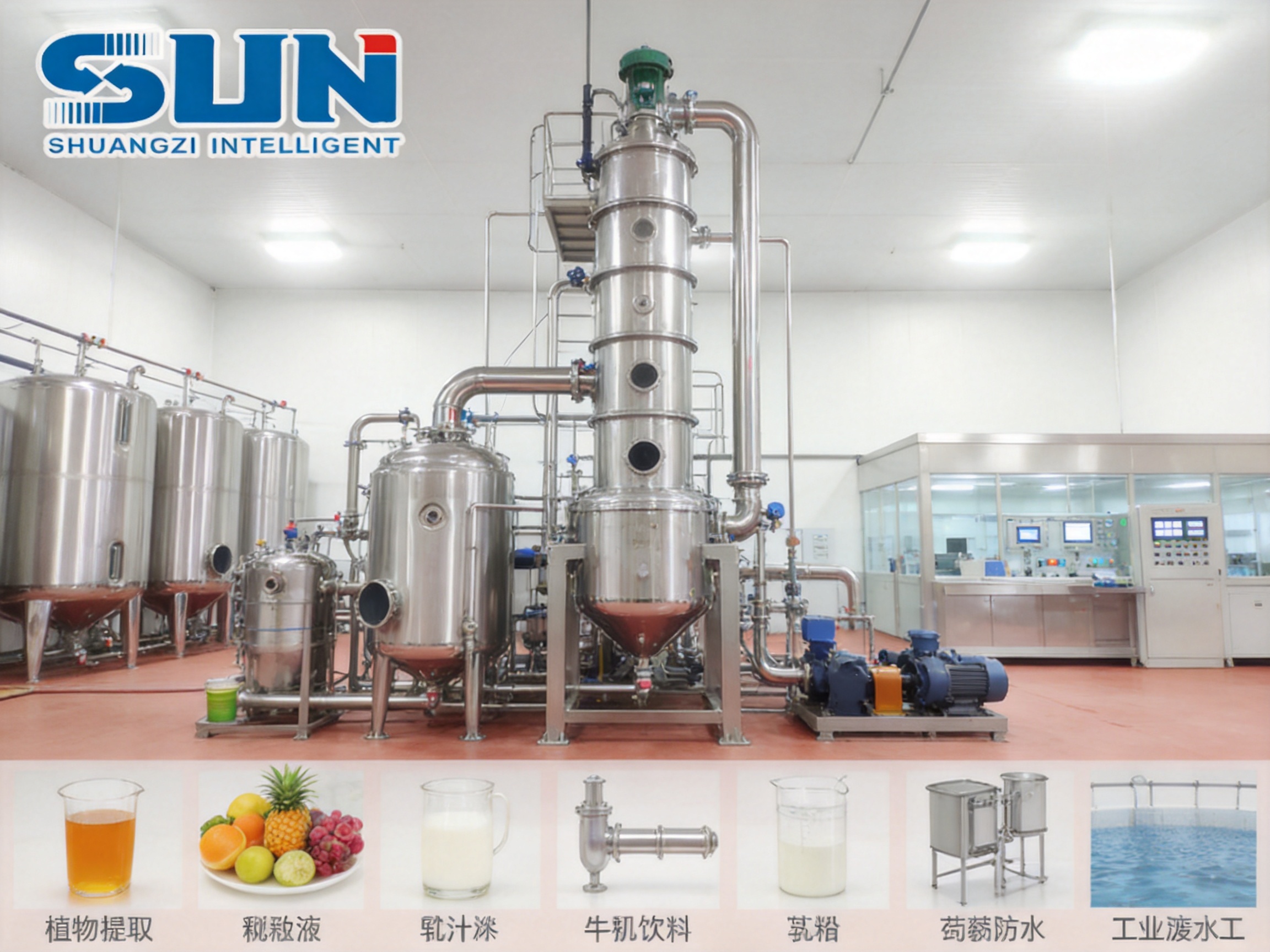
Zhejiang Shuangzi Intelligent Equipment Co., Ltd. provides this three effect falling film evaporator as part of its mature portfolio of evaporation, concentration, extraction, fermentation, drying, filtration, crystallization, and turnkey processing systems. The company combines process engineering, equipment manufacturing, automation design, installation, commissioning, and system integration capabilities, enabling customers to obtain a complete solution rather than only a single machine.
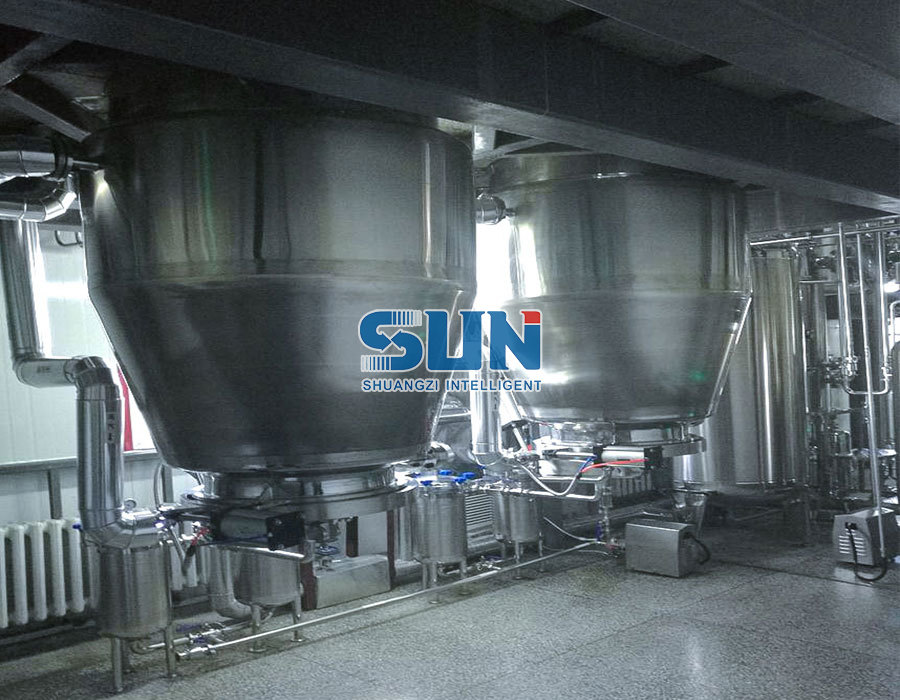
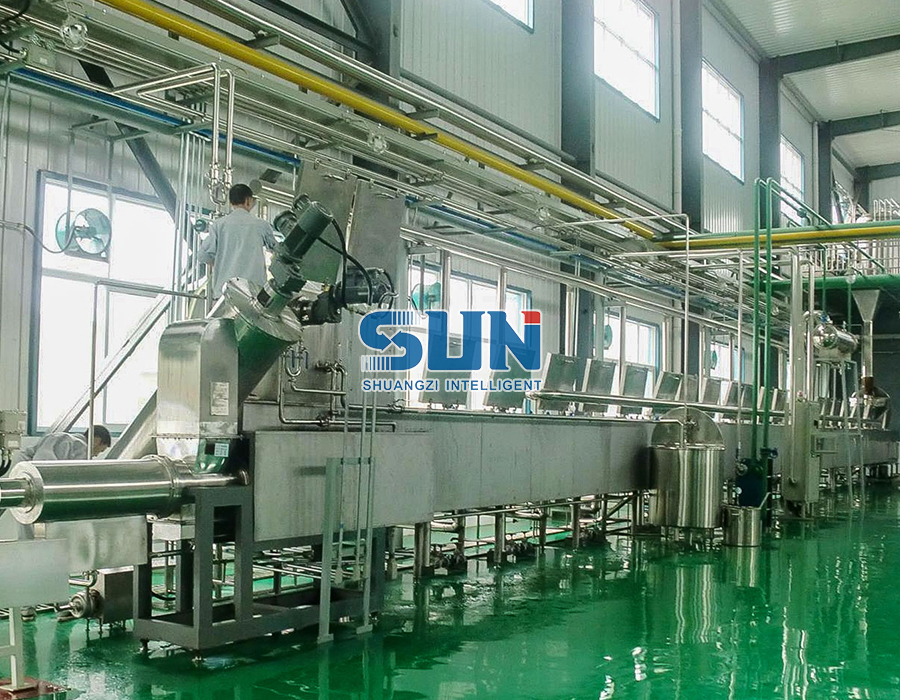
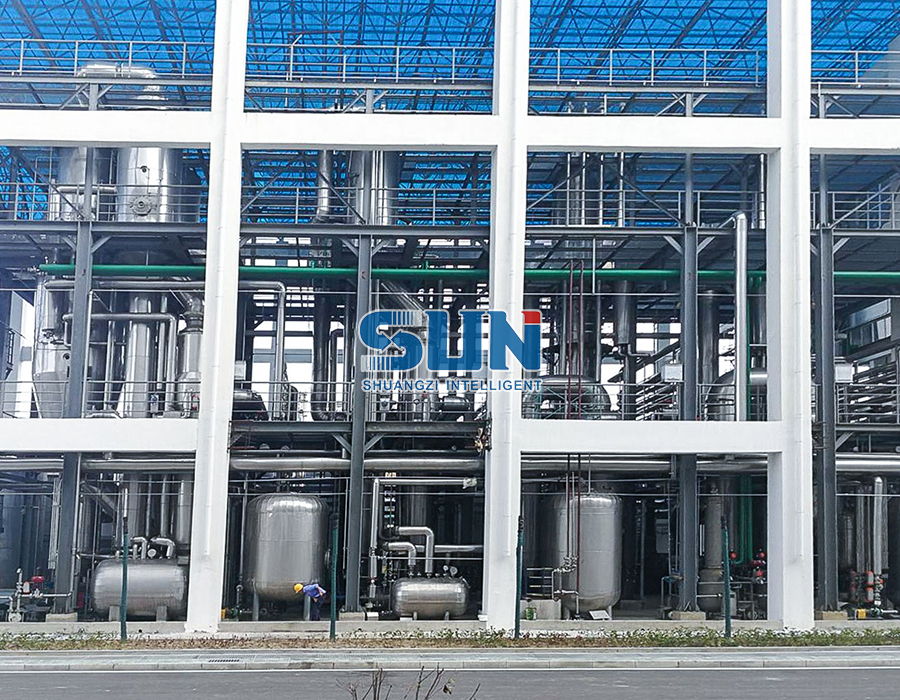
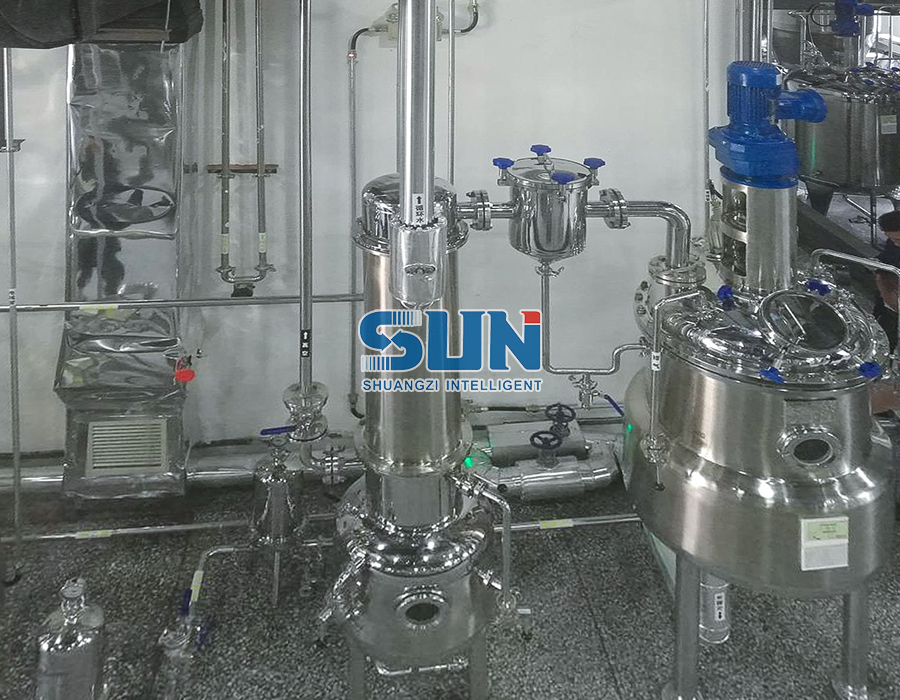
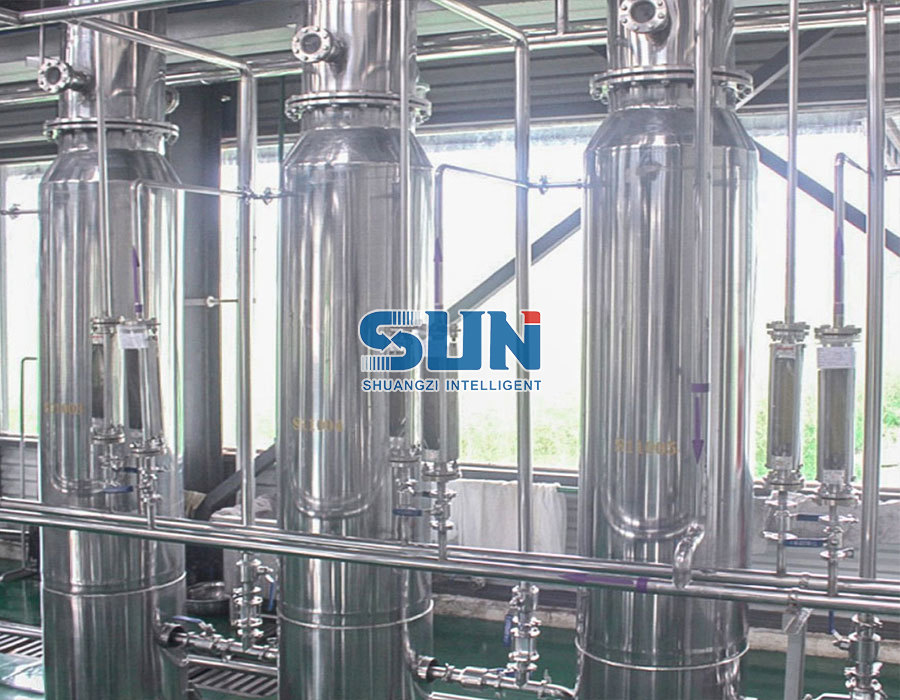
Energy-Efficient Three Effect Falling Film Evaporator Concentration Equipment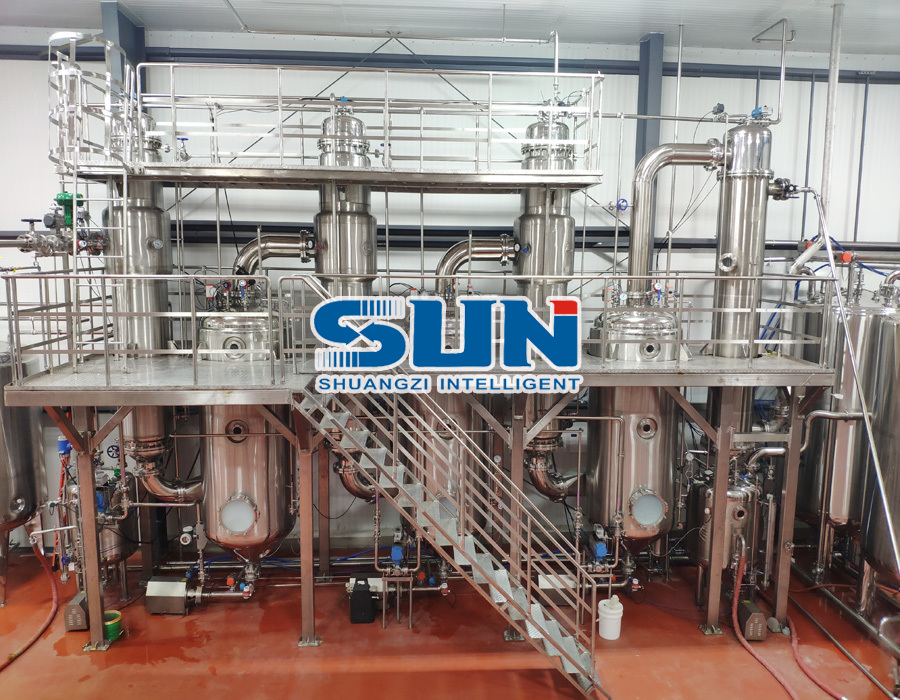
Understanding the Role of Three Effect Falling Film Evaporation
Evaporation is widely used when water must be removed from a liquid feed. A conventional single-effect evaporator uses fresh steam to heat the material and generate vapor. While this approach is simple, it consumes a large amount of steam and exposes the material to a relatively high thermal load. For manufacturers facing increasing energy costs, strict product quality requirements, and environmental pressure, single-effect evaporation is often no longer the optimal choice.
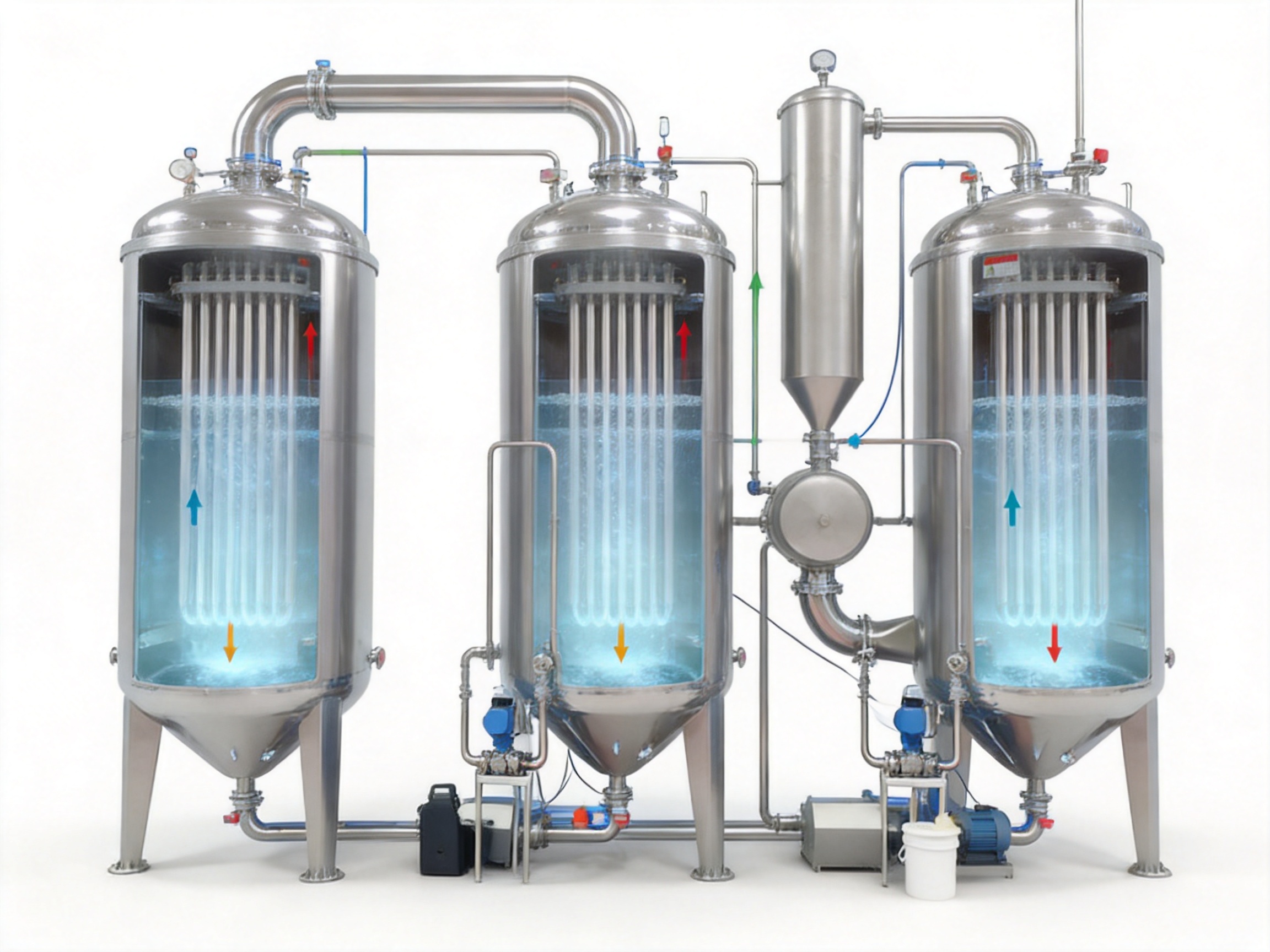
A three effect falling film evaporator improves the process by dividing evaporation into three sequential stages, also called effects. In the first effect, fresh steam heats the material. The water vapor evaporated from the material becomes secondary steam. Instead of being wasted, this secondary steam is transferred to the second effect as its heating source. The vapor produced in the second effect is then used to heat the third effect. In this way, the latent heat of vaporization is reused multiple times, resulting in a significant energy-saving effect.
The falling film design further increases performance. Liquid material enters the top of the heating tubes and is distributed evenly. Gravity causes the liquid to flow downward as a thin film along the inner wall of the tubes. Because the material layer is thin, heat transfer is rapid and uniform. The residence time is short, which helps prevent thermal degradation, coking, and fouling. The generated vapor flows with the liquid film and is separated efficiently in the evaporation chamber.
Compared with traditional circulation evaporators or kettle-type concentration systems, falling film evaporation is especially suitable for heat-sensitive products. It enables concentration under vacuum and at lower boiling temperatures, helping maintain color, flavor, aroma, nutritional components, biological activity, and active pharmaceutical ingredients.
Core Product Description
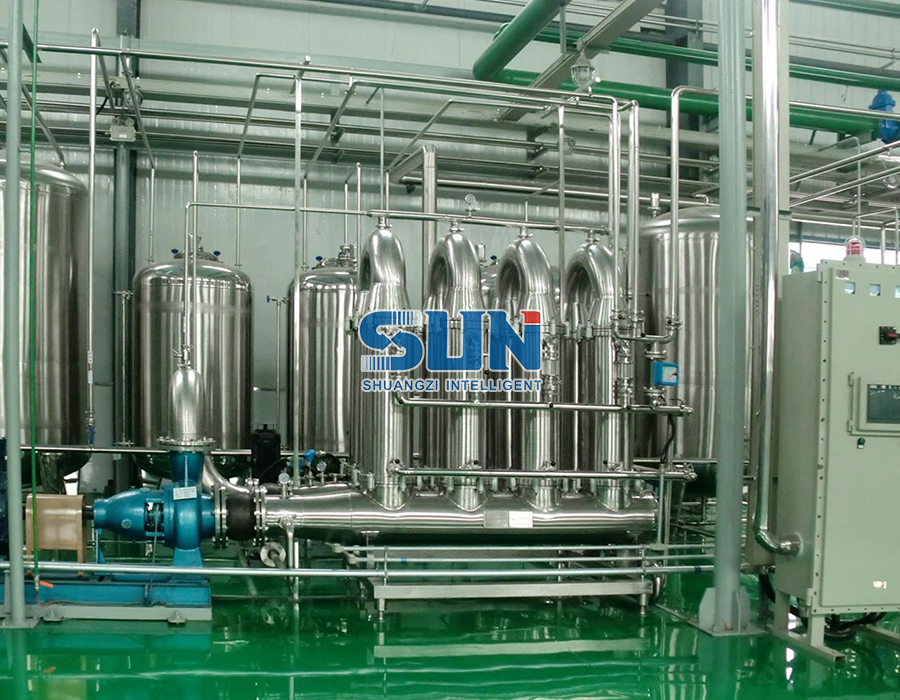
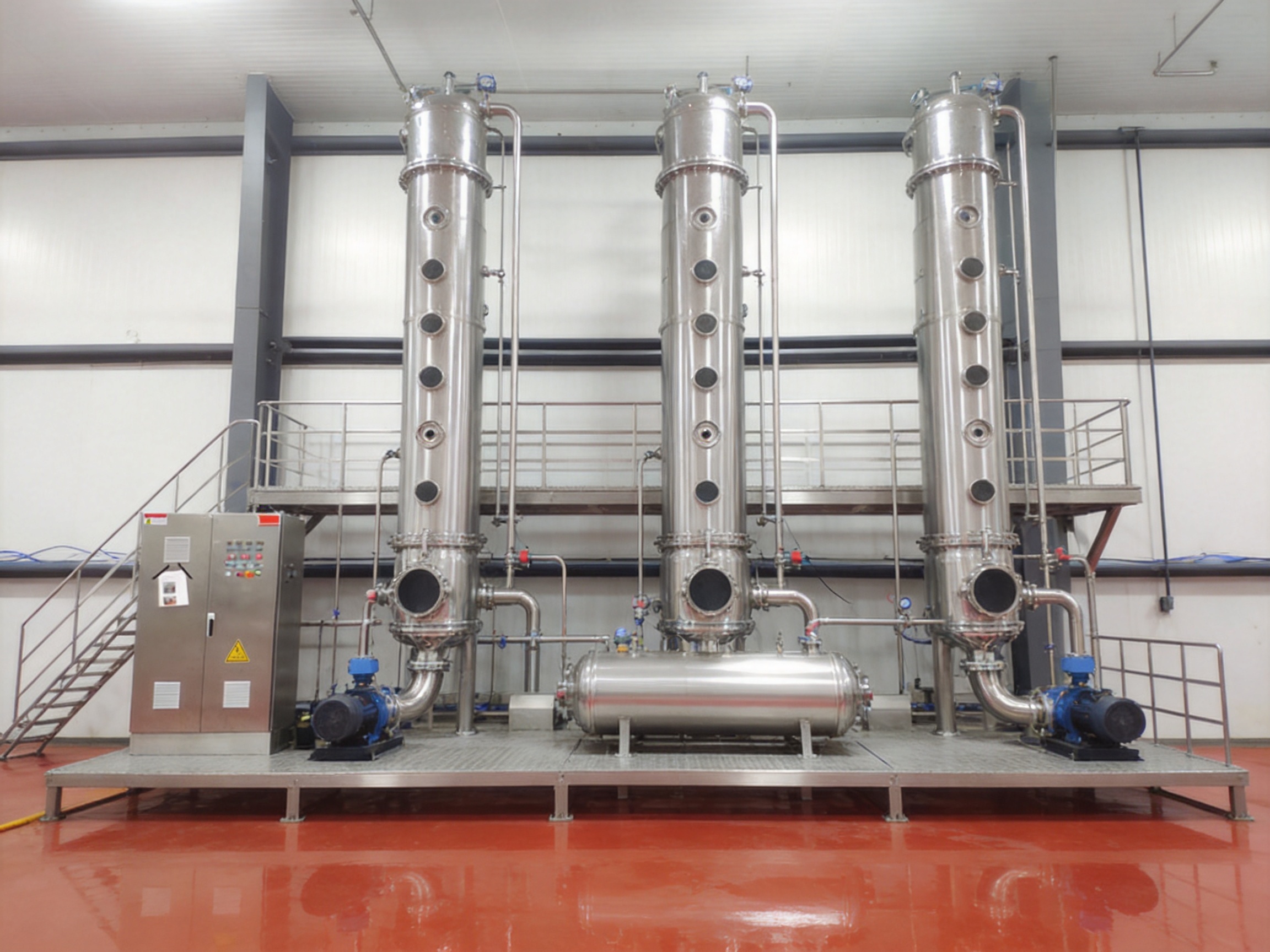
The Energy-Efficient Three Effect Falling Film Evaporator Concentration Equipment is an integrated system for dehydration and concentration of aqueous solutions. Its core structure includes three evaporation effects, heating tubes, separation chambers, material feeding and discharge systems, vacuum system, condenser, pumps, steam pipeline, cooling water system, control cabinet, instrumentation, and automation modules. Depending on the project, the system can be customized for different material characteristics, capacity requirements, concentration targets, cleaning requirements, and site conditions.
The equipment is designed for stable industrial operation. Material enters the first effect or a designated effect according to the process arrangement. In each effect, the material forms a thin falling film and is heated by steam outside the tubes. Water evaporates quickly, and the concentrated material continues to the next stage. By the time the material leaves the final effect, the solids content has increased substantially. The system can typically process feed concentrations around 11.5 percent to 12 percent and produce outlet concentrations around 45 percent to 48 percent, depending on the material and customer requirements.
For higher concentration ratios, the process parameters can be adjusted. In many applications, the concentration ratio can reach 10:1 or higher. This means that a large volume of water can be removed efficiently while producing a concentrated product suitable for downstream drying, crystallization, blending, storage, transportation, or packaging.
Major Technical Advantages
Energy Savings Through Multi-Effect Heat Reuse
The most significant advantage of the three effect falling film evaporator is its energy efficiency. In a single-effect system, fresh steam is used once and then discharged or condensed. In the three effect system, the steam energy is cascaded through three stages. Only the first effect requires primary fresh steam, while the second and third effects use secondary vapor generated from the previous stages.
This multi-effect principle can reduce steam consumption by more than 60 percent compared with a single-effect evaporator. For large-scale production lines, this reduction translates into substantial operating cost savings. Because steam cost is often one of the largest components of evaporation expenses, the equipment provides long-term economic value for factories with continuous or frequent concentration operations.
Low-Temperature Concentration for Heat-Sensitive Materials
Many food, pharmaceutical, biological, and plant extraction materials contain components that are sensitive to heat. Prolonged exposure to high temperature may cause loss of aroma, browning, oxidation, protein denaturation, destruction of active ingredients, or reduced efficacy. The three effect falling film evaporator operates under vacuum conditions and uses a temperature gradient across the effects. Typical evaporation temperatures can be approximately 70 degrees Celsius in the first effect, 57 degrees Celsius in the second effect, and 45 degrees Celsius in the third effect, with design flexibility according to customer needs.
This low-temperature evaporation environment protects valuable product characteristics. For botanical extracts, it helps preserve active compounds. For fruit juice, it helps retain color and flavor. For dairy materials, it reduces the risk of heat damage. For pharmaceutical intermediates and biological fermentation liquids, it supports more controlled and reproducible concentration.
Short Residence Time and Better Product Quality
In falling film evaporation, the material flows rapidly downward as a thin film. The short residence time means that each portion of material is exposed to heat only briefly. This is a major advantage over forced circulation or batch concentration systems, where material may circulate repeatedly and remain hot for a longer period.
Short residence time reduces the risk of product degradation, coking, fouling, and undesirable chemical reactions. It also helps maintain a more consistent product quality batch after batch. For customers producing high-value extracts, nutritional products, natural foods, or pharmaceutical liquids, product consistency is just as important as capacity.
High Heat Transfer Efficiency
The thin film flow creates a large heat transfer area relative to the volume of material in contact with the heating surface. Because the film is thin, heat penetrates rapidly, and evaporation occurs efficiently. This high heat transfer efficiency allows the equipment to handle large evaporation capacities while maintaining compact and practical system dimensions.
The equipment series includes models with evaporation capacities ranging from 1200 kg/h to 7000 kg/h. This makes it suitable for pilot-scale expansion, medium industrial production, and larger commercial manufacturing lines. Customized designs can also be developed based on project-specific needs.
Resistance to Scaling and Coking
Scaling and coking are common problems in evaporation equipment, especially when processing materials with sugars, proteins, salts, suspended solids, or sticky extract components. The falling film design reduces stagnation and limits local overheating. Because material does not stay on the heating surface for long, the chance of deposits forming is reduced.
In addition, process parameters such as flow rate, vacuum level, heating temperature, distribution method, and cleaning cycles can be optimized according to the material. This adaptability helps extend production time between cleaning operations and supports more stable operation.
Flexible Process Adaptability
Different materials behave differently during evaporation. Some are low-viscosity and easy to concentrate, while others become thick as solids increase. Some foam easily, some crystallize, and some contain components that stick to surfaces. The three effect falling film evaporator can be designed with suitable material distribution devices, vapor-liquid separation structures, pumps, control instruments, and cleaning systems to match these requirements.
The system can be configured for different inlet concentrations, outlet concentrations, evaporation temperatures, steam pressures, cooling water conditions, and automation levels. This flexibility is essential for manufacturers that process multiple products or frequently develop new formulations.
Representative Technical Parameters
The following table summarizes representative models and key parameters. Actual configurations can be customized according to material properties, capacity requirements, plant layout, process temperature, concentration target, and automation requirements.
Item |
SJM3-1200 |
SJM3-3200 |
SJM3-4800 |
SJM3-5400 |
SJM3-6300 |
SJM3-7000 |
Evaporation Capacity |
1200 kg/h |
3200 kg/h |
4800 kg/h |
5400 kg/h |
6300 kg/h |
7000 kg/h |
Product Inlet Concentration |
11.5 percent to 12 percent, made to order |
11.5 percent to 12 percent, made to order |
11.5 percent to 12 percent, made to order |
11.5 percent to 12 percent, made to order |
11.5 percent to 12 percent, made to order |
11.5 percent to 12 percent, made to order |
Product Outlet Concentration |
45 percent to 48 percent, made to order |
45 percent to 48 percent, made to order |
45 percent to 48 percent, made to order |
45 percent to 48 percent, made to order |
45 percent to 48 percent, made to order |
45 percent to 48 percent, made to order |
Steam Pressure |
0.6 MPa to 0.8 MPa |
0.6 MPa to 0.8 MPa |
0.6 MPa to 0.8 MPa |
0.6 MPa to 0.8 MPa |
0.6 MPa to 0.8 MPa |
0.6 MPa to 0.8 MPa |
Steam Consumption |
800 kg/h |
1200 kg/h |
1600 kg/h |
1790 kg/h |
2060 kg/h |
2200 kg/h |
Typical Evaporation Temperature |
First effect 70 degrees Celsius; second effect 57 degrees Celsius; third effect 45 degrees Celsius |
Customizable |
Customizable |
Customizable |
Customizable |
Customizable |
Total Electric Power |
28.5 kW |
32.5 kW |
32.5 kW |
44 kW |
44 kW |
46 kW |
Approximate Dimensions |
7.3 m by 2.5 m by 9 m |
7.3 m by 2.5 m by 10 m |
7.3 m by 2.5 m by 12.3 m |
7.3 m by 2.5 m by 13.3 m |
7.6 m by 2.6 m by 15.3 m |
7.6 m by 2.6 m by 16 m |
How the Equipment Works
Material Feeding and Distribution
The process begins when liquid feed is pumped into the evaporator system. A well-designed distribution device ensures that the material is evenly spread into the heating tubes. Uniform distribution is essential because it prevents dry spots, uneven heating, localized fouling, and unstable concentration. In falling film evaporation, distribution quality directly affects heat transfer efficiency and product quality.
When the liquid enters the top of the tubes, it flows downward under gravity. The vapor generated during evaporation also influences the flow pattern. The design goal is to maintain a continuous and stable thin film on the tube wall, ensuring that the material receives sufficient heat while passing through quickly.
First Effect Evaporation
The first effect is heated by fresh steam. The steam condenses outside the heating tubes, releasing latent heat through the tube wall into the falling film. As the material absorbs heat, part of its water content vaporizes. The vapor and concentrated liquid move toward the separator, where vapor-liquid separation occurs. The concentrated liquid then moves to the next stage according to the process design.
The vapor generated in the first effect is not wasted. It is directed to the second effect, where it becomes the heating medium. This is the key mechanism behind multi-effect energy savings.
Second Effect Evaporation
Because the second effect operates at a lower pressure, the material can boil at a lower temperature. The secondary vapor from the first effect provides sufficient heat for evaporation in the second effect. The material continues to lose water and increase in concentration. Again, the vapor generated in this stage is separated and reused as the heat source for the third effect.
The lower temperature in the second effect provides additional protection for heat-sensitive components. It also makes the system more efficient by using heat that would otherwise be condensed and discarded.
Third Effect Evaporation
The third effect typically operates at the lowest temperature among the three effects. It receives secondary vapor from the second effect as its heating source. At this stage, the material reaches the target outlet concentration. The final concentrated liquid is discharged through the product outlet and can proceed to storage, drying, blending, filtration, crystallization, or packaging.
The vapor generated in the third effect is normally condensed through the condenser system. Non-condensable gases are removed by the vacuum system to maintain stable pressure and boiling conditions.
Condensation, Vacuum, and Control
The condenser and vacuum system are important for maintaining low-temperature evaporation. By reducing pressure inside the effects, the boiling point of water is lowered. This allows concentration at temperatures significantly below atmospheric boiling conditions. Stable vacuum control also improves process consistency and energy efficiency.
The control system monitors and adjusts critical parameters such as temperature, pressure, flow rate, level, steam supply, vacuum degree, and pump operation. Depending on customer requirements, the system can be equipped with manual, semi-automatic, or automatic control functions. Advanced automation reduces operator workload and improves repeatability.
Applications Across Multiple Industries
Plant Extraction and Traditional Medicine
Plant extracts often contain alkaloids, flavonoids, polysaccharides, essential components, pigments, glycosides, and other heat-sensitive compounds. During concentration, excessive temperature or long heating time may reduce activity or change product characteristics. The three effect falling film evaporator is well suited for concentrating herbal extracts and botanical solutions because it provides low-temperature operation, short residence time, and efficient evaporation.
For traditional medicine extract production, concentration is often a key step between extraction and drying. The evaporator increases solids content before spray drying, vacuum drying, or other downstream processes. By reducing water content efficiently, it can improve drying efficiency and reduce energy consumption in subsequent stages.
Food and Natural Food Processing
In food processing, product quality is closely linked to sensory characteristics such as flavor, color, aroma, and mouthfeel. Fruit juice, vegetable juice, bone soup, dairy products, sweeteners, protein solutions, and nutritional liquids all require careful thermal processing. The falling film evaporator helps preserve natural quality by minimizing heat exposure.
For fruit juice concentration, low-temperature evaporation helps retain fresh flavor and reduce browning. For dairy concentration, it helps reduce cooked flavor and protein damage. For bone soup and broth products, it can increase solids content while preserving natural taste and nutritional value. For natural food manufacturers, the equipment supports cleaner, more efficient, and more stable processing.
Biological Fermentation
Fermentation liquids can be complex. They may contain cells, proteins, enzymes, metabolites, salts, and nutrients. Some fermentation products are highly temperature-sensitive. The three effect falling film evaporator can be used after clarification or pretreatment to concentrate fermentation broth, enzyme solutions, organic acid solutions, or other biological liquids.
Because the system can be customized, it can be integrated with upstream fermentation equipment and downstream separation, drying, or purification systems. This system integration ability is valuable for biotechnology manufacturers seeking reliable process continuity.
Pharmaceutical Engineering
Pharmaceutical production requires strict control, reproducibility, hygiene, and material compatibility. Concentration equipment must support consistent operation and easy cleaning. The three effect falling film evaporator can be designed for pharmaceutical processes involving aqueous extracts, intermediates, active ingredient solutions, or solvent-free concentration tasks.
When combined with appropriate material selection, polishing, welding quality, cleaning systems, and automation, the equipment can support demanding production environments. Zhejiang Shuangzi Intelligent Equipment Co., Ltd. has experience in pharmaceutical engineering and can provide engineering design, equipment manufacturing, installation, line debugging, and turnkey project support.
Chemical Engineering and Wastewater Treatment
In chemical processes, evaporation may be used to concentrate salts, recover water, reduce waste volume, or prepare materials for crystallization. Industrial wastewater often contains dissolved solids that must be concentrated before disposal, reuse, or further treatment. The energy-saving structure of the three effect evaporator makes it attractive for environmental protection projects where operating cost is critical.
Compared with single-stage evaporation, the three effect system reduces steam demand. Compared with less efficient concentration systems, it can provide continuous operation, stable capacity, and better thermal economy. For chemical and environmental applications, equipment materials and process configuration can be selected according to corrosion, scaling, and safety requirements.
Advantages Over Common Competing Solutions
Compared with Single-Effect Evaporators
Single-effect evaporators are simple but energy-intensive. Every kilogram of water evaporated requires a large amount of fresh steam. In contrast, the three effect falling film evaporator reuses vapor energy across multiple effects. This can reduce steam consumption by more than 60 percent, depending on the process. Over months and years of operation, the difference in energy cost can be substantial.
Single-effect systems may still be suitable for small-scale or occasional use, but for industrial production, energy efficiency is a major competitive factor. The three effect falling film evaporator delivers a better balance of capacity, operating cost, and product quality.
Compared with Batch Concentration Tanks
Batch concentration tanks often expose material to heat for a long time. This can cause quality loss, especially in plant extracts, food liquids, and biological products. Batch operation may also require more labor and may produce greater variation between batches.
The falling film evaporator supports continuous or semi-continuous processing with short residence time. Material flows through the heating tubes rapidly, reducing thermal stress. This improves consistency and helps protect heat-sensitive components. For producers seeking modernized production, continuous falling film evaporation is usually more efficient and more controllable than traditional batch concentration.
Compared with Forced Circulation Evaporators
Forced circulation evaporators are useful for some high-viscosity or crystallizing materials, but they often require higher circulation flow, more pump power, and longer material residence time. For many low-to-medium viscosity heat-sensitive liquids, falling film evaporation is more suitable because it provides faster heat transfer and gentler treatment.
The three effect falling film evaporator is especially advantageous when the goal is to preserve quality while saving steam. It offers a clean and efficient process path for aqueous solutions that can form stable falling films.
Compared with Low-Cost Non-Customized Equipment
Some evaporation equipment on the market is built with limited customization. Such systems may look economical at first, but if the design does not match the material, users may face problems such as unstable feeding, excessive foaming, scaling, low concentration accuracy, difficult cleaning, poor automation, or high maintenance cost.
The Energy-Efficient Three Effect Falling Film Evaporator Concentration Equipment is supported by process engineering experience. Parameters can be adjusted based on material viscosity, feed concentration, outlet concentration, heat sensitivity, capacity, cleaning requirements, and plant layout. This engineering-oriented approach provides long-term value beyond the initial purchase price.
Manufacturing Strengths Behind the Equipment
Integrated Engineering and Equipment Capability
Zhejiang Shuangzi Intelligent Equipment Co., Ltd. is a professional biology and medical equipment enterprise with EPC and EPCM capabilities. This means the company can participate in engineering, procurement, construction, and management services. Customers can receive support from process design to equipment design, manufacturing, installation, commissioning, and system integration.
This integrated capability is important because evaporation equipment rarely works alone. It must connect with extraction systems, fermentation tanks, filtration units, storage vessels, pumps, pipelines, drying systems, crystallization units, control systems, and utilities. A manufacturer with system integration experience can design the evaporator to fit the entire production process rather than only focusing on one machine.
Experience in Multiple Process Fields
The company focuses on plant extraction, biological fermentation, pharmaceutical engineering, natural food, energy conservation, and environmental protection. These industries have different requirements, yet they share a common demand for safe, efficient, and reliable processing equipment. Experience across multiple fields allows the company to understand diverse material behaviors and process constraints.
For example, plant extraction requires protection of active ingredients. Fermentation requires compatibility with biological materials and downstream separation. Pharmaceutical engineering requires hygiene and repeatability. Natural food requires flavor and nutrition preservation. Environmental projects require durability and energy efficiency. This cross-industry knowledge strengthens the design of evaporation systems.
Advanced Production Equipment and Processing Quality
The company has introduced advanced welding and finishing equipment, including plasma argon arc welding machines, plasma cutting machines, CAM CNC machining centers, and other precision equipment. These manufacturing resources support accurate fabrication, reliable welding, smooth surfaces, and consistent component quality.
For evaporation and concentration equipment, manufacturing quality matters greatly. Poor welding, rough internal surfaces, inaccurate tube assembly, or weak structural fabrication can lead to cleaning difficulty, leakage, corrosion points, stress concentration, and reduced service life. Advanced production equipment helps ensure that the evaporator is built for industrial reliability.
Focus on Automation and GMP-Oriented Pilot Platforms
The company maintains production lines with pilot production workshop and research and development platform automation aligned with GMP-oriented requirements. This is valuable for customers in pharmaceutical, food, and biological industries because pilot testing and process verification often determine the success of full-scale production.
The pilot platform includes processes such as vacuum low-temperature drying, plant extraction, evaporation, precipitation separation, extraction, and fermentation. Through such capabilities, the company can better understand scale-up behavior, test process parameters, and support users conducting research or industrial development.
Turnkey Project Service
Many customers need more than equipment supply. They need a complete production line that includes layout planning, process flow design, utility matching, automation logic, installation, commissioning, and operator training. The company can provide turnkey projects, reducing coordination difficulty for customers.
Turnkey capability is especially valuable when building a new plant or upgrading an existing workshop. A properly integrated evaporation system can reduce installation risk, shorten project timelines, improve compatibility among equipment, and support smoother start-up.
Design Considerations for Different Materials
Viscosity
As concentration increases, many materials become more viscous. High viscosity can affect film formation and heat transfer. For this reason, equipment selection must consider not only the feed viscosity but also the final viscosity at the target outlet concentration. The three effect falling film evaporator can be designed with suitable flow rates, tube dimensions, pumps, and discharge methods to handle the expected viscosity range.
Foaming Tendency
Some extracts, fermentation broths, protein solutions, and food liquids foam during boiling. Excessive foaming can cause entrainment, product loss, contamination of condensate, or unstable operation. Proper vapor-liquid separation, foam control design, operating pressure, and temperature selection are important. The evaporator can be configured to reduce these risks according to material behavior.
Heat Sensitivity
Heat-sensitive materials require low-temperature and short-time treatment. The system’s vacuum operation and falling film design are ideal for this purpose. When necessary, the evaporation temperature profile can be customized to protect sensitive compounds while still achieving the required evaporation capacity.
Scaling and Fouling Potential
Materials containing sugars, proteins, minerals, salts, or suspended solids may create deposits on heating surfaces. The falling film design reduces residence time and local overheating, but cleaning design remains important. Clean-in-place arrangements, smooth internal surfaces, appropriate material velocity, and optimized operating cycles can help maintain performance.
Target Concentration
The inlet and outlet concentrations influence equipment sizing and energy demand. A feed concentration of approximately 11.5 percent to 12 percent and outlet concentration of 45 percent to 48 percent is a representative design range, but other targets can be developed. For very high final concentrations, the system may be combined with additional concentration, drying, or special evaporation stages.
Operational Efficiency and Cost Benefits
The financial value of a three effect falling film evaporator comes from several sources. The first is reduced steam consumption. Since steam is reused through three effects, energy cost per kilogram of evaporated water decreases substantially. The second is improved production efficiency. High evaporation capacity and continuous operation can increase throughput and reduce bottlenecks. The third is product quality protection. Better quality may reduce waste, improve yield, and support higher product value.
Maintenance and cleaning efficiency also contribute to cost control. A system that resists scaling and coking can operate longer between cleaning cycles. Reduced fouling maintains heat transfer efficiency, which helps keep steam consumption stable. Automation can reduce operator error and improve process repeatability.
For manufacturers operating in competitive markets, these advantages directly affect profitability. Energy-saving evaporation equipment is not only a technical upgrade but also a strategic investment in long-term production competitiveness.
Quality, Safety, and Reliability
Industrial evaporation equipment must operate under pressure, vacuum, heat, and continuous flow conditions. Therefore, quality and safety are essential. Reliable material selection, accurate fabrication, proper welding, pressure and vacuum compatibility, instrumentation, and control logic are all required for safe operation.
The three effect falling film evaporator is designed as a stable system with coordinated steam supply, vacuum, cooling water, material flow, and condensation. The equipment can be configured with safety valves, pressure gauges, temperature sensors, level control, flow monitoring, and alarm functions according to project requirements. These features help operators maintain safe and consistent production.
In hygienic industries, internal surface finish, cleanability, dead-corner reduction, and sanitary connection design are also important. The manufacturer’s experience in biology, medicine, and food process equipment supports attention to these details.
Why Choose This Equipment for Modern Production Lines
The Energy-Efficient Three Effect Falling Film Evaporator Concentration Equipment is suitable for manufacturers who need high-quality concentration, lower steam consumption, flexible process control, and reliable industrial performance. It provides a strong combination of energy saving, material protection, high capacity, stable heat transfer, and customization.
Its advantages are especially clear when compared with single-effect evaporators, batch concentration tanks, and low-cost non-customized systems. By using three effects and falling film technology, the equipment reduces steam consumption while improving product quality. By supporting low-temperature concentration, it protects heat-sensitive materials. By using short residence time and efficient vapor-liquid separation, it improves operating stability.
In addition, the manufacturing and engineering strength behind the equipment adds value. Zhejiang Shuangzi Intelligent Equipment Co., Ltd. offers not only fabrication but also process design, equipment design, installation, line commissioning, automation, and turnkey project support. For customers in plant extraction, biological fermentation, pharmaceutical engineering, food processing, and environmental protection, this comprehensive capability can reduce project risk and improve overall production success.
Q&A Section
What is a three effect falling film evaporator?
A three effect falling film evaporator is an evaporation system with three evaporation stages connected in series. Fresh steam heats the first effect, and the secondary vapor generated from each effect is reused to heat the next effect. The material flows downward as a thin film inside heating tubes, allowing fast evaporation, short residence time, and efficient concentration.
What materials can this equipment concentrate?
It can concentrate many aqueous solutions, including traditional medicine extracts, botanical extracts, fruit juice, dairy liquids, bone soup, fermentation liquids, pharmaceutical solutions, chemical solutions, and certain industrial wastewater streams. The design can be customized according to material properties.
Why is it more energy-efficient than a single-effect evaporator?
In a single-effect evaporator, fresh steam is used only once. In a three effect system, vapor generated from the first effect heats the second effect, and vapor from the second effect heats the third effect. This reuse of heat greatly reduces fresh steam consumption and can save more than 60 percent steam compared with single-effect evaporation.
Is the equipment suitable for heat-sensitive products?
Yes. The equipment operates under vacuum and can evaporate at relatively low temperatures. Typical evaporation temperatures may be around 70 degrees Celsius, 57 degrees Celsius, and 45 degrees Celsius across the three effects, depending on the design. This helps protect heat-sensitive compounds, flavors, colors, nutrients, and biological activity.
What outlet concentration can be achieved?
A representative outlet concentration range is 45 percent to 48 percent when the inlet concentration is around 11.5 percent to 12 percent. However, the actual concentration target can be made to order based on material characteristics and process requirements.
What capacities are available?
Representative models include evaporation capacities of 1200 kg/h, 3200 kg/h, 4800 kg/h, 5400 kg/h, 6300 kg/h, and 7000 kg/h. Customized capacities may be developed according to project needs.
How does falling film technology protect product quality?
The material forms a thin film and flows rapidly downward through the heating tubes. Because the film is thin, heat transfer is fast. Because the residence time is short, the material is not exposed to heat for long. This reduces thermal degradation, discoloration, coking, and loss of active components.
Can the system be integrated into a complete production line?
Yes. The manufacturer provides engineering design, equipment design, manufacturing, installation, commissioning, automation, and turnkey project services. The evaporator can be integrated with extraction, fermentation, filtration, storage, drying, crystallization, and packaging systems.
What makes the manufacturer’s production capability strong?
The company has experience in biology and medical equipment, plant extraction, fermentation, pharmaceutical engineering, food processing, energy conservation, and environmental protection. It uses advanced equipment such as plasma argon arc welding machines, plasma cutting machines, and CAM CNC machining centers. It also has pilot production and research platforms supporting process development and automation.
How should a customer select the right model?
Model selection should consider evaporation capacity, inlet concentration, required outlet concentration, material viscosity, heat sensitivity, foaming tendency, scaling risk, available steam pressure, cooling water conditions, installation space, automation requirements, and downstream processes. A professional process evaluation is recommended before final equipment selection.
Conclusion
The Energy-Efficient Three Effect Falling Film Evaporator Concentration Equipment is a high-performance solution for industrial concentration processes where energy saving, product quality, stability, and adaptability are essential. By combining three effect heat reuse with falling film evaporation, the system achieves high thermal efficiency and gentle low-temperature concentration. It is particularly valuable for heat-sensitive materials in plant extraction, food processing, biological fermentation, pharmaceutical engineering, chemical production, and wastewater treatment.
Its advantages include reduced steam consumption, short residence time, high heat transfer efficiency, strong adaptability, resistance to scaling and coking, and customizable process parameters. Compared with conventional single-effect, batch, or non-customized evaporation systems, it offers stronger long-term economic value and better product protection.
Supported by the engineering, manufacturing, automation, and turnkey project capabilities of Zhejiang Shuangzi Intelligent Equipment Co., Ltd., the equipment is more than a standalone evaporator. It is part of a complete industrial process solution designed to help manufacturers improve efficiency, protect product quality, reduce operating costs, and build more competitive production lines.
References
1. McCabe, W. L., Smith, J. C., and Harriott, P. Unit Operations of Chemical Engineering. McGraw-Hill Education.
2. Geankoplis, C. J. Transport Processes and Separation Process Principles. Prentice Hall.
3. Green, D. W., and Southard, M. Z. Perry’s Chemical Engineers’ Handbook. McGraw-Hill Education.
4. Fellows, P. J. Food Processing Technology: Principles and Practice. Woodhead Publishing.
5. Mujumdar, A. S. Handbook of Industrial Drying. CRC Press.
6. Kessler, H. G. Food and Bio Process Engineering: Dairy Technology. Verlag A. Kessler.
7. Coulson, J. M., Richardson, J. F., Backhurst, J. R., and Harker, J. H. Coulson and Richardson’s Chemical Engineering: Particle Technology and Separation Processes. Butterworth-Heinemann.