
 英语
英语 俄语
俄语Content
- 1 Why Vacuum Low-Temperature Continuous Drying Matters
- 2 Core Equipment Description
- 3 Main Advantages Over Competing Drying Technologies
- 4 Important Technical Features
- 5 Product Quality Benefits
- 6 Typical Application Areas
- 7 Representative Technical Parameters
- 8 Process Flow and Operating Principle
- 9 Automation, GMP, and Clean Production
- 10 Energy and Cost Advantages
- 11 Manufacturing Strengths Behind the Equipment
- 12 Engineering Service and Turnkey Integration
- 13 Design Considerations for Selecting the Right Model
- 14 Reliability, Maintenance, and Long-Term Operation
- 15 Competitive Value for Manufacturers
- 16 Frequently Asked Questions
- 16.1 What types of materials are best suited for this dryer?
- 16.2 How does vacuum low-temperature drying protect product quality?
- 16.3 Why is continuous feeding and discharging under vacuum important?
- 16.4 Can the dried product be used directly for tablets or capsules?
- 16.5 How long does drying usually take?
- 16.6 What final moisture can be achieved?
- 16.7 How does this equipment compare with freeze drying?
- 16.8 Is the equipment suitable for GMP production?
- 16.9 What utilities are normally required?
- 16.10 Why choose an integrated equipment manufacturer for this dryer?
- 17 Conclusion
- 18 References
- 19 Product: Full Automatic Vacuum Low-temperature Crawler Belt Dryer
In modern pharmaceutical, biological, plant extraction, food, and fine chemical production, drying is not merely a final step. It is a decisive process that affects product stability, solubility, granule structure, appearance, yield, energy consumption, and batch-to-batch consistency. For heat-sensitive materials, high-viscosity extracts, sugar-rich concentrates, fat-containing pastes, and biologically active products, conventional drying methods often create a difficult compromise: increase temperature to improve throughput, or reduce temperature to protect quality. The Full Automatic Vacuum Low-Temperature Crawler Belt Dryer is engineered to resolve this conflict by combining vacuum drying, continuous belt conveying, controlled low-temperature heat transfer, online crushing and granulation, and automatic cleaning into one integrated production system.
This equipment is especially valuable where static drying can no longer meet industrial demands. Traditional vacuum ovens can be gentle, but they are usually labor-intensive, discontinuous, slow, and inconsistent from tray to tray. Spray drying is continuous and efficient for certain fluids, but high inlet temperatures, atomization limitations, wall sticking, powder losses, and thermal stress may be unsuitable for many natural extracts and pharmaceutical intermediates. Freeze drying provides excellent low-temperature protection, but equipment investment, energy use, and operating costs are often very high. The vacuum low-temperature crawler belt dryer provides a practical industrial alternative: continuous feeding and discharging under vacuum, relatively short drying time, high dry powder yield, stable granule formation, and significantly reduced production cost.
Designed for materials that are difficult to dry by conventional processes, the machine can process liquid, paste, slurry, or wet solid materials with high viscosity, high sugar content, high fat content, or sensitivity to heat and oxidation. Under vacuum, moisture evaporates at lower temperatures, helping protect color, aroma, active components, nutritional value, and functional properties. During slow and controlled drying, the product can form a porous, loose, and micro-structured granule. After comminution to the desired particle size, the dried product generally offers good flowability, rapid dissolution, and suitability for downstream processing such as tablet pressing, capsule filling, blending, granulation, or packaging.
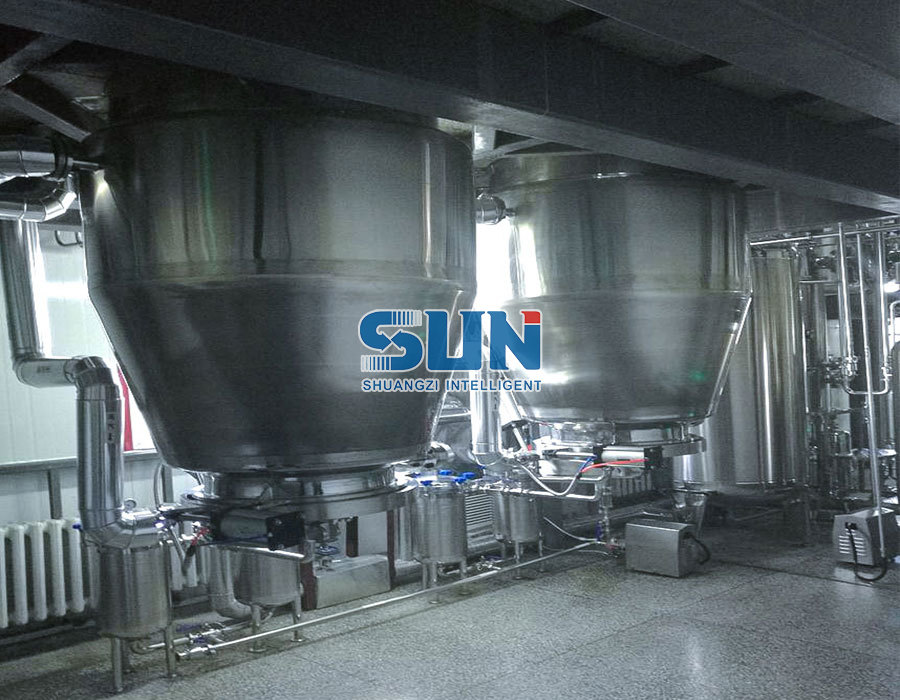
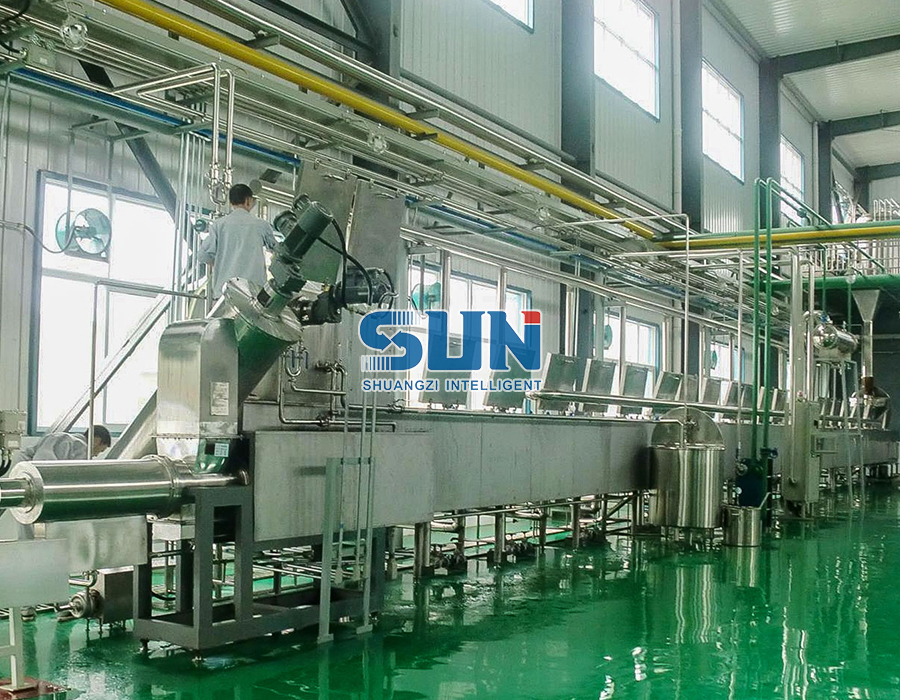
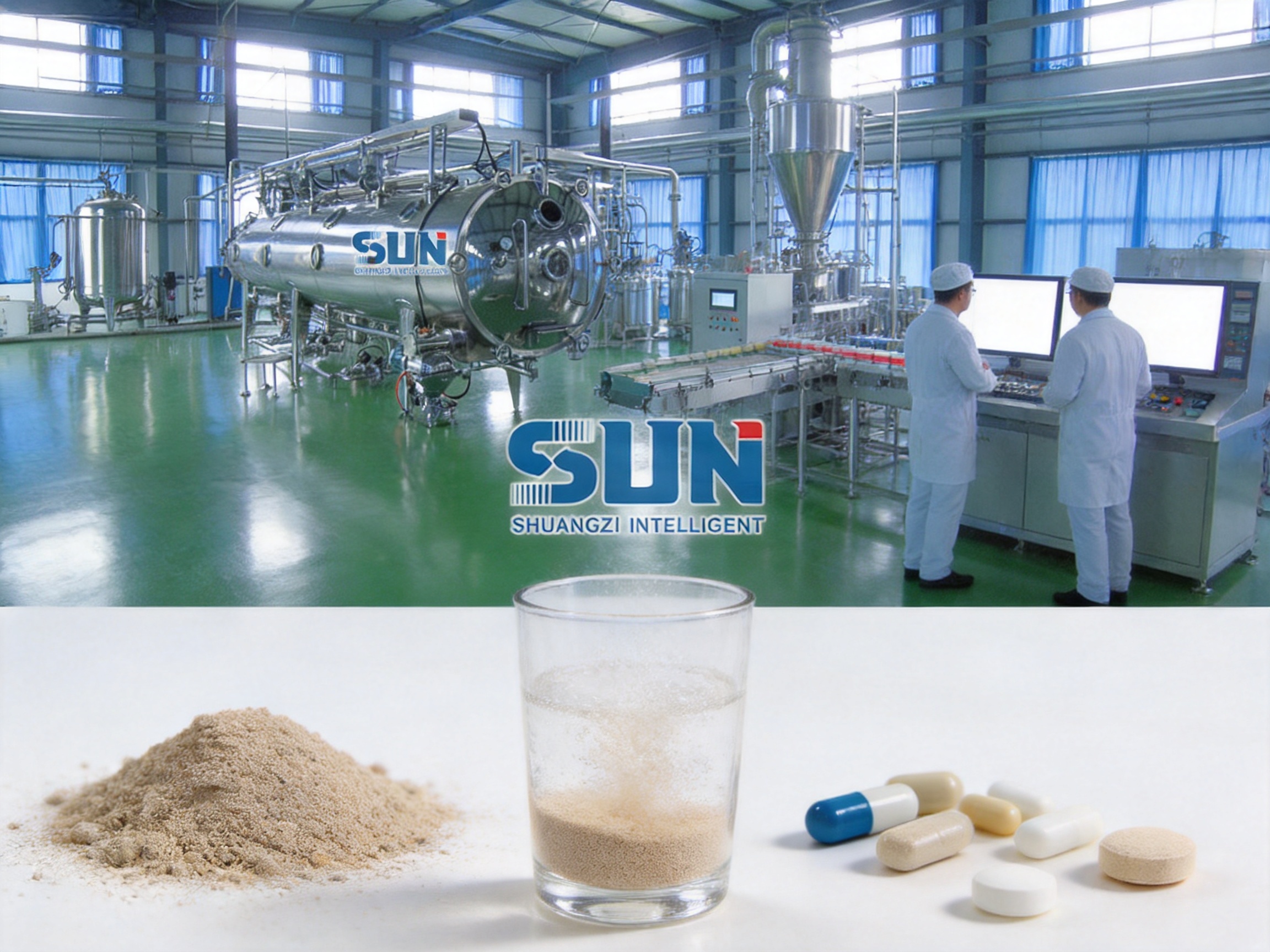
Full Automatic Vacuum Low-temperature Crawler Belt Dryer 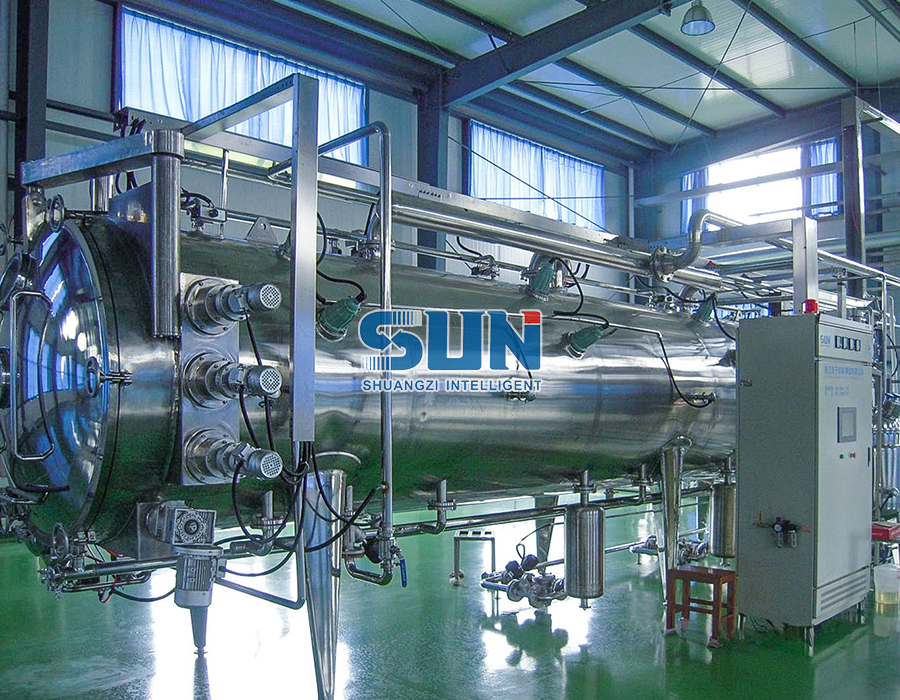
Why Vacuum Low-Temperature Continuous Drying Matters
Many valuable raw materials used in plant extraction, biological fermentation, western medicine synthesis, natural food production, and nutraceutical manufacturing contain components that are unstable under heat. Alkaloids, polyphenols, proteins, enzymes, polysaccharides, volatile aromatic compounds, pigments, probiotics, vitamins, and other active substances may degrade, denature, oxidize, caramelize, discolor, or lose activity when exposed to high-temperature air drying. At the same time, industrial production requires more than product protection. It requires high capacity, uniformity, cleanability, automation, traceability, and reliable operation over long production cycles.
The vacuum low-temperature crawler belt dryer responds to these needs by creating a controlled high-vacuum drying environment. Because the boiling point of water drops under reduced pressure, evaporation can occur at temperatures far below those needed in atmospheric drying. The equipment’s heating control range can be adjusted according to process requirements, allowing material-specific drying profiles. For many products, drying can be completed in approximately 30 to 60 minutes, depending on feed characteristics, target moisture, belt speed, vacuum level, layer configuration, and heat transfer conditions.
Continuous operation is one of the system’s greatest strengths. The material directly enters the high-vacuum vessel, is spread on the belt, passes through heating zones and cooling zones, and is discharged after drying, crushing, or granulation as required. This transforms drying from a static batch process into a dynamic and continuous process. In practice, that transformation can improve production capacity, reduce waiting time, improve plant layout efficiency, lower labor intensity, and reduce the risk of contamination caused by repeated manual tray handling.
For manufacturers competing in regulated and quality-sensitive markets, consistency is often as important as speed. The crawler belt structure and automated control system help standardize material residence time, temperature exposure, moisture removal, cooling, and discharge condition. This promotes stable product batches, predictable moisture content, and controlled powder characteristics. The equipment also supports online automatic cleaning, meeting the hygiene expectations of GMP-oriented production environments when properly integrated with validated cleaning procedures and plant quality systems.
Core Equipment Description
The Full Automatic Vacuum Low-Temperature Crawler Belt Dryer is a continuous vacuum drying machine developed for industrial applications requiring gentle dehydration and high output. It is designed to overcome the technical challenge of continuous feeding and continuous discharging under vacuum conditions. This capability is central to the machine’s value because maintaining vacuum while moving material through the dryer requires careful engineering of seals, feed systems, discharge mechanisms, vacuum pipelines, condensers, heat transfer components, control valves, and automation logic.
Inside the dryer, material is conveyed on a crawler belt through a vacuum container. The drying environment is isolated from atmospheric oxygen and operated under reduced pressure. Heat is transferred through controlled heating sections, commonly using superheated water as the heating medium. The material gradually loses water at low temperature while its internal structure forms micro-pores. This porous structure is important because it gives the final dried granules loose texture, improved instant solubility, and better downstream processability.
After drying, the material can be cooled in a cooling section to improve discharge stability and protect temperature-sensitive product quality. The machine can complete drying, crushing, and granulation under vacuum, reducing exposure to external contamination and limiting moisture regain. The dried granules can be comminuted to the required particle diameter and may then be used directly for tablet pressing, capsule filling, sachet filling, instant beverage preparation, blending, or other formulation steps.
The system is particularly suitable for materials that are hard to process in vacuum ovens, such as sticky extracts, concentrated herbal liquids, fermentation products, high-sugar food concentrates, high-fat emulsions, and products that tend to soften or agglomerate under heat. It can also be used where spray drying creates thermal damage, low yield, wall deposition, or poor powder properties. For many manufacturers, it offers a balanced solution between product protection and commercial-scale throughput.
Main Advantages Over Competing Drying Technologies
Compared with Vacuum Oven Drying
Vacuum ovens have long been used for low-temperature drying, but they are fundamentally static batch devices. Materials are typically loaded onto trays, placed into the chamber, dried for extended periods, removed manually, and then transferred to crushing or milling equipment. This workflow consumes labor, increases contamination risk, occupies more production space, and produces variability between trays due to differences in loading thickness, heat transfer, and air or vapor removal paths.
The crawler belt dryer addresses these limitations through continuous feeding and discharging under vacuum. Material residence time is controlled by belt speed, and heating and cooling are integrated into a continuous process path. Instead of repeated manual tray operations, the production line can run with a much higher level of automation. This improves productivity and reduces labor intensity. The equipment’s operating cost can be substantially lower than vacuum oven drying because of continuous heat transfer efficiency, reduced manual handling, shorter drying cycles, and integrated downstream processing.
Compared with Spray Drying
Spray drying is widely used for converting liquids into powders, but it is not ideal for every material. High inlet air temperatures can damage heat-sensitive compounds. Sticky, sugar-rich, or fat-rich materials may adhere to chamber walls, reducing yield and causing cleaning challenges. Some products require carriers or excipients to improve spray drying behavior, which may alter formulation purity or increase cost. Fine powder collection and dust control can also be demanding.
The vacuum low-temperature crawler belt dryer processes materials at lower temperatures and under vacuum, making it more suitable for heat-sensitive, viscous, sticky, and concentrated feeds. Because the material is supported on a belt rather than atomized into hot air, it can handle higher viscosity and certain paste-like feeds that are difficult to spray. The porous granules formed during drying can offer excellent instant solubility without the severe thermal exposure associated with high-temperature air drying. The dry powder yield can reach very high levels when the process is properly optimized, reducing material loss and improving economic performance.
Compared with Freeze Drying
Freeze drying is considered one of the gentlest drying methods, but it is expensive. It requires freezing, sublimation under deep vacuum, long cycle times, high energy consumption, and costly equipment. For products requiring maximum preservation, freeze drying may still be necessary. However, for many plant extracts, fermentation products, foods, intermediates, and functional materials, freeze drying may exceed the quality requirements while imposing an unnecessary cost burden.
The crawler belt dryer provides a more economical alternative for many applications. According to typical operating comparisons, its production and operation cost can be significantly lower than freeze drying, while still maintaining low-temperature protection and good product quality. Continuous operation further improves throughput, making it attractive for commercial production where freeze drying would be too slow or costly. This cost-quality balance is one of the strongest competitive advantages of the technology.
Compared with Conventional Hot-Air Belt Drying
Atmospheric belt dryers are continuous and relatively simple, but they depend on hot air. For heat-sensitive products, the combination of oxygen exposure, high temperature, and prolonged residence time can reduce quality. Volatile compounds may be lost, color may darken, and bioactive ingredients may degrade. Hot-air systems can also produce surface hardening, uneven moisture profiles, and poor rehydration properties in some materials.
The vacuum crawler belt dryer uses vacuum conditions to lower the evaporation temperature and reduce oxygen exposure. The product is dried more gently, helping retain original material properties and improving final appearance. The porous internal structure also supports better dissolution behavior. For high-value materials, these quality gains can justify the investment and provide a clear market advantage.
Important Technical Features
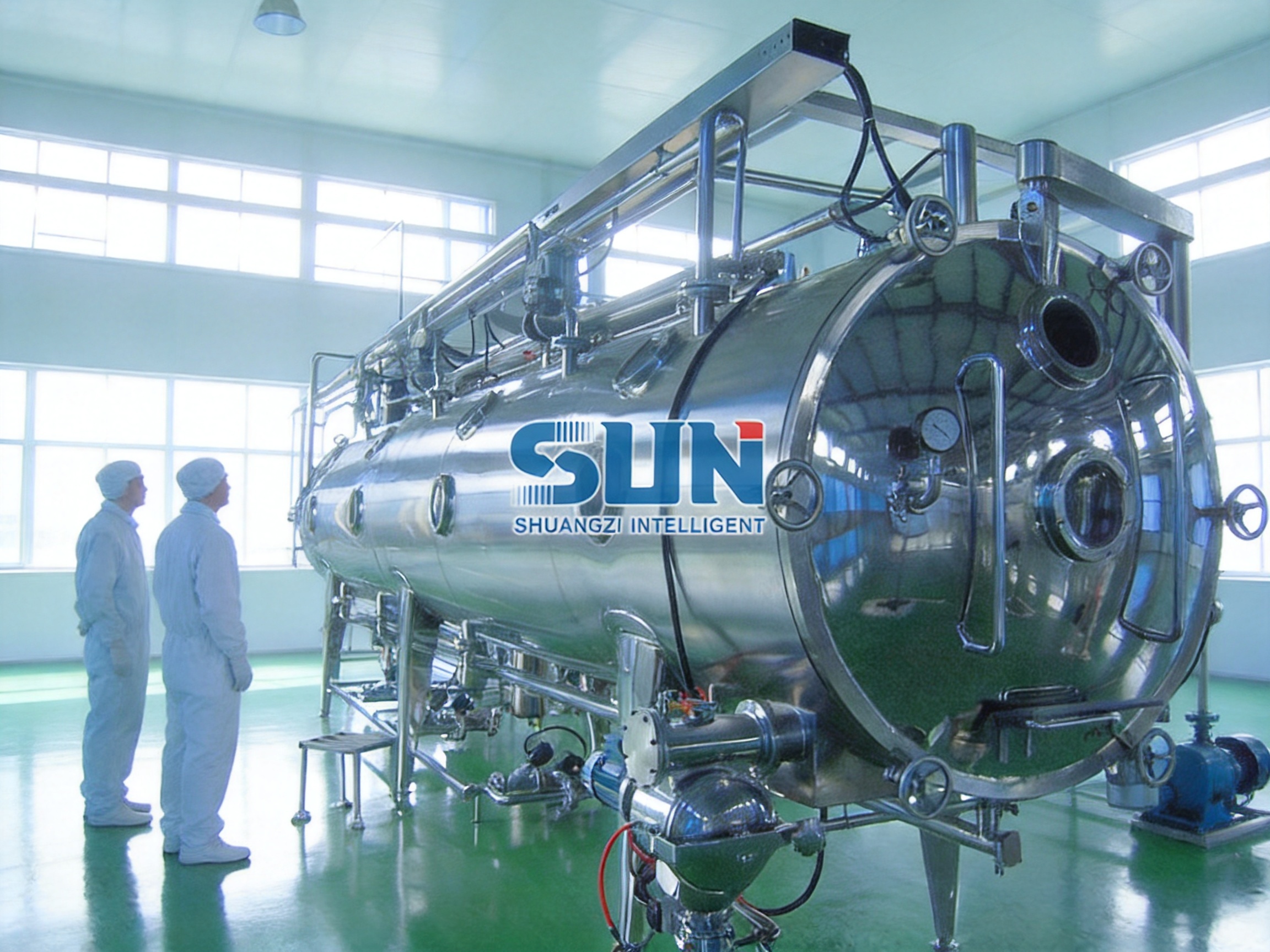
The equipment combines several technical functions in one system. First, it supports complete process automation, pipelining, and continuity. This means material movement, heating, cooling, vacuum control, moisture removal, discharge, and cleaning can be integrated into a controlled production sequence. Second, it realizes continuous feeding and discharging under vacuum conditions, which is a key engineering breakthrough compared with conventional static vacuum equipment. Third, it can complete drying, crushing, and granulation under vacuum, reducing the number of separate handling steps.
The machine’s drying temperature can be adjusted according to material process requirements. The broader practical range may support low-temperature operation for sensitive materials as well as higher controlled temperatures for more robust products. The listed heating control temperature range for typical models is 40 to 125 degrees Celsius, while the product description indicates process adjustment may extend approximately from 25 to 150 degrees Celsius depending on configuration and application. This flexibility allows process engineers to develop drying curves based on product characteristics rather than forcing all materials into one fixed operating mode.
The drying time is often approximately 30 to 60 minutes, enabling continuous production of dry powder. When process parameters are optimized, the dry powder yield can be very high. The final product moisture may be reduced to below 4 percent in many suitable applications, while feed water content for listed liquid drying specifications is generally below 40 percent. Actual performance depends on feed solids, viscosity, heat sensitivity, evaporation load, belt loading thickness, vacuum level, and target product properties.
Online automatic cleaning is another essential feature. In pharmaceutical, nutraceutical, biological, and food applications, cleaning is not an accessory function; it is a critical part of quality assurance. The system is designed to support automatic cleaning with cleaning pressure around 0.6 MPa in the listed specifications. Combined with suitable spray devices, drainage design, cleaning recipes, and validation protocols, this supports GMP-style operation and reduces downtime between production campaigns.
Product Quality Benefits
The final quality of dried material is influenced by its internal structure, moisture distribution, thermal history, oxidation exposure, and particle characteristics. The vacuum low-temperature crawler belt dryer helps create a porous and loose dried structure. From a microstructural perspective, the granules have micro-pores inside. These pores increase the contact area with water during reconstitution, enabling rapid dissolution and dispersion. This is particularly useful for instant plant extract powders, functional food ingredients, beverage powders, medicinal granules, and capsule-fill powders.
The low-temperature vacuum environment helps retain original material properties. Color, aroma, flavor, active compound profile, and visual appearance may be better protected than in high-temperature drying. For plant extracts, this can mean reduced browning and improved retention of characteristic fragrance or bitterness profiles. For fermentation-derived products, it can mean reduced thermal damage. For pharmaceutical intermediates, it can help control impurity formation caused by heat stress.
Batch consistency is also improved. Continuous belt movement, stable heating sections, controlled cooling, and automated discharge help reduce variation. In manual tray drying, product loaded near chamber walls may dry differently from product loaded in the center. Layer thickness and manual spreading can vary. In the crawler belt dryer, feed distribution and belt speed can be controlled to create a more repeatable process. The result is more stable moisture content, more predictable powder behavior, and fewer process deviations.
Another quality advantage is the possibility of direct downstream use. After drying and comminution, granules with good flowability can be pressed into tablets or filled into capsules. Good flowability is valuable because it reduces bridging, segregation, weight variation, and filling inconsistency in downstream equipment. Excellent instant solubility can also enhance consumer experience in food and health products, where fast dissolution and smooth mouthfeel are important.
Typical Application Areas
The dryer is suitable for a broad range of industries because the need for gentle continuous drying is widespread. In plant extraction projects, it can process herbal extracts, botanical concentrates, traditional medicine extracts, fruit and vegetable concentrates, tea extracts, natural pigments, polysaccharides, and other natural active materials. These products are often sensitive to heat and oxidation and may have high viscosity or sugar content, making them difficult to spray dry without carriers.
In bio-fermentation projects, the equipment can be used for fermentation broths, enzyme preparations, microbial metabolites, amino acid derivatives, peptides, and other biological materials after suitable concentration or pretreatment. The low-temperature vacuum environment helps reduce degradation and may support better preservation of functional components. Process compatibility should be evaluated through pilot testing, especially where living organisms, enzyme activity, or specific biological potency must be maintained.
In western medicine synthesis projects, the dryer can support drying of pharmaceutical intermediates, crystallized wet materials, concentrated solutions, and heat-sensitive compounds. The closed vacuum environment, automation, and cleaning design make it suitable for GMP-oriented production when built, installed, and qualified according to applicable pharmaceutical standards. For active pharmaceutical ingredients or regulated intermediates, material compatibility, cleaning validation, containment, and documentation must be carefully planned.
In food projects, the machine can be used for instant powders, nutritional extracts, high-sugar concentrates, natural flavors, functional ingredients, protein-containing liquids, and specialty ingredients. Low-temperature drying can help preserve flavor, color, and nutritional value. The porous particle structure can improve instant solubility, which is important for beverage powders, soup bases, nutraceutical sachets, and other consumer products.
In turnkey projects, the dryer can be integrated with extraction, concentration, fermentation, separation, filtration, crystallization, mixing, packaging, utility, and automation systems. This is especially important because a dryer rarely operates alone. Its performance depends on feed preparation, solids content, viscosity, upstream concentration, downstream milling, powder transfer, dust control, cleaning systems, and plant utility design.
Representative Technical Parameters
The following table summarizes representative parameters for common liquid drying configurations. Specifications may be customized according to process requirements, material characteristics, plant layout, utility conditions, and required evaporation capacity.
| Parameter | Typical Range or Configuration | Production Significance |
| Total heat transfer area | Approximately 88.5 to 230 m² | Determines available heat transfer capacity and supports different production scales. |
| Effective heating area | Approximately 70 to 178.5 m² | Controls the main evaporation load and drying intensity. |
| Effective cooling area | Approximately 9.9 to 31.5 m² | Stabilizes product temperature before discharge and downstream handling. |
| Condensing area | Approximately 42 to 110 m² | Supports vapor condensation and stable vacuum operation. |
| Water evaporation capacity | Approximately 60 to 230 kg/h depending on model | Indicates industrial drying throughput for suitable feeds. |
| Belt width | Approximately 1200 to 1365 mm | Affects spreading area, loading capacity, and residence time control. |
| Belt layers | 6 to 10 layers | Increases heat transfer path and compactness of equipment layout. |
| Heating and cooling sections | Commonly 4 or 5 heating sections plus 1 cooling section | Allows staged drying and final product cooling. |
| Heating form | Superheated water | Provides stable and controllable low-temperature heat transfer. |
| Heating control temperature | Typically 40 to 125 degrees Celsius in listed models | Allows adjustment for product sensitivity and drying requirements. |
| Belt speed | Approximately 100 to 1500 mm/min | Controls residence time and final moisture. |
| Feed water content | Generally below 40 percent for listed liquid drying models | Indicates recommended feed concentration range. |
| Product water content | Generally below 4 percent | Supports stable storage and downstream processing. |
| Vacuum degree range | Approximately 1240 to 5400 Pa depending on model | Enables low-temperature evaporation and gentle drying. |
| Cleaning pressure | Approximately 0.6 MPa | Supports online automatic cleaning procedures. |
| Compressed air pressure | Approximately 0.7 MPa | Supports pneumatic functions and control elements. |
Process Flow and Operating Principle
The operating process begins with feed preparation. The material may be a concentrated liquid, paste, slurry, wet granule, or other suitable feed. For efficient operation, feed solids content, viscosity, particle size, temperature, and pumpability should be adjusted before entering the dryer. In many extraction or fermentation lines, upstream concentration equipment is used to reduce water load and improve drying economics. Filtration or separation may also be used to remove unwanted insoluble matter or standardize feed characteristics.
Once prepared, the material is continuously introduced into the vacuum vessel through a specially designed feeding system. Maintaining vacuum during feeding is a critical feature. The feed must enter without breaking the vacuum environment, which requires reliable sealing, controlled feed rate, and coordination between the feed system and vacuum control. Inside the chamber, the material is distributed onto the belt in a controlled layer. Layer thickness is important: too thick, and drying becomes slow or uneven; too thin, and capacity may be reduced. Proper spreading supports uniform heat transfer and moisture removal.
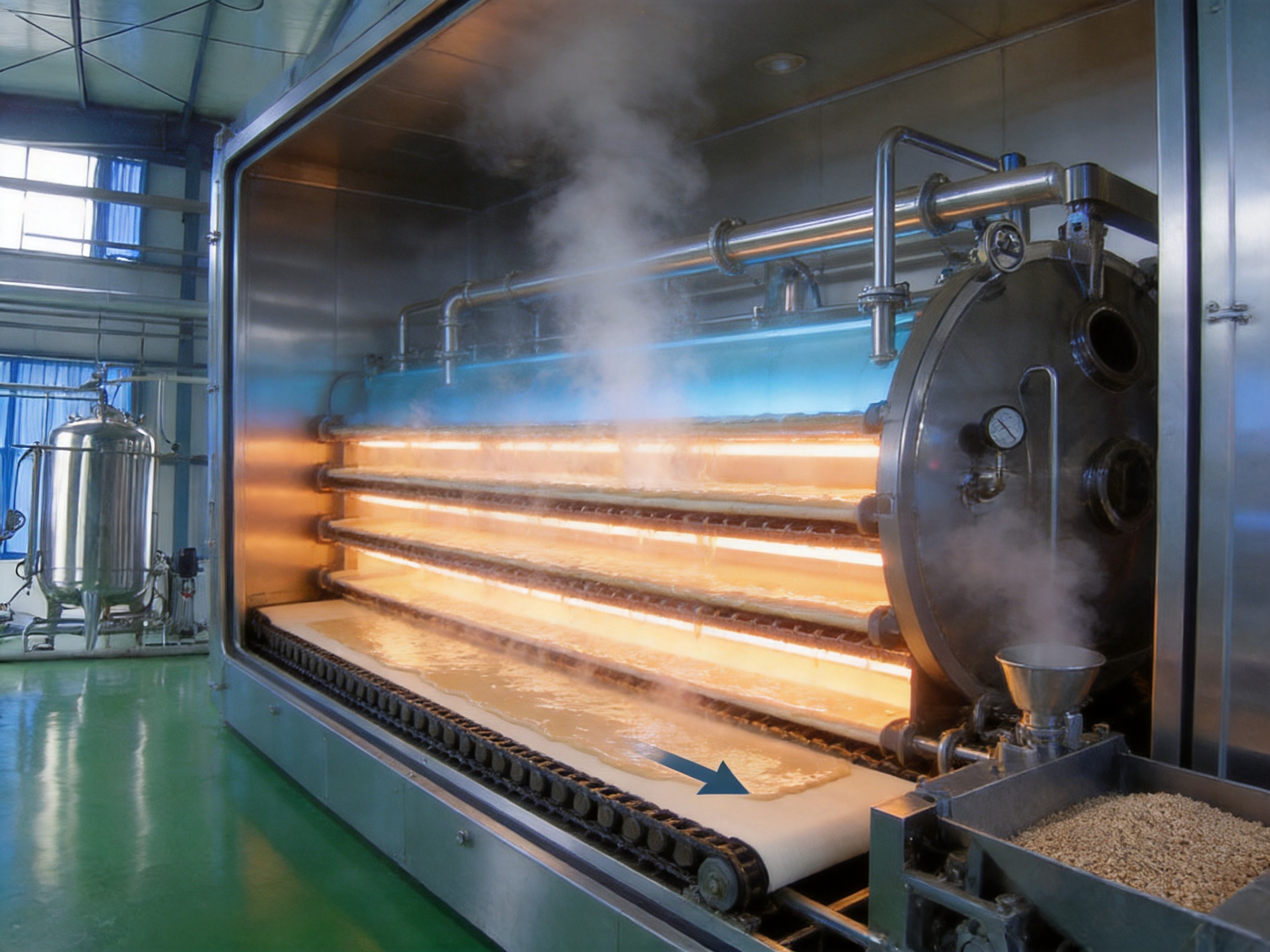
As the belt moves, the material passes through heating sections. Heat is transferred gently, causing water to evaporate under vacuum. Vapor is removed by the vacuum system and condensed by condensers. This removal of vapor is essential because accumulated moisture vapor would reduce drying efficiency and destabilize vacuum conditions. The multi-section design allows staged control, so the early drying stage can remove free water while later stages reduce bound water and develop the desired porous structure.
After heating, the material enters the cooling section. Cooling helps reduce product temperature before discharge, limiting caking, thermal degradation, or moisture absorption after exposure to downstream conditions. The dried material is then discharged through a vacuum-compatible discharge system. Depending on configuration, it may be crushed, granulated, or transferred to downstream equipment while minimizing contamination risk.
Throughout operation, the automation system monitors and controls key parameters, such as belt speed, heating temperature, vacuum level, feed rate, cooling conditions, cleaning sequence, and alarms. This control architecture is central to stable production. Operators can adjust parameters according to product recipes, enabling repeatable production of different materials on the same equipment platform.
Automation, GMP, and Clean Production
Modern drying equipment must satisfy more than mechanical performance. It must support clean production, traceable operation, repeatable recipes, reduced human error, and efficient maintenance. The full automatic vacuum low-temperature crawler belt dryer is designed with automation, pipelining, and continuity in mind. In a properly configured production line, operators can manage production through a centralized control system rather than relying on manual tray loading, frequent chamber opening, or subjective drying judgment.
Automated control improves product quality because drying conditions can be maintained within defined limits. Belt speed determines residence time. Heating temperature affects evaporation rate and thermal exposure. Vacuum level affects boiling point and vapor removal. Feed rate affects layer thickness and drying load. Cooling conditions influence discharge stability. When these parameters are recipe-controlled, the process becomes easier to reproduce and validate.
Online automatic cleaning supports hygiene and production efficiency. Cleaning inside vacuum drying equipment can be challenging because surfaces, belts, feed systems, discharge systems, and vapor paths may contact sticky materials. Automated cleaning reduces manual intervention, improves safety, and shortens changeover time. For GMP applications, cleaning procedures must be supported by proper design, documented cleaning parameters, sampling plans, residue limits, and validation studies. The equipment’s online cleaning capability provides the technical foundation for such quality systems.
Closed operation also helps reduce external contamination. Because drying, crushing, and granulation can be completed under vacuum, product exposure to ambient air and manual handling is reduced. This is important in pharmaceutical and food production, where microbial control, dust control, and cross-contamination prevention are essential. When combined with appropriate facility design, air handling, personnel flow, material flow, and quality management, the dryer can become a strong component of a clean and compliant production line.
Energy and Cost Advantages
Production cost is one of the strongest reasons to choose this drying technology. Compared with vacuum ovens, the continuous belt design improves throughput and reduces labor. Compared with spray drying, it can reduce product loss for sticky or difficult materials and avoid the need for high-temperature air exposure. Compared with freeze drying, it can greatly reduce cycle time, equipment cost, and energy demand for many products that do not require true lyophilization.
The equipment description indicates that production and operation cost may be approximately one third of vacuum oven and spray drying in certain comparable cases, and approximately one sixth of freeze drying. Actual cost savings depend on product type, evaporation load, utility prices, labor cost, plant operation schedule, cleaning frequency, and required quality. However, the general economic logic is clear: continuous low-temperature vacuum drying offers a strong balance between gentle processing and industrial efficiency.
Labor savings are also important. Static tray drying requires personnel to load trays, transfer materials, monitor drying, unload product, scrape material, clean trays, and move product to separate milling equipment. In contrast, the crawler belt dryer reduces manual handling and can operate with a smaller team. Labor reduction not only lowers cost but also improves occupational safety and reduces quality risks associated with manual operations.
High dry powder yield contributes directly to profitability. High-value plant extracts, biological products, and pharmaceutical intermediates may be expensive. Every kilogram lost to wall sticking, dust escape, over-drying damage, or cleaning waste affects margin. A well-controlled vacuum belt drying process can improve product recovery and reduce waste, especially for materials that perform poorly in spray dryers or static systems.
Manufacturing Strengths Behind the Equipment
The quality of a vacuum low-temperature crawler belt dryer depends heavily on manufacturing capability. Zhejiang Shuangzi Intelligent Equipment Co.,Ltd. is a professional biology and medical equipment enterprise focusing on EPC and EPCM services, process technology, automation engineering design, equipment manufacturing, matching purchase, installation, equipment system integration, and turnkey project delivery. Its experience covers plant extraction, biological fermentation, pharmaceutical engineering, natural food, energy conservation, and environmental protection.
The company was founded in 2007 and has developed mature product lines including vacuum low-temperature drying equipment, fermentation system equipment, evaporation and concentration equipment, extraction equipment, separation equipment, crystallization equipment, filtration equipment, containers, and related systems. This broad equipment portfolio is an advantage because drying performance is closely linked to upstream and downstream processes. A manufacturer that understands extraction, concentration, fermentation, separation, and filtration can design a drying system that fits the complete process rather than treating the dryer as an isolated machine.
The company’s production base includes a pilot production workshop and an automation research and development platform designed around GMP requirements. This is valuable for customers who need process verification before full-scale investment. Pilot testing can evaluate drying behavior, foam formation, viscosity change, product color, final moisture, particle structure, solubility, flowability, and yield. It also allows engineers to optimize feed concentration, belt speed, heating temperature, vacuum level, and cooling conditions before designing a commercial unit.
Advanced manufacturing equipment supports precision and reliability. The company has introduced welding and finishing equipment such as plasma argon arc welding machines, plasma cutting machines, and CAM CNC machining centers. For vacuum drying equipment, fabrication quality is critical. The vacuum vessel must maintain sealing integrity; internal surfaces must be smooth and cleanable; heat transfer components must be reliable; rotating and moving structures must be aligned; and stainless steel welding must meet hygienic and mechanical requirements. Precision manufacturing reduces leakage risk, maintenance burden, vibration, misalignment, and cleaning dead corners.
Strong automation engineering capability is another important strength. The dryer requires coordinated control of vacuum, heating, cooling, feeding, conveying, discharge, cleaning, alarms, and safety interlocks. Automation design affects usability, safety, data management, and process repeatability. By integrating equipment manufacturing with automation engineering, the supplier can provide a more complete and coherent system. This is especially beneficial for turnkey projects where the dryer must communicate with upstream extraction or concentration equipment and downstream powder handling systems.
Engineering Service and Turnkey Integration
For many customers, purchasing a dryer is not simply buying a machine. It is part of building or upgrading a production line. Zhejiang Shuangzi Intelligent Equipment Co.,Ltd. can provide engineering, process design, equipment design, installation, line debugging, and turnkey project services. This is important because successful drying depends on proper selection of upstream concentration, feed tanks, transfer pumps, filters, vacuum systems, condensers, cooling water, steam or hot water supply, compressed air, cleaning systems, and downstream powder handling.
In a plant extraction project, for example, the line may begin with raw herb preparation, extraction, filtration, concentration, precipitation, separation, and final drying. If the extract is not concentrated to the correct solids level, the dryer may be overloaded with water or face viscosity problems. If filtration is inadequate, solids may affect feed spreading or product uniformity. If downstream milling is poorly designed, the good porous structure created by the dryer may be damaged. Integrated process design helps avoid such problems.
In a fermentation project, the dryer may need to fit with sterilization, fermentation tanks, cell separation, concentration, and clean transfer systems. Biological materials may have unique stability requirements, and cleaning validation may be critical. Engineering integration ensures that the dryer’s material contact parts, seals, pipelines, valves, and control logic match the hygiene and process requirements.
For pharmaceutical engineering, documentation, equipment qualification, material certificates, welding quality, surface finish, cleanability, and control system validation become especially important. Turnkey project experience helps align equipment design with the user’s regulatory expectations. While final compliance depends on the customer’s quality system and local regulations, a supplier familiar with GMP-oriented design can reduce project risk and shorten implementation time.
Design Considerations for Selecting the Right Model
Choosing the correct vacuum low-temperature crawler belt dryer requires more than looking at water evaporation capacity. Engineers should evaluate the material’s initial moisture, target moisture, viscosity, thermal sensitivity, solids content, stickiness, fat content, sugar content, foaming tendency, bulk density, desired particle size, solubility requirement, and downstream use. A product intended for direct tablet compression may require different final granule behavior than an instant beverage powder.
Evaporation load is a key calculation. If a feed contains 40 percent water and must be dried below 4 percent, the dryer must remove a specific mass of water per hour based on desired dry solids output. However, not all water is equally easy to remove. Free water evaporates more readily, while bound water may require longer residence time or adjusted temperature. Pilot testing helps determine realistic capacity and final product quality.
Heat sensitivity must also be quantified. Some materials can tolerate 80 to 100 degrees Celsius under vacuum for short periods, while others require much lower temperatures. The dryer’s adjustable heating zones make it possible to create product-specific drying curves. However, excessively low temperature may reduce evaporation rate, so the optimal process balances product protection and throughput.
Feed rheology affects spreading and belt loading. Highly viscous materials may need heating, dilution, special pumping, or customized feeding devices. Sticky materials may require tailored belt materials, scraper design, anti-adhesion strategies, and cleaning procedures. High-sugar products may become glassy or tacky depending on moisture and temperature; process development should identify the best drying profile to avoid sticking or caking.
Plant utilities should be confirmed before model selection. Typical models use superheated water as the heating medium and require cooling water, compressed air, electrical power, vacuum capacity, and cleaning water. The installation site must also accommodate equipment length, diameter, maintenance space, auxiliary systems, and lifting or transportation requirements. Larger models may have main body weights exceeding several tens of tons, so foundation and installation planning are important.
Reliability, Maintenance, and Long-Term Operation
Continuous drying equipment must be designed for stable long-term operation. Key components such as the vacuum vessel, crawler belt, drive system, heating plates or heat transfer assemblies, condensers, vacuum lines, seals, scrapers, crushers, granulators, valves, sensors, and cleaning devices must work together reliably. Preventive maintenance is essential to protect vacuum performance, belt alignment, product quality, and safety.
Routine maintenance should include inspection of seals, drive chains or transmission components, belt condition, heating and cooling circuits, vacuum pumps, condensers, cleaning nozzles, discharge mechanisms, and instrumentation. Vacuum leaks can reduce drying efficiency and product quality, so leak detection and sealing integrity checks are important. Belt condition affects material movement and product uniformity. Condenser performance affects vapor removal and vacuum stability.
Cleaning and drying after cleaning should be carefully managed. If cleaning water remains in hidden areas, it may affect the next batch or create microbial risk. Hygienic design, proper drainage, validated cleaning recipes, and drying or purge steps help maintain sanitary conditions. In multi-product facilities, cleaning verification is essential to prevent cross-contamination.
Operators should be trained in recipe control, alarm response, startup, shutdown, cleaning, safety procedures, and process adjustment. Although automation reduces manual burden, skilled operators remain important. They must understand how changes in feed concentration, viscosity, or upstream process conditions affect drying behavior. Good communication between production, quality, maintenance, and engineering teams ensures stable operation.
Competitive Value for Manufacturers
The Full Automatic Vacuum Low-Temperature Crawler Belt Dryer offers competitive value because it improves both product quality and production economics. For companies producing high-value natural extracts, biological products, pharmaceutical intermediates, or functional foods, the ability to protect heat-sensitive components while increasing throughput can create a strong market advantage. Better powder solubility, improved appearance, and consistent batch quality can support premium product positioning.
Reduced operating cost also strengthens competitiveness. Manufacturers facing rising labor, energy, and compliance costs need equipment that increases automation and reduces waste. The dryer’s continuous operation, integrated crushing and granulation, online cleaning, and high yield support leaner production. Because the machine can solve drying problems for materials that are difficult for spray dryers and vacuum ovens, it can also expand the range of products a manufacturer can commercialize.
Another competitive advantage is scalability. With multiple models offering different heat transfer areas, belt layers, evaporation capacities, and equipment dimensions, users can select systems for pilot scale, medium production, or larger industrial output. Combined with engineering support, this helps customers move from laboratory process development to commercial manufacturing with a clearer scale-up pathway.
The supplier’s manufacturing and system integration strengths further enhance value. A drying machine must be built precisely, but it must also fit the entire plant. By offering process design, equipment design, installation, debugging, automation integration, and turnkey project services, the manufacturer reduces coordination burden for customers and improves the likelihood of successful startup.
Frequently Asked Questions
What types of materials are best suited for this dryer?
The equipment is well suited for heat-sensitive, sticky, viscous, high-sugar, high-fat, and difficult-to-dry materials. Typical examples include plant extracts, fermentation products, food concentrates, pharmaceutical intermediates, herbal medicine extracts, functional ingredients, and certain wet solids or slurries. Pilot testing is recommended for new materials to confirm performance.
How does vacuum low-temperature drying protect product quality?
Under vacuum, water evaporates at a lower temperature. This reduces thermal stress and helps protect color, aroma, active ingredients, nutritional components, and functional properties. The reduced-oxygen environment may also lower oxidation risk compared with atmospheric hot-air drying.
Why is continuous feeding and discharging under vacuum important?
Continuous feeding and discharging allow the dryer to operate as an industrial production line rather than a batch chamber. This improves output, reduces manual handling, shortens production cycles, improves consistency, and lowers labor cost while maintaining vacuum conditions throughout the drying process.
Can the dried product be used directly for tablets or capsules?
In many suitable applications, yes. The dried granules can form a porous and loose structure with good flowability after comminution to the required particle size. This can make them suitable for tablet pressing, capsule filling, blending, or instant powder applications. Final suitability depends on formulation requirements and product testing.
How long does drying usually take?
Typical drying time may be approximately 30 to 60 minutes for many materials, but actual time depends on feed moisture, solids content, viscosity, layer thickness, belt speed, vacuum level, heating temperature, and target final moisture.
What final moisture can be achieved?
For listed liquid drying configurations, final product water content is generally below 4 percent in suitable processes. Actual results should be verified through testing because different materials bind water differently.
How does this equipment compare with freeze drying?
Freeze drying is extremely gentle but expensive and slow. The vacuum crawler belt dryer provides low-temperature protection with continuous operation and much lower operating cost for many products. It may not replace freeze drying for all highly sensitive products, but it is often a more economical choice when true lyophilization is not required.
Is the equipment suitable for GMP production?
The machine is designed with online automatic cleaning and clean production needs in mind. It can support GMP-oriented production when properly configured, installed, qualified, cleaned, and operated within a compliant quality system. Material certificates, surface finish, welding quality, cleaning validation, and documentation should be addressed during project design.
What utilities are normally required?
Typical systems require heating medium such as superheated water, cooling water, compressed air, electrical power, vacuum system support, and cleaning water. Utility requirements vary by model and production capacity.
Why choose an integrated equipment manufacturer for this dryer?
An integrated manufacturer with experience in extraction, fermentation, concentration, separation, drying, automation, and turnkey engineering can design the dryer as part of a complete process. This reduces project risk, improves compatibility, and supports smoother installation, commissioning, and scale-up.
Conclusion
The Full Automatic Vacuum Low-Temperature Crawler Belt Dryer is a highly practical solution for industries that need both gentle drying and industrial productivity. By combining vacuum low-temperature evaporation, continuous belt conveying, automatic feeding and discharging, staged heating and cooling, integrated crushing and granulation, and online cleaning, it overcomes many weaknesses of vacuum ovens, spray dryers, freeze dryers, and conventional hot-air systems.
Its main value lies in the ability to process difficult materials while preserving quality. The formation of porous, loose granules improves solubility and downstream usability. The controlled vacuum environment protects heat-sensitive substances. Continuous operation increases capacity and consistency. Automated cleaning and process control support clean, efficient, and repeatable manufacturing.
For plant extraction, bio-fermentation, pharmaceutical engineering, natural food, and turnkey production projects, the dryer offers a strong balance of quality, cost, and scalability. Supported by advanced manufacturing processes, precision welding and machining, automation engineering, pilot testing capability, and full project integration services, Zhejiang Shuangzi Intelligent Equipment Co.,Ltd. provides not only equipment but also process-oriented solutions for customers seeking reliable modern drying technology.
References
1. Mujumdar, A. S. Handbook of Industrial Drying. CRC Press.
2. Masters, K. Spray Drying Handbook. Longman Scientific and Technical.
3. Oetjen, G. W., and Haseley, P. Freeze-Drying. Wiley-VCH.
4. Barbosa-Canovas, G. V., and Vega-Mercado, H. Dehydration of Foods. Springer.
5. Perry, R. H., and Green, D. W. Perry’s Chemical Engineers’ Handbook. McGraw-Hill.
6. European Hygienic Engineering and Design Group. Hygienic Design Principles for Food and Pharmaceutical Equipment.
7. International Society for Pharmaceutical Engineering. Good Practice Guide: Commissioning and Qualification of Pharmaceutical Equipment.