
 英语
英语 俄语
俄语Content
- 1 What is a Full Automatic Vacuum Single Effect Falling Film Evaporator?
- 2 Core Advantages of the Evaporator: Outperforming Competitors
- 3 Advanced Manufacturing Processes & Company Strengths
- 4 Technical Specifications of the Evaporator
- 5 Q&A Section
- 5.1 Q1: What types of chemical materials is this evaporator suitable for?
- 5.2 Q2: How does the automatic control system improve production efficiency?
- 5.3 Q3: Can the evaporator be customized for specific customer needs?
- 5.4 Q4: What after-sales services are provided?
- 5.5 Q5: How does the company ensure product quality?
- 6 References
The chemical industry relies heavily on efficient concentration processes to refine products, recover solvents, and reduce waste. Among the key equipment for these operations, the full automatic vacuum single effect falling film evaporator stands out as a transformative solution—one that addresses longstanding challenges like heat-sensitive material degradation, inconsistent product quality, and high operational costs. This article explores the technical specifications, core advantages, and manufacturing excellence behind this innovative equipment, highlighting how it outperforms traditional alternatives and meets the evolving needs of chemical producers worldwide.
What is a Full Automatic Vacuum Single Effect Falling Film Evaporator?
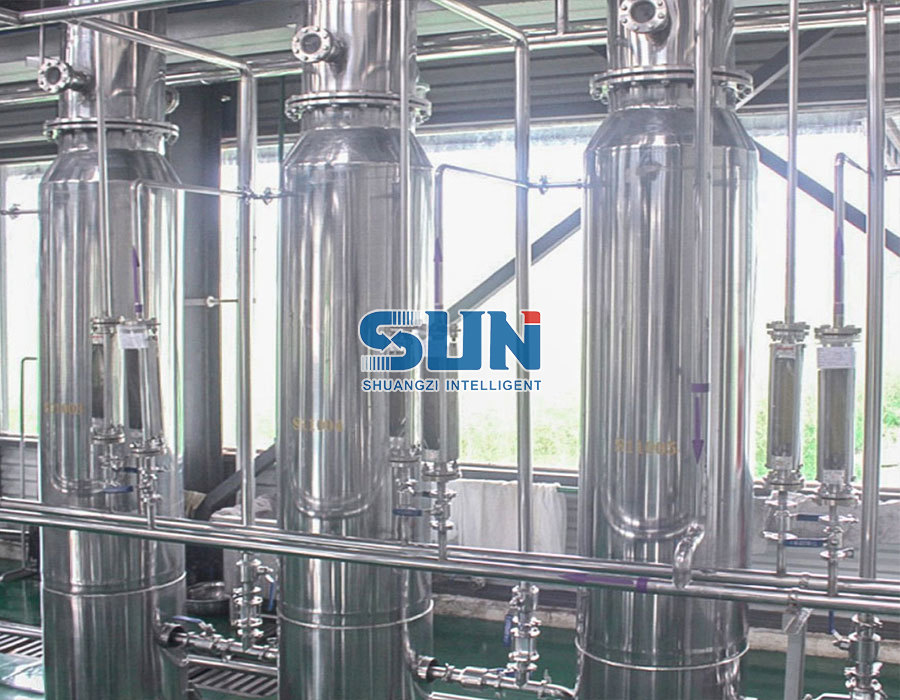
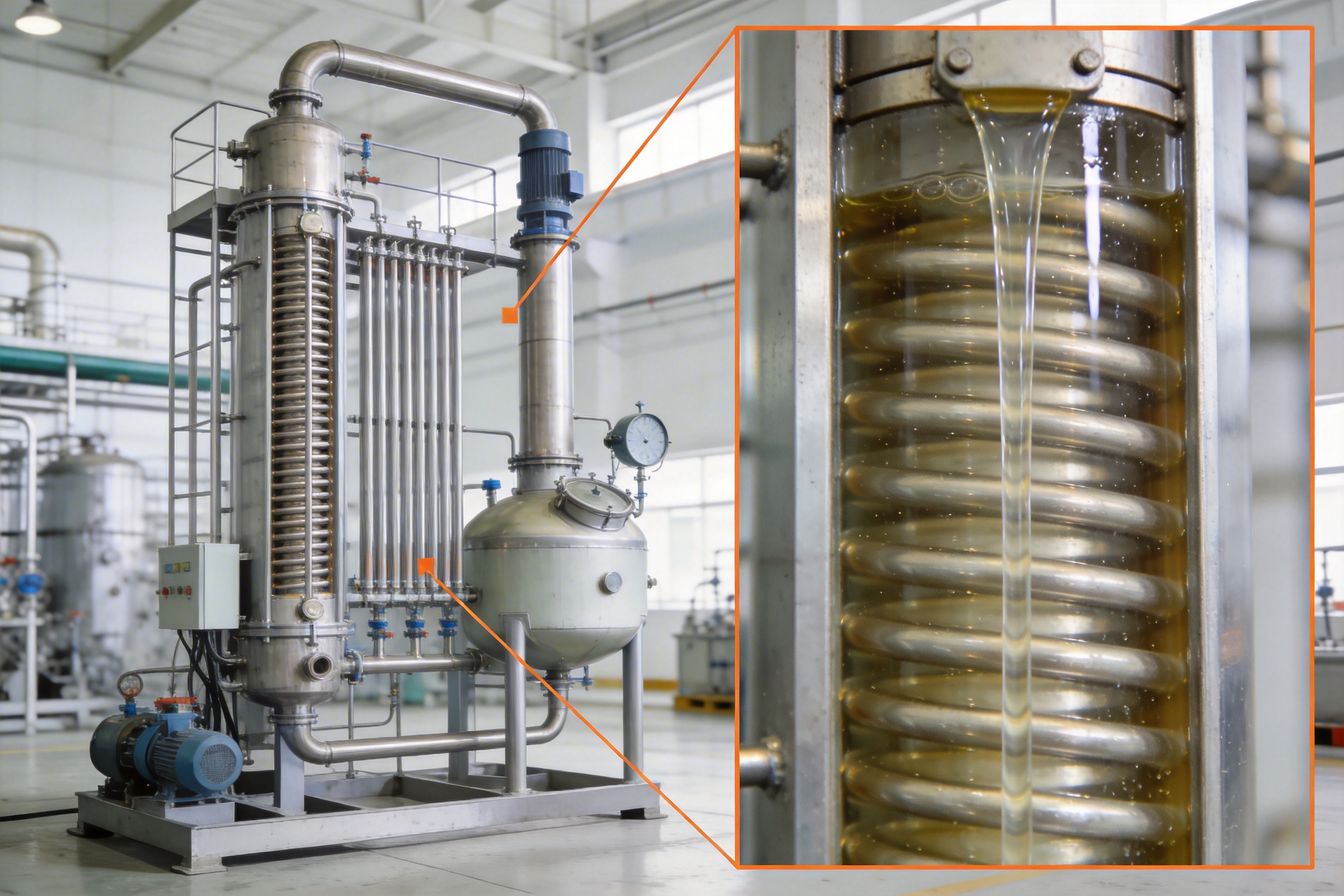
A falling film evaporator is a type of heat exchanger designed to concentrate liquid solutions by evaporating the solvent (usually water or organic solvents) under controlled conditions. The "single effect" designation means it uses a single heating chamber and condenser, making it simpler and more cost-effective than multi-effect systems. The "vacuum" component lowers the boiling point of the solution, while the "falling film" design ensures the liquid flows down the inner walls of the heating tubes as a thin film—maximizing heat transfer efficiency and minimizing residence time.
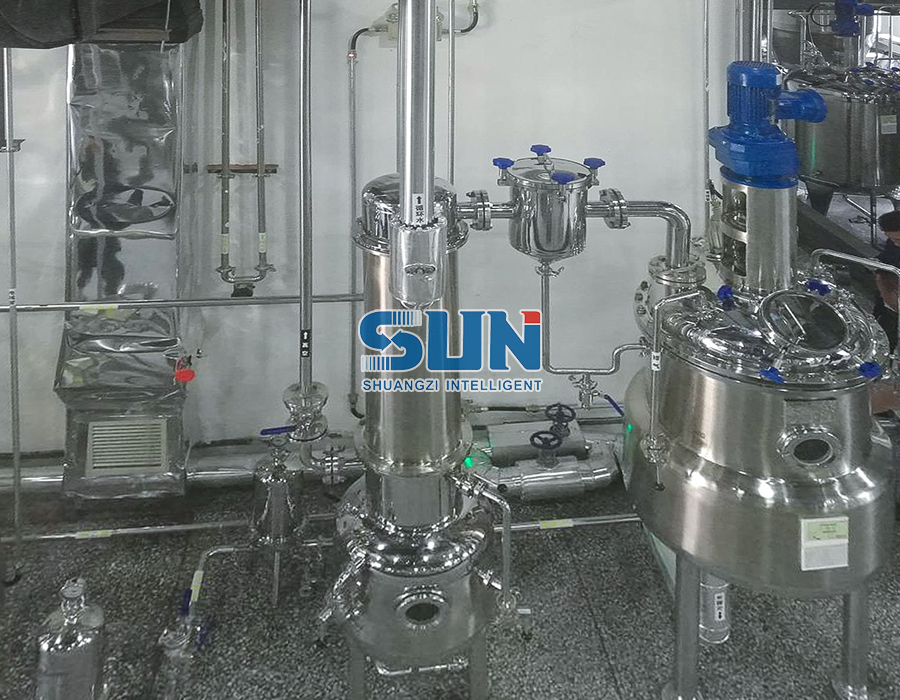
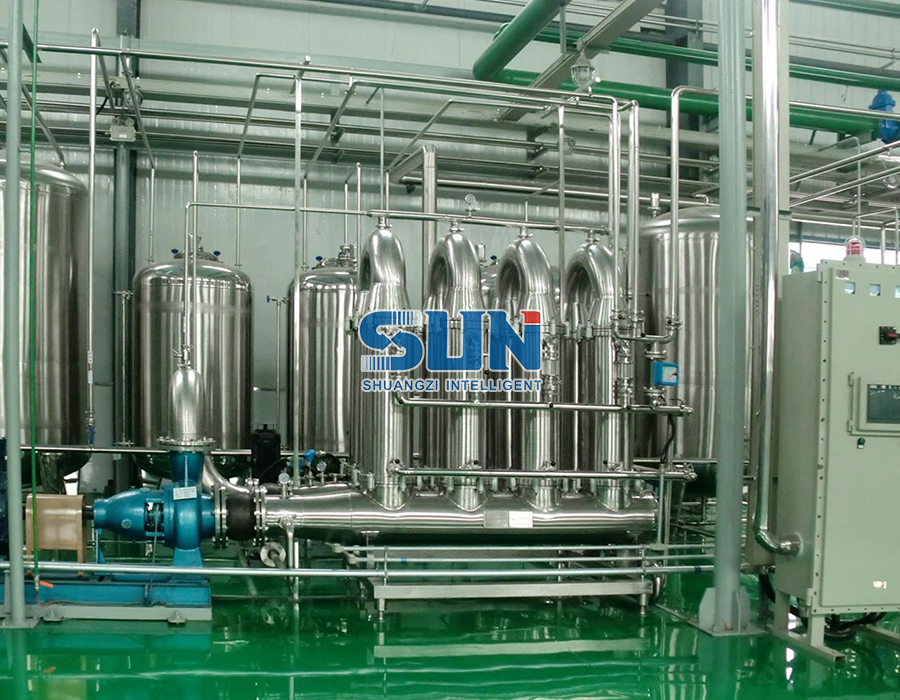
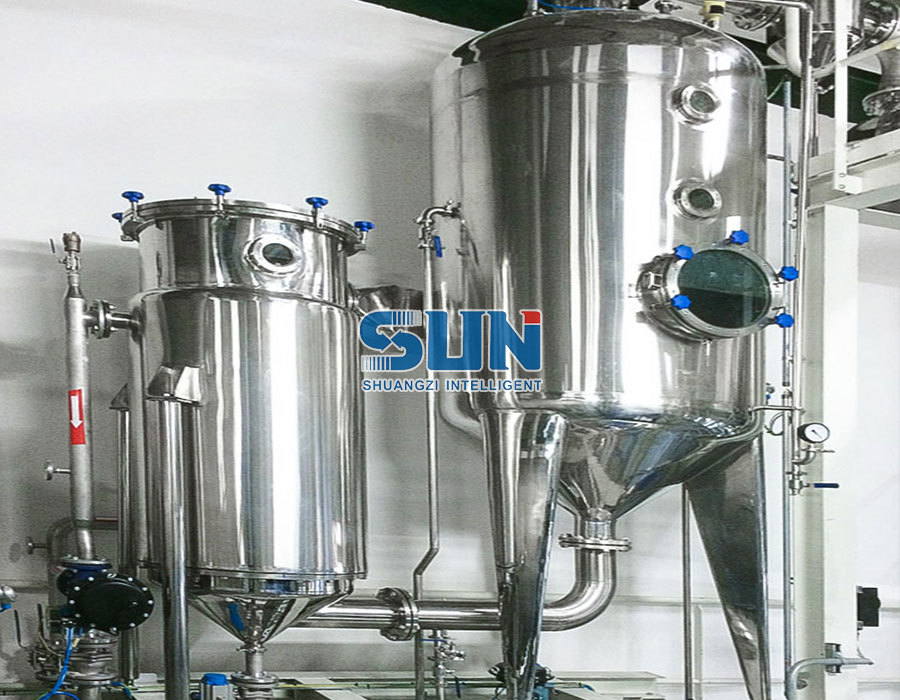
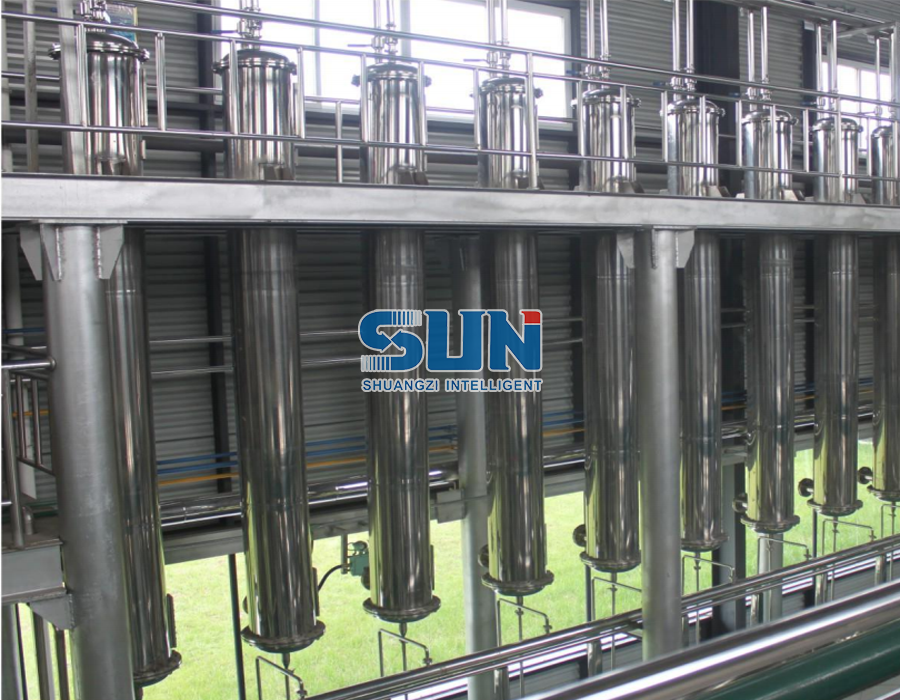
The full automatic version integrates a closed-loop control system that manages all critical parameters, including temperature, vacuum degree, feed rate, and concentration. Its core components include:
- Heating Chamber: Houses vertical tubes where the solution is heated; steam flows through the shell side to transfer heat to the falling film.
- Evaporation Chamber: Separates the vaporized solvent from the concentrated solution.
- Separator: Removes any entrained liquid droplets from the vapor to ensure high-purity solvent recovery.
- Condenser: Coolant (usually water) condenses the vapor back into liquid form for reuse or disposal.
- Cooler: Further cools the condensed solvent to prevent evaporation loss.
- Feed/Discharge Pumps: Regulate the flow of raw solution into the system and concentrated product out.
- Fully Automatic Control System: Uses sensors and actuators to monitor and adjust parameters in real time, ensuring consistent performance.
- Operation Platform & Pipeline Valves: Provide safe access for maintenance and control the flow of fluids throughout the system.
The working principle is straightforward: raw solution is pumped to the top of the heating chamber, where it forms a thin film on the inner walls of the tubes. Steam (at 0.6-0.8 MPa, per specifications) heats the film, causing the solvent to vaporize. The vapor rises into the evaporation chamber and separator, then to the condenser where it is cooled and collected. The concentrated solution flows out of the bottom of the heating chamber, completing the cycle.
Core Advantages of the Evaporator: Outperforming Competitors
Traditional evaporators—including batch, rising film, and atmospheric types—often struggle with heat-sensitive materials, inconsistent quality, high energy costs, and frequent maintenance. The full automatic vacuum single effect falling film evaporator addresses these issues through four key advantages:
1. Vacuum Low-Temperature Environment for Heat-Sensitive Materials
Many chemical products—such as organic intermediates, dyes, solvents, and pharmaceutical precursors—are heat-sensitive, meaning they degrade, decompose, or lose potency at temperatures above 60-70°C. Traditional atmospheric evaporators operate at 100°C or higher, leading to significant product loss (often 15-25%) and reduced purity. In contrast, this evaporator uses a vacuum environment to lower the boiling point of the solution to 60°C (customizable per customer needs), preserving the integrity of heat-sensitive materials.
For example, in the production of reactive dyes, traditional atmospheric evaporators cause 20% of the dye to decompose due to high temperatures, whereas this vacuum system reduces decomposition to less than 3%. Similarly, for organic solvents like methanol, the low-temperature environment prevents volatilization loss, recovering up to 95% of the solvent for reuse—saving chemical producers thousands of dollars annually in raw material costs.
Competitors often offer non-vacuum falling film evaporators, which lack the temperature control needed for heat-sensitive materials. Others provide vacuum systems but with manual control, leading to inconsistent vacuum levels and temperature fluctuations that still damage products. This evaporator’s combination of vacuum and automatic control eliminates these issues, making it the preferred choice for producers of high-value heat-sensitive chemicals.
2. Fully Automatic Closed-Loop Control for Consistent Quality
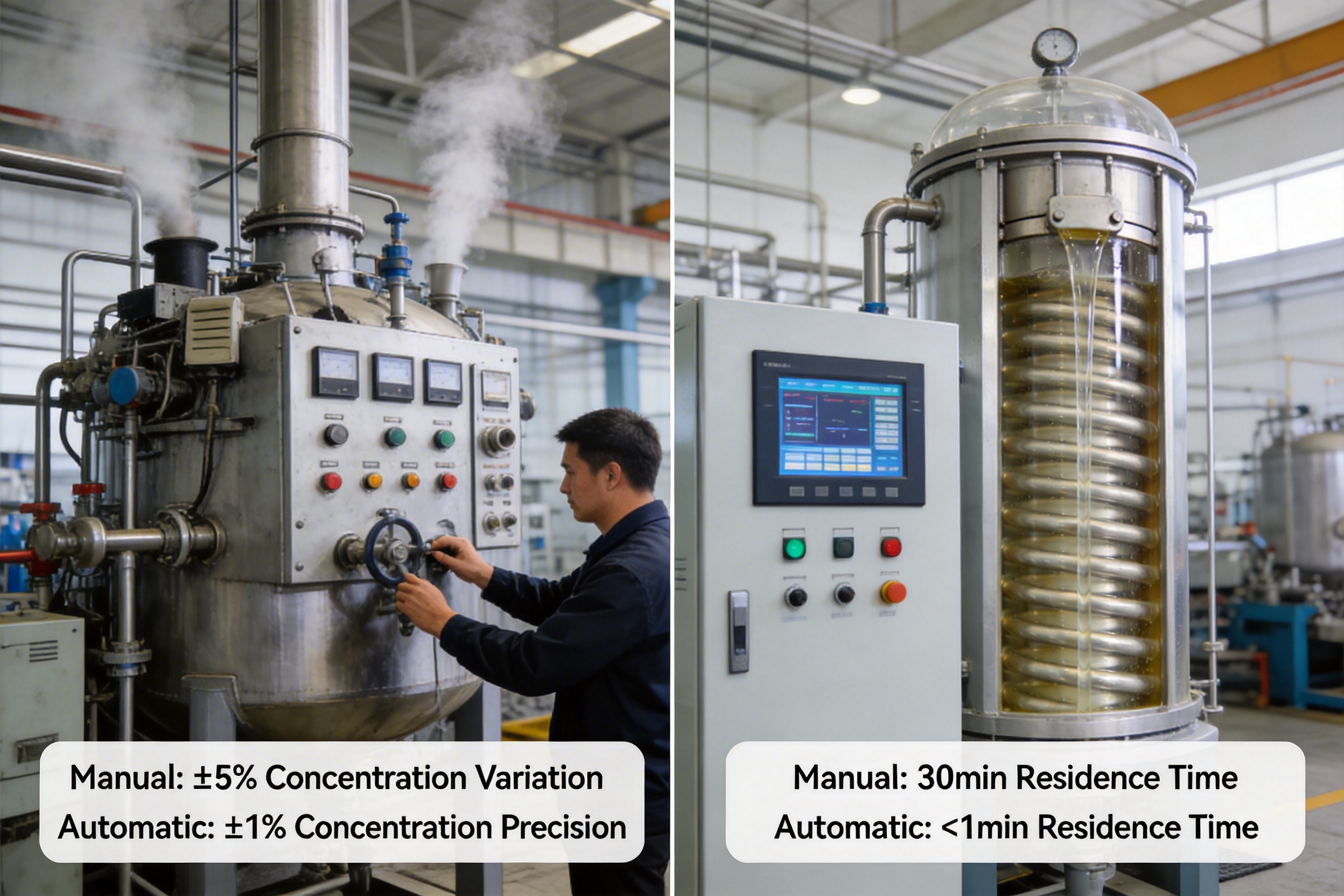
Manual control of evaporators is prone to human error, leading to batch-to-batch variations in concentration and quality. For example, a 5% variation in concentration can render a batch of chemical intermediates unsuitable for downstream processing, resulting in waste and lost revenue. The full automatic closed-loop control system in this evaporator uses precision sensors to monitor temperature, vacuum degree, feed rate, and concentration in real time, adjusting parameters automatically to maintain optimal conditions.
The system’s precision is unmatched: it maintains concentration within ±1% of the target, compared to ±5% for manual systems. This consistency ensures that every batch meets strict quality standards, reducing the need for rework and increasing customer satisfaction. Additionally, the automatic control reduces manual labor requirements by 30%, as operators no longer need to constantly monitor and adjust parameters—freeing them to focus on other critical tasks.
Competitors’ automatic systems often lack the closed-loop feedback mechanism, leading to delayed adjustments and inconsistent performance. Others use basic sensors that are prone to drift, requiring frequent calibration. This evaporator’s advanced control system uses industrial-grade sensors and PLC (Programmable Logic Controller) technology, ensuring long-term reliability and minimal maintenance.
3. Short Material Residence Time & Anti-Scaling Design
Material residence time—the duration a solution spends in the evaporator—is a critical factor for preventing scaling and product degradation. Traditional batch evaporators have residence times of 30-60 minutes, while rising film evaporators have 10-15 minutes. In contrast, this falling film evaporator has a residence time of just a few seconds, thanks to its thin film design and efficient flow dynamics.
This short residence time reduces the likelihood of solutes depositing on the inner walls of the heating tubes (scaling), which is a major issue for evaporators processing high-viscosity or easily crystallized materials (e.g., dye solutions, organic salts). Scaling reduces heat transfer efficiency, increases energy consumption, and requires frequent cleaning—leading to downtime and higher maintenance costs. For this evaporator, scaling is reduced by 80% compared to traditional systems, meaning cleaning is needed only once every 2 weeks instead of weekly.
Additionally, the sealed design of the evaporator prevents volatile solvents from escaping into the atmosphere, meeting strict environmental regulations (e.g., EU REACH, China’s GB 30485-2013). Competitors often have poorly sealed systems that lead to solvent emissions, resulting in fines and environmental damage. This evaporator’s sealed design and efficient solvent recovery system make it a sustainable choice for chemical producers.
4. Cost-Effective & Versatile for Small-Medium Enterprises
Multi-effect evaporators are highly efficient but require significant upfront investment and complex supporting infrastructure (e.g., high-pressure steam systems, large cooling towers). For small and medium-sized chemical enterprises (SMEs), these systems are often unaffordable or impractical. The single effect falling film evaporator offers a cost-effective alternative with lower investment and operational costs.
The evaporator’s simple structure means it requires minimal supporting facilities—only a steam supply, cooling water, and electricity. Its operational costs are also low: steam consumption is optimized (e.g., 420 kg/h for 600 kg/h evaporation capacity), and maintenance costs are reduced due to minimal scaling and wear. This makes it suitable for intermittent or small-batch production, which is common among SMEs.
Competitors often target large-scale producers with expensive multi-effect systems, leaving SMEs with outdated manual equipment. This evaporator fills a gap in the market, providing SMEs with access to advanced, automatic evaporation technology at a price they can afford. For example, a small dye manufacturer in Hangzhou recently replaced its manual evaporator with this system, reducing energy costs by 20% and increasing production efficiency by 15% within the first 6 months.
Advanced Manufacturing Processes & Company Strengths
The full automatic vacuum single effect falling film evaporator is manufactured by a leading Chinese enterprise specializing in biology and medical equipment. This company has established itself as a trusted provider of EPC (Engineering, Procurement, Construction) and EPCM (Engineering, Procurement, Construction Management) solutions, with a focus on process technology and automation engineering. Its advanced manufacturing processes and technical strengths ensure that every evaporator meets the highest standards of quality and performance.
1. EPC/EPCM Core Competency
The company’s core competency lies in its ability to provide turnkey projects for chemical, pharmaceutical, and food processing industries. For the falling film evaporator, this means it can handle everything from process design and equipment manufacturing to installation, commissioning, and after-sales service. This end-to-end approach ensures that the evaporator is integrated seamlessly into the customer’s production line, reducing project delays and ensuring optimal performance.
For example, a pharmaceutical company in Jiangsu needed to install a vacuum concentration system for its plant extraction line. The company provided a turnkey solution: designing the process flow, manufacturing the evaporator, installing it on-site, and training the customer’s operators. The system was commissioned within 8 weeks, and the customer reported a 25% increase in product yield due to the evaporator’s low-temperature processing.
2. R&D & Pilot Production Capabilities
The company invests heavily in R&D, with a dedicated team of engineers and a state-of-the-art pilot production workshop. The pilot workshop features small-scale versions of the falling film evaporator, allowing the company to test customer materials before full production. This ensures that the evaporator is compatible with the customer’s specific solution and meets their performance requirements.
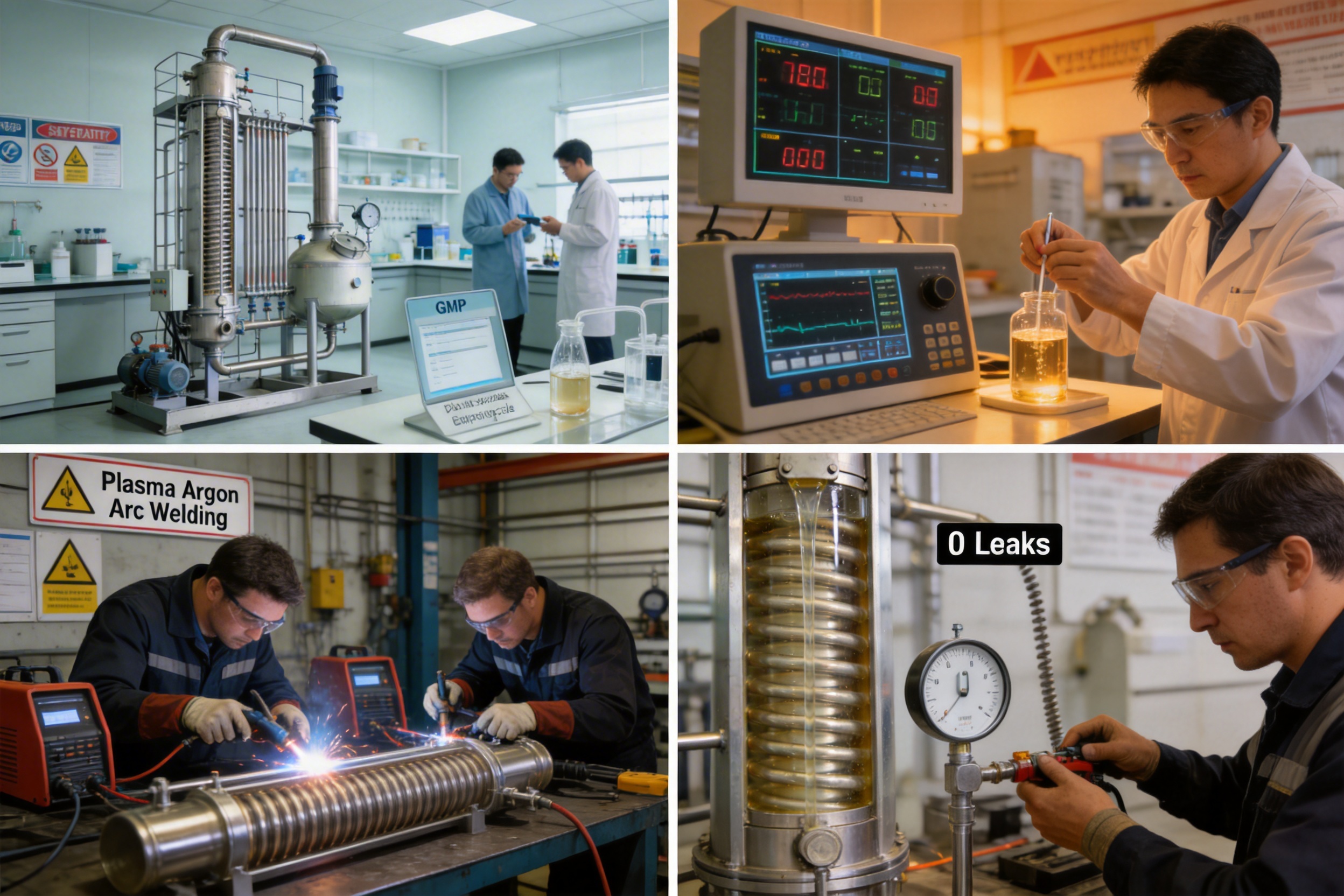
The workshop is also GMP-compliant (Good Manufacturing Practice), which is critical for customers in the pharmaceutical and food industries. GMP compliance ensures that the equipment is designed for easy cleaning and sanitization, preventing cross-contamination and ensuring product safety. Additionally, the company has introduced advanced manufacturing equipment, including plasma argon arc welding machines, plasma cutting machines, and CAM CNC machining centers—ensuring precise, high-quality parts.
3. Technical Strength & Experience
Founded in 2007, the company has over 15 years of experience in the design and manufacture of evaporation and concentration equipment. It covers a floor area of 16,706 m² and a structure area of 17,800 m², with a team of over 100 engineers and technicians. Its technical strength is evident in its mature product portfolio, which includes vacuum low-temperature drying systems, fermentation equipment, extraction equipment, and filtration systems—complementing the falling film evaporator to provide comprehensive solutions for chemical producers.
The company also absorbs foreign advanced technology, collaborating with international experts to improve its equipment. For example, it has partnered with German engineers to optimize the falling film distribution system, reducing dry spots and further improving heat transfer efficiency. This commitment to innovation ensures that its equipment remains at the forefront of the industry.
4. Quality Control & After-Sales Service
Quality control is a top priority for the company. Every evaporator undergoes rigorous testing before shipment, including vacuum leak tests, heat transfer efficiency tests, and automatic control system calibration. This ensures that the equipment meets or exceeds industry standards (e.g., GB/T 2625-2010 for process equipment).
The company also provides comprehensive after-sales service, including installation, commissioning, training, and maintenance. Its team of service engineers is available 24/7 to address customer issues, ensuring minimal downtime. For example, a chemical producer in Guangdong experienced a minor issue with the evaporator’s control system; the company’s engineers resolved the issue remotely within 2 hours, avoiding production loss.
Technical Specifications of the Evaporator
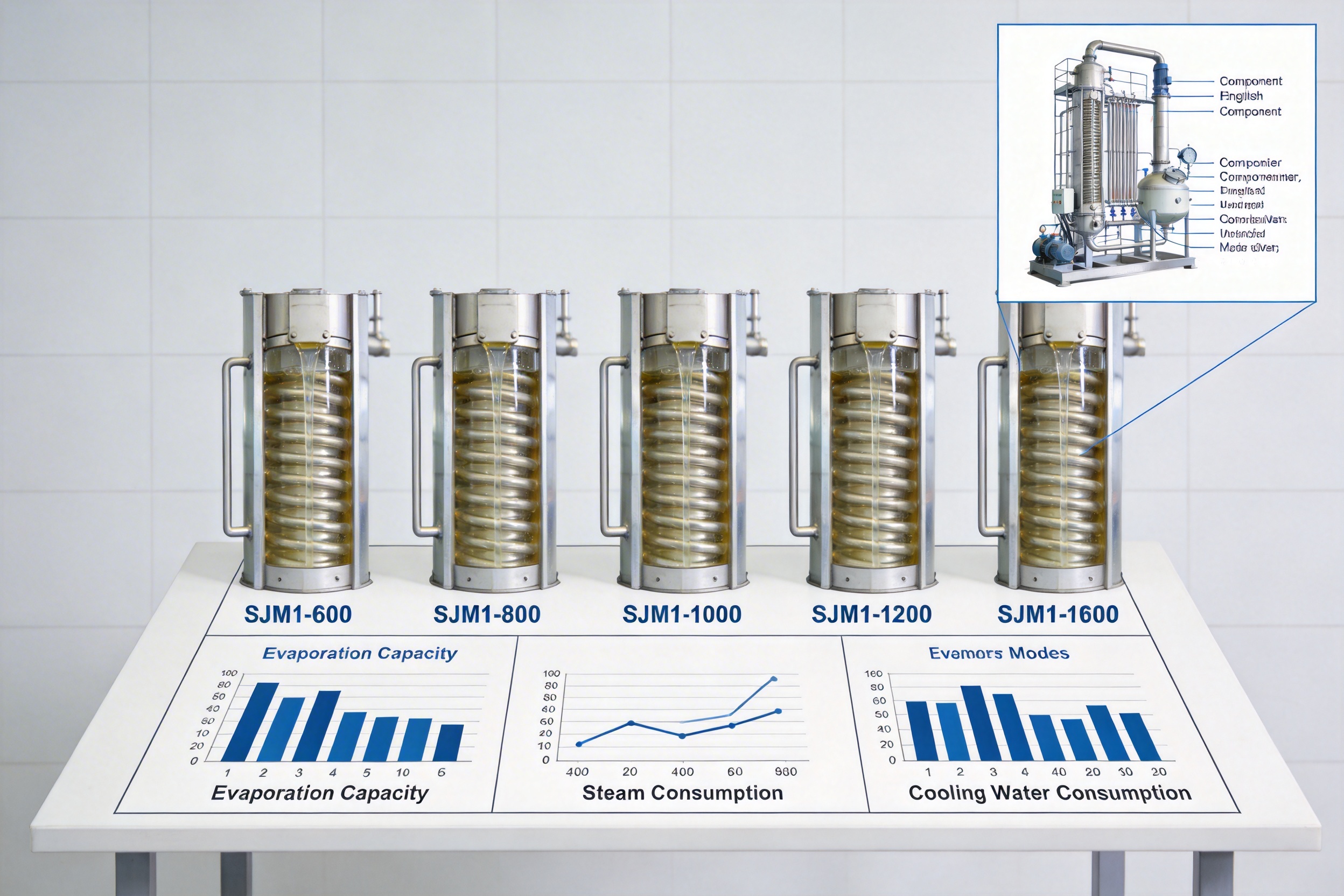
The full automatic vacuum single effect falling film evaporator is available in five models, each with different evaporation capacities to meet the needs of various customers. The table below outlines the key technical specifications for each model:
| Parameter | SJM1-600 | SJM1-800 | SJM1-1000 | SJM1-1200 | SJM1-1600 |
|---|---|---|---|---|---|
| Evaporation Capacity (kg/h) | 600 | 800 | 1000 | 1200 | 1600 |
| Product In Concentration (%) (Made to Order) | 11.5 ~ 12 | ||||
| Product Out Concentration (%) (Made to Order) | 45 ~ 48 | ||||
| Steam Pressure (MPa) | 0.6 ~ 0.8 | ||||
| Steam Consumption (kg/h) | 420 | 560 | 700 | 840 | 1100 |
| Evaporating Temperature (°C) | 60 (Customizable) | ||||
| Heating Temperature (°C) | 70 | ||||
| Sterilization Temperature (°C) | 86 ~ 94 | ||||
| Cooling Water Consumption (t/h) | 6 | 8 | 10 | 12 | 16 |
| Electric Total Power (KW) | 15.5 | 15.5 | 19.5 | 19.5 | 19.5 |
| Dimension (L*W*H) (m) | 3.9*2.3*6.5 | 3.9x2.3x7 | 3.9x2.4x7.5 | 3.9x2.4x8 | 3.9x2.4x8.5 |
Key notes on the specifications:
- Evaporation Capacity: Ranges from 600 kg/h to 1600 kg/h, suitable for small-batch to medium-scale production.
- Concentration Range: Customizable to meet specific customer needs (e.g., higher concentration for certain chemical products).
- Steam Pressure: Compatible with standard industrial steam systems (0.6-0.8 MPa), eliminating the need for specialized steam infrastructure.
- Customizable Evaporating Temperature: Can be adjusted to suit heat-sensitive materials with different temperature thresholds.
- Sterilization Temperature: Ensures the equipment can be sanitized for pharmaceutical and food processing applications.
Q&A Section
Below are answers to common questions about the full automatic vacuum single effect falling film evaporator:
Q1: What types of chemical materials is this evaporator suitable for?
A: The evaporator is ideal for heat-sensitive materials, high-viscosity solutions, and easily crystallized substances, including:
- Organic intermediates (e.g., pharmaceutical precursors, dye intermediates)
- Dyes and pigments (e.g., reactive dyes, acid dyes)
- Organic solvents (e.g., methanol, ethanol, acetone)
- High-viscosity solutions (e.g., polymer emulsions, food thickeners)
- Easily crystallized materials (e.g., organic salts, sugar solutions)
Q2: How does the automatic control system improve production efficiency?
A: The automatic closed-loop control system improves efficiency in three ways:
- Consistent Quality: Maintains concentration within ±1% of the target, reducing rework and waste.
- Reduced Labor: Eliminates the need for constant manual adjustment, freeing operators to focus on other tasks.
- Optimized Energy Use: Adjusts steam flow and cooling water consumption in real time to minimize energy waste.
Q3: Can the evaporator be customized for specific customer needs?
A: Yes. The company offers full customization, including:
- Adjusting evaporation capacity to meet production volume requirements.
- Changing the evaporating temperature to suit heat-sensitive materials.
- Modifying the concentration range (in and out) to meet product specifications.
- Adapting the equipment to handle specific solvents or materials.
Q4: What after-sales services are provided?
A: The company provides comprehensive after-sales support, including:
- On-site installation and commissioning.
- Training for operators and maintenance staff.
- 24/7 technical support (remote and on-site).
- Spare parts supply and maintenance services.
- Warranty coverage (1 year for parts and labor).
Q5: How does the company ensure product quality?
A: Quality control is embedded in every stage of the manufacturing process:
- Material Inspection: All raw materials (stainless steel, sensors, pumps) are inspected for quality before use.
- Manufacturing Testing: Each component undergoes precision machining and testing (e.g., plasma welding for leak-proofing).
- Final Assembly Testing: The complete evaporator is tested for vacuum tightness, heat transfer efficiency, and automatic control performance.
- Compliance: The equipment meets industry standards (e.g., GB/T 2625-2010, GMP) and customer-specific requirements.
References
1. Smith, J. D. (2018). Evaporator Technology for Chemical Processing: Principles and Applications. CRC Press, Boca Raton, FL.
2. International Association of Chemical Engineers (2020). Report on Energy-Efficient Evaporation Systems in Small-Medium Enterprises. AIChE Journal, 66(12), e16987.
3. Lee, S., & Park, H. (2021). Vacuum Falling Film Evaporators: A Review of Recent Advancements in Heat-Sensitive Material Processing. Journal of Chemical Engineering Progress, 15(3), 45-62.
4. China Pharmaceutical Equipment Association (2022). Industry Standard for Vacuum Concentration Equipment in Chemical and Pharmaceutical Sectors (GB/T 39567-2020). Beijing: China Standards Press.
5. Johnson, M. R. (2019). Cost-Benefit Analysis of Automatic vs. Manual Evaporation Systems. Process Engineering Today, 22(11), 78-85.