
 英语
 俄语
Content
- 1 What Is an Industrial Ethanol Distillation Tower?
- 2 Working Principle of Ethanol Recovery
- 3 Key Components of the Ethanol Distillation Tower
- 4 Available Models and Technical Data
- 5 Advantages Over Basic or Undersized Recovery Systems
- 6 Manufacturing Strengths and Engineering Capabilities
- 7 Applications in Different Industries
- 8 Customization and Project Configuration
- 9 Safety Considerations for Ethanol Distillation
- 10 Maintenance and Long-Term Performance
- 11 Quality and Service Advantages
- 12 Selection Guide for Buyers
- 13 Why This Equipment Is a Practical Industrial Choice
- 14 Frequently Asked Questions
- 14.1 What is the primary function of an ethanol distillation tower?
- 14.2 What recovery concentration can the tower achieve?
- 14.3 What recovery capacities are available?
- 14.4 What packing materials are available?
- 14.5 Can the tower be used for plant extraction?
- 14.6 Can the system be connected to a complete production line?
- 14.7 What utilities does the equipment require?
- 14.8 Is the equipment suitable for pharmaceutical or food applications?
- 14.9 How should the correct model be selected?
- 14.10 What factors affect the actual recovery performance?
- 14.11 Why is reflux important?
- 14.12 What services are available from the manufacturer?
- 15 Conclusion
- 16 References
- 17 Product: Ethanol Distillation Tower
Ethanol recovery is an important operation in pharmaceutical manufacturing, plant extraction, fermentation, food processing, chemical production, and many other industrial applications. Whenever ethanol is used as an extraction solvent, reaction medium, cleaning agent, or fermentation product, a reliable recovery system is needed to separate the alcohol from water, dissolved solids, residual materials, and other process impurities. An industrial ethanol distillation tower provides a practical and efficient solution by using controlled heating, vaporization, condensation, and reflux to recover ethanol at a concentration of more than 90% under suitable operating conditions.
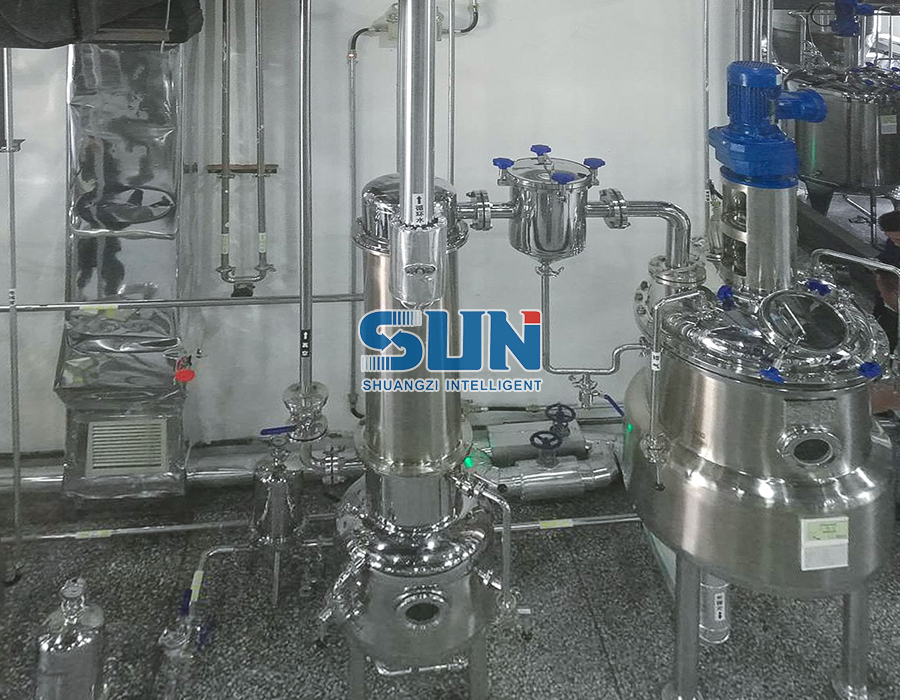
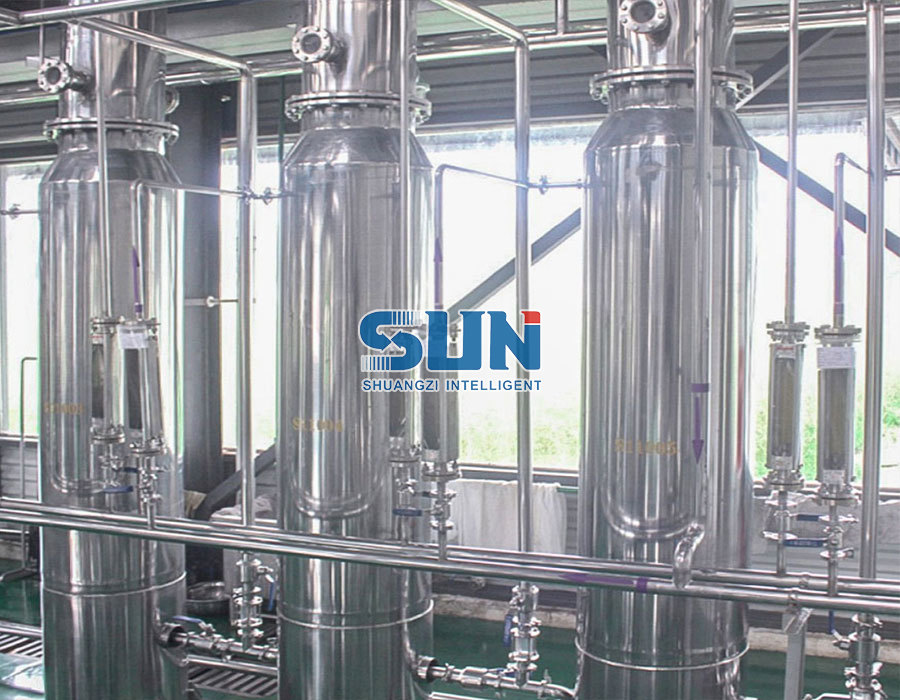
The ethanol distillation tower described in this article is a vertical separation system designed for continuous or batch-associated alcohol recovery. It integrates a tower body, internal packing, a condenser, a cooling section, a heat exchange system, liquid collection equipment, and reflux control components. Different capacity models are available, with listed recovery capacities ranging from approximately 45–50 kg/h to 600–620 kg/h. This range allows the equipment to serve pilot-scale operations, medium-sized production lines, and larger industrial process systems.
Manufactured by Zhejiang Shuangzi Intelligent Equipment Co., Ltd., the system is supported by process engineering, equipment design, fabrication, installation, commissioning, and system integration capabilities. The company serves industries including plant extraction, biological fermentation, pharmaceutical engineering, natural food production, energy conservation, and environmental protection. Its EPC and EPCM-oriented approach enables customers to obtain not only an individual tower but also a coordinated process solution.
What Is an Industrial Ethanol Distillation Tower?
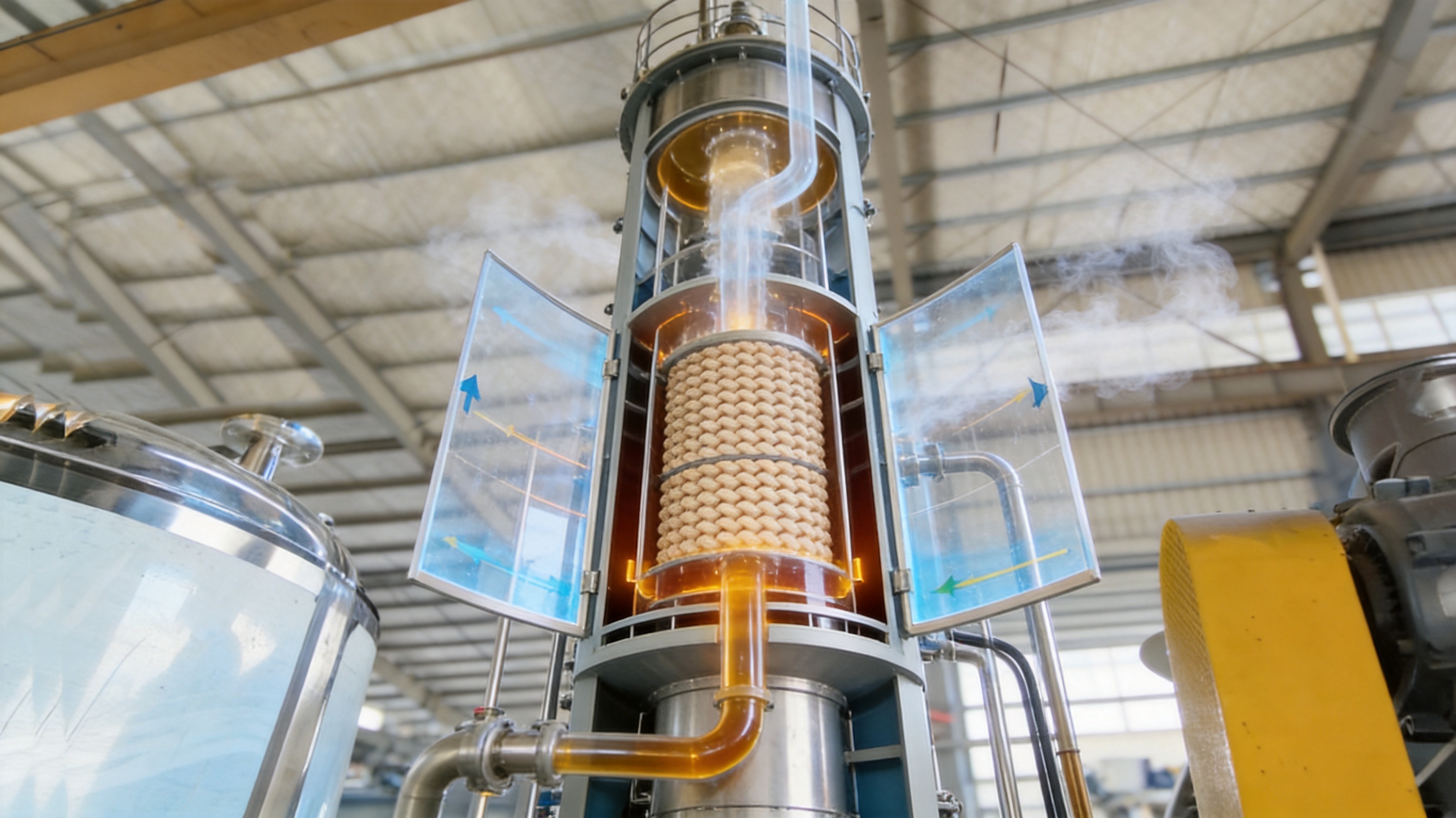
An ethanol distillation tower is a separation machine used to recover ethanol from a liquid mixture. The separation is based primarily on the different volatilities and boiling characteristics of the mixture components. When the feed is heated, the more volatile components tend to enter the vapor phase more readily. Ethanol vapor rises through the tower, while liquid flows downward. Repeated contact between the rising vapor and descending liquid enriches the vapor in ethanol and improves the separation result.
At the top of the tower, ethanol-rich vapor enters a condenser. Cooling removes heat from the vapor and converts it into liquid. A portion of this liquid can be returned to the tower as reflux. The remaining portion is collected as the recovered alcohol product. Reflux is essential because it creates repeated vapor-liquid contact inside the tower, improving separation efficiency and allowing the operator to balance recovery rate, energy consumption, and product concentration.
The tower can use ceramic or stainless steel corrugated packing material. Packing provides a large contact area between the liquid and vapor phases without requiring a large number of mechanical trays. The selected packing type influences pressure drop, liquid distribution, mass-transfer efficiency, corrosion resistance, cleaning requirements, and suitability for different feed compositions.
Although the system is commonly called an ethanol distillation tower, its actual performance depends on the complete process design. Feed concentration, impurity profile, flow rate, operating pressure, heating medium, cooling water temperature, reflux ratio, packing arrangement, and product requirements all affect the final result. For this reason, the tower should be selected and configured as part of a complete process engineering evaluation rather than treated as a standalone vessel.
Working Principle of Ethanol Recovery
Feed Heating and Vapor Generation
The recovery process begins when an ethanol-containing feed enters the heating and distillation section. The feed may come from plant extraction, fermentation broth, pharmaceutical processing, solvent washing, or another industrial operation. Heat is transferred into the liquid through a heat exchange system. As the temperature rises, ethanol and other volatile components begin to vaporize.
The vapor generated in the lower part of the system rises through the tower. At the same time, condensed liquid flows downward over the packing. The countercurrent movement creates continuous contact between vapor and liquid. Ethanol transfers preferentially into the vapor phase, while less volatile components and heavier impurities remain more concentrated in the liquid phase.
Vapor-Liquid Mass Transfer
The internal packing is a central part of the separation process. It spreads the descending liquid over a large surface area and allows vapor to pass upward through the wetted packing. At each point of contact, the composition of the vapor and liquid moves toward equilibrium. Because the vapor and liquid compositions change progressively along the tower, the equipment can achieve a separation result similar to multiple theoretical stages within a single packed column.
Compared with a simple boiling vessel, a packed tower offers much greater contact between the phases. This improves the ability to recover ethanol from dilute or contaminated streams. The packing also allows the tower to maintain a relatively compact process arrangement compared with an equivalent series of separate vessels.
Condensation and Reflux
After moving upward through the tower, ethanol-rich vapor reaches the condenser. The condenser transfers heat from the vapor to a cooling medium, such as cooling water, and converts the vapor into liquid. The condensed liquid is divided between product collection and reflux return according to the operating design.
Reflux is the portion of condensed liquid returned to the tower. A higher reflux rate generally improves product purity because it increases internal liquid flow and provides more opportunities for vapor-liquid contact. However, greater reflux also increases heat demand and may reduce the net product withdrawal rate. The reflux device therefore plays an important role in achieving the desired balance between concentration, capacity, and operating cost.
Product Collection and Residue Removal
The recovered ethanol product is collected after condensation and controlled separation. Depending on the process, the product may be sent to a storage tank, returned to an extraction line, transferred to another purification stage, or used directly in a downstream operation.
Less volatile materials remain in the bottoms liquid. These materials may include water, dissolved solids, plant compounds, fermentation residues, pharmaceutical process materials, and other nonvolatile components. Proper bottoms handling is important for stable operation, heat-transfer performance, cleaning, and environmental management.
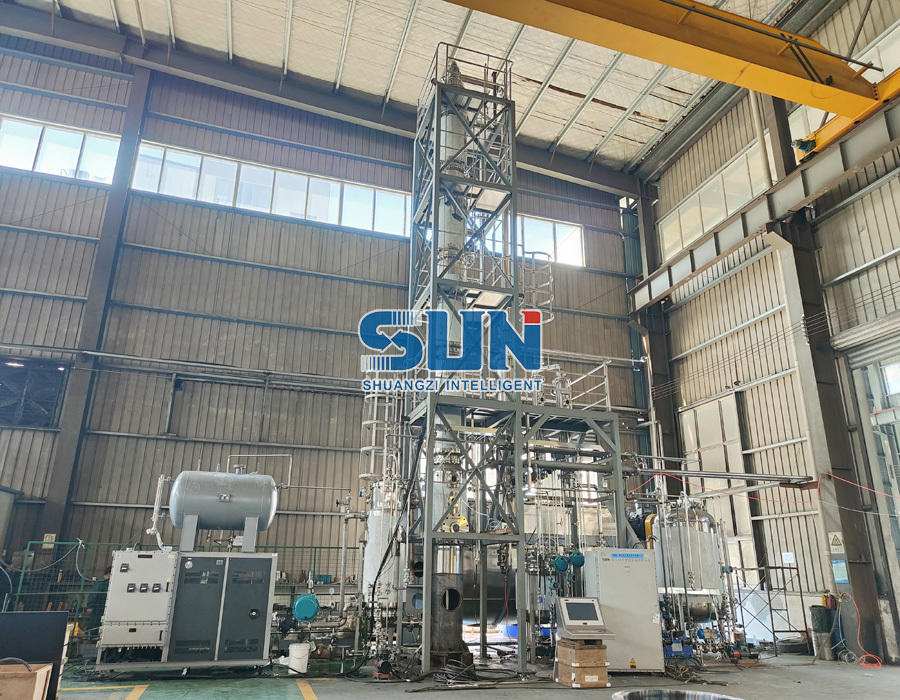
Ethanol Distillation Tower
Key Components of the Ethanol Distillation Tower
Vertical Tower Body
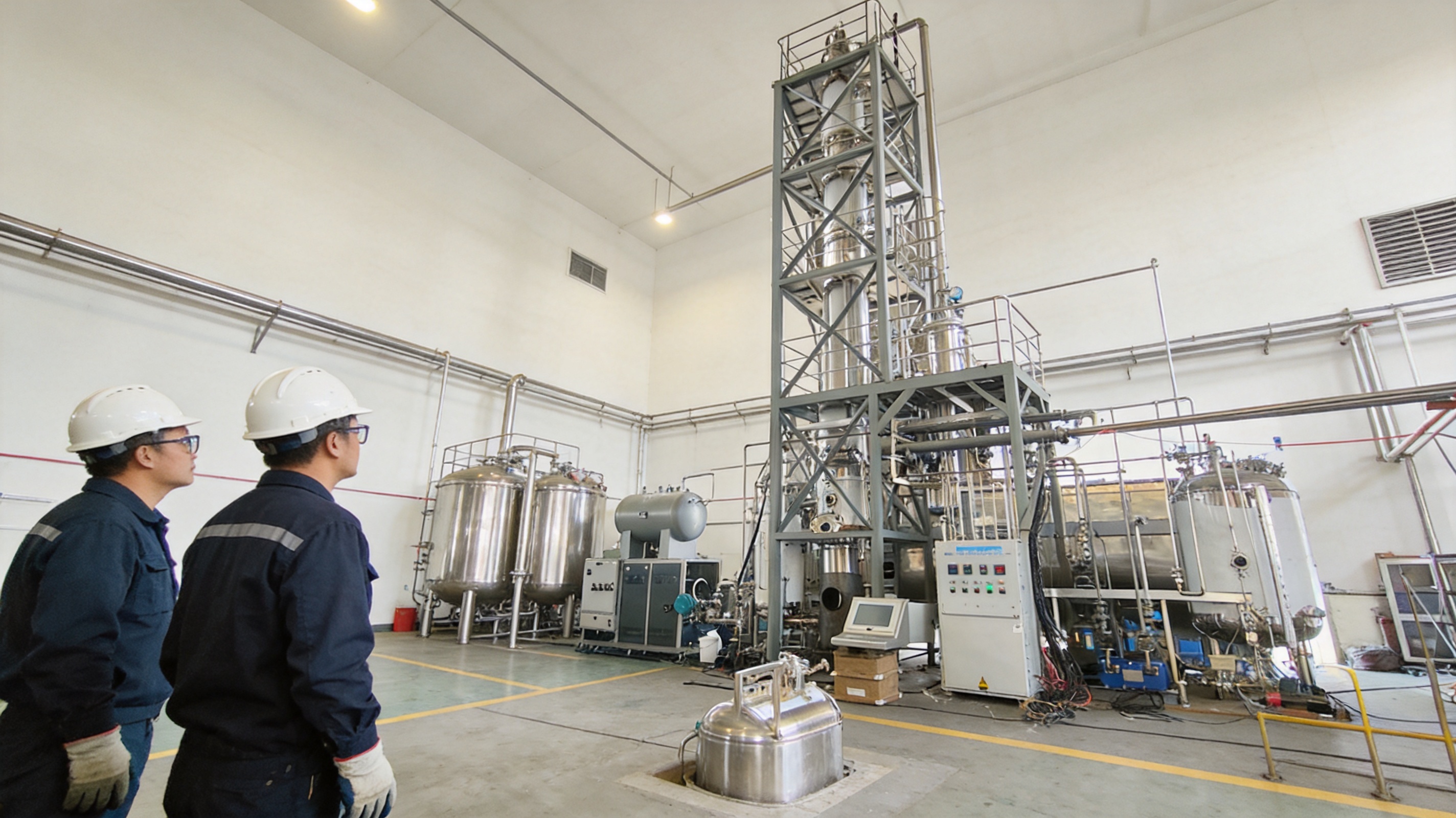
The tower body is the primary structural component. It is generally fabricated as a vertical cylindrical vessel designed to accommodate the required internal packing height, liquid distribution components, vapor flow, access points, and process connections. The available models have listed overall dimensions ranging from approximately 2,300 × 700 × 9,300 mm for the JH-200 model to approximately 4,200 × 1,800 × 18,000 mm for the JH-800 model.
A vertical configuration uses the natural direction of vapor rise and liquid descent. It also provides the height needed for effective mass transfer. The actual height and diameter are selected according to the required recovery capacity, feed composition, allowable vapor velocity, packing type, and desired separation performance.
Packed Separation Section
The packed section provides the active area for vapor-liquid contact. Ceramic packing can be appropriate for certain corrosive or chemically demanding streams, while stainless steel corrugated packing offers mechanical strength, cleanability, and compatibility with many industrial process environments. The final selection should consider feed chemistry, operating temperature, ethanol concentration, suspended solids, cleaning agents, and maintenance practices.
Uniform liquid distribution is essential. If liquid is unevenly distributed, some portions of the packing may be underused while other portions experience excessive liquid loading. A well-designed distribution arrangement helps the tower achieve more consistent mass transfer and supports stable operation across the rated capacity range.
Condenser
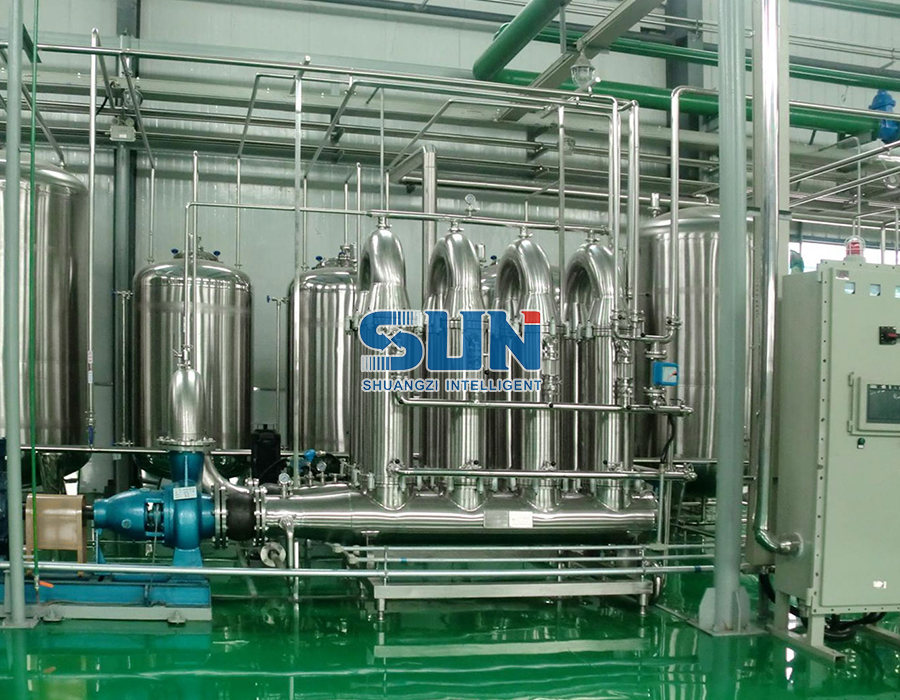
The condenser converts ethanol-rich vapor into liquid. The supplied equipment information lists condensation areas from 5 m² on the JH-200 model to 45 m² on the JH-800 model. A larger condensation area allows the system to remove more heat and support higher vapor loads, provided that the cooling medium has sufficient flow and an appropriate temperature.
The condenser may be designed as a shell-and-tube heat exchanger or a comparable industrial heat-transfer assembly. Material selection, tube arrangement, fouling allowance, cleanability, and pressure rating are important considerations. Since ethanol vapor is flammable, the condenser and associated piping must be integrated into a process system that addresses containment, ventilation, grounding, temperature control, and ignition prevention.
Cooling Section
The listed cooling areas range from 1 m² to 8 m² across the available models. Cooling capacity affects condensation stability, product temperature, vapor containment, and the ability to operate continuously. Insufficient cooling can cause vapor breakthrough, unstable pressure, poor recovery, and increased solvent losses.
Cooling-water quality should also be considered. Suspended solids, scaling minerals, biological growth, and corrosion products can reduce heat-transfer performance. A suitable water-treatment and maintenance program helps preserve the designed cooling capacity over time.
Heat Exchange System
The heat exchange area of the listed models ranges from 3.0 m² to 26 m². The heating system supplies the energy needed to vaporize ethanol and maintain the required internal temperature profile. Steam, hot water, thermal fluid, or another suitable heating medium may be selected according to the application and plant utilities.
Good heat-exchange design supports stable vapor generation while limiting localized overheating. It can also improve energy management by enabling heat recovery between hot and cold process streams. The best heating arrangement depends on feed viscosity, solids content, thermal sensitivity, target capacity, and the available utility system.
Reflux Device and Liquid Control
The reflux device regulates the quantity of condensed liquid returned to the tower. It may include a liquid level control system, pump, condenser-related components, valves, instrumentation, and a collection vessel. By adjusting the reflux rate, operators can influence ethanol concentration, separation stability, and production throughput.
A controlled reflux system is more useful than a fixed manual return arrangement because feed conditions can change during production. Variations in feed ethanol concentration, temperature, flow rate, or impurity load may require a corresponding adjustment in reflux. Automated or semi-automated control can reduce operator workload and help maintain more consistent product quality.
Available Models and Technical Data
The following table summarizes the listed technical information for the standard ethanol recovery tower models. Actual performance may vary according to feed properties, operating conditions, installation design, utility conditions, and customer-specific configuration.
| Item | JH-200 | JH-300 | JH-400 | JH-500 | JH-600 | JH-800 |
|---|---|---|---|---|---|---|
| Tower volume (L) | 640 | 1,220 | 1,450 | 2,300 | 2,500 | 3,200 |
| High-position height (mm) | 6,000 | 7,000 | 7,000 | 7,000 | 7,500 | 7,500 |
| High tank volume (L) | 300 | 400 | 650 | 800 | 1,000 | 1,500 |
| Condensation area (m²) | 5 | 9 | 11 | 18 | 25 | 45 |
| Cooling area (m²) | 1 | 1.5 | 2.2 | 4 | 6 | 8 |
| Heat exchange area (m²) | 3.0 | 6.0 | 6.5 | 10 | 15 | 26 |
| Recovery capacity (kg/h) | 45–50 | 90–100 | 150–160 | 280–300 | 420–440 | 600–620 |
| Recovery concentration | More than 90%, subject to feed and operating conditions | |||||
| Packing material | Ceramic or stainless steel corrugated packing | |||||
| Overall dimensions, L × W × H (mm) | 2,300 × 700 × 9,300 | 2,600 × 800 × 12,500 | 2,500 × 1,000 × 15,000 | 3,000 × 1,200 × 18,000 | 3,500 × 1,400 × 18,000 | 4,200 × 1,800 × 18,000 |
The model range provides a progressive capacity structure. Smaller units are suitable for pilot testing, process development, small-batch extraction, and limited-volume recovery. Larger units are intended for production environments that require higher throughput and more extensive heat-transfer and condensation capacity.
The recovery capacity figures should not be interpreted as universal guarantees for every feed. A stream with a high water content, heavy dissolved solids, significant suspended matter, or thermally sensitive components may require different operating conditions from a relatively clean ethanol-water mixture. Process trials and engineering calculations are recommended before final equipment selection.
Advantages Over Basic or Undersized Recovery Systems
Improved Separation Through Countercurrent Contact
A basic evaporator or single-stage boiling vessel may remove a portion of ethanol, but it generally provides less vapor-liquid contact and less control over product concentration. The packed tower improves separation by creating repeated contact between rising vapor and descending liquid. This makes it possible to obtain a more concentrated recovered stream under controlled conditions.
The countercurrent arrangement also helps reduce ethanol remaining in the bottoms stream. Better recovery can reduce solvent purchasing requirements, lower waste volume, and improve the overall economics of extraction or fermentation operations.
Broader Capacity Selection
Competitiveness in industrial equipment is not determined only by the maximum rated capacity. The ability to select a correctly sized unit is equally important. An oversized tower may increase capital cost and utility consumption, while an undersized tower may create bottlenecks, unstable operation, and excessive solvent losses.
The JH-200 through JH-800 range gives users several capacity options. With listed recovery capacities from 45–50 kg/h up to 600–620 kg/h, the range can accommodate different production scales without forcing every customer into a single standard design.
Integrated Heating, Cooling, and Reflux Functions
Some low-cost recovery systems rely on separate, loosely coordinated pieces of equipment. Such arrangements can increase installation complexity and create difficulties in controlling heat input, condensation, liquid level, and reflux. An integrated tower system brings these functions into a coordinated process package.
The combination of heat exchange area, condensation area, cooling area, packing, and reflux management supports more consistent operation. It also simplifies the engineering process because the major separation functions are considered together during equipment configuration.
Flexible Packing Options
The availability of ceramic and stainless steel corrugated packing provides greater flexibility than a one-material design. Ceramic materials may be selected for certain chemical environments, while stainless steel packing may be preferred where mechanical strength, durability, cleanability, or compact construction is especially important.
Material selection should be based on actual process chemistry. A professional equipment supplier can review the feed composition, solvent concentration, pH, temperature, chloride exposure, cleaning chemicals, and expected operating life before recommending the appropriate packing and wetted-part materials.
Support for Process Recovery and Resource Efficiency
Recovering ethanol is not only a product-purification step. It is also a resource-efficiency measure. Recovered alcohol may be reused in extraction or production, reducing the need for fresh solvent. Lower solvent consumption can reduce procurement costs, storage requirements, transportation demand, and waste-treatment pressure.
Efficient recovery can also improve the environmental profile of a process. However, actual energy savings depend on the heating and cooling utilities, insulation, operating schedule, heat recovery design, and feed conditions. The tower should therefore be integrated into a broader energy-management plan rather than evaluated only by its nameplate capacity.
Adaptability to Turnkey Projects
For customers developing or expanding a complete production line, a tower alone may not be sufficient. The system may need to connect with extraction tanks, fermentation vessels, evaporators, storage tanks, filters, pumps, utilities, control panels, and product transfer systems. A supplier with experience in turnkey projects can coordinate these interfaces and reduce the risks associated with incompatible equipment.
Zhejiang Shuangzi Intelligent Equipment Co., Ltd. provides process design, equipment design, manufacture, matching procurement, installation, line debugging, and system integration services. This capability can be valuable when the ethanol recovery stage is part of a larger plant extraction, fermentation, pharmaceutical, food, or environmental project.
Manufacturing Strengths and Engineering Capabilities
Experience in Process Equipment
The manufacturer is an industrial equipment enterprise established in 2007. It focuses on process technology and automation engineering design, equipment manufacturing, matching procurement, installation, and equipment system integration. Its product and project experience covers plant extraction, biological fermentation, pharmaceutical engineering, natural food, energy conservation, and environmental protection.
This industry coverage is relevant to ethanol recovery because ethanol separation often appears as one stage within a more complex process. Understanding upstream extraction or fermentation and downstream concentration, storage, or formulation helps a supplier design more practical connections between equipment units.
Production and Research Facilities
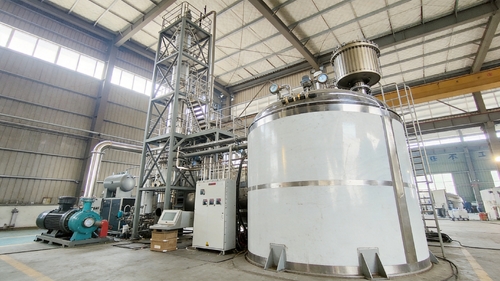
The company covers a floor area of approximately 16,706 square meters and has a structure area of approximately 17,800 square meters. It also maintains a pilot production workshop and an R&D platform intended to support automation and GMP-related process requirements. These facilities can assist with process verification, equipment development, and testing of production concepts before full-scale installation.
Pilot-scale work is especially useful for ethanol recovery because the feed composition can change significantly from one industry to another. Plant extracts may contain color bodies, oils, sugars, or suspended particles. Fermentation streams may contain yeast, proteins, organic acids, and residual nutrients. Pharmaceutical and food streams may require stricter cleaning and material compatibility considerations. Testing helps establish realistic operating conditions before a large system is built.
Advanced Welding and Finishing Equipment
The manufacturer has introduced plasma argon arc welding machines, plasma cutting machines, CAM CNC machining centers, and other advanced production equipment. These tools support more controlled fabrication of process vessels, heat-transfer components, pipe connections, frames, and other equipment parts.
High-quality welding and finishing are important for ethanol systems. Smooth internal surfaces can improve cleanability and reduce locations where process residues accumulate. Controlled cutting and machining can support accurate component fit-up, consistent connection geometry, and more reliable assembly. Welding quality also contributes to leak prevention and long-term mechanical integrity.
Integration of Mechanical and Automation Design
An ethanol distillation tower must perform as both a mechanical system and a controlled process system. Mechanical design determines vessel dimensions, packing support, heat-transfer surfaces, nozzle arrangements, structural stability, and maintainability. Automation design determines how temperature, pressure, liquid level, flow, reflux, heating, and cooling are monitored and adjusted.
The company’s focus on process technology and automation engineering allows these areas to be considered together. A coordinated design can make startup more predictable, support more stable operation, and simplify communication between the equipment, instrumentation, and plant control system.
Engineering, Installation, and Commissioning Support
Equipment performance depends heavily on installation quality. Incorrect pipe slopes, inadequate supports, improper pump selection, insufficient insulation, poor electrical grounding, or unsuitable utility connections can compromise an otherwise well-designed tower. Installation and commissioning support help verify that the equipment is connected and adjusted correctly.
Commissioning may include checking pumps and valves, confirming instrument readings, testing heating and cooling circuits, verifying reflux control, checking for leaks, establishing operating procedures, and observing the system under representative conditions. Operator training and documentation are also important for maintaining safe and consistent performance after handover.
Applications in Different Industries
Plant Extraction
Ethanol is widely used to extract active compounds, pigments, oils, flavonoids, alkaloids, and other valuable substances from botanical materials. After extraction, the solvent may need to be separated from the concentrated extract. An ethanol recovery tower can recover the alcohol for reuse while allowing the desired plant extract to proceed to evaporation, drying, formulation, or packaging.
Plant extraction feeds can be chemically complex. Their composition depends on the raw material, solvent ratio, extraction temperature, filtration performance, and upstream concentration steps. Pretreatment and filtration may be necessary to reduce solids loading and protect the packing, heat-transfer surfaces, pumps, and valves.
Biological Fermentation
Fermentation processes can generate ethanol directly or use ethanol in downstream processing. A distillation tower can help separate alcohol from fermentation liquor and support concentration before storage or further purification. The feed may contain water, microorganisms, proteins, sugars, organic acids, and suspended solids, so the equipment arrangement must be selected carefully.
For fermentation projects, the tower may be connected with fermentation tanks, clarification equipment, evaporators, condensers, storage tanks, and cleaning systems. The ability to provide complete fermentation system equipment and related process units can help simplify project coordination.
Pharmaceutical Manufacturing
Pharmaceutical production often uses ethanol as a solvent, extraction medium, cleaning agent, or crystallization component. Recovery equipment can reduce solvent consumption and support controlled material handling. Pharmaceutical applications require particular attention to surface finish, drainability, cleaning procedures, material compatibility, documentation, and process validation requirements.
The final equipment configuration must be matched to the customer’s quality system and regulatory obligations. Product-contact materials, cleaning agents, operating records, instrumentation, and acceptance testing should be reviewed during the engineering stage.
Natural Food and Flavor Processing
Ethanol may be used in the production of botanical flavors, food extracts, fragrances, and other natural ingredients. Recovery allows the processor to reuse solvent and reduce the amount of alcohol sent to waste treatment. The tower can be integrated with extraction vessels, filtration equipment, evaporation systems, and storage tanks.
Food-related applications require careful hygienic design. Smooth surfaces, suitable materials, accessible connections, effective cleaning, and controlled product transfer are important considerations. The supplier should evaluate the intended product, cleaning procedure, and local requirements before finalizing the design.
Energy and Environmental Applications
Some industrial waste streams contain recoverable ethanol or other volatile organic compounds. A suitable distillation arrangement can reduce the amount of solvent discharged in liquid waste and recover valuable material. The design must account for waste-stream variability, contamination, foaming, solids, corrosion, and safe vapor handling.
Environmental applications often benefit from upstream equalization, filtration, or pretreatment. Process monitoring is particularly important because the feed can change rapidly, affecting vapor loading, condenser duty, and product quality.
Customization and Project Configuration
Feed Analysis
The first step in selecting an ethanol recovery tower is to understand the feed. Important information includes ethanol concentration, water content, flow rate, temperature, solids content, viscosity, pH, dissolved salts, oils, organic compounds, and any substances that may foam or cause fouling.
Feed analysis helps determine the required tower capacity, packing material, heat-transfer area, pump design, filtration requirements, condenser size, and cleaning strategy. It also helps identify whether a single distillation stage is sufficient or whether additional purification equipment is needed.
Capacity and Operating Schedule
Capacity should be evaluated according to both hourly flow and daily operating schedule. A system operating continuously may require a different arrangement from a unit used for intermittent batch recovery. Peak feed rates, startup time, shutdown procedures, cleaning cycles, and seasonal production changes should be included in the project calculation.
The listed JH models provide a starting point for selection. For example, the JH-200 model has a listed recovery capacity of 45–50 kg/h, while the JH-800 model is listed at 600–620 kg/h. The appropriate model depends on the actual feed and desired operating margin, not simply on the nominal production target.
Material and Surface Requirements
Material selection should be based on the chemical properties of the feed and the cleaning system. Stainless steel may be selected for many industrial applications, while ceramic packing may be appropriate in specific corrosive environments. The customer should communicate any chloride exposure, strong acids or alkalis, abrasive solids, or special hygienic requirements before fabrication.
Surface finishing is also relevant. Smooth, accessible, and drainable surfaces can reduce residue accumulation and support cleaning. The design should minimize unnecessary dead legs and provide practical access for inspection and maintenance.
Utility Planning
The tower requires heating and cooling utilities. Utility planning should address steam or hot-water availability, cooling-water flow, inlet temperature, return temperature, condensate handling, electrical power, compressed air, ventilation, and drainage. The utility system must be sized for the selected capacity and operating conditions.
Insulation can reduce heat loss from the tower and hot piping. Heat recovery may be possible by transferring energy from hot condensate or product streams to incoming feed. These measures should be evaluated during the process design stage because they may influence equipment arrangement and control strategy.
Control and Instrumentation
Typical control points may include feed flow, tower temperature, pressure, condenser temperature, reflux flow, liquid level, heating-medium flow, cooling-water flow, and product discharge. The instrumentation level can range from basic local control to a more comprehensive automated system connected to a plant-wide control platform.
Stable control is particularly important when feed properties vary. A reliable control strategy can prevent excessive heating, poor condensation, flooding, dry packing, unstable product concentration, and unnecessary energy use. Alarm limits and shutdown functions should be established as part of the safety and automation design.
Safety Considerations for Ethanol Distillation
Ethanol is flammable, and distillation involves heat and vapor generation. Safety must therefore be considered throughout design, fabrication, installation, operation, and maintenance. The system should be installed in an appropriate location with suitable ventilation and a layout that limits exposure to ignition sources.
Electrical equipment, instrumentation, motors, switches, and control devices should be selected according to the hazardous-area classification and applicable local requirements. Proper bonding and grounding help reduce the risk of static discharge. All tanks, pipes, pumps, and vessels should be checked for compatibility with the intended process and pressure conditions.
Operators should be trained in startup, normal operation, emergency shutdown, leak response, cleaning, and maintenance. Procedures should define how to confirm cooling flow before heating begins, how to respond to abnormal pressure or temperature, and how to isolate equipment before inspection.
Pressure protection, temperature alarms, liquid-level safeguards, emergency stops, and appropriate venting should be included where required by the process risk assessment. The detailed safety design must be completed by qualified engineers in accordance with applicable codes, regulations, and site standards.
Maintenance and Long-Term Performance
Packing Inspection
Packing should be inspected periodically for fouling, blockage, breakage, channeling, or material degradation. Plant extracts and fermentation feeds can contain solids or sticky components that reduce open area and increase pressure drop. Regular cleaning and suitable pretreatment can extend packing service life.
Heat-Transfer Surface Cleaning
Condenser and heat-exchange surfaces gradually lose performance when deposits accumulate. The cleaning interval depends on feed quality, water quality, operating temperature, and the nature of the deposits. Monitoring temperature differences and utility flow can help identify declining heat-transfer efficiency.
Pump, Valve, and Instrument Checks
Reflux pumps, product pumps, control valves, and level instruments directly influence separation stability. Pumps should be checked for seal condition, vibration, flow performance, and cavitation. Valves should be inspected for leakage and correct movement. Instruments should be calibrated according to the site maintenance program.
Leak Prevention and Inspection
Regular inspection of flanges, gaskets, welded joints, sight glasses, sampling points, and mechanical seals is important for solvent containment. Any ethanol odor, unexpected vapor, liquid loss, or abnormal pressure should be investigated promptly. Preventive maintenance is safer and generally less costly than responding to an unplanned failure.
Quality and Service Advantages
The principal advantage of working with a process equipment manufacturer rather than purchasing an isolated generic vessel is the ability to coordinate design, fabrication, and implementation. A process-oriented supplier can review the entire flow sheet, understand how the tower connects to upstream and downstream equipment, and identify potential problems before installation.
Zhejiang Shuangzi Intelligent Equipment Co., Ltd. offers services covering engineering, process design, equipment design, installation, line debugging, and turnkey project delivery. This integrated capability can reduce the number of separate contractors involved in a project and make responsibility for process interfaces clearer.
The company’s product range includes vacuum low-temperature drying systems, fermentation equipment, evaporation and concentration equipment, extraction equipment, separation and crystallization equipment, filtration equipment, containers, and related process units. These complementary capabilities are useful when ethanol recovery forms part of a larger manufacturing line.
Its pilot production workshop and R&D platform provide a basis for testing process concepts before commercial implementation. Pilot work can support capacity decisions, packing selection, operating-condition development, heat and cooling calculations, and evaluation of feed variability.
Selection Guide for Buyers
Before requesting a quotation, buyers should prepare a process data sheet containing the feed composition, ethanol concentration, desired recovery concentration, feed flow rate, operating schedule, temperature, pressure, solids content, and cleaning requirements. Information about available steam, hot water, cooling water, electricity, compressed air, and installation space is also valuable.
Buyers should ask whether the quoted system includes the tower body, packing, condenser, cooling equipment, reflux device, pumps, instruments, control cabinet, insulation, platforms, ladders, piping, installation, commissioning, and operator training. Clear scope definition helps prevent unexpected costs and delays.
It is also important to confirm the assumptions behind the stated recovery capacity. The capacity may be based on a particular feed concentration, operating temperature, reflux ratio, cooling-water condition, and product specification. Comparing suppliers fairly requires comparing these assumptions rather than comparing only a single headline number.
For projects requiring compliance with specific industry or site standards, buyers should communicate those requirements before manufacturing begins. This may include material certificates, welding documentation, surface-finish requirements, inspection records, pressure testing, electrical standards, automation specifications, or factory acceptance testing.
Why This Equipment Is a Practical Industrial Choice
The ethanol distillation tower combines a proven separation principle with a configurable industrial structure. Its packed tower design provides repeated vapor-liquid contact, while the condenser and reflux device support controlled recovery and concentration. The range of models allows customers to select equipment according to production scale instead of relying on one universal unit.
The listed heat exchange, condensation, and cooling areas are arranged progressively across the model range. This provides a practical foundation for matching thermal duty to recovery capacity. Ceramic and stainless steel corrugated packing options further improve application flexibility.
Compared with simple evaporation equipment, the tower offers better control over vapor-liquid separation. Compared with fragmented equipment assemblies, an integrated system can simplify coordination between heating, condensation, reflux, and product collection. Compared with an undersized unit, a correctly selected tower can reduce bottlenecks and improve recovery consistency.
Its strongest competitive value is achieved when the equipment is engineered for the customer’s actual process. Feed analysis, utility review, material selection, automation, safety planning, installation, and commissioning all contribute to final performance. The manufacturer’s EPC/EPCM capabilities support this complete-project approach.
Frequently Asked Questions
What is the primary function of an ethanol distillation tower?
The primary function is to separate and recover ethanol from a liquid mixture containing water and other impurities. The system uses heating, vaporization, vapor-liquid contact, condensation, and reflux to produce an ethanol-rich recovered stream.
What recovery concentration can the tower achieve?
The listed product information specifies a recovery concentration of more than 90%. Actual concentration depends on feed composition, tower configuration, packing, reflux ratio, pressure, heating conditions, cooling performance, and operating control.
What recovery capacities are available?
The listed models provide recovery capacities from approximately 45–50 kg/h for the JH-200 model to approximately 600–620 kg/h for the JH-800 model. Intermediate options include the JH-300, JH-400, JH-500, and JH-600 models.
What packing materials are available?
The listed options are ceramic packing and stainless steel corrugated packing. The best selection depends on the feed chemistry, operating temperature, corrosion conditions, cleaning method, mechanical requirements, and expected maintenance schedule.
Can the tower be used for plant extraction?
Yes. Ethanol recovery towers are commonly used to recover solvent from plant extraction processes. The feed should normally be evaluated for solids, oils, pigments, sugars, and other materials that could cause fouling or affect heat transfer.
Can the system be connected to a complete production line?
Yes. It can be engineered to connect with extraction, fermentation, evaporation, filtration, storage, and other process equipment. The manufacturer provides process design, equipment design, installation, line debugging, and system integration services for complete projects.
What utilities does the equipment require?
The equipment generally requires a heating source and a cooling source. Depending on the configuration, it may also require electrical power, pump power, instrumentation air, ventilation, drainage, and suitable process-water services. Utility requirements should be confirmed during detailed engineering.
Is the equipment suitable for pharmaceutical or food applications?
It may be suitable for pharmaceutical and food applications when configured with appropriate materials, surface finishes, hygienic details, cleaning provisions, instrumentation, and documentation. The final design must meet the customer’s quality system and applicable regulations.
How should the correct model be selected?
Model selection should be based on feed flow rate, ethanol concentration, desired recovery rate, product concentration, operating schedule, impurity profile, available utilities, and installation conditions. A process data review is recommended before the model is finalized.
What factors affect the actual recovery performance?
Important factors include feed composition, vapor-liquid equilibrium, reflux ratio, packing condition, heat input, condenser performance, cooling-water temperature, tower pressure, liquid distribution, foaming, fouling, and operator control. Nameplate capacity alone cannot predict performance for every feed.
Why is reflux important?
Reflux returns part of the condensed liquid to the tower. It increases internal vapor-liquid contact and generally improves separation and product concentration. However, excessive reflux increases energy demand, so the reflux rate should be controlled according to the desired balance between purity and capacity.
What services are available from the manufacturer?
Available services include process technology support, automation engineering design, equipment manufacturing, matching procurement, installation, system integration, line debugging, and turnkey project delivery. Pilot and R&D capabilities can also support process development and equipment selection.
Conclusion
An industrial ethanol distillation tower is a valuable separation solution for recovering ethanol from extraction liquids, fermentation streams, pharmaceutical process fluids, food extracts, and other industrial mixtures. Its packed tower structure, heat exchange system, condenser, cooling section, and reflux device work together to provide controlled vapor-liquid separation and an indicated recovery concentration of more than 90% under appropriate conditions.
The available JH-200 to JH-800 models cover a broad capacity range, from approximately 45–50 kg/h to 600–620 kg/h. Ceramic and stainless steel corrugated packing options allow the equipment to be adapted to different feed characteristics and operating environments. Progressive heat-transfer and condensation areas support capacity matching, while integrated reflux and control functions improve process stability.
The equipment’s competitive advantage is strengthened by the manufacturer’s broader engineering capabilities. With experience in extraction, fermentation, pharmaceutical, food, environmental, evaporation, filtration, drying, and separation systems, Zhejiang Shuangzi Intelligent Equipment Co., Ltd. can support projects that require more than a single machine. Its manufacturing facilities, pilot workshop, R&D platform, welding equipment, CNC machining capabilities, installation services, and turnkey project approach provide a foundation for complete process solutions.
For customers seeking solvent recovery, reduced ethanol consumption, improved resource efficiency, and a scalable separation system, the ethanol distillation tower offers a practical platform. Proper feed analysis, engineering design, utility planning, safety evaluation, installation, and maintenance remain essential to achieving reliable long-term performance.
References
1. Product technical information for industrial ethanol recovery tower models JH-200 through JH-800.
2. General principles of vapor-liquid equilibrium and packed-column distillation in chemical engineering.
3. Industrial guidance on solvent recovery, heat exchange, condensation, and reflux control.
4. Process equipment engineering practices for plant extraction, fermentation, pharmaceutical, and food production systems.
5. General safety principles for the storage, heating, transfer, and recovery of flammable solvents.
6. Manufacturer information concerning process engineering, equipment fabrication, installation, automation, and turnkey project services.