
 英语
英语 俄语
俄语Content
- 1 Principle of the Double Effect Falling Film Evaporation Process
- 2 Why Low-Temperature Vacuum Operation Matters
- 3 Falling Film Design and Heat Transfer Efficiency
- 4 Double Effect Energy Saving Compared with Conventional Systems
- 5 Technical Parameters and Model Selection
- 6 Advantages Over Competing Evaporation Technologies
- 7 Applications in Plant Extraction Projects
- 8 Applications in Bio-Fermentation Projects
- 9 Applications in Pharmaceutical and Western Medicine Synthesis Projects
- 10 Applications in Food Processing
- 11 Manufacturing Strength and Engineering Capability
- 12 EPC and EPCM Service Value
- 13 Automation, Control, and Process Stability
- 14 Design Considerations for Material Compatibility
- 15 Hygiene, Cleaning, and Maintenance
- 16 Utility Requirements and Plant Integration
- 17 Quality Benefits for End Products
- 18 Long-Term Economic Value
- 19 Why Choose This Evaporator for Turnkey Projects
- 20 Practical Selection Guide
- 21 Q&A Section
- 21.1 Q1: What is a Low-temperature Vacuum Double Effect Falling Film Evaporator?
- 21.2 Q2: Why is it called a double effect evaporator?
- 21.3 Q3: What types of materials are suitable for this equipment?
- 21.4 Q4: What materials are not suitable?
- 21.5 Q5: What are the typical evaporation temperatures?
- 21.6 Q6: How does the falling film structure protect product quality?
- 21.7 Q7: What evaporation capacities are available?
- 21.8 Q8: Why is this evaporator more energy-saving than a single-effect system?
- 21.9 Q9: Can the equipment be used in food production?
- 21.10 Q10: Can it be integrated into a complete production line?
- 21.11 Q11: What should be considered before purchasing?
- 21.12 Q12: What makes the manufacturer competitive?
- 22 Conclusion
- 23 References
In modern biological, pharmaceutical, food, chemical, and plant extraction processing, concentration technology has become a decisive factor in product quality, production cost, energy consumption, and process stability. The Low-temperature Vacuum Double Effect Falling Film Evaporator is designed to meet these demands by combining vacuum evaporation, falling film heat transfer, and double-effect steam utilization in one integrated concentration system. It is especially suitable for heat-sensitive materials that require gentle evaporation at relatively low temperatures while maintaining high throughput and stable concentration results.
This equipment is categorized as a concentration machine and is widely applicable to plant extraction projects, bio-fermentation projects, Western medicine synthesis projects, turnkey process systems, and food processing projects. It is particularly valuable in industries where active ingredients, nutritional value, aroma, color, viscosity, and biological activity must be preserved during concentration. Typical applications include milk, glucose, starch derivatives, xylose, pharmaceutical intermediates, biological engineering liquids, chemical solutions, environmental protection liquids, and natural food extracts.
The core advantage of the Low-temperature Vacuum Double Effect Falling Film Evaporator lies in its ability to reduce thermal damage while improving steam economy. Compared with conventional single-effect evaporators, the double-effect design reuses secondary steam generated in the first effect as the heating source for the second effect. This method significantly reduces live steam consumption and improves the overall energy utilization rate of the production line. Compared with traditional batch concentrators or forced circulation evaporators, the falling film structure offers shorter residence time, higher heat transfer efficiency, and more uniform evaporation, making it a strong choice for sensitive materials and continuous production.
Zhejiang Shuangzi Intelligent Equipment Co., Ltd., located at Tianhe Road 7th, Yuhang Economic Development Zone, Hangzhou City, Zhejiang Province, China, is a professional biology and medical equipment enterprise focusing on EPC/EPCM services, process technology, automation engineering design, equipment manufacturing, matching procurement, installation, system integration, and turnkey project delivery. Since its establishment in 2007, the company has developed mature product lines covering vacuum low-temperature drying, fermentation systems, evaporation and concentration equipment, extraction equipment, separation systems, crystallization equipment, filtration equipment, and process containers. This background gives the evaporator not only equipment-level strength but also project-level integration value.
Principle of the Double Effect Falling Film Evaporation Process
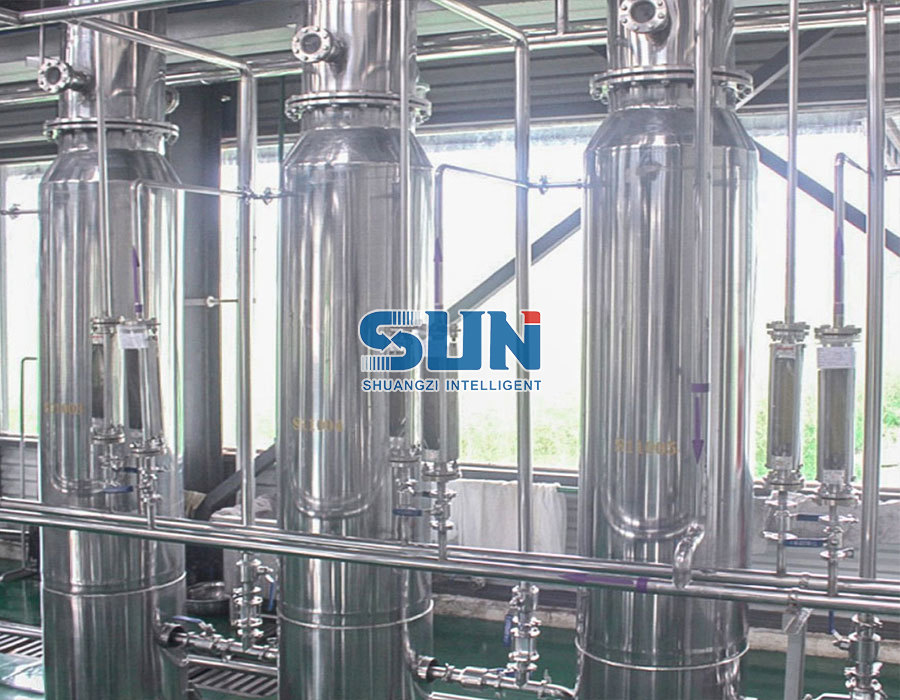
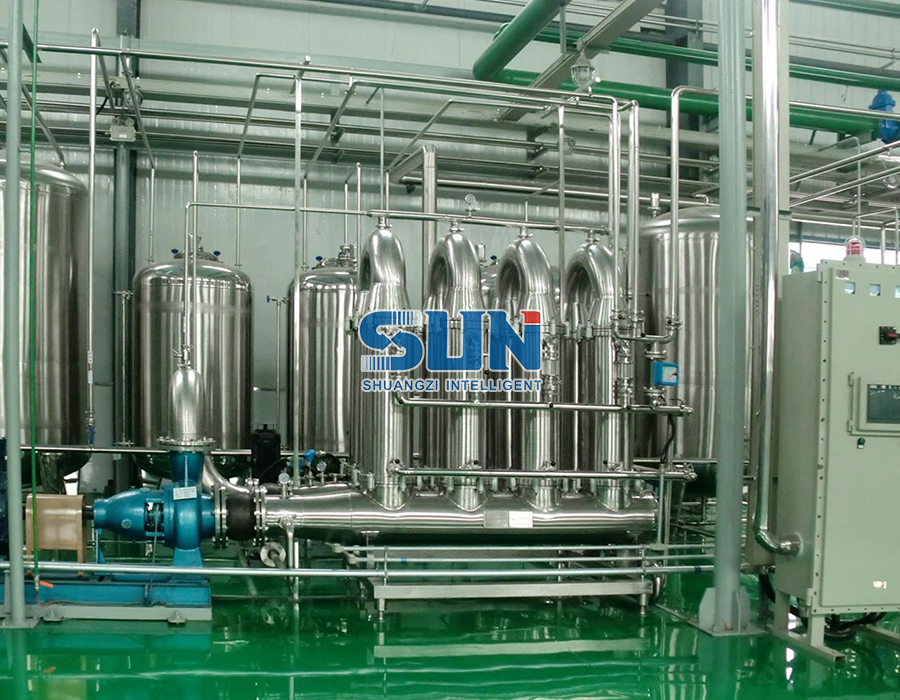
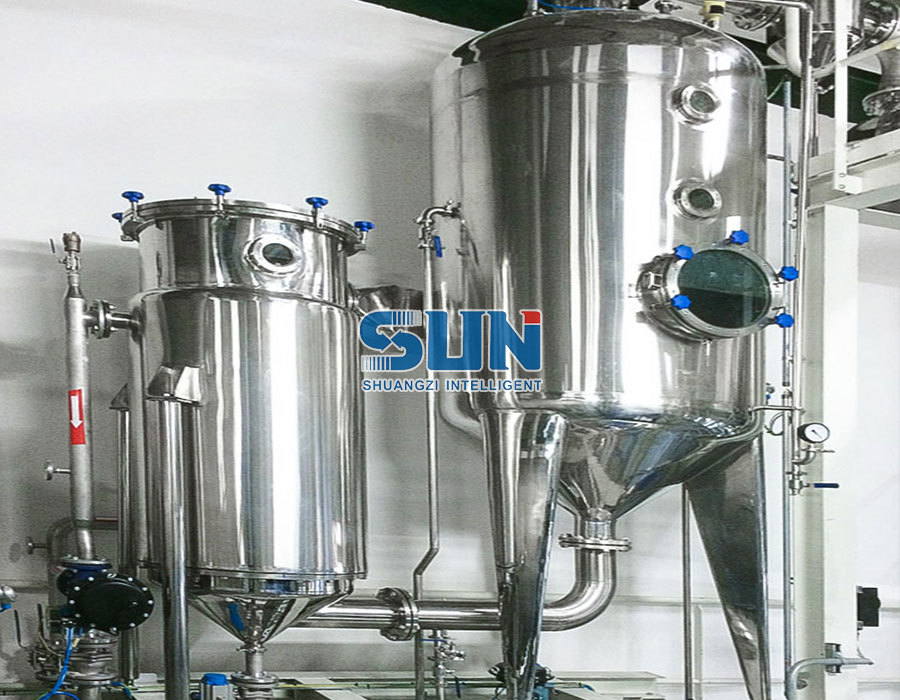
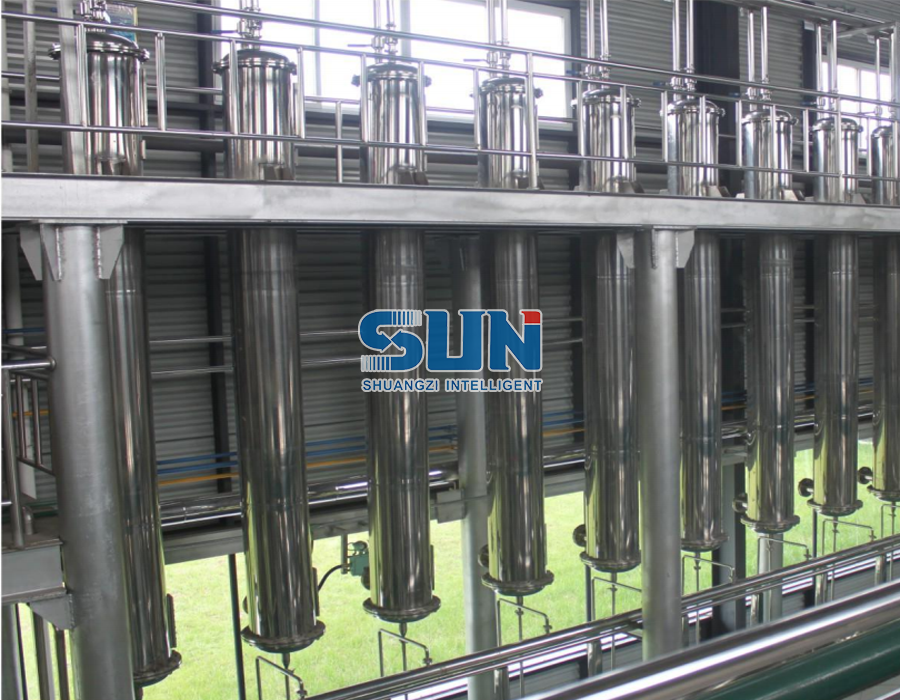
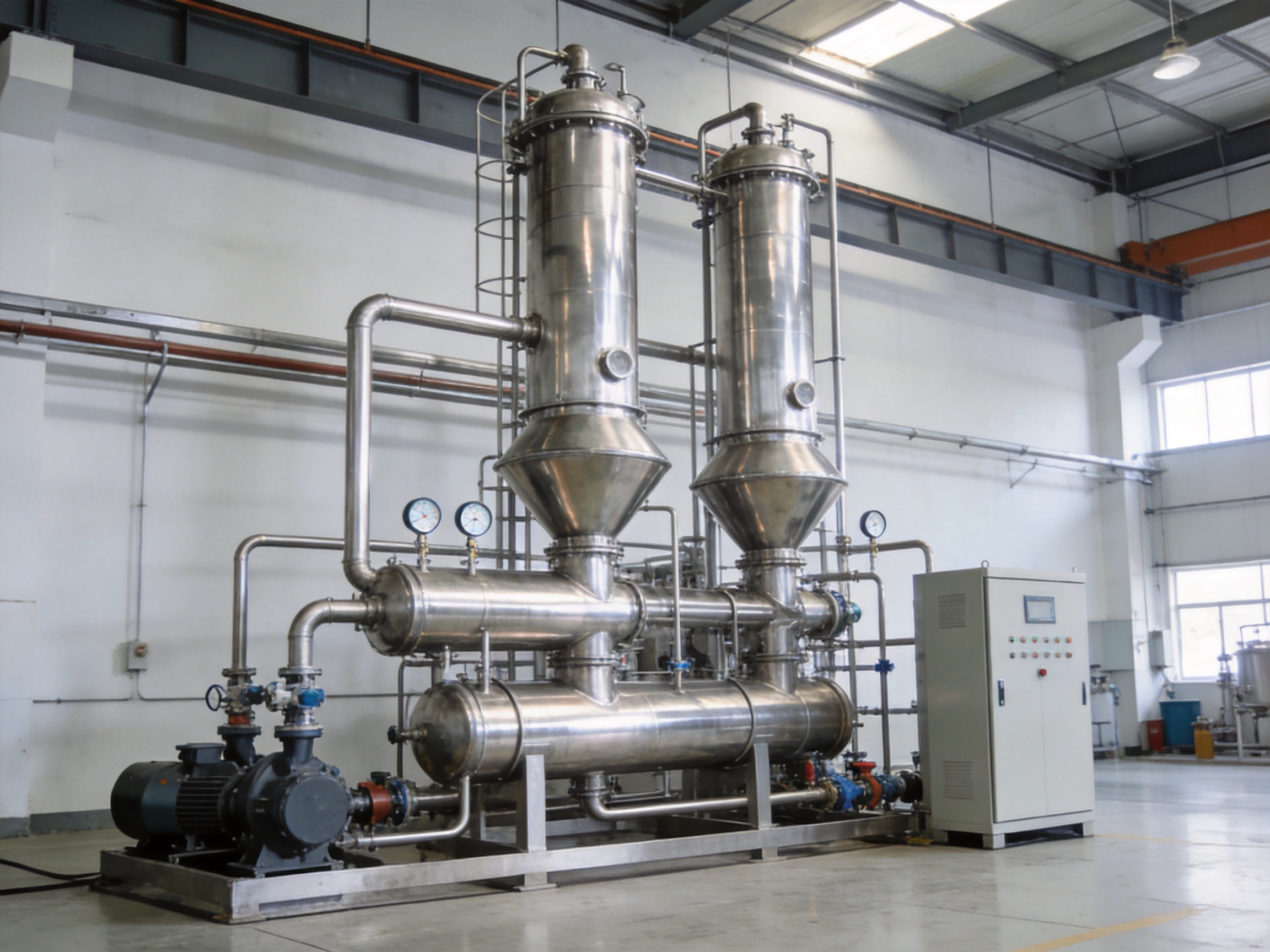
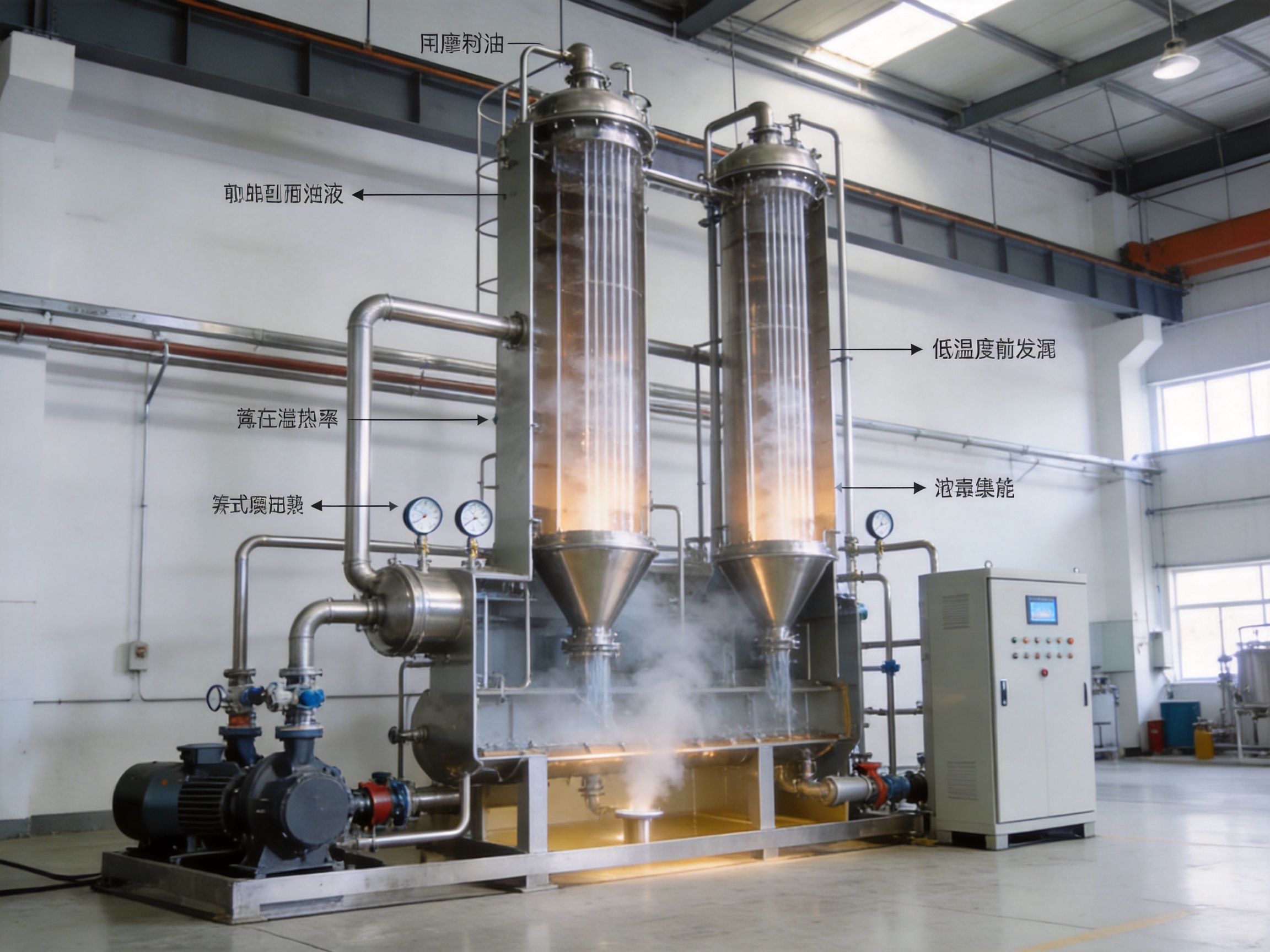
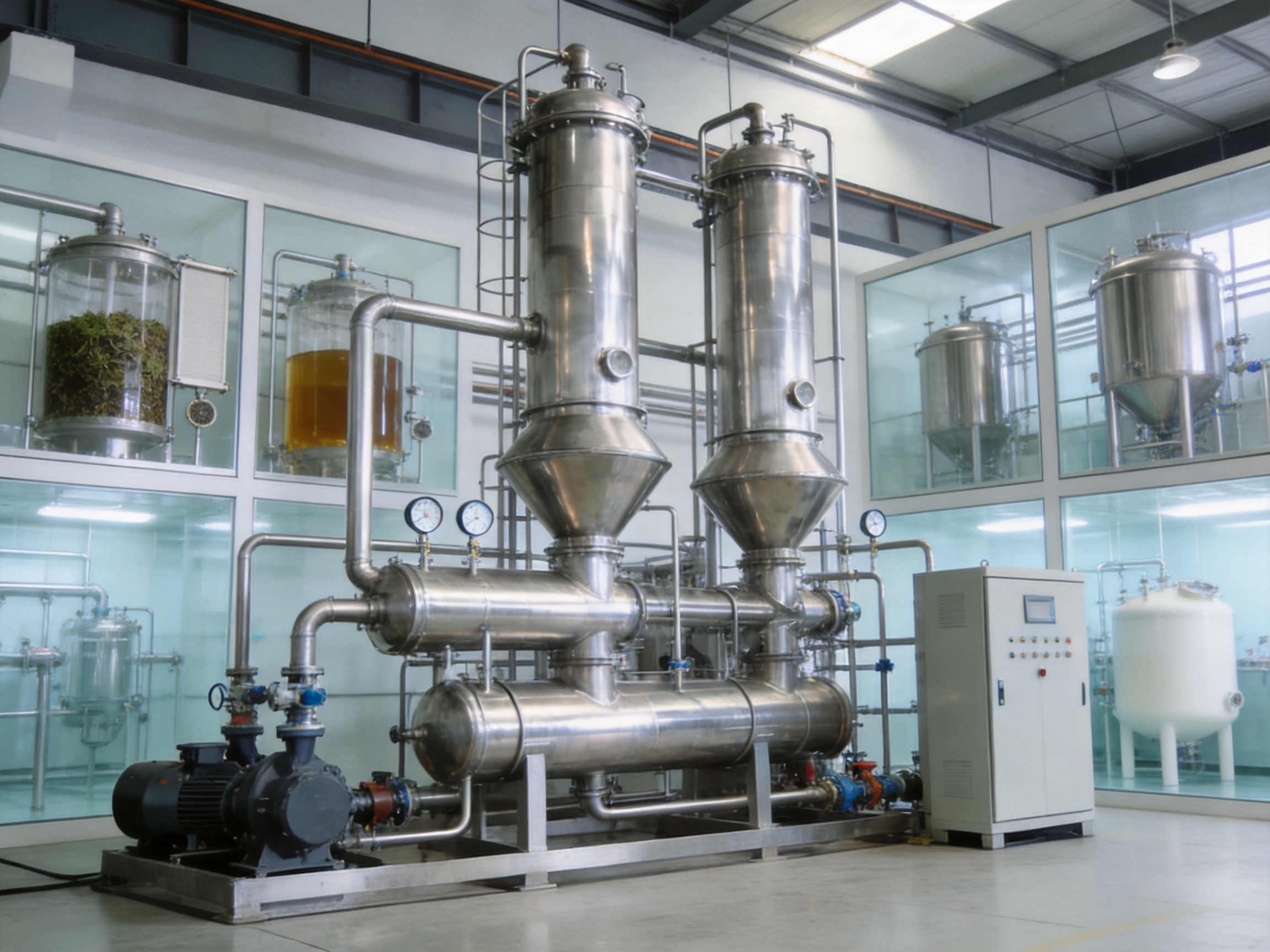
The Low-temperature Vacuum Double Effect Falling Film Evaporator consists essentially of two single-effect falling film evaporators arranged in series. In operation, the feed liquid enters the upper part of the heating chamber and is evenly distributed by a specially designed liquid distributor. The material then flows downward along the inner wall of the heating tubes in the form of a thin film. Because the liquid film is thin and distributed over a large heat exchange surface, heat transfer is fast and efficient.
As the liquid flows downward, it is heated and partially vaporized. The vapor and concentrated liquid are discharged together from the lower end of the heating tubes and then enter a gas-liquid separation unit. After separation, the concentrated liquid is collected or transferred to the next processing stage, while the generated secondary vapor is directed for further energy utilization.
In the double-effect configuration, steam is first used to heat the first effect evaporator. The vapor generated from the first effect becomes the heating source for the second effect evaporator. This cascading use of thermal energy is the key reason why double-effect falling film evaporation is more energy-saving than single-effect evaporation. By controlling the operating pressure and boiling point in each effect, the system enables evaporation at reduced temperatures. In a typical design, the first effect evaporating temperature may be around 70°C, while the second effect may operate at about 45°C, depending on customer requirements and material properties.
The vacuum environment reduces the boiling point of the solution, allowing moisture or solvents to evaporate at lower temperatures. This is critical for products that may degrade, denature, discolor, caramelize, lose aroma, or reduce active ingredient potency under high heat. For this reason, the equipment is highly suitable for pharmaceutical extracts, biological fermentation broths, food concentrates, and plant-derived active compounds.
Why Low-Temperature Vacuum Operation Matters
Many process liquids contain valuable compounds that are sensitive to heat. In botanical extracts, for example, excessive temperature may destroy volatile components, flavonoids, polyphenols, glycosides, pigments, or aroma compounds. In fermentation products, proteins, enzymes, peptides, and metabolites may lose activity under high-temperature exposure. In food applications, sugars, dairy components, flavors, and natural colors can be affected by overheating. Low-temperature vacuum evaporation reduces these risks by allowing concentration at much lower boiling temperatures than atmospheric evaporation.
Another benefit is improved product consistency. Because the liquid travels as a thin film along the heating tube surface, it is exposed to heat for only a short time. Short residence time helps reduce over-processing and minimizes thermal history variation between material batches. This is a major advantage over older kettle-type concentration systems, in which some portions of the product may remain heated for extended periods while others are only briefly exposed.
Low-temperature vacuum operation also supports better color and sensory quality in food and natural extract applications. For example, fruit or botanical concentrates can retain more natural appearance and aroma when evaporation is conducted under vacuum rather than under atmospheric pressure. Similarly, pharmaceutical and bioengineering materials can be concentrated with reduced risk of damaging sensitive molecules.
In addition, vacuum operation helps reduce oxidation. Lower operating temperatures and reduced oxygen exposure are beneficial for materials that are oxidation-prone. This is especially relevant for natural food ingredients, plant extracts, nutraceutical liquids, and certain pharmaceutical intermediates.
Falling Film Design and Heat Transfer Efficiency
The falling film principle is one of the most important reasons for the high performance of this evaporator. In a falling film evaporator, the liquid does not fill the entire heating tube. Instead, it forms a thin, continuous film on the tube wall. This design creates a large evaporation surface, minimizes liquid depth, and reduces heat transfer resistance. As a result, vaporization occurs rapidly and efficiently.
Compared with rising film evaporators, falling film evaporators can operate at lower temperature differences and are often better suited for heat-sensitive products. Compared with jacketed concentration tanks, they offer much higher heat transfer coefficients and continuous processing capability. Compared with some forced circulation systems, they can achieve shorter residence time and lower mechanical stress on the material.
The liquid distributor is a critical component in falling film evaporation. Uniform distribution prevents dry patches, channeling, overheating, and fouling. Zhejiang Shuangzi Intelligent Equipment Co., Ltd. applies process engineering experience to optimize distribution design according to material viscosity, evaporation rate, feed concentration, target concentration, and processing capacity. This engineering capability is essential because a falling film evaporator must be designed according to the actual physical properties of the material rather than treated as a simple standard vessel.
The equipment is also suitable for materials with relatively large evaporation viscosity, provided that the solution is not highly prone to crystallization. The design allows the liquid to move quickly and continuously, reducing the chance of localized overheating. However, for solutions that crystallize easily during concentration, alternative evaporation or crystallization systems may be more appropriate. This honest application boundary reflects the importance of selecting equipment based on process characteristics.
Double Effect Energy Saving Compared with Conventional Systems
Energy consumption is one of the largest operating costs in evaporation and concentration processes. Traditional single-effect evaporation uses live steam once, then condenses or releases the generated vapor. This approach is simple but relatively inefficient. A double-effect evaporator improves steam economy by using the secondary vapor from one effect as the heating medium for another effect.
In practical terms, this means that the same amount of live steam can evaporate more water than in a single-effect system. The provided parameter range shows that models with evaporation capacities from 600 kg/h to 1600 kg/h can operate with steam consumption from 390 kg/h to 1150 kg/h depending on capacity. For production plants running many hours per day, such steam savings can translate into significant long-term operating cost reductions.
Compared with competitors that provide basic evaporators without deep energy integration, this double-effect falling film system offers a more economical concentration solution. It is particularly suitable for plants that need continuous production, stable concentration, and controlled utility consumption. The system can be designed according to customer requirements, including evaporation temperature, product inlet concentration, outlet concentration, and capacity matching.
Energy efficiency is not only a cost issue but also an environmental responsibility. Lower steam consumption reduces boiler load, fuel usage, and indirect carbon emissions. For pharmaceutical, food, and biological engineering companies pursuing cleaner production and sustainable manufacturing, the double-effect evaporator contributes to greener process design.
Technical Parameters and Model Selection
The Low-temperature Vacuum Double Effect Falling Film Evaporator is available in several model configurations to meet different production capacities. The system can be made to order according to process conditions, feed concentration, outlet concentration, viscosity, boiling point elevation, material sensitivity, utility availability, and plant layout. The following table summarizes typical parameters.
Parameter |
SJM2-800 |
SJM2-1200 |
SJM2-1600 |
SJM2-2000 |
SJM2-2500 |
Evaporation Capacity |
600 kg/h |
800 kg/h |
1000 kg/h |
1200 kg/h |
1600 kg/h |
Product Inlet Concentration |
11.5% to 12% |
11.5% to 12% |
11.5% to 12% |
11.5% to 12% |
11.5% to 12% |
Product Outlet Concentration |
45% to 48% |
45% to 48% |
45% to 48% |
45% to 48% |
45% to 48% |
Steam Pressure |
0.6 to 0.8 MPa |
0.6 to 0.8 MPa |
0.6 to 0.8 MPa |
0.6 to 0.8 MPa |
0.6 to 0.8 MPa |
Steam Consumption |
390 kg/h |
620 kg/h |
835 kg/h |
1020 kg/h |
1150 kg/h |
Evaporating Temperature |
1st Effect 70°C, 2nd Effect 45°C |
1st Effect 70°C, 2nd Effect 45°C |
1st Effect 70°C, 2nd Effect 45°C |
1st Effect 70°C, 2nd Effect 45°C |
1st Effect 70°C, 2nd Effect 45°C |
Heating Temperature |
1st Effect 80°C, 2nd Effect 70°C |
1st Effect 80°C, 2nd Effect 70°C |
1st Effect 80°C, 2nd Effect 70°C |
1st Effect 80°C, 2nd Effect 70°C |
1st Effect 80°C, 2nd Effect 70°C |
Cooling Water Consumption |
6 t/h |
9 t/h |
12 t/h |
15 t/h |
18 t/h |
Electric Total Power |
18 kW |
18 kW |
25.5 kW |
25.5 kW |
31.5 kW |
Dimension |
4.5 m x 2.3 m x 7.1 m |
4.5 m x 2.3 m x 7.6 m |
4.5 m x 2.4 m x 8 m |
4.5 m x 2.4 m x 8.5 m |
4.7 m x 2.5 m x 8.5 m |
These values are representative and can be adjusted based on customer process needs. For example, the evaporating temperature can be designed according to material sensitivity, target concentration, vacuum level, and downstream process requirements. Product inlet and outlet concentrations may also be customized when the feed material differs from the reference concentration range.
Model selection should not be based only on hourly evaporation capacity. A complete selection process should also consider feed flow rate, initial solids content, desired final solids content, viscosity change during concentration, foaming tendency, heat sensitivity, cleaning requirements, available steam pressure, cooling water capacity, installation height, automation level, and integration with upstream and downstream equipment. Zhejiang Shuangzi Intelligent Equipment Co., Ltd. provides process design support and equipment design services to help customers match the correct model to the real production environment.
Advantages Over Competing Evaporation Technologies
The Low-temperature Vacuum Double Effect Falling Film Evaporator offers several competitive advantages when compared with conventional concentration equipment. These advantages are especially important for manufacturers seeking better product quality, lower utility costs, and more reliable continuous operation.
Short Residence Time
The falling film process allows material to pass rapidly through the heating tubes. Because the liquid flows as a thin film, it receives heat quickly and evaporates efficiently without remaining inside the evaporator for a long period. This reduces thermal degradation and makes the equipment suitable for heat-sensitive materials. Compared with traditional batch evaporators, residence time is significantly shorter and product quality is easier to preserve.
Higher Heat Transfer Coefficient
The thin film structure increases heat transfer performance. Heat does not need to penetrate a large liquid volume, and vapor generation occurs quickly at the film surface. This makes the equipment more efficient than many older tank-type or low-surface-area evaporators. Higher heat transfer efficiency can also help reduce equipment size for a given evaporation duty.
Improved Steam Economy
The double-effect design reuses secondary steam. This is a major advantage over single-effect evaporation. In industries with high evaporation loads, utility savings can be substantial over the life of the equipment. Plants that operate continuously or in long campaigns benefit especially from this reduced steam consumption.
Gentle Treatment of Materials
Vacuum operation allows evaporation at reduced boiling temperatures. The reference design includes an evaporating temperature of approximately 70°C in the first effect and 45°C in the second effect. Such low-temperature concentration protects active components, flavors, aromas, and colors better than high-temperature atmospheric systems.
Continuous and Stable Production
Compared with batch concentration tanks, the falling film evaporator is suitable for continuous operation. Continuous processing improves production efficiency, simplifies material balance control, and reduces batch-to-batch variation. For modern pharmaceutical, food, and biological engineering plants, continuous stability is a significant competitive advantage.
Customizable Process Design
The equipment can be designed according to customer demand. This includes capacity, evaporating temperature, outlet concentration, automation configuration, material contact surfaces, structural layout, and supporting systems. Many competitors provide standard equipment with limited flexibility, while Zhejiang Shuangzi Intelligent Equipment Co., Ltd. offers engineering-based customization supported by EPC/EPCM project capabilities.
Strong Integration Capability
The evaporator can be integrated with extraction systems, fermentation systems, filtration systems, vacuum low-temperature drying systems, crystallization systems, and turnkey production lines. This makes it suitable not only as a standalone machine but also as a key unit in a complete production process.
Applications in Plant Extraction Projects
Plant extraction processes often produce dilute extracts that must be concentrated before drying, precipitation, purification, blending, or packaging. These extracts may contain active plant compounds that are sensitive to heat and oxidation. Low-temperature falling film evaporation is therefore an ideal concentration method for many botanical materials.
In plant extraction, raw materials such as herbs, roots, leaves, flowers, seeds, or fruits are typically extracted with water, ethanol-water mixtures, or other suitable solvents. After extraction and filtration, the liquid extract may contain a relatively low percentage of solids. Concentration is required to reduce volume, improve downstream efficiency, and reach the desired solids content. The Low-temperature Vacuum Double Effect Falling Film Evaporator can help preserve the natural characteristics of the extract while achieving effective evaporation.
The short residence time is particularly valuable for preserving volatile components and reducing discoloration. In many botanical products, appearance and sensory profile are important commercial quality indicators. Excessive heat may cause browning, off-flavors, or loss of active markers. The vacuum falling film system reduces these risks.
Because Zhejiang Shuangzi Intelligent Equipment Co., Ltd. also provides extraction equipment, separation systems, filtration equipment, vacuum low-temperature drying equipment, and turnkey project services, customers can build a more coherent plant extraction production line. The evaporator can be matched with extraction tanks, filtration units, storage vessels, solvent recovery systems, and dryers to create a complete process from raw material extraction to concentrated extract or dried powder.
Applications in Bio-Fermentation Projects
Bio-fermentation processes generate liquid broths that may contain valuable metabolites, enzymes, peptides, organic acids, polysaccharides, or other biological products. Concentration is often required after fermentation, separation, clarification, or filtration. However, biological materials can be highly sensitive to heat, shear, and oxidation. Low-temperature vacuum evaporation is therefore advantageous.
The falling film evaporator can concentrate clarified fermentation liquids efficiently while limiting heat exposure. The reduced evaporating temperature helps protect biological activity where applicable. For products that must maintain functional properties, gentle concentration can improve yield and quality.
Fermentation plants also need stable and hygienic equipment design. Since Zhejiang Shuangzi Intelligent Equipment Co., Ltd. has mature complete fermentation system equipment and GMP-oriented pilot production and R&D platform capabilities, the evaporator can be designed to fit biological process requirements. This may include sanitary material selection, cleanable structure, automation control, and integration with upstream fermentation tanks and downstream drying or purification equipment.
In bioengineering production, scalability is another critical concern. A process developed at pilot scale must later transfer to industrial scale. The company’s pilot production workshop and R&D platform can support process verification and equipment adaptation, helping customers reduce scale-up risk.
Applications in Pharmaceutical and Western Medicine Synthesis Projects
Pharmaceutical processes frequently involve concentration steps for extracts, intermediates, reaction solutions, purified fractions, or solvent-containing liquids. Product consistency, contamination control, thermal stability, and documentation are important in these fields. The Low-temperature Vacuum Double Effect Falling Film Evaporator contributes to pharmaceutical processing by offering controlled temperature, continuous operation, and customizable engineering design.
In Western medicine synthesis projects, the evaporator may be used to concentrate process liquids after reaction, extraction, purification, or solvent exchange steps, depending on compatibility and safety requirements. In pharmaceutical extract production, it can concentrate water-based or suitable solvent-based extracts before drying or formulation.
The low-temperature feature helps protect thermally unstable ingredients. The double-effect configuration helps reduce steam consumption, which is important for pharmaceutical plants with multiple utility-demanding operations. The falling film design also supports efficient concentration without excessive holdup volume.
Zhejiang Shuangzi Intelligent Equipment Co., Ltd. has experience in pharmaceutical engineering, biological engineering, natural food, energy conservation, and environmental protection fields. Its focus on automation engineering design, equipment manufacture, installation, line debugging, and system integration helps customers obtain more than a single machine. They receive engineering support for a complete process section or turnkey project.
Applications in Food Processing
Food concentration is one of the most common uses of falling film evaporators. Products such as milk, glucose, starch syrup, xylose solution, fruit extracts, plant-based beverages, and other natural food ingredients often require evaporation under controlled conditions. Food manufacturers are highly concerned with flavor, color, nutritional preservation, hygiene, and energy efficiency.
The Low-temperature Vacuum Double Effect Falling Film Evaporator is well suited for food materials because it reduces thermal stress while providing high evaporation efficiency. Milk and dairy-related liquids, for example, can be damaged by excessive heat, leading to cooked flavor or quality changes. Glucose and starch-based liquids may darken or undergo quality shifts if overheated. Natural food extracts may lose aroma or pigment under harsh evaporation. The vacuum falling film system provides a gentler alternative.
Food plants also benefit from lower steam consumption. Large-scale food concentration can consume significant energy, and reducing steam demand improves profitability. The equipment’s double-effect structure offers a practical balance between energy efficiency and operational simplicity.
Because the company can provide process design, equipment design, installation, and line debugging, food manufacturers can adopt the evaporator as part of an integrated production line rather than purchasing isolated equipment. This helps improve layout coordination, utility planning, cleaning strategy, and automation control.
Manufacturing Strength and Engineering Capability
The performance of an evaporator depends not only on its design principle but also on manufacturing precision, welding quality, material selection, surface finishing, assembly accuracy, and process integration. Zhejiang Shuangzi Intelligent Equipment Co., Ltd. has built a comprehensive manufacturing and engineering base to support high-quality equipment production.
The company was founded in 2007 and covers a floor area of 16,706 square meters and a structure area of 17,800 square meters. This scale provides space for equipment fabrication, assembly, testing, process development, and project support. Its strong technical power allows it to serve customers in plant extraction, biological fermentation, pharmaceutical engineering, natural food, energy conservation, and environmental protection.
The company has introduced advanced welding and finishing equipment, including plasma argon arc welding machines, plasma cutting machines, CAM CNC machining centers, and other advanced production equipment. These manufacturing resources help improve welding consistency, cutting accuracy, component precision, and overall equipment reliability. For evaporators, high-quality welding and surface finishing are essential because the equipment operates under vacuum, handles process liquids, and must maintain clean internal surfaces.
Precision in tube sheet fabrication, heating chamber assembly, separator design, piping alignment, and vacuum sealing directly affects evaporation performance. Poorly manufactured equipment may suffer from leakage, uneven distribution, fouling, inefficient heat transfer, or unstable operation. By combining advanced manufacturing equipment with process engineering experience, the company can produce evaporators that meet demanding industrial conditions.
The company also has a full set of production lines with pilot production workshop and R&D platform automation requirements related to GMP-oriented process development. The platform covers vacuum low-temperature drying, plant extraction, evaporation, precipitation separation, extraction, and fermentation. This enables support for pilot research users and customers requiring process verification before full-scale investment.
EPC and EPCM Service Value
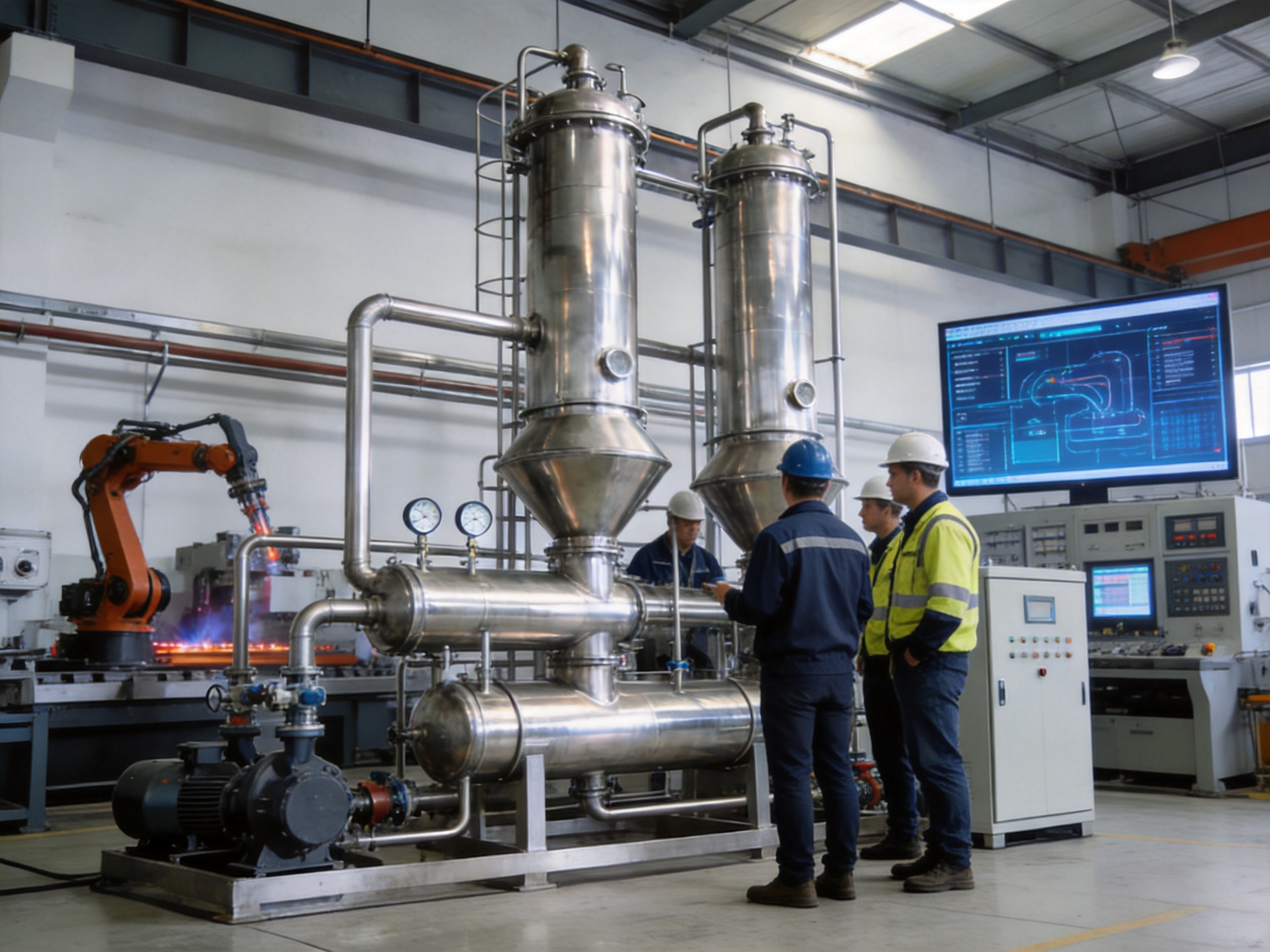
One of the strongest advantages of Zhejiang Shuangzi Intelligent Equipment Co., Ltd. is its EPC/EPCM-centered service model. Instead of only supplying separate equipment, the company focuses on process technology, automation engineering design, equipment manufacturing, matching procurement, installation, system integration, and project delivery. This is especially valuable for customers building new production lines or upgrading existing facilities.
In evaporation projects, many factors influence final success: feed preparation, preheating, vacuum system design, condensate handling, cooling water system, steam supply, cleaning-in-place arrangements, automation control, product transfer, and downstream storage or drying. If these elements are not coordinated, even a good evaporator may not achieve its intended performance. EPC/EPCM capability helps avoid such problems by integrating the evaporator into the larger process environment.
Turnkey project capability is particularly useful for customers who need a complete plant extraction line, fermentation line, pharmaceutical processing line, or natural food production line. The company can provide engineering, process design, equipment design, installation, and line debugging services. This reduces coordination burden for the customer and helps ensure that equipment, utilities, automation, and layout are compatible.
Compared with competitors that sell standard machines without installation or process support, a supplier with project integration capability can provide better lifecycle value. Customers gain a more reliable path from concept to production, including technical consultation, customized design, manufacturing, installation, commissioning, and after-sales communication.
Automation, Control, and Process Stability
Modern evaporation systems require accurate control of temperature, pressure, liquid level, feed flow, steam flow, vacuum degree, concentration, and discharge. Stable control is especially important in double-effect systems because the first and second effects interact thermally. If pressure, feed rate, or steam supply fluctuates significantly, outlet concentration and product quality may become unstable.
The Low-temperature Vacuum Double Effect Falling Film Evaporator can be configured with automation systems according to customer requirements. Automated monitoring and control improve repeatability, reduce operator workload, and support safer operation. In industries such as pharmaceuticals and food, process data and stable operating conditions are also important for quality management.
Automation can help maintain the correct pressure difference between effects, regulate evaporation temperature, protect the vacuum system, manage feed and discharge pumps, and coordinate cleaning cycles. It can also provide alarms for abnormal conditions such as low feed flow, high temperature, vacuum loss, pump fault, or cooling water failure.
The company’s experience in automation engineering design and equipment system integration allows the evaporator to be incorporated into broader production control systems. This is important for plants requiring centralized operation, process traceability, or integrated batch/continuous control.
Design Considerations for Material Compatibility
Different materials behave very differently during concentration. A dilute plant extract may remain low in viscosity until high solids content, while starch syrup or sugar solutions may become highly viscous as concentration increases. Fermentation broths may foam or contain suspended solids. Pharmaceutical intermediates may have solvent compatibility concerns. Therefore, evaporator design must account for the material’s physical and chemical characteristics.
The falling film evaporator is generally suitable for heat-sensitive materials and materials with significant evaporation viscosity, but it is not ideal for solutions that crystallize easily. Crystallization can cause fouling, blockage, and unstable heat transfer inside the heating tubes. If crystallization is expected, the process may require special crystallization equipment, forced circulation evaporation, or a different separation strategy.
For foaming materials, separator design and operating conditions become important. Foam entrainment can reduce product recovery and contaminate condensate. For viscous materials, distribution design, tube diameter, flow rate, and outlet concentration must be carefully evaluated. For materials prone to fouling, cleaning design and surface finish are critical.
Zhejiang Shuangzi Intelligent Equipment Co., Ltd. can provide process design and equipment design based on the customer’s material requirements. This helps ensure that the selected equipment is not only theoretically appropriate but practically reliable under real production conditions.
Hygiene, Cleaning, and Maintenance
In biological, pharmaceutical, and food processing, cleaning and hygiene are essential. Product-contact surfaces must be designed to reduce dead corners, residue accumulation, and contamination risk. A falling film evaporator with proper design can support efficient cleaning and maintenance, but details such as piping layout, drainability, access points, surface finish, and cleaning flow paths must be considered.
The company’s experience with GMP-oriented pilot platforms and sanitary process equipment supports hygienic design. Depending on customer requirements, the evaporator system can be integrated with cleaning procedures suitable for the material and industry. Effective cleaning helps maintain heat transfer efficiency, reduce microbial risk, prevent cross-contamination, and extend equipment life.
Maintenance considerations include pump inspection, vacuum system maintenance, separator cleaning, heat exchange tube inspection, instrument calibration, gasket and seal replacement, and control system checks. Because the equipment is used in continuous or semi-continuous production, preventive maintenance is important for reducing downtime.
Compared with low-cost evaporators that may overlook serviceability, a professionally engineered system provides better access, stronger structural reliability, and more stable long-term operation. This reduces hidden costs and improves production confidence.
Utility Requirements and Plant Integration
The evaporator requires steam, cooling water, electricity, vacuum support, condensate handling, and appropriate product piping. Steam pressure is generally in the range of 0.6 to 0.8 MPa. Cooling water consumption varies by model, from 6 t/h to 18 t/h in the reference configuration. Electric total power ranges from 18 kW to 31.5 kW depending on model size.
Plant layout must also consider equipment height. The reference dimensions show heights from 7.1 m to 8.5 m, which means building clearance and installation access are important. The equipment footprint is relatively compact considering its evaporation capacity, but vertical space is required due to the falling film heating chamber and separator arrangement.
During project planning, engineers should evaluate steam supply capacity, boiler load, cooling tower capacity, vacuum pump arrangement, floor loading, drainage, control cabinet location, operator access, maintenance clearance, and downstream transfer. The company’s project service capability helps customers evaluate these integration details before equipment fabrication and installation.
Quality Benefits for End Products
The final goal of evaporation is not simply removing water or solvent; it is producing a concentrated product that meets quality requirements. The Low-temperature Vacuum Double Effect Falling Film Evaporator supports quality improvement in several ways.
First, low-temperature operation reduces heat damage. This helps preserve active components, flavor, color, and nutritional value. Second, short residence time reduces the duration of thermal exposure. Third, continuous operation improves consistency. Fourth, efficient gas-liquid separation helps obtain a stable concentrated liquid. Fifth, customizable process control allows the system to match specific concentration targets.
For food producers, these benefits can improve sensory quality and market value. For pharmaceutical and biological producers, they can help maintain active ingredient stability and process reliability. For plant extraction companies, they can support better extract quality and downstream drying efficiency. For chemical or environmental engineering applications, they can reduce energy costs while achieving required concentration levels.
Long-Term Economic Value
When evaluating evaporation equipment, purchase price is only one part of the total cost. Long-term economics include steam consumption, power consumption, cooling water consumption, cleaning cost, maintenance cost, downtime risk, product loss, labor requirement, and product quality impact. A low-cost evaporator with poor energy performance or unstable operation may become expensive over time.
The double-effect falling film design provides long-term value through steam savings. For facilities with continuous operation, even moderate steam reduction can deliver meaningful annual savings. The higher heat transfer efficiency can also improve throughput and reduce process bottlenecks. Gentle processing reduces quality losses, which is financially important when handling high-value pharmaceutical, biological, or botanical materials.
Custom engineering further improves economic value because the equipment is matched to actual process requirements. Oversized equipment wastes capital and utilities, while undersized equipment limits production. Poorly matched equipment may cause fouling, unstable concentration, or excessive cleaning. A supplier with process engineering and manufacturing capability can help customers avoid these problems.
Why Choose This Evaporator for Turnkey Projects
Turnkey projects require equipment that is reliable, integrable, and adaptable. The Low-temperature Vacuum Double Effect Falling Film Evaporator is well suited for turnkey production lines because it can serve as a central concentration unit between extraction, fermentation, filtration, purification, drying, or packaging stages.
In a plant extraction turnkey project, the evaporator can be positioned after extraction and filtration and before vacuum drying or spray drying. In a fermentation project, it can be placed after clarification and before purification or drying. In a food project, it can operate as the main concentration system before formulation or final product preparation. In pharmaceutical engineering, it can support controlled concentration of process liquids under vacuum.
Zhejiang Shuangzi Intelligent Equipment Co., Ltd. provides more than equipment supply. Its services include engineering, process design, equipment design, installation, line debugging, and turnkey project support. This is a major differentiator in the market. Customers benefit from one integrated technical partner rather than coordinating multiple separate suppliers for process design, equipment procurement, manufacturing, installation, and commissioning.
Practical Selection Guide
Before selecting a Low-temperature Vacuum Double Effect Falling Film Evaporator, customers should prepare basic process information. This includes material name, feed flow rate, initial concentration, target concentration, evaporation capacity, operating hours, heat sensitivity, viscosity curve, foaming tendency, crystallization tendency, solvent composition, cleaning requirements, and available utilities.
If the product inlet concentration is around 11.5% to 12% and the desired outlet concentration is around 45% to 48%, the standard reference models may provide a useful starting point. However, if the material is more viscous, more heat-sensitive, or has different boiling behavior, customized design may be required.
Customers should also confirm whether the material crystallizes during concentration. Since falling film evaporators are generally not suitable for easily crystallizing solutions, this factor must be evaluated early. If crystallization occurs only at very high concentration, the system may still be used for pre-concentration before a crystallizer or another concentration stage.
Utility availability is also important. A plant must provide steam at suitable pressure, cooling water at sufficient flow, electrical supply for pumps and controls, and enough installation height. Automation expectations should also be discussed, including whether the system will operate independently or connect with a central control system.
Q&A Section
Q1: What is a Low-temperature Vacuum Double Effect Falling Film Evaporator?
It is a concentration machine that uses vacuum evaporation, falling film heat transfer, and double-effect steam reuse to remove water or solvent from process liquids at relatively low temperatures. It is designed for efficient, gentle concentration of heat-sensitive materials.
Q2: Why is it called a double effect evaporator?
It is called double effect because two evaporator effects are connected in series. The first effect uses live steam for heating, and the secondary vapor produced by the first effect becomes the heating source for the second effect. This improves steam economy and reduces energy consumption compared with single-effect evaporation.
Q3: What types of materials are suitable for this equipment?
It is suitable for heat-sensitive liquids and materials requiring efficient concentration, including milk, glucose, starch solutions, xylose, plant extracts, pharmaceutical liquids, biological fermentation liquids, chemical solutions, and environmental engineering liquids. It can also handle some materials with relatively high evaporation viscosity.
Q4: What materials are not suitable?
The equipment is generally not suitable for solutions that crystallize easily during evaporation. Crystallization may cause fouling or blockage inside the heating tubes. Such materials may require a forced circulation evaporator, crystallizer, or special process design.
Q5: What are the typical evaporation temperatures?
Typical reference evaporating temperatures are about 70°C for the first effect and 45°C for the second effect. These values can be designed according to customer requirements and material characteristics.
Q6: How does the falling film structure protect product quality?
The liquid flows downward as a thin film along the heating tube wall. This creates rapid heat transfer and short residence time, reducing thermal exposure. As a result, sensitive compounds, aromas, colors, and nutrients are better preserved than in many conventional high-temperature or batch concentration systems.
Q7: What evaporation capacities are available?
Reference models provide evaporation capacities from 600 kg/h to 1600 kg/h. Custom capacities may be designed according to process requirements.
Q8: Why is this evaporator more energy-saving than a single-effect system?
Because it reuses secondary steam from the first effect to heat the second effect. This means live steam is used more efficiently, reducing total steam consumption and operating cost.
Q9: Can the equipment be used in food production?
Yes. It can be used for food concentration applications such as milk, glucose, starch-based liquids, xylose, and natural food extracts. Its low-temperature operation helps preserve flavor, color, and nutritional quality.
Q10: Can it be integrated into a complete production line?
Yes. Zhejiang Shuangzi Intelligent Equipment Co., Ltd. provides process design, equipment design, installation, system integration, line debugging, and turnkey project services. The evaporator can be integrated with extraction, fermentation, filtration, separation, crystallization, drying, and storage systems.
Q11: What should be considered before purchasing?
Customers should provide feed concentration, target concentration, evaporation capacity, viscosity, heat sensitivity, crystallization tendency, foaming tendency, available steam pressure, cooling water capacity, installation space, and automation requirements. These factors help determine the correct model and configuration.
Q12: What makes the manufacturer competitive?
The manufacturer has experience in biological and medical equipment, EPC/EPCM project delivery, process technology, automation engineering, equipment manufacturing, installation, and system integration. It also has advanced production equipment such as plasma argon arc welding machines, plasma cutting machines, and CAM CNC machining centers, supporting reliable manufacturing quality.
Conclusion
The Low-temperature Vacuum Double Effect Falling Film Evaporator is a high-efficiency concentration solution for industries that require gentle processing, reduced energy consumption, continuous operation, and stable product quality. By combining vacuum low-temperature evaporation, falling film heat transfer, and double-effect steam reuse, it provides strong advantages over traditional batch concentrators, single-effect evaporators, and less efficient thermal concentration systems.
Its short residence time and high heat transfer coefficient make it especially suitable for heat-sensitive materials in plant extraction, biological fermentation, pharmaceutical engineering, food processing, chemical production, and environmental protection applications. Its double-effect structure reduces steam consumption and supports more sustainable production. Its customizable design allows customers to match evaporation temperature, concentration range, capacity, and automation level to real process needs.
Beyond the equipment itself, Zhejiang Shuangzi Intelligent Equipment Co., Ltd. offers significant value through advanced manufacturing capabilities, strong technical power, GMP-oriented pilot and R&D platform resources, and EPC/EPCM project service ability. The company can provide process design, equipment design, manufacturing, installation, line debugging, system integration, and turnkey project support. This makes the evaporator not only a single machine but a reliable component of complete industrial processing solutions.
For manufacturers seeking to improve concentration efficiency, protect product quality, lower steam consumption, and build integrated production systems, the Low-temperature Vacuum Double Effect Falling Film Evaporator represents a practical and technically advanced choice.
References
1. McCabe, W. L., Smith, J. C., and Harriott, P. Unit Operations of Chemical Engineering. McGraw-Hill Education.
2. Green, D. W., and Southard, M. Z. Perry’s Chemical Engineers’ Handbook. McGraw-Hill Education.
3. Fellows, P. J. Food Processing Technology: Principles and Practice. Woodhead Publishing.
4. Mujumdar, A. S. Handbook of Industrial Drying. CRC Press.
5. Brennan, J. G. Food Processing Handbook. Wiley-VCH.
6. Niazi, S. K. Handbook of Pharmaceutical Manufacturing Formulations. CRC Press.