
 英语
 俄语
Content
- 1 Understanding the MVR Evaporation Principle
- 2 Why MVR Technology Is Different from Conventional Evaporation
- 3 Core Advantages of an MVR Evaporator
- 4 Applications in Key Industrial Fields
- 5 Equipment and System Configuration
- 6 Reference Operating and Cost Comparison
- 7 Manufacturing Strengths and Engineering Capability
- 8 Installation, Commissioning, and Turnkey Project Support
- 9 Maintenance and Long-Term Performance
- 10 How to Select the Right MVR Evaporator
- 11 Frequently Asked Questions
- 11.1 What does MVR stand for?
- 11.2 How does an MVR evaporator save energy?
- 11.3 Does an MVR evaporator use electricity?
- 11.4 Can MVR equipment treat high-salt wastewater?
- 11.5 Can the system be used for pharmaceutical or food materials?
- 11.6 Is MVR always better than multi-effect evaporation?
- 11.7 Can an MVR evaporator operate at low temperature?
- 11.8 How can fouling be controlled?
- 11.9 Can the system be integrated with crystallization or drying?
- 11.10 What project services are available?
- 12 Conclusion
- 13 References
- 14 Product: MVR Evaporator
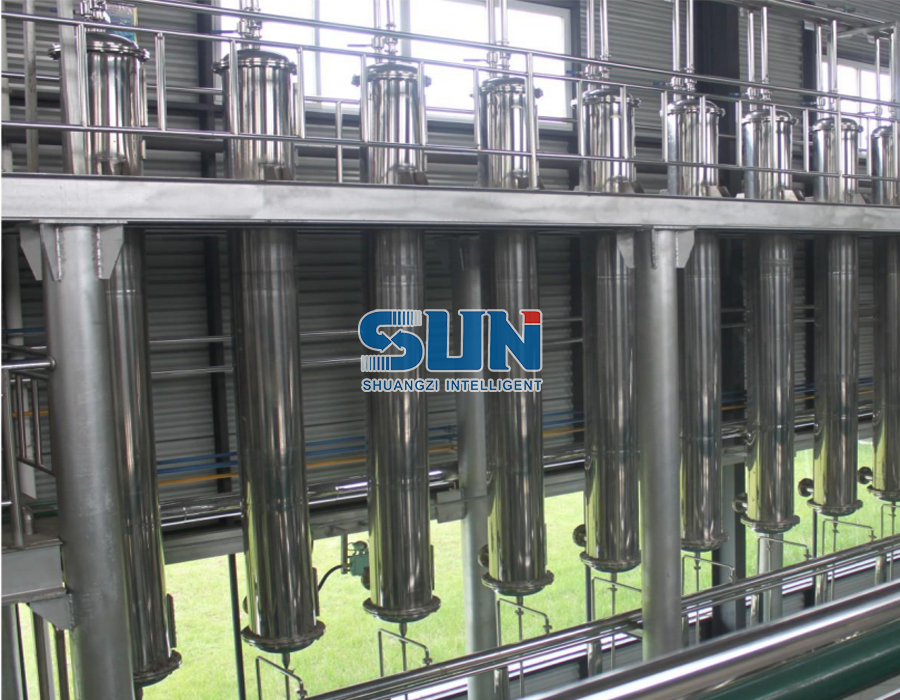
Mechanical Vapor Recompression, commonly known as MVR, is an advanced evaporation technology designed to reduce dependence on external steam while maintaining reliable concentration performance. An MVR evaporator recovers and upgrades the energy contained in secondary vapor generated during evaporation. Instead of allowing this vapor to leave the system as waste, the equipment compresses it mechanically, increases its pressure and temperature, and returns it to the heating chamber as usable heating vapor.
This operating principle makes MVR evaporation particularly attractive for industries that handle high-salt wastewater, pharmaceutical liquids, chemical streams, food materials, seawater, and other solutions requiring concentration or volume reduction. Compared with conventional single-effect and multi-effect evaporation systems, an MVR evaporator can substantially reduce steam consumption and improve overall thermal utilization. It can also provide an effective solution where steam supply, water supply, plant space, or cooling-water capacity is limited.
Zhejiang Shuangzi Intelligent Equipment Co., Ltd. combines MVR evaporation technology with process engineering, equipment manufacturing, automation, installation, commissioning, and system integration. The company serves plant extraction, biological fermentation, pharmaceutical engineering, natural food, energy conservation, and environmental protection projects. Its engineering approach enables customers to obtain more than an individual evaporator: they can receive a process-oriented system designed around material characteristics, production capacity, operating conditions, and future expansion requirements.
Understanding the MVR Evaporation Principle
Evaporation removes part of the solvent from a liquid mixture by supplying heat until the solvent changes from liquid to vapor. In many industrial applications, water is the solvent and the objective is to concentrate dissolved solids, recover useful products, reduce wastewater volume, or prepare a material for crystallization, drying, or further processing.
In a conventional evaporator, external steam enters the heating chamber and transfers heat to the process liquid. The liquid boils and generates secondary vapor. Depending on the system design, this vapor may be sent to another effect, condensed with cooling water, or discharged after its heat has been only partially utilized. The loss of this vapor represents a loss of latent heat and increases the requirement for fresh steam or cooling utilities.
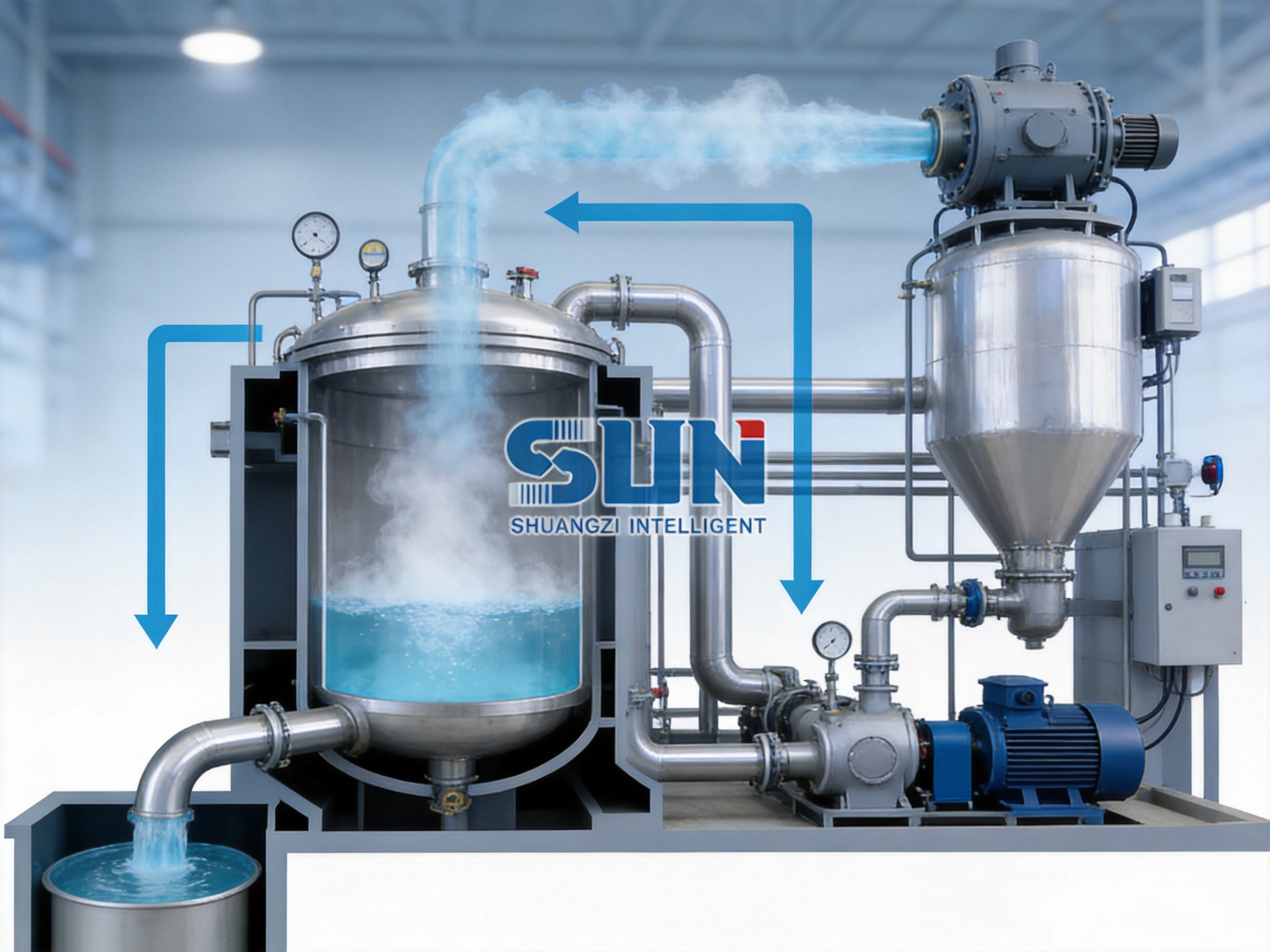
An MVR evaporator uses a mechanical vapor compressor to recover this energy. The secondary vapor produced during evaporation is collected and compressed. Compression increases the vapor pressure and saturation temperature. The compressed vapor is then directed back to the heating chamber, where it condenses and releases its latent heat to the boiling material. The condensate can be collected and managed as part of the process water system.
The cycle is therefore based on internal energy circulation. External steam is primarily required during startup, for initial heat-up, or when operating conditions change. Once stable evaporation has been established, the compressor supplies much of the heat required to maintain boiling. The exact energy balance depends on feed concentration, evaporation temperature, boiling-point elevation, fouling tendency, vapor-compression ratio, material properties, and equipment configuration.
Although the process is highly energy efficient, an MVR system does not eliminate energy consumption. The principal energy input is transferred from thermal steam demand to electrical power required by the compressor and associated pumps, controls, and auxiliary equipment. In applications where electricity is economically and reliably available, this exchange can significantly reduce total operating cost.
Why MVR Technology Is Different from Conventional Evaporation
Comparison with Single-Effect Evaporation
A single-effect evaporator uses external steam to heat the process liquid. The generated vapor is generally condensed or discharged, so the latent heat of the vapor is not fully recovered. This arrangement is relatively simple and may be suitable for small capacities, intermittent operation, or materials that require a straightforward process. However, its steam consumption is high when the evaporation load is large.
The supplied operating comparison lists a steam consumption of approximately 1.1 tons for a single-effect evaporator under the stated reference condition. MVR equipment, by comparison, is listed at approximately 0.02 tons of steam, while requiring electrical power for mechanical compression. These figures should be treated as reference values rather than universal design guarantees because actual consumption changes with feed composition, operating temperature, evaporation duty, and system design.
Comparison with Multi-Effect Evaporation
Multi-effect evaporators reduce steam consumption by arranging several evaporation bodies in series. The vapor generated in one effect becomes the heating medium for the next effect, usually at a lower pressure and temperature. This approach improves steam economy compared with single-effect evaporation, but it requires multiple effects, additional heat-transfer surfaces, more interconnecting equipment, and a larger installation footprint.
As the number of effects increases, the steam-saving benefit generally improves, but the equipment investment, control complexity, cleaning requirements, and space requirements also increase. The supplied comparison lists steam consumption of approximately 0.55 tons for a double-effect unit and 0.4 tons for a three-effect unit under the reference condition. The MVR reference value is considerably lower in steam consumption, with electricity serving as the primary operating energy source.
MVR can be advantageous where a project has insufficient steam capacity or limited room for a large multi-effect installation. It may also be a practical alternative where low-temperature evaporation is required and conventional condensation would otherwise depend heavily on chilled water. The preferred choice still depends on local electricity and steam prices, operating hours, material properties, environmental requirements, and the desired payback period.
Comparison with Conventional Low-Temperature Systems
Low-temperature evaporation can protect heat-sensitive materials and reduce thermal degradation. However, lower evaporation temperatures often produce vapor that must be condensed using cooling water or chilled water. If the plant does not have sufficient cooling capacity, the system may require additional utility equipment and higher operating costs.
An MVR evaporator can support low-temperature operation while recovering the latent heat of the produced vapor. This reduces reliance on external condensation utilities and can make low-temperature concentration more practical for pharmaceutical, biological, food, and other heat-sensitive applications. Temperature selection must be determined through process testing because viscosity, boiling-point elevation, foaming, and fouling can influence the final design.
MVR Evaporator
Core Advantages of an MVR Evaporator
Reduced External Steam Demand
The most important advantage of MVR technology is its ability to reuse secondary vapor. In a conventional system, the vapor leaving the evaporator may represent lost energy. In an MVR system, the vapor is compressed and returned as heating vapor. This reduces the need for continuously supplied fresh steam during stable operation.
Lower steam demand can be especially valuable for facilities with limited boiler capacity, expensive steam generation, seasonal utility restrictions, or a production line that must share steam with other equipment. Reducing steam demand can also reduce the load on boilers, condensate systems, water treatment equipment, and associated utility infrastructure.
Improved Thermal Efficiency
The latent heat contained in secondary vapor is recovered rather than discarded. Since phase-change heat is a major part of the evaporation duty, recovering it can greatly improve the thermal efficiency of the process. The supplied product information describes the steam economy of the MVR evaporator as equivalent to approximately 30 effects of multi-effect evaporation under appropriate conditions. This comparison expresses the high degree of vapor-energy reuse and should be evaluated together with the required compressor power and site-specific operating data.
Lower Cooling-Water Requirements
When vapor is reused as heating vapor, less vapor must be rejected through an external condenser. As a result, the demand for cooling water or chilled water can be reduced. This is beneficial for plants with restricted water resources, limited cooling-tower capacity, or high chilled-water costs.
Lower cooling demand may also simplify utility planning. A project may avoid installing an oversized cooling system solely to handle the vapor generated by an evaporation process. In areas where water conservation is important, reduced cooling-water consumption can support environmental objectives and improve plant resilience.
Compact Plant Arrangement
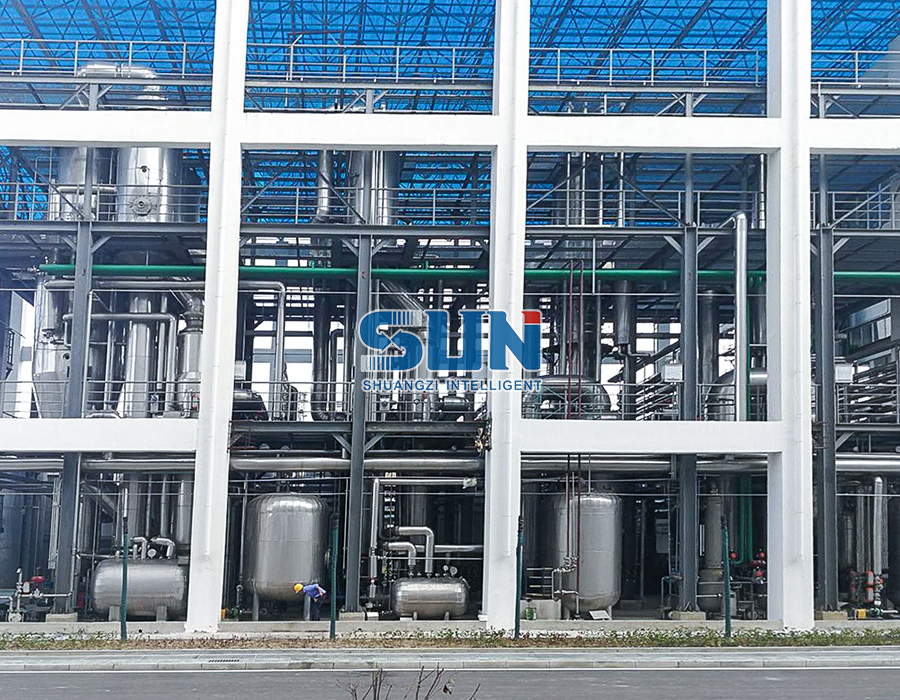
Because MVR systems can achieve a high level of energy reuse in a relatively integrated arrangement, they can be attractive where installation space is limited. A conventional multi-effect installation may require several effects, vapor lines, condensers, pumps, and supporting structures. An MVR system has its own compressor and auxiliary equipment, but it may reduce the number of evaporation effects required for a given duty.
Compactness is particularly useful when upgrading an existing plant. Existing buildings may not have enough height, floor area, or utility capacity for a large new multi-effect system. An MVR solution can be evaluated as a retrofit or as part of a staged capacity expansion, subject to structural, electrical, process, and maintenance requirements.
Suitability for Wastewater Concentration
Industrial wastewater often contains dissolved salts, organic compounds, suspended matter, or other substances that make conventional biological treatment difficult. Evaporation can reduce wastewater volume and concentrate dissolved materials for further treatment, recovery, crystallization, or disposal.
MVR equipment is suitable for a broad range of wastewater applications listed in the supplied product information, including high-salt wastewater, chemical and pharmaceutical wastewater, electroplating wastewater, acid-pickling wastewater, sodium sulfate wastewater, sodium chloride wastewater, coating wastewater, and wastewater containing zinc chloride.
Wastewater composition varies considerably from one site to another. Therefore, a successful project requires analysis of the feed liquid, including total dissolved solids, suspended solids, pH, corrosive components, organic loading, scaling potential, viscosity, foaming behavior, and target concentrate properties. These factors guide the selection of heat-transfer materials, pretreatment, evaporation configuration, cleaning method, and operating temperature.
Flexible Application Across Industries
MVR evaporation is not limited to wastewater. It can be used in chemical processing, food production, paper manufacturing, pharmaceutical production, seawater desalination, and other concentration applications. The equipment can be integrated with extraction, fermentation, separation, crystallization, drying, and wastewater-treatment systems.
For food and pharmaceutical materials, the process may be designed around product quality, temperature sensitivity, hygiene, cleanability, and controlled residence time. For chemical and environmental applications, the priority may be corrosion resistance, continuous operation, salt handling, concentrate discharge, and stable performance under variable feed conditions.
Applications in Key Industrial Fields
High-Salt Wastewater
High-salt wastewater can place a heavy burden on conventional treatment systems. Dissolved salts may inhibit biological treatment, increase disposal costs, or create a need for additional concentration and crystallization. An MVR evaporator can remove water and produce a concentrated brine stream. Depending on the salt composition and project objectives, the concentrate may be sent to crystallization, solid-liquid separation, resource recovery, or controlled disposal.
Special attention should be given to scaling. Sodium chloride, sodium sulfate, calcium salts, silica, and other components can precipitate on heat-transfer surfaces under changing concentration and temperature conditions. Proper design may include feed pretreatment, controlled supersaturation, forced circulation, surface selection, online monitoring, and scheduled cleaning.
Pharmaceutical and Chemical Wastewater
Pharmaceutical and chemical wastewater may contain valuable compounds, difficult-to-degrade organics, salts, solvents, or residual process chemicals. MVR evaporation can help reduce wastewater volume and support a broader treatment train. The evaporator may be positioned after pretreatment and before crystallization, drying, or final polishing.
Material selection is essential in these applications. The equipment must be designed to withstand the chemical characteristics of the feed and condensate. Depending on the fluid, stainless steel or other corrosion-resistant materials may be considered. Hygienic design, drainability, cleaning access, and separation between product and utility streams are also important where pharmaceutical or high-purity production is involved.
Electroplating and Metal-Containing Wastewater
Electroplating wastewater can contain salts, acids, alkalis, and dissolved metal compounds. An MVR evaporator can assist in reducing the volume of the liquid stream and concentrating dissolved components. The process may be combined with chemical precipitation, filtration, ion exchange, membrane treatment, or crystallization.
Since electroplating streams can be highly corrosive, the design should consider pH variation, chloride content, acid concentration, metal contamination, and the possibility of deposits on heat-transfer surfaces. Feed segregation can improve performance by preventing incompatible streams from entering the same evaporator and by allowing each stream to receive an appropriate treatment route.
Acid-Pickling Wastewater
Acid-pickling wastewater requires careful control of corrosion and vapor handling. The evaporator configuration, materials of construction, seals, gaskets, piping, and instrumentation must be selected for the chemical environment. In addition, off-gas management and condensate quality should be considered as part of the complete system.
Where the wastewater contains dissolved metals and high salt concentrations, evaporation may be used to reduce liquid volume before recovery or final disposal. Laboratory testing and pilot operation can help determine whether pretreatment is required to control suspended solids, emulsions, or excessive foaming.
Sodium Sulfate and Sodium Chloride Wastewater
Wastewater containing sodium sulfate or sodium chloride may be concentrated for volume reduction or salt recovery. The solubility behavior of each salt changes with temperature and concentration, so the process must be designed to avoid uncontrolled crystallization in heat-transfer tubes, circulation lines, valves, and pumps.
An MVR system can be combined with crystallization equipment when the project requires solid salt production. In such a configuration, evaporation raises the concentration, while a crystallizer or downstream separation system manages the solid phase. The final arrangement depends on whether the objective is clean salt recovery, mixed-salt concentration, zero-liquid-discharge treatment, or simple volume reduction.
Food and Natural Products
Food products, plant extracts, and natural materials may require concentration at a controlled temperature to preserve color, aroma, nutritional components, or active ingredients. MVR evaporation can support energy-efficient concentration, particularly where the process is designed for low-temperature operation.
Food and natural-product applications require attention to hygiene, cleaning, product residence time, material compatibility, and the risk of thermal damage. A suitable system may include sanitary pumps, hygienic piping, smooth internal surfaces, clean-in-place provisions, and automated control of temperature, pressure, feed rate, and concentration.
Biological Fermentation and Pharmaceutical Processing
Fermentation and pharmaceutical processes often generate liquids that must be concentrated, recovered, or treated after the main reaction or cultivation stage. The material may contain proteins, cells, nutrients, salts, organic compounds, or active substances. Evaporation can be integrated with filtration, separation, extraction, drying, or crystallization.
For these applications, the process design must balance energy efficiency with product quality. Excessive temperature, long residence time, or uncontrolled foaming can reduce product value. The MVR system should therefore be selected as part of a complete process sequence rather than as an isolated utility device.
Equipment and System Configuration
Heating Chamber
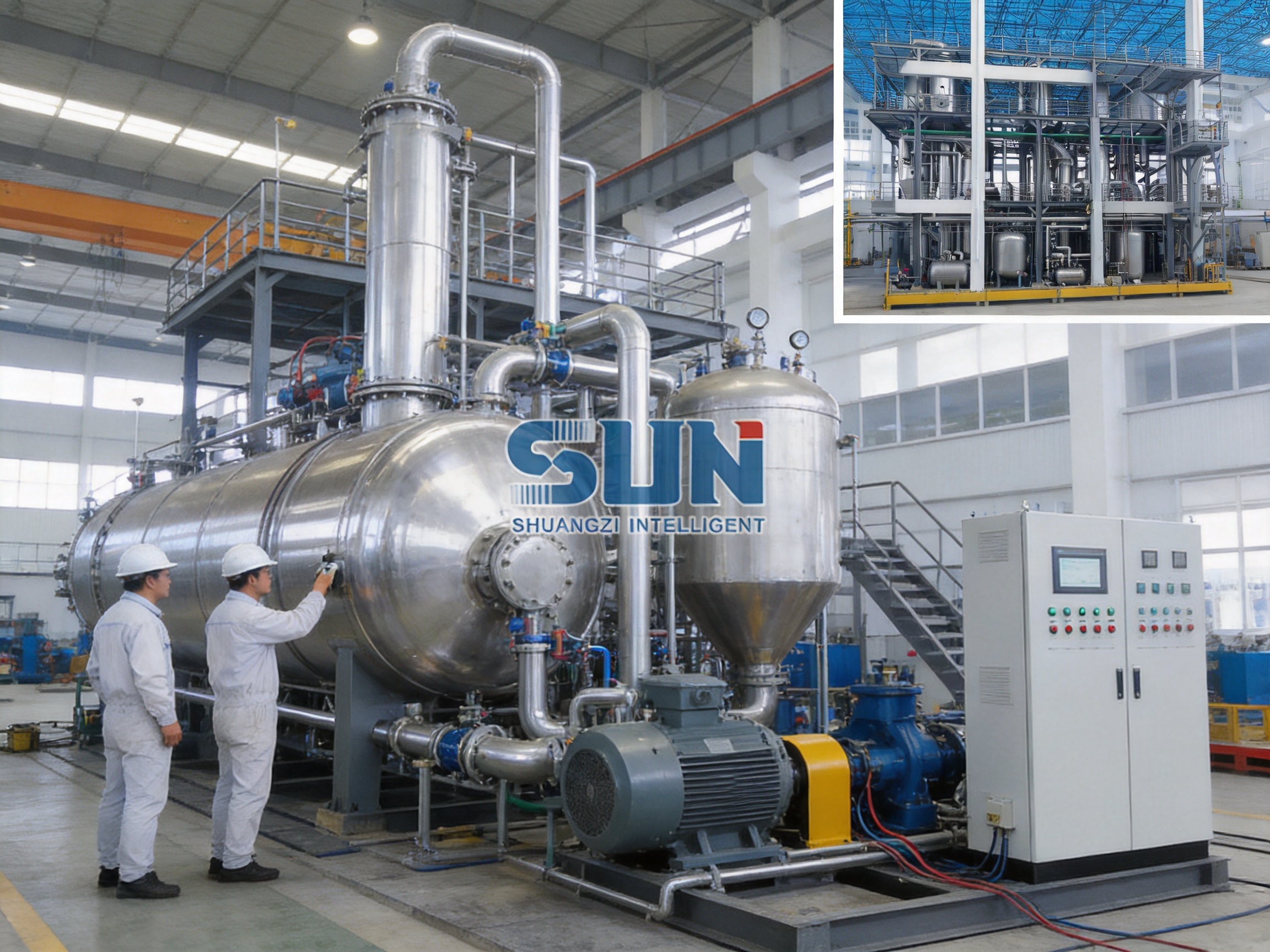
The heating chamber is where compressed vapor transfers heat to the process liquid. The heating surface must provide effective heat transfer while resisting corrosion, scaling, and fouling. Its configuration depends on feed viscosity, solids content, circulation requirements, allowable temperature difference, and target evaporation rate.
As the compressed vapor condenses, it releases latent heat. The resulting condensate is removed from the heating side and may be directed to a condensate collection or recovery system. Stable condensate removal helps maintain the intended heat-transfer performance and pressure conditions.
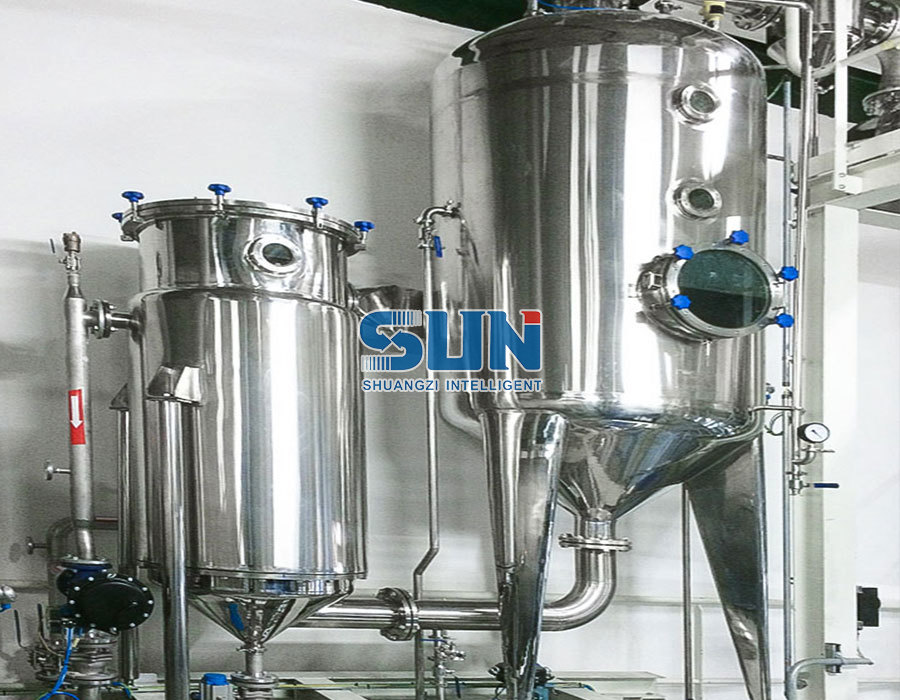
Evaporation Chamber
The evaporation chamber separates vapor from concentrated liquid. The chamber must support reliable vapor-liquid separation and minimize entrainment. Droplet carryover can contaminate condensate, overload the compressor, and affect product recovery. Demisters, separators, controlled vapor velocity, and appropriate chamber geometry may be used to improve separation.
The concentrated liquid leaves the evaporation chamber through a controlled discharge or recirculation route. Depending on the material and required concentration, the process may operate in batch, continuous, forced-circulation, or another suitable mode.
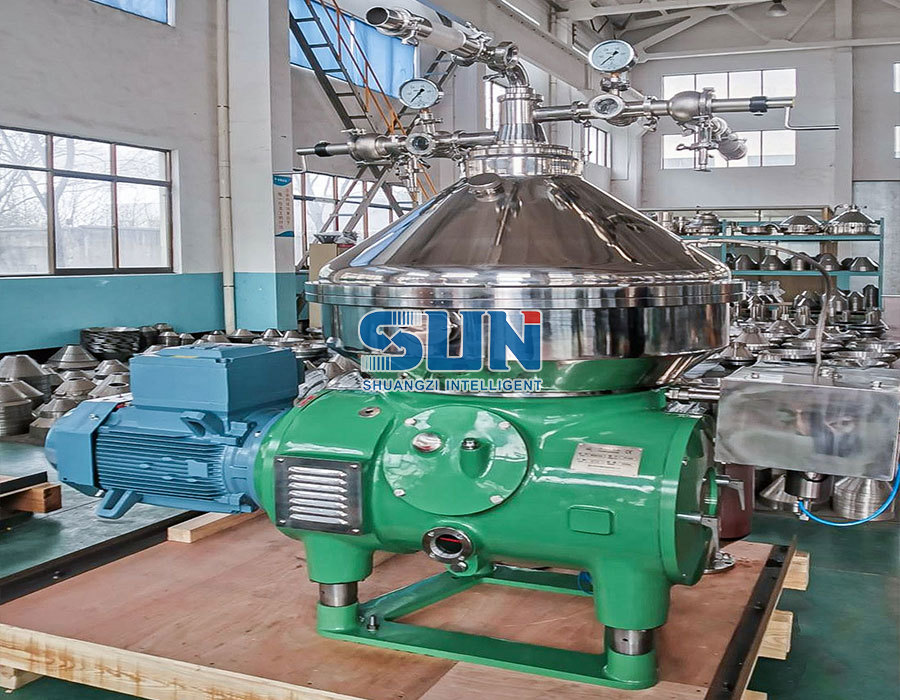
Mechanical Vapor Compressor
The mechanical vapor compressor is the central energy-recovery component. It receives secondary vapor at relatively low pressure and compresses it to a higher pressure. The increase in pressure raises the saturation temperature sufficiently for the vapor to serve as heating vapor.
Compressor selection depends on vapor flow, pressure ratio, temperature range, material properties, operating hours, and the required turndown range. The compressor must be matched to the evaporator rather than selected solely by nominal capacity. Proper matching supports stable operation, avoids excessive power consumption, and helps maintain reliable control under changing feed conditions.
Because the compressor is an electrically driven machine, its reliability, vibration level, bearing condition, sealing arrangement, and maintenance access are important. Protective controls should monitor conditions such as abnormal pressure, temperature, motor load, vibration, and insufficient vapor flow.
Pumps and Circulation Equipment
Feed pumps, circulation pumps, concentrate pumps, condensate pumps, and other auxiliary pumps maintain the movement of process and utility streams. Pump selection must consider viscosity, solids content, corrosiveness, temperature, vapor pressure, and the possibility of crystallization.
Stable circulation is important for heat-transfer performance and fouling control. In wastewater applications, a suitable circulation rate can help maintain suspension and reduce localized concentration at the heating surface. In high-viscosity applications, the system may require specialized pumps and larger flow passages.
Instrumentation and Automation
Automation supports consistent operation, energy management, safety, and product quality. Typical controlled variables may include feed flow, liquid level, pressure, temperature, compressor speed, concentrate density, conductivity, differential pressure, and condensate quality.
An integrated control system can coordinate startup, vapor compression, feed adjustment, concentration control, cleaning cycles, alarms, and shutdown procedures. Automated operation reduces the need for constant manual adjustment and helps operators respond quickly to deviations.
Process data can also be used to evaluate energy consumption, identify fouling trends, optimize operating conditions, and plan maintenance. For plants with multiple production lines, the evaporator control system can be integrated with wider plant automation and production-management systems.
Reference Operating and Cost Comparison
The following table reproduces the reference comparison supplied for different evaporation technologies. The figures are presented for comparison under the stated reference conditions. Actual values should be confirmed through process design, pilot testing, utility pricing, and site-specific engineering calculations.
| Evaporation System | Reference Evaporation Capacity | Steam Consumption | Steam Cost | Electric Power Consumption | Electricity Cost | Total Cost |
|---|---|---|---|---|---|---|
| Single-Effect Evaporator | 1 kg/h reference basis | 1.1 tons | 220 RMB | 3 kW | 2.1 RMB | 222.1 RMB |
| Double-Effect Evaporator | 1 kg/h reference basis | 0.55 tons | 110 RMB | 3 kW | 2.1 RMB | 112.1 RMB |
| Three-Effect Evaporator | 1 kg/h reference basis | 0.4 tons | 88 RMB | 3 kW | 2.1 RMB | 90.1 RMB |
| MVR Evaporator | 1 kg/h reference basis | 0.02 tons | 4.4 RMB | 30 kW | 21 RMB | 25.4 RMB |
The comparison illustrates the basic economic logic of MVR evaporation. Steam consumption is greatly reduced because the secondary vapor is reused internally. Electrical consumption increases because the compressor performs the vapor-recompression duty. Where electricity costs and operating hours are favorable, the reduction in steam demand can lead to a lower overall operating cost.
A complete economic evaluation should include the installed cost of the evaporator, compressor, pumps, electrical system, controls, piping, pretreatment, condensate handling, cleaning system, building modifications, maintenance, labor, and possible downtime. It should also account for the value of reduced water use, lower wastewater-disposal volume, recovered salts or products, and reduced boiler or cooling-system expansion.
Manufacturing Strengths and Engineering Capability
Integrated EPC and EPCM Approach
Zhejiang Shuangzi Intelligent Equipment Co., Ltd. takes EPC and EPCM services as an important part of its business model. This means the company can participate in process technology, engineering design, equipment manufacture, procurement coordination, installation, commissioning, and system integration.
This integrated approach is valuable for MVR projects because evaporation performance depends on the relationship between many subsystems. The compressor, heat exchanger, separator, pumps, controls, feed pretreatment, condensate system, concentrate discharge, and cleaning strategy must work together. A company that understands the complete process can reduce the risk of designing a technically correct but poorly integrated individual machine.
Process Technology and Custom Design
Different materials require different evaporation solutions. A high-salt wastewater stream is not handled in the same way as a food extract, pharmaceutical liquid, or fermentation broth. The company can develop equipment and process solutions based on feed properties, required capacity, target concentration, temperature restrictions, corrosion conditions, and downstream treatment requirements.
Customization may involve the heating-surface configuration, circulation arrangement, material selection, vapor separator, compressor capacity, control philosophy, cleaning approach, condensate route, and integration with crystallization or drying equipment. This process-oriented design is one of the main advantages over standardized equipment that is selected only by nominal evaporation capacity.
Manufacturing Site and Production Resources
The company was founded in 2007 and has an existing floor area of approximately 16,706 square meters, with a structure area of approximately 17,800 square meters. These facilities support equipment fabrication, assembly, engineering coordination, pilot work, and project preparation.
Its manufacturing resources include advanced welding and finishing equipment such as plasma argon arc welding machines, plasma cutting machines, and CAM CNC machining centers. These capabilities are important for pressure-bearing vessels, sanitary equipment, heat-transfer components, piping assemblies, structural parts, and custom process equipment.
Controlled welding and finishing contribute to dimensional consistency, surface quality, joint reliability, and equipment cleanability. For evaporation systems handling corrosive or hygienically sensitive materials, fabrication quality is directly related to service life, maintenance requirements, and the ability to meet process specifications.
Pilot Production and Research Support
The company has a pilot production workshop and a research and development platform designed around automation and GMP-related requirements. Pilot work can be important when the feed material has uncertain fouling behavior, unusual viscosity, strong foaming, difficult crystallization characteristics, or strict product-quality requirements.
Pilot testing can help establish evaporation rate, heat-transfer coefficient, concentration limits, vapor quality, condensate quality, cleaning frequency, and the tendency of solids to deposit. The results can then support the design of a full-scale MVR system with more realistic operating assumptions.
Broader Equipment Portfolio
The company’s mature product range includes vacuum low-temperature drying equipment, fermentation system equipment, evaporation and concentration equipment, extraction equipment, separation and crystallization equipment, filtration equipment, and containers. This broader portfolio allows MVR evaporation to be combined with upstream and downstream equipment from the same engineering organization.
For example, a plant extraction project may require extraction, filtration, concentration, drying, and product recovery. A fermentation project may require fermentation vessels, separation, concentration, sterilization-related equipment, and wastewater treatment. A pharmaceutical project may combine reaction, separation, evaporation, crystallization, filtration, and drying.
Integrated supply can simplify communication, reduce interface problems, and support unified documentation and commissioning. It also allows the process sequence to be optimized as a complete system rather than as a collection of unrelated machines.
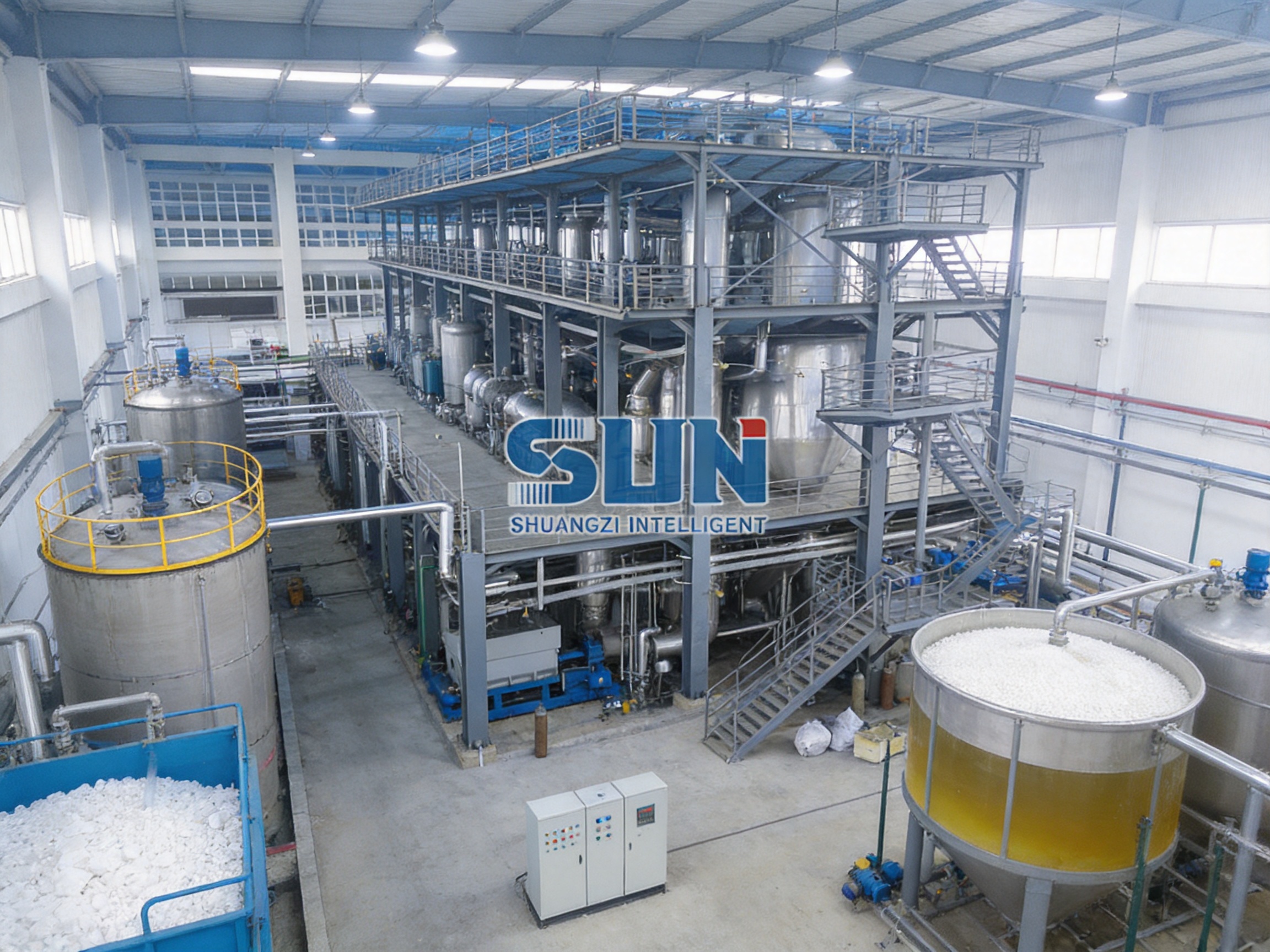
Installation, Commissioning, and Turnkey Project Support
An MVR evaporator is a process system rather than a standalone vessel. Successful installation requires coordination of mechanical equipment, piping, electrical power, instrumentation, steam and condensate lines, water systems, compressed air, drainage, ventilation, structural supports, and operator access.
The company can provide engineering, process design, equipment design, installation, line debugging, and other project services. This support is particularly useful for customers that need a turnkey project or that do not have an internal team experienced with vapor recompression systems.
During commissioning, the system can be checked under water or another suitable test medium before introducing the actual process material. Commissioning activities may include leak testing, instrument verification, pump rotation checks, compressor testing, control-loop tuning, vapor-separation verification, condensate-quality testing, and gradual introduction of feed material.
Performance validation should be based on agreed parameters, such as feed flow, evaporation capacity, final concentration, steam consumption, power consumption, condensate quality, operating temperature, pressure stability, and product recovery. For wastewater systems, validation may also include concentrate characteristics and compliance with the planned downstream treatment route.
Maintenance and Long-Term Performance
Fouling and Scaling Control
Fouling is one of the most important factors affecting evaporation performance. Deposits on heat-transfer surfaces reduce heat-transfer efficiency, increase pressure drop, raise power consumption, and may reduce capacity. The risk is higher when the feed contains salts, suspended solids, proteins, organic compounds, or materials that become supersaturated during concentration.
Control measures may include feed filtration, pretreatment, controlled concentration, optimized circulation, appropriate temperature difference, antiscalant use where suitable, and regular cleaning. The cleaning method should be selected according to the deposit type and equipment materials. Chemical cleaning, water rinsing, mechanical methods, or a combination may be considered.
Compressor Maintenance
The mechanical vapor compressor requires scheduled inspection and maintenance. Operators should monitor vibration, bearing temperature, motor current, operating pressure, abnormal noise, and changes in compressed-vapor performance. Early detection of abnormal conditions can help prevent unplanned shutdowns.
Maintenance intervals depend on compressor type, operating hours, vapor cleanliness, installation environment, and manufacturer recommendations. Vapor separation is especially important because liquid carryover can affect compressor operation and cause mechanical damage.
Instrumentation Verification
Reliable sensors are essential for safe and efficient operation. Pressure transmitters, temperature sensors, level instruments, flowmeters, conductivity meters, density instruments, and power meters should be checked and calibrated according to the plant’s maintenance program.
Incorrect readings can cause poor concentration control, unstable compressor operation, excessive energy use, or unsafe pressure conditions. Automated alarms and interlocks should be tested periodically rather than assumed to remain functional indefinitely.
Operator Training
Operators should understand the relationship between feed flow, boiling temperature, vapor pressure, compressor operation, concentration, and condensate quality. Training should cover startup, normal operation, feed changes, foam control, cleaning, alarm response, emergency shutdown, and restart procedures.
Good operating practices help preserve equipment life and maintain consistent performance. A detailed operating manual, maintenance schedule, spare-parts list, and commissioning record can support long-term reliability.
How to Select the Right MVR Evaporator
The first step is to define the process duty clearly. Important information includes feed flow rate, feed temperature, initial solids content, target concentration, required evaporation rate, batch or continuous operation, working hours, and the desired condensate quality.
Material analysis should include pH, chloride level, sulfate level, organic content, suspended solids, viscosity, density, foaming tendency, boiling-point elevation, corrosion risk, and scaling potential. If the feed composition changes significantly during production, the design should consider the full operating range rather than only the average condition.
Utility information is also necessary. The project team should evaluate electricity price, available voltage, existing steam pressure, cooling-water temperature, chilled-water capacity, condensate requirements, compressed air, water supply, drainage, and available floor space.
The required final product or concentrate must be defined. Some projects only need wastewater volume reduction. Others require a concentrated liquid with a specific density, a recoverable salt, a pharmaceutical intermediate, a food extract, or a feed stream for a dryer or crystallizer. The downstream objective strongly influences the evaporator design.
Finally, the project should consider lifecycle cost rather than purchase price alone. A lower initial-cost system may require more steam, more cooling water, more labor, or more frequent cleaning. An appropriately designed MVR system may provide greater value through reduced utility consumption, automation, compact installation, and integration with other process equipment.
Frequently Asked Questions
What does MVR stand for?
MVR stands for Mechanical Vapor Recompression. It is an evaporation method in which secondary vapor is mechanically compressed and reused as heating vapor.
How does an MVR evaporator save energy?
The system recovers the latent heat of secondary vapor. A compressor raises the vapor pressure and temperature, allowing the vapor to return to the heating chamber. This reduces the need for continuously supplied external steam.
Does an MVR evaporator use electricity?
Yes. The compressor and auxiliary equipment consume electricity. MVR technology reduces thermal steam demand by using electrical power to recompress vapor. The economic benefit depends on local steam and electricity prices, operating hours, and process conditions.
Can MVR equipment treat high-salt wastewater?
Yes. MVR evaporators can be used for high-salt wastewater and streams containing sodium chloride, sodium sulfate, zinc chloride, and other dissolved materials. The design must address scaling, corrosion, solids handling, and the intended concentrate-disposal or recovery method.
Can the system be used for pharmaceutical or food materials?
Yes. MVR evaporation can support pharmaceutical, food, natural-product, and biological processes when the equipment is designed for the required temperature, hygiene, cleanability, material compatibility, and product-quality conditions.
Is MVR always better than multi-effect evaporation?
Not necessarily. MVR can offer strong advantages in steam reduction, cooling-water savings, and compact installation, but the best technology depends on electricity cost, steam cost, capacity, operating schedule, available space, material characteristics, and capital budget. A site-specific comparison is recommended.
Can an MVR evaporator operate at low temperature?
It can be designed for low-temperature evaporation, which may benefit heat-sensitive materials and reduce reliance on chilled-water condensation. The appropriate operating temperature must be confirmed through process analysis and testing.
How can fouling be controlled?
Fouling can be managed through suitable pretreatment, feed filtration, circulation design, controlled concentration, correct temperature selection, regular monitoring, and an appropriate cleaning program. Pilot testing is useful when the feed has a high scaling or fouling risk.
Can the system be integrated with crystallization or drying?
Yes. MVR evaporation can be connected with crystallization, filtration, separation, vacuum drying, and other downstream processes. Integration should be considered during the initial process design so that concentration, solids handling, and energy use are properly coordinated.
What project services are available?
Available services can include process technology development, engineering design, equipment manufacturing, matching procurement, installation, commissioning, line debugging, system integration, and turnkey project support. The exact scope should be confirmed according to the project contract and technical requirements.
Conclusion
MVR evaporation provides a practical route to reduce steam consumption, recover secondary-vapor energy, lower cooling-water demand, and improve the efficiency of industrial concentration. Its advantages are especially relevant to high-salt wastewater, pharmaceutical and chemical wastewater, electroplating streams, acid-pickling wastewater, sodium-salt solutions, food materials, plant extracts, fermentation liquids, and other process streams requiring controlled evaporation.
The technology is most effective when the complete system is designed around the material and the plant. Compressor selection, heat-transfer surfaces, circulation, vapor separation, controls, cleaning, corrosion resistance, concentrate handling, and downstream integration all influence performance. A reliable MVR project therefore requires more than a catalog machine; it requires process engineering, manufacturing control, commissioning support, and long-term technical service.
Zhejiang Shuangzi Intelligent Equipment Co., Ltd. offers MVR evaporation equipment together with process technology, equipment design, manufacturing, installation, automation, system integration, and turnkey project capabilities. Its production facilities, welding and machining resources, pilot workshop, research platform, and broader portfolio of extraction, fermentation, concentration, separation, filtration, crystallization, and drying equipment support customized solutions for complex industrial applications.
For a project evaluation, customers should prepare feed analysis, capacity requirements, target concentration, utility data, operating schedule, site conditions, and downstream treatment objectives. These inputs allow the MVR evaporator to be designed for practical performance, responsible energy use, maintainability, and reliable integration into the wider production or wastewater-treatment system.
References
1. Supplied technical description of the MVR Evaporator and its application scope.
2. Supplied reference comparison of single-effect, double-effect, three-effect, and MVR evaporation systems.
3. General principles of mechanical vapor recompression and industrial evaporation engineering.
4. General guidance on industrial wastewater concentration, scaling control, vapor separation, and evaporator maintenance.
5. General engineering principles for process equipment manufacturing, automation, commissioning, and turnkey project integration.