
 英语
英语 俄语
俄语Content
- 1 Why Pilot-Scale Fermentation Equipment Matters
- 2 Overview of the Mechanical Agitated Fermenter
- 3 Key Technical Parameters
- 4 Hygienic Stainless Steel Construction
- 5 Mechanical Agitation and Mixing Performance
- 6 Aeration and Dissolved Oxygen Control
- 7 Integrated pH Control
- 8 Temperature Regulation
- 9 Foam Detection and Defoaming
- 10 Sampling, Condensation and Process Connections
- 11 Intelligent Control Cabinet
- 12 Advantages Compared with Basic Fermentation Vessels
- 13 Advantages in Contamination Control
- 14 Manufacturing Strengths and Engineering Capability
- 15 Applications in Microbial and Biotechnology Research
- 16 Process Development Workflow
- 17 Turnkey Project and Customization Potential
- 18 Installation and Utility Planning
- 19 Maintenance and Operational Reliability
- 20 Quality and Process Documentation
- 21 How the Equipment Supports Scale-Up
- 22 Selection Checklist for Buyers
- 23 Frequently Asked Questions
- 23.1 What is the primary purpose of this pilot fermenter?
- 23.2 Which organisms can be cultivated in the system?
- 23.3 What materials are available for the tank?
- 23.4 What does the internal surface finish specification mean?
- 23.5 Can the fermenter be sterilized without disassembly?
- 23.6 How is dissolved oxygen controlled?
- 23.7 Can the pH be adjusted automatically?
- 23.8 How does the system control foam?
- 23.9 Does the equipment record fermentation data?
- 23.10 Is the fermenter suitable for laboratories?
- 23.11 Can the equipment be customized?
- 23.12 Can the supplier provide more than the fermenter itself?
- 23.13 What should be considered before selecting SUS304 or SUS316L?
- 23.14 What is the benefit of using pilot-scale equipment before production?
- 24 Conclusion
- 25 References
- 26 Product: Pilot Scale Mechanical Agitated Stainless Steel Fermenter Lab Microbial Culture Fermentation Equipment
Pilot-scale fermentation is the bridge between laboratory discovery and reliable industrial production. At this stage, a fermentation process must demonstrate more than biological activity in a small flask or benchtop vessel. It must show repeatability, controllability, scalability, hygienic performance and compatibility with the operating conditions expected in a production environment. The pilot-scale mechanical agitated stainless steel fermenter described in this article is designed to support that transition.
This fermentation equipment combines a polished stainless steel vessel, mechanical agitation, controlled aeration, temperature regulation, pH adjustment, dissolved oxygen monitoring, defoaming, sampling and data recording in one integrated system. It is intended for research institutes, biotechnology companies, pharmaceutical development departments, food technology laboratories and manufacturers that need to evaluate strains, media and operating parameters before making a larger capital investment.
The system is suitable for microbial culture and process development involving Bacillus, probiotics, medicinal fungi, enzyme-producing organisms and other aerobic or facultative microbial systems. Depending on the selected configuration, it can be used for strain cultivation, medium screening, fermentation parameter optimization, pilot verification and preparation for industrial scale-up.
Why Pilot-Scale Fermentation Equipment Matters
Microorganisms do not behave identically at every scale. A formula that performs well in a shake flask may show different growth, oxygen uptake, heat generation, foaming or mixing behavior in a larger tank. Increasing the working volume changes the relationship between vessel geometry, agitator power, gas dispersion, heat transfer and mass transfer. These changes can influence biomass productivity, metabolite formation, pH stability, dissolved oxygen and final product quality.
A pilot fermenter provides a controlled environment in which these effects can be studied before the process reaches a production vessel. It allows technical teams to collect meaningful information about agitation speed, aeration rate, oxygen transfer, temperature control, feeding strategy, defoaming and sterilization. The resulting data supports more rational scale-up and reduces the risk of discovering major process problems only after commercial equipment has been installed.
Pilot-scale equipment also helps organizations compare different strains or media formulations using consistent operating conditions. Instead of relying only on laboratory observations, engineers and microbiologists can examine fermentation behavior in a vessel with industrially relevant interfaces, control loops and cleaning requirements. This makes the pilot stage valuable for both research and manufacturing planning.
Overview of the Mechanical Agitated Fermenter
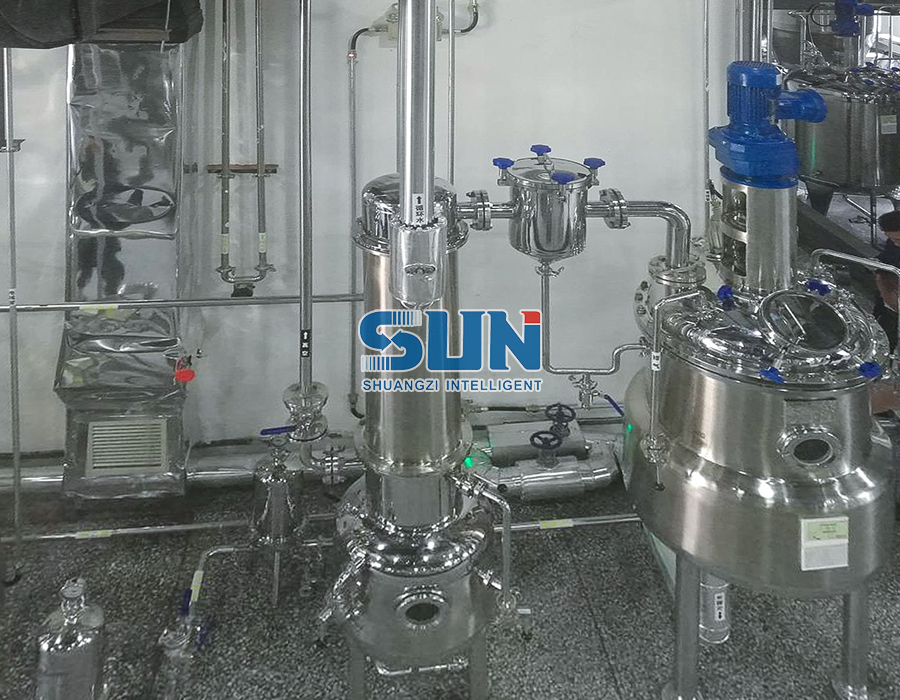
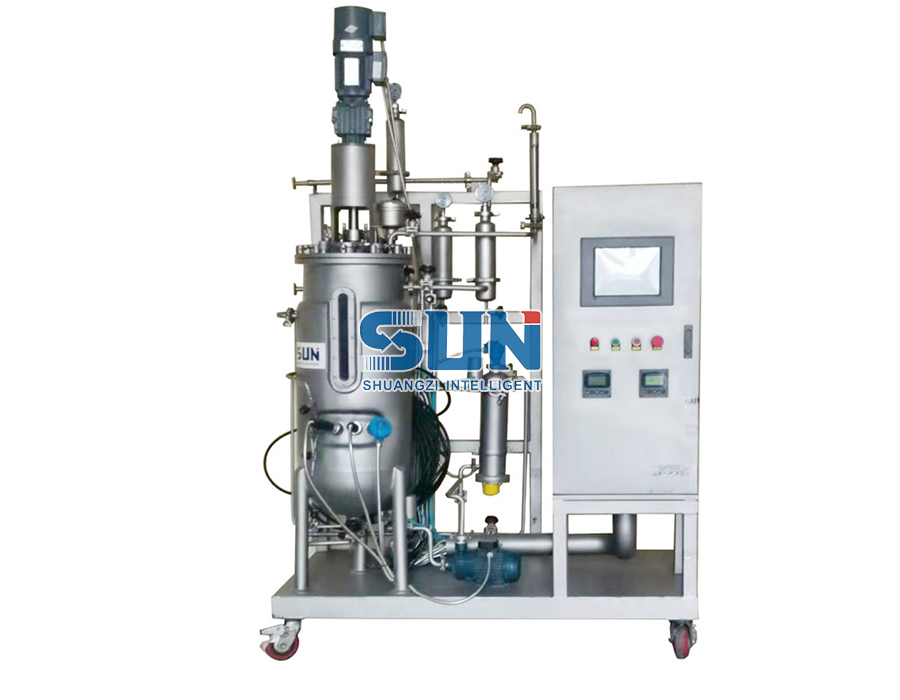
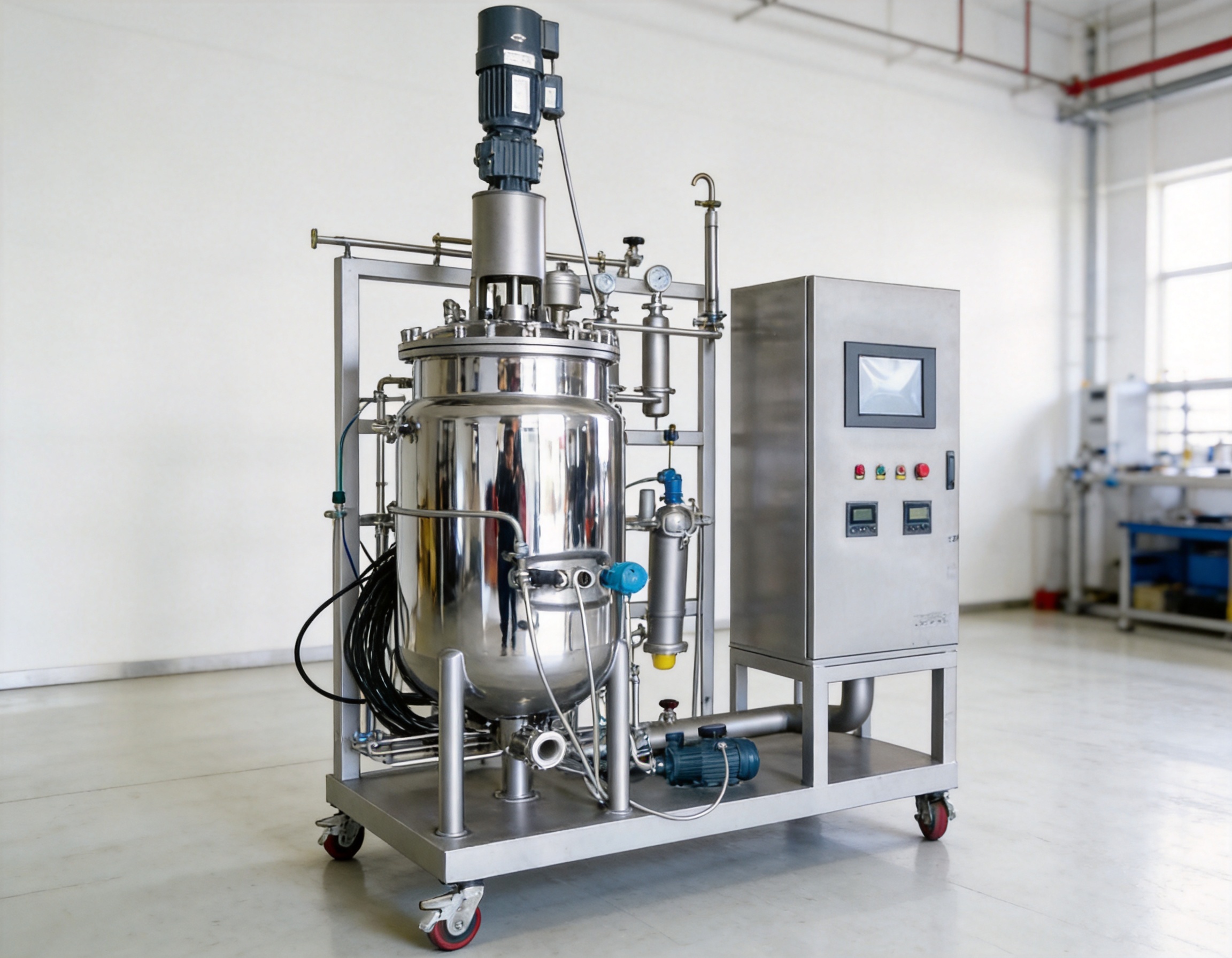
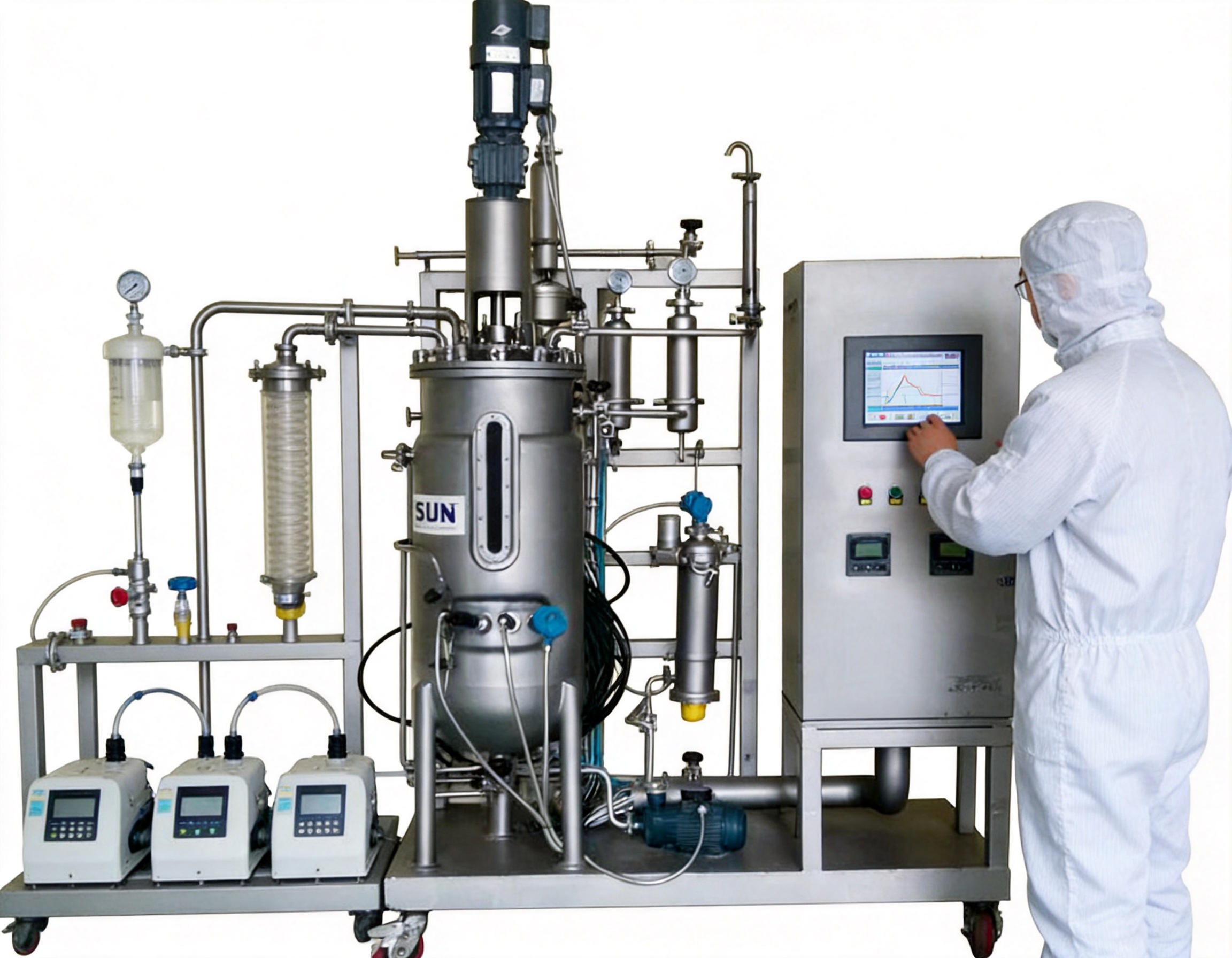
The equipment is a vertical stainless steel fermentation system with a mechanical stirring assembly and integrated process control. Its main vessel, pipelines and contact components are designed for hygienic operation. The inner surface is mirror-finished to reduce material retention and make cleaning more effective. The vessel supports in-situ high-temperature sterilization, helping reduce contamination risks and protect strain purity.
The fermentation system includes a dedicated intelligent control cabinet. Through the touchscreen interface, operators can set and monitor critical parameters such as temperature, pH, dissolved oxygen, stirring speed and aeration. Real-time data recording enables operators to follow process trends during a batch and review historical information after fermentation has finished.
Standard functional modules include agitation, aeration, condensation, sampling and defoaming. Heating and cooling can be arranged through an external jacket, an external coil or an internal coil, depending on the process and vessel design. The system may be configured with different vessel support structures, including vertical legs, ear-type supports or skirt supports, according to installation conditions and customer requirements.
Universal casters provide flexibility for laboratory and pilot workshop layouts. The unit can be repositioned when necessary, subject to the site’s floor, utility and safety requirements. Mobility is especially useful in research environments where several process systems share one pilot area.
Key Technical Parameters
| Parameter | Specification or Available Configuration | Process Value |
|---|---|---|
| Nominal volume | 50 L to 300 t, according to project design | Supports laboratory, pilot and larger process development requirements |
| Liquid loading coefficient | At least 70% | Provides practical working volume while allowing headspace for aeration and foam control |
| Tank material | SUS304 or SUS316L stainless steel | Supports hygienic construction and resistance to common process conditions |
| Internal surface finish | Ra ≤ 0.6 micrometers | Reduces retention areas and supports cleaning |
| External surface finish | Ra ≤ 0.8 micrometers | Provides a clean, durable external finish |
| Heating and cooling | External jacket, external coil or internal coil | Enables temperature control for different operating conditions |
| Control variables | Temperature, pH, dissolved oxygen, agitation, aeration, feeding and defoaming | Allows integrated control of important fermentation parameters |
| Temperature measurement | Online detection, stated range 0–150°C | Supports process monitoring and sterilization-related operations |
| pH measurement | Online detection, stated range pH 2–12 | Supports acidic, neutral and alkaline process control |
| Dissolved oxygen measurement | Online detection, configurable range of 0–100% or 0–200% | Supports oxygen limitation studies and aerobic fermentation control |
| Control platform | Touchscreen interface, PLC program and optional upper-computer monitoring | Combines local operation with data review and remote supervision |
The listed nominal capacity range is broad because the equipment is configured according to process requirements rather than being limited to a single fixed tank size. For an actual project, the final working volume, vessel dimensions, agitator arrangement, motor power, heating and cooling duty, sterilization method, instrumentation and utility requirements should be confirmed through a technical specification.
Hygienic Stainless Steel Construction
Material selection is one of the most important factors in fermentation equipment. The vessel must withstand repeated exposure to water, nutrients, acids, alkalis, steam, cleaning agents and biological materials. It must also provide a surface that can be cleaned and sterilized effectively. The system can be manufactured using SUS304 or SUS316L stainless steel, with the final grade selected according to the medium, process chemistry, cleaning regime and applicable project standards.
The interior surface is specified at Ra ≤ 0.6 micrometers, while the exterior surface is specified at Ra ≤ 0.8 micrometers. A smooth internal finish minimizes the number of surface irregularities where product residue, microorganisms or cleaning liquid could remain. This is particularly important in fermentation, where even a small contamination event can affect the strain, alter the metabolic profile or invalidate a batch.
The tank and pipelines are designed without unnecessary dead corners. Dead legs and poorly drained areas can make cleaning and sterilization more difficult. Hygienic design therefore requires attention not only to the tank wall, but also to nozzles, valves, sensors, sampling points, pipe connections, seals and the lower vessel outlet.
Stainless steel construction also contributes to mechanical durability. A pilot fermenter may be used repeatedly for different organisms and media, requiring frequent cleaning, sterilization and changeover. A robust vessel and carefully finished process-contact surfaces help the equipment maintain performance over an extended operating life.
Support for In-Situ High-Temperature Sterilization
The fermenter supports in-situ high-temperature sterilization, commonly referred to as sterilization in place when the installation and process design permit it. The ability to sterilize the vessel and connected process lines without disassembly can improve operational efficiency and reduce handling-related contamination risks.
High-temperature steam sterilization must be designed and operated according to the actual vessel pressure rating, piping arrangement, condensate removal, sensor location, safety devices and validated cycle. Operators should not assume that every connected component automatically has the same sterilization capability as the vessel. The final design should identify sterilizable lines, non-sterilizable accessories, sterile air paths, exhaust treatment and appropriate operating limits.
For a research or pilot facility, in-situ sterilization is valuable because it makes the operating procedure more representative of industrial practice. It also enables repeated process trials without requiring the entire system to be opened and manually reassembled between batches.
Pilot Scale Mechanical Agitated Stainless Steel Fermenter Lab Microbial Culture Fermentation Equipment
Mechanical Agitation and Mixing Performance
Mechanical agitation is central to fermentation performance. The agitator distributes cells, nutrients, heat and dissolved gases throughout the liquid. It also helps prevent sedimentation and reduces concentration gradients. The correct impeller arrangement depends on liquid viscosity, cell morphology, gas flow, vessel geometry, oxygen demand and the tendency of the culture to foam.
The system uses a mechanically driven mixing assembly. The mixing vane can be configured for the process, including a defoaming arrangement where required. The agitator motor and shaft design should be selected according to the working volume, medium viscosity, target speed range, oxygen transfer requirement and shear sensitivity of the organism.
Mechanical mixing offers several advantages over passive circulation. It provides direct control of rotational speed, allowing the operator to adjust the relationship between power input and oxygen transfer. During early growth, a relatively moderate speed may be sufficient. As biomass concentration and oxygen demand increase, the speed can be raised, coordinated with aeration, or controlled automatically through dissolved oxygen feedback.
Agitation also supports temperature uniformity. Heating and cooling surfaces transfer energy to or from the process liquid, while mixing distributes that energy through the vessel. Without adequate circulation, local hot or cold zones may develop near the jacket or coil. A well-designed agitation system helps maintain a more consistent culture environment.
Agitator Selection for Different Fermentation Tasks
Different organisms and media require different mixing strategies. Low-viscosity bacterial cultures may require a different impeller geometry from filamentous fungi or high-solids media. Probiotic processes may emphasize gentle but effective circulation, while enzyme fermentation may require stronger oxygen transfer. Medicinal fungi can create more complex rheology as biomass develops.
For this reason, the fermenter should be treated as a configurable platform rather than a one-size-fits-all tank. The number, diameter, position and type of mixing blades can be selected during engineering review. Baffles, shaft seals, motor capacity and control range may also be adjusted to achieve the required process performance.
When comparing suppliers, buyers should request information about the agitator’s operating range, shaft sealing method, motor protection, impeller materials, maximum viscosity, expected tip speed and cleanability. These details are more useful than comparing motor power alone.
Aeration and Dissolved Oxygen Control
Many microbial fermentation processes require a reliable supply of oxygen. Oxygen transfer is affected by gas flow, bubble size, agitation, pressure, medium composition, temperature, viscosity and biomass concentration. The fermenter therefore integrates aeration with dissolved oxygen measurement and control.
The stated aeration configuration supports deep aeration and bottom air inlet. Air is introduced into the liquid through a suitable gas-distribution arrangement, while the agitator disperses the gas and increases contact between bubbles and the culture. The dissolved oxygen electrode measures the available oxygen level online, allowing operators to observe oxygen consumption throughout the batch.
The dissolved oxygen control range may be configured as 0–100% or 0–200%, depending on the selected sensor and control design. The dissolved oxygen signal can be associated with stirring speed and ventilation. In automatic mode, the controller can adjust one or more linked variables to maintain the target dissolved oxygen value. In manual mode, operators can independently set aeration and agitation for experimental studies.
This flexibility is useful during process development. A researcher may first operate at a fixed aeration rate to study the organism’s oxygen demand. In a later experiment, the researcher may maintain a constant dissolved oxygen set point by changing agitation speed or airflow. Comparing these strategies can help identify the most stable and energy-efficient operating window.
Importance of Sterilizable Dissolved Oxygen Measurement
Dissolved oxygen electrodes are direct-contact process instruments and must be selected for the sterilization method. The equipment specification provides for an imported dissolved oxygen electrode with online high-temperature steam disinfection capability. Sensor installation should allow appropriate calibration, protection from mechanical damage and effective exposure to the sterilization cycle.
Reliable dissolved oxygen measurement is important because an incorrect signal can cause the controller to over-aerate, under-aerate or make unnecessary agitation changes. Sensor calibration, membrane condition, electrolyte condition and installation depth should be checked according to the instrument supplier’s instructions.
Integrated pH Control
pH affects enzyme activity, nutrient availability, membrane transport, growth rate and product formation. Microbial metabolism can cause the pH to move rapidly, particularly when the culture consumes nitrogen sources, produces organic acids or releases alkaline compounds. Manual correction alone may be too slow for a tightly controlled process.
The fermenter supports online pH detection over a stated range of pH 2–12. An imported pH electrode can be installed for high-temperature steam disinfection, subject to the selected configuration. The control system can operate a peristaltic pump or an automatic control valve to add acid or alkali when the measured pH deviates from the set point.
Automatic pH control helps maintain more consistent culture conditions and makes batch-to-batch comparison easier. It also reduces the need for frequent manual sampling and adjustment. The operator can define the target pH, alarm limits, addition strategy and control response according to the organism and process.
Acid and alkali dosing systems should be sized carefully. Excessive pump capacity may cause overshoot, while insufficient capacity may result in a slow response during periods of high metabolic activity. The dosing lines should be arranged to promote rapid dispersion and should be included in the cleaning and sterilization assessment.
Temperature Regulation
Temperature has a direct influence on microbial growth, oxygen solubility, enzyme activity and product stability. Even a relatively small temperature deviation can change the fermentation profile. The system therefore includes online temperature detection, automatic or manual control and selectable heating or cooling utilities.
The stated temperature detection range is 0–150°C. This range covers normal cultivation temperatures as well as higher-temperature operations associated with sterilization, although actual operating limits depend on the vessel design and process specification. An imported temperature sensor provides the signal used by the control system.
Temperature control can be arranged through hot water, cooling water, tap water or another approved utility, depending on site conditions. An external jacket, external coil or internal coil may be selected for heat transfer. The best arrangement depends on the vessel size, required heating and cooling rate, available utilities, cleaning requirements and process sensitivity.
Automatic and manual switching gives operators flexibility. Automatic mode is appropriate for routine batch operation, while manual mode can be useful during commissioning, troubleshooting or controlled process experiments. Alarm settings can be established for high temperature, low temperature, sensor failure and utility interruption.
Foam Detection and Defoaming
Foam is a common challenge in aerobic fermentation. Proteins, peptides, polysaccharides, cell debris and gas dispersion can create stable foam. Uncontrolled foam may enter the exhaust line, contaminate filters, reduce available vessel volume or cause an unwanted pressure condition.
The system includes a conducting foam electrode for detection. When foam reaches the sensing point, the controller can issue an alarm or initiate automatic incremental addition of defoaming agent. The defoaming function can also be coordinated with mechanical defoaming elements where the vessel design includes them.
Automatic incremental dosing is preferable to adding a large quantity of defoamer at once. Excessive defoamer can affect oxygen transfer, downstream separation, filtration or product quality. A controlled dosing strategy allows the process team to balance foam suppression with biological performance.
Foam control should be considered during process development rather than treated only as an emergency function. The type of medium, agitator speed, aeration rate, inoculum condition and culture age all influence foam behavior. Pilot trials provide the opportunity to determine whether mechanical control, chemical defoamer or a combination of both is most appropriate.
Sampling, Condensation and Process Connections
Sampling is necessary for measuring biomass, substrate concentration, metabolites, contamination indicators, morphology, pH and other analytical parameters. The fermenter includes a sampling module designed to support process monitoring while reducing unnecessary exposure of the culture to the surrounding environment.
A good sampling arrangement should be easy to operate, cleanable and compatible with sterilization. The sampling frequency and sample volume should be planned so that repeated sampling does not significantly change the working volume or affect the process balance. In pilot work, sampling design should also allow researchers to collect enough material for analytical testing without disrupting the batch.
Condensation is important when steam sterilization, heated gases or warm exhaust streams are involved. A condenser helps reduce moisture carryover and can protect downstream filters or exhaust components. Its design should account for vapor load, cooling utility, drainage and cleanability.
The tank interface may include connections for pH, dissolved oxygen, temperature, inoculation, defoaming, acid supply, alkali supply, material supply and pressure measurement. These interfaces provide the flexibility required for different fermentation recipes. However, every additional connection should be evaluated for hygienic design, mechanical integrity, sterilization access and maintenance requirements.
Intelligent Control Cabinet
The independent intelligent control cabinet provides a centralized operating platform. A touchscreen interface allows operators to view process values, enter set points, monitor alarms and control equipment functions. The cabinet integrates the signals from sensors and the outputs to pumps, valves, motors and other process components.
Core control functions include temperature, pH, dissolved oxygen, agitation speed, aeration, material feeding and defoaming. The PLC-based program can execute automatic control sequences while allowing manual intervention when permitted by the operating mode. This combination is useful because research processes often require experimental flexibility, while routine pilot production requires repeatable automation.
Lower-Computer Control
The local control level uses a touch-screen operating interface and a dedicated PLC automatic control program. Operators can monitor the process directly at the fermenter and make authorized changes to operating parameters. The local interface is particularly important during inoculation, sampling, utility changes, cleaning, sterilization and batch discharge.
Real-time measurements can include temperature, pH, dissolved oxygen, foam status, agitation speed and material supply activity. Alarm functions can draw attention to sensor faults, abnormal values, utility interruptions or equipment conditions that require intervention.
Upper-Computer Monitoring
Where the project includes an upper-computer system, remote monitoring and historical record functions can be added. Special fermentation configuration software can display process trends and store historical records. This supports review of batch performance, comparison between experiments and identification of gradual changes in process behavior.
Historical data is especially valuable during scale-up. Engineers can compare dissolved oxygen trends, pH correction frequency, temperature recovery, agitation response and defoamer usage. These records help determine whether a change in performance results from the biological process, the operating recipe, the sensor or the equipment.
Data systems should be configured according to the user’s quality requirements. If the equipment is used in a regulated pharmaceutical or food environment, the project team should define user access, audit trail, data backup, electronic records, calibration records and change-control expectations before finalizing the control architecture.
Advantages Compared with Basic Fermentation Vessels
A basic stirred tank may provide only a vessel, motor and simple temperature indication. Such a system can be suitable for early experiments, but it may not provide enough control for serious process development. The pilot-scale fermenter offers a more complete operating environment.
| Evaluation Area | Basic Vessel | Integrated Pilot Fermenter |
|---|---|---|
| Mixing | Often fixed-speed or manually adjusted | Mechanical agitation with controlled stirring speed |
| Oxygen management | May rely on fixed airflow | Online dissolved oxygen monitoring linked with aeration and agitation |
| pH regulation | Manual sample-and-adjust operation | Online pH detection with automatic acid or alkali dosing |
| Temperature control | Limited indication or external adjustment | Online measurement with automatic or manual heating and cooling control |
| Foam management | Manual observation | Foam electrode, alarm and incremental defoamer dosing option |
| Sterilization | May require disassembly or separate treatment | Designed to support in-situ high-temperature sterilization |
| Data recording | Manual logs | Real-time measurement and optional historical monitoring |
| Process development | Limited industrial relevance | Supports parameter optimization and scale-up verification |
The main advantage is not simply the number of instruments. It is the integration of those instruments into a coordinated process system. Dissolved oxygen control is more useful when it can adjust agitation or aeration. pH measurement becomes more valuable when it is connected to dosing equipment. Temperature sensing has greater practical value when it is linked to heating and cooling control. The integrated architecture allows the operator to study the interaction among these variables.
Advantages in Contamination Control
Contamination control is a fundamental requirement for microbial culture. The use of polished stainless steel, reduced dead corners, sterilizable process interfaces and in-situ high-temperature sterilization helps create a more controlled operating environment than open or improvised culture equipment.
The fermenter’s design supports strain purity by reducing opportunities for foreign microorganisms to remain in the vessel or enter during operation. This is particularly important when the process involves a valuable production strain, a slow-growing organism or a culture whose metabolic performance is highly sensitive to competition.
Contamination control is not achieved by equipment alone. Operators must also apply suitable procedures for media preparation, inoculation, sterile air supply, sampling, transfer, cleaning, sterilization and maintenance. The equipment provides the hygienic foundation, while validation and disciplined operation complete the control strategy.
Manufacturing Strengths and Engineering Capability
The manufacturer behind this equipment operates as a biology and medical equipment enterprise focused on process technology, automation engineering, equipment manufacture, matching procurement, installation and system integration. Its activities cover plant extraction, biological fermentation, pharmaceutical engineering, natural food, energy conservation and environmental protection.
This broad industrial background is relevant to fermenter customers because fermentation systems rarely operate as isolated machines. They are connected to media preparation, sterilization, air treatment, feed systems, harvest, cleaning, utilities, downstream processing and data management. A supplier with experience across related process areas can better understand how the fermenter must fit into a complete production or pilot line.
The company was established in 2007 and has a facility with a stated floor area of approximately 16,706 square meters and a structure area of approximately 17,800 square meters. It has developed production capacity for equipment used in vacuum low-temperature drying, fermentation, evaporation and concentration, extraction, separation, crystallization, filtration and process vessels.
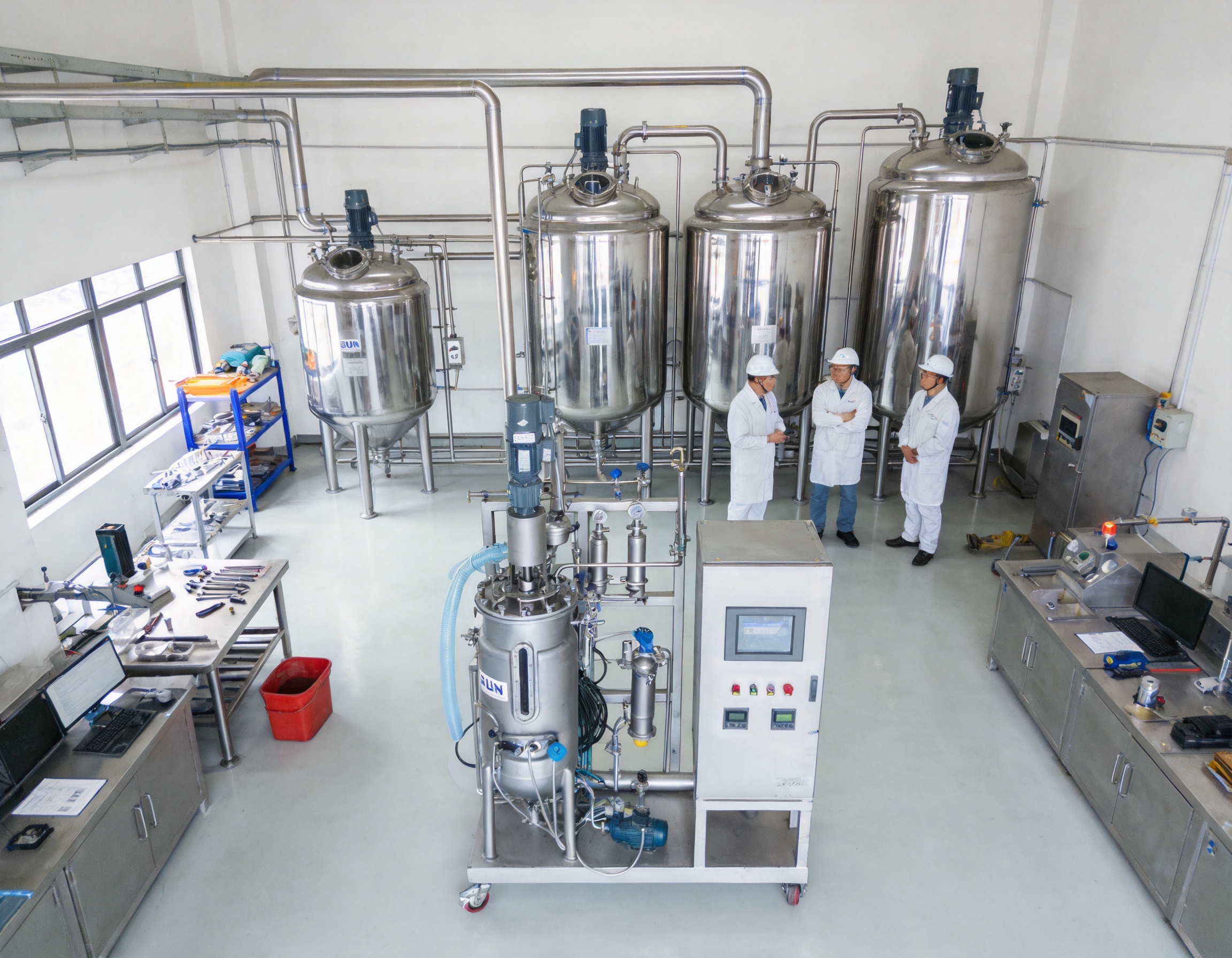
Its manufacturing capabilities include a pilot production workshop and research and development platform designed to support automation and GMP-related requirements. The organization also provides engineering, process design, equipment design, installation, line debugging and turnkey project services. This enables customers to obtain more than a standalone tank when their project requires a coordinated system.
Advanced Welding and Finishing Equipment
Fermentation equipment depends heavily on welding quality and surface finishing. Welds in process-contact areas must be mechanically sound, cleanable and suitable for the required sterilization and pressure conditions. Surface treatment must remove irregularities that could retain residues or microorganisms.
The manufacturing facility has introduced equipment including plasma argon arc welding machines, plasma cutting equipment and CAM CNC machining centers. Plasma argon arc welding can support controlled fabrication of stainless steel process components, while CNC machining can improve dimensional consistency for selected parts, flanges, supports and mechanical interfaces.
Modern fabrication equipment contributes to repeatability, but process quality also depends on engineering discipline. Welding procedures, material traceability, inspection, passivation, surface roughness verification, pressure testing and documentation should be addressed according to the customer’s quality system and applicable standards.
Process Engineering and System Integration
The company’s EPC and EPCM-oriented approach allows it to participate in process planning, automation design, equipment manufacturing, procurement coordination, installation and commissioning. This is valuable when the fermenter must be integrated with sterile air, steam, water, cooling, compressed gas, dosing, exhaust, cleaning or downstream systems.
System integration can reduce interface problems between separate suppliers. A single engineering team can coordinate instrument signals, utility connections, control logic, pipe routing and operating sequences. For international customers, the project should include a clear division of responsibilities, approved drawings, utility specifications, factory acceptance procedures and site acceptance criteria.
Applications in Microbial and Biotechnology Research
Bacillus Fermentation
Bacillus species are used in enzyme production, agricultural biotechnology, industrial microbiology and other applications. Their growth can involve substantial oxygen demand and foam formation. The pilot fermenter’s agitation, aeration, dissolved oxygen and defoaming functions allow researchers to investigate these conditions in a controlled vessel.
Development teams can compare inoculum levels, carbon sources, nitrogen sources, agitation profiles, aeration rates and pH strategies. Historical records can then be reviewed to identify which parameters correspond with improved biomass or enzyme productivity.
Probiotic Culture
Probiotic processes require careful management of strain identity, contamination control, temperature and pH. Some probiotic organisms are sensitive to excessive shear or oxygen exposure, while others may benefit from controlled aeration during specific stages. The adjustable mechanical agitation and configurable aeration system provide a platform for evaluating different operating strategies.
Automatic pH control can be important when acid production causes the culture to move away from its preferred range. The ability to record the pH profile, dosing activity and temperature history supports comparison among strains and media formulations.
Medicinal Fungi
Medicinal fungi can present special challenges because filamentous growth may change the viscosity and rheology of the culture. Pellets, mycelial networks and suspended solids may affect mixing and oxygen transfer. A pilot fermenter allows the process team to evaluate impeller selection, speed, aeration and foam behavior under realistic operating conditions.
The vessel should be configured according to the organism’s morphology and the desired product. In some cases, gentle circulation is needed to protect the culture structure; in other cases, stronger mixing is required to maintain suspension and oxygen availability.
Enzyme Preparation
Enzyme-producing microorganisms often require close control of carbon feeding, pH, temperature, dissolved oxygen and foam. The material supply function can be connected to a peristaltic pump or automatic control valve, enabling controlled addition of nutrients or process materials.
By monitoring dissolved oxygen and growth-related process changes, operators can develop feeding strategies that avoid excessive substrate accumulation or oxygen limitation. The resulting process knowledge can support later design of fed-batch or other production modes.
Process Development Workflow
A successful pilot fermentation program begins with a clear process objective. The objective may be to increase biomass, improve a target metabolite, raise enzyme activity, evaluate a new strain, test a medium, shorten batch time or confirm a scale-up model. The fermenter should be configured around that objective.
Stage One: Strain and Medium Preparation
The selected strain is prepared under controlled conditions, and the medium is formulated according to the experimental plan. The pilot system should be checked for cleanliness, instrument calibration, valve operation, utility availability and control-system readiness.
Stage Two: Cleaning and Sterilization
The vessel and process lines are cleaned using an approved procedure. Sterilization parameters are established according to the equipment design and validated for the intended operating conditions. Sensors, sampling points, air paths, dosing lines and exhaust components should be included in the sterilization assessment.
Stage Three: Inoculation
After sterilization and cooling to the selected culture temperature, the inoculum is transferred through the designated inoculation connection. The operation should be performed under conditions that protect the sterile boundary. The initial pH, temperature, agitation and aeration settings are recorded.
Stage Four: Controlled Fermentation
During fermentation, the control system monitors temperature, pH, dissolved oxygen, agitation, aeration and foam. Operators can run the process in automatic or manual mode depending on the study design. Samples are taken at planned intervals for laboratory analysis.
Stage Five: Data Review and Scale-Up Assessment
At the end of the batch, the team reviews process trends and analytical results. Important observations may include oxygen limitation, excessive foam, pH overshoot, slow temperature recovery, high defoamer consumption or changes in mixing behavior. These observations guide the next experiment and support scale-up decisions.
Turnkey Project and Customization Potential
Although the product is described as a pilot mechanical agitated fermenter, its engineering approach can support broader turnkey projects. Customers may require a complete fermentation line that includes media preparation, sterilization, inoculation, culture, feeding, harvest, cleaning and data management. The supplier can provide process design, equipment design, installation, line debugging and system integration services for such projects.
Customization may address vessel capacity, liquid loading, material grade, surface finish, support structure, heating and cooling method, agitator type, motor size, sensor brand, control architecture, software functions, sterile air treatment, sampling method and utility connections.
For projects intended for pharmaceutical or regulated food use, the specification should also address documentation, material certificates, welding records, calibration, inspection, factory acceptance testing, site acceptance testing, cleaning procedures, sterilization procedures and operator training.
For research laboratories, the emphasis may instead be on compact dimensions, flexible movement, rapid changeover, touchscreen simplicity, data export and compatibility with multiple experimental recipes. The configurable design allows the equipment to be adapted to the priorities of the end user.
Installation and Utility Planning
Before delivery, the customer should prepare a suitable installation area. The floor must support the operating weight of the fermenter and any associated equipment. Adequate clearance should be provided for access to the control cabinet, motor, sensors, valves, sampling points and cleaning connections.
Typical utilities may include purified or process water, cooling water, heating water or steam, compressed air, electrical power, drainage and ventilation. The actual requirements depend on the vessel volume, sterilization strategy, heating and cooling duty, aeration rate and control configuration.
Compressed air used for cultivation should be treated according to the required process quality. Filtration, pressure regulation, sterile air filters, condensate management and filter integrity procedures should be specified as part of the overall system. Exhaust treatment may also be needed to manage moisture, aerosols or biological material.
Electrical and control installation should be completed by qualified personnel. Emergency stops, overpressure protection, temperature alarms, motor protection and safe access should be reviewed during commissioning. The universal casters improve mobility, but the vessel must be stabilized appropriately during operation.
Maintenance and Operational Reliability
Regular maintenance helps preserve both process performance and equipment life. Sensors should be calibrated at suitable intervals, and pH and dissolved oxygen electrodes should be maintained according to their specific instructions. Gaskets, seals, sampling components, valves and flexible hoses should be inspected for wear or degradation.
The agitator shaft, mechanical seal, motor and coupling require attention because they operate continuously during many fermentation batches. Abnormal vibration, leakage, noise or temperature should be investigated before the next batch. Air filters and exhaust components should be replaced or tested according to the process risk and supplier recommendations.
Cleaning and sterilization records should be retained where required. A change in cleaning agent, cycle time, steam condition or sensor configuration may affect the validated operating state. Maintenance work on process-contact parts should be followed by appropriate cleaning and, where applicable, sterilization.
Quality and Process Documentation
Documentation is an important part of equipment value. A well-engineered pilot fermenter should be accompanied by technical drawings, operating instructions, maintenance information, instrument specifications and a list of recommended spare parts. Project-specific documentation may include material certificates, pressure test records, electrical drawings, control descriptions and factory inspection results.
Customers should define documentation expectations early. Pharmaceutical and biotechnology organizations may require detailed traceability and formal qualification support. Food and industrial biotechnology users may prioritize hygienic design records, cleaning instructions and performance testing. Research laboratories may focus on practical operating instructions and data export capability.
Factory acceptance testing can verify major functions before shipment. Tests may include touchscreen operation, PLC logic, sensor signal response, pump and valve operation, agitator rotation, alarm handling, heating and cooling response, leak testing and data recording. Site acceptance testing can then confirm correct installation and utility performance at the customer’s facility.
How the Equipment Supports Scale-Up
Scale-up is more than multiplying the vessel volume. Engineers must consider power per unit volume, tip speed, mixing time, gas flow per unit volume, oxygen transfer rate, heat removal, pressure, vessel geometry and culture rheology. A pilot fermenter provides data that can be used to evaluate these relationships.
Dissolved oxygen trends can reveal whether oxygen transfer is adequate at different agitation and aeration settings. Temperature data can show how quickly the culture responds to heating or cooling. pH dosing records can indicate metabolic activity and acid or alkali consumption. Foam behavior can help predict the requirements of a larger exhaust and defoaming system.
Historical process records make it easier to compare experiments. If one batch reaches the target dissolved oxygen level with lower agitation, the team can investigate whether the difference resulted from medium composition, inoculum quality, viscosity or gas-distribution performance. This structured approach is more reliable than relying only on final product measurements.
Selection Checklist for Buyers
When evaluating this type of equipment, buyers should first define the organism, medium, working volume, operating temperature, pH range, oxygen demand, expected viscosity, foam tendency and sterilization requirements. These biological and process factors determine the appropriate mechanical and control configuration.
The buyer should then confirm the following technical points:
1. Is the working volume appropriate for the planned experiments?
2. Is the selected stainless steel grade compatible with the medium and cleaning chemicals?
3. Does the internal surface finish meet the hygiene and cleaning requirements?
4. Are the vessel, piping and sensors suitable for in-situ high-temperature sterilization?
5. Can agitation speed and aeration be controlled independently or in coordination?
6. Is the dissolved oxygen sensor suitable for the expected temperature and sterilization cycle?
7. Can pH correction be automated using acid and alkali dosing?
8. Is the heating and cooling arrangement sufficient for the batch size and process?
9. Is foam detection connected to an alarm or controlled defoamer addition?
10. Are sampling, inoculation, feeding and discharge operations hygienically arranged?
11. Does the control system provide the required data recording and access control?
12. Are installation, commissioning, training and after-sales services included?
These questions help distinguish a complete pilot process system from a simple stainless steel tank. They also encourage a project-based discussion in which the equipment is selected according to actual fermentation requirements.
Frequently Asked Questions
What is the primary purpose of this pilot fermenter?
Its primary purpose is to support controlled microbial cultivation and process development between laboratory experiments and industrial production. It can be used for strain cultivation, medium screening, parameter optimization and industrial process verification.
Which organisms can be cultivated in the system?
The equipment is suitable for a range of microbial processes, including Bacillus, probiotics, medicinal fungi and enzyme-producing organisms. The final agitator, aeration, temperature and control configuration should be selected according to the organism and medium.
What materials are available for the tank?
The stated tank materials are SUS304 and SUS316L stainless steel. SUS316L may be selected when the process chemistry, cleaning regime or corrosion-resistance requirements justify it.
What does the internal surface finish specification mean?
The internal surface roughness is specified as Ra ≤ 0.6 micrometers. A smoother surface generally supports better cleanability and reduces opportunities for residues or microorganisms to remain attached to the vessel wall.
Can the fermenter be sterilized without disassembly?
The system supports in-situ high-temperature sterilization. The exact sterilization cycle, connected components and operating limits must be confirmed in the final engineering documentation and validated for the installed system.
How is dissolved oxygen controlled?
An online dissolved oxygen electrode measures the oxygen level. The control system can associate dissolved oxygen with stirring speed and aeration, allowing automatic or manual control within the selected configuration.
Can the pH be adjusted automatically?
Yes. The pH control function can operate a peristaltic pump or automatic control valve to add acid or alkali. The appropriate dosing capacity and control parameters should be selected for the organism and process.
How does the system control foam?
A conducting foam electrode detects foam and can trigger an alarm or automatic incremental addition of defoaming agent. A mechanical defoaming arrangement may also be included when required by the process.
Does the equipment record fermentation data?
The touchscreen and PLC control system support real-time measurement and control. An upper-computer configuration can provide remote monitoring, historical records and specialized fermentation data management.
Is the fermenter suitable for laboratories?
Yes. Its compact pilot-oriented design, integrated control cabinet and universal casters make it suitable for research institutes, biotechnology companies and pilot workshops, provided that the site has the required utilities and safety provisions.
Can the equipment be customized?
Yes. Customization can include volume, tank material, surface finish, heating and cooling, agitator arrangement, control functions, instrumentation, support structure, sampling, feeding and system integration.
Can the supplier provide more than the fermenter itself?
The company provides process design, equipment design, installation, line debugging, equipment system integration and turnkey project services. The actual scope should be defined in the project quotation and technical agreement.
What should be considered before selecting SUS304 or SUS316L?
The choice should consider medium composition, acid and alkali exposure, cleaning chemicals, sterilization conditions, corrosion risk, required service life and applicable quality standards. The process engineer and equipment supplier should confirm the selection.
What is the benefit of using pilot-scale equipment before production?
Pilot-scale operation reveals how mixing, oxygen transfer, heat removal, pH correction, foam formation and feeding behave at a larger volume. This information can reduce scale-up uncertainty and support better production equipment decisions.
Conclusion
The pilot-scale mechanical agitated stainless steel fermenter is a comprehensive platform for microbial process development. Its combination of hygienic stainless steel construction, smooth internal surfaces, reduced dead corners, in-situ high-temperature sterilization, mechanical agitation, aeration, condensation, sampling and defoaming provides a practical foundation for controlled fermentation.
Integrated measurement and control of temperature, pH, dissolved oxygen, stirring speed, aeration, feeding and foam gives researchers the flexibility to run both exploratory experiments and repeatable pilot batches. Real-time recording and optional upper-computer monitoring make it easier to review process behavior, compare experiments and generate data for scale-up.
The equipment is supported by manufacturing and engineering capabilities that include stainless steel fabrication, plasma argon arc welding, plasma cutting, CNC machining, process design, automation engineering, installation and system integration. These strengths are particularly valuable when the fermenter forms part of a larger biotechnology, pharmaceutical, food or plant-extraction project.
For organizations seeking to move from laboratory discovery toward reliable industrial implementation, a configurable pilot fermenter can provide the process knowledge, operational control and engineering confidence needed for the next stage. The final equipment configuration should always be established through a detailed review of the organism, medium, operating volume, sterilization method, control strategy, utilities, documentation and applicable regulatory requirements.
References
1. Doran, P. M. Bioprocess Engineering Principles. Academic process engineering reference covering mass transfer, bioreactor design, sterilization and scale-up.
2. Stanbury, P. F., Whitaker, A. and Hall, S. J. Principles of Fermentation Technology. Reference material on microbial cultivation, fermentation control and industrial process development.
3. European Hygienic Engineering and Design Group. Hygienic Design Principles for Food and Bioprocess Equipment.
4. International Society for Pharmaceutical Engineering. Baseline guidance for bioprocess equipment, automation, qualification and hygienic manufacturing systems.
5. User-provided technical specification for pilot-scale mechanical agitated stainless steel fermentation equipment.