
 英语
 俄语
Content
- 1 1. The Role of a Sanitary Preparation Tank in Modern Processing
- 2 2. Main Product Advantages
- 3 3. Product Configuration and Technical Range
- 4 4. Custom Engineering for Different Processes
- 5 5. Manufacturing Quality and Fabrication Strengths
- 6 6. Advantages Over Conventional or Less Specialized Alternatives
- 7 7. Application Areas
- 8 8. Process Design Considerations Before Ordering
- 9 9. Cleaning, Maintenance and Long-Term Operation
- 10 10. Project Delivery and Turnkey Support
- 11 11. Frequently Asked Questions
- 11.1 What is the available volume range?
- 11.2 What materials are used for product-contact surfaces?
- 11.3 What is the working pressure?
- 11.4 What is the maximum listed working temperature?
- 11.5 Is the stirring speed fixed?
- 11.6 What type of shaft seal is used?
- 11.7 Which reducer is used?
- 11.8 Can the tank be heated?
- 11.9 Can the tank be customized?
- 11.10 Are the connections sanitary?
- 11.11 Can the tank be integrated into a complete production line?
- 11.12 Is the tank suitable for pharmaceutical production?
- 11.13 What information should be provided for a quotation?
- 12 12. Conclusion
- 13 References
- 14 Product: Sanitary Stainless Steel Liquid Preparation Tank With Agitator
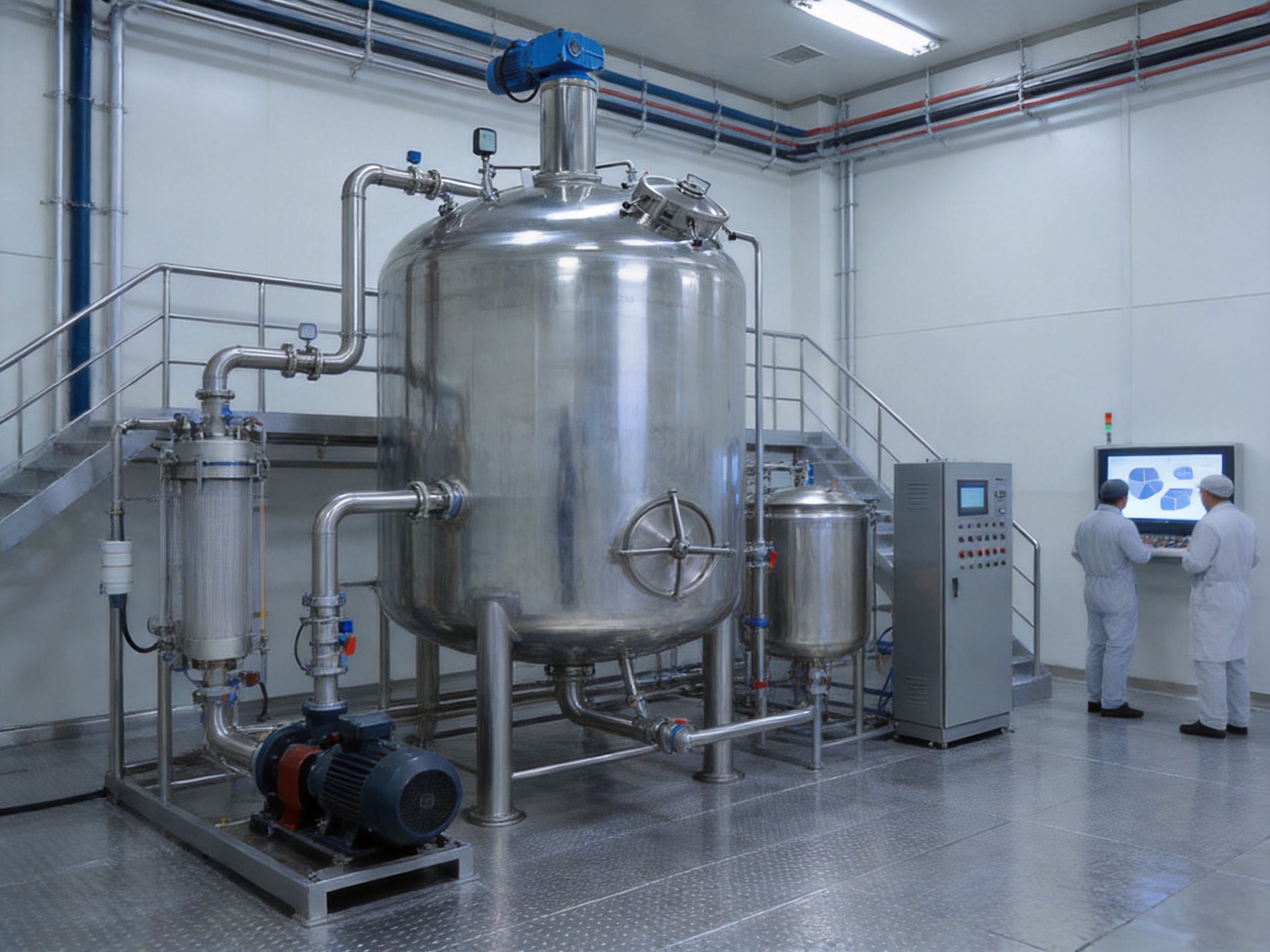
Modern pharmaceutical, biotechnological, food-processing and fine-chemical plants require preparation equipment that combines hygienic construction, dependable agitation, accurate thermal control and efficient cleaning. A liquid preparation tank is not simply a vessel for holding raw materials. It is a process unit that can determine the consistency, safety, repeatability and overall efficiency of an entire production line.
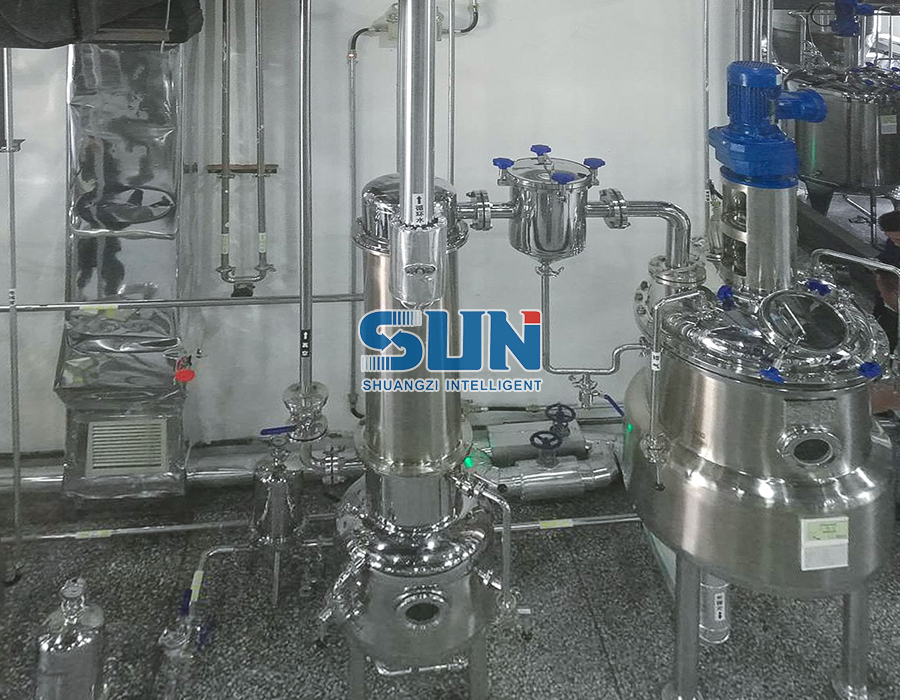
The sanitary stainless steel liquid preparation tank with agitator is designed for liquid mixing, formulation, heating, thermal preservation and intermediate storage. It is suitable for applications in western medicine synthesis, biochemistry, pharmaceutical production, food processing, natural-product processing and selected fine-chemical operations. The equipment is available in nominal volumes from 100 liters to 10,000 liters, with customized dimensions, nozzles, agitator configurations and auxiliary systems available for specific process requirements.
Manufactured by Zhejiang Shuangzi Intelligent Equipment Co., Ltd., the preparation tank reflects an engineering approach that combines vessel fabrication, process design, automation integration, equipment matching, installation and commissioning. This integrated capability allows users to obtain more than an individual tank. They can receive a process-oriented solution designed around material characteristics, production capacity, cleaning requirements, heating demands and plant layout.
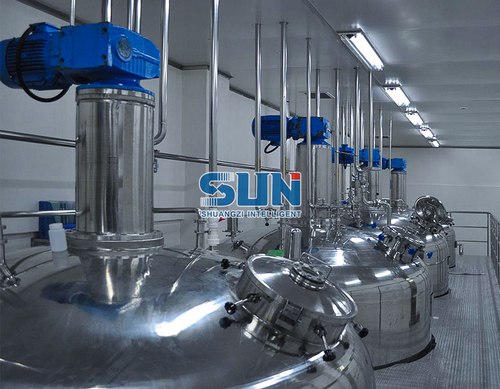
Sanitary Stainless Steel Liquid Preparation Tank With Agitator
1. The Role of a Sanitary Preparation Tank in Modern Processing
Liquid preparation is a fundamental operation in many production processes. Ingredients may need to be dissolved, dispersed, diluted, emulsified, suspended, heated, preserved or blended before they enter the next production stage. If the preparation step is inconsistent, the final product may show variations in concentration, viscosity, appearance, stability or active-ingredient distribution.
A dedicated preparation tank provides a controlled environment for these operations. Its sanitary internal surfaces help reduce contamination risks, while the agitator promotes uniformity throughout the working volume. Heating or thermal-preservation functions can help operators maintain the required process temperature during dissolution, formulation or holding. Properly selected fittings and process nozzles also make it possible to connect the tank to pumps, filtration systems, transfer pipelines, cleaning systems and instrumentation.
In pharmaceutical applications, the equipment may be used to prepare liquid intermediates, process solutions, excipient mixtures, cleaning solutions or other formulation materials. In biotechnology, it can support buffer preparation and liquid-media operations. In food production, the tank may be used for liquid ingredients, nutritional formulations, syrups, sauces, extracts and other products that require hygienic mixing. In fine-chemical production, it can support controlled blending and temperature-assisted preparation where the materials are compatible with stainless steel construction.
The preparation tank is therefore a flexible process platform rather than a single-purpose container. Its performance depends on the relationship between vessel geometry, agitator design, shaft sealing, motor and reducer selection, heating requirements, working pressure, product characteristics and cleaning strategy.
2. Main Product Advantages
2.1 Hygienic Stainless Steel Construction
All product-contact surfaces are manufactured from SUS304 or imported SUS316L stainless steel. These materials are widely used in sanitary processing because they offer good corrosion resistance, mechanical strength, cleanability and compatibility with many aqueous and mildly aggressive process materials.
SUS304 is suitable for a broad range of general-purpose liquid preparation applications. SUS316L may be selected when improved resistance to chlorides, pharmaceutical ingredients, acidic formulations or other corrosive media is required. The final material selection should be confirmed against the chemical composition, concentration, temperature, cleaning agents and operating conditions of the customer’s process.
Stainless steel construction also supports a clean and professional production environment. Smooth wetted surfaces are easier to inspect and clean than rough or porous materials. When combined with sanitary fittings and an appropriate cleaning procedure, the tank can help reduce the possibility of product residue remaining in corners, connections or vessel internals.
2.2 Effective Agitation for Uniform Preparation
The tank is equipped with an agitator that supports the controlled mixing of liquids and soluble or dispersible ingredients. Agitation helps minimize concentration gradients and can improve heat distribution during heating or thermal preservation. It also helps maintain product uniformity while material is being held before transfer.
The standard description identifies common stirring speeds in the range of 36 to 53 rpm, while the technical table provides a configurable stirring-speed range of 0 to 720 rpm. These specifications represent different equipment or process configurations rather than a single fixed operating speed. The appropriate speed depends on the selected motor, reducer, impeller, shaft arrangement, vessel size and product properties.
For high-volume tanks containing low-viscosity liquids, a relatively moderate speed may provide effective circulation without unnecessary energy consumption. For smaller vessels, higher-speed agitation may be useful for rapid dispersion or dissolution. Variable-frequency speed regulation can be configured when the process requires different mixing stages, such as low-speed wetting, intermediate blending and higher-speed dispersion.
Adjustable speed also gives operators better control over shear, foaming and heat generation. A gentle speed may be preferred for delicate biological materials or products that foam easily. A higher speed may be appropriate when the objective is to accelerate dissolution or improve dispersion. Final agitator selection should be based on laboratory or pilot testing and on the rheological behavior of the working material.
2.3 Sanitary Mechanical Shaft Seals
The stirring shaft uses imported sanitary mechanical seals to help prevent medium leakage. Shaft sealing is especially important in pharmaceutical, food and biological applications because leakage can cause product loss, contamination, workplace hazards and unnecessary cleaning requirements.
A well-selected mechanical seal also protects the drive and surrounding equipment from contact with the processed liquid. The seal arrangement can be adapted to the medium, temperature, pressure and hygiene requirements of the application. Depending on the project, customers may discuss seal materials, auxiliary flushing, sterile barriers or other protection measures with the engineering team.
The use of a sanitary mechanical seal is a major advantage over basic open-shaft or less hygienic mixing arrangements. It supports a cleaner working environment and provides a more dependable interface between the rotating drive system and the sealed process vessel.
2.4 Reliable Drive System
Agitation drive systems adopt well-known German-brand SEW reducers. A reputable reducer can provide stable torque transmission, dependable speed reduction and long-term operating reliability when correctly selected and maintained.
Reducer selection is not based only on the nominal tank volume. It must also account for viscosity, density, solids content, starting torque, operating speed, impeller diameter, batch size and the possibility of changing product formulations. An appropriately sized reducer helps the agitator start smoothly and operate consistently under the actual process load.
The drive system may also be integrated with variable-frequency control. This allows users to adjust rotational speed according to recipes or production stages. It can reduce mechanical shock during startup, help manage energy consumption and give operators greater flexibility when processing different materials in the same tank.
2.5 Thermal Processing Capability
The preparation tank can be used for heating and thermal preservation processes. The listed working temperature is up to 100 degrees Celsius, while the listed working pressure is 0.25 MPa. These values provide a reference for the standard equipment range, but the actual design must be verified against the customer’s intended operating conditions and applicable vessel requirements.
Heating can support the dissolution of powders, reduction of liquid viscosity, acceleration of formulation steps and maintenance of a specified holding temperature. Thermal preservation can help keep a prepared liquid within a controlled temperature range before the next production step. Agitation promotes more even heat distribution and helps reduce localized temperature differences.
The heating method, heat-transfer area, insulation structure, temperature sensors and control strategy can be tailored to the process. A tank may be integrated with a jacket, external heating loop or another suitable thermal system according to product characteristics and plant utilities. The heating system should be selected carefully to prevent overheating, scorching, excessive evaporation or damage to temperature-sensitive components.
2.6 Convenient Sanitary Connections
Pipeline connections adopt ISO-standard quick clamp couplings. These fittings support convenient disassembly, inspection, cleaning and reconfiguration. Compared with permanently fixed or difficult-to-access connections, sanitary clamp fittings can help reduce maintenance time and simplify the connection of pumps, valves, filters and transfer lines.
Quick clamp connections are particularly valuable in facilities that manufacture several products or operate multiple formulations. Equipment can be disconnected and cleaned more efficiently between batches. The connections also provide a practical foundation for building hygienic process lines with compatible tubing, valves and instruments.
All connection points must still be installed, aligned and cleaned correctly. A sanitary fitting does not automatically guarantee hygienic performance. Gaskets, clamps, dead-leg design, drainage, cleaning velocity and operating procedures all affect the final cleanliness of a system.
3. Product Configuration and Technical Range
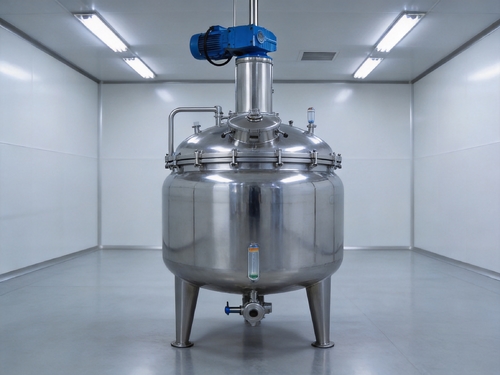
The tank is available in nominal volumes from 100 liters to 10,000 liters. This range allows the same basic equipment concept to serve pilot-scale operations, small-batch production and larger industrial preparation systems.
| Nominal Volume | Working Pressure | Working Temperature | Stirring Speed | H | H1 | D | D1 | h |
|---|---|---|---|---|---|---|---|---|
| 100 L | 0.25 MPa | 100 °C | 0–720 rpm | 1750 mm | 450 mm | 750 mm | 550 mm | 300 mm |
| 200 L | 0.25 MPa | 100 °C | 0–720 rpm | 1950 mm | 600 mm | 850 mm | 650 mm | 300 mm |
| 600 L | 0.25 MPa | 100 °C | 0–720 rpm | 2500 mm | 1000 mm | 1100 mm | 900 mm | 350 mm |
| 1000 L | 0.25 MPa | 100 °C | 0–720 rpm | 2850 mm | 1200 mm | 1300 mm | 1100 mm | 350 mm |
| 2000 L | 0.25 MPa | 100 °C | 0–720 rpm | 3350 mm | 1500 mm | 1500 mm | 1300 mm | 350 mm |
| 3000 L | 0.25 MPa | 100 °C | 0–720 rpm | 3700 mm | 1700 mm | 1700 mm | 1500 mm | 350 mm |
| 5000 L | 0.25 MPa | 100 °C | 0–720 rpm | 4250 mm | 2000 mm | 2000 mm | 1800 mm | 400 mm |
| 10000 L | 0.25 MPa | 100 °C | 0–720 rpm | 5000 mm | 2500 mm | 2500 mm | 2300 mm | 400 mm |
The dimensions in the table provide a reference for standard configurations. H, H1, D, D1 and h are dimensional designations supplied with the original technical information. Actual dimensions may change when customers request different insulation thicknesses, top-entry arrangements, bottom outlets, platforms, load cells, heating systems, filtration devices, access ports or other accessories.
Nominal volume should not be confused with usable working volume. The proper fill level depends on foaming, expansion, agitation requirements, thermal expansion and the need for sufficient headspace. A process engineer should determine the effective batch volume before selecting the tank size.
4. Custom Engineering for Different Processes
One of the principal advantages of this preparation tank is its custom-engineered configuration. A standard tank can provide a reliable starting point, but process requirements vary significantly between industries and even between products made in the same facility.
For example, a low-viscosity buffer solution may require efficient axial circulation and gentle agitation. A concentrated liquid may need a higher-torque drive and a different impeller. A foaming formulation may benefit from carefully controlled speed and an appropriate headspace. A heat-sensitive pharmaceutical solution may require accurate temperature measurement and gradual heating. A food product containing suspended particles may need an agitator selected to keep solids uniformly distributed without excessive shear.
The manufacturer can evaluate the process and recommend vessel dimensions, material grade, agitator form, drive power, mechanical seal, heating arrangement, instrumentation and connection layout. Complete process nozzles and accessories can be added according to the customer’s process flow diagram and plant requirements.
4.1 Possible Process Nozzles and Accessories
Depending on the application, the tank may be configured with charging ports, liquid inlets, powder-feeding openings, sampling valves, temperature measurement points, pressure gauges, safety devices, sight glasses, spray balls, cleaning connections, bottom outlets, drain valves, transfer connections and vent filters.
Other possible additions include a platform and ladder, adjustable support legs, insulation and external cladding, load cells, level instruments, automatic valves, control cabinets and data-recording systems. The exact accessory list should be determined by the production process, hygiene strategy and automation level.
For pharmaceutical or biological projects, the design may also need to consider cleanroom access, sterile transfer, clean-in-place procedures, product-contact documentation and validation requirements. For food plants, the emphasis may include rapid changeover, allergen control, drainage and compatibility with alkaline or acidic cleaning solutions.
4.2 Integration With Upstream and Downstream Equipment
The preparation tank can be installed as part of a larger production line. Upstream equipment may include weighing systems, powder feeders, water-treatment systems, extraction units, filters or dissolving equipment. Downstream equipment may include storage tanks, filtration systems, filling lines, evaporation units, crystallization systems, dryers or packaging equipment.
Because Zhejiang Shuangzi Intelligent Equipment Co., Ltd. provides process technology and automation engineering design in addition to equipment manufacturing, the tank can be considered within the overall production system. This reduces the risk of selecting a vessel that cannot connect smoothly with pumps, pipelines, control systems or adjacent process units.
System-level integration can also improve operator convenience. A unified control strategy may allow the user to manage agitation, temperature, transfer and alarm functions from a central interface. The result is a more coordinated operation than a collection of unrelated machines supplied without process engineering support.
5. Manufacturing Quality and Fabrication Strengths
5.1 Pressure-Vessel Fabrication and Inspection
All pressure-bearing vessels are fabricated, inspected and hydrostatically tested in accordance with specifications for welded steel pressure vessels. This is important because a preparation tank that operates under pressure must be designed and manufactured with appropriate attention to weld integrity, structural strength, dimensional accuracy and pressure safety.
Hydrostatic testing provides a practical method for checking the pressure boundary under controlled conditions. Inspection and testing records can support quality assurance and project documentation. The exact inspection plan, test pressure, acceptance criteria and certification package should be agreed during technical clarification and contract review.
Pressure capability should never be interpreted as permission to exceed the rated operating conditions. Operators must use suitable pressure-relief devices, monitoring instruments and operating procedures. Any modification to the vessel, including welding additional connections or changing the agitator assembly, should be reviewed by qualified technical personnel.
5.2 Advanced Welding and Finishing Equipment
The company has introduced advanced welding and finishing equipment, including plasma argon arc welding machines, plasma cutting machines and CAM CNC machining centers. These capabilities support the production of stainless steel vessels with controlled cutting, accurate machining and improved welding consistency.
Plasma cutting can help achieve clean and repeatable preparation of stainless steel components. Plasma argon arc welding is useful for producing hygienic welds when the procedure, shielding gas, joint preparation and operator skill are properly controlled. CNC machining supports accurate fabrication of flanges, connection components and other parts that require dimensional consistency.
Surface finishing is also important in sanitary equipment. A suitable internal finish reduces the likelihood of residue retention and makes cleaning more effective. The required finish should be specified according to the process, cleaning method and applicable customer standards. Where needed, the manufacturer can discuss polishing, passivation and other surface-treatment requirements.
5.3 Engineering and Production Facilities
The company was founded in 2007 and has an area of approximately 16,706 square meters, with a structure area of approximately 17,800 square meters. Its production and engineering resources support the manufacture of process equipment for extraction, fermentation, evaporation, concentration, separation, crystallization, filtration and related operations.
A broad manufacturing base is valuable for customers who need more than one tank. It means that a preparation vessel can be developed alongside other process units, helping to maintain compatibility in materials, connections, automation and documentation.
The company also maintains a pilot production workshop and research and development platform designed around automation and GMP-oriented requirements. Pilot facilities can help users evaluate process behavior before committing to full-scale production. This is particularly useful for products involving uncertain viscosity, foaming, solids suspension, heat sensitivity or complicated cleaning requirements.
6. Advantages Over Conventional or Less Specialized Alternatives
6.1 More Hygienic Than General Industrial Mixing Vessels
General industrial tanks may be adequate for non-hygienic applications, but they often lack the sanitary fittings, product-contact materials, surface finishing and sealing arrangements required by pharmaceutical, biological or food processes. The sanitary preparation tank is designed specifically with hygienic processing in mind.
Stainless steel wetted surfaces, sanitary mechanical seals and ISO-standard quick clamp connections make the equipment more suitable for applications where cleaning, contamination control and product integrity are priorities. These features can reduce the limitations commonly associated with ordinary carbon-steel or utility-service tanks.
6.2 More Flexible Than Fixed-Speed Equipment
A fixed-speed mixer may perform well for one formulation but become inefficient when the product changes. Variable-frequency speed regulation provides a wider operating window. It allows the operator to adapt mixing intensity to the material and process stage rather than forcing every batch to run under the same mechanical conditions.
This flexibility is valuable for contract manufacturers, multiproduct pharmaceutical plants, pilot facilities and food processors that prepare products with different viscosities or solids contents. It can also help reduce foaming and unnecessary energy use when maximum speed is not required.
6.3 More Scalable Than Single-Size Equipment
The volume range from 100 liters to 10,000 liters supports gradual expansion. A company may begin with a small pilot or development unit and later install larger production tanks using the same general equipment concept. Although scale-up always requires engineering verification, a broad product range simplifies the transition from development to manufacturing.
By contrast, suppliers that offer only one or two standard vessel sizes may force customers to compromise on batch size, fill level or production scheduling. The available range here gives users more options for matching tank capacity to actual production needs.
6.4 More Complete Than a Standalone Vessel Purchase
A vessel purchased without process support may arrive with insufficient nozzles, unsuitable connections or an agitator that does not match the liquid properties. The manufacturer’s EPC and EPCM-oriented capability helps address these risks at an earlier stage.
Process technology, automation engineering, equipment manufacture, matching purchase, installation, line debugging and system integration can be coordinated through one engineering organization. This can simplify communication, reduce interface problems and improve responsibility tracking during project execution.
7. Application Areas
7.1 Western Medicine and Pharmaceutical Synthesis
In western medicine production, liquid preparation may involve active ingredients, solvents, excipients, buffers, stabilizers or intermediate solutions. The tank provides a sanitary environment for mixing and controlled thermal treatment before filtration, transfer, filling or further synthesis.
Pharmaceutical users may require detailed documentation covering material certificates, weld inspection, surface treatment, pressure testing, instrument calibration and factory acceptance testing. These requirements should be defined before fabrication so that the vessel and documentation package are aligned with the project’s quality system.
7.2 Biochemical and Fermentation-Related Operations
The tank can support selected liquid preparation steps associated with biochemical production and fermentation systems. It may be used for preparing media components, buffer solutions, nutrient solutions or auxiliary process liquids. The suitability of the tank depends on the biological sensitivity of the process, sterilization method and required level of aseptic control.
When biological materials are involved, the design may need special consideration for dead legs, drainability, sterilization, sampling and filter-protected venting. These factors should be evaluated as part of the complete process design rather than treated as optional details.
7.3 Food Processing
Food manufacturers can use sanitary preparation tanks for liquid ingredients, syrups, sauces, nutritional liquids, flavor systems and other formulations. Hygienic connections and stainless steel contact surfaces support cleaning and product changeover.
Food applications may involve repeated cycles, strict cleaning schedules and frequent changes between recipes. A variable-speed agitator can help accommodate differences in viscosity and solids content. Heating and thermal holding may also be useful for dissolving sugar, maintaining flowability or preparing a product for downstream treatment.
7.4 Plant Extraction and Natural Products
The company has experience in plant extraction and related natural-product processing equipment. The preparation tank can be integrated with extraction, filtration, concentration and drying systems. It may serve as a liquid mixing or holding unit before or after extraction, depending on the process route.
Natural extracts can vary considerably in solids content, viscosity, color and chemical composition. The agitator, seal, surface material and cleaning procedure should therefore be selected according to the particular extract and solvent system.
7.5 Fine Chemicals
Fine-chemical producers may use the vessel for blending, dilution, temperature-assisted dissolution and intermediate preparation. SUS316L may be considered for more demanding chemical environments, subject to a detailed compatibility assessment.
Because chemical processes can involve volatile, corrosive or reactive materials, users must confirm pressure classification, ventilation, electrical protection, material compatibility and safety requirements before ordering. The standard equipment information is a starting point, not a substitute for application-specific process review.
8. Process Design Considerations Before Ordering
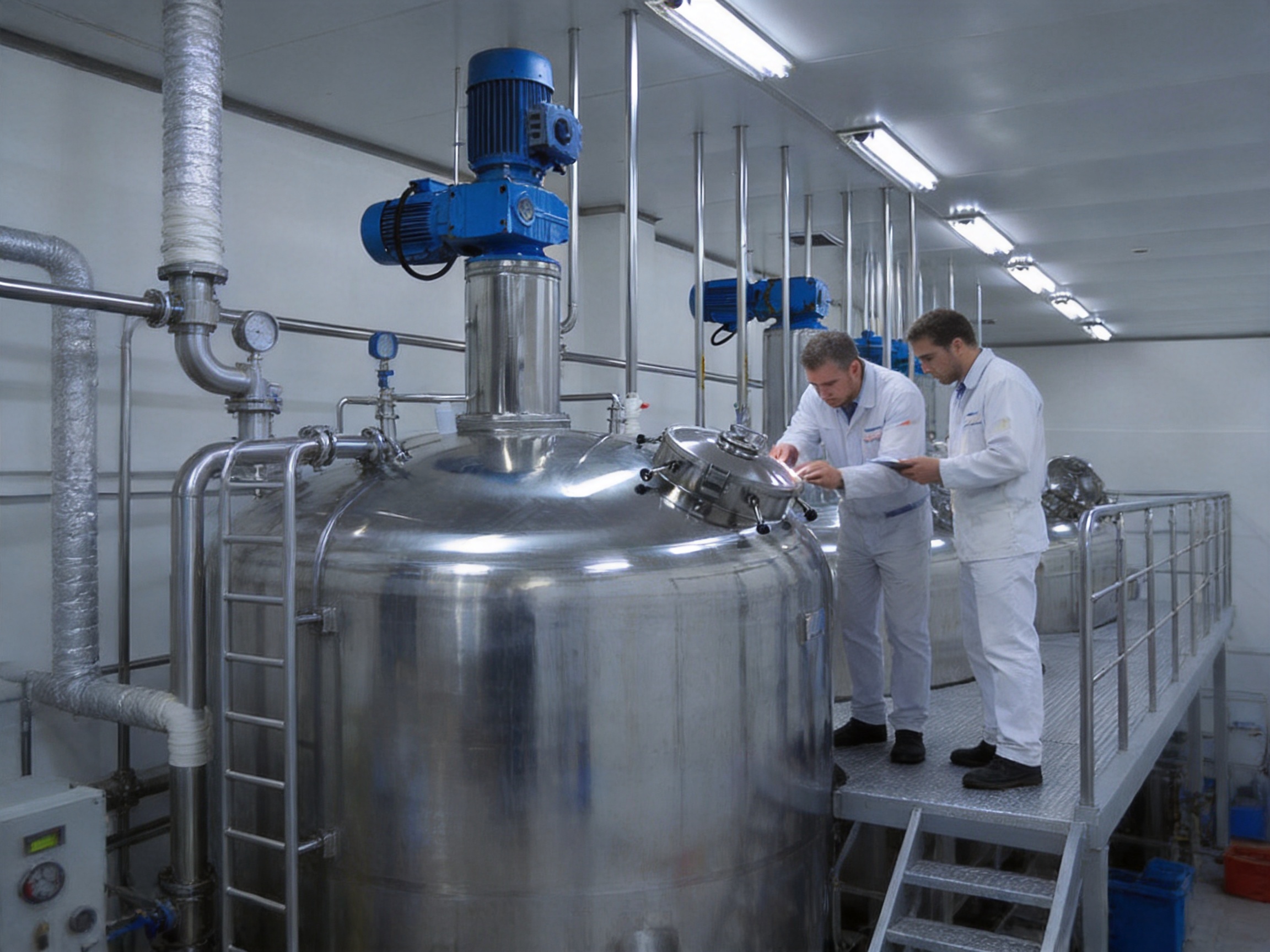
Customers should prepare a process data sheet before finalizing the tank specification. Important information includes working volume, batch volume, minimum and maximum fill levels, liquid density, viscosity, solids content, foaming tendency, operating temperature, heating or cooling requirements, working pressure, cleaning chemicals and desired batch time.
The material of construction should be selected according to the product and cleaning environment. SUS304 may meet the requirements of many general applications, while SUS316L may provide a better option for products or cleaning agents with greater corrosion potential. The decision should be based on technical compatibility rather than material preference alone.
Agitator selection should consider the complete mixing objective. Dissolution, suspension, blending, heat transfer and gas dispersion may require different impeller characteristics. A tank that mixes one low-viscosity liquid efficiently may not perform equally well with a concentrated or shear-sensitive material.
Tank dimensions must also fit the customer’s facility. Door height, ceiling clearance, service access, platform space, maintenance routes and foundation loading should be checked before fabrication. Large vessels may require special transportation, lifting and installation planning.
Control requirements should be defined early. Basic systems may include local start and stop controls, speed adjustment and temperature display. More advanced systems may include recipe management, automatic sequencing, alarms, data recording, remote monitoring and connection to a plant-wide supervisory control system.
9. Cleaning, Maintenance and Long-Term Operation
Sanitary equipment performance depends on operation and maintenance as well as design. Operators should establish cleaning procedures appropriate to the product, soil type and surface material. Cleaning temperature, chemical concentration, contact time and flow velocity should be validated for the actual system.
Quick clamp connections make disassembly easier, but gaskets and clamps must be inspected regularly. Damaged or hardened gaskets should be replaced promptly. Connection surfaces should remain free from scratches, contamination and deformation that could compromise sealing.
The mechanical seal requires particular attention. Operators should monitor for leakage, abnormal temperature, vibration or unusual noise around the shaft seal. Seal maintenance intervals depend on the product, speed, temperature and operating conditions. Running the agitator under unsuitable conditions can shorten seal life.
The reducer and motor should be maintained according to the drive manufacturer’s instructions. Lubrication, alignment, fastener tightness and operating noise should be checked periodically. Excessive vibration may indicate imbalance, shaft misalignment, bearing wear, impeller damage or an unsuitable operating condition.
Pressure instruments, temperature sensors, valves and safety devices should be calibrated or inspected according to the plant’s quality and safety procedures. Hydrostatic testing during manufacture does not remove the need for responsible operation, routine inspection and proper protection against overpressure.
10. Project Delivery and Turnkey Support
The company’s business model extends beyond individual equipment fabrication. Its capabilities include process technology, automation engineering design, equipment manufacture, matching purchase, installation, system integration and commissioning. This supports customers that are developing a new production line or modernizing an existing facility.
A turnkey or integrated project approach can include process flow development, equipment selection, piping coordination, control planning, installation guidance, line debugging and operator support. The exact scope depends on the customer’s requirements and contract arrangement.
This approach is especially useful when the liquid preparation tank is connected to extraction, fermentation, concentration, separation, filtration or drying equipment. A coordinated project team can review the interfaces between each unit and help ensure that capacity, material flow, control signals and utility requirements are compatible.
For international customers, project communication should include clear technical drawings, utility lists, material specifications, inspection plans, packing information, installation instructions and commissioning procedures. Early clarification of these items helps reduce delays and avoids changes after fabrication has begun.
11. Frequently Asked Questions
What is the available volume range?
The standard nominal volume range is from 100 liters to 10,000 liters. Customized volumes and dimensions can also be discussed according to production capacity, batch size, installation space and process requirements.
What materials are used for product-contact surfaces?
Product-contact surfaces are manufactured from SUS304 or imported SUS316L stainless steel. The appropriate grade depends on the liquid composition, cleaning chemicals, temperature, corrosion risk and applicable project standards.
What is the working pressure?
The listed working pressure is 0.25 MPa. The final pressure rating must be confirmed for the specific design, including vessel structure, fittings, heating system and safety devices. Operators should never exceed the approved rating.
What is the maximum listed working temperature?
The listed working temperature is up to 100 degrees Celsius. Actual operating temperature, heating method and temperature-control accuracy should be confirmed during technical design.
Is the stirring speed fixed?
No. The standard description refers to common stirring speeds of approximately 36 to 53 rpm, while the technical table lists a configurable range of 0 to 720 rpm. The actual range depends on the selected motor, reducer, agitator and process. Variable-frequency speed regulation can be provided for changing process requirements.
What type of shaft seal is used?
The stirring shaft is fitted with imported sanitary mechanical seals designed to help prevent medium leakage and maintain a hygienic process interface.
Which reducer is used?
Agitation drive systems adopt well-known German-brand SEW reducers. The exact model and power are selected according to vessel size, liquid properties, agitator design and operating conditions.
Can the tank be heated?
Yes. The tank is designed for liquid mixing, preparation, heating and thermal preservation processes. The heating method and control system should be selected according to the product and required temperature profile.
Can the tank be customized?
Yes. Customized dimensions, process nozzles, connections, accessories, agitator arrangements, instruments, insulation, platforms and automation functions can be developed according to customer requirements.
Are the connections sanitary?
Pipeline connections adopt ISO-standard quick clamp couplings. These connections support convenient disassembly, cleaning and maintenance when used with suitable sanitary components and procedures.
Can the tank be integrated into a complete production line?
Yes. The manufacturer provides process technology, automation engineering, equipment manufacturing, matching purchase, installation, line debugging and system integration services. The tank can be coordinated with extraction, fermentation, filtration, concentration, separation, crystallization and drying equipment.
Is the tank suitable for pharmaceutical production?
It is designed for sanitary liquid preparation applications in pharmaceutical and western medicine synthesis projects. The final suitability depends on the product, cleaning and sterilization strategy, regulatory requirements, documentation package and project-specific validation criteria.
What information should be provided for a quotation?
Customers should provide the required working volume, product name or general material characteristics, density, viscosity, solids content, temperature, pressure, batch time, agitation objective, cleaning method, material grade, available utilities, plant dimensions and desired automation level.
12. Conclusion
The sanitary stainless steel liquid preparation tank with agitator is a versatile process unit for pharmaceutical, biological, food, natural-product and fine-chemical applications. Its combination of stainless steel wetted surfaces, sanitary mechanical sealing, SEW reducer technology, adjustable agitation, thermal-processing capability and ISO-standard quick clamp connections provides a strong foundation for reliable liquid preparation.
The equipment is available across a broad 100-liter to 10,000-liter capacity range and can be customized for specific process conditions. Pressure-vessel fabrication, inspection and hydrostatic testing support structural reliability, while plasma welding, plasma cutting and CNC machining capabilities contribute to manufacturing precision and consistent fabrication quality.
Its main advantage over basic mixing vessels is the integration of hygienic design and process engineering. Rather than supplying a simple container with an agitator, the manufacturer can develop a complete solution that considers material compatibility, mixing performance, thermal requirements, automation, cleaning, installation and connection with other process equipment.
With experience in plant extraction, biological fermentation, pharmaceutical engineering, natural food, energy conservation and environmental-protection projects, Zhejiang Shuangzi Intelligent Equipment Co., Ltd. is positioned to support both individual equipment purchases and larger turnkey projects. For users seeking dependable, scalable and configurable liquid preparation equipment, this tank provides a practical platform for improving batch consistency, production hygiene and process control.
References
1. Product technical information for the sanitary stainless steel liquid preparation tank with agitator, including capacity, dimensions, working pressure, working temperature and stirring-speed data.
2. Manufacturer information for Zhejiang Shuangzi Intelligent Equipment Co., Ltd., including process engineering, equipment manufacturing, installation, system integration and turnkey project capabilities.
3. General principles of hygienic equipment design for pharmaceutical, biological and food-processing systems.
4. General specifications and engineering practices for welded steel pressure vessels, hydrostatic testing and pressure-boundary inspection.
5. General engineering guidance for stainless steel selection, sanitary mechanical seals, variable-frequency agitator control and hygienic pipeline connections.