
 英语
 俄语
Content
- 1 1. Product Overview
- 2 2. Working Principle of Forced-Circulation Evaporation
- 3 3. Main Product Advantages
- 4 4. Technical Specifications
- 5 5. Application Areas
- 6 6. Advantages Compared with Conventional Alternatives
- 7 7. Manufacturing and Engineering Strengths
- 8 8. Automation and Process Control
- 9 9. Materials, Hygiene, and Cleaning Considerations
- 10 10. Installation and Turnkey Project Support
- 11 11. Selecting the Correct Model
- 12 12. Operating and Maintenance Practices
- 13 13. Energy and Utility Considerations
- 14 14. Quality, Safety, and Compliance
- 15 15. Why Manufacturer Experience Matters
- 16 16. Recommended Project Development Process
- 16.1 Step 1: Define the Material
- 16.2 Step 2: Establish the Material Balance
- 16.3 Step 3: Confirm Thermal Requirements
- 16.4 Step 4: Conduct Pilot or Laboratory Evaluation
- 16.5 Step 5: Develop the Process and Utility Design
- 16.6 Step 6: Confirm the Equipment Configuration
- 16.7 Step 7: Complete Testing and Commissioning
- 17 17. Frequently Asked Questions
- 17.1 Q1: What type of liquid is suitable for this evaporator?
- 17.2 Q2: What is the main benefit of forced circulation?
- 17.3 Q3: Can the equipment process heat-sensitive materials?
- 17.4 Q4: Can it produce crystals as well as concentrated liquid?
- 17.5 Q5: What capacities are available?
- 17.6 Q6: Are the inlet and outlet concentrations fixed?
- 17.7 Q7: How does vacuum operation affect product quality?
- 17.8 Q8: Does forced circulation eliminate cleaning requirements?
- 17.9 Q9: Can the evaporator be integrated with other equipment?
- 17.10 Q10: What should be considered when installing the equipment?
- 17.11 Q11: Can the manufacturer provide turnkey support?
- 17.12 Q12: Is pilot testing recommended?
- 18 18. Conclusion
- 19 References
- 20 Product: Single‑Effect Forced Circulation Evaporator | Vacuum Crystallizer for Crystalline & Viscous Liquid Concentration
Industrial liquid-processing operations increasingly require equipment that can concentrate difficult feed materials while protecting product quality, controlling energy consumption, and maintaining reliable production. Conventional evaporators may perform well with clean, low-viscosity liquids, but they can become less effective when the feed contains suspended particles, dissolved salts, proteins, sugars, herbal solids, or compounds that crystallize during evaporation. Fouling, tube blockage, unstable circulation, product overheating, and difficult cleaning can reduce productivity and increase operating costs.
The single-effect forced-circulation evaporator described in this article is designed to address these challenges. It combines vacuum evaporation, high-flow forced circulation, and optional crystallization performance in one industrial processing system. The equipment is suitable for liquid concentration and vacuum crystallization in food processing, pharmaceutical manufacturing, plant extraction, chemical production, dairy processing, and related industries. Its design is particularly valuable for viscous, easily crystallizable, particle-containing, or heat-sensitive liquid materials.
Manufactured by Zhejiang Shuangzi Intelligent Equipment Co., Ltd., the system reflects an engineering approach that combines process design, equipment fabrication, automation, installation, commissioning, and turnkey project implementation. Rather than treating the evaporator as an isolated machine, the manufacturer can integrate it into a larger production line involving extraction, fermentation, separation, filtration, drying, crystallization, or final product handling.
1. Product Overview
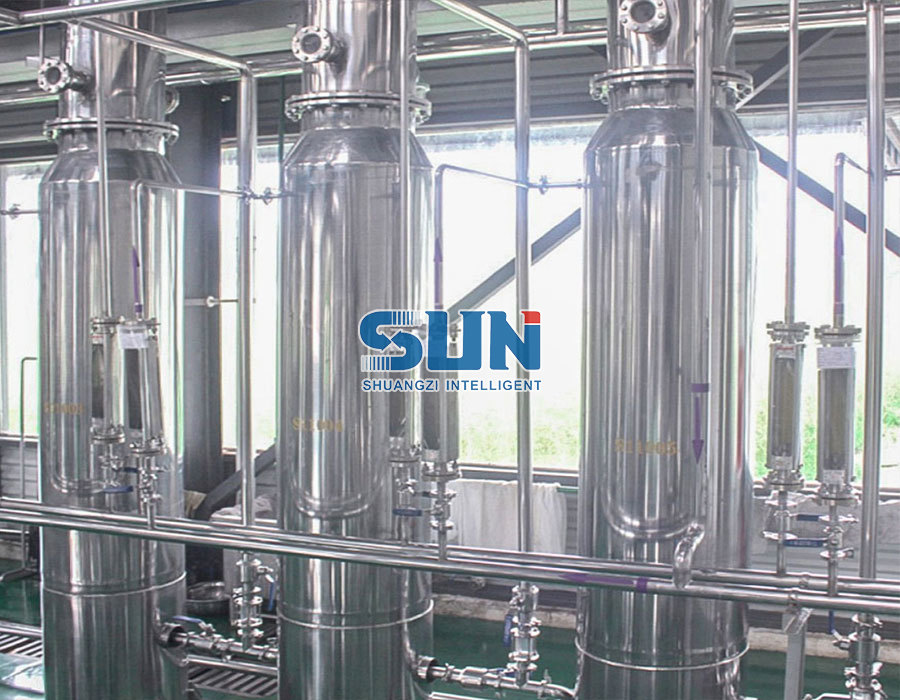
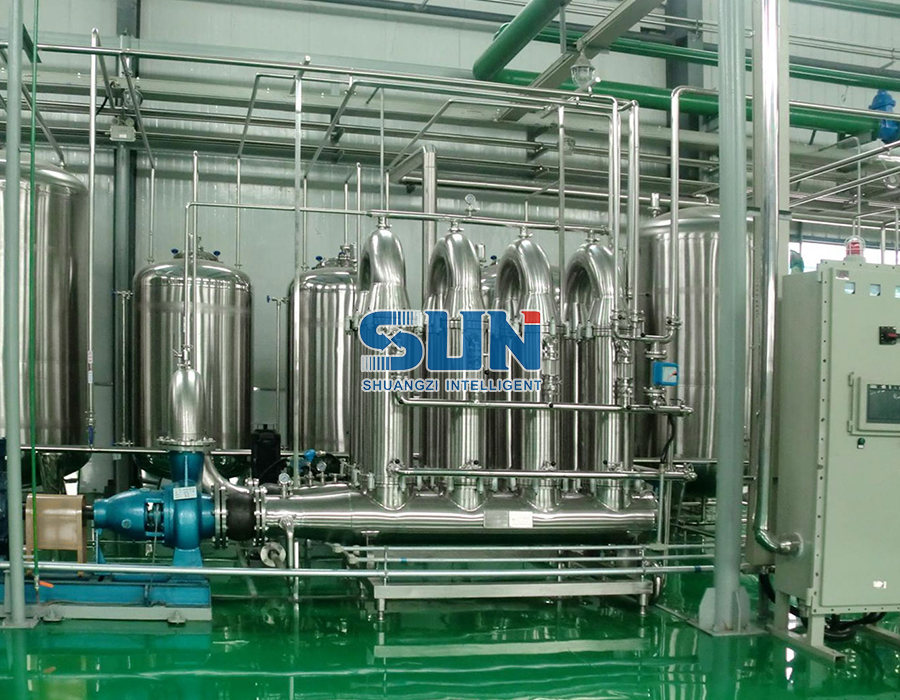
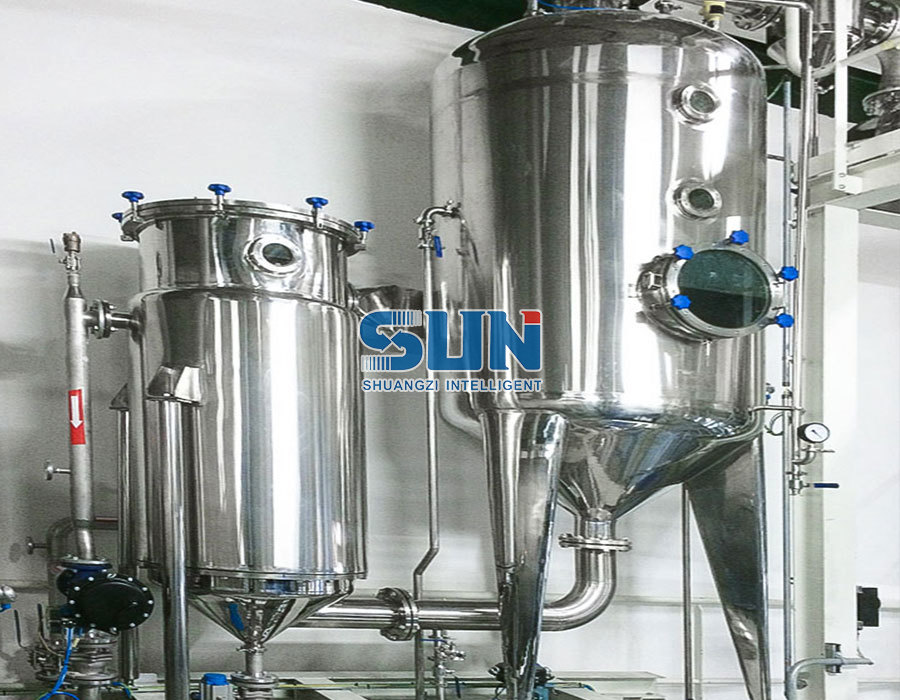
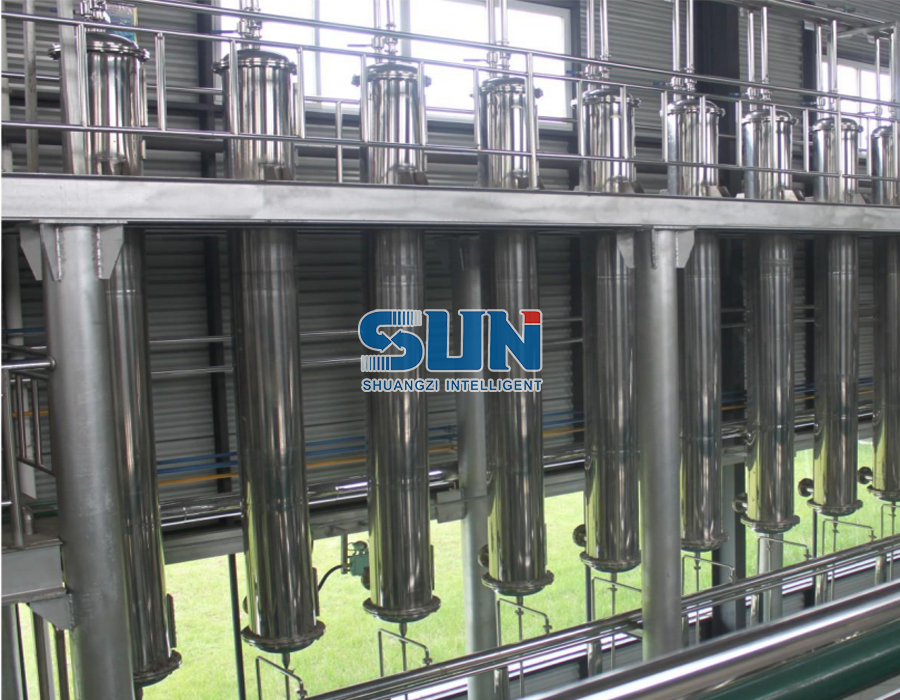
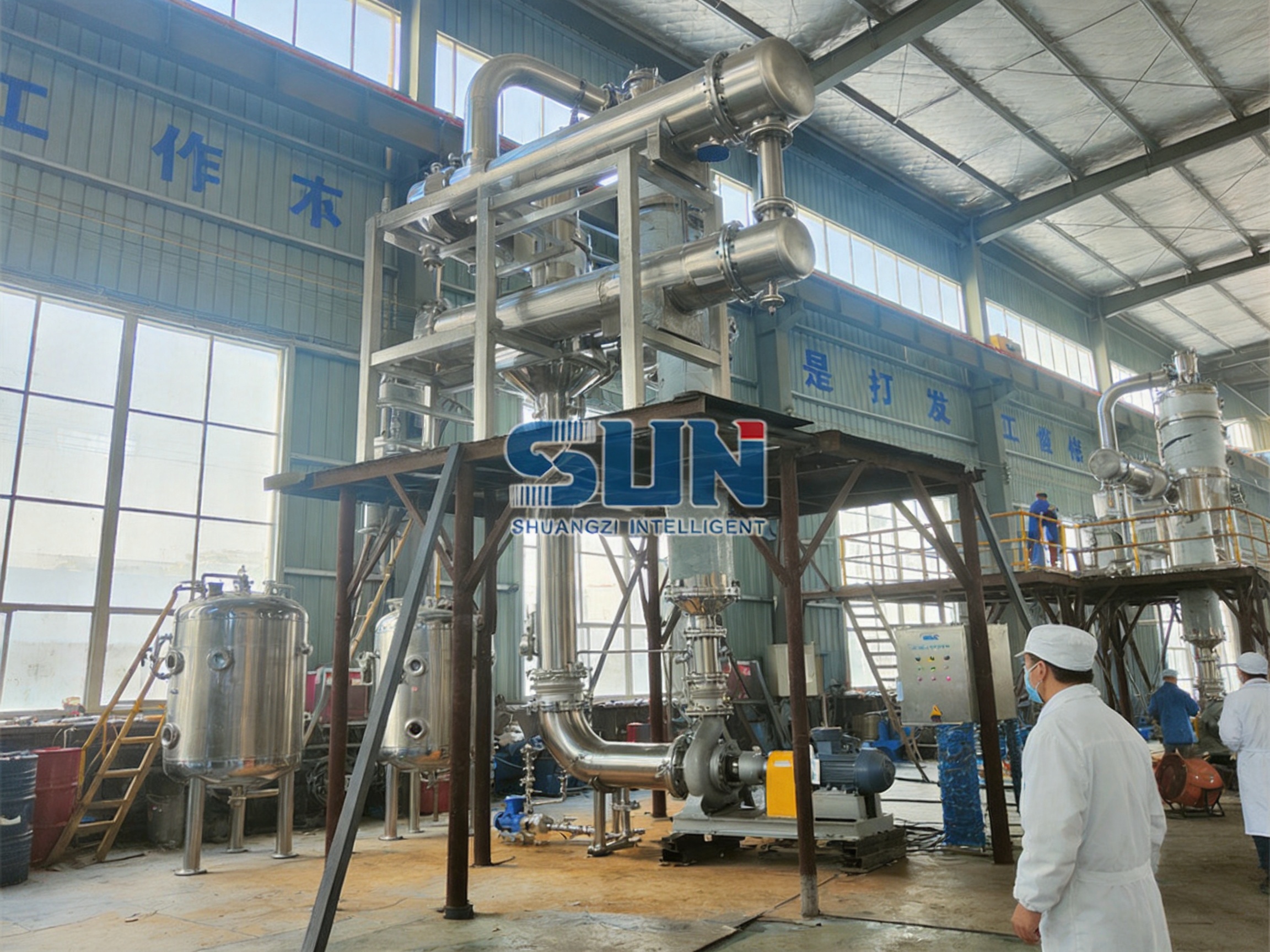
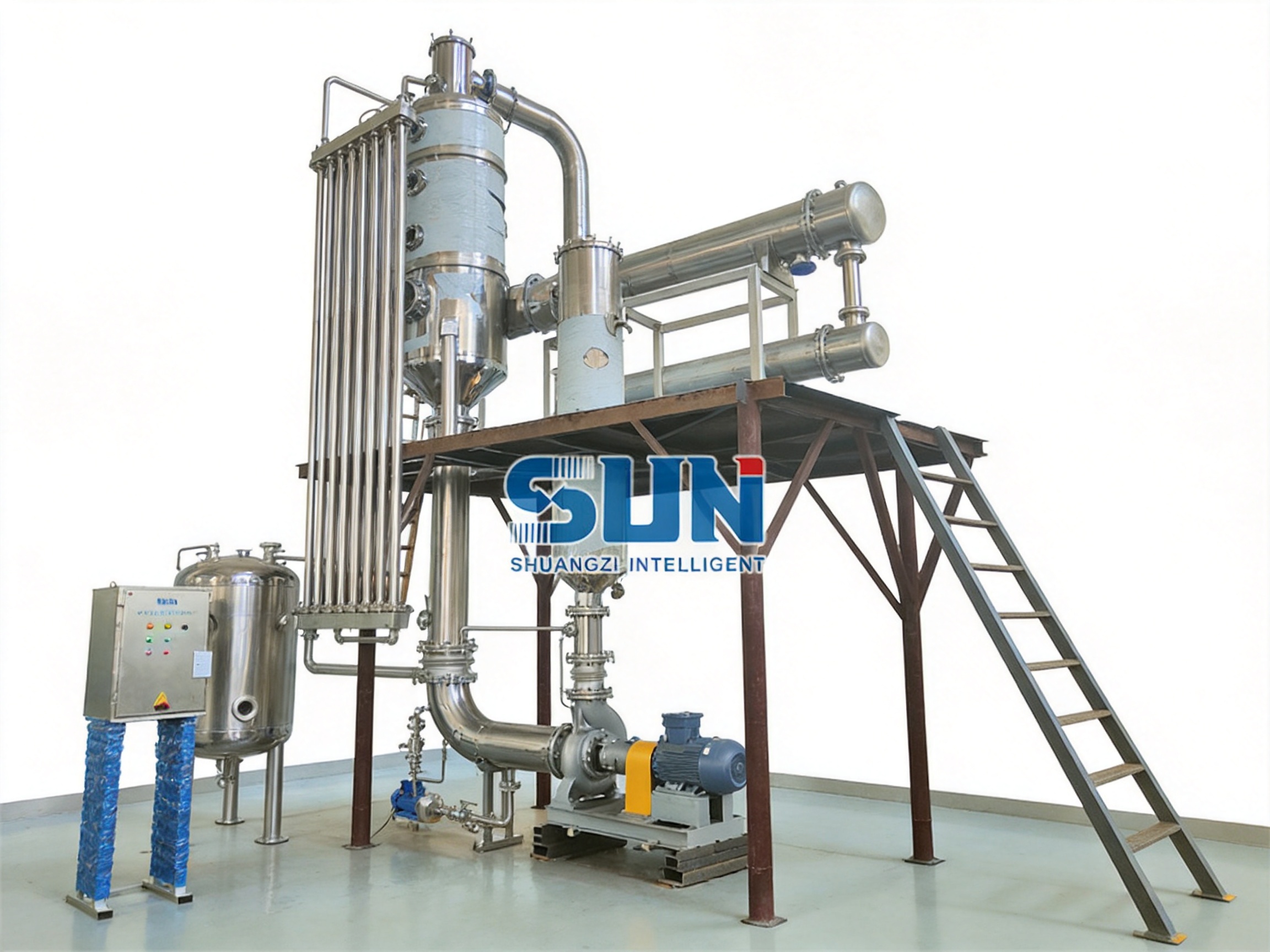
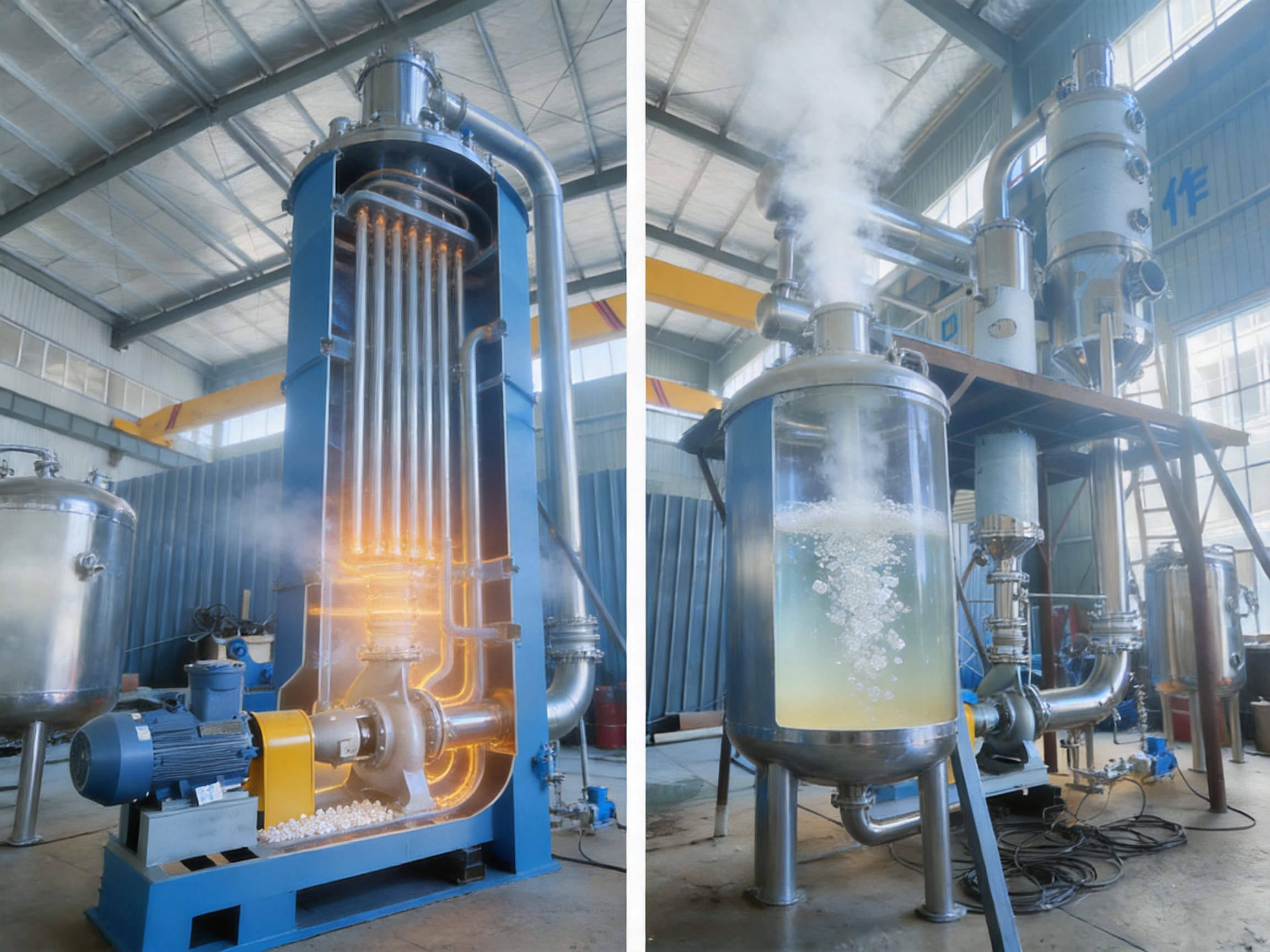
A single-effect forced-circulation evaporator uses a circulation pump to move process liquid continuously through a heating system at a relatively high flow velocity. Heat is transferred to the liquid through heating tubes or a comparable heat-exchange assembly. Under vacuum conditions, part of the liquid evaporates at a lower temperature than would be required under atmospheric pressure. The concentrated liquid is then returned through the circulation loop or directed toward a crystallization stage, depending on the process configuration.
The core design objective is to maintain strong circulation and turbulent flow inside the heating tubes. High liquid velocity reduces the time that suspended particles, crystallizing solids, and viscous materials remain in contact with heat-transfer surfaces. This helps reduce the formation of hard deposits and minimizes the risk of tube blockage. Compared with systems that rely primarily on natural circulation, the forced-circulation configuration provides more consistent flow control for challenging materials.
The equipment can be used for the concentration of herbal extracts, fruit juice, dairy products, pharmaceutical liquids, fermentation broths, chemical salt solutions, and other process streams. The actual suitability of a material depends on its viscosity, solids content, boiling behavior, crystallization characteristics, thermal sensitivity, and required final concentration. For this reason, process testing and engineering design are important parts of equipment selection.
The standard product range includes models with nominal evaporation capacities from 600 kg/h to 1,600 kg/h. Product inlet and outlet concentrations, operating temperature, sterilization requirements, materials of construction, automation level, and auxiliary equipment can be adjusted according to the customer's process requirements.
Single‑Effect Forced Circulation Evaporator | Vacuum Crystallizer for Crystalline & Viscous Liquid Concentration
2. Working Principle of Forced-Circulation Evaporation
The process begins when the feed liquid enters the evaporator system. Depending on the production line, the feed may first pass through a preheater, balance tank, filter, or other conditioning equipment. A high-flow circulation pump then drives the liquid through the heating tubes. Steam or another heating medium transfers thermal energy through the tube walls into the circulating liquid.
When the liquid reaches the evaporation chamber, the system pressure is maintained below atmospheric pressure by a vacuum unit. Because the boiling point decreases as pressure decreases, the liquid can evaporate at a lower temperature. This is important for products that may lose color, flavor, activity, or nutritional value when exposed to excessive heat.
The vapor generated during evaporation is separated from the concentrated liquid. The vapor may be sent to a condenser, vapor-liquid separator, or downstream recovery system. The liquid continues circulating through the heating loop until the desired concentration or crystallization condition is achieved. A portion of the concentrated product can then be discharged continuously or in batches, while fresh feed is added to maintain production.
Forced circulation differs from natural-circulation evaporation because the movement of the liquid is not dependent only on density differences created by heating. The circulation pump establishes a controlled flow rate. This provides several process advantages:
First, high flow velocity improves heat transfer and helps prevent solids from settling on the heating surfaces. Second, the circulation loop can handle higher viscosities than many natural-circulation designs. Third, process conditions can be adjusted more accurately by controlling pump operation, steam pressure, vacuum level, feed rate, and discharge rate. Fourth, the equipment can continue to circulate liquid even when the product contains suspended particles or is approaching a crystallization point.
Vacuum operation also helps reduce the thermal load on the product. The standard evaporation temperature is listed as approximately 60°C, although the actual value can be designed according to the customer's requirements. The heating temperature is listed as approximately 70°C, while sterilization temperature may be arranged within a range of approximately 86°C to 94°C. These figures are application-dependent and should be confirmed during process design and commissioning.
3. Main Product Advantages
3.1 Strong Performance with Difficult Feed Liquids
Many evaporation systems are optimized for relatively clear and low-viscosity liquids. However, industrial feed streams are often more complicated. Herbal extracts can contain fine plant particles and high concentrations of dissolved compounds. Fruit juice can contain sugars, pulp, acids, and suspended solids. Dairy materials may include proteins and fats that are sensitive to heat and surface conditions. Chemical solutions can reach saturation and form crystals during concentration.
The forced-circulation design is intended for these demanding conditions. Continuous high-speed flow helps keep particles suspended and reduces the opportunity for solids to settle. It also helps maintain more stable heat transfer as concentration increases. This makes the equipment a strong choice for materials that would be difficult to process in a simple natural-circulation or thin-film configuration.
3.2 Reduced Scaling and Tube Blocking
Scaling is one of the most common causes of declining evaporator performance. As water is removed, dissolved minerals, salts, proteins, sugars, and other compounds become more concentrated. Some of these materials may deposit on the heating surfaces, forming a layer that reduces heat transfer. If deposits continue to grow, flow passages may narrow and tubes may become blocked.
Forced circulation does not eliminate the need for cleaning or process control, but it reduces the conditions that encourage rapid fouling. High turbulence creates shear at the surface of the heating tubes and keeps particles moving through the system. The result can be longer operating periods between cleaning cycles, more stable heat-transfer performance, and lower risk of unexpected shutdowns.
This is a significant advantage over basic evaporation equipment that allows low-velocity areas, dead zones, or excessive residence time near heated surfaces. In challenging applications, the ability to maintain circulation can be more important than achieving the lowest possible initial equipment price.
3.3 Lower-Temperature Processing under Vacuum
Vacuum evaporation allows the process liquid to boil at a lower temperature. This can help protect heat-sensitive components and reduce unwanted changes in the product. For plant extracts, lower-temperature operation may help retain desired color, aroma, and active compounds. For food products, it may help preserve flavor and nutritional characteristics. For pharmaceutical materials, it can support gentler processing and more controlled product quality.
Lower-temperature evaporation can also reduce the risk of localized overheating when the system is properly designed and operated. The heating medium, vacuum level, feed rate, and circulation rate must still be coordinated. Nevertheless, the combination of vacuum and forced circulation provides a practical approach for products that cannot tolerate aggressive thermal treatment.
3.4 Concentration and Crystallization in One Process Concept
The product is not limited to ordinary liquid concentration. It is also suitable for vacuum crystallization, particularly when the material becomes supersaturated as solvent is removed. This is useful for chemical salt solutions and other liquids in which controlled crystal formation is part of the production objective.
Crystallization performance depends on solubility, supersaturation, seed formation, residence time, agitation, cooling conditions, and product withdrawal. The evaporator can be configured as part of a broader crystallization process, allowing the customer to control concentration before subsequent crystal separation, filtration, or drying. In some applications, the equipment can support the formation of crystals within the circulation and evaporation system itself.
The ability to support both concentration and crystallization expands the possible applications of the equipment. It may reduce the need for separate preliminary concentration machinery and simplify the overall process arrangement.
3.5 Adaptability to Made-to-Order Requirements
Industrial customers rarely have identical feed materials or production targets. One customer may require concentration from approximately 12% solids to 45% solids, while another may require a different inlet concentration, final concentration, evaporation temperature, or sterilization profile. A standard machine can provide a useful starting point, but the final design should be based on the material and process objective.
The listed system allows key parameters to be made to order. These may include product inlet concentration, product outlet concentration, evaporation temperature, heating arrangement, contact materials, vacuum conditions, control architecture, cleaning provisions, and integration with upstream or downstream equipment. This approach is more suitable than relying on a one-size-fits-all machine selection.
3.6 Industrial Capacity Range
The model range is designed for medium- and large-scale industrial processing. Available models include SJM1-600, SJM1-800, SJM1-1000, SJM1-1200, and SJM1-1600. Their stated evaporation capacities are approximately 600, 800, 1,000, 1,200, and 1,600 kg/h, respectively.
This range allows production planners to select a capacity that is closer to their actual feed rate. Proper selection can help avoid both under-sizing and excessive over-sizing. Under-sized equipment may create bottlenecks, while excessively large equipment may increase investment and operating costs without providing corresponding benefits.
4. Technical Specifications
The following table summarizes the principal listed parameters for the single-effect forced-circulation liquid vacuum crystallizer evaporator. Actual performance may vary according to feed composition, operating conditions, heat-transfer properties, product concentration, vacuum level, and plant configuration.
| Parameter | SJM1-600 | SJM1-800 | SJM1-1000 | SJM1-1200 | SJM1-1600 |
|---|---|---|---|---|---|
| Evaporation capacity (kg/h) | 600 | 800 | 1,000 | 1,200 | 1,600 |
| Product inlet concentration (%) | 11.5–12 | 11.5–12 | 11.5–12 | 11.5–12 | 11.5–12 |
| Product outlet concentration (%) | 45–48 | 45–48 | 45–48 | 45–48 | 45–48 |
| Steam pressure (MPa) | 0.6–0.8 | 0.6–0.8 | 0.6–0.8 | 0.6–0.8 | 0.6–0.8 |
| Steam consumption (kg/h) | 420 | 560 | 700 | 840 | 1,100 |
| Evaporating temperature (°C) | Approximately 60 | Approximately 60 | Approximately 60 | Approximately 60 | Approximately 60 |
| Heating temperature (°C) | Approximately 70 | Approximately 70 | Approximately 70 | Approximately 70 | Approximately 70 |
| Sterilization temperature (°C) | 86–94 | 86–94 | 86–94 | 86–94 | 86–94 |
| Cooling-water consumption (t/h) | 6 | 8 | 10 | 12 | 16 |
| Total electrical power (kW) | 15.5 | 15.5 | 19.5 | 19.5 | 19.5 |
| Dimensions, L × W × H (m) | 3.9 × 2.3 × 6.5 | 3.9 × 2.3 × 7.0 | 3.9 × 2.4 × 7.5 | 3.9 × 2.4 × 8.0 | 3.9 × 2.4 × 8.5 |
The listed steam consumption increases with evaporation capacity, as expected. Cooling-water demand also increases as the system size increases. Electrical power remains within a relatively compact range across the listed models because the main differences are associated with process throughput and system geometry rather than a simple proportional increase in installed power.
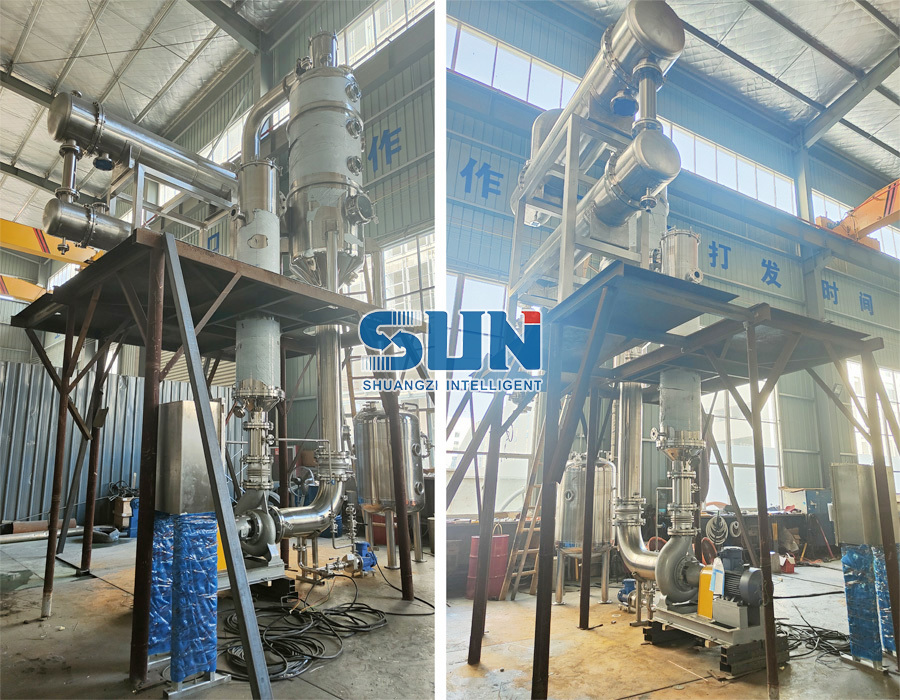
The dimensions show that the equipment is vertically arranged. Customers should consider building height, maintenance access, lifting requirements, service platforms, pipe routing, condensate management, and space for cleaning operations during plant layout planning.
5. Application Areas
5.1 Plant Extracts and Herbal Liquids
Plant extraction liquids often contain dissolved active compounds, natural pigments, colloids, fine fibers, and residual particles. Their viscosity can increase significantly during concentration. A forced-circulation evaporator is well suited to this type of material because it supports continuous movement through the heating zone and can operate under reduced pressure.
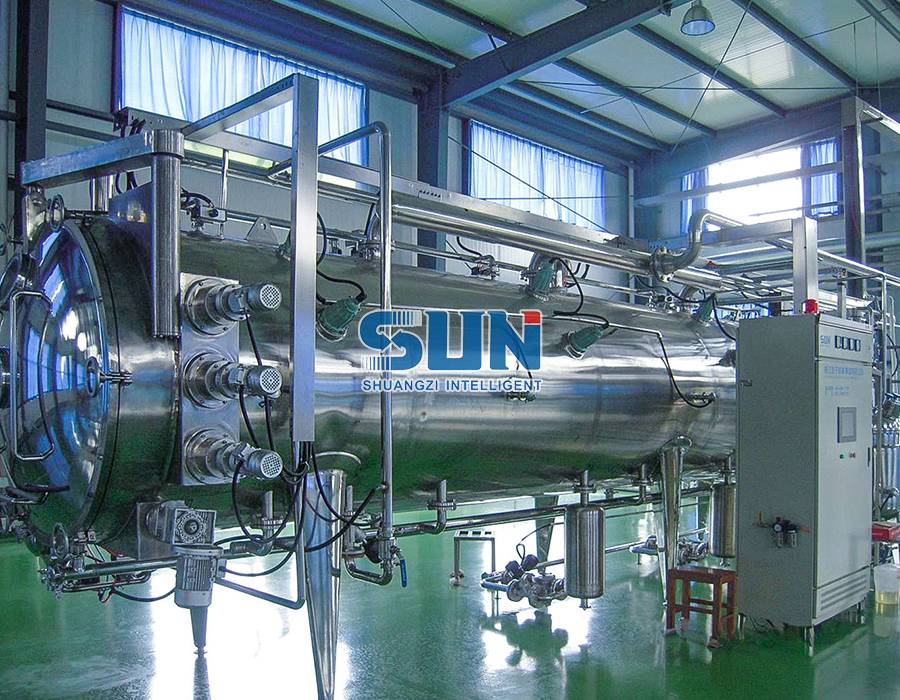
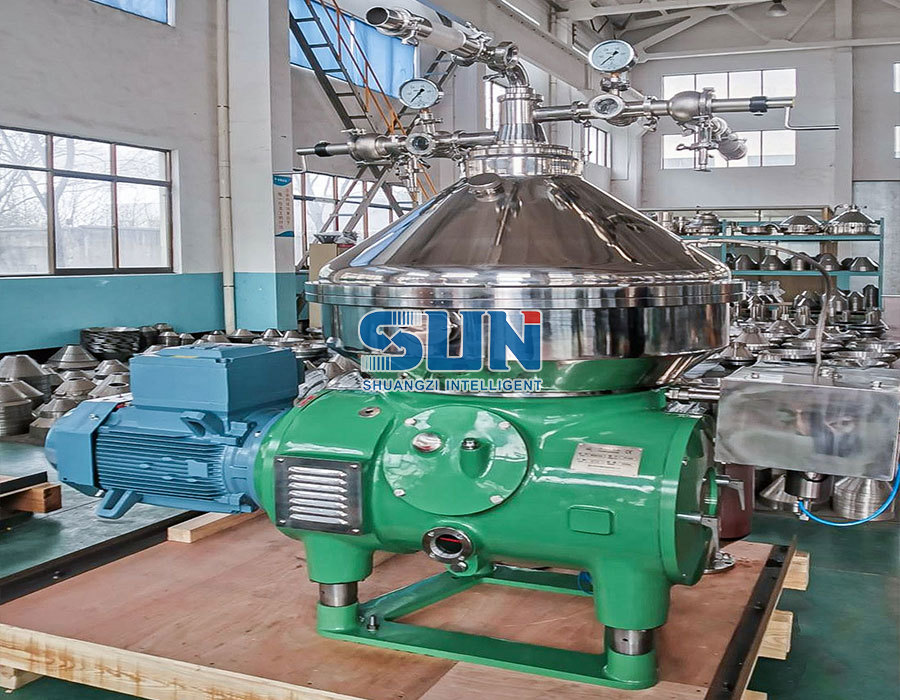
In a typical plant-extraction line, the evaporator may receive liquid after extraction, solid-liquid separation, clarification, or filtration. It can concentrate the extract before spray drying, vacuum drying, granulation, crystallization, or final formulation. The manufacturer also produces extraction, separation, filtration, and vacuum low-temperature drying equipment, making integrated line design possible.
5.2 Food and Beverage Processing
Food applications may include fruit juice, vegetable extracts, dairy liquids, sugar-containing solutions, flavor preparations, and other products that require water removal. Vacuum operation can help protect flavor and color, while forced circulation can support the processing of liquids containing pulp or suspended solids.
Food producers must consider hygienic design, cleanability, material compatibility, drainage, inspection access, and the relationship between evaporation and sterilization. The listed sterilization temperature range of approximately 86°C to 94°C may be incorporated into a process design when appropriate, but the final thermal treatment must be established according to the product and applicable food-safety requirements.
5.3 Pharmaceutical and Biological Processing
Pharmaceutical and biological liquids may be sensitive to temperature, shear, oxidation, and contamination. They may also have strict requirements for documentation, cleaning, material traceability, and process validation. Vacuum evaporation can provide a gentler concentration route than atmospheric boiling, while the controlled circulation loop can help maintain consistent heat transfer.
The suitability of the system for a pharmaceutical application depends on the required hygienic grade, surface finish, sealing arrangement, instrumentation, control system, cleaning-in-place configuration, sterilization method, and validation documentation. These details should be confirmed during project engineering rather than assumed from the basic model designation.
5.4 Chemical Salt Solutions
Chemical salt solutions are a natural application for vacuum crystallization. As water is removed, the solution can become supersaturated and produce crystals. The circulation system helps keep solids moving and can reduce localized accumulation in the heating area.
The final process may include crystal classification, slurry discharge, solid-liquid separation, washing, drying, or mother-liquor recycling. The evaporator can therefore serve as one stage in a complete crystallization line rather than a standalone unit.
5.5 Fermentation Broths and Nutrient Liquids
Fermentation processes can generate liquids containing proteins, cells, metabolites, salts, and other dissolved or suspended substances. After fermentation, the liquid may require concentration before separation, drying, formulation, or recovery of a target component.
Because fermentation broths may foam or exhibit complex rheology, feed conditioning and foam control are important. The forced-circulation design can be considered where a robust flow loop is required, subject to pilot testing and evaluation of the broth's thermal and mechanical behavior.
6. Advantages Compared with Conventional Alternatives
Equipment selection should be based on process requirements rather than marketing claims. Nevertheless, the single-effect forced-circulation design offers several practical advantages compared with basic natural-circulation evaporators and other equipment that may not be optimized for difficult feed liquids.
Natural-circulation systems depend mainly on density differences between heated and cooler liquid. When viscosity increases or solids begin to form, circulation may weaken. This can lead to lower heat-transfer performance and more deposits. A forced-circulation system uses a pump to sustain the required movement, making it more suitable for high-viscosity or crystallizing materials.
Some thin-film or falling-film evaporators provide excellent performance with clean, low-viscosity products and short residence times. However, they may require more careful feed preparation when the liquid contains particles or when the viscosity changes rapidly. A forced-circulation evaporator can offer greater tolerance for suspended solids and changing concentration, although the exact comparison depends on the material and target capacity.
Batch vacuum concentrators can be flexible for small or variable production campaigns, but they may involve longer cycle times and less continuous throughput. The forced-circulation system is better suited to customers seeking a steady industrial flow, repeatable operating conditions, and integration with continuous upstream and downstream processes.
Multiple-effect evaporation can reduce steam consumption per unit of water removed by reusing vapor energy across several effects. However, multiple-effect systems may involve greater complexity, higher investment, more controls, and more demanding maintenance. A single-effect system can be attractive when the production capacity is moderate, the process requires a straightforward configuration, steam availability is adequate, or crystallization and fouling behavior make a simpler circulation arrangement preferable.
The most suitable technology depends on the customer's priorities. The value of this equipment lies in its balance of forced circulation, vacuum operation, adaptable concentration, industrial capacity, and potential integration with broader process lines.
7. Manufacturing and Engineering Strengths
7.1 EPC and EPCM-Oriented Project Capability
Zhejiang Shuangzi Intelligent Equipment Co., Ltd. was established in 2007 and operates as a professional biology and medical equipment enterprise. Its project capabilities are organized around EPC and EPCM principles, covering process technology, automation engineering, equipment manufacturing, matching procurement, installation, and equipment system integration.
This broad capability is important for evaporation projects because performance depends on more than the evaporator body alone. Feed tanks, pumps, filters, steam systems, condensers, vacuum equipment, cooling water, product discharge, control instruments, cleaning systems, and downstream processing equipment must all work together. A manufacturer capable of coordinating these elements can reduce interface problems during installation and commissioning.
7.2 Integrated Production and R&D Environment
The company covers a floor area of approximately 16,706 square meters and has a structure area of approximately 17,800 square meters. Its production capabilities include a pilot production workshop and an R&D platform designed to support automation and GMP-related requirements.
Pilot facilities are valuable when the customer's feed material is complex. Laboratory or pilot testing can help determine evaporation temperature, circulation behavior, concentration limits, crystallization conditions, foam tendency, fouling characteristics, and cleaning requirements. The resulting information can then be used to refine the industrial equipment design.
For a product such as a forced-circulation evaporator, practical process knowledge is essential. A machine that meets a nominal capacity on a clean test liquid may behave differently with a concentrated herbal extract or salt solution. Pilot and R&D capabilities provide a basis for more realistic engineering decisions.
7.3 Advanced Welding and Finishing Equipment
The manufacturer has introduced advanced welding and finishing equipment, including plasma argon arc welding machines, plasma cutting machines, CAM CNC machining centers, and related production equipment. These tools support the fabrication of pressure-bearing components, process vessels, piping assemblies, structural parts, and precision-machined components.
Plasma argon arc welding is particularly relevant to hygienic and corrosion-resistant process equipment because weld quality, penetration, surface condition, and protection from oxidation influence both durability and cleanability. CNC machining supports dimensional accuracy for flanges, connections, pump interfaces, supports, and other components that must align during assembly.
Plasma cutting and automated machining can also improve repeatability compared with highly manual fabrication. Consistent cutting, accurate fit-up, controlled welding, and appropriate finishing contribute to a more reliable final system.
7.4 Broad Product Portfolio
The company's mature products include vacuum low-temperature drying systems, fermentation equipment, evaporation and concentration equipment, extraction equipment, separation and crystallization equipment, filtration equipment, and process containers. This broad portfolio allows the manufacturer to understand how the evaporator interacts with different unit operations.
For example, a plant-extraction project may require extraction tanks, solid-liquid separation, concentration, precipitation, filtration, drying, and packaging. A fermentation project may require seed tanks, fermentation vessels, sterilization systems, broth treatment, concentration, and drying. A food project may need preparation, heating, clarification, concentration, crystallization, and cleaning systems.
When these operations are engineered by a coordinated supplier, process data and mechanical interfaces can be managed more effectively. It also gives the customer a single technical contact for line-level discussions, installation support, commissioning, and troubleshooting.
8. Automation and Process Control
Stable evaporation requires coordinated control of several variables. These include feed flow, circulation flow, steam pressure, vacuum level, product temperature, heating temperature, liquid level, condenser performance, cooling-water flow, and discharge concentration.
An automated control system can monitor and adjust these variables according to the selected operating mode. For example, if the vacuum level changes, the boiling temperature may change. If the concentration rises, viscosity may increase and affect pump load and heat transfer. If steam pressure fluctuates, the heating duty may change. A well-designed control system helps operators respond to these changes systematically.
Instrumentation may include temperature sensors, pressure transmitters, vacuum gauges, level sensors, flow meters, conductivity instruments, density measurement, motor protection, and alarm functions. The actual instrument list should be selected according to the material, hygiene requirements, control philosophy, and customer standards.
Automation is also useful for recording production data. Batch records or continuous operation data can support quality control, maintenance planning, energy analysis, and process optimization. In pharmaceutical and food applications, the ability to document operating conditions may be especially important.
However, automation cannot compensate for an unsuitable process design. Correct pump sizing, heat-transfer-area calculation, vapor separation, condenser selection, vacuum-system capacity, and material compatibility remain fundamental. Automation should be developed as part of the process engineering package rather than added as an afterthought.
9. Materials, Hygiene, and Cleaning Considerations
The materials of construction should be selected according to the chemical properties and hygiene requirements of the feed. Stainless steel is commonly used in food, pharmaceutical, biological, and plant-extraction applications because it offers corrosion resistance and can be finished for hygienic service. Chemical applications may require different grades or special alloys depending on chloride content, pH, temperature, and crystallizing compounds.
Product-contact surfaces should be designed to minimize crevices, dead legs, sharp internal transitions, and difficult-to-drain sections. Welds should be properly finished where required. Gaskets and seals must be compatible with temperature, vacuum, cleaning chemicals, and the processed material.
Cleaning requirements vary widely. Some products may require water rinsing, while others need alkaline cleaning, acid descaling, solvent cleaning, or a validated clean-in-place cycle. The design should provide suitable access and circulation paths for the selected cleaning method. Fouling reduction through forced circulation is helpful, but regular cleaning remains necessary for hygienic operation and long-term performance.
Customers should define their cleaning philosophy early in the project. Important questions include whether cleaning is manual or automatic, whether cleaning chemicals are recovered, whether sterilization is required, how rinse water is drained, and what level of inspection is expected after cleaning.
10. Installation and Turnkey Project Support
A large vertical evaporator requires careful installation planning. The site must provide adequate foundation strength, building height, lifting access, maintenance platforms, pipe supports, utility connections, drainage, and safe operator access. The vacuum system, condenser, cooling-water circuit, steam supply, condensate return, and product discharge must be arranged with appropriate slopes and service clearances.
The manufacturer can provide services covering process design, equipment design, matching purchase, installation, line debugging, and system integration. This is especially useful for customers developing a new production line rather than replacing a single machine.
Turnkey project support can include equipment selection, process-flow development, layout planning, utility calculations, piping and instrumentation coordination, fabrication, factory inspection, shipment preparation, site installation, commissioning, operator training, and performance verification. The precise scope should be stated in the commercial and technical contract.
During commissioning, the system should first be checked with water or an appropriate test medium. Pump direction, valve operation, vacuum tightness, heating performance, condenser capacity, instrument signals, alarms, and safety functions should be verified before introducing the product. Product trials can then establish actual evaporation capacity, final concentration, steam consumption, cooling-water demand, and cleaning behavior.
11. Selecting the Correct Model
Model selection should begin with the required evaporation load rather than the desired final equipment name. The customer should identify the feed rate, inlet concentration, target outlet concentration, operating hours, product density, viscosity, solids content, crystallization tendency, heat sensitivity, and required production schedule.
For example, the listed models cover evaporation capacities from 600 kg/h to 1,600 kg/h. A customer requiring approximately 1,000 kg/h under the specified design conditions may consider the SJM1-1000 model as a starting point. However, if the feed is unusually viscous or the product concentration must exceed the standard listed range, additional evaluation may be required.
Capacity is also affected by the definition of evaporation rate. The stated value generally refers to the quantity of solvent removed per hour under specified conditions. It should not be confused with feed flow or final product discharge rate. A material balance is necessary to determine how much feed is required and how much concentrated product will be produced.
Customers should also consider future production expansion. Selecting a model with modest additional capacity may be more economical than replacing the entire system later, provided that utilities, building space, and downstream equipment can support the expanded output.
12. Operating and Maintenance Practices
Reliable operation begins with stable feed preparation. Large particles should be removed when necessary, and the feed should be mixed sufficiently to avoid abrupt changes in solids concentration. Filters, strainers, or clarification equipment may be required upstream depending on the product.
The circulation pump should be started and operated according to the manufacturer's sequence. Sufficient liquid level must be present before heating begins. Operating the heating system without proper circulation can cause overheating, damage, or accelerated fouling. Vacuum should also be established and controlled within the designed range.
Operators should monitor temperature differences across the heating system, pump current, pressure drop, product concentration, vacuum stability, and discharge appearance. A gradual increase in pressure drop or pump load may indicate fouling, crystallization, blockage, or a change in feed viscosity.
After production, the system should be drained or rinsed according to the product requirements. Allowing concentrated material to remain inside the tubes during shutdown may increase the risk of hard deposits or crystal formation. Planned cleaning is generally less expensive than emergency descaling or unplanned downtime.
Preventive maintenance should include inspection of pumps, mechanical seals, valves, instruments, gaskets, vacuum equipment, condensers, heating surfaces, structural supports, and electrical controls. Calibration intervals should be defined for critical sensors. Spare parts should be selected according to expected wear, product abrasiveness, cleaning chemicals, and operating hours.
13. Energy and Utility Considerations
The equipment uses steam as the heating medium and cooling water for condensation or related heat removal. The listed steam pressure is approximately 0.6 to 0.8 MPa. Steam consumption ranges from approximately 420 kg/h for the SJM1-600 model to approximately 1,100 kg/h for the SJM1-1600 model.
Actual energy consumption depends on feed temperature, evaporation temperature, concentration ratio, heat losses, condensate recovery, insulation, vapor temperature, and operating stability. Preheating the feed with available waste heat or condensate can reduce the fresh steam requirement. Proper insulation of hot surfaces and pipes can also improve energy performance.
Cooling-water consumption is listed from approximately 6 t/h to 16 t/h across the model range. The cooling system must be sized for the actual condenser duty and local cooling-water temperature. In warm climates, cooling-tower performance or chilled-water requirements may affect the final design.
Although a single-effect evaporator may consume more fresh steam per kilogram of water removed than a properly designed multiple-effect system, it can provide a simpler process layout and lower mechanical complexity. For some customers, the balance between capital investment, maintenance, process flexibility, and steam cost makes a single-effect forced-circulation system the more practical choice.
14. Quality, Safety, and Compliance
Industrial evaporation systems must be designed and operated with attention to pressure, temperature, vacuum, steam, rotating equipment, electrical power, chemicals, and hot surfaces. Safety valves, pressure protection, emergency stops, guarding, insulation, warning labels, and appropriate operating procedures should be included as required by the application and local regulations.
Vacuum equipment must be protected against liquid carryover and unstable operation. Condensers and vapor separators should be selected to handle the expected vapor load. The system should also include suitable provisions for abnormal conditions such as loss of cooling water, loss of circulation, excessive temperature, high level, low level, and vacuum failure.
Food, pharmaceutical, and biological applications may require additional documentation. This can include material certificates, weld records, surface-finish information, pressure-test records, instrument calibration certificates, factory acceptance testing, site acceptance testing, and operating manuals. The required documentation should be identified during the quotation and design stage.
A strong manufacturing process supports quality, but quality assurance also depends on inspection, traceability, assembly control, testing, and final verification. Customers should review the proposed quality plan and acceptance criteria before fabrication begins.
15. Why Manufacturer Experience Matters
Evaporation equipment is closely connected to the properties of the product being processed. A technically correct vessel can still deliver poor results if the circulation rate, heat-transfer area, vacuum system, condenser, feed arrangement, or discharge design is not matched to the application.
A manufacturer with experience across plant extraction, fermentation, pharmaceutical engineering, food processing, crystallization, filtration, and drying can bring broader process knowledge to the project. This experience helps identify potential issues before they become expensive modifications.
For example, an extract that appears to be a simple liquid may become highly viscous at the target concentration. A salt solution may begin crystallizing earlier than expected. A fermentation broth may foam under vacuum. A food product may require special cleaning and sterilization arrangements. A complete engineering review can address these issues through pilot tests, equipment selection, control logic, and line integration.
The company's ability to provide equipment design, process design, installation, debugging, and turnkey services gives customers access to a more coordinated project model. This can be especially beneficial for international customers who need support with equipment matching, technical communication, factory inspection, shipment preparation, site installation, and operator training.
16. Recommended Project Development Process
Step 1: Define the Material
Provide the feed composition, solids content, density, viscosity, pH, temperature, particle size, crystallization behavior, corrosiveness, and foaming tendency. If the composition changes during production, those changes should also be documented.
Step 2: Establish the Material Balance
Identify the feed rate, inlet concentration, desired outlet concentration, evaporation load, product discharge rate, operating hours, and expected production volume. This information forms the basis for preliminary capacity selection.
Step 3: Confirm Thermal Requirements
Define the allowable product temperature, heating-medium conditions, vacuum range, sterilization requirements, and any limits related to active ingredients, flavor, color, or nutritional value.
Step 4: Conduct Pilot or Laboratory Evaluation
Where the feed is viscous, crystallizing, foaming, abrasive, or otherwise difficult, pilot testing can help determine the circulation behavior, fouling tendency, concentration limit, and cleaning method.
Step 5: Develop the Process and Utility Design
Specify steam, cooling water, electrical power, compressed air, vacuum, drainage, cleaning chemicals, and product-transfer requirements. Coordinate these utilities with the factory layout.
Step 6: Confirm the Equipment Configuration
Review the heating system, circulation pump, vapor separator, condenser, vacuum equipment, tanks, valves, instrumentation, automation, materials, surface finish, access platforms, and downstream connections.
Step 7: Complete Testing and Commissioning
Use factory testing and site commissioning to verify mechanical integrity, control functions, vacuum performance, circulation, heating, cooling, product concentration, capacity, and cleaning performance.
17. Frequently Asked Questions
Q1: What type of liquid is suitable for this evaporator?
The system is suitable for many viscous, crystallizable, and particle-containing liquids, including herbal extracts, fruit juice, dairy products, fermentation liquids, pharmaceutical solutions, and chemical salt solutions. Final suitability depends on the material's viscosity, solids content, thermal sensitivity, corrosiveness, and crystallization behavior.
Q2: What is the main benefit of forced circulation?
Forced circulation uses a high-flow pump to move the liquid rapidly through the heating tubes. This helps improve heat transfer, keep particles suspended, reduce low-velocity zones, and minimize scaling or tube blockage compared with circulation that depends only on natural density differences.
Q3: Can the equipment process heat-sensitive materials?
It can be considered for heat-sensitive materials because vacuum operation lowers the boiling temperature. The exact operating temperature must be established according to the material and process requirements. The listed evaporating temperature is approximately 60°C, but the final design can be adjusted for the customer's application.
Q4: Can it produce crystals as well as concentrated liquid?
Yes. The system is designed for liquid concentration and vacuum crystallization. It can be used for solutions that become supersaturated during water removal, such as certain chemical salt solutions. The final crystallization configuration depends on solubility, crystal size, slurry concentration, and the required downstream separation method.
Q5: What capacities are available?
The listed models provide evaporation capacities of approximately 600, 800, 1,000, 1,200, and 1,600 kg/h. These figures should be confirmed against the customer's actual material and operating conditions.
Q6: Are the inlet and outlet concentrations fixed?
No. The listed reference conditions show an inlet concentration of approximately 11.5% to 12% and an outlet concentration of approximately 45% to 48%, but concentration targets can be made to order. The final design should be based on a material balance and process test.
Q7: How does vacuum operation affect product quality?
Vacuum reduces the boiling point, which can support lower-temperature processing. This may help protect color, flavor, nutrients, active compounds, or other heat-sensitive characteristics. Product quality also depends on residence time, oxygen exposure, circulation, and the material's own thermal stability.
Q8: Does forced circulation eliminate cleaning requirements?
No. It reduces the risk of scaling and blockage, but all evaporators require cleaning appropriate to the material. Cleaning frequency depends on fouling tendency, operating conditions, concentration, product residence time, and sanitation requirements.
Q9: Can the evaporator be integrated with other equipment?
Yes. It can be integrated with extraction, fermentation, filtration, separation, crystallization, drying, storage, and packaging systems. The manufacturer provides equipment and engineering capabilities across several of these process areas.
Q10: What should be considered when installing the equipment?
Customers should consider building height, foundation loading, lifting access, service platforms, pipe routing, steam and cooling-water connections, vacuum equipment, drainage, cleaning access, electrical requirements, and safe maintenance space. The listed dimensions range from approximately 3.9 m in length and 2.3–2.4 m in width, with heights from 6.5 m to 8.5 m depending on the model.
Q11: Can the manufacturer provide turnkey support?
The manufacturer provides process design, equipment design, matching procurement, installation, line debugging, system integration, and turnkey project services. The exact scope should be agreed in the project contract.
Q12: Is pilot testing recommended?
Pilot testing is strongly recommended for unusual, high-viscosity, highly crystallizable, foaming, abrasive, or heat-sensitive materials. Testing can help determine evaporation conditions, fouling behavior, crystallization performance, cleaning requirements, and realistic production capacity.
18. Conclusion
The single-effect forced-circulation evaporator is a practical solution for industrial liquid concentration and vacuum crystallization where conventional evaporation systems may experience scaling, tube blockage, unstable flow, or excessive thermal exposure. Its high-flow circulation loop supports the processing of viscous, particle-containing, and easily crystallizable liquids, while vacuum operation enables lower-temperature evaporation.
The available SJM1 model range covers evaporation capacities from approximately 600 kg/h to 1,600 kg/h. Reference operating conditions include an inlet concentration of approximately 11.5% to 12%, an outlet concentration of approximately 45% to 48%, steam pressure of approximately 0.6 to 0.8 MPa, and an evaporation temperature of approximately 60°C. These values provide a starting point, while the final equipment should be customized according to the product and plant requirements.
Its advantages are strengthened by the manufacturer's broader capabilities in process engineering, automation, equipment fabrication, pilot testing, installation, commissioning, and turnkey project delivery. Advanced welding, plasma cutting, CNC machining, integrated production facilities, and experience with extraction, fermentation, pharmaceutical, food, drying, separation, filtration, and crystallization systems support a complete project approach.
For customers seeking dependable concentration equipment for difficult liquids, the key decision should not be based on capacity alone. The material, process temperature, vacuum level, circulation behavior, fouling risk, cleaning method, crystallization objective, utilities, and future production plans all deserve careful consideration. With proper process evaluation and engineering integration, a forced-circulation vacuum evaporator can provide stable operation, flexible application, and a strong foundation for modern industrial production lines.
References
1. Zhejiang Shuangzi Intelligent Equipment Co., Ltd. Product information for the single-effect forced-circulation liquid vacuum crystallizer evaporator.
2. Zhejiang Shuangzi Intelligent Equipment Co., Ltd. Technical information concerning plant extraction, fermentation, pharmaceutical engineering, food processing, evaporation, concentration, separation, filtration, crystallization, and drying systems.
3. Perry’s Chemical Engineers’ Handbook, sections concerning evaporation, heat transfer, crystallization, vacuum systems, and process design.
4. McCabe, Smith, and Harriott, Unit Operations of Chemical Engineering, chapters covering evaporation, circulation, heat transfer, and crystallization.
5. Standard industrial guidance on hygienic process equipment design, cleaning, pressure protection, instrumentation, and commissioning.
6. General engineering principles for steam heating, vacuum evaporation, condenser sizing, fouling control, and process-plant integration.