
 英语
英语 俄语
俄语Content
- 1 Understanding the Solvent Extraction Process
- 2 Construction and Operating Principle of the SCJ Paddle Revolving Extraction Tower
- 3 Main Advantages of a Paddle Revolving Extraction Tower
- 4 Comparison with Common Extraction Tower Types
- 5 Technical Specifications of the SCJ Series
- 6 Applications in Plant Extraction
- 7 Applications in Biological and Pharmaceutical Processing
- 8 Applications in Western Medicine Synthesis
- 9 Applications in Food and Natural Product Processing
- 10 Manufacturing Strengths and Engineering Capability
- 11 Process Design and Project Integration
- 12 Advanced Manufacturing and Quality Considerations
- 13 Turnkey Project Support
- 14 Safety and Environmental Design
- 15 Installation, Operation, and Maintenance
- 16 Selecting the Correct Model
- 17 Why Process-Oriented Manufacturing Matters
- 18 Typical Project Workflow
- 19 Frequently Asked Questions
- 19.1 What is a solvent extraction tower?
- 19.2 How does the paddle revolving design work?
- 19.3 What is the difference between tower height and total height?
- 19.4 Can the extraction tower operate continuously?
- 19.5 Can the agitation speed be adjusted?
- 19.6 What industries can use this equipment?
- 19.7 Which model should be selected for a new project?
- 19.8 Can the tower be connected to evaporation and concentration equipment?
- 19.9 Is pilot testing recommended?
- 19.10 What manufacturing capabilities support the equipment?
- 19.11 Can engineering and installation services be provided?
- 19.12 What safety issues should be considered?
- 20 Conclusion
- 21 References
- 22 Product: Solvent Extraction Tower
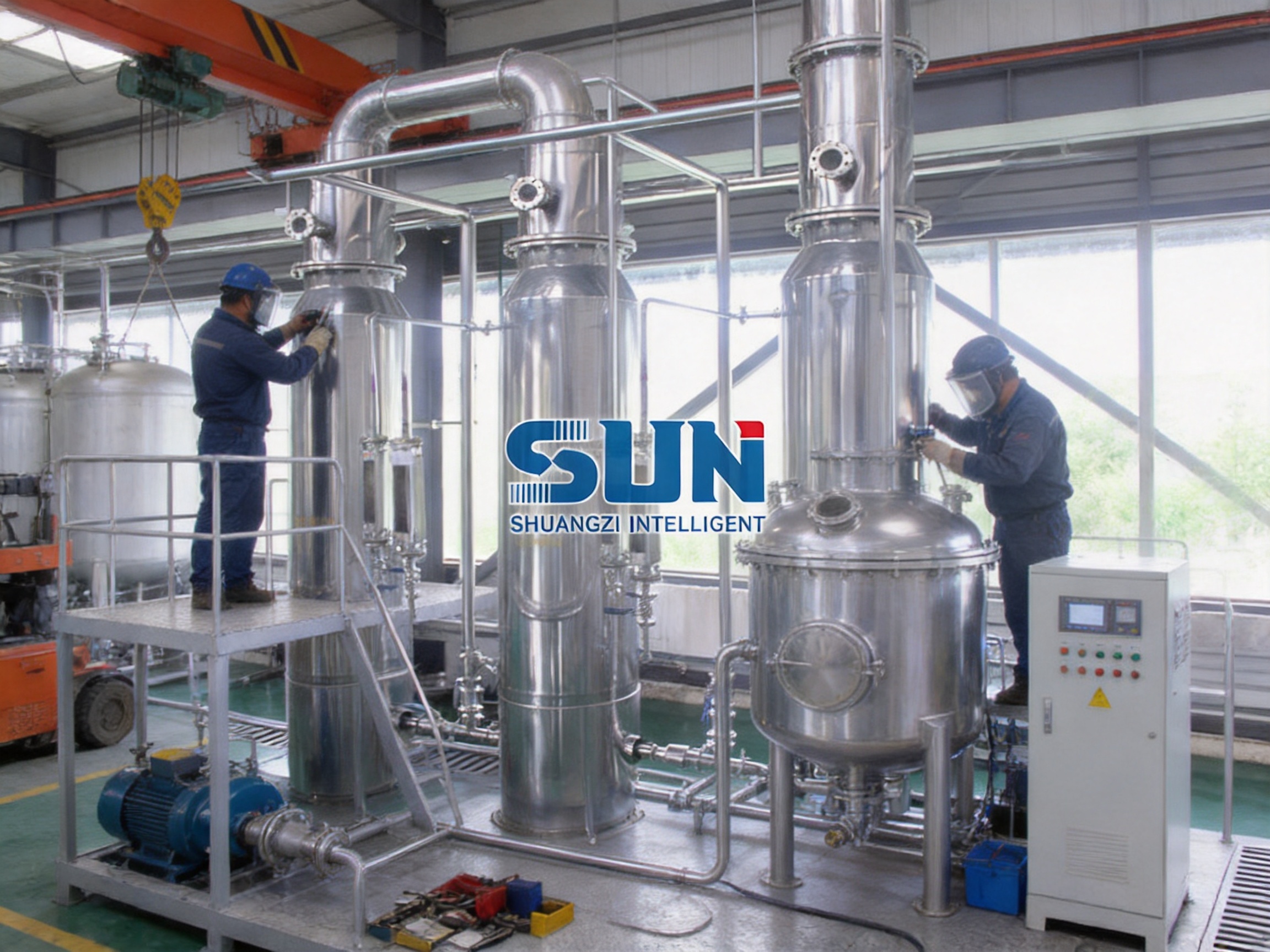
Solvent extraction is a widely used separation method for transferring one or more target compounds from a feed liquid into a second liquid phase that is substantially immiscible with the original liquid. The process is valuable when a compound must be selectively separated, concentrated, purified, or recovered without exposing it to unnecessarily severe thermal conditions. A solvent extraction tower provides a continuous means of carrying out this operation, combining controlled liquid–liquid contact with phase separation in a vertical processing vessel.
In chemical manufacturing, petroleum refining, environmental protection, plant extraction, biological processing, pharmaceutical production, and natural food manufacturing, the extraction tower can serve as an important part of the process line. It may be used to recover active plant constituents, remove impurities, separate valuable organic compounds, enrich products, or prepare a stream for subsequent evaporation, crystallization, filtration, drying, or purification.
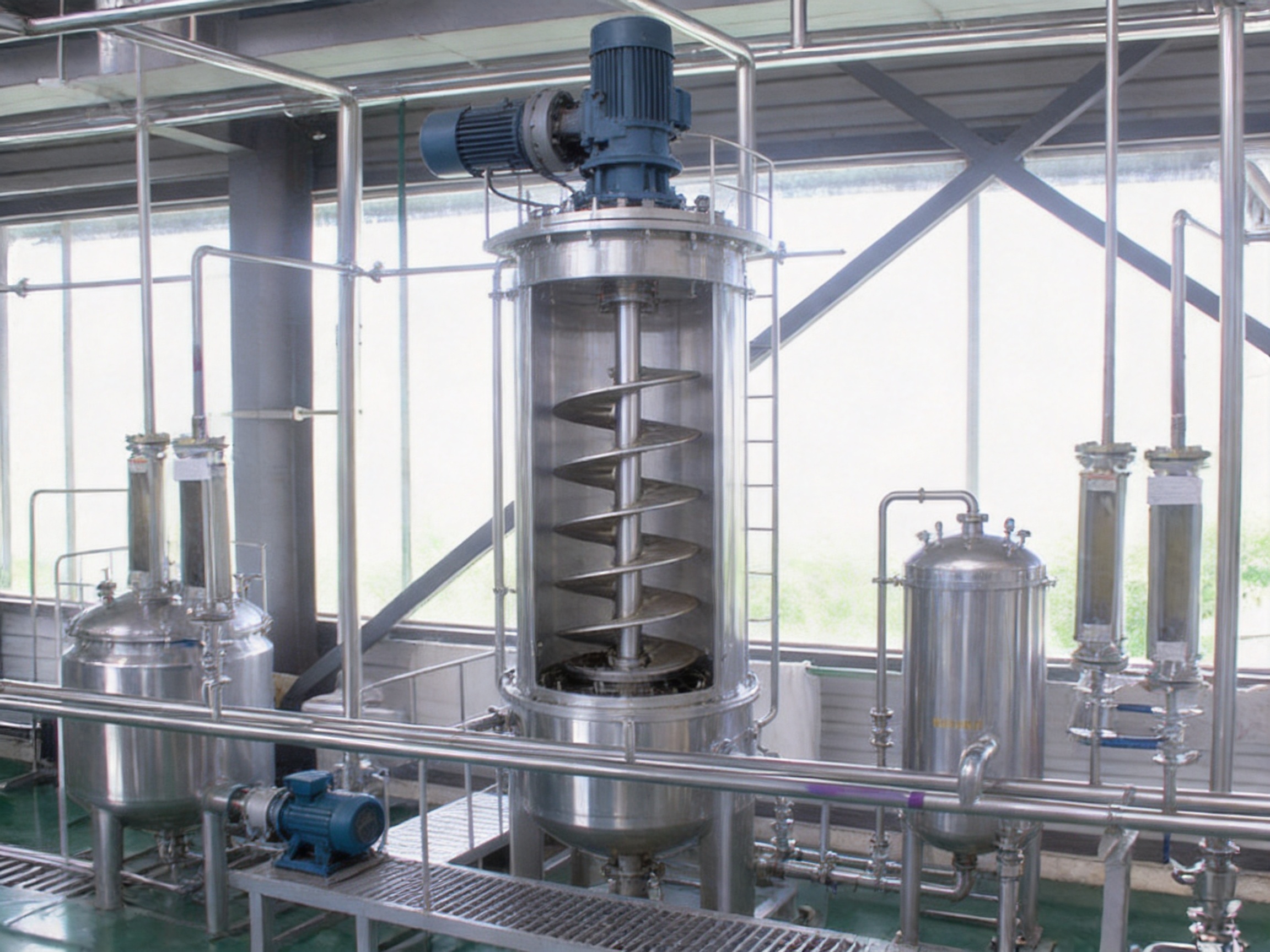
The equipment described in this article is a solvent extraction tower, also known as a solvent extraction column. The SCJ paddle revolving extraction tower is designed for continuous multistage liquid–liquid extraction. Its internal structure uses mechanical movement to promote dispersion between the two liquid phases. The rotating paddle arrangement improves contact between the continuous and dispersed phases, while the vertical tower provides residence time for mass transfer and separation.
With models ranging from laboratory and pilot-scale units to large industrial towers, the equipment can be selected for different flow requirements. The listed models cover tower diameters from 80 to 2,000 millimeters and nominal flow ranges from 25 to 15,000 liters per hour. This broad range supports process development, pilot testing, production expansion, and continuous industrial operation.
Understanding the Solvent Extraction Process
Liquid–liquid extraction is based on the different solubilities of a compound in two immiscible liquids. The feed solution contains the compound or compounds to be separated, while the extraction solvent has a stronger affinity for the desired component. When the two liquids are brought into close contact, the target component transfers from the feed phase into the solvent phase.
After contact, the two phases are allowed to separate according to their density difference and interfacial behavior. One phase leaves the equipment enriched with the extracted compound, while the other phase is depleted of that compound. Depending on the process objective, the solvent may later be regenerated, evaporated, recycled, or sent to another purification step.
The efficiency of extraction depends on several factors. These include the distribution coefficient of the target compound, phase ratio, temperature, viscosity, interfacial tension, residence time, degree of dispersion, mixing intensity, number of theoretical stages, and the ability to achieve clean phase disengagement. A properly designed extraction tower must therefore do more than simply mix two liquids. It must create sufficient interfacial area for mass transfer while avoiding excessive emulsification and unstable operation.
In a continuous extraction tower, the two liquid streams usually enter at different elevations. One liquid is dispersed into the other as droplets. The droplets move through the tower under the combined effects of gravity, buoyancy, and mechanical agitation. As the droplets rise or descend, the target component transfers across the liquid–liquid interface. At the outlet zones, the phases disengage and are collected separately.
The equipment can be arranged for countercurrent, cocurrent, or other process configurations, depending on the relative density of the liquids and the required extraction strategy. Countercurrent flow is often preferred for efficient use of the solvent because the fresh or regenerated solvent contacts the more highly depleted feed near one end of the tower, while solvent with a higher solute concentration contacts the richer feed near the opposite end.
Construction and Operating Principle of the SCJ Paddle Revolving Extraction Tower
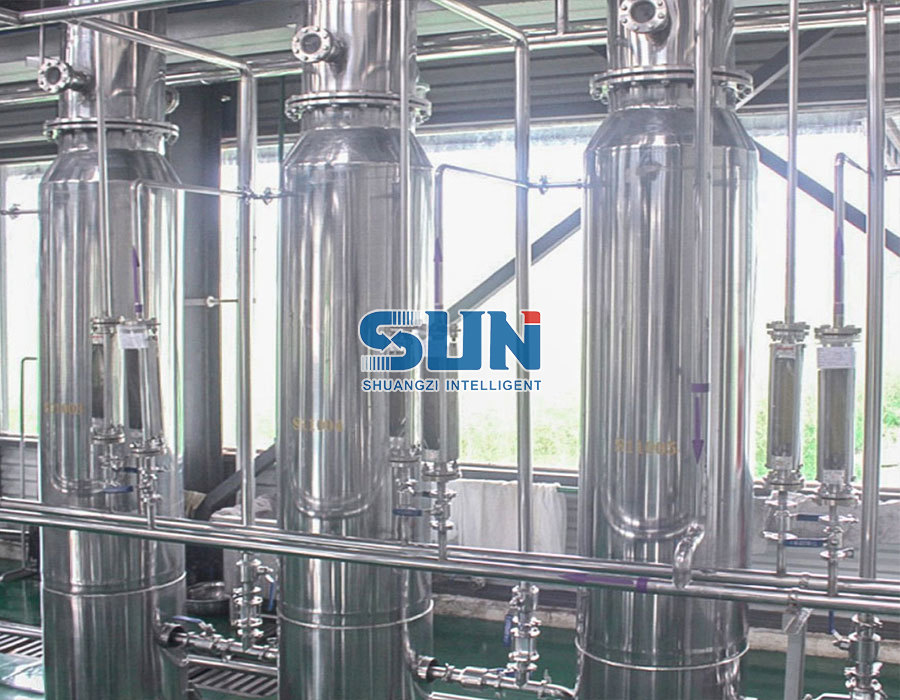
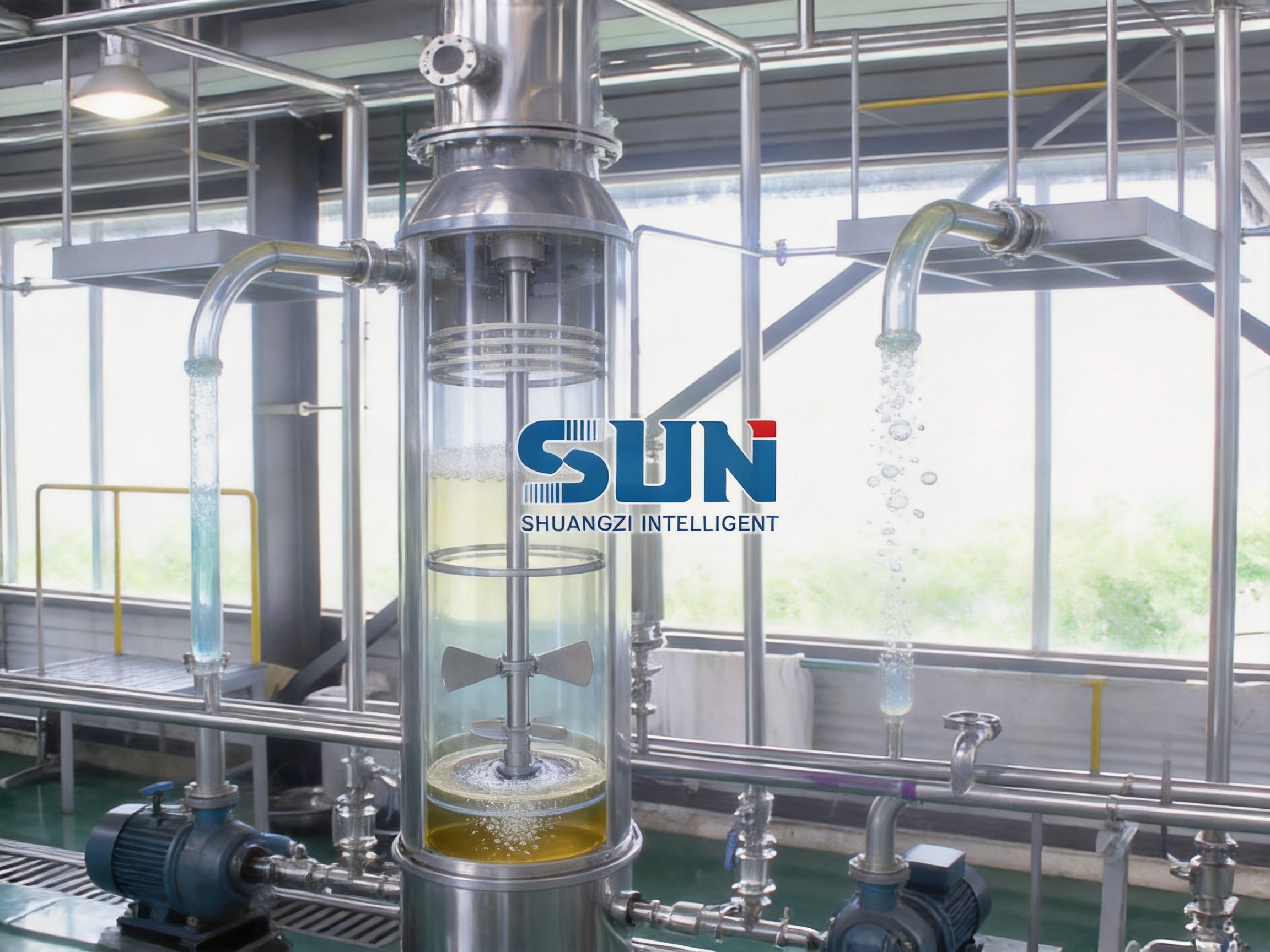
The SCJ paddle revolving extraction tower is a mechanically agitated liquid–liquid mass transfer device. Its main structure includes a vertical tower body, liquid distribution and collection zones, a rotating shaft, paddle components, dynamic and static rings, drive equipment, and process connections. The exact material, wall thickness, internal arrangement, seal configuration, and instrumentation can be adapted to the process medium and operating requirements.
The rotating paddles generate controlled movement inside the extraction zone. This movement breaks one liquid into droplets and disperses those droplets through the other liquid. The resulting increase in interfacial area promotes transfer of the target component from one phase to the other. The speed of the drive system can be adjusted within the model-specific operating range, allowing the operator to balance extraction efficiency, droplet size, energy consumption, and phase separation performance.
Dynamic and static rings are arranged within the tower with a listed spacing of 25 to 50 millimeters. These internal elements help create repeated contact and renewal of the liquid interface. As the dispersed phase passes through the internal structure, the flow is redistributed and mixed in a controlled manner. The design is intended to provide a series of effective contact zones inside a single continuous vessel.
The tower operates through a combination of mechanical dispersion and gravity separation. Mechanical action is important because two immiscible liquids may otherwise have limited contact area. Gravity is important because the phases must eventually separate. The extraction tower therefore has to achieve an appropriate compromise: enough agitation to support mass transfer, but not so much agitation that the liquids form a stable emulsion that is difficult to separate.
The drive motor is matched to the tower size and mixing demand. The listed motor power ranges from 1.1 kilowatts for the SCJ-80 model to 22 kilowatts for the SCJ-1,500 and SCJ-2,000 models. Variable-speed operation is listed for all models, with maximum speed ranges of 160, 250, or 300 revolutions per minute depending on the unit size. This adjustment capability is useful when processing liquids with different viscosities, density differences, phase ratios, and mass transfer requirements.
Solvent Extraction Tower
Main Advantages of a Paddle Revolving Extraction Tower
Continuous Multistage Processing
A major advantage of an extraction tower is its ability to conduct continuous extraction in a vertical process space. Instead of transferring liquids manually between separate vessels for repeated batch contacts, the tower allows the feed and solvent to move continuously through a series of effective contact regions. This can reduce handling requirements, simplify process integration, and support stable production.
Continuous processing is particularly useful when the extraction step is part of a larger production line. The tower can be connected with feed tanks, pumps, solvent recovery units, evaporators, concentration systems, crystallizers, filters, dryers, and automated control systems. A continuous arrangement may also make it easier to maintain consistent flow and phase ratios once the operating conditions have been established.
Enhanced Interfacial Contact
Mass transfer in liquid–liquid extraction occurs at the interface between the two phases. The paddle revolving structure creates repeated dispersion and contact, increasing the effective area available for transfer. This is a significant advantage compared with a simple gravity settler, where the two phases may have insufficient contact for rapid extraction.
The internal dynamic and static rings further divide the extraction zone into repeated interaction areas. These areas can help distribute the liquids, limit large-scale channeling, and maintain contact as the phases move through the tower. The result is a compact separation device capable of combining mixing and extraction in one vertical apparatus.
Adjustable Mixing Intensity
Different extraction systems require different mixing conditions. A low-viscosity solvent and a low-viscosity feed may require only moderate agitation, while a more viscous system may need greater mechanical energy to create a suitable droplet distribution. Some products are also sensitive to shear, heat, oxidation, or prolonged residence time.
The variable-speed drive enables the operator to adjust the rotational speed to suit the process. This provides more flexibility than a fixed-speed extraction system. Operators can begin with a conservative speed during commissioning, observe phase dispersion and separation behavior, and increase or decrease the speed as process data becomes available.
Broad Capacity Range
The SCJ series includes compact units for research, development, and pilot production as well as large models for industrial service. This range helps users maintain a consistent equipment concept while scaling a process. A development team may start with a smaller unit, establish extraction conditions, and then select a larger tower based on flow requirements and process performance.
The smallest listed model, SCJ-80, has an 80-millimeter tower diameter, a 500-millimeter tower height, a total height of 1,800 millimeters, and a flow range of 25 to 40 liters per hour. At the larger end, the SCJ-2,000 model has a 2,000-millimeter tower diameter, a 12,000-millimeter tower height, a total height of 18,000 millimeters, and a listed flow range of 9,000 to 15,000 liters per hour.
Compact Vertical Layout
Because the extraction process takes place in a vertical column, the equipment can provide substantial contact length without requiring the same floor area as a sequence of horizontal tanks. The vertical arrangement also uses gravity to support phase movement and separation. This can simplify the overall plant layout when sufficient building height and access are available.
A vertical tower can be integrated into an existing production area with feed and discharge piping arranged around the lower and upper sections. The arrangement should be confirmed during engineering design, particularly for maintenance access, lifting requirements, solvent safety, ventilation, fire protection, drainage, and inspection.
Adaptability to Process Engineering Requirements
Extraction performance is strongly influenced by the properties of the liquids and the target compound. For this reason, the tower should be engineered according to the process rather than selected only by nominal diameter. Important design information includes feed composition, solvent type, density, viscosity, phase ratio, temperature, corrosiveness, solids content, target recovery, allowable solvent loss, and required production capacity.
A process equipment manufacturer with engineering capability can support the user in determining the appropriate tower size, internal structure, drive arrangement, materials, instrumentation, and auxiliary equipment. This process-oriented approach is an advantage over purchasing a generic vessel that has not been evaluated against the actual extraction system.
Comparison with Common Extraction Tower Types
Several types of liquid–liquid extraction towers are used in industry. Common categories include spray towers, packed towers, sieve plate towers, and rotary extraction towers. Each has its own operating characteristics, advantages, and limitations. The most suitable choice depends on the liquids, the required throughput, the mass transfer duty, the tendency to emulsify, and the desired degree of process control.
| Extraction tower type | Typical operating principle | Potential strengths | Important selection considerations |
|---|---|---|---|
| Spray tower | One phase is dispersed as droplets through the other phase using nozzles or distributors. | Simple internal structure and relatively low mechanical complexity. | May provide limited interfacial renewal and can be sensitive to droplet distribution and flow conditions. |
| Packed tower | Liquid phases contact over or through packing material that increases contact area. | Large contact area and no rotating shaft inside the tower. | Potential fouling, wetting limitations, pressure drop, and difficulty with suspended solids or unstable emulsions. |
| Sieve plate tower | Liquid phases pass through perforated plates that promote repeated dispersion and contact. | Defined internal stages and suitability for selected countercurrent operations. | Requires appropriate phase flow, plate design, and control of flooding, weeping, and phase distribution. |
| Rotary or paddle revolving tower | Mechanical agitation disperses one phase into the other while internal elements promote repeated contact. | Adjustable mixing intensity, effective mass transfer, and flexibility for a range of liquid systems. | Requires drive, shaft sealing, maintenance planning, and careful control to avoid excessive emulsification. |
The paddle revolving design can be especially attractive when the process requires active control of dispersion rather than relying only on gravity, fixed packing, or liquid velocity through perforated plates. Its adjustable mechanical action gives the operator an additional process variable. This can be beneficial when feed conditions change or when a development team is optimizing a new extraction system.
Compared with a simple spray tower, a mechanically agitated tower can provide more intensive and controllable phase contact. Compared with a packed tower, it can be more adaptable when the liquids have properties that make packing wetting or fouling difficult. Compared with a sieve plate tower, the rotating paddle system can provide adjustable agitation over a broader operating range. These are general comparative advantages, and the final selection should always be verified through process testing and engineering calculations.
Technical Specifications of the SCJ Series
The following table summarizes the available SCJ paddle revolving extraction tower models. Flow values are the listed ranges and should be treated as preliminary selection information. Actual capacity depends on liquid properties, phase ratio, temperature, desired extraction efficiency, residence time, and operating configuration.
| Model | Tower diameter (mm) | Tower height (mm) | Total height (mm) | Flow (L/h) | Motor power (kW) | Speed (rpm) | Dynamic and static ring spacing |
|---|---|---|---|---|---|---|---|
| SCJ-80 | 80 | 500 | 1,800 | 25–40 | 1.1 | 0–300 | 25–50 mm |
| SCJ-100 | 100 | 600 | 2,000 | 50–100 | 1.5 | 0–300 | 25–50 mm |
| SCJ-150 | 150 | 900 | 3,200 | 120–160 | 2.2 | 0–300 | 25–50 mm |
| SCJ-200 | 200 | 1,200 | 4,000 | 200–260 | 3.7 | 0–250 | 25–50 mm |
| SCJ-300 | 300 | 1,800 | 5,000 | 350–450 | 5.5 | 0–250 | 25–50 mm |
| SCJ-400 | 400 | 2,500 | 6,000 | 600–1,000 | 7.5 | 0–250 | 25–50 mm |
| SCJ-500 | 500 | 3,000 | 7,000 | 1,000–2,000 | 11 | 0–160 | 25–50 mm |
| SCJ-600 | 600 | 4,000 | 7,500 | 1,500–2,500 | 15 | 0–160 | 25–50 mm |
| SCJ-800 | 800 | 5,000 | 8,000 | 3,000–4,000 | 15 | 0–160 | 25–50 mm |
| SCJ-1000 | 1,000 | 6,000 | 9,000 | 4,500–7,000 | 18.5 | 0–160 | 25–50 mm |
| SCJ-1200 | 1,200 | 8,000 | 11,000 | 6,500–8,000 | 18.5 | 0–160 | 25–50 mm |
| SCJ-1500 | 1,500 | 9,000 | 14,000 | 7,000–11,000 | 22 | 0–160 | 25–50 mm |
| SCJ-2000 | 2,000 | 12,000 | 18,000 | 9,000–15,000 | 22 | 0–160 | 25–50 mm |
The listed dimensions distinguish tower height from total height. This is important during plant planning because the total height affects installation, lifting, building clearance, maintenance access, and the arrangement of upstream and downstream piping. Larger towers may require structural platforms, inspection access, special lifting procedures, and a detailed foundation design.
The speed range is also a significant specification. Smaller units are listed with maximum speeds up to 300 revolutions per minute, while larger models have maximum speeds up to 160 revolutions per minute. This difference reflects the relationship between tower diameter, internal mechanical load, power transmission, and the required mixing conditions.
Applications in Plant Extraction
Plant extraction processes frequently involve the recovery of active compounds, aromatic substances, pigments, oils, or other valuable constituents from botanical materials. After an initial preparation and solid–liquid extraction step, a liquid–liquid extraction tower may be used to transfer selected compounds into a suitable solvent phase or to remove unwanted components.
The tower can be incorporated into a wider plant extraction line that includes raw material handling, crushing, extraction tanks, filtration, concentration, solvent recovery, purification, crystallization, and vacuum low-temperature drying. Its role depends on the chemistry of the target compound and the selected solvent system.
For natural products, process conditions may need to be carefully controlled to protect heat-sensitive constituents and maintain product quality. A solvent extraction tower can support continuous processing and may reduce the need for extended high-temperature treatment. The process engineer must nevertheless confirm solvent compatibility, oxidation control, residence time, temperature limits, and final solvent removal requirements.
Applications in Biological and Pharmaceutical Processing
Biological and pharmaceutical production often involves complex liquid mixtures containing product compounds, by-products, residual raw materials, salts, proteins, pigments, or other impurities. Liquid–liquid extraction may be used as one step in a broader purification sequence. It can help enrich a product before evaporation, crystallization, membrane treatment, chromatography, or final drying.
In pharmaceutical applications, equipment design must be matched to the required hygienic and regulatory standards. The final specification may include suitable product-contact materials, cleanable surfaces, drainability, inspection access, validated cleaning procedures, appropriate seals, and controlled welding and finishing. The tower configuration, instrumentation, and documentation should be reviewed according to the intended product and production environment.
The extraction tower may also be used in process development and pilot-scale work. A pilot unit allows engineers to evaluate solvent selection, phase ratios, mixing speed, residence time, phase disengagement, extraction yield, and solvent consumption before committing to a larger production installation. Data from pilot trials can help determine whether the process should use a rotary tower, packed tower, sieve plate tower, or another extraction method.
Applications in Western Medicine Synthesis
During chemical synthesis, liquid–liquid extraction is commonly used for work-up, impurity removal, product recovery, and phase transfer. A continuous extraction tower can be useful when the synthesis route generates a regular liquid stream and when repeated contact with an extraction solvent is required.
Potential duties include transferring an intermediate from an aqueous phase to an organic phase, washing an organic product stream, removing residual reagents, or separating selected by-products. The tower can be placed between reaction and solvent recovery operations, provided that the feed is suitable for continuous processing and that phase separation can be maintained.
For these duties, accurate control of flow, temperature, mixing speed, and interface behavior is important. The extraction solvent may be flammable, volatile, toxic, or chemically aggressive. The completed system may therefore require explosion protection, grounding and bonding, ventilation, solvent detection, closed transfer, compatible gaskets, and suitable safety instrumentation.
Applications in Food and Natural Product Processing
Food processing and natural product manufacturing may use extraction for flavors, colors, oils, functional ingredients, and other value-added compounds. A properly designed liquid–liquid extraction system can help separate compounds selectively while supporting a continuous production arrangement.
Food-related applications place strong emphasis on material compatibility, hygienic design, cleanability, traceability, and control of residual solvents. The process must be evaluated according to the specific food ingredient, solvent, regulatory environment, and downstream purification requirements. Where solvent extraction is used, solvent recovery and residual solvent testing are essential parts of the overall process design.
The extraction tower can be integrated with evaporation and concentration systems to recover solvent and concentrate the extracted product. It may also be connected with filtration, crystallization, and vacuum low-temperature drying equipment. An integrated line can reduce intermediate transfer and create a more controlled path from raw material to finished ingredient.
Manufacturing Strengths and Engineering Capability
The manufacturer of the SCJ extraction tower is a professional biology and medical equipment enterprise founded in 2007. Its activities cover process technology, automation engineering design, equipment manufacturing, matching procurement, installation, and equipment system integration. This combination of manufacturing and engineering capability is important for extraction projects because the tower rarely operates as an isolated machine.
A liquid–liquid extraction system must be coordinated with feed preparation, pumps, storage tanks, solvent circulation, separation, solvent recovery, product concentration, cleaning, control, and safety systems. A supplier that can address the equipment and the surrounding process can help reduce interface problems between different vendors and ensure that the final line is designed around the actual process objective.
The company operates from a facility with a floor area of approximately 16,706 square meters and a structure area of approximately 17,800 square meters. Its stated manufacturing resources include plasma argon arc welding machines, plasma cutting equipment, computer-aided manufacturing CNC machining centers, a pilot production workshop, and research and development facilities. These resources support the fabrication of vessels, internal components, frames, shafts, fittings, and other equipment parts needed for process systems.
Plasma cutting can support accurate preparation of metal components before forming and welding. CNC machining can be used for precision parts such as shafts, coupling components, bearing seats, flanges, and other mechanical elements. Plasma argon arc welding is suitable for applications where weld quality, appearance, cleanliness, and control of heat input are important. The specific welding procedure, inspection method, and surface finishing standard should be defined in the project specification.
The company also has experience in equipment categories that commonly work with extraction towers, including vacuum low-temperature drying, fermentation systems, evaporation and concentration equipment, extraction equipment, separation equipment, crystallization equipment, filtration equipment, and process vessels. This product range allows the extraction tower to be considered as part of a complete processing line rather than as a standalone purchase.
Process Design and Project Integration
For an extraction tower to deliver reliable performance, the process design should begin with a clear definition of the separation duty. The engineering team should identify the compound to be transferred, the phase from which it is removed, the receiving solvent, the desired recovery, the acceptable impurity level, and the required product concentration.
Feed analysis is equally important. Density, viscosity, solids content, pH, temperature, corrosiveness, interfacial tension, and the presence of surfactants can all influence extraction performance. If suspended solids are present, upstream filtration or clarification may be required to prevent blockage, accumulation, or unstable dispersion inside the tower.
The solvent-to-feed ratio should be established through laboratory or pilot testing. Excess solvent may improve recovery but can increase operating cost, solvent recovery duty, and downstream evaporation load. Insufficient solvent may reduce extraction efficiency or require a larger number of effective contact stages. The best ratio is therefore a balance between separation performance and total process economics.
Mechanical speed should also be optimized through testing. Increasing speed generally increases turbulence and interfacial area, but it may also produce smaller droplets, greater power consumption, and more difficult phase disengagement. The optimal condition is often the lowest speed that achieves the required mass transfer and stable product quality.
Instrumentation can include flowmeters, pressure indicators, temperature sensors, level controls, interface monitoring, motor load monitoring, speed control, and automated valves. The exact instrument package depends on the process risk and control philosophy. A closed-loop control system may regulate feed rates, solvent circulation, interface level, temperature, and agitation speed.
Integration with Upstream Equipment
Upstream equipment may include extraction tanks, reactors, fermentation systems, filtration units, centrifuges, clarification systems, or storage vessels. The feed delivered to the tower should have a stable flow and consistent composition wherever possible. Sudden changes in flow or phase ratio can alter droplet size, interface location, residence time, and extraction performance.
Where the feed contains solids, a filtration or separation step may be installed before the tower. Where the feed is temperature-sensitive, heat exchangers or controlled-temperature tanks may be required. Where the process uses volatile solvents, closed piping and suitable ventilation should be considered from the beginning of the layout design.
Integration with Downstream Equipment
The extract phase may be sent to an evaporation or concentration unit, while the raffinate phase may be recycled, neutralized, treated, or sent to waste recovery. Solvent recovery can reduce material consumption and minimize emissions. Crystallization may be used when the extracted compound can be isolated as a solid, while vacuum low-temperature drying may be selected when the product requires gentle moisture removal.
Filters, separators, storage tanks, pumps, condensers, vacuum systems, and control cabinets may all form part of the complete process. The extraction tower supplier's ability to provide equipment matching and system integration can simplify project coordination and support a more consistent commissioning process.
Advanced Manufacturing and Quality Considerations
Manufacturing quality begins with the selection and traceability of materials. The product-contact material should be compatible with the feed, solvent, cleaning agents, and operating temperature. Stainless steel grades, special alloys, elastomers, coatings, and nonmetallic components should be chosen based on chemical compatibility and the required hygienic or corrosion-resistant standard.
Fabrication of a tower requires control over dimensional accuracy, weld quality, alignment, surface condition, and internal assembly. The rotating shaft must be correctly aligned with the tower and supported to reduce vibration. Paddles and rings must be positioned according to the design so that the intended dispersion pattern is achieved. Seals and bearings must be selected for the liquid properties, speed, temperature, and maintenance plan.
Welding procedures should control distortion and protect product-contact surfaces from contamination. For hygienic applications, welds may require grinding, polishing, passivation, or other finishing treatment. Internal surfaces should be inspected for crevices, undercuts, roughness, trapped residues, and areas that could interfere with cleaning or drainage.
Factory inspection may include dimensional checks, weld inspection, pressure or leak testing where applicable, motor and drive checks, shaft rotation checks, surface inspection, and verification of instrument connections. The inspection and documentation package should be agreed upon before manufacturing so that the final equipment meets the customer's technical and regulatory expectations.
The stated manufacturing resources, including plasma welding, plasma cutting, and CNC machining, provide a foundation for controlled production of process equipment. The value of these resources is greatest when combined with documented procedures, experienced engineering personnel, inspection records, and a structured quality management approach.
Turnkey Project Support
Some users need a single extraction tower, while others require a complete production line. Turnkey project support can include process design, equipment design, procurement of matched components, fabrication, installation, commissioning, automation, and operator training. The appropriate scope depends on the project stage and the customer's internal engineering resources.
For a new plant, the supplier may help develop the process flow diagram, equipment list, utility requirements, layout, piping arrangement, control concept, and installation plan. For an existing plant, the work may focus on replacing an old extractor, increasing capacity, improving solvent recovery, or integrating a new tower into an established production system.
Turnkey support can be especially valuable for plant extraction, biological fermentation, pharmaceutical engineering, natural food, energy conservation, and environmental protection projects. These applications often involve several interconnected unit operations. Coordinating them through one engineering team can improve compatibility and reduce the risk of mismatched connections, inappropriate control logic, or insufficient utility capacity.
Commissioning should include mechanical inspection, dry running, water testing where appropriate, solvent-free functional testing, instrument verification, control loop checks, and process trials. The actual commissioning sequence must be adapted to the solvent and product. Hazardous materials should be introduced only after safety systems, operating procedures, containment, and emergency arrangements have been verified.
Safety and Environmental Design
Solvent extraction projects require careful attention to occupational safety, fire protection, environmental control, and product containment. The solvent may be flammable, volatile, toxic, or harmful to the environment. A risk assessment should cover storage, transfer, tower operation, drainage, cleaning, sampling, maintenance, and emergency response.
Closed piping and sealed connections can reduce vapor release and protect the product from contamination. Ventilation should be designed according to the solvent properties and building arrangement. Electrical equipment, motors, switches, instruments, and control systems should meet the applicable hazardous-area requirements where flammable vapor may be present.
Grounding and bonding can help control static electricity during solvent transfer. Pressure relief, overflow protection, level alarms, temperature alarms, and emergency shutdown functions may be required. The final safety package should be developed in accordance with local regulations, the solvent safety data sheet, and the user's internal standards.
Environmental performance also depends on solvent recovery, wastewater treatment, vapor control, and management of contaminated residues. The extraction tower should be evaluated as part of the complete environmental system. A well-integrated process can reduce solvent loss and improve recovery of valuable compounds while lowering the volume of waste requiring treatment.
Installation, Operation, and Maintenance
Before installation, the foundation, support structure, lifting route, access platform, piping, electrical supply, ventilation, and drainage should be checked. Large models may have considerable height and weight, so transportation and lifting must be planned carefully. The total height listed for each model should be used in building and layout calculations.
During installation, the tower should be leveled and aligned according to the engineering drawings. The rotating shaft, coupling, motor, gearbox, bearings, seals, and internal paddles should be inspected before initial operation. Piping should be independently supported so that excessive external loads are not transferred to the tower nozzles.
Initial operation should normally begin with a controlled test using a compatible, low-risk liquid or another approved commissioning medium. The operator can verify rotation direction, motor current, vibration, leakage, interface behavior, flow control, and drainage before introducing the actual solvent and feed. Operating speed should be increased gradually while monitoring dispersion and phase separation.
Routine maintenance may include inspection of mechanical seals, bearings, shaft alignment, couplings, drive components, internal rings, paddles, valves, instruments, and gaskets. The maintenance interval depends on operating hours, liquid properties, solids content, temperature, speed, and cleaning practices. Any sign of abnormal vibration, increasing motor load, leakage, unstable interface, or reduced extraction performance should be investigated promptly.
Cleaning procedures should be validated for the specific product and solvent system. The design may include cleaning connections, spray devices, drain points, inspection ports, or removable components, depending on the required standard. For pharmaceutical and food applications, cleaning and changeover procedures are especially important because residual material can affect product quality and regulatory compliance.
Selecting the Correct Model
Model selection should not be based on flow rate alone. The tower diameter affects liquid loading and internal velocity, while tower height affects contact length and residence time. Motor power and speed determine the available mechanical mixing energy. The selected model must provide adequate capacity without causing flooding, excessive entrainment, unstable dispersion, or poor phase separation.
The following information is useful when requesting a technical proposal:
1. Feed composition and target compound concentration.
2. Extraction solvent and solvent concentration.
3. Feed and solvent flow rates, including minimum, normal, and maximum values.
4. Density, viscosity, temperature, pH, and interfacial characteristics of both phases.
5. Required extraction yield, purity, and allowable solvent loss.
6. Presence of suspended solids, emulsifiers, surfactants, or materials that may cause fouling.
7. Required material of construction and surface finish.
8. Cleaning, sterilization, hygienic, or regulatory requirements.
9. Available utilities, including electricity, cooling water, heating medium, compressed air, vacuum, and drainage.
10. Site restrictions, building height, access, hazardous-area classification, and installation conditions.
Laboratory and pilot testing are recommended for unfamiliar liquid systems. Testing can determine the distribution behavior of the target compound, identify the best solvent, measure phase disengagement time, evaluate the risk of emulsion formation, and estimate the required tower height and agitation speed.
Why Process-Oriented Manufacturing Matters
The performance of a solvent extraction tower depends on the relationship between mechanical design and process chemistry. A mechanically well-built tower may still perform poorly if the phase ratio, flow arrangement, mixing speed, or solvent selection is unsuitable. Conversely, a strong process design requires equipment that can be fabricated accurately, operated safely, cleaned effectively, and maintained economically.
A process-oriented manufacturer addresses these requirements together. The company described in the supplied information combines process technology and automation engineering design with equipment manufacturing, matched procurement, installation, and system integration. This approach can be beneficial when the extraction tower is part of a biological, pharmaceutical, plant extraction, natural food, or environmental project.
The company's experience with fermentation, evaporation, concentration, crystallization, filtration, drying, separation, and extraction equipment also supports the design of complete process routes. The ability to coordinate these operations can help users move from an individual equipment purchase toward a functional production system with defined material flow, utility connections, controls, and commissioning responsibilities.
Its pilot production workshop and research and development platform provide a basis for process trials and scale-up work. Pilot testing is valuable because liquid–liquid extraction is sensitive to actual fluid properties. A controlled trial can reveal behavior that is difficult to predict from theoretical calculations alone, particularly when natural extracts, biological broths, complex pharmaceutical mixtures, or viscous liquids are involved.
Typical Project Workflow
Stage One: Process Definition
The customer and engineering team define the product, feed, solvent, capacity, separation target, operating temperature, and required standards. Preliminary mass balance and phase equilibrium information are collected.
Stage Two: Laboratory or Pilot Evaluation
The selected solvent system is tested to determine extraction performance, phase disengagement, mixing requirements, and solvent recovery needs. A pilot extraction tower may be used to generate scale-up data.
Stage Three: Equipment Engineering
The tower diameter, height, internal components, motor power, speed range, materials, seals, instrumentation, supports, and connections are specified. The equipment is then coordinated with pumps, tanks, filtration, concentration, and recovery systems.
Stage Four: Manufacturing and Inspection
Materials are prepared, components are cut and machined, vessels and internal parts are welded and finished, and the assembly is inspected. Factory testing and documentation are completed according to the project requirements.
Stage Five: Installation and Commissioning
The equipment is installed, aligned, connected, tested, and placed into operation. Operators receive training on start-up, shutdown, speed adjustment, interface control, cleaning, maintenance, and emergency procedures.
Stage Six: Performance Optimization
After commissioning, the operating conditions are refined using actual production data. Flow ratio, speed, temperature, residence time, and solvent circulation may be adjusted to improve recovery, purity, throughput, and operating cost.
Frequently Asked Questions
What is a solvent extraction tower?
A solvent extraction tower is a vertical liquid–liquid mass transfer device used to contact two substantially immiscible liquids. One liquid contains the compound to be separated, and the other liquid acts as the extraction solvent. The tower promotes transfer between the phases and then allows them to separate continuously.
How does the paddle revolving design work?
A motor drives a rotating shaft fitted with paddle components. The mechanical movement disperses one liquid phase into the other and increases the interfacial area available for mass transfer. Dynamic and static rings provide repeated internal contact zones as the liquids move through the tower.
What is the difference between tower height and total height?
Tower height refers to the main extraction section listed in the technical parameters. Total height includes the overall equipment arrangement, such as upper and lower sections, drive assembly, and other structural features. Total height is important when checking building clearance and installation access.
Can the extraction tower operate continuously?
Yes. The SCJ series is intended for continuous multistage liquid–liquid extraction. Feed and solvent can be introduced continuously, contacted inside the tower, and discharged as separate extract and raffinate streams when the process is correctly designed and controlled.
Can the agitation speed be adjusted?
Yes. The listed models have adjustable speed ranges. The maximum speed depends on the model, with smaller units listed up to 300 revolutions per minute and larger units listed up to 160 revolutions per minute. The appropriate speed should be established through process evaluation.
What industries can use this equipment?
Potential industries include chemical manufacturing, petroleum refining, environmental protection, plant extraction, biological fermentation, pharmaceutical production, western medicine synthesis, natural food processing, and other industries requiring continuous liquid–liquid separation.
Which model should be selected for a new project?
Model selection requires more than a nominal flow rate. The feed and solvent properties, phase ratio, required recovery, residence time, viscosity, temperature, solids content, and desired degree of separation should be evaluated. The listed flow ranges provide an initial reference, but final selection should be confirmed through engineering review and, where appropriate, pilot testing.
Can the tower be connected to evaporation and concentration equipment?
Yes. The extract phase can be directed to evaporation, concentration, solvent recovery, crystallization, filtration, or drying equipment. The raffinate phase can be recycled, treated, or sent to another process step. The complete arrangement should be designed according to the material balance and solvent recovery requirements.
Is pilot testing recommended?
Pilot testing is strongly recommended when the liquid system is new, complex, viscous, prone to emulsification, or highly valuable. Testing helps establish solvent selection, flow ratio, agitation speed, phase disengagement behavior, extraction yield, and scale-up requirements.
What manufacturing capabilities support the equipment?
The stated manufacturing resources include plasma argon arc welding machines, plasma cutting equipment, CNC machining centers, a pilot production workshop, and research and development facilities. These capabilities support the fabrication and integration of vessels, shafts, paddles, internal rings, frames, and related process equipment.
Can engineering and installation services be provided?
The company states that it can provide engineering, process design, equipment design, installation, line debugging, system integration, and turnkey project services. The exact scope should be defined in the technical and commercial agreement for each project.
What safety issues should be considered?
Important issues include solvent flammability, vapor control, chemical compatibility, static electricity, ventilation, hazardous-area electrical requirements, pressure and level protection, spill containment, emergency shutdown, safe sampling, and waste management. A project-specific risk assessment is required before operation.
Conclusion
The solvent extraction tower is a practical solution for continuous liquid–liquid mass transfer in chemical, pharmaceutical, biological, plant extraction, natural food, and environmental applications. The SCJ paddle revolving extraction tower combines mechanical dispersion, repeated internal contact, adjustable operating speed, and vertical gravity-assisted phase separation.
Its model range covers pilot-scale flow rates as well as large industrial capacities. The variable-speed design provides flexibility for different liquid systems, while the dynamic and static ring arrangement supports repeated contact inside the extraction zone. Compared with simpler spray arrangements or fixed internal structures, the mechanically agitated design offers an additional level of control over dispersion and mass transfer. As with all extraction equipment, the final benefits depend on correct process design, solvent selection, operating conditions, and phase separation behavior.
The manufacturer's capabilities extend beyond vessel fabrication. Its stated strengths include process technology, automation engineering, equipment manufacturing, matched procurement, installation, line debugging, system integration, pilot production, and turnkey project delivery. Its manufacturing resources include plasma argon arc welding, plasma cutting, CNC machining, and facilities for research and development and pilot production.
For users planning a new extraction line or upgrading an existing facility, the most effective approach is to evaluate the tower as part of the complete process. Laboratory or pilot trials, detailed fluid analysis, equipment engineering, safety review, and downstream integration will help ensure that the selected model meets the desired recovery, purity, capacity, and operating objectives.
References
1. Treybal, R. E. Mass-Transfer Operations. McGraw-Hill.
2. Lo, T. C., Baird, M. H. I., and Hanson, C. Handbook of Solvent Extraction. Wiley-Interscience.
3. Perry, R. H., and Green, D. W. Perry’s Chemical Engineers’ Handbook. McGraw-Hill.
4. Coulson, J. M., Richardson, J. F., and related contributors. Chemical Engineering: Particle Technology and Separation Processes. Butterworth-Heinemann.
5. Wankat, P. C. Separation Process Engineering. Prentice Hall.
6. General principles of liquid–liquid extraction, interfacial mass transfer, phase equilibrium, and mechanically agitated extraction columns.
7. Technical information supplied for the SCJ paddle revolving extraction tower and associated process engineering services.