
 英语
 俄语
Content
- 1 Introduction
- 2 Equipment Construction and Main Assemblies
- 3 Operating Principle
- 4 Key Advantages Over Conventional Alternatives
- 4.1 Low-Temperature Processing
- 4.2 Large Effective Heating Area
- 4.3 Improved Liquid Circulation
- 4.4 Reduced Wall Adhesion and Coking Risk
- 4.5 Integrated Solvent Recovery
- 4.6 Protection of Flavor and Active Components
- 4.7 Compact Batch Configuration
- 4.8 Lower Energy Consumption Potential
- 4.9 Simple Cleaning and Maintenance
- 5 Application Areas
- 6 Technical Characteristics and Selection Considerations
- 7 Manufacturing and Engineering Strengths
- 8 Quality, Sanitation, and Safety
- 9 Installation and Commissioning
- 10 Maintenance and Operating Best Practices
- 11 Why the Equipment Fits Medium and Small-Scale Production
- 12 Turnkey Project Capability
- 13 Recommended Customer Evaluation Process
- 14 Q&A
- 14.1 What is a spherical vacuum evaporator used for?
- 14.2 How does vacuum operation protect heat-sensitive products?
- 14.3 What are the main assemblies of the equipment?
- 14.4 Why is the inner shell spherical?
- 14.5 Can the evaporator recover ethanol?
- 14.6 Is 304 stainless steel suitable for all chemical products?
- 14.7 Is the equipment continuous or batch type?
- 14.8 How can foaming be controlled?
- 14.9 Can it be integrated into an automated production line?
- 14.10 What information is needed for equipment selection?
- 14.11 What does turnkey project support include?
- 15 Conclusion
- 16 References
- 17 Product: Spherical Vacuum Evaporator
Introduction
Concentration and solvent recovery are essential operations in plant extraction, pharmaceutical manufacturing, biotechnology, food processing, natural flavor production, and fine chemical production. In each of these fields, manufacturers must remove water or organic solvents while protecting valuable product characteristics. Heat-sensitive compounds, aromatic components, active ingredients, pigments, and nutritional substances can easily deteriorate when exposed to excessive temperature, prolonged residence time, uneven heating, or uncontrolled boiling. Selecting the correct evaporator is therefore not simply a matter of choosing a vessel with a heating jacket. It requires a carefully engineered system that combines thermal control, vacuum operation, vapor separation, condensation, collection, sanitation, and reliable process management.
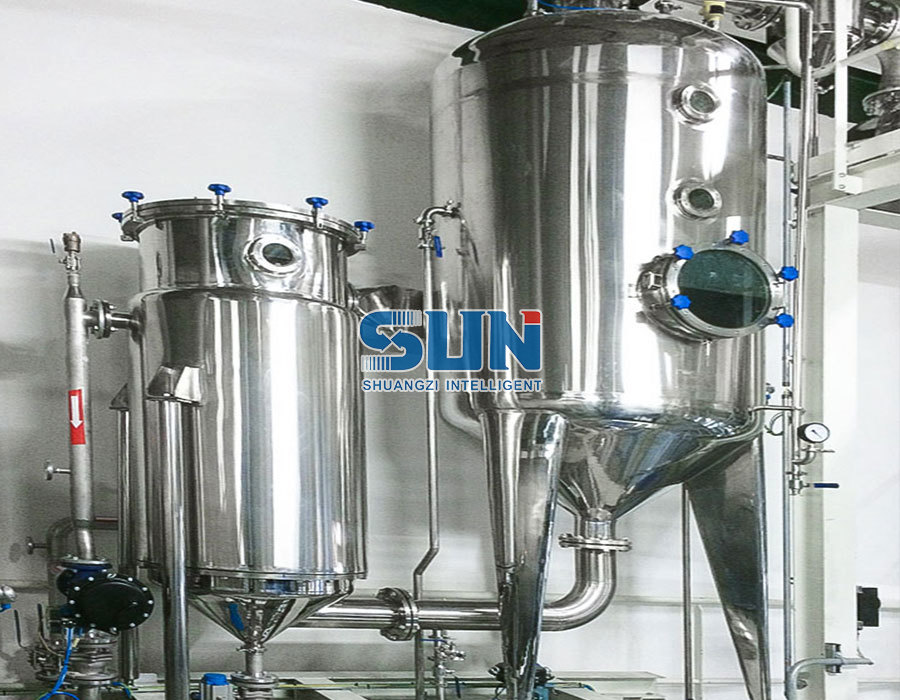
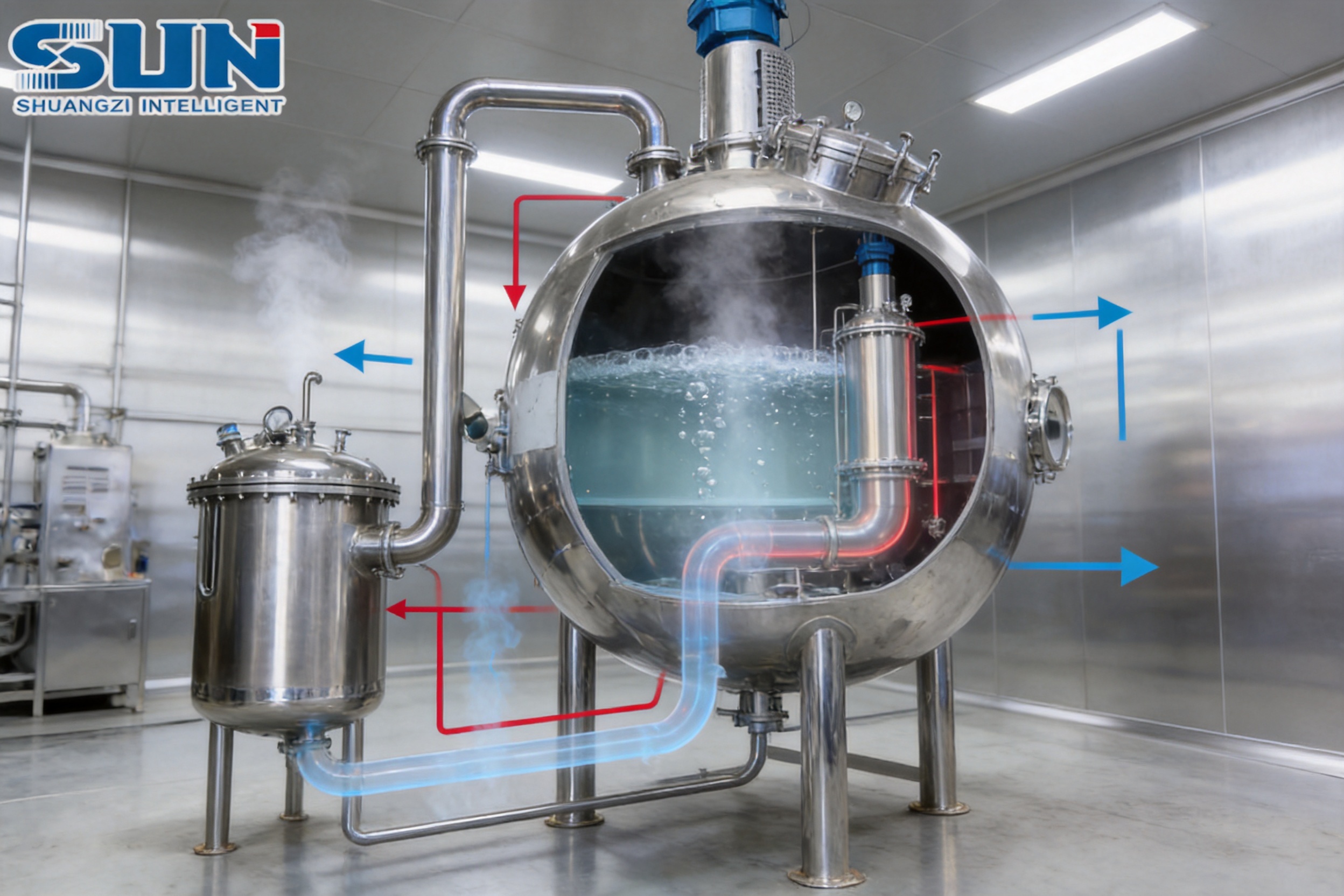
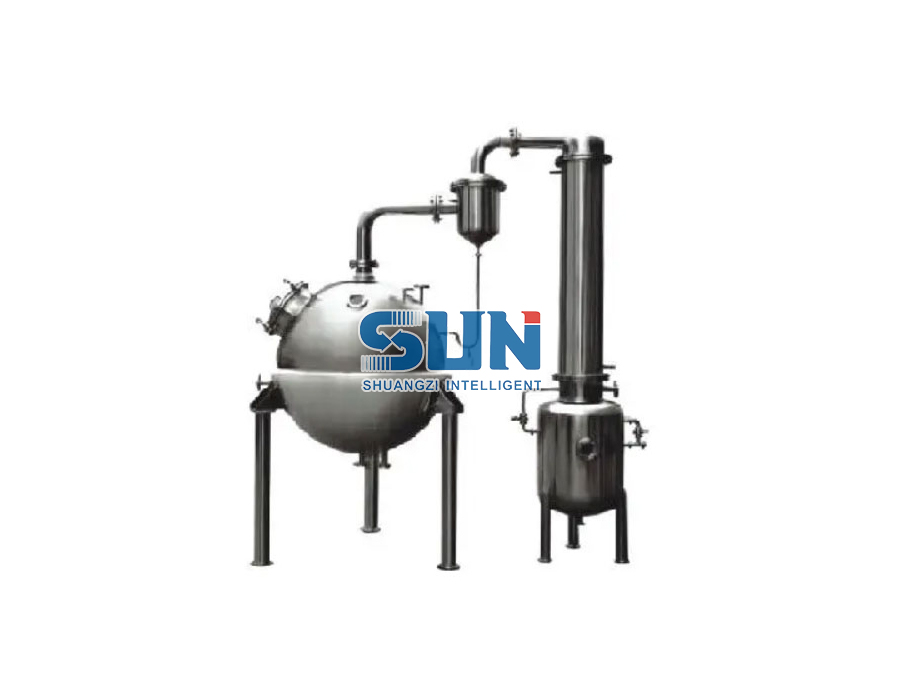
The spherical vacuum evaporator is designed for these requirements. Constructed primarily from 304 stainless steel, the equipment combines a spherical main tank, condenser, gas-liquid separator, and liquid receiving tank into one compact batch-processing system. Steam enters the jacket surrounding the main tank, while vacuum conditions reduce the boiling temperature of the product. This arrangement enables low-temperature evaporation for concentration and solvent recovery, making the unit particularly suitable for traditional Chinese medicine extracts, botanical extracts, fruit juice, pharmaceutical liquids, health-food materials, natural flavors, ethanol-containing solutions, and selected fine chemical streams.
Its principal value lies in the interaction between its geometry and its operating method. The spherical inner shell provides a comparatively large heating surface and promotes smooth circulation of the liquid. The vacuum environment lowers the boiling point, reducing thermal stress. The vapor path separates entrained droplets and directs condensable vapor to the condenser. The receiving tank collects recovered liquid or condensate in a controlled manner. Together, these features offer a practical alternative to conventional open boiling systems, basic jacketed tanks, and less integrated evaporation arrangements.
The equipment is supplied by Zhejiang Shuangzi Intelligent Equipment Co., Ltd., a Chinese engineering and equipment enterprise founded in 2007. The company focuses on process technology, automation engineering design, equipment manufacturing, matching procurement, installation, system integration, and turnkey project execution. Its experience covers plant extraction, biological fermentation, pharmaceutical engineering, natural food, energy conservation, environmental protection, evaporation, concentration, separation, crystallization, filtration, and related process systems.
This article examines the construction, operating principle, process advantages, manufacturing strengths, application scope, installation considerations, maintenance requirements, and selection criteria associated with the spherical vacuum evaporator.
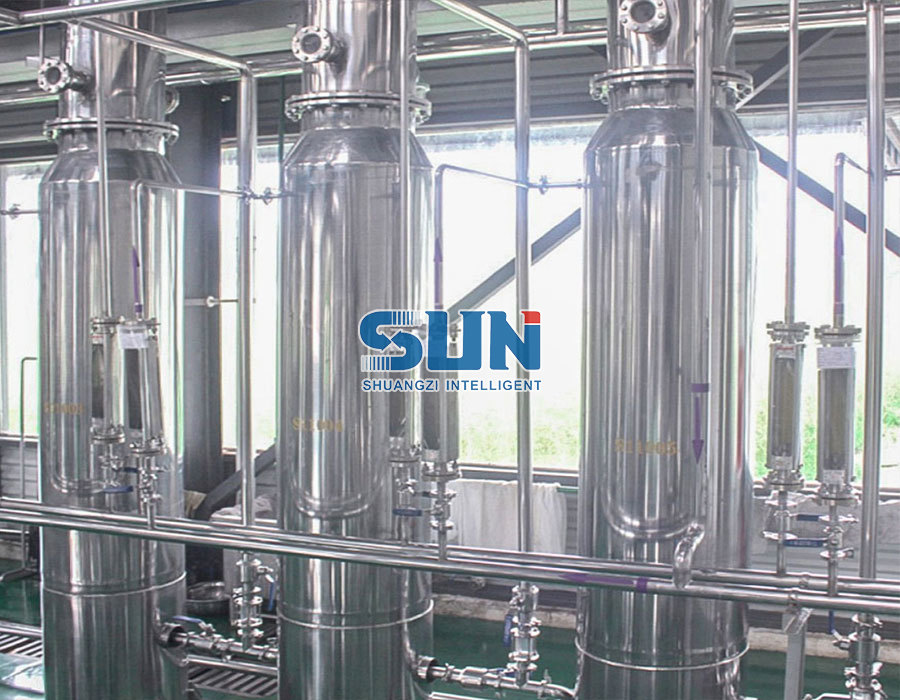
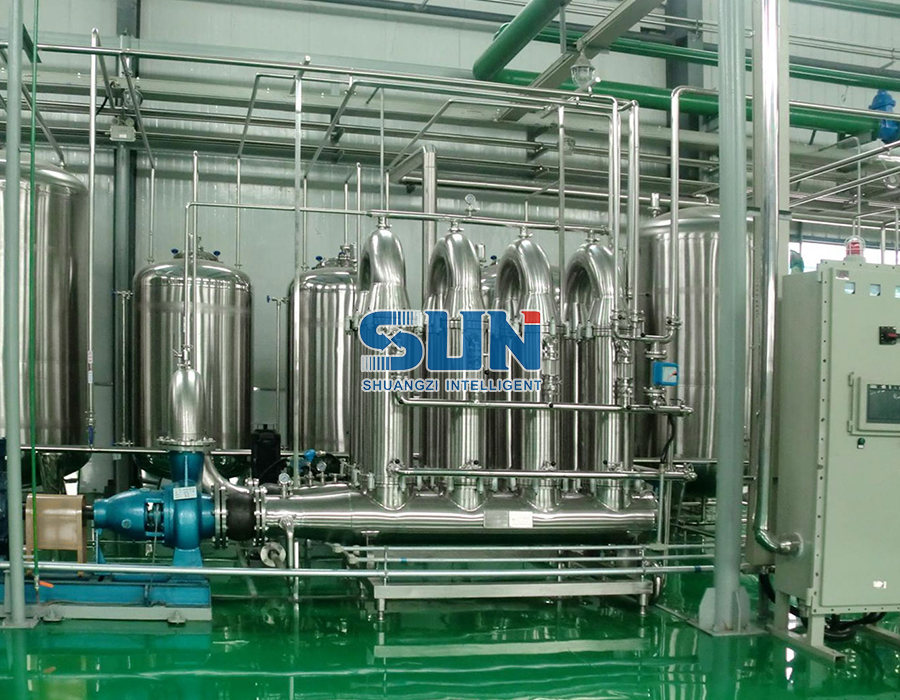
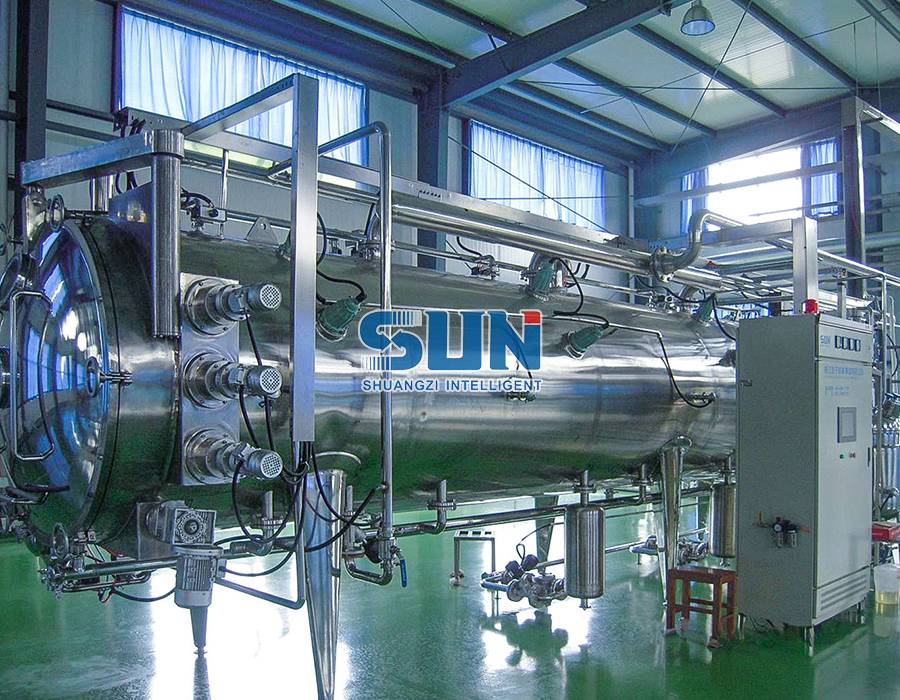
Spherical Vacuum Evaporator
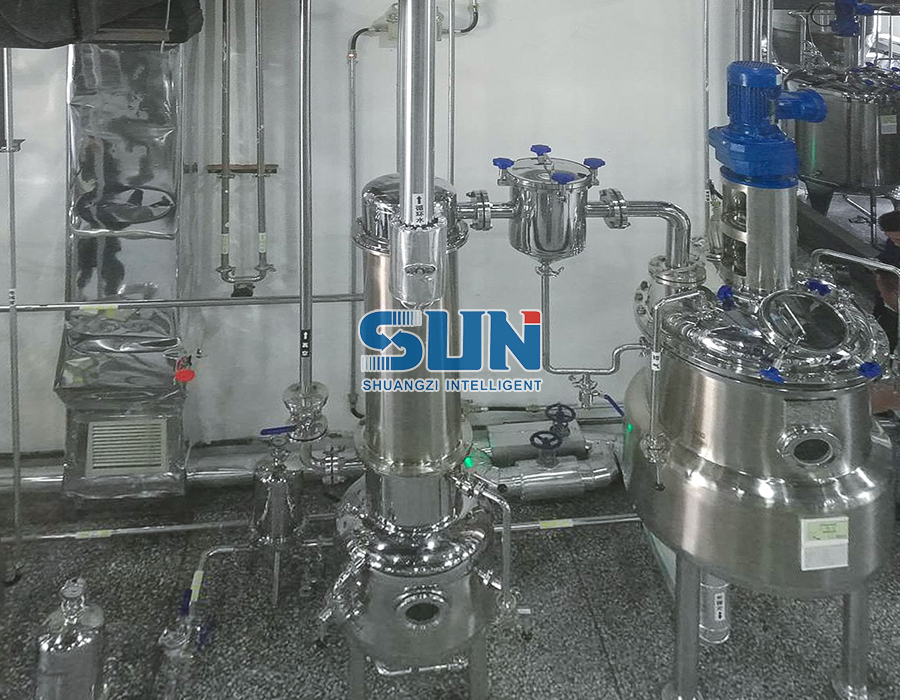
Equipment Construction and Main Assemblies
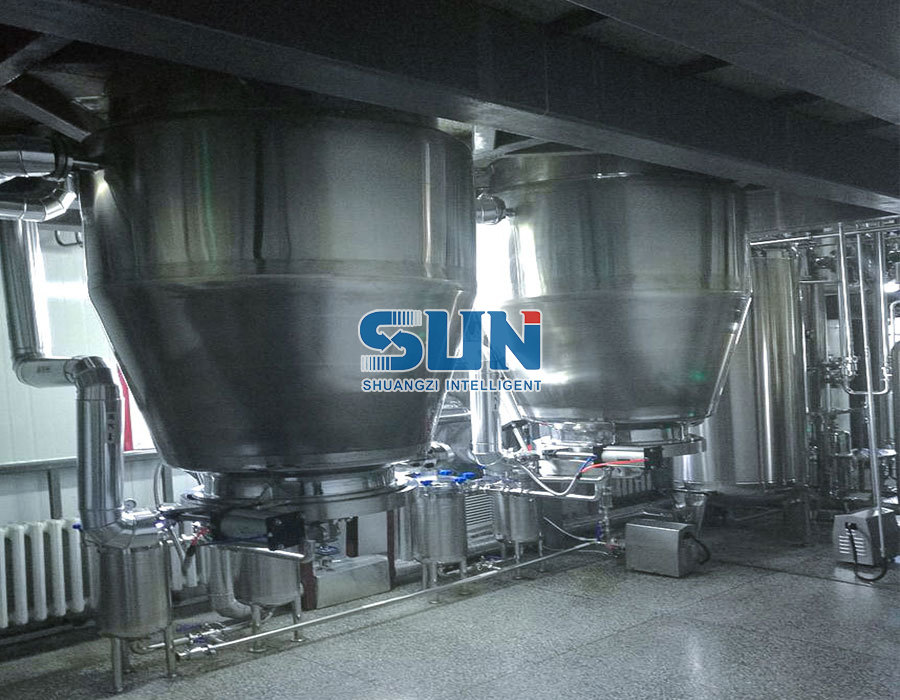
Spherical Main Tank
The spherical main tank is the central process chamber. Its rounded inner shell is designed to provide a broad heating area relative to the working volume. Compared with a simple flat-bottomed vessel, a spherical chamber can reduce sharp internal corners where solids or viscous materials may accumulate. The curved surface also supports more consistent liquid movement during heating and evaporation.
The main tank is manufactured from 304 stainless steel for general applications involving aqueous extracts, food materials, and many common process liquids. Stainless steel provides corrosion resistance, a smooth cleanable surface, and compatibility with hygienic production environments. The final material specification should nevertheless be confirmed against the chemical composition, chloride level, acidity, solvent type, and temperature of the intended product. Where a particular process requires higher corrosion resistance or special surface treatment, alternative materials or finishes may be evaluated during engineering design.
The tank incorporates a jacket into which steam is fed. Heat passes through the jacket and tank wall into the process liquid. Because the liquid is heated indirectly, the product does not come into direct contact with the heating medium. Indirect heating also makes it easier to regulate the thermal input through steam pressure and control valves.
Condenser
The condenser receives vapor generated in the main tank. Its purpose is to remove heat from the vapor and convert condensable components into liquid. Depending on the process, the condensate may be water, ethanol, another recoverable organic solvent, or a mixture requiring further separation. The condenser supports both environmental control and material recovery by reducing the amount of vapor discharged to downstream vacuum equipment or the surrounding area.
In solvent recovery applications, condenser performance is particularly important. Efficient vapor condensation can improve solvent yield, reduce raw-material losses, limit emissions, and reduce the load on the vacuum system. Actual recovery efficiency depends on vapor composition, cooling-water temperature, operating pressure, condenser area, non-condensable gas content, and the selected operating conditions.
Gas-Liquid Separator
The gas-liquid separator is positioned in the vapor-handling path to remove liquid droplets carried from the boiling material. During vacuum evaporation, foaming and entrainment can occur, especially with botanical extracts, protein-containing liquids, saponin-rich solutions, concentrated sugars, or other materials with surface-active components. A separator helps protect the condenser and vacuum line from excessive liquid carryover.
By reducing entrainment, the separator can also help preserve product yield. Valuable solids or active ingredients that are physically carried with the vapor may otherwise be deposited in downstream pipes or lost in the condensate. The separator therefore contributes to process cleanliness, product recovery, and stable operation.
Liquid Receiving Tank
The liquid receiving tank collects condensed liquid from the condenser. It provides a defined collection point for recovered solvent or condensate and can simplify transfer to storage, reuse, or additional purification. A separate receiving tank also allows the main evaporator to remain under controlled vacuum conditions while collected liquid is handled according to the process design.
The receiving arrangement can be adapted to the application. For food or pharmaceutical service, sanitary valves, cleanable connections, appropriate instrumentation, and compatible seals may be specified. For solvent recovery, grounding, ventilation, explosion-protection requirements, and compatible electrical components must be considered as part of the complete installation.
Operating Principle
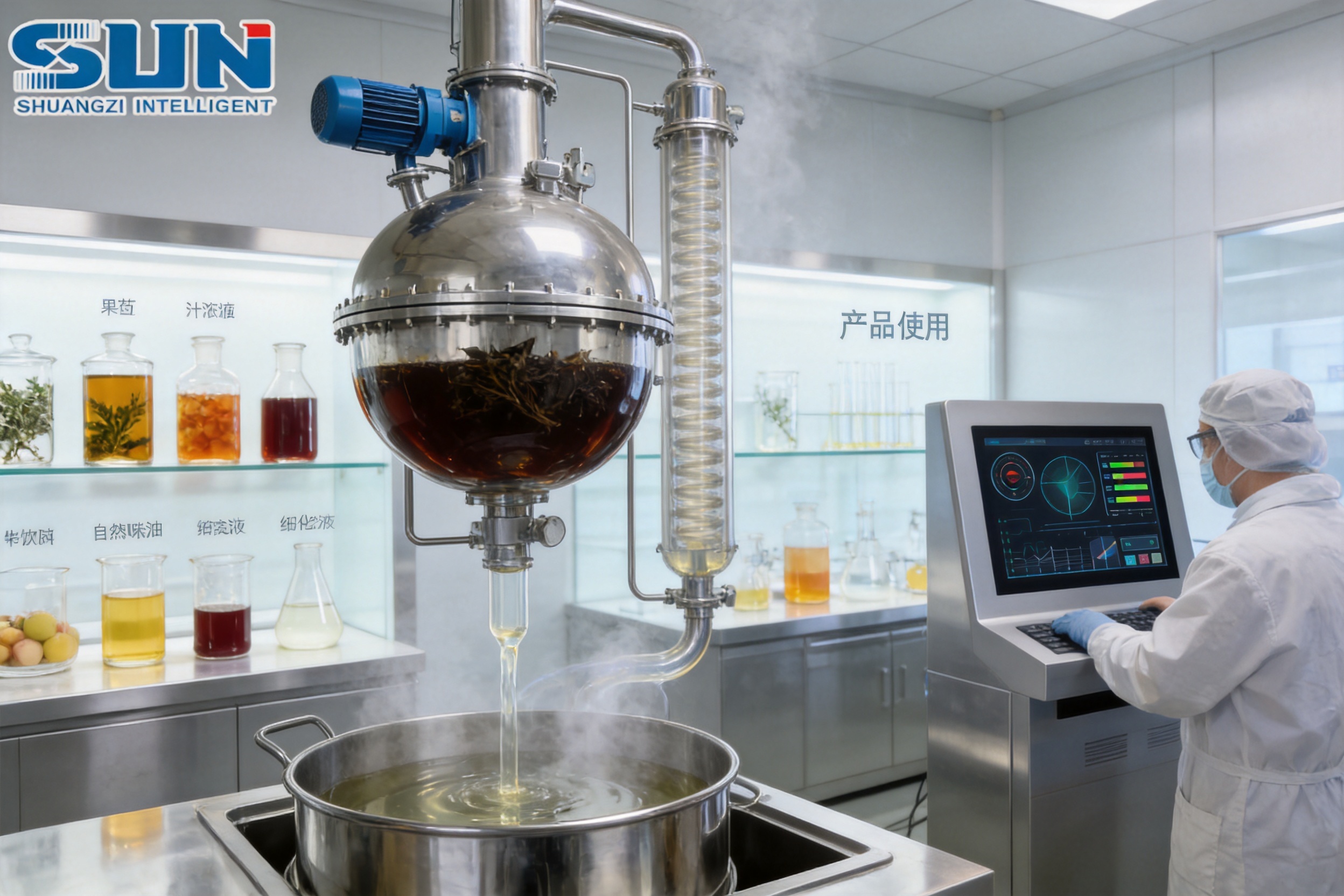
The spherical vacuum evaporator works through the combined effects of indirect steam heating and reduced operating pressure. Feed liquid is introduced into the spherical main tank. Steam enters the jacket and transfers heat through the stainless-steel wall. The vacuum system lowers the pressure above the liquid, reducing its boiling temperature. At the selected pressure and temperature, water or organic solvent vaporizes from the feed.
The generated vapor passes through the gas-liquid separation stage before entering the condenser. Droplets are removed as much as practical, and the vapor is cooled until condensable components become liquid. The liquid then flows into the receiving tank. Non-condensable gases continue toward the vacuum system, while the concentrated product remains in the main tank until the target solids content, viscosity, density, volume, or active-ingredient concentration is reached.
The process is generally operated in batches. Batch operation is valuable when raw materials vary in composition, when several products are processed using the same equipment, or when a plant handles moderate and small production volumes. Operators can load a defined quantity, establish vacuum and heating conditions, monitor the process, discharge the concentrate, and clean the system before the next batch.
Vacuum evaporation is especially useful when the product must be protected from high temperatures. Under atmospheric pressure, water boils at approximately 100 degrees Celsius at sea-level conditions. Under vacuum, the boiling temperature is reduced. The exact boiling point depends on pressure, dissolved solids, solvent composition, and product properties. Lower-temperature operation can reduce thermal degradation, color change, flavor loss, oxidation, and unwanted chemical reactions.
Process Sequence
A typical operating sequence begins with inspection and preparation. The operator confirms that the tank, piping, valves, condenser, receiving tank, vacuum line, steam supply, cooling-water circuit, and instruments are ready. The feed is charged into the main tank within the recommended working-volume range. Excessive filling can increase foaming and entrainment, while insufficient filling may reduce heating efficiency and make level control difficult.
After charging, the system is closed and the vacuum is established. Steam is then admitted gradually to the jacket. The controlled approach is important because rapid heating can cause sudden boiling, foaming, or unstable vapor flow. The operator observes pressure, temperature, vacuum level, condensate flow, and the appearance of the product.
As evaporation proceeds, solvent vapor is condensed and collected. The batch may be sampled periodically to determine concentration. Depending on the product, process endpoints may be based on refractive index, density, viscosity, moisture content, total solids, solvent content, volume reduction, or an active-ingredient assay. Once the endpoint is reached, steam is stopped, the system is stabilized, and the concentrate is discharged.
When organic solvents such as ethanol are processed, the system must be designed and operated with appropriate safety controls. These may include solvent-compatible gaskets, grounding and bonding, suitable electrical classification, pressure protection, vapor containment, ventilation, temperature monitoring, and procedures for preventing ignition sources. The evaporator itself should always be integrated into a site-specific safety system.
Key Advantages Over Conventional Alternatives
Low-Temperature Processing
The most important advantage of the equipment is its ability to concentrate under negative pressure at reduced temperature. Heat-sensitive materials can lose quality when exposed to high temperature. Traditional atmospheric boiling may produce darker color, cooked notes, loss of volatile flavor, degradation of biological activity, or reduced stability. Vacuum operation addresses part of this problem by lowering the boiling point and shortening the thermal burden on the product.
For traditional medicine extracts and botanical materials, preservation of active constituents is often a primary concern. Extracts may contain glycosides, alkaloids, polyphenols, essential-oil components, pigments, or other compounds with different thermal sensitivities. A lower-temperature process does not guarantee complete preservation of every compound, but it provides a gentler operating environment than direct atmospheric boiling and gives process engineers greater control over thermal exposure.
Large Effective Heating Area
The spherical inner shell offers a large heating area that supports efficient heat transfer. A larger effective area can help distribute heat more evenly and maintain a more stable evaporation rate. Compared with a basic vessel with a limited flat heating surface, the spherical design can reduce localized overheating and improve the use of the jacketed surface.
Heat-transfer performance remains dependent on many factors, including steam pressure, wall thickness, liquid viscosity, solids concentration, fouling, agitation or natural circulation, and the temperature difference between the jacket and product. The spherical design is therefore best understood as a structural advantage that supports uniform processing, rather than as a substitute for correct process design.
Improved Liquid Circulation
Liquid circulation is central to stable evaporation. If the product remains stagnant, some regions may become hotter or more concentrated than others. Localized concentration can increase viscosity and encourage fouling. The spherical geometry encourages movement throughout the liquid volume and helps expose more of the material to the heated wall.
Improved circulation can contribute to more consistent product quality from one part of the batch to another. It can also support more uniform heat transfer during the later stages of concentration, when the product becomes thicker and more difficult to process.
Reduced Wall Adhesion and Coking Risk
Extracts and concentrated food liquids may contain sugars, proteins, pigments, resins, starches, or other solids that can adhere to heated surfaces. As the attached material dries or overheats, it may form deposits or carbonized layers. These deposits reduce heat-transfer efficiency, increase cleaning time, and can affect the color or flavor of later batches.
The curved shell and even liquid circulation of the spherical evaporator are intended to reduce wall adhesion and material coking. No evaporator can eliminate fouling under all conditions, particularly when an operator exceeds the recommended concentration or temperature limits. However, a design that minimizes dead zones and severe local heating can make fouling less likely and cleaning more manageable.
Integrated Solvent Recovery
Many concentration processes use ethanol or another organic solvent during extraction. If the solvent is simply evaporated and discharged, the plant loses material, increases operating costs, and may create environmental or safety concerns. The spherical vacuum evaporator combines concentration with condensation and liquid collection, enabling organic solvent recovery within the same process arrangement.
Recovered solvent may be reused after quality verification or sent to additional purification. Reuse can lower solvent purchasing costs and reduce waste. The economic value depends on solvent price, recovery rate, product throughput, solvent purity requirements, cooling costs, vacuum energy, and the number of recovery cycles that can be achieved.
Protection of Flavor and Active Components
Natural flavors, fruit juices, botanical extracts, and health-food liquids may contain volatile aromatic compounds that are easily lost during strong boiling. Vacuum concentration reduces the boiling temperature and can help retain original flavor characteristics. The same principle supports the preservation of active ingredients in pharmaceutical and traditional medicine extracts.
Product retention depends on more than the evaporator. Feed preparation, residence time, vacuum stability, oxygen exposure, condenser design, and post-concentration handling also influence final quality. The equipment provides a process platform that allows these factors to be managed more carefully.
Compact Batch Configuration
The main tank, condenser, gas-liquid separator, and receiving tank are arranged as a coordinated unit. This integrated structure can reduce the footprint and simplify the connection of major process components. For pilot plants, research facilities, contract manufacturers, and medium-sized production workshops, compact equipment can be valuable where floor space and utilities are limited.
A compact system can also reduce the length of vapor piping between the evaporator and condenser. Shorter piping may help reduce hold-up volume, simplify cleaning, and minimize the opportunity for condensate accumulation. The final layout must still provide safe access for operation, inspection, maintenance, and lifting.
Lower Energy Consumption Potential
Vacuum operation can support energy-efficient concentration by allowing evaporation at lower product temperatures. The unit also uses indirect steam heating and recovers condensable vapor as liquid. Actual energy consumption varies with feed volume, initial and final concentration, solvent type, steam pressure, cooling-water temperature, vacuum level, heat losses, and batch cycle time.
Compared with uncontrolled atmospheric boiling, the system can potentially reduce unnecessary thermal input and avoid repeated heating caused by poor circulation or inefficient vapor handling. The company also identifies energy conservation as one of its engineering fields, allowing evaporation equipment to be evaluated as part of a wider plant utility and process-efficiency strategy.
Simple Cleaning and Maintenance
The equipment uses a relatively straightforward arrangement without a complex internal mechanical drive system in the main tank. Its compact configuration and stainless-steel process surfaces support routine cleaning and inspection. Fewer internal components can reduce mechanical maintenance requirements and simplify access to the primary process chamber.
Cleaning procedures must be established according to the material being processed. Water-soluble residues may require warm-water or alkaline cleaning, while resinous or solvent-based residues may need a compatible cleaning agent. Pharmaceutical and food applications require documented cleaning procedures, material compatibility checks, and, where applicable, validation of cleaning effectiveness.
Application Areas
Traditional Chinese Medicine Extracts
Traditional Chinese medicine extracts often contain complex mixtures of dissolved solids, suspended particles, polysaccharides, pigments, and thermally sensitive active compounds. After extraction and filtration, the liquid may require concentration before drying, formulation, or filling. The spherical vacuum evaporator provides a controlled batch method for reducing water content while limiting excessive heat exposure.
The separator is valuable in these applications because some herbal extracts foam or carry solids into the vapor line. Operators may need to control feed level, vacuum rate, steam input, and endpoint concentration carefully. Depending on the extract, a pre-filtration or clarification stage may also be necessary.
Botanical and Plant Extracts
Botanical extracts are used in dietary supplements, cosmetics, natural products, flavors, and pharmaceutical preparations. Their composition can vary significantly based on plant species, harvest conditions, extraction solvent, and upstream processing. Batch vacuum concentration allows operating conditions to be adjusted for each extract rather than forcing all materials through one fixed atmospheric process.
The gentle heating method can help protect color, aroma, and functional constituents. For extracts containing valuable volatile components, the vapor and condensate streams should be evaluated to determine whether additional recovery, fractionation, or recombination is required.
Fruit Juice and Natural Food Liquids
Fruit juice concentration is sensitive to flavor loss, browning, oxidation, and cooked taste. Vacuum evaporation can reduce boiling temperature and provide a more suitable environment for concentrating selected juices and natural food liquids. The spherical tank also helps accommodate batch production, seasonal raw materials, and products manufactured in moderate volumes.
Food applications require careful attention to hygienic design. Product-contact surfaces, valves, gaskets, sampling points, drainability, and cleaning procedures should be selected according to the applicable food regulations and the requirements of the end product.
Pharmaceutical Liquids
Pharmaceutical production may involve aqueous extracts, intermediates, solvent-containing solutions, and concentrated formulations. The equipment can be configured as part of a process line that includes extraction, filtration, separation, drying, blending, and filling. Low-temperature concentration is useful where heat exposure could affect potency, stability, or appearance.
Pharmaceutical users may require detailed documentation, traceability of materials, surface-finish specifications, calibration records, welding records, pressure-test results, and factory acceptance testing. These requirements should be established before design and fabrication begin.
Health Food and Nutraceutical Materials
Health-food manufacturers often process plant extracts, fruit-derived liquids, functional ingredients, and nutritional solutions. These products may need concentration before spray drying, vacuum drying, granulation, or final formulation. A batch evaporator can support product development and commercial production without requiring a large continuous evaporation line.
Preserving flavor and reducing thermal damage can be important for consumer acceptance. Solvent recovery can also improve the economics of botanical extraction when ethanol is used upstream.
Natural Flavor Production
Natural flavor streams may include volatile compounds that are lost during atmospheric boiling. A vacuum evaporator provides a lower-temperature route for concentrating the non-volatile portion while supporting recovery of condensable components. The actual flavor-retention strategy may involve separate collection of fractions, controlled residence time, and carefully selected vacuum and cooling conditions.
Fine Chemical Processing
Fine chemical manufacturers may use evaporation for volume reduction, solvent exchange, intermediate concentration, or solvent recycling. The equipment can be useful for medium and small batches where flexibility is more important than the high throughput of a large continuous evaporator. Material compatibility, solvent properties, vapor pressure, flammability, and corrosion resistance must be evaluated for each chemical process.
Technical Characteristics and Selection Considerations
The basic characteristics identified for this product are summarized below. Because evaporation performance depends strongly on the feed material and operating conditions, final specifications should be confirmed through process calculations, pilot testing, or a technical proposal.
| Item | General Description | Process Significance |
|---|---|---|
| Main process vessel | Spherical inner shell with jacketed heating | Supports broad heating area and even liquid circulation |
| Primary material | 304 stainless steel | Provides a smooth, corrosion-resistant process surface for many general applications |
| Operating mode | Batch vacuum evaporation | Suitable for flexible production, pilot work, and medium or small-scale processing |
| Heating medium | Steam supplied to the jacket | Provides indirect and controllable heat transfer |
| Vapor handling | Gas-liquid separation followed by condensation | Reduces entrainment and supports condensate or solvent recovery |
| Typical duties | Water concentration and organic-solvent distillation or recovery | Combines volume reduction with recovery of valuable liquid components |
| Typical materials | TCM extracts, botanical extracts, fruit juice, pharmaceutical liquids, health-food solutions, flavors, and fine chemicals | Especially appropriate for heat-sensitive or value-added liquid products |
When selecting the unit, users should provide the feed volume per batch, initial and final solids content, solvent composition, density, viscosity, foaming tendency, desired batch cycle time, operating temperature, available steam pressure, cooling-water conditions, vacuum requirements, and cleaning method. These details determine the required heating area, condenser capacity, receiver volume, vacuum-system configuration, valve size, and instrumentation.
Product behavior can change substantially during concentration. A liquid that flows easily at the beginning of a batch may become highly viscous near the endpoint. Foaming may increase when the solids content rises. Some extracts may form suspended particles or deposits. A sound design should consider the most difficult stage of the batch rather than only the initial feed condition.
Manufacturing and Engineering Strengths
Process Technology as the Starting Point
The company’s stated business model is centered on EPC and EPCM services rather than isolated equipment sales alone. This means that equipment design can be connected to process technology, automation, procurement, installation, commissioning, and system integration. For customers, this approach can reduce the risk of selecting a vessel without fully considering upstream and downstream requirements.
A concentration system must work with the extraction, filtration, storage, drying, filling, solvent-handling, utility, and waste-treatment systems around it. The company’s experience in plant extraction, fermentation, pharmaceutical engineering, natural food, environmental protection, and energy conservation provides a broader engineering context for designing such connections.
Integrated Manufacturing Capability
The company reports a floor area of approximately 16,706 square meters and a structure area of approximately 17,800 square meters. It operates production workshops, a pilot production workshop, and an R&D platform intended to support automation and GMP-related requirements. This combination allows equipment concepts to be evaluated at pilot scale before larger systems are finalized.
In-house or closely coordinated manufacturing capability can improve control over fabrication quality, dimensional accuracy, component matching, and delivery coordination. It also allows engineering teams to communicate directly with production personnel when changes are needed for a particular process or installation site.
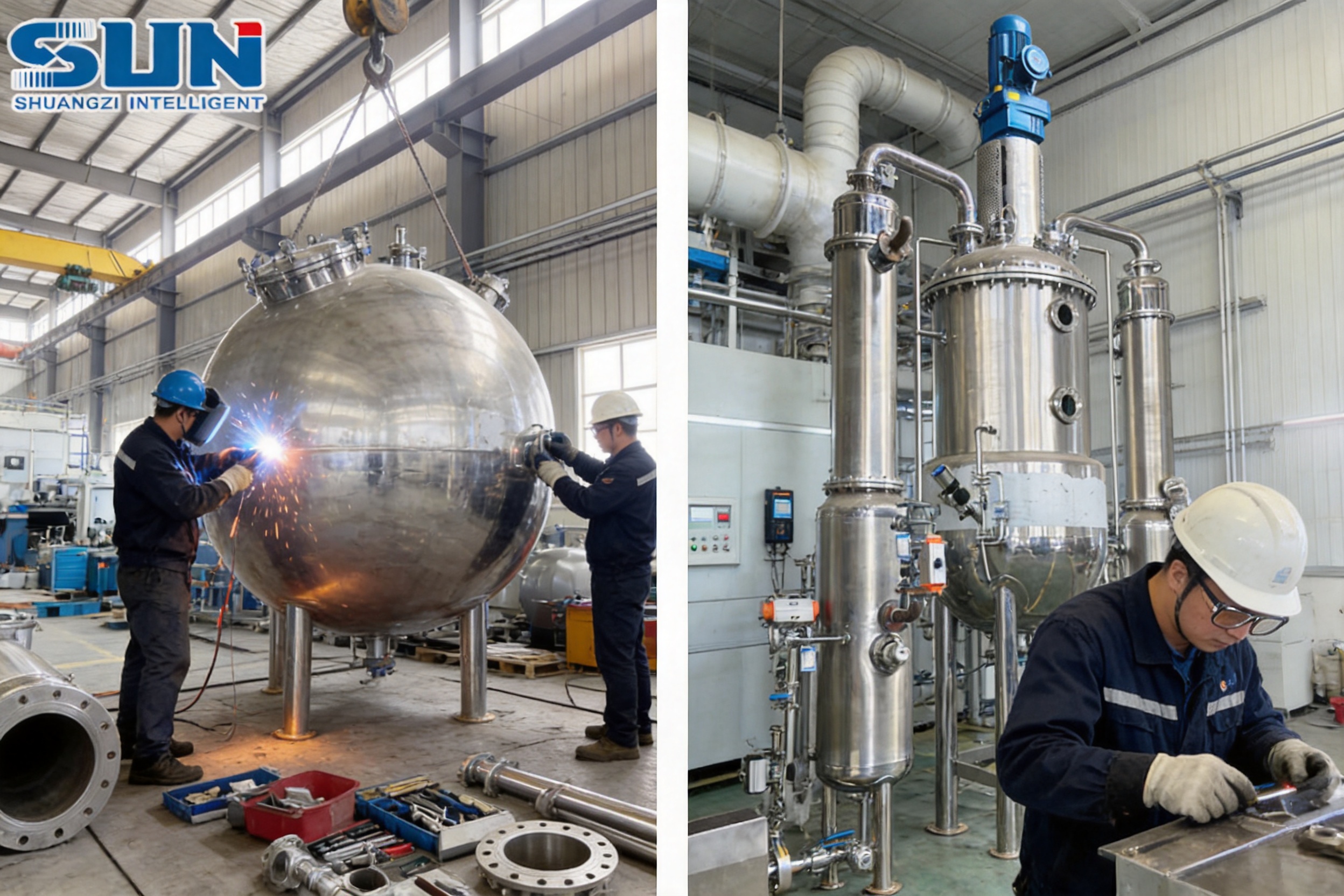
Advanced Welding and Finishing Equipment
The company has introduced plasma argon arc welding machines, plasma cutting machines, CAM CNC machining centers, and other advanced manufacturing equipment. These tools are significant for stainless-steel process equipment because weld quality, surface condition, dimensional consistency, and internal cleanliness directly influence hygienic performance and service life.
Plasma argon arc welding can provide controlled welding conditions for stainless-steel components when the procedure, shielding, fit-up, filler material, and operator qualification are appropriate. Good welding practice reduces the risk of cracks, porosity, incomplete penetration, discoloration, and crevices. After welding, finishing and passivation procedures may be required to restore corrosion resistance and create a smooth surface suitable for cleaning.
Plasma cutting supports accurate preparation of plates and openings. CAM CNC machining improves repeatability for flanges, ports, supports, connection components, and other parts requiring controlled dimensions. Consistent fabrication is particularly important when several vessels, tanks, condensers, and piping assemblies must be connected into one integrated system.
Research, Development, and Pilot Testing
Pilot testing is an important advantage when processing difficult extracts or unfamiliar formulations. Laboratory data may not accurately predict foaming, viscosity changes, entrainment, fouling, or solvent recovery behavior at production scale. A pilot platform allows process engineers to observe the feed under vacuum, determine practical heating conditions, measure concentration rates, and evaluate the resulting concentrate and recovered solvent.
Pilot work can also support scale-up calculations. Useful measurements may include evaporation rate, steam consumption, cooling duty, vacuum stability, condensate composition, solids recovery, batch duration, and cleaning performance. The results can be used to refine the design of a larger machine or complete production line.
Automation and System Integration
The evaporator can be incorporated into an automated process system with temperature, pressure, vacuum, level, flow, and valve control. The exact degree of automation depends on the customer’s production philosophy and regulatory requirements. Basic systems may use local instruments and manual valves, while advanced systems may connect to a programmable logic controller, supervisory control system, data historian, recipe management system, or plant-wide manufacturing execution platform.
Automation can improve repeatability by controlling the sequence of charging, vacuum establishment, steam admission, evaporation, condensate collection, endpoint sampling, and discharge. It can also provide alarms for high temperature, loss of vacuum, receiver overfill, low cooling flow, or abnormal pressure conditions.
Quality, Sanitation, and Safety
Quality begins with suitable material selection and fabrication. Stainless-steel surfaces should be smooth, accessible, and free from avoidable crevices. Product-contact welds should be inspected and finished according to the application. Gaskets and valve seats must be compatible with the temperature, solvent, cleaning agents, and product chemistry.
For food and pharmaceutical applications, drainability and cleanability are essential. The system should be designed to minimize retained liquid after discharge and cleaning. Spray devices, clean-in-place connections, manual access ports, or other cleaning provisions may be included depending on the project. Cleaning validation, if required, should be planned during design rather than added after installation.
Vacuum equipment requires protection against implosion, overpressure, and unexpected pressure changes. Appropriate vacuum-rated vessels, relief devices, gauges, interlocks, and operating procedures should be used. The system should not be operated outside the pressure and temperature limits established by the manufacturer and applicable regulations.
Organic solvent processing introduces additional hazards. Ethanol and other solvents can form flammable vapor-air mixtures. The complete installation may require hazardous-area electrical design, grounding, bonding, ventilation, solvent-compatible materials, vapor detection, fire protection, and appropriate operating procedures. Local regulations and the customer’s safety department should review the design before procurement and commissioning.
Steam systems also require careful attention. Steam pressure must remain within the jacket design limits. Traps, drains, isolation valves, pressure controls, and condensate handling should be correctly arranged. Operators should be trained to avoid water hammer, thermal shock, and unsafe opening of equipment under pressure or vacuum.
Installation and Commissioning
Before installation, the customer should prepare a level foundation or suitable support structure, adequate access for delivery and lifting, steam and condensate connections, cooling-water supply and return, vacuum-system connections, electrical power, drainage, ventilation, and safe operating space. The layout should permit inspection of the main tank, condenser, separator, receiving tank, valves, instruments, and utility connections.
Installation should verify that piping is properly supported and does not impose excessive loads on vessel nozzles. Vacuum lines should be arranged to minimize liquid traps and unnecessary pressure loss. Condensate lines should be sized for the expected flow and routed to prevent backflow. Cooling-water connections should allow isolation and cleaning of the condenser.
Commissioning generally begins with mechanical inspection, internal cleaning, leak testing, instrument verification, and utility checks. The vacuum system can be tested without product to confirm that the target pressure is attainable and stable. The steam jacket should be checked for leaks and proper condensate drainage. The condenser should be tested with cooling water, and the receiving tank should be inspected for correct liquid collection.
A water trial or product-simulating trial can then be conducted. This allows the project team to verify liquid circulation, heating response, vapor flow, separator performance, condenser operation, receiver collection, discharge, and control logic. For solvent systems, commissioning procedures must incorporate the required safety controls and may require inerting or other precautions.
Factory acceptance testing and site acceptance testing can be documented through agreed protocols. Typical records include dimensional checks, weld inspections, pressure or leak-test results, surface-finish records, instrument calibration, control-system verification, operating observations, and punch-list closure.
Maintenance and Operating Best Practices
Routine maintenance begins with daily or batch-by-batch inspection. Operators should check for unusual vibration, leaks, abnormal pressure, unstable vacuum, blocked lines, poor condenser performance, or unexpected changes in condensate appearance. Any evidence of product carryover into the vapor line should be investigated promptly.
The main tank should be cleaned after each production campaign according to the validated or approved procedure. Residues become more difficult to remove when allowed to dry on heated surfaces. Cleaning should include the tank, vapor line, separator, condenser, receiver, valves, and sampling points that contact the product or condensate.
Steam traps and jacket drains should be inspected to ensure that condensate is removed effectively. Poor condensate drainage can reduce heating performance and create unstable temperature behavior. Pressure gauges, vacuum gauges, temperature sensors, level instruments, control valves, and safety devices should be calibrated or function-tested at planned intervals.
The condenser should be monitored for fouling, scaling, and reduced cooling performance. Cooling-water quality can strongly affect heat-transfer efficiency. If the process uses hard water or contaminated water, deposits may accumulate on the heat-transfer surface. Cleaning frequency should be established from operating experience and inspection results.
Seals and gaskets should be replaced when they show swelling, hardening, cracking, leakage, or solvent incompatibility. For organic solvent service, only materials approved for the solvent and operating temperature should be used. Spare parts should be identified by equipment tag and specification to avoid unsuitable substitutions.
Operators should avoid overfilling the tank, applying steam too rapidly, or setting vacuum conditions that cause violent boiling. Stable operation is usually achieved by gradually adjusting steam and vacuum while observing the product. If foaming increases, operators may need to reduce heat input, adjust the vacuum rate, lower the fill level, or use a process-approved antifoam strategy.
Why the Equipment Fits Medium and Small-Scale Production
Large continuous evaporators can be highly effective for very high throughput, but they may be unnecessarily complex or expensive for facilities that process varied products in moderate batches. The spherical vacuum evaporator provides a more flexible alternative for companies that need to switch between formulations, work with seasonal materials, conduct pilot production, or recover solvents from several extraction campaigns.
Batch operation also supports process development. A manufacturer can test different feed concentrations, vacuum levels, heating rates, endpoints, and recovery strategies without redesigning an entire continuous line. This flexibility is valuable for botanical products and pharmaceutical intermediates, where raw-material characteristics may change from batch to batch.
The compact design can reduce the space needed for installation. Its integrated assemblies also simplify the relationship between evaporation, separation, condensation, and receiving. These benefits are especially relevant for pilot workshops, research facilities, specialty manufacturers, and plants expanding their existing extraction or fermentation capabilities.
Turnkey Project Capability
The company’s engineering scope extends beyond the spherical evaporator itself. It can provide process design, equipment design, installation, line debugging, matching procurement, equipment system integration, and turnkey project services. This capability is useful when a customer needs a complete plant rather than an individual machine.
A turnkey extraction or concentration project may include raw-material handling, extraction tanks, filtration, separation, vacuum concentration, solvent recovery, drying, storage, transfer, cleaning, utilities, automation, and packaging interfaces. The evaporator can be selected and sized according to the complete material balance rather than treated as an isolated component.
For biological and fermentation projects, the company’s broader product range includes fermentation system equipment, filtration equipment, containers, drying equipment, separation systems, crystallization equipment, and related process units. This cross-disciplinary experience can support projects in which fermentation broth, extracts, or downstream liquids require concentration or solvent removal.
Turnkey execution also allows responsibility for installation coordination and commissioning to be centralized. Customers can work with one engineering partner for process discussions, equipment fabrication, site installation, startup support, and operator training. The precise scope should be defined contractually, including civil works, utilities, validation documentation, performance guarantees, spare parts, and after-sales service.
Recommended Customer Evaluation Process
Customers considering the equipment should begin by identifying the material and the desired result. Important questions include whether the process removes water, ethanol, or another solvent; whether the final product is a liquid concentrate or an intermediate for drying; whether aroma recovery is important; whether the feed foams; and whether the product contains suspended solids.
The next step is to define capacity. Feed volume per batch, number of batches per day, desired cycle time, and production schedule determine whether one unit is sufficient or whether several units should operate in parallel. Seasonal production may favor multiple flexible batch vessels instead of one very large machine.
Process samples should be evaluated whenever possible. A pilot trial can reveal evaporation behavior that cannot be predicted reliably from viscosity or solids data alone. The trial should measure the final product quality as well as evaporation rate. A technically fast process is not successful if it damages color, flavor, potency, or solvent purity.
Utility availability should also be reviewed. Steam pressure, steam quality, cooling-water temperature, vacuum-pump type, electrical classification, drainage, and ventilation all affect performance. The supplier should receive accurate site information before issuing a final technical design.
Finally, the customer should evaluate documentation and support. For regulated applications, this may include material certificates, welding documentation, inspection records, pressure-test reports, electrical drawings, control-system descriptions, operating manuals, cleaning recommendations, spare-parts lists, and commissioning protocols.
Q&A
What is a spherical vacuum evaporator used for?
It is used for batch concentration of aqueous or solvent-containing liquids and for recovery of condensable organic solvents. Typical materials include traditional medicine extracts, botanical extracts, fruit juice, pharmaceutical liquids, health-food solutions, natural flavors, and fine chemical products.
How does vacuum operation protect heat-sensitive products?
Vacuum reduces the pressure above the liquid, which lowers the boiling temperature. The product can therefore evaporate at a lower temperature than it would under atmospheric conditions. This can reduce thermal degradation and help preserve flavor, color, and active ingredients, although final results depend on the material and operating parameters.
What are the main assemblies of the equipment?
The principal assemblies are the spherical main tank, condenser, gas-liquid separator, and liquid receiving tank. The main tank performs indirect steam heating and evaporation, the separator reduces liquid carryover, the condenser converts vapor into liquid, and the receiving tank collects condensate or recovered solvent.
Why is the inner shell spherical?
The spherical inner shell provides a comparatively large heating area and supports smooth liquid circulation. Its curved form can reduce sharp corners and stagnant regions, helping to limit wall adhesion, localized overheating, and material coking.
Can the evaporator recover ethanol?
Yes, the system is intended to support ethanol and other organic-solvent distillation and recovery when correctly configured. Recovery performance depends on solvent concentration, vapor composition, condenser capacity, cooling conditions, vacuum level, and the design of the complete solvent-handling system.
Is 304 stainless steel suitable for all chemical products?
304 stainless steel is suitable for many general aqueous, food, extract, and pharmaceutical applications, but it is not universally suitable for every chemical. Acidity, chloride content, solvent chemistry, temperature, and cleaning agents must be reviewed. A different material or surface treatment may be required for corrosive service.
Is the equipment continuous or batch type?
The described configuration is a batch evaporator. Batch operation provides flexibility for medium and small production volumes, variable raw materials, product development, and facilities that manufacture several products on the same equipment.
How can foaming be controlled?
Foaming can be managed through appropriate fill level, gradual steam admission, controlled vacuum adjustment, suitable vapor-line sizing, gas-liquid separation, and process-approved antifoam methods where permitted. Pilot testing is recommended for strongly foaming extracts or food liquids.
Can it be integrated into an automated production line?
Yes. The unit can be incorporated into an automated system using temperature, pressure, vacuum, level, flow, and valve control. The automation level can range from local manual operation to PLC-based sequencing and connection with a wider plant control system.
What information is needed for equipment selection?
Suppliers generally need feed volume, initial and final concentration, solvent composition, viscosity, density, foaming tendency, desired batch time, operating temperature, steam pressure, cooling-water conditions, vacuum requirements, cleaning method, and applicable hygiene or safety standards.
What does turnkey project support include?
Turnkey support may include process design, equipment design, matching procurement, fabrication, installation, system integration, line debugging, commissioning, and operator support. The exact scope depends on the contract and the requirements of the project.
Conclusion
The spherical vacuum evaporator is a practical concentration and solvent-recovery solution for manufacturers that need gentle thermal treatment, flexible batch operation, and an integrated vapor-handling system. Its 304 stainless-steel construction, spherical heated shell, condenser, gas-liquid separator, and receiving tank work together to support low-temperature evaporation and efficient recovery of condensable liquids.
Compared with basic atmospheric boiling equipment, the system offers a lower-temperature operating route that is better suited to heat-sensitive extracts, flavors, fruit juice, pharmaceutical liquids, and health-food materials. Its large heating area and smooth liquid circulation can improve heat distribution and help reduce wall adhesion and coking. Its integrated condenser and receiving tank also make it suitable for ethanol and other organic-solvent recovery, potentially reducing material loss and production costs.
The equipment’s value is reinforced by the manufacturer’s broader engineering capabilities. Zhejiang Shuangzi Intelligent Equipment Co., Ltd. combines process technology, automation engineering, stainless-steel equipment manufacturing, pilot production, R&D, installation, system integration, and turnkey project execution. Its reported use of plasma argon arc welding, plasma cutting, CAM CNC machining, and advanced finishing equipment supports the fabrication of process systems requiring accuracy, cleanability, and reliable assembly.
Successful application still depends on correct sizing, material compatibility, vacuum and condenser design, safety controls, cleaning procedures, and commissioning. When these factors are addressed through process evaluation and engineering collaboration, the spherical vacuum evaporator can serve as a dependable core unit for extraction, pharmaceutical, biotechnology, natural food, flavor, and fine chemical production.
References
1. General principles of vacuum evaporation and indirect steam heating in process industries.
2. Stainless-steel equipment design practices for food, pharmaceutical, botanical, and chemical processing.
3. Fundamentals of heat transfer, vapor condensation, and gas-liquid separation in batch evaporation systems.
4. Process engineering considerations for ethanol and organic-solvent recovery.
5. Hygienic equipment design, cleaning, sanitation, and maintenance practices for liquid-processing facilities.
6. Zhejiang Shuangzi Intelligent Equipment Co., Ltd. Product and company information supplied for this article.