
 英语
英语 俄语
俄语Content
- 1 Product Overview and Industrial Purpose
- 2 Core Technical Parameters
- 3 How the Flash Evaporation Principle Works
- 4 Major Advantages Over Conventional Concentration Equipment
- 5 Key Components and Their Functions
- 6 Applications in Plant Extraction Projects
- 7 Applications in Bio-Fermentation Projects
- 8 Applications in Western Medicine Synthesis and Pharmaceutical Engineering
- 9 Applications in Food Projects
- 10 Applications in Turnkey Projects
- 11 Advanced Manufacturing Processes and Quality Strengths
- 12 Why Stainless Steel Construction Matters
- 13 Operational Benefits for Production Teams
- 14 Comparison With Common Competitor Solutions
- 15 Customization for Different Materials
- 16 Cleaning, Maintenance, and Long-Term Reliability
- 17 Project Support and Company Strength
- 18 Selection Considerations for Buyers
- 19 Q&A Section
- 19.1 Question 1: What is the main function of the Stainless Steel Vacuum Flash Evaporator?
- 19.2 Question 2: Why is the equipment suitable for heat-sensitive materials?
- 19.3 Question 3: What industries can use this evaporator?
- 19.4 Question 4: What is the available evaporation capacity?
- 19.5 Question 5: What are the core components of the system?
- 19.6 Question 6: How does it compare with ordinary evaporators?
- 19.7 Question 7: Can the evaporator recover organic solvents?
- 19.8 Question 8: Is the equipment suitable for turnkey projects?
- 19.9 Question 9: Why is stainless steel important?
- 19.10 Question 10: What information should a buyer provide before selecting a model?
- 20 Conclusion
- 21 References
- 22 Product: Stainless Steel Vacuum Flash Evaporator
Modern liquid concentration is no longer judged only by evaporation speed. In plant extraction, bio-fermentation, pharmaceutical processing, food production, solvent recovery, and environmental reduction projects, manufacturers must concentrate valuable materials while protecting heat-sensitive components, reducing energy consumption, maintaining hygienic standards, and keeping production stable over long operating cycles. The Stainless Steel Vacuum Flash Evaporator is designed for exactly these requirements. It uses the flash evaporation principle to remove water or organic solvents rapidly under vacuum conditions, allowing liquid materials to be concentrated efficiently at relatively low temperatures.
This equipment is especially valuable when the product contains nutrients, active pharmaceutical ingredients, botanical compounds, flavors, proteins, enzymes, fermentation metabolites, or other components that may degrade under prolonged heating. By heating the material close to its boiling point and then sending it into a low-pressure flash chamber, the solvent evaporates almost instantly. The sudden vaporization removes heat from the material, lowers its temperature quickly, and helps prevent thermal damage. The vapor is then condensed and recovered, while the concentrated liquid continues to the next process step or collection system.
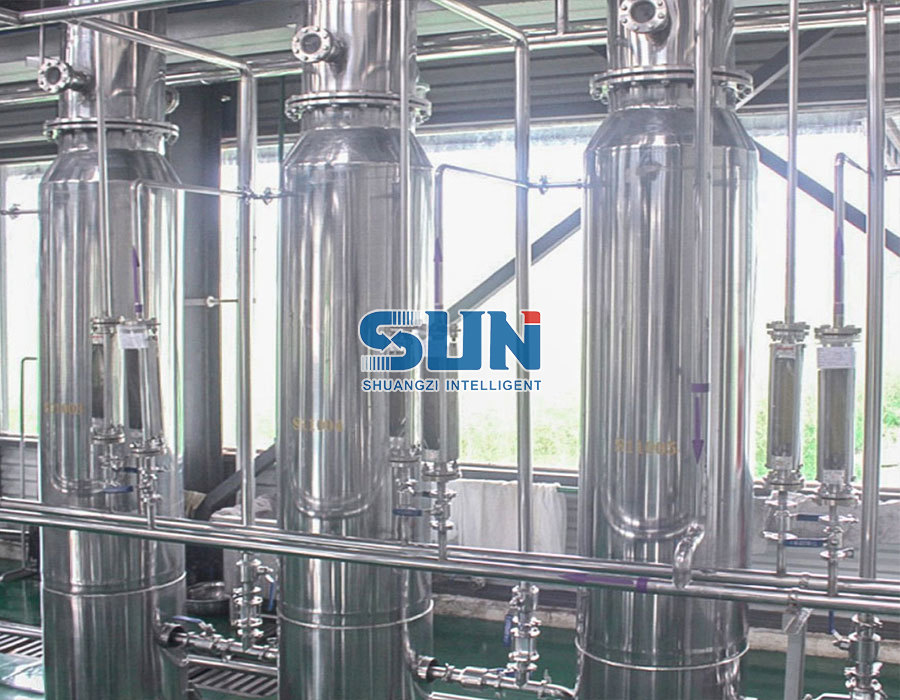
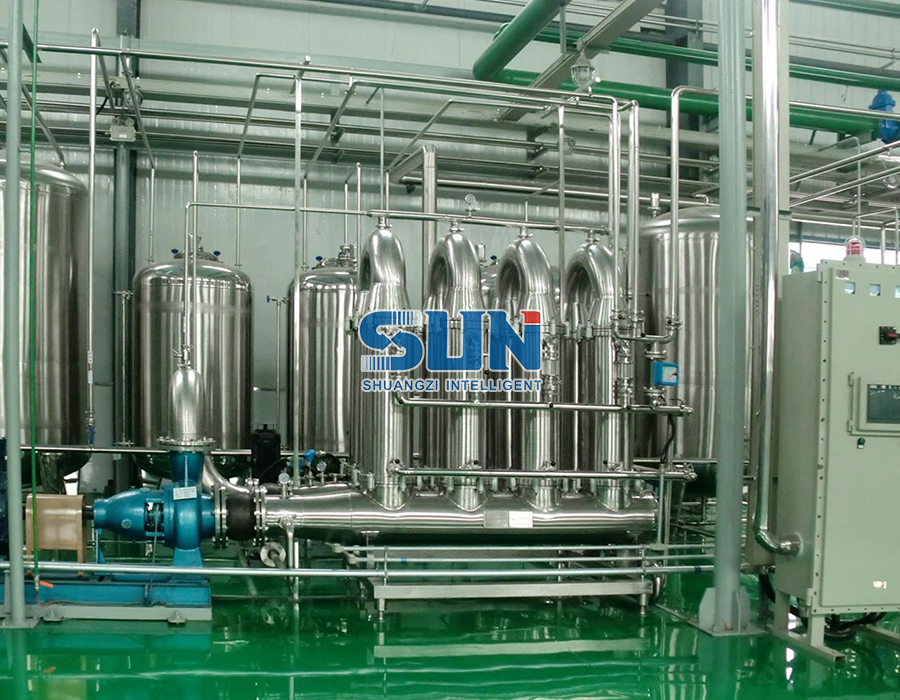
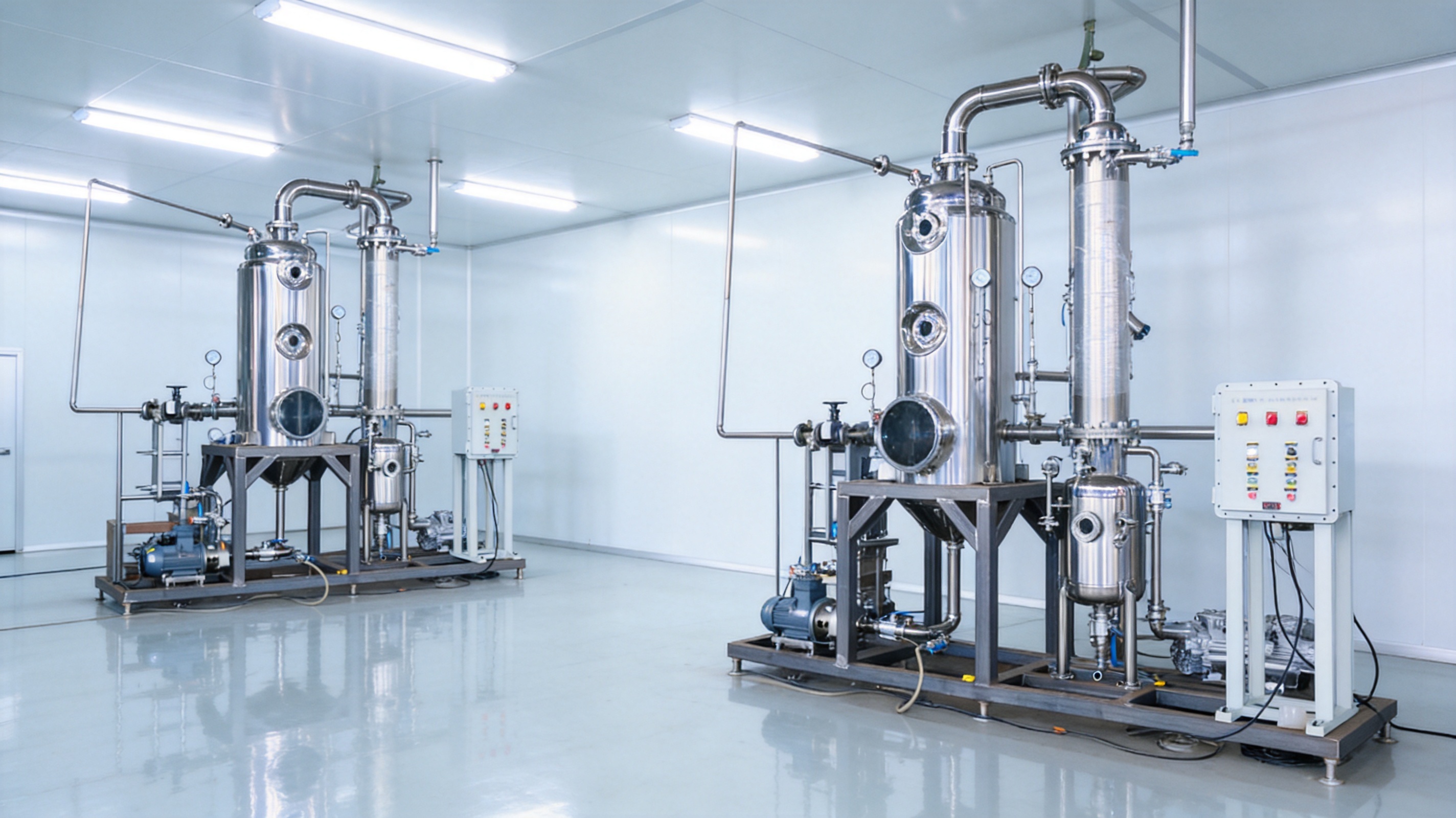
Compared with many conventional evaporators, the stainless steel vacuum flash evaporator offers a strong combination of low-temperature operation, rapid evaporation, stable concentration control, compact process integration, and excellent suitability for automated production lines. Its core components include a preheater, flash chamber, condenser, vacuum pump, pipeline system, control instruments, and stainless steel contact parts. The equipment can be supplied for evaporation capacities ranging from 300 liters per hour to 5000 liters per hour, making it suitable for pilot-scale validation, medium production, and larger industrial concentration lines.
For industries that demand reliable engineering and hygienic fabrication, the value of the equipment is not limited to its evaporation function. Zhejiang Shuangzi Intelligent Equipment Co., Ltd. provides process design, equipment manufacturing, matching purchase, installation, commissioning, equipment system integration, and turnkey project support. With experience in plant extraction, biological fermentation, pharmaceutical engineering, natural food processing, energy conservation, and environmental protection, the company combines process knowledge with stainless steel equipment manufacturing capability. This combination helps customers obtain not only a single machine, but a complete concentration solution matched to production goals, raw material behavior, cleaning requirements, and automation expectations.
Stainless Steel Vacuum Flash Evaporator 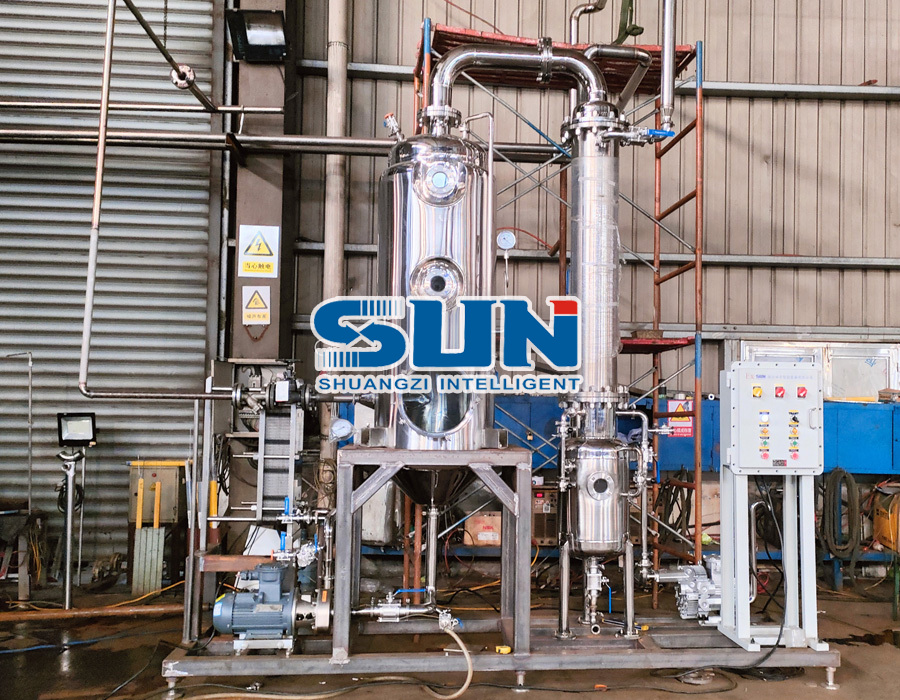
Product Overview and Industrial Purpose
The Stainless Steel Vacuum Flash Evaporator is an efficient liquid concentration device based on the flash principle. Its primary purpose is to reduce the solvent content in a liquid material and increase the concentration of dissolved or suspended solids. In many production lines, the solvent is water, but in chemical, pharmaceutical, and extraction applications, it may also be ethanol or another recoverable organic solvent. The equipment is designed to separate solvent vapor from the liquid phase rapidly, condense the vapor, and collect or discharge the concentrated material in a controlled manner.
The flash concentration method is particularly useful for materials that should not remain at high temperatures for a long time. Traditional boiling-based concentration can expose products to extended thermal stress, potentially causing color darkening, flavor loss, protein denaturation, active ingredient decomposition, or unwanted chemical reactions. Flash evaporation reduces this risk by using pressure reduction to create instantaneous vaporization. Because evaporation occurs quickly, the material experiences a rapid temperature drop after entering the flash chamber. This process is well suited for botanical extracts, Chinese herbal extracts, fruit juices, dairy ingredients, biological agents, fermentation broths, wastewater streams, and solvent-containing process liquids.
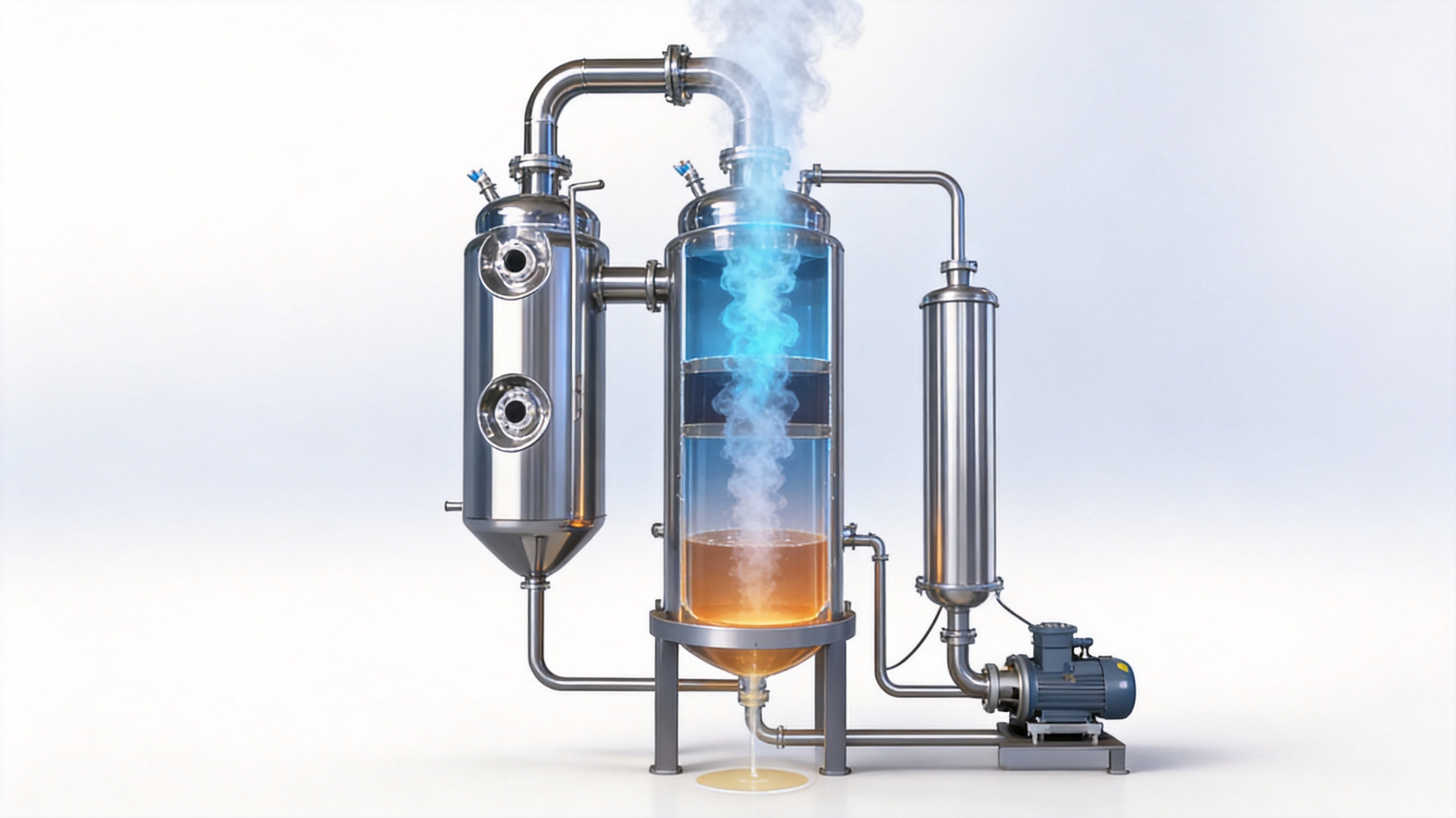
In a typical production process, the incoming material is first delivered to a preheater. The preheater raises the temperature close to the boiling point under the selected operating conditions. The heated material then enters the flash chamber, where the pressure is significantly lower than the saturated vapor pressure of the liquid. Under this pressure difference, a portion of the solvent vaporizes instantly. The vapor moves toward the condenser, where it is cooled and converted back into liquid. The concentrated product remains in the chamber or is discharged according to the process design.
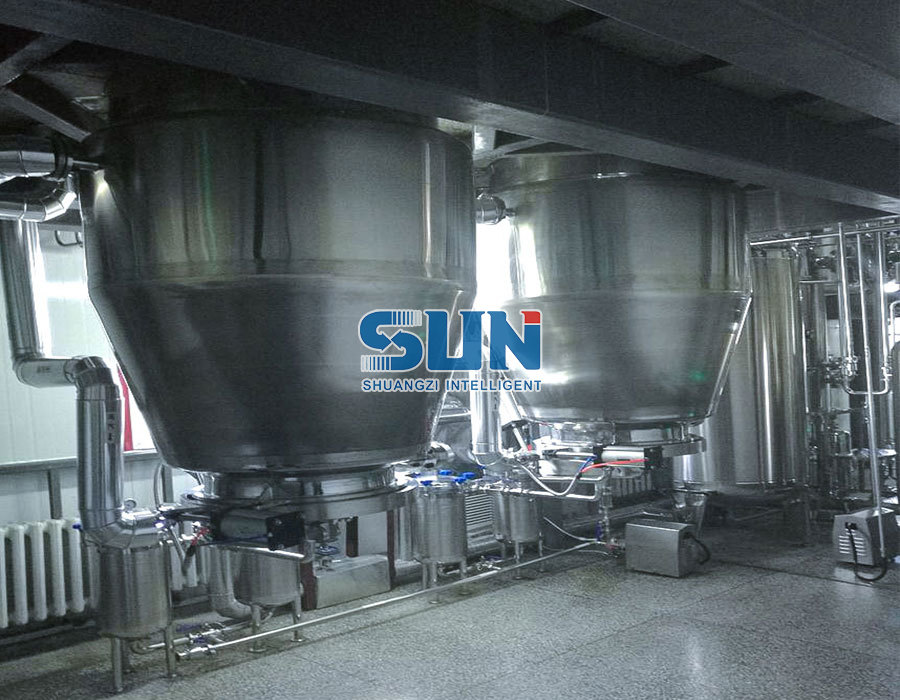
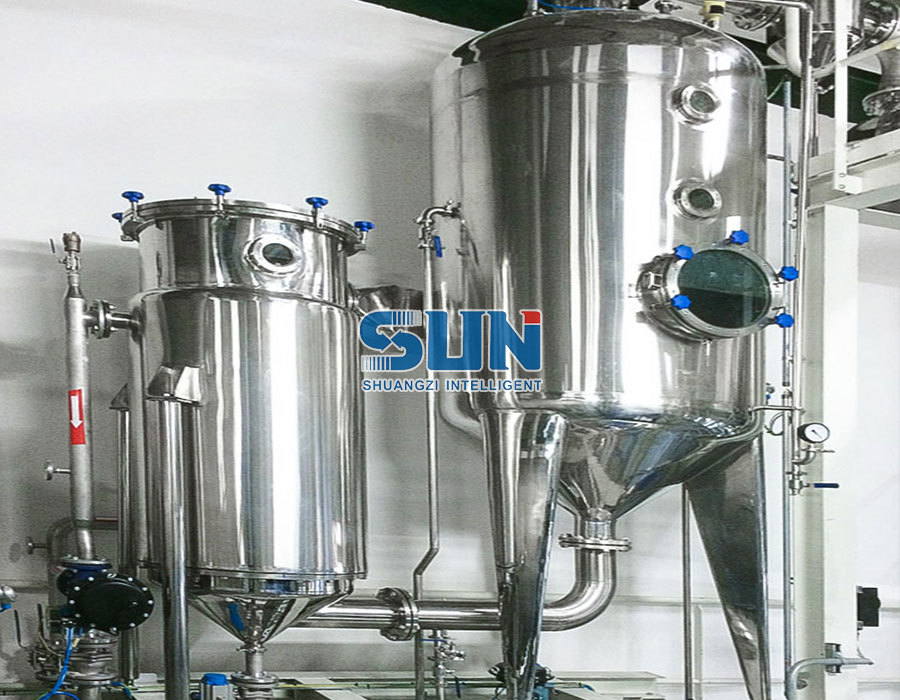
The equipment’s stainless steel construction provides durability, corrosion resistance, and suitability for hygienic production. Depending on the customer’s material and regulatory requirements, the system can be configured for food-grade, pharmaceutical-grade, or chemical-duty applications. The internal surfaces can be designed for cleanability, and the system can be integrated with cleaning-in-place arrangements, automation controls, vacuum monitoring, temperature measurement, level control, and process alarms.
Core Technical Parameters
The evaporator series covers a practical production range suitable for multiple industries. The following table summarizes the available model range and evaporation capacity based on the supplied product data.
| Item | Specification |
| Model Range | SZN-300-HSK to SZN-5000-HSK |
| Evaporating Volume | 300 to 5000 liters per hour |
| Main Function | Low-temperature vacuum flash concentration |
| Typical Solvents | Water, ethanol, and other recoverable process solvents depending on design |
| Main Components | Preheater, flash chamber, condenser, vacuum pump, stainless steel piping, instruments, and control system |
| Typical Applications | Food concentration, herbal extraction concentration, biological agent concentration, solvent recovery, wastewater reduction, and chemical processing |
The wide evaporation range allows customers to select a model according to feed rate, target concentration, solvent type, vapor load, available utilities, and production schedule. A smaller unit may be suitable for pilot process verification, recipe development, or small-batch specialty production, while larger models can support continuous or semi-continuous industrial lines. The ability to cover different scales is a major advantage for companies that plan to expand production gradually or transfer a validated process from a pilot platform to commercial equipment.
How the Flash Evaporation Principle Works
The flash evaporation process is based on the relationship between temperature, pressure, and vaporization. A liquid boils when its vapor pressure equals the surrounding pressure. Under atmospheric pressure, water boils at a relatively high temperature. Under vacuum conditions, the boiling point decreases. This means that solvent can vaporize at lower temperatures if the pressure is reduced. The vacuum flash evaporator uses this physical principle to perform rapid solvent removal without keeping the material under prolonged high-temperature exposure.
First, the feed material is heated in a preheater. The preheater is designed to transfer heat efficiently while avoiding unnecessary overheating. The temperature set point depends on the material properties, solvent type, desired concentration ratio, vacuum level, viscosity, and heat sensitivity. For many applications, the goal is not to boil the liquid aggressively in the preheater, but to bring it near the required thermal state before pressure reduction.
Second, the heated material enters the flash chamber. The chamber is maintained at a pressure lower than the saturated vapor pressure of the liquid. Once the liquid enters this lower-pressure environment, part of the solvent cannot remain in liquid form and vaporizes immediately. This instantaneous vaporization is the flash effect. It converts sensible heat into latent heat of vaporization, which causes the remaining liquid to cool rapidly.
Third, the generated vapor travels to the condenser. The condenser removes heat from the vapor using cooling water, chilled water, or another cooling medium according to the engineering configuration. The condensed solvent can be collected for reuse, recovery, discharge, or further treatment. In ethanol extraction processes, solvent recovery can be an important economic and safety advantage. In wastewater reduction, condensate quality and treatment strategy can be planned according to the contaminant profile.
Fourth, the concentrated liquid is discharged or circulated depending on the process design. Some applications require one-pass concentration, while others may use staged or repeated evaporation. Automation can help maintain vacuum degree, feed rate, temperature, liquid level, and discharge concentration. This is important for stable product quality, especially when raw material composition changes from batch to batch.
Major Advantages Over Conventional Concentration Equipment
Lower Thermal Stress for Sensitive Materials
One of the strongest advantages of the stainless steel vacuum flash evaporator is its ability to concentrate products at lower effective temperatures. Many competitors rely on conventional jacketed kettles, atmospheric evaporators, or evaporators that require longer residence time. Such methods may be acceptable for robust chemical solutions, but they can be unsuitable for botanical extracts, fermented products, juice concentrates, dairy components, active pharmaceutical intermediates, and biological materials. The flash evaporator reduces heat exposure by enabling instantaneous vaporization and rapid cooling under vacuum conditions.
This feature helps preserve color, aroma, nutrients, active ingredients, and functional compounds. For food producers, it can help maintain a more natural flavor profile and reduce cooked notes. For pharmaceutical and herbal extraction producers, it can help protect active constituents that are vulnerable to heat. For bio-fermentation projects, it can reduce damage to sensitive metabolites or proteins. In competitive markets where product quality depends on retaining biological or sensory value, lower thermal stress becomes a direct commercial advantage.
High Evaporation Efficiency
Flash evaporation is inherently fast because pressure reduction creates immediate vaporization. Instead of relying only on slow surface boiling, the process uses the stored heat in the liquid and the pressure difference between the preheated feed and the flash chamber. This allows high solvent removal within a compact process environment. The model range of 300 to 5000 liters per hour provides options for diverse production capacities, allowing customers to match equipment output to actual plant requirements.
Compared with older concentration systems, the equipment can reduce processing time and improve line throughput. A shorter concentration cycle can also reduce labor intensity, utility waste, and exposure of the material to oxygen or contaminants. For production managers, faster evaporation means better batch turnover, improved scheduling, and more flexible response to market demand.
Energy-Saving Potential
Energy efficiency depends on the process configuration, feed temperature, target concentration, condenser design, vacuum performance, heat recovery strategy, and operating discipline. However, vacuum flash evaporation can offer meaningful energy-saving potential because it operates at reduced pressure and can be integrated with efficient preheating and condensation systems. In many applications, the rapid vaporization mechanism reduces the need for long-duration heating.
When properly engineered, the system can also be combined with heat recovery, condensate recovery, solvent reuse, and automation control. These features help reduce steam, cooling water, and solvent consumption. For plants facing increasing utility costs or sustainability requirements, the evaporator supports both production efficiency and environmental responsibility.
Solvent Recovery and Environmental Benefits
In extraction and chemical processes, the evaporated solvent may have significant value. Ethanol and other organic solvents are often used in botanical extraction, pharmaceutical processing, and specialty chemical production. A vacuum flash evaporator with a well-designed condenser can recover solvent vapor as liquid, reducing solvent loss and lowering purchasing costs. Solvent recovery also helps reduce emissions, improve workplace safety, and support compliance with environmental management policies.
In wastewater reduction applications, the system can decrease liquid volume, making downstream treatment or disposal more efficient. Reducing wastewater volume can lower handling costs and improve resource management. While the exact treatment plan depends on wastewater composition, flash evaporation can be an effective part of a broader environmental protection strategy.
Compact and Integrated Structure
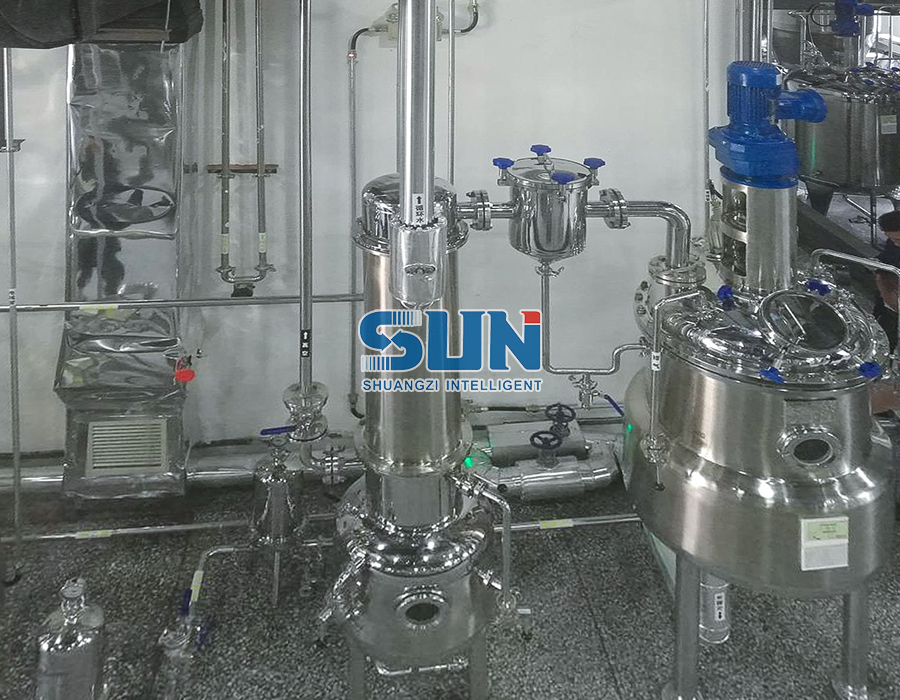
The core equipment includes a preheater, flash chamber, condenser, vacuum pump, piping, valves, and instruments. A well-integrated layout can reduce floor space, simplify installation, and improve operation. Compared with systems assembled from unrelated components, an integrated evaporator package offers better coordination between heating, pressure control, vapor separation, condensation, and discharge.
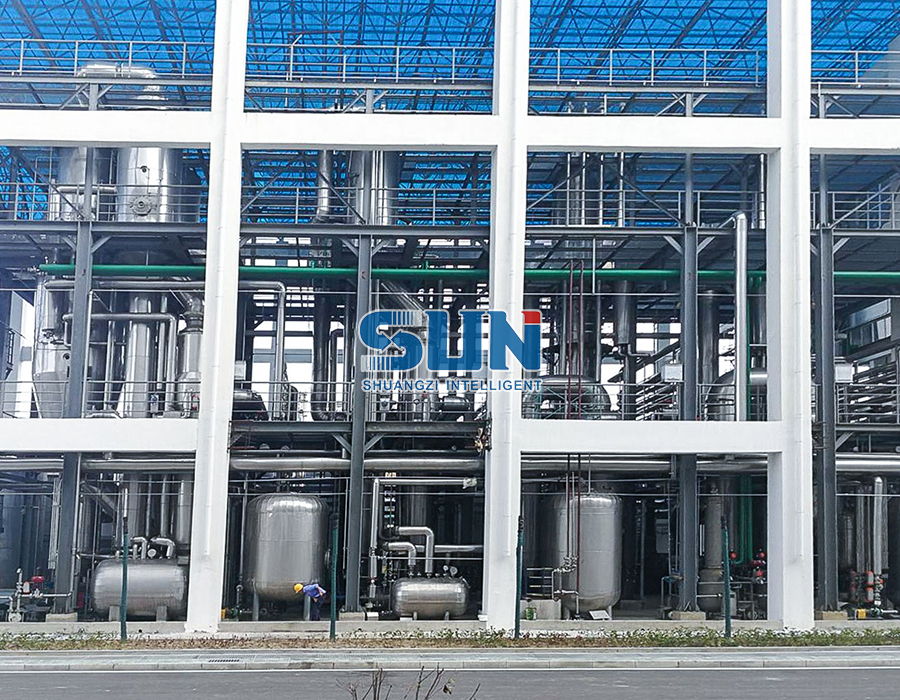
This integration is especially valuable for customers purchasing turnkey projects. The evaporator can be matched with upstream extraction tanks, fermentation systems, filtration equipment, storage vessels, separation devices, crystallization units, or drying equipment. A concentration machine is rarely isolated in real production; it must communicate with the entire process. Equipment designed with system integration in mind reduces project risk and improves commissioning efficiency.
Key Components and Their Functions
Preheater
The preheater raises the material temperature before flashing. Its design must consider heat transfer efficiency, material viscosity, fouling tendency, thermal sensitivity, cleaning requirements, and allowable pressure drop. For food and pharmaceutical applications, the contact surfaces should be suitable for hygienic production. For solvent applications, sealing, explosion prevention considerations, and vapor management may be evaluated as part of project engineering.
An effective preheater helps stabilize evaporation performance. If the feed is underheated, flash vaporization may be insufficient. If it is overheated, product quality may suffer or energy may be wasted. Therefore, precise temperature control is essential. The preheater can be designed according to customer utilities, such as steam, hot water, or other heating media.
Flash Chamber
The flash chamber is the heart of the system. It provides the low-pressure environment where instantaneous solvent evaporation occurs. Its internal structure affects vapor-liquid separation, residence time, foam control, discharge stability, and cleaning performance. A properly designed flash chamber helps prevent liquid entrainment into the vapor line and improves condensate quality.
Materials that foam easily, such as fermentation broth, plant extract, protein solution, or certain food liquids, may require special chamber geometry, demisting devices, antifoam strategy, or operating parameter optimization. This is where process experience becomes important. The equipment should not be selected only by capacity; it should also be engineered according to product behavior.
Condenser
The condenser converts solvent vapor into liquid. Its performance directly affects vacuum stability, solvent recovery rate, and process efficiency. If the condenser is undersized or cooling conditions are unstable, vapor may not condense fully, increasing vacuum pump load and reducing evaporation performance. A properly matched condenser ensures smooth vapor handling and reliable recovery.
For water evaporation, condensate may be discharged, reused, or treated. For organic solvent recovery, condensate collection must be designed carefully to reduce leakage and maintain safety. The condenser can be configured according to cooling water temperature, solvent properties, vapor volume, and recovery requirements.
Vacuum Pump
The vacuum pump maintains the low-pressure environment required for flash evaporation. Stable vacuum control is essential for consistent boiling point, evaporation rate, and product quality. Depending on the application, the vacuum system may include protective devices, condensate traps, buffer tanks, seals, and instruments. The selection of vacuum pump type should consider vapor load, solvent compatibility, noise, maintenance, and environmental requirements.
Competitor systems sometimes suffer from unstable vacuum, which leads to fluctuating concentration results and poor repeatability. A well-designed vacuum system reduces such problems and helps operators maintain predictable production.
Control System and Instrumentation
Automation can greatly improve concentration accuracy and safety. Temperature sensors, pressure transmitters, flow meters, level instruments, control valves, and alarm functions allow the operator to monitor the process in real time. Depending on the project requirement, the system can be integrated into a centralized control platform or designed as a standalone control cabinet.
Automation reduces dependence on manual judgment, improves repeatability, and supports traceability. In pharmaceutical, food, and biological production, stable parameters are essential for quality assurance. Intelligent control also helps reduce energy waste by preventing over-heating, excessive vacuum operation, or unnecessary circulation.
Applications in Plant Extraction Projects
Plant extraction is one of the most suitable fields for vacuum flash evaporation. Botanical extracts often contain heat-sensitive active compounds, pigments, volatile aromas, glycosides, polyphenols, alkaloids, saponins, polysaccharides, flavonoids, and other functional substances. After extraction and filtration, the liquid extract usually contains a large amount of solvent. Concentration is required before precipitation, purification, drying, formulation, or storage.
The stainless steel vacuum flash evaporator helps remove water or ethanol while reducing thermal degradation. In herbal medicine projects, the equipment can help preserve active ingredients and improve extract quality. In natural food ingredient production, it can concentrate flavors, colors, and plant-based functional compounds. In nutraceutical manufacturing, it can support stable concentration of botanical solutions before spray drying or vacuum drying.
Compared with open boiling concentration, the vacuum flash method reduces oxidation and volatile loss. Compared with slower evaporators, it can shorten exposure time. Compared with low-cost equipment with limited automation, it provides better control and repeatability. These advantages are important because plant raw materials vary by season, origin, moisture content, and extraction method. A flexible evaporator helps operators respond to such variation while maintaining target concentration.
Applications in Bio-Fermentation Projects
Bio-fermentation liquids may contain enzymes, amino acids, organic acids, peptides, polysaccharides, proteins, microbial metabolites, or biological agents. Many of these substances are temperature-sensitive. Concentration may be needed after fermentation, separation, clarification, or purification. The vacuum flash evaporator can reduce the solvent content while limiting heat damage.
Fermentation products may also foam or contain suspended solids, so equipment configuration must be adapted to the material. The flash chamber design, feed control, demisting system, discharge mode, and cleaning plan should be selected carefully. Zhejiang Shuangzi Intelligent Equipment Co., Ltd. has experience in complete fermentation system equipment, separation, extraction, filtration, and concentration processes, enabling better coordination between upstream and downstream operations.
For biological production, hygiene and cleanability are particularly important. Stainless steel construction, smooth internal surfaces, suitable welding quality, and well-planned cleaning systems help reduce contamination risk. The evaporator can be integrated into automated GMP-oriented pilot or production platforms, supporting process development and scale-up.
Applications in Western Medicine Synthesis and Pharmaceutical Engineering
Pharmaceutical synthesis and pharmaceutical engineering often require solvent removal, intermediate concentration, mother liquor treatment, and recovery of valuable solvents. The vacuum flash evaporator can serve these roles when the process conditions are compatible with flash evaporation. For heat-sensitive intermediates, lower-temperature concentration is an important advantage. For solvent-containing streams, condensation and recovery can reduce material cost and environmental burden.
Pharmaceutical production also demands reliable documentation, clean design, process stability, and precise control. Equipment must be manufactured with attention to material compatibility, weld quality, surface finish, sealing, cleaning, and instrumentation. The company’s experience in pharmaceutical engineering, automation design, and equipment system integration allows it to provide solutions beyond basic mechanical fabrication.
In comparison with generic evaporators, a purpose-engineered vacuum flash evaporator offers stronger process matching. The selection of stainless steel grade, gasket material, valve type, condenser capacity, vacuum pump configuration, control logic, and cleaning method can be customized according to the customer’s product and regulatory expectations.
Applications in Food Projects
Food concentration requires gentle processing, hygienic design, and product quality preservation. Juice, dairy solutions, plant-based beverages, natural flavors, syrups, and food extracts may lose aroma, color, vitamins, or functional properties if exposed to excessive heat. The vacuum flash evaporator supports low-temperature concentration and rapid solvent removal, making it useful for food producers seeking quality and efficiency.
For juice concentration, the equipment can help reduce cooked flavor and protect natural color. For dairy-related liquids, lower thermal exposure may help reduce quality changes. For natural food ingredients, rapid concentration can improve throughput while maintaining sensory value. Stainless steel contact parts and cleanable design support food safety requirements.
Food producers also benefit from automation. Stable feed rate, vacuum, temperature, and discharge concentration help reduce batch variation. This can be especially useful for customers supplying standardized ingredients to downstream manufacturers. Consistency improves customer trust and reduces rework.
Applications in Turnkey Projects
A flash evaporator often forms part of a larger turnkey project. In plant extraction, it may follow extraction, filtration, and separation, and then precede precipitation, crystallization, drying, or formulation. In fermentation, it may follow clarification and precede purification or drying. In pharmaceutical synthesis, it may be integrated with reaction vessels, solvent recovery systems, crystallizers, filters, and dryers. In food production, it may connect with pre-treatment, blending, sterilization, filling, or drying systems.
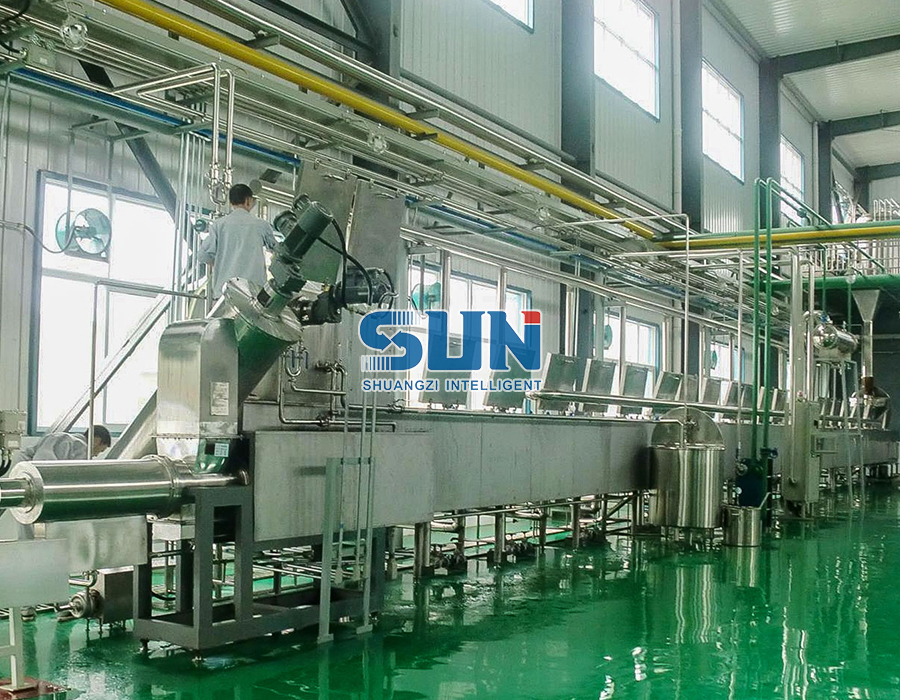
Turnkey capability matters because process equipment must function as a complete production chain. Zhejiang Shuangzi Intelligent Equipment Co., Ltd. focuses on EPC and EPCM services, including process technology, automation engineering design, equipment manufacture, matching purchase, installation, equipment system integration, commissioning, and complete project delivery. This allows customers to reduce coordination difficulty and avoid mismatch between separate equipment suppliers.
For international buyers, turnkey project support is especially valuable. Instead of purchasing a machine and solving all integration issues alone, customers can receive engineering support for layout, utility interface, equipment matching, automation, installation, and line debugging. This reduces project uncertainty and accelerates the transition from purchase to production.
Advanced Manufacturing Processes and Quality Strengths
Strong Manufacturing Foundation
Zhejiang Shuangzi Intelligent Equipment Co., Ltd. was founded in 2007 and has developed into a professional biology and medical equipment enterprise focused on process technology and intelligent equipment. The company covers a floor area of 16706 square meters and a structural area of 17800 square meters. Its mature product categories include vacuum low-temperature drying equipment, complete fermentation system equipment, evaporation and concentration equipment, extraction equipment, separation and crystallization equipment, filtration equipment, containers, and related process systems.
This manufacturing foundation is important for the vacuum flash evaporator because evaporation equipment requires precise coordination of pressure vessels, heat exchange components, vapor-liquid separation structures, piping, valves, instruments, and control systems. A supplier with broad process equipment experience can better understand how the evaporator interacts with upstream and downstream units.
Advanced Welding and Fabrication
Stainless steel evaporation equipment must be fabricated with reliable welding quality. Poor welding can create weak points, contamination traps, corrosion risks, or cleaning difficulties. The company has introduced advanced welding and finishing equipment, including plasma argon arc welding machines, plasma cutting machines, and CAM CNC machining centers. These tools support accurate cutting, stable welding, refined component processing, and consistent fabrication quality.
Plasma cutting helps improve dimensional accuracy and edge quality before assembly. Argon arc welding is widely used for stainless steel equipment because it provides clean welds and good protection against oxidation when properly performed. CNC machining supports precise parts, flanges, interfaces, and custom components. Together, these manufacturing capabilities help produce equipment that is stable, durable, and suitable for demanding process environments.
Surface Treatment and Hygienic Considerations
For food, pharmaceutical, and biological applications, internal surface quality is more than an appearance issue. Smooth surfaces reduce material retention, simplify cleaning, and lower microbial risk. Stainless steel vessels and pipelines may require polishing, passivation, and careful weld finishing according to project requirements. The evaporator can be manufactured with appropriate surface treatment for the intended process.
Hygienic design also includes drainability, cleanable connections, suitable gaskets, sanitary valves, and minimized dead zones. A competitor offering only standard chemical equipment may not meet these expectations. By serving plant extraction, fermentation, pharmaceutical, and food industries, the company is familiar with hygienic process requirements and can design the evaporator accordingly.
Testing and Inspection
Quality assurance for a vacuum flash evaporator should include material verification, dimensional inspection, welding inspection, pressure or vacuum testing, operational checks, instrument calibration, and factory acceptance testing when required. These steps help identify potential issues before delivery. Vacuum equipment must maintain sealing performance, and heat exchange systems must withstand operating conditions safely.
A carefully inspected evaporator reduces installation delays and commissioning problems. It also gives customers confidence that the equipment will perform according to the agreed process design. When equipment is part of a turnkey system, factory testing and line debugging are especially important because every component must work together.
Automation Engineering Capability
The company’s focus on process technology and automation engineering design is a significant competitive strength. Evaporation performance depends on controlling several variables simultaneously: feed flow, heating temperature, flash chamber pressure, condenser cooling, liquid level, vapor flow, and discharge rate. Manual operation can work for simple processes, but automated control improves repeatability and production safety.
Automation can also support data collection and process optimization. Operators can identify trends, adjust set points, reduce utility waste, and maintain consistent product concentration. In regulated or quality-sensitive industries, recorded process parameters help support traceability and quality review.
Why Stainless Steel Construction Matters
Stainless steel is the preferred material for many concentration processes because it offers corrosion resistance, mechanical strength, cleanability, and long service life. In food and pharmaceutical production, stainless steel supports hygienic operation. In extraction and chemical processes, appropriate stainless steel grades can resist many solvents and process liquids. The exact material selection should be confirmed according to chloride content, acidity, alkalinity, solvent composition, temperature, and cleaning chemicals.
Compared with lower-cost carbon steel or poorly finished equipment, stainless steel reduces contamination risk and supports better durability. It also presents a professional appearance and is easier to maintain in clean production environments. For customers exporting food, health products, pharmaceuticals, or plant extracts, equipment material quality can influence audit readiness and customer confidence.
Operational Benefits for Production Teams
Production teams need equipment that is not only technically capable but also practical to operate. The vacuum flash evaporator can improve daily operation through stable process control, faster concentration, efficient vapor condensation, and suitable cleaning design. Operators can monitor vacuum, temperature, level, and flow, making it easier to maintain target concentration and detect abnormal conditions.
Maintenance teams benefit from accessible components, logical piping layout, and standardized instruments. Management teams benefit from higher throughput, reduced solvent loss, and improved product quality. Quality teams benefit from repeatable parameters and hygienic construction. In this way, the equipment creates value across the entire organization.
Another practical advantage is scalability. A customer may begin with a smaller evaporation capacity and later expand to a larger system. Because the series covers 300 to 5000 liters per hour, it can support different growth stages. Process knowledge gained during pilot operation can be transferred to larger equipment with appropriate engineering adjustment.
Comparison With Common Competitor Solutions
Many competitor solutions can evaporate solvent, but not all are optimized for heat-sensitive, hygienic, automated, and integrated production. Open evaporating tanks are simple but expose materials to air, require higher temperatures, and often cause quality loss. Basic vacuum concentrators reduce boiling temperature but may have slower evaporation, limited automation, or inadequate solvent recovery. General-purpose chemical evaporators may be strong mechanically but may not meet food or pharmaceutical cleanability expectations. Low-cost systems may use inferior fabrication, unstable vacuum control, or undersized condensers.
The stainless steel vacuum flash evaporator offers a more balanced solution. It combines rapid flash evaporation, low-temperature concentration, stainless steel construction, solvent condensation, capacity flexibility, and integration capability. When supplied by a manufacturer with EPC and EPCM experience, it can be adapted to the complete production line rather than functioning as an isolated machine.
Its advantages over competitors can be summarized in six key points. First, it better protects heat-sensitive ingredients through rapid low-pressure vaporization. Second, it improves evaporation efficiency and throughput. Third, it supports solvent recovery and environmental reduction. Fourth, it provides hygienic stainless steel construction suitable for food, pharmaceutical, and biological applications. Fifth, it can be integrated with automation for stable and repeatable operation. Sixth, it can be supported by turnkey project services, reducing engineering and installation complexity for customers.
Customization for Different Materials
No two concentration processes are exactly the same. Juice behaves differently from ethanol plant extract. Fermentation broth behaves differently from chemical wastewater. Herbal extract may foam, crystallize, or contain fine suspended solids. Dairy products may foul heat transfer surfaces. Solvent recovery systems may require special sealing and condensation arrangements. Therefore, customization is essential.
The evaporator can be engineered according to feed properties, including viscosity, solids content, boiling point elevation, foam tendency, heat sensitivity, corrosiveness, solvent composition, and target concentration. The preheater type, chamber volume, condenser area, vacuum pump configuration, valve arrangement, discharge system, cleaning system, and automation program can be adapted to the application.
This customization is a clear advantage over one-size-fits-all equipment. A standard evaporator may appear cheaper initially, but if it fouls quickly, damages the product, fails to reach concentration, loses solvent, or requires constant manual adjustment, the actual operating cost becomes much higher. Proper engineering reduces long-term risk and improves return on investment.
Cleaning, Maintenance, and Long-Term Reliability
Cleaning performance is critical in concentration systems. As solvent is removed, dissolved solids become more concentrated, increasing the risk of fouling, scaling, sticking, or residue accumulation. A well-designed vacuum flash evaporator should support effective cleaning through proper surface finish, drainable structure, accessible inspection points, and optional cleaning-in-place integration.
Maintenance should include routine inspection of seals, gaskets, vacuum pump performance, condenser cleanliness, instruments, valves, and heating surfaces. Operators should monitor changes in evaporation rate, vacuum stability, condensate flow, and product discharge. A sudden decline in performance may indicate fouling, air leakage, cooling deficiency, or pump issues.
Stainless steel construction and quality fabrication contribute to long service life. However, correct operation is equally important. The system should be run within designed temperature, pressure, flow, and concentration limits. Cleaning chemicals should be compatible with the material of construction. Preventive maintenance helps reduce downtime and protect production schedules.
Project Support and Company Strength
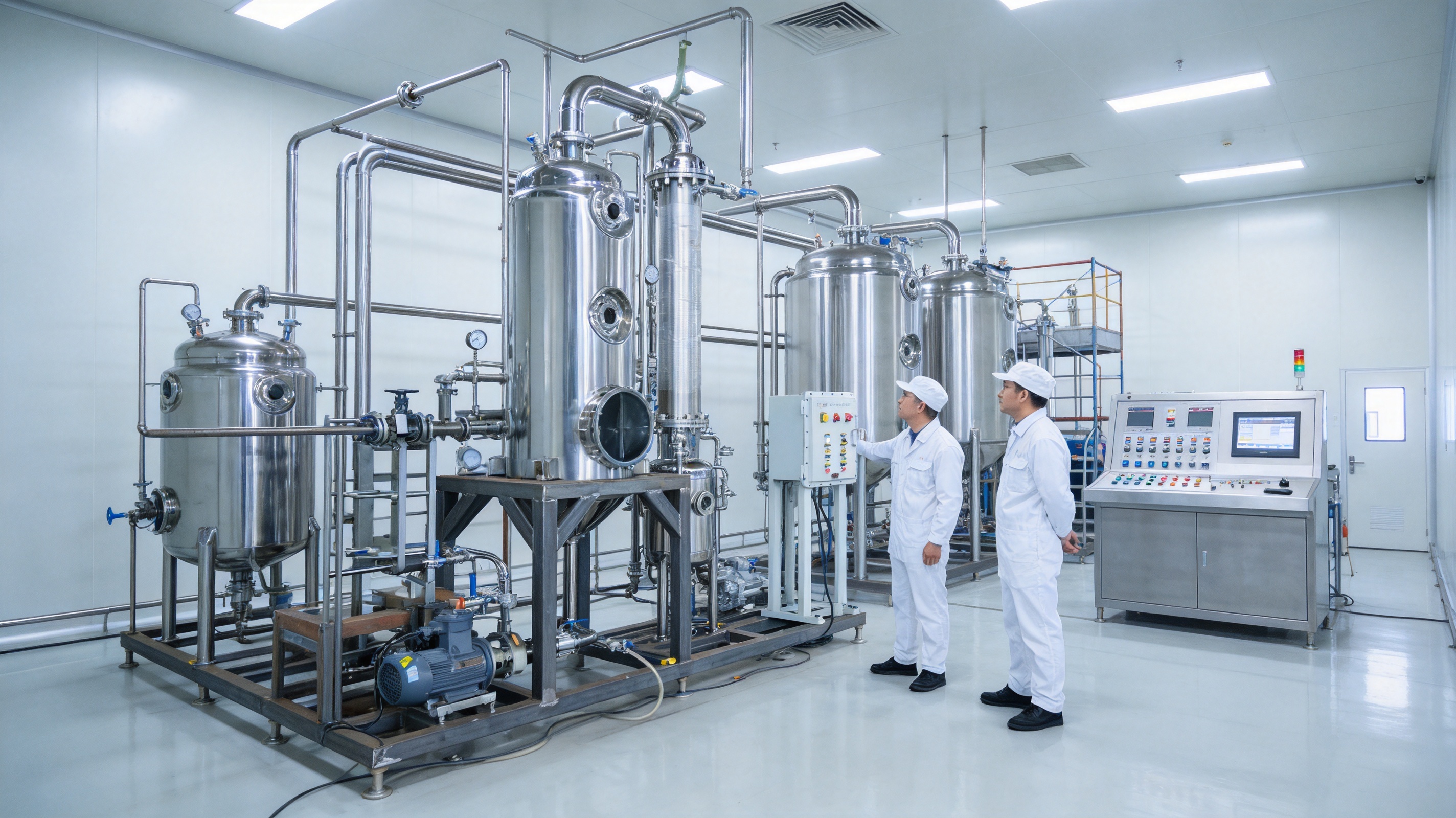
Zhejiang Shuangzi Intelligent Equipment Co., Ltd. provides more than equipment manufacturing. Its service scope includes engineering, process design, equipment design, installation, line debugging, and turnkey project delivery. This is particularly valuable for customers in plant extraction, biological fermentation, pharmaceutical engineering, natural food, energy conservation, and environmental protection.
The company has a full set of production lines with a pilot production workshop and an research and development platform designed around automation and GMP-oriented requirements. Processes available for pilot research include vacuum low-temperature drying, plant extraction, evaporation, precipitation separation, extraction, and fermentation. This pilot capability supports users who need to verify process parameters before investing in full-scale production.
The company’s mature product portfolio also strengthens its ability to integrate complete systems. Evaporation and concentration equipment may need to connect with extraction tanks, fermentation vessels, filters, separators, crystallizers, storage tanks, dryers, and automatic control systems. A manufacturer familiar with these units can design interfaces more effectively, reducing problems during installation and commissioning.
For customers, this means better communication, fewer project delays, and a clearer route from process concept to commercial operation. The result is not only a high-quality vacuum flash evaporator, but a process solution aligned with production targets.
Selection Considerations for Buyers
When selecting a stainless steel vacuum flash evaporator, buyers should evaluate more than the evaporation capacity. The first consideration is the material to be processed. Is it water-based or solvent-based? Is it heat-sensitive? Does it foam? Does it contain suspended solids? Is it corrosive? Does it crystallize during concentration? These factors influence equipment structure and operating parameters.
The second consideration is the target concentration. Higher final concentration may increase viscosity and reduce heat transfer. It may also require staged evaporation or special discharge design. The third consideration is utility availability, including steam, hot water, cooling water, chilled water, compressed air, electricity, and vacuum system requirements. The fourth consideration is regulatory or hygienic standard. Food, pharmaceutical, and biological products may require specific surface finish, documentation, cleanability, and material certification.
The fifth consideration is integration. The evaporator must fit the entire production line, including feed tanks, pumps, filters, condensate recovery, solvent storage, cleaning systems, and downstream equipment. The sixth consideration is automation level. Customers should decide whether they need manual, semi-automatic, or fully automated control. Finally, buyers should consider supplier capability. A strong supplier should provide process advice, manufacturing quality, testing, installation support, and after-sales service.
Q&A Section
Question 1: What is the main function of the Stainless Steel Vacuum Flash Evaporator?
Answer: Its main function is to reduce solvent content in liquid materials and increase solid concentration. It does this by heating the material close to its boiling point and then introducing it into a low-pressure flash chamber, where part of the solvent vaporizes instantly and is later condensed for recovery or discharge.
Question 2: Why is the equipment suitable for heat-sensitive materials?
Answer: The equipment operates under vacuum and uses rapid flash evaporation. Because solvent vaporizes instantly under reduced pressure, the material experiences a quick temperature drop and avoids prolonged high-temperature exposure. This helps protect nutrients, active ingredients, flavors, colors, and biological components.
Question 3: What industries can use this evaporator?
Answer: It is suitable for plant extraction, bio-fermentation, pharmaceutical engineering, food processing, chemical production, solvent recovery, and wastewater reduction. Typical products include herbal extracts, juice, dairy liquids, biological agents, fermentation products, pharmaceutical intermediates, and solvent-containing process streams.
Question 4: What is the available evaporation capacity?
Answer: The model range covers SZN-300-HSK to SZN-5000-HSK, with an evaporating volume from 300 to 5000 liters per hour. This range supports pilot, medium-scale, and larger industrial production needs.
Question 5: What are the core components of the system?
Answer: The core components include the preheater, flash chamber, condenser, vacuum pump, stainless steel piping, valves, instruments, and control system. These components work together to heat the material, create flash vaporization, condense solvent vapor, and discharge concentrated liquid.
Question 6: How does it compare with ordinary evaporators?
Answer: Compared with ordinary open or conventional evaporators, it offers lower-temperature operation, faster concentration, better protection of heat-sensitive materials, improved solvent recovery, stainless steel hygienic construction, automation compatibility, and easier integration into complete production lines.
Question 7: Can the evaporator recover organic solvents?
Answer: Yes, when properly configured with a suitable condenser and recovery system, it can condense and collect organic solvent vapor such as ethanol. This can reduce solvent cost, lower emissions, and improve environmental performance.
Question 8: Is the equipment suitable for turnkey projects?
Answer: Yes. The evaporator can be integrated with extraction, fermentation, filtration, separation, crystallization, drying, storage, and automation systems. Zhejiang Shuangzi Intelligent Equipment Co., Ltd. provides EPC and EPCM services, including process design, equipment manufacturing, installation, commissioning, and system integration.
Question 9: Why is stainless steel important?
Answer: Stainless steel provides corrosion resistance, durability, cleanability, and hygienic performance. It is especially important for food, pharmaceutical, biological, and extraction applications where contamination control and long service life are required.
Question 10: What information should a buyer provide before selecting a model?
Answer: A buyer should provide feed composition, solvent type, feed rate, target concentration, heat sensitivity, viscosity, foaming tendency, solids content, corrosion characteristics, available utilities, cleaning requirements, automation expectations, and upstream or downstream process details.
Conclusion
The Stainless Steel Vacuum Flash Evaporator is a high-efficiency concentration machine designed for industries that require fast solvent removal, low-temperature processing, solvent recovery, hygienic construction, and reliable integration. Its flash evaporation principle enables rapid vaporization under vacuum, helping protect heat-sensitive ingredients while improving concentration efficiency. With an evaporation range from 300 to 5000 liters per hour, it can serve diverse production scales from pilot testing to industrial manufacturing.
Its advantages over many competitor systems include lower thermal stress, high evaporation speed, energy-saving potential, solvent recovery capability, stainless steel durability, automation compatibility, and flexible customization. It is especially suitable for plant extraction, biological fermentation, pharmaceutical engineering, food processing, chemical solvent recovery, and environmental wastewater reduction.
The strength of the equipment is further enhanced by the manufacturing and engineering capability of Zhejiang Shuangzi Intelligent Equipment Co., Ltd. With experience in EPC and EPCM services, process technology, automation engineering, stainless steel fabrication, pilot platforms, GMP-oriented production requirements, advanced welding, plasma cutting, and CNC machining, the company can provide not only an evaporator, but a complete concentration solution. For customers seeking stable quality, efficient production, and long-term process reliability, the stainless steel vacuum flash evaporator is a strong choice for modern liquid concentration projects.
References
1. Perry, R. H., and Green, D. W. Perry’s Chemical Engineers’ Handbook. McGraw-Hill Education.
2. McCabe, W. L., Smith, J. C., and Harriott, P. Unit Operations of Chemical Engineering. McGraw-Hill Education.
3. Fellows, P. J. Food Processing Technology: Principles and Practice. Woodhead Publishing.
4. Mujumdar, A. S. Handbook of Industrial Drying. CRC Press.
5. Singh, R. P., and Heldman, D. R. Introduction to Food Engineering. Academic Press.
6. Towler, G., and Sinnott, R. Chemical Engineering Design: Principles, Practice and Economics of Plant and Process Design. Elsevier.
7. European Hygienic Engineering and Design Group. Hygienic Design Principles for Food Processing Equipment.
8. International Society for Pharmaceutical Engineering. Good Practice Guide: Process Validation and Equipment Design Considerations.