
 英语
英语 俄语
俄语Content
- 1 Product Overview: Vacuum Low-Temperature Automatic Continuous Belt Dryer
- 2 Key Design Features and Operational Principles
- 3 Advantages Over Conventional Drying Technologies
- 4 Technical Specifications
- 5 Manufacturer’s Advanced Manufacturing Capabilities
- 6 Q&A Section
- 6.1 Q1: What types of materials are most suitable for this dryer?
- 6.2 Q2: How does the dryer preserve the quality of heat-sensitive materials?
- 6.3 Q3: What is the difference between this continuous dryer and batch dryers?
- 6.4 Q4: Can the manufacturer provide turnkey project solutions?
- 6.5 Q5: What is the typical product moisture content achievable with this dryer?
- 6.6 Q6: What are the main auxiliary systems included with the dryer?
- 6.7 Q7: Does the dryer have automated control features?
- 6.8 Q8: What cleaning and maintenance requirements does the dryer have?
- 7 References
The global market for natural extracts—used in herbal medicines, functional foods, cosmetics, and nutraceuticals—has grown exponentially in recent years, driven by increasing consumer demand for clean-label, plant-based products. However, these extracts are often heat-sensitive, containing volatile compounds, enzymes, antioxidants, and fragile bioactive molecules that are easily degraded by high temperatures, oxidation, or mechanical stress. Traditional drying methods, such as spray drying (operating at 150–200°C) or batch vacuum drying (labor-intensive and inconsistent), struggle to preserve the quality of these materials while maintaining efficiency. Enter the Vacuum Low-Temperature Automatic Continuous Belt Dryer (VLT-ACBD)—a game-changing technology designed to address these challenges, offering gentle drying, continuous operation, and superior product quality for a wide range of sensitive materials.
Product Overview: Vacuum Low-Temperature Automatic Continuous Belt Dryer
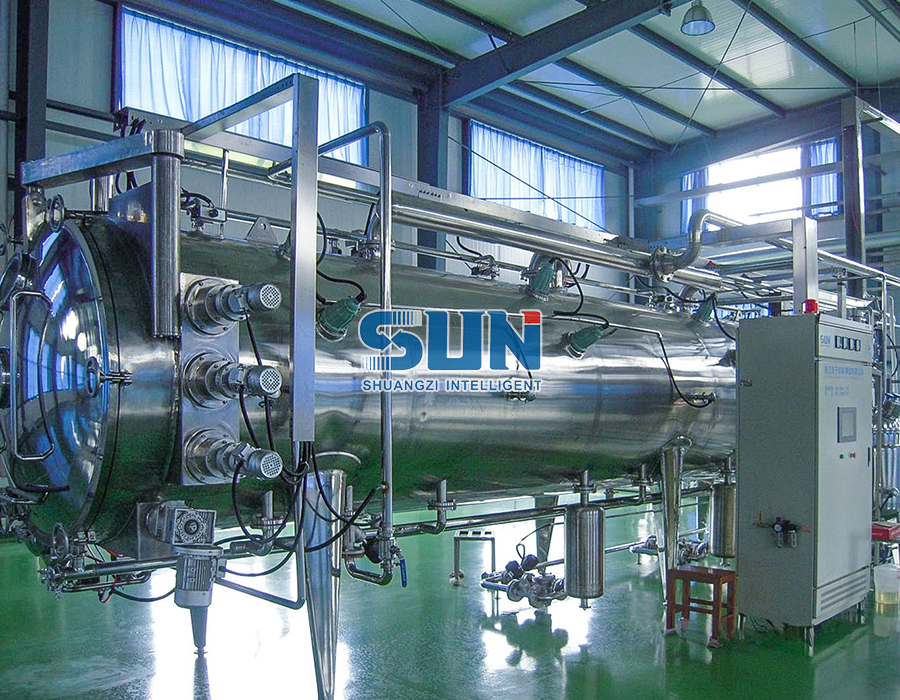
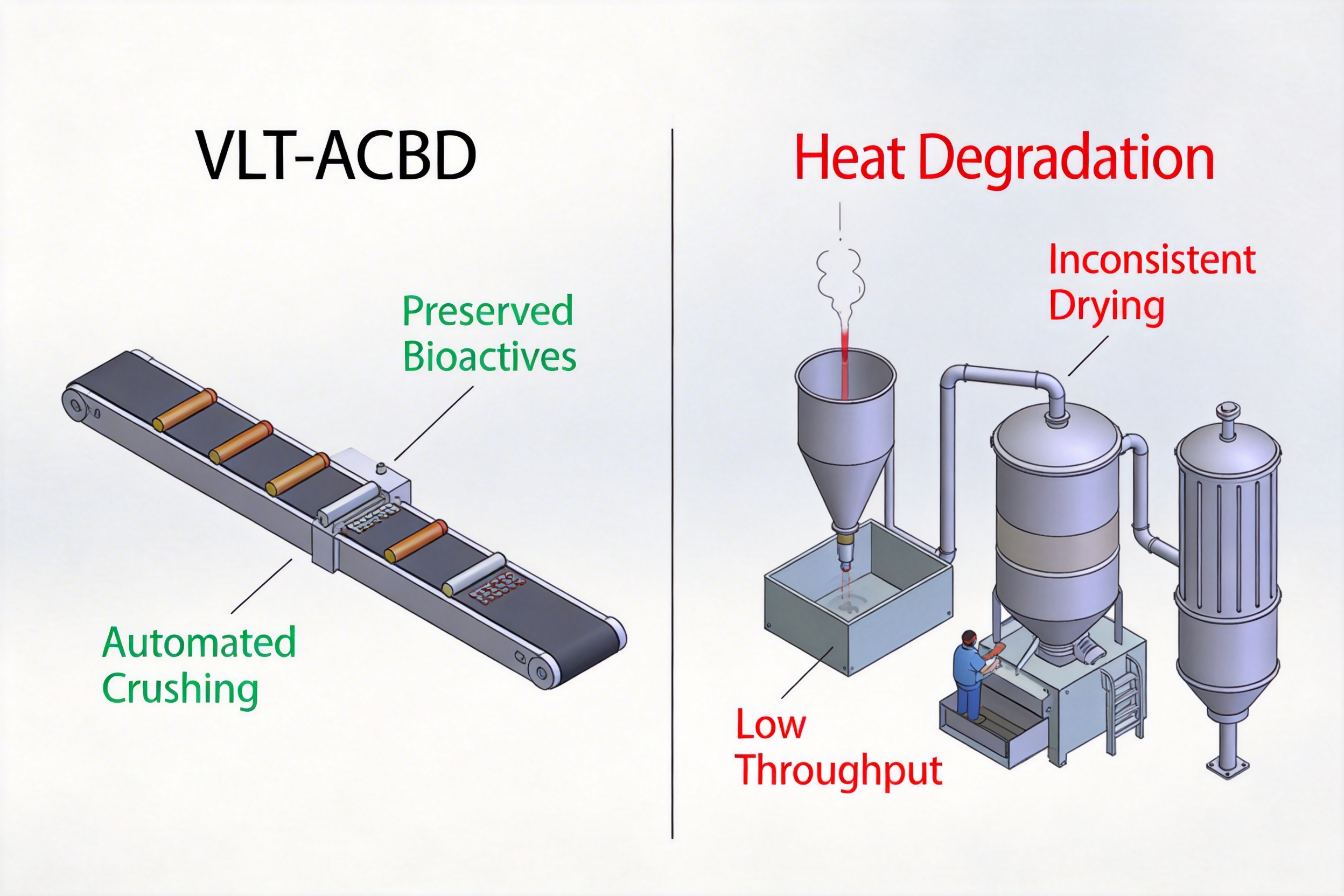
The VLT-ACBD is a cutting-edge drying system engineered specifically for materials that are difficult to process with conventional technologies. Its design addresses the limitations of spray drying (high temperature damage, nozzle clogging for viscous materials) and batch dryers (low throughput, inconsistent quality) by combining vacuum conditions, low-temperature heating, continuous belt conveying, and integrated post-drying processing. This system is ideal for natural product extracts, probiotics, enzymes, high-viscosity liquids, thermoplastic materials, and agglomeration-prone substances—all of which require gentle handling to retain their functional and sensory properties.
At the core of the VLT-ACBD is its ability to dry materials in a closed, vacuum environment at temperatures ranging from 20°C to 80°C. This low-temperature range ensures that heat-sensitive components remain intact, while the vacuum reduces the boiling point of water, accelerating drying without the need for high heat. The continuous belt system allows for uninterrupted feeding and discharging, making it suitable for large-scale industrial production.
Key Design Features and Operational Principles
The VLT-ACBD’s performance is rooted in its innovative design, which integrates multiple systems to ensure efficiency, quality, and automation. Below is a breakdown of its key features and how they work together to deliver superior drying results.
1. Vacuum Enclosed Environment
The dryer operates under a high vacuum (900–4000 Pa), which serves two critical purposes:
- It lowers the boiling point of water, allowing drying at temperatures as low as 20°C. This is crucial for preserving heat-sensitive compounds like vitamins, enzymes, and volatile oils.
- It eliminates oxygen from the drying chamber, preventing oxidation of unsaturated fatty acids, antioxidants, and other sensitive molecules. This preserves the color, aroma, and nutritional value of the final product.
2. Low-Temperature Heating System
The heating system uses superheated water as the medium, providing uniform, gentle heat to the drying belts. The temperature is precisely controlled between 20°C and 80°C, ensuring that even the most fragile materials are dried without degradation. Unlike spray drying, which uses hot air (150–200°C) that can denature proteins or evaporate volatile compounds, the VLT-ACBD’s low-temperature approach maintains product integrity.
3. Continuous Belt Conveying System
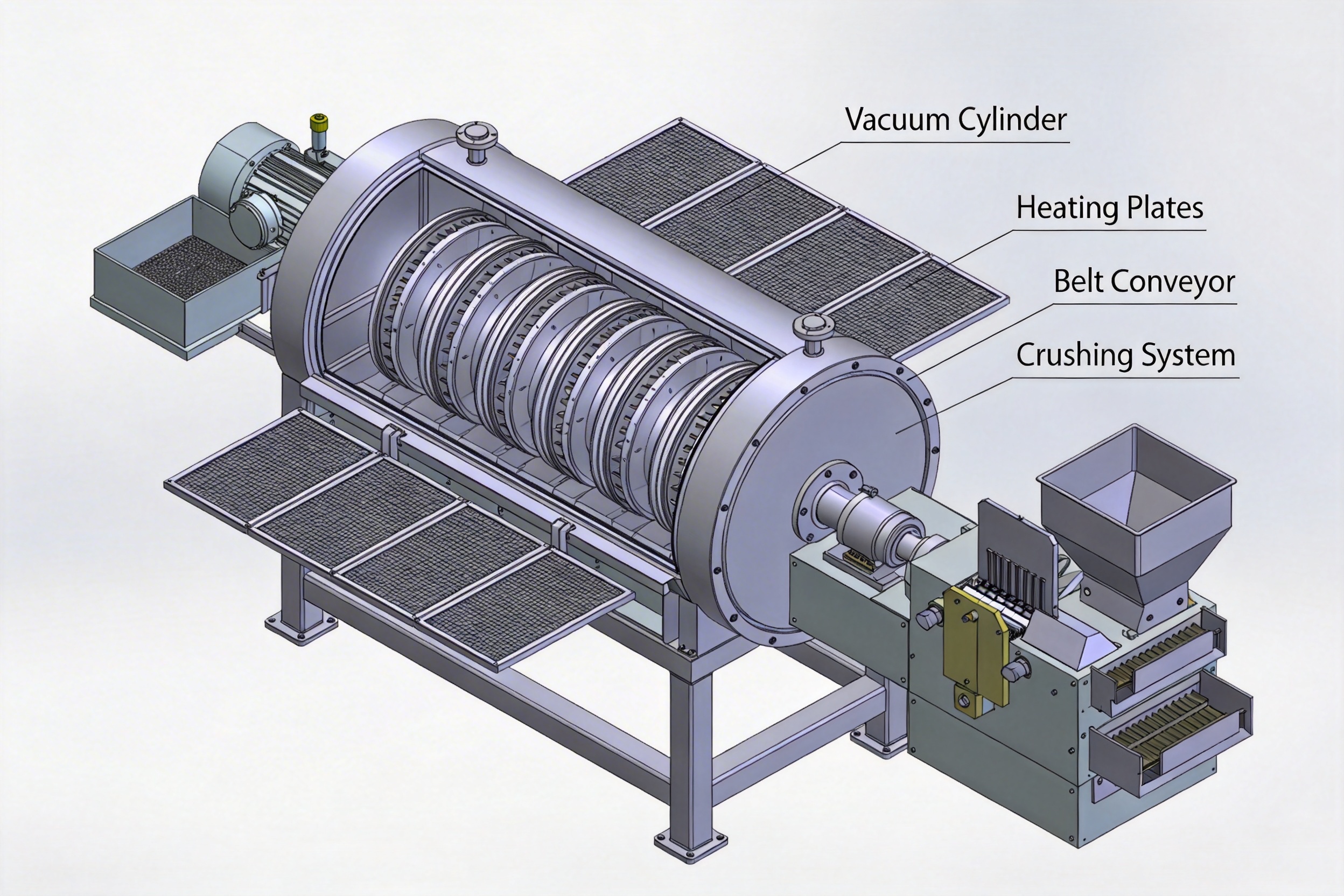
The dryer features multiple layers of stainless steel belts (ranging from 6 to 10 layers, depending on the model) that move at an adjustable speed (100–1500 mm/min). This system ensures even distribution of the material across the belts, leading to uniform drying. The belts are designed to be flexible, allowing the dry material cake to peel off naturally when the belt folds back at the discharge end—eliminating the need for manual scraping or mechanical removal.
4. Integrated Crushing and Classification System
Unlike many dryers that require separate post-drying processing, the VLT-ACBD includes an integrated crushing system. After the dry cake peels off the belt, it is cut into smaller pieces by an up-down moving cutting device. These pieces then pass through a first-level crusher to produce a coarse powder, followed by a second-level crusher to achieve the desired particle size. This integration streamlines the production process, reduces labor costs, and minimizes product contamination.
5. PLC-Based Automation Control
The entire system is controlled by a programmable logic controller (PLC) with a user-friendly interface. This allows for precise adjustment of key parameters, including:
- Vacuum degree
- Heating temperature
- Belt speed
- Crushing intensity
The PLC also logs all operational data, which is essential for compliance with regulatory standards (e.g., GMP for pharmaceutical and food industries).
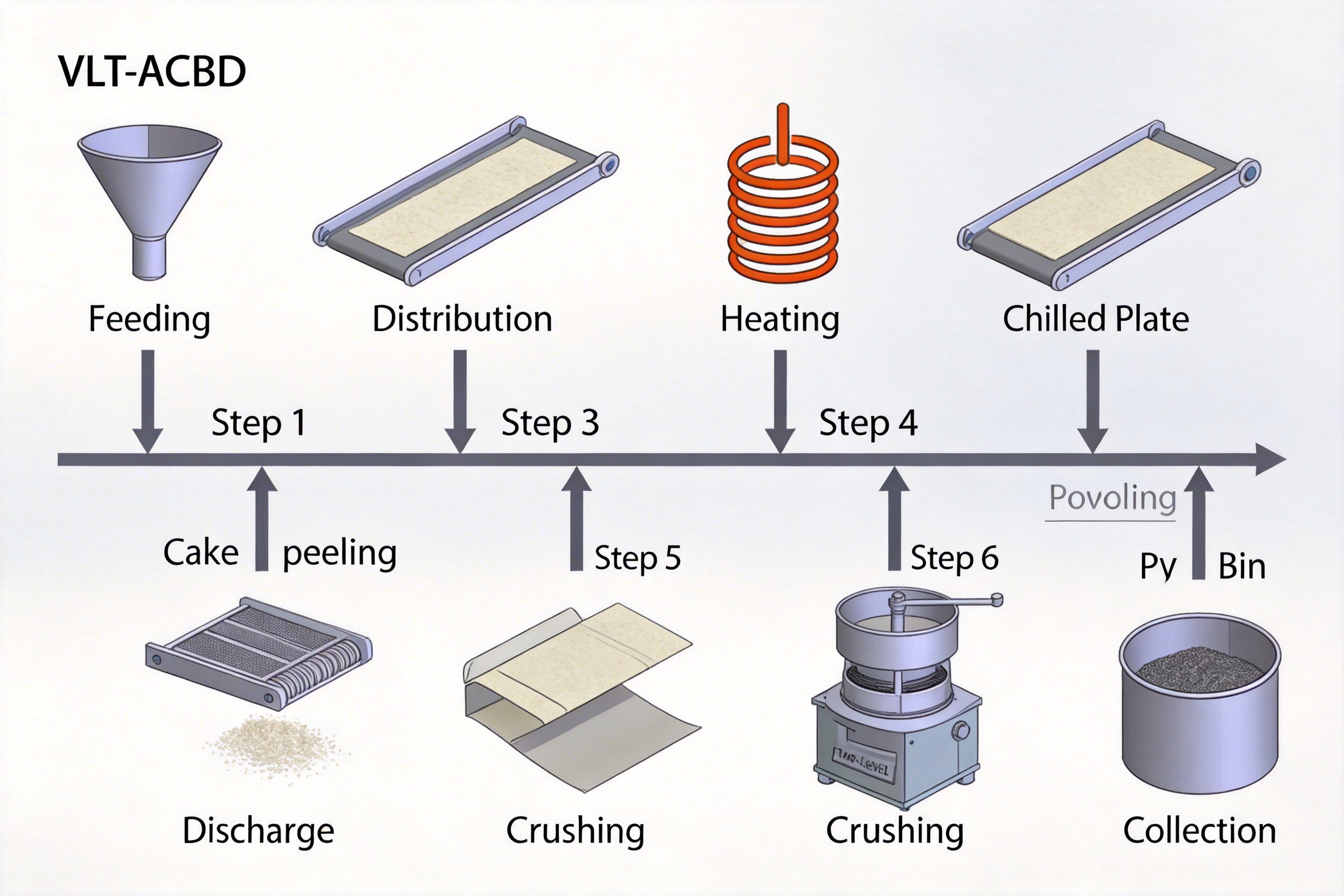
Material Handling Process Step-by-Step
To understand the VLT-ACBD’s efficiency, let’s walk through its material handling process:
1. Feeding: The material is fed into the batching system under high vacuum to prevent air entry. This ensures that the vacuum environment is maintained throughout the process.
2. Distribution: The feeding and distribution system evenly spreads the material onto the top drying belt. The material is distributed in a thin layer to maximize heat transfer and drying efficiency.
3. Heating: The belt moves through heating plates (superheated water) at the set temperature. Water evaporates from the material, and the vapor is captured by the condensing system.
4. Cooling: After heating, the material passes through cooling plates to reduce its temperature. This prevents agglomeration or melting of thermoplastic materials and makes the product easier to handle.
5. Discharge: When the belt folds back at the end of the cooling section, the dry material cake peels off naturally. This is a key advantage of the belt design—no manual intervention is needed to remove the product.
6. Crushing: The cake is cut into small pieces by the cutting device, then crushed by the first-level crusher into a coarse powder. A vacuum butterfly valve controls the flow to the second-level crusher, which grinds the powder to the desired particle size.
7. Collection: The final product is collected in the second-level material bin, ready for packaging or further processing.
Equipment Composition
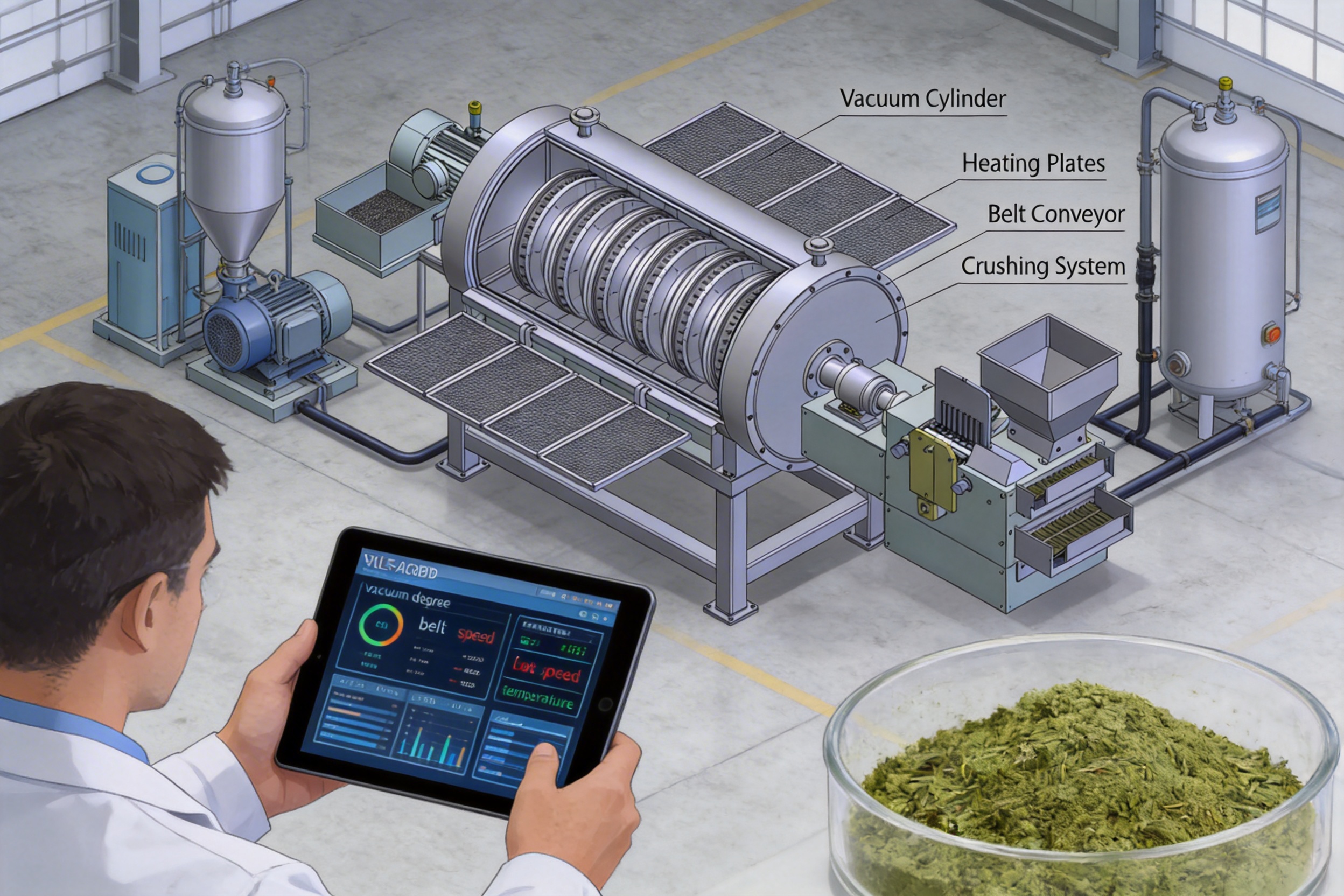
The VLT-ACBD consists of three main components: the main machine, auxiliary systems, and the PLC control box.
- Main Machine: Includes the vacuum cylinder (the enclosed drying chamber), batching system, feeding and distribution system, material belt conveying system, measuring system (to ensure accurate feeding), and crushing system.
- Auxiliary Systems: Comprise the vacuum system (to maintain the required vacuum degree), chiller unit (for cooling plates), heating system (superheated water supply), compressed air system (for cleaning and valve operation), and cleaning system (CIP—clean-in-place—for easy maintenance).
- PLC Control Box: Houses the automation software and user interface for controlling all system parameters.
Advantages Over Conventional Drying Technologies
The VLT-ACBD outperforms conventional drying methods in several key areas, making it the preferred choice for processing sensitive materials. Below is a comparative analysis:
1. Vs. Spray Drying
Spray drying is a common method for drying liquids, but it has significant limitations for heat-sensitive materials:
- Temperature: Spray drying uses hot air (150–200°C), which denatures enzymes, destroys volatile compounds, and reduces the efficacy of bioactive molecules. The VLT-ACBD operates at 20–80°C, preserving product quality.
- Material Compatibility: High-viscosity materials (e.g., honey, plant extracts) clog spray nozzles, making spray drying impractical. The VLT-ACBD handles these materials easily via its belt conveying system.
- Product Form: Spray drying produces fine powder, which can be difficult to handle and may contain dust. The VLT-ACBD produces a dry cake that is easily crushed to the desired particle size, reducing dust and improving handling.
- Oxidation: Spray drying operates in an atmospheric environment, leading to oxidation of sensitive compounds. The VLT-ACBD’s vacuum environment eliminates oxygen, preserving product stability.
2. Vs. Batch Vacuum Dryers
Batch vacuum dryers are used for small-scale drying, but they lack efficiency and consistency:
- Throughput: Batch dryers require manual loading and unloading, leading to low throughput. The VLT-ACBD’s continuous operation allows for higher production volumes.
- Consistency: Batch dryers often have uneven drying due to variations in material distribution and temperature. The VLT-ACBD’s PLC control and uniform belt conveying ensure consistent product quality.
- Labor: Batch dryers require significant manual labor for loading, unloading, and monitoring. The VLT-ACBD is fully automated, reducing labor costs and human error.
- Post-Drying Processing: Batch dryers produce a dry cake that requires separate crushing. The VLT-ACBD integrates crushing, streamlining the process.
3. Vs. Atmospheric Dryers
Atmospheric dryers operate at atmospheric pressure, which has several drawbacks:
- Temperature: Atmospheric dryers require higher temperatures to evaporate water, leading to product degradation. The VLT-ACBD’s vacuum reduces the boiling point, allowing lower temperatures.
- Drying Time: Atmospheric dryers take longer to dry materials because water evaporates more slowly at higher pressures. The VLT-ACBD’s vacuum accelerates drying, reducing processing time.
- Oxidation: Atmospheric dryers expose materials to oxygen, causing oxidation and loss of quality. The VLT-ACBD’s vacuum environment prevents this.
Technical Specifications
The VLT-ACBD is available in multiple models, each tailored to different production volumes and material properties. Below is a detailed table of technical specifications for the liquid drying models:
| Basic Parameters | SUNZDG-6-80 | SUNZDG-6-100 | SUNZDG-7-130 | SUNZDG-7-160 | SUNZDG-8-180 | SUNZDG-9-200 | SUNZDG-10-230 |
|---|---|---|---|---|---|---|---|
| Total Heat Transfer Area (m²) | 88.5 | 101.6 | 131.8 | 161.0 | 184.0 | 207.0 | 230.0 |
| Effective Heating Area (m²) | 70.0 | 87.0 | 104.7 | 116.0 | 142.8 | 160.0 | 178.5 |
| Effective Cooling Area (m²) | 9.9 | 13.3 | 15.6 | 17.8 | 25.2 | 28.4 | 31.5 |
| Condensing Area (m²) | 42.0 | 50.0 | 60.0 | 70.0 | 85.0 | 95.0 | 110.0 |
| Water Evaporation Rate (kg/h) | 60-90 | 80-110 | 90-135 | 110-150 | 130-180 | 150-210 | 160-230 |
| Belt Width (mm) | 1200 | 1200 | 1365 | 1365 | 1365 | 1365 | 1365 |
| Belt Layers | 6 | 6 | 7 | 7 | 8 | 9 | 10 |
| Equipment Diameter (mm) | 2400 | 2400 | 2800 | 2800 | 3000 | 3500 | 3600 |
| Equipment Length (mm) | 13500 | 16500 | 15000 | 16500 | 18000 | 18000 | 18000 |
| Heating & Cooling Sections | 4 heating + 1 cooling | 4 heating + 1 cooling | 4 heating + 1 cooling | 4 heating + 1 cooling | 5 heating + 1 cooling | 5 heating + 1 cooling | 5 heating + 1 cooling |
| Heating Medium | Superheated Water | Superheated Water | Superheated Water | Superheated Water | Superheated Water | Superheated Water | Superheated Water |
| Steam Consumption (kg/h) | 90-135 | 120-165 | 135-200 | 165-225 | 195-270 | 225-315 | 240-345 |
| Heating Temperature Range (°C) | 40-125 | 40-125 | 40-125 | 40-125 | 40-125 | 40-125 | 40-125 |
| Belt Speed Range (mm/min) | 100-1500 | 100-1500 | 100-1500 | 100-1500 | 100-1500 | 100-1500 | 100-1500 |
| Feed Moisture Content (%) | <=40 | <=40 | <=40 | <=40 | <=40 | <=40 | <=40 |
| Product Moisture Content (%) | <=4 | <=4 | <=4 | <=4 | <=4 | <=4 | <=4 |
| Cleaning Pressure (MPa) | 0.6 | 0.6 | 0.6 | 0.6 | 0.6 | 0.6 | 0.6 |
| Compressed Air Pressure (MPa) | 0.7 | 0.7 | 0.7 | 0.7 | 0.7 | 0.7 | 0.7 |
| Vacuum Degree Range (Pa) | 1240-4800 | 1240-4800 | 1240-4800 | 1480-5400 | 1480-5400 | 1480-5400 | 1480-5400 |
| Total Installed Power (kW) | 68 | 70 | 85 | 90 | 120 | 130 | 110 |
| Cooling Water Consumption (t/h, 25°C) | 18 | 20 | 23 | 25 | 30 | 35 | 40 |
| Total Weight (t) | Main body:25.0; Auxiliary part:8.0 | Main body:32.0; Auxiliary part:9.0 | Main body:35.0; Auxiliary part:10.0 | Main body:40.0; Auxiliary part:10.0 | Main body:45.0; Auxiliary part:11.0 | Main body:50.0; Auxiliary part:12.0 | Main body:55.0; Auxiliary part:13.0 |
Manufacturer’s Advanced Manufacturing Capabilities
The VLT-ACBD is manufactured by a leading global provider of intelligent equipment for the biology and medical industries, with a focus on process technology and automation engineering. The manufacturer’s strengths lie in its ability to deliver high-quality, customized solutions that meet the unique needs of its customers. Below are some of its key capabilities:
1. EPC/EPCM Turnkey Solutions
The manufacturer specializes in Engineering, Procurement, and Construction (EPC) and Engineering, Procurement, and Construction Management (EPCM) turnkey projects. This means it can provide end-to-end solutions for plant extraction, biological fermentation, pharmaceutical engineering, natural food production, and environmental protection. From process design to equipment installation and line debugging, the manufacturer handles every step of the project, ensuring seamless integration and optimal performance.
2. Pilot Production Workshop and R&D Platform
The manufacturer operates a state-of-the-art pilot production workshop that meets GMP (Good Manufacturing Practices) standards. This facility allows customers to test their materials with the VLT-ACBD before investing in a full-scale system. The R&D team works closely with customers to optimize process parameters (e.g., belt speed, temperature, vacuum degree) for their specific materials, ensuring maximum efficiency and product quality. The pilot line also supports research and development of new drying technologies, keeping the manufacturer at the forefront of industry innovation.
3. Advanced Manufacturing Equipment
The manufacturer uses cutting-edge equipment to produce the VLT-ACBD, ensuring precision and reliability. Key equipment includes:
- Plasma Argon Arc Welding Machine: Used to weld the vacuum cylinder, ensuring leak-proof seals and high structural integrity.
- Plasma Cutting Machine: For precise cutting of stainless steel components, ensuring accurate dimensions.
- CAM CNC Machining Center: For machining complex parts with high precision, ensuring smooth operation of the belt conveying and crushing systems.
These advanced tools enable the manufacturer to produce high-quality equipment that meets international standards.
4. Mature Product Line and R&D Focus
In addition to the VLT-ACBD, the manufacturer offers a range of mature products, including complete fermentation systems, evaporation and concentration equipment, extraction equipment, separation and crystallization equipment, filtration equipment, and containers. The company invests heavily in R&D, focusing on improving existing products and developing new technologies in vacuum drying, fermentation, extraction, and concentration. It also absorbs foreign advanced technology to enhance its product offerings and maintain a competitive edge.
5. Comprehensive After-Sales Service
The manufacturer provides comprehensive after-sales service to ensure the long-term performance of its equipment. This includes:
- Installation and commissioning
- Operator training
- Regular maintenance
- Spare parts supply
- Technical support
The company’s global service network ensures that customers receive prompt assistance wherever they are located.
Q&A Section
Below are answers to common questions about the Vacuum Low-Temperature Automatic Continuous Belt Dryer:
Q1: What types of materials are most suitable for this dryer?
A1: The dryer is ideal for heat-sensitive natural extracts (e.g., herbal medicines, green tea extracts), probiotics, enzymes, high-viscosity liquids (e.g., honey, fruit purees), thermoplastic materials, and agglomeration-prone substances. It is not suitable for materials that require high-temperature drying (e.g., some industrial chemicals) or materials that are incompatible with vacuum environments.
Q2: How does the dryer preserve the quality of heat-sensitive materials?
A2: The dryer uses two key mechanisms to preserve quality:
1. Low-Temperature Drying: Operating at 20–80°C, it avoids the high temperatures that denature enzymes, destroy volatile compounds, and degrade bioactive molecules.
2. Vacuum Environment: Eliminates oxygen, preventing oxidation of unsaturated fatty acids, antioxidants, and other sensitive compounds. This preserves the color, aroma, and nutritional value of the final product.
Q3: What is the difference between this continuous dryer and batch dryers?
A3: The main differences are:
- Throughput: Continuous dryers have higher throughput, making them suitable for large-scale production.
- Consistency: Continuous dryers provide uniform drying due to PLC control and even belt conveying.
- Labor: Continuous dryers are fully automated, reducing labor costs and human error.
- Post-Drying Processing: Continuous dryers integrate crushing, eliminating the need for separate post-drying steps.
Q4: Can the manufacturer provide turnkey project solutions?
A4: Yes, the manufacturer specializes in EPC/EPCM turnkey projects. It can provide end-to-end solutions for plant extraction, biological fermentation, pharmaceutical engineering, and other industries, including process design, equipment supply, installation, commissioning, and training.
Q5: What is the typical product moisture content achievable with this dryer?
A5: The dryer can achieve a product moisture content of ≤4% for most materials, which meets the requirements of the food, pharmaceutical, and nutraceutical industries.
Q6: What are the main auxiliary systems included with the dryer?
A6: The auxiliary systems include:
- Vacuum system (to maintain the required vacuum degree)
- Chiller unit (for cooling plates)
- Heating system (superheated water supply)
- Compressed air system (for cleaning and valve operation)
- Cleaning system (CIP—clean-in-place—for easy maintenance)
Q7: Does the dryer have automated control features?
A7: Yes, the dryer is controlled by a PLC with a user-friendly interface. It allows for precise adjustment of key parameters (vacuum degree, temperature, belt speed, crushing intensity) and logs all operational data for compliance with regulatory standards.
Q8: What cleaning and maintenance requirements does the dryer have?
A8: The dryer is equipped with a CIP (clean-in-place) system, which allows for easy cleaning without disassembly. Regular maintenance includes checking the vacuum seals, lubricating moving parts, and replacing filters. The manufacturer provides detailed maintenance guidelines and training to ensure proper care of the equipment.
References
1. Smith, J. A., & Johnson, L. M. (2022). Heat-Sensitive Material Drying: Evaluating Vacuum vs. Spray Drying Technologies. Journal of Agricultural and Food Chemistry, 70(12), 3245-3258.
2. International Society of Pharmaceutical Engineers (ISPE). (2020). Good Manufacturing Practices (GMP) for Equipment in Pharmaceutical Production. ISPE Press.
3. Lee, S. H., Park, J. H., & Kim, Y. S. (2021). Continuous Belt Dryers for Natural Extracts: Process Optimization and Quality Preservation. Industrial & Engineering Chemistry Research, 60(45), 16523-16531.
4. Zhang, W., Li, Y., & Wang, Z. (2023). Vacuum Drying Systems: Advancements in Automation and Energy Efficiency. Chemical Engineering Transactions, 99, 123-128.