
 英语
 俄语
Content
- 1 Why Low-Temperature Vacuum Concentration Matters
- 2 Complete System Configuration
- 3 Product Advantages Compared with Conventional Concentration Equipment
- 4 Technical Specifications
- 5 Applications in Plant Extraction
- 6 Applications in Biological Processing
- 7 Applications in Food and Beverage Processing
- 8 Applications in Pharmaceutical and Fine Chemical Production
- 9 Manufacturing Strengths and Engineering Capability
- 10 Operating Principles and Process Control
- 11 Cleaning, Maintenance, and Hygienic Operation
- 12 Energy and Solvent Recovery Considerations
- 13 How to Select the Appropriate Model
- 14 Installation and Commissioning
- 15 Quality and Safety Considerations
- 16 Frequently Asked Questions
- 16.1 What materials can be processed in this vacuum evaporator?
- 16.2 Why is vacuum used during evaporation?
- 16.3 Does vacuum concentration completely prevent degradation?
- 16.4 What is the listed vacuum range?
- 16.5 What is the capacity range?
- 16.6 Can the equipment recover solvent?
- 16.7 Is the system suitable for laboratory work?
- 16.8 Can the evaporator be connected to a complete production line?
- 16.9 How should the final concentration be determined?
- 16.10 What should be considered when processing foaming materials?
- 16.11 How is the equipment cleaned?
- 16.12 What manufacturing capabilities does the supplier have?
- 17 Conclusion
- 18 References
- 19 Product: Vacuum Low-Temperature Reduced Pressure Evaporator for Herb Juice Biological Liquid Heat Sensitive Materials
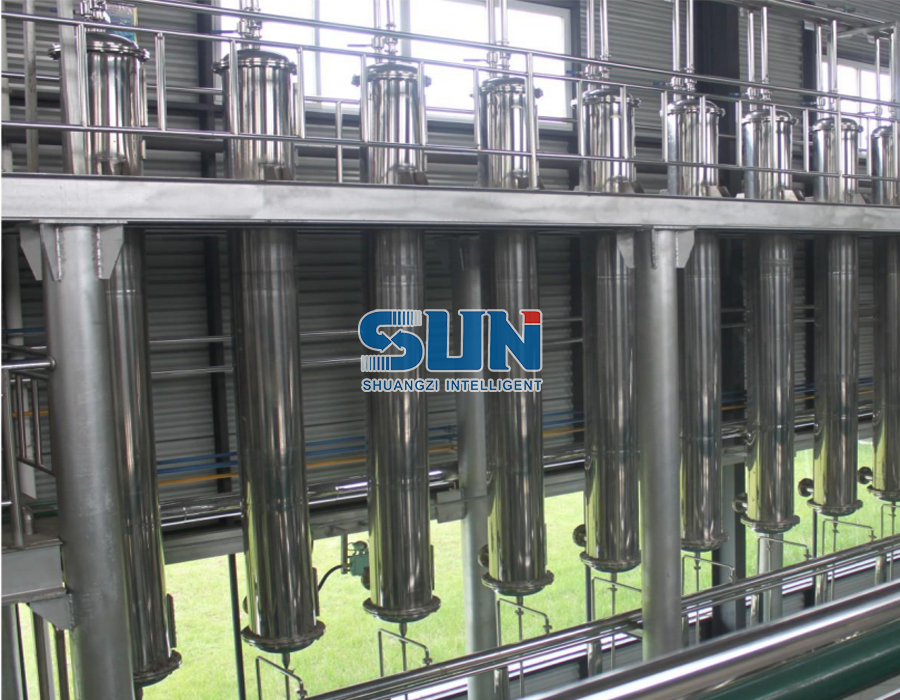
In the processing of herbal extracts, biological liquids, fruit and vegetable juices, pharmaceutical intermediates, and other specialty fluids, concentration is often necessary to increase solids content, reduce transportation volume, improve storage stability, or prepare a material for a subsequent drying or formulation stage. However, concentration can also become a major source of quality loss. Excessive heat may degrade active ingredients, change natural color, drive off valuable aromas, accelerate oxidation, or cause unwanted reactions between sensitive components.
The vacuum low-temperature reduced-pressure evaporator described in this article is designed to address those challenges. By creating a controlled negative-pressure environment, the complete evaporation system allows liquid materials to boil and evaporate at a lower temperature than they would under atmospheric pressure. This operating principle makes the equipment particularly suitable for heat-sensitive and easily oxidized materials, including traditional Chinese medicine extracts, biological preparations, fruit and vegetable juices, natural flavors, and selected dyes.
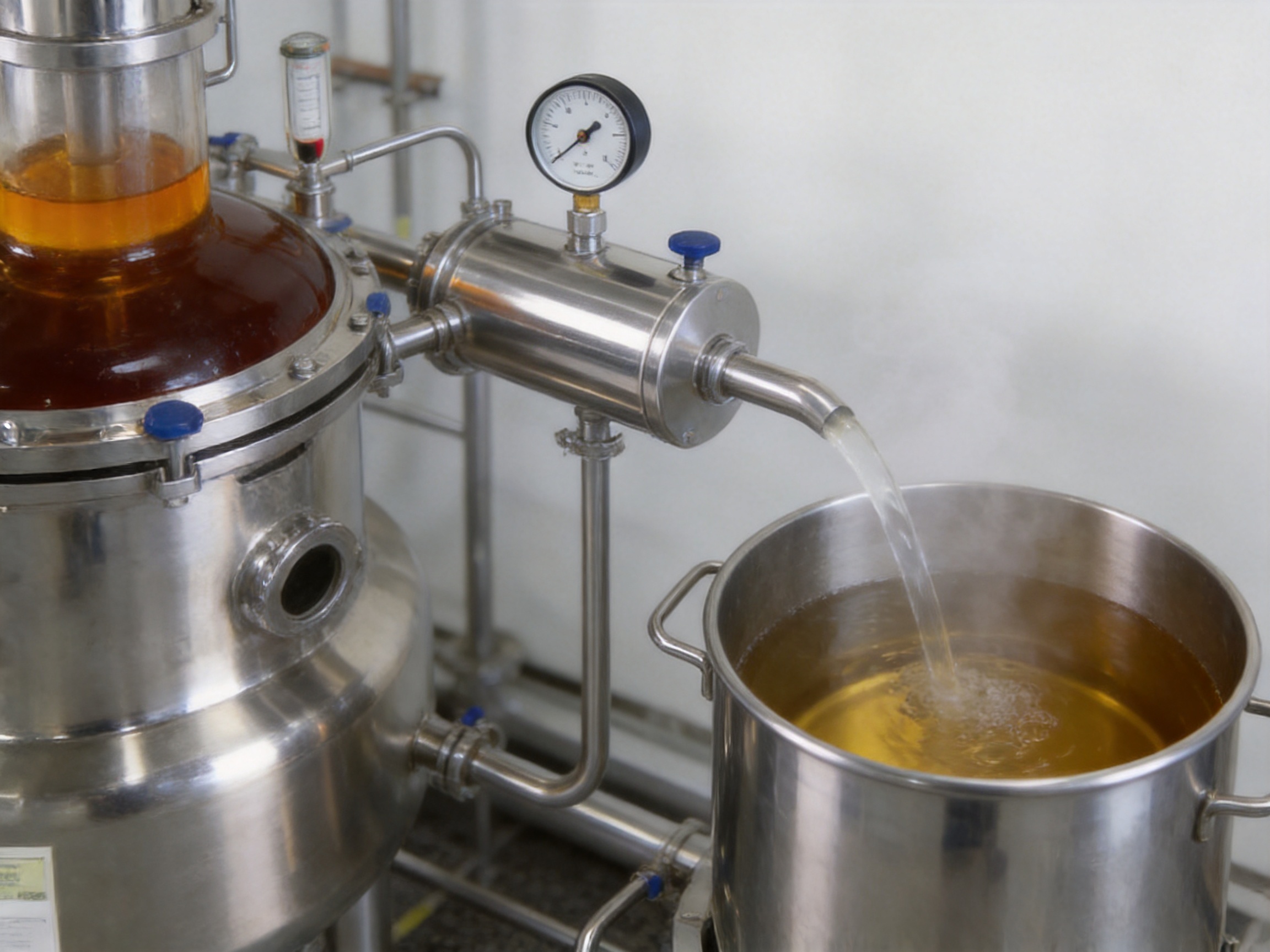
The system combines a polished stainless-steel evaporation unit, vacuum equipment, condenser, receiving tank, transfer pump, and matched pipelines. Its integrated configuration provides a compact process solution for laboratories, pilot plants, research institutions, and small- to medium-batch production facilities. Available models range from 50 to 1,000 liters, allowing users to select a working volume appropriate to their process-development or production requirements.
Manufactured by Zhejiang Shuangzi Intelligent Equipment Co., Ltd., the evaporator is part of a broader portfolio of plant extraction, fermentation, pharmaceutical, food, drying, separation, and turnkey engineering equipment. The company combines process design, equipment manufacture, system integration, installation, commissioning, and engineering services to support customers from individual equipment selection through complete production-line implementation.
Why Low-Temperature Vacuum Concentration Matters
Evaporation is a thermal separation process in which a solvent, normally water or another volatile liquid, is removed from a solution. In a conventional open vessel, the material is heated at or near atmospheric pressure. Water boils at approximately 100°C under standard atmospheric conditions, although the actual boiling point varies with altitude, dissolved solids, and liquid composition. Many biological and natural products cannot tolerate prolonged exposure to such temperatures.
Plant extracts may contain polysaccharides, flavonoids, alkaloids, glycosides, proteins, enzymes, essential oils, pigments, and other compounds with different thermal stability profiles. Biological preparations may contain active substances whose structure or activity changes when exposed to high heat. Fruit and vegetable juices often contain volatile aroma components and natural pigments that are vulnerable to thermal degradation. A conventional high-temperature concentration process can therefore produce a technically concentrated liquid that no longer has the same activity, flavor, color, or nutritional profile as the original material.
A vacuum evaporator lowers the pressure above the liquid. As pressure decreases, the boiling point of the solvent also decreases. The liquid can therefore evaporate at a lower product temperature while still achieving effective solvent removal. This does not eliminate the need for heat transfer, but it reduces the thermal burden on the processed material.
The reduced-pressure method offers several important benefits:
1. It helps protect heat-sensitive active ingredients during concentration.
2. It reduces the risk of excessive oxidation by enabling operation in a closed, low-pressure process environment.
3. It helps retain natural flavors and volatile components that may otherwise be lost at elevated temperatures.
4. It can reduce color darkening, scorching, and heat-induced chemical reactions.
5. It supports recovery of evaporated solvent through the condenser.
6. It provides a controllable process for products requiring gentle concentration rather than aggressive boiling.
Actual operating temperature depends on vacuum level, material composition, solids concentration, heating-medium conditions, feed characteristics, and process configuration. For this reason, users should establish product-specific temperature and pressure parameters during laboratory or pilot testing rather than relying on a single universal setting.
Complete System Configuration
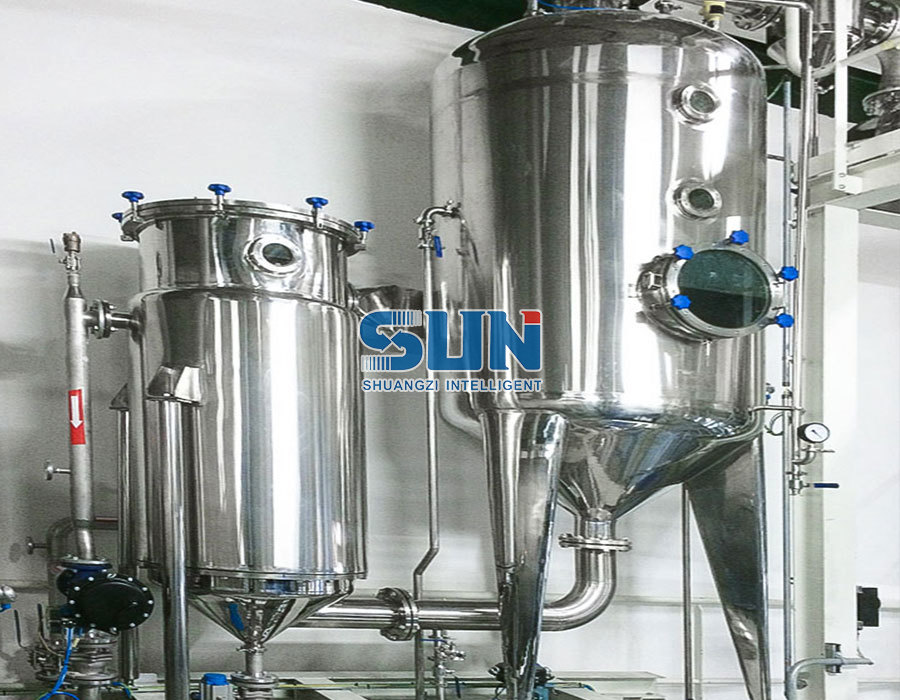
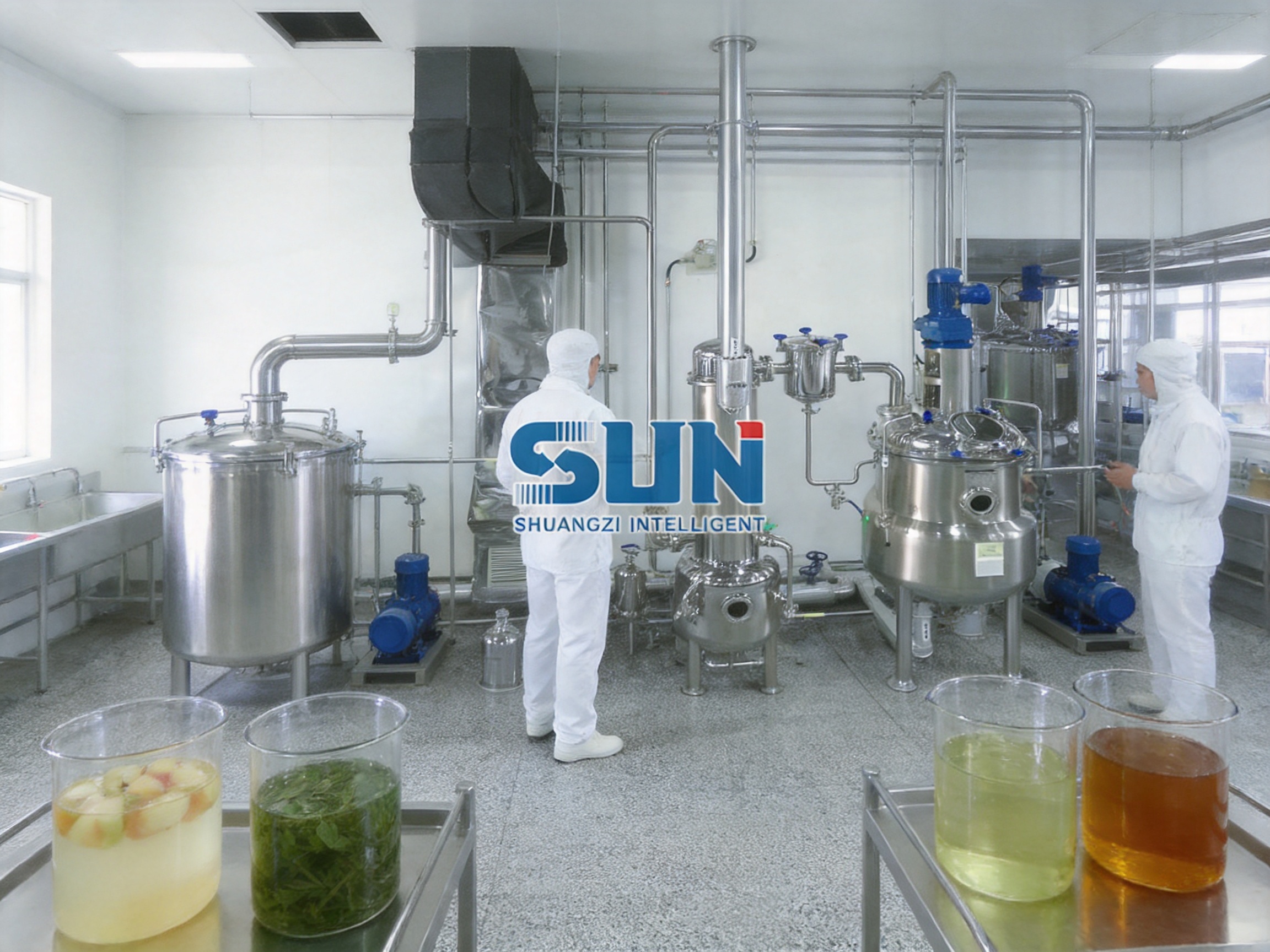
The supplied equipment is not simply an evaporation vessel. It is a coordinated system consisting of the main evaporation unit, vacuum unit, condenser, liquid receiving tank, transfer pump, and matched pipelines. This complete arrangement reduces the need for users to source and connect multiple unrelated components from different suppliers.
Evaporation Main Unit
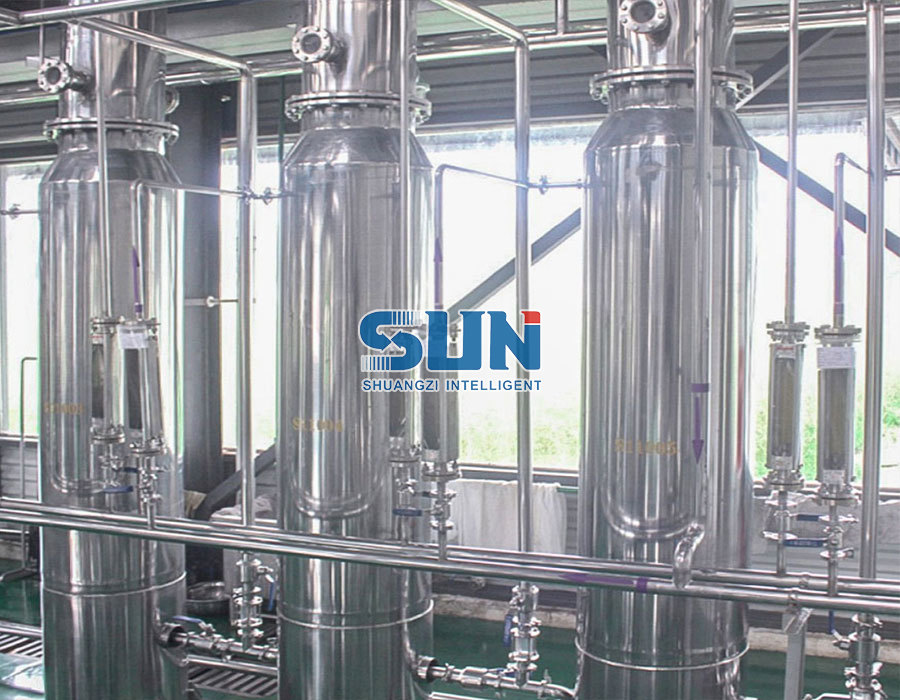
The evaporation main unit is the core section in which the feed liquid receives heat and undergoes solvent evaporation. The equipment is manufactured from mirror-polished stainless steel. This finish supports hygienic operation, improves cleanability, and reduces the likelihood of material retention on internal surfaces when compared with rough or poorly finished surfaces.
The vessel is equipped with a heating jacket. The jacket transfers heat to the product through the vessel wall without requiring direct contact between the heating medium and the processed liquid. The listed jacket pressure is 0.09 MPa. Heating conditions should be selected according to the material, desired evaporation rate, and applicable process-safety requirements.
Vessel sizes are available in nominal volumes of 50, 100, 200, 300, 500, 700, and 1,000 liters. This range covers laboratory-scale development, pilot production, and small- to medium-batch manufacturing. The selection of a model should consider not only nominal vessel volume but also usable working volume, foaming tendency, expansion behavior, feed concentration, batch cycle time, and required headspace.
Vacuum Unit
The vacuum unit creates the negative-pressure environment needed for low-temperature evaporation. The listed vacuum degree is 600–700 mmHg. The achievable working condition may vary according to pump performance, system sealing, condenser temperature, material vapor load, ambient conditions, and the presence of non-condensable gases.
Stable vacuum control is important because sudden pressure changes may cause violent boiling, foaming, entrainment, or unstable product flow. A properly designed vacuum system allows the operator to establish and maintain a suitable pressure condition for the specific liquid being processed.
For materials with high foaming potential, the operator should use appropriate feed rates, loading levels, and pressure-ramp procedures. In process development, it is also useful to record vacuum level, product temperature, heating-medium conditions, condensate quantity, and batch time so that the concentration cycle can be reproduced consistently.
Condenser
The condenser receives the vapor generated during evaporation and converts it back into liquid. Condensation prevents the vacuum system from receiving the entire vapor load and allows valuable solvent to be collected in a controlled manner.
The listed condensation areas range from 1.2 to 4.1 square meters across the seven available models. The actual condensation performance depends on vapor composition, vapor flow rate, cooling-medium temperature, fouling condition, and the temperature difference between the vapor and cooling medium.
When the evaporated phase contains water, the condensate can often be collected for treatment, reuse, or appropriate disposal, subject to the composition of the original feed and the requirements of the process. If the evaporated phase contains an organic solvent, the recovery and handling system must be designed in accordance with the solvent’s flammability, toxicity, vapor pressure, and applicable safety regulations.
Liquid Receiving Tank
The receiving tank collects condensed liquid after it leaves the condenser. Its listed capacities range from 35 to 165 liters. The receiving volume is matched to the different evaporator models, allowing the system to collect condensate without requiring an entirely separate recovery arrangement.
A dedicated receiving tank also helps separate the recovered solvent from the product side of the system. This supports process monitoring and makes it easier to measure condensate volume, assess evaporation progress, and manage downstream liquid handling.
Transfer Pump and Pipelines
The transfer pump supports movement of feed, concentrated product, or recovered liquid according to the selected process arrangement. Matched pipelines connect the primary components into one coordinated system. Integrated piping simplifies installation and reduces the risk of connection errors that may occur when equipment is assembled from unrelated components.
For sanitary or pharmaceutical applications, pipeline design should be reviewed with regard to drainability, dead legs, internal surface finish, gasket materials, clean-in-place requirements, and compatibility with cleaning and sanitizing agents. For viscous extracts, pump selection should also consider viscosity changes during concentration, temperature-dependent flow behavior, solids content, and shear sensitivity.
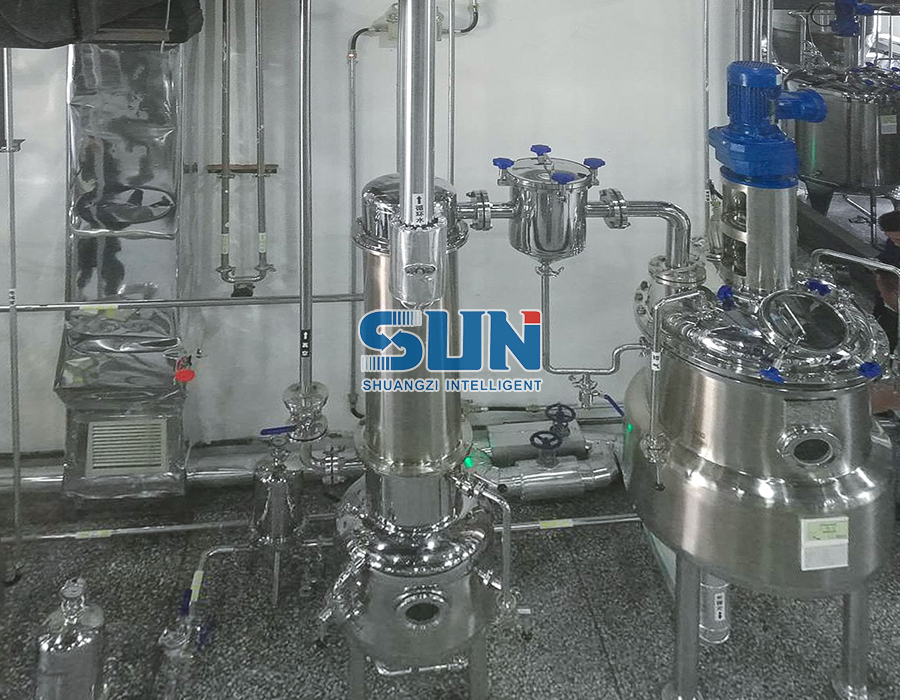
Vacuum Low-Temperature Reduced Pressure Evaporator for Herb Juice Biological Liquid Heat Sensitive Materials
Product Advantages Compared with Conventional Concentration Equipment
Gentler Thermal Treatment
The primary advantage of this evaporator is its ability to concentrate under reduced pressure. Compared with an open atmospheric vessel, the vacuum process can achieve evaporation at a lower product temperature. This is particularly valuable when the commercial value of the material depends on its biological activity, aroma, natural color, or chemical stability.
A lower-temperature process does not mean that all degradation is eliminated. Every product has its own thermal and oxidative stability limits. Nevertheless, reducing the temperature exposure can materially improve the probability of retaining sensitive characteristics, especially when the process is properly controlled and the batch residence time is minimized.
Closed Negative-Pressure Operation
The equipment operates as a closed negative-pressure system rather than an open boiling pan. This configuration limits direct exposure of the product to the surrounding atmosphere and supports solvent recovery through the condenser. It can also help reduce uncontrolled vapor release, external contamination risk, and product contact with excessive air.
Closed operation is especially useful for concentrated herbal liquids and biological preparations that may be sensitive to airborne contamination or oxidation. The exact hygienic and containment performance depends on the complete installation, operating procedures, seals, cleaning practices, and facility environment.
Protection of Natural Characteristics
Many natural products are judged by more than solids content. Their value may also depend on color, aroma, taste, bioactivity, and the ratio of multiple naturally occurring compounds. High-temperature concentration can darken juices, strip volatile aromas, or damage active compounds. Low-temperature vacuum processing provides a more suitable environment for preserving these characteristics.
For fruit and vegetable juices, the process can help retain a fresher sensory profile. For herbal extracts, it can support the preservation of active effective ingredients and natural flavors. For biological liquids, it can reduce the thermal stress associated with conventional concentration. Product-specific validation remains necessary, but the operating principle is well suited to these applications.
Flexible Capacity Selection
The seven model sizes provide a practical progression from 50 to 1,000 liters. This is an advantage over systems available only in one large production size or one small laboratory size. Researchers can begin with a smaller unit and later move to a larger model while maintaining a similar overall process concept.
The equipment is suitable for laboratory research, pilot-scale trials, small-batch production, and selected medium-batch applications. Capacity should be selected according to actual working volume rather than nominal volume alone. A unit with too little headspace may experience foaming or entrainment, while an oversized unit may provide inefficient heat transfer during small batches.
Compact and Cleanable Construction
The complete system has a compact structure and is designed for easy disassembly and cleaning. Mirror-polished stainless-steel surfaces support hygienic maintenance and reduce the accumulation of residue. These features are important for facilities that process multiple products or operate under strict cleaning requirements.
Easy cleaning also contributes to production flexibility. Herbal extracts, juices, biological materials, and dyes can leave different kinds of deposits. A system that is accessible and straightforward to disassemble can reduce cleaning downtime and help operators verify that product residues have been removed before the next batch.
Integrated Engineering Approach
A major difference between a single vessel and a complete evaporation solution is the level of engineering coordination. The vacuum source, condenser, receiving tank, transfer pump, and pipelines must work together. Poor matching can limit throughput, create unstable vacuum conditions, increase foaming, or produce insufficient condensation.
The integrated configuration supplied with this evaporator provides a coordinated starting point. Zhejiang Shuangzi Intelligent Equipment Co., Ltd. can also support process technology, equipment design, matching purchase, installation, system integration, and line commissioning. This capability is valuable for customers who need more than a stand-alone machine.
Technical Specifications
The following table summarizes the principal specifications supplied for the available models. Dimensions are listed as length, width, and height in millimeters.
| Item | ZN-50 | ZN-100 | ZN-200 | ZN-300 | ZN-500 | ZN-700 | ZN-1000 |
|---|---|---|---|---|---|---|---|
| Nominal volume (L) | 50 | 100 | 200 | 300 | 500 | 700 | 1,000 |
| Liquid receiving tank volume (L) | 35 | 45 | 60 | 76 | 100 | 125 | 165 |
| Jacket pressure (MPa) | 0.09 | 0.09 | 0.09 | 0.09 | 0.09 | 0.09 | 0.09 |
| Vacuum degree (mmHg) | 600–700 | 600–700 | 600–700 | 600–700 | 600–700 | 600–700 | 600–700 |
| Heating area (m²) | 0.25 | 0.59 | 0.80 | 1.10 | 1.45 | 1.80 | 2.20 |
| Condensation area (m²) | 1.20 | 1.70 | 2.40 | 3.00 | 3.30 | 3.60 | 4.10 |
| Cooling area (m²) | 0.29 | 0.35 | 0.45 | 0.60 | 0.70 | 0.85 | 1.05 |
| Length (mm) | 1,200 | 1,350 | 1,700 | 1,700 | 2,100 | 2,400 | 2,390 |
| Width (mm) | 600 | 750 | 800 | 1,000 | 1,200 | 1,300 | 1,300 |
| Height (mm) | 2,200 | 2,200 | 2,700 | 3,400 | 3,400 | 3,400 | 3,720 |
These values are reference specifications for model selection. Final equipment configuration may depend on material properties, local utilities, customer requirements, applicable codes, and the selected degree of automation. Before ordering, the user should confirm working volume, heating and cooling utilities, electrical requirements, vacuum-pump arrangement, installation clearance, cleaning method, and required control instruments.
Applications in Plant Extraction
Plant extraction processes often produce dilute liquid extracts that must be concentrated before drying, formulation, filling, or further purification. The raw extract may contain suspended solids, colloids, polysaccharides, pigments, volatile compounds, and active constituents. These components can make the liquid difficult to process in a high-temperature open vessel.
Vacuum concentration can reduce the liquid volume while applying gentler thermal conditions. The concentrated extract may then be transferred to a vacuum dryer, spray dryer, crystallization system, mixing vessel, or filling line, depending on the intended final product.
For traditional Chinese medicine extracts, the process objective may be to increase solids concentration while retaining a suitable balance of active components and natural characteristics. The operator should establish the endpoint using appropriate analytical measurements, such as soluble solids, density, viscosity, moisture content, marker-compound concentration, or other product-specific criteria.
Plant extracts may foam strongly because of proteins, saponins, polysaccharides, or other surface-active substances. Operators should therefore control the feed rate, loading level, vacuum ramp, and heating intensity. Where necessary, upstream filtration or clarification can reduce the solids burden and improve evaporation stability.
Applications in Biological Processing
Biological liquids may include fermentation broths, enzyme-containing solutions, nutrient preparations, botanical biological products, and other materials whose properties can change under heat or oxygen exposure. The reduced-pressure process provides a useful method for removing water while limiting thermal stress.
In biological applications, concentration is only one part of the quality strategy. Sanitary design, cleaning validation, microbial control, material compatibility, and process traceability are also important. The mirror-polished stainless-steel construction and compact arrangement provide a foundation for hygienic operation, but the complete production environment must be designed to meet the applicable quality requirements.
The process may be used after clarification or separation to prepare a liquid for drying, blending, filling, or further purification. Because biological products vary significantly, pilot testing should determine whether the selected vacuum level, heating condition, and residence time preserve the desired activity.
Applications in Food and Beverage Processing
Fruit and vegetable juices are common applications for low-temperature concentration. Removing part of the water can reduce storage and transportation costs, increase soluble-solids content, and prepare the juice for formulation or reconstitution. At the same time, consumers and manufacturers increasingly value fresh flavor, natural color, and nutritional quality.
Vacuum concentration can help protect volatile aroma components and reduce the degree of thermal damage compared with atmospheric evaporation. It is suitable for selected fruit juices, vegetable juices, botanical beverages, natural flavor bases, and specialty food liquids.
Food manufacturers should evaluate the equipment according to the complete process. Feed filtration, hygienic transfer, product-contact materials, cleaning chemicals, condensate handling, and final packaging all influence product safety and quality. The evaporator can serve as one unit operation within a larger food-processing line.
Applications in Pharmaceutical and Fine Chemical Production
Pharmaceutical and fine chemical liquids often require controlled concentration before crystallization, precipitation, drying, or formulation. A vacuum evaporator can provide a contained method for removing solvent and adjusting concentration.
For pharmaceutical use, the process must be matched to the product’s stability profile and regulatory requirements. Important considerations include the grade and traceability of stainless steel, surface finish, gasket and seal compatibility, cleaning procedures, documentation, validation, and the ability to reproduce critical process parameters.
For fine chemicals and dyes, the equipment may be useful where a controlled solvent-removal step is needed. The condenser and receiving tank support the collection of evaporated liquid, while the closed arrangement can reduce uncontrolled emissions. If flammable or hazardous solvents are used, the installation must include appropriate explosion protection, ventilation, grounding, instrumentation, and regulatory compliance measures.
Manufacturing Strengths and Engineering Capability
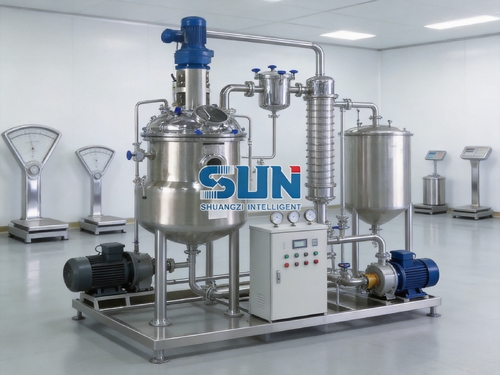
The equipment is produced by Zhejiang Shuangzi Intelligent Equipment Co., Ltd., a Chinese engineering and manufacturing company established in 2007. The company operates from a facility with a stated floor area of approximately 16,706 square meters and a structure area of approximately 17,800 square meters. Its business focuses on process technology, automation engineering design, equipment manufacturing, matched procurement, installation, and equipment system integration.
This broad capability is relevant to the performance of an evaporation system because process equipment quality depends on more than vessel fabrication. Correct sizing, welding, finishing, piping, vacuum integration, control strategy, installation, and commissioning all influence the final result.
Process Technology and Equipment Design
The company’s work covers plant extraction, biological fermentation, pharmaceutical engineering, natural food processing, energy conservation, environmental protection, drying, evaporation, concentration, separation, crystallization, filtration, and related process equipment. Experience across these fields helps connect the evaporator with upstream and downstream operations.
For example, an extraction project may require a filtration step before evaporation and a vacuum drying step afterward. A fermentation project may need clarification, concentration, sterilization, and filling. A natural food project may combine juice preparation, evaporation, cooling, blending, and packaging. An equipment supplier familiar with the complete process can help avoid isolated design decisions that create bottlenecks later in the production line.
Advanced Welding and Finishing Equipment
The company has introduced equipment including plasma argon arc welding machines, plasma cutting machines, and CAM CNC machining centers. These tools support the fabrication of stainless-steel vessels, pipelines, fittings, structural components, and other precision parts.
In hygienic process equipment, welding quality is especially important. Poor welds, excessive heat distortion, crevices, undercutting, or insufficient finishing can create locations where product residue accumulates. Controlled welding and subsequent finishing help produce smoother product-contact surfaces and improve cleanability.
Plasma cutting supports accurate preparation of sheet and plate components. CNC machining supports repeatable fabrication of flanges, connection parts, brackets, and other components that require dimensional consistency. These manufacturing resources contribute to a more controlled production process than purely manual fabrication.
Pilot Production Workshop and Research Platform
The company maintains a pilot production workshop and research and development platform intended to support automation and GMP-related requirements. Pilot facilities are valuable because many liquid products cannot be scaled directly from laboratory glassware to industrial equipment without changes in heat transfer, foaming behavior, residence time, and material handling.
Testing at pilot scale allows users to evaluate feed concentration, vacuum stability, evaporation rate, product temperature, condensate quality, final solids content, and cleaning procedures. It also helps determine whether a single-stage batch process is sufficient or whether additional separation, preheating, filtration, or drying equipment is required.
Turnkey Project Support
Some customers need only an evaporator. Others need a complete extraction, fermentation, pharmaceutical, food, or natural-product production line. The company can provide turnkey project support, including process design, equipment design, equipment supply, installation, line debugging, and system integration.
A turnkey approach can reduce the coordination burden for customers. Instead of separately managing a vessel supplier, vacuum-pump vendor, condenser manufacturer, controls integrator, installation contractor, and commissioning team, the customer can work with one engineering partner for a coordinated solution.
The final scope should be defined clearly in the technical agreement. It may include process flow diagrams, utility lists, equipment layout, electrical requirements, control philosophy, material certificates, welding documentation, factory testing, installation supervision, commissioning, operator training, and after-sales support.
Operating Principles and Process Control
A typical batch begins with loading the prepared liquid into the evaporation vessel. The product level should remain within the recommended operating range to provide adequate headspace for vapor disengagement and foam expansion. The heating medium is then introduced into the jacket, and the system is gradually brought toward the desired vacuum condition.
As pressure falls, the liquid begins to evaporate at a lower temperature. Generated vapor flows to the condenser, where it is cooled and collected in the receiving tank. The concentrated liquid remains in the evaporation vessel until it reaches the target endpoint.
Important process variables include:
1. Product temperature.
2. Vacuum degree and vacuum stability.
3. Heating-medium pressure or temperature.
4. Feed volume and solids concentration.
5. Condenser cooling-medium temperature and flow.
6. Condensate quantity and appearance.
7. Product viscosity and foaming behavior.
8. Batch time and final concentration.
Operators should avoid applying maximum heat simply to shorten the batch. A higher heating rate may increase evaporation, but it can also increase foaming, entrainment, fouling, thermal damage, or product loss. The best operating point is normally established through trials that balance throughput, quality, energy consumption, and cleaning effort.
Controlling Foaming and Entrainment
Foaming is a common issue in natural extracts, biological liquids, and food products. Excessive foam can enter the vapor line, reduce condenser performance, contaminate the condensate, and cause product loss. A large headspace, controlled vacuum reduction, moderate feed loading, and suitable operating procedures can help reduce this risk.
Where the product permits, upstream clarification or filtration may remove particles that promote foaming or nucleation. In some cases, mechanical foam control or a validated food-grade processing aid may be considered. Any additive must be compatible with the product and applicable regulations.
Managing Viscosity Increase
As solvent is removed, the product becomes more concentrated and typically more viscous. Higher viscosity can reduce natural circulation and make heat transfer less efficient. It can also increase the load on the transfer pump and make discharge more difficult.
Users should define the target endpoint with both concentration and flow behavior in mind. If a highly viscous paste is required, the equipment and discharge system should be reviewed accordingly. If the product becomes difficult to pump, it may be more efficient to stop evaporation at an intermediate concentration and complete drying in a separate vacuum or other drying system.
Cleaning, Maintenance, and Hygienic Operation
Cleaning performance is essential when the equipment is used for multiple products. Residual herbal extracts, sugars, proteins, pigments, or concentrated biological solids can harden on heated surfaces if they are not removed promptly. Regular cleaning reduces cross-contamination risk, preserves heat-transfer performance, and extends service life.
The mirror-polished stainless-steel construction supports cleaning, while the compact structure and disassemblable components provide access for inspection. Cleaning procedures should be developed according to the material being processed. A typical program may include a warm pre-rinse, an alkaline or suitable detergent wash, an intermediate rinse, an acid wash when mineral deposits are present, a final rinse, and sanitization where required.
The exact chemicals, temperatures, contact times, and flow rates must be validated against the stainless-steel grade, gasket materials, pump components, and product requirements. Operators should inspect welds, valves, seals, pipelines, condenser passages, and receiving-tank surfaces at scheduled intervals.
Maintenance should include checking vacuum-pump oil or service condition where applicable, inspecting seals and gaskets, verifying pressure and vacuum instruments, cleaning condenser surfaces, checking pump performance, and examining pipelines for leaks or blockage. A stable vacuum depends on the integrity of the entire system, not only the vacuum pump.
Energy and Solvent Recovery Considerations
The evaporator is designed to support energy-conscious processing by concentrating under vacuum and recovering evaporated solvent through condensation. Lower-temperature operation may reduce the thermal intensity required for sensitive products, while the closed arrangement limits uncontrolled vapor loss.
Energy performance depends on many factors, including feed temperature, initial and final solids content, evaporation rate, heating-medium condition, condenser cooling efficiency, insulation, batch size, and operating time. An undersized batch in an oversized vessel may be less efficient than a properly matched load. Similarly, poor condenser cooling can make it difficult to maintain vacuum and increase the workload of the system.
Where practical, users can improve efficiency by preheating the feed with recovered heat, insulating hot surfaces, optimizing batch loading, maintaining clean heat-transfer surfaces, and setting the vacuum ramp according to the material’s foaming behavior. Energy audits should consider the complete process rather than evaluating the evaporator in isolation.
Solvent recovery can have economic and environmental benefits. The receiving tank provides a designated location for collecting condensate, allowing the customer to analyze, reuse, treat, or dispose of it according to its composition. For solvent-based processes, recovery strategy should be designed together with safety systems and regulatory controls.
How to Select the Appropriate Model
Model selection should begin with the required batch size and the expected working volume. The ZN-50 model has a nominal volume of 50 liters, while the ZN-1000 model has a nominal volume of 1,000 liters. Intermediate models provide a gradual capacity range for pilot and production planning.
The following questions help determine the most suitable configuration:
1. What is the normal and maximum feed volume per batch?
2. What is the initial solids concentration and target final concentration?
3. How much foam does the material generate under vacuum?
4. What is the expected viscosity at the concentration endpoint?
5. Is the material sensitive to heat, oxidation, shear, or prolonged residence time?
6. What solvent is being evaporated, and what recovery or safety measures are required?
7. What heating and cooling utilities are available at the installation site?
8. Is manual operation sufficient, or is automatic control required?
9. What cleaning, sanitation, and documentation standards apply?
10. Will the evaporator connect to extraction, fermentation, filtration, drying, or filling equipment?
A pilot trial is recommended for unfamiliar materials. The trial can reveal whether the specified heating area and condensation area are suitable, how quickly the product foams, whether the final concentrate can be discharged effectively, and whether the desired product quality is maintained.
Installation and Commissioning
The installation area should provide sufficient space for operation, inspection, cleaning, maintenance, and removal of components. The listed equipment heights range from 2,200 to 3,720 millimeters, so ceiling height and lifting access must be checked before delivery. The ZN-300 and larger models require particular attention to vertical clearance.
Utilities may include heating medium, cooling water or another cooling source, electrical power, vacuum service, drainage, and ventilation. The customer should confirm connection sizes, utility pressures, temperatures, flow rates, and electrical standards before installation.
During commissioning, the system should be checked for mechanical integrity, pipeline alignment, pump rotation, instrument operation, vacuum tightness, condenser performance, receiving-tank drainage, and emergency procedures. A water test or suitable non-product trial can be used to verify basic operation before processing valuable material.
Commissioning should also establish standard operating procedures. These procedures may cover loading, start-up, vacuum ramping, heating control, condensate collection, endpoint determination, discharge, cleaning, shutdown, and abnormal-condition response.
Quality and Safety Considerations
Vacuum equipment contains vessels and pipelines operating under pressure differences. The system should be designed, installed, operated, and maintained in accordance with applicable pressure-vessel, electrical, occupational-safety, and process regulations. Operators must understand the difference between positive pressure in the heating jacket and negative pressure in the product-side system.
Safety devices, pressure indicators, vacuum gauges, relief arrangements, grounding, and suitable isolation valves should be included according to the final design. If flammable solvents are used, the system may require explosion-protected components, classified-area assessment, vapor detection, appropriate ventilation, and additional fire-safety measures.
For food, pharmaceutical, and biological applications, product-contact materials and cleaning methods should be documented. Customers may require certificates, inspection records, surface-finish information, welding records, factory acceptance testing, or validation support. These requirements should be discussed before fabrication so that the equipment is manufactured to the intended standard.
Frequently Asked Questions
What materials can be processed in this vacuum evaporator?
The evaporator is suitable for many liquid materials, including traditional Chinese medicine extracts, plant extracts, fruit and vegetable juices, biological preparations, dyes, pharmaceutical liquids, and selected fine chemical solutions. Final suitability depends on viscosity, foaming, solids content, solvent type, corrosion behavior, and required product quality.
Why is vacuum used during evaporation?
Vacuum lowers the pressure above the liquid, which lowers the boiling point of the volatile solvent. This allows concentration at a lower product temperature than atmospheric boiling, helping reduce thermal damage to sensitive ingredients.
Does vacuum concentration completely prevent degradation?
No. Vacuum concentration reduces thermal exposure and can limit oxidation, but every product has its own stability limits. Product temperature, residence time, oxygen content, pH, concentration, and process conditions must still be controlled and validated.
What is the listed vacuum range?
The supplied specification lists a vacuum degree of 600–700 mmHg. Actual operating performance depends on the vacuum unit, system sealing, condenser condition, material vapor load, cooling conditions, and installation environment.
What is the capacity range?
The available nominal vessel volumes are 50, 100, 200, 300, 500, 700, and 1,000 liters. The correct model depends on required working volume, headspace, batch size, product behavior, and production schedule.
Can the equipment recover solvent?
Yes. Vapor generated in the evaporation vessel is directed to the condenser, where it is converted into liquid and collected in the receiving tank. The recovery and reuse or disposal method must be selected according to the solvent composition and applicable safety regulations.
Is the system suitable for laboratory work?
The smaller models are suitable for laboratory research, process development, and pilot-scale evaluation, provided that the selected capacity matches the test volume and the facility has the required utilities and safety provisions.
Can the evaporator be connected to a complete production line?
Yes. It can be integrated with extraction, filtration, fermentation, drying, separation, crystallization, filling, and other process equipment. The manufacturer provides engineering and system-integration services for customers requiring a broader project solution.
How should the final concentration be determined?
The endpoint should be based on product-specific criteria such as soluble solids, density, viscosity, moisture, active-compound concentration, or a validated analytical method. Visual appearance alone is generally insufficient for consistent production.
What should be considered when processing foaming materials?
Operators should control loading level, heating intensity, vacuum ramp rate, feed condition, and batch endpoint. Adequate headspace and appropriate upstream clarification can also help. Pilot testing is recommended for materials containing proteins, saponins, polysaccharides, or other foam-forming components.
How is the equipment cleaned?
The mirror-polished stainless-steel surfaces, compact arrangement, and disassemblable design support cleaning. The specific cleaning procedure should be established according to the product, residue type, stainless-steel grade, seals, detergents, temperature, and hygiene requirements.
What manufacturing capabilities does the supplier have?
The supplier has capabilities in process technology, automation engineering, stainless-steel equipment manufacturing, matched procurement, installation, commissioning, and system integration. Its manufacturing resources include plasma argon arc welding equipment, plasma cutting equipment, CAM CNC machining centers, a pilot production workshop, and a research and development platform.
Conclusion
The vacuum low-temperature reduced-pressure evaporator provides a practical solution for concentrating heat-sensitive and easily oxidized liquids. Its negative-pressure operating principle supports lower-temperature evaporation, while the closed system enables vapor condensation and solvent collection. Mirror-polished stainless-steel construction, a compact structure, accessible components, and a complete configuration of evaporation, vacuum, condensation, receiving, pumping, and piping equipment make it suitable for a broad range of process environments.
The model range from 50 to 1,000 liters allows the system to serve research, pilot, small-batch, and selected medium-batch requirements. Heating areas from 0.25 to 2.20 square meters, condensation areas from 1.20 to 4.10 square meters, and cooling areas from 0.29 to 1.05 square meters provide different levels of process capacity within the series.
Its principal advantage over conventional open concentration equipment is the ability to reduce thermal stress while supporting controlled evaporation. This is important for herbal extracts, biological preparations, natural juices, pharmaceutical liquids, dyes, and other materials whose value depends on retaining active ingredients, aroma, color, and natural characteristics.
The supplier’s wider capabilities further strengthen the equipment solution. With experience in extraction, fermentation, pharmaceutical engineering, food processing, drying, separation, filtration, and turnkey projects, Zhejiang Shuangzi Intelligent Equipment Co., Ltd. can support customers beyond individual-machine supply. Its process engineering, manufacturing, welding, finishing, pilot testing, installation, and system-integration resources help create a coordinated path from process development to production implementation.
Before purchase, users should confirm material properties, batch volume, vacuum requirements, heating and cooling utilities, cleaning standards, safety conditions, automation level, and integration requirements. With appropriate model selection and product-specific process validation, this vacuum evaporator can become an effective core unit for gentle concentration and solvent-recovery operations.
References
1. Supplier-provided technical specification for the ZN-series vacuum low-temperature reduced-pressure evaporator.
2. Supplier-provided company information concerning process engineering, equipment manufacturing, pilot production, research and development, installation, and turnkey project services.
3. Perry’s Chemical Engineers’ Handbook, sections concerning evaporation, condensation, heat transfer, and vacuum operation.
4. McCabe, W. L., Smith, J. C., and Harriott, P., Unit Operations of Chemical Engineering, discussion of evaporation and vapor-liquid separation.
5. General principles of hygienic design, stainless-steel fabrication, cleaning, and process validation for food, pharmaceutical, and biological equipment.
6. General engineering practices for vacuum systems, solvent recovery, pressure safety, utility integration, and process equipment commissioning.