
 英语
 俄语
Content
- 1 Introduction
- 2 What Is a Vacuum Scraper Evaporator?
- 3 Why Plant Extracts Require Specialized Evaporation
- 4 Major Advantages of the Vacuum Scraper Design
- 4.1 1. Effective Processing of High-Viscosity Materials
- 4.2 2. Reduced Risk of Coking and Wall Sticking
- 4.3 3. Uniform Heat Transfer
- 4.4 4. Lower Evaporation Temperature
- 4.5 5. Shorter Effective Residence Time
- 4.6 6. Support for Crystallizing Materials
- 4.7 7. Compact Process Integration
- 4.8 8. Flexible Batch and Continuous Production Potential
- 5 Comparison with Conventional Evaporation Equipment
- 6 Product Construction and Process Sections
- 7 Available Models and Technical Parameters
- 8 Applications Across Multiple Industries
- 9 Manufacturing Strengths and Engineering Capabilities
- 10 Automation and Process Control Considerations
- 11 Installation and Commissioning
- 12 Cleaning, Maintenance and Operational Reliability
- 13 How to Select the Correct Model
- 14 Safety and Quality Considerations
- 15 Frequently Asked Questions
- 15.1 What type of material is best suited to a vacuum scraper evaporator?
- 15.2 How does the scraper prevent wall sticking?
- 15.3 Why is vacuum used during evaporation?
- 15.4 Can the equipment process crystallizing materials?
- 15.5 What are the available equipment capacities?
- 15.6 Is the evaporator suitable for pharmaceutical production?
- 15.7 Can the manufacturer provide a complete production line?
- 15.8 What information is needed for a quotation?
- 15.9 Does nominal evaporation capacity apply to every product?
- 15.10 Can the unit be integrated with a vacuum dryer?
- 16 Conclusion
- 17 References
- 18 Product: Vacuum Scraper Evaporator for Plant Extract
Introduction
Industrial concentration is often the most demanding stage in the processing of plant extracts, pharmaceutical liquids, food products and other specialty materials. A feed solution may contain valuable active ingredients, dissolved solids, sugars, proteins, resins, oils or suspended particles. As solvent is removed, the liquid becomes increasingly viscous and may begin to crystallize, foam, stick to heated surfaces or form carbonized deposits. Conventional evaporators can struggle under these conditions because their heat-transfer surfaces depend on relatively free-flowing circulation and stable liquid distribution.
The vacuum scraper evaporator is designed specifically for these difficult materials. It combines vacuum evaporation, controlled heating and mechanical scraper agitation in a single specialized system. The vacuum lowers the boiling point of the liquid, while rotating scrapers spread the material into a thin, continuously renewed film on the internal heating surface. This forced-film action increases contact between the liquid and the heating wall, supports rapid solvent vaporization and reduces the risk of prolonged material residence.
For plant extraction applications, the equipment provides an effective solution for concentrating heat-sensitive extracts that must be processed at reduced temperatures. It is also suitable for high-viscosity liquids, crystallizing solutions and products that tend to foul or coke during evaporation. The system can be used in pharmaceutical production, traditional medicine extract processing, food manufacturing, chemical production and daily chemical applications.
The equipment is available in working-volume models from 100 liters to 2,000 liters. Depending on the model and process conditions, listed evaporation capacities range from 60 kilograms per hour to 280 kilograms per hour. Heating areas range from 0.7 square meters to 3.5 square meters, while condensation areas range from 2.5 square meters to 10.8 square meters. This range allows users to select equipment for laboratory scale-up, pilot production and small-to-medium industrial batches.
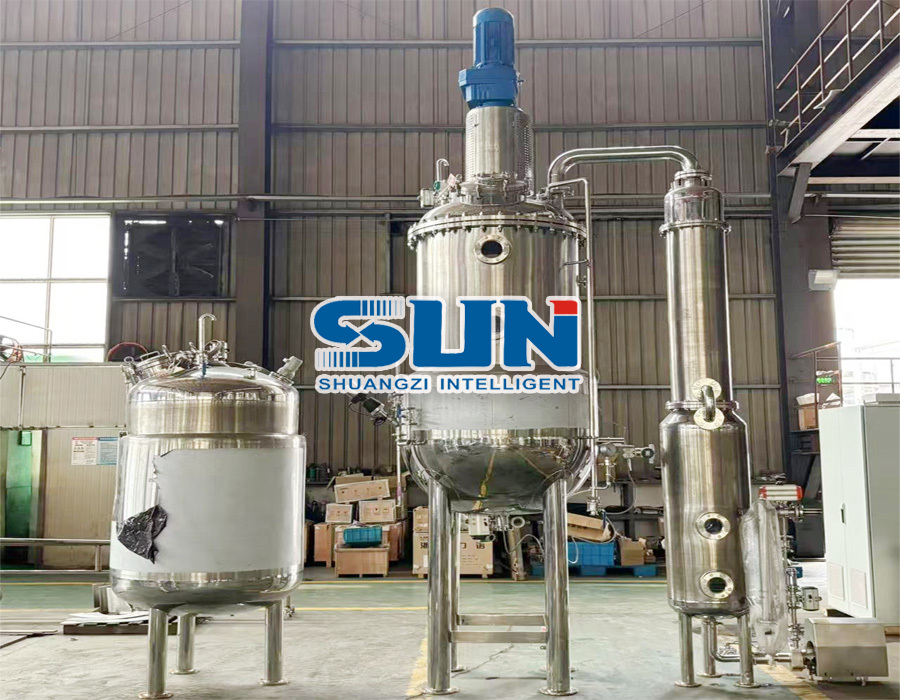
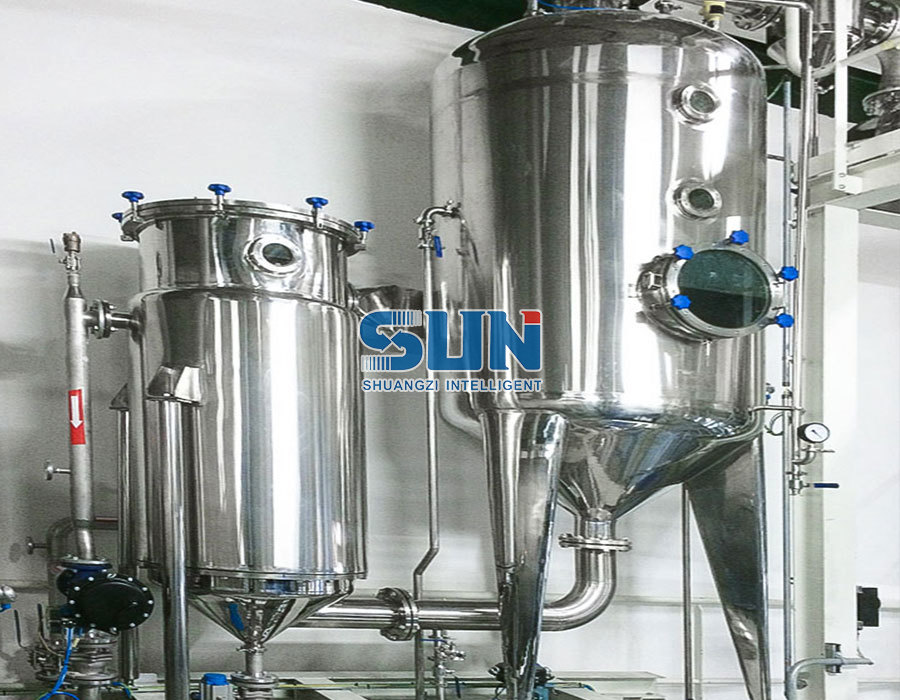
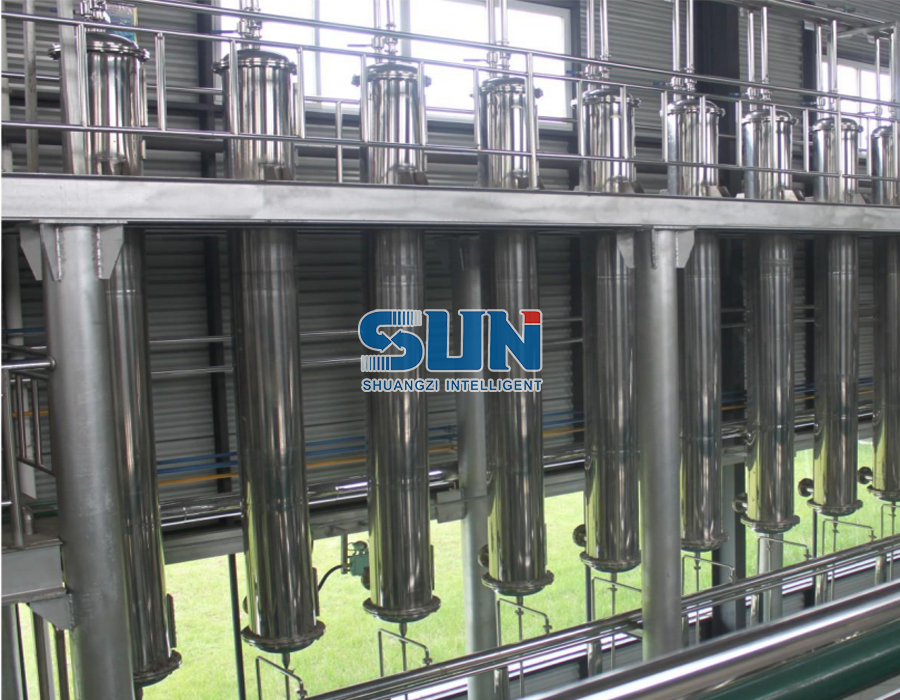
Vacuum Scraper Evaporator for Plant Extract
What Is a Vacuum Scraper Evaporator?
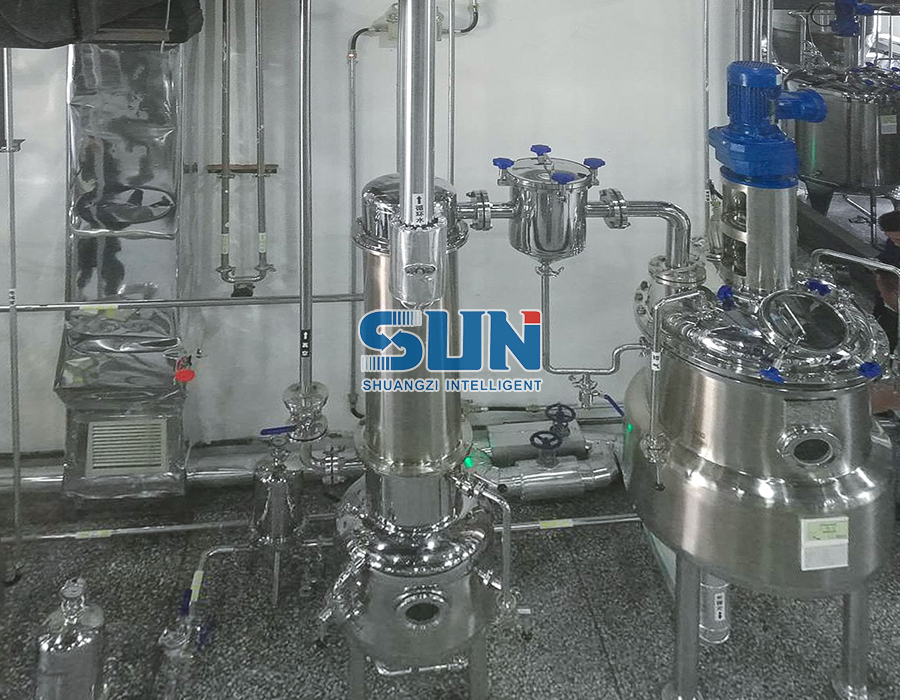
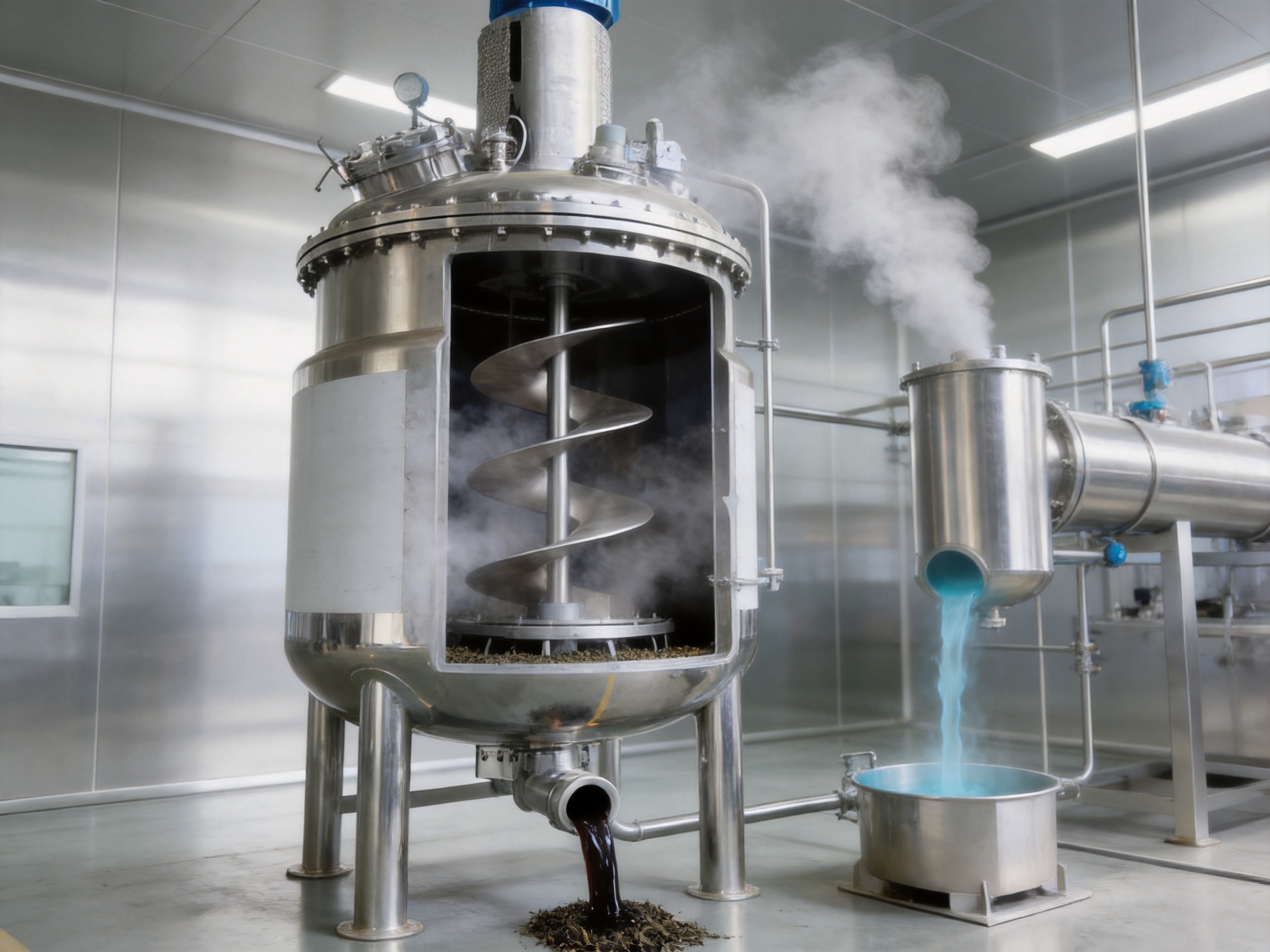
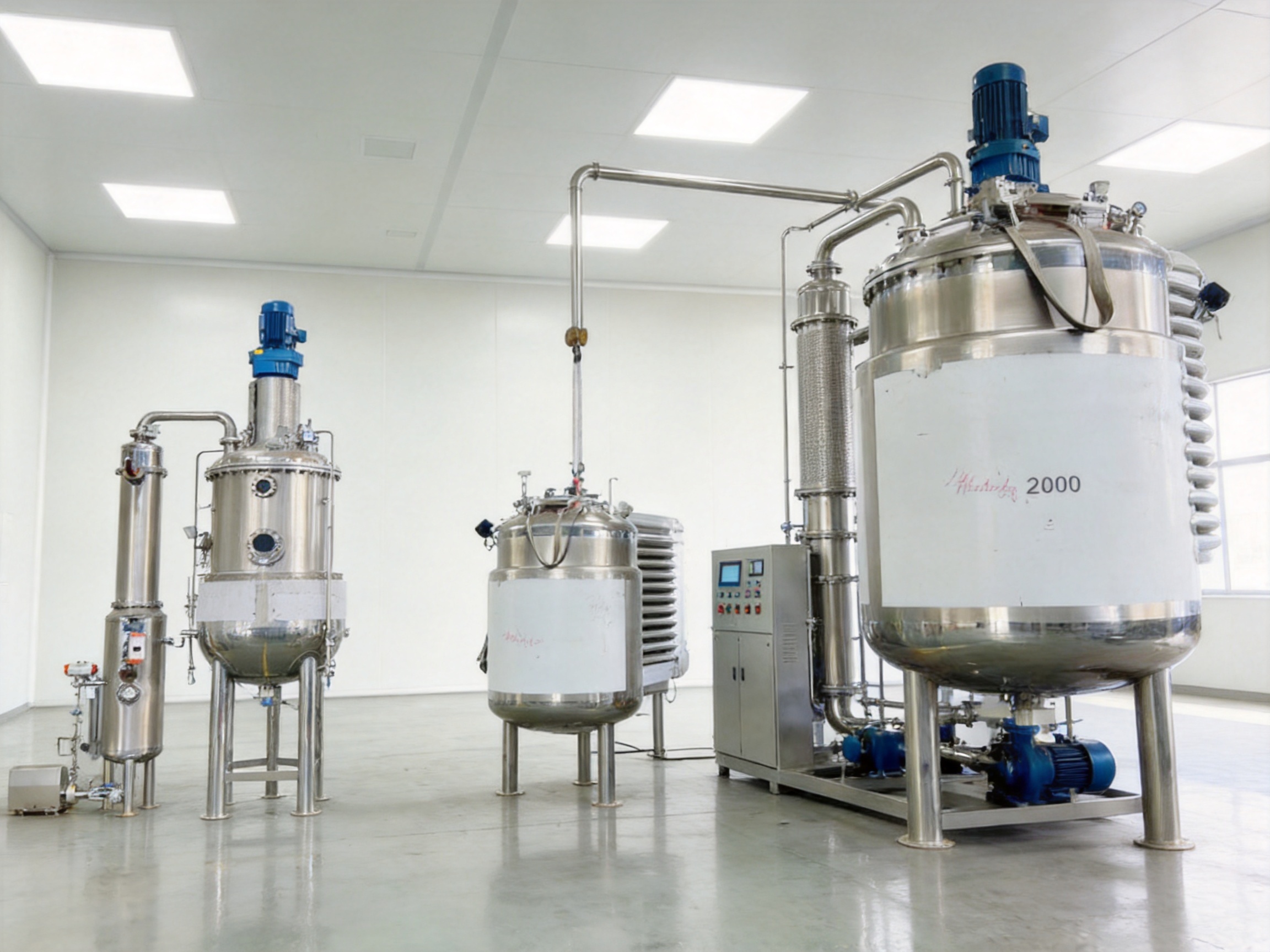
A vacuum scraper evaporator is a mechanically agitated evaporation machine that removes solvent from a concentrated liquid under reduced pressure. Its main process components include a heated evaporation cylinder, a rotating scraper assembly, a vacuum system, a vapor condensation system, a cooling section and discharge arrangements for the concentrated product.
During operation, the feed liquid enters the evaporation chamber and is distributed across the internal heating surface. The rotating scraper assembly moves along the cylinder wall at a controlled speed. Rather than allowing the material to remain as a stagnant pool or irregular layer, the scrapers continuously renew and redistribute the liquid film. This creates a large effective contact area between the feed and the heated wall.
Steam or another heating medium supplies thermal energy through the jacket or heating structure. Because the chamber operates under vacuum, the solvent boils at a lower temperature than it would at atmospheric pressure. The generated vapor leaves the evaporation chamber and enters the condensation section, where it is converted back into liquid. The condensed solvent can then be collected, treated or reused according to the process design.
As evaporation continues, the concentration of solids increases. The scraper mechanism keeps the remaining liquid moving and helps prevent it from drying onto the wall. The concentrated product is discharged from the lower section of the machine after reaching the required solids content, viscosity or density.
Core Operating Principle
The working principle can be summarized as a combination of four actions:
1. Reduced pressure lowers the boiling point of the solvent.
2. Heating provides the energy required for vaporization.
3. Mechanical scraping forms and renews a thin liquid film.
4. Condensation separates the vapor from the concentrated product.
This combination is particularly important when processing materials that cannot be handled efficiently by simple boiling tanks, natural-circulation evaporators or standard falling-film units. The scraper does not merely stir the liquid. It actively controls the condition of the film at the heat-transfer surface, which is the area where fouling, sticking and overheating most commonly begin.
Role of Vacuum Operation
Vacuum operation is valuable for plant extracts and pharmaceutical products because many natural compounds are sensitive to heat. Reducing the pressure lowers the boiling temperature, making it possible to remove water or other solvents under milder thermal conditions. Lower-temperature evaporation can help reduce thermal degradation, color change, loss of volatile components and unwanted reactions caused by excessive heating.
Vacuum processing can also improve the handling of viscous materials. A lower boiling point provides a practical way to evaporate solvent without requiring excessive heating-medium temperatures. This supports more controlled processing when product quality is influenced by temperature, residence time or oxygen exposure.
The exact operating pressure and temperature should be selected according to the composition of the material, target concentration, solvent properties, viscosity and quality requirements. The listed steam pressure for the equipment models is 0.25 MPa. Final process conditions should be confirmed during engineering design and, where necessary, validated through pilot trials.
Why Plant Extracts Require Specialized Evaporation
Plant extracts are complex mixtures rather than simple liquids. Depending on the raw material and extraction solvent, they may contain polysaccharides, tannins, proteins, pigments, essential oils, sugars, organic acids, minerals and numerous active compounds. Their physical behavior can change significantly as water or solvent is removed.
At the beginning of concentration, an extract may flow easily. As the solids content rises, however, the viscosity can increase rapidly. The liquid may become stringy, adhesive or paste-like. Some extracts may produce crystals, while others develop foam or form a skin on the heating surface. These changes make it difficult to maintain stable circulation through conventional equipment.
High-viscosity extracts also tend to have lower heat-transfer performance. A thick liquid layer can act as an insulating barrier between the heating surface and the bulk product. If the layer is not continuously renewed, the local temperature at the wall can become much higher than the average product temperature. This may cause scorching, coking or degradation of heat-sensitive components.
A scraper evaporator addresses these problems through mechanical film control. The moving scraper reduces the thickness of the product layer and repeatedly exposes fresh material to the heating surface. The action supports uniform heat transfer while limiting the time that any portion of the product remains in direct contact with the heated wall.
For plant extraction projects, this can be especially useful when the final product is a concentrated herbal extract, botanical liquid, natural active ingredient preparation or intermediate for further drying. The machine can also serve as part of a larger processing line that includes extraction tanks, filtration systems, separation equipment, vacuum drying systems and filling or packaging operations.
Major Advantages of the Vacuum Scraper Design
1. Effective Processing of High-Viscosity Materials
The most important advantage of the vacuum scraper evaporator is its ability to process liquids that become difficult to pump or circulate as concentration proceeds. The rotating scraper keeps the material distributed along the heating wall instead of allowing it to settle into a thick, stagnant layer.
This makes the machine suitable for viscous traditional medicine extracts, concentrated plant liquids, resins, adhesives, jams, honey, creams, fruit pulp and paste-like raw materials. The equipment is not limited to low-viscosity solutions that can easily pass through narrow tubes or flow by natural circulation.
2. Reduced Risk of Coking and Wall Sticking
Wall sticking is a common cause of reduced performance in evaporation systems. When concentrated product adheres to the heating surface, the deposit can gradually become thicker and less conductive. Eventually, it may burn, harden or form a carbonized layer that is difficult to remove.
The scraper mechanism continuously removes material from the wall and returns it to the moving product layer. This action helps reduce the formation of persistent deposits. It also limits the possibility of local overheating caused by an insulating layer of dried material. Although cleaning and sanitation remain necessary, the forced scraping action can reduce the frequency and severity of fouling compared with equipment that has no mechanical wall-cleaning function.
3. Uniform Heat Transfer
Uniform heat transfer is essential when the product contains heat-sensitive compounds. The scraper distributes the product and promotes consistent contact with the heated surface. This reduces the temperature difference between different regions of the product and helps prevent local hot spots.
More uniform heating can support stable concentration, consistent viscosity and improved batch-to-batch repeatability. It also gives operators better control over the relationship between steam pressure, vacuum level, feed rate and final product quality.
4. Lower Evaporation Temperature
Operating under vacuum lowers the boiling point of the solvent. This allows the machine to achieve evaporation at a lower product temperature than an equivalent atmospheric process. For plant extracts and pharmaceutical materials, lower-temperature operation may help protect color, flavor, aroma and heat-sensitive active components.
Lower-temperature processing can also reduce the risk of thermal polymerization, excessive browning or deterioration of natural ingredients. The actual quality benefit depends on the specific formula and process parameters, but the vacuum principle provides a valuable foundation for gentle concentration.
5. Shorter Effective Residence Time
The thin-film evaporation principle improves the exposure of the product to the heating surface. Solvent can be vaporized efficiently without requiring the entire product volume to remain at an elevated temperature for a prolonged period.
Mechanical scraping also prevents the product from remaining trapped in stagnant areas of the heating chamber. This is important for materials that lose quality when held hot for too long. Lower effective residence time can contribute to better product consistency and easier process control.
6. Support for Crystallizing Materials
Some concentrated solutions begin to crystallize as solvent is removed. Crystals can settle, bridge discharge openings or attach to heat-transfer surfaces. The moving scraper helps maintain agitation and reduces the likelihood of uncontrolled deposition.
The system is therefore suitable for certain easy-to-crystallize materials, subject to appropriate process testing. The actual crystal size, concentration point and discharge behavior should be evaluated during application engineering. If crystallization is a major part of the process, the evaporator may be integrated with dedicated crystallization, separation or filtration equipment.
7. Compact Process Integration
The evaporator combines evaporation and mechanical material management in a single main unit. Its associated condenser, cooling section and vacuum arrangements can be configured as part of a complete concentration system. This can reduce the need for multiple intermediate tanks and simplify the process flow.
For small and medium production batches, compact integration can be particularly valuable. Users can obtain a concentration solution without installing a large multi-effect system designed primarily for low-viscosity, high-throughput liquids.
8. Flexible Batch and Continuous Production Potential
The listed equipment is suitable for continuous production requirements involving small and medium batches. Depending on the material and plant layout, the machine can be operated as a batch system, a semi-continuous unit or part of a continuous line.
Feed control, product discharge, vacuum stability and concentration monitoring can be adapted to the production objective. This flexibility is useful for manufacturers handling multiple products or seasonal plant materials with different formulations.
Comparison with Conventional Evaporation Equipment
Conventional evaporation technologies remain valuable for many applications, particularly when the liquid has low viscosity, low fouling potential and a stable flow pattern. However, their performance can decline when the product becomes thick, sticky or heat-sensitive.
| Performance Factor | Conventional Evaporator | Vacuum Scraper Evaporator |
|---|---|---|
| High-viscosity handling | May experience reduced circulation and heat transfer | Mechanical scraping supports forced movement and film renewal |
| Wall fouling | Deposits may accumulate on heating surfaces | Rotating scrapers continuously remove or reduce wall deposits |
| Heat-sensitive materials | May require careful control of residence time and temperature | Vacuum operation supports lower-temperature evaporation |
| Crystallizing feed | Crystals may settle or obstruct flow channels | Agitation helps keep crystals and concentrated material moving |
| Product movement | Often depends on natural circulation, pumps or gravity | Scraper action directly manages the product film |
| Small and medium batches | Some systems may be oversized or difficult to justify economically | Multiple working-volume models support flexible capacity selection |
| Material flexibility | Often optimized for a narrower range of feed properties | Designed for viscous, sticky, heat-sensitive and difficult-to-evaporate materials |
This comparison does not mean that a scraper evaporator replaces every other evaporation technology. Rather, it occupies an important position in applications where conventional designs face limitations. The strongest advantage appears when high viscosity, fouling, crystallization and heat sensitivity occur together.
For low-viscosity water-like solutions requiring very large continuous capacity, other evaporator arrangements may be more appropriate. For difficult plant extracts and concentrated pharmaceutical liquids, however, scraper-assisted vacuum evaporation offers a more adaptable process environment.
Product Construction and Process Sections
Heating Cylinder
The heating cylinder is the primary heat-transfer area. Steam or another approved heating medium supplies energy through the heating structure. The listed steam pressure is 0.25 MPa for all models in the provided specification range.
The heating area varies with equipment size, from 0.7 square meters for the 100-liter model to 3.5 square meters for the 2,000-liter model. The selected area determines the available heat-transfer capacity in combination with the steam conditions, vacuum level, product properties and operating method.
Scraper Assembly
The scraper assembly is the defining component of the equipment. It rotates at a listed speed of 32 revolutions per minute across all specified models. The scrapers force the feed liquid into a thin layer and move it along the cylinder wall.
A consistent scraper speed supports stable film formation and controlled product movement. The assembly also helps prevent the product from remaining in one location for an excessive period. Mechanical parts that contact the product should be selected and finished according to the material, sanitation requirements and applicable production standards.
Vapor Separation and Condensation
When the solvent vaporizes, the secondary steam is directed to the condensation section. The condensation area ranges from 2.5 square meters to 10.8 square meters across the listed models. The condenser removes heat from the vapor and converts it into a liquid stream.
Efficient condensation is important because it helps maintain stable vacuum conditions. A properly sized condenser also supports solvent recovery and reduces the load on the vacuum equipment. Condensate handling should be designed according to whether the recovered liquid is water, ethanol, another solvent or a mixed stream.
Cooling Section
The cooling area ranges from 0.3 square meters to 2.2 square meters, depending on the model. Cooling may be used to condition the condensate, protect downstream equipment or support final product handling.
The required cooling medium, temperature and flow rate depend on the solvent, vapor load and local utility conditions. Process design should consider seasonal cooling-water temperature, available flow and the desired condensate temperature.
Vacuum and Discharge System
The vacuum system creates the reduced-pressure environment required for low-temperature evaporation. Stable vacuum is important because fluctuations can change the boiling point, evaporation rate and product temperature.
The concentrated liquid is collected and discharged from the bottom of the evaporator. Discharge design should account for viscosity, solids content, particle size, crystallization tendency and the required transfer method. In some installations, a suitable pump or downstream transfer system may be needed to move the final concentrate.
Available Models and Technical Parameters
The equipment range includes seven models with working volumes from 100 liters to 2,000 liters. The following table summarizes the provided technical parameters.
| Model | Steam Pressure (MPa) | Evaporation Capacity (kg/h) | Heating Area (m²) | Condensation Area (m²) | Cooling Area (m²) | Motor Power (kW) | Stirring Speed (rpm) |
|---|---|---|---|---|---|---|---|
| 100 L | 0.25 | 60 | 0.7 | 2.5 | 0.3 | 0.75 | 32 |
| 300 L | 0.25 | 100 | 1.2 | 3.5 | 0.4 | 1.5 | 32 |
| 500 L | 0.25 | 120 | 1.5 | 4.6 | 0.48 | 1.5 | 32 |
| 800 L | 0.25 | 160 | 2.1 | 6.5 | 0.78 | 2.2 | 32 |
| 1,000 L | 0.25 | 200 | 2.5 | 7.4 | 1.2 | 3.0 | 32 |
| 1,500 L | 0.25 | 250 | 3.2 | 10.0 | 1.8 | 3.0 | 32 |
| 2,000 L | 0.25 | 280 | 3.5 | 10.8 | 2.2 | 4.0 | 32 |
Evaporation capacity is influenced by more than working volume. Feed concentration, final concentration, solvent type, viscosity, heat sensitivity, vacuum level, heating-medium conditions and product discharge behavior all affect actual performance. The listed values should therefore be considered reference capacities for equipment selection rather than universal guarantees for every formula.
Before ordering, users should provide representative material samples or detailed process information. A technical evaluation can then determine the appropriate model, heating area, condenser arrangement, vacuum configuration, product-contact materials and cleaning method.
Applications Across Multiple Industries
Plant Extraction and Traditional Medicine
The equipment is well suited to concentrating water-based or solvent-based plant extracts after extraction and filtration. It can be applied to botanical liquids, traditional medicine extracts and natural active ingredient solutions that become thick during concentration.
Vacuum operation helps protect heat-sensitive components, while the scraper reduces the possibility of extract deposits on the heating wall. The machine may be installed after extraction tanks and solid-liquid separation equipment, and before vacuum drying, spray drying, crystallization or final formulation.
Pharmaceutical Production
Pharmaceutical liquids may contain active ingredients, excipients, polymers or concentrated solutions that require controlled thermal treatment. A scraper evaporator can support solvent removal and concentration when viscosity increases during processing.
For pharmaceutical applications, equipment configuration should be considered together with hygienic design, cleanability, documentation, material certificates, process validation and applicable regulatory requirements. The final system should be specified according to the product category and the standards applicable in the installation location.
Food Processing
Food products such as jam, honey, cream and fruit pulp can become highly viscous as water is removed. They may also stick to hot surfaces or suffer quality loss if overheated.
Vacuum scraper evaporation provides a method for concentrating these products at reduced temperatures. The controlled film and continuous scraping action can support more uniform heating and help protect flavor, color and texture. Food-contact materials, cleaning procedures and sanitation practices should be established for each product.
Chemical Industry
High-viscosity resins, adhesives and textile auxiliaries can be difficult to process in ordinary evaporators. These materials may have strong adhesion, high solids content or a tendency to form surface films.
The scraper evaporator provides mechanical assistance to keep the material moving and reduce persistent wall deposits. It can be used for solvent recovery, product concentration or preparation of a high-solids intermediate.
Daily Chemical Products
Daily chemical manufacturing may involve concentrated stock solutions, paste-like raw materials, creams or other viscous formulations. The equipment can support the removal of water or solvent before blending, filling or further formulation.
When used for personal-care or household products, the system should be evaluated for product-contact compatibility, odor control, cleaning requirements and protection against cross-contamination between formulations.
Manufacturing Strengths and Engineering Capabilities
The manufacturer specializes in biology and medical equipment, process technology, automation engineering design, equipment manufacturing, auxiliary equipment procurement, installation and system integration. This broader capability is important because a vacuum scraper evaporator is rarely an isolated machine in a modern processing facility.
A complete plant extraction or pharmaceutical project may require extraction vessels, filtration, concentration, separation, crystallization, drying, storage, transfer, control and clean-in-place systems. Engineering coordination between these sections determines whether the final line operates smoothly. A supplier with experience across several process stages can help reduce interface problems between individual machines.
Experience in Process Equipment
The company was founded in 2007 and has developed equipment and engineering capabilities in plant extraction, biological fermentation, pharmaceutical engineering, natural food processing, energy conservation and environmental protection. Its mature product range includes vacuum low-temperature drying systems, fermentation equipment, evaporation and concentration equipment, extraction systems, separation and crystallization equipment, filtration equipment and process vessels.
This product portfolio allows the manufacturer to consider evaporation as part of a complete process rather than as a stand-alone unit. For example, an extract line may require an extraction tank, solid-liquid separation, clarification, vacuum concentration and low-temperature drying. Coordinated design can help maintain appropriate material flow and reduce unnecessary handling.
Production Facilities
The company occupies a floor area of approximately 16,706 square meters and a structural area of approximately 17,800 square meters. Its production resources include a pilot production workshop and a research and development platform designed to support automation and GMP-related requirements.
A pilot workshop is particularly valuable for difficult evaporation applications. Viscosity, foaming, crystallization and fouling behavior can vary substantially from one material to another. Pilot testing allows engineers to observe how a product behaves under vacuum, evaluate the scraping effect and establish suitable operating parameters before industrial installation.
Advanced Welding and Machining
Manufacturing quality has a direct influence on equipment reliability, hygiene and service life. The company has introduced plasma argon arc welding machines, plasma cutting equipment, CAM CNC machining centers and other advanced production tools.
Plasma argon arc welding can support clean and controlled fabrication of stainless-steel product-contact components. Consistent welding is important for preventing crevices, reducing contamination risks and maintaining pressure and vacuum integrity. Plasma cutting and CNC machining support dimensional accuracy and repeatable component production.
Accurate machining is also important for rotating assemblies, scraper clearances, shaft alignment, sealing interfaces and connection points. Proper fabrication reduces mechanical vibration and supports stable operation during long production cycles.
EPC and EPCM Project Support
The company takes EPC and EPCM services as a core engineering direction. Depending on project requirements, support may include process design, equipment design, manufacturing, matching purchases, installation, system integration, commissioning and line debugging.
This turnkey capability can be useful for customers that need more than a single evaporator. A complete project may involve utility planning, vacuum piping, steam distribution, condensate recovery, control systems, product transfer, cleaning systems and integration with upstream and downstream equipment.
Working with one project-oriented supplier can simplify communication and responsibility allocation. It can also help ensure that the evaporator capacity, condenser size, vacuum system and product discharge arrangements are designed as one coordinated package.
Automation and Process Control Considerations
Stable concentration requires coordinated control of feed rate, steam pressure, vacuum, product temperature, scraper rotation, condenser conditions and discharge. Automation can help operators maintain repeatable conditions and respond to changes in material properties.
Feed Control
The feed system should provide a consistent flow to the evaporator. Excessive feed may overload the heating area and reduce evaporation, while insufficient feed may cause unstable film formation or over-concentration. Feed control should therefore be matched to the product concentration and the target evaporation rate.
Vacuum Control
Vacuum control affects boiling temperature and vapor generation. A stable vacuum supports consistent product quality and reduces sudden changes in evaporation intensity. The system may include pressure measurement, automatic valves, condensers and vacuum pumps selected for the expected vapor load.
Temperature Control
Product temperature and heating-medium temperature should be monitored independently. The heating medium may be at a higher temperature than the product, while the vacuum determines the product boiling point. Monitoring both values helps operators identify heat-transfer changes, excessive fouling or abnormal operating conditions.
Concentration and Discharge Control
The final concentration may be determined through density, viscosity, solids content, refractive index or another product-specific measurement. Discharge can be controlled by time, level, concentration or a combination of these signals.
For multi-product facilities, recipes and operating records can improve repeatability. Automation also supports traceability by recording process temperatures, vacuum levels, feed quantities and discharge conditions.
Installation and Commissioning
Installation should begin with a review of the process flow, utility conditions, building layout and product handling requirements. The selected location must provide sufficient space for operation, inspection, cleaning, maintenance and safe access to valves, instruments and electrical controls.
Steam, cooling water, vacuum, electrical power and condensate lines should be designed according to the equipment model and local standards. Piping should minimize unnecessary pressure loss and avoid low points where condensate or product may accumulate.
During commissioning, the system should first be checked without product. Mechanical rotation, scraper clearance, motor direction, sealing performance, vacuum stability, valve operation and instrument signals should be verified. Water testing can then be used to confirm flow, heating and condensation behavior before introducing the actual material.
Product trials should begin with conservative feed rates and moderate heating conditions. Operators can gradually adjust vacuum, steam pressure and discharge rate while observing viscosity, vapor load, wall condition and final concentration. Pilot or commissioning data should be documented for future production batches.
Cleaning, Maintenance and Operational Reliability
Cleaning requirements depend on the product composition and the required hygiene level. Plant extracts may contain pigments, tannins, proteins, sugars or oils that adhere to equipment surfaces. Pharmaceutical and food products may require validated cleaning procedures and defined acceptance criteria.
The scraper assembly, heating surface, discharge outlet, condenser and product-contact piping should be inspected regularly. Operators should check for unusual vibration, seal leakage, changes in motor load, reduced evaporation capacity or increasing wall deposits.
Mechanical components should be maintained according to operating hours and manufacturer recommendations. Bearings, seals, drive components and scraper parts are especially important because they influence rotation stability and product-film control.
If evaporation capacity declines, possible causes may include insufficient steam pressure, unstable vacuum, blocked vapor lines, inadequate cooling, excessive feed rate, changes in feed viscosity or fouling in the heating and condensation areas. A systematic inspection can identify the cause before it affects a large production batch.
How to Select the Correct Model
Working volume is only one factor in model selection. Customers should evaluate the following parameters before choosing a 100-liter, 300-liter, 500-liter, 800-liter, 1,000-liter, 1,500-liter or 2,000-liter model.
First, determine the required feed quantity and target production rate. The planned evaporation capacity should include realistic operating margins rather than relying only on nominal capacity.
Second, measure or estimate the feed viscosity at different solids concentrations. A product that is easy to pump at the beginning may become highly viscous near the final concentration. This final condition often determines the required scraper performance and discharge arrangement.
Third, identify the solvent and its boiling characteristics. Water, ethanol and other solvents require different condensation, ventilation, safety and recovery considerations.
Fourth, establish the allowable product temperature. Heat-sensitive materials may require deeper vacuum or lower heating intensity, which can influence the actual evaporation rate.
Fifth, assess fouling and crystallization behavior. Laboratory or pilot tests can reveal whether the product forms a deposit, crystal layer, foam or gel during concentration.
Sixth, define the desired final product form. A pumpable concentrate, thick paste, crystal suspension and semi-solid product may require different discharge and downstream equipment.
Finally, consider cleaning, automation, utilities, installation space and regulatory requirements. A properly selected model should meet both the immediate capacity requirement and the long-term production strategy.
Safety and Quality Considerations
Vacuum evaporation involves heated surfaces, pressure differences, moving equipment and potentially flammable or volatile solvents. Appropriate safety measures should be included in the engineering design and operating procedures.
Pressure and vacuum components should be selected and installed according to applicable codes. The system should include suitable monitoring, isolation and protection devices. If flammable solvents are used, electrical equipment, ventilation, grounding and vapor-handling arrangements require special attention.
Operators should not open the equipment while it is under vacuum or while internal components remain hot. Lockout and isolation procedures should be followed before maintenance. Rotating equipment should have suitable guarding and emergency-stop provisions.
For pharmaceutical and food applications, product-contact materials, surface finish, cleanability and documentation should be agreed before manufacture. Where required, the project may include material certificates, welding records, inspection documents, factory testing and commissioning records.
Frequently Asked Questions
What type of material is best suited to a vacuum scraper evaporator?
The equipment is best suited to high-viscosity, heat-sensitive, sticky or easy-to-crystallize materials that are difficult to process in conventional evaporators. Typical examples include plant extracts, traditional medicine concentrates, viscous medicines, resins, adhesives, jam, honey, cream and fruit pulp.
How does the scraper prevent wall sticking?
The scraper continuously moves across the heating surface and removes or redistributes the product layer. This reduces stagnant material and limits the formation of thick deposits. It also supports more uniform heat transfer and reduces the risk of local overheating.
Why is vacuum used during evaporation?
Vacuum lowers the boiling point of the solvent. This allows evaporation at a lower product temperature, which is beneficial for many heat-sensitive plant, pharmaceutical and food materials.
Can the equipment process crystallizing materials?
Yes, it is designed for materials that are easy to crystallize, provided the process is properly evaluated. The scraper helps keep concentrated material and crystals moving, but final design should consider crystal size, concentration level, discharge behavior and cleaning requirements.
What are the available equipment capacities?
The provided range includes 100-liter, 300-liter, 500-liter, 800-liter, 1,000-liter, 1,500-liter and 2,000-liter models. Listed evaporation capacities range from 60 kilograms per hour to 280 kilograms per hour.
Is the evaporator suitable for pharmaceutical production?
It can be used for suitable pharmaceutical and traditional medicine concentration applications. The final configuration should be designed according to product properties, hygienic requirements, validation expectations and applicable regulatory standards.
Can the manufacturer provide a complete production line?
Yes. The manufacturer provides process technology, automation engineering design, equipment manufacture, matching purchases, installation, system integration, commissioning and turnkey project services. It also produces extraction, fermentation, drying, separation, crystallization, filtration and vessel equipment.
What information is needed for a quotation?
Useful information includes feed composition, solvent type, feed volume, initial and final solids content, viscosity, temperature limits, required evaporation rate, crystallization tendency, cleaning method, utility conditions and downstream product requirements. Material samples or pilot testing may be requested for difficult applications.
Does nominal evaporation capacity apply to every product?
No. Evaporation capacity depends on feed concentration, viscosity, solvent properties, vacuum level, heating conditions, fouling tendency and desired final concentration. The listed values are reference parameters and should be confirmed for the specific product.
Can the unit be integrated with a vacuum dryer?
Yes. A scraper evaporator can be used upstream of vacuum low-temperature drying or another final moisture-removal process. Concentrating the extract before drying can reduce the load on the dryer and improve overall line efficiency.
Conclusion
The vacuum scraper evaporator is a specialized solution for difficult evaporation duties involving high viscosity, heat sensitivity, crystallization and wall fouling. Its combination of vacuum low-temperature operation and mechanically renewed thin-film formation gives it important advantages over simpler evaporation systems when processing concentrated plant extracts and other challenging materials.
The rotating scrapers promote uniform heating, reduce stagnant zones, limit wall deposits and help maintain product movement as viscosity increases. The vacuum environment lowers the boiling point, supporting gentler processing of natural extracts, pharmaceutical liquids and food products. The integrated condensation and cooling sections support solvent separation and recovery, while the range of available models allows the equipment to serve small and medium production requirements.
Beyond the individual machine, the manufacturer offers process engineering, fabrication, automation, installation, commissioning and turnkey project support. Its experience with plant extraction, fermentation, pharmaceutical engineering, natural food processing, drying, filtration, separation and crystallization provides a foundation for complete process-line development.
For customers evaluating this equipment, the most important next step is to match the model and process design to the actual material. Viscosity, solids content, solvent, temperature sensitivity, crystallization behavior, required capacity and final discharge condition should all be reviewed. With suitable engineering and pilot verification, the vacuum scraper evaporator can become a reliable concentration platform for modern plant extraction and specialty material production.
References
1. Process Equipment Design Principles for Evaporation and Concentration Systems.
2. Fundamentals of Vacuum Evaporation for Heat-Sensitive Products.
3. Industrial Heat Transfer: Fouling, Film Formation and Surface Renewal.
4. Pharmaceutical Engineering Guidelines for Concentration and Solvent Recovery.
5. Food Process Engineering Practices for Viscous and Thermal-Sensitive Products.
6. Hygienic Design Principles for Stainless-Steel Process Equipment.
7. Good Manufacturing Practice Principles for Pharmaceutical Production Equipment.
8. Industrial Safety Practices for Vacuum, Steam and Solvent-Handling Systems.