
 英语
 俄语
Content
- 1 1. Operating Principle of Membrane Separation
- 2 2. Main Equipment Configuration
- 3 3. Process Flow for Filtration and Cleaning
- 4 4. Applications in Plant Extraction
- 5 5. Applications in Food and Fermentation
- 6 6. Applications in Biological and Pharmaceutical Processing
- 7 7. Environmental and Industrial Applications
- 8 8. Advantages Compared with Conventional Separation Methods
- 9 9. Engineering and Manufacturing Strengths
- 10 10. Automation and Process Control
- 11 11. Hygienic Design and Materials
- 12 12. Membrane Selection and Process Development
- 13 13. Installation, Commissioning, and Service
- 14 14. Typical Performance Factors
- 15 15. Operational Best Practices
- 16 16. Sustainability and Resource Efficiency
- 17 17. Why Integrated Engineering Matters
- 18 18. Frequently Asked Questions
- 18.1 Q1. What is the primary function of this membrane separation equipment?
- 18.2 Q2. What industries can use the equipment?
- 18.3 Q3. What is the difference between filtrate and concentrate?
- 18.4 Q4. Why is cross-flow filtration used?
- 18.5 Q5. Are ceramic membranes suitable for fermentation liquids?
- 18.6 Q6. Can the system process heat-sensitive products?
- 18.7 Q7. How is membrane fouling controlled?
- 18.8 Q8. Can the equipment be automated?
- 18.9 Q9. Can the system be integrated with existing production lines?
- 18.10 Q10. What information is needed before selecting a system?
- 18.11 Q11. Is pilot testing necessary?
- 18.12 Q12. What services can an engineering manufacturer provide?
- 19 19. Conclusion
- 20 References
- 21 Product: Plant Extraction Supporting Membrane Separation Equipment
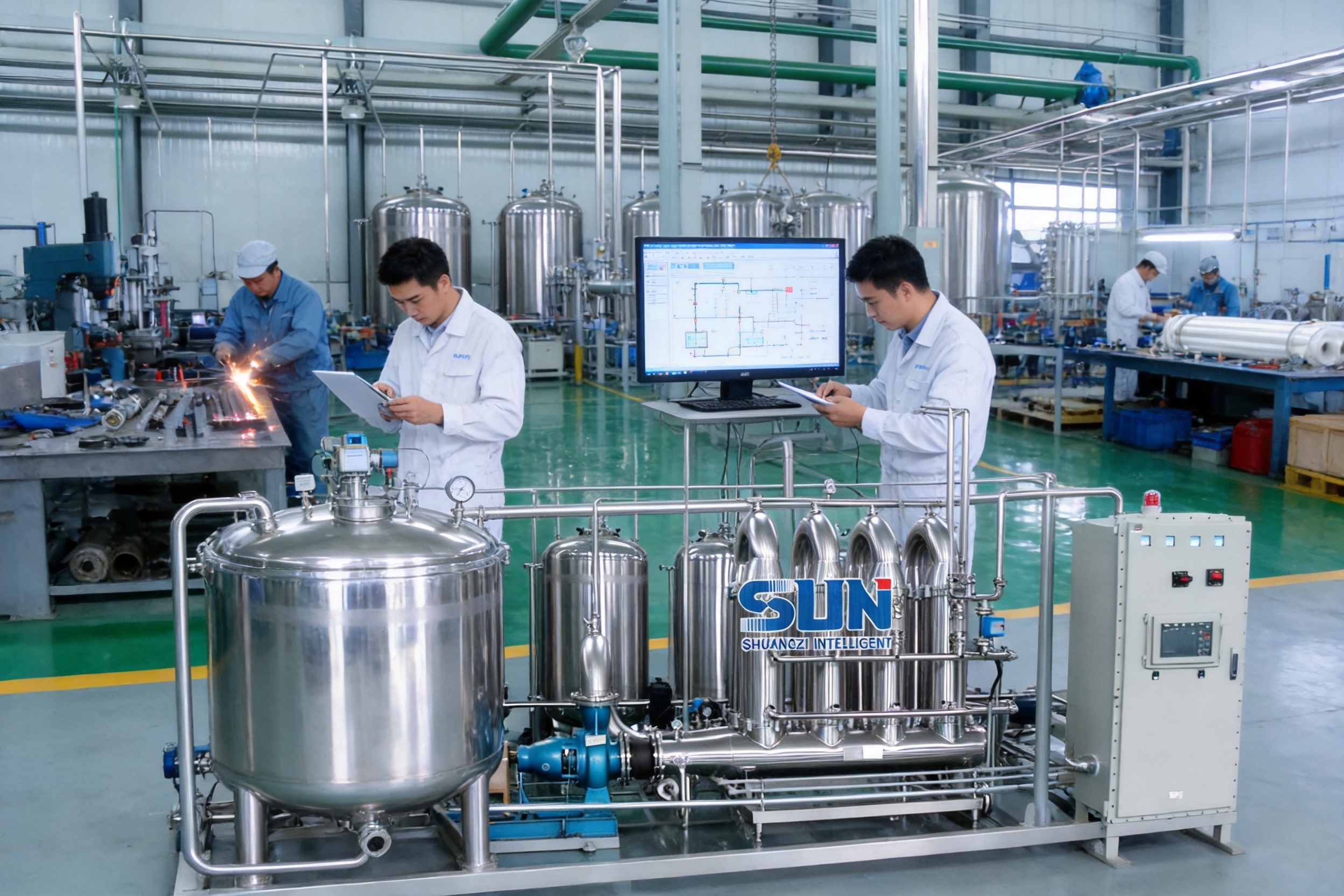
Membrane separation equipment is an important process technology for modern plant extraction, fermentation, food processing, pharmaceutical production, wastewater treatment, and natural product manufacturing. By using a selective membrane as the separation medium, the equipment can clarify, purify, concentrate, sterilize, and fractionate liquid or gas streams without relying exclusively on thermal treatment or chemical precipitation.
The plant extraction supporting membrane separation equipment described in this article is designed for applications in which product quality, process stability, recovery rate, hygienic operation, and controllable automation are essential. It combines a membrane module, feeding pump, circulating pump, raw material or circulation tank, piping, valves, instrumentation, and an integrated cleaning arrangement. The system is suitable for processes involving plant extracts, biological products, fermentation broths, food liquids, pharmaceutical intermediates, mineral water, wastewater, and other complex mixtures.
Unlike conventional separation methods that may require high temperatures, large quantities of filter aids, repeated centrifugation, or extensive chemical treatment, membrane filtration works primarily through selective permeation driven by pressure and flow conditions. This makes the technology particularly valuable for heat-sensitive materials, products containing suspended solids, and liquids requiring a high level of clarification or purification.
The equipment can be configured for different membrane processes, including microfiltration, ultrafiltration, nanofiltration, and related ceramic membrane applications. The final configuration depends on the characteristics of the feed liquid, the target product, the required separation precision, the desired concentration factor, and the cleaning requirements of the production line.
Plant Extraction Supporting Membrane Separation Equipment
1. Operating Principle of Membrane Separation
Membrane separation is based on the selective passage of certain components through a semi-permeable membrane. A feed mixture is circulated along the membrane surface under a controlled driving force, normally transmembrane pressure. Some components pass through the membrane as filtrate or permeate, while other components are retained and discharged or recirculated as concentrate.
The membrane does not simply act as a passive screen. Its separation performance is influenced by pore size, membrane material, molecular properties, pressure difference, temperature, viscosity, concentration, flow velocity, and the interaction between the product and the membrane surface. For this reason, membrane systems must be designed around the complete process rather than treated as a stand-alone filter.
In a typical clarification process, suspended particles, colloids, microorganisms, and larger macromolecules are retained by the membrane, while water, salts, low-molecular-weight compounds, and other smaller components pass into the filtrate. In an ultrafiltration process, proteins, polysaccharides, enzymes, and other macromolecules may be concentrated while smaller dissolved substances pass through. Nanofiltration can provide tighter separation for selected low-molecular-weight compounds, color bodies, and salts, depending on the membrane type and operating conditions.
The equipment uses cross-flow filtration rather than allowing the entire feed stream to pass directly through the membrane. The circulation pump maintains a high velocity across the membrane surface. This helps reduce the accumulation of retained solids and creates a more stable filtration condition than simple dead-end filtration for many difficult liquids.
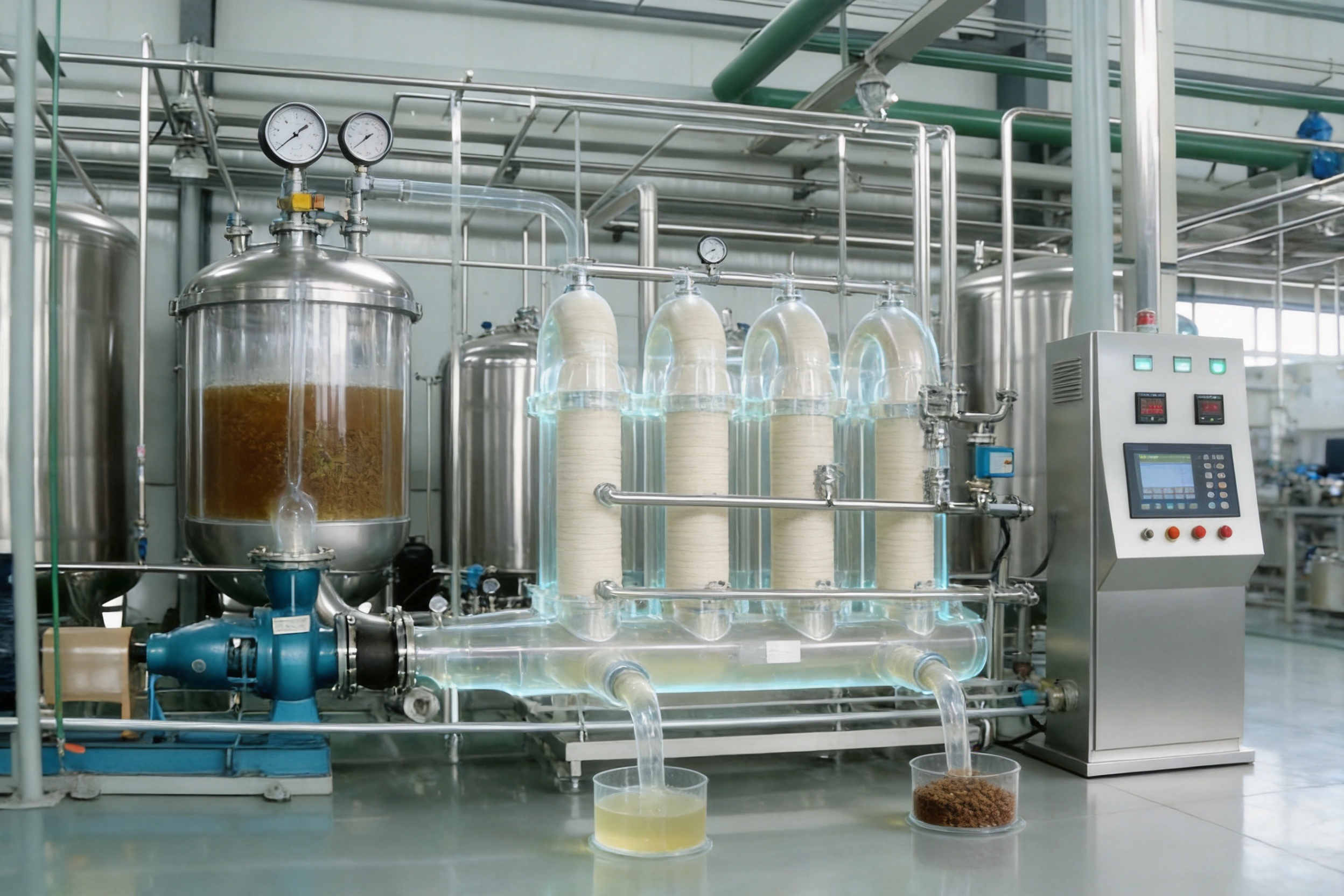
A typical filtration cycle begins when the raw material enters the circulation tank. The feed pump transfers the liquid toward the membrane unit, while the circulating pump maintains the required membrane surface velocity. The membrane divides the stream into filtrate and concentrate. The filtrate is collected for further processing or final use, and the concentrate returns to the circulation tank or moves to a subsequent processing stage.
As the process continues, the target product may become concentrated in the circulation tank. The operator can control the final concentration by adjusting the circulation time, feed volume, pressure, temperature, and discharge rate. This makes the system suitable for both batch processing and integration with continuous or semi-continuous production lines.
2. Main Equipment Configuration
The membrane separation system is composed of several coordinated units. Each component has a direct influence on processing efficiency, product protection, cleaning performance, and long-term operating reliability.
2.1 Circulation Tank
The circulation tank receives the raw material and provides a controlled reservoir for the membrane process. It is generally manufactured from hygienic stainless steel and can be equipped with a manway, spray ball, level indicator, temperature sensor, sampling port, drain valve, and optional agitation or heating and cooling functions.
The tank volume is selected according to the feed capacity, membrane area, expected concentration factor, circulation flow, and batch size. A properly sized tank helps prevent excessive foaming, reduces unnecessary residence time, and ensures that the pump receives a stable liquid supply.
For pharmaceutical, food, and biological applications, the tank can be designed with smooth internal surfaces, sanitary connections, minimized dead zones, and a geometry that supports complete drainage. These details are important because residual product in inaccessible areas can increase cleaning time and create contamination risks.
2.2 Feeding Pump
The feeding pump transfers raw material from the circulation tank to the membrane assembly. It must be selected according to liquid viscosity, particle content, temperature, flow rate, pressure requirement, and sensitivity of the product to shear.
In plant extraction and biological applications, the pump should provide stable delivery without causing unnecessary damage to active ingredients or generating excessive heat. Depending on the process, centrifugal pumps, positive-displacement pumps, or other hygienic pump designs may be considered.
Variable-frequency control allows the feeding flow to be adjusted according to the stage of operation. Lower flow may be suitable during startup or final concentration, while a higher flow may be useful during initial circulation or cleaning.
2.3 Circulating Pump
The circulating pump maintains the cross-flow velocity across the membrane surface. This is one of the most important components in a membrane system because insufficient velocity can accelerate fouling, reduce flux, and create unstable filtration performance.
The circulating pump must be matched with the membrane module, pipeline diameter, product viscosity, and required pressure. The system should also include suitable pressure gauges or transmitters on the inlet and outlet sides of the membrane. These instruments allow operators to monitor pressure drop and identify changes caused by fouling, blockage, or abnormal operating conditions.
2.4 Ceramic Membrane Module
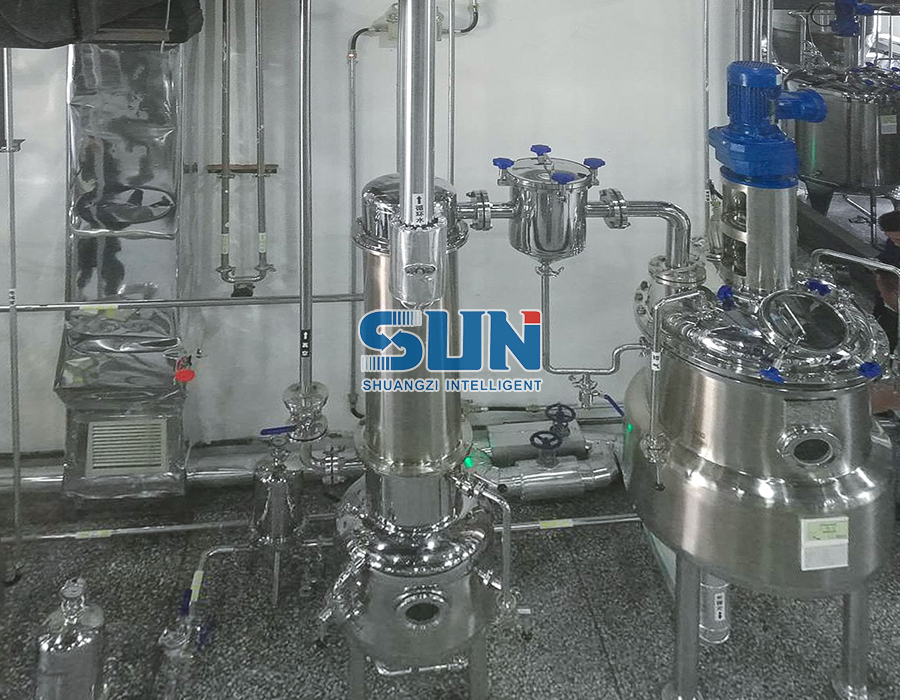
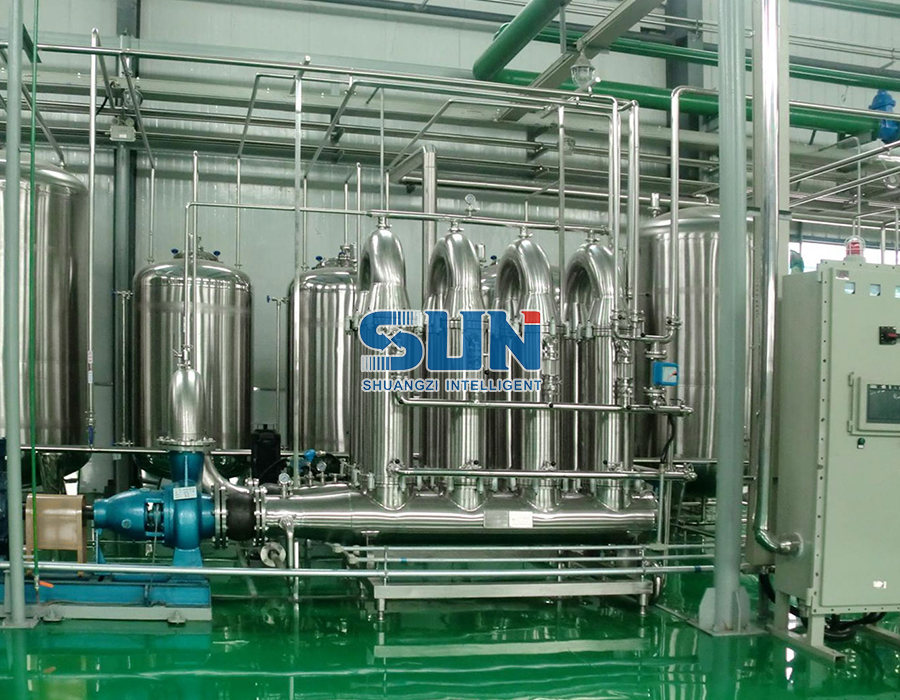
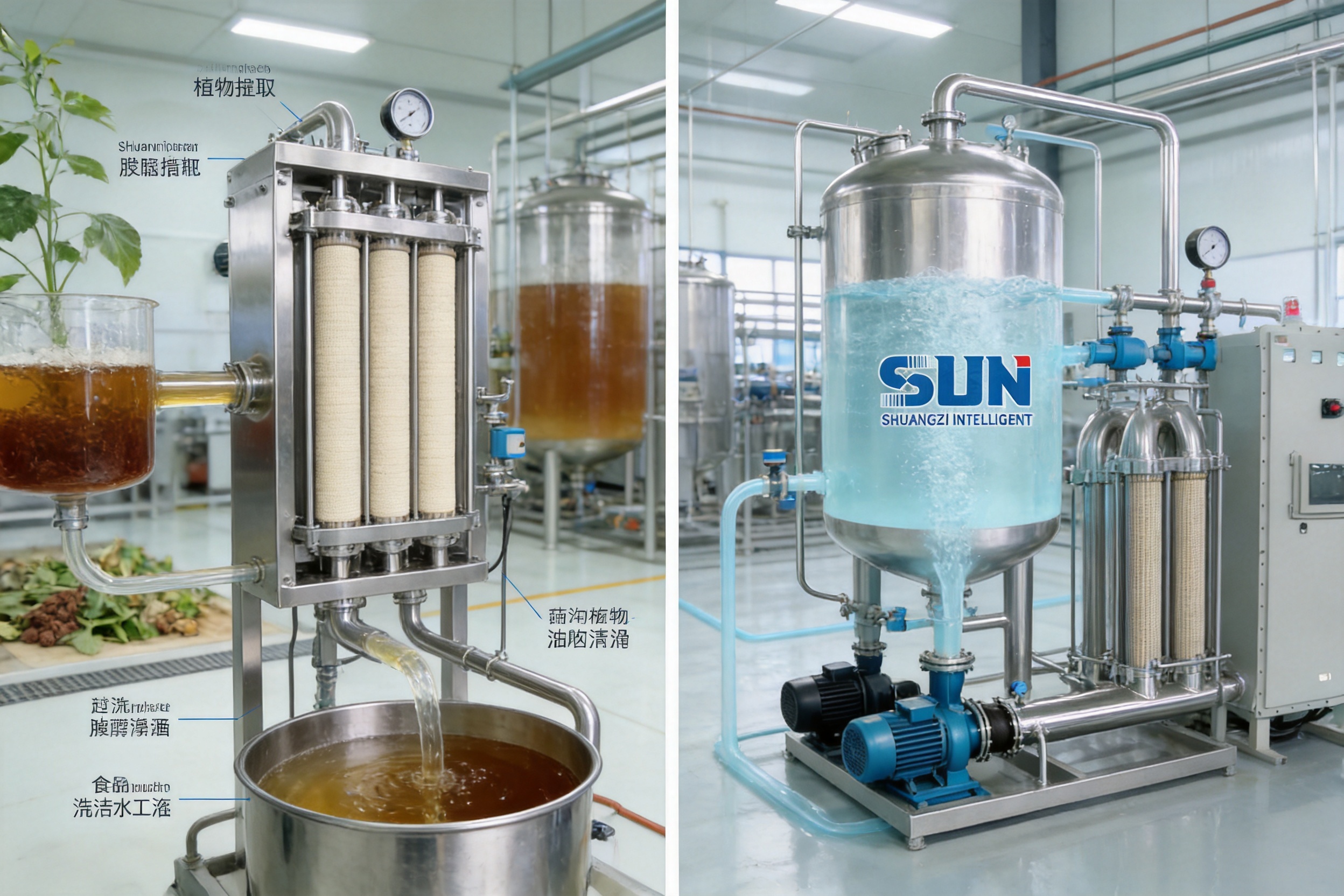
The ceramic membrane module contains the membrane tubes through which the feed liquid flows. The described system may be arranged as eight unit components in a four-and-two configuration, with each membrane unit containing 19 membrane tubes. The exact arrangement can be adjusted according to required membrane area and production capacity.
Ceramic membranes are valued for their mechanical strength, thermal stability, chemical resistance, and resistance to repeated cleaning. These characteristics make them suitable for demanding applications involving plant extracts, fermentation liquids, suspended solids, and products requiring frequent cleaning cycles.
The membrane module is designed to provide a consistent flow path and controlled separation area. A modular structure makes it easier to expand capacity, replace individual components, or adapt the system to different production requirements.
2.5 Filtrate and Concentrate Lines
The filtrate line collects the liquid that passes through the membrane. It may lead to a storage tank, evaporation system, crystallization unit, filling line, or additional polishing step. Flow measurement and sampling points can be installed to evaluate clarity, yield, conductivity, solids content, or other quality indicators.
The concentrate line carries retained solids and macromolecules away from the membrane outlet. It may return to the circulation tank for further concentration, move to another membrane stage, or be discharged for downstream recovery. Controlling the concentrate stream is essential for achieving the desired mass balance and avoiding excessive viscosity.
2.6 Cleaning System
Membrane cleaning is an essential part of process design. During operation, proteins, polysaccharides, pigments, oils, colloids, minerals, and other substances may accumulate on or inside the membrane structure. If these deposits are not removed effectively, permeate flux can decline and pressure requirements can increase.
The cleaning process generally uses a circulation tank, cleaning solution, feed pump, membrane module, and return lines. The cleaning solution circulates through the membrane in a controlled sequence. Depending on the product and membrane material, the cleaning program may include water rinsing, alkaline cleaning, acidic cleaning, enzymatic cleaning, sanitization, or other validated steps.
A well-designed cleaning circuit allows cleaning without extensive disassembly. It also supports more repeatable cleaning conditions, lower labor requirements, reduced exposure to chemicals, and improved equipment availability.
3. Process Flow for Filtration and Cleaning
3.1 Filtration Process
The standard filtration process begins in the circulation tank. The raw material is loaded into the tank after upstream extraction, fermentation, dissolution, or preliminary screening. The feed pump then transfers the material to the ceramic membrane module.
Inside the membrane module, the liquid flows through the membrane tubes. A portion of the liquid passes through the membrane as filtrate, while retained components remain in the concentrate stream. The concentrate can be directed back to the circulation tank, allowing the process to continue until the desired volume reduction or solids concentration is reached.
A representative process sequence is:
Circulation tank → feed pump → ceramic membrane → filtrate collection.
The concentrate stream returns from the membrane outlet to the circulation tank or proceeds to a designated downstream operation. The process can be operated at a controlled temperature to protect thermally sensitive materials and maintain a stable viscosity.
In some applications, diafiltration may be introduced. In this mode, a selected solvent or purified water is added while filtration continues. Smaller unwanted components can be removed through the membrane while the retained product remains in the circulation loop. Diafiltration is useful for desalting, buffer exchange, removal of low-molecular-weight impurities, and improvement of product purity.
3.2 Cleaning Process
The cleaning cycle begins after the product has been recovered from the system. Residual product is first displaced or rinsed from the circulation tank, pipes, pump, and membrane module. A cleaning solution is then introduced into the circulation tank and pumped through the membrane assembly.
A representative cleaning sequence is:
Circulation tank → feed pump → ceramic membrane → cleaning solution return.
The cleaning solution may circulate for a defined period at a controlled temperature and flow rate. After the cleaning stage, the system is rinsed until the required pH, conductivity, or other release criteria are achieved.
Cleaning parameters should be established through process testing. Excessive chemical concentration or temperature may damage certain materials, while insufficient cleaning may leave deposits that gradually reduce membrane performance. The most effective program balances cleaning strength, product safety, membrane life, water consumption, and production time.
4. Applications in Plant Extraction
Plant extraction liquids often contain a complex mixture of active compounds, fibers, proteins, pigments, colloids, waxes, oils, insoluble particles, and naturally occurring macromolecules. Traditional clarification can require filter aids, long settling times, centrifugation, or repeated filtration. Membrane separation offers a more controlled alternative for selected stages of the process.
After extraction, the liquid may first pass through a coarse screen or prefilter to remove large particles. The membrane system can then clarify the extract, reduce suspended solids, separate selected macromolecules, or concentrate valuable components before evaporation and drying.
The technology is suitable for plant extracts used in botanical products, natural colorants, nutraceutical ingredients, functional foods, beverages, and pharmaceutical preparations. It can help produce a clearer intermediate, reduce the burden on downstream evaporators, and improve consistency between batches.
Membrane processing is also useful when the target compounds are sensitive to heat. Compared with high-temperature concentration, membrane separation can operate at relatively moderate temperatures, depending on the required pressure and product properties. This can help preserve color, aroma, biological activity, and other quality characteristics.
For natural pigment production, membrane systems can support clarification, concentration, and removal of selected impurities. A suitable membrane stage may reduce the load on adsorption, crystallization, or drying equipment. However, the correct membrane type must be selected through pilot testing because pigment molecules vary significantly in size, charge, solubility, and interaction with membrane surfaces.
5. Applications in Food and Fermentation
5.1 Mineral Water Clarification
Membrane filtration can be applied to the clarification and preparation of mineral water. Depending on the membrane grade and process objective, the system can reduce suspended solids, turbidity, microorganisms, and colloidal impurities while preserving the desired mineral profile.
The final configuration should be selected according to raw water quality, required microbiological performance, local regulations, and the intended product specification. Pretreatment remains important because excessive particulate loading can reduce membrane performance.
5.2 Soy Sauce, Vinegar, and Seasoning Liquids
Soy sauce, vinegar, and related seasoning liquids may contain suspended solids, yeast, bacteria, pigments, colloids, and other particles generated during fermentation or storage. Membrane filtration can support degermination, clarification, and purification while reducing the need for repeated conventional filtration.
Cross-flow operation is advantageous for liquids that may quickly block ordinary filter media. The circulation flow helps maintain a more stable membrane surface condition, while the final filtrate can be directed to a polishing or filling stage.
5.3 Fruit Juice, Beverage, and Alcohol Clarification
Fruit juice and beverage liquids often contain pulp, pectin, proteins, tannins, microorganisms, and colloidal particles. Membrane filtration can improve clarity and support the production of stable, visually consistent liquids.
In alcohol processing, membrane systems may be used for clarification, removal of suspended solids, recovery of selected components, or treatment of process water. Because flavor and aroma compounds can be sensitive to temperature and oxidation, a membrane-based step may provide useful separation without the same thermal exposure associated with some conventional methods.
The appropriate process depends on whether the objective is clarification, sterile filtration, concentration, desalting, or selective fractionation. A single membrane stage should not be expected to perform every separation function. In many cases, the best result comes from combining membrane filtration with extraction, evaporation, adsorption, crystallization, or drying.
5.4 Fermentation Product Separation
Fermentation broths are challenging feed streams because they may contain cells, proteins, polysaccharides, nutrients, salts, metabolites, foam, and suspended particles. Membrane separation can help remove microbial cells, clarify the broth, concentrate a target product, or prepare the liquid for chromatography, crystallization, evaporation, or drying.
The technology is useful for both microbial and biological fermentation processes. A well-designed cross-flow system can provide controlled separation while reducing the need for large quantities of disposable filter media. Ceramic membranes are especially suitable where repeated cleaning and long operating life are important.
5.5 Activated Carbon Recovery and Sugar Refining
Membrane equipment can support the recovery of decolorizing activated carbon and the clarification of sugar-containing liquids. Retaining carbon particles while allowing the desired liquid fraction to pass can improve material recovery and simplify downstream handling.
Membrane filtration may also help reduce suspended impurities in sugar refining. The final process design should consider viscosity, temperature, color bodies, crystal content, and the possibility of membrane fouling. Heating or dilution may be required in some high-viscosity applications, but these conditions must be balanced against product quality.
6. Applications in Biological and Pharmaceutical Processing
6.1 Traditional Medicine Oral Liquids
Traditional medicine oral liquids may contain fine plant particles, colloids, precipitated compounds, pigments, and microorganisms. Membrane clarification can support the production of a cleaner and more uniform liquid before filling or further concentration.
The system can be designed with hygienic piping, sanitary valves, smooth internal surfaces, and cleaning procedures suitable for regulated production environments. Material selection, process validation, and cleaning verification remain essential for pharmaceutical use.
6.2 Biological Product Purification
Biological products often require gentle processing because proteins, enzymes, vaccines, and other active substances may be sensitive to heat, shear, pH, or chemical exposure. Membrane separation can support clarification, concentration, diafiltration, and buffer exchange under controlled conditions.
Ultrafiltration is frequently considered when the target molecule must be retained while smaller impurities pass through. The actual separation depends on molecular size, shape, charge, membrane chemistry, concentration polarization, and operating pressure. Pilot evaluation is therefore important before commercial-scale selection.
Membrane systems can be integrated with upstream bioreactors and downstream purification equipment. Automated sensors can monitor pressure, temperature, flow, tank level, conductivity, and other critical process variables. This improves repeatability and provides a basis for data recording and process control.
6.3 Air Sterilization and Dust Removal
Membrane-based separation principles can also be applied to air treatment and dust removal. In appropriate configurations, membrane elements or related filtration assemblies can remove particles and support the preparation of cleaner process air.
High-temperature gas dust removal is another potential application. The materials and module design must be selected according to gas temperature, dust loading, chemical composition, pressure, and thermal cycling. Gas treatment is substantially different from liquid filtration, so the system must be engineered for the specific gas stream rather than adapted without evaluation.
6.4 Activated Carbon Filtration and Decolorization
Biological and pharmaceutical liquids may be treated with activated carbon to remove color bodies or trace impurities. After the adsorption step, membrane filtration can help separate the carbon particles from the product liquid. This can reduce the amount of filter aid required and improve the recovery of valuable liquid.
The filtration conditions should prevent excessive carbon compaction and avoid uncontrolled pressure increases. A staged approach with prefiltration and cross-flow membrane separation may be useful for difficult carbon-containing streams.
7. Environmental and Industrial Applications
7.1 Oily Wastewater Treatment
Oily wastewater contains free oil, emulsified oil, suspended solids, surfactants, and dissolved contaminants. Membrane separation can support the removal of oil droplets and particulate matter after suitable pretreatment.
The selection of membrane material and operating conditions must account for oil concentration, emulsion stability, viscosity, temperature, and cleaning chemistry. Pretreatment may include oil-water separation, coagulation, flotation, screening, or equalization. The membrane stage can then provide polishing or further treatment.
7.2 Wastewater Containing Particles
Industrial wastewater may contain suspended solids generated by extraction, fermentation, food processing, or chemical production. Membrane filtration can reduce particulate loading and help prepare water for reuse, discharge treatment, or additional purification.
Wastewater applications require careful fouling management. Automatic backwashing, periodic chemical cleaning, flow control, and appropriate pretreatment can improve membrane availability. The system should also include provisions for concentrate handling because retained solids must be safely removed from the process.
7.3 Oilfield Reinjection Water
Oilfield reinjection water may require treatment to reduce suspended particles, oil, and other components that could damage injection equipment or reduce formation permeability. Membrane separation can serve as part of a broader water treatment system.
The process design must consider the salinity, temperature, oil content, biological activity, and injection requirements of the specific field. Membrane filtration may be combined with conventional separators, chemical treatment, cartridge filtration, and disinfection.
8. Advantages Compared with Conventional Separation Methods
8.1 Lower Thermal Exposure
Many membrane processes operate without the high temperatures required for evaporation or thermal sterilization. This is beneficial for heat-sensitive plant extracts, biological substances, enzymes, natural pigments, and flavor compounds.
Lower thermal exposure can help preserve product characteristics and may reduce energy demand in processes where membrane concentration replaces part of the evaporation load. The actual energy advantage depends on feed concentration, pressure, viscosity, membrane area, and the final product specification.
8.2 Reduced Use of Filter Aids
Conventional clarification may require filter paper, diatomaceous earth, activated carbon, or other filter aids. Cross-flow membrane systems can reduce dependence on disposable filtration materials and simplify solid-liquid separation.
Reduced filter-aid use may lower material handling, waste disposal, and production interruptions. It can also improve product recovery because valuable liquid is not retained in large quantities of filter cake.
8.3 Continuous and Controllable Operation
Membrane filtration can operate continuously, semi-continuously, or in batches. Flow, pressure, temperature, concentration, and cleaning conditions can be adjusted through the control system.
This controllability provides advantages over settling processes, which may require long residence times and can produce inconsistent results when feed composition changes. It also allows the membrane stage to be connected directly with extraction, evaporation, crystallization, filling, or drying equipment.
8.4 Modular Expansion
A modular membrane structure allows capacity to be matched with production requirements. Additional membrane units can be considered when demand increases, subject to pump capacity, piping design, tank volume, and control-system capability.
Modularity can also simplify maintenance. Individual membrane units may be isolated, inspected, or replaced while the remainder of the system is protected from unnecessary disturbance.
8.5 Improved Product Recovery
Because membrane filtration separates through a controlled permeation mechanism, it can reduce the loss of valuable liquid associated with disposable filter cakes or repeated centrifugation. Retained material can also be concentrated for recovery instead of being discarded.
Product recovery depends on membrane selection and process conditions. Adsorption, precipitation, or irreversible fouling may still cause losses, which is why pilot testing and mass-balance analysis are important.
8.6 Durable Ceramic Construction
Ceramic membranes provide high mechanical strength and good resistance to many cleaning conditions. These characteristics are valuable in plants that process abrasive particles, concentrated extracts, fermentation broths, or liquids requiring frequent sanitation.
Compared with some polymeric membranes, ceramic membranes may offer greater resistance to temperature, pressure, and chemical cleaning. They can therefore be a strong option for demanding applications where long service life and repeated processing are priorities.
9. Engineering and Manufacturing Strengths
The manufacturer behind the equipment operates as an engineering-oriented process equipment enterprise serving plant extraction, biological fermentation, pharmaceutical engineering, natural food, energy conservation, and environmental protection applications.
Its business model is based on EPC and EPCM capabilities, process technology, automation engineering design, equipment manufacturing, matching procurement, installation, commissioning, and system integration. This broad capability is important because a membrane filtration unit must work as part of a complete production process.
A supplier that can provide only a membrane skid may leave the customer responsible for process integration, auxiliary equipment, utilities, control logic, installation, and commissioning. By contrast, an engineering-centered manufacturer can coordinate these elements and help reduce interface problems between extraction, filtration, concentration, drying, and packaging stages.
The company was established in 2007 and operates a facility with approximately 16,706 square meters of floor area and approximately 17,800 square meters of structural area. It has developed production workshops, pilot facilities, and research and development capabilities intended to support both equipment manufacturing and process development.
Its mature product range includes vacuum low-temperature drying systems, fermentation equipment, evaporation and concentration systems, extraction equipment, separation and crystallization equipment, filtration equipment, and process vessels. This product portfolio supports the design of integrated lines rather than isolated machines.
The manufacturer also maintains pilot production and research platforms designed around automated and hygienic production requirements. Pilot facilities are especially valuable for membrane projects because feed liquids vary widely. Testing can help determine membrane type, membrane area, pressure range, flow rate, concentration factor, cleaning program, and expected performance before commercial production.
Advanced welding and finishing equipment is used in the manufacturing process. The reported equipment includes plasma argon arc welding machines, plasma cutting machines, computer-aided manufacturing machining centers, and other advanced production tools. These capabilities support accurate fabrication of stainless-steel tanks, membrane housings, process pipes, frames, and sanitary components.
High-quality welding and finishing are essential for hygienic process equipment. Smooth welds, minimized crevices, accurate alignment, appropriate surface treatment, and complete drainage help reduce contamination risks and support effective cleaning.
Manufacturing quality also depends on correct material selection, dimensional inspection, pressure testing, surface inspection, instrument calibration, and functional testing. For regulated industries, documentation should be prepared according to project requirements, including material certificates, welding records, inspection reports, equipment drawings, operating instructions, and commissioning records.
10. Automation and Process Control
Automation improves the repeatability and safety of membrane filtration. A basic control system can monitor pump status, tank level, pressure, temperature, flow rate, valve position, and cleaning sequence. More advanced configurations can include programmable recipes, automatic concentration control, alarm management, data logging, and remote monitoring.
Pressure control is particularly important. Excessive pressure may reduce product quality, accelerate fouling, or damage the membrane, while insufficient pressure may result in low permeate flow. A control system can regulate pump speed or control valves to maintain the desired operating window.
Temperature control affects viscosity and membrane performance. For some plant extracts and food products, moderate heating may improve flow. For biological products, cooling may be necessary to protect activity. The equipment can be designed with heat exchangers, jacketed tanks, or other temperature-management systems when required.
Tank level control prevents dry running of pumps and ensures a stable process volume. Flow meters help verify circulation conditions and identify blockages or leaks. Conductivity and pH measurements can support cleaning verification and diafiltration control.
Recipe-based operation can standardize production steps. A recipe may define raw material loading, circulation, filtration, concentration, rinse, alkaline cleaning, acid cleaning, sanitization, and final release conditions. This can reduce operator dependence and improve batch-to-batch consistency.
11. Hygienic Design and Materials
For food, pharmaceutical, and biological applications, the equipment should be designed with hygienic principles. Product-contact surfaces are commonly manufactured from corrosion-resistant stainless steel selected for compatibility with the feed liquid and cleaning agents.
Important hygienic design features include smooth internal surfaces, suitable surface finishes, sanitary fittings, minimized dead legs, full drainability, accessible inspection points, and a layout that prevents cross-contamination between product and cleaning circuits.
Seals and gaskets must be compatible with the product temperature, cleaning chemistry, pressure, and expected service life. Incorrect elastomer selection may lead to swelling, leakage, extractables, or premature failure.
External surfaces should also be arranged to support inspection and cleaning. Electrical cabinets, instruments, pumps, and frames need suitable protection for the installation environment. In wet production areas, the enclosure and cable arrangements should be selected to resist moisture and cleaning procedures.
12. Membrane Selection and Process Development
Membrane selection should begin with a clear definition of the separation objective. Clarification, sterile filtration, macromolecule concentration, desalting, decolorization, and water treatment require different membrane characteristics.
Key selection factors include membrane pore size or molecular-weight cut-off, membrane material, module geometry, chemical compatibility, temperature range, pressure range, surface characteristics, and cleaning tolerance.
The feed liquid must also be characterized. Important parameters include total solids, suspended solids, viscosity, pH, conductivity, protein content, oil content, color, particle-size distribution, temperature, microbial load, and the concentration of target components.
Pilot testing can determine the expected permeate flux, rejection rate, concentration factor, product recovery, fouling tendency, cleaning response, and water consumption. It can also reveal whether pretreatment is needed to protect the membrane.
Process development should include a mass balance. The amount of material entering the system should be compared with the amount in filtrate, concentrate, recovered product, cleaning waste, and unavoidable losses. This information is important for commercial feasibility and production planning.
The membrane area should be calculated from the required throughput and expected stable flux rather than from initial short-term flux alone. Stable flux after several hours of operation or after a defined concentration stage is generally more useful for sizing.
13. Installation, Commissioning, and Service
A complete project may include process design, equipment design, manufacturing, factory testing, transportation, installation, line commissioning, operator training, and technical documentation.
Before installation, the site should be checked for floor loading, equipment access, utility connections, drainage, ventilation, water quality, compressed air, electrical supply, and cleaning chemical storage. Correct site preparation reduces delays during commissioning.
During commissioning, the system should be inspected for piping connections, valve direction, pump rotation, instrument calibration, membrane installation, pressure relief, leakage, and correct control logic. Water testing can be completed before product testing.
Product trials should be performed with representative feed material. Operators should record flow, pressure, temperature, permeate quality, concentrate quality, tank level, cleaning conditions, and recovery. These records can be used to finalize operating procedures and establish routine control limits.
Technical service should include operating guidance, spare-parts recommendations, troubleshooting support, cleaning instructions, and preventive-maintenance schedules. Common maintenance activities include pump inspection, seal replacement, valve inspection, instrument calibration, piping checks, and membrane performance evaluation.
14. Typical Performance Factors
| Performance factor | Why it matters | Typical control approach |
|---|---|---|
| Membrane flux | Determines filtration capacity and required membrane area. | Monitor flow, pressure, temperature, and concentration over time. |
| Transmembrane pressure | Provides the driving force for permeation but may influence fouling. | Control pump speed, valves, and pressure limits. |
| Cross-flow velocity | Helps reduce surface accumulation and stabilize operation. | Use a correctly sized circulation pump and suitable piping. |
| Feed viscosity | Influences pressure loss, pump load, and permeate flow. | Control temperature, concentration, and batch endpoint. |
| Fouling rate | Affects production time, cleaning frequency, and membrane life. | Use pretreatment, cross-flow, optimized pressure, and validated cleaning. |
| Product recovery | Determines economic value and process efficiency. | Track filtrate, concentrate, hold-up volume, and cleaning losses. |
| Cleaning effectiveness | Restores performance and protects product quality. | Control chemical concentration, temperature, time, flow, and rinse endpoint. |
| Energy consumption | Influences operating cost and sustainability. | Optimize pump efficiency, pressure, temperature, and processing time. |
15. Operational Best Practices
Operators should begin each batch by confirming that the membrane module, pipes, tank, pump, valves, and instruments are clean and ready for use. The product should be screened or pretreated when necessary to prevent large particles from entering the membrane circuit.
Startup should be gradual. The pump should not immediately operate at maximum pressure because rapid pressure changes can disturb the product, create foaming, or increase the risk of membrane damage. Once stable circulation is established, the operator can adjust the system toward the validated operating range.
Pressure and flow should be recorded throughout the batch. A gradual increase in pressure at a constant flow may indicate fouling or blockage. A decline in permeate flow may result from concentration polarization, increased viscosity, temperature reduction, membrane fouling, or an instrument problem.
The concentrate should not be allowed to become excessively viscous unless the equipment and pump are designed for that condition. High viscosity can increase energy consumption and reduce filtration efficiency. A defined endpoint helps prevent unnecessary circulation and improves batch consistency.
Cleaning should begin soon after product recovery when practical. Dried deposits can be more difficult to remove than fresh residues. The cleaning solution must be prepared at the correct concentration and temperature, and the cleaning flow should be sufficient to reach all product-contact surfaces.
Operators should never mix cleaning chemicals unless the procedure specifically allows it. Acidic and alkaline solutions should be handled according to approved safety procedures. The system should be thoroughly rinsed before returning to product service.
16. Sustainability and Resource Efficiency
Membrane separation can contribute to resource efficiency by reducing filter-aid consumption, lowering product loss, supporting water reuse, and reducing the thermal load on downstream concentration equipment.
In plant extraction, retaining and recovering valuable compounds from the concentrate stream may improve raw-material utilization. In wastewater treatment, clarified water may be suitable for reuse after additional treatment, depending on quality requirements.
Energy savings are possible when membrane concentration replaces part of an evaporation process, although pumps still consume energy and high-viscosity streams may require substantial circulation power. A realistic sustainability assessment should consider the entire system, including pretreatment, cleaning, pumping, cooling, heating, and concentrate disposal.
Long membrane service life can also reduce replacement frequency and equipment waste. Ceramic membranes may be particularly valuable in applications that involve harsh cleaning or abrasive feed materials, provided that their higher initial cost is justified by service conditions and operating life.
17. Why Integrated Engineering Matters
Membrane separation performance depends on more than the membrane itself. The feed preparation, tank design, pump selection, piping layout, control strategy, cleaning program, and downstream process all influence the final result.
An integrated engineering supplier can evaluate the complete process chain. For example, an extraction line may require a coarse filter before the membrane unit, followed by an evaporation system and vacuum low-temperature dryer. A fermentation line may require broth transfer, cell removal, ultrafiltration, diafiltration, and final drying. A wastewater project may require equalization, oil separation, membrane treatment, disinfection, and sludge management.
Coordinating these stages helps ensure that equipment capacities, connection sizes, control signals, utilities, and cleaning systems are compatible. It can also reduce project risk by giving the customer one engineering interface for design, procurement, installation, and commissioning.
The manufacturer’s experience with extraction, fermentation, evaporation, filtration, crystallization, drying, and process automation provides a foundation for developing complete turnkey projects. This is especially useful for customers that need both equipment and process support rather than a single catalog machine.
18. Frequently Asked Questions
Q1. What is the primary function of this membrane separation equipment?
The primary function is to separate components in a liquid or gas stream through a selective membrane. Depending on the membrane and operating conditions, the system can clarify, purify, concentrate, sterilize, fractionate, or support decolorization and water treatment.
Q2. What industries can use the equipment?
The equipment can be used in plant extraction, biological fermentation, pharmaceutical processing, food and beverage production, natural pigment manufacturing, wastewater treatment, oilfield reinjection water treatment, and selected gas dust-removal applications.
Q3. What is the difference between filtrate and concentrate?
Filtrate is the portion of the feed that passes through the membrane. Concentrate is the portion retained by the membrane. The filtrate may contain purified water or smaller molecules, while the concentrate may contain suspended solids, microorganisms, proteins, polymers, pigments, or other retained components.
Q4. Why is cross-flow filtration used?
Cross-flow filtration moves the feed liquid along the membrane surface instead of directing all of it straight into the membrane. This creates shear at the membrane surface and can reduce the accumulation of retained material, improving stability for many difficult feed streams.
Q5. Are ceramic membranes suitable for fermentation liquids?
Ceramic membranes can be suitable for fermentation liquids because they offer mechanical strength, chemical resistance, temperature tolerance, and the ability to withstand repeated cleaning. The exact membrane grade and process conditions should be confirmed through testing with the intended fermentation broth.
Q6. Can the system process heat-sensitive products?
Yes. Membrane separation generally operates at lower temperatures than thermal evaporation, making it suitable for many heat-sensitive plant extracts, biological products, enzymes, flavors, and natural pigments. Temperature control is still required because pressure, viscosity, and product stability vary by application.
Q7. How is membrane fouling controlled?
Fouling can be controlled through feed pretreatment, proper cross-flow velocity, suitable pressure, temperature management, concentration control, timely rinsing, and a validated chemical cleaning program. Pilot testing helps identify the main fouling components and the most effective cleaning sequence.
Q8. Can the equipment be automated?
Yes. The system can be equipped with automatic control for pumps, valves, pressure, flow, temperature, tank level, filtration recipes, and cleaning cycles. The degree of automation can be selected according to production scale, regulatory requirements, and customer preferences.
Q9. Can the system be integrated with existing production lines?
Yes. The equipment can be designed with suitable inlet and outlet connections, control signals, tanks, pumps, heat exchangers, and cleaning interfaces for integration with extraction, fermentation, evaporation, crystallization, drying, filling, or wastewater systems.
Q10. What information is needed before selecting a system?
Important information includes feed composition, flow rate, batch size, suspended-solids content, viscosity, temperature, pH, conductivity, target separation, required filtrate quality, desired concentration factor, cleaning chemicals, available utilities, and production schedule.
Q11. Is pilot testing necessary?
Pilot testing is strongly recommended for new or complex feed materials. It helps determine membrane selection, expected flux, rejection, fouling behavior, cleaning requirements, product recovery, and commercial membrane area.
Q12. What services can an engineering manufacturer provide?
Services may include process design, equipment design, manufacturing, matching procurement, installation, commissioning, automation integration, operator training, technical documentation, and turnkey project delivery.
19. Conclusion
Plant extraction supporting membrane separation equipment provides a flexible and efficient method for clarification, purification, concentration, sterilization, and fractionation. Its modular membrane assembly, controlled circulation system, hygienic construction, integrated cleaning circuit, and automation potential make it suitable for a broad range of industrial applications.
The equipment is particularly valuable for plant extracts, fermentation broths, biological products, pharmaceutical liquids, food and beverage streams, natural pigments, oily wastewater, particle-containing wastewater, and oilfield water treatment. Compared with conventional separation methods, it can reduce thermal exposure, decrease filter-aid consumption, support product recovery, and provide more consistent process control.
The use of ceramic membrane modules offers important advantages where mechanical strength, chemical resistance, repeated cleaning, and long service life are required. However, successful operation depends on correct membrane selection, feed pretreatment, pump and piping design, fouling management, cleaning validation, and integration with the complete production line.
An engineering manufacturer with capabilities in process technology, automation, stainless-steel fabrication, pilot testing, installation, commissioning, and turnkey project execution can provide more value than a supplier offering a stand-alone filtration unit. By combining membrane separation with extraction, fermentation, evaporation, crystallization, drying, and environmental treatment technologies, the manufacturer can help customers develop complete, reliable, and scalable process systems.
For each project, the final design should be based on representative feed testing, clearly defined product specifications, validated operating parameters, and a complete assessment of production, cleaning, maintenance, safety, and utility requirements.
References
1. Cheryan, M. Ultrafiltration and Microfiltration Handbook. Fundamentals of membrane separation, process design, and operation.
2. Mulder, M. Basic Principles of Membrane Technology. Membrane transport, separation mechanisms, module design, and process applications.
3. American Society of Mechanical Engineers. Hygienic design and fabrication principles for process equipment.
4. International Society for Pharmaceutical Engineering. Good practice principles for pharmaceutical water, process systems, cleaning, and automation.
5. International Organization for Standardization. General principles for quality management and hygienic manufacturing systems.
6. Food and Agriculture Organization. Processing considerations for food, beverage, botanical, and agricultural products.
7. European Hygienic Engineering and Design Group. Hygienic equipment design, cleanability, drainability, and contamination control.
8. Standard technical literature on ceramic membranes, cross-flow filtration, ultrafiltration, nanofiltration, membrane fouling, and cleaning validation.