
 英语
英语 俄语
俄语Content
- 1 Understanding the Working Principle of a Centrifugal Spray Dryer
- 2 Core Advantages of the Equipment
- 3 Technical Parameters and Model Selection
- 4 Performance Advantages Compared with Common Alternatives
- 5 Applications in Food Processing
- 6 Applications in Pharmaceutical and Biological Processing
- 7 Applications in Chemical, Daily Chemical, Feed, and Environmental Fields
- 8 Advanced Manufacturing Strength Behind the Equipment
- 9 Process Engineering and Automation Capability
- 10 Why High Powder Recovery Matters
- 11 Design Considerations for Heat-Sensitive Materials
- 12 Integration with Plant Extraction Projects
- 13 Integration with Bio-Fermentation Projects
- 14 Energy and Utility Flexibility
- 15 Hygienic and Practical Operation
- 16 Quality Control in Manufacturing
- 17 Customization for Different Industries
- 18 Operational Factors That Influence Powder Quality
- 19 Safety Considerations
- 20 Long-Term Value for Producers
- 21 How to Choose the Right Model
- 22 Q&A Section
- 22.1 What is a centrifugal spray dryer used for?
- 22.2 Why is the drying time so short?
- 22.3 Is it suitable for heat-sensitive materials?
- 22.4 What industries can use this equipment?
- 22.5 What is the powder recovery rate?
- 22.6 How should a customer choose the correct model?
- 22.7 What heat sources are available?
- 22.8 What are the advantages over tray drying?
- 22.9 What are the advantages over freeze drying?
- 22.10 Can the dryer be integrated into a complete production line?
- 23 Conclusion
- 24 References
- 25 Product: Centrifugal Spray Dryer
In modern food, pharmaceutical, biotechnology, chemical, and environmental processing, the conversion of liquid materials into stable, uniform, and easily handled powders is a core production requirement. A centrifugal spray dryer is one of the most efficient solutions for this purpose because it combines atomization, heat transfer, moisture evaporation, particle formation, powder separation, and continuous collection in one integrated system. By using a high-speed centrifugal atomizer, the equipment transforms solutions, emulsions, suspensions, extracts, and slurries into fine droplets, which come into rapid contact with controlled hot air. Moisture evaporates within seconds, while the solid content forms dry powder particles with consistent quality.
The centrifugal spray dryer described here is designed for applications that require reliable drying performance, high powder recovery, strong automation, and adaptability to different process requirements. It is suitable for materials such as milk powder, plant extracts, tea polyphenols, fruit juice powder, protein powder, antibiotics, vitamins, Chinese herbal extracts, dyes, catalysts, resin powders, detergent raw materials, feed additives, and certain environmental treatment materials. Its short drying time, uniform particle formation, and ability to protect heat-sensitive components make it a preferred option in industries where quality, safety, and productivity must be balanced.
Zhejiang Shuangzi Intelligent Equipment Co.,Ltd. provides this equipment as part of its broader capabilities in plant extraction projects, biological fermentation projects, pharmaceutical engineering, food processing projects, energy-saving systems, environmental protection equipment, and turnkey process lines. With strong experience in process technology, automation engineering design, equipment manufacturing, system integration, installation, commissioning, and EPC/EPCM project delivery, the company supports customers from early-stage process design to production-scale implementation.
Understanding the Working Principle of a Centrifugal Spray Dryer
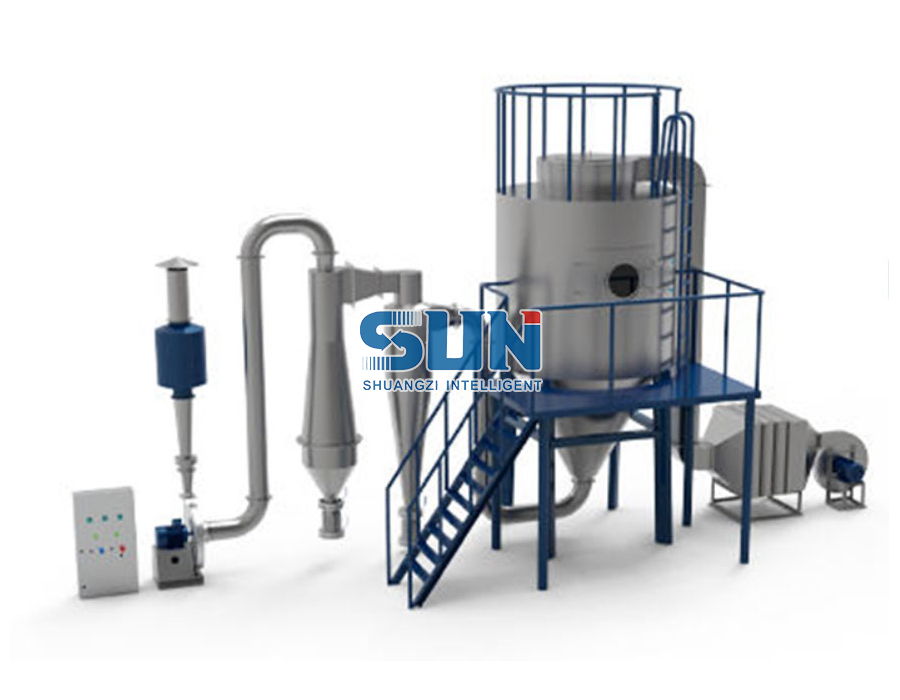
A centrifugal spray dryer operates on a simple but highly engineered principle: liquid feed is atomized into fine droplets, and those droplets are dried almost instantly by contact with hot air. The process begins when a prepared liquid material is delivered to the top of the drying chamber. A high-speed rotary atomizer, also called a centrifugal spray head, uses powerful rotational force to spread the liquid outward and break it into a controlled spray of droplets. These droplets enter a carefully managed hot air stream, usually introduced in a way that supports efficient heat and mass transfer.
The drying chamber is designed to provide enough residence time for moisture evaporation while preventing excessive heat exposure to the finished powder. Although the inlet air temperature can be relatively high, the actual material temperature remains much lower because evaporation absorbs heat. This is one reason spray drying is widely used for heat-sensitive substances, including plant extracts, enzymes, vitamins, certain pharmaceutical intermediates, and nutritional ingredients. The outlet temperature is typically controlled within a stable range, helping operators maintain product moisture content and quality.
After drying, powder particles are carried by airflow toward the collection system. Depending on the configuration, cyclones, bag filters, or combined recovery systems may be used. The equipment described here can achieve a dry powder recovery rate of at least 95%, supporting efficient raw material utilization and lower production loss. For high-value materials such as botanical extracts, pharmaceutical ingredients, probiotics-related intermediates, and specialty food powders, this recovery rate has a direct effect on operating cost and commercial yield.
Core Advantages of the Equipment
The most important advantage of this centrifugal spray dryer is speed. Drying takes place in only a few seconds, which greatly reduces thermal exposure compared with many traditional drying methods. Materials that may degrade during long drying cycles, such as plant-based active compounds, vitamins, natural pigments, and certain bioactive ingredients, can be processed under controlled conditions to help retain functional properties.
Another major advantage is product uniformity. Because the high-speed atomizer generates a fine and consistent droplet distribution, the final powder can have controlled particle size, better flowability, and more uniform moisture content. These characteristics are especially valuable in industries that require stable downstream processing, such as tablet production, capsule filling, instant beverage blending, powder packaging, and detergent formulation.
Automation is also a significant benefit. The equipment supports automatic temperature control, stable feed regulation, and continuous operation. Compared with manually intensive drying methods, a well-designed centrifugal spray dryer reduces operator workload, improves batch consistency, and enables more predictable production scheduling. Continuous operation is particularly important for plants with large daily output targets or integrated production lines.
The system is adaptable to different heat sources. Depending on model and production scale, heat may be supplied by electric heating, steam plus electric heating, oil, gas, or hot air stove configurations. This flexibility allows users to match the drying system with local utility conditions, energy cost structures, process safety requirements, and environmental regulations.
Compared with many competing drying solutions, the centrifugal spray dryer offers a stronger combination of short residence time, high evaporation capacity, fine particle control, hygienic design potential, and continuous powder collection. Traditional tray drying, vacuum oven drying, and some low-efficiency hot air drying processes may be suitable for certain materials, but they often require much longer processing time and may produce uneven moisture distribution. Freeze drying can preserve sensitive materials but is usually slower and more expensive in terms of energy and capital investment. Centrifugal spray drying occupies a valuable position where high productivity, good quality preservation, and scalable operation are needed.
Technical Parameters and Model Selection
The centrifugal spray dryer series includes multiple models for laboratory testing, pilot production, and industrial-scale manufacturing. The models range from smaller units with 5 kg/h water evaporation capacity to large systems capable of 200 to 2000 kg/h evaporation, allowing users to scale from development to commercial production. Model selection depends on feed concentration, desired final moisture content, thermal sensitivity, particle size requirements, powder recovery strategy, installation space, heat source availability, and production schedule.
Item or Parameter |
SUN 5 |
SUN 25 |
SUN 50 |
SUN 150 |
SUN 200-2000 |
Inlet Temperature |
140-350 automatic control |
140-350 automatic control |
140-350 automatic control |
140-350 automatic control |
140-350 automatic control |
Outlet Temperature |
80-90 |
80-90 |
80-90 |
80-90 |
80-90 |
Maximum Water Evaporation |
5 kg/h |
25 kg/h |
50 kg/h |
150 kg/h |
200-2000 kg/h |
Drive Form of Centrifugal Spray Head |
Compressed air drive |
Mechanical drive |
Mechanical drive |
Mechanical drive |
Mechanical drive |
Maximum Speed |
25000 r.p.m |
18000 r.p.m |
18000 r.p.m |
15000 r.p.m |
8000-15000 r.p.m |
Diameter of Spray Tray |
50 mm |
120 mm |
120 mm |
150 mm |
180-240 mm |
Heat Source |
Electric |
Steam plus electric |
Steam plus electric |
Steam plus electric, oil, gas, or hot air stove |
Steam plus electric, oil, gas, or hot air stove |
Maximum Electric Heating Power |
9 kW |
36 kW |
72 kW |
99 kW |
According to project configuration |
Dimensions |
1.8 x 0.93 x 2.2 m |
3 x 2.7 x 4.26 m |
3.5 x 3.5 x 4.8 m |
5.5 x 4 x 7 m |
According to actual situation |
Dry Powder Recovery |
At least 95% |
At least 95% |
At least 95% |
At least 95% |
At least 95% |
The smaller model is suitable for laboratory formulation work, process verification, small-batch production, and research applications. It is useful for universities, research institutes, pilot workshops, ingredient developers, and customers who need to determine drying behavior before investing in larger systems. The middle-capacity models are appropriate for pilot production, specialty ingredient manufacturing, and moderate industrial output. The larger models are designed for continuous production facilities where evaporation load, energy efficiency, and integrated powder recovery are central project concerns.
Performance Advantages Compared with Common Alternatives
When evaluating drying technologies, customers usually compare spray drying with tray drying, vacuum drying, freeze drying, fluid bed drying, belt drying, drum drying, and other thermal drying methods. Each technology has its place, but the centrifugal spray dryer provides several competitive advantages for liquid feedstocks. Its continuous operation makes it more productive than batch tray drying. Its rapid drying time makes it more suitable than prolonged hot air drying for many temperature-sensitive materials. Its powder output is often more uniform than crushed cakes produced from static drying systems.
Compared with pressure nozzle spray dryers, centrifugal atomization can offer strong adaptability to certain feed materials, especially suspensions and extracts with moderate variability. The rotary atomizer can generate a broad yet controllable droplet distribution and is often valued for its stable performance in industrial production. For many applications, it also reduces the risk of nozzle blockage associated with high-solid or particulate-containing feeds, though feed preparation remains important.
Compared with freeze drying, centrifugal spray drying generally has much higher throughput and lower operating cost. Freeze drying is excellent for extremely heat-sensitive materials and products that require porous structures, but it requires long cycle times and high energy consumption. For many plant extracts, food ingredients, and chemical powders, spray drying provides a more economical and scalable solution while still maintaining acceptable product quality.
Compared with drum drying, spray drying can produce finer and more uniform powders without forming flakes that require milling. It can also reduce thermal contact damage because droplets dry quickly in air rather than being pressed against a hot metal surface. This difference is important for flavors, colors, natural extracts, and nutritional powders where excessive heating may alter appearance, aroma, solubility, or activity.
For manufacturers concerned with consistency, the controlled inlet temperature, stable outlet temperature, atomizer speed, and air distribution design provide a repeatable process window. This repeatability helps reduce batch-to-batch variation and improves customer confidence in the final powder product.
Applications in Food Processing
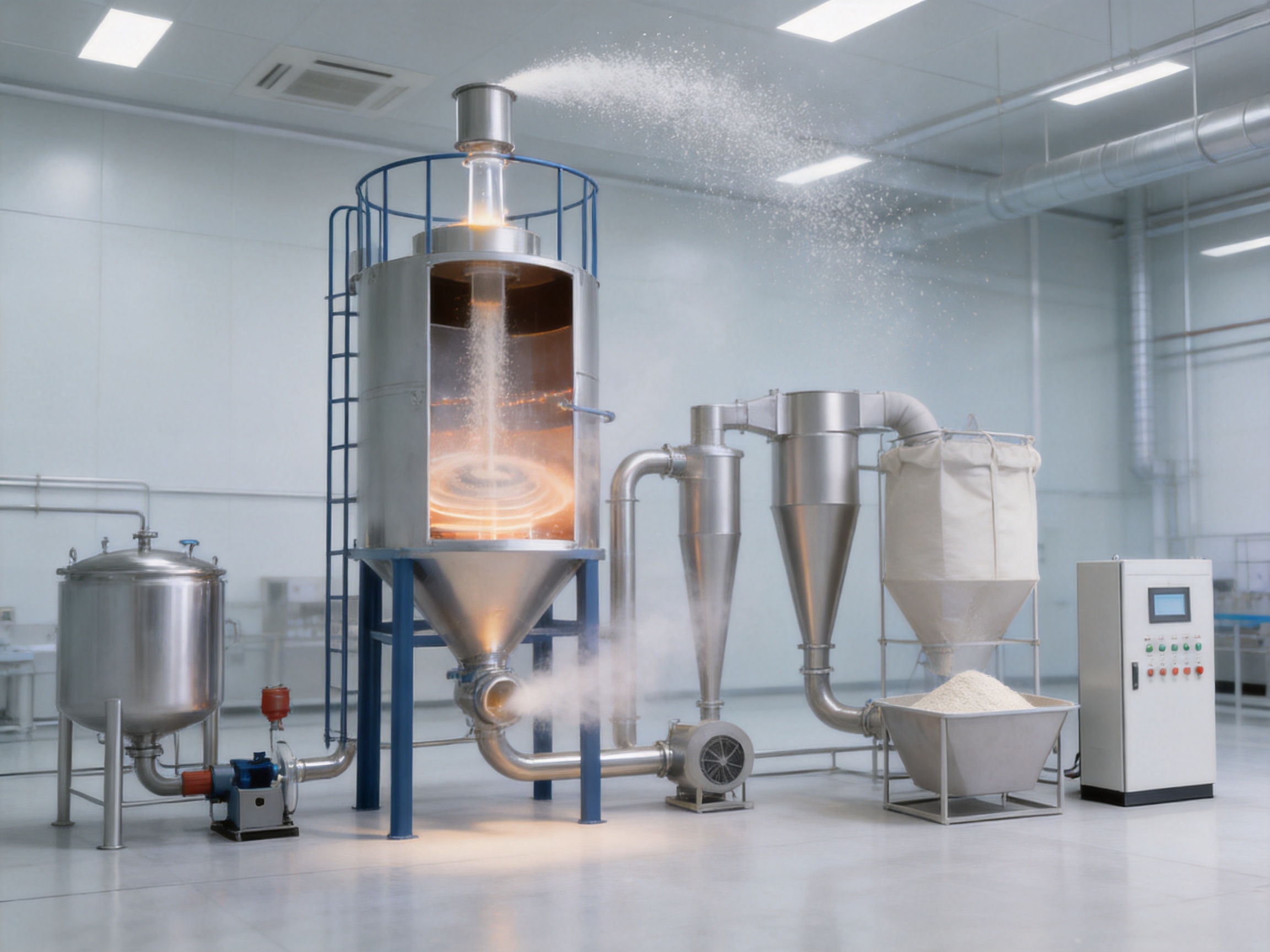
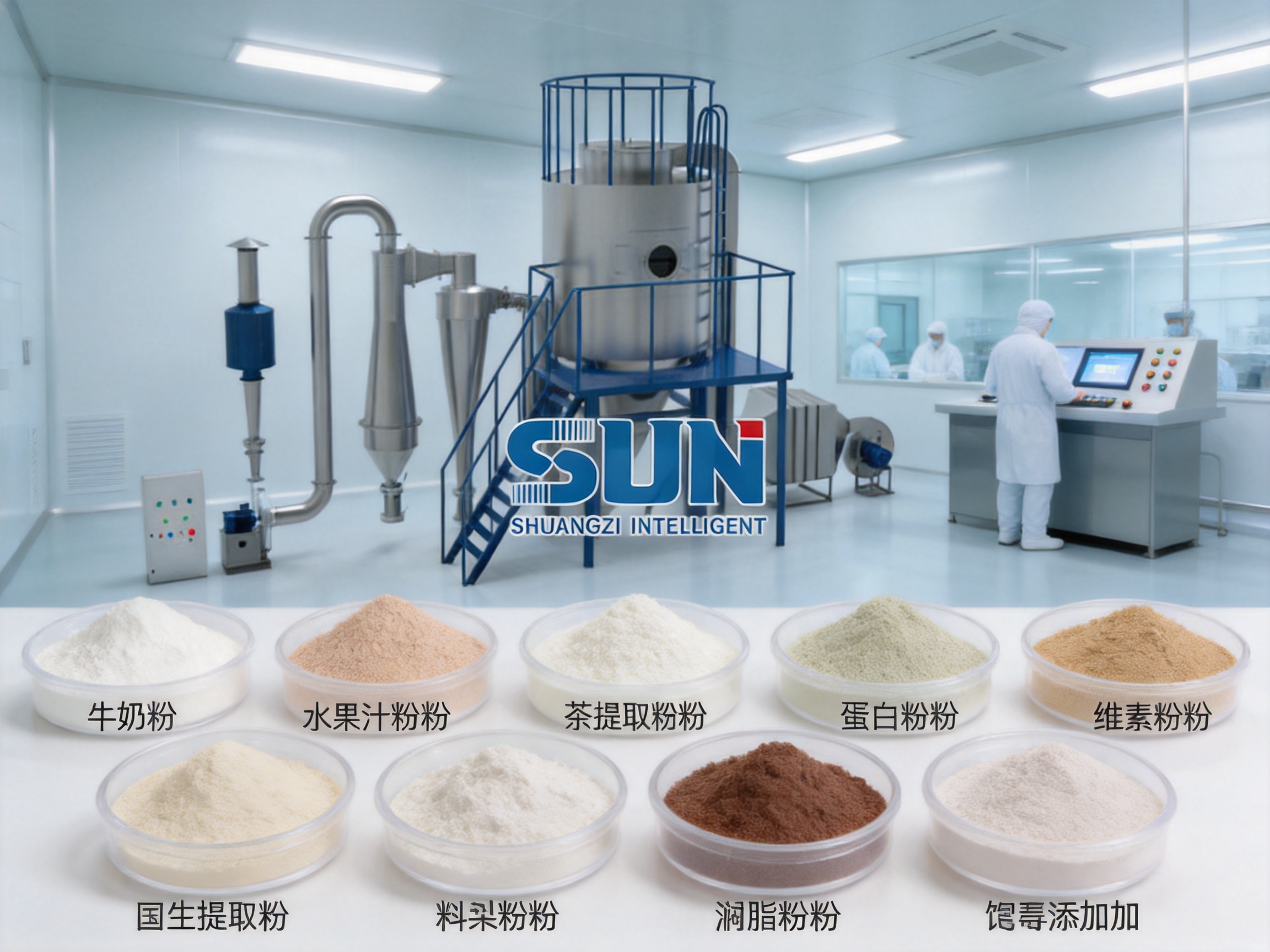
The food industry is one of the most important application areas for centrifugal spray drying. Liquid food materials frequently need to be transformed into powders for longer shelf life, easier transportation, improved solubility, and convenient packaging. Milk powder, juice powder, tea extracts, coffee-related ingredients, vegetable powders, protein powders, natural sweeteners, flavors, and functional nutrition products can all benefit from spray drying when the process is properly designed.
For milk powder and dairy-based products, spray drying enables water removal while preserving nutritional components and producing powder that can be reconstituted. For juice powders and fruit extracts, the technology supports the production of instant beverage ingredients. Carriers such as maltodextrin may be used depending on the formulation to improve powder recovery and reduce stickiness. For tea polyphenols and botanical beverage ingredients, fast drying helps retain valuable active compounds and desirable sensory characteristics.
Protein powder production requires careful control of temperature and feed concentration. Overheating may affect solubility or functionality, while insufficient drying may lead to caking or microbial risk. A centrifugal spray dryer provides a controllable environment that can be adjusted according to product requirements. The short exposure time is particularly beneficial for protein-based and nutrition-oriented materials.
Food manufacturers also value hygienic construction, smooth product-contact surfaces, controlled air handling, and easy cleaning. Zhejiang Shuangzi Intelligent Equipment Co.,Ltd. has experience in equipment manufacturing and process system integration for natural food projects, allowing the company to support customized configurations for different hygiene levels, capacity requirements, and utility conditions.
Applications in Pharmaceutical and Biological Processing
In pharmaceutical and biological processing, powder quality is closely linked to safety, stability, and efficacy. Spray drying may be used for antibiotics, vitamins, herbal extracts, excipients, fermentation-derived products, and various pharmaceutical intermediates. The key advantage is the ability to dry materials quickly while reducing the time that active components are exposed to heat. The outlet temperature can be controlled to support consistent final moisture content, which is important for stability during storage.
For Chinese herbal extracts and botanical pharmaceutical materials, spray drying converts concentrated extract liquids into powders suitable for granulation, capsule filling, tablet production, or further blending. The equipment can help preserve active ingredients when the drying parameters are matched to the material. In many herbal extraction projects, spray drying is positioned after extraction, filtration, concentration, and sometimes precipitation or separation processes. A supplier with broader process knowledge can therefore provide more practical engineering support than a supplier that only provides a single drying unit.
In bio-fermentation projects, fermentation broth or downstream concentrated liquids may require drying into stable powders. Depending on the biological material, pretreatment steps such as filtration, concentration, sterilization, or carrier addition may be needed. The ability to integrate spray drying with fermentation, separation, concentration, and automation systems is a strong advantage for customers building complete production lines.
Pharmaceutical customers often require documentation support, clean layout planning, reliable welding quality, material traceability, automation control, and production reproducibility. Zhejiang Shuangzi Intelligent Equipment Co.,Ltd. focuses on process technology and automation engineering design, and its experience in biological and medical equipment helps customers align equipment configuration with production requirements.
Applications in Chemical, Daily Chemical, Feed, and Environmental Fields
Centrifugal spray drying is also widely used in chemical production. Dyes, catalysts, resin powders, ceramic-related materials, additives, and specialty chemicals may be dried from liquid or slurry states into powder form. Chemical applications often require attention to corrosion resistance, exhaust handling, dust control, explosion risk, and material compatibility. The drying system can be customized according to the characteristics of the feed and the safety requirements of the process.
In the daily chemical industry, spray drying is useful for detergent raw materials, skin care raw material powders, and other functional additives. Powder particle size, solubility, bulk density, and moisture content can affect final product performance. Centrifugal atomization offers good flexibility in producing powders with desired handling properties.
In feed production, feed additives and nutritional components can be dried for stable storage and accurate dosing. Many feed additives are sensitive to moisture and may lose performance if not dried properly. Spray drying helps improve shelf life, flowability, and mixing uniformity.
Environmental protection is another field where spray drying can contribute. Certain wastewater treatment residues, sludge-derived materials, or environmental process streams may require drying to reduce volume, improve handling, or support further treatment. When applied to environmental projects, equipment selection must consider material composition, emission treatment, odor management, energy consumption, and maintenance convenience.
Advanced Manufacturing Strength Behind the Equipment
A high-quality centrifugal spray dryer depends not only on process theory but also on manufacturing precision. The drying chamber, atomizer assembly, air distributor, pipelines, heating system, separation system, support structure, control cabinet, and sealing components must work together reliably. Poor fabrication can lead to air leakage, powder accumulation, cleaning difficulty, unstable atomization, inefficient drying, or premature wear. Therefore, manufacturing capability is a decisive factor when selecting a supplier.
Zhejiang Shuangzi Intelligent Equipment Co.,Ltd. was founded in 2007 and has developed into a professional enterprise in biological and medical equipment. The company covers a floor area of 16,706 square meters and a structure area of 17,800 square meters. This manufacturing base supports equipment design, fabrication, assembly, testing, and project delivery. The company has strong technical power and focuses on fields such as plant extraction, biological fermentation, pharmaceutical engineering, natural food processing, energy conservation, and environmental protection.
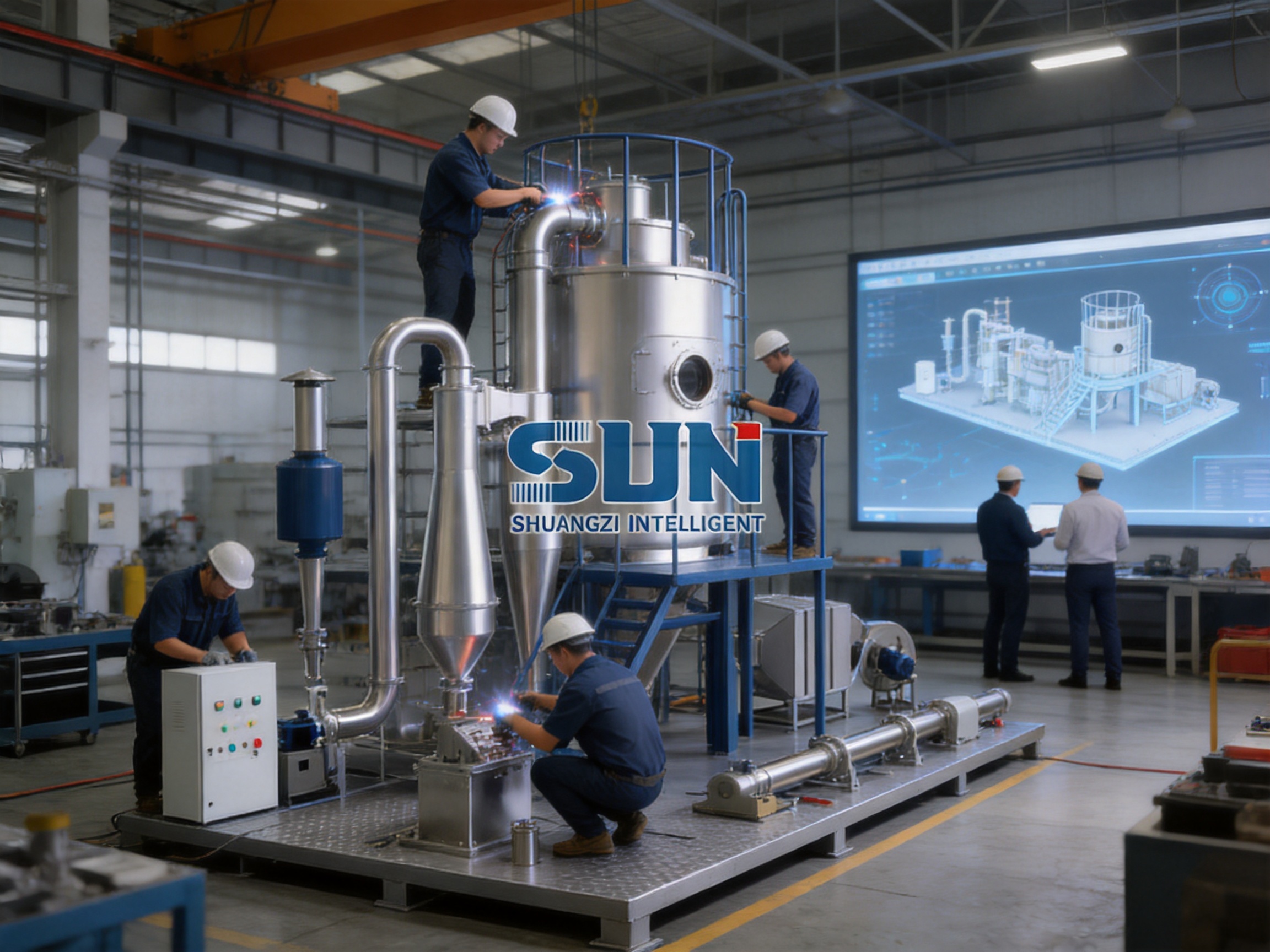
The company has introduced advanced welding and finishing equipment, including plasma argon arc welding machines, plasma cutting machines, CAM CNC machining centers, and other advanced production equipment. These tools improve the accuracy, consistency, and appearance of fabricated equipment. High-quality welding is particularly important for dryers used in food and pharmaceutical applications because smooth welds and proper surface finishing reduce the risk of material retention and contamination.
Precision cutting and machining also support better assembly quality. Components such as atomizer mounts, chamber sections, access doors, flanges, pipeline interfaces, and structural supports require accurate dimensions. When manufacturing tolerances are well controlled, installation becomes easier, equipment sealing is more reliable, and long-term operation is more stable.
Beyond individual equipment fabrication, the company provides engineering, process design, equipment design, installation, line debugging, and turnkey project services. This is a major strength for customers who need a complete production solution rather than only a machine. A spray dryer often needs to connect with upstream extraction, concentration, fermentation, filtration, or mixing equipment, and downstream powder collection, packaging, or conveying systems. A supplier with system integration capability can help reduce project risks and improve production efficiency.
Process Engineering and Automation Capability
Process engineering is essential for successful spray drying. The same dryer can perform very differently depending on feed solids content, viscosity, inlet temperature, outlet temperature, atomizer speed, feed flow rate, air distribution, chamber geometry, and powder collection design. Proper engineering ensures that the dryer is not merely installed but optimized for the actual product.
Zhejiang Shuangzi Intelligent Equipment Co.,Ltd. focuses on process technology and automation engineering design. The company can help users evaluate process routes, equipment layout, utility requirements, control logic, and system integration. This support is especially valuable in plant extraction projects, bio-fermentation projects, western medicine synthesis projects, and food projects, where multiple unit operations must operate in sequence.
Automation improves the repeatability of spray drying. Automatic inlet temperature control helps stabilize heat supply. Outlet temperature monitoring provides a key indicator of drying performance and final moisture content. Feed rate control allows the operator to balance evaporation load with product quality. Atomizer speed control affects droplet size and particle formation. Alarm functions, interlocks, and system monitoring can improve operational safety.
In modern facilities, users increasingly expect equipment to support digital production management. A well-designed control system can record key parameters, assist troubleshooting, and support quality documentation. For pharmaceutical and food applications, such data can be useful for process validation and production review.
Why High Powder Recovery Matters
Dry powder recovery is an important economic and technical indicator. A recovery rate of at least 95% means that most of the dried solids are collected rather than lost in exhaust air, stuck to chamber walls, or wasted during cleaning. For low-value bulk materials, recovery affects operating cost. For high-value extracts, active ingredients, and specialty chemicals, recovery can determine whether a process is commercially viable.
High recovery depends on several factors. The atomization system must produce droplets that dry properly and do not remain sticky when they reach collection zones. The chamber design must manage airflow so that powder is transported efficiently. The separation system must be sized and configured correctly. Temperature control must avoid under-drying, which can cause wall deposition. Feed formulation may also need adjustment when processing sticky materials such as fruit extracts or sugar-rich liquids.
Compared with less optimized systems, this centrifugal spray dryer provides a strong recovery foundation through controlled drying conditions and suitable powder collection design. The company’s engineering support can further help customers adjust process parameters according to specific material behavior.
Design Considerations for Heat-Sensitive Materials
Many customers choose spray drying because their materials are sensitive to heat, oxidation, or prolonged processing. Plant extracts may contain polyphenols, flavonoids, alkaloids, essential components, or other active substances that degrade under harsh conditions. Vitamins can lose potency if exposed to excessive heat. Proteins may denature, and natural colors may fade. The centrifugal spray dryer addresses these concerns by reducing drying time to only a few seconds.
It is important to understand that spray drying uses hot air, but product temperature is controlled by evaporation. When droplets contain moisture, much of the heat energy is used to evaporate water rather than raise solid temperature. As drying progresses, the product leaves the chamber quickly. This combination of evaporative cooling and short residence time makes spray drying suitable for many heat-sensitive applications.
However, successful drying still requires correct parameter selection. Inlet temperature, outlet temperature, feed concentration, atomizer speed, and air volume should be adjusted through testing and process development. For new materials, pilot-scale trials are often recommended. The availability of smaller models and pilot workshop support is beneficial for customers who need to build reliable process data before scaling up.
Integration with Plant Extraction Projects
Plant extraction projects often include raw material preparation, extraction, filtration, concentration, purification, drying, blending, and packaging. Spray drying is commonly used after concentration, when the extract liquid has reached a suitable solids content. If the concentration is too low, energy consumption increases because more water must be evaporated in the dryer. If the concentration is too high, viscosity may affect atomization. Therefore, integration between the concentration system and spray dryer is important.
Zhejiang Shuangzi Intelligent Equipment Co.,Ltd. has mature products in extraction equipment, evaporation and concentration equipment, separation equipment, filtration equipment, crystallization equipment, and drying systems. This broad product foundation allows the company to design coordinated process lines rather than isolated machines. For users processing herbal extracts, tea extracts, natural pigments, or functional plant ingredients, such integrated capability can shorten project communication and improve process compatibility.
In plant extraction, product quality may depend on gentle handling, hygienic design, low contamination risk, and controlled temperature history. The centrifugal spray dryer contributes by rapidly converting concentrated extract into powder, reducing water activity and improving storage stability. When combined with upstream concentration and filtration, it forms a practical production route for botanical powders.
Integration with Bio-Fermentation Projects
Bio-fermentation projects require careful coordination between biological growth, separation, concentration, and drying. Fermentation products may include enzymes, amino acids, organic acids, microbial metabolites, nutritional ingredients, or pharmaceutical intermediates. Some materials may be sensitive to heat or shear, while others may contain suspended solids that affect atomization.
A centrifugal spray dryer can be applied after suitable pretreatment. Depending on the product, the fermentation broth may be filtered, centrifuged, concentrated, sterilized, or mixed with carriers. The dryer then converts the prepared liquid into powder for storage, transport, or further formulation. Automation helps maintain stable operating conditions, which is important because fermentation-derived materials can vary from batch to batch.
The company’s experience in complete fermentation system equipment and drying systems provides customers with a more unified engineering approach. Instead of purchasing fermentation equipment from one supplier and drying equipment from another without integration, customers can work with a process-oriented manufacturer that understands upstream and downstream requirements.
Energy and Utility Flexibility
Energy cost is a major consideration in drying. The ability to select electric heating, steam plus electric heating, oil, gas, or hot air stove configurations gives customers flexibility. Small laboratory systems may use electric heating for simplicity and accurate control. Medium and large systems may combine steam and electric heating or use fuel-based heat sources depending on local energy prices and plant infrastructure.
For industrial projects, heat source selection should consider not only cost but also control stability, safety, emissions, maintenance, and regulatory requirements. A properly engineered system balances energy efficiency with product quality. The dryer’s automatic inlet temperature control helps maintain consistent drying even when external conditions fluctuate.
Energy efficiency can also be improved by upstream concentration. Removing water through evaporation before spray drying may be more economical for some products, especially when large volumes of dilute liquid are processed. Because the company also provides evaporation and concentration equipment, it can help customers design a more energy-conscious process route.
Hygienic and Practical Operation
For food and pharmaceutical applications, hygienic design is essential. Smooth surfaces, suitable stainless steel construction, proper sealing, cleanable pipelines, and accessible inspection points all contribute to safe production. While exact configuration may vary by project, the manufacturing quality and engineering approach behind the equipment support hygienic requirements.
Practical operation also matters. Operators need clear controls, stable atomization, accessible cleaning points, reliable powder collection, and safe maintenance procedures. A dryer that performs well in theory but is difficult to clean or maintain can create production delays. Therefore, equipment design should consider operator workflow, inspection access, cleaning frequency, and spare parts availability.
Good installation and commissioning are equally important. Spray dryers involve airflow, heat, rotating parts, powder collection, and control systems. On-site debugging ensures that the equipment reaches expected performance under real production conditions. Zhejiang Shuangzi Intelligent Equipment Co.,Ltd. can provide installation, line debugging, and turnkey project support, helping customers move from equipment delivery to stable production.
Quality Control in Manufacturing
Quality control begins with design review and material selection. Product-contact components must be appropriate for the intended material and industry. Structural components must provide stability. Rotating parts must meet balance and performance requirements. Heating and control components must operate reliably. During fabrication, cutting, welding, polishing, assembly, and inspection steps all affect final quality.
Advanced plasma cutting and CNC machining contribute to dimensional accuracy. Plasma argon arc welding helps produce strong and clean welds. Finishing processes improve surface condition and appearance. Assembly checks help verify alignment, sealing, and mechanical integrity. Control system testing helps ensure that temperature regulation and safety functions operate correctly.
For customers comparing suppliers, these manufacturing details are significant. Lower-cost equipment may appear similar externally, but differences in weld quality, atomizer reliability, air distribution, material thickness, control accuracy, and powder recovery can become apparent during long-term production. A dryer is a long-term production asset, and stable operation often provides greater value than initial price savings.
Customization for Different Industries
No single spray dryer configuration is ideal for every material. Food powders, pharmaceutical extracts, chemical powders, feed additives, and environmental materials have different requirements. Customization may involve chamber size, atomizer type, heating method, powder collection system, contact material, control system, cleaning approach, dust removal design, and overall layout.
For sticky food extracts, the system may require specific temperature control, carrier formulation support, or wall deposition reduction strategies. For pharmaceutical materials, documentation, hygienic construction, and precise process control may be emphasized. For chemical materials, corrosion resistance, dust explosion prevention, exhaust treatment, or solvent considerations may be important. For large-scale projects, layout, utilities, foundation requirements, and maintenance platforms become central design topics.
The company’s turnkey project capability is valuable because customization does not stop at the dryer itself. It includes how the dryer fits into the entire plant. Feed tanks, pumps, filters, concentration systems, air heating units, fans, ducts, cyclones, bag filters, powder discharge valves, control cabinets, and packaging interfaces must be coordinated. Integrated design reduces installation conflicts and supports smoother commissioning.
Operational Factors That Influence Powder Quality
Several operating parameters influence final powder quality. Feed solids content affects evaporation load, particle formation, and energy efficiency. Higher solids content can increase capacity but may raise viscosity and atomization difficulty. Feed temperature may affect viscosity and flow stability. Atomizer speed influences droplet size; higher speed generally creates finer droplets, while lower speed may produce larger particles. Inlet temperature provides drying energy, while outlet temperature is closely linked to final moisture.
Airflow pattern affects particle residence time and wall deposition. Powder collection efficiency influences yield and environmental performance. Cleaning frequency and method affect hygiene and production continuity. Operators must understand these variables and adjust them according to material behavior.
A professional supplier can assist users in defining a process window. This may involve trial drying, analysis of powder moisture, solubility, bulk density, particle size, color, activity retention, and flowability. Once parameters are established, automation helps maintain repeatability.
Safety Considerations
Spray drying involves hot air, fine powders, rotating atomizers, electrical systems, and sometimes combustible dust. Safety must be considered during design and operation. Materials that form explosive dust clouds require careful evaluation. Chemical materials may require special exhaust handling or inerting considerations. Operators must follow cleaning procedures to prevent powder accumulation.
Mechanical safety is also important. The centrifugal atomizer rotates at high speed, so reliable manufacturing, proper balancing, secure installation, and maintenance procedures are essential. Temperature safety, pressure relief, electrical protection, and emergency stops should be considered according to project requirements.
A supplier with engineering and installation experience can help customers identify key safety requirements early in the project. This reduces the chance of costly modifications after equipment delivery.
Long-Term Value for Producers
The long-term value of a centrifugal spray dryer comes from productivity, quality consistency, material recovery, labor reduction, and process scalability. A reliable dryer helps producers meet delivery schedules, reduce waste, and develop new powder products. For companies expanding from liquid extracts or concentrates into dry powder markets, spray drying can open new commercial opportunities.
High automation reduces dependence on manual adjustment and helps maintain stable production. High recovery improves profitability. Flexible heat source options help adapt to local energy conditions. Scalable model choices allow customers to begin with laboratory or pilot production and later move to industrial capacity.
When supplied by an experienced equipment manufacturer with turnkey capability, the dryer becomes more than a standalone machine. It becomes part of a complete production strategy. Zhejiang Shuangzi Intelligent Equipment Co.,Ltd. supports customers with process design, equipment design, manufacturing, installation, system integration, and line debugging, which is especially valuable for complex projects.
How to Choose the Right Model
Choosing the correct model begins with evaporation requirement. Customers should calculate how much water must be removed per hour based on feed rate, feed solids content, and desired final moisture. For example, a concentrated extract with higher solids content requires less evaporation than a dilute liquid at the same product output. The model should be selected with enough capacity margin to maintain stable operation without overloading the system.
The next consideration is product sensitivity. Heat-sensitive materials may require careful control of outlet temperature, feed concentration, and residence time. Pilot testing is often useful to confirm quality retention. Particle size and bulk density requirements should also be discussed because atomizer speed, feed properties, and drying conditions influence powder characteristics.
Installation space and plant height are also important. Larger spray dryers require significant vertical space, maintenance access, and structural planning. Utility availability must be checked, including electricity, steam, compressed air, fuel supply, exhaust handling, and water if cleaning systems are involved.
Finally, customers should consider future expansion. A small system may meet current demand, but if market growth is expected, a larger model or modular process planning may be more economical in the long term. A supplier with experience in both pilot and industrial systems can help create a practical scale-up path.
Q&A Section
What is a centrifugal spray dryer used for?
A centrifugal spray dryer is used to convert liquid materials such as solutions, suspensions, emulsions, extracts, and slurries into dry powders. It is widely used in food, pharmaceutical, biological fermentation, chemical, daily chemical, feed, and environmental protection industries.
Why is the drying time so short?
The liquid feed is atomized into very fine droplets by a high-speed rotary atomizer. These droplets have a large surface area and contact hot air immediately, allowing moisture to evaporate within seconds.
Is it suitable for heat-sensitive materials?
Yes. Although hot air is used, the material is exposed for a very short time, and evaporation helps keep the particle temperature relatively low. This makes the equipment suitable for many heat-sensitive materials such as plant extracts, vitamins, proteins, and certain pharmaceutical ingredients.
What industries can use this equipment?
It can be used in food processing, pharmaceutical production, plant extraction, bio-fermentation, chemical manufacturing, daily chemical production, feed additive drying, and environmental treatment applications.
What is the powder recovery rate?
The dry powder recovery rate can reach at least 95%, depending on material properties, operating conditions, and system configuration. High recovery helps reduce waste and improve production economy.
How should a customer choose the correct model?
The correct model depends on water evaporation capacity, feed solids content, final moisture requirement, heat sensitivity, particle size target, utility availability, installation space, and future production plans. Pilot testing is recommended for new or complex materials.
What heat sources are available?
Depending on model and project configuration, the dryer may use electric heating, steam plus electric heating, oil, gas, or a hot air stove. This flexibility allows customers to match the system with local energy conditions.
What are the advantages over tray drying?
Compared with tray drying, centrifugal spray drying is much faster, more continuous, more suitable for uniform powder production, and generally better for high-throughput industrial processing.
What are the advantages over freeze drying?
Freeze drying is excellent for extremely sensitive materials, but it is slow and energy-intensive. Spray drying offers much higher productivity and lower operating cost for many food, extract, pharmaceutical intermediate, and chemical powder applications.
Can the dryer be integrated into a complete production line?
Yes. Zhejiang Shuangzi Intelligent Equipment Co.,Ltd. can provide process design, equipment design, manufacturing, installation, system integration, commissioning, and turnkey project support for complete production lines.
Conclusion
The centrifugal spray dryer is a powerful and versatile solution for converting liquid materials into high-quality powders. Its combination of rapid drying, uniform particle formation, automatic temperature control, high powder recovery, continuous operation, and heat-source flexibility makes it valuable across food, pharmaceutical, biological, chemical, feed, and environmental industries. For heat-sensitive materials, the short drying time helps preserve quality. For industrial producers, the high recovery rate and scalable models support economic and reliable production.
The equipment’s value is strengthened by the manufacturing and engineering capabilities of Zhejiang Shuangzi Intelligent Equipment Co.,Ltd. With experience in plant extraction, bio-fermentation, pharmaceutical engineering, natural food processing, energy conservation, and environmental protection, the company can provide not only a dryer but also an integrated process solution. Its advanced welding, cutting, machining, finishing, automation, and turnkey project capabilities help customers reduce project risk and improve long-term production performance.
For producers seeking a reliable powder production system, the centrifugal spray dryer offers a balanced combination of quality, efficiency, adaptability, and engineering support. Whether used in laboratory development, pilot production, or large-scale manufacturing, it provides a practical path from liquid feedstock to stable, market-ready powder.
References
Masters, K. Spray Drying Handbook. Longman Scientific and Technical.
Mujumdar, A. S. Handbook of Industrial Drying. CRC Press.
Filkova, I., Huang, L. X., and Mujumdar, A. S. Industrial Spray Drying Systems. Handbook of Industrial Drying.
Patel, R. P., Patel, M. P., and Suthar, A. M. Spray Drying Technology: An Overview. Indian Journal of Science and Technology.
Gharsallaoui, A., Roudaut, G., Chambin, O., Voilley, A., and Saurel, R. Applications of Spray-Drying in Microencapsulation of Food Ingredients. Food Research International.
Broadhead, J., Rouan, S. K. E., and Rhodes, C. T. The Spray Drying of Pharmaceuticals. Drug Development and Industrial Pharmacy.