
 英语
英语 俄语
俄语Content
- 1 Understanding the Core Working Principle
- 2 Key Product Advantages in Competitive Applications
- 3 Technical Parameters and Model Selection
- 4 Applications in Plant Extraction Projects
- 5 Applications in Bio-Fermentation Projects
- 6 Applications in Pharmaceutical and Western Medicine Synthesis Projects
- 7 Applications in Natural Food and Functional Ingredient Processing
- 8 Manufacturing Strengths Behind Reliable Separation
- 9 Process Engineering and Turnkey Project Capability
- 10 Why the Disc Stack Design Improves Productivity
- 11 Operational Modes: Clarification and Separation
- 12 Material, Hygiene, and Cleanability Considerations
- 13 Energy Efficiency and Production Economics
- 14 Safety and Stability in High-Speed Operation
- 15 Maintenance and Long-Term Value
- 16 How This Disk Centrifuge Stands Apart from Competitors
- 17 Guidelines for Selecting the Right Model
- 18 Integration with Upstream and Downstream Equipment
- 19 Q&A Section
- 19.1 What is a disk centrifuge used for?
- 19.2 How does the disc stack improve separation efficiency?
- 19.3 What is the difference between clarification and separation?
- 19.4 Which model should be selected for a specific production line?
- 19.5 Can the disk centrifuge be used in fermentation broth processing?
- 19.6 Is the disk centrifuge suitable for plant extraction?
- 19.7 What advantages does this equipment offer over filtration?
- 19.8 Why is manufacturing precision important for a disk centrifuge?
- 19.9 Can the equipment be included in a turnkey project?
- 19.10 What industries benefit most from this disk centrifuge?
- 20 Conclusion
- 21 References
- 22 Product: Disk Centrifuge
In modern process industries, separation is not merely a supporting step; it is often the point at which product quality, yield, safety, energy consumption, and downstream efficiency are determined. A disk centrifuge is designed for precisely this critical role. By using high-speed rotation, a vertical bowl, and a stack of closely spaced conical discs, the equipment dramatically improves the separation of solids from liquids, liquids from liquids, and complex liquid-liquid-solid mixtures. It is especially valuable in plant extraction, bio-fermentation, pharmaceutical processing, western medicine synthesis, natural food production, and turnkey process lines where stable, repeatable, and hygienic separation is required.
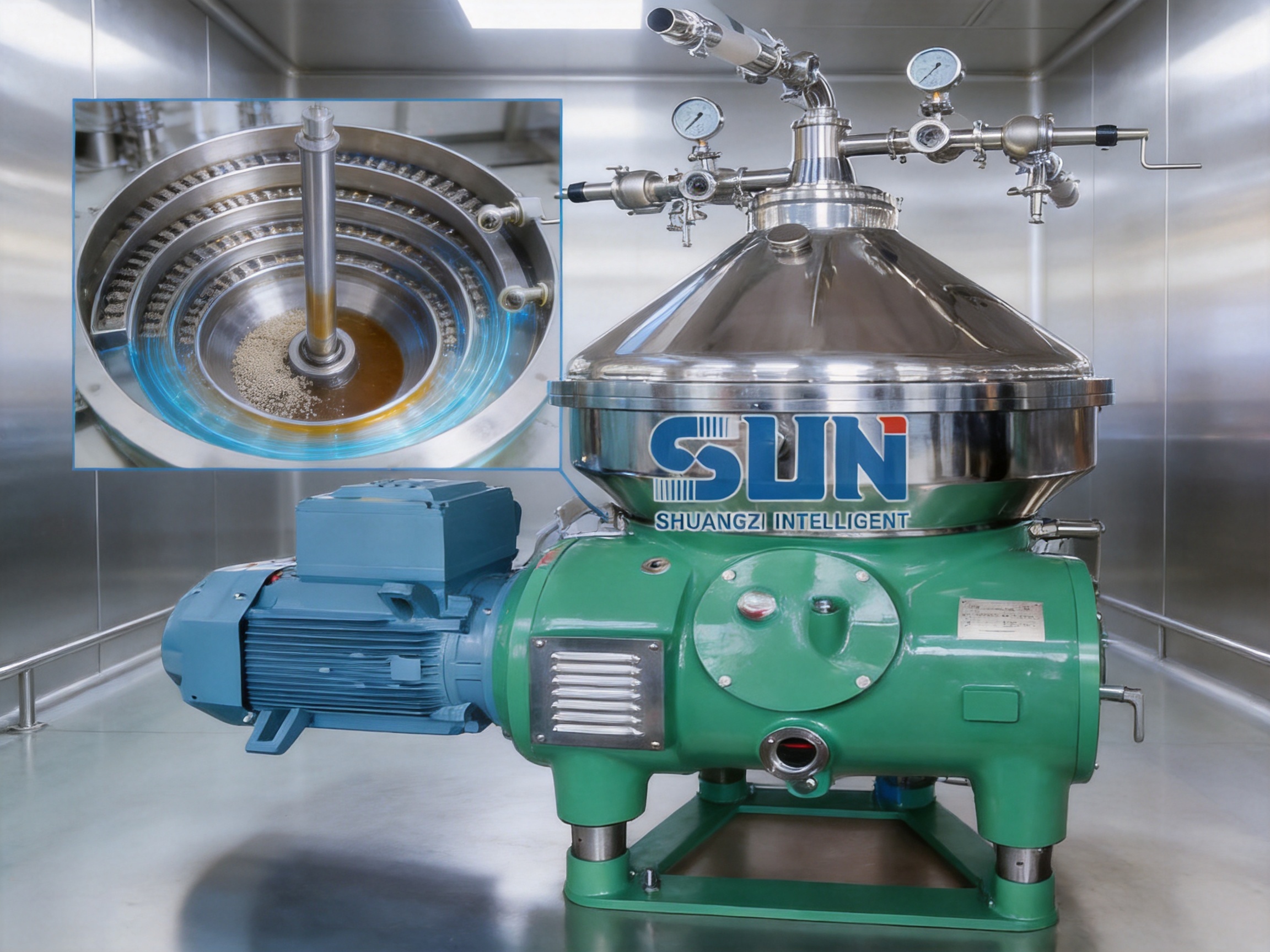
The disk centrifuge described here is a vertical centrifuge in which the drum is mounted on the upper end of a vertical shaft and driven by a motor through a transmission system to rotate at high speed. Inside the drum, a group of discs overlaps with narrow gaps between them. Feed material enters through a central feed tube and flows through the spaces between the discs. Under centrifugal force, suspended solid particles or dispersed liquid droplets move rapidly toward the disc surfaces, settle, slide, and collect at the larger-diameter zone of the drum, while clarified or separated liquid phases are discharged through liquid outlets.
This design gives the disk centrifuge a major advantage over many conventional settling, filtration, and basic centrifugation methods. The discs shorten the settling distance while greatly expanding the effective settling area inside the bowl. As a result, the equipment can achieve high processing capacity in a compact footprint and can handle clarification or separation tasks with excellent efficiency. Depending on the selected model, the processing range can extend from small-scale capacity to industrial throughput, with models covering approximately 100 to 20,000 liters per hour.
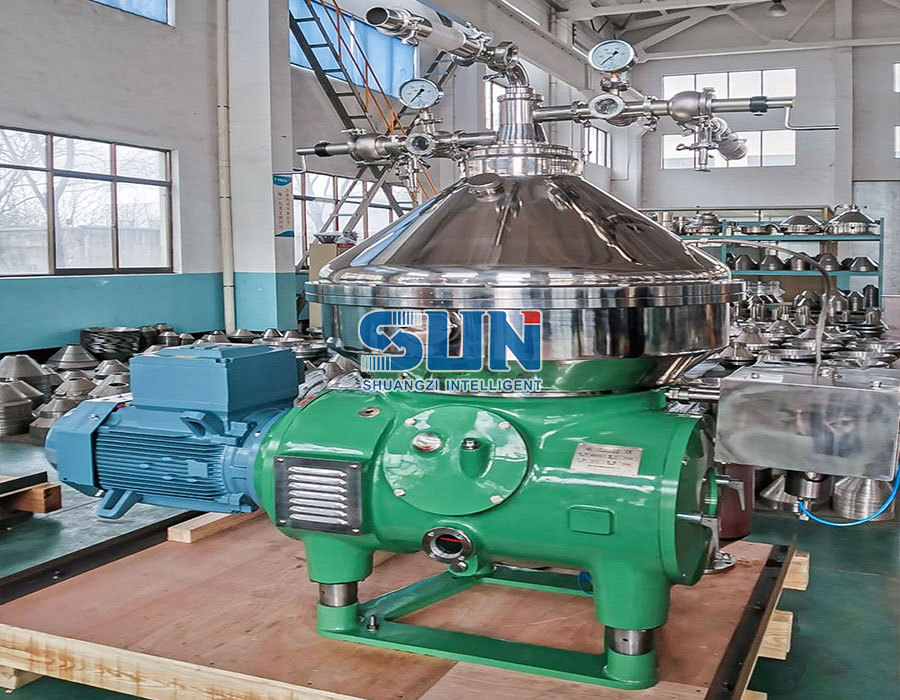
Disk Centrifuge
Understanding the Core Working Principle
The disk centrifuge operates by converting rotational energy into a strong centrifugal field. When a suspension or emulsion enters the rotating bowl, the heavier components experience a much stronger outward force than they would under gravity. Solid particles, heavier liquid droplets, or dense phase components migrate outward, while lighter liquid phases move toward the center. The stacked discs inside the bowl create many thin separation channels. Because each channel is narrow, particles and droplets travel only a short distance before reaching a disc surface, which accelerates separation.
In a traditional settling tank, separation depends on gravity and can require long residence time, large tanks, and significant floor space. In an ordinary centrifuge without a disc stack, the separation field is stronger, but the effective settling path may still be relatively long. The disk centrifuge improves both factors at once: high centrifugal force and short settling distance. This combination is the reason the equipment is widely used in industries that demand fast, clean, and repeatable clarification.
As feed material travels from the center of the bowl through the disc gaps, solid particles accumulate on the disc surfaces. These particles then slide along the conical disc surfaces toward the outer sludge space. The clarified liquid moves toward the outlet system. In liquid-liquid separation, the heavier liquid phase and lighter liquid phase are separated according to density difference, while solids, if present, are collected in the sludge area. Depending on the structure and configuration, accumulated solids may be removed manually after stopping the machine or discharged through a mechanism while the unit is operating.
This working principle allows the disk centrifuge to perform two major operating functions. The first is liquid-solid separation, also called clarification, which is used for removing low-concentration suspended solids from liquid. The second is liquid-liquid separation or liquid-liquid-solid separation, commonly called separation, which is used for breaking emulsions, recovering valuable liquid phases, purifying oils, or separating process intermediates. This flexibility makes the equipment suitable for a wide range of process requirements.
Key Product Advantages in Competitive Applications
Compared with many competing separation technologies, the disk centrifuge offers a balanced combination of high efficiency, compact structure, process flexibility, and industrial reliability. Its core advantage is the disc stack. The overlapping discs transform the internal bowl space into numerous parallel separation channels. This structure multiplies the effective separation area without requiring a large machine body. For plants where production area is expensive or where separation must be integrated into an existing line, this compact high-capacity design is a practical benefit.
Another advantage is high clarification efficiency for fine particles and low-concentration suspensions. Some filtration systems can struggle with fine particles because filter media may clog quickly, require frequent replacement, or introduce contamination risk. Gravity sedimentation is slow and may be unsuitable for continuous production. The disk centrifuge, by contrast, uses centrifugal force rather than a consumable filter medium as the primary separation driver. This reduces dependence on filter aids, lowers consumable usage, and supports a cleaner production environment.
For liquid-liquid separation, the disk centrifuge is especially valuable when two immiscible liquid phases have different densities but may form a stable or semi-stable emulsion. In such cases, static separation can be slow, and simple decanting may be inaccurate. High-speed centrifugal separation accelerates phase division and improves product recovery. In applications involving plant extracts, fermentation broth, medicinal intermediates, food liquids, or biochemical products, more complete phase separation can directly improve yield and reduce product losses.
The equipment also offers broad model coverage. The available technical series includes drum diameters from 300 millimeters to 800 millimeters and processing capacities from 100 liters per hour at the lower end to 20,000 liters per hour at the upper end. This allows users to choose equipment based on pilot testing, scale-up targets, plant layout, and process characteristics. A small model may be selected for research, pilot production, or limited-batch processing, while a larger model may be integrated into a continuous industrial production line.
Durability is another competitive advantage. A disk centrifuge must operate at very high speed, with models reaching rotational speeds such as 9,000 rpm, 7,400 rpm, 6,626 rpm, or 4,300 rpm depending on bowl size. High-speed rotating equipment requires careful design, accurate machining, stable dynamic balance, and reliable assembly. A manufacturer with advanced machining, welding, finishing, and quality-control capabilities can deliver equipment with better stability, lower vibration, longer service life, and safer operation.
Process continuity is also important. In some models and configurations, solids can be discharged through a discharging mechanism without stopping the separator. This can reduce downtime, improve production efficiency, and support continuous operation. For applications where the solid content is higher or where production campaigns are long, non-stop sludge discharge can be a decisive advantage over manual cleaning methods. Even in manually cleaned models, the compact and efficient internal structure can reduce the frequency of interruption when the feed is properly matched to the equipment.
Technical Parameters and Model Selection
Selecting the right disk centrifuge requires evaluation of processing capacity, feed characteristics, required separation accuracy, solids concentration, phase density difference, viscosity, temperature, cleaning requirements, and plant utilities. The following table summarizes the main technical parameters of the disk separator series. These specifications provide a starting point for engineering evaluation and model selection.
Item |
PTSX15 |
PTSX40 |
PTSX45 |
PTSX75 |
PTSX90 |
PTSX125 |
PTSX225 |
Drum Diameter |
300 mm |
440 mm |
460 mm |
540 mm |
580 mm |
620 mm |
800 mm |
Sliding Piston Diameter |
270 mm |
380 mm |
400 mm |
470 mm |
500 mm |
540 mm |
700 mm |
Processing Capacity |
100-2,000 L/H |
1,000-3,000 L/H |
2,000-5,000 L/H |
3,000-7,000 L/H |
5,000-8,500 L/H |
8,000-12,000 L/H |
12,000-20,000 L/H |
Speed |
9,000 rpm |
7,400 rpm |
7,100 rpm |
6,626 rpm |
6,200 rpm |
5,800 rpm |
4,300 rpm |
Motor Power |
4-5.5 kW |
7.5-11 kW |
11-15 kW |
15-18.5 kW |
18.5-22 kW |
22-30 kW |
37 kW |
Weight |
680 kg |
1,260 kg |
1,760 kg |
2,560 kg |
3,160 kg |
4,800 kg |
5,200 kg |
Dimensions |
950 × 950 × 1,250 mm |
1,415 × 1,400 × 1,450 mm |
1,500 × 1,100 × 1,400 mm |
1,772 × 1,473 × 1,855 mm |
1,800 × 1,500 × 1,855 mm |
1,950 × 1,500 × 1,955 mm |
2,119 × 1,699 × 2,368 mm |
The model range demonstrates how the disk centrifuge can be adapted to different production scales. The PTSX15, with its compact footprint and lower processing range, is suitable for pilot facilities, research environments, small-batch product development, or processes with moderate flow demand. Mid-range models such as PTSX45, PTSX75, and PTSX90 are well matched to production lines where throughput must be increased without occupying excessive space. Larger models such as PTSX125 and PTSX225 support high-volume industrial operations, especially when separation must be performed continuously or near-continuously.
Motor power selection reflects both bowl size and process load. Higher-capacity models require more power because of larger rotating masses, higher feed volume, and increased separation demand. However, motor power should not be considered in isolation. The correct choice depends on actual liquid viscosity, solids content, density difference, desired clarification effect, and whether the process is continuous or batch-based. A professional supplier should evaluate these factors before recommending the final model.
Applications in Plant Extraction Projects
Plant extraction processes often produce complex mixtures containing dissolved active components, fine plant fibers, pigments, waxes, oils, insoluble residues, and suspended particles. After extraction, clarification and phase separation can be essential before concentration, purification, crystallization, drying, or formulation. A disk centrifuge is well suited to these tasks because it can remove fine suspended matter rapidly while protecting the flow continuity of the extraction line.
In botanical extraction, valuable active compounds may remain in liquid extract after raw material removal. Conventional filtering can sometimes retain product in the filter cake or require filter aids that add cost and complexity. A disk centrifuge can reduce suspended solids while minimizing chemical addition. This supports cleaner downstream evaporation and concentration. When less insoluble matter enters evaporators, heat transfer surfaces remain cleaner, fouling can be reduced, and evaporation efficiency may improve.
Many natural extracts also contain oil-like fractions or emulsified impurities. Liquid-liquid separation can be used to recover target phases or remove unwanted components. The high-speed disc stack structure is particularly useful when droplets are small and slow to separate by gravity. By accelerating droplet migration and phase division, the disk centrifuge can improve clarity, reduce standing time, and create more predictable batch-to-batch results.
For producers of herbal extracts, plant-derived ingredients, nutraceutical intermediates, or natural food additives, a disk centrifuge can contribute to higher product consistency. Clearer extract streams support more controlled concentration, drying, and final powder quality. In addition, integrated engineering support from Zhejiang Shuangzi Intelligent Equipment Co., Ltd. allows the centrifuge to be matched with extraction tanks, evaporators, filtration equipment, storage vessels, crystallizers, and drying systems as part of a complete plant extraction process.
Applications in Bio-Fermentation Projects
Bio-fermentation broths can be difficult to process. They may contain microbial cells, proteins, polysaccharides, metabolites, residual nutrients, antifoam agents, and fine suspended materials. The separation step after fermentation has a direct effect on product recovery and purification cost. A disk centrifuge can clarify fermentation broth by removing biomass or suspended matter from the liquid phase. It can also support downstream concentration, membrane filtration, chromatography, extraction, or crystallization.
In many fermentation processes, cells are small and remain suspended for long periods. Gravity sedimentation may be too slow, while filtration can be restricted by biomass compressibility or membrane fouling. A disk centrifuge provides strong centrifugal force and a large effective settling area, allowing rapid biomass separation. This helps maintain process throughput and reduces the burden on downstream filtration systems.
For fermentation products that are sensitive to long exposure time or contamination, fast enclosed separation is valuable. Shorter residence time can help maintain product quality, and a well-designed equipment system can be integrated with sanitary piping, cleaning procedures, and automated process control. The company’s experience in fermentation systems, process automation, equipment integration, and GMP-oriented pilot production lines strengthens its ability to provide centrifuge solutions suitable for biological processing environments.
Scale-up is another major challenge in fermentation projects. A process developed in a laboratory must often be transferred to pilot scale before industrial production. The availability of multiple centrifuge models supports stepwise scale-up. A smaller separator can be used during pilot testing to evaluate separation behavior, while a larger model can be selected later for commercial throughput. Engineering support is important because feed rheology, solids concentration, and density difference may change with scale, requiring adjustment of operating conditions.
Applications in Pharmaceutical and Western Medicine Synthesis Projects
Pharmaceutical and western medicine synthesis projects demand equipment that can support product purity, repeatability, cleanability, and process control. Separation may be needed after reaction, extraction, crystallization, washing, precipitation, or phase transfer. A disk centrifuge can be used to clarify process liquids, remove fine solids, separate liquid phases, or recover valuable intermediates. Its high efficiency can reduce hold time and improve downstream processing stability.
In medicinal synthesis, precise separation is often required to reduce impurity load. Fine solids remaining in solution can affect crystallization behavior, contaminate intermediates, or damage downstream equipment. Liquid-liquid phase separation is also common in solvent extraction and reaction workup. When emulsions form, phase disengagement can become slow and unpredictable. A disk centrifuge can accelerate separation and provide a more controllable alternative to static settling vessels.
Another advantage is compatibility with integrated process engineering. Zhejiang Shuangzi Intelligent Equipment Co., Ltd. focuses on EPC and EPCM services, including process technology, automation engineering design, equipment manufacturing, matching purchase, installation, system integration, and commissioning. For pharmaceutical users, this means the disk centrifuge can be designed not as an isolated machine but as part of a complete processing system. This can include upstream reaction or extraction units, downstream concentration or drying systems, cleaning utilities, and automated control interfaces.
High-quality manufacturing is especially important in pharmaceutical applications. Equipment surfaces, welds, sealing systems, and structural components must be designed to reduce contamination risk and support reliable cleaning. The company’s investment in advanced welding, cutting, machining, and finishing equipment helps support the precision and hygienic performance expected in demanding processing environments.
Applications in Natural Food and Functional Ingredient Processing
Food production increasingly demands gentle, efficient, and clean separation technologies. Whether the product is a natural extract, beverage ingredient, edible oil fraction, fermentation-derived ingredient, or functional food intermediate, liquid clarity and phase purity can determine final quality. A disk centrifuge helps producers remove fine solids, clarify liquids, separate emulsions, and improve the consistency of downstream operations.
Compared with heavy use of filter aids or repeated settling, centrifugal clarification can reduce process time and support cleaner labeling or simpler production procedures. In beverage or ingredient applications, suspended particles can affect appearance, taste, stability, and shelf life. By removing these particles efficiently, the disk centrifuge contributes to a more stable liquid product and may reduce the need for additional polishing steps.
In natural food processing, temperature control and residence time are often important. Although the centrifuge itself is a mechanical separator, its fast processing ability can reduce prolonged holding and help preserve sensitive components when properly integrated into a controlled line. The equipment can be combined with extraction, evaporation, concentration, precipitation, separation, and drying systems to form a complete production chain.
Manufacturing Strengths Behind Reliable Separation
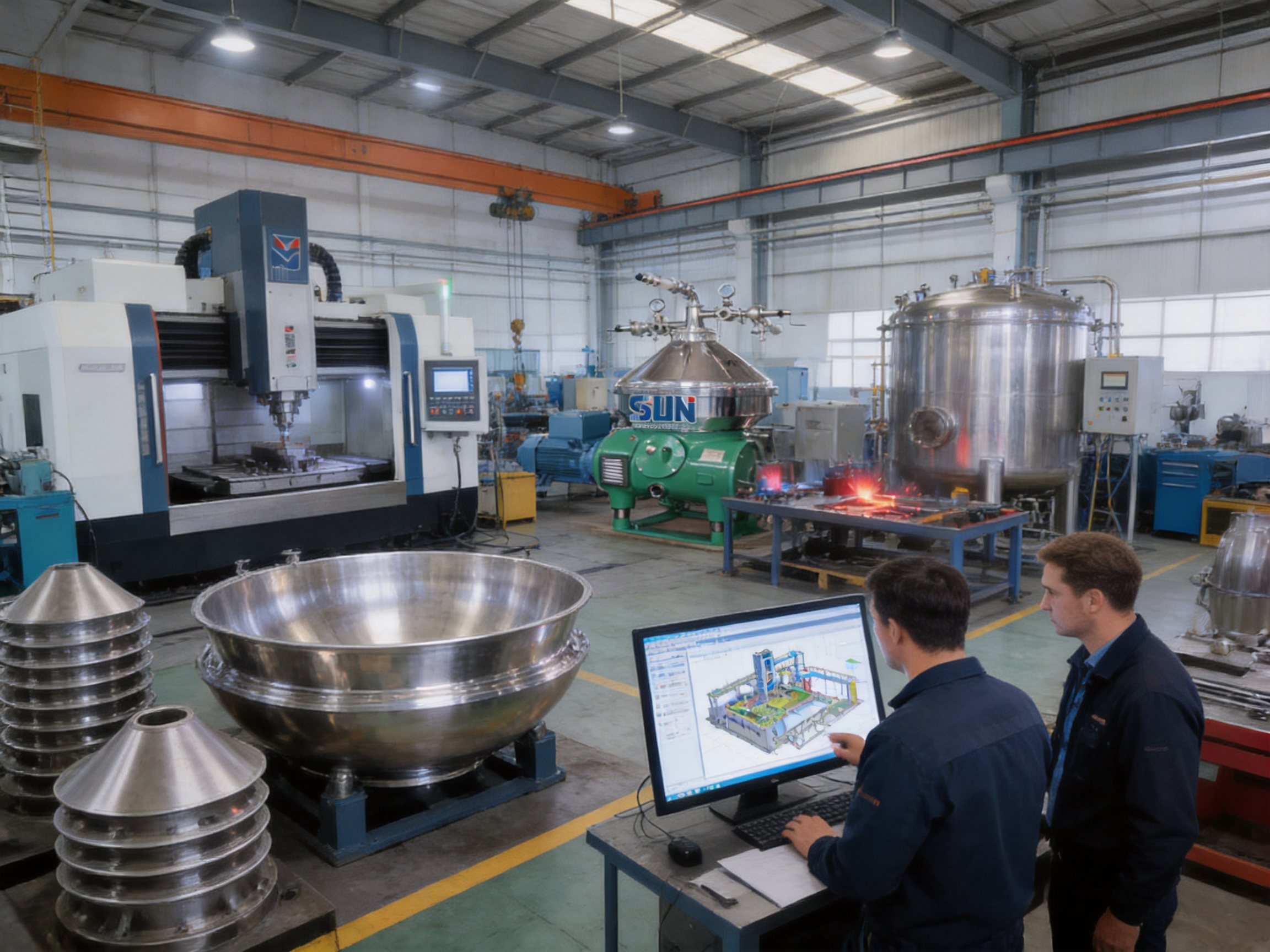
A disk centrifuge is a precision machine. Its performance depends not only on the principle of centrifugal separation but also on the quality of design, machining, welding, assembly, balancing, and testing. Zhejiang Shuangzi Intelligent Equipment Co., Ltd., founded in 2007, is a professional biology and medical equipment enterprise with broad capabilities in process technology and automation engineering. The company covers a floor area of 16,706 square meters and a building area of 17,800 square meters, providing a strong manufacturing foundation for large and complex equipment systems.
The company’s mature product portfolio includes vacuum low-temperature drying equipment, complete fermentation system equipment, evaporation and concentration equipment, extraction equipment, separation equipment, crystallization equipment, filtration equipment, and process containers. This wide product range is important because a disk centrifuge rarely works alone. It is usually part of a larger production line. A manufacturer that understands extraction, fermentation, evaporation, concentration, crystallization, filtration, and drying can design separation equipment that fits the real process rather than simply supplying a standard machine.
Advanced manufacturing equipment supports quality and repeatability. The company has introduced plasma argon arc welding machines, plasma cutting machines, CAM CNC machining centers, and other advanced processing equipment. These technologies contribute to accurate fabrication, consistent component geometry, controlled weld quality, and improved surface finishing. For high-speed rotating equipment, accuracy is not optional. The bowl, shaft, drum, disc stack, sliding piston, and transmission-related components must be manufactured with strict control to support stable operation.
Precision machining is particularly important for rotating assemblies. Any imbalance at high speed can produce vibration, noise, bearing stress, and reduced service life. CNC machining improves dimensional consistency, while careful assembly and testing help ensure operational stability. The result is a disk centrifuge designed for demanding industrial use rather than occasional light-duty operation.
Welding quality also affects hygienic performance and durability. In industries such as pharmaceuticals, bio-fermentation, plant extraction, and food processing, process-contact surfaces must be reliable and cleanable. Poor welds can create crevices, contamination points, or stress concentrations. Advanced welding and finishing capabilities help create smoother internal surfaces and stronger structures. This is an advantage over suppliers that rely on less controlled fabrication methods or outsource key manufacturing steps without integrated quality oversight.
Process Engineering and Turnkey Project Capability
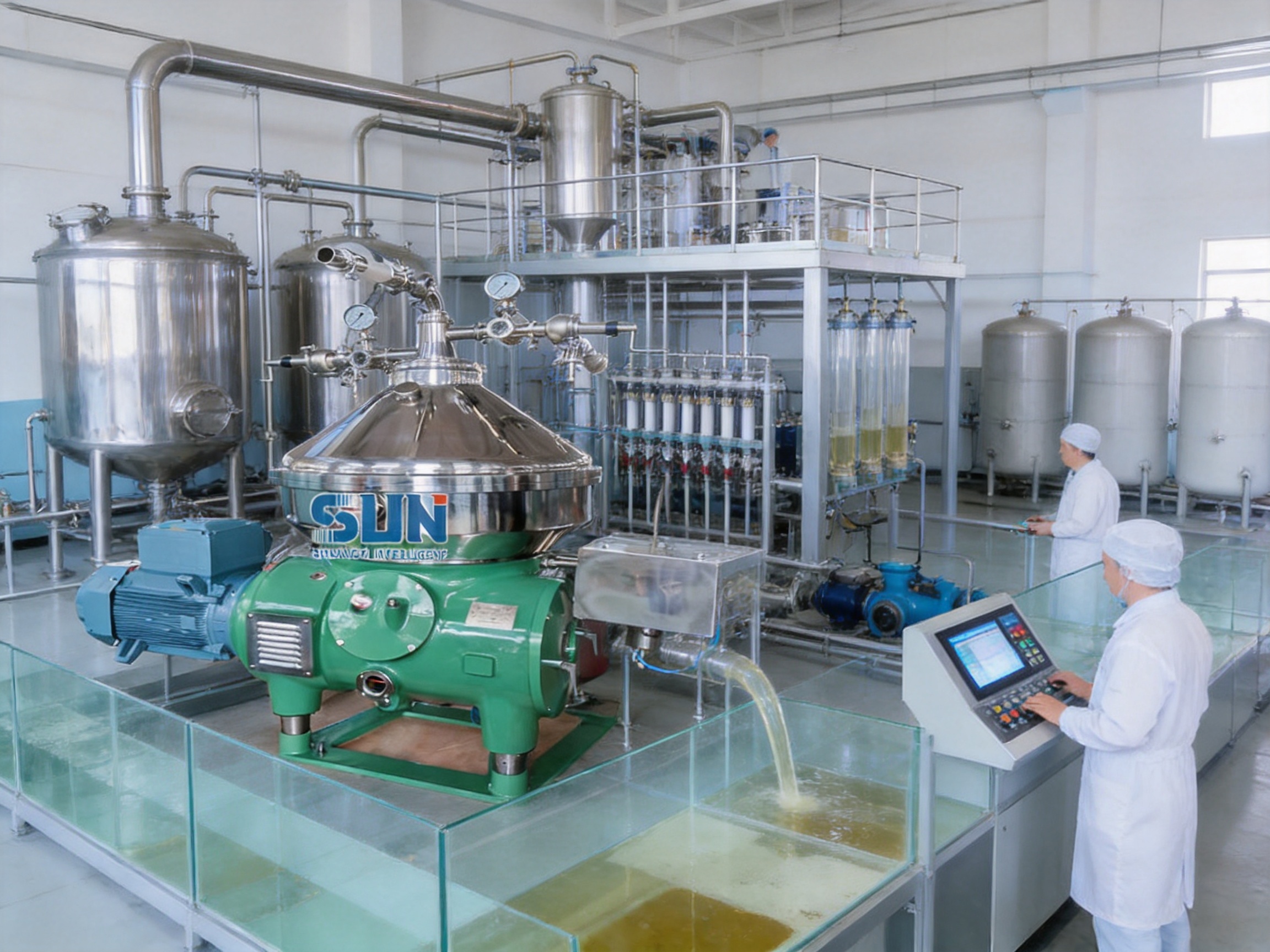
One of the strongest advantages of working with a process-oriented manufacturer is the ability to receive more than a single item of equipment. Zhejiang Shuangzi Intelligent Equipment Co., Ltd. provides engineering, process design, equipment design, installation, line debugging, and turnkey project services. This is especially valuable for users who need a complete production system rather than a standalone centrifuge.
In a turnkey project, the disk centrifuge can be selected and arranged according to the entire process flow. For example, in a plant extraction line, feed may move from extraction to coarse separation, then disk centrifugation, concentration, precipitation, filtration, drying, and packaging. In a fermentation project, broth may move from fermenters to cooling or conditioning, then centrifugation, purification, concentration, and drying. In a pharmaceutical line, the separator may be placed after reaction, extraction, solvent separation, crystallization, or washing. The correct location and configuration of the centrifuge determine whether it improves the entire process or merely performs a local function.
Automation engineering further improves value. Flow rate, feed pressure, discharge timing, vibration monitoring, motor load, temperature, and cleaning procedures can influence centrifuge performance. When the centrifuge is integrated into a control system, operators can manage the process more consistently. Automated interlocks and monitoring functions also improve operational safety and reduce the risk of incorrect operation.
The company’s pilot production workshop and research platform designed around GMP requirements provide additional support for users developing new products. Pilot trials can help evaluate separation behavior before final equipment selection. This reduces scale-up risk and allows the engineering team to optimize process parameters. For industries where raw materials vary seasonally or biological processes produce variable broth characteristics, pilot evaluation can be very valuable.
Why the Disc Stack Design Improves Productivity
The productivity of a disk centrifuge comes from a simple but powerful engineering concept: increasing the separation area while decreasing the settling distance. In a large empty rotating bowl, particles must travel a certain distance before reaching the outer wall. In a disc stack bowl, the feed is divided into many thin layers. Particles or droplets only need to travel to the nearest disc surface. Once they reach that surface, centrifugal force and the disc angle guide them toward the collection zone.
This design means that more material can be treated in less time. It also makes the equipment effective for fine particles that would otherwise remain suspended for long periods. Because the effective area is multiplied by the number of discs, the equipment can maintain high throughput while remaining relatively compact. This is one reason disk centrifuges are favored in industries where floor space is limited and continuous processing is desired.
Competitor equipment without a well-designed disc stack may require larger bowls, slower flow rates, or additional downstream separation. Filter-based competitors may offer good clarity in some applications but can suffer from clogging, media consumption, pressure increase, and batch interruption. The disk centrifuge offers a mechanical separation method that can be continuous, efficient, and easier to integrate into automated production.
The disc stack also supports consistent separation when the feed is reasonably controlled. By maintaining stable flow and proper operating speed, the centrifuge can deliver repeatable clarification results. This is important for pharmaceutical, food, and biological products, where quality consistency must be maintained across batches.
Operational Modes: Clarification and Separation
The disk centrifuge supports two main operating modes. The first is clarification, also known as liquid-solid separation. In this mode, the goal is to remove suspended solids from a liquid. The solids collect in the bowl’s sludge space, while clarified liquid exits through the outlet. Clarification is common in fermentation broth processing, plant extract clarification, food liquid treatment, pharmaceutical intermediate cleaning, and natural product processing.
The second mode is separation, meaning liquid-liquid separation or liquid-liquid-solid separation. In this mode, the goal is to divide two immiscible liquid phases, and sometimes remove solids at the same time. The lighter liquid phase and heavier liquid phase are guided toward different discharge paths. This mode is useful for emulsion breaking, solvent extraction, oil-water separation, recovery of active phases, and purification of process liquids.
The choice between clarification and separation depends on feed composition and process objective. A professional process evaluation should determine whether the machine requires specific internal configurations, discharge arrangements, sealing designs, material selections, or automation functions. Because the company has broad experience in process system design, it can help match the centrifuge structure to real production needs.
Material, Hygiene, and Cleanability Considerations
For equipment used in biology, medicine, food, and natural products, hygienic design is a central concern. Although process requirements vary, users generally expect smooth product-contact surfaces, reliable sealing, accessible cleaning procedures, and materials suitable for the process medium. A disk centrifuge must be designed to handle high-speed operation while also meeting cleanliness expectations.
Cleanability is influenced by internal geometry, surface finish, discharge method, piping arrangement, and the cleaning procedure used by the plant. A well-integrated system can include suitable cleaning connections, controlled flushing, and cleaning validation support depending on industry requirements. The manufacturer’s understanding of GMP-oriented pilot production and process integration helps ensure the centrifuge can be incorporated into sanitary production environments.
Material selection should consider corrosion, solvents, acids, alkalis, biological media, temperature, and cleaning chemicals. In pharmaceutical and food applications, stainless steel is often preferred for product-contact parts. For plant extraction and synthesis projects involving solvents, compatibility must be confirmed carefully. Selecting the correct material at the beginning can reduce maintenance costs and extend equipment life.
Energy Efficiency and Production Economics
Energy consumption is a major factor in equipment selection. While a disk centrifuge uses a high-speed motor, it can improve overall production economics by reducing settling time, minimizing filter aid usage, decreasing downstream fouling, and increasing product recovery. The real economic value should therefore be evaluated across the entire production line rather than only by motor power.
For example, a clarified extract may concentrate more efficiently in an evaporator because suspended solids are reduced. A cleaner fermentation supernatant may reduce membrane fouling or filtration load. Better liquid-liquid separation may recover more valuable product and reduce solvent losses. Faster separation may reduce tank holding time and increase plant throughput. These benefits can outweigh the direct energy cost of centrifugation.
The availability of multiple motor power ranges also allows users to select an appropriately sized machine rather than oversizing. Oversized equipment may increase capital cost, energy use, and maintenance burden. Undersized equipment may become a bottleneck. Professional model selection based on actual feed characteristics helps achieve an economical balance.
Safety and Stability in High-Speed Operation
Because disk centrifuges operate at high rotational speeds, safety and stability must be central design priorities. Stable bowl rotation, accurate dynamic balance, reliable transmission, proper foundation, controlled startup, and vibration monitoring all contribute to safe operation. Operators should follow recommended startup, feeding, discharge, shutdown, and maintenance procedures.
High-speed centrifugation creates strong mechanical forces. Therefore, component quality and assembly accuracy are essential. The company’s use of advanced machining centers and manufacturing equipment supports the production of components that meet the precision requirements of high-speed operation. In addition, process engineering experience helps ensure that the equipment is installed correctly in the production line with proper utilities and operating conditions.
Safe operation also depends on feed consistency. Excessive solids, oversized particles, unstable emulsions, abnormal viscosity, or sudden flow fluctuations can affect separator performance. Pre-treatment such as coarse filtration, screening, temperature adjustment, or feed conditioning may be recommended in some applications. A full process review can identify these needs before commissioning.
Maintenance and Long-Term Value
Maintenance is an important part of centrifuge ownership. Bearings, seals, bowl components, discharge mechanisms, transmission systems, and control elements should be inspected according to the maintenance schedule. Regular cleaning prevents excessive sludge buildup and helps maintain separation efficiency. Proper lubrication, vibration observation, and component inspection can extend equipment service life.
The disk centrifuge’s long-term value is improved when it is supported by a manufacturer that understands both machinery and process application. If a separation problem occurs, the cause may not be mechanical. It may be related to feed concentration, temperature, pH, viscosity, density difference, upstream mixing, or downstream pressure. A process-capable supplier can diagnose issues more effectively than a supplier focused only on mechanical delivery.
Spare parts availability and technical support are also important. Industrial plants cannot tolerate unnecessary downtime. A reliable manufacturer should provide support for installation, commissioning, operator training, troubleshooting, and maintenance planning. As a provider of equipment system integration and turnkey projects, Zhejiang Shuangzi Intelligent Equipment Co., Ltd. is positioned to support the centrifuge throughout the lifecycle of the production line.
How This Disk Centrifuge Stands Apart from Competitors
The disk centrifuge stands apart from competitors through the combination of separation principle, model range, manufacturing precision, and system integration capability. Many suppliers can provide individual separation machines, but not all can design the surrounding process, manufacture related equipment, and support turnkey implementation. This broader capability is a major advantage for users building or upgrading complete production lines.
Compared with simple centrifugal separators, the disc stack structure provides higher effective settling area and improved clarification efficiency. Compared with static settling tanks, it provides faster separation and a smaller footprint. Compared with filtration systems, it can reduce filter media consumption and handle certain fine suspensions or emulsions more efficiently. Compared with suppliers offering only standard machines, the company’s EPC and EPCM experience supports customized process matching.
Another competitive advantage is manufacturing infrastructure. High-speed centrifuges require precise rotating parts and robust fabrication. The company’s use of plasma argon arc welding, plasma cutting, CAM CNC machining centers, and advanced finishing equipment supports consistent quality. This manufacturing foundation is reinforced by practical experience in vacuum low-temperature drying, fermentation, extraction, concentration, separation, crystallization, filtration, and container manufacturing.
The product is also supported by a strong technical background in biology and medical equipment. Industries such as fermentation, pharmaceuticals, natural food, and plant extraction require more than metal fabrication; they require process understanding. The company’s emphasis on process technology, automation engineering design, installation, line debugging, and system integration helps ensure the centrifuge is selected and applied correctly.
Guidelines for Selecting the Right Model
When selecting a disk centrifuge, users should begin by defining the separation goal. If the objective is clarification, the key questions include particle size, solids concentration, required liquid clarity, feed viscosity, and allowable solids discharge interval. If the objective is liquid-liquid separation, users must evaluate density difference, droplet size, emulsion stability, flow rate, temperature, and whether solids are present.
Capacity should be selected based on actual operating conditions rather than nominal maximum flow alone. A model capable of 5,000 liters per hour in one application may not achieve the same result with a highly viscous or difficult-to-separate feed. Pilot testing or sample evaluation is recommended for challenging materials. The company’s pilot and research capabilities can help determine realistic capacity and separation performance.
Users should also consider solids discharge. If the process produces very low solids and is operated in batches, manual cleaning after shutdown may be acceptable. If solids accumulation is significant or continuous production is required, a discharge mechanism that removes solids during operation may be preferred. The selection affects productivity, maintenance, automation, and total cost.
Plant layout is another factor. The equipment dimensions and weight must match the installation area, foundation, access space, maintenance clearance, and piping route. Larger models such as PTSX125 and PTSX225 require appropriate lifting and installation planning. Utility requirements, electrical supply, control cabinet location, drainage, and cleaning connections should be reviewed early in the project.
Integration with Upstream and Downstream Equipment
A disk centrifuge performs best when upstream and downstream equipment are properly matched. Upstream tanks should provide stable feed conditions. Pumps should deliver controlled flow without excessive shear when emulsion behavior matters. Feed pipelines should avoid unnecessary air entrainment, which can disturb separation. If large particles or fibrous materials are present, coarse pre-treatment may protect the centrifuge and improve stability.
Downstream equipment benefits from improved liquid quality. Evaporators may operate with less fouling, filters may have lower load, crystallizers may receive cleaner mother liquor, and dryers may receive more consistent feed. In integrated plants, this can improve product quality and reduce total production cost. The disk centrifuge should therefore be viewed as a strategic process unit rather than a simple accessory.
The company’s ability to manufacture extraction systems, fermentation systems, evaporation and concentration equipment, filtration equipment, containers, and drying systems allows it to design more coherent production lines. This reduces coordination difficulty for the customer and improves compatibility between process stages.
Q&A Section
What is a disk centrifuge used for?
A disk centrifuge is used for high-efficiency separation of liquid-solid, liquid-liquid, and liquid-liquid-solid mixtures. It is commonly applied in plant extraction, bio-fermentation, pharmaceutical synthesis, natural food processing, and other industries that require clarification, emulsion separation, or phase purification.
How does the disc stack improve separation efficiency?
The disc stack creates many narrow separation channels inside the rotating bowl. These channels shorten the distance that particles or droplets must travel before reaching a separation surface. At the same time, the discs greatly increase the effective settling area. This combination allows faster and more efficient separation than many conventional methods.
What is the difference between clarification and separation?
Clarification refers to liquid-solid separation, where suspended solids are removed from a liquid. Separation usually refers to liquid-liquid separation or liquid-liquid-solid separation, where two liquid phases are divided and solids may also be removed. The disk centrifuge can be configured for both types of operation depending on process requirements.
Which model should be selected for a specific production line?
Model selection depends on flow rate, solids concentration, particle size, viscosity, density difference, required clarity, discharge method, and production schedule. The available series covers capacities from approximately 100 to 20,000 liters per hour. For difficult materials, pilot testing or process evaluation is recommended before final selection.
Can the disk centrifuge be used in fermentation broth processing?
Yes. Fermentation broth often contains small cells and fine suspended materials that are difficult to remove by gravity settling. A disk centrifuge can rapidly separate biomass from liquid, reduce downstream filtration load, and support product recovery in biological processing lines.
Is the disk centrifuge suitable for plant extraction?
Yes. In plant extraction, the disk centrifuge can clarify extracts, remove fine plant residues, separate emulsified phases, and improve downstream concentration or drying efficiency. It is especially useful when high clarity and efficient recovery of valuable liquid components are required.
What advantages does this equipment offer over filtration?
Filtration may require consumable media, filter aids, frequent cleaning, or pressure-driven operation. A disk centrifuge uses centrifugal force as the primary separation method, which can reduce consumable usage and improve throughput for many fine suspensions or emulsions. In some processes, it can also reduce downstream fouling and improve product recovery.
Why is manufacturing precision important for a disk centrifuge?
Disk centrifuges operate at high speed, so rotating components must be accurately machined, balanced, and assembled. Poor precision can cause vibration, noise, premature wear, and safety risks. Advanced machining, welding, and finishing processes help ensure stable and reliable performance.
Can the equipment be included in a turnkey project?
Yes. Zhejiang Shuangzi Intelligent Equipment Co., Ltd. provides process design, equipment design, manufacturing, installation, commissioning, automation engineering, and turnkey project services. The disk centrifuge can be integrated with extraction, fermentation, concentration, crystallization, filtration, drying, and storage systems.
What industries benefit most from this disk centrifuge?
The equipment is especially beneficial for plant extraction, biological fermentation, pharmaceutical engineering, western medicine synthesis, natural food processing, environmental and energy-saving projects, and other industries requiring efficient separation of fine solids or liquid phases.
Conclusion
The disk centrifuge is a high-value separation machine designed for modern process industries that demand efficiency, reliability, and process integration. Its vertical high-speed structure, stacked disc design, and flexible operating modes allow it to perform clarification, liquid-liquid separation, and liquid-liquid-solid separation with strong performance. By shortening settling distance and increasing effective separation area, it achieves high throughput in a compact machine body.
Its advantages are especially clear in plant extraction, bio-fermentation, pharmaceutical synthesis, natural food, and turnkey process projects. It can improve liquid clarity, reduce downstream load, accelerate production, support product recovery, and contribute to more stable final quality. Compared with settling tanks, basic centrifuges, and many filtration-based approaches, the disk centrifuge provides a powerful balance of speed, efficiency, compactness, and process flexibility.
The product’s value is further strengthened by the manufacturing and engineering capabilities of Zhejiang Shuangzi Intelligent Equipment Co., Ltd. With advanced welding, cutting, machining, finishing, process design, automation engineering, system integration, and turnkey project experience, the company can provide not only a separation machine but a complete separation solution. For users seeking dependable equipment and a partner capable of supporting the full production line, this disk centrifuge offers a strong and competitive choice.
References
1. Records, A., and Sutherland, K. Decanter Centrifuge Handbook. Elsevier Advanced Technology.
2. Perry, R. H., and Green, D. W. Perry’s Chemical Engineers’ Handbook. McGraw-Hill Education.
3. Coulson, J. M., Richardson, J. F., Backhurst, J. R., and Harker, J. H. Chemical Engineering: Particle Technology and Separation Processes. Butterworth-Heinemann.
4. Belter, P. A., Cussler, E. L., and Hu, W. S. Bioseparations: Downstream Processing for Biotechnology. Wiley.
5. McCabe, W. L., Smith, J. C., and Harriott, P. Unit Operations of Chemical Engineering. McGraw-Hill Education.
6. Aulton, M. E., and Taylor, K. M. G. Aulton’s Pharmaceutics: The Design and Manufacture of Medicines. Elsevier.