
 英语
 俄语
Content
- 1 What Is an External Circulation Evaporator?
- 2 Operating Principle
- 3 Principal Equipment Structure
- 4 Key Technical Specifications
- 5 Major Advantages of the External Circulation Configuration
- 6 Comparison with Conventional Concentration Equipment
- 7 Application in the Pharmaceutical Industry
- 8 Application in Plant Extraction
- 9 Application in Food Processing
- 10 Application in Chemical Manufacturing
- 11 Application in Environmental Protection
- 12 Application in Energy and Oil-Related Processes
- 13 Manufacturing Capabilities and Engineering Strengths
- 14 Automation and Control Considerations
- 15 Materials, Hygienic Design, and Cleanability
- 16 Installation and Commissioning
- 17 Maintenance and Operational Recommendations
- 18 How to Select the Correct Model
- 19 Safety and Environmental Considerations
- 20 Why Engineering Integration Matters
- 21 Frequently Asked Questions
- 21.1 What is the main function of an external circulation evaporator?
- 21.2 What materials can be processed?
- 21.3 Can the evaporator operate under vacuum?
- 21.4 What are the available evaporation capacities?
- 21.5 What is the concentration ratio?
- 21.6 Is the process continuous or batch-based?
- 21.7 Can the evaporator recover solvents?
- 21.8 Is the equipment suitable for pharmaceutical production?
- 21.9 How does external circulation compare with a simple heated vessel?
- 21.10 What information is needed for a quotation?
- 21.11 Can the supplier provide a complete production line?
- 21.12 How can the equipment be maintained?
- 22 Conclusion
- 23 References
- 24 Product: External Circulation Evaporator
Concentration is one of the most important operations in pharmaceutical production, plant extraction, food processing, chemical manufacturing, environmental treatment, and related process industries. A reliable evaporator must remove solvent efficiently while protecting the quality of the concentrated product. It must also support stable operation, easy cleaning, safe handling, and integration with upstream and downstream equipment. The external circulation evaporator is designed to meet these requirements through a dedicated heating system, external circulation path, vapor-liquid separation, condensation, and controlled recovery.
This type of concentration machine is suitable for liquid mixtures that require the removal or recovery of volatile components. It can be used to concentrate traditional Chinese medicine extracts, pharmaceutical solutions, food liquids, chemical materials, organic solvents, and other process fluids. Its external circulation configuration separates the main heating and circulation functions from the concentration vessel, creating favorable conditions for heat transfer, material movement, and product handling.
The equipment is manufactured and supplied by Zhejiang Shuangzi Intelligent Equipment Co., Ltd., a professional engineering and equipment enterprise serving plant extraction, biological fermentation, pharmaceutical engineering, natural food, energy conservation, and environmental protection applications. The company combines process technology, equipment design, fabrication, automation, installation, commissioning, and system integration to provide both individual machines and complete turnkey projects.
With evaporation capacities from 500 kg/h to 2,000 kg/h in the listed standard models, the external circulation evaporator can support different production scales. Its stated concentration ratio of approximately 1.2 to 1.3, vacuum operation, sealed processing, and compact process structure make it a practical option for manufacturers seeking dependable concentration performance and efficient solvent recovery.
External Circulation Evaporator
What Is an External Circulation Evaporator?
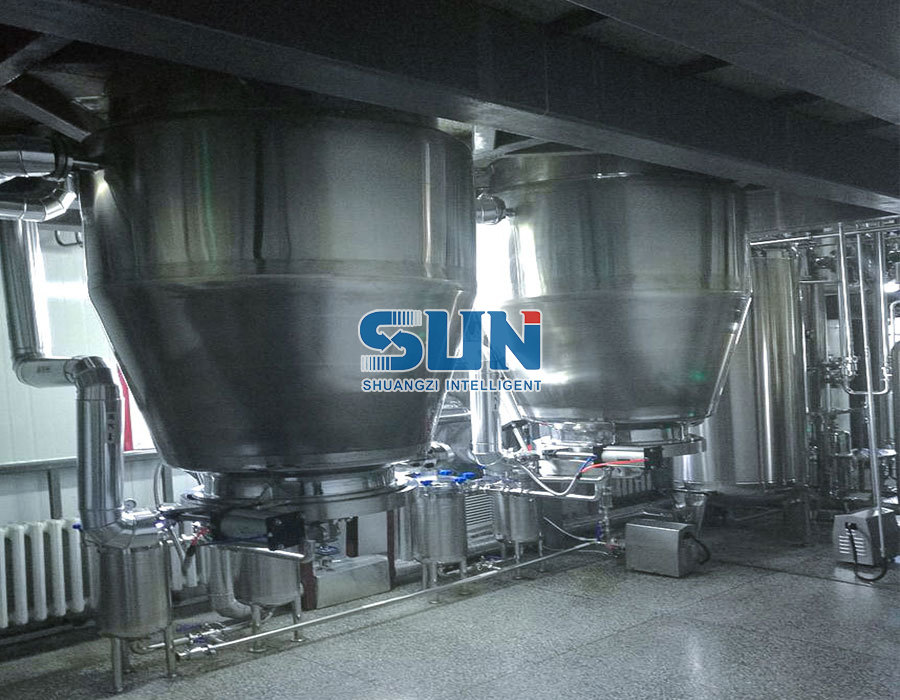
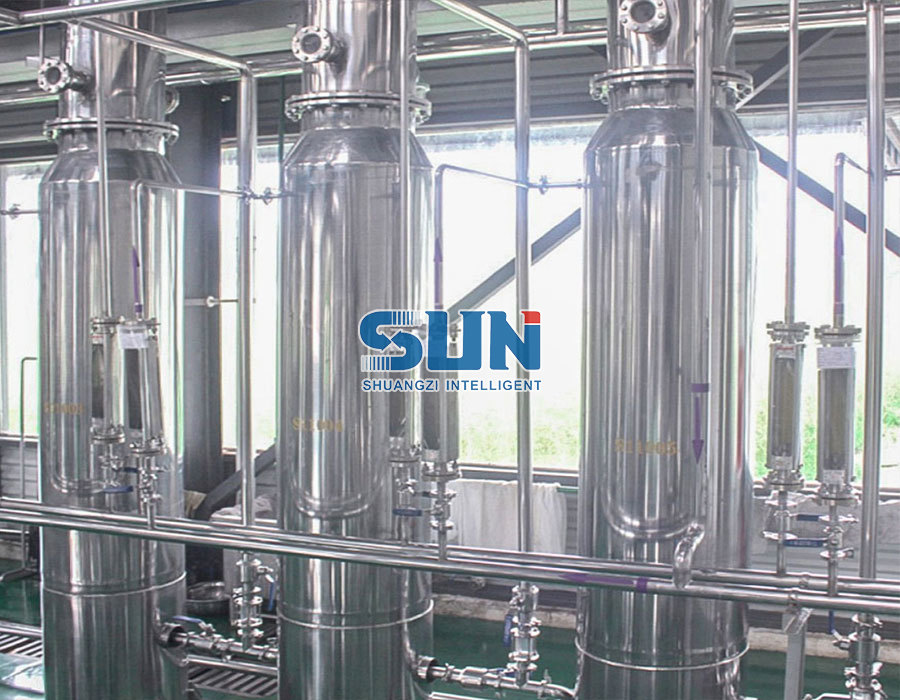
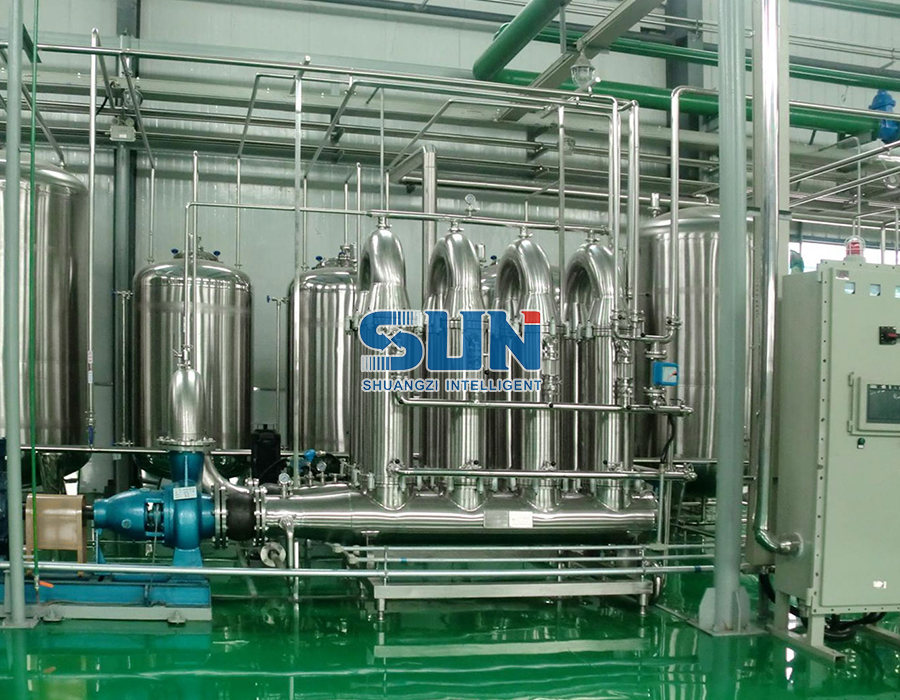
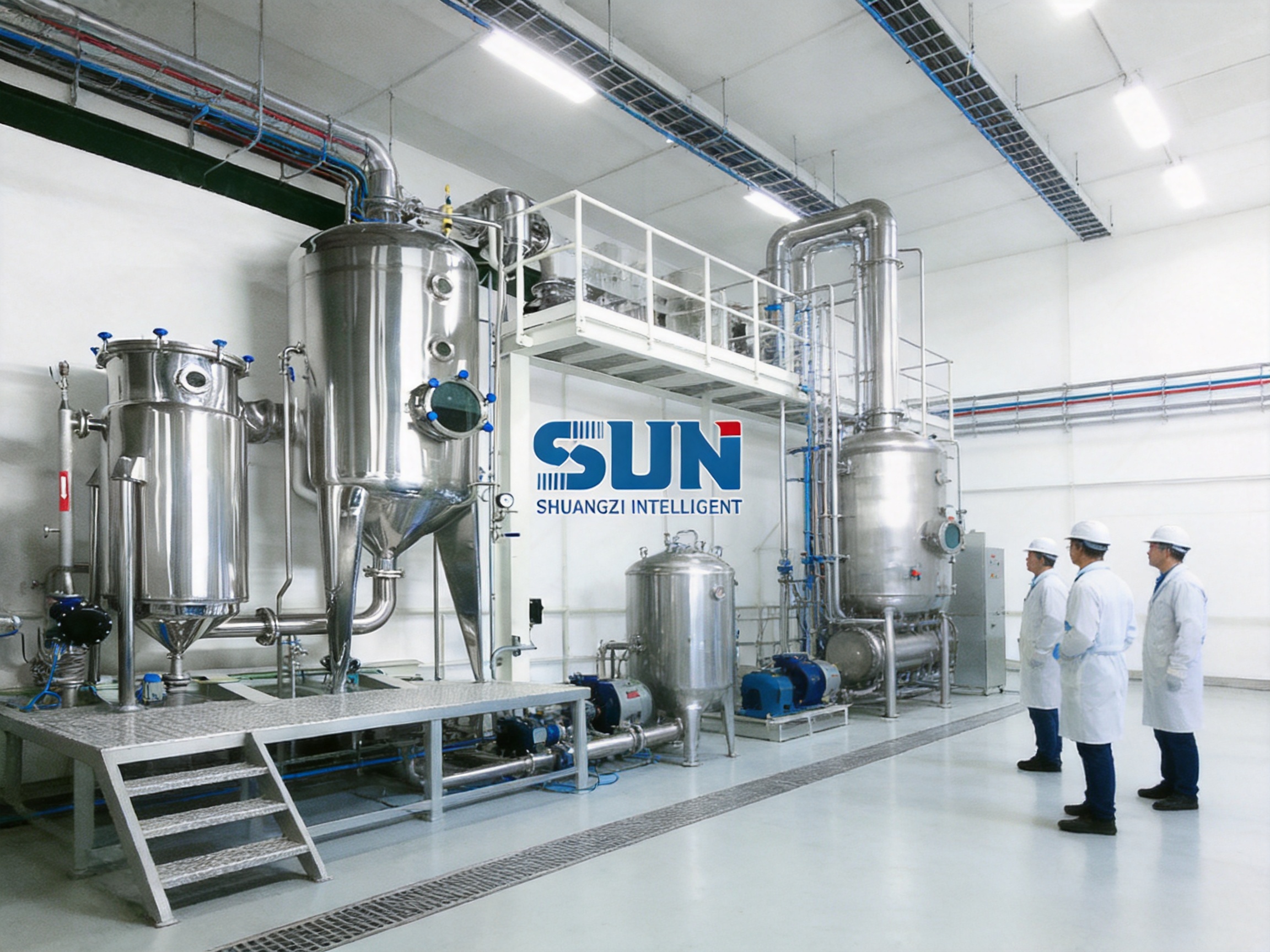
An external circulation evaporator is a thermal concentration machine in which the process liquid circulates through an external heater and returns to a separator or evaporation chamber. Unlike a simple vessel with an internal heating coil, the external circulation arrangement places key heat-transfer and circulation components outside the main separation chamber. This design allows the heating surface, circulation path, separator, condenser, and reflux system to be arranged according to the characteristics of the process material.
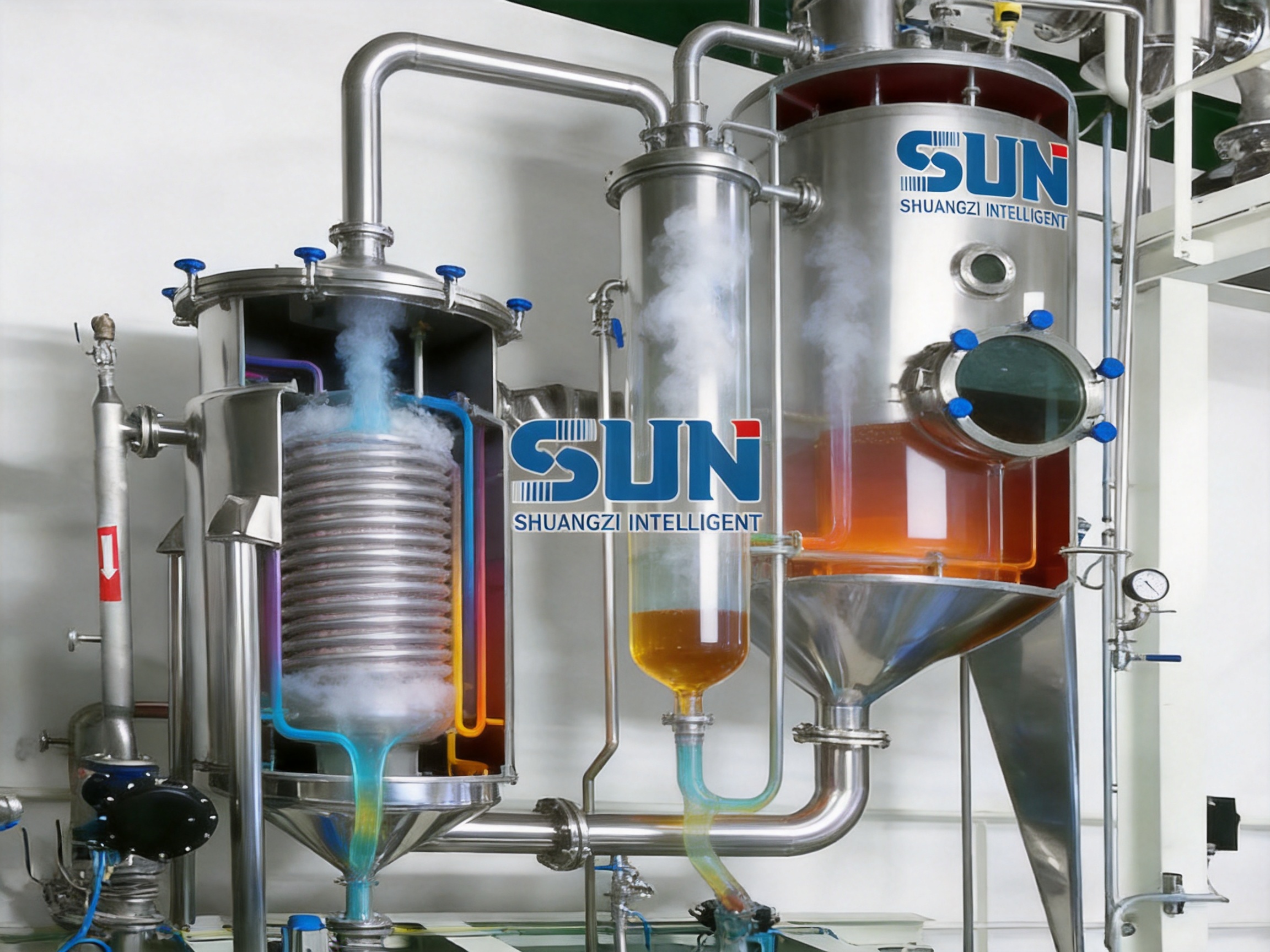
The equipment works by heating a liquid mixture under atmospheric or vacuum conditions. As heat is transferred to the circulating liquid, the more volatile component vaporizes. The generated vapor moves toward the separation section, where vapor and concentrated liquid are separated. Depending on the process configuration, the vapor can then be directed to a condenser for recovery, while condensed liquid may be returned through a reflux device or collected as a recovered solvent.
The concentrated liquid remains in the process system or is discharged from the separator after reaching the required concentration. Continuous or batch operation can be selected according to the production process, material characteristics, required throughput, and automation requirements. The external circulation route provides a controlled flow path, helping the liquid repeatedly pass through the heater and separation zone.
In pharmaceutical, plant extraction, and food applications, the process is often operated under vacuum. Lowering the operating pressure reduces the boiling temperature of the liquid. This can help protect heat-sensitive components, preserve flavor or active ingredients, and reduce the thermal impact on the final product. The supplied technical information lists a vacuum degree of 0.08 MPa and steam pressure below 0.09 MPa for the standard equipment configuration.
Operating Principle
Feed and Circulation
The liquid mixture enters the evaporator through the feed system. A circulation route directs the material through the external heater. The heater transfers thermal energy to the liquid, causing part of the volatile component to vaporize. The heated mixture then moves into the separator, where the vapor phase and liquid phase are divided.
The circulation process may be driven by a circulation pump, pressure difference, density difference, or a combination of these forces, depending on the final system design. The actual configuration can be adapted to the viscosity, solids content, foaming tendency, temperature sensitivity, and production capacity of the material.
Heating and Vaporization
Steam or another suitable heating medium supplies energy through the heater. The heating surface is designed to create effective heat transfer while maintaining a controlled temperature difference. The external heater makes it possible to provide a relatively direct and accessible heating area, which can support maintenance and cleaning activities.
As the liquid is heated, the volatile component changes from liquid to vapor. Under vacuum conditions, this phase change can take place at a lower temperature than under normal atmospheric pressure. This is particularly useful when processing botanical extracts, pharmaceutical solutions, dairy products, fruit liquids, or other materials whose quality may be affected by excessive heat.
Separation and Condensation
The separator removes entrained liquid droplets from the vapor stream and directs the concentrated liquid toward the product outlet or back into circulation. Proper vapor-liquid separation helps reduce product loss and limits the amount of concentrated material carried into the condenser.
The vapor then enters the condenser or heat exchanger. Cooling causes the vapor to return to liquid form. The recovered condensate can be collected, reused, or returned to the process through the reflux device, depending on the intended operation. In solvent recovery applications, the recovered liquid may have additional value and can reduce raw material consumption and waste generation.
Concentration and Discharge
The concentration cycle continues until the liquid reaches the required solids content, active ingredient level, volume reduction, or process endpoint. The concentrated material can then be discharged for subsequent drying, crystallization, formulation, filling, fermentation, or packaging operations.
The system can be equipped with appropriate monitoring and control instruments for temperature, vacuum, pressure, flow, liquid level, and operating time. For larger process lines, the evaporator can be integrated with programmable automation and other equipment supplied as part of a complete production system.
Principal Equipment Structure
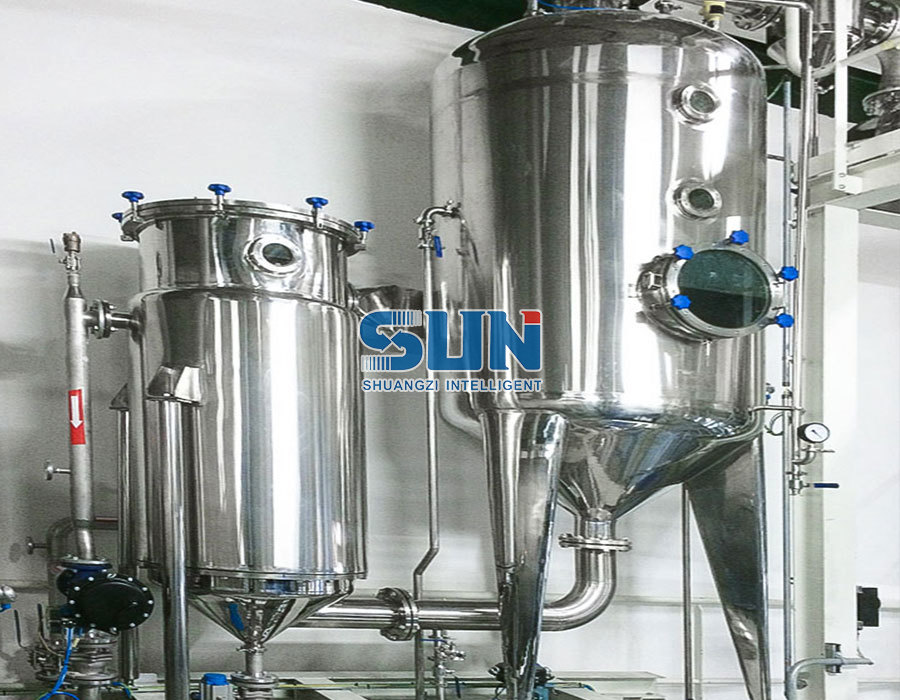
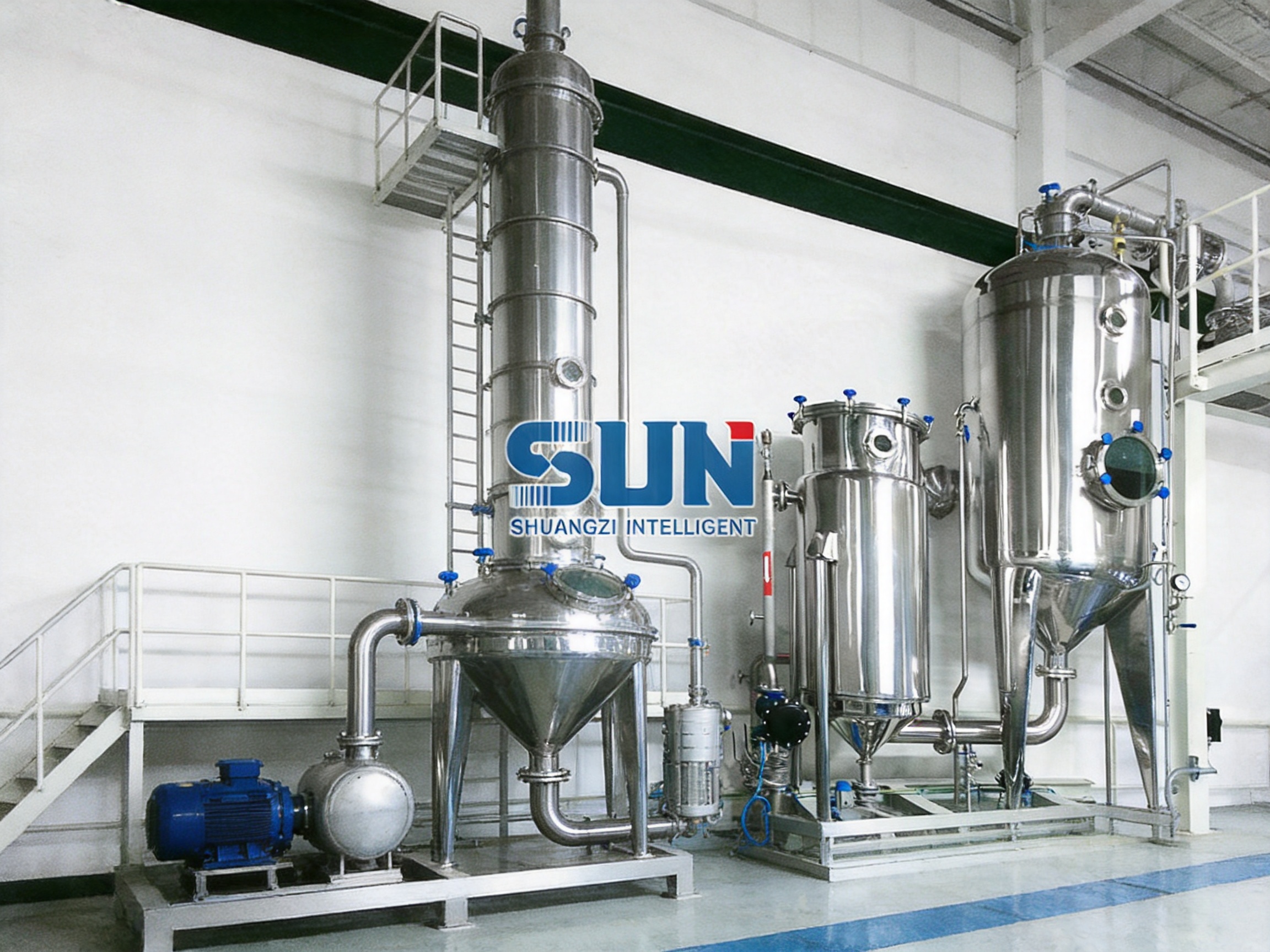
The external circulation evaporator includes several coordinated sections. Each component contributes to stable concentration, vapor recovery, and product protection.
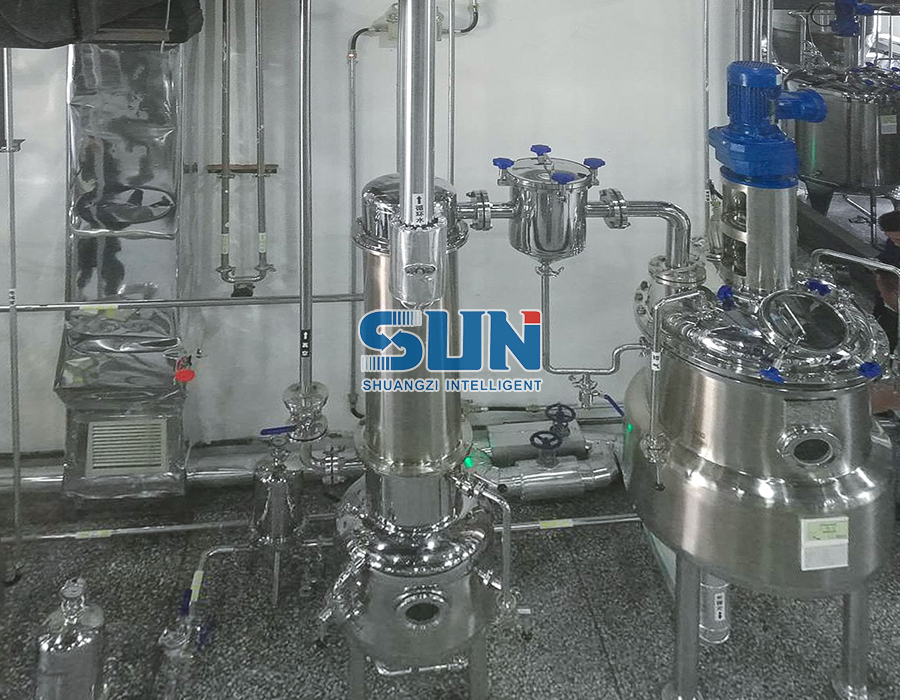
External Heater
The heater supplies thermal energy to the circulating liquid. Its design is selected according to the required evaporation capacity, heating medium, material properties, and operating pressure. The external location allows the heating section to be arranged for convenient inspection, maintenance, and connection with the circulation pipeline.
A properly selected heater supports efficient heat transfer and helps maintain the required evaporation rate. The heater can also be designed to accommodate different material viscosities and solids concentrations. During project engineering, the heat-transfer area and process conditions should be matched with the actual feed composition rather than selected solely according to nominal capacity.
Heat Exchanger
The heat exchanger transfers energy between the heating medium and the process liquid or between hot and cold process streams. It can support preheating, vapor condensation, cooling, or heat recovery, depending on the process arrangement.
Heat recovery may reduce steam consumption and improve the overall energy performance of the production line. The final heat-exchanger configuration depends on the temperature profile, desired product temperature, condensate handling, and utility availability at the installation site.
Separator
The separator is used to divide the vapor phase from the concentrated liquid. It is an essential component because effective separation reduces liquid entrainment and helps protect the condenser from contamination by concentrated product.
A well-designed separator also supports stable operation when the feed contains dissolved solids, natural extract components, or materials with a tendency to foam. The supplied product description emphasizes sealed operation and low-foam concentration. Actual performance depends on the feed formulation, operating conditions, vacuum stability, residence time, and the detailed separator design.
Condenser
The condenser cools the vapor and converts it into a liquid condensate. Depending on the application, the condensate may be a recoverable solvent, purified water, or another volatile fraction. The condenser must be sized according to vapor load, cooling-water temperature, required condensation temperature, and allowable non-condensable gas content.
Reflux Device
The reflux device manages the return of condensed liquid to the evaporator or separator. Reflux can help stabilize the process, improve vapor-liquid contact, support solvent recovery, and maintain a desired operating balance. The reflux ratio and return path should be selected according to the product specification and separation requirements.
Piping, Valves, and Instrumentation
Interconnecting pipelines form the circulation route between the heater, separator, condenser, reflux device, feed inlet, product outlet, and condensate outlet. Valves are used for isolation, regulation, drainage, sampling, and cleaning operations.
Instrumentation may include temperature sensors, pressure gauges, vacuum measurement, liquid-level monitoring, flow measurement, and control devices. For pharmaceutical and food applications, sanitary connections and hygienic design details can be incorporated according to the process and regulatory requirements.
Key Technical Specifications
The standard models listed for this external circulation evaporator cover four evaporation capacities. The correct model should be selected according to the feed material, operating hours, required concentration, utility conditions, and future production plans.
| Item | DJN-500 | DJN-1000 | DJN-1500 | DJN-2000 |
|---|---|---|---|---|
| Evaporation Capacity | 500 kg/h | 1,000 kg/h | 1,500 kg/h | 2,000 kg/h |
| Steam Pressure | Less than 0.09 MPa | |||
| Vacuum Degree | 0.08 MPa | |||
| Concentration Ratio | 1.2–1.3 | |||
| Dimensions, L × W × H | 2,000 × 1,000 × 3,000 mm | 2,200 × 1,200 × 3,300 mm | 2,500 × 1,300 × 3,500 mm | 4,600 × 2,350 × 5,100 mm |
The dimensions shown above are reference dimensions for the listed models. Final dimensions may change according to the selected materials, insulation, control cabinet, condenser arrangement, access platforms, piping direction, site layout, and customer-specific engineering requirements.
Major Advantages of the External Circulation Configuration
Fast Evaporation and Productive Processing
The external circulation design creates a defined route for the liquid to pass through the heating section and separator. Repeated circulation can improve contact between the liquid and the heating surface, supporting efficient vaporization and productive processing. The listed models provide evaporation capacities from 500 kg/h to 2,000 kg/h, allowing the equipment to serve pilot, medium-scale, and larger production requirements.
Capacity alone does not determine actual productivity. Feed concentration, viscosity, boiling point, solids content, steam quality, vacuum stability, cooling-water temperature, and required final concentration all affect performance. The equipment supplier can use these process parameters to establish a more accurate operating design.
Vacuum Operation for Heat-Sensitive Materials
Vacuum operation is a significant advantage for plant extracts, pharmaceutical liquids, natural products, dairy materials, and other heat-sensitive substances. By lowering the boiling temperature, vacuum concentration can reduce thermal exposure and help maintain the desired color, aroma, flavor, biological activity, or active ingredient profile.
Vacuum operation can also assist solvent removal when the process requires evaporation at controlled temperatures. The system must be properly sealed, and the vacuum source, condenser, gaskets, valves, and inspection points must be selected to maintain stable pressure throughout the operation.
Sealed and Low-Foam Processing
The product description identifies sealed operation and foam-free concentration as important characteristics. A sealed system can reduce contact between the process material and the external environment. This may help limit contamination risk, reduce solvent vapor release, and improve workplace conditions.
Foaming can reduce heat-transfer efficiency, cause liquid carryover, contaminate the condenser, and make level control difficult. The external circulation evaporator is intended to support low-foam concentration, although foam behavior is always influenced by the specific formulation. Plant extracts containing proteins, saponins, natural surfactants, or suspended solids may require additional process optimization.
Solvent Recovery
The condenser and reflux arrangement allow volatile components to be recovered rather than released as waste. In chemical, pharmaceutical, and plant extraction operations, recovered alcohol or other organic solvents may be collected for reuse after suitable quality evaluation. This can reduce operating costs and support environmental objectives.
Solvent recovery also contributes to safer plant operation by managing vapor streams within a controlled process route. When flammable solvents are handled, the complete system must be engineered with appropriate electrical, ventilation, grounding, material compatibility, and safety provisions.
Strong Adaptability Across Industries
The evaporator can be used in several industries because its process function is not limited to one type of liquid. It can support traditional Chinese medicine concentration, pharmaceutical solution concentration, fruit juice processing, dairy production, chemical solvent recovery, organic waste treatment, and other applications.
This versatility allows manufacturers to use a common equipment platform while adapting the heating area, condenser, separator, pump, control strategy, and material of construction to the application. Such flexibility is valuable for companies that produce multiple formulations or plan to expand their product range.
Convenient Cleaning and Maintenance Potential
The product description states that the concentrated liquid is easy to clean from the equipment. External placement of the heater and circulation components can provide practical access for inspection and maintenance. Sanitary design, drainability, smooth internal surfaces, suitable seals, and clean-in-place provisions can be considered during project design.
Cleaning requirements vary considerably. Pharmaceutical and food applications may require validated cleaning procedures, while chemical processes may require solvent-compatible cleaning or specialized corrosion-resistant materials. The equipment configuration should therefore be confirmed through a detailed user requirement specification.
Integration with Complete Production Lines
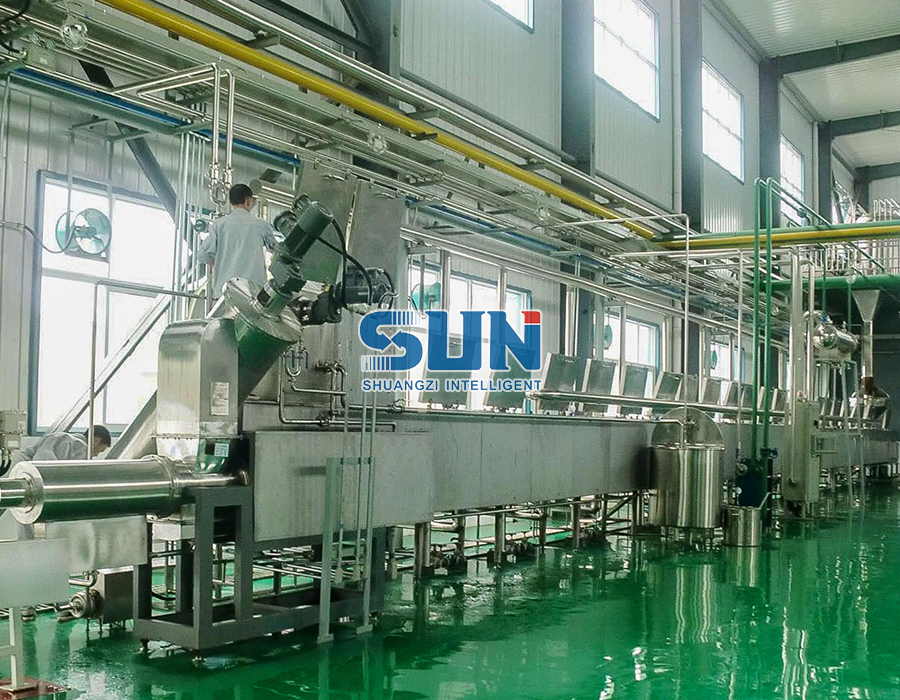
The evaporator can operate as an individual machine or as part of a larger process line. It may be connected with extraction tanks, filtration systems, centrifuges, crystallizers, dryers, storage tanks, filling systems, and utility systems.
Integration can reduce the coordination burden for the customer. Instead of purchasing unrelated machines from multiple suppliers, the customer can work with an engineering partner capable of process design, equipment manufacture, matching purchase, installation, commissioning, and system integration.
Comparison with Conventional Concentration Equipment
Different evaporator types are appropriate for different materials. A simple jacketed vessel may be sufficient for small batches or low-throughput products, but it may provide limited heat-transfer area and longer processing times when production volume increases. An internal-coil vessel may be difficult to clean when the liquid contains solids or sticky extract components. Open boiling may expose the product to air and may increase solvent vapor emissions.
The external circulation evaporator addresses several of these limitations through its separate heating and circulation route. The liquid can be heated efficiently outside the main separation area, while the separator and condenser manage vapor movement in a controlled system.
| Comparison Factor | External Circulation Evaporator | Simple Jacketed Vessel | Open or Atmospheric Concentration |
|---|---|---|---|
| Heating Arrangement | Dedicated external heater and circulation path | Heating through vessel wall or jacket | Direct or indirect heating in an open vessel |
| Vacuum Compatibility | Designed for controlled vacuum operation | Possible, depending on vessel design | Normally limited or unavailable |
| Vapor Recovery | Condenser and reflux system included in the process structure | May require additional equipment | Often limited, with greater vapor release risk |
| Heat-Sensitive Products | Suitable for lower-temperature vacuum concentration | May be suitable at smaller scale | Greater thermal exposure may occur |
| Scale-Up Potential | Available in multiple evaporation capacities | Often requires larger vessels or longer cycles | May become difficult to control at larger scale |
| Process Containment | Closed and controlled process route | Can be closed, depending on design | More exposed to the surrounding environment |
This comparison is intended as a general process guide rather than a universal ranking. The best evaporator depends on product properties, batch size, required concentration, cleaning standards, utilities, and budget. A technical evaluation should be completed before final selection.
Application in the Pharmaceutical Industry
Pharmaceutical manufacturers use concentration equipment to reduce liquid volume, increase active ingredient content, recover solvents, and prepare products for drying, crystallization, formulation, or filling. The external circulation evaporator can be applied to traditional Chinese medicine extracts, Western medicine solutions, intermediate products, and selected pharmaceutical process liquids.
For herbal extraction, the process may begin with an extraction tank and filtration system. The filtered extract is sent to the evaporator, where water or another volatile component is removed under controlled temperature and vacuum conditions. The resulting concentrate can then be transferred to a vacuum dryer, spray dryer, crystallizer, or storage vessel.
In pharmaceutical production, equipment selection must consider material compatibility, cleaning validation, product contact surfaces, operator safety, documentation, and applicable good manufacturing practice requirements. The supplier's experience with process design and GMP-oriented pilot and research platforms can support the development of a suitable system.
The concentration process should be designed to minimize excessive residence time and avoid unnecessary thermal exposure. Temperature, vacuum, feed rate, and discharge conditions must be controlled according to the stability profile of the product. Sampling points can be included to verify concentration, density, solids content, or active ingredient level.
Application in Plant Extraction
Plant extraction processes often generate dilute liquids containing botanical compounds, soluble solids, pigments, flavors, polysaccharides, alkaloids, or other natural components. These liquids may require concentration before further purification or drying.
The external circulation evaporator is suitable for reducing extract volume while recovering water or solvent. Vacuum processing can help preserve sensitive components and reduce the likelihood of severe color or flavor changes. A closed design can also reduce exposure to environmental contamination and support better control of aromatic or volatile substances.
Plant extracts may vary significantly in viscosity and foaming behavior. For this reason, the operating parameters should be optimized through laboratory or pilot testing. The supplier maintains pilot production and research capabilities that can assist customers in evaluating process conditions before full-scale installation.
Application in Food Processing
Food manufacturers can use concentration equipment for fruit juice, dairy products, cheese-related liquids, flavor solutions, extracts, and other food materials. Concentration may improve storage efficiency, reduce transport volume, increase solids content, or prepare the product for drying and formulation.
For food applications, hygienic design and cleanability are especially important. Product-contact materials, surface finish, dead-leg control, drainage, gasket selection, and cleaning procedures should be reviewed carefully. The condenser and recovered liquid system must also be arranged so that recovered streams do not compromise product safety or quality.
Vacuum concentration may preserve flavor and reduce the thermal impact on natural food components. The appropriate vacuum level and temperature should be selected according to the product's boiling behavior, viscosity, sugar content, protein content, and tendency to foul the heating surface.
Application in Chemical Manufacturing
Chemical manufacturers can apply the evaporator to solvent recovery, organic liquid concentration, dye production, fragrance processing, chemical intermediates, and other operations requiring separation of volatile and non-volatile components.
Solvent recovery is particularly valuable when the solvent has a high purchase cost or when environmental regulations limit emissions. The condenser must be selected for the specific vapor load and solvent properties. The system may also require explosion-protection measures, nitrogen blanketing, compatible seals, antistatic design, and carefully controlled temperature limits.
For corrosive or aggressive liquids, material selection is essential. Stainless steel grades, special alloys, coatings, gaskets, and weld procedures should be considered according to the chemical composition, temperature, concentration, and operating cycle. The supplier's fabrication capabilities allow the equipment to be adapted to the customer's process requirements.
Application in Environmental Protection
Evaporation can be used to treat liquid waste streams containing organic pollutants, dissolved solids, or recoverable solvents. The external circulation evaporator can help reduce wastewater volume and separate volatile components from concentrated residues.
Environmental applications often involve challenging feed materials. The liquid may contain suspended solids, fluctuating composition, scaling compounds, corrosive substances, or substances that generate foam. Pretreatment, filtration, pH adjustment, antiscaling measures, and residue management may be necessary.
The evaporator should be considered as part of a complete treatment system. Condensate quality, residual concentrate, exhaust gas management, energy consumption, and final disposal must all be evaluated. When properly integrated, concentration can reduce the volume of material requiring further treatment and support solvent or water recovery.
Application in Energy and Oil-Related Processes
The supplied application information includes purification and recovery of crude oil during oilfield extraction. Evaporation and condensation principles can support the separation or recovery of selected volatile fractions, although the exact process arrangement depends on the composition of the feed and the required product specification.
Oil-related applications may require special consideration of flammability, fouling, high hydrocarbon content, pressure control, corrosion, and hazardous-area classification. The equipment should be designed only after a detailed process hazard review and material compatibility assessment.
Manufacturing Capabilities and Engineering Strengths
Zhejiang Shuangzi Intelligent Equipment Co., Ltd. was established in 2007 and has developed an engineering and manufacturing base with a floor area of approximately 16,706 square meters and a structure area of approximately 17,800 square meters. The company focuses on biological and medical equipment, process technology, automation engineering design, equipment manufacture, matching procurement, installation, commissioning, and system integration.
This combination of engineering and manufacturing is important for evaporation projects. An evaporator is not simply a vessel with a heater. Its performance depends on process calculations, heat-transfer design, vapor-liquid separation, vacuum control, condenser sizing, material compatibility, utility matching, automation, and installation quality.
Process Technology and Equipment Design
The company can provide process and equipment design for plant extraction, biological fermentation, pharmaceutical engineering, natural food, energy conservation, and environmental protection projects. For an external circulation evaporator, engineering work may include material balance, heat balance, evaporation load, heating area, vapor volume, condenser duty, pump selection, vacuum system selection, piping arrangement, and control logic.
Process design is particularly important when the material characteristics are not fully standardized. Viscosity can increase significantly as concentration proceeds. Foaming may change during evaporation. Heat-transfer coefficients may fall because of fouling. These factors influence the correct equipment size and operating method.
Production and Fabrication Facilities
The company operates production facilities equipped with advanced welding and finishing equipment, including plasma argon arc welding machines, plasma cutting equipment, and CAM CNC machining centers. These capabilities support the fabrication of process vessels, heat-transfer components, piping assemblies, structural parts, and other equipment used in integrated systems.
Controlled cutting and machining can improve dimensional consistency. Professional welding procedures are essential for stainless steel process equipment, especially where hygienic surfaces, pressure integrity, vacuum tightness, and corrosion resistance are required. Surface finishing and inspection also contribute to cleanability and long-term service performance.
Pilot Production and Research Platform
The company maintains a pilot production workshop and research and development platform designed to support automation and GMP-oriented requirements. Pilot testing is useful when customers need to confirm evaporation behavior before committing to full-scale production.
Testing may evaluate boiling temperature, vacuum response, foaming, solids concentration, product color, viscosity, condensate quality, heat-transfer performance, and cleaning behavior. The results can then guide the selection of the full-scale evaporator, condenser, circulation pump, and control system.
Turnkey Project Capability
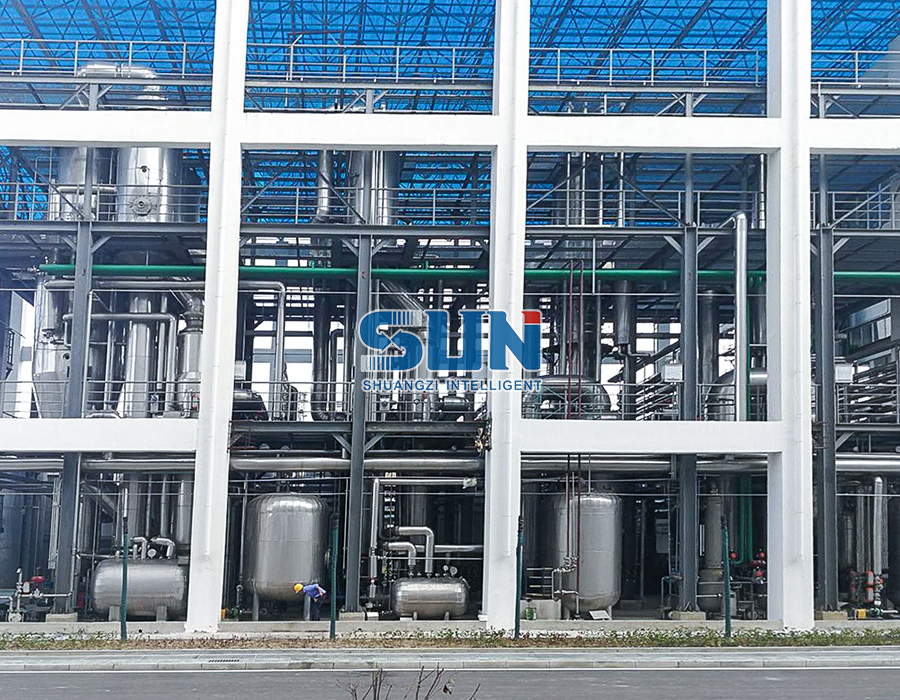
The company provides turnkey project services in addition to individual equipment. A turnkey project may include process planning, equipment layout, utility planning, equipment fabrication, procurement of matched components, installation, line debugging, automation integration, and operator support.
This approach can be beneficial for customers who need a complete production line rather than one isolated machine. It can also help ensure that the evaporator is correctly connected to extraction, filtration, drying, crystallization, storage, and packaging systems.
Automation and Control Considerations
Automation improves repeatability and makes it easier to maintain the process within defined operating limits. A control system for the external circulation evaporator may monitor and regulate feed flow, heating-medium pressure, process temperature, vacuum degree, separator level, condensate flow, reflux flow, and discharge timing.
Automatic control can help compensate for changes in feed concentration and maintain a stable evaporation rate. Alarm functions may identify high temperature, abnormal pressure, low vacuum, high liquid level, low condensate flow, pump failure, or insufficient cooling capacity.
For pharmaceutical and food projects, data recording may be required. Batch records can include product identification, operating time, temperature history, vacuum history, feed volume, discharge volume, and cleaning status. The control architecture should be selected according to the customer's validation, traceability, and production management requirements.
Automation should not replace sound process design. Sensors must be correctly positioned, calibrated, protected from fouling, and accessible for maintenance. The control strategy should also include manual intervention procedures and safe shutdown functions.
Materials, Hygienic Design, and Cleanability
Material selection affects equipment life, product quality, and maintenance requirements. Stainless steel is widely used in pharmaceutical, food, and plant extraction systems because it can offer corrosion resistance, cleanable surfaces, and compatibility with many aqueous products. The final grade should be selected based on the feed composition, chloride content, acidity, solvent type, temperature, and cleaning chemicals.
For sanitary applications, internal surfaces should be smooth and free from unnecessary crevices. Welds on product-contact surfaces should be properly finished. Piping should be arranged to support drainage, and valves should be selected for the required hygienic and process conditions.
Clean-in-place systems can be included when the process requires frequent cleaning or rapid product changeover. A cleaning study should identify the appropriate cleaning agents, temperature, flow velocity, contact time, and rinse requirements. Manual cleaning may be appropriate for some systems, while automated cleaning can improve consistency for larger production lines.
Gaskets and seals must be compatible with the process liquid, solvent, temperature, vacuum, and cleaning chemicals. Their replacement intervals should be included in the preventive maintenance plan.
Installation and Commissioning
Successful installation begins with a suitable site layout. The customer should provide sufficient space for equipment access, inspection, maintenance, cleaning, lifting, and future replacement of major components. The layout should also consider steam, cooling water, electricity, compressed air, vacuum, drainage, condensate collection, and product transfer routes.
During installation, the heater, separator, condenser, circulation pump, piping, instruments, and control cabinet must be aligned and connected according to the approved drawings. Vacuum lines should be checked for leakage. Process pipelines should be cleaned before production use, and instruments should be calibrated.
Commissioning generally includes water testing, circulation testing, vacuum testing, heating testing, condenser testing, control-system verification, alarm testing, and product trials. The final acceptance criteria should be defined before commissioning. Typical criteria may include evaporation capacity, vacuum stability, heating performance, condensate recovery, product concentration, equipment safety, and cleaning results.
Operator training is also important. Personnel should understand the correct startup and shutdown sequence, feed requirements, temperature and vacuum limits, cleaning procedures, emergency actions, and routine inspection points.
Maintenance and Operational Recommendations
Regular inspection supports safe and stable operation. Operators should check the circulation pump, heater, condenser, vacuum system, valves, gaskets, pressure instruments, temperature sensors, and control cabinet according to a documented schedule.
Heat-transfer surfaces should be monitored for fouling. A gradual reduction in evaporation capacity, increased steam consumption, unstable temperature, or longer processing time may indicate scaling or deposits. Cleaning intervals should be based on actual operating data rather than an arbitrary schedule.
The condenser should be kept free from blockage and should receive sufficient cooling water. Poor cooling performance can increase system pressure, reduce condensation efficiency, and weaken vacuum stability. Condensate quality should be checked when solvent recovery or product protection is important.
Vacuum leakage can originate from flanges, valves, mechanical seals, sight glasses, instrument connections, or damaged gaskets. A systematic leak test should be performed whenever the system shows difficulty reaching or maintaining the required vacuum.
When the product is viscous or contains solids, the operator should avoid excessive concentration in the circulation loop unless the equipment is specifically designed for that condition. Discharge timing and pump selection should prevent blockage and excessive load on the circulation system.
How to Select the Correct Model
The listed DJN-500, DJN-1000, DJN-1500, and DJN-2000 models provide a starting point for selection. The nominal evaporation capacity should be compared with the actual production requirement and the expected operating schedule.
Customers should prepare the following information for technical evaluation:
1. Feed material name and source.
2. Feed flow rate or batch volume.
3. Initial solids content or concentration.
4. Required final concentration or discharge specification.
5. Boiling point and heat sensitivity.
6. Viscosity and density at different concentrations.
7. Foaming tendency and suspended solids content.
8. Solvent composition and flammability characteristics.
9. Required operating hours and production capacity.
10. Available steam pressure, cooling water, electricity, and vacuum utilities.
11. Cleaning and sanitation requirements.
12. Installation-site dimensions and access limitations.
Once these data are reviewed, the supplier can recommend a suitable heating area, circulation pump, condenser duty, separator size, vacuum system, control configuration, and material specification. Pilot testing may be recommended when the feed behavior is uncertain.
Safety and Environmental Considerations
Evaporation systems operate with heat, pressure differences, vacuum, moving equipment, and sometimes flammable or corrosive materials. Safety must therefore be considered in the process design, equipment construction, installation, operation, and maintenance stages.
Pressure and vacuum vessels should be designed and inspected according to applicable standards. Relief protection, emergency shutdown, temperature limits, and safe venting should be included where required. Operators should be protected from hot surfaces, steam, condensate, chemical exposure, and rotating equipment.
When organic solvents are processed, the system may require explosion-protected electrical equipment, grounding and bonding, ventilation, inert-gas protection, solvent-compatible seals, and hazardous-area controls. These features must be specified according to the actual solvent and local regulations.
Environmental performance can be improved through vapor containment, condensate recovery, heat recovery, reduced wastewater volume, and appropriate treatment of concentrated residues. The evaporator should be integrated with the customer's broader environmental management system.
Why Engineering Integration Matters
A concentration machine cannot be evaluated only by its external appearance or nominal evaporation rate. The complete process system determines whether the equipment will deliver stable and economical performance. An undersized condenser can limit vacuum operation. An unsuitable pump can cause flow instability. Poor separator design can create product carryover. Inadequate instrumentation can make the concentration endpoint difficult to control.
An integrated engineering supplier can evaluate these relationships as one system. Zhejiang Shuangzi Intelligent Equipment Co., Ltd. focuses on process technology and automation engineering design as well as equipment manufacture. This provides a foundation for coordinating the evaporator with extraction, fermentation, filtration, drying, crystallization, and other process sections.
The company's product range includes vacuum low-temperature drying equipment, fermentation systems, evaporation and concentration equipment, extraction equipment, separation equipment, crystallization equipment, filtration equipment, and process containers. This broader portfolio supports project integration and reduces the technical gap between individual process units.
For customers developing a new factory, upgrading an existing line, or expanding capacity, engineering coordination can shorten the path from process concept to production. The supplier can assist with equipment selection, layout, installation, line debugging, and system integration according to the project scope.
Frequently Asked Questions
What is the main function of an external circulation evaporator?
Its main function is to concentrate a liquid mixture by evaporating and recovering a volatile component. The liquid circulates through an external heater and returns to a separator, while the generated vapor is condensed and collected or returned through the reflux system.
What materials can be processed?
The equipment can be used for selected pharmaceutical liquids, traditional Chinese medicine extracts, plant extracts, food liquids, fruit juice, dairy-related materials, chemical solutions, organic solvents, and certain wastewater streams. Final suitability depends on composition, viscosity, foaming, corrosiveness, heat sensitivity, and required concentration.
Can the evaporator operate under vacuum?
Yes. The listed technical information specifies a vacuum degree of 0.08 MPa. Vacuum operation can reduce the boiling temperature and support the processing of heat-sensitive products. The final vacuum conditions depend on the material and system configuration.
What are the available evaporation capacities?
The listed standard models have evaporation capacities of 500, 1,000, 1,500, and 2,000 kg/h. Actual performance depends on feed conditions, operating pressure, heating medium, cooling conditions, and required final concentration.
What is the concentration ratio?
The listed concentration ratio is approximately 1.2 to 1.3. The actual concentration result should be confirmed according to the feed composition, target solids content, operating mode, and product quality requirements.
Is the process continuous or batch-based?
The equipment can be arranged for a process that suits the customer's production method. The preferred operating mode depends on the feed volume, product characteristics, required flexibility, and integration with upstream and downstream equipment.
Can the evaporator recover solvents?
Yes. The condenser converts vapor into liquid condensate, and the recovered liquid can be collected, reused, or returned through the reflux system when appropriate. Solvent recovery design must consider flammability, purity, material compatibility, and safety requirements.
Is the equipment suitable for pharmaceutical production?
It can be suitable for pharmaceutical applications when designed with appropriate materials, sanitary connections, surface finishing, cleaning procedures, documentation, automation, and validation support. The final system must be matched to the customer's regulatory and production requirements.
How does external circulation compare with a simple heated vessel?
External circulation provides a dedicated heating and circulation path, separate vapor-liquid separation, and an integrated condensation and reflux arrangement. This can improve process control and scalability compared with a basic heated vessel, especially when higher throughput, vacuum operation, or solvent recovery is required.
What information is needed for a quotation?
The supplier generally needs the feed composition, flow rate or batch size, initial and final concentration, viscosity, boiling behavior, temperature sensitivity, foaming tendency, solvent information, available utilities, cleaning requirements, and installation conditions. These details allow the equipment to be designed more accurately.
Can the supplier provide a complete production line?
Yes. The company provides EPC/EPCM-oriented services, including process technology, automation engineering design, equipment manufacture, matching procurement, installation, commissioning, and system integration. It can also provide turnkey project support for suitable applications.
How can the equipment be maintained?
Maintenance includes inspection of the heater, circulation pump, condenser, vacuum system, valves, gaskets, instruments, and control devices. Heat-transfer surfaces should be cleaned when fouling reduces performance. Vacuum leakage, abnormal pressure, reduced capacity, and unstable temperature should be investigated promptly.
Conclusion
The external circulation evaporator is a versatile concentration machine for pharmaceutical, plant extraction, food, chemical, environmental, and selected energy-related applications. Its external heater and circulation path support efficient heat transfer, while the separator, condenser, and reflux device provide controlled vapor recovery and liquid concentration.
Vacuum operation can help reduce boiling temperature and protect heat-sensitive materials. Sealed processing can limit exposure to the surrounding environment, and the condensation system can recover valuable volatile components. With standard capacities from 500 kg/h to 2,000 kg/h, the equipment can be adapted to different production scales.
Its strongest value is achieved when the machine is engineered as part of a complete process system. Appropriate equipment sizing, material selection, separator design, condenser capacity, automation, cleaning provisions, and safety features are essential to long-term performance.
Zhejiang Shuangzi Intelligent Equipment Co., Ltd. combines process engineering, equipment manufacturing, pilot testing, automation, installation, commissioning, and turnkey project services. Its manufacturing facilities, welding and machining capabilities, research platform, and experience in extraction, fermentation, concentration, separation, drying, and pharmaceutical engineering provide a strong foundation for customized evaporation projects.
For manufacturers seeking controlled concentration, solvent recovery, heat-sensitive processing, and integrated production-line support, the external circulation evaporator offers a practical and scalable solution. A detailed process evaluation and, where necessary, pilot test should be completed before final model selection.
References
1. Perry’s Chemical Engineers’ Handbook, sections concerning evaporation, heat transfer, condensation, and vapor-liquid separation.
2. McCabe, W. L., Smith, J. C., and Harriott, P. Unit Operations of Chemical Engineering, chapters on evaporation and phase separation.
3. Geankoplis, C. J. Transport Processes and Separation Process Principles, material and energy balance considerations for process equipment.
4. General principles of good manufacturing practice for pharmaceutical production, including hygienic equipment design, cleaning, validation, and process documentation.
5. General engineering guidance for sanitary design in food and pharmaceutical process equipment.
6. General principles of industrial solvent recovery, condensation, vacuum operation, and hazardous-material handling.
7. Technical information supplied for the external circulation evaporator, including model capacities, operating conditions, concentration ratio, dimensions, applications, and equipment structure.