
 英语
英语 俄语
俄语Content
- 1 Overview of the External Circulation Evaporator
- 2 Working Principle and Process Flow
- 3 Key Product Advantages
- 4 Advantages Over Conventional Competitor Equipment
- 5 Main Structure and Functional Components
- 6 Technical Parameters
- 7 Applications in Pharmaceutical Production
- 8 Applications in Food Processing
- 9 Applications in Chemical and Solvent Recovery Processes
- 10 Applications in Environmental Protection
- 11 Applications in Energy and Oilfield Recovery
- 12 Manufacturing Strength and Engineering Capability
- 13 Process Integration in Turnkey Projects
- 14 Quality, Cleanability, and Production Safety
- 15 Energy Efficiency and Economic Value
- 16 Model Selection Guidance
- 17 Operation and Maintenance Considerations
- 18 Why Manufacturing Process Matters
- 19 Frequently Asked Questions
- 19.1 What is an external circulation evaporator used for?
- 19.2 How does the equipment concentrate liquid materials?
- 19.3 What concentration ratio can the equipment achieve?
- 19.4 Why is vacuum operation important?
- 19.5 Can the evaporator recover solvents?
- 19.6 Is the equipment suitable for herbal medicine extracts?
- 19.7 Can it be used in food production?
- 19.8 What models are available?
- 19.9 How should a user choose the right model?
- 19.10 What makes this equipment different from ordinary concentration tanks?
- 19.11 Why is manufacturing quality important?
- 19.12 Can the evaporator be integrated into a turnkey project?
- 20 Conclusion
- 21 References
- 22 Product: External Circulation Evaporator
In modern pharmaceutical, food, chemical, environmental, and energy-related production, evaporation and concentration are core processes that directly influence product quality, production efficiency, energy consumption, and operating cost. The external circulation evaporator is designed to concentrate liquid materials by evaporating solvent under controlled heating and vacuum conditions, then recovering vapor through condensation and reflux. It is especially suitable for applications where stable concentration, clean operation, gentle processing, and reliable solvent recovery are required.
The equipment is widely used for the concentration of traditional herbal extracts, Western medicine intermediates, fruit juice, dairy materials, organic solvents, chemical products, wastewater streams, and other liquid mixtures. Compared with ordinary concentration equipment, the external circulation evaporator offers fast evaporation, a fully sealed working state, reduced contamination risk, easy cleaning, and a concentration ratio that can reach approximately 1.2 to 1.3 in typical operation. These features make it a practical and dependable solution for plants that need consistent concentration performance without compromising product integrity.
For manufacturers working in plant extraction, bio-fermentation, pharmaceutical synthesis, natural food processing, environmental protection, and turnkey engineering projects, concentration equipment is not only a single machine but also a key processing node. Its performance affects upstream extraction efficiency, downstream drying load, solvent recovery rate, product aroma retention, and the stability of the entire production line. A well-designed external circulation evaporator can help enterprises improve batch quality, reduce solvent waste, simplify cleaning procedures, and maintain controlled production under vacuum.
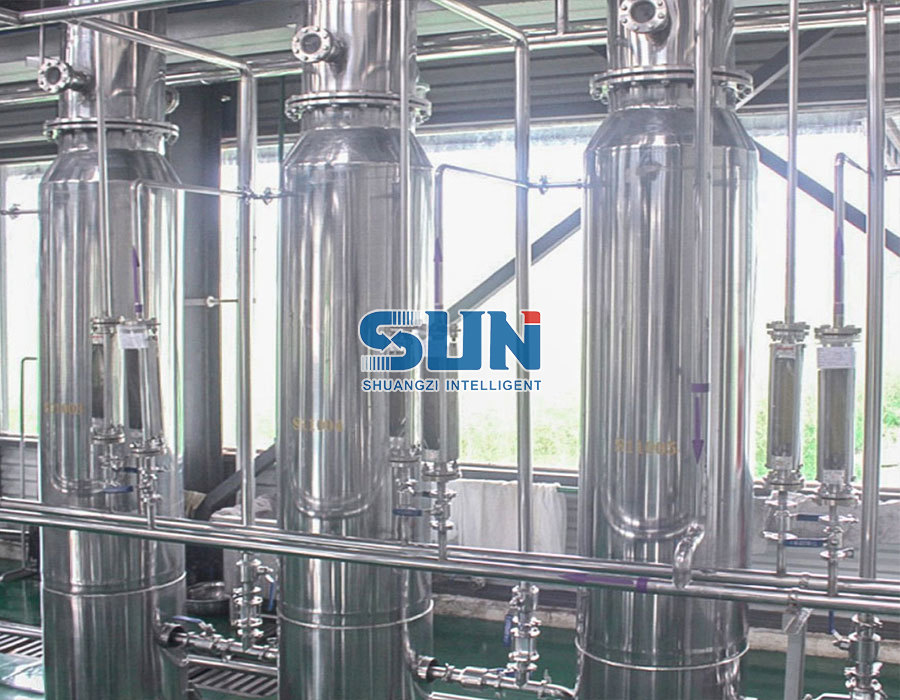
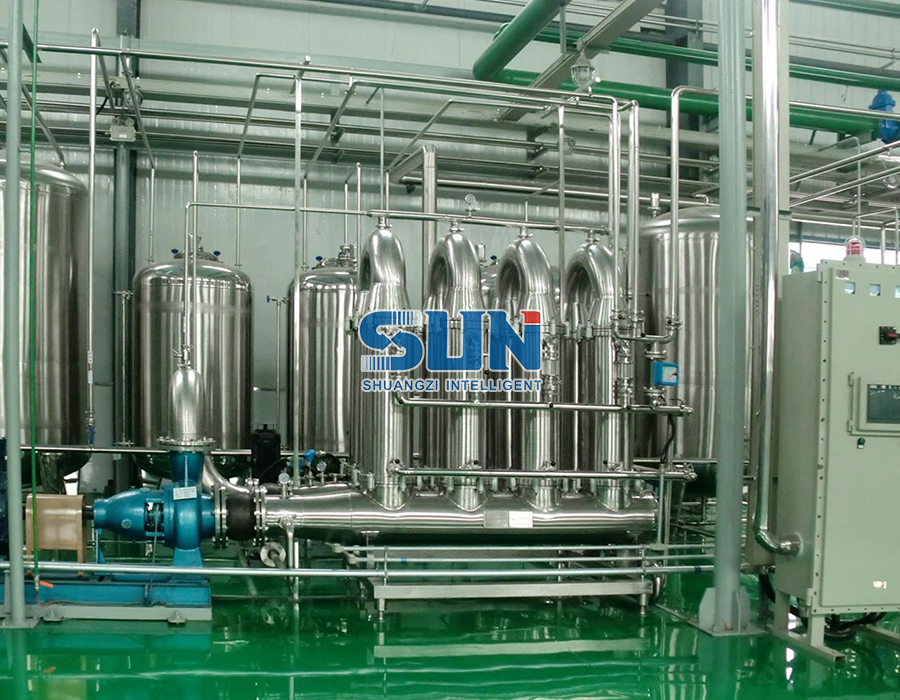
External Circulation Evaporator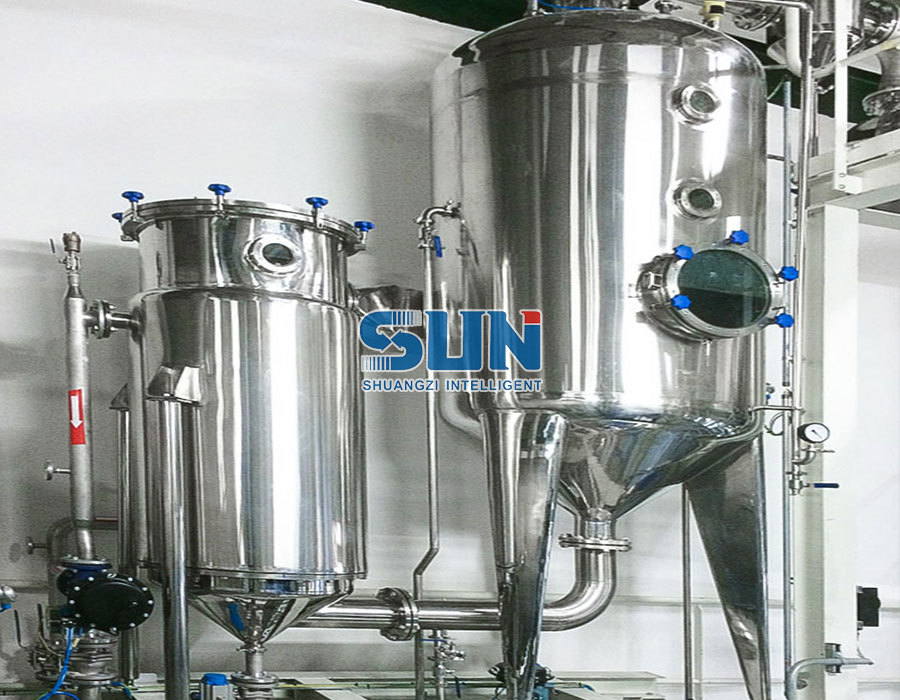
Overview of the External Circulation Evaporator
The external circulation evaporator is a commonly used concentration machine based on the principle of distillation and vapor-liquid separation. Liquid feed enters the equipment and is heated in the heater. Volatile components in the liquid, such as water, alcohol, or other solvents, absorb heat and vaporize. The vapor then enters a cooling and condensing system, where it is transformed back into liquid and collected or returned through a reflux device. The remaining liquid becomes increasingly concentrated as solvent is removed.
The phrase “external circulation” refers to the flow path of the liquid material outside the main evaporation chamber. Instead of relying only on internal boiling movement, the material circulates between the heating section and separation section. This structure improves heat transfer, increases evaporation speed, and helps maintain a more stable concentration process. In suitable processes, it can reduce local overheating and support uniform treatment of liquid materials.
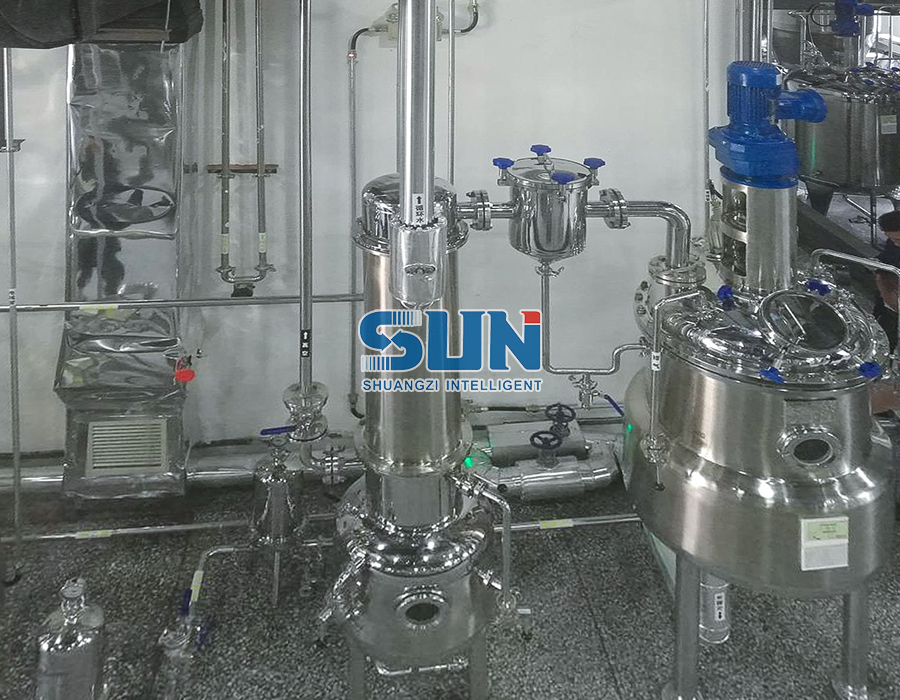
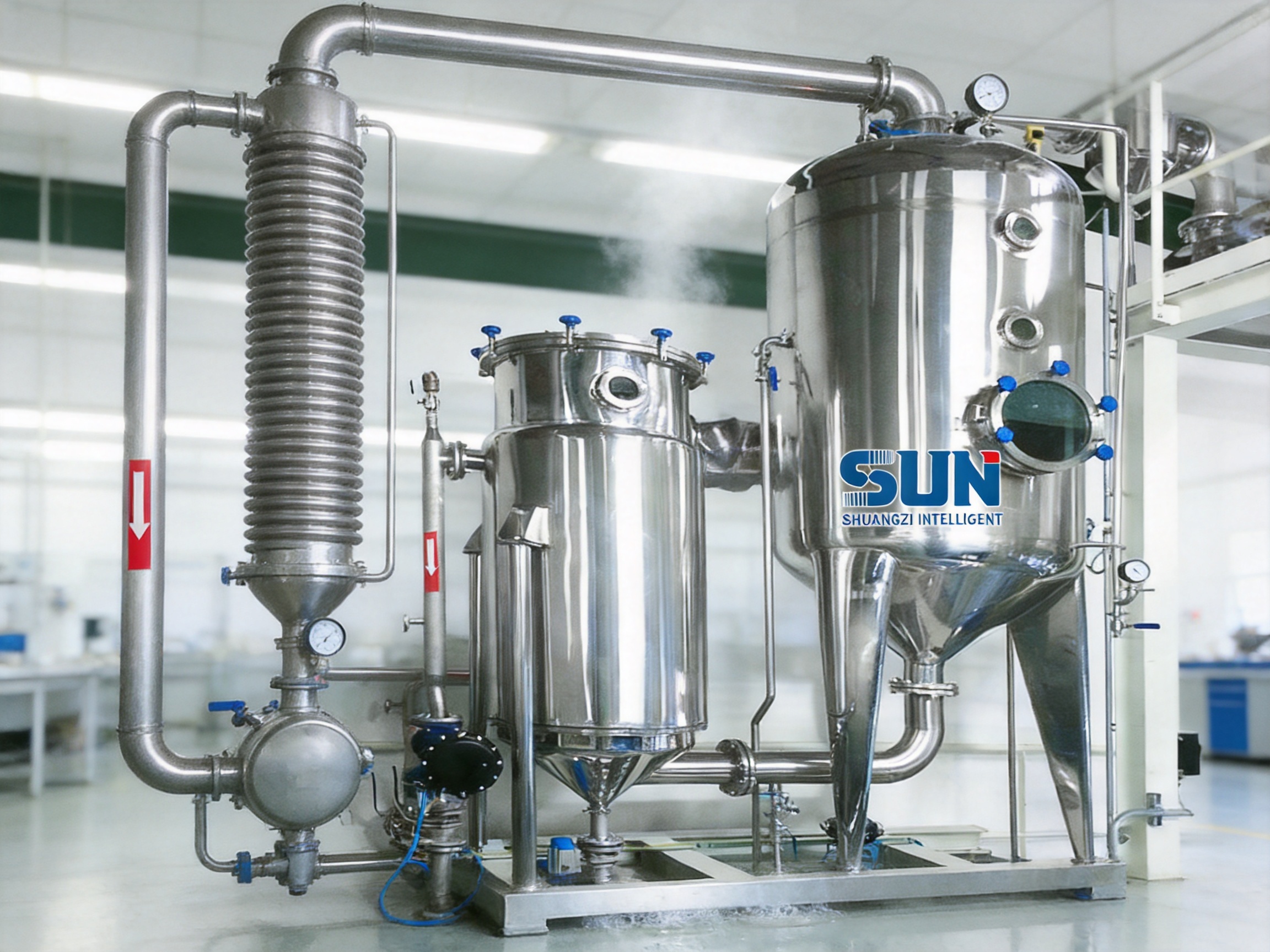
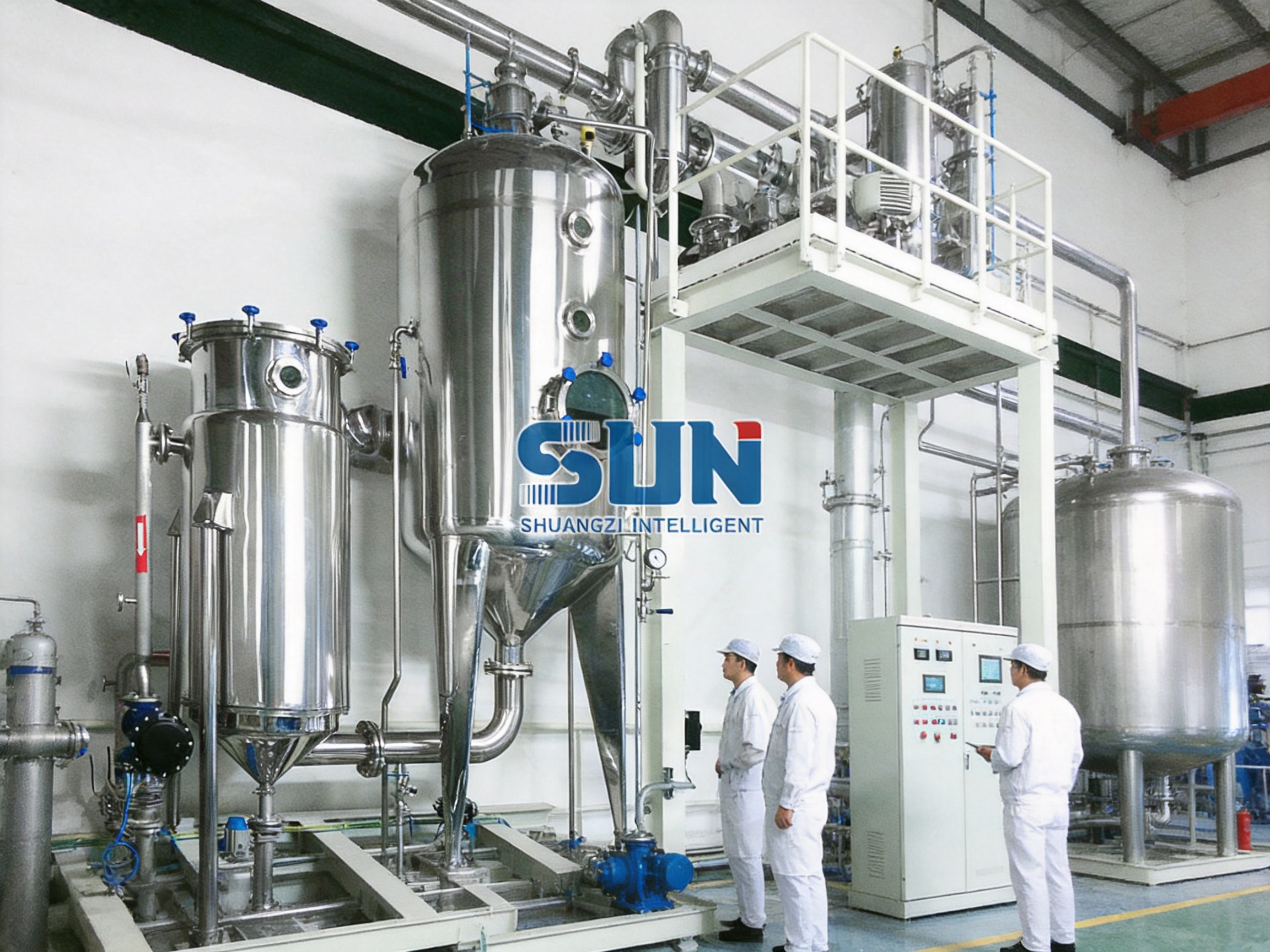
The equipment normally includes a heater, heat exchanger, condenser, reflux device, separator, vacuum system interface, piping, valves, instruments, and supporting control components. Each part has a clear function. The heater provides thermal energy; the heat exchanger supports efficient heat transfer; the condenser cools vapor; the reflux device helps recover condensate; and the separator separates concentrated liquid from vapor. Together, these components create a closed and controllable evaporation system.
One of the most important characteristics of this equipment is operation in a fully sealed state. A sealed concentration process helps prevent external contamination, reduce odor release, avoid unnecessary solvent loss, and maintain a cleaner production environment. For pharmaceutical and food applications, this is especially important because product quality, hygiene, and traceability are essential. For chemical and environmental applications, sealed operation also improves safety and reduces emissions.
Working Principle and Process Flow
The working principle of the external circulation evaporator is based on the difference in volatility between the solvent and the solute or dissolved solids. When the liquid mixture is heated under vacuum, volatile components evaporate at a lower temperature than they would at atmospheric pressure. This is particularly valuable for heat-sensitive materials, such as herbal extracts, biological fermentation liquids, fruit juice concentrates, flavor materials, and some pharmaceutical intermediates.
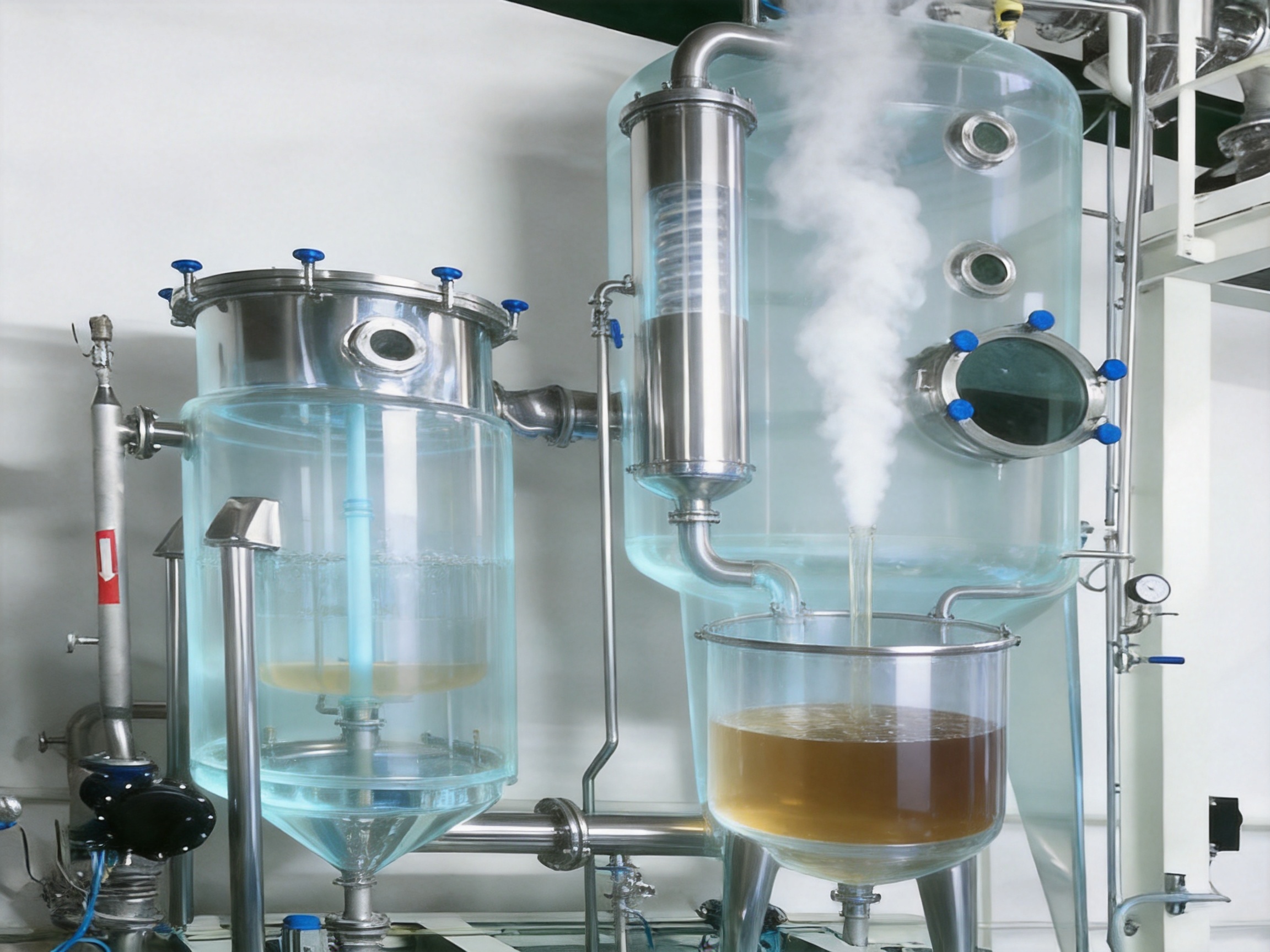
At the beginning of operation, the feed liquid is introduced into the evaporator system. The vacuum condition is established to lower the boiling point of the liquid. Steam or another heat source enters the heating section, transferring heat through the heat exchange surface. The liquid material circulates through the heater, absorbs energy, and forms vapor. The vapor-liquid mixture then moves to the separation chamber, where vapor is separated from the concentrated liquid.
The vapor enters the condenser, where cooling water or another cooling medium removes heat from it. As temperature decreases, vapor condenses into liquid droplets. These droplets may be collected as recovered solvent or returned through a reflux arrangement, depending on the process objective. For solvent recovery, the condensed liquid can be stored and reused after quality verification. For concentration processes, the condensate removal directly increases the solid content or concentration of the remaining liquid.
The concentrated liquid remains in the circulation loop until it reaches the target concentration. Once the desired concentration ratio, density, or process endpoint is achieved, the product can be discharged. In pharmaceutical and food applications, the discharge process is designed to minimize residue, reduce exposure, and support cleaning after production. In chemical or environmental use, discharge parameters may be adjusted according to viscosity, solids content, and recovery goals.
The process can be summarized as heating, evaporation, vapor-liquid separation, condensation, reflux or collection, and product discharge. Although the principle is simple, high-quality performance depends on engineering details such as heat transfer area, circulation velocity, separator design, condenser capacity, vacuum stability, sealing quality, welding finish, automation level, and material selection. These factors distinguish a professional external circulation evaporator from ordinary evaporation equipment.
Key Product Advantages
The external circulation evaporator provides several advantages for industrial users. First, it offers rapid evaporation. The external circulation structure improves the movement of liquid through the heating area, allowing the material to contact the heat exchange surface efficiently. This enhances heat transfer and helps increase solvent removal rate. For plants that need high throughput, fast evaporation reduces batch time and improves production capacity.
Second, the equipment can achieve a concentration ratio of approximately 1.2 to 1.3, which is suitable for many extraction, food, pharmaceutical, and solvent recovery applications. While the exact concentration endpoint depends on the material properties and process requirements, the system provides stable and repeatable concentration under controlled vacuum and heating conditions.
Third, the liquid material can be concentrated without foam under a fully sealed state in suitable processes. Foaming is a common challenge in evaporation, especially for herbal extracts, fermentation broths, protein-containing liquids, and food products. Excessive foam can cause entrainment, product loss, contamination of condensate, and unstable vacuum. The external circulation evaporator is designed to support smoother concentration and reduce foam-related difficulties.
Fourth, the concentrated liquid produced by this equipment has the advantages of low contamination risk, strong material aroma retention in suitable applications, and convenient cleaning. Aroma retention is important for herbal medicine extracts, fruit juice, spices, and natural food ingredients. By operating under vacuum and reducing unnecessary exposure, the system helps preserve characteristic flavors and active components more effectively than harsh open boiling methods.
Fifth, the system supports solvent recovery. In chemical, pharmaceutical, food, and environmental industries, solvent cost and emission control are major concerns. By condensing evaporated solvent, the equipment helps recover valuable volatile components and reduce waste. This can lower purchasing costs, support cleaner production, and improve compliance with environmental management requirements.
Sixth, the evaporator is suitable for integration into complete production lines. It can be used after extraction, fermentation, filtration, or separation, and before drying, crystallization, blending, or packaging. This makes it valuable not only as a standalone machine but also as part of an EPC or turnkey processing solution.
Advantages Over Conventional Competitor Equipment
Compared with simple open concentration tanks, the external circulation evaporator provides better process control. Open tanks usually require higher temperatures, expose the product to air, release vapor into the workshop, and consume more energy. They may also cause product oxidation, contamination, color change, aroma loss, or degradation of heat-sensitive components. The external circulation evaporator, by contrast, operates under vacuum and in a sealed system, reducing these risks.
Compared with basic jacketed evaporators, the external circulation design usually provides more effective circulation and heat exchange. In a jacketed vessel, heat transfer may be limited by the wall area and by poor movement of viscous or concentrated materials. The external heater and circulation loop increase the opportunity for controlled contact with the heat transfer surface. This can improve evaporation speed and uniformity, especially when the liquid is not extremely viscous.
Compared with some forced-circulation systems, the external circulation evaporator can offer a practical balance between performance, structure, maintenance, and cost. For many medium-capacity concentration processes, it provides sufficient evaporation efficiency without unnecessary complexity. Its structure is easy to understand, operate, and maintain, making it suitable for facilities that require reliable industrial performance and manageable daily operation.
Compared with low-grade evaporators that are not designed for hygienic production, this equipment emphasizes sealed operation, cleanable structure, and appropriate material contact surfaces. For pharmaceutical and food users, the difference is significant. Poor welding, dead corners, rough surfaces, and difficult-to-clean pipelines can create quality risks. A professional evaporator manufactured with attention to fabrication quality reduces these concerns.
Compared with equipment that is only sold as a single machine without process support, this solution benefits from engineering experience in plant extraction, fermentation, pharmaceutical engineering, food processing, energy conservation, environmental protection, and full-line integration. Process knowledge is essential because evaporation conditions must match material characteristics, upstream and downstream operations, cleaning plans, and production targets. A machine selected only by capacity may not deliver optimal results if the process design is incomplete.
Another competitive advantage is manufacturing capability. Advanced welding and finishing equipment, CNC machining, plasma cutting, argon arc welding, and strict assembly procedures improve the quality and reliability of the final product. In evaporation equipment, small manufacturing details affect sealing, heat transfer, cleaning, vacuum retention, and long-term durability. High-standard manufacturing is therefore not a decorative feature; it is a direct contributor to performance.
Main Structure and Functional Components
Heater
The heater is one of the most important parts of the external circulation evaporator. It transfers thermal energy to the liquid material and initiates evaporation. The design of the heating surface influences heat transfer efficiency, evaporation speed, and product stability. A well-built heater should provide uniform heating, resist corrosion, maintain pressure integrity, and allow cleaning after production.
In many applications, steam is used as the heating medium. The steam pressure for the listed equipment models is below 0.09 MPa, supporting low-temperature evaporation under vacuum. Low steam pressure can help reduce thermal stress on sensitive materials and improve energy management. The heater must be manufactured with accurate dimensions and high-quality welds to ensure stable heat transfer and long-term operation.
Heat Exchanger
The heat exchanger supports efficient heat movement in the evaporation system. It may work with the heater to promote evaporation or help manage temperature differences in the process. Heat exchange quality affects not only evaporation rate but also energy consumption. Smooth internal surfaces, precise fabrication, proper material selection, and reliable sealing are important for preventing leakage and maintaining clean operation.
Condenser
The condenser transforms vapor into liquid. Its performance determines the efficiency of solvent recovery and the stability of vacuum conditions. If condensation capacity is insufficient, vapor may not be recovered completely, vacuum may fluctuate, and evaporation efficiency may decline. A properly designed condenser helps maintain a steady operating environment and supports recovery of water, alcohol, or other volatile solvents.
Reflux Device
The reflux device plays a role in cooling and recovery. It guides condensed volatile components back into the system or directs them to a collection point. Depending on process needs, reflux can help maintain separation balance, improve recovery, or stabilize concentration. For solvent recovery applications, reflux and condensate handling are important for reducing solvent loss and improving operating economy.
Separator
The separator separates vapor from concentrated liquid. This function is essential because vapor entrainment can carry product droplets into the condenser, causing product loss and contaminating recovered solvent. A good separator supports clear vapor-liquid separation, stable discharge, and reduced foam-related carryover. The separator design should be matched with material behavior, evaporation rate, and vacuum conditions.
Vacuum and Sealing System
Vacuum operation reduces the boiling point of the solvent and allows lower-temperature concentration. The listed equipment operates at a vacuum degree of approximately 0.08 MPa. Stable vacuum improves product protection, energy efficiency, and evaporation performance. Sealing quality is therefore extremely important. Flanges, valves, gaskets, welds, and instrumentation connections must maintain air-tight performance during operation.
Technical Parameters
The external circulation evaporator is available in several capacity options to meet different production scales. The models listed below cover evaporation capacities from 500 kg/h to 2000 kg/h. Selection should consider feed volume, solvent type, target concentration, operating schedule, available utilities, installation space, and downstream processing needs.
Items |
DJN-500 |
DJN-1000 |
DJN-1500 |
DJN-2000 |
Evaporation Capacity |
500 kg/h |
1000 kg/h |
1500 kg/h |
2000 kg/h |
Steam Pressure |
< 0.09 MPa |
< 0.09 MPa |
< 0.09 MPa |
< 0.09 MPa |
Vacuum Degree |
0.08 MPa |
0.08 MPa |
0.08 MPa |
0.08 MPa |
Concentration Ratio |
1.2 to 1.3 |
1.2 to 1.3 |
1.2 to 1.3 |
1.2 to 1.3 |
Dimensions |
2000 × 1000 × 3000 mm |
2200 × 1200 × 3300 mm |
2500 × 1300 × 3500 mm |
4600 × 2350 × 5100 mm |
These parameters provide a practical reference for preliminary selection. However, an accurate equipment configuration should be determined according to the material characteristics and process requirements. For example, a low-viscosity aqueous extract may evaporate differently from an alcohol-containing botanical extract, a milk-based product, or an organic solvent mixture. Factors such as boiling point, heat sensitivity, foaming tendency, corrosion behavior, solids content, and cleaning requirements should be evaluated before final design.
Applications in Pharmaceutical Production
In the pharmaceutical industry, evaporation and concentration are critical for both traditional medicine extraction and Western medicine production. Herbal extracts often contain active components, natural aroma compounds, pigments, sugars, proteins, and fine suspended solids. These components may be sensitive to high temperature and oxidation. Vacuum concentration helps reduce boiling temperature, protecting product quality while removing excess solvent.
The external circulation evaporator is suitable for the concentration of traditional Chinese medicine extracts and other botanical medicinal materials. After extraction and filtration, the liquid extract may have a low solid content and large volume. Concentration reduces the volume, improves storage and transfer efficiency, and prepares the material for downstream drying, alcohol precipitation, granulation, or formulation. A sealed evaporator also helps preserve the strong medicine flavor and characteristic aroma of the extract.
For Western medicine synthesis and pharmaceutical intermediates, solvent recovery is often important. Solvents may be expensive, regulated, or environmentally sensitive. By evaporating and condensing volatile solvents, the equipment can support recovery and reuse. This not only reduces cost but also helps meet cleaner production and environmental management objectives. The closed structure reduces solvent exposure in the workshop and improves operational safety.
Pharmaceutical production also requires equipment that can be cleaned effectively. Residues from one batch may contaminate the next if the equipment has dead corners or rough internal surfaces. The external circulation evaporator is designed for easier cleaning, and high-quality fabrication improves cleanability. For pharmaceutical users, this can reduce batch changeover time and improve confidence in production hygiene.
Applications in Food Processing
Food production requires concentration equipment that preserves flavor, aroma, color, and nutritional characteristics. Fruit juice, milk, cheese-related materials, flavor extracts, and natural food ingredients can be damaged by excessive heat. Vacuum evaporation allows concentration at lower temperatures, reducing the risk of cooked flavor, color darkening, or loss of volatile aroma compounds.
In fruit juice processing, concentration reduces water content and improves storage efficiency. It can also create intermediate ingredients for beverage formulation, jam production, flavoring, and food manufacturing. A sealed external circulation evaporator helps protect the juice from external contamination and unnecessary oxygen exposure. This supports better product quality compared with open boiling methods.
In dairy-related applications, such as milk or cheese ingredient processing, heat control is important because proteins and sugars can react under high temperature. Controlled low-pressure evaporation can reduce the risk of fouling and quality deterioration. Although cleaning must be carefully managed due to dairy residues, a well-designed evaporator with smooth surfaces and appropriate cleaning procedures can support reliable production.
For natural flavors, spices, and food extracts, aroma preservation is a major advantage. The equipment can help concentrate materials while recovering volatile components. In some processes, recovered condensate may contain aroma fractions that can be handled separately or reincorporated according to formulation requirements. This flexibility is valuable for producers of high-quality natural food ingredients.
Applications in Chemical and Solvent Recovery Processes
In the chemical industry, the external circulation evaporator is used for solvent recovery in the production of chemical drugs, spices, dyes, organic solvents, and other chemical products. Many chemical processes generate liquid mixtures containing valuable solvent and dissolved materials. Evaporation separates volatile solvent from less volatile components, enabling recovery, reuse, or further purification.
Organic solvents such as alcohol are common in extraction and synthesis. Recovering them through condensation can significantly reduce operating costs. It also reduces the volume of waste liquid and supports regulatory compliance. A sealed evaporation system improves workplace conditions by reducing vapor release and odor. This is particularly important when working with flammable, odorous, or environmentally sensitive solvents.
Chemical materials may be corrosive or may require special construction materials. Professional engineering evaluation is necessary to select suitable stainless steel grades, sealing materials, surface finishes, and operating parameters. Manufacturing quality is critical because leakage, corrosion, or weak welds can create safety and reliability problems. Advanced fabrication processes help ensure the evaporator can withstand industrial chemical service.
Applications in Environmental Protection
Environmental protection processes often involve treatment of wastewater or exhaust-related condensates containing organic pollutants. Evaporation can reduce the volume of contaminated liquid, recover useful solvents, and separate volatile components from non-volatile residues. The external circulation evaporator is suitable for treating certain organic pollution streams where concentration and recovery are technically and economically reasonable.
By reducing wastewater volume, the equipment can lower the burden on downstream treatment systems. Concentrated residues can be handled according to environmental regulations, while recovered condensate may be reused or further treated. In factories seeking greener production, evaporation and solvent recovery can be part of a broader waste minimization strategy.
Sealed operation is especially valuable in environmental applications because it reduces secondary pollution. Instead of allowing volatile substances to escape into the workshop or atmosphere, vapors are directed to the condenser and recovery system. This improves environmental control and supports safer workplace conditions.
Applications in Energy and Oilfield Recovery
The energy industry can use evaporation equipment for the purification and recovery of liquids generated during oilfield extraction and related operations. In some processes, liquid streams contain water, organic components, salts, and other substances that require separation or concentration. Evaporation can help recover useful fractions or reduce waste volume.
External circulation evaporation is useful when a stable and controllable concentration process is needed. For energy-related applications, equipment robustness, corrosion resistance, sealing performance, and maintenance convenience are particularly important. Process evaluation should consider the composition of the feed, fouling tendency, scaling risk, and required recovery quality.
Although pharmaceutical and food industries often focus on hygiene and product quality, energy applications may focus more on durability, solvent recovery, and continuous reliability. The versatility of the external circulation evaporator allows it to serve different industrial goals when properly configured.
Manufacturing Strength and Engineering Capability
The quality of an external circulation evaporator depends not only on its design concept but also on how it is manufactured. Zhejiang Shuangzi Intelligent Equipment Co., Ltd. has built its strength around process technology, automation engineering design, equipment manufacturing, matching purchase, installation, system integration, and turnkey project service. This combination allows the company to provide equipment that fits real production conditions rather than isolated machinery.
The company was founded in 2007 and has developed experience in plant extraction, biological fermentation, pharmaceutical engineering, natural food, energy conservation, and environmental protection. It covers a floor area of 16,706 square meters and a structure area of 17,800 square meters, providing a solid production base for equipment manufacturing and project execution. The company’s mature products include vacuum low-temperature drying equipment, complete fermentation systems, evaporation and concentration equipment, extraction equipment, separation equipment, crystallization equipment, filtration equipment, and various containers.
Advanced manufacturing equipment supports reliable product quality. The company has introduced plasma argon arc welding machines, plasma cutting machines, CAM CNC machining centers, and other finishing equipment. These tools contribute to precise cutting, accurate machining, clean welding, and improved assembly quality. In evaporation equipment, this directly affects vacuum tightness, pipeline alignment, heat transfer performance, cleanability, and long-term mechanical stability.
Welding quality is especially important for stainless steel process equipment. Poor welding can create cracks, rough surfaces, hidden contamination points, and structural weakness. High-quality argon arc welding helps produce smooth and durable weld seams. Plasma cutting improves dimensional accuracy and reduces unnecessary deformation. CNC machining supports precise components, consistent connections, and better fit during assembly.
The company also maintains a pilot production workshop and an R&D platform designed around automated GMP-related process requirements. This is important for users in pharmaceutical, food, and biotechnology fields because pilot testing and process verification can reduce risk before full-scale production. Processes such as vacuum low-temperature drying, plant extraction, evaporation, precipitation separation, extraction, and fermentation can be evaluated to support process design and equipment selection.
The ability to provide engineering, process design, equipment design, installation, line debugging, and turnkey project service is a major advantage. Many users do not simply need an evaporator; they need a complete process that works from raw material handling to final product. An external circulation evaporator may need to match extraction tanks, filtration systems, solvent storage, condensers, vacuum units, drying equipment, CIP systems, automation controls, and safety devices. Integrated engineering reduces compatibility problems and improves project efficiency.
Process Integration in Turnkey Projects
In a turnkey project, evaporation equipment must be planned as part of the entire production system. For plant extraction, the process may include raw material preparation, extraction, filtration, concentration, precipitation, separation, drying, and packaging. The external circulation evaporator is usually positioned after extraction and filtration, where it removes excess solvent or water from the extract. Its capacity must match extraction batch size and downstream drying capacity.
In bio-fermentation projects, fermentation broth may require separation, clarification, concentration, and drying or purification. Depending on the product, vacuum concentration may reduce volume before further processing. Because biological materials can be heat-sensitive, careful control of temperature and vacuum is important. Equipment design must consider foaming, proteins, salts, and cleaning needs.
In Western medicine synthesis projects, the evaporator may be used for solvent removal, solvent recovery, or intermediate concentration. Here, safety and chemical compatibility are critical. Proper sealing, explosion prevention considerations where applicable, condensate recovery, and process automation may be required. Engineering support helps ensure that the evaporator operates safely within the larger synthesis line.
In food projects, the evaporator must support hygienic production, aroma retention, and stable product quality. It may be integrated with extraction, blending, sterilization, filling, or drying systems. The goal is to remove water or solvent efficiently while maintaining the sensory and nutritional characteristics of the product. Clean design and reliable operation reduce production downtime and contamination risk.
Turnkey service also helps users manage installation and commissioning. Even high-quality equipment can fail to perform if utilities, piping, vacuum connections, control logic, drainage, or cleaning systems are poorly installed. A supplier with process and installation experience can coordinate these details and support stable startup.
Quality, Cleanability, and Production Safety
Cleanability is a defining feature of process equipment used in pharmaceutical, food, and biological production. The external circulation evaporator is designed to be easy to clean, reducing the risk of residue buildup and cross-contamination. Smooth internal surfaces, appropriate weld finishing, reasonable pipeline layout, and accessible components all contribute to cleaning effectiveness.
For many materials, residues become more concentrated and sticky during evaporation. If the equipment is difficult to clean, these residues may harden, degrade, or contaminate future batches. Easy cleaning reduces downtime, improves sanitation, and extends equipment life. It also supports process validation and routine quality management.
Production safety is another key consideration. Evaporation involves heat, vacuum, pressure differences, and sometimes flammable or volatile solvents. Reliable sealing, suitable instrumentation, controlled steam pressure, stable vacuum, and correct operating procedures help reduce risk. The fully sealed operating state is valuable for solvent-containing materials because it limits vapor leakage and reduces operator exposure.
The equipment’s vacuum operation also requires mechanical integrity. Components must withstand pressure differences without deformation or leakage. Manufacturing accuracy and material strength are therefore essential. Advanced cutting, welding, machining, and assembly processes help ensure the evaporator performs safely over long-term industrial use.
Energy Efficiency and Economic Value
Energy consumption is one of the largest costs in evaporation. Removing solvent requires heat, and inefficient equipment wastes steam, cooling water, and time. The external circulation evaporator improves economic value by promoting efficient heat transfer, fast evaporation, solvent recovery, and controlled operation. These advantages can reduce total operating cost compared with less efficient concentration methods.
Vacuum evaporation allows boiling at lower temperatures, which can reduce thermal energy demand in suitable conditions and protect material quality. Faster evaporation shortens batch cycles, increasing production capacity without necessarily increasing floor space. Solvent recovery reduces raw material costs and waste disposal expenses. Clean operation reduces downtime between batches.
Economic value should be evaluated across the full production chain. For example, concentrating a botanical extract before drying can reduce the load on the dryer, saving energy and improving drying efficiency. Recovering alcohol from extraction can reduce solvent purchase costs. Reducing wastewater volume can lower treatment expenses. Maintaining product quality can increase market value and reduce batch rejection.
Competitor equipment may appear less expensive at purchase, but low initial cost can be offset by high energy use, poor recovery, difficult cleaning, frequent maintenance, weak vacuum stability, or inconsistent product quality. A well-manufactured external circulation evaporator provides value through reliable long-term performance.
Model Selection Guidance
Selecting the correct model requires more than matching evaporation capacity. The DJN-500 model, with an evaporation capacity of 500 kg/h, is suitable for pilot production, small batch manufacturing, or processes with moderate solvent removal requirements. Its compact dimensions make it easier to install in limited spaces while still providing industrial concentration capability.
The DJN-1000 model offers 1000 kg/h evaporation capacity and is suitable for medium-scale production. It can serve many herbal extract, food concentrate, and solvent recovery operations. It provides a balance between capacity and installation footprint, making it a practical choice for growing facilities.
The DJN-1500 model increases evaporation capacity to 1500 kg/h. It is suitable for larger production lines requiring higher throughput. Users with multiple extraction tanks or continuous batch schedules may choose this model to reduce waiting time between process steps.
The DJN-2000 model provides 2000 kg/h evaporation capacity and is designed for high-capacity production. Its larger dimensions require more installation space and utility planning, but it supports significant production output. It is suitable for industrial-scale plant extraction, pharmaceutical concentration, food processing, and solvent recovery lines.
When selecting a model, users should provide information such as feed composition, solvent type, initial and final concentration, operating temperature limits, daily production target, cleaning method, material viscosity, foaming behavior, corrosion concerns, and available utilities. With this data, the equipment can be configured more accurately and integrated more effectively into the full process.
Operation and Maintenance Considerations
Proper operation begins with inspection. Before startup, operators should check valves, gaskets, instruments, heating medium supply, cooling water, vacuum system, discharge points, and condensate collection. The equipment should be clean and free of foreign matter. Vacuum should be established gradually, and heating should be introduced according to process instructions.
During operation, key parameters include vacuum degree, steam pressure, material temperature, evaporation rate, liquid level, condensate flow, and concentration endpoint. Operators should avoid sudden changes that may cause foaming, bumping, or unstable vapor flow. If the material is prone to foam, process adjustments or anti-foam strategies may be needed.
After production, the equipment should be discharged and cleaned. Cleaning procedures depend on the material. Water-soluble residues may be removed by hot water circulation, while oily, sticky, or protein-containing materials may require specific cleaning agents. Pharmaceutical and food users may require validated cleaning procedures. The goal is to remove residues from the heater, circulation pipeline, separator, condenser contact areas, and discharge points.
Routine maintenance includes checking seals, valves, instruments, weld areas, heat exchange performance, condenser cleanliness, and vacuum stability. Scale or fouling on heat transfer surfaces reduces efficiency and should be removed. Cooling water quality should be controlled to prevent deposits in the condenser. Regular inspection helps extend equipment life and prevent unplanned downtime.
Why Manufacturing Process Matters
Many evaporators look similar from the outside, but performance differences often come from manufacturing details. If heat exchange tubes are not accurately fabricated, heat transfer may be uneven. If welds are rough, residue can accumulate. If flanges are not aligned, sealing may be unreliable. If the separator is poorly finished, entrainment may increase. If the condenser is undersized or poorly assembled, solvent recovery may be incomplete.
Advanced manufacturing processes help control these risks. Plasma cutting improves the accuracy of stainless steel components. Argon arc welding provides clean, strong weld seams. CNC machining ensures precision parts and repeatable assembly. Finishing processes improve surface quality and reduce contamination points. These capabilities are especially important for vacuum equipment, where leaks can reduce performance and create quality problems.
The company’s experience in multiple process fields also improves equipment practicality. A manufacturer that understands extraction, fermentation, drying, separation, and crystallization can design an evaporator that fits real production. For example, a plant extract line may require aroma preservation and easy cleaning; a fermentation line may require foam management; a chemical line may require solvent recovery and corrosion resistance. Process knowledge helps transform standard equipment into a suitable solution.
Frequently Asked Questions
What is an external circulation evaporator used for?
An external circulation evaporator is used to concentrate liquid mixtures by evaporating solvent and recovering the vapor through condensation. It is commonly used in pharmaceutical production, plant extraction, food processing, chemical solvent recovery, environmental protection, and certain energy industry applications.
How does the equipment concentrate liquid materials?
The liquid material is heated under vacuum, causing volatile components to evaporate at a lower temperature. The vapor is separated from the concentrated liquid, cooled in a condenser, and transformed back into liquid. As solvent is removed, the remaining material becomes more concentrated.
What concentration ratio can the equipment achieve?
Under typical operating conditions, the concentration ratio can reach approximately 1.2 to 1.3. The final result depends on the material properties, solvent type, feed concentration, operating conditions, and process target.
Why is vacuum operation important?
Vacuum operation lowers the boiling point of the solvent. This allows evaporation at lower temperatures, helping protect heat-sensitive materials, preserve aroma, reduce thermal degradation, and improve product quality.
Can the evaporator recover solvents?
Yes. Evaporated solvent is cooled in the condenser and converted back into liquid. The recovered solvent can often be collected for reuse or further treatment, depending on purity and process requirements.
Is the equipment suitable for herbal medicine extracts?
Yes. It is suitable for concentrating traditional medicine extracts and similar botanical materials. Its sealed vacuum operation helps reduce contamination risk and preserve characteristic medicine flavor.
Can it be used in food production?
Yes. It can be used for fruit juice, dairy-related materials, natural flavors, and other food products requiring concentration or solvent recovery. The lower-temperature vacuum process helps protect flavor, aroma, and quality.
What models are available?
The listed models include DJN-500, DJN-1000, DJN-1500, and DJN-2000, with evaporation capacities of 500 kg/h, 1000 kg/h, 1500 kg/h, and 2000 kg/h respectively.
How should a user choose the right model?
Model selection should consider feed volume, solvent type, target concentration, production schedule, material viscosity, foaming tendency, corrosion characteristics, cleaning needs, utility availability, and installation space.
What makes this equipment different from ordinary concentration tanks?
Compared with ordinary open tanks, the external circulation evaporator offers sealed operation, vacuum concentration, better solvent recovery, lower contamination risk, faster evaporation, easier cleaning, and better protection for heat-sensitive materials.
Why is manufacturing quality important?
Manufacturing quality affects sealing, vacuum stability, cleaning performance, heat transfer, safety, and service life. Precision cutting, quality welding, CNC machining, and careful assembly help ensure reliable industrial operation.
Can the evaporator be integrated into a turnkey project?
Yes. It can be integrated into plant extraction, bio-fermentation, pharmaceutical synthesis, natural food, environmental protection, and other complete production lines. Engineering support helps match the evaporator with upstream and downstream equipment.
Conclusion
The external circulation evaporator is a practical and efficient concentration machine for industries that require controlled solvent removal, vacuum processing, clean operation, and solvent recovery. Its structure, including heater, heat exchanger, condenser, reflux device, separator, and sealed vacuum system, enables fast evaporation and stable concentration. With a concentration ratio of approximately 1.2 to 1.3 and evaporation capacity options from 500 kg/h to 2000 kg/h, it can serve both medium-scale and large-scale production needs.
Its advantages over conventional equipment include faster evaporation, reduced contamination risk, sealed operation, solvent recovery, easier cleaning, and better protection of product aroma and quality. These advantages are valuable in pharmaceutical production, traditional medicine extraction, food processing, chemical solvent recovery, wastewater treatment, and energy-related purification applications.
The manufacturing and engineering capabilities behind the equipment further strengthen its value. Advanced welding, plasma cutting, CNC machining, pilot testing, process design, installation, commissioning, and turnkey integration support reliable performance in real industrial environments. For users seeking not just a machine but a dependable concentration solution, the external circulation evaporator offers a strong balance of efficiency, quality, cleanability, and process adaptability.
References
1. Perry, R. H., and Green, D. W. Perry’s Chemical Engineers’ Handbook. McGraw-Hill Education.
2. McCabe, W. L., Smith, J. C., and Harriott, P. Unit Operations of Chemical Engineering. McGraw-Hill Education.
3. Mujumdar, A. S. Handbook of Industrial Drying. CRC Press.
4. Fellows, P. J. Food Processing Technology: Principles and Practice. Woodhead Publishing.
5. Aulton, M. E., and Taylor, K. M. G. Aulton’s Pharmaceutics: The Design and Manufacture of Medicines. Elsevier.
6. Coulson, J. M., Richardson, J. F., Backhurst, J. R., and Harker, J. H. Coulson and Richardson’s Chemical Engineering: Particle Technology and Separation Processes. Butterworth-Heinemann.