
 英语
英语 俄语
俄语Content
- 1 Product Overview and Industrial Value
- 2 Working Principle of the Horizontal Spiral Decanter Centrifuge
- 3 Key Advantages Over Conventional Separation Equipment
- 4 Main Technical Parameters
- 5 Model Selection and Application Matching
- 6 Applications in Plant Extraction Projects
- 7 Applications in Biological Fermentation Projects
- 8 Applications in Pharmaceutical Engineering
- 9 Applications in Food Projects
- 10 Applications in Energy Conservation and Environmental Protection
- 11 Manufacturing Strength and Quality Foundation
- 12 Engineering Integration as a Competitive Advantage
- 13 Design Features That Support Reliable Operation
- 14 Process Benefits for End Users
- 15 Why This Equipment Stands Out in Competitive Markets
- 16 Operational Considerations for Best Performance
- 17 Q&A Section
- 17.1 Q1: What is a horizontal spiral decanter centrifuge used for?
- 17.2 Q2: How does the machine separate solids and liquid?
- 17.3 Q3: What industries can use this centrifuge?
- 17.4 Q4: What is the processing capacity range?
- 17.5 Q5: How is this centrifuge different from a filter press?
- 17.6 Q6: Why is differential speed important?
- 17.7 Q7: Can the centrifuge be used in fermentation broth clarification?
- 17.8 Q8: What factors should be considered when selecting a model?
- 17.9 Q9: What manufacturing strengths support the product quality?
- 17.10 Q10: Can the supplier provide a complete project solution?
- 18 Conclusion
- 19 References
In modern process industries, efficient solid-liquid separation is not only a mechanical operation but also a decisive factor in product quality, production cost, environmental performance, and overall plant reliability. The horizontal spiral decanter centrifuge is designed to meet these requirements by continuously separating suspensions into clarified liquid and discharged solids through high-speed centrifugal sedimentation and automatic screw conveying. As a core separation machine, it is widely applicable in plant extraction, biological fermentation, pharmaceutical engineering, food processing, environmental protection, and other industrial projects where stable, hygienic, and continuous separation performance is required.
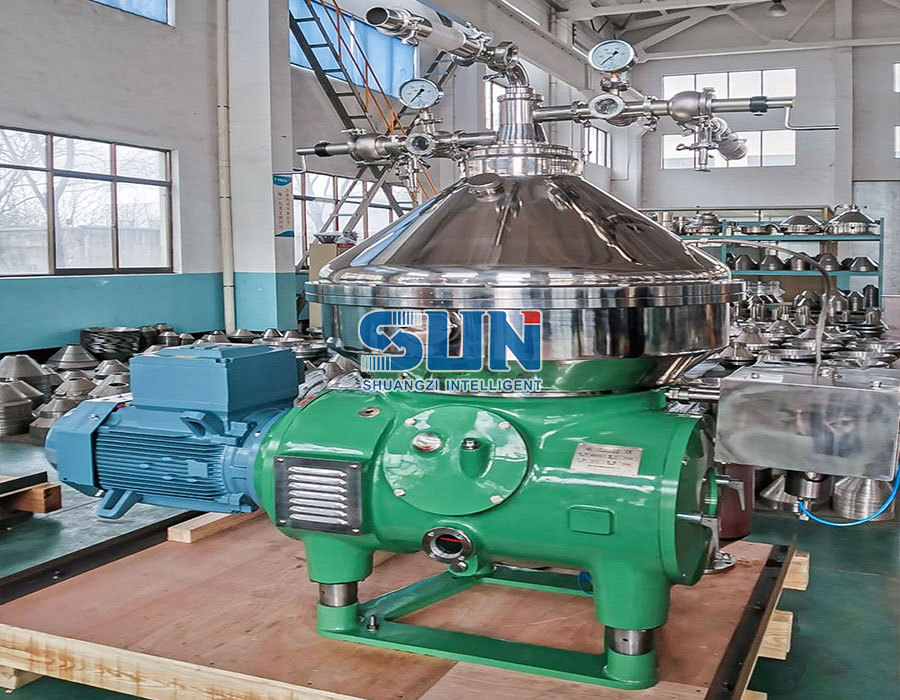
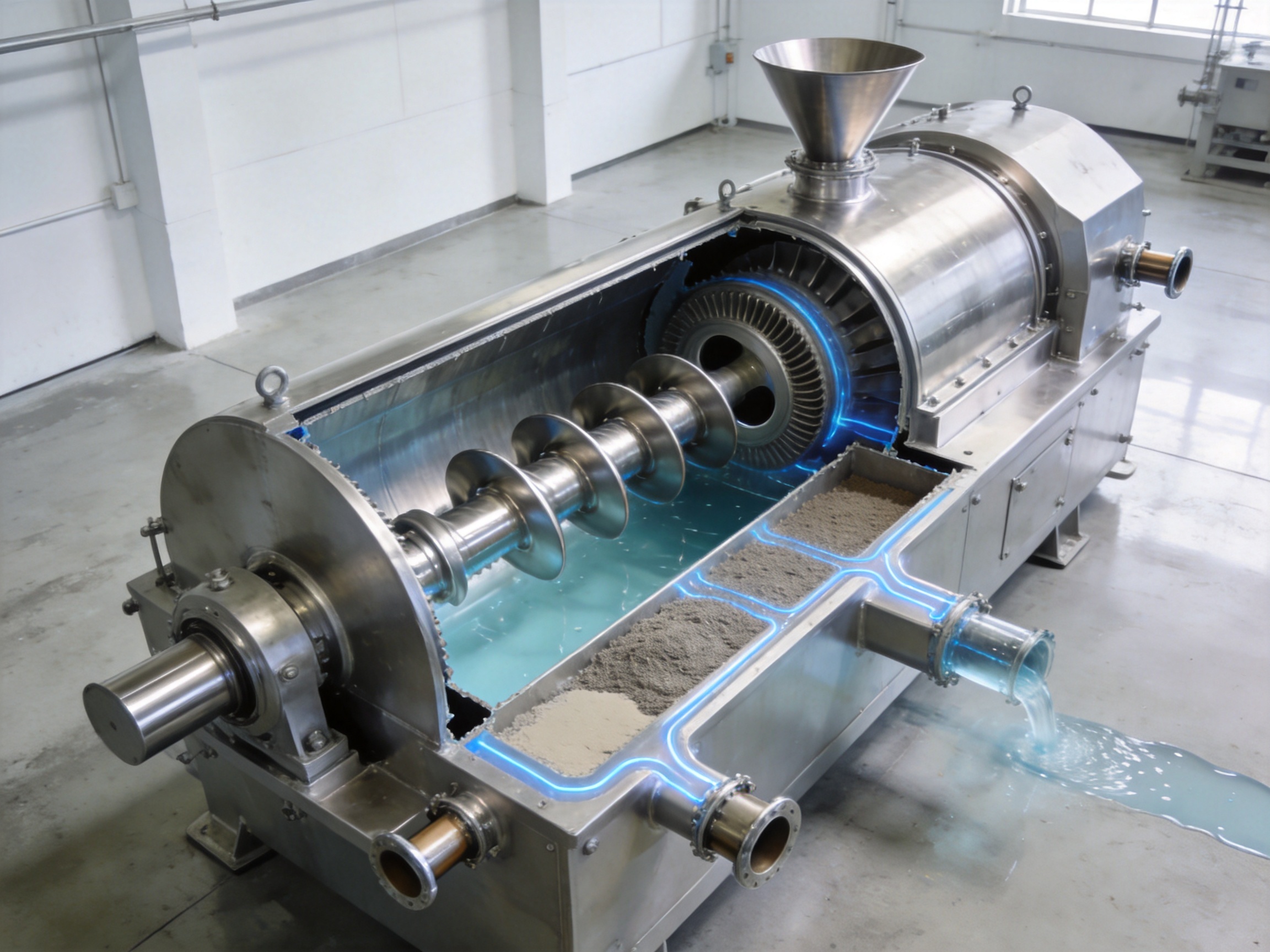
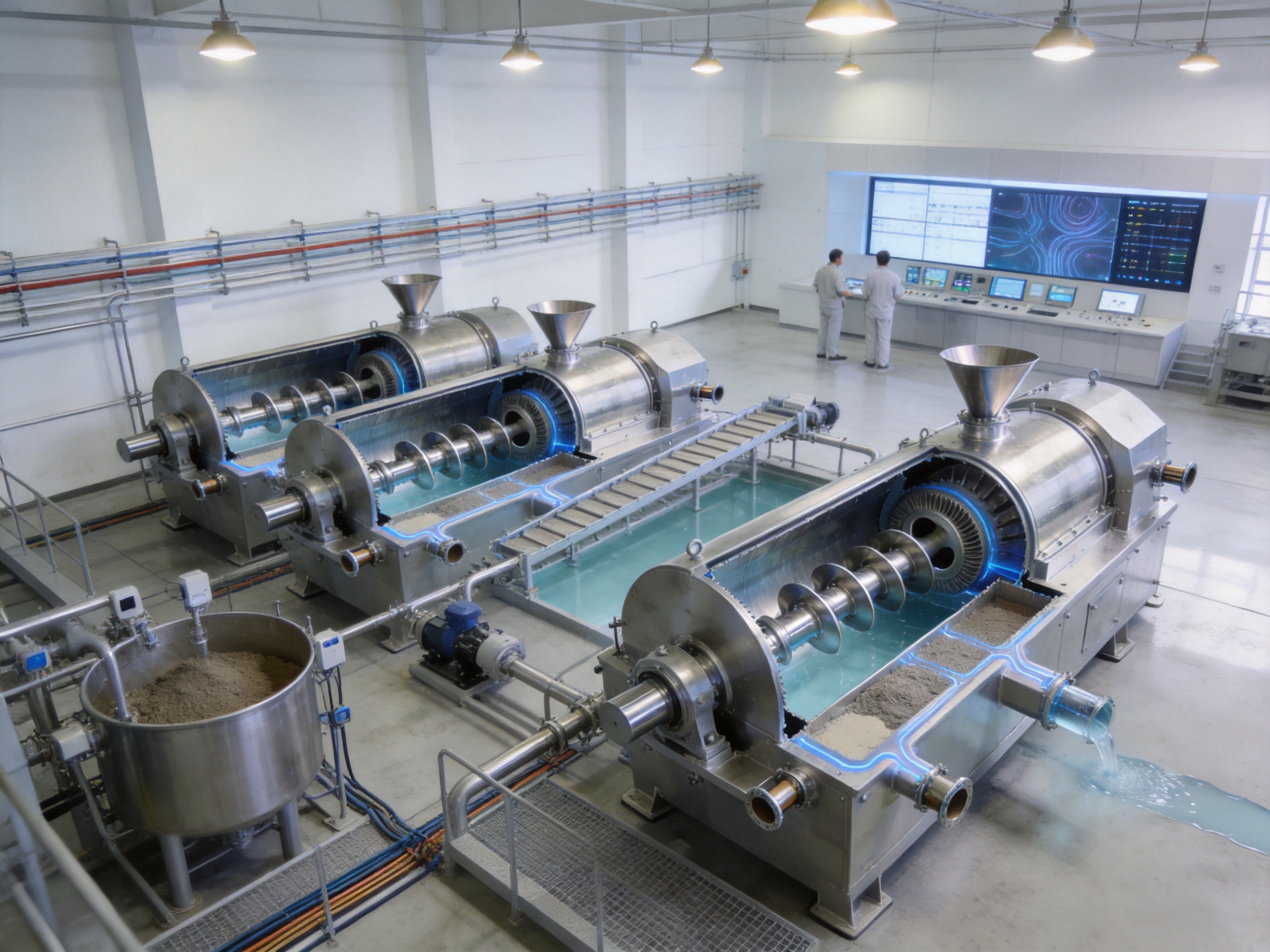
The horizontal spiral decanter centrifuge described here is a spiral-unloading settling centrifuge. Its main structure includes a high-speed rotating drum, a screw conveyor with a hollow shaft, a differential mechanism, drive systems, feed and discharge components, and a rigid support system. The screw conveyor rotates in the same direction as the drum but at a slightly different speed. This small speed difference enables continuous transport of sedimented solids toward the conical discharge end while clarified liquid overflows from the liquid outlet. The result is a continuous, enclosed, and highly efficient separation process suitable for demanding industrial production.
Compared with many traditional settling tanks, filter presses, and intermittent centrifuges, the horizontal spiral decanter centrifuge offers major advantages in processing capacity, automation level, footprint, operational continuity, and adaptability to different materials. It can handle feed suspensions with varying solid content and particle characteristics, while producing a concentrated solid phase and a clarified liquid phase. For enterprises seeking higher productivity and more stable process control, it provides a practical route to modernization.
Product Overview and Industrial Value
The horizontal spiral decanter centrifuge is built for continuous separation of suspended solids from liquid. In operation, the material enters the drum through the hollow shaft. Under the strong centrifugal force generated by the high-speed rotating drum, solid particles with higher density than the liquid phase are rapidly thrown toward the inner wall of the drum. These solids accumulate and form a solid ring layer. The lighter liquid forms a liquid ring layer closer to the center of rotation. Because the screw conveyor and the drum rotate at slightly different speeds, relative motion occurs between them. This relative motion pushes the deposited solids along the drum wall toward the cone section, where they pass through a drying zone and are then discharged continuously from the solid outlets. Meanwhile, the clarified liquid overflows through the liquid outlets by gravity, completing the separation.
This principle is simple in concept but sophisticated in execution. Efficient decanter centrifuge performance depends on precise mechanical balance, reliable differential control, optimized drum geometry, accurate machining, stable welding, correct material selection, and integration with process automation. A small improvement in drum design or screw pitch can significantly influence separation clarity, cake dryness, and energy consumption. For this reason, manufacturing capability and process engineering knowledge are as important as the centrifuge structure itself.
Zhejiang Shuangzi Intelligent Equipment Co., Ltd. provides this type of separation equipment as part of broader process solutions for plant extraction, bio-fermentation, pharmaceutical synthesis, food projects, turnkey projects, and related fields. The company’s work is not limited to manufacturing a single machine. It focuses on process technology, automation engineering design, equipment production, matching procurement, installation, equipment system integration, line debugging, and turnkey project delivery. This integrated capability helps customers select a centrifuge that matches the real operating conditions of their production line rather than relying only on standard catalogue specifications.
Working Principle of the Horizontal Spiral Decanter Centrifuge
The separation process begins when a suspension is introduced into the centrifuge through the feed pipe and hollow shaft. The material is accelerated and distributed into the rotating drum. The drum rotates at high speed, creating a centrifugal field many times stronger than gravity. In this field, particles with higher density settle rapidly onto the inner wall of the drum. The liquid remains closer to the central axis because of its lower density and smaller sedimentation tendency.
Inside the drum, the heavier phase forms a solid layer, often referred to as the solid ring layer. The liquid phase forms a liquid ring layer. The depth of the liquid pool can be adjusted according to process requirements, influencing clarification efficiency, solid dryness, and residence time. A deeper liquid pool may improve liquid clarity by increasing settling area and time, while a shallower pool can improve cake dryness in some cases. The correct setting depends on material properties and desired process results.
The screw conveyor is positioned inside the drum and rotates in the same direction as the drum. However, its speed is slightly different from the drum speed. This speed difference is generated and controlled by the differential mechanism. The relative motion between the screw conveyor and drum continuously scrapes and transports the sedimented solids toward the conical end of the drum. As solids move through the cone section, free liquid drains back toward the liquid pool, improving the dryness of discharged solids. Finally, solids leave through discharge outlets distributed around the drum circumference.
At the same time, the clarified liquid continuously overflows from the liquid outlet. This continuous separation of solids and liquid is one of the main reasons the decanter centrifuge is preferred in modern industrial plants. Unlike batch sedimentation or manual cleaning processes, the centrifuge can operate steadily for long periods, reducing labor demand, improving process stability, and supporting automatic production.
Key Advantages Over Conventional Separation Equipment
One major advantage of the horizontal spiral decanter centrifuge is continuous operation. Many traditional separation methods require stopping, unloading, washing, or manual intervention. In contrast, the decanter centrifuge feeds, separates, conveys solids, and discharges phases continuously. This feature is especially valuable in fermentation broth clarification, plant extract processing, pharmaceutical intermediate production, food ingredient recovery, and wastewater sludge dewatering.
Another advantage is the high centrifugal force. Compared with gravity settling tanks, the centrifuge greatly accelerates particle sedimentation. This reduces the required separation area and saves valuable workshop space. In industrial environments where floor area is expensive or where equipment must be installed inside controlled clean production spaces, compact equipment is a significant benefit.
The machine also offers enclosed processing. Many process materials are sensitive to contamination, odor emission, oxidation, or operator exposure. A properly configured decanter centrifuge can reduce open handling and help improve hygienic conditions. This is important in biological fermentation, food projects, and pharmaceutical engineering, where cleanliness and controlled operation are critical.
Compared with filter presses, the decanter centrifuge can reduce manual cake handling and shorten the separation cycle. Filter presses may produce dry cakes in certain applications, but they often require intermittent operation, cloth cleaning, plate opening, and higher labor input. Decanter centrifuges are particularly attractive when the process requires continuous throughput and automatic control.
Compared with simple screen centrifuges, the horizontal spiral decanter centrifuge can separate fine suspended particles more effectively because it relies on density difference and centrifugal sedimentation rather than only screen retention. This makes it suitable for many suspensions containing fine solids that are difficult to capture by screening.
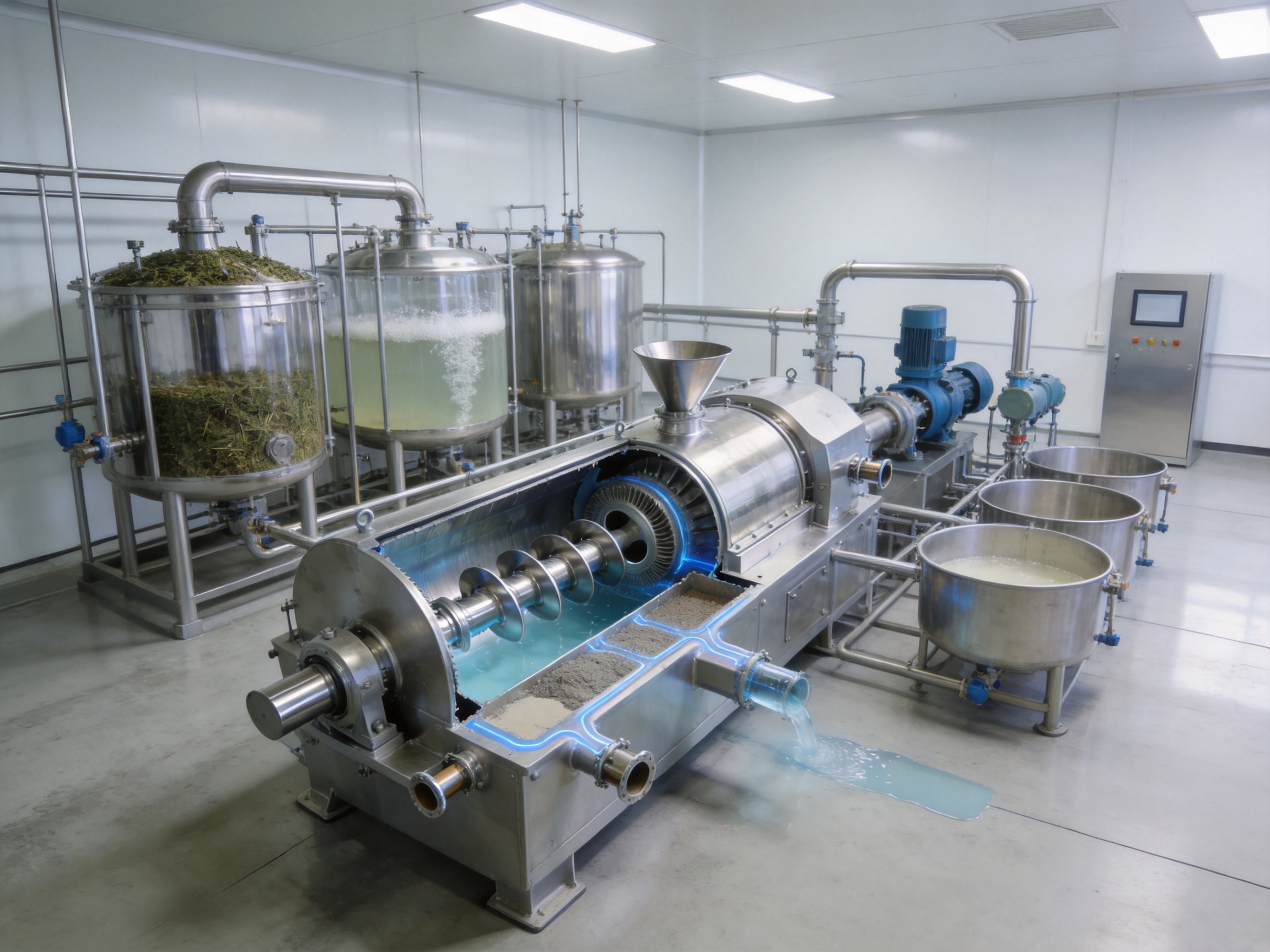
Compared with imported or generic competitor models, the advantage of this equipment lies in the combination of reliable mechanical design, broad model coverage, process engineering support, and manufacturing integration. Customers can select from multiple specifications ranging from smaller capacity models for pilot or moderate production to larger models for high-throughput industrial lines. The availability of EPC and EPCM project experience also means the centrifuge can be integrated into a complete process with pumps, tanks, pipelines, automation, controls, cleaning systems, and downstream equipment.
Main Technical Parameters
The following table summarizes the main technical parameters of the horizontal spiral decanter centrifuge series. The different models allow users to select appropriate drum size, processing capacity, motor power, and installation dimensions according to material characteristics and production scale.
| Items | WZ30 | WZ35 | WZ40 | WZ50 | WZ50A | WZ60 | WZ60A |
| Drum external diameter, largest part of flange | 316 mm | 355 mm | 440 mm | 480 mm | 550 mm | 640 mm | 676 mm |
| Effective length of the drum | 1075 mm | 1350 mm | 1600 mm | 1800 mm | 2000 mm | 2280 mm | 2500 mm |
| Speed | 4400 rpm | 4400 rpm | 3900 rpm | 3350 rpm | 3038 rpm | 2989 rpm | 2450 rpm |
| Processing capacity | 300-3000 L/h | 2000-4000 L/h | 3000-6000 L/h | 5000-8000 L/h | 6000-12000 L/h | 8000-15000 L/h | 15000-23000 L/h |
| Main and auxiliary motor power | 7.5+3 kW | 11+4 kW | 22+11 kW | 30+15 kW | 37+18.5 kW | 45+22 kW | 75+30 kW |
| Weight | 1200 kg | 1400 kg | 2200 kg | 2600 kg | 3600 kg | 5000 kg | 7000 kg |
| Dimension, L*W*H | 2608*896*1110 mm | 2884*946*1135 mm | 3440*980*1175 mm | 3608*1000*1180 mm | 4363*1210*1335 mm | 4900*1130*1358 mm | 5318*1360*1778 mm |
Model Selection and Application Matching
The WZ30 model is suitable for smaller production lines, pilot systems, research platforms, or processes with moderate feed rates. With a processing capacity of 300 to 3000 L/h, it can support material trials, process development, and small-scale production. Its compact size and relatively lower motor power make it a practical choice when installation space and energy consumption are important considerations.
The WZ35 and WZ40 models serve medium-scale processing needs. These models offer higher throughput while maintaining a balanced footprint. They can be used in fermentation clarification, plant extract separation, pharmaceutical intermediate handling, and food processing applications where feed volumes are higher but still require flexible operating control.
The WZ50 and WZ50A models are suitable for larger continuous production. With processing capacities reaching 8000 L/h for WZ50 and 12000 L/h for WZ50A, these machines can support industrial-scale process lines. Their larger drum dimensions increase residence time and separation area, helping improve separation results for materials requiring stronger clarification or higher solids handling capacity.
The WZ60 and WZ60A models are designed for high-throughput operations. The WZ60A can process 15000 to 23000 L/h, making it appropriate for large industrial projects, environmental protection applications, and continuous production lines where high feed volume is essential. These larger models also require careful installation planning, foundation preparation, and process integration. The company’s engineering capability is therefore valuable for ensuring that the centrifuge is properly connected with upstream feed systems and downstream discharge handling equipment.
Model selection should not be based only on flow rate. Feed viscosity, solid concentration, particle size distribution, density difference, target liquid clarity, required cake dryness, temperature, chemical compatibility, cleaning requirements, and automation expectations all influence the final configuration. A professional manufacturer with process engineering experience can help evaluate these factors and recommend a suitable model and operating strategy.
Applications in Plant Extraction Projects
Plant extraction projects commonly involve complex mixtures of plant fibers, fine particles, active ingredients, solvents, water, and suspended impurities. After extraction, the liquid extract often must be separated from residue before concentration, purification, precipitation, drying, or formulation. The horizontal spiral decanter centrifuge provides continuous solid-liquid separation for such processes, reducing the burden on downstream filtration and concentration equipment.
In herbal extraction, botanical ingredient production, natural pigment processing, and functional food raw material preparation, separation efficiency influences product recovery and quality. If too much active liquid remains trapped in plant residue, yield decreases. If too many fine solids remain in the extract, downstream evaporators, membranes, or chromatography systems may foul more quickly. A well-selected decanter centrifuge helps balance liquid recovery and clarification.
The equipment is also useful in processes involving precipitation separation. After active components are precipitated or impurities are removed by process adjustment, the centrifuge can separate solids from the liquid phase. Continuous discharge supports stable batch-to-continuous or semi-continuous production. When integrated with extraction tanks, concentration systems, precipitation tanks, and drying equipment, the centrifuge becomes an important link in a complete plant extraction production line.
Applications in Biological Fermentation Projects
Biological fermentation produces broths containing cells, metabolites, proteins, polysaccharides, enzymes, and residual nutrients. Depending on the product, the target may be in the liquid phase or solid phase. The horizontal spiral decanter centrifuge can clarify fermentation broth by removing microbial cells and suspended solids, or it can recover biomass where the solid phase is valuable.
Compared with static settlement, centrifugal separation greatly improves processing speed. This is important because fermentation products can be sensitive to time, temperature, microbial contamination, and degradation. Fast, enclosed separation helps protect product quality. In addition, continuous centrifuge operation matches the needs of modern fermentation production, where upstream fermentation tanks, downstream concentration systems, and purification processes must be coordinated.
The company’s background in complete fermentation system equipment provides an advantage when supplying centrifuges for fermentation projects. Fermentation separation is rarely a stand-alone operation. It must be coordinated with sterilization requirements, sanitary piping, clean-in-place planning, feed pump selection, temperature management, and automation. A supplier familiar with fermentation equipment can better understand these needs and design a more suitable separation solution.
Applications in Pharmaceutical Engineering
Pharmaceutical and western medicine synthesis projects require reliable equipment, controlled production, and consistent separation results. The horizontal spiral decanter centrifuge can be used in intermediate separation, crystallization mother liquor separation, precipitation handling, biological product clarification, and other process steps depending on material compatibility and regulatory requirements.
In pharmaceutical processing, repeatability is a key advantage. The machine can operate under controlled speed, differential speed, feed rate, and discharge conditions. This helps maintain batch consistency and supports process validation. The enclosed structure also helps reduce contamination risk compared with open manual handling.
The company’s experience with GMP-oriented pilot production workshops and automated research platforms adds value for pharmaceutical users. Equipment intended for pharmaceutical applications must consider surface finish, cleaning, dead-angle reduction, material traceability, documentation, and integration with controlled process systems. By combining manufacturing capability with process design knowledge, the equipment can be adapted to demanding pharmaceutical environments.
Applications in Food Projects
Food processing often requires hygienic separation of suspended solids from liquid ingredients. The horizontal spiral decanter centrifuge may be applied in fruit and vegetable processing, protein extraction, starch-related operations, edible plant extracts, beverage ingredient clarification, and natural food production. The continuous separation process can improve production efficiency and reduce manual contact with materials.
Food projects also require attention to cleaning, material compatibility, and stable operation. A centrifuge used in food production should be easy to integrate with cleaning systems and should be manufactured with appropriate stainless-steel surfaces where required. Reliable welding and finishing are important because rough surfaces, cracks, or poor fabrication can create cleaning difficulties.
By offering equipment design, installation, and line debugging services, the company can help food manufacturers integrate the centrifuge into complete production systems. This reduces the risk of mismatched equipment, inefficient material transfer, or unstable control logic. For food manufacturers seeking both productivity and product consistency, this integrated support is a practical competitive advantage.
Applications in Energy Conservation and Environmental Protection
The horizontal spiral decanter centrifuge is also useful in environmental protection processes, including sludge dewatering, industrial wastewater treatment, and recovery of valuable solids. In these applications, reducing the volume of wet sludge can lower transportation and disposal costs. Continuous operation and high processing capacity make the decanter centrifuge suitable for plants that operate for long periods with large material flows.
Environmental applications often involve variable feed characteristics. Solid concentration, particle size, and liquid composition may change over time. A robust decanter centrifuge can adapt to these fluctuations by adjusting feed rate, speed, differential speed, and liquid pool depth. The broad model range allows users to select equipment suitable for small facilities or high-volume treatment plants.
Energy conservation is not only about motor power. It also includes improved process efficiency, reduced water use, reduced chemical consumption, shorter processing time, lower disposal volume, and less need for secondary treatment. When correctly applied, the decanter centrifuge can contribute to a more sustainable and economical production system.
Manufacturing Strength and Quality Foundation
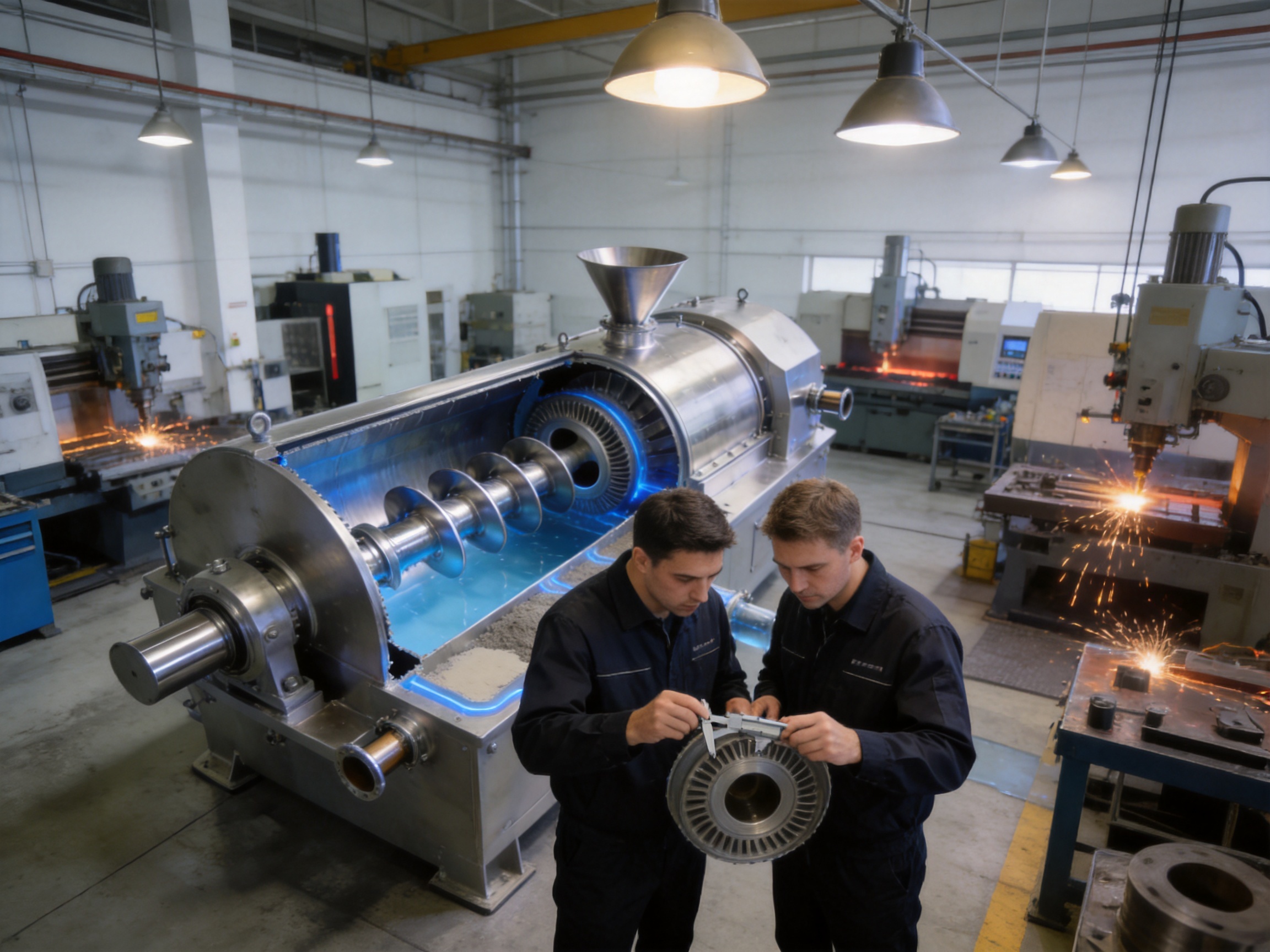
The performance of a horizontal spiral decanter centrifuge depends strongly on manufacturing quality. The drum rotates at high speed, so balance, concentricity, material strength, weld quality, machining accuracy, and assembly precision are essential. Even minor manufacturing defects can cause vibration, noise, bearing stress, reduced separation efficiency, or shortened service life. Therefore, advanced fabrication and inspection capability are central to equipment reliability.
Zhejiang Shuangzi Intelligent Equipment Co., Ltd. was founded in 2007 and has developed into a professional biology and medical equipment enterprise with strong technical power. The company covers a floor area of 16706 square meters and a structure area of 17800 square meters. Its mature product range includes vacuum low-temperature drying equipment, complete fermentation system equipment, evaporation and concentration equipment, extraction equipment, separation equipment, crystallization equipment, filtration equipment, containers, and related process systems.
The company has introduced advanced welding and finishing equipment, including plasma argon arc welding machines, plasma cutting machines, CAM CNC machining centers, and other advanced production equipment. These manufacturing resources support accurate processing of key centrifuge components and help maintain stable product quality. High-quality welding is especially important for stainless-steel process equipment, where mechanical strength and hygienic finish must both be considered.
CNC machining capability allows precision processing of rotating parts, connection interfaces, and structural components. For a decanter centrifuge, the drum, screw conveyor, shafts, bearing seats, and differential connection components must be manufactured accurately to achieve smooth operation. Precision machining helps reduce vibration, improve sealing performance, and extend service life.
The company also focuses on research and development in vacuum low-temperature drying, fermentation, extraction, concentration, separation, and related fields. By absorbing advanced industry technology and combining it with internal engineering experience, it aims to create high-quality equipment and reliable production solutions. This technical foundation benefits customers because centrifuge design can be considered together with upstream and downstream process requirements.
Engineering Integration as a Competitive Advantage
One of the strongest advantages of the company is its ability to provide engineering, process design, equipment design, installation, line debugging, and turnkey project services. Many centrifuge problems in actual production are not caused by the centrifuge alone. They may result from unstable feed supply, improper pump selection, incorrect pipeline layout, poor discharge handling, unsuitable tank design, insufficient cleaning planning, or weak automation logic. A supplier with complete engineering capability can identify and solve these problems during project design.
For example, feed consistency is critical to centrifuge performance. If the feed pump creates excessive shear, large pressure fluctuations, or unstable flow, separation results may be inconsistent. If the feed tank lacks proper agitation, solids may settle before entering the centrifuge. If the discharge system cannot remove solids smoothly, the centrifuge may experience blockage or operational interruptions. Integrated process design helps prevent these issues.
Automation is another key area. A modern decanter centrifuge can be integrated with sensors, variable frequency drives, feed control, motor load monitoring, differential control, alarms, and central control systems. When properly designed, automation helps operators maintain stable separation, respond to changing feed conditions, and protect equipment from overload. The company’s focus on automation engineering design supports this requirement.
Turnkey project capability is especially valuable for customers building new production lines. Instead of purchasing equipment from multiple unrelated suppliers and attempting to coordinate installation independently, users can obtain a more complete system solution. This may include process planning, equipment matching, installation guidance, commissioning, operator training, and production line debugging. Such support can shorten project implementation time and reduce technical risk.
Design Features That Support Reliable Operation
The horizontal arrangement of the centrifuge provides stable support for the rotating drum and screw conveyor. This structure is suitable for continuous industrial processing and allows efficient separation along the length of the drum. The cylindrical-conical drum design supports sedimentation in the pool zone and dewatering in the conical beach zone. The screw conveyor transports solids smoothly while allowing liquid to drain back, improving cake dryness.
The differential mechanism is a critical component because it controls the speed difference between the drum and screw conveyor. A properly matched differential speed ensures that solids are discharged efficiently without excessive disturbance of the liquid pool. If differential speed is too high, solids may be conveyed too quickly, reducing residence time and cake dryness. If it is too low, solids may accumulate and increase torque. Reliable differential control allows operators to balance clarity, capacity, and dryness.
Motor configuration includes main and auxiliary motor power. The main motor drives the high-speed rotation of the drum, while auxiliary power supports the screw or differential system depending on configuration. Proper power selection ensures enough torque for solids conveying while maintaining energy efficiency. The model table shows increasing motor power as drum size and capacity increase, reflecting the engineering relationship between throughput and mechanical demand.
The discharge design supports continuous solid and liquid removal. Solids leave through outlets at the drum circumference after passing through the drying section, while clarified liquid overflows from the drum. This simple and continuous discharge pattern reduces downtime and supports integration with downstream collection tanks, conveyors, pumps, or treatment equipment.
Process Benefits for End Users
For plant managers, the most visible benefit of the horizontal spiral decanter centrifuge is productivity. Continuous separation allows production lines to handle larger material volumes with less interruption. Higher processing capacity can reduce bottlenecks and improve utilization of upstream reactors, extractors, fermenters, or storage tanks.
For quality teams, stable separation improves batch consistency. A centrifuge operating under controlled parameters can produce more predictable liquid clarity and solid moisture than manual or poorly controlled separation methods. This consistency supports downstream operations such as evaporation, concentration, crystallization, drying, and formulation.
For maintenance teams, robust mechanical design and high manufacturing precision reduce vibration and mechanical stress. Properly manufactured rotating components are essential for bearing life and safe operation. Regular maintenance remains necessary, but reliable construction can reduce unexpected stoppages.
For financial decision makers, the centrifuge offers value through labor savings, reduced floor area, lower disposal volume, improved yield, shorter process time, and compatibility with automated production. Although investment cost is important, total lifecycle cost should also consider energy consumption, maintenance, downtime, product loss, and operator requirements.
For environmental and safety managers, enclosed continuous processing can reduce material exposure, odors, splashing, and uncontrolled discharge. In some processes, this contributes to a cleaner workshop and better environmental compliance.
Why This Equipment Stands Out in Competitive Markets
The centrifuge market includes many suppliers offering similar-looking machines. However, long-term performance depends on more than appearance. The horizontal spiral decanter centrifuge from this manufacturer stands out because it is supported by a combination of product range, process expertise, manufacturing equipment, engineering integration, and project delivery capability.
First, the model series covers a wide processing range from 300 L/h to 23000 L/h. This allows customers to choose a machine suited to their actual needs rather than forcing a process to fit a limited equipment range. The availability of multiple drum diameters and lengths supports different separation tasks and production scales.
Second, the company serves industries that require serious process knowledge, including plant extraction, bio-fermentation, pharmaceutical engineering, natural food, energy conservation, and environmental protection. Experience in these fields helps the engineering team understand material characteristics, hygiene requirements, automation needs, and project constraints.
Third, advanced manufacturing equipment supports stable quality. Plasma argon arc welding, plasma cutting, CNC machining, and finishing capability are important for producing strong, accurate, and hygienic process equipment. These capabilities help the centrifuge achieve reliable mechanical operation and long service life.
Fourth, turnkey service reduces customer risk. Many buyers need more than a centrifuge; they need a complete separation solution. By providing engineering design, equipment manufacturing, matching purchase, installation, system integration, and line debugging, the company helps customers move from concept to production more smoothly.
Fifth, the company’s research and development orientation supports continuous improvement. Separation equipment must evolve with process requirements. As customers demand higher efficiency, better automation, cleaner operation, and lower energy consumption, manufacturers with R&D capability are better positioned to respond.
Operational Considerations for Best Performance
To obtain the best separation results, users should pay attention to feed preparation. Large foreign objects, hard impurities, or fibrous tangles may damage the machine or reduce performance. Suitable pretreatment, such as screening or controlled agitation, may be required depending on material conditions.
Feed rate should be adjusted according to separation requirements. Higher flow increases throughput but may reduce residence time and liquid clarity. Lower flow may improve clarification but reduce productivity. Operators should find the optimal balance through commissioning tests.
Drum speed influences centrifugal force. Higher speed generally improves sedimentation of fine particles, but it may also increase energy consumption and mechanical load. The selected operating speed should consider particle size, density difference, viscosity, and target result.
Differential speed affects solid discharge and cake dryness. A lower differential speed can increase solid residence time and improve dryness, but if too low, it may cause torque overload. A higher differential speed can improve discharge capacity but may produce wetter solids. Proper adjustment is essential.
Liquid pool depth also affects performance. Adjusting the overflow level can influence clarification and dewatering. Process engineers should set the pool depth according to material behavior and product requirements.
Regular maintenance is necessary for safe and reliable operation. Bearings, seals, differential components, drive systems, wear parts, and discharge areas should be inspected according to maintenance schedules. Vibration, noise, temperature, and motor load should be monitored during operation. Preventive maintenance helps avoid unexpected downtime.
Q&A Section
Q1: What is a horizontal spiral decanter centrifuge used for?
It is used for continuous solid-liquid separation. It separates suspended solids from liquid by using high-speed centrifugal force and a screw conveyor that continuously discharges the sedimented solids.
Q2: How does the machine separate solids and liquid?
The feed suspension enters the rotating drum through a hollow shaft. Centrifugal force pushes heavier solid particles to the drum wall, forming a solid layer. The lighter liquid remains closer to the center and forms a liquid layer. The screw conveyor moves the solids toward the discharge end, while the clarified liquid overflows from the liquid outlet.
Q3: What industries can use this centrifuge?
It can be used in plant extraction, biological fermentation, pharmaceutical engineering, western medicine synthesis, food processing, environmental protection, sludge dewatering, and other industrial separation processes.
Q4: What is the processing capacity range?
The available model range covers approximately 300 L/h to 23000 L/h, depending on the selected model and material characteristics.
Q5: How is this centrifuge different from a filter press?
A filter press usually works intermittently and often requires manual cake removal or cloth cleaning. A horizontal spiral decanter centrifuge operates continuously, automatically discharges solids, and is easier to integrate into automated production lines.
Q6: Why is differential speed important?
Differential speed is the speed difference between the drum and the screw conveyor. It determines how quickly solids are transported out of the drum. Correct differential speed helps balance processing capacity, liquid clarity, cake dryness, and machine torque.
Q7: Can the centrifuge be used in fermentation broth clarification?
Yes. It is suitable for separating microbial cells and suspended solids from fermentation broth, or for recovering biomass when the solid phase is the desired product.
Q8: What factors should be considered when selecting a model?
Important factors include feed flow rate, solid concentration, particle size, density difference, viscosity, desired liquid clarity, required solid dryness, temperature, chemical compatibility, cleaning requirements, and automation level.
Q9: What manufacturing strengths support the product quality?
The manufacturer uses advanced production equipment such as plasma argon arc welding machines, plasma cutting machines, CAM CNC machining centers, and finishing equipment. These capabilities support accurate machining, reliable welding, and stable equipment quality.
Q10: Can the supplier provide a complete project solution?
Yes. The company can provide engineering, process design, equipment design, matching purchase, installation, equipment system integration, line debugging, and turnkey project services.
Conclusion
The horizontal spiral decanter centrifuge is a highly valuable separation machine for industries that require continuous, efficient, and reliable solid-liquid separation. Its operating principle combines strong centrifugal sedimentation with automatic screw discharge, allowing it to process suspensions continuously while producing clarified liquid and concentrated solids. With multiple models covering a broad capacity range, it can serve pilot production, medium-scale manufacturing, and large industrial projects.
Its advantages over conventional equipment include continuous operation, high processing efficiency, compact footprint, enclosed processing, automation compatibility, and adaptability to different materials. These benefits make it especially useful in plant extraction, biological fermentation, pharmaceutical engineering, food projects, environmental protection, and turnkey process lines.
The strength behind the equipment is not limited to mechanical structure. Zhejiang Shuangzi Intelligent Equipment Co., Ltd. combines manufacturing capability, advanced welding and machining equipment, process technology, automation design, equipment integration, installation, and commissioning services. This integrated approach helps customers obtain not only a centrifuge but a practical separation solution matched to real production requirements.
For enterprises seeking to improve separation efficiency, reduce labor intensity, protect product quality, and modernize production lines, the horizontal spiral decanter centrifuge is a strong and reliable choice. When selected correctly and integrated professionally, it can become a central component of a high-performance industrial process system.
References
1. Records, A., and Sutherland, K. Decanter Centrifuge Handbook. Elsevier Advanced Technology.
2. Perry, R. H., and Green, D. W. Perry’s Chemical Engineers’ Handbook. McGraw-Hill Education.
3. Purchas, D. B., and Sutherland, K. Handbook of Filter Media. Elsevier.
4. Wakeman, R. J., and Tarleton, E. S. Solid/Liquid Separation: Principles of Industrial Filtration. Elsevier.
5. Coulson, J. M., Richardson, J. F., Backhurst, J. R., and Harker, J. H. Coulson and Richardson’s Chemical Engineering: Particle Technology and Separation Processes. Butterworth-Heinemann.
6. Schubert, H. Handbuch der Mechanischen Verfahrenstechnik. Wiley-VCH.