
 英语
英语 俄语
俄语Content
- 1 Product Overview and Application Scope
- 2 Why Mechanical Stirring Matters in Pilot Fermentation
- 3 Core Technical Parameters
- 4 Sanitary Stainless Steel Design for Reliable Bioprocessing
- 5 Integrated Dissolved Oxygen Control
- 6 Accurate pH Control for Stable Microbial Performance
- 7 Temperature Control from Research to Production
- 8 Feeding and Material Supply Control
- 9 Foam Detection and Defoaming Management
- 10 Control System Architecture
- 11 Advantages Over Conventional and Competing Fermenter Solutions
- 12 Advanced Manufacturing Processes and Equipment Strength
- 13 Engineering Design Capability for Turnkey Fermentation Projects
- 14 Role in Culture Medium Optimization
- 15 Optimization of Fermentation Process Parameters
- 16 Production Process Validation and Scale-Up Confidence
- 17 Applications in Biological Fermentation Projects
- 18 Operational Efficiency and User Experience
- 19 Quality, Safety, and Contamination Control
- 20 Customization for Different Working Conditions
- 21 Economic Value for Research Institutes and Enterprises
- 22 Q&A Section
- 22.1 What is the main purpose of a mechanical stirring stainless steel pilot fermentation system?
- 22.2 What volume range is available?
- 22.3 Why is stainless steel important for fermentation equipment?
- 22.4 How does the system control dissolved oxygen?
- 22.5 Can pH be controlled automatically?
- 22.6 How is temperature controlled?
- 22.7 Does the fermenter include foam control?
- 22.8 What are the advantages of PLC and touch screen control?
- 22.9 Is remote monitoring available?
- 22.10 Why choose a customized fermenter instead of a standard vessel?
- 22.11 How does the manufacturer support complete projects?
- 22.12 What industries can use this system?
- 23 Conclusion
- 24 References
- 25 Product: Mechanical Stirring Stainless Steel Fermenter Pilot Fermentation System
Modern fermentation research requires equipment that can connect laboratory creativity with industrial production reality. A mechanical stirring stainless steel pilot fermentation system is designed for that critical middle stage, where microbial strains, culture media, process parameters, sterilization methods, aeration strategies, and control logic must be tested under conditions that closely resemble production. This type of fermenter is widely applicable to microbiological laboratories, research institutes, biotechnology enterprises, pharmaceutical developers, food technology companies, and engineering teams that need reliable pilot-scale data before investing in larger commercial systems.
The system described here is a high-performance stainless steel fermenter solution with nominal volumes ranging from 50 L to 300 t, making it suitable not only for pilot fermentation but also for scale-up and complete production line configuration. Its design combines robust mechanical agitation, sanitary stainless steel construction, online monitoring, automatic control, sterilizable sensor interfaces, and flexible heating and cooling options. The result is a fermentation platform that supports precision experiments, repeatable process validation, and efficient industrial transfer.
In bioprocess development, the pilot stage is often where success or failure becomes visible. A strain that performs well in a flask may not behave the same way in a controlled stainless steel vessel. Oxygen transfer, foam formation, heat removal, pH response, feeding rhythm, shear sensitivity, and contamination control all become more complex as volume increases. A well-engineered pilot fermentation system helps researchers and manufacturers observe these variables, measure them in real time, and adjust them with confidence.
The mechanical stirring stainless steel pilot fermentation system provides this level of control through integrated modules for dissolved oxygen, pH, temperature, feeding, defoaming, pressure, agitation, ventilation, inoculation, and data recording. It is not simply a tank with a motor. It is a complete bioprocess platform that can be customized according to the microorganism, production target, plant layout, process risk, and automation requirement.
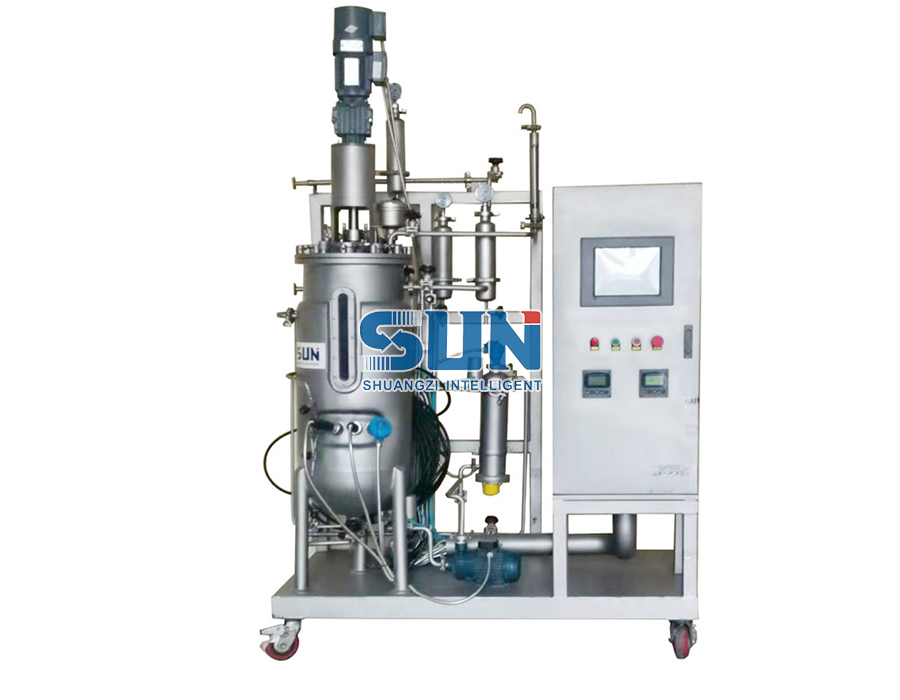
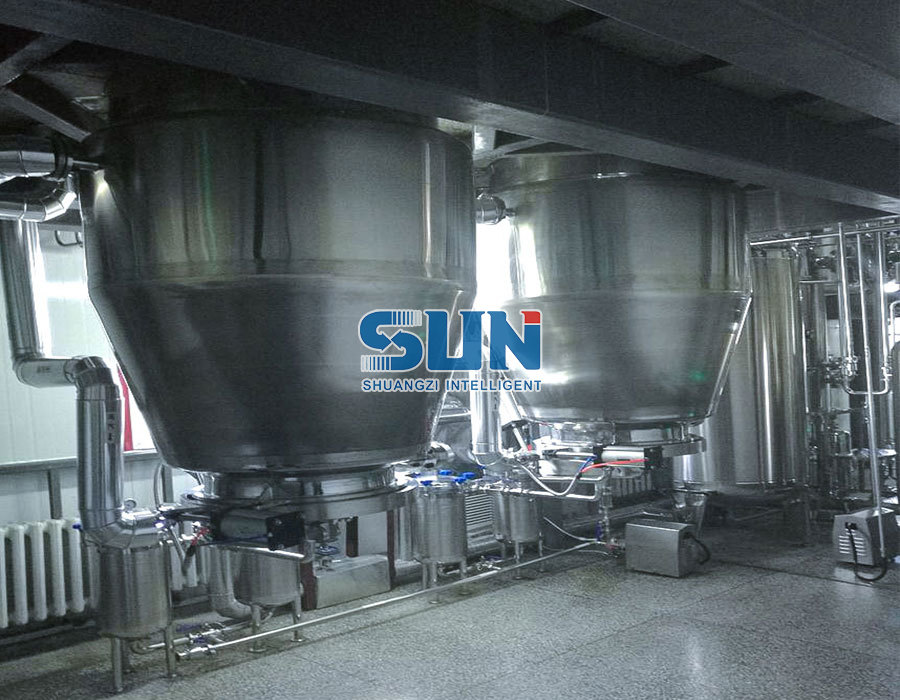
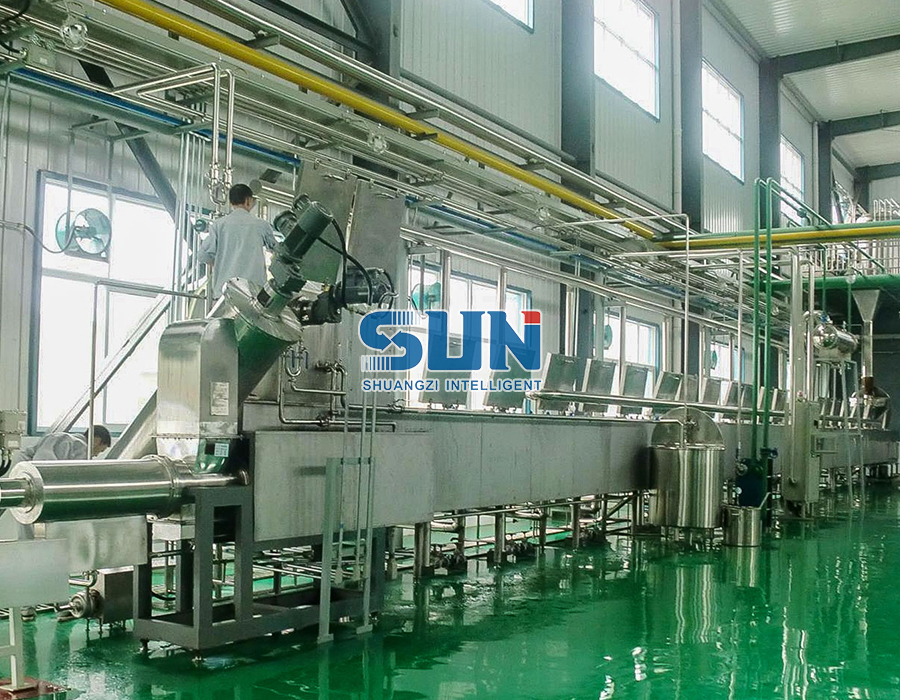
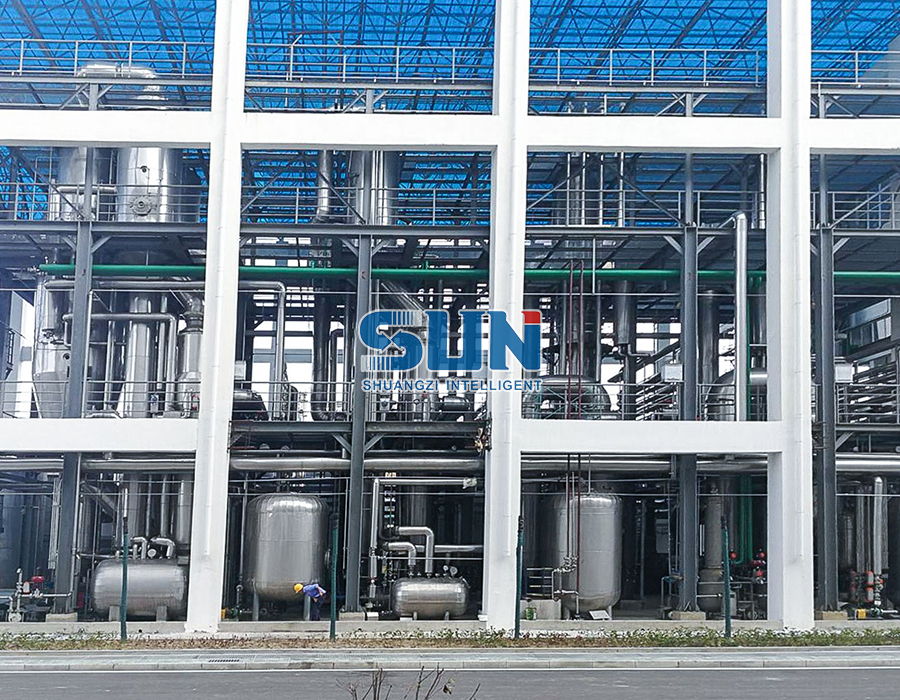
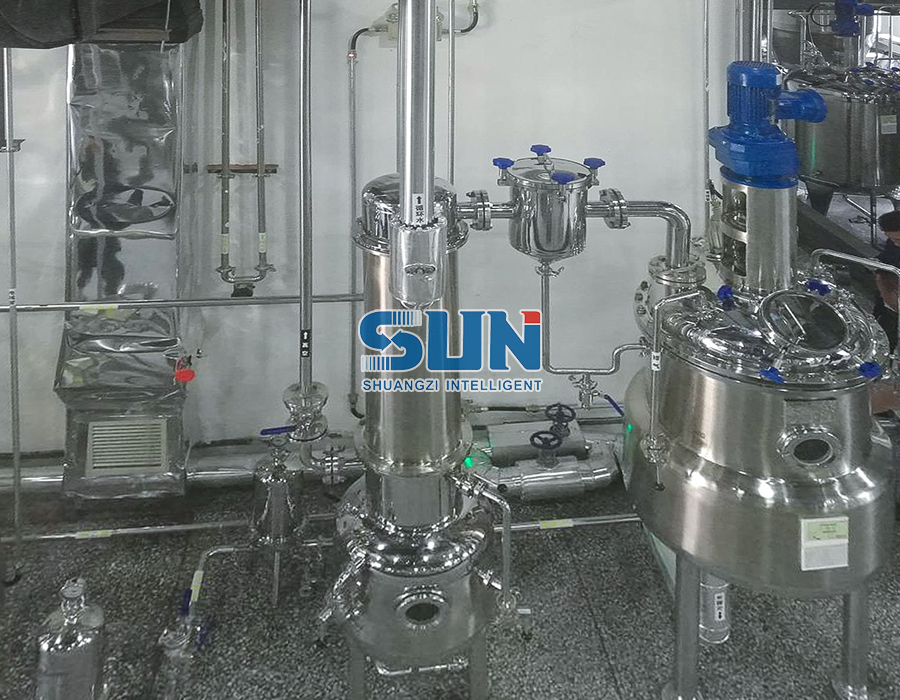
Mechanical Stirring Stainless Steel Fermenter Pilot Fermentation System
Product Overview and Application Scope
The mechanical stirring stainless steel fermenter is designed for microbial fermentation and cultivation, process optimization, production process validation, and strain verification. It is especially useful when users need to select culture medium formulas, compare fermentation conditions, test process stability, or generate data for future industrial manufacturing. It can be used in biological fermentation projects, pharmaceutical intermediate development, enzyme production, probiotic cultivation, food fermentation, natural product biotransformation, and other controlled biological processes.
The nominal volume range of 50 L to 300 t allows the system to cover multiple stages of development. Smaller volumes are suitable for pilot research, strain screening, and parameter optimization. Medium volumes can support demonstration production, process confirmation, and small-batch manufacturing. Larger volumes can be integrated into full production lines for commercial fermentation. This broad capacity range gives customers a scalable platform instead of isolated equipment that must be replaced at every development stage.
The system is built with stainless steel SUS304 or SUS316L according to process requirements. SUS304 is widely used for many sanitary processes, while SUS316L provides higher corrosion resistance and is often preferred for pharmaceutical, biological, and high-purity applications. The interior surface fineness can reach Ra≤0.6 μm, while the exterior surface can reach Ra≤0.8 μm. These surface standards help reduce material adhesion, improve cleanability, and support sanitary operation.
The tank configuration includes heating and cooling through an external jacket, coil, or inner coil. Temperature control is essential because microbial metabolism is highly temperature sensitive. Excess heat can reduce yield or damage organisms, while insufficient temperature control can cause unstable growth and inconsistent product quality. The system supports online temperature detection across a range of 0–150℃, with digital setting and automatic or manual switching under different service conditions such as hot water, cooling water, or tap water.
The tank interface can include ports for pH, dissolved oxygen, temperature, inoculation, defoaming, acid supply, alkali supply, material supply, pressure, ventilation, sampling, cleaning, sterilization, and other functional needs. This flexible interface configuration is important because fermentation processes differ greatly. Some processes require frequent feeding, some require strict oxygen control, some require high foam management, and some require special inoculation or sampling procedures. A configurable tank interface allows the vessel to serve different microorganisms and process strategies.
Why Mechanical Stirring Matters in Pilot Fermentation
Mechanical stirring is one of the core technologies in fermentation. Agitation distributes nutrients, oxygen, cells, heat, antifoam agent, acid, alkali, and feed materials throughout the broth. It also helps improve gas-liquid mass transfer, which is especially important for aerobic fermentation. Without effective mixing, microorganisms may experience uneven oxygen levels, nutrient gradients, local pH differences, and temperature variation. These conditions can reduce productivity and make process data unreliable.
The mechanical stirring system can be configured with different mixing vane forms, including designs that support defoaming and process-specific flow patterns. The selection of impeller structure depends on viscosity, broth behavior, organism sensitivity, oxygen demand, foam tendency, and vessel size. In a pilot fermentation system, agitation should be strong enough to ensure transfer and homogeneity, but not so aggressive that it damages shear-sensitive cells or causes unnecessary foaming. A well-designed mechanical stirring system balances these competing demands.
Compared with simple laboratory vessels or low-grade pilot equipment, a stainless steel mechanically stirred fermenter offers more realistic scale-up conditions. It allows engineers to evaluate agitation speed, aeration rate, dissolved oxygen response, foam generation, and temperature removal in a geometry closer to industrial vessels. This improves the reliability of scale-up calculations and reduces the risk of unexpected production problems.
Mechanical stirring also contributes to process consistency. When a fermentation batch is repeated, the same agitation program can be applied through PLC control, while dissolved oxygen, pH, temperature, and feeding data can be recorded. This helps users identify whether performance differences are caused by biological variation, raw material changes, or equipment conditions. For research institutes and enterprises, this repeatability is essential for process development and validation.
Core Technical Parameters
The system provides a practical combination of large volume flexibility, sanitary construction, automated control, and process interface compatibility. The following table summarizes key technical features and their operational value.
| Technical Item | Available Configuration | Process Value |
|---|---|---|
| Nominal Volume | 50 L to 300 t | Supports pilot research, scale-up validation, demonstration production, and industrial manufacturing. |
| Liquid Loading Coefficient | ≥70% | Provides effective working volume while maintaining headspace for aeration and foam control. |
| Tank Material | SUS304 or SUS316L stainless steel | Meets sanitary, corrosion-resistant, and cleanable requirements for biological and pharmaceutical processes. |
| Interior Surface Fineness | Ra≤0.6 μm | Reduces residue adhesion, supports cleaning, and helps minimize contamination risk. |
| Exterior Surface Fineness | Ra≤0.8 μm | Provides a refined industrial appearance and supports hygienic equipment environments. |
| Heating and Cooling | External jacket, external coil, or inner coil | Enables stable temperature control during microbial growth and product formation. |
| Online DO Control | 0–100% or 0–200% detection range with imported electrode option | Supports oxygen management through aeration and agitation association. |
| Online pH Control | 2–12 detection range with imported electrode option | Allows automatic acid or alkali feeding to maintain optimal culture conditions. |
| Temperature Detection | 0–150℃ with imported temperature sensor option | Supports fermentation, sterilization-related monitoring, and process temperature stability. |
| Control Mode | Touch screen and PLC lower computer; remote upper computer monitoring optional | Improves automation, repeatability, data recording, and process supervision. |
Sanitary Stainless Steel Design for Reliable Bioprocessing
Fermentation equipment must be cleanable, sterilizable, durable, and compatible with biological materials. Stainless steel construction is a major advantage because it provides mechanical strength, corrosion resistance, smooth surfaces, and long service life. SUS304 and SUS316L are widely recognized choices for sanitary process equipment, and the selection can be matched to the product, medium composition, cleaning chemistry, and regulatory requirements.
The interior surface fineness of Ra≤0.6 μm is particularly important. In fermentation, microscopic scratches or rough surfaces may trap residues, nutrients, proteins, biomass, or cleaning chemicals. These residues can become contamination sources or cause batch-to-batch inconsistency. A highly polished internal surface improves the ability of cleaning and sterilization procedures to reach all wetted areas. It also makes the vessel more suitable for high-value biological, food, and pharmaceutical applications.
The exterior surface fineness of Ra≤0.8 μm demonstrates attention to both function and equipment quality. A smooth exterior is easier to clean, more suitable for controlled production environments, and presents a professional appearance in pilot plants and GMP-oriented workshops. This reflects the manufacturing philosophy behind the system: the fermenter is engineered not only for process performance but also for facility integration and long-term operational reliability.
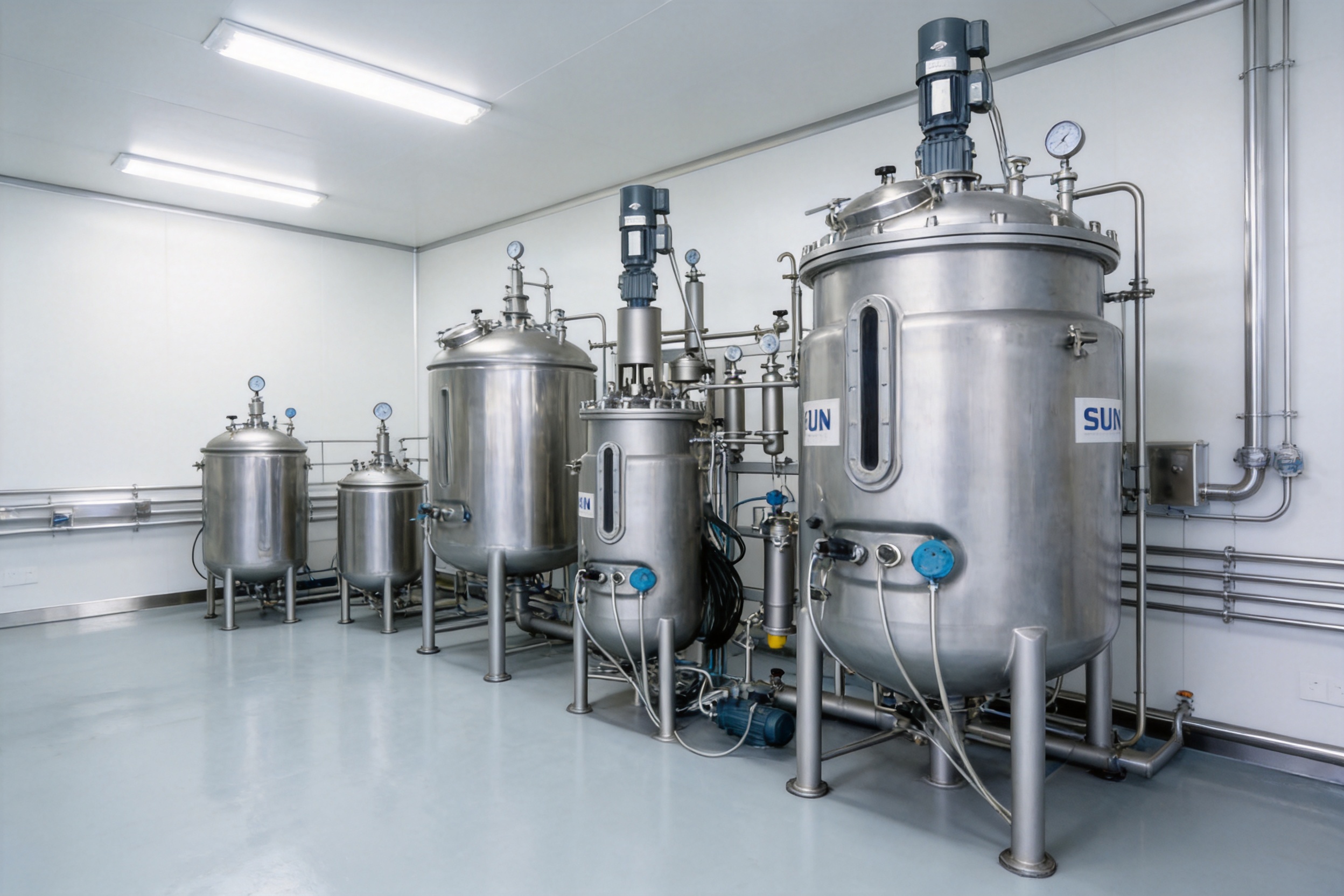
The tank can be supported by vertical support legs, ear-type supports, or skirt-type structures. This structural flexibility allows the equipment to be adapted to different plant layouts, floor load conditions, installation heights, piping systems, and maintenance access requirements. In pilot and production projects, mechanical layout is often as important as the tank itself. A vessel that cannot fit well into the room, connect conveniently with utilities, or allow safe operation can compromise an entire project. Support customization helps avoid these problems.
Integrated Dissolved Oxygen Control
Dissolved oxygen control is one of the most important features of aerobic fermentation. Many microorganisms require oxygen for growth and product synthesis, but oxygen has limited solubility in liquid media. As biomass increases, oxygen demand may rise rapidly. If oxygen transfer cannot keep up, metabolism can shift, yield can drop, unwanted by-products may form, and batch performance may become unstable.
The system supports deep ventilation and bottom air inlet configurations. Online dissolved oxygen detection can operate within 0–100% or 0–200%, depending on process needs. Imported DO electrodes are available, and online high-temperature steam disinfection is supported. This capability is valuable because sensors must remain sanitary while providing accurate real-time data throughout the fermentation process.
The DO control can be associated with rotation speed and ventilation. In practice, this means the control system can respond to oxygen demand by adjusting agitation, air flow, or related parameters according to the selected control strategy. Operators may choose automatic or manual control. Automatic control helps maintain stable oxygen conditions during long batches or rapid metabolic changes, while manual control gives process engineers direct authority during development experiments.
Compared with fermenters that provide only basic air inlet and manual observation, online DO control offers major advantages. It transforms oxygen management from guesswork into measurable process control. Researchers can evaluate oxygen uptake, determine the effect of agitation speed, compare aeration strategies, and establish scale-up criteria. Manufacturers can use DO records as part of process documentation and quality analysis.
Accurate pH Control for Stable Microbial Performance
pH strongly affects enzyme activity, nutrient uptake, membrane transport, metabolic pathways, and microbial growth. During fermentation, pH may change because of organic acid production, ammonia release, carbon source consumption, nitrogen metabolism, or buffer exhaustion. If pH is not controlled, the culture may enter stress conditions, yield may decrease, or contamination risk may increase.
The pilot fermentation system includes online pH detection within the range of 2–12. Imported pH electrodes are available, and online high-temperature steam disinfection can be used. The control system can automatically add acid or alkali through a peristaltic pump or automatic control valve. This allows the process to remain within the target pH range without constant manual correction.
For pilot development, automated pH control provides better experimental data. When researchers compare carbon sources, nitrogen sources, trace elements, or feeding strategies, uncontrolled pH may hide the true cause of performance differences. With stable pH control, the impact of each variable becomes easier to interpret. For production validation, pH records help prove that the process was maintained according to the intended profile.
Competitor systems sometimes use less robust pH solutions, such as manual sampling and offline measurement. Offline measurement may be useful for confirmation, but it cannot replace continuous control in dynamic fermentation. The integrated pH system in this stainless steel fermenter improves responsiveness, reduces labor, and supports higher reproducibility.
Temperature Control from Research to Production
Temperature affects microbial growth rate, oxygen solubility, viscosity, enzyme activity, product stability, and contamination behavior. A small temperature deviation may produce significant biological effects. This is why temperature control is not simply a utility function but a core process parameter.
The system supports online temperature detection in the range of 0–150℃. It can use imported temperature sensors and digital settings. Automatic and manual switching are available, and the system can work with different service conditions, such as hot water, cooling water, or tap water. Heating and cooling can be achieved through an external jacket, external coil, or inner coil.
This flexibility is useful because fermentation processes have different heat profiles. Some microbial cultures generate substantial metabolic heat, especially at high cell density. Others require careful warming during start-up or controlled cooling during product formation. A jacket or coil system must be sized and configured to match the heat transfer needs of the process. The availability of multiple heating and cooling structures makes the fermenter suitable for a wide range of applications.
In pilot scale-up, temperature control also helps determine industrial cooling requirements. If a process produces more heat than expected, pilot data can reveal the need for larger heat exchange area, higher cooling water flow, or modified feeding strategy. This prevents under-designed production equipment and reduces future project risk.
Feeding and Material Supply Control
Many modern fermentation processes depend on controlled feeding rather than simple batch operation. Fed-batch strategies can prevent substrate inhibition, regulate growth rate, improve product formation, reduce overflow metabolism, and extend productive phases. Feeding may include carbon source, nitrogen source, trace nutrients, inducer, precursor, antifoam agent, acid, alkali, or other process materials.
The mechanical stirring stainless steel pilot fermentation system includes material supply control through a peristaltic pump or automatic control valve. This allows controlled addition according to time, signal, operator command, or process strategy. In research work, feeding control helps compare different profiles and determine optimal nutrient availability. In production validation, it supports repeatable batch execution.
Feeding accuracy is particularly important for high-value biological products. Too much substrate can inhibit cells, generate by-products, increase osmotic pressure, or cause oxygen limitation. Too little substrate can reduce productivity and extend cycle time. A controlled material supply module improves the stability of the fermentation environment and makes process optimization more precise.
Compared with manual feeding, automated feeding reduces labor intensity and lowers the risk of operational error. It also makes night operation and long-duration fermentation more practical. When combined with upper computer data recording, feeding events can be documented and reviewed along with pH, DO, temperature, agitation, and foam signals.
Foam Detection and Defoaming Management
Foam is a common challenge in fermentation. Proteins, polysaccharides, surfactants, aeration, agitation, and metabolic products can all contribute to foam formation. Excessive foam may block filters, contaminate exhaust lines, interfere with sensors, reduce working volume, and increase contamination risk. In severe cases, foam can cause product loss or batch failure.
The system supports defoaming control using a conducting type foam electrode. The electrode can detect foam and trigger an automatic alarm or automatic incremental feeding of defoaming agent. This provides a practical solution for controlling foam without relying entirely on operator observation.
Automatic foam management has several advantages. It reduces the need for excessive antifoam addition, which can affect oxygen transfer or downstream separation. It prevents sudden foam overflow during high-activity fermentation phases. It also improves safety and cleanliness around the fermenter. In pilot research, foam data can help engineers understand how medium composition, aeration, agitation, and strain behavior affect process stability.
Some simple pilot fermenters lack reliable foam control or require manual antifoam addition. This may be acceptable for short laboratory tests but becomes risky for longer pilot batches or high-density cultures. An integrated foam detection and defoaming system gives the stainless steel fermenter a competitive advantage in real process environments.
Control System Architecture
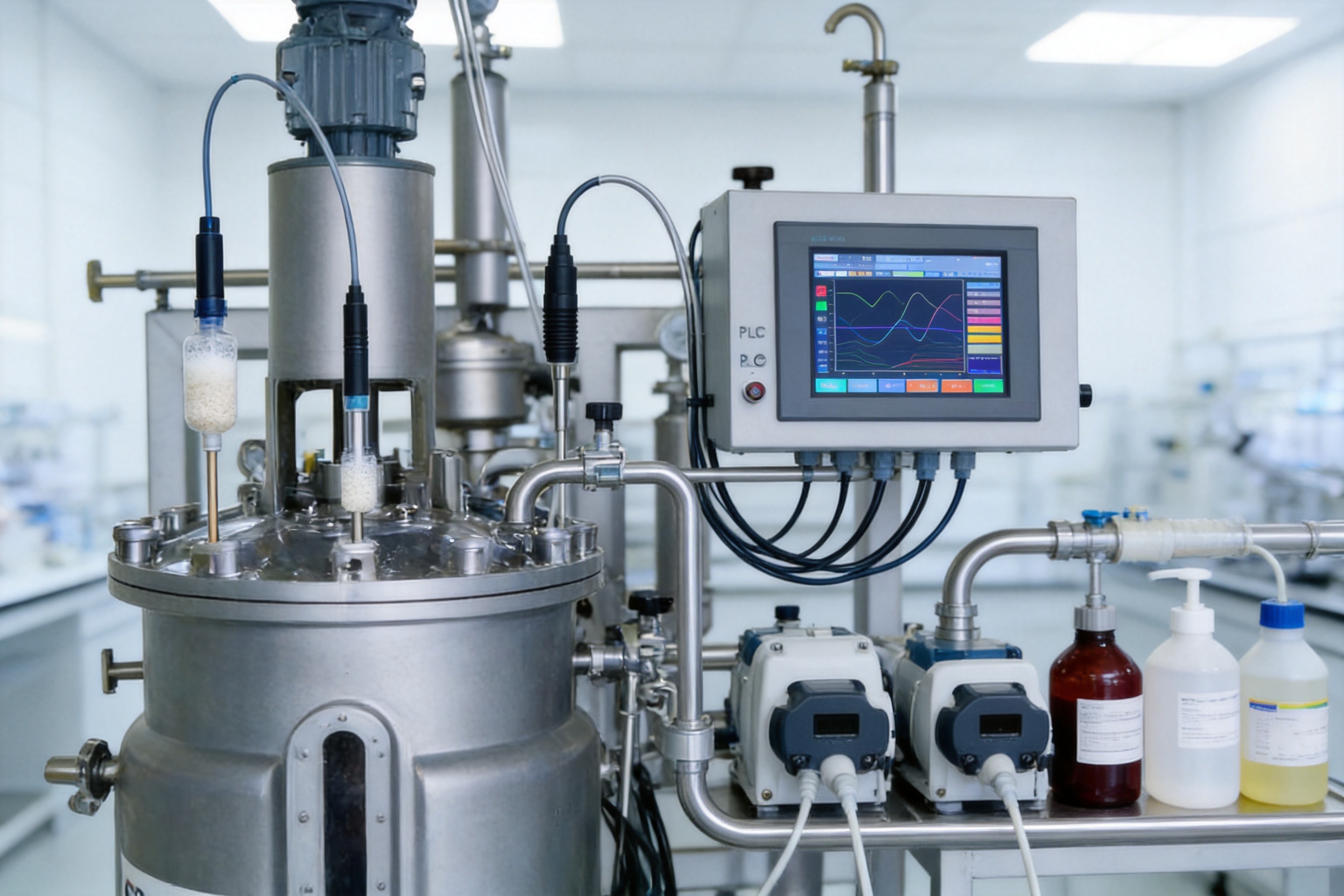
The system can be configured with lower computer control and upper computer control. The lower computer control uses a famous brand touch screen operation interface and a special PLC automatic control program. It provides automatic control of fermentation parameters and real-time measurement of temperature, pH value, DO value, defoaming, mixing rotation speed, and material supply system. The touch screen interface makes operation intuitive, while PLC control improves reliability and repeatability.
The upper computer control supports remote computer real-time monitoring through special configuration software for fermentation. It can record historical data and other process parameters. This is especially valuable for research institutes and enterprises that need traceable records, process comparison, batch analysis, or remote supervision.
Automation is a major differentiator between advanced fermentation systems and ordinary tanks. In a controlled fermenter, the operator can set target values, alarm ranges, and response logic. The system then continuously measures and adjusts process parameters. This reduces human error, improves consistency, and allows process teams to focus on analysis rather than constant manual intervention.
Data recording is equally important. Fermentation is dynamic, and a single final result does not explain what happened during the batch. Historical curves for pH, DO, temperature, agitation, feeding, and foam can reveal process behavior. For example, a sudden DO rise may indicate carbon source depletion, while a pH drift may indicate metabolic change. A feeding event followed by oxygen limitation may show that the feed rate is too high. These insights are possible only when process data are captured in detail.
Advantages Over Conventional and Competing Fermenter Solutions
The mechanical stirring stainless steel pilot fermentation system has several advantages over conventional laboratory vessels, low-cost pilot tanks, and less integrated fermentation equipment. The first advantage is scalability. With a nominal volume range from 50 L to 300 t, the equipment concept can support a user from pilot testing to industrial production. This reduces the technology gap between research and manufacturing.
The second advantage is sanitary manufacturing quality. Stainless steel SUS304 or SUS316L, smooth interior surfaces, polished exterior surfaces, and carefully designed interfaces support cleanability and long-term operation. In biological fermentation, contamination control and residue management are critical. Equipment that is difficult to clean may save money at the beginning but create high costs through failed batches, downtime, and inconsistent results.
The third advantage is integrated automation. Online DO, pH, temperature, feeding, foam, agitation, and data monitoring provide a complete control environment. Many competing systems offer some of these functions as options or separate modules, but integration is what makes them powerful. When parameters are measured and controlled together, the process becomes more stable and easier to optimize.
The fourth advantage is customization. Tank interface, support structure, heating and cooling design, control level, vessel volume, material grade, and process connection can be adapted to customer needs. Fermentation is not a one-size-fits-all activity. A probiotic process, an enzyme process, an aerobic bacterial culture, and a pharmaceutical intermediate fermentation may all require different configurations. Custom engineering ensures that the fermenter fits the process rather than forcing the process to fit a standard tank.
The fifth advantage is suitability for validation. The system can help validate production processes and strains by providing reliable process conditions and historical records. This is important for companies preparing for scale-up, regulatory review, internal quality systems, or technology transfer. A pilot fermenter should generate data that decision-makers can trust.
The sixth advantage is project integration capability. The equipment is not limited to a standalone fermenter. It can be part of broader engineering services, including process design, equipment design, installation, line debugging, and turnkey projects. This reduces coordination difficulty for customers who need complete production systems rather than single machines.
Advanced Manufacturing Processes and Equipment Strength
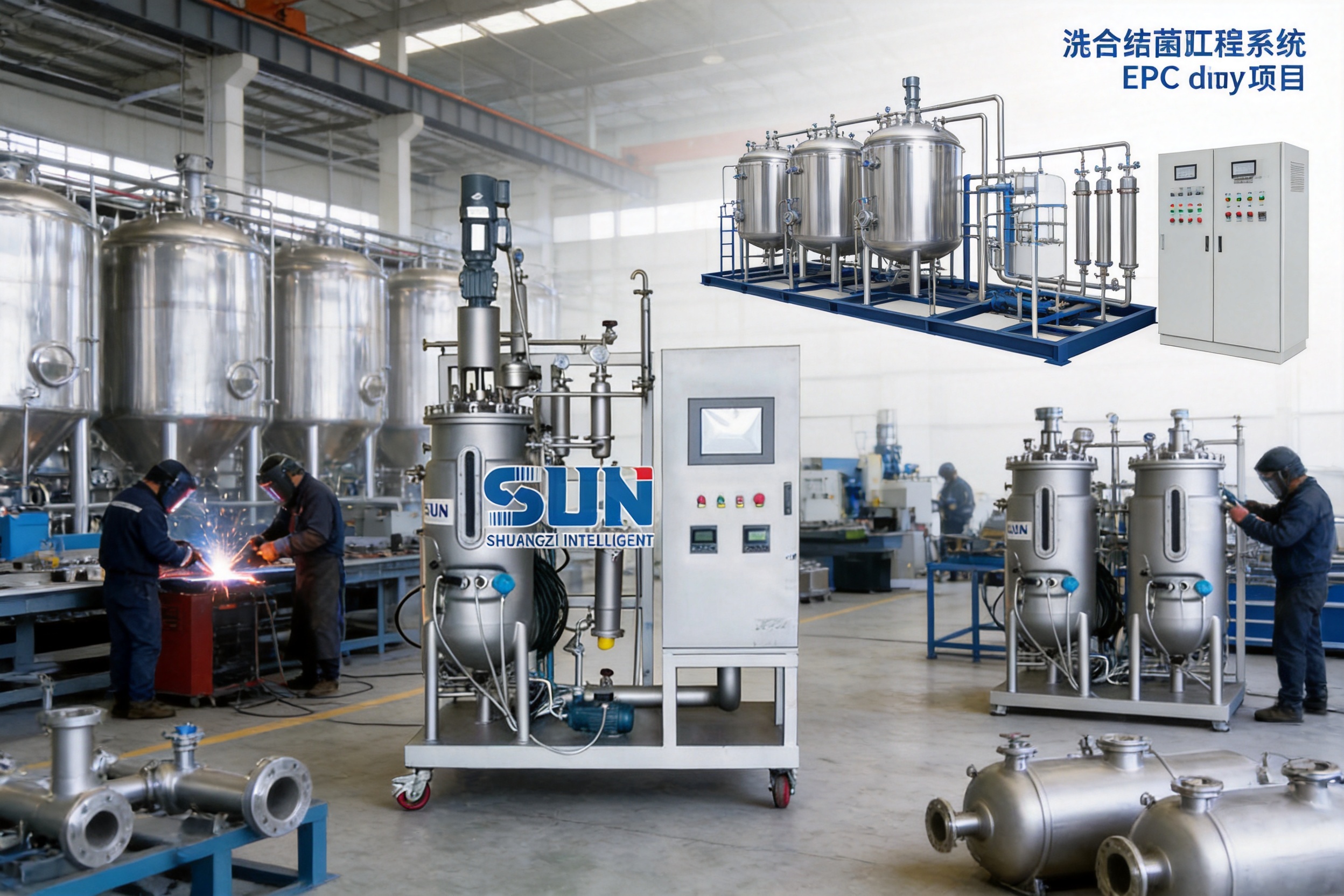
High-quality fermentation equipment begins with high-quality manufacturing. The company behind this system is an experienced biology and medical equipment enterprise focused on EPC and EPCM project execution, process technology, automation engineering design, equipment manufacture, matching purchase, installation, and system integration. Its business fields include plant extraction, biological fermentation, pharmaceutical engineering, natural food, energy conservation, and environmental protection.
The enterprise was founded in 2007 and has developed a strong technical foundation. It covers a floor area of 16,706 m² and a structural area of 17,800 m². This manufacturing scale supports the production of complex stainless steel process equipment, integrated skids, tanks, vessels, and complete project systems. The company has mature product lines including vacuum low-temperature drying equipment, complete fermentation systems, evaporation and concentration equipment, extraction equipment, separation equipment, crystallization equipment, filtration equipment, and containers.
The manufacturing process benefits from advanced welding and finishing equipment, including plasma argon arc welding machines, plasma cutting machines, and CAM CNC machining centers. These machines support accurate fabrication, stable weld quality, clean cutting, and precise component processing. In sanitary equipment manufacturing, welding quality is especially important. Poor welds may create crevices, rough areas, or weak points that compromise cleanability and durability. Advanced welding capability helps ensure that the fermenter can meet demanding biological process requirements.
The use of CNC machining improves dimensional accuracy for interfaces, fittings, mechanical components, and structural parts. Accurate machining contributes to reliable sealing, proper sensor installation, stable agitator alignment, and smooth assembly. For mechanical stirring fermenters, precision matters because the agitation system must operate safely and smoothly over long periods. Misalignment can increase vibration, wear, noise, and maintenance needs. Manufacturing accuracy therefore directly affects process reliability.
Surface treatment is another key manufacturing strength. Achieving interior surface fineness of Ra≤0.6 μm requires appropriate material selection, polishing techniques, inspection, and workmanship. A high-quality polished surface supports sanitary performance and reflects strong production discipline. For customers in biological, food, and pharmaceutical industries, this level of finishing can be a decisive factor when selecting a fermenter supplier.
The company also has pilot production workshop and research and development platform capabilities that align with automation and GMP-oriented requirements. These capabilities include processes such as vacuum low-temperature drying, plant extraction, evaporation, precipitation separation, extraction, and fermentation. Such internal process understanding allows the manufacturer to design equipment from an application perspective rather than only a fabrication perspective. This is important because a fermenter must function as part of a biological process, not just as a pressure vessel or stainless steel tank.
Engineering Design Capability for Turnkey Fermentation Projects
A pilot fermentation system often becomes the foundation of a larger facility. Customers may need upstream medium preparation, sterilization, air treatment, seed tanks, main fermenters, feeding systems, CIP connections, SIP design, exhaust treatment, downstream separation, concentration, drying, and packaging. A supplier with engineering design and turnkey project capabilities can help coordinate these elements into a workable whole.
The company can provide engineering services, process design, equipment design, installation, line debugging, and turnkey project support. This is a major advantage for customers who do not want to manage multiple unrelated suppliers. In fermentation projects, integration mistakes can be costly. A pump may be incorrectly sized, a utility connection may be insufficient, a valve arrangement may reduce cleanability, or an automation system may fail to communicate with sensors. Integrated project execution reduces these risks.
EPC and EPCM capabilities are also valuable for schedule management and budget control. In EPC-style execution, engineering, procurement, and construction activities can be coordinated with a clear project structure. In EPCM-style execution, management support helps the customer supervise design, procurement, and implementation. For complex biological facilities, this expertise can be as important as the equipment itself.
Turnkey capability also supports future expansion. A pilot fermentation system may begin as a research tool, but successful processes often lead to larger production needs. When the same engineering team understands the original pilot data, equipment design, and process goals, scale-up can be more efficient. This continuity reduces information loss and improves the chance of a smooth transition to commercial production.
Role in Culture Medium Optimization
One of the main uses of a pilot fermentation system is selecting culture medium formulas suitable for microbial fermentation and cultivation. Medium composition influences growth rate, biomass concentration, product titer, oxygen demand, foam tendency, pH drift, viscosity, and downstream separation. A formula that works in a small flask may become problematic when aeration, stirring, and heat transfer are scaled up.
The stainless steel pilot fermenter allows researchers to test medium formulas under controlled conditions. Because pH, DO, temperature, agitation, and feeding can be monitored, the effect of each formula can be evaluated more clearly. For example, one nitrogen source may improve growth but generate excessive foam. Another carbon source may increase product formation but cause oxygen limitation. A trace element adjustment may reduce lag phase. These observations are easier to make in a controlled pilot vessel than in uncontrolled small-scale containers.
Medium optimization also depends on economic considerations. In industrial fermentation, raw material cost can strongly affect production profitability. A pilot fermenter helps users compare technical performance and material cost before committing to production. It also helps determine whether cheaper raw materials introduce cleaning difficulties, sterilization challenges, or process instability.
Optimization of Fermentation Process Parameters
Beyond medium selection, the system is designed for optimization of fermentation process parameters. Key variables include inoculation ratio, agitation speed, aeration rate, temperature profile, pH setpoint, dissolved oxygen strategy, feeding rate, pressure, defoaming strategy, and batch duration. Each variable can interact with others. For example, increasing agitation may improve oxygen transfer but increase foam and shear stress. Increasing feed may improve productivity but create oxygen limitation. Lowering temperature may improve product stability but slow growth.
The fermenter’s automated control and monitoring functions allow systematic investigation of these variables. Researchers can design experiments, run controlled batches, collect historical data, and compare results. This supports scientific process development rather than trial-and-error operation. For enterprises, it shortens development time and improves confidence before scale-up.
Process parameter optimization is also essential for strain validation. A genetically improved or naturally selected strain may require different conditions from the parent strain. Its oxygen demand, pH preference, nutrient uptake, or foam behavior may change. A pilot fermenter helps determine whether the new strain is truly suitable for production and what operating conditions maximize its performance.
Production Process Validation and Scale-Up Confidence
Production process validation requires evidence that a process can be performed consistently under defined conditions. The mechanical stirring stainless steel pilot fermentation system supports this goal by providing controlled operation, sanitary design, and data recording. It allows users to repeat batches and compare key performance indicators such as biomass, product concentration, substrate consumption, pH profile, DO profile, temperature stability, foam events, and feeding accuracy.
Scale-up is one of the most difficult challenges in fermentation. Moving from flask to pilot scale changes mixing, oxygen transfer, heat transfer, hydrostatic pressure, shear, and control response. Moving from pilot scale to industrial scale adds further complexity. A pilot fermenter bridges the gap by creating measurable data that engineers can use for production design.
The system’s volume range from 50 L to 300 t is especially helpful because it supports a consistent design philosophy across scales. While each scale requires engineering adjustment, using compatible tank design concepts, control logic, and process interfaces improves scale-up continuity. This can reduce the risk of process failure when transitioning to larger vessels.
Validation also benefits from the upper computer system. Historical records provide evidence of how the batch was controlled. If a batch performs unusually well or poorly, engineers can review the data and identify potential causes. This supports continuous improvement and quality management.
Applications in Biological Fermentation Projects
The system is suitable for many biological fermentation projects. In microbial enzyme production, it can help optimize oxygen transfer, feeding, and pH control to improve enzyme yield. In probiotic cultivation, it can provide controlled temperature and pH conditions that support cell viability. In pharmaceutical fermentation, it can help validate strain behavior and process parameters under sanitary conditions. In food fermentation, it can support controlled production of functional ingredients, cultures, organic acids, and natural compounds.
For research institutes, the fermenter provides a professional platform for applied microbiology, metabolic engineering, fermentation technology, and bioprocess scale-up. For enterprises, it supports product development, pilot production, process improvement, and technology transfer. For project contractors, it can be integrated into complete biological fermentation workshops with upstream and downstream equipment.
The system’s flexibility also makes it relevant to natural product processing and biotransformation. Many plant-derived compounds, food ingredients, and pharmaceutical precursors can be modified or produced through microbial processes. A controlled fermenter allows these processes to be tested and optimized with higher reliability.
Operational Efficiency and User Experience
A good fermenter must be powerful, but it must also be practical for operators. The touch screen interface supports direct operation and parameter visualization. Operators can monitor key values and control system functions without relying on complex manual panels. Automatic and manual switching provides flexibility during both routine production and experimental development.
Automation reduces workload during long fermentation cycles. Many fermentation batches run for many hours or several days. Manual adjustment of pH, feeding, aeration, and temperature can be labor-intensive and inconsistent. Automated control helps maintain stability even when operators are not continuously present. Alarm functions can alert personnel to abnormal conditions such as foam formation or parameter deviation.
The vessel’s interface design supports practical operation through inoculation ports, material supply ports, acid and alkali supply, pressure connections, and sensor ports. These features make the system easier to integrate into real workflows. A well-designed pilot fermenter should allow sampling, feeding, sterilization, cleaning, and maintenance without unnecessary difficulty.
Maintenance is also improved by quality manufacturing. Smooth surfaces, accurate fittings, reliable sensors, and proper mechanical alignment reduce downtime. In high-value fermentation projects, equipment reliability directly affects productivity and research progress. A fermenter that frequently requires repair or recalibration can delay development and increase operating cost.
Quality, Safety, and Contamination Control
Fermentation processes are vulnerable to contamination. Bacteria, yeast, mold, bacteriophages, and environmental microorganisms can compromise a batch. The system supports contamination control through sanitary stainless steel construction, smooth internal surfaces, steam-sterilizable sensor options, controlled interfaces, and automated operation. While equipment alone cannot guarantee sterility, good design significantly improves the effectiveness of cleaning and sterilization procedures.
Safety is also important. Fermenters may involve pressure, heated fluids, steam, rotating machinery, compressed air, acids, alkalis, and biological materials. Proper structural design, pressure interfaces, support options, and control systems help create safer operating conditions. Automated alarms and remote monitoring can help operators respond quickly to abnormal events.
The liquid loading coefficient of ≥70% supports efficient use of vessel volume while leaving appropriate headspace for aeration and foam control. This balance is important because overfilling can increase foam risk and reduce gas-liquid disengagement, while underfilling may reduce productivity. The system’s working volume concept supports both process efficiency and operational stability.
Customization for Different Working Conditions
Different customers have different process needs. Some require compact pilot systems for laboratories. Others require medium-scale pilot plants with multiple vessels. Some need production fermenters connected to CIP and SIP systems. Others need special materials, support types, or automation levels. The mechanical stirring stainless steel pilot fermentation system can be customized in volume, material, tank configuration, control system, support form, heating and cooling method, and interface arrangement.
Customization is especially valuable when dealing with unusual media, high viscosity broths, high oxygen demand cultures, foam-prone processes, or strict sanitary requirements. Standard equipment may not provide the correct impeller, heat transfer area, port arrangement, or control logic. Custom design ensures that the system meets the actual process instead of forcing users to compromise.
The company’s experience in fermentation, extraction, concentration, separation, filtration, drying, and turnkey engineering provides a broad technical base for customization. Many biological and pharmaceutical projects require more than fermentation alone. Upstream and downstream steps must be considered together. A manufacturer with multi-process knowledge can design equipment that fits the complete production chain.
Economic Value for Research Institutes and Enterprises
Investing in a pilot fermentation system creates economic value by reducing scale-up risk, shortening development cycles, improving batch consistency, and supporting better decision-making. Failed industrial batches can be very expensive, especially when raw materials, utilities, labor, and opportunity cost are considered. Pilot testing helps identify problems before production investment becomes too large.
For research institutes, the system increases experimental capability. It allows researchers to move beyond flask-level observations and generate data relevant to industrial application. This can improve cooperation with enterprises and support technology commercialization. For enterprises, the system can accelerate product launch by providing a platform for formulation, parameter optimization, and validation.
The broad volume range also protects investment. Customers can begin with a pilot configuration and later expand to larger systems based on the same engineering principles. When supported by a supplier capable of turnkey projects, expansion becomes more coherent and efficient.
Q&A Section
What is the main purpose of a mechanical stirring stainless steel pilot fermentation system?
Its main purpose is to provide a controlled pilot-scale environment for microbial fermentation, culture medium selection, process parameter optimization, production process validation, and strain verification. It helps bridge laboratory research and industrial production.
What volume range is available?
The system can be configured with a nominal volume from 50 L to 300 t. This range supports pilot research, scale-up, demonstration production, and large-scale manufacturing.
Why is stainless steel important for fermentation equipment?
Stainless steel provides strength, corrosion resistance, cleanability, and sanitary performance. SUS304 and SUS316L options allow users to match the vessel material to process requirements, cleaning chemistry, and industry standards.
How does the system control dissolved oxygen?
The system uses online DO detection with optional imported electrodes and can associate dissolved oxygen control with agitation speed and ventilation. It supports automatic or manual control and can use deep ventilation and bottom air inlet configurations.
Can pH be controlled automatically?
Yes. The system provides online pH detection in the range of 2–12 and can automatically add acid or alkali through a peristaltic pump or automatic control valve.
How is temperature controlled?
Temperature is detected online within a range of 0–150℃. Heating and cooling can be performed through an external jacket, external coil, or inner coil, depending on the process and vessel configuration.
Does the fermenter include foam control?
Yes. A conducting type foam electrode can detect foam and trigger an alarm or automatic incremental feeding of defoaming agent. This helps reduce overflow risk and improves process stability.
What are the advantages of PLC and touch screen control?
PLC and touch screen control provide automated parameter management, intuitive operation, repeatability, alarm handling, and real-time monitoring of key fermentation variables such as temperature, pH, DO, agitation, feeding, and foam.
Is remote monitoring available?
Yes. Upper computer control can provide remote real-time monitoring and historical data recording through fermentation configuration software. This supports batch analysis, process traceability, and management oversight.
Why choose a customized fermenter instead of a standard vessel?
Fermentation processes differ in oxygen demand, viscosity, foam behavior, heat generation, feeding strategy, and sanitary requirements. Customization ensures the vessel, control system, interfaces, agitation, and heat transfer design match the actual process.
How does the manufacturer support complete projects?
The company provides engineering design, process design, equipment design, manufacturing, matching purchase, installation, line debugging, system integration, and turnkey project support. This helps customers build complete fermentation facilities rather than purchasing isolated equipment.
What industries can use this system?
It can be used in biological fermentation, pharmaceutical engineering, food fermentation, natural product processing, enzyme production, probiotic cultivation, microbial research, and other controlled bioprocess applications.
Conclusion
The mechanical stirring stainless steel pilot fermentation system is a comprehensive solution for modern bioprocess development and production scale-up. It combines sanitary stainless steel construction, mechanical agitation, online DO control, pH control, temperature control, feeding control, foam management, PLC automation, touch screen operation, and optional remote monitoring. With nominal volumes from 50 L to 300 t, it supports the full path from pilot research to industrial manufacturing.
Its advantages over conventional and competing systems include stronger scalability, better sanitary design, more complete automation, flexible customization, process validation capability, and integration into turnkey projects. The use of SUS304 or SUS316L stainless steel, fine internal and external surface finishing, advanced welding, precision machining, and professional engineering design reflects a manufacturing philosophy focused on reliability, cleanability, and long-term performance.
For laboratories, research institutes, biotechnology companies, pharmaceutical developers, and food fermentation enterprises, this system provides more than a fermentation vessel. It provides a controlled platform for discovery, optimization, validation, and industrial transformation. By combining equipment quality with engineering strength, it helps users reduce process risk, improve data reliability, and move confidently from experimental concept to commercial production.
References
Stanbury, P. F., Whitaker, A., and Hall, S. J. Principles of Fermentation Technology. Butterworth-Heinemann.
Doran, P. M. Bioprocess Engineering Principles. Academic Press.
Shuler, M. L., and Kargi, F. Bioprocess Engineering: Basic Concepts. Prentice Hall.
Bailey, J. E., and Ollis, D. F. Biochemical Engineering Fundamentals. McGraw-Hill.
Garcia-Ochoa, F., and Gomez, E. Bioreactor Scale-Up and Oxygen Transfer Principles in Aerobic Fermentation. Biotechnology Advances.
American Society of Mechanical Engineers. Bioprocessing Equipment Standard.
International Society for Pharmaceutical Engineering. Baseline Guide for Sterile Product Manufacturing Facilities.