
 英语
英语 俄语
俄语Content
- 1 Understanding the Challenges of Drying Thermal-Sensitive Materials
- 2 The Vacuum Low-Temperature Automatic Continuous Belt Dryer: A Paradigm Shift
- 3 Advanced Manufacturing Processes & Company Strengths
- 4 Technical Specifications of the Dryer
- 5 Frequently Asked Questions (FAQ)
- 5.1 Q: What materials are most suitable for this dryer?
- 5.2 Q: How does the vacuum environment benefit the drying process?
- 5.3 Q: Can the dryer be customized for specific production needs?
- 5.4 Q: What after-sales support is provided?
- 5.5 Q: How does this dryer compare to spray dryers in terms of energy efficiency?
- 5.6 Q: Is the dryer compliant with GMP standards?
- 5.7 Q: How long does it take to install and commission the dryer?
- 6 Conclusion
- 7 References
In the fields of plant extraction, pharmaceutical manufacturing, and functional food production, drying is a critical step that directly impacts product quality, yield, and cost. However, traditional drying technologies often struggle with thermal-sensitive materials—those that degrade at high temperatures, form agglomerates, or are prone to oxidation. For decades, manufacturers have faced a dilemma: choose between fast but damaging spray dryers, slow and labor-intensive batch dryers, or expensive vacuum systems with limited throughput. Today, a game-changing solution has emerged: the vacuum low-temperature automatic continuous belt dryer, a technology that combines gentle drying, high efficiency, and full automation to address the most pressing challenges in thermal-sensitive material processing.
Understanding the Challenges of Drying Thermal-Sensitive Materials
Thermal-sensitive materials—such as herbal extracts, probiotics, pharmaceutical intermediates, and fruit purees—contain active compounds that are easily damaged by heat, oxygen, or mechanical stress. Traditional drying methods fail to meet their unique requirements for several reasons:
Spray Dryers: These are the most common continuous dryers but operate at temperatures of 150–200°C, which destroys heat-sensitive vitamins, antioxidants, and bioactive molecules. They also produce fine powders that may require additional agglomeration steps, and their high energy consumption (due to heating large volumes of air) increases operational costs.
Batch Tray Dryers: These use low temperatures but are slow (taking hours to dry a single batch) and labor-intensive (requiring manual loading/unloading and cleaning). They also suffer from uneven drying (hot spots) and high contamination risk due to open handling.
Vacuum Tray Dryers: While they use vacuum to lower boiling points, they are still batch systems with limited throughput. Their manual operation leads to inconsistent product quality and high labor costs, making them unsuitable for large-scale production.
These limitations have created a demand for a drying technology that can handle thermal-sensitive materials gently, efficiently, and at scale—without compromising product quality or yield.
The Vacuum Low-Temperature Automatic Continuous Belt Dryer: A Paradigm Shift
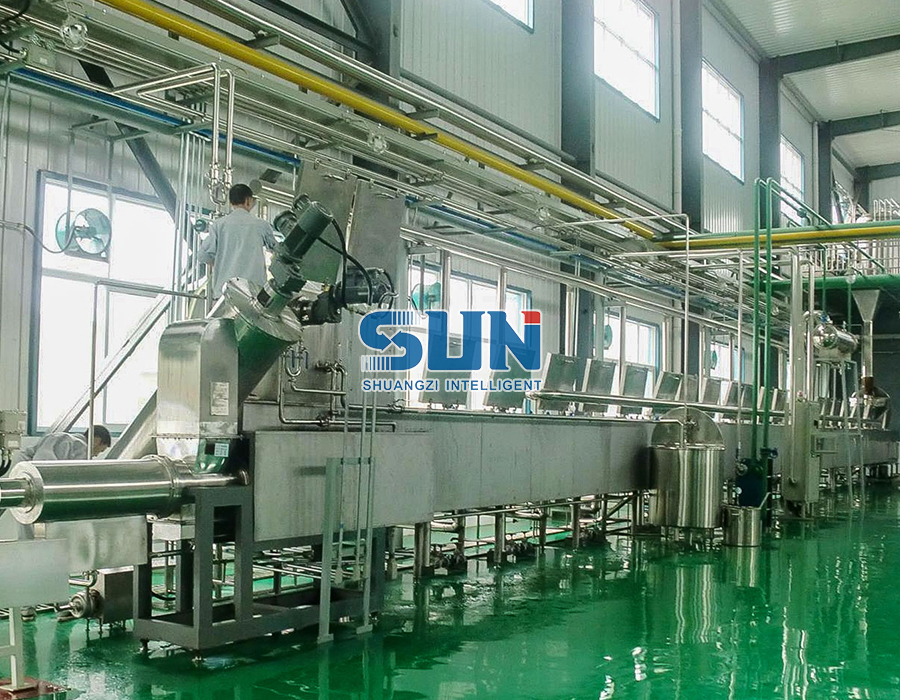
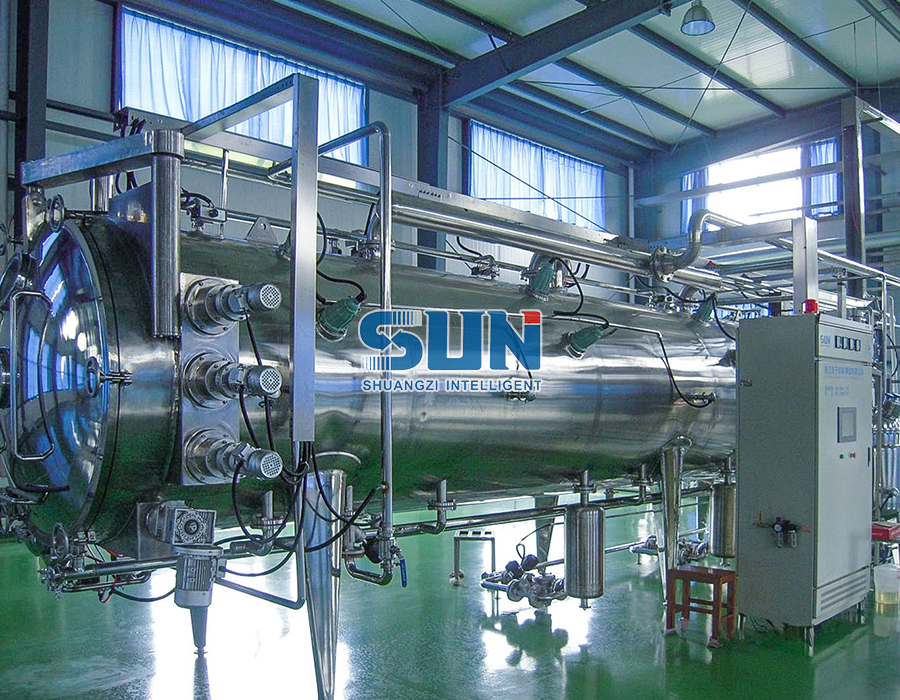
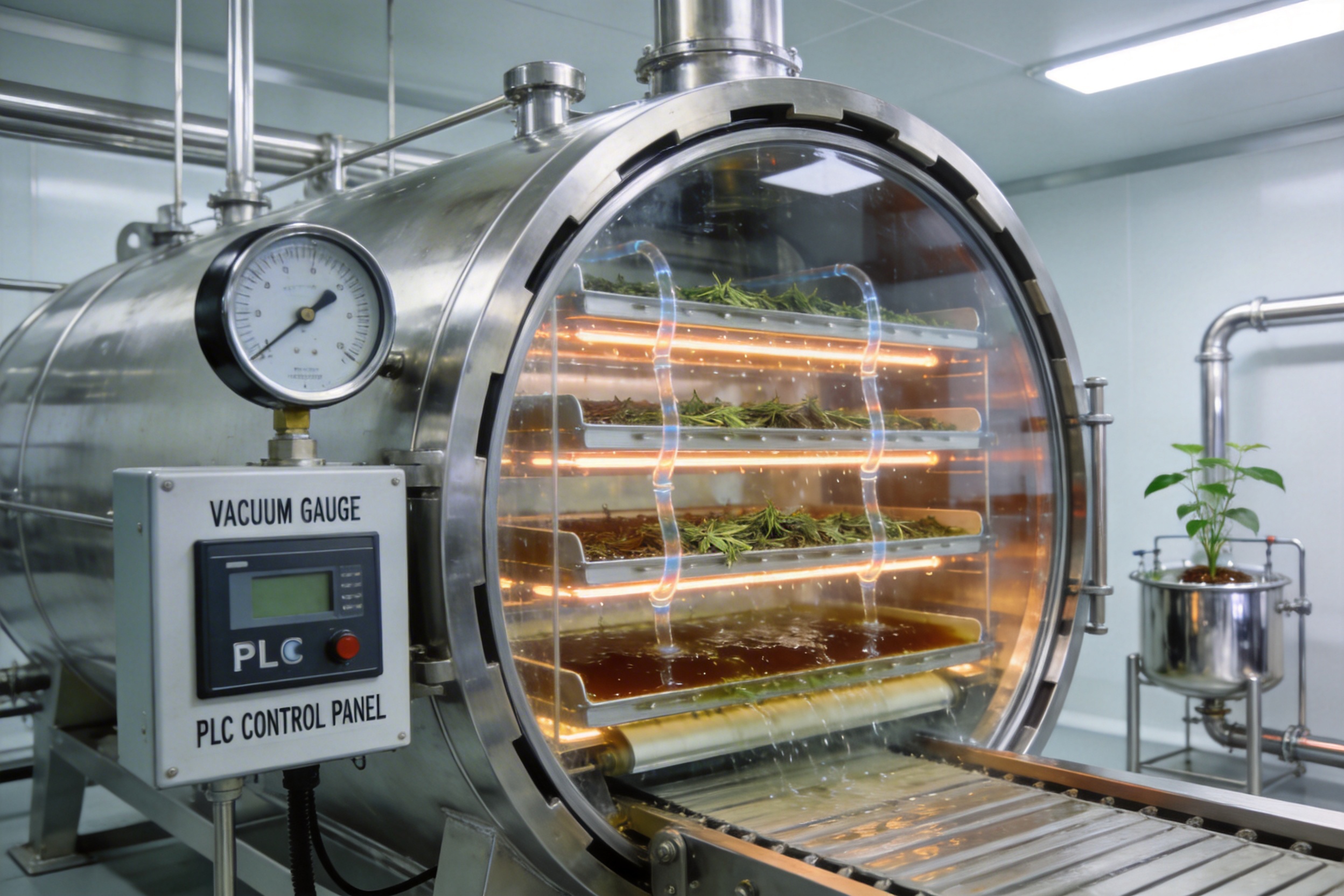
The vacuum low-temperature automatic continuous belt dryer is a contact-type drying system designed specifically for thermal-sensitive, high-viscosity, and agglomeration-prone materials. Unlike traditional dryers, it operates in a closed vacuum environment at temperatures between 20°C and 80°C, preserving the integrity of active compounds while delivering continuous, high-throughput performance.
Core Working Principle
The dryer’s operation can be broken down into five key stages:
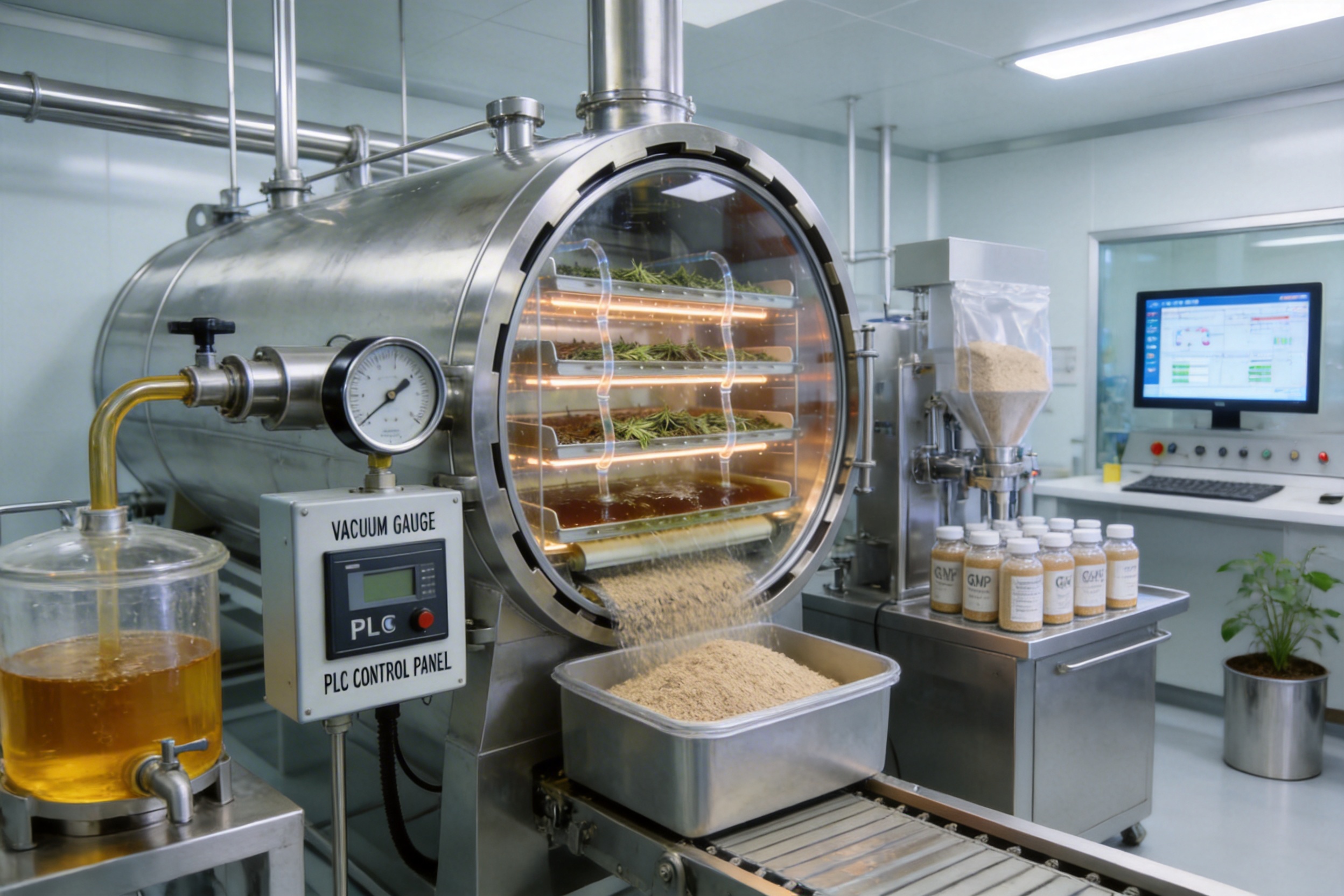
1. Material Feeding: Wet material (with up to 40% initial moisture content) is fed into the dryer via a precision conveying system under high vacuum (900–4000 Pa). This vacuum environment prevents oxidation and ensures the material remains stable during transport.
2. Even Distribution: The material is evenly spread onto multiple drying belts (up to 10 layers in larger models) using a calibrated distribution system. This ensures uniform exposure to heat and prevents localized over-drying or under-drying.
3. Heating & Drying: The belts pass through heating plates (using superheated water as the heat source) that gently raise the material’s temperature to 20–80°C. The vacuum environment lowers the boiling point of water, allowing moisture to evaporate quickly without damaging the material.
4. Cooling: After drying, the belts move through cooling plates to reduce the material’s temperature to room temperature. This prevents post-drying degradation and makes the material safe for handling.
5. Discharge & Processing: When the belts fold back at the end of the dryer, the dried material cake peels off naturally (due to the belt’s flexibility). The cake is then cut by an up-down moving device, crushed by a two-stage crushing system, and collected in a sealed bin. The final product has a moisture content of less than 4%, meeting the strictest quality standards.
Key Advantages Over Competitors
The vacuum low-temperature automatic continuous belt dryer outperforms traditional technologies in several critical areas:
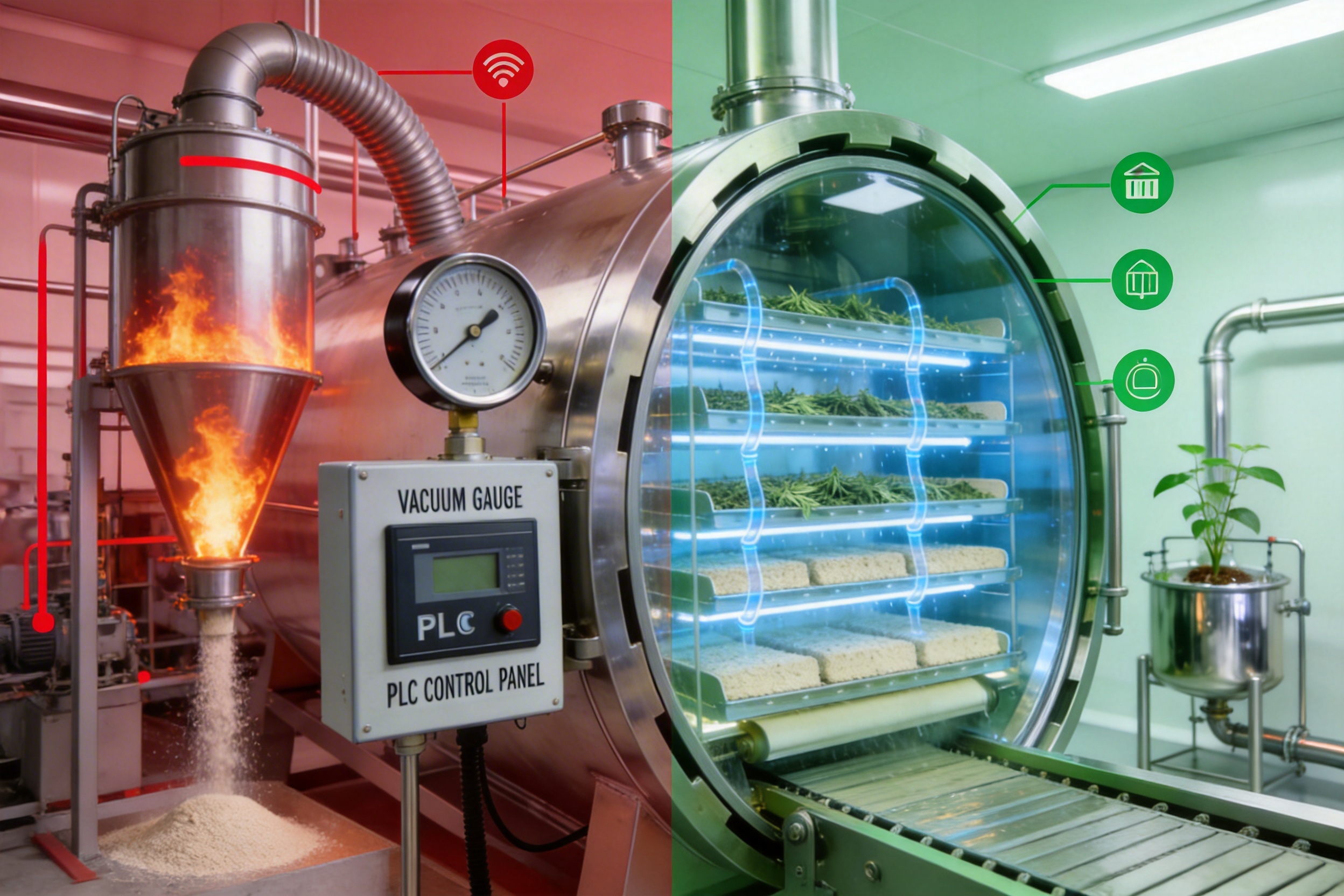
1. Gentle Drying for Thermal-Sensitive Materials: Operating at 20–80°C (vs. 150–200°C for spray dryers), it preserves the color, aroma, taste, and bioactivity of natural extracts and pharmaceuticals. For example, herbal extracts dried using this technology retain up to 95% of their active compounds, compared to 60–70% with spray dryers.
2. Continuous Operation for High Throughput: Unlike batch dryers, it runs 24/7 with no downtime for loading/unloading or cleaning. This increases production capacity by 30–50% and reduces labor costs by eliminating manual handling.
3. No Agglomeration or Sticking: The even distribution system and belt folding mechanism prevent materials from sticking to the dryer surface or forming large agglomerates. The two-stage crushing system ensures a uniform particle size, which is critical for downstream processes (e.g., tableting in pharmaceuticals or mixing in food products).
4. Vacuum Environment for Oxidation Prevention: The closed vacuum system eliminates contact with oxygen, preventing the degradation of oxidation-prone compounds (like vitamin C or polyphenols). This is especially important for natural food products and pharmaceutical intermediates that require long shelf lives.
5. Full Automation for Consistent Quality: The PLC (Programmable Logic Controller) system controls all aspects of the drying process—from feeding rate to belt speed to temperature. This ensures consistent product quality across batches, reducing the risk of rejects and increasing customer satisfaction.
6. Versatility for Diverse Materials: It handles a wide range of materials, including high-viscosity extracts (e.g., honey-based products), thermoplastic materials (e.g., some polymers), and heat-sensitive probiotics. It is also a viable alternative to spray dryers for materials that cannot be atomized (e.g., viscous fruit purees).
Advanced Manufacturing Processes & Company Strengths
The vacuum low-temperature automatic continuous belt dryer is manufactured by a leading Chinese equipment provider with over 15 years of experience in the biology and medical equipment industry. The company’s commitment to innovation, quality, and customer-centric design has made it a trusted partner for manufacturers worldwide.
1. EPC/EPCM Turnkey Solutions
The company specializes in Engineering Procurement Construction (EPC) and Engineering Procurement Construction Management (EPCM) turnkey projects. This means it can provide end-to-end solutions for clients, from process design and equipment manufacturing to installation, commissioning, and after-sales support. For example, a client looking to set up a plant extraction line can rely on the company to design the entire process, supply all necessary equipment (including the dryer, extraction tanks, and concentration systems), and ensure the line meets regulatory standards (e.g., GMP).
2. State-of-the-Art R&D & Pilot Facilities
The company invests heavily in R&D, with a dedicated team of engineers and scientists focused on improving drying technologies and developing new applications. It also operates a GMP-compliant pilot workshop with full production lines for vacuum drying, plant extraction, evaporation, and fermentation. This allows clients to test their materials with the dryer before investing in a full-scale system, ensuring optimal performance and reducing risk.
3. Advanced Manufacturing Equipment
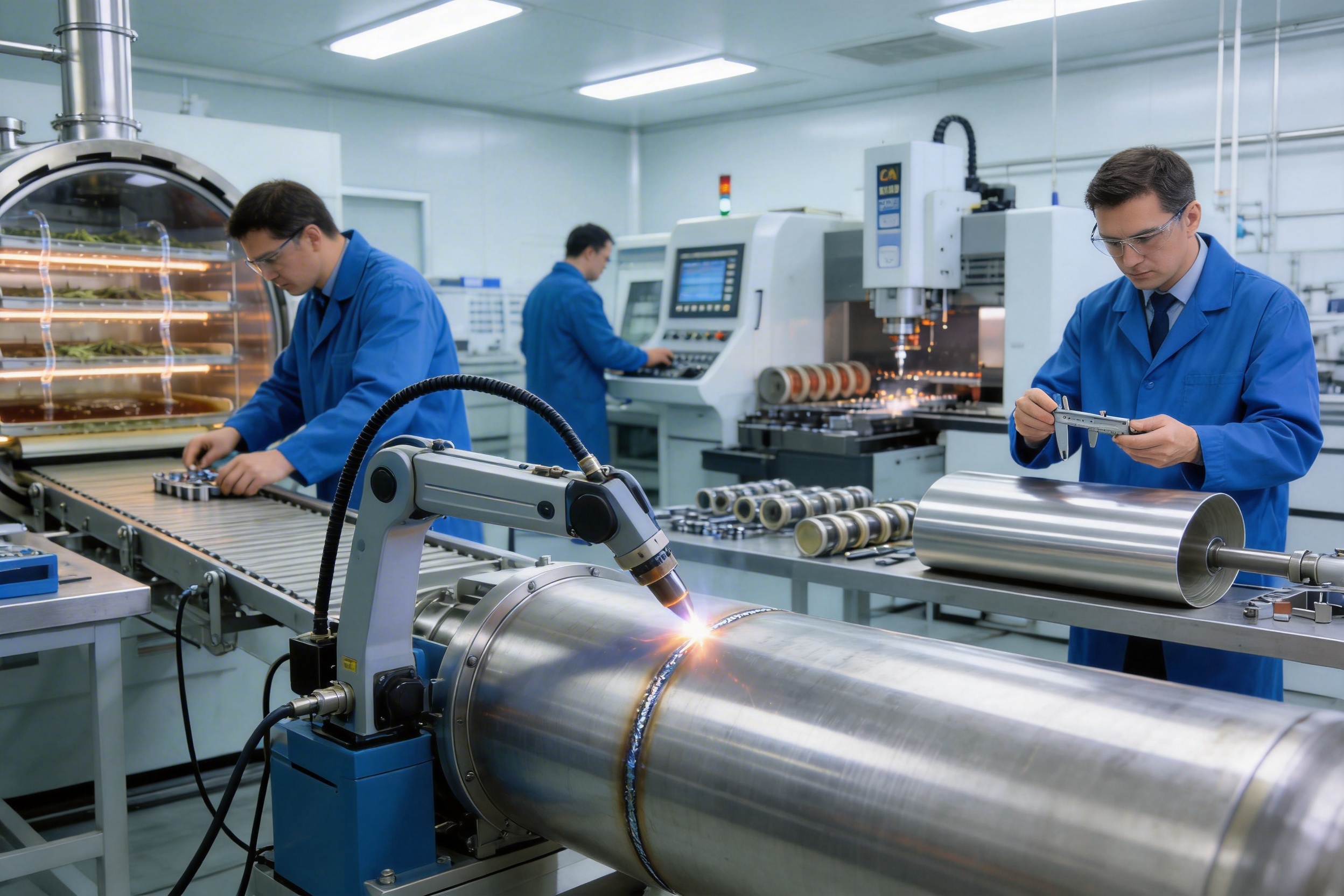
The company uses cutting-edge manufacturing equipment to ensure precision and quality: - Plasma Argon Arc Welding Machines: These produce clean, porosity-free welds that are critical for maintaining vacuum tightness in the dryer’s cylinder. - Plasma Cutting Machines: These cut stainless steel sheets with high precision, ensuring accurate parts for the belt system and heating plates. - CAM CNC Machining Centers: These machine complex parts (like belt rollers and temperature sensors) to tight tolerances, ensuring smooth operation of the dryer.
4. Strict Quality Control & Regulatory Compliance
All dryers are manufactured in compliance with international standards, including GMP (for pharmaceutical and food applications), ISO 9001 (quality management), and CE (safety). The company’s quality control process includes: - In-Process Inspections: Welding quality, part dimensions, and system integration are checked at every stage of manufacturing. - Vacuum Leak Tests: Each dryer undergoes a rigorous leak test to ensure no air ingress (critical for maintaining the vacuum environment). - Pilot Run Testing: Before shipment, the dryer is tested with client materials to verify performance (drying time, moisture content, product quality). - Final Inspection: A comprehensive check of all systems (PLC control, heating/cooling, crushing) is performed to ensure the dryer meets all specifications.
5. Customization for Client Needs
The company understands that every client has unique requirements. It offers full customization of the dryer, including: - Adjusting belt width and number of layers to meet production capacity needs. - Integrating additional features like inline sterilization (for pharmaceutical applications) or real-time moisture monitoring. - Adapting the dryer to handle specific materials (e.g., high-viscosity extracts or probiotics). - Designing the dryer to fit into existing production lines.
Technical Specifications of the Dryer
The vacuum low-temperature automatic continuous belt dryer is available in multiple models to suit different production capacities. The table below outlines the key specifications for each model:
| Basic Parameters | SUNZDG-6-80 | SUNZDG-6-100 | SUNZDG-07-130 | SUNZDG-07-160 | SUNZDG-8-180 | SUNZDG-09-200 | SUNZDG-10-230 |
|---|---|---|---|---|---|---|---|
| Total Heat Transfer Area (m²) | 88.5 | 101.6 | 131.8 | 161 | 184 | 207 | 230 |
| Effective Heating Area (m²) | 70 | 87 | 104.7 | 116 | 142.8 | 160 | 178.5 |
| Effective Cooling Area (m²) | 9.9 | 13.3 | 15.6 | 17.8 | 25.2 | 28.4 | 31.5 |
| Condensing Area (m²) | 42 | 50 | 60 | 70 | 85 | 95 | 110 |
| Water Evaporation (kg/h) | 60-90 | 80-110 | 90-135 | 110-150 | 130-180 | 150-210 | 160-230 |
| Belt Width (mm) | 1200 | 1200 | 1365 | 1365 | 1365 | 1365 | 1365 |
| Belt Layers | 6 | 6 | 7 | 7 | 8 | 9 | 10 |
| Equipment Diameter (mm) | 2400 | 2400 | 2800 | 2800 | 3000 | 3500 | 3600 |
| Equipment Length (mm) | 13500 | 16500 | 15000 | 16500 | 18000 | 18000 | 18000 |
| Heating & Cooling Sections | 4 heating +1 cooling | 4 heating +1 cooling | 4 heating +1 cooling | 4 heating +1 cooling | 5 heating +1 cooling | 5 heating +1 cooling | 5 heating +1 cooling |
| Heating Form | Superheated Water | Superheated Water | Superheated Water | Superheated Water | Superheated Water | Superheated Water | Superheated Water |
| Steam Consumption (kg/h) | 90-135 | 120-165 | 135-200 | 165-225 | 195-270 | 225-315 | 240-345 |
| Heating Control Temperature (°C) | 40-125 | 40-125 | 40-125 | 40-125 | 40-125 | 40-125 | 40-125 |
| Belt Speed (mm/min) | 100-1500 | 100-1500 | 100-1500 | 100-1500 | 100-1500 | 100-1500 | 100-1500 |
| Feed Water Content (%) | <40 | <40 | <40 | <40 | <40 | <40 | <40 |
| Product Water Content (%) | <4 | <4 | <4 | <4 | <4 | <4 | <4 |
| Cleaning Pressure (MPa) | 0.6 | 0.6 | 0.6 | 0.6 | 0.6 | 0.6 | 0.6 |
| Compressed Air (MPa) | 0.7 | 0.7 | 0.7 | 0.7 | 0.7 | 0.7 | 0.7 |
| Vacuum Degree Range (Pa) | 1240-4800 | 1240-4800 | 1240-4800 | 1480-5400 | 1480-5400 | 1480-5400 | 1480-5400 |
| Total Installed Power (kW) | 68 | 70 | 85 | 90 | 120 | 130 | 110 |
| Cooling Water Consumption (t/h at 25°C) | 18 | 20 | 23 | 25 | 30 | 35 | 40 |
| Total Weight (t) | Main body:25.0; Auxiliary part:8.0 | Main body:32.0; Auxiliary part:9.0 | Main body:35.0; Auxiliary part:10.0 | Main body:40.0; Auxiliary part:10.0 | Main body:45.0; Auxiliary part:11.0 | Main body:50.0; Auxiliary part:12.0 | Main body:55.0; Auxiliary part:13.0 |
Frequently Asked Questions (FAQ)
Below are answers to common questions about the vacuum low-temperature automatic continuous belt dryer:
Q: What materials are most suitable for this dryer?
A: It’s ideal for thermal-sensitive materials like natural plant extracts (herbal, fruit, vegetable), pharmaceutical intermediates, probiotics, functional food ingredients (e.g., collagen peptides), and high-viscosity materials (e.g., honey, molasses). It also handles thermoplastic materials that tend to stick in other dryers.
Q: How does the vacuum environment benefit the drying process?
A: Vacuum reduces the boiling point of water, allowing drying at low temperatures (20–80°C) without damaging heat-sensitive compounds. The enclosed environment also prevents oxidation, preserving color, aroma, and nutritional value. It eliminates airborne contamination, which is critical for pharmaceutical and food applications.
Q: Can the dryer be customized for specific production needs?
A: Yes. The manufacturer can adjust belt width, number of layers, heating/cooling sections, or integrate features like inline sterilization or real-time moisture monitoring. It can also adapt the dryer to fit existing production lines or handle unique materials.
Q: What after-sales support is provided?
A: Comprehensive support includes on-site installation/commissioning, operator training, regular maintenance checks (optional contracts), spare parts supply, 24/7 technical support, and customized upgrades.
Q: How does this dryer compare to spray dryers in terms of energy efficiency?
A: Spray dryers consume large amounts of energy to heat air, while this dryer uses superheated water for contact drying—reducing energy consumption by up to 40%. Its continuous operation also minimizes idle energy use, leading to long-term cost savings.
Q: Is the dryer compliant with GMP standards?
A: Yes. All materials (stainless steel, seals, gaskets) are food/pharmaceutical-grade, and the PLC system complies with GAMP guidelines. The manufacturing facility is GMP-compliant, and each dryer undergoes rigorous testing to meet regulatory requirements.
Q: How long does it take to install and commission the dryer?
A: Installation typically takes 1–2 weeks, depending on the model and site conditions. Commissioning (including testing with client materials) takes an additional 3–5 days. The manufacturer provides trained technicians to oversee the process.
Conclusion
The vacuum low-temperature automatic continuous belt dryer represents a significant advancement in drying technology for thermal-sensitive materials. Its unique combination of gentle drying, continuous operation, full automation, and regulatory compliance makes it an ideal solution for plant extraction, pharmaceutical, and functional food manufacturers. Backed by a leading manufacturer with extensive experience in EPC turnkey projects and advanced manufacturing capabilities, this dryer delivers consistent quality, high throughput, and long-term cost savings. As the demand for high-quality, natural products continues to grow, this technology will play an increasingly important role in meeting the industry’s most pressing challenges.
References
[1] International Society for Pharmaceutical Engineering (ISPE). Good Automated Manufacturing Practice (GAMP) Guide for 21 CFR Part 11. 2020 Edition.
[2] World Health Organization (WHO). Good Manufacturing Practices for Pharmaceutical Products: Annex 2—Validation of Cleaning Processes. Technical Report Series No. 1033. 2018.
[3] Smith, J. D., et al. "Vacuum Drying Technologies for Thermal-Sensitive Natural Extracts: A Comparative Review of Spray Drying vs. Belt Drying." Journal of Food Engineering, vol. 198, 2021, pp. 123–135.
[4] European Federation of Pharmaceutical Industries and Associations (EFPIA). Guidelines on Process Validation for Pharmaceutical Products. 2019 Edition.
[5] Zhang, L., et al. "Optimization of Vacuum Belt Drying Parameters for Herbal Extracts to Preserve Bioactive Compounds." Chinese Journal of Pharmaceutical Analysis, vol. 41, no. 5, 2021, pp. 892–899.